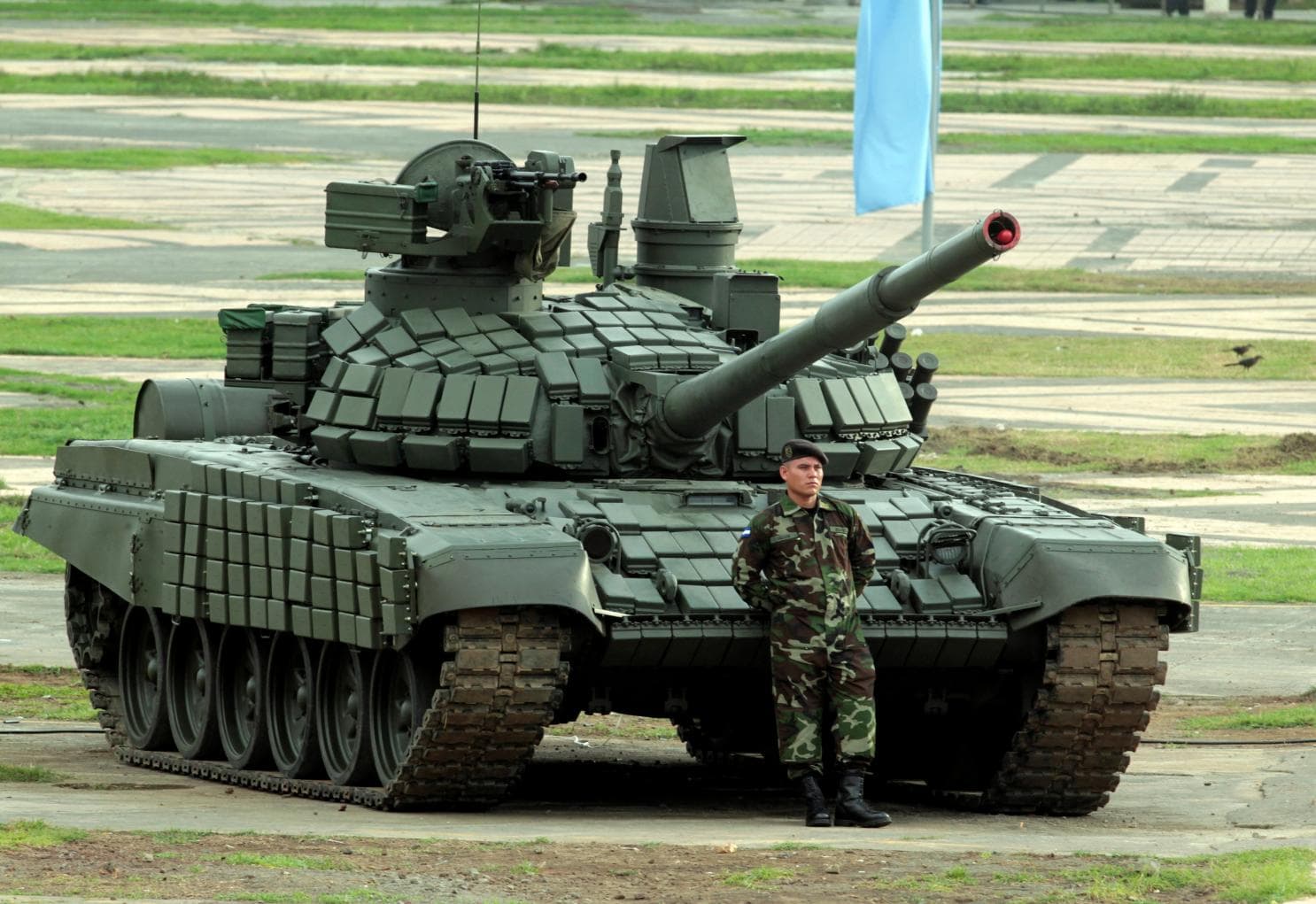
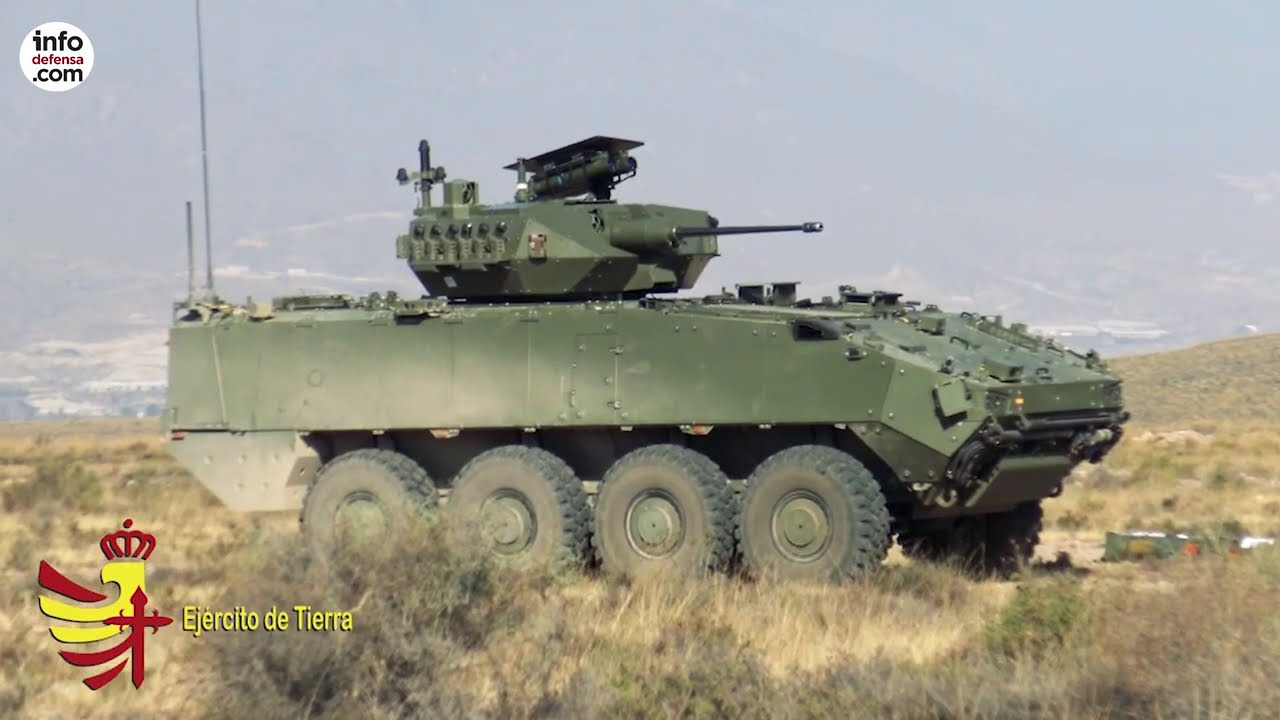
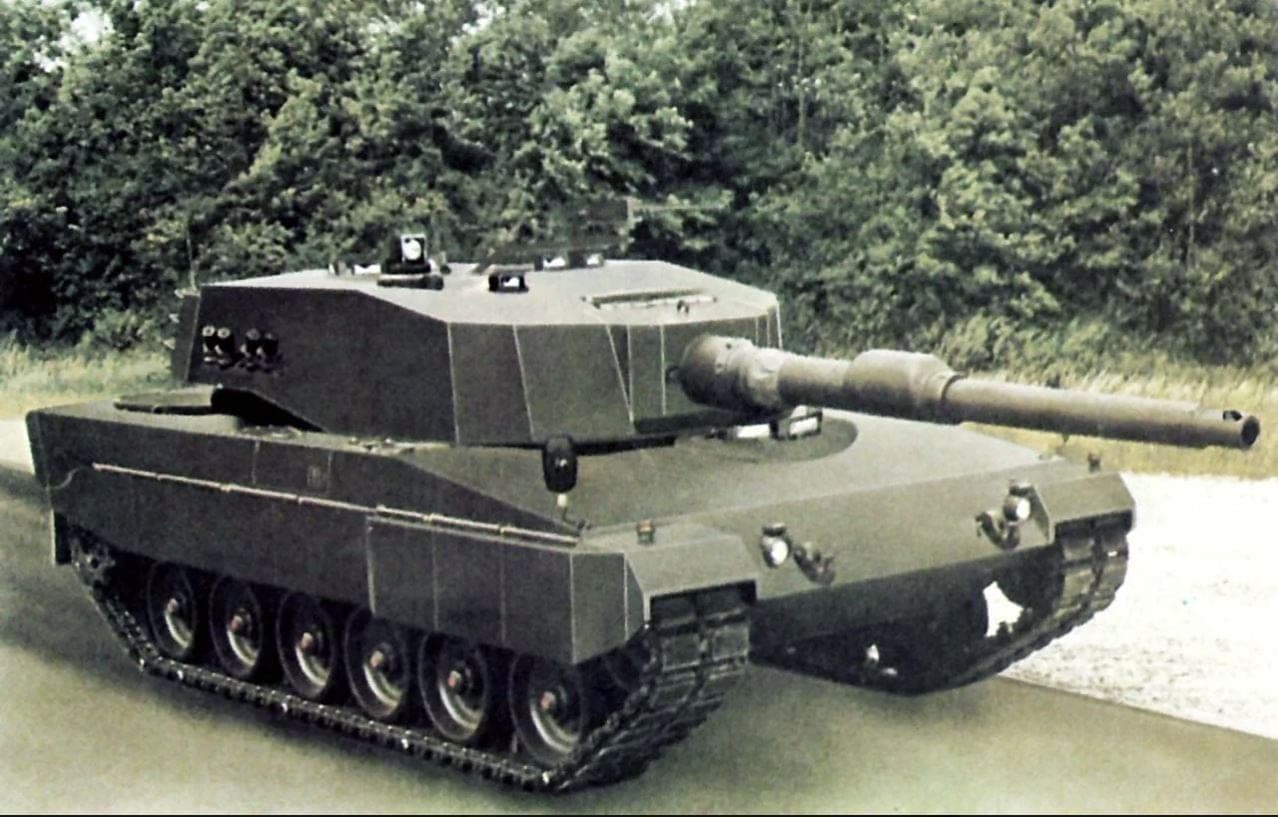
- Yes
- No




What is the Hispanic tree?
The Hispanic Techtree comprises the countries that have Spanish as an official language, with Spain, the language’s creator, being the primary country. Chile and Argentina share historical ties, as both countries were part of the Spanish empire from the 16th century and later gained their independence from Spain in the 19th century, with Argentina helping Chile in its independence process. They are also sister nations and neighbors. The three nations share a language, history, and culture. The King of Spain visits Chile and Argentina every time there is a presidential change of command, highlighting the strong bond and brotherhood that exists today. Military exchanges and joint exercises conducted annually are also noteworthy.
Why Chile and Argentina and not other Hispanic countries?
Historically, Chile and Argentina have been the main Hispanic military powers in Latin America, making them the countries with the greatest potential to contribute vehicles. They also stand out for having developed national military vehicle manufacturing industries; for example, Argentina with its Nahuel and TAM tanks, and Chile with its Piranha armored vehicles in various armament configurations. Other Hispanic nations in Latin America either completely lack tanks or possess very obsolete tanks that are not viable for the highest ranks of the game. Peru is a special case, as it will be the third technological sub-tree, which is the game’s limit per nation, because it has interesting options that help fill specific gaps in the Hispanic tree. They also recently signed agreements for the acquisition of state-of-the-art vehicles, so they will be a great contribution to the top tier. The other Hispanic countries will contribute interesting premium/event vehicles.
What about Brazil?
Brazil, despite being a Latin American country, is not considered a Hispanic country since its official language is Portuguese and it gained independence from Portugal, not Spain like other Latin American countries. Brazil could be included in the game as part of a complete Latin American tree or together with Portugal.
Why add the Hispanic Tech Tree?
Currently in War Thunder, there is little to no representation of Hispanic countries, and the vehicles that are present are scattered across different tech trees, mostly as premium or event vehicles. Argentina is a small exception, concentrating its vehicles in Germany, but again, its representation is limited beyond filling gaps in that tech tree. Adding a Hispanic tech tree is the perfect opportunity to finally unify all these vehicles into a single tech tree. Furthermore, it allows us to add all the unique vehicles these countries possess, with Spain standing out as the leading nation and the Hispanic country with the largest number of unique and domestically produced vehicles. Chile and Argentina follow, also contributing many unique vehicles, many of which are popular on the forum and are frequently requested for inclusion. The following suggestion will provide a detailed look at all of these vehicles.
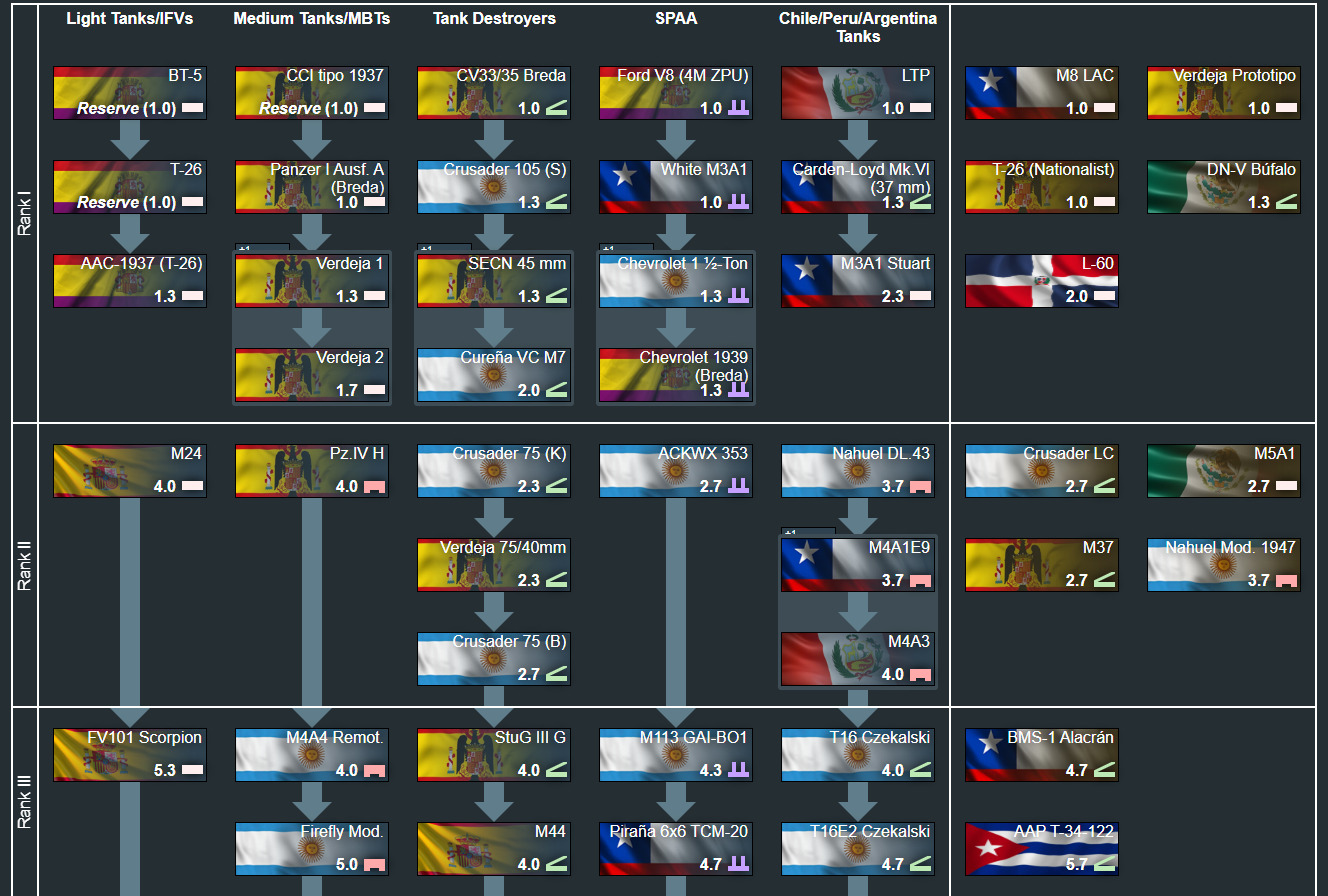

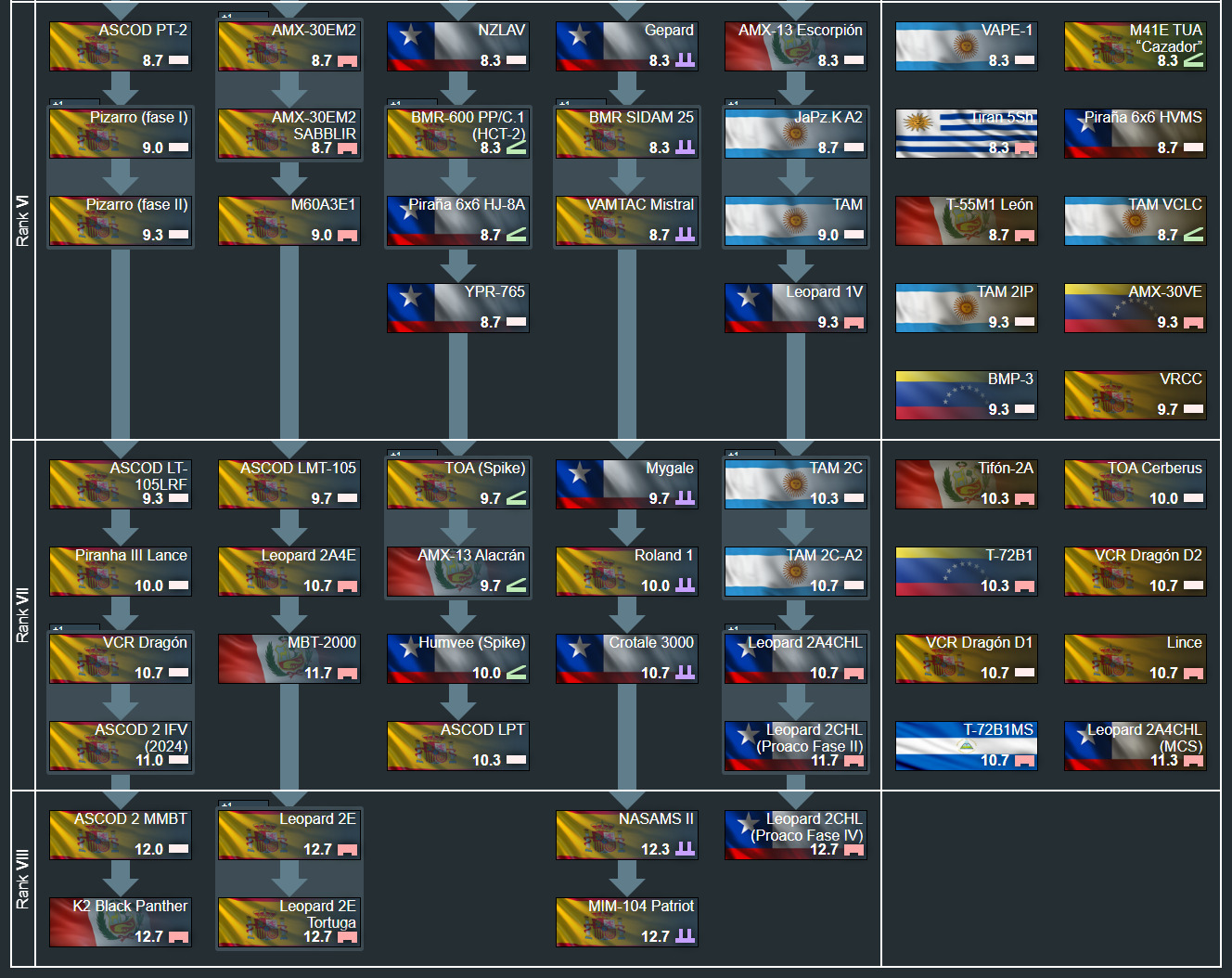
Light Tanks/IFVs
Spoiler
Rank 1
Spoiler
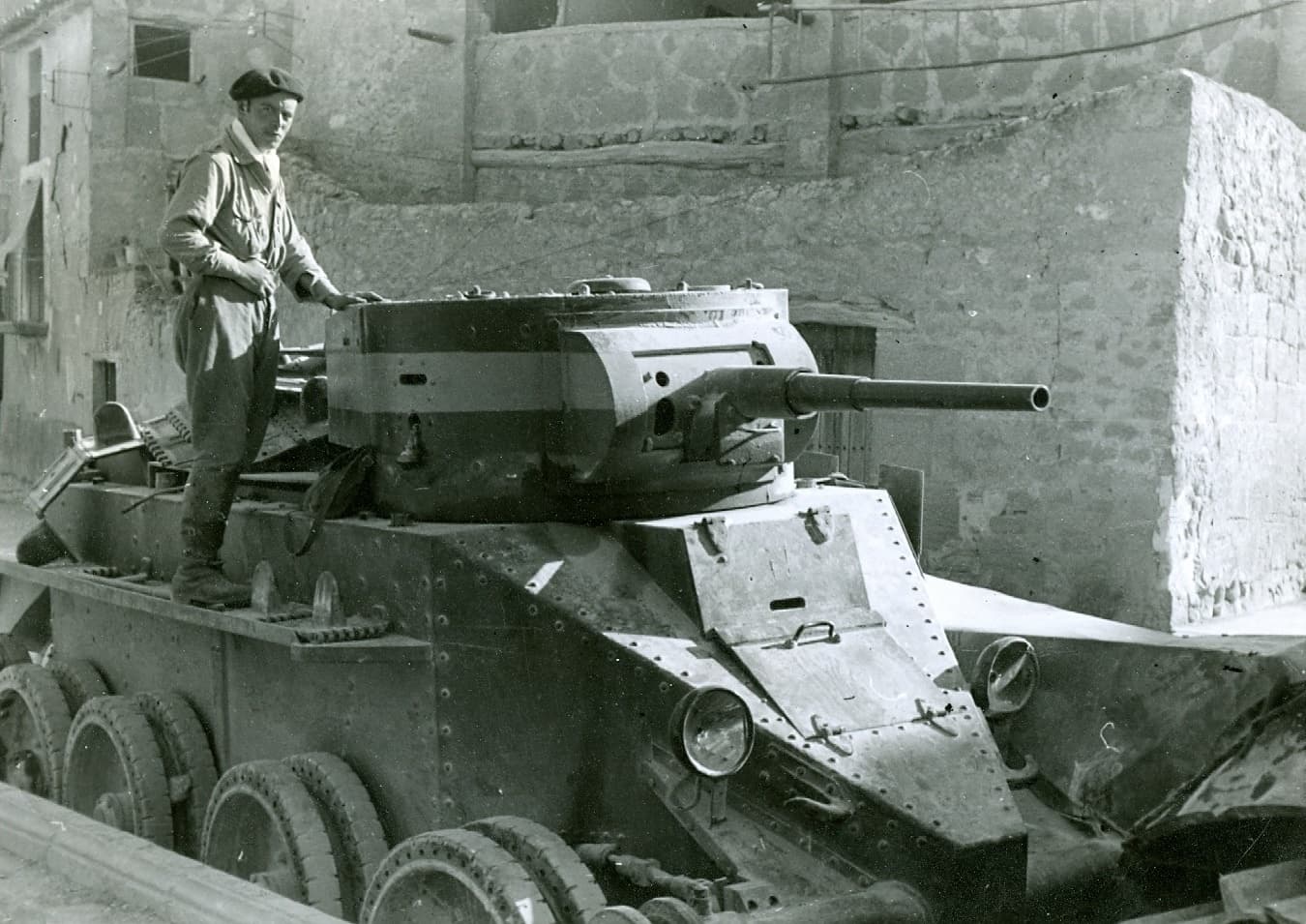
BT-5
- Description:
- A Soviet light tank used during the Spanish Civil War in 1937 by the Second Spanish Republic. Approximately 100 units were received, and it was one of the main armored vehicles of the conflict.
- Crew:
- 3 (Commander, Gunner, Driver)
- Armament:
- Primary: 45 mm 20-K cannon
- Maneuverability:
- Max. Speed: 72 km/h
- Sources:
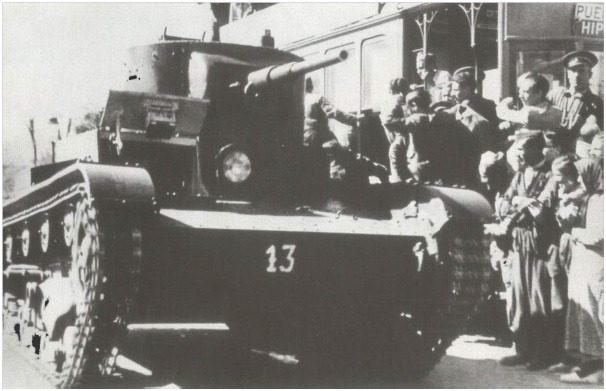
T-26
- Description:
- Another of the Soviet light tanks used by the Second Spanish Republic against the Nationalists. It was one of the most powerful tanks used during the conflict and saw its baptism of fire in 1936.
- Crew:
- 3 (Commander, Gunner, Driver)
- Armament:
- Primary: 45 mm 20-K cannon
- Maneuverability:
- Max. Speed: 31.1 km/h
- Sources:
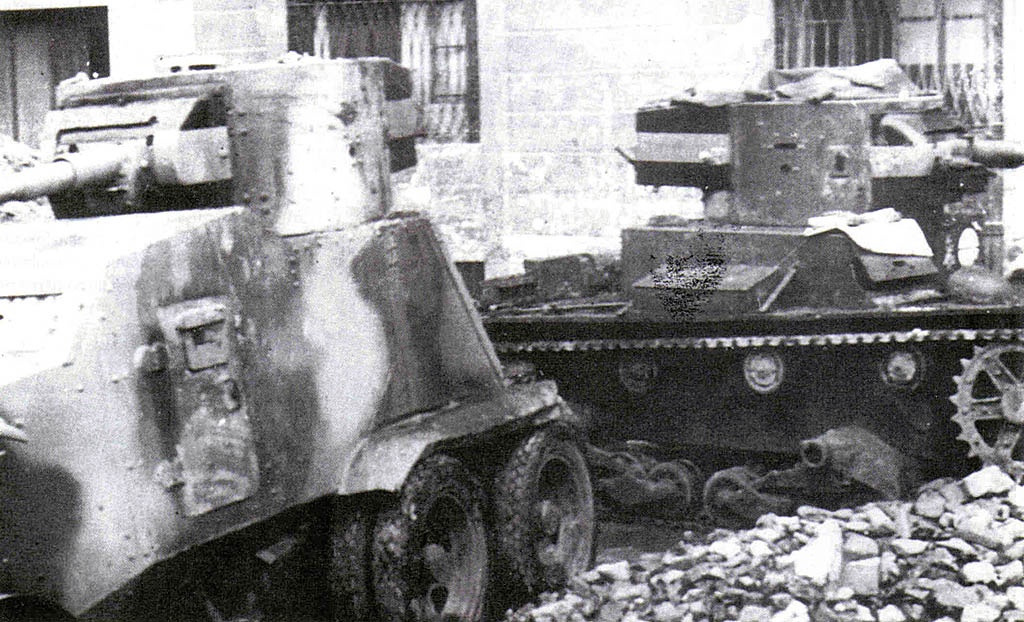
AAC-1937 (T-26)
- Description:
- It was an armored vehicle manufactured by the Republican forces in Spain during the Civil War. It was essentially a copy of the BA-3/6. Some of these vehicles were fitted with the turret from the Soviet T-26 tank, although the exact number is unknown.
- Crew:
- 3 (Commander, Gunner, Driver)
- Armament:
- Primary: 45 mm 20-K cannon
- Maneuverability:
- Max. Speed: 62 km/h
- Sources:
Rank 2
Spoiler
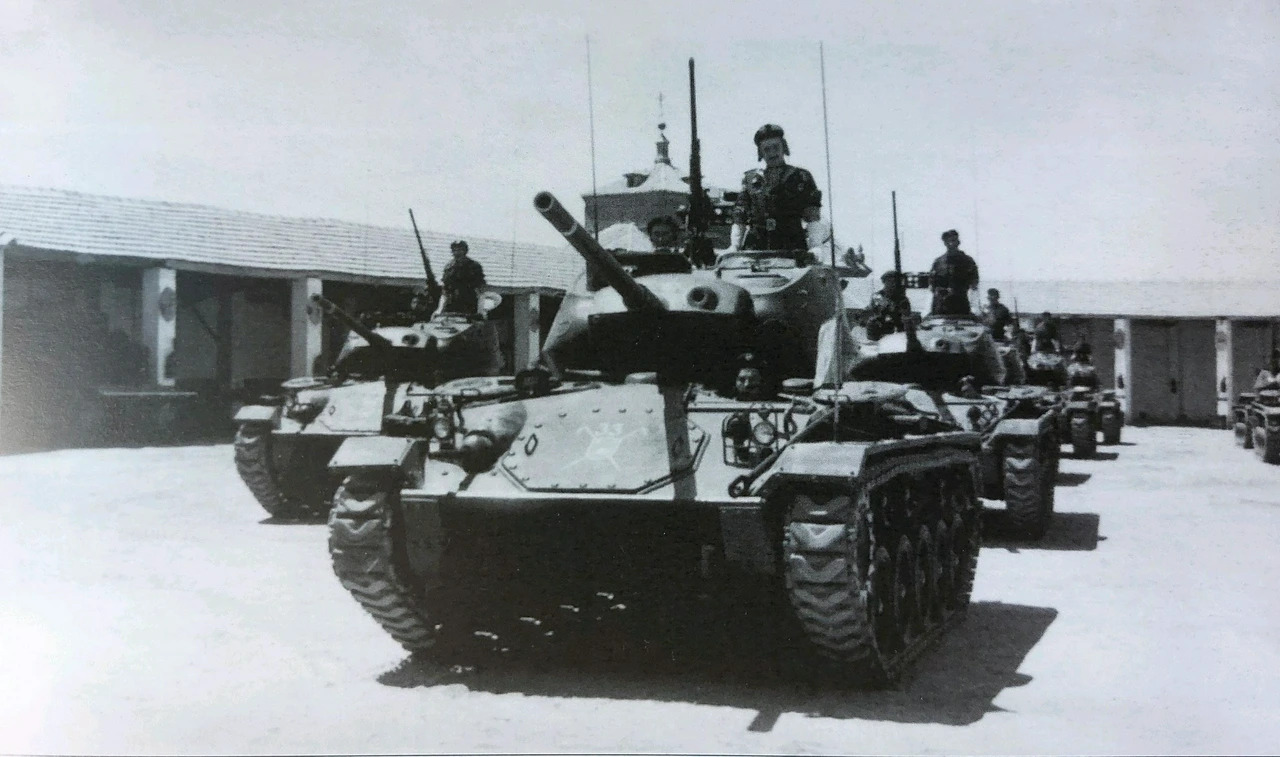
M24
- Description:
- The American M24 Chaffee light tanks received by Spain in 1956; a total of 31 were received and they were the first American tanks to serve in Spain after the Soviet and German tanks used during the Spanish Civil War.
- Crew:
- 5 ( Commander, Gunner, Loader, Driver, Machine Gunner)
- Armament:
- Primary: 75 mm M2 cannon
- Maneuverability:
- Max. Speed: 56 km/h
- Sources:
Rank 3
Spoiler
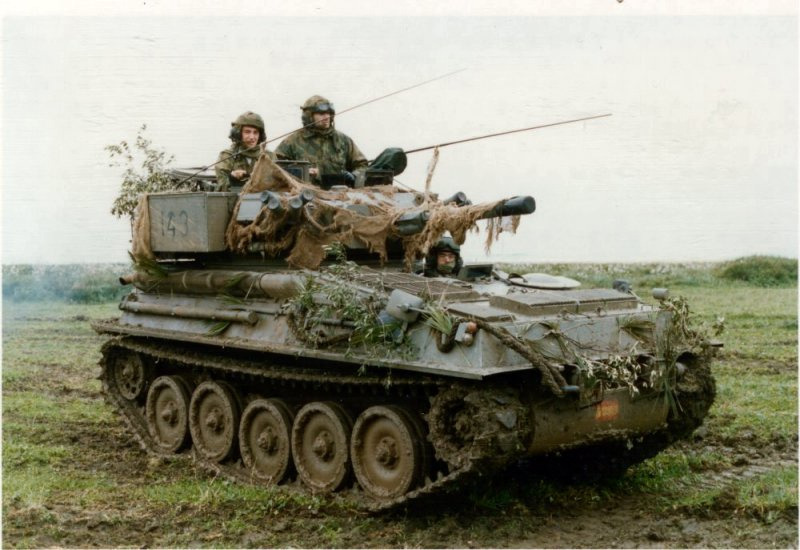
FV101 Scorpion
- Description:
- British FV101 Scorpion light tanks used by the Spanish Marines, acquired between 1985 and 1986, with a total of 17 Scorpions purchased. They were decommissioned in 2007, and 15 of them were transferred to Chile.
- Crew:
- 3 ( Commander, Gunner, Driver)
- Armament:
- Primary: 76mm L23A1 gun
- Maneuverability:
- Max. Speed: 72.5 km/h
- Sources:
Rank 4
Spoiler
VEC (Cockerill Mk.III)
- Description:
- The Pegaso VEC is a derivative of the BMR-600, a 6x6 armored personnel carrier developed in Spain in the 1970s. This version is equipped with an unknown model turret mounting the 90mm Cockerill Mk. III cannon.
- Crew:
- 3 ( Commander, Gunner, Driver)
- Armament:
- Primary: 90mm Cockerill Mk. III cannon
- Maneuverability:
- Max. Speed: 90 km/h
- Sources:
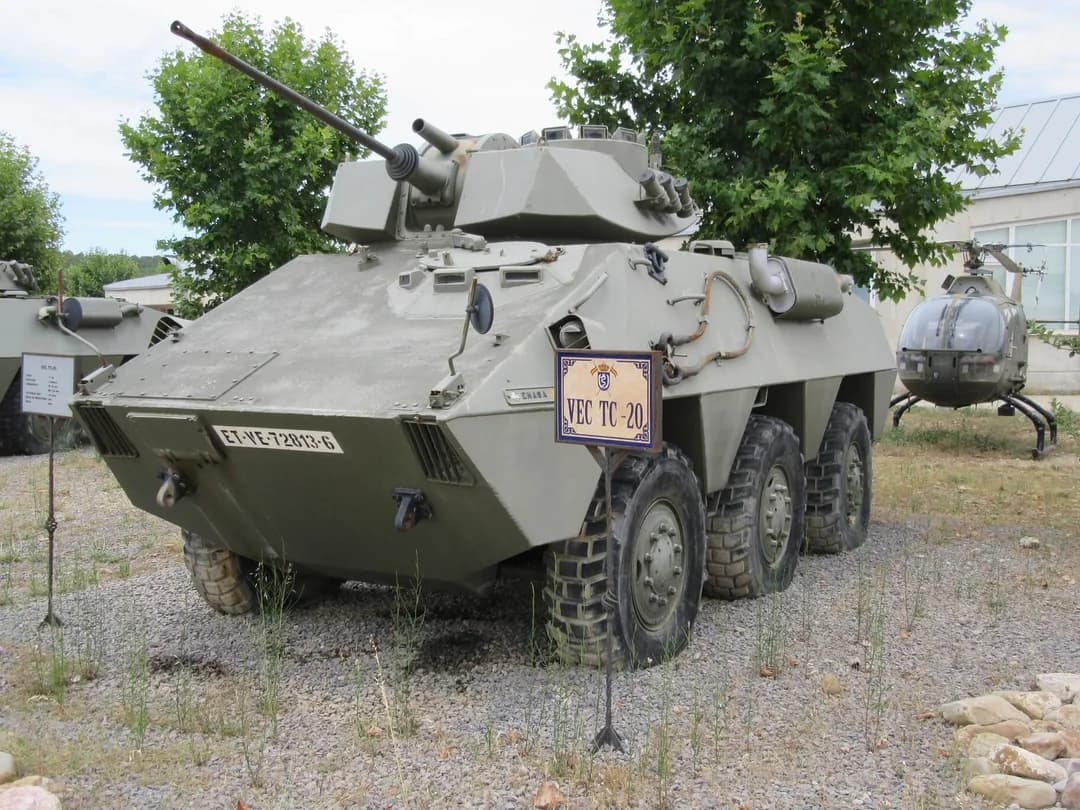
VEC (TC-20)
- Description:
- The Pegaso VEC is a derivative of the BMR-600, a 6x6 armored personnel carrier developed in Spain in the 1970s. This version is equipped with a TC20 turret, armed with an Rh 202 20mm autocannon.
- Crew:
- 3 ( Commander, Gunner, Driver)
- Armament:
- Primary: 20mm Rh 202 autocannon
- Maneuverability:
- Max. Speed: 90 km/h
- Sources:
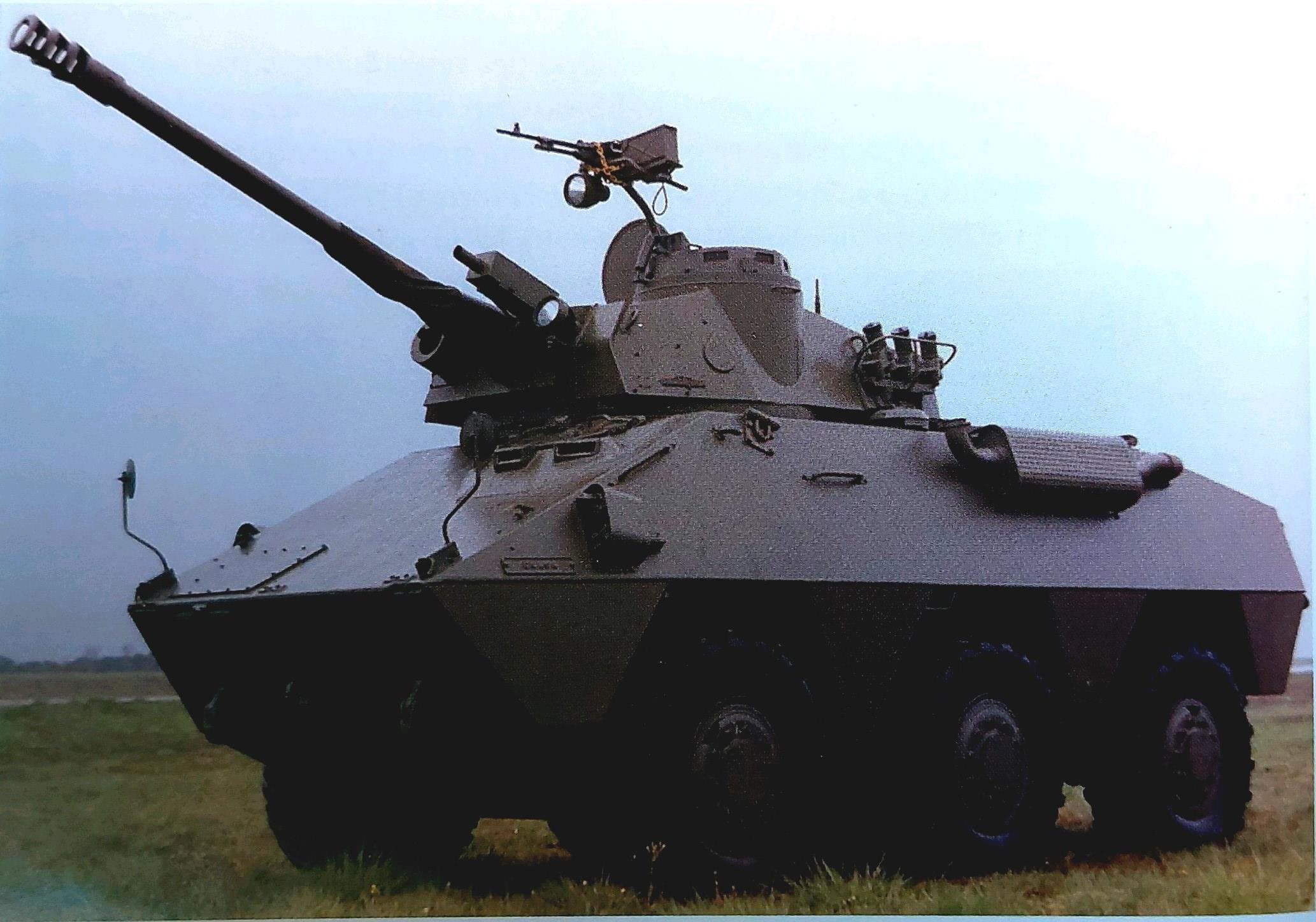
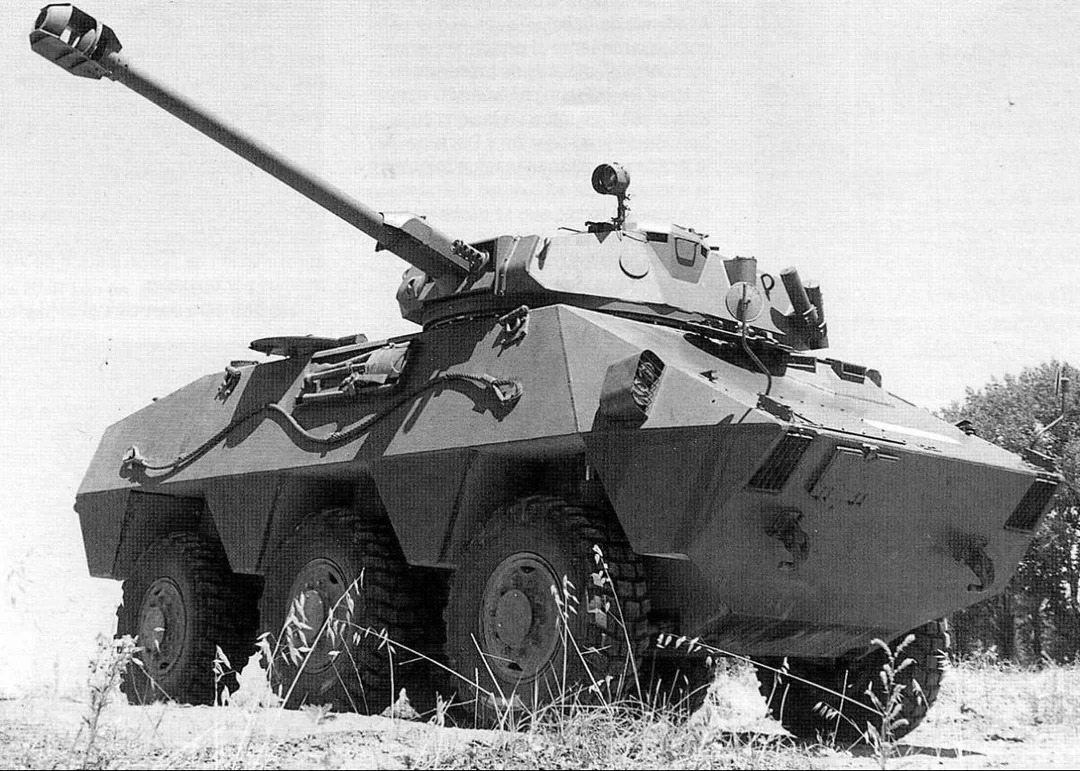
VEC (HS-90)
- Description:
- The Pegaso VEC is a derivative of the BMR-600, a 6x6 armored personnel carrier developed in Spain in the 1970s. This version is equipped with an HS-90 turret and a 90mm DEFA F1 cannon, the same as the French AML-90.
- Crew:
- 3 ( Commander, Gunner, Driver)
- Armament:
- Primary: 90mm DEFA F1 cannon
- Maneuverability:
- Max. Speed: 90 km/h
- Sources:
Rank 5
Spoiler
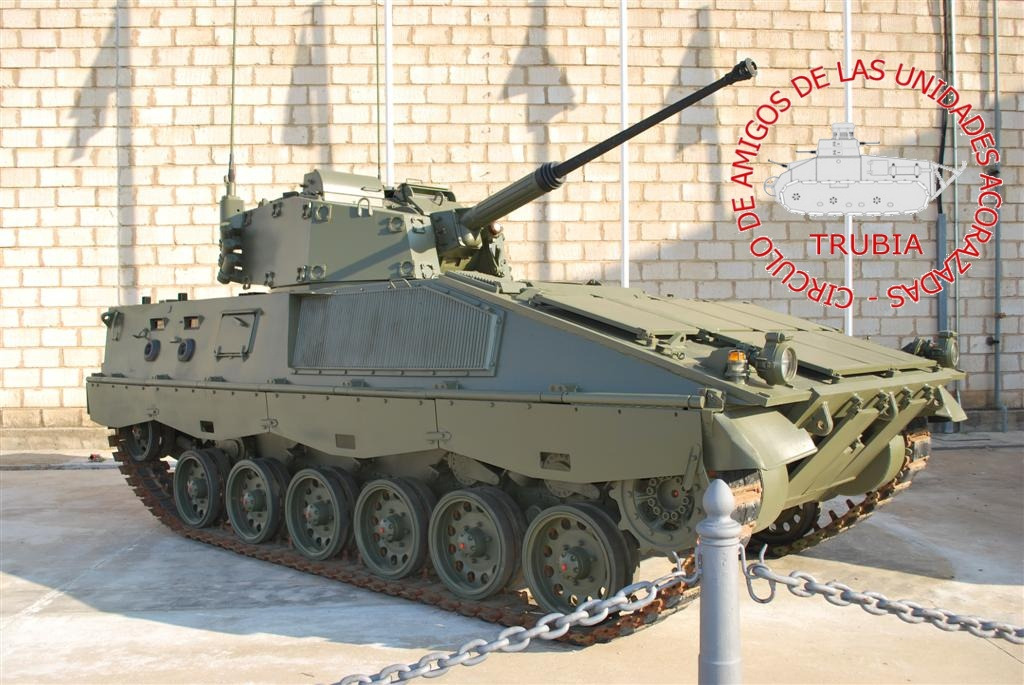
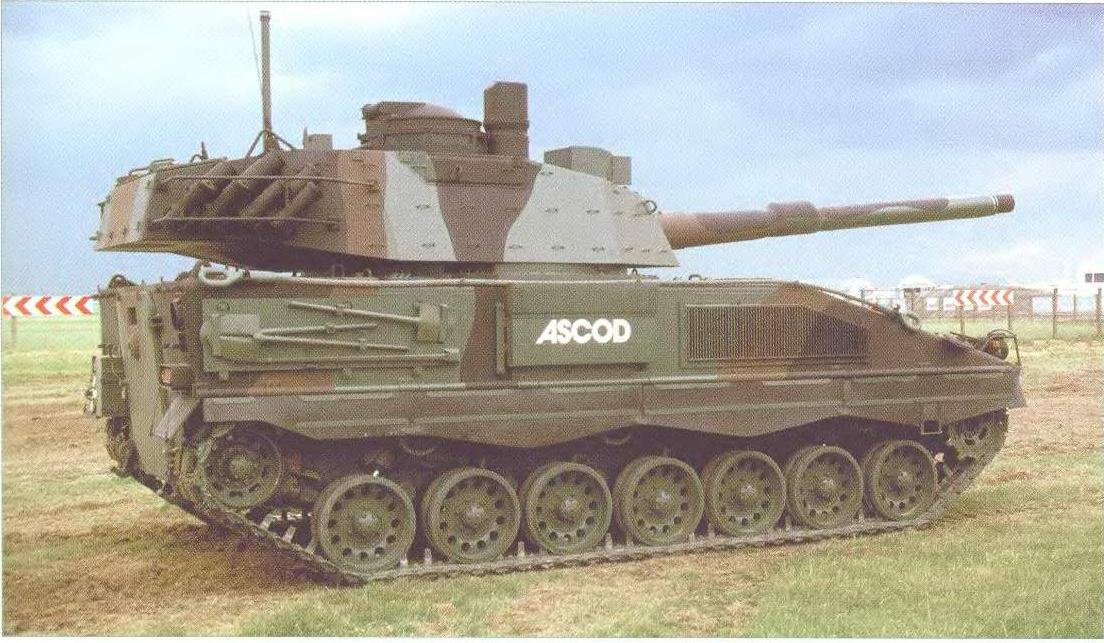
ASCOD PT-1
- Description:
- The first prototype of the joint Austro-Spanish ASCOD program, the vehicle is equipped with an unstabilized 30mm Mauser autocannon and lacks a sophisticated fire control system. It can use APDS and HE projectiles.
- Crew:
- 3 ( Commander, Gunner, Driver)
- Armament:
- Primary: 30mm Mauser MK30-2
- Maneuverability:
- Max. Speed: 70 km/h
- Sources:
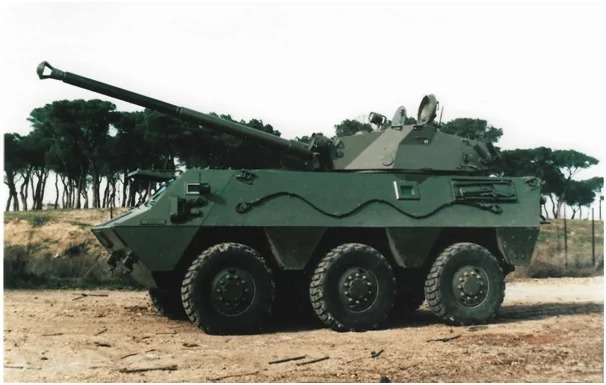
BMR 640 CV
- Description:
- The BMR-600 is an armored personnel carrier designed in Spain. This configuration carries a GIAT TS turret with a 90mm gun. This version, designated ENASA 3564.1 or BMR 640 CV, was created for export to Egypt, although this ultimately did not happen.
- Crew:
- 3 ( Commander, Gunner, Driver)
- Armament:
- Primary: 90 mm CN 90 F4
- Maneuverability:
- Max. Speed: 100 km/h
- Sources:
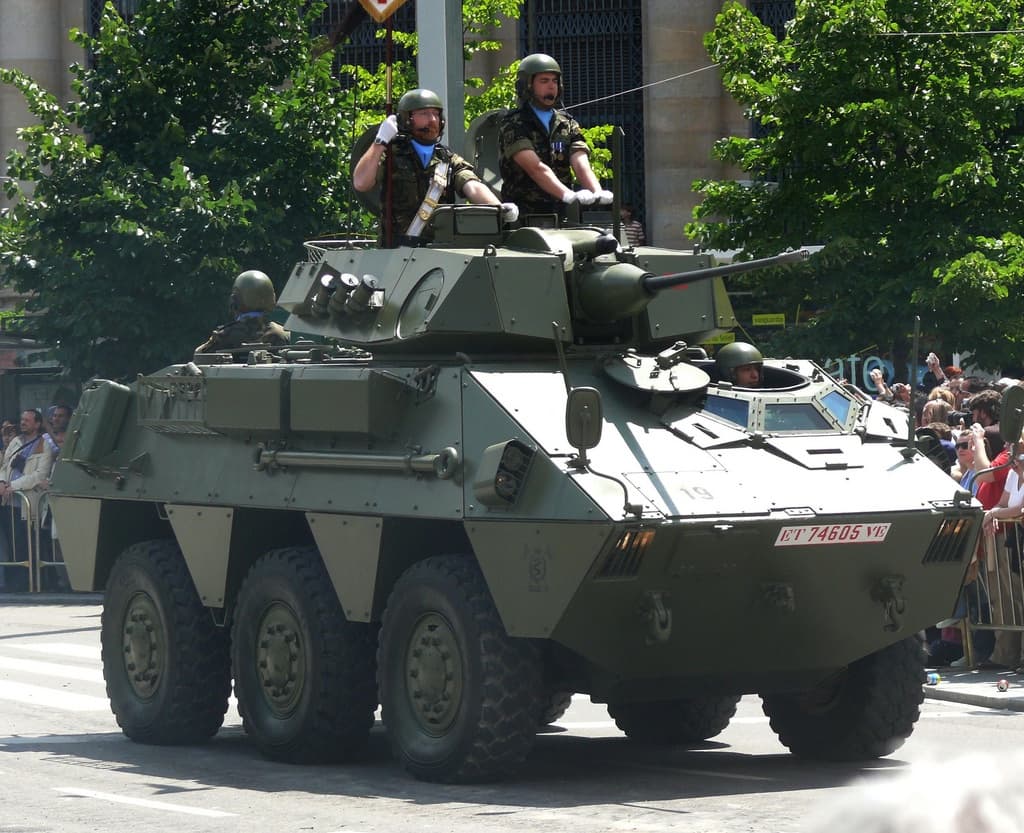
VEC-M1
- Description:
- The BMR-625 VEC is a 6x6 amphibious vehicle developed in Spain. This version features an Italian TC-25 turret armed with the M242 Bushmaster cannon. This particular version has additional armor to protect against 14.5 mm ammunition and a new Scania DS9-61A245MIL engine. This upgrade was designated VEC-M1.
- Crew:
- 3 ( Commander, Gunner, Driver)
- Armament:
- Primary: M242 Bushmaster 25mm autocannon
- Maneuverability:
- Max. Speed: 100 km/h
- Sources:
Rank 6
Spoiler
ASCOD PT-2
- Description:
- The second prototype of the joint Austro-Spanish ASCOD program. The ASCOD PT-2 is armed with a two-plane stabilized German 30mm Mauser MK30-2 autocannon, unlike the PT-1, which lacked this. It can also use APFSDS ammunition with up to 121mm of penetration. It is not entirely clear whether this second prototype possessed a dedicated fire control system.
- Crew:
- 3 ( Commander, Gunner, Driver)
- Armament:
- Primary: 30mm Mauser MK30-2
- Maneuverability:
- Max. Speed: 70km/h
- Sources:
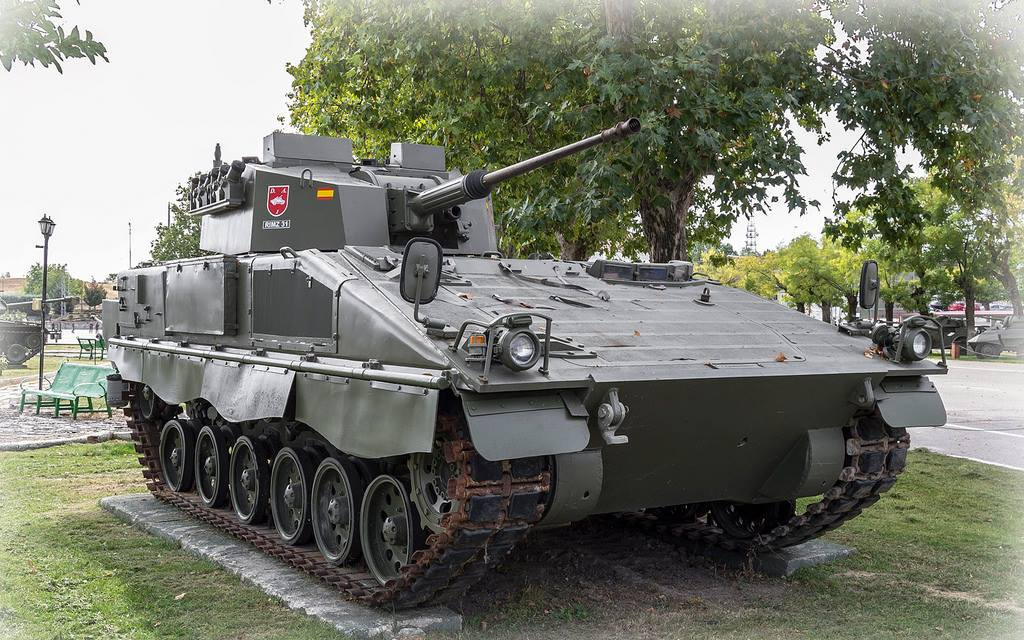
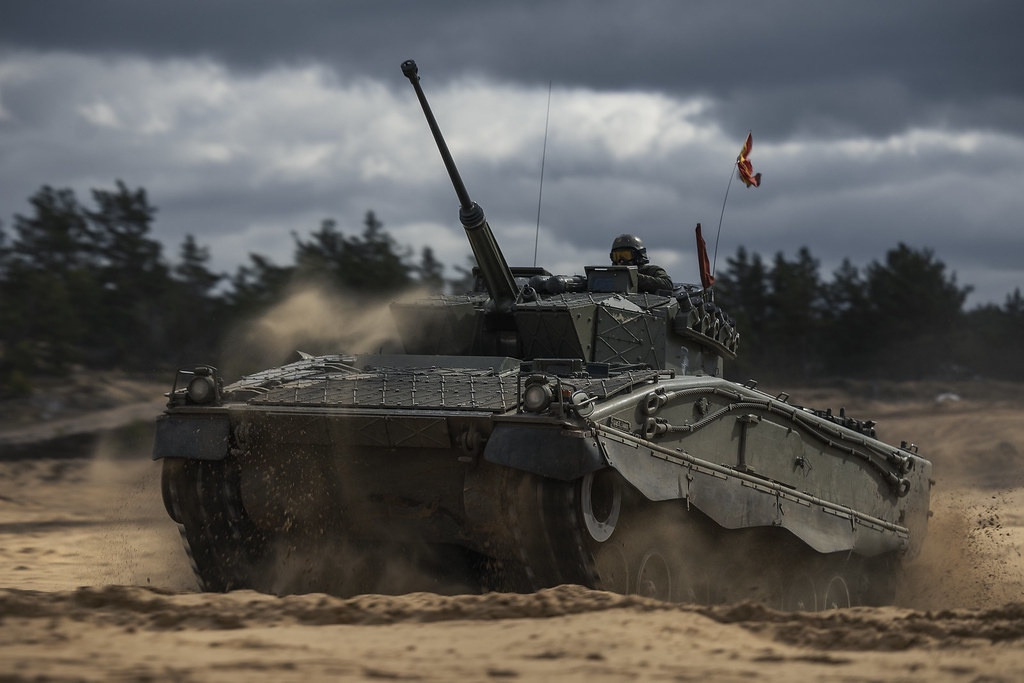
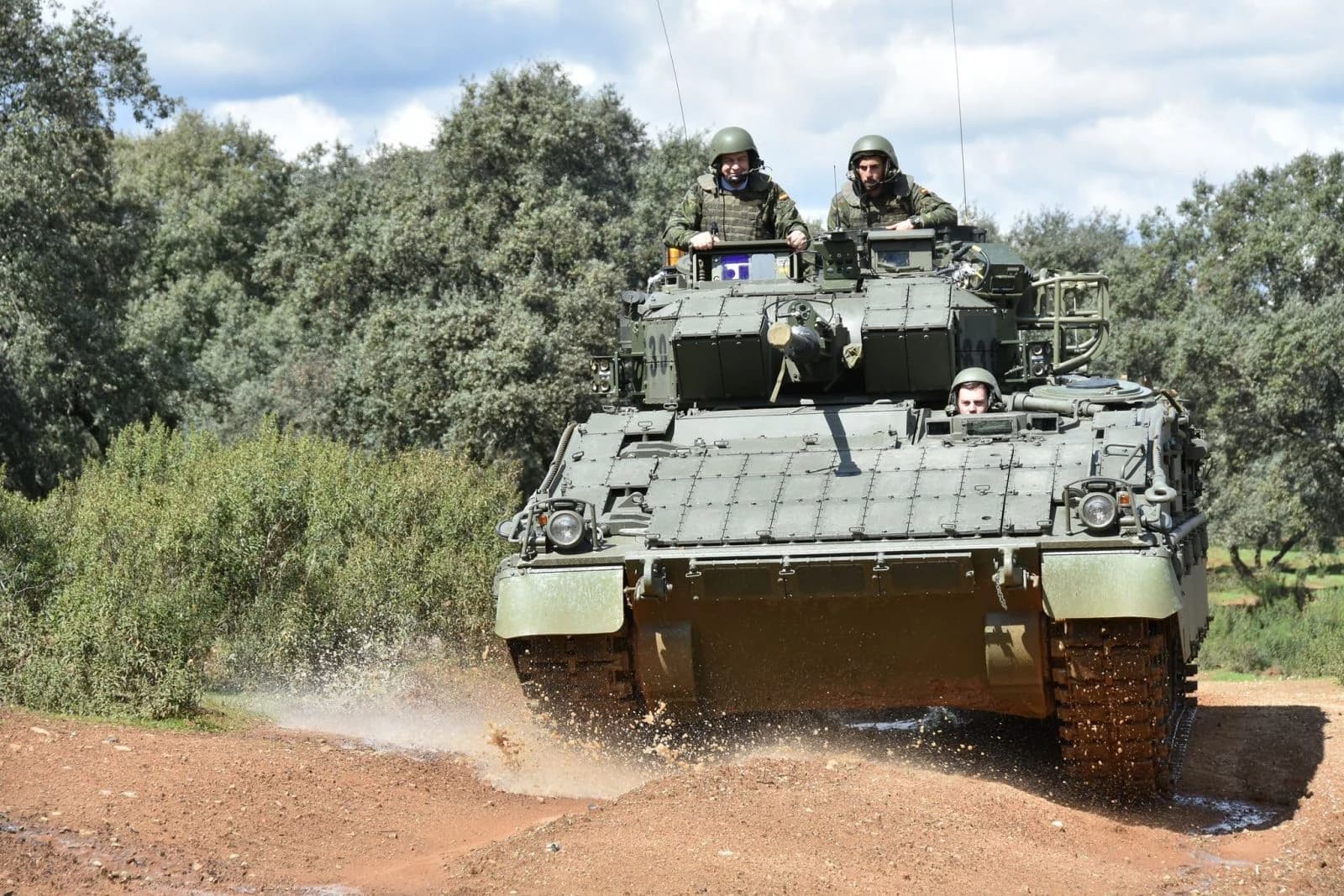
Pizarro (fase I)
- Description:
- Following the ASCOD prototypes, the first production batch, designated Pizarro, began. This first phase retains the German Mauser MK30-2 30mm dual-plane stabilized automatic cannon from the second ASCOD PT-2 prototype, but this time includes an Mk-10 fire control system manufactured by the Spanish company Indra. This system consists of fully stabilized first-generation thermal sights for the gunner and commander, and a laser rangefinder. It also features additional armor plating on the front of the vehicle.
- Crew:
- 3 ( Commander, Gunner, Driver)
- Armament:
- Primary: 30mm Mauser MK30-2
- Maneuverability:
- Max. Speed: 70km/h
- Sources:
Pizarro (fase II)
- Description:
- The second production series of the Spanish Pizarro vehicle maintains all the characteristics of Fase 1 and adds second-generation thermal imaging optics as well as an improved engine and transmission.
- Crew:
- 3 ( Commander, Gunner, Driver)
- Armament:
- Primary: 30mm Mauser MK30-2
- Maneuverability:
- Max. Speed: 70km/h
- Sources:
Rank 7
Spoiler
ASCOD LT-105LRF
- Description:
- This version of the Spanish ASCOD armored vehicle features the Italian 105LRF turret manufactured by OTO Melara. As its name suggests, it is equipped with a stabilized 105mm cannon capable of firing all NATO APFSDS and HEATFS ammunition. The vehicle also includes a laser rangefinder.
- Crew:
- 3 ( Commander, Gunner, Driver)
- Armament:
- Primary: 52 caliber 105 mm low recoil gun
- Maneuverability:
- Max. Speed: 70 km/h
- Sources:
Piranha III Lance
- Description:
- Piranha III armored vehicles acquired by the Spanish Marines are armed with the Rheinmetall MTS Lance turret, equipped with a 30mm Mauser MK30-2/ABM autocannon stabilized in two planes. Four of these vehicles were armed with these turrets. The vehicle features fully stabilized third-generation thermal sights for the commander and gunner, as well as a laser rangefinder.
- Crew:
- 3 ( Commander, Gunner, Driver)
- Armament:
- Primary: Mauser MK30-2/ABM
- Maneuverability:
- Max. Speed: 100km/h
- Sources:
VCR Dragón
- Description:
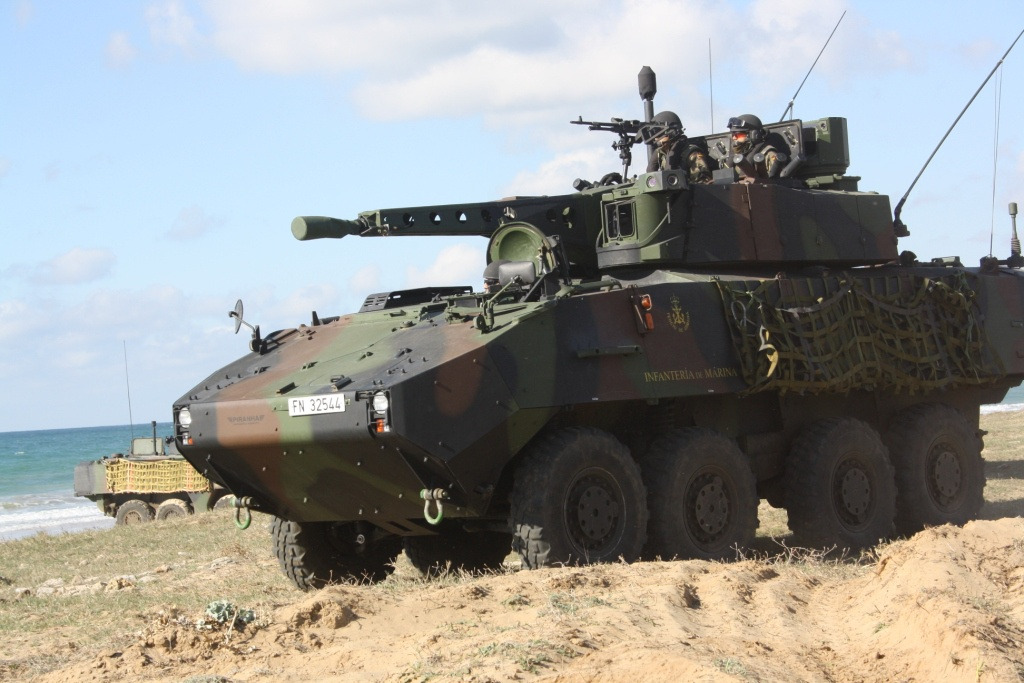
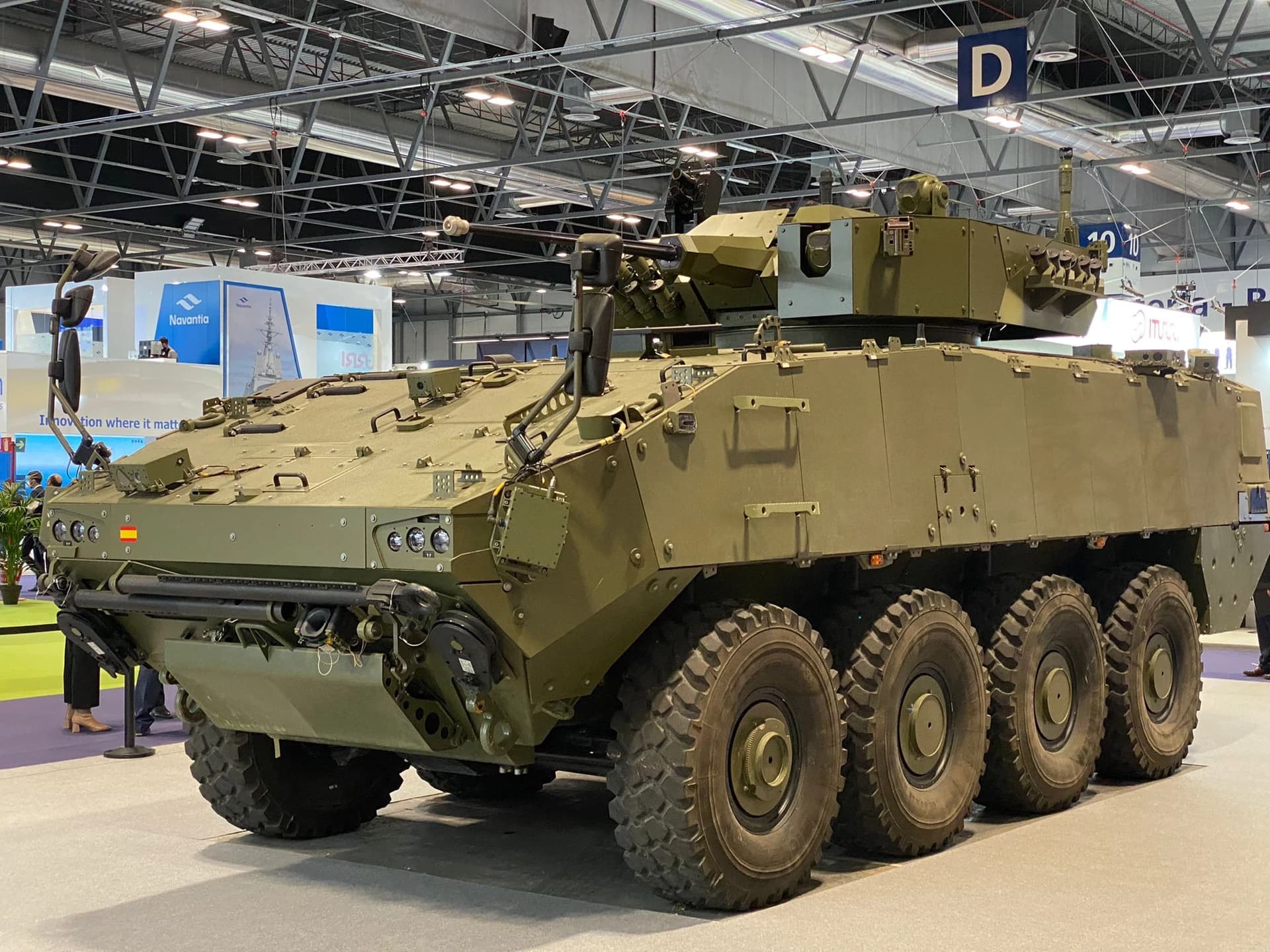
- The VCR Dragón is a Spanish infantry fighting vehicle manufactured by a consortium of Santa Bárbara Sistemas, Indra, and Sapa. Based on the MOWAG Piranha V, it features the Guardian 30 turret, which is equipped with a 30mm ATK Bushmaster MK44S dual-plane stabilized automatic cannon and a twin Spike LR anti-tank missile launcher. The vehicle also boasts third-generation thermal sights and a laser rangefinder.
- Crew:
- 3 ( Commander, Gunner, Driver)
- Armament:
- Primary: Bushmaster Mk44S Stretch, Spike-LR Launcher
- Maneuverability:
- Max. Speed: 100km/h
- Sources:
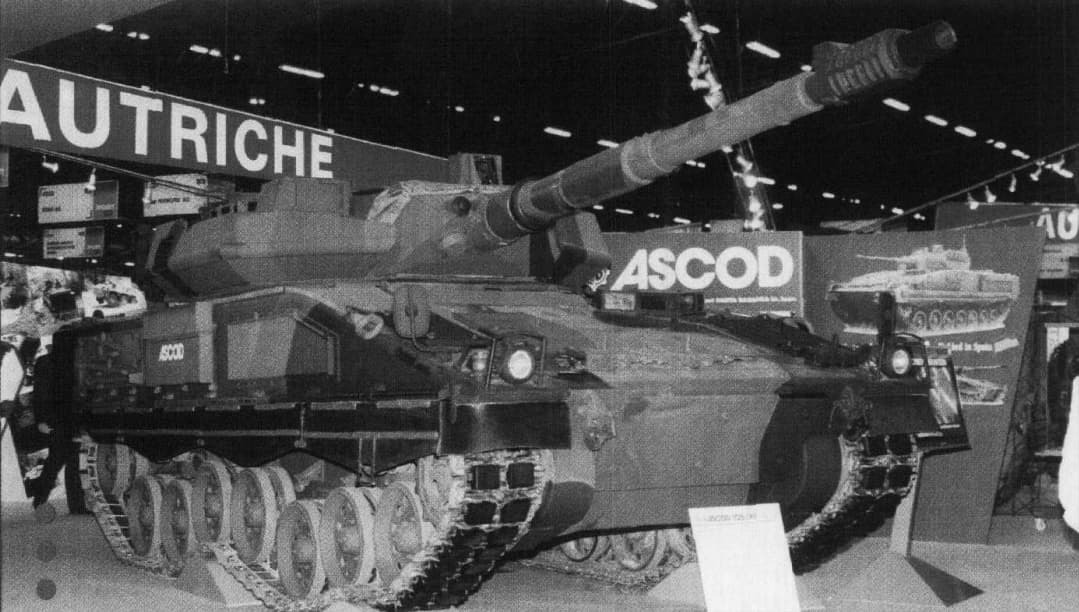
ASCOD 2 IFV (2024)
- Description:
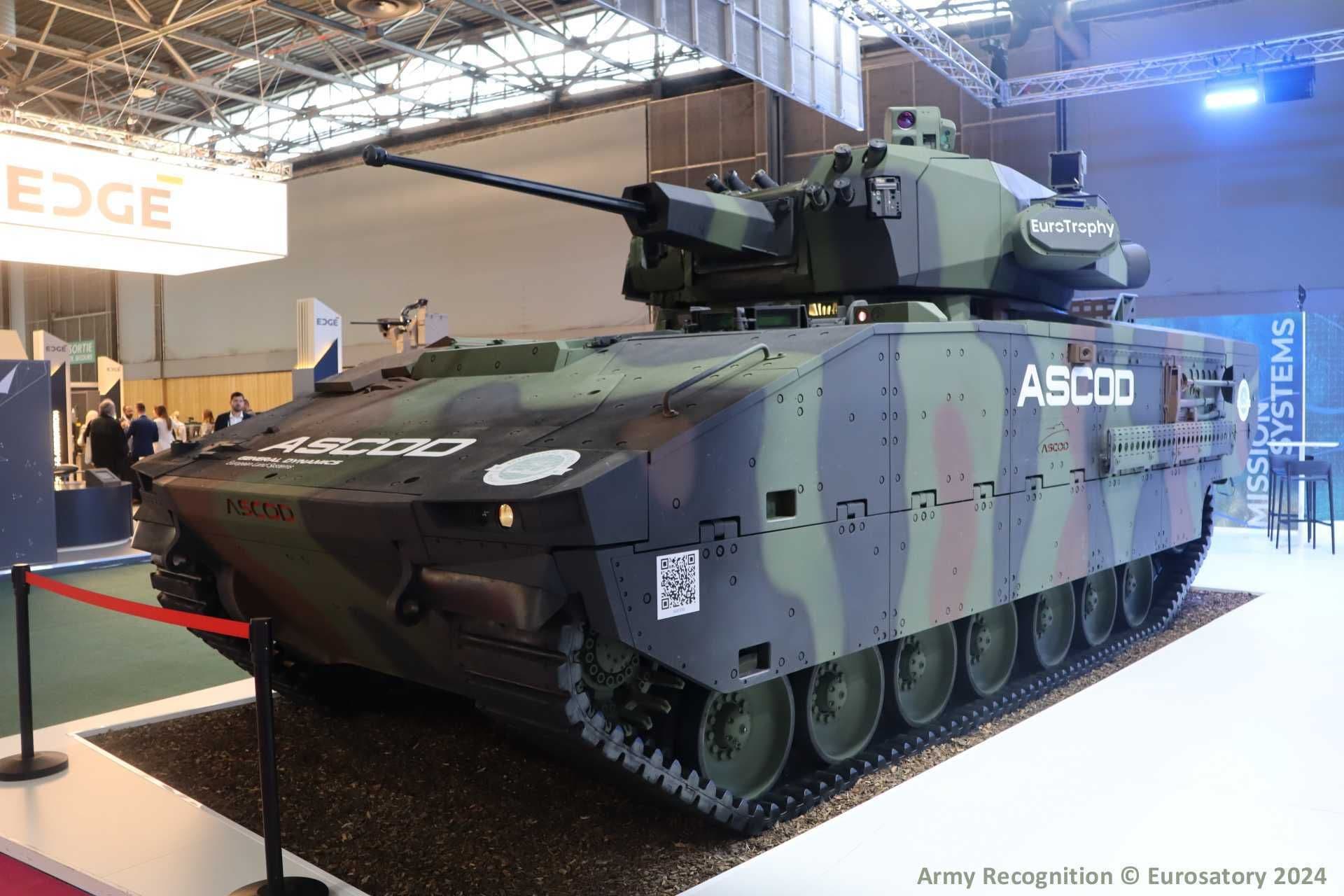
- In 2004, General Dynamics European Land Systems introduced the ASCOD 2, the successor to the ASCOD 1 and later the Spanish Pizarro vehicles. The 2024 version of the ASCOD 2 uses the 42-ton chassis, which differs from the 35-ton version in that it incorporates improved armor and a more robust engine and transmission. It also features the Elbit UT30MK2 unmanned turret, equipped with a 30mm ATK Bushmaster MK44-ABM autocannon stabilized in two planes. The turret also integrates a twin Spike LR anti-tank missile launcher. Finally, it includes the Trophy APS missile interception system.
- Crew:
- 3 ( Commander, Gunner, Driver)
- Armament:
- Primary: 30mm Bushmaster Mk44-ABM, Spike-LR Launcher
- Maneuverability:
- Max. Speed: 70km/h
- Sources:
Rank 8
Spoiler
ASCOD 2 MMBT
- Description:
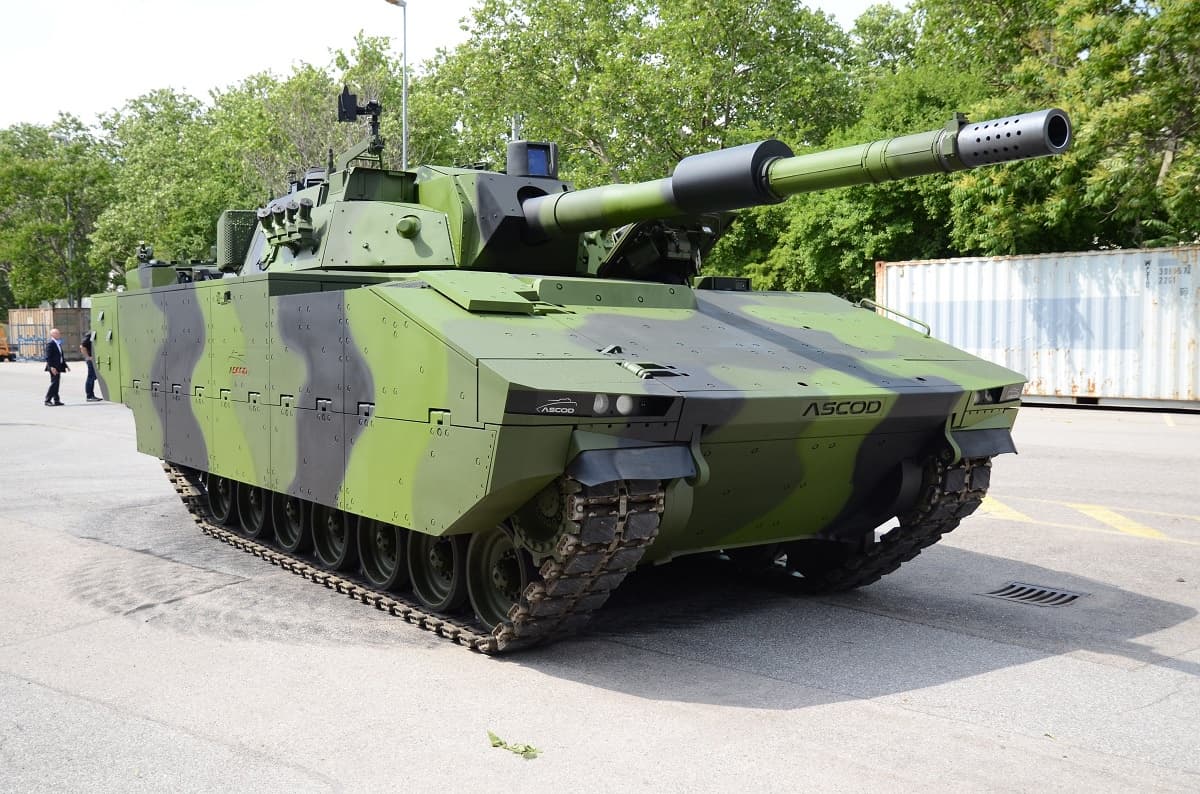
- During Eurosatory 2018, General Dynamics European Land Systems unveiled a new variant of the ASCOD 2, the ASCOD 2 MMBT medium main battle tank. This new variant is equipped with the 120mm HITFACT turret from Leonardo Defense Systems of Italy and, as expected, features state-of-the-art thermal imaging and a laser rangefinder.
- Crew:
- 4 ( Commander, Gunner, Loader, Driver)
- Armament:
- Primary: OTO Melara 120/45 smoothbore cannon
- Maneuverability:
- Max. Speed: 70 km/h
- Sources:
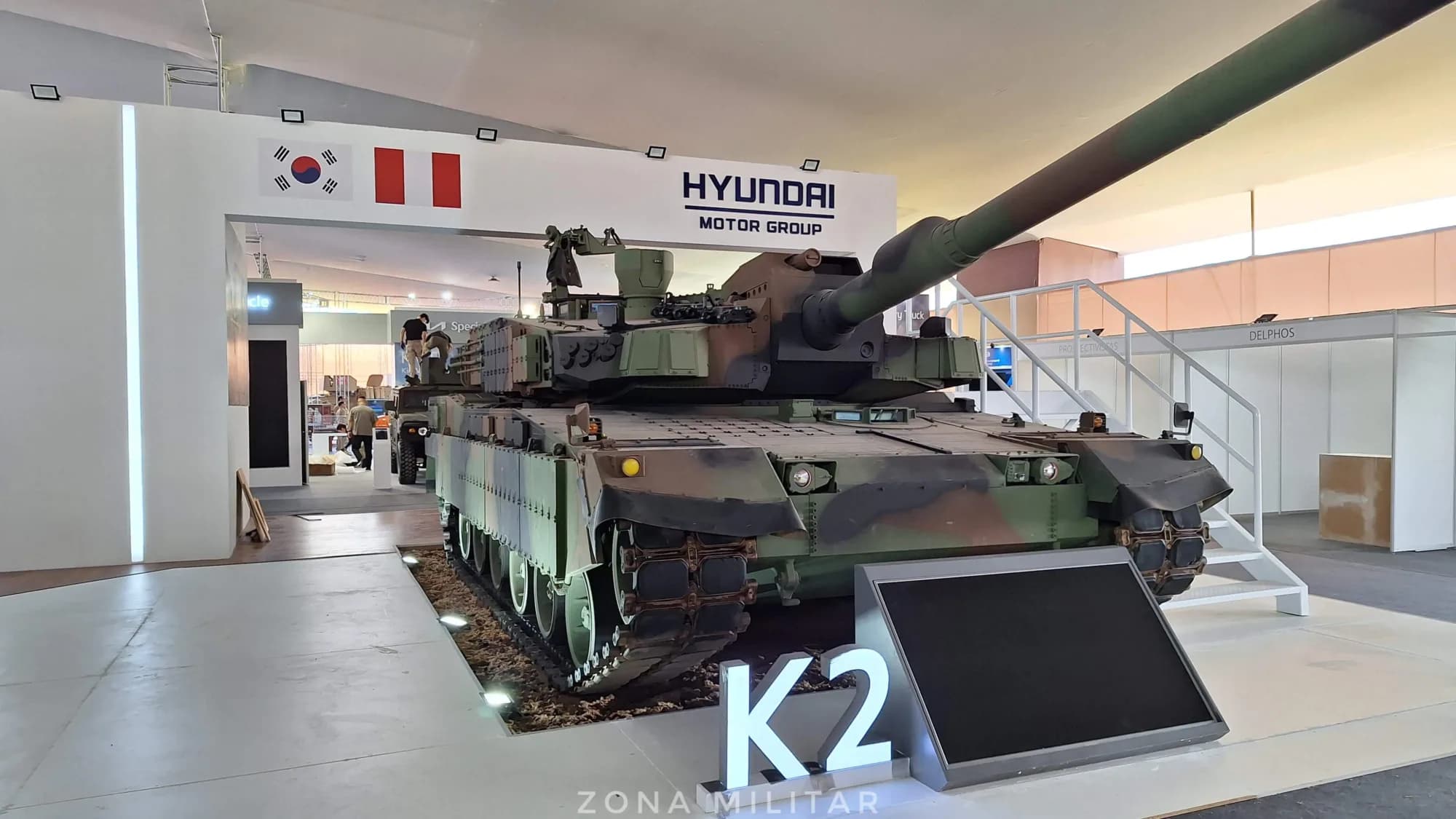
K2 Black Panther
- Description:
- During 2025, the Korean K2 Black Panther was sent to Peru for testing by the Peruvian Army, where it passed various tests. It was also exhibited at SITDEF in Lima. At the end of that year, Peru and South Korea signed a more concrete agreement for the future acquisition of 54 K2 Black Panther tanks, which will become one of, if not the, most powerful tanks in Latin America.
- Crew:
- 3 (Commander, Gunner, Driver)
- Armament:
- Primary: Hyundai WIA CN08 120 mm smoothbore gun
- Maneuverability:
- Max. Speed: 70 km/h
- Sources:
Medium Tanks/MBTs
Spoiler
Rank 1
Spoiler
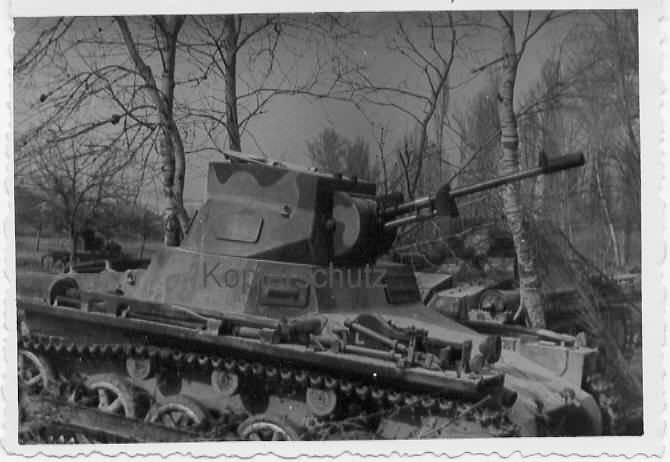
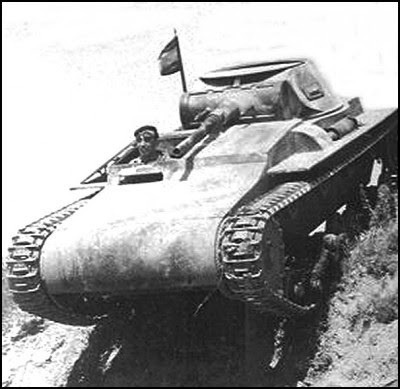
Panzer I Ausf. A (Breda)
- Description:
- The Panzer I was used by the Nationalist side in the Spanish Civil War. Because it was inferior in firepower to the Soviet T-26 tanks of the Republican side, it was decided to mount 20mm Breda cannons on some Panzer Is.
- Crew:
- 3 (Commander, Gunner, Driver)
- Armament:
- Primary: 20mm Breda 20/62 mod.35
- Maneuverability:
- Max. Speed: 37km/h
- Sources:
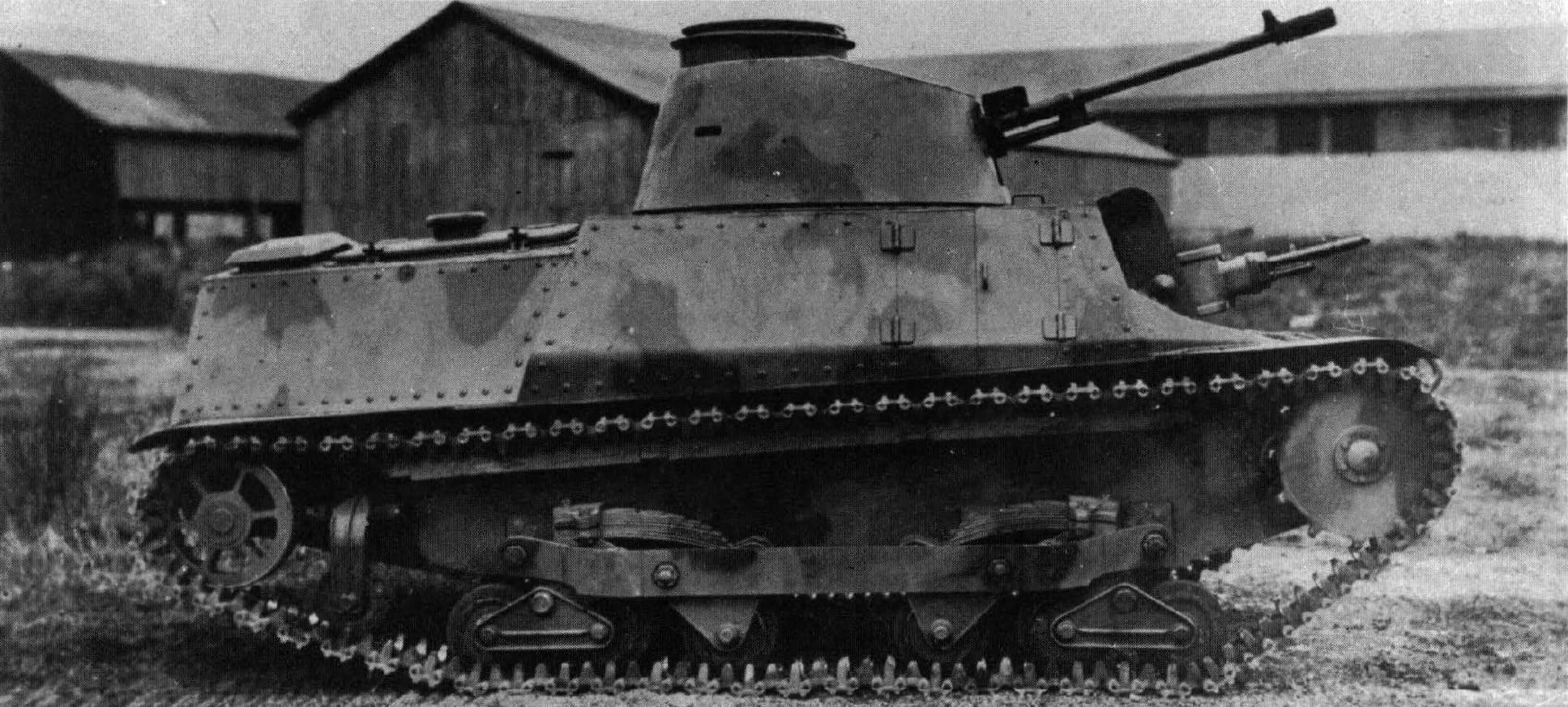
CCI tipo 1937
- Description:
- A prototype tank developed in Spain by the Nationalist side. Designated “Carro de Combate de Infantería tipo 1937” or simply CCI tipo 1937, it was an attempt to develop a national tank. Although it successfully passed various tests, the project was ultimately abandoned due to its weak armor, despite having decent firepower.
- Crew:
- 3 (Commander, Gunner, Driver)
- Armament:
- Primary: 20 mm Italian Breda M-35
- Maneuverability:
- Max. Speed: 24 km/h
- Sources:
Verdeja 1
- Description:
- The final design of what would become the Spanish Nationalist tank, the Verdeja 1, was a very low-profile tank with the turret located at the rear. The tank was a success in all tests, and the Nationalists wanted to promote its mass production. However, due to Spain’s poor economic situation, companies were reluctant to invest in production. By 1941, the tank’s design was becoming obsolete, so the project was cancelled. Only 2 of these tanks were produced.
- Crew:
- 3 (Commander, Gunner, Driver)
- Armament:
- Primary: 45/44 Mark I S.A. Plasencia de las Armas
- Maneuverability:
- Max. Speed: 44 km/h
- Sources:
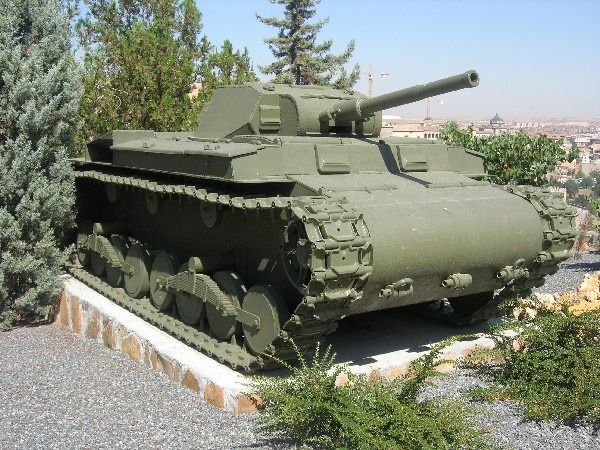
Verdeja 2
- Description:
- The Verdeja 2 was the Nationalists’ second attempt at mass-producing a national tank. The original design of its predecessor was modified, and this time the turret was positioned at the front. It wasn’t until 1944 that the only prototype was completed, and by then the design was already obsolete. Furthermore, Spain had received the Panzer IV Hs and StuG III Gs from Germany, which further overshadowed the Spanish tank, and so the project was abandoned.
- Crew:
- 3 (Commander, Gunner, Driver)
- Armament:
- Primary: 45/44 Mark I S.A. Plasencia de las Armas
- Maneuverability:
- Max. Speed: 46 km/h
- Sources:
Rank 2
Spoiler
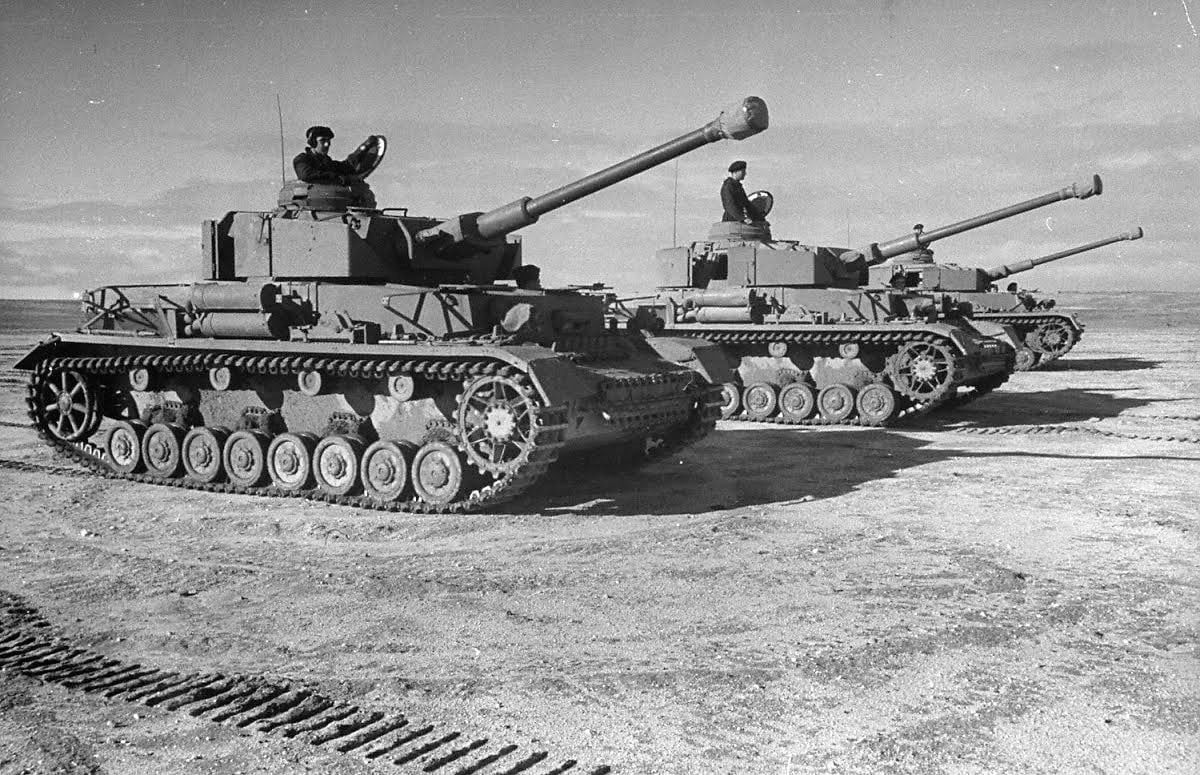
Pz.IV H
- Description:
- Twenty German Pz.IV H tanks were acquired by Spain in 1943 during World War II. Years later they were decommissioned, and in 1965 17 were sold to Syria.
- Crew:
- 5 (Commander, Gunner, Loader, Driver, Machine gunner)
- Armament:
- Primary: 75 mm KwK40 L48 cannon
- Maneuverability:
- Max. Speed: 39 km/h
- Sources:
Rank 3
Spoiler
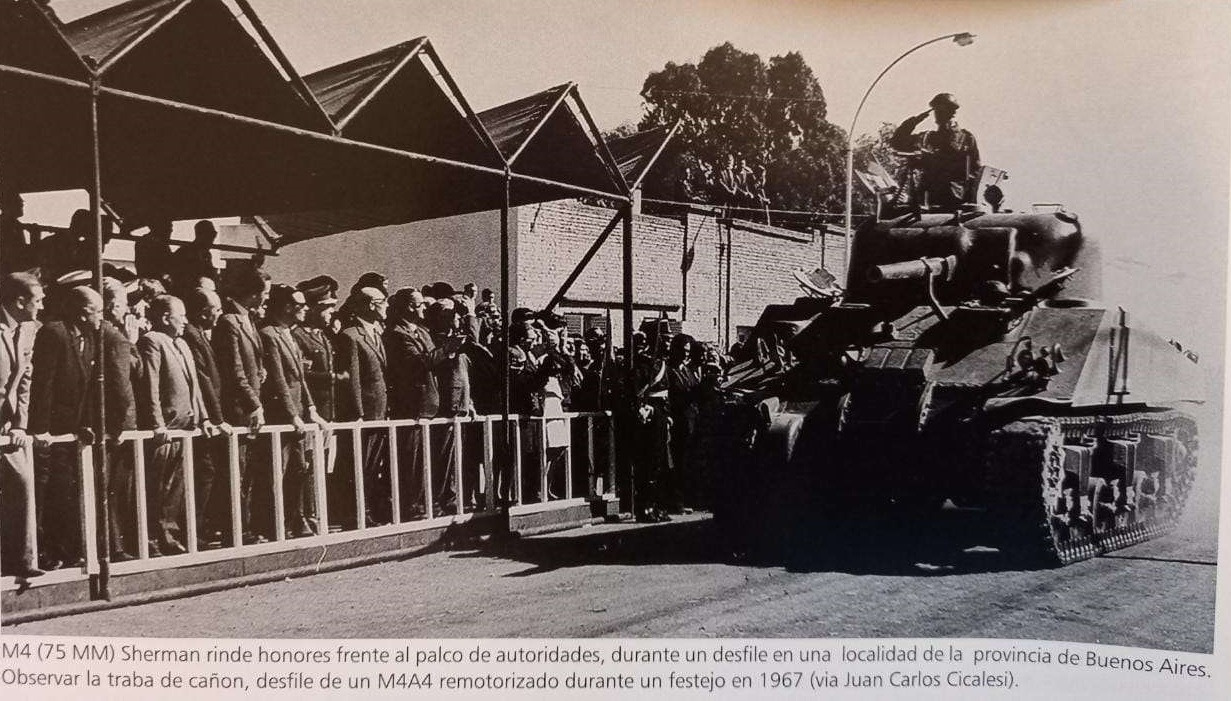
M4A4 Remot.
- Description:
- M4A4 Sherman to which Argentina changed the engine for a more powerful one.
- Crew:
- 4 (Commander, Gunner, Loader, Driver)
- Armament:
- Primary: M3 75mm L/40 cannon
- Maneuverability:
- Max. Speed: 40 km/h
- Sources:
- M4 Sherman – Serie Terrestre #2 by Juan Carlos Cicalesi & Hugo Bianucci
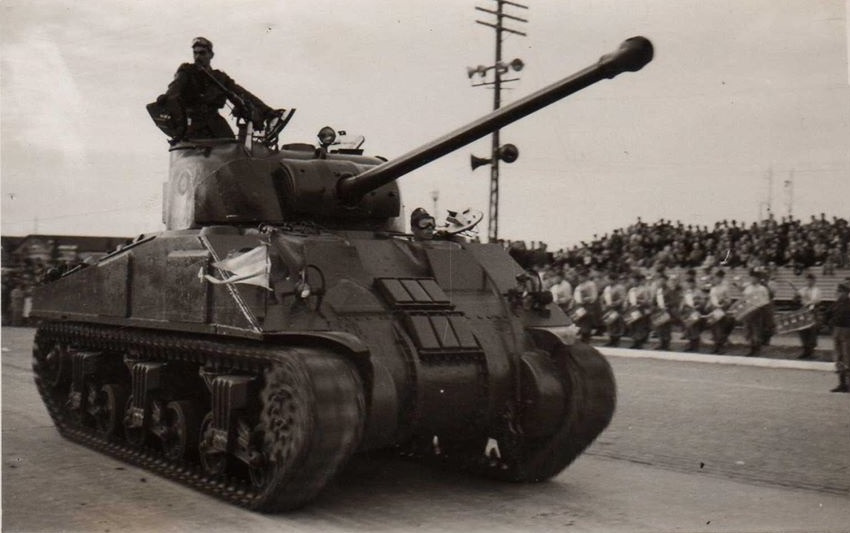
Firefly Mod.
- Description:
- Sherman Fireflys to which Argentina changed the engine for a more powerful one, these tanks also used APCBC, APDS and HE ammunition of national manufacture.
- Crew:
- 4 (Commander, Gunner, Loader, Driver)
- Armament:
- Primary: ROF OQF 17 Pdr cannon
- Maneuverability:
- Max. Speed: 40 km/h
- Sources:
- M4 Sherman – Serie Terrestre #2 by Juan Carlos Cicalesi & Hugo Bianucci
Rank 4
Spoiler
Firefly IC Repot.
- Description:
- Argentinian Sherman Firefly whose gun was replaced by an FTR 105 mm L44 cannon taken from the AMX-13-105, the engine was also changed for a more powerful one.
- Crew:
- 4 (Commander, Driver, Gunner, Loader)
- Armament:
- Primary: FTR 105 mm L44 cannon
- Maneuverability:
- Max. Speed: 40 km/h
- Sources:
- Sherman Repotenciado vs Sherman Revalorisé – Parte II/II – Reporte de Batalla
- M4 Sherman – Serie Terrestre #2 by Juan Carlos Cicalesi & Hugo Bianucci
Firefly VC Repot.
- Description:
- Argentinian Sherman Firefly whose gun was replaced by an FTR 105 mm L44 cannon taken from the AMX-13-105, the engine was also changed for a more powerful one. This version also features a dozer blade.
- Crew:
- 4 (Commander, Driver, Gunner, Loader)
- Armament:
- Primary: FTR 105 mm L44 cannon
- Maneuverability:
- Max. Speed: 40 km/h
- Sources:
- Sherman Repotenciado vs Sherman Revalorisé – Parte II/II – Reporte de Batalla
- M4 Sherman – Serie Terrestre #2 by Juan Carlos Cicalesi & Hugo Bianucci
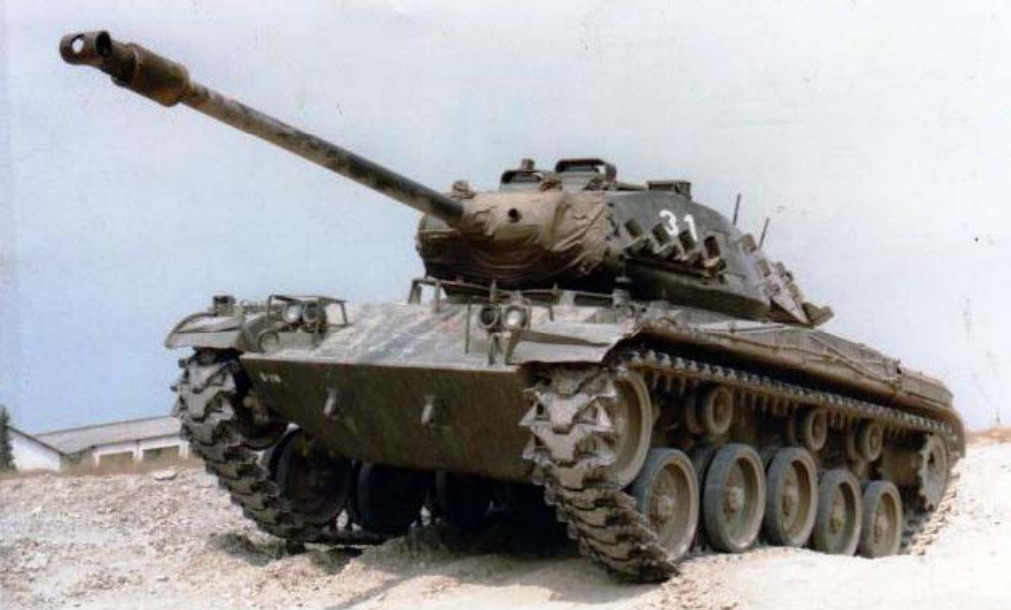
M41E
- Description:
- The M41 Walker Bulldog was in Spanish service. Several improvements were proposed for these tanks, one of which was the M41E, which improved the engine and transmission and added smoke grenade launchers to the turret. It did not pass the prototype stage, and Spain did not accept the proposal.
- Crew:
- 4 ( Commander, Gunner, Loader, Driver)
- Armament:
- Primary: 76 mm M32 cannon
- Maneuverability:
- Max. Speed: 72 km/h
- Sources:


Rank 5
Spoiler
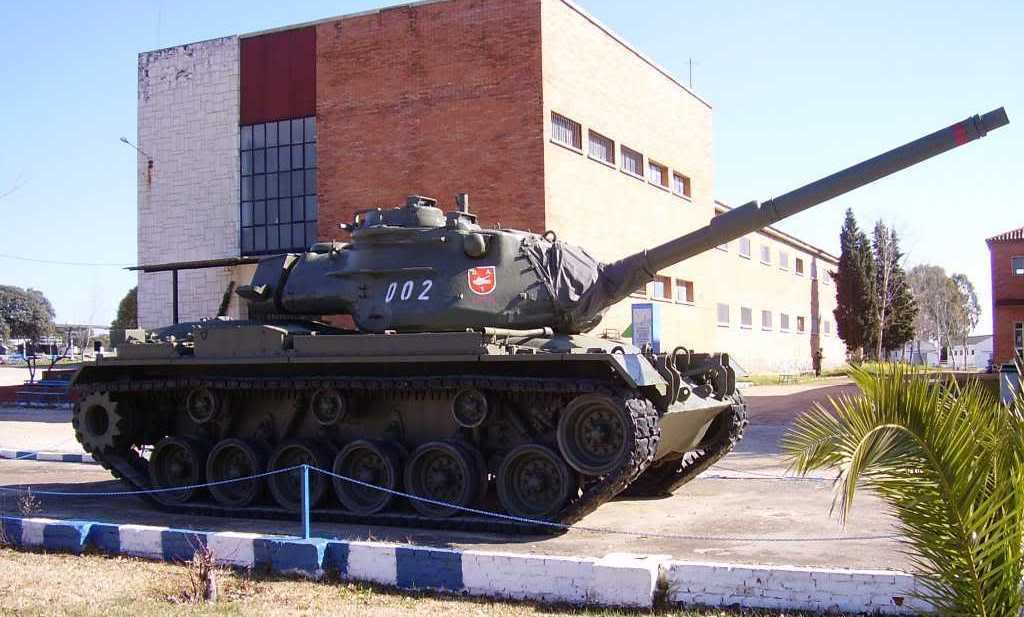
M47E1
- Description:
- M47 Patton in Spanish service, hundreds of these tanks were received from 1954 onwards. Later in 1975, Chrysler SA offered an upgrade for the Spanish M47s, replacing the original engine with a better, though less powerful one.
- Crew:
- 4 ( Commander, Gunner, Loader, Driver)
- Armament:
- Primary: 90mm M36
- Maneuverability:
- Max. Speed: 56km/h
- Sources:
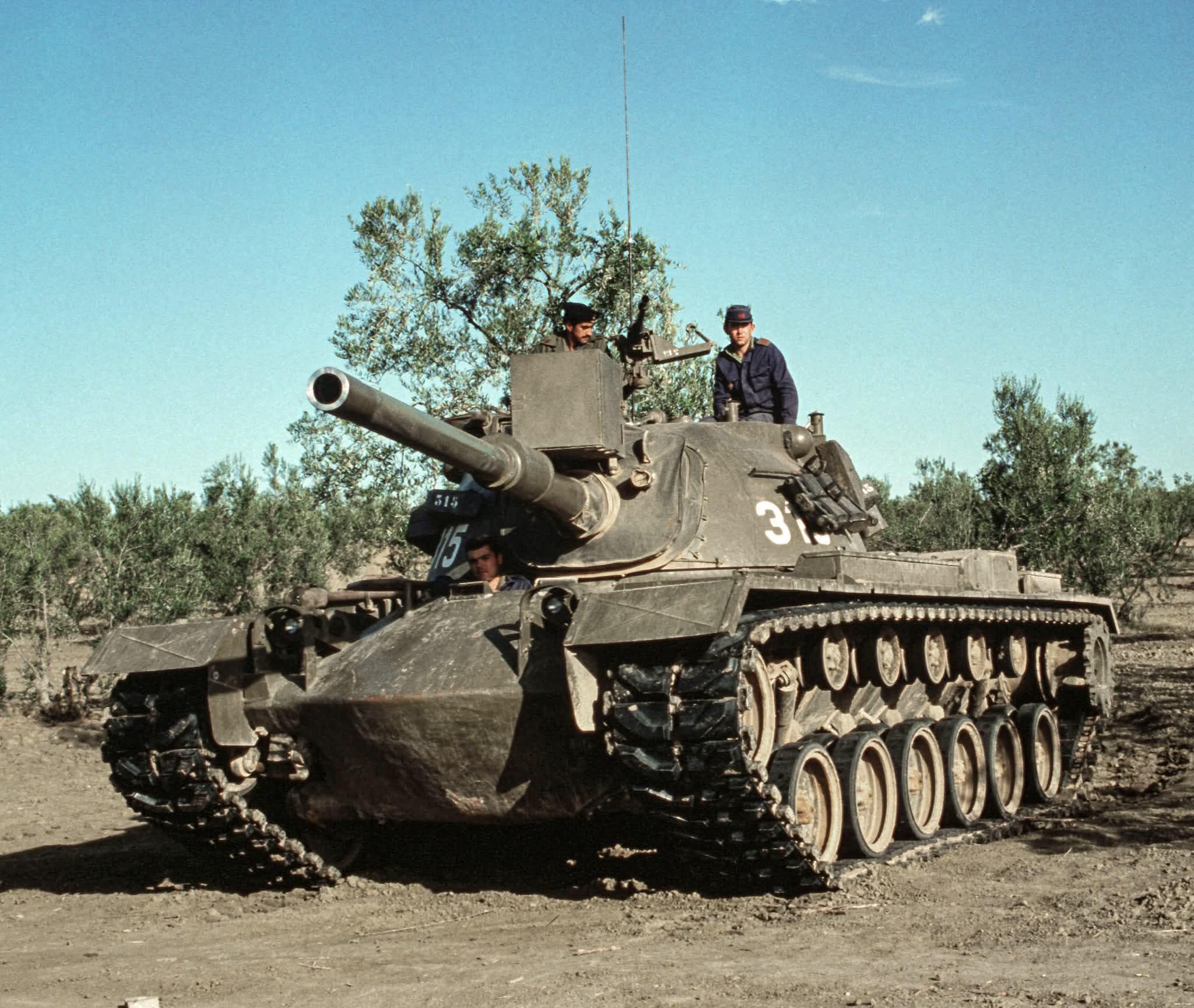
M48A1
- Description:
- From 1965 onwards, Spain began receiving M48A1 tanks, which remained in service for several decades. They were later modernized.
- Crew:
- 4 ( Commander, Gunner, Loader, Driver)
- Armament:
- Primary: 90 mm M41 cannon
- Maneuverability:
- Max. Speed: 45 km/h
- Sources:
M47E2
- Description:
- The M47E2 is a Patton tank modernized for Spain. This time it features the Rh-105-30 105mm unstabilized gun capable of firing DM13 or M392A2 APDS rounds with a penetration of up to 350mm. It also adds smoke grenade launchers in the turret and another engine.
- Crew:
- 4 ( Commander, Gunner, Loader, Driver)
- Armament:
- Primary: 105mm Rh-105-30
- Maneuverability:
- Max. Speed: 56km/h
- Sources:
M48A5E2
- Description:
- In 1976, the Talbot company was commissioned to modernize the Spanish M48A1s. The original engine was replaced with a Continental diesel, and the transmission with an Allison. The commander’s and gunner’s vision devices were improved. The final upgrade was the installation of a 105mm cannon, which required the addition of a laser rangefinder and a computerized ballistic computer.
- Crew:
- 4 ( Commander, Gunner, Loader, Driver)
- Armament:
- Primary: 105mm M68 cannon
- Maneuverability:
- Max. Speed: 50 km/h
- Sources:
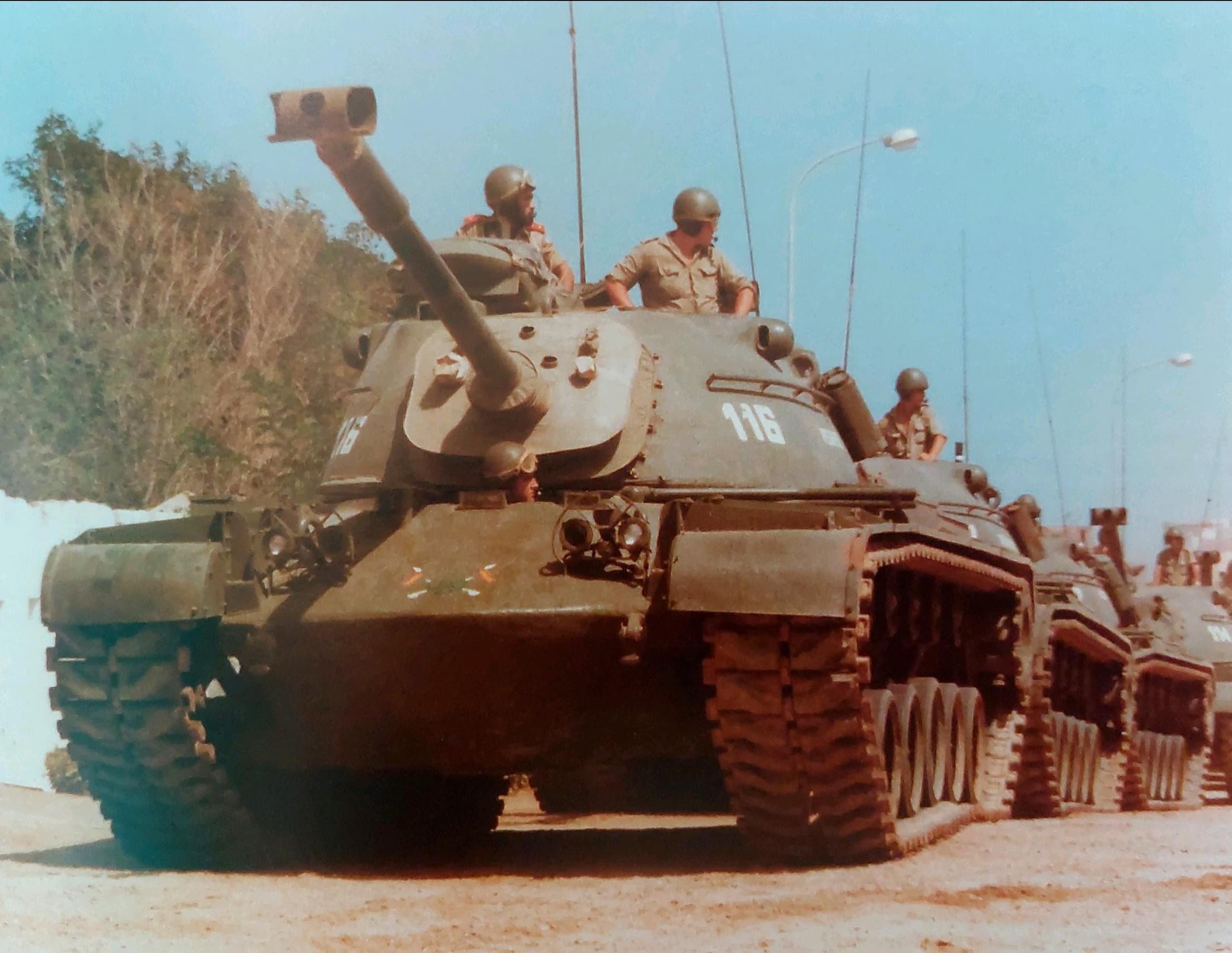
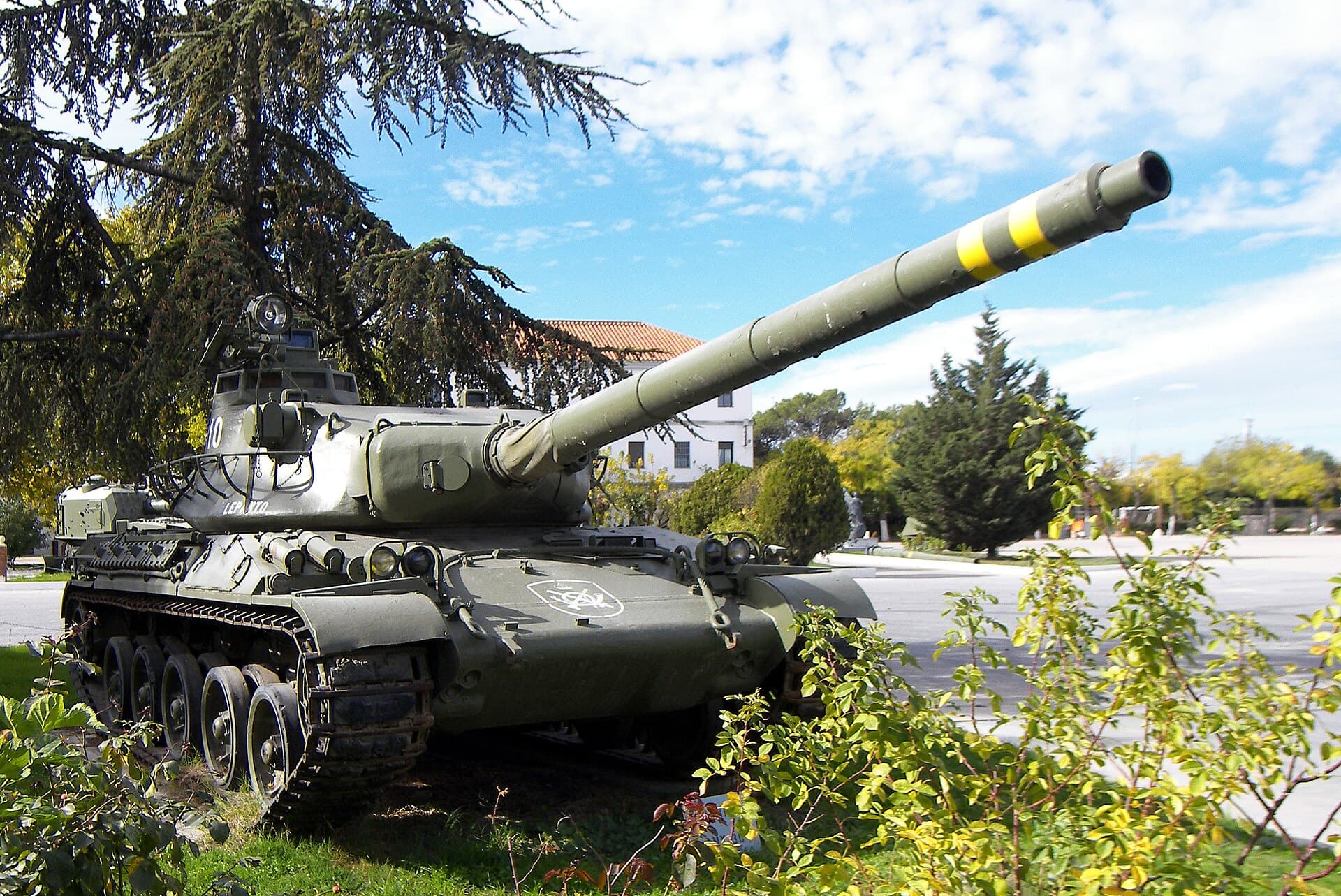
AMX-30E
- Description:
- In 1970, Spain and France agreed to the licensed production of the AMX-30 in Spain. The AMX-30E is essentially the Spanish-built AMX-30B; it is indistinguishable from the original French version.
- Crew:
- 4 ( Commander, Gunner, Loader, Driver)
- Armament:
- Primary: 105 mm CN105 F1 cannon
- Maneuverability:
- Max. Speed: 65 km/h
- Sources:

Rank 6
Spoiler
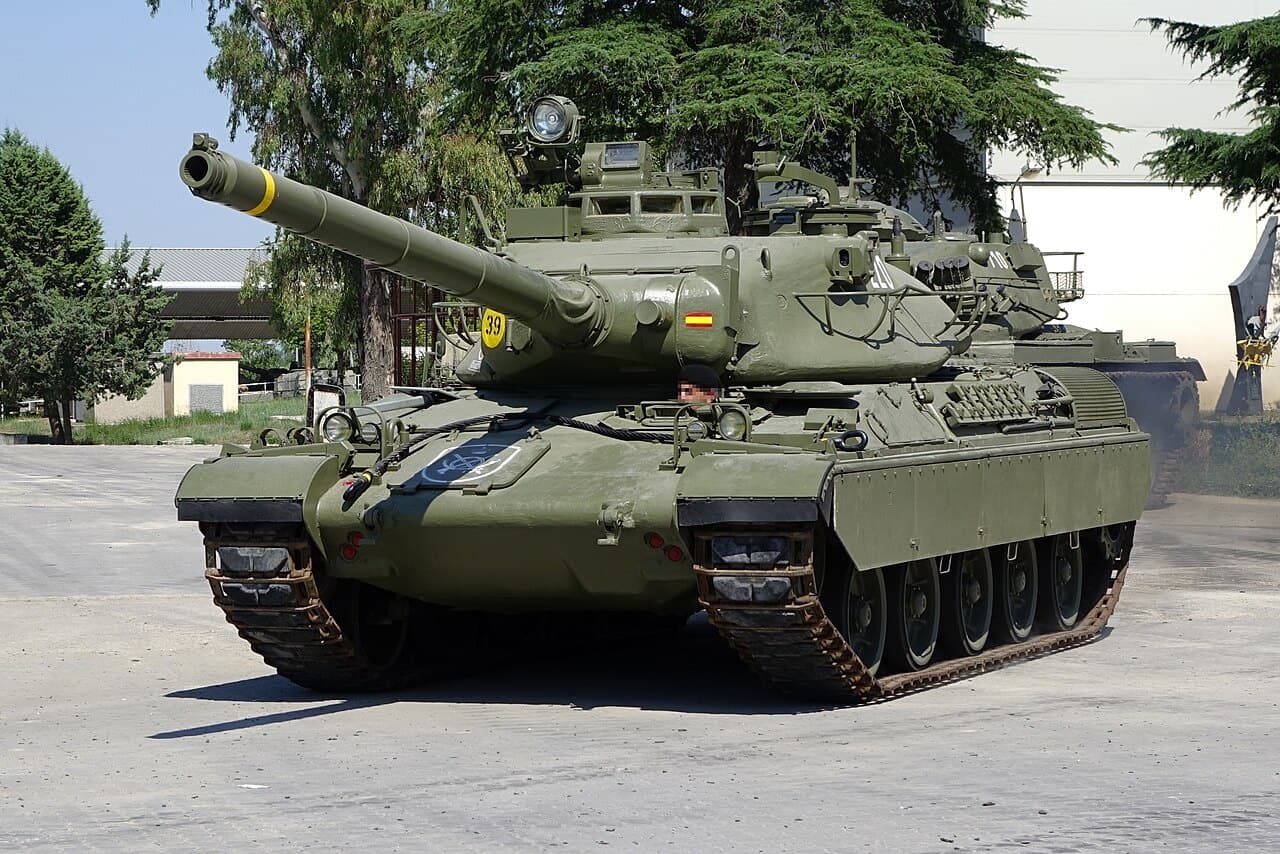
AMX-30EM2
- Description:
- The Spanish AMX-30E tanks were modernized, receiving a new engine and transmission, a new fire control system incorporating a laser rangefinder and first-generation thermal imaging, side skirts, and OFL 105 F1 APFSDS ammunition with up to 361 mm of penetration. The gun remained unstabilized. After these improvements, the tanks were designated AMX-30EM2.
- Crew:
- 4 ( Commander, Gunner, Loader, Driver)
- Armament:
- Primary: 105 mm CN105 F1 cannon
- Maneuverability:
- Max. Speed: 65 km/h
- Sources:
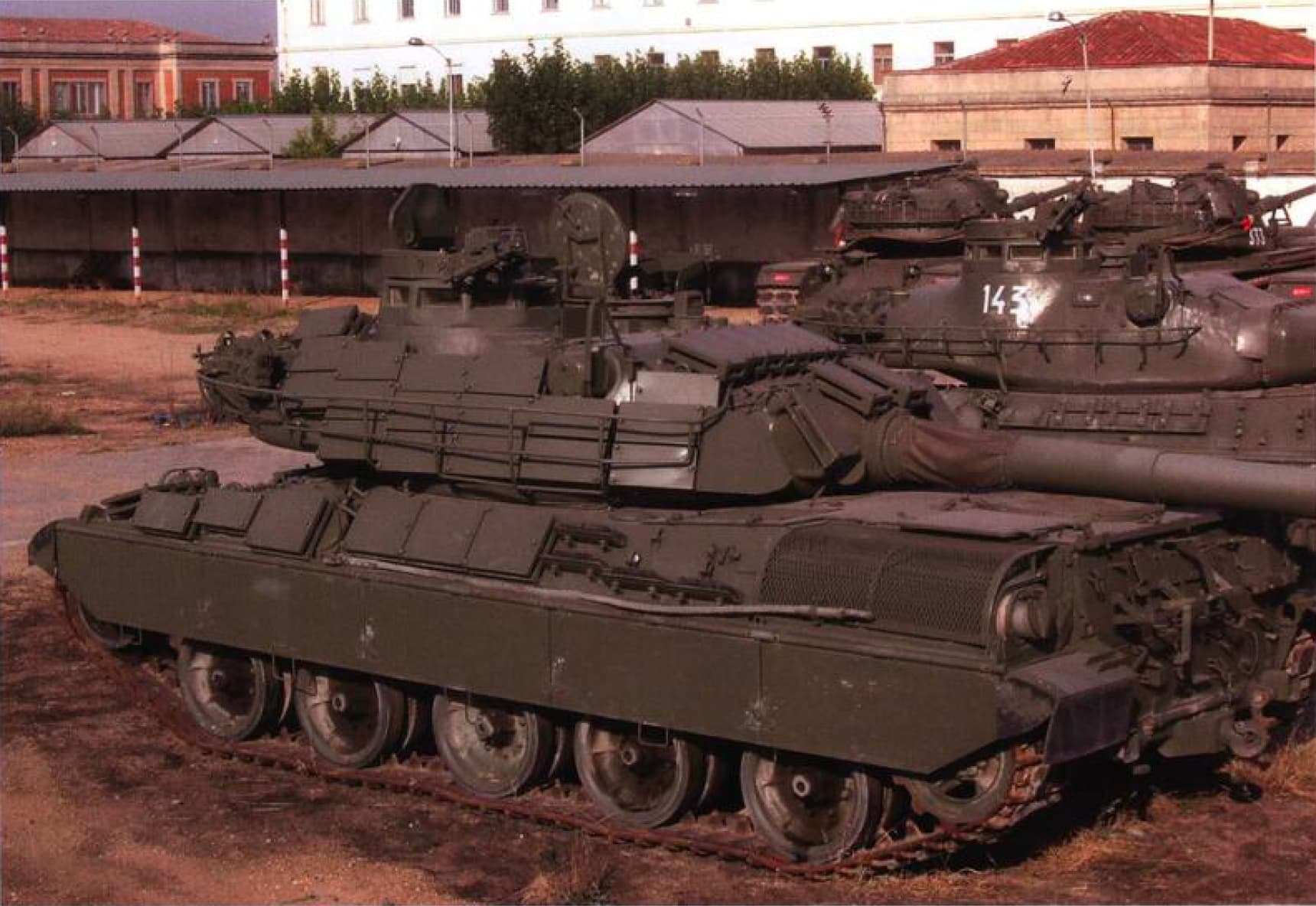
AMX-30EM2 SABBLIR
- Description:
- Between 1990 and 1991, two AMX-30EM2 tanks with domestically produced explosive reactive armor (ERA) were tested, protecting the tank from HEAT ammunition, but due to the arrival of more modern tanks, this was not replicated on the other tanks.
- Crew:
- 4 ( Commander, Gunner, Loader, Driver)
- Armament:
- Primary: 105 mm CN105 F1 cannon
- Maneuverability:
- Max. Speed: 65 km/h
- Sources:
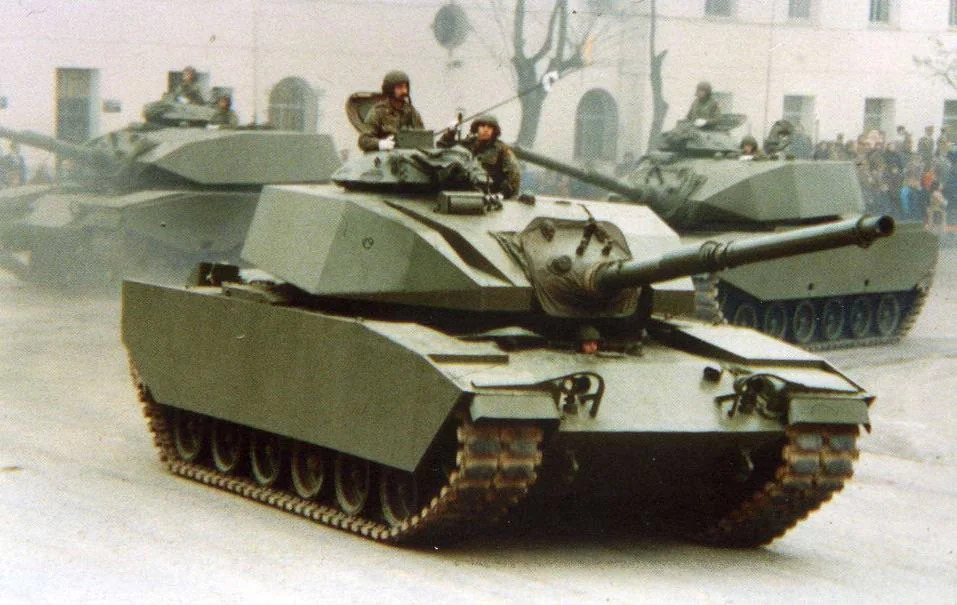
M60A3E1
- Description:
- During the 1990s, the Spanish company Santa Bárbara Sistemas sought to modernize its M60 tanks to compete with the acquisition of the German Leopard 2. The three prototypes were designated M60A3E1, also known as “Cristobita,” and featured additional armor on the turret and side skirts. However, for obvious reasons, priority was given to the Leopard 2, and the project was discontinued.
- Crew:
- 4 ( Commander, Gunner, Loader, Driver)
- Armament:
- Primary: 105mm M68 cannon
- Maneuverability:
- Max. Speed: 48km/h
- Sources:
Rank 7
Spoiler
ASCOD LMT-105
- Description:
- This version of the Spanish ASCOD armored vehicle carries the South African Denel LMT-105 turret, which, as its name suggests, is equipped with a South African GT-7 105mm cannon capable of firing DM33 and DM63 ammunition with a penetration of up to 430mm. The turret includes first-generation thermal imaging and a laser rangefinder.
- Crew:
- 3 ( Commander, Gunner, Driver)
- Armament:
- Primary: 105 mm GT-7 cannon
- Maneuverability:
- Max. Speed: 70 km/h
- Sources:
Leopard 2A4E
- Description:
- The Spanish Leopard 2A4 tanks arrived in the country in 1998, totaling 108 tanks. There are no differences compared to the standard Leopard 2A4.
- Crew:
- 4 ( Commander, Gunner, Loader, Driver)
- Armament:
- Primary: 120 mm Rh120 L/44 cannon
- Maneuverability:
- Max. Speed: 68 km/h
- Sources:
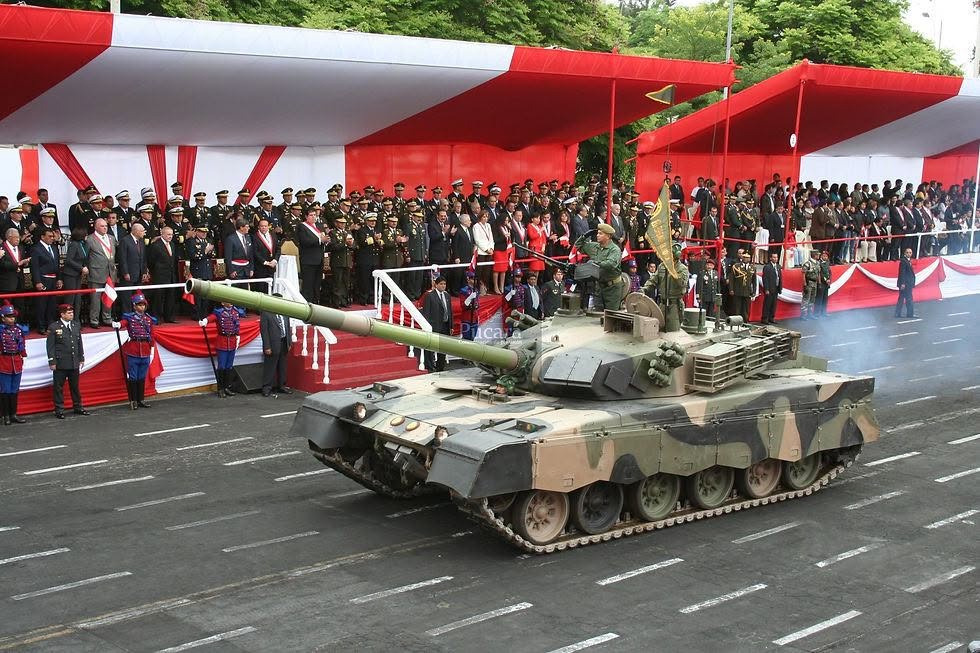
MBT-2000
- Description:
- Chinese MBT-2000 tanks were sent to Peru in 2009 for testing. Five of these tanks were seen during that year’s military parade in Peru. Their public display caused a stir in the country because it was a secret purchase, leading to an investigation. After a corruption case was exposed, the acquisition was canceled and the tanks were returned.
- Crew:
- 3 (Commander, Gunner, Driver)
- Armament:
- Primary: 125 mm ZPT98 cannon
- Maneuverability:
- Max. Speed: 70 km/h
- Sources:

Rank 8
Spoiler
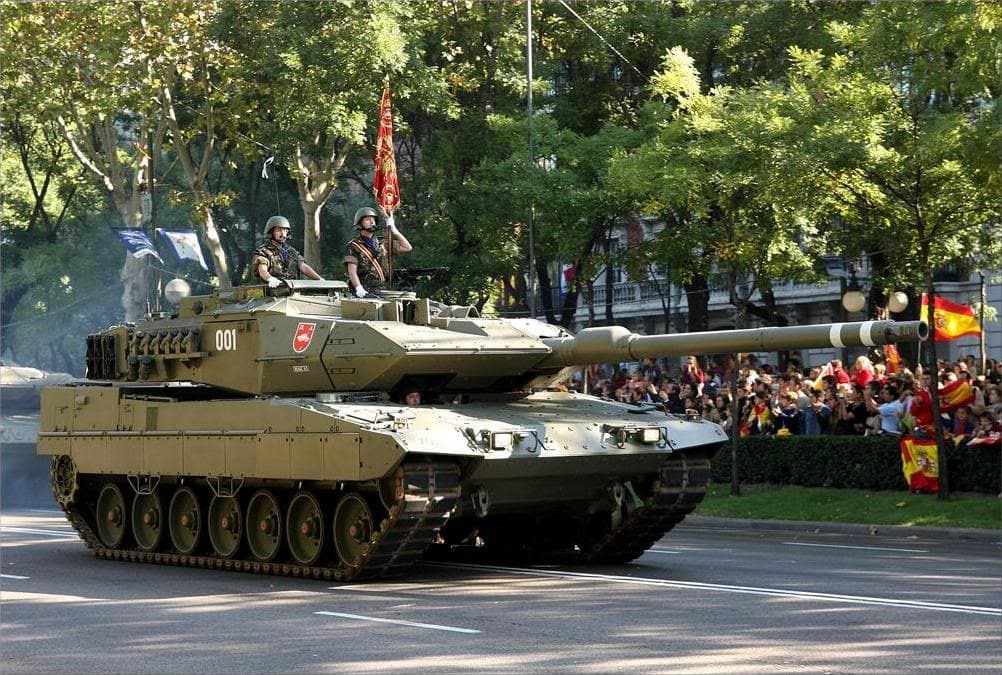
Leopard 2E
- Description:
- In 1998, Spain obtained a license to produce the Leopard 2 under the designation Leopard 2E, which is equivalent to the Leopard 2A6 but with modifications adapted to Spain’s needs. The Leopard 2E is equipped with the 120 mm Rh120 L/55 cannon that fires DM 53 and DM 63 ammunition with up to 653 mm of penetration. It also features Mexas-H armor, a laser rangefinder, and second-generation thermal imaging cameras.
- Crew:
- 4 ( Commander, Gunner, Loader, Driver)
- Armament:
- Primary: 120 mm Rh120 L/55 cannon
- Maneuverability:
- Max. Speed: 68 km/h
- Sources:
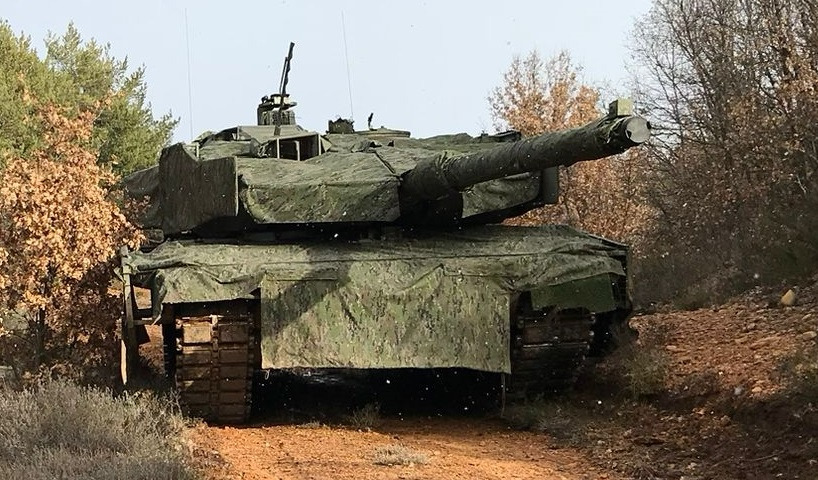
Leopard 2E Tortuga
- Description:
- The prototype upgrade for Spain’s Leopard 2E tanks was codenamed Tortuga (Turtle) and aimed to improve the tank’s capabilities in urban combat environments. The main improvement was spaced mesh armor covering the entire hull, sides, and rear of the turret. Additionally, a camouflage net was added to the tank, reducing its visibility to thermal signatures and thus making it less vulnerable to anti-tank missiles. While other improvements exist, they are classified, so details are unavailable.
- Crew:
- 4 ( Commander, Gunner, Loader, Driver)
- Armament:
- Primary: 120 mm Rh120 L/55 cannon
- Maneuverability:
- Max. Speed: 68 km/h
- Sources:
Tank Destroyers
Spoiler
Rank 1
Spoiler
CV33/35 Breda
- Description:
- This tank was a joint development between the Kingdom of Italy and the Spanish Nationalists between 1937 and 1938. It was a modification of the Italian L3/35 tank, designated CV33/35 by Spain. Its original gun was replaced with a 20mm cannon to counter the Soviet T-26s of the Republican side. Due to design problems, the project was abandoned. The prototype saw combat at Rudilla and later at Tortosa, where its fate is unknown.
- Crew:
- 2 ( Commander, Driver)
- Armament:
- Primary: 20 mm Breda M-35 gun
- Maneuverability:
- Max. Speed: 40 km/h
- Sources:
Crusader 105 (S)
- Description:
- Crusader artillery tractors that Argentina received approximately in the 40s, later the Argentine army modified these Crusaders by installing various cannons, this time it has a 105mm L/17.8 Schneider howitzer.
- Crew:
- 4 (Commander, Gunner, Loader, Driver)
- Armament:
- Primary: 105mm L/17.8 Schneider howitzer
- Maneuverability:
- Max. Speed: 48 km/h
- Sources:
- Blindados Argentinos, de Uruguay y Paraguay- Ricardo Fogliani
- (New Vanguard) David Fletcher, Peter Sarson - Crusader, Cruiser Tank 1939-45-Osprey Publishing (1995)
SECN 45 mm
- Description:
- After the failed CCI tipo 1937 project, the Spanish company SECN would not give up. Based on the previous project, they would use the chassis and improve the suspension to create a tank destroyer armed with a 45mm cannon, but once again the army would not show interest and the project would not continue.
- Crew:
- 3 (Commander, Gunner, Driver)
- Armament:
- Primary: 45/44 mm gun
- Maneuverability:
- Max. Speed: 24 km/h
- Sources:
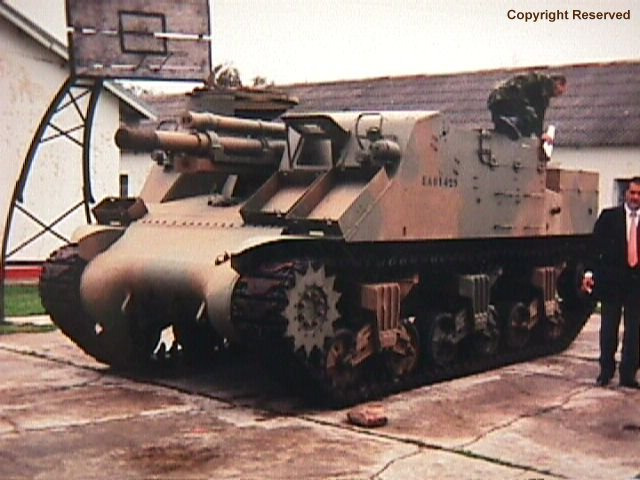
Cureña VC M7
- Description:
- M7 Priest that Argentina received around the 50s, was later modernized by installing a new engine and a new M101A1 howitzer.
- Crew:
- 5 (Commander, Gunner, Loader, Loader, Driver)
- Armament:
- Primary: M101A1 howitzer
- Maneuverability:
- Max. Speed: 39 km/h
- Sources:


Rank 2
Spoiler
Crusader 75 (K)
- Description:
- Argentinian Crusader fitted with a 75mm L/30 Krupp cannon
- Crew:
- 4 (Commander, Gunner, Loader, Driver)
- Armament:
- Primary: 75mm L/30 Krupp cannon
- Maneuverability:
- Max. Speed: 48 km/h
- Sources:
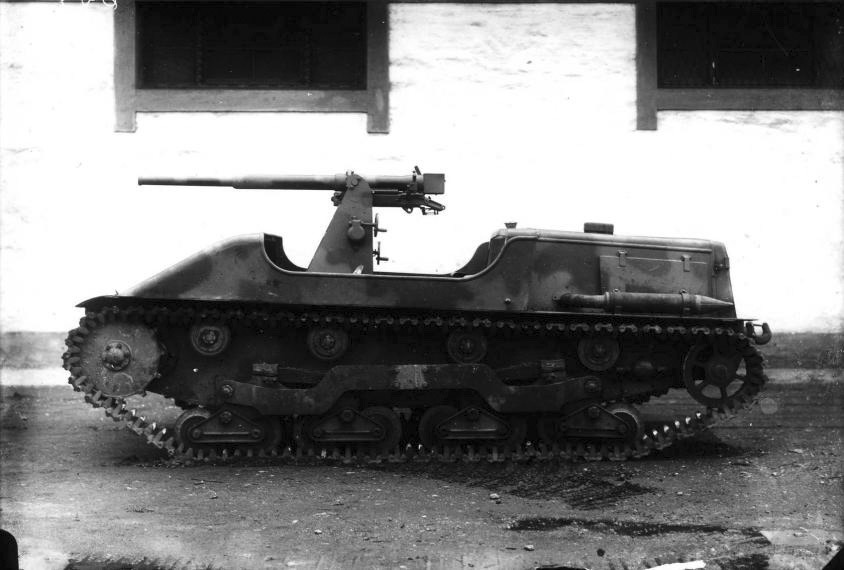
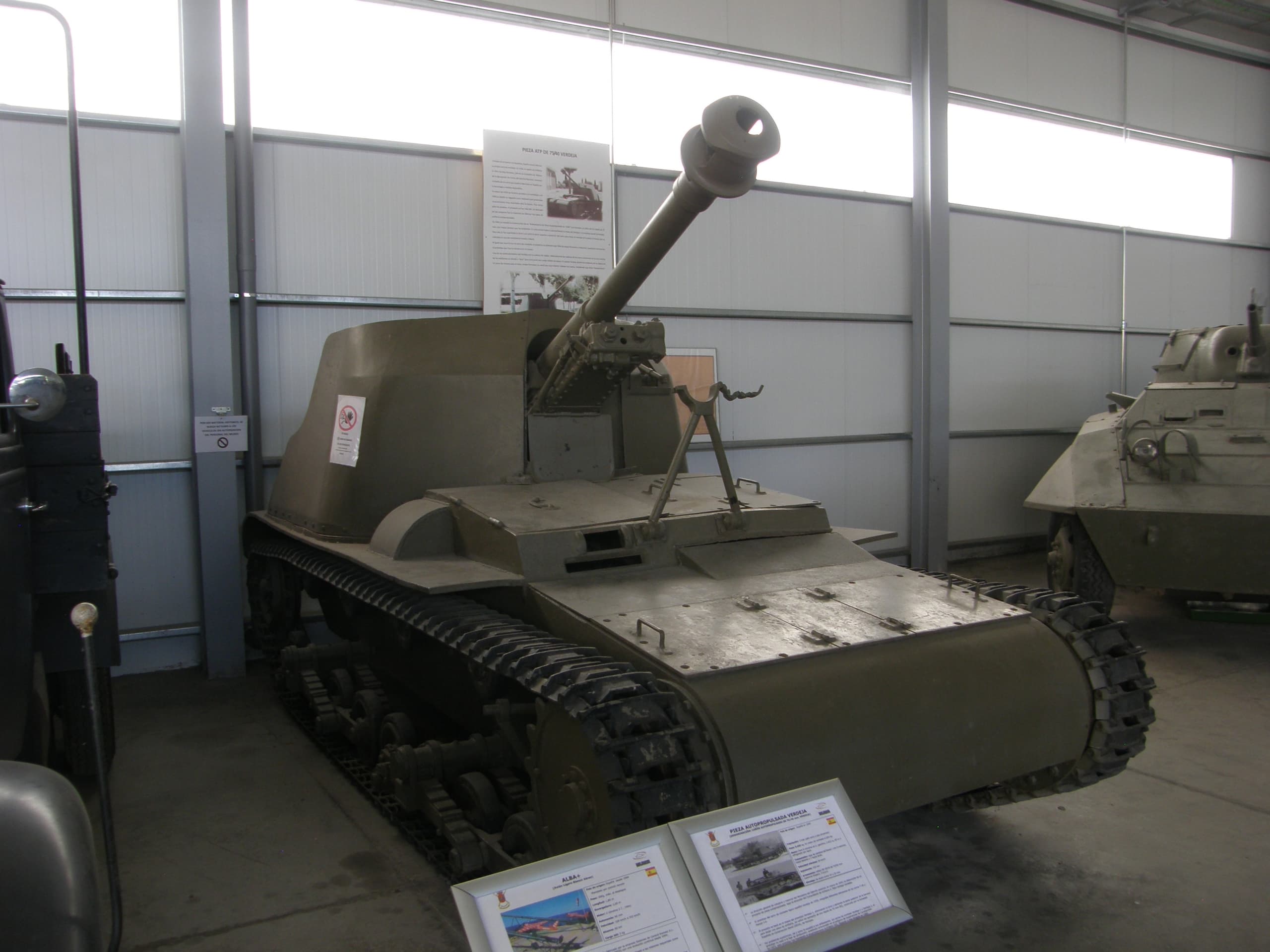
Verdeja 75/40mm
- Description:
- After the Verdeja 1 tank was not adopted, a new project was launched, this time using the Verdeja 1 chassis but removing the turret and opening up the rear of the vehicle to install a new larger 75mm cannon. A protective shield was also added to protect the crew operating the new cannon. The prototype, after successfully passing tests, met the same fate as the previous tanks, being cancelled due to a lack of financial support.
- Crew:
- 3 (Commander, Gunner, Driver)
- Armament:
- Primary: 75mm Sociedad Española de Construcción Naval of Reinosa
- Maneuverability:
- Max. Speed: 44 km/h
- Sources:
Crusader 75 (B)
- Description:
- Argentinian Crusader fitted with a 75mm L/40 Bofors cannon
- Crew:
- 4 (Commander, Gunner, Loader, Driver)
- Armament:
- Primary: 75mm L/40 Bofors cannon
- Maneuverability:
- Max. Speed: 48 km/h
- Sources:


Rank 3
Spoiler
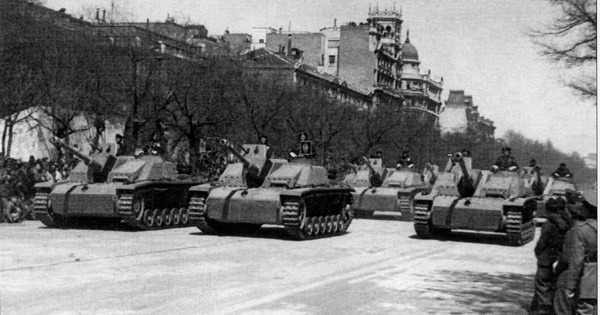
StuG III G
- Description:
- German StuG III G tank destroyer acquired by Nationalist Spain in 1943. A total of 10 tanks were received and they were decommissioned in 1954.
- Crew:
- 4 (Commander, Gunner, Loader, Driver)
- Armament:
- Primary: 75 mm StuK40 L48 cannon
- Maneuverability:
- Max. Speed: 40 km/h
- Sources:
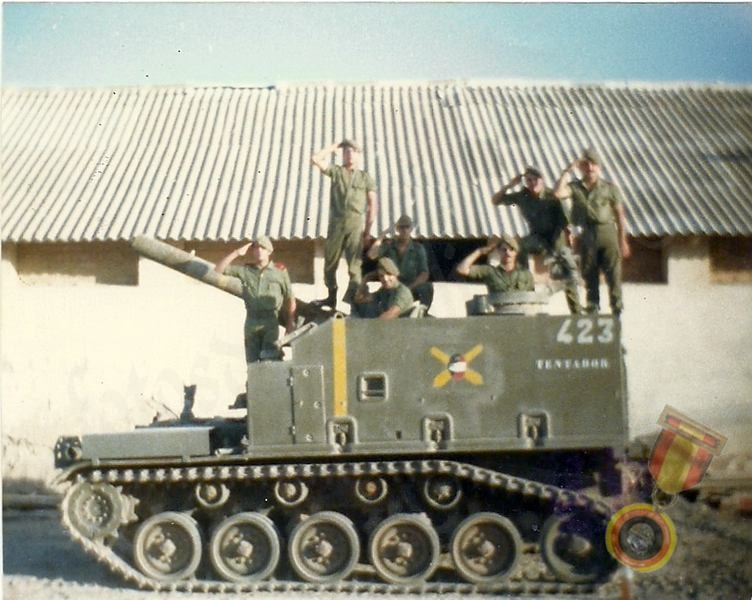
M44
- Description:
- American M44 self-propelled howitzer operated by the Spanish army; the country acquired 12 of these vehicles in 1956 and they served until 1985 when they were decommissioned and replaced by M-109s.
- Crew:
- 5 (Commander, Gunner, Loader, Driver, Machine Gunner)
- Armament:
- Primary: 155 mm M45 cannon
- Maneuverability:
- Max. Speed: 56 km/h
- Sources:
Rank 4
Spoiler
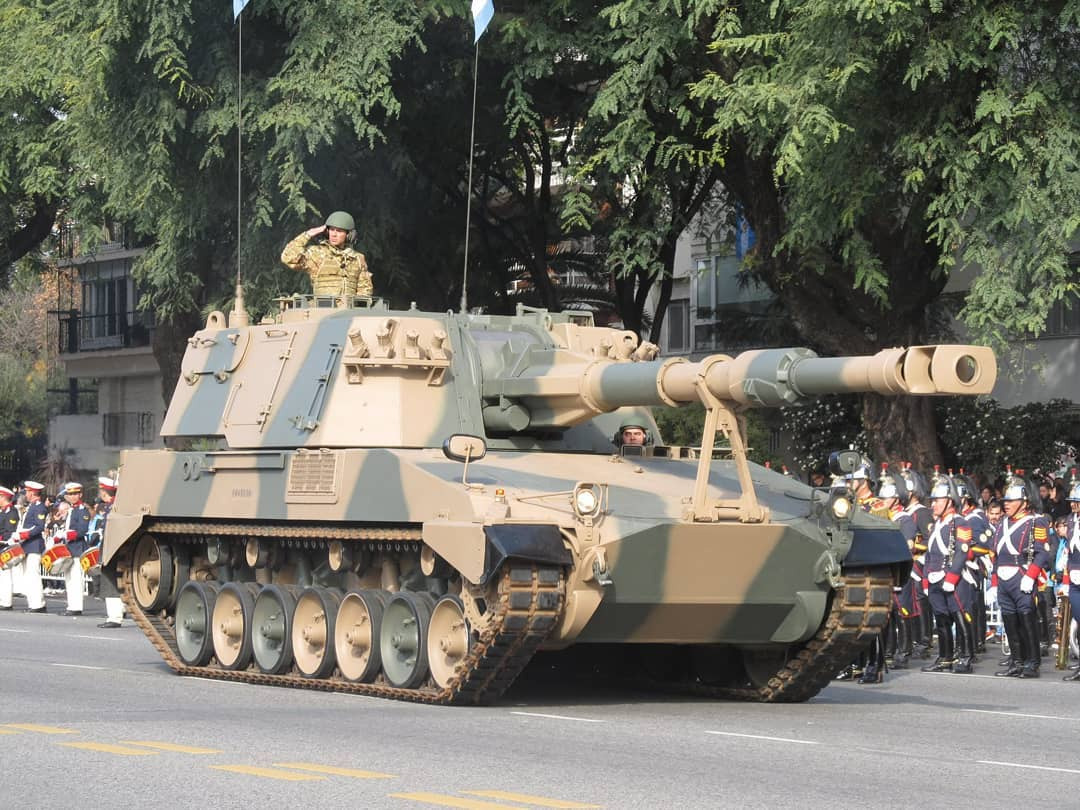
TAM VCA
- Description:
- Argentine national design of a self-propelled artillery based on the Italian Palmaria, it uses the chassis of the TAP (Argentine heavy tank) which was another tank project that was abandoned.
- Crew:
- 5 (Commander, Gunner, Loader, Loader, Driver)
- Armament:
- Primary: Oto Melara “Palmaria” L41 155 mm howitzer
- Maneuverability:
- Max. Speed: 60 km/h
- Sources:
- TAM & VCA/VCTM/VCTP – Serie Terrestre #1 by Juan Carlos Cicalesi
- Vehículo de Combate Artillería (VCA) - Tank Encyclopedia
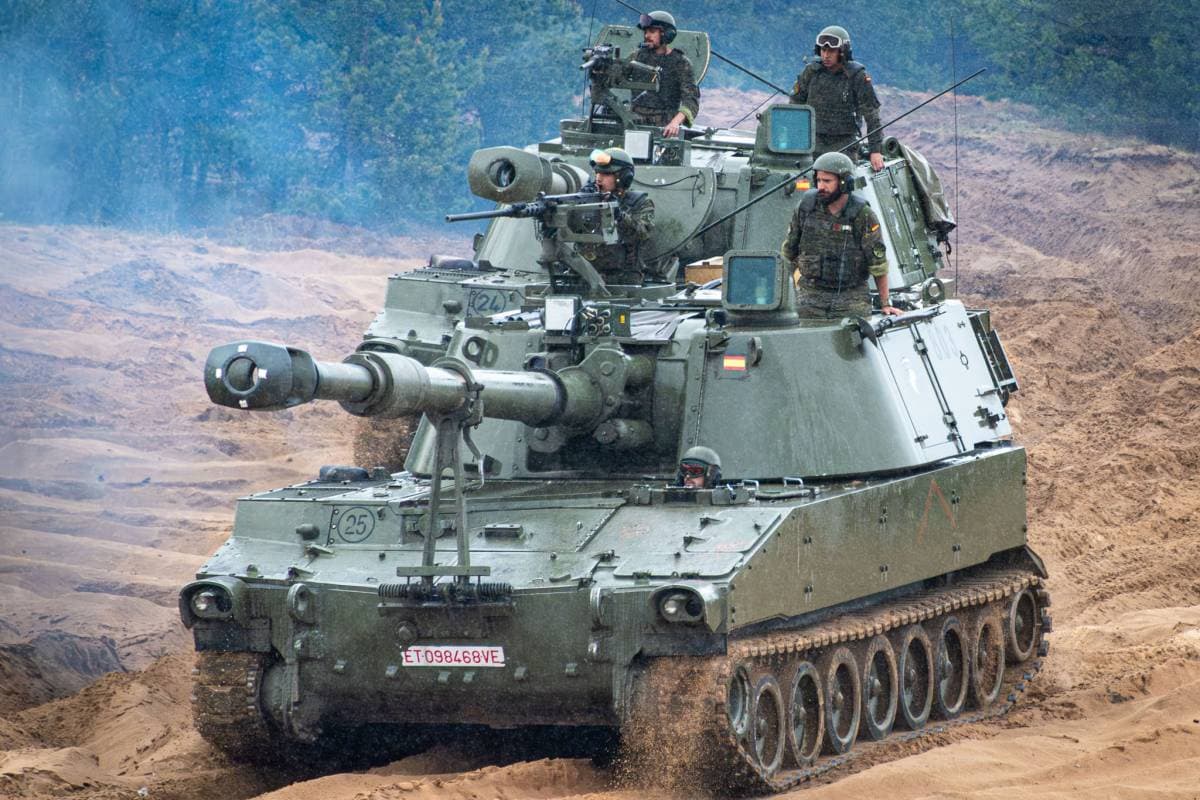
M109A5E
- Description:
- American 155mm self-propelled howitzer used by the Spanish Army. This version includes new optics and more advanced aiming systems, as well as the replacement of the original barrel and mount with a 39mm caliber 155mm M284 cannon on an M182 mount, which increases the overall firing range.
- Crew:
- 6 (Commander, Gunner, Loader, Loader, Driver, Machine gunner)
- Armament:
- Primary: M284 Cannon 155 mm Howitzer
- Maneuverability:
- Max. Speed: 56 km/h
- Sources:
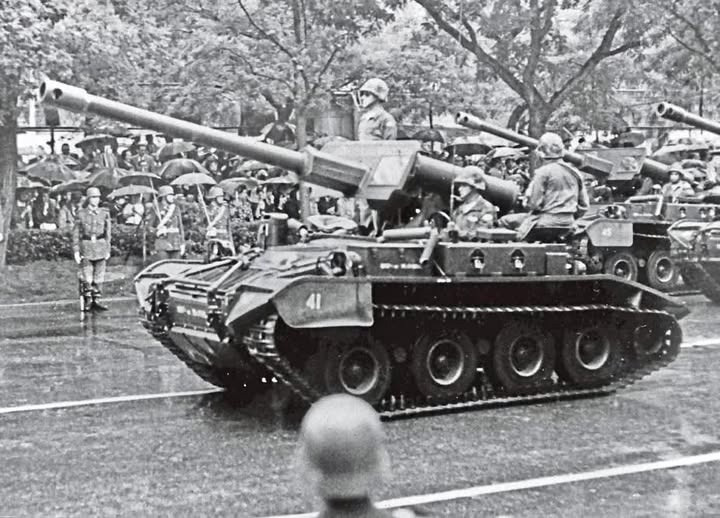
M56
- Description:
- American tank destroyer, Spain received 5 examples during the second half of the 1960s and they served in the marine corps of that country.
- Crew:
- 3 (Commander, Gunner, Driver)
- Armament:
- Primary: 90 mm M54 cannon
- Maneuverability:
- Max. Speed: 45 km/h
- Sources:
Rank 5
Spoiler
BMR-600 TC-7
- Description:
- The Spanish BMR-600 armored vehicle was equipped with a CETME TC-7 turret carrying two 106mm recoilless cannons capable of penetrating up to 433mm of armor.
- Crew:
- 4 (Commander, Gunner, Loader, Driver)
- Armament:
- Primary: 2x 106mm M40A1 recoilless rifles
- Maneuverability:
- Max. Speed: 100 km/h
- Sources:
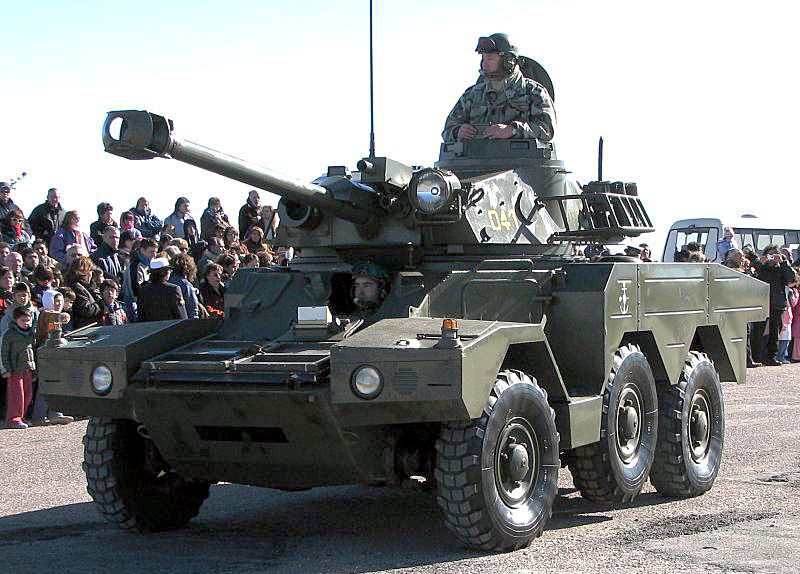
ERC 90 F1
- Description:
- The French armored vehicle, armed with a 90mm anti-tank gun, existed in two versions, but the one used by Argentina was the ERC 90 F1 Lynx, armed with the same turret and gun as the French AML-90. Argentina acquired approximately 36 units in 1979.
- Crew:
- 3 (Commander, Gunner, Driver)
- Armament:
- Primary: 90 mm DEFA F1 cannon
- Maneuverability:
- Max. Speed: 90 km/h
- Sources:
Grenadier (MRS-80)
- Description:
- Mowag Grenadier model acquired by Chile in 1978. This variant for Chile was unique as it had 2 Oerlikon Typ 3Z 8Dla launchers capable of launching anti-tank grenades, its low profile and size made it perfect for ambushes.
- Crew:
- 2 (Commander, Driver)
- Armament:
- Primary: 2x Oerlikon Typ 3Z 8Dla launcher
- Maneuverability:
- Max. Speed: 100 km/h
- Sources:
- https://aquellasarmasdeguerra.wordpress.com/2013/01/23/algunas-armas-utilizadas-durante-el-conflicto-del-beagle-la-guerra-que-no-fue-1978/
- Jane’s pocket book modern military trucks
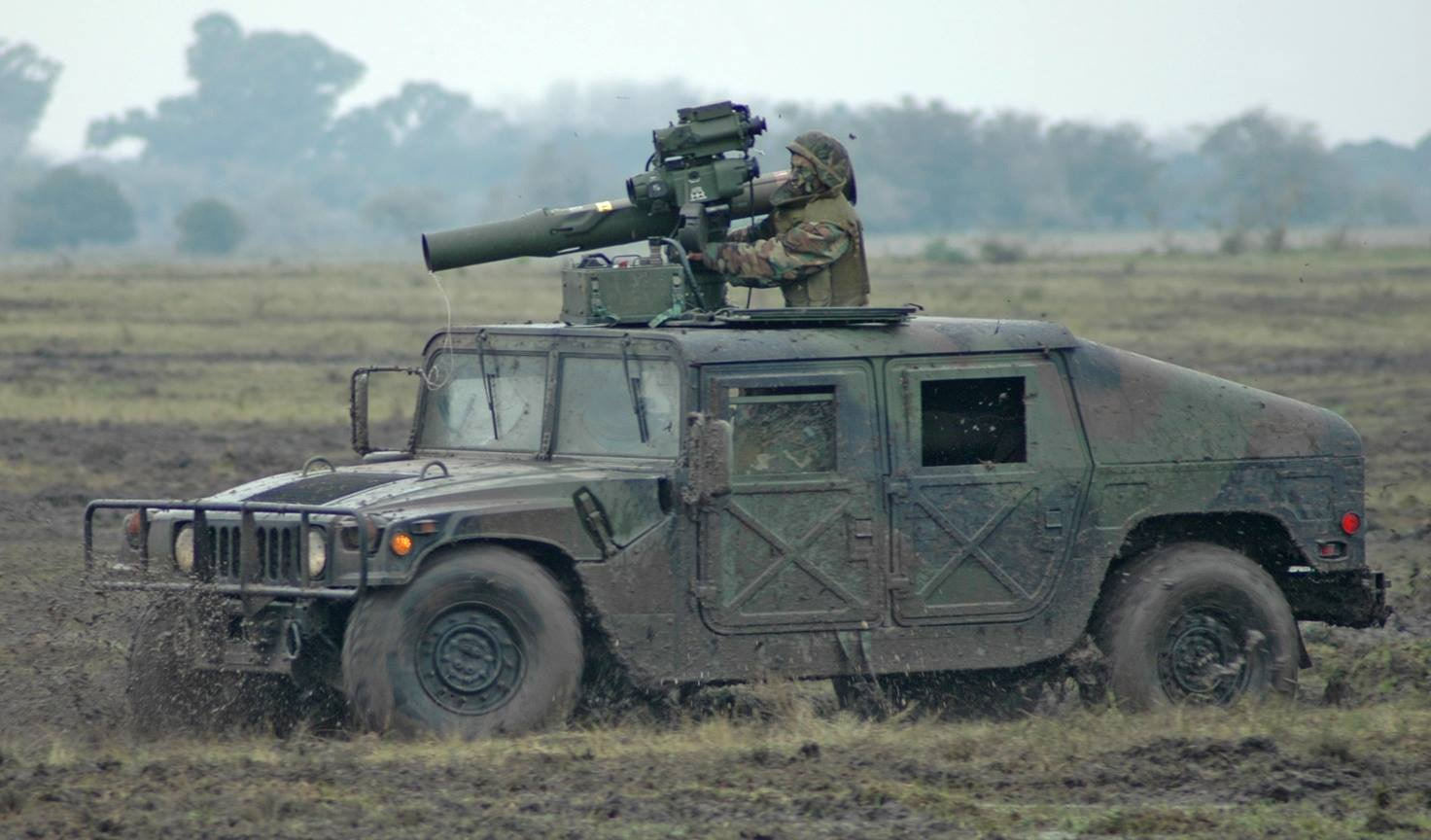
Humvee (TOW)
- Description:
- Argentine 4×4 HMMWV 1025A2 vehicles equipped with the ability to fire the TOW 2A anti-tank missile.
- Crew:
- 2 (Commander, Driver)
- Armament:
- Primary: TOW 2A missile
- Maneuverability:
- Max. Speed: 105 km/h
- Sources:
Rank 6
Spoiler
NZLAV
- Description:
- In 2022, Chile acquired 22 NZLAVs from New Zealand, which belong to the LAV III model, armed with a Northrop Grumman M242 Bushmaster 25mm automatic cannon, giving them the ability to both confront other light vehicles and helicopters, added to their great mobility.
- Crew:
- 3 (Commander, Gunner, Driver)
- Armament:
- Primary: M242 Bushmaster 25mm autocannon
- Maneuverability:
- Max. speed: 109 km/h
- Sources:
BMR-600 PP/C.1 (HCT-2)
- Description:
- Another BMR-600 prototype, equipped with the Euromissile HOT HCT-2 turret
- Crew:
- 3 (Commander, Gunner, Driver
- Armament:
- Primary: 2x HOT ATGM Launchers
- Maneuverability:
- Max. speed: 100 km/h
- Sources:
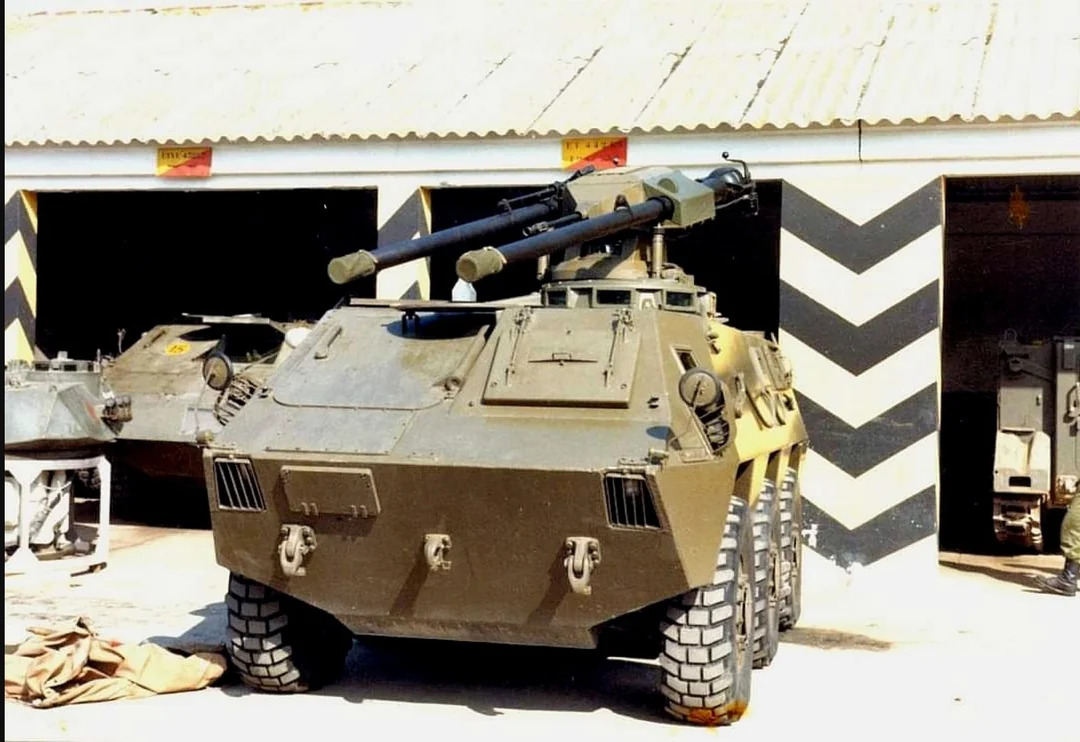
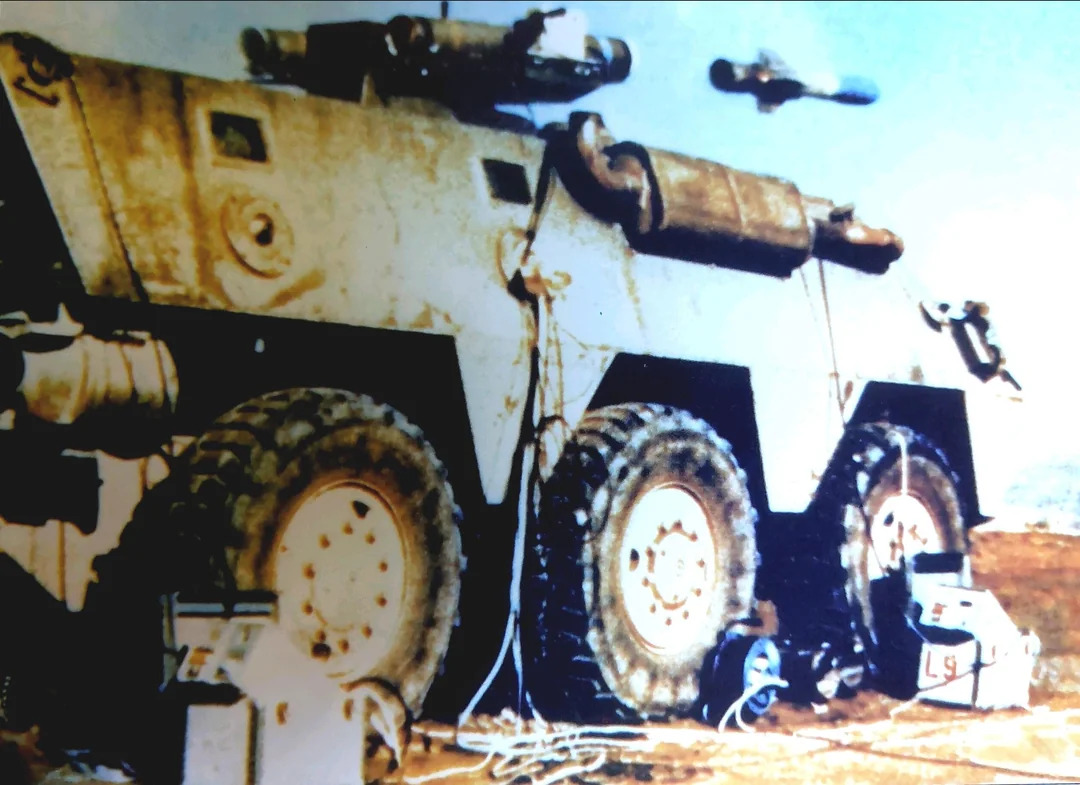
Piraña 6x6 HJ-8A
- Description:
- Mowag Piranha built under license in Chile by Cardoen industries, this version carries 4 Chinese HJ-8A anti-tank missiles, it is believed that only 1 prototype was built since information or photos of this variant can only be found in specialized books such as the from Jane’s.
- Crew:
- 4 (Commander, Gunner, Loader, Driver)
- Armament:
- Primary: 4x Chinese HJ-8A anti-tank missiles
- Maneuverability :
- Max. speed: 100 km/h
- Sources:
YPR-765
- Description:
- Dutch infantry fighting vehicle which is an improved M113, it is also known as the Armored Infantry Fighting Vehicle (AIFV) but in Netherlands it was called YPR-765. It has a 25 mm Oerlikon KBA-B02 automatic cannon, this cannon allows it to confront aircraft flying at low altitude or other vehicles with little armor. It also has additional armor.
- Crew:
- 3 (Commander, Gunner, Driver)
- Armament:
- Primary: Oerlikon KBA-B02 25mm autocannon
- Maneuverability:
- Max. speed: 61 km/hr
- Sources:



Rank 7
Spoiler
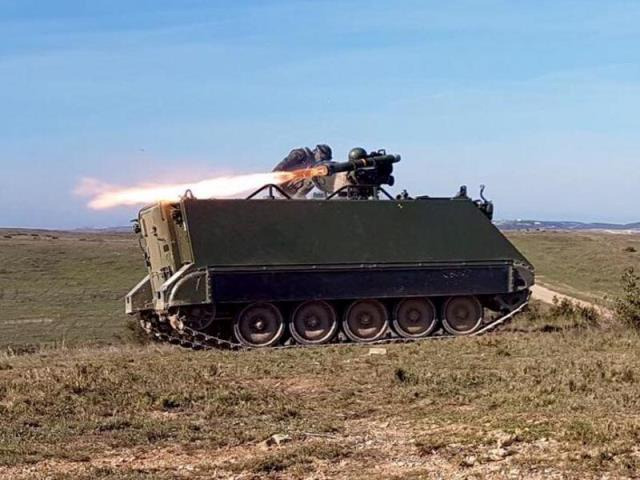
TOA (Spike)
- Description:
- The M113s in Spanish service are designated as TOA (Transporte Oruga Acorazado) and were armed with the Spike LR anti-tank missile with a penetration capability of up to 900 mm in tandem.
- Crew:
- 4 (Commander, Gunner, Loader, Driver)
- Armament:
- Primary: Spike LR missile launcher
- Maneuverability:
- Max. speed: 64 km/h
- Sources:
AMX-13 Alacrán
- Description:
- A Peruvian AMX-13 that underwent extensive modification, its 105mm cannon was removed and the turret was fitted with a 1P45M-1 target tracking sight, firing and maintaining target tracking, and a 1PN79-1 thermal sight for the use of four 9M133 Kornet anti-tank missiles, which turned the vehicle into a tank destroyer.
- Crew:
- 3 (Commander, Gunner, Driver)
- Armament:
- Primary: 4x 9M133 Kornet ATGM
- Maneuverability:
- Max. Speed: 60 km/h
- Sources:
Humvee (Spike)
- Description:
- Humvee vehicle in Chilean service equipped with Spike ER anti-tank missiles with up to 1000 mm penetration in tandem and a larger explosive charge.
- Crew:
- 4 (Commander, Gunner, Loader, Driver)
- Armament:
- Primary: Spike ER missile
- Maneuverability:
- Max. speed: 105 km/h
- Sources:
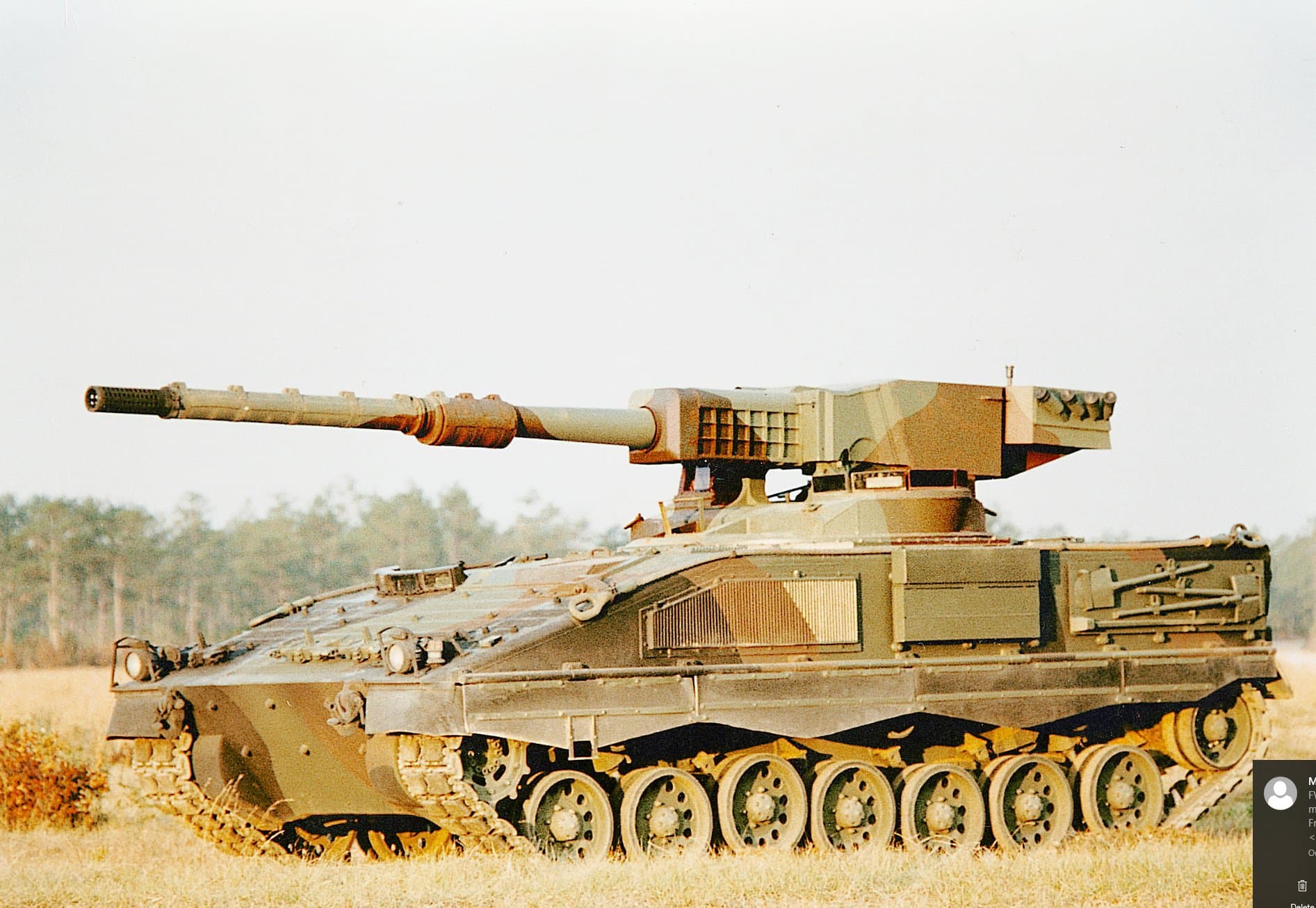
ASCOD LPT
- Description:
- This version of the Spanish ASCOD armored vehicle features the LPT (Low Profile Turret) manufactured by Teledyne. It consists of an unmanned turret and a 105mm automatic cannon that fires NATO projectiles, notably the M900, which has a maximum penetration of 522mm. The cannon is fully stabilized, and the vehicle is equipped with a laser rangefinder and first-generation thermal imaging.
- Crew:
- 3 ( Commander, Gunner, Driver)
- Armament:
- Primary: 105mm M68A1 gun
- Maneuverability:
- Max. Speed: 70 km/h
- Sources:


SPAA
Spoiler
Rank 1
Spoiler
Ford V8 (4M ZPU)
- Description:
- Ford V8 to which the Republican side installed an M4 ZPU mount equipped with four 7.62mm machine guns
- Crew:
- 3 (Commander, Gunner, Driver)
- Armament:
- Primary: 4x 7.62mm PM1910
- Maneuverability:
- Max. Speed: no data
- Sources:
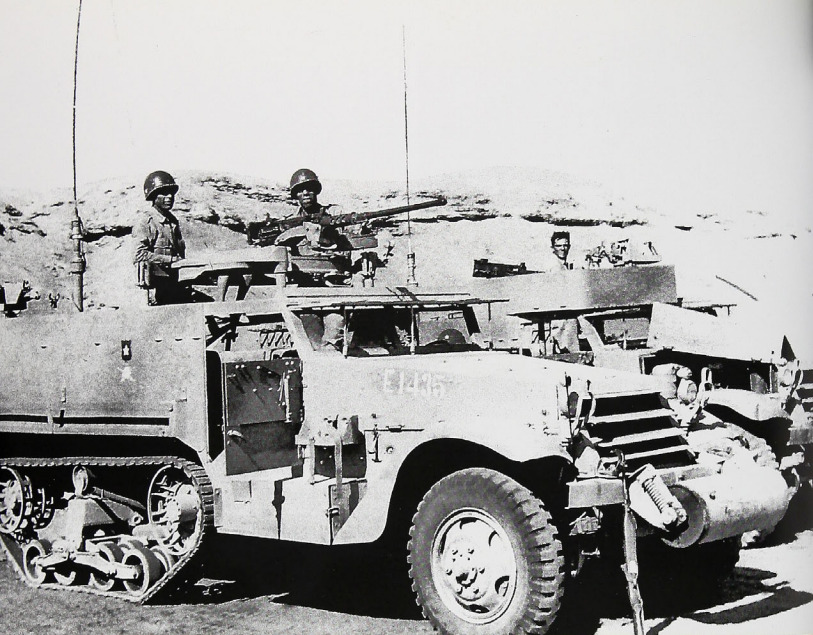
White M3A1
- Description:
- In 1943 12 of these vehicles arrived in Chile, they had up to 3 machine guns, 2 .30 machine guns in the rear and the main one being the Browning M2HB .50 machine gun in the front where it was operated by a gunner which could rotate it 360° thanks to a special support.
- Crew:
- 3 (Commander, Gunner, Driver)
- Armament:
- Primary: 1x 12.7 mm Browning M2HB machine gun, 2x 7.62 mm Browning M1919A4 machine guns
- Maneuverability:
- Max. Speed: 80 km/h
- Sources:
Chevrolet 1 ½-Ton
- Description:
- Chevrolet 1 ½-Ton in Argentine service to which anti-aircraft weapons were installed.
- Crew:
- 4 (Commander, Gunner, Loader, Driver)
- Armament:
- Primary: 20mm Oerlikon gun
- Maneuverability:
- Max. Speed: N/A
- Sources:
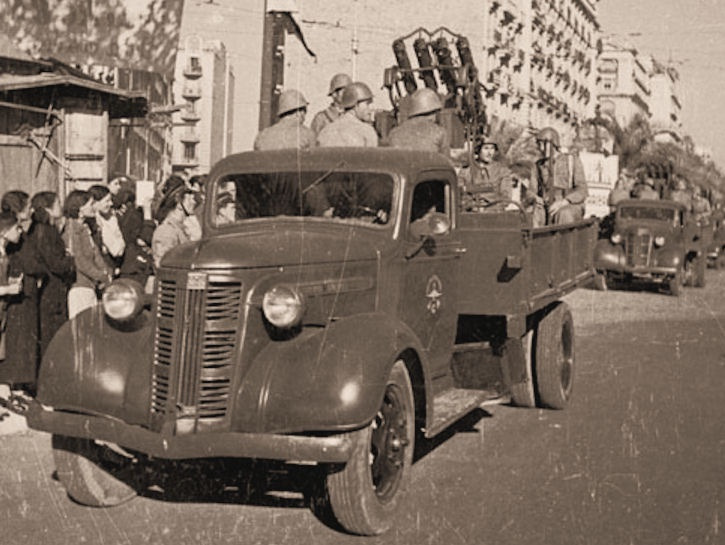
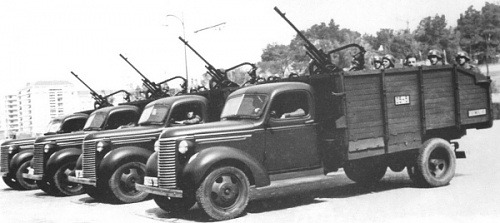
Chevrolet 1939 (Breda)
- Description:
- Chevrolet trucks from 1939 to which the Spanish Republican side installed a 20mm Breda automatic cannon
- Crew:
- 3 (Commander, Gunner, Driver)
- Armament:
- Primary: 20mm Breda 20/62 mod.35
- Maneuverability:
- Max. Speed: no data
- Sources:

Rank 2
Spoiler
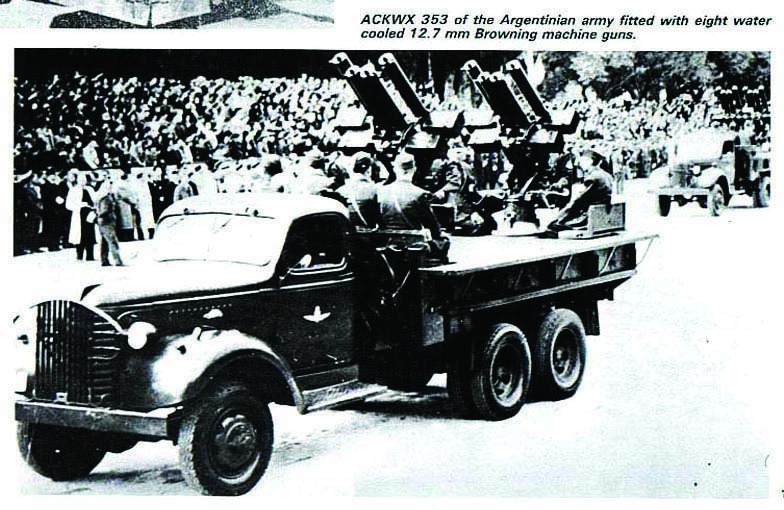
ACKWX 353
- Description:
- ACKWX 353 truck that Argentina equipped with 8 water-cooled Browning .50 machine guns, making it an anti-aircraft aircraft to be taken into consideration.
- Crew:
- 6 (Commander, Gunner, Gunner, Loader, Loader, Driver)
- Armament:
- Primary: Eight water-cooled .50 cal Browning machine guns
- Maneuverability:
- Max. Speed: 72 km/h
- Sources:
Rank 3
Spoiler
M113 GAI-BO1
- Description:
- Argentine M113 fitted with a 20mm Oerlikon GAI-BO1 light anti-aircraft gun.
- Crew:
- 3 (Commander, Gunner, Driver)
- Armament:
- Primary: 20mm Oerlikon GAI-BO1 cannon
- Dimensions:
- Maneuverability:
- Max. Speed: 67.6 km/h
- Sources:
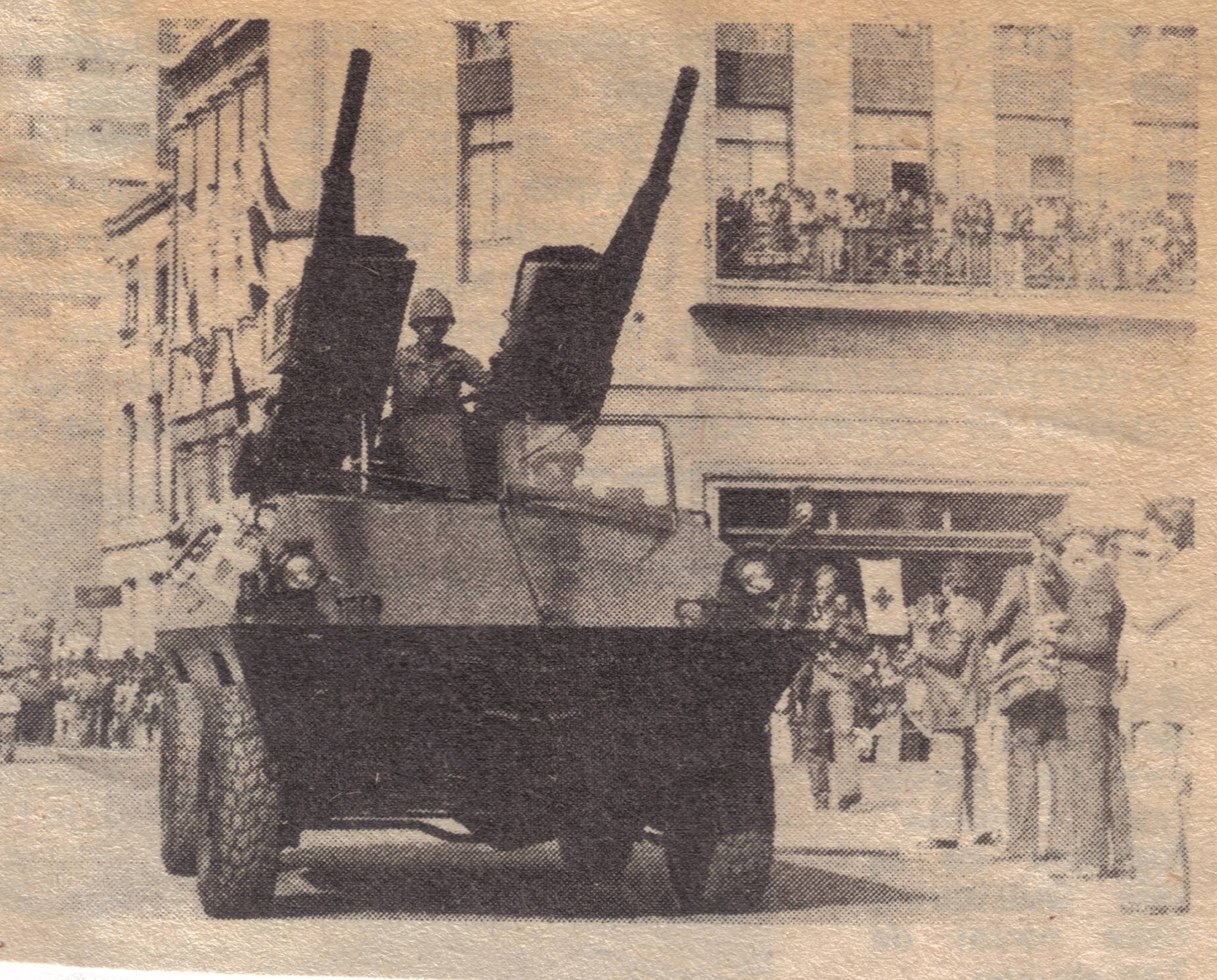
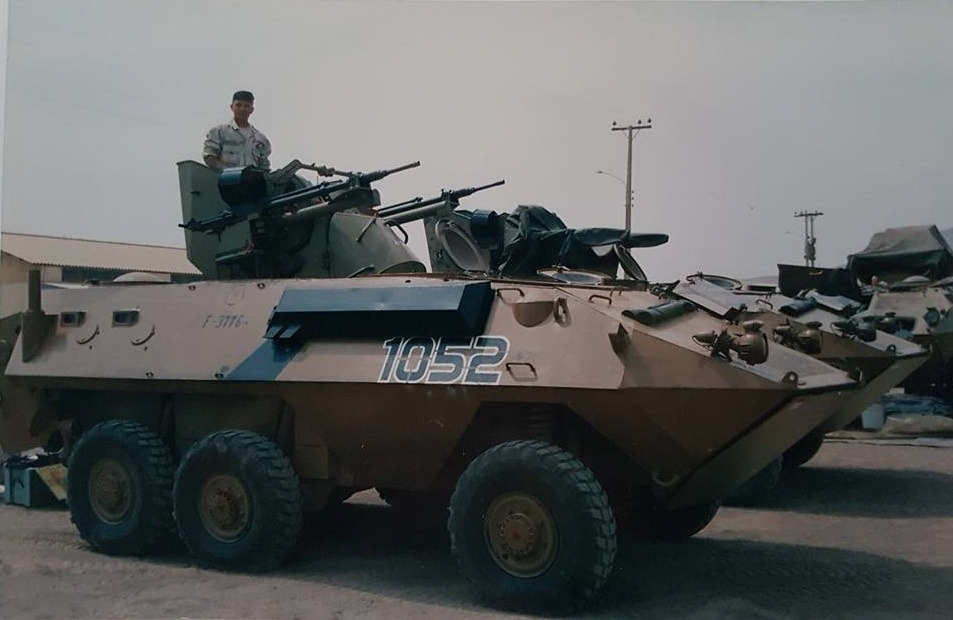
Piraña 6x6 TCM-20
- Description:
- Mowag Piranha built under license in Chile by Cardoen industries and Famae, this version has 2 HS.404 automatic cannons better known as TCM-20 of Israeli origin for anti-aircraft defense.
- Crew:
- 4 (Commander, Gunner, Loader, Driver)
- Armament:
- Primary: 2x 20 mm HS.404 automatic cannons
- Maneuverability:
- Max. Speed: 100 km/h
- Sources:
- Famae-Cardoen Piraña (1981)
- Janes Land-Based Air Defence 1992-93 by Tony Cullen, Christopher F. Foss

Rank 4
Spoiler
Panhard VCR/AA
- Description:
- Anti-aircraft vehicle used by Argentina since 1981, it has a 20 mm Oerlikon automatic cannon.
- Crew:
- 3 (Commander, Gunner, Driver)
- Armament:
- Primary: Oerlikon 20 mm cannon
- Maneuverability:
- Max. Speed: 90 km/h
- Sources:
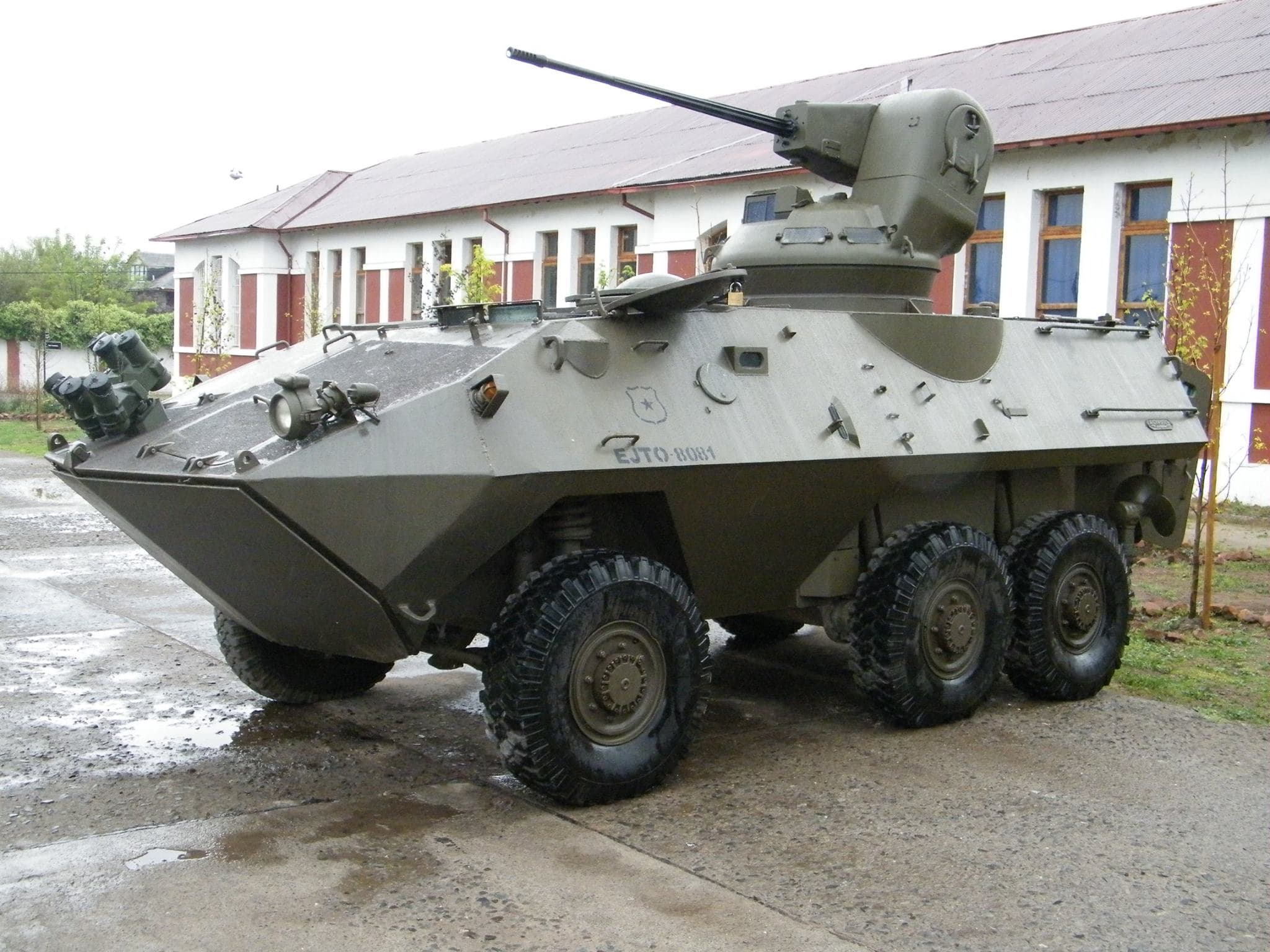
Piraña 6x6 KAA
- Description:
- Mowag Piranha built under license in Chile by Cardoen industries, this version uses a 20 mm Oerlikon KAA automatic cannon for anti-aircraft defense. Great mobility and excellent capacity for shots per minute.
- Crew:
- 3 (Commander, Gunner, Driver)
- Armament:
- Primary: Oerlikon KAA 20 mm Autocannon
- Maneuverability :
- Max. speed: 100 km/h
- Sources:
- Jane’s armour and artillery 1985-86
- International Defense Review
- https://www.memoriachilena.gob.cl/archivos2/pdfs/MC0067618.pdf
BMR-600 PP/T.1
- Description:
- Another BMR-600 prototype, this time armed with a T-20/13 type C TOUCAN-1 turret with a 20 mm GIAT M693 autocannon
- Crew:
- 3 (Commander, Gunner, Driver)
- Armament:
- Primary: 20 mm GIAT M693 autocannon
- Maneuverability:
- Max. Speed: 100 km/h
- Sources:
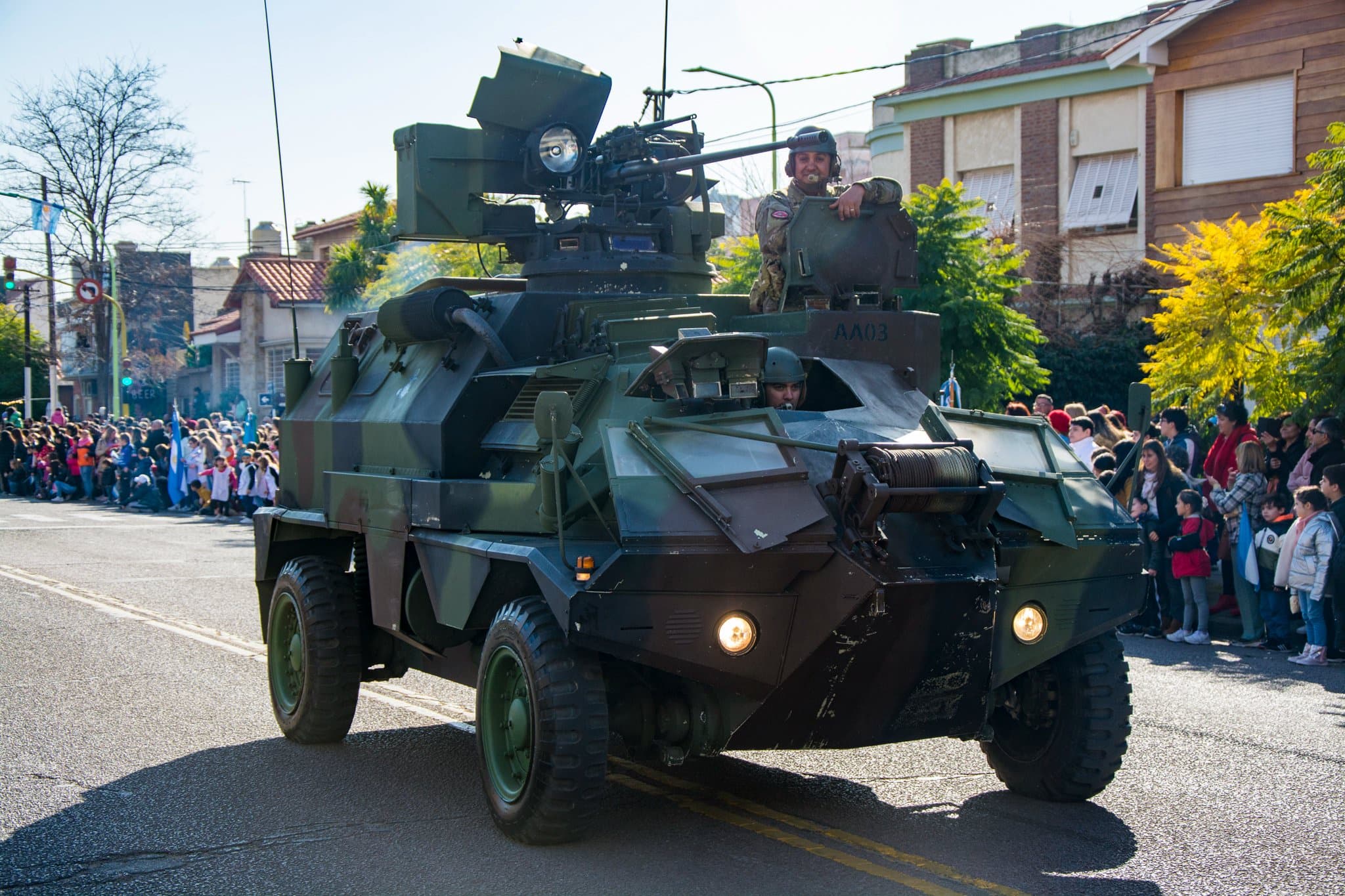
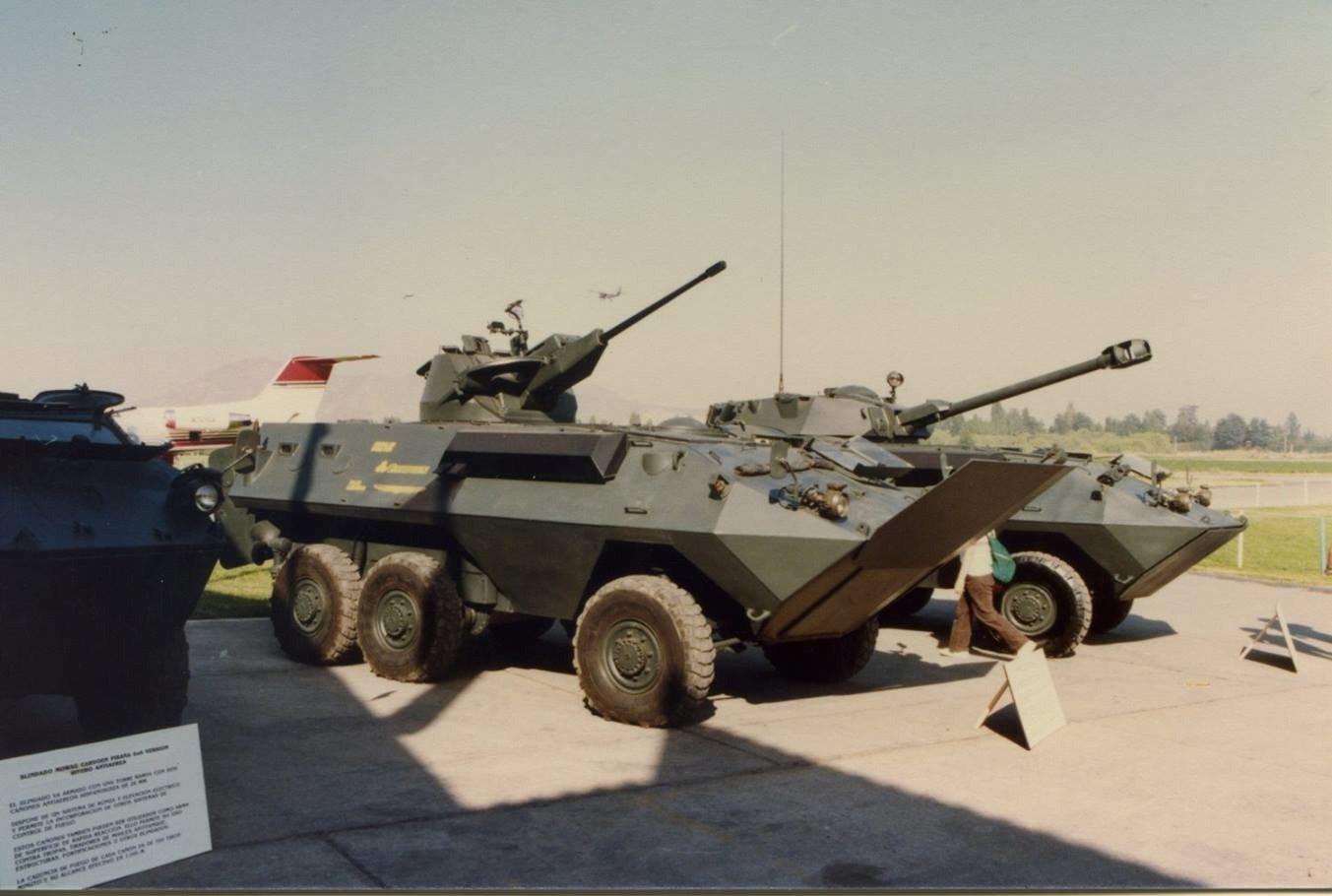
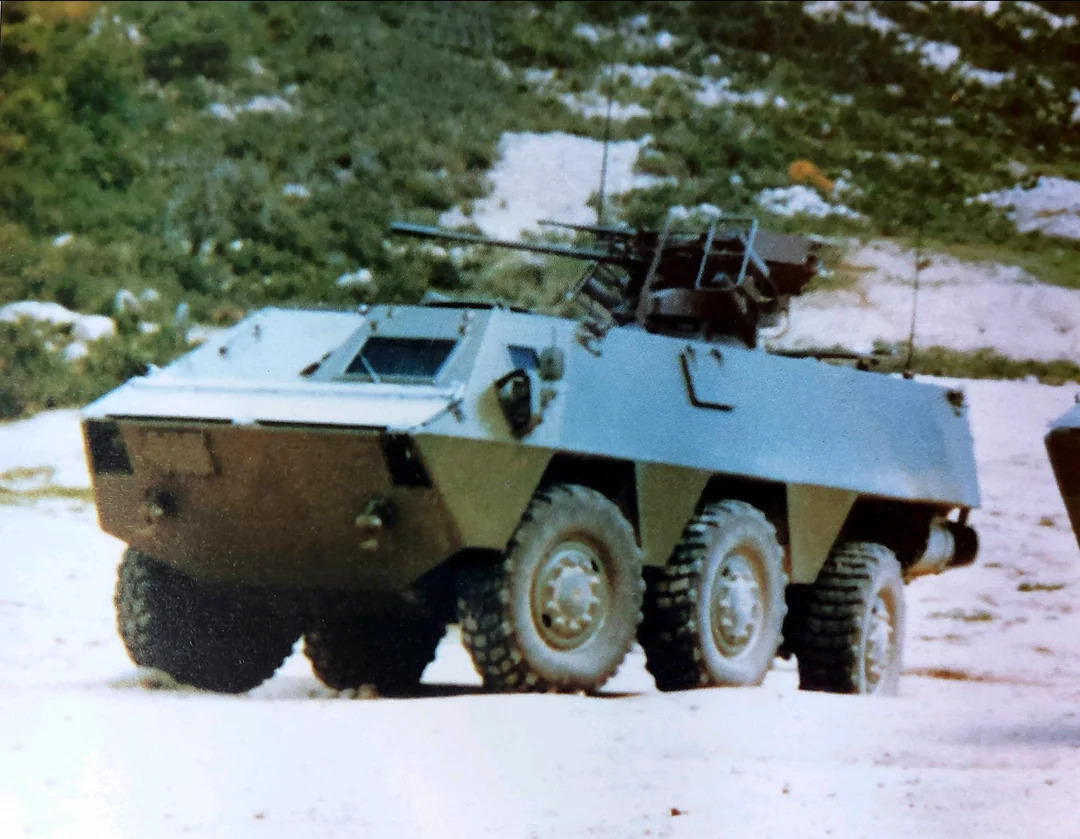
Rank 5
Spoiler
Piraña 6x6 KUKA
- Description:
- Mowag Piranha built under license in Chile by Cardoen Industries, this version has a GBD-AOA (KUKA) turret with a 25 mm Oerlikon KBA-B automatic cannon.
- Crew:
- 4 (Commander, Gunner, Loader, Driver)
- Armament:
- Primary: Oerlikon KBA-B 25mm autocannon
- Maneuverability:
- Max. Speed: 100 km/h
- Sources:
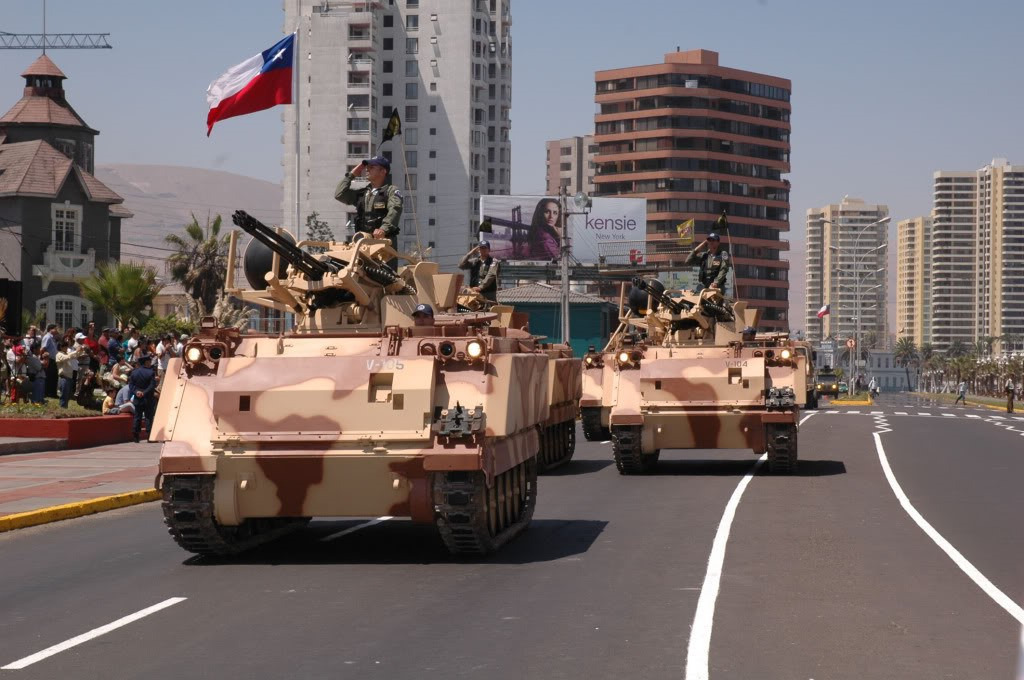
M163 PIVADS
- Description:
- American self-propelled air defense system. It is a 20 mm M168 rotary cannon, mounted on an M113, incorporating an air target tracking radar. Chile received some of these vehicles in the late 1990s, and they were characterized by their modernization according to the PIVADS standard.
- Crew:
- 4 (Commander, Gunner, Loader, Driver)
- Armament:
- 20 mm M168 cannon
- Maneuverability:
- Top speed: 64 km/h
- Sources:
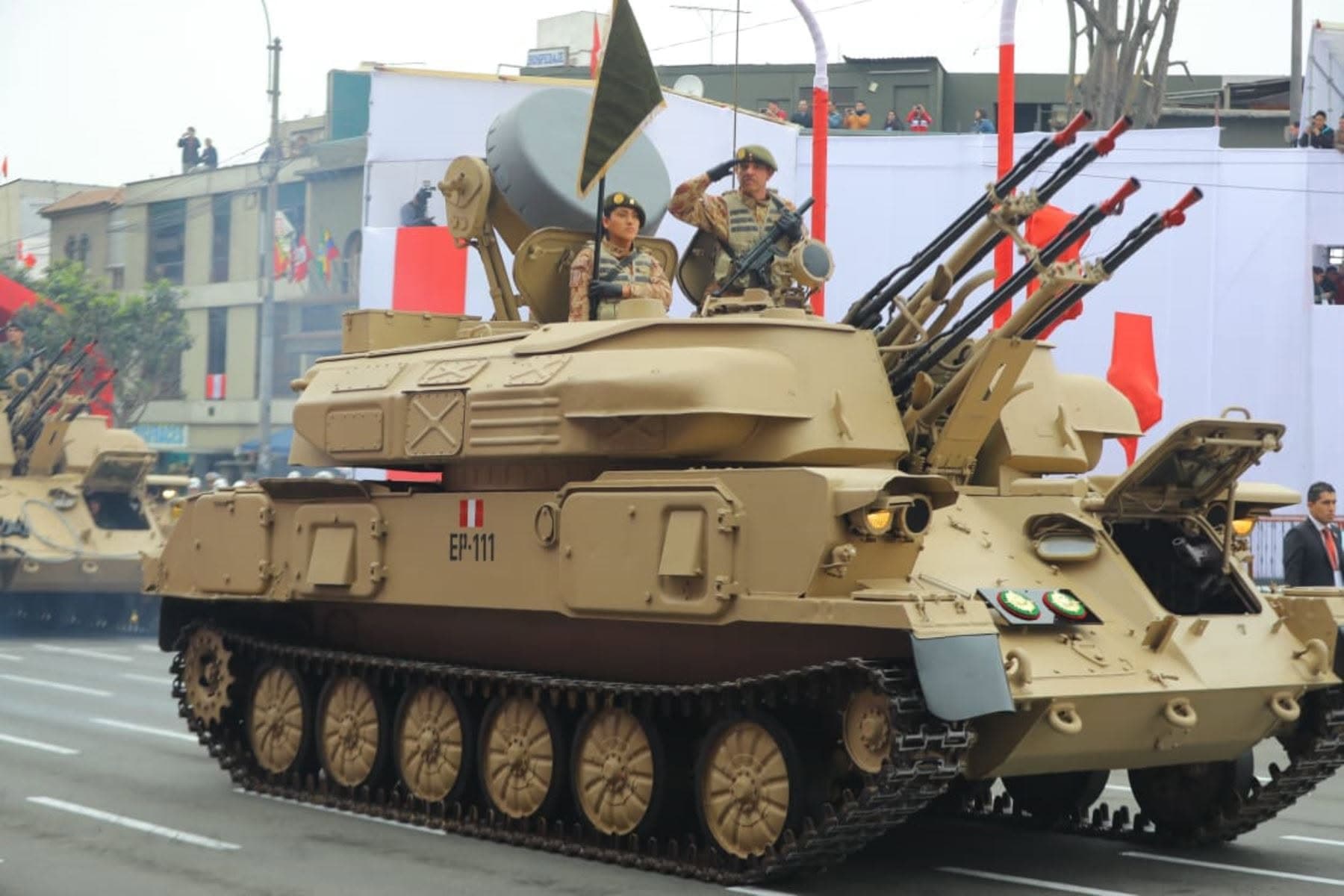
ZSU-23-4V
- Description:
- Soviet self-propelled anti-aircraft gun used by Peru since the 1970s
- Crew:
- 4 (Commander, Gunner, Loader, Driver)
- Armament:
- Primary: 4 x 23 mm AZP-23 cannon
- Maneuverability:
- Max. Speed: 50 km/h
- Sources:
Rank 6
Spoiler
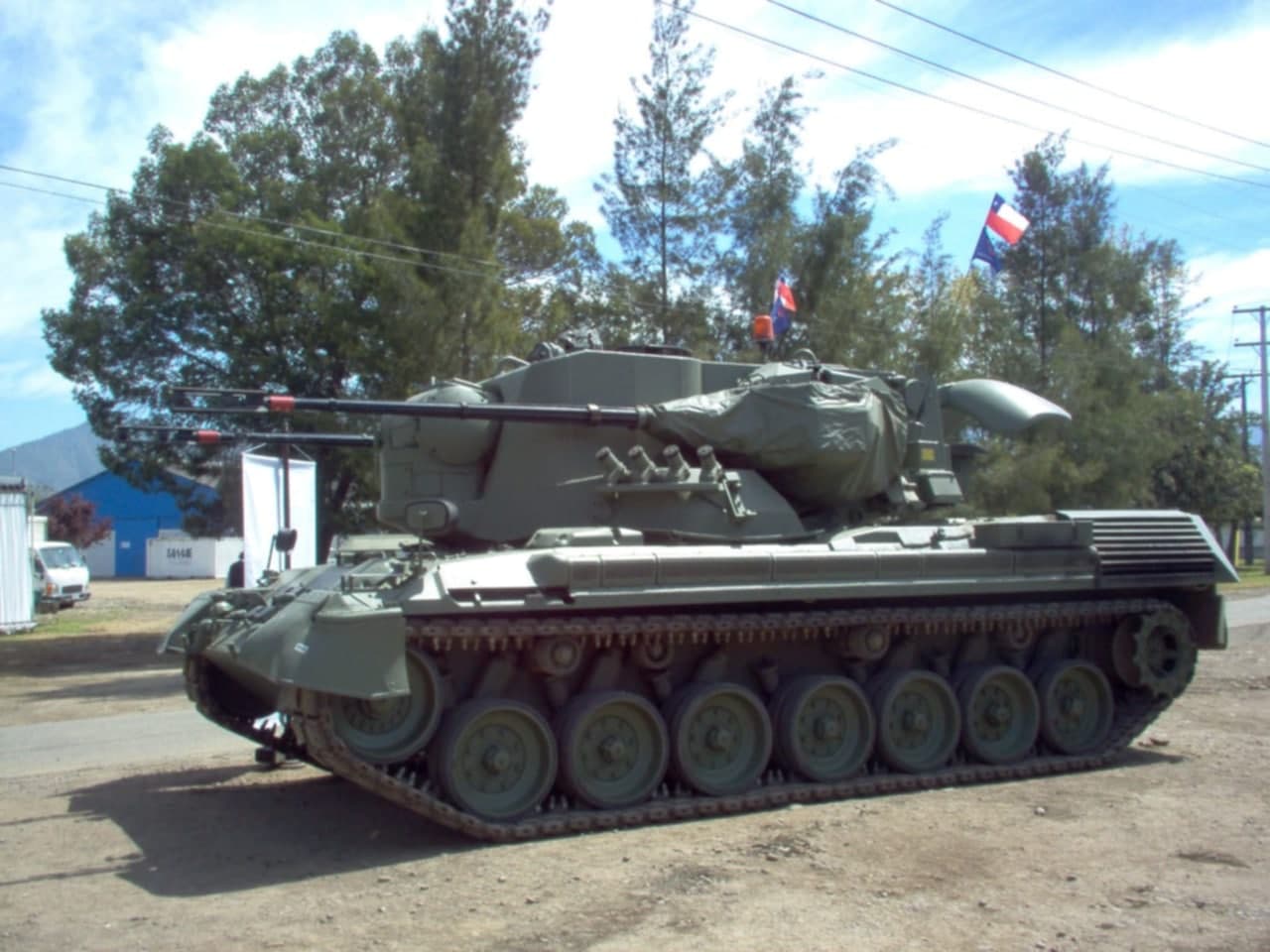
Gepard
- Description:
- In 2008, the first 5 Gepard arrived in Chile out of a total of 30 that had initially been planned to be purchased from Germany. They lasted a few years in Chile until they were returned to Germany due to to the state they were in and that it would be too expensive to modernize them.
- Crew:
- 3 (Commander, Gunner, Driver)
- Armament:
- Primary: 2x 35 mm Oerlikon KDA cannon
- Maneuverability:
- Max. Speed: 66 km/h
- Sources:
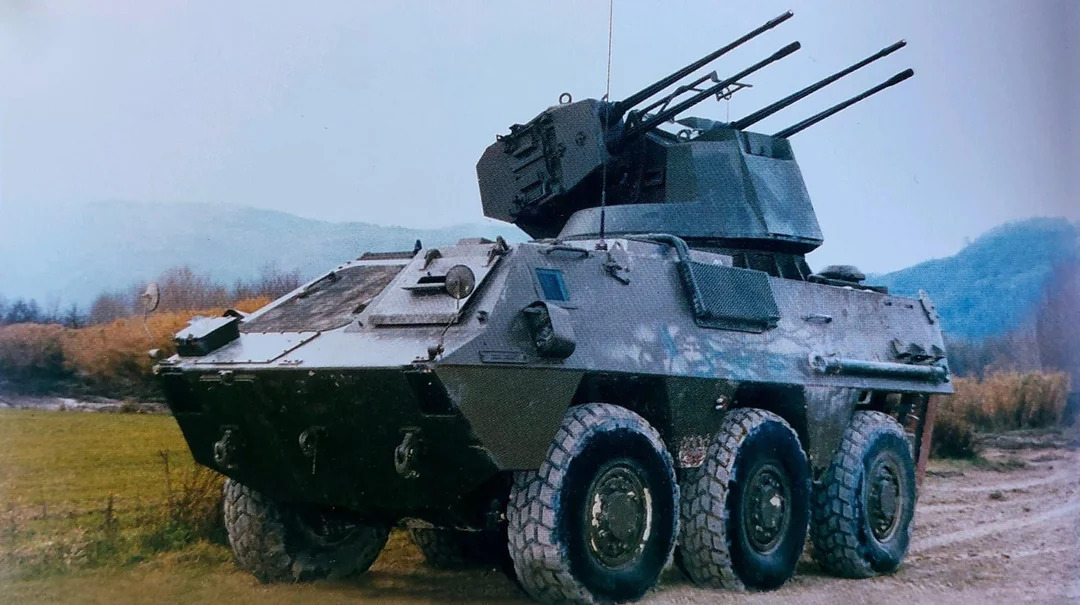
BMR SIDAM 25
- Description:
- Another BMR-600 prototype, this time carrying an Oto Melara SIDAM 25 turret armed with four 25mm Oerlikon KBA automatic cannons, the army showed no interest, so an attempt was made to sell it to Kenya without success.
- Crew:
- 3 (Commander, Gunner, Driver)
- Armament:
- Primary: 4x 25mm Oerlikon KBA automatic cannons
- Maneuverability:
- Max. Speed: 100 km/h
- Sources:
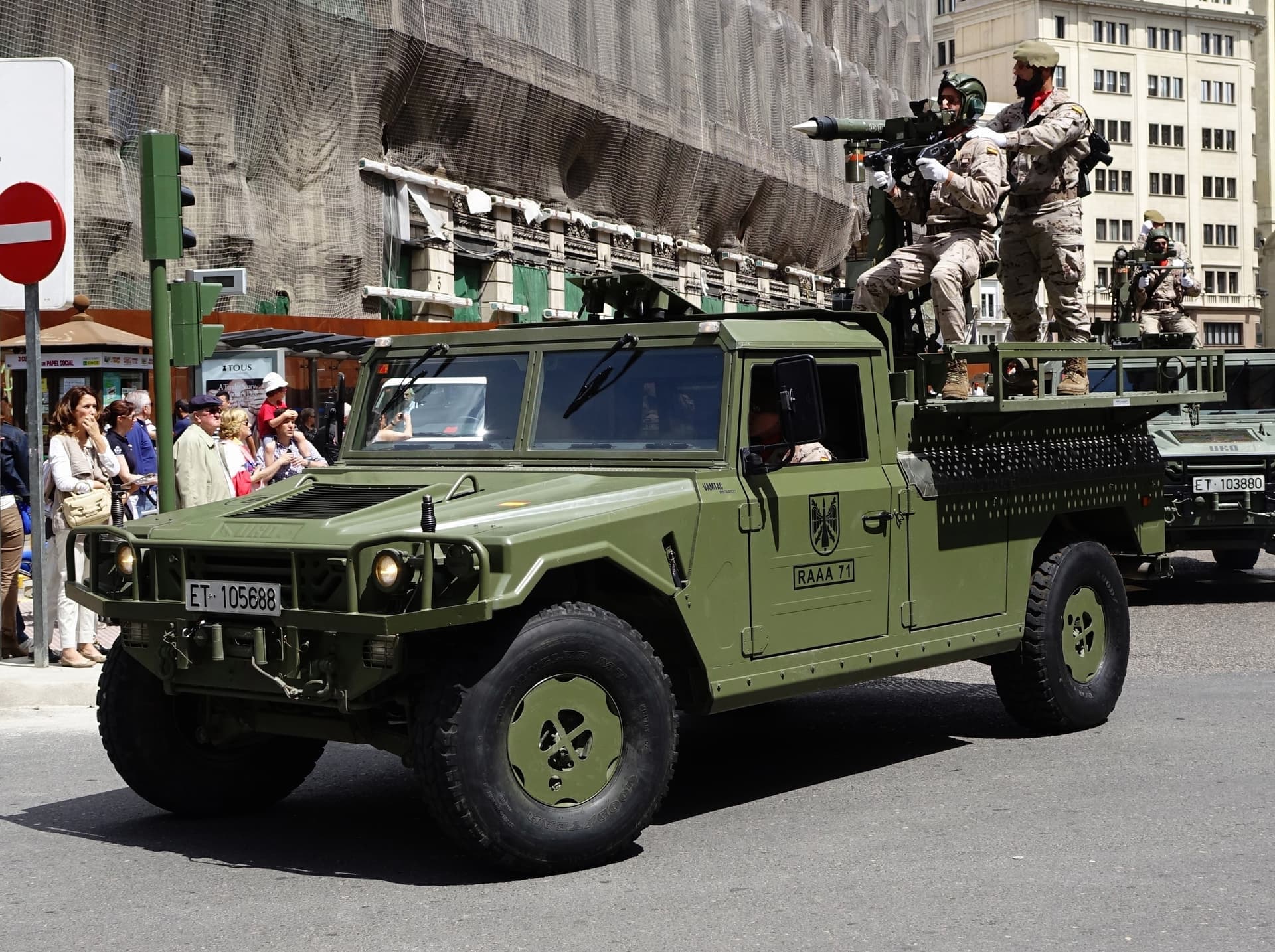
VAMTAC Mistral
- Description:
- Spanish URO VAMTAC vehicle used by the Spanish army to carry Mistral 1 anti-aircraft missile launchers
- Crew:
- 3 (Commander, Gunner, Driver)
- Armament:
- Primary: MISTRAL SAM Launcher
- Maneuverability:
- Max. Speed: 100 km/h
- Sources:
Rank 7
Spoiler
Mygale
- Description:
- Short-range surface-to-air missile system acquired by Chile from France. This system consists of an air defense command and control post, known as Samantha, and up to eight firing units, known as Aspic, Together, both vehicles make up the Mygale system. The system fires French Mistral missiles, and each Peugeot P4 vehicle carries up to eight missiles.
- Crew:
- 2 (driver, gunner)
- Armament:
- Primary: 4x Mistral missiles
- Maneuverability:
- Max. speed: 108 - 118 km/h
- Sources:
Roland 1
- Description:
- French-made short-range anti-aircraft missile system. Between September 1988 and July 1989, the Spanish Army received the first eight Roland I firing positions mounted on AMX-30 chassis.
- Crew:
- 3 (Commander, Gunner, Driver)
- Armament:
- Primary: Roland SAM
- Maneuverability:
- Max. Speed: 65 km/h
- Sources:
Crotale 3000
- Description:
- Low-altitude surface-to-air missile system developed by France and South Africa. Chile acquired four missile launch vehicles and two vehicles with search radar in the early 1980s. The year of purchase indicates that the version purchased was the 3000. This system uses R440 missiles, which are notable for their explosive mass and speed. The launch vehicles can carry up to four of these missiles ready to fire and have a tracking radar with a range of 17 km.
- Crew:
- 2 (Commander, Driver)
- Armament:
- Primary: 4x R440 missiles
- Maneuverability:
- Max. speed: 70 km/h
- Sources:


Rank 8
Spoiler
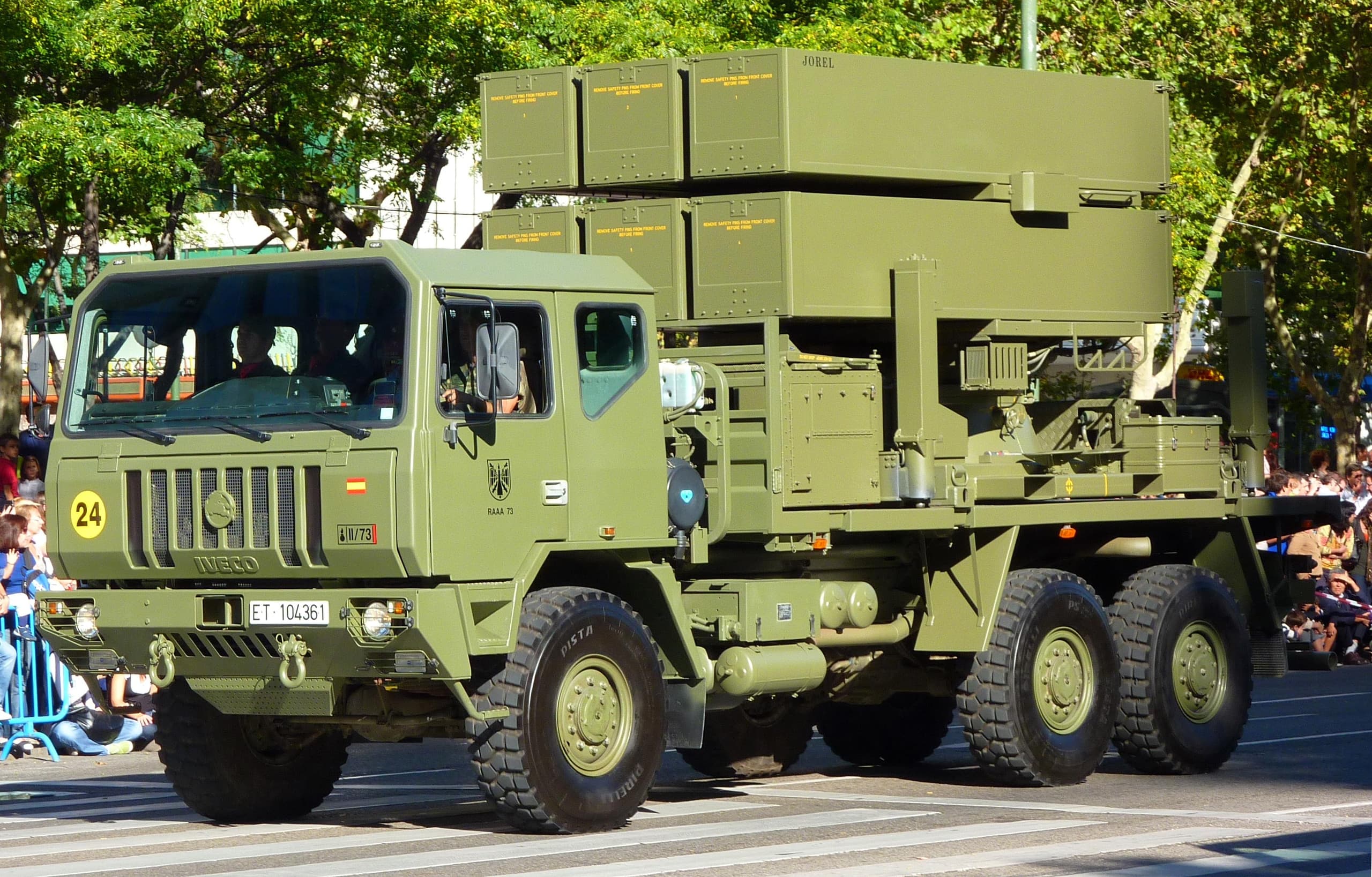
NASAMS II
- Description:
- The Norwegian Advanced Surface-to-Air Missile System, or NASAMS, is a medium-long-range surface-to-air missile system that employs AIM-120 AMRAAM missiles. Spain received its missile batteries and radars in 2003 in the NASAMS II version and its modernization was recently announced.
- Crew:
- 2 (Commander, Driver)
- Armament:
- Primary: 6x AIM-120C7 AMARAAM missiles
- Maneuverability:
- Max. Speed: 100 km/h
- Sources:
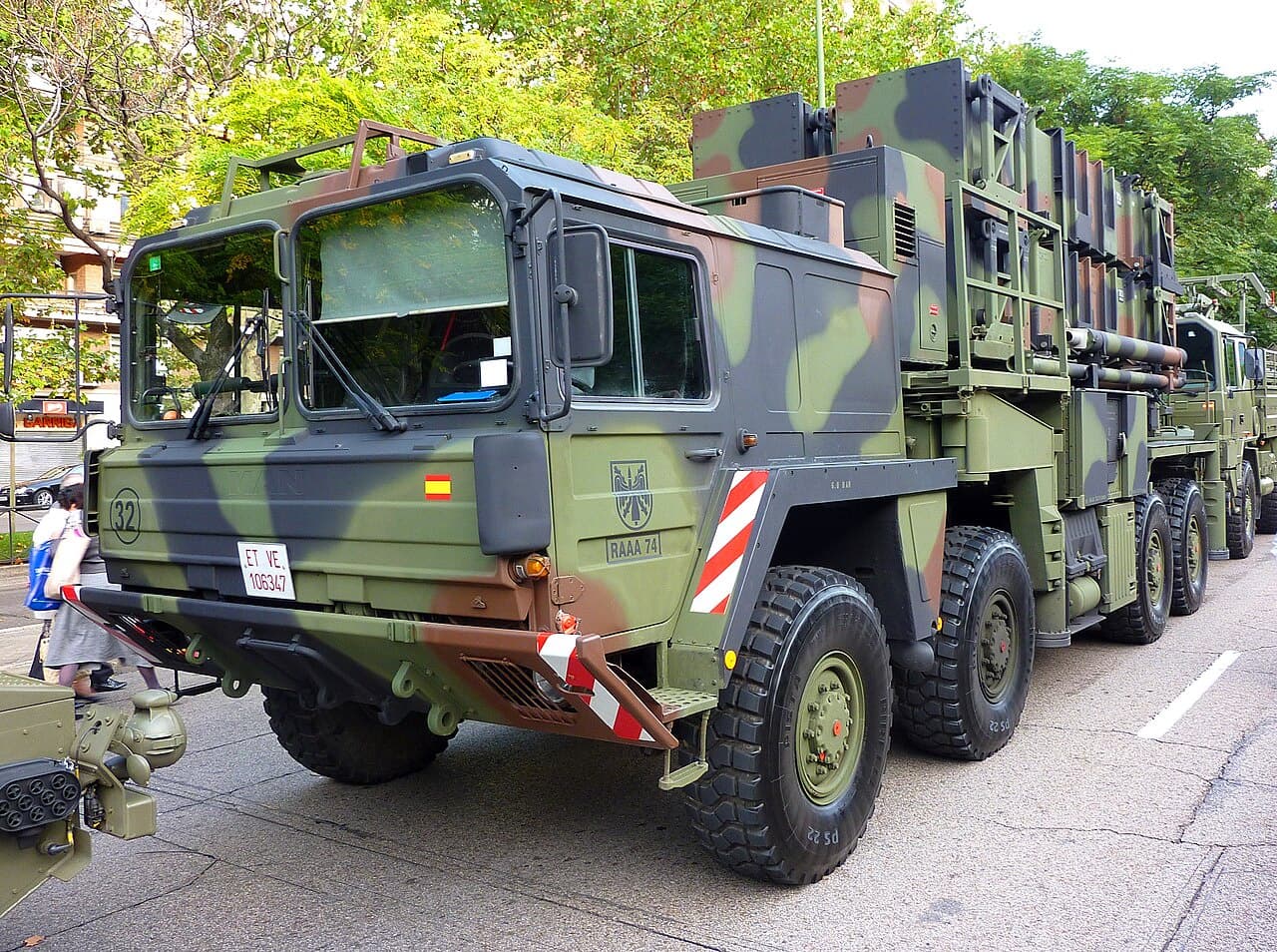
MIM-104 Patriot
- Description:
- In 2004, Spain acquired the second-hand MIM-104 Patriot system from Germany. This system consists of three Patriot PAC-2 missile batteries with six M901 launchers, along with their respective AN/MPQ-53 radars, which remain in service to this day. In 2025, Spain signed a new agreement to acquire more Patriot systems in more advanced versions, including PAC-3 missiles, AN/MPQ-65 radars, and other components. These new systems are not expected to arrive until 2030.
- Crew:
- 2 (Commander, Driver)
- Armament:
- Primary: PAC-2 missiles
- Maneuverability:
- Max. Speed: 100 km/h
- Sources:
Chile/Peru/Argentina Tanks
Spoiler
Rank 1
Spoiler
Carden-Loyd Mk.VI (37 mm)
- Description:
- IThe Carden-Loyd Mk.VI arrived in Chile in 1936. The Vickers .303 machine gun was replaced by a 37mm M3 or M6 cannon, taken from an M3A1 Stuart.
- Crew:
- 2 (Commander, Driver)
- Armament:
- Primary: 37mm M3 or M6 cannon
- Maneuverability:
- Max. Speed: 40km/h
- Sources:
M3A1 Stuart
- Description:
- A first batch of 12 M3A1 tanks arrived in Chile during 1943. The M3A1 tank was the first tank of the Chilean Army. Later, between 1944-1945, new batches of tanks were sent to Armored Detachment No. 1 in Iquique. These tanks were the first real entry into the world of tanks for Chile. Same as the one found in the game.
- Crew:
- 4 (Commander, Gunner, Loader, Driver)
- Armament:
- Primary: 37 mm M6 cannon
- Maneuverability:
- Max. Speed: 58 km/h
- Sources:


Rank 2
Spoiler
M4A1E9
- Description:
- In 1952, a total of 17 Sherman tanks of the M4A1E9 version arrived in Chile. They had spaced suspension, which gave them the E9 designation.
- Crew:
- 5 (Commander, Driver, Gunner, Loader, Machine Gunner)
- Armament:
- Primary: 75 mm M3 cannon
- Maneuverability:
- Max. Speed: 38 km/h
- Sources:
M4A3
- Description:
- American M4A3 Sherman medium tanks acquired by Peru in the late 1940s and early 1950s; a total of 51 tanks were acquired.
- Crew:
- 5 (Commander, Gunnder, Loader, Driver, Machine Gunner)
- Armament:
- Primary: 75 mm M3 cannon
- Maneuverability:
- Max. Speed: 47 km/h
- Sources:
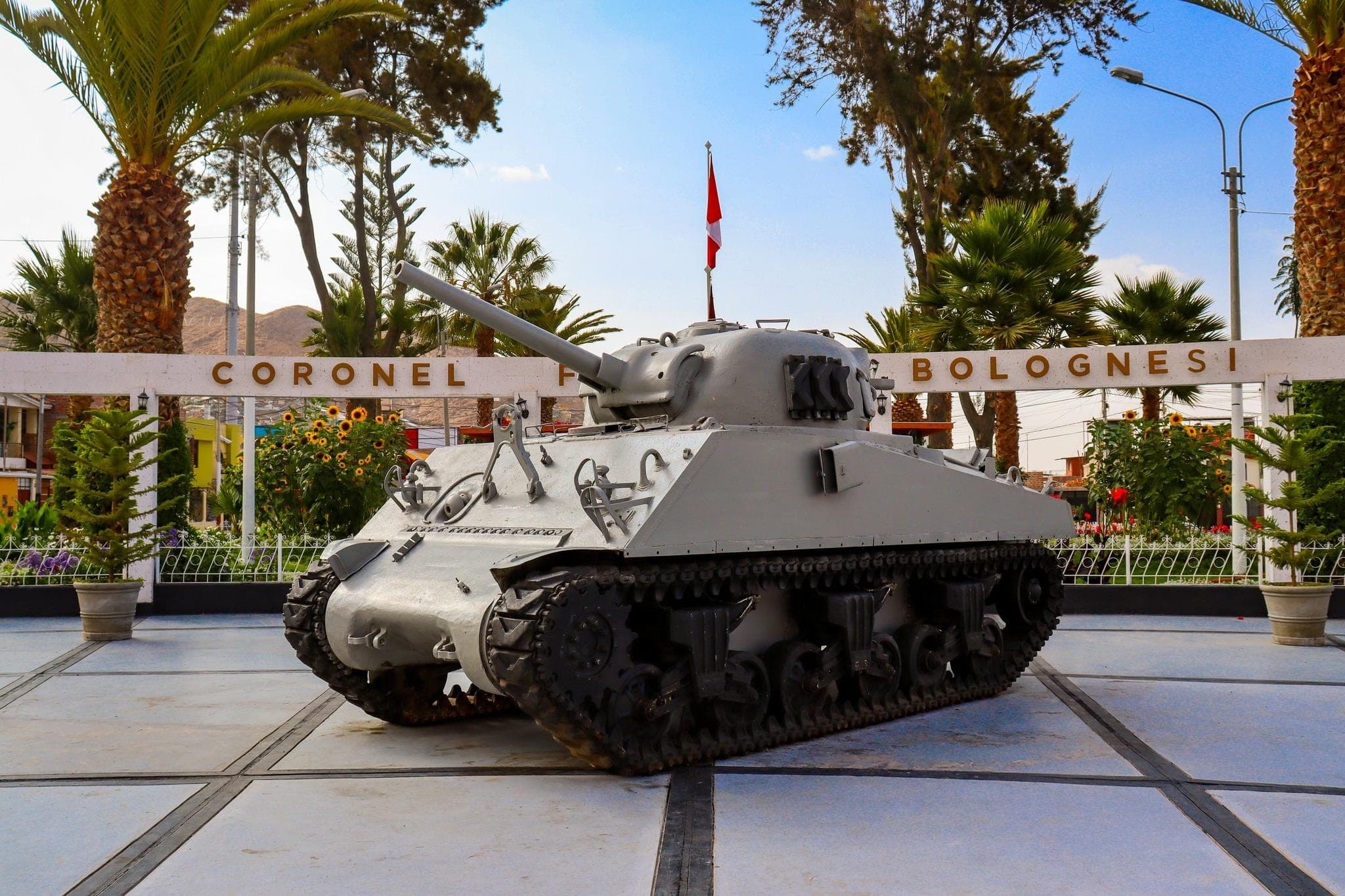
Nahuel DL.43
- Description:
- Medium tank developed in Argentina in 1943, its name means jaguar in the Mapudungun language, the design is inspired by the M4 Sherman but with significant differences, the frontal armor was superior and was equipped with a Krupp L.30 Model 1909 75 mm cannon.
- Crew:
- 5 (Commander, Gunner, Loader, Driver, Machine Gunner)
- Armament:
- Primary: Krupp 75 mm L.30 Mod.1909 Cannon
- Maneuverability:
- Max. Speed: 40 km/h
- Sources:


Rank 3
Spoiler
T16 Czekalski
- Description:
- T16 Universal Carrier which Argentina equipped with a 105mm M-1968 recoilless rifle of national design capable of firing HEAT ammunition with a penetration of 200 mm.
- Crew:
- 3 (Commander, Gunner, Driver)
- Armament:
- Primary: 105mm M-1968 recoilless rifle
- Maneuverability:
- Max. Speed: 53 km/h
- Sources:
T16E2 Czekalski
- Description:
- Improved version of the T16 Universal Carrier, this time Argentina went further and installed 6 M-1968 recoilless rifle of national manufacture
- Crew:
- 3 (Commander, Gunner, Driver)
- Armament:
- Primary: 6x 105mm M-1968 recoilless rifles
- Maneuverability:
- Max. Speed: 53 km/h
- Sources:


Rank 4
Spoiler
M-51 Repotenciado
- Description:
- The Israeli M-51 tanks sold to Chile and subsequently modernized were fitted with a more powerful engine. They were also equipped with the FCS MSZ-2, which features a laser rangefinder and night vision.
- Crew:
- 5 (Commander, Gunner, Loader, Driver, Machine Gunner)
- Armament:
- Primary: 105 mm gun L.51 D.1508
- Maneuverability:
- Max. speed: 41 km/h
- Sources:
M41 Repotenciado
- Description:
- M41 from Chile modernized by Israeli companies, the Nimda company changed the original engine for a Detroit Diesel 8V-71T and modified the engine area by eliminating the 2 original engine exhaust outlets, the Elbit and Elop companies added the fire control system Lan-Sadot added new optics for the commander and gunner, a ballistic computer and a laser rangefinder to the tank. Finally, the Chilean army added 4 smoke launchers to some of these tanks.
- Crew:
- 4 (Commander, Gunner, Loader, Driver)
- Armament:
- Primary: 76 mm M32 cannon
- Maneuverability:
- Max. speed: 70 km/h
- Sources:
M24 HVMS
- Description:
- Chilean M24 armed with the Israeli IMI HVMS 60 mm cannon capable of firing APFSDS-T ammunition, mount for an extra 7.62 mm Browning M1919 machine gun, new Detroit Diesel 6V-53T engine, new Allison HT 700 5-speed automatic transmission, new fire control system and new gyro stabilizer. The weight increased to 22 tons.
- Crew:
- 5 (Commander, Gunner, Loader, Driver, Machine gunner)
- Armament:
- Primary: 60 mm IMI HVMS (Hyper Velocity Medium Support) Gun
- Maneuverability:
- Max. speed: 60 km/h
- Sources:


Rank 5
Spoiler
VCTP
- Description:
- Infantry fighting vehicle of Argentine design and manufacture, belongs to the TAM family of tanks and is based on the chassis of the German Marder but the VCTP has a two-seater turret
- Crew:
- 3 (Commander, Gunner, Driver)
- Armament:
- Primary: 20 mm Rheinmetall Rh202 autocannon
- Maneuverability:
- Max. Speed: 80 km/h
- Sources:
Marder 1A3 (Proaco)
- Description:
- The Chilean Marder 1A3s were modernized under the Proaco project by OIP Sensor Systems, owned by Elbit Systems of Israel. The gunner’s aiming system was replaced with a new EOPTRIS 2.0 model, which includes a laser rangefinder and third-generation thermal imaging. The driver was equipped with the Sentinel system. The Chilean Marder 1A3 does not use an anti-tank missile system in the turret, so its battle ratio (BR) is lower.
- Crew:
- 3 (Commander, Gunner, Driver)
- Armament:
- Primary: Rheinmetall MK 20 Rh 202 20mm gun
- Maneuverability:
- Max. speed: 75 km/h
- Sources:
M-50 HVMS
- Description:
- The M-50 was acquired from Israel by Chile and armed with the 60mm IMI HVMS cannon capable of firing APFSDS-T ammunition. It has a semi-automatic reloading system. A more powerful engine was installed. An FCS MSZ-2 with laser rangefinder and night vision was also installed.
- Crew:
- 5 (Commander, Gunner, Loader, Driver, Machine gunner)
- Armament:
- Primary: 60 mm IMI HVMS (Hyper Velocity Medium Support) cannon
- Maneuverability:
- Max. speed: 41 km/h
- Sources:
AMX 13-105
- Description:
- The French AMX-13 light tank has been used by the Argentine Army since 1968. The tank is armed with the 105 mm CN105-57 cannon capable of firing HEAT ammunition with a penetration of 400 mm at any range.
- Crew:
- 3 (Commander, Gunner, Driver)
- Armament:
- Primary: 105mm CN-105-57 cannon
- Maneuverability:
- Max. Speed: 61 km/h
- Sources:
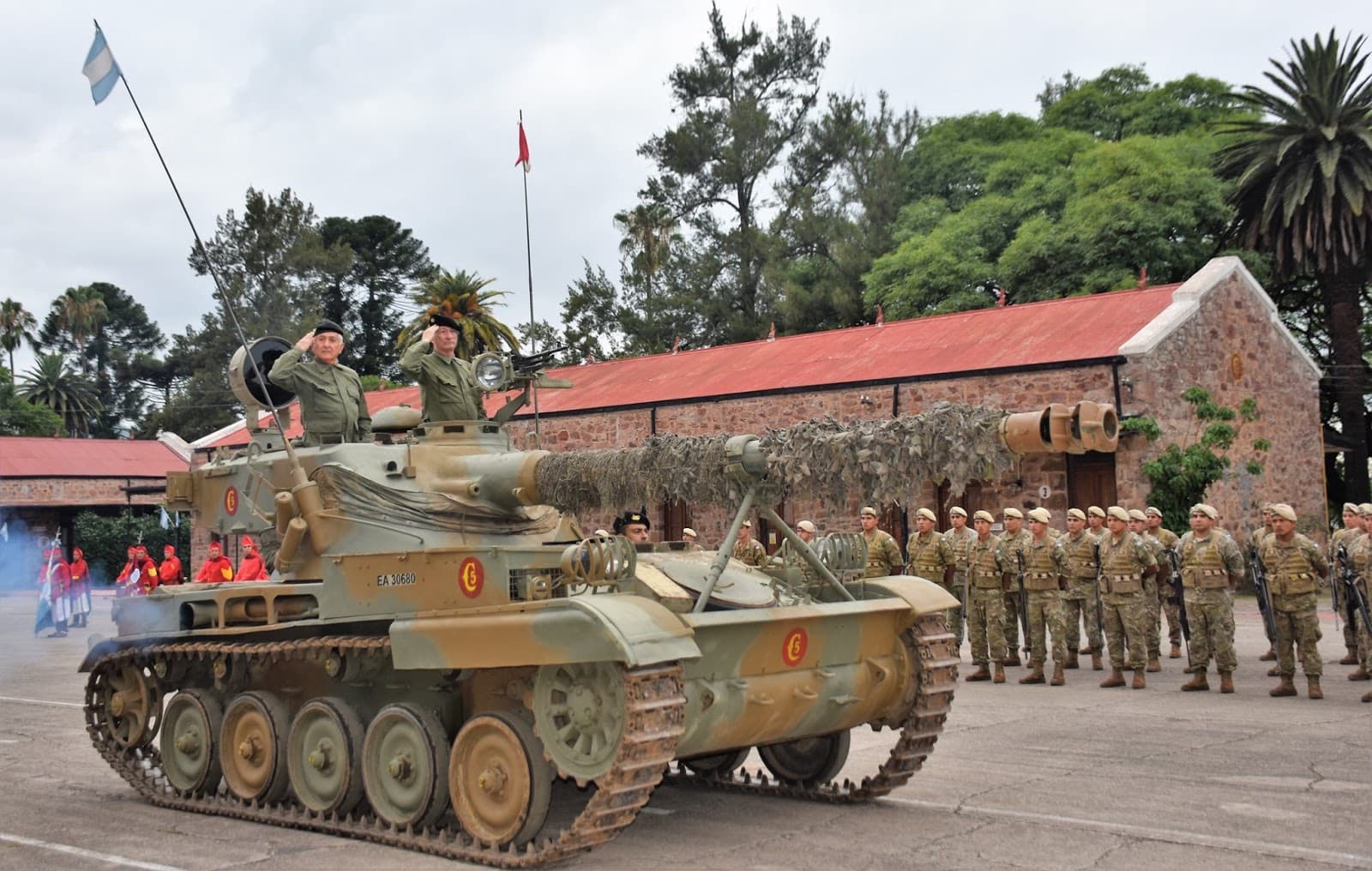
AMX-30B1
- Description:
- Chilean AMX-30B1 which was equipped with a laser rangefinder for the commander
- Crew:
- 4 (Commander, Gunner, Loader, Driver)
- Armament:
- Primary: 105 mm CN-105-F1 cannon
- Maneuverability :
- Max. speed: 65 km/h
- Sources:



Rank 6
Spoiler
AMX-13 Escorpión
- Description:
- The French AMX-13-105 light armored vehicle, armed with a 105mm cannon, was acquired by Peru in 1967. In 2005, some of these tanks were locally modified to carry four 9M14 Malyutka anti-tank missiles on the sides of the turret.
- Crew:
- 3 (Commander, Gunner, Driver)
- Armament:
- Primary: 105mm CN-105-57 cannon
- Maneuverability:
- Max. Speed: 61 km/h
- Sources:
JaPz.K A2
- Description:
- The Sk 105 kürassier (known as JaPz.K A2 in the game) is an Austrian vehicle that Argentina bought in 1981.
- Crew:
- 3 (Commander, Gunner, Driver)
- Armament:
- Primary: 105 mm gun PzK M57
- Maneuverability:
- Max. Speed: 70 km/h
- Sources:
TAM
- Description:
- Medium tank developed and built in Argentina in 1979, it is based on the German TH-301 which is basically a marder chassis with turret and 105 mm gun.
- Crew:
- 4 (Commander, Gunner, Loader, Driver)
- Armament:
- Primary: 105 mm FM K.4 Modelo 1L gun
- Maneuverability:
- Max. Speed: 75 km/h
- Sources:
- Jane’s Armour And Artillery 2005-2006 (Main Battle Tanks, Light Tanks)
- https://es.wikipedia.org/wiki/Tanque_Argentino_Mediano
- https://wiki.warthunder.com/TAM
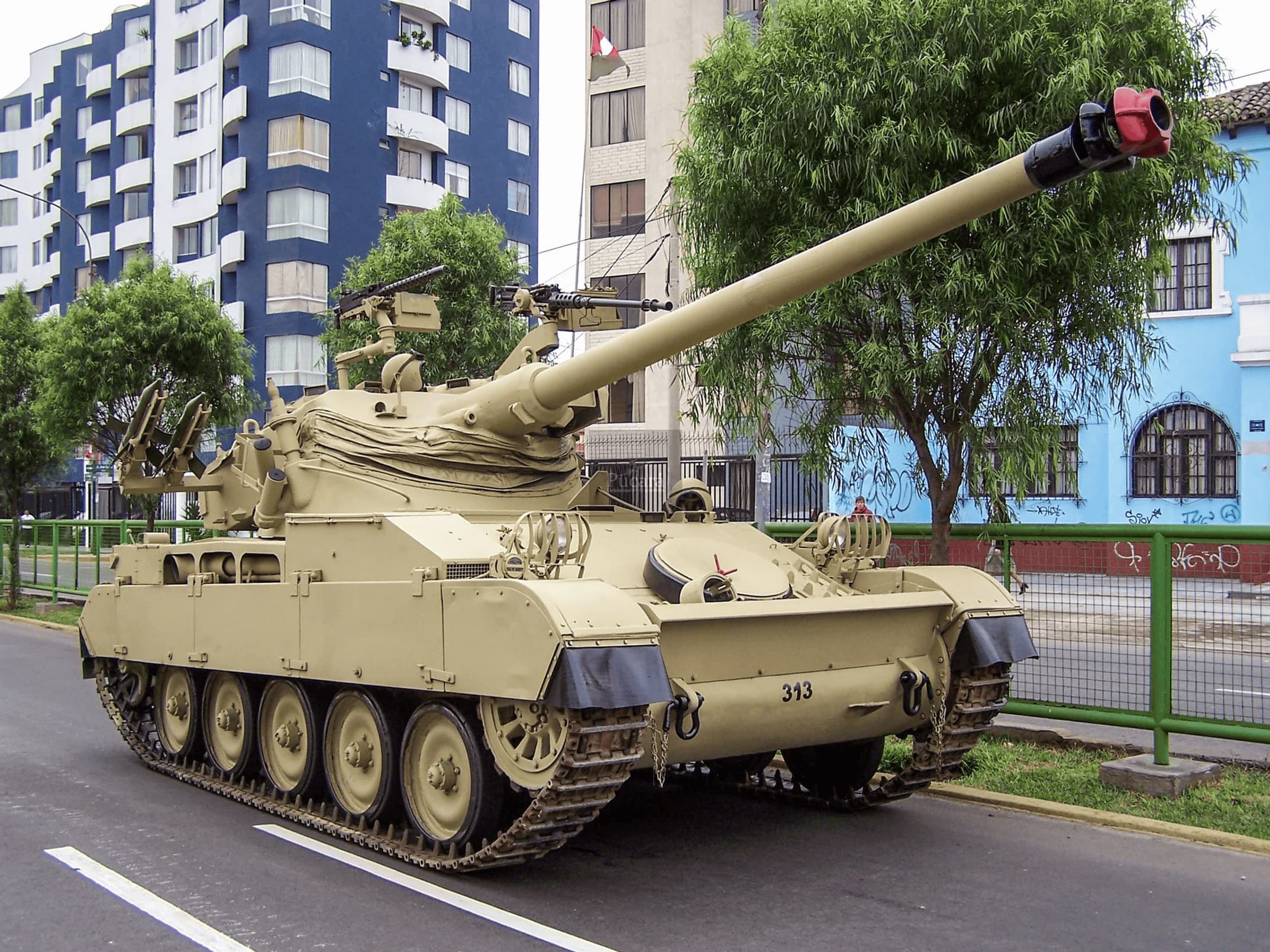
Leopard 1V
- Description:
- In 1997, Chile acquired 202 Leopard 1V main battle tanks from the Netherlands. These Leopard 1s are equivalent to a German Leopard 1A5. Currently, these tanks use Israeli IMI M413 Hetz-7 (APFSDS-T) ammunition, IMI M156 (HESH) ammunition, and the LAHAT anti-tank missile has also been tested.
- Crew:
- 4 (Commander, Gunner, Loader, Driver)
- Armament:
- Primary: Royal Ordnance 105mm L7A3 rifled gun
- Maneuverability:
- Max. Speed: 65 km/h
- Sources:


Rank 7
Spoiler
TAM 2C
- Description:
- Modernized version of the Argentine TAM with Israeli help, the turret hydraulics were replaced by an electric one, improved IR vision systems, LWS warning systems, better ammunition available (DM 33 and DM 63).
- Crew:
- 4 (Commander, Gunner, Loader, Driver)
- Armament:
- Primary: 105 mm FM K.4 Modelo 1L
- Maneuverability:
- Max. Speed: 75 km/h
- Sources:
TAM 2C-A2
- Description:
- The latest modernization of the Argentine TAM and therefore the most powerful tank currently in Argentina, the new modernization includes new electronic and optical capabilities, updated sensors and COAPS-L stabilized panoramic sight for the gunner and commander.
- Crew:
- 4 (Commander, Gunner, Loader, Driver)
- Armament:
- Primary: 105 mm FM K.4 Modelo 1L
- Maneuverability:
- Max. Speed: 75 km/h
- Sources:
Leopard 2A4CHL
- Description:
- In 2007, Chile acquired 172 Leopard 2A4 tanks from Germany. The Leopard 2A4CHL uses DM 12, DM 33A2, and IM HE-T HEAT ammunition. They are currently undergoing modernization by Aselsan.
- Crew:
- 4 (Commander, Gunner, Loader, Driver)
- Armament:
- Primary: Rheinmetall 120mm L/44 smoothbore gun
- Maneuverability:
- Max. speed: 68 km/h
- Sources:
Leopard 2CHL (Proaco Fase II)
- Description:
- In 2024, Chile and the Turkish company Aselsan signed an agreement to modernize Chile’s Leopard 2 tanks. The project, called Proaco, includes up to four modernization phases. Phase 2, which is already being implemented, includes the integration of the Volkan-II fire control system, the installation of third-generation independent thermal sights for the gunner and commander, fully electric turret drive, third-generation 360° thermal cameras for the driver, a laser warning system, and a remote 12.7 mm turret. It also includes the Israeli M322 ammunition with up to 588 mm of penetration.
- Crew:
- 4 (Commander, Gunner, Loader, Driver)
- Armament:
- Primary: Rheinmetall 120mm L/44 smoothbore gun
- Maneuverability:
- Max. speed: 68 km/h
- Sources:


Rank 8
Spoiler
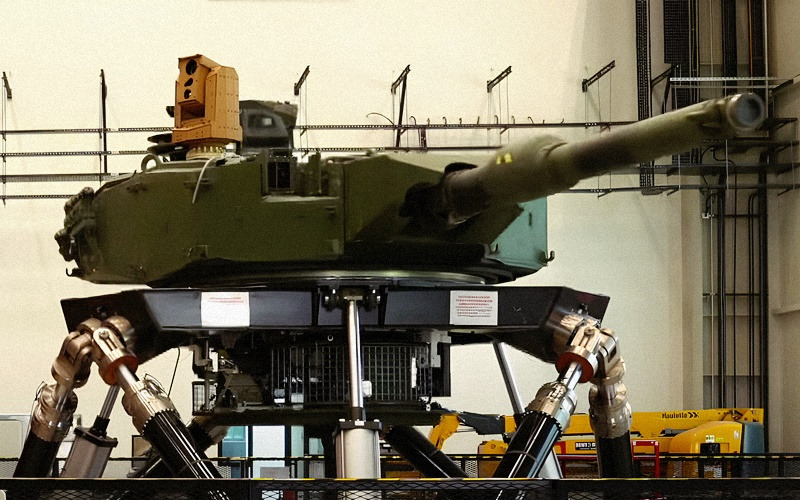
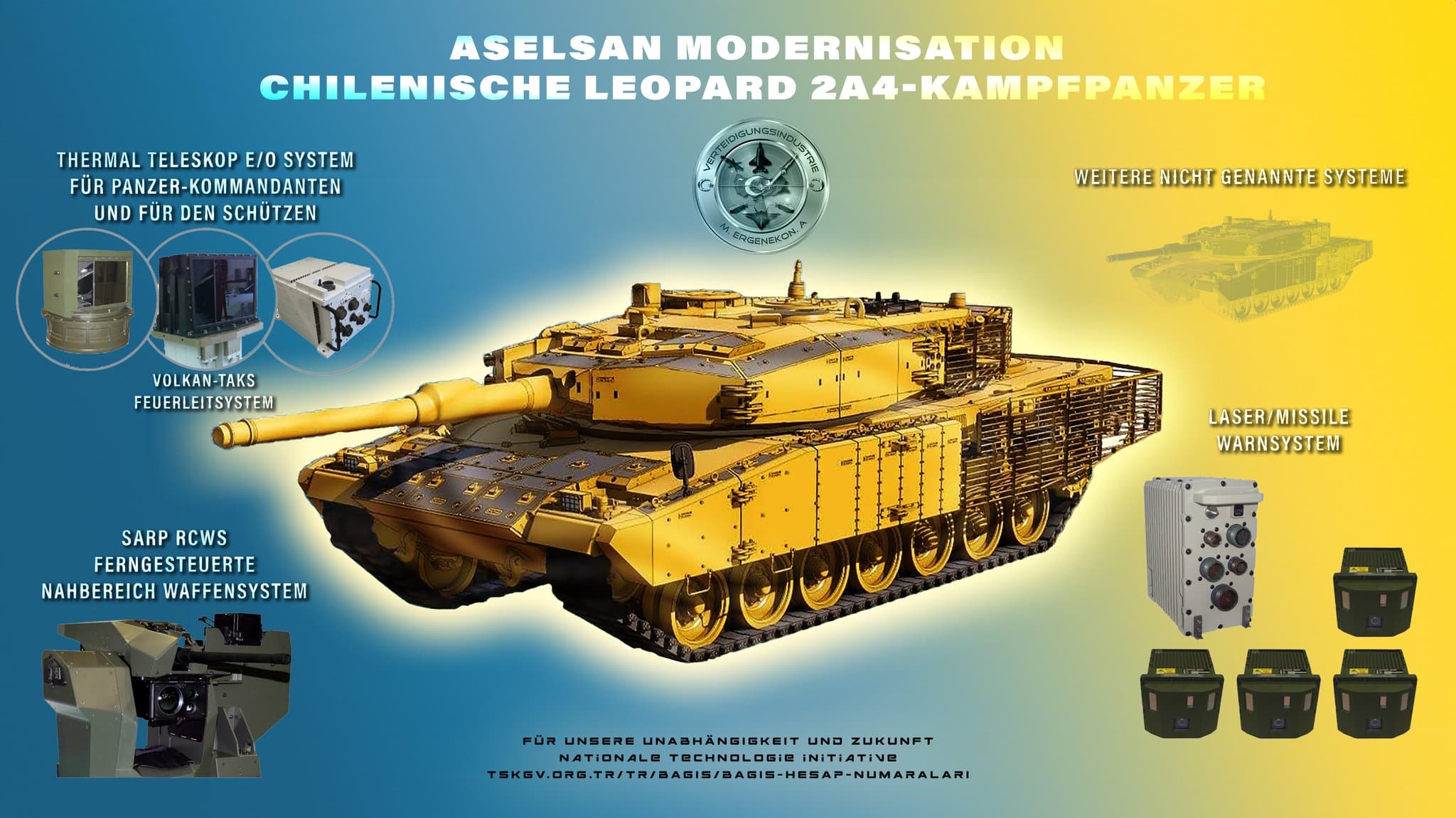
Leopard 2CHL (Proaco Fase IV)
- Description:
- Phase 4 of the Proaco project includes the installation of passive armor on the turret and chassis, as well as an APS anti-tank missile system that will greatly increase the tank’s survivability. A couple of years ago, the first image of the modernized turret was leaked at Aselsan’s facilities in Turkey.
- Crew:
- 4 (Commander, Gunner, Loader, Driver)
- Armament:
- Primary: Rheinmetall 120mm L/44 smoothbore gun
- Maneuverability:
- Max. speed: 68 km/h
- Sources:
Premium/Event
Spoiler
Rank 1
Spoiler
M8 LAC
- Description:
- In 1953, Chile received five M8 units that served in the Mechanized School, becoming one of the first military vehicles to serve in Chile along with the M3 Stuart. Same as the one found in the game.
- Crew:
- 4 (Commander, Gunner, Loader, Driver)
- Armament:
- Primary: 37 mm M6 cannon
- Maneuverability:
- Max. Speed: 90 km/h
- Sources:
Verdeja Prototipo
- Description:
- The first prototype of what would become the Spanish Verdeja tank, built in 1939, presented some differences from the final design, mainly in its chassis and turret, which had a more square design than the final, more oval design, presumably to have better armor angles.
- Crew:
- 3 (Commander, Gunner, Driver)
- Armament:
- Primary: 45/44 Mark I S.A. Plasencia de las Armas
- Maneuverability:
- Max. Speed: 44 km/h
- Sources:
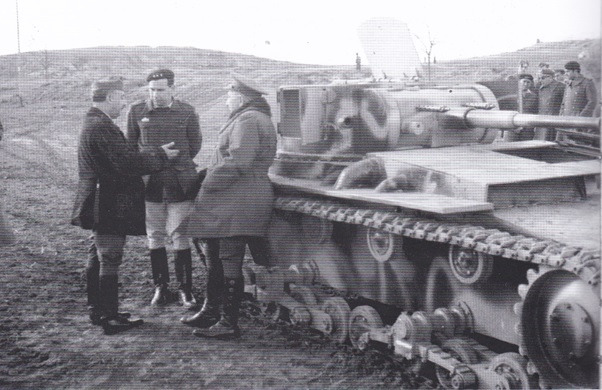
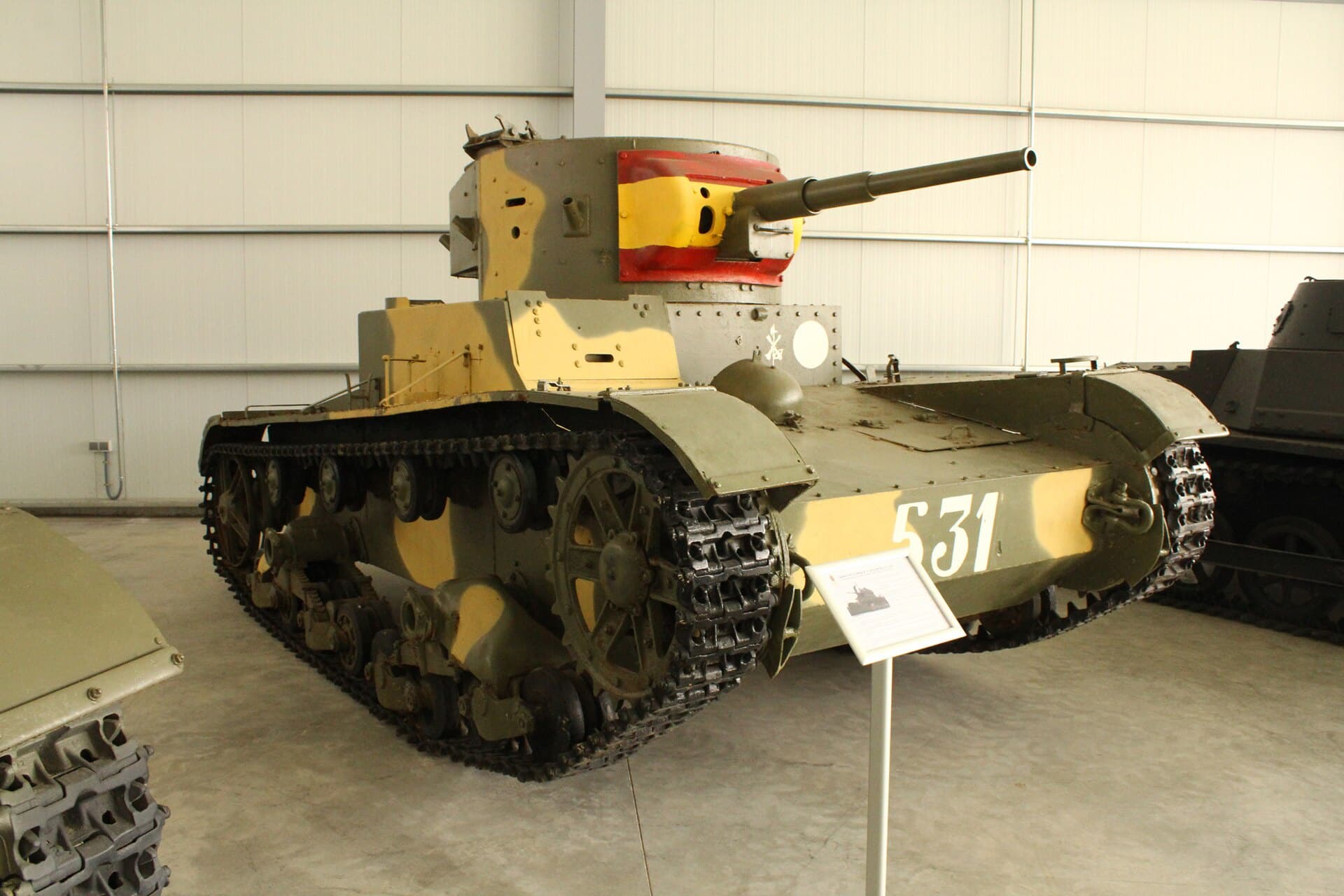
T-26 (Nationalist)
- Description:
- The T-26 captured by the Nationalist side, easily recognizable because the colors of the Spanish flag were painted on its turret.
- Crew:
- 3 (Commander, Gunner, Driver)
- Armament:
- Primary: 45 mm 20-K cannon
- Maneuverability:
- Max. Speed: 31.1 km/h
- Sources:
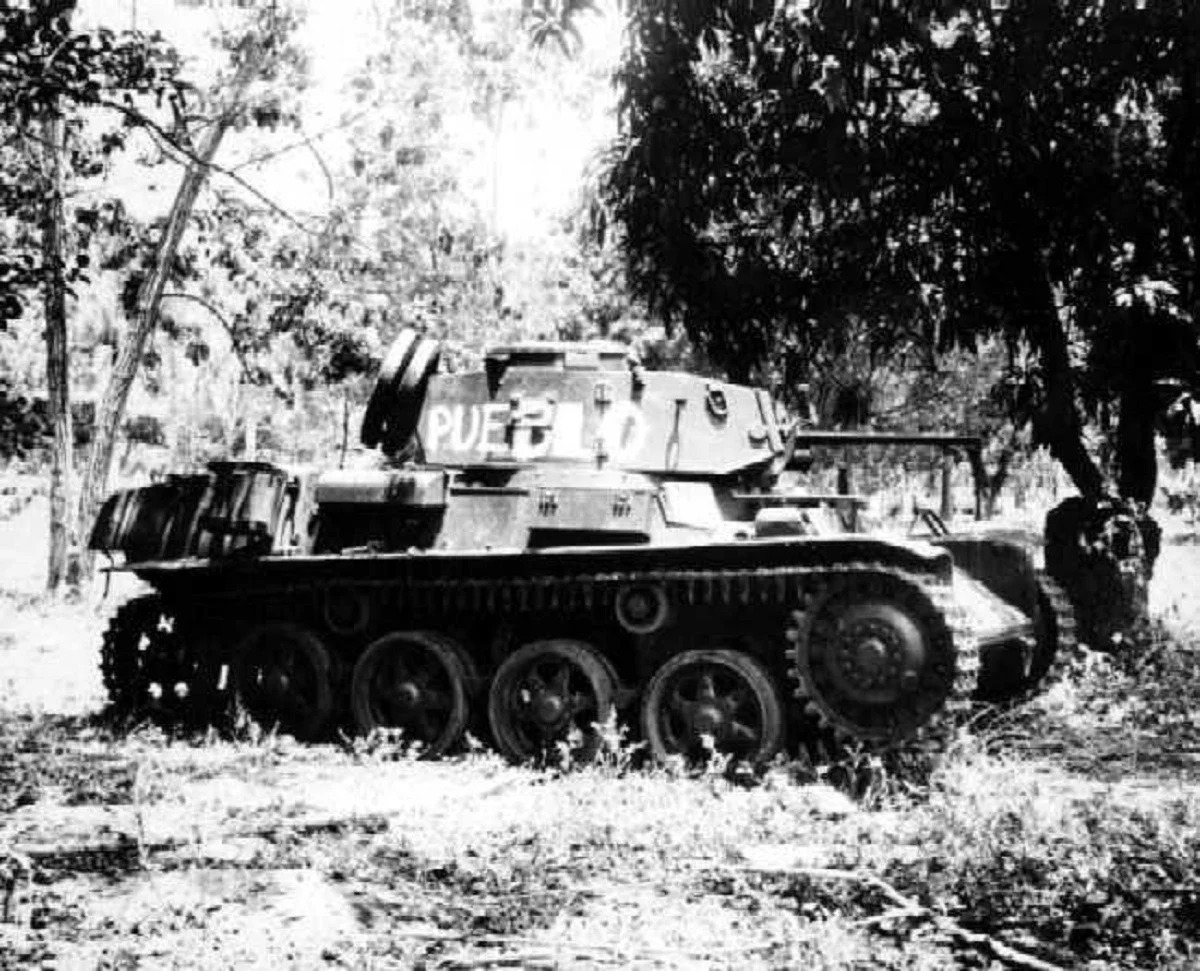
L-60
- Description:
- Swedish Strv m/40L light tank used by the Dominican Republic. Twenty of these tanks were sold to the country in 1956 and designated L-60 for export. These tanks faced American M50 Ontos and M48 Patton tanks during the war between those two countries in 1965.
- Crew:
- 3 (Commander, Gunner, Driver)
- Armament:
- Primary: 37 mm kan m/38 cannon
- Maneuverability:
- Max. Speed: 45 km/h
- Sources:
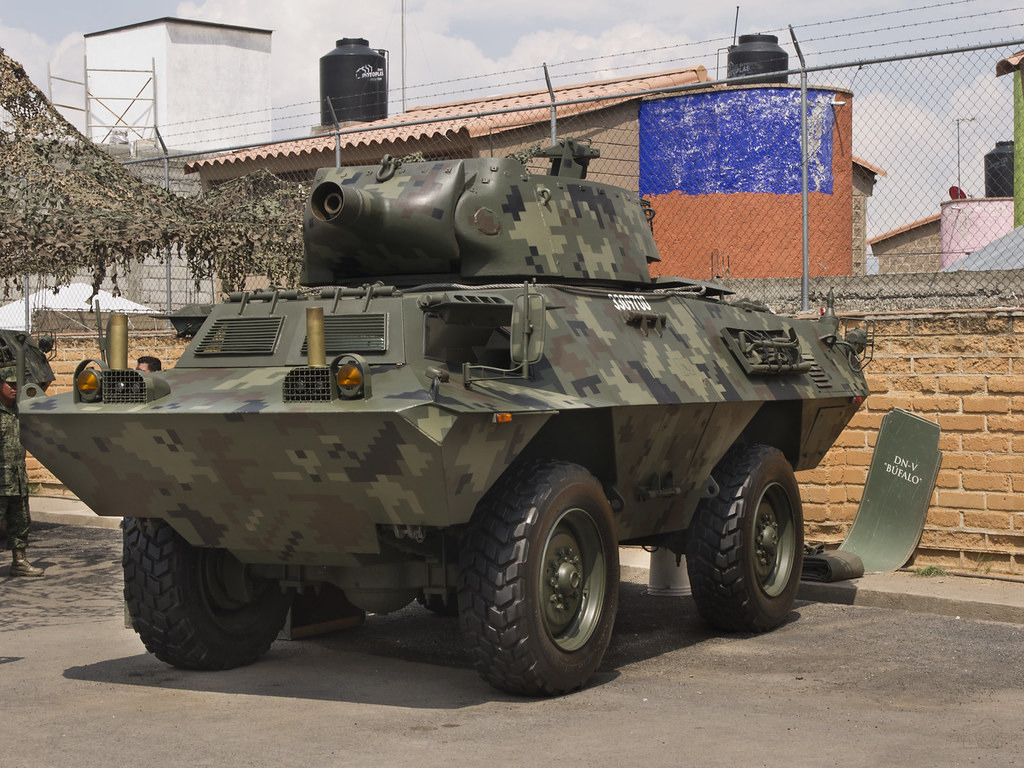
DN-V Búfalo
- Description:
- Armored personnel carrier designed and built in Mexico called DN-V, in this version it was equipped with the turret of the American M8 HMC which carries an 75 mm M2 howitzer
- Crew:
- 4 (Commander, Gunner, Loader, Driver)
- Armament:
- Primary: 75 mm M2 howitzer
- Maneuverability:
- Max. Speed: 80 km/h
- Sources:

Rank 2
Spoiler
M5A1
- Description:
- The M5A1 Stuart tanks were acquired by Mexico in 1947, with 17 units received. They were equipped with two Cadillac V8 engines and two Hydra-Matic transmissions, easily recognizable due to their redesigned hull with a raised rear deck over the engine compartment, they were the last tank to serve in Mexico and were only retired in the 1980s.
- Crew:
- 4 ( Commander, Gunner, Loader, Driver)
- Armament:
- Primary: 37 mm M3 cannon
- Maneuverability:
- Max. Speed: 58 km/h
- Sources:
Crusader LC
- Description:
- A rare Argentinian Crusader with a rocket launcher, depending on the configuration can fire six 21 cm or fourty 8 cm rockets.
- Crew:
- 4 (Commander, Gunner, Loader, Driver)
- Armament:
- Primary: 6x 21cm rockets or 40x 8cm rockets
- Maneuverability:
- Max. Speed: 48 km/h
- Sources:
M37
- Description:
- American self-propelled howitzer acquired by Spain in 1957; the country received 28 units which served until 1970. The vehicle was based on the chassis of the M24 Chaffee, making it very agile.
- Crew:
- 5 (Commander, Gunner, Loader, Driver, Machine Gunner)
- Armament:
- Primary: 105 mm M4 howitzer
- Maneuverability:
- Max. Speed: 56 km/h
- Sources:
Nahuel Mod. 1947
- Description:
- A later version of the Argentine tank Nahuel, the engine was optimized and the machine guns were removed from the chassis, so it no longer had that weak point. The 11.35 mm Madsen coaxial heavy machine gun was replaced by a 7.62 mm Madsen light machine gun. It also had other minor improvements such as radios, hatches, headlights, periscopes and other components that do not affect its performance in the game.
- Crew:
- 5 (Commander, Gunner, Loader, Driver, Machine Gunner)
- Armament:
- Primary: Krupp 75 mm L.30 Mod.1909 Cannon
- Maneuverability:
- Max. Speed: 40 km/h
- Sources:
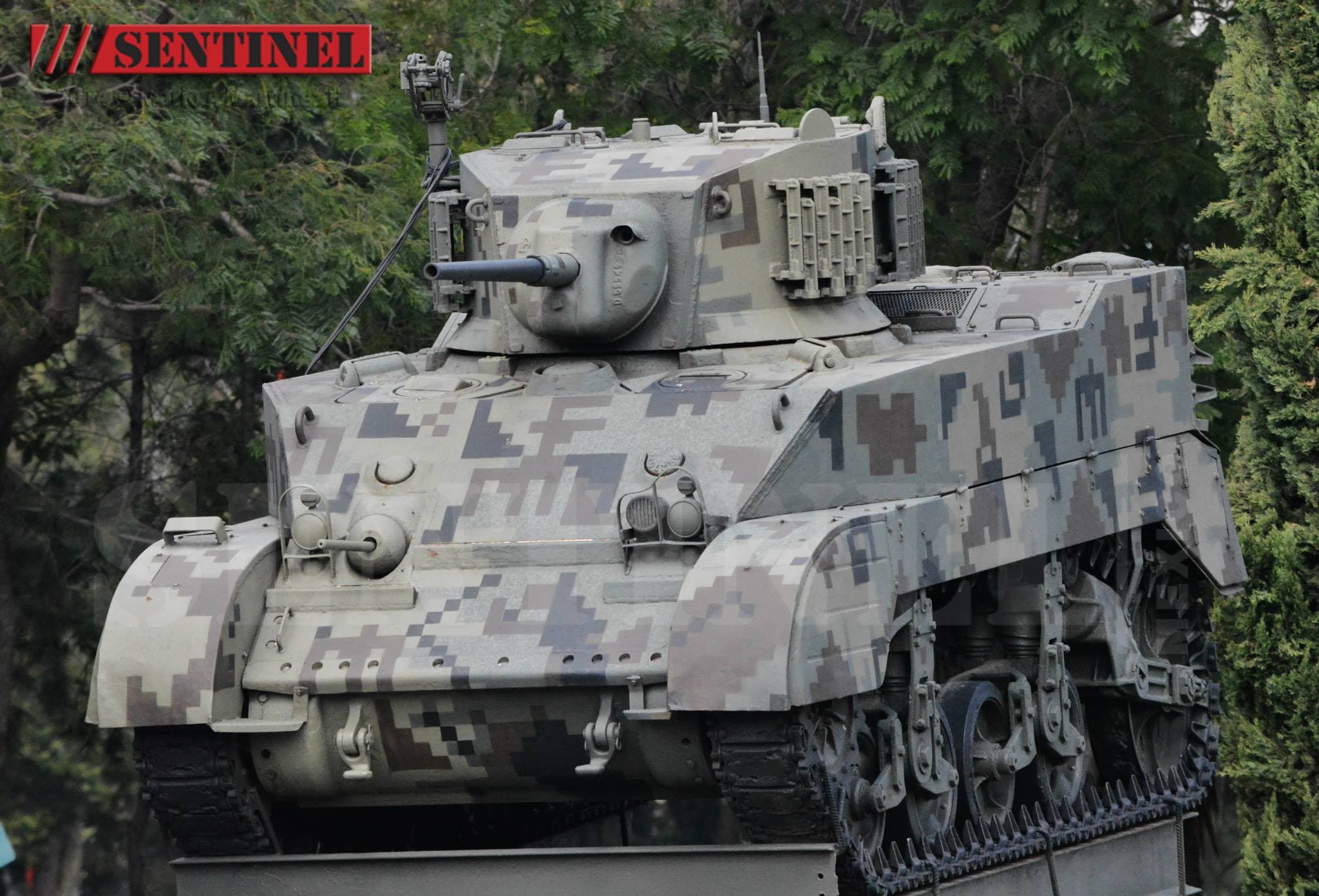

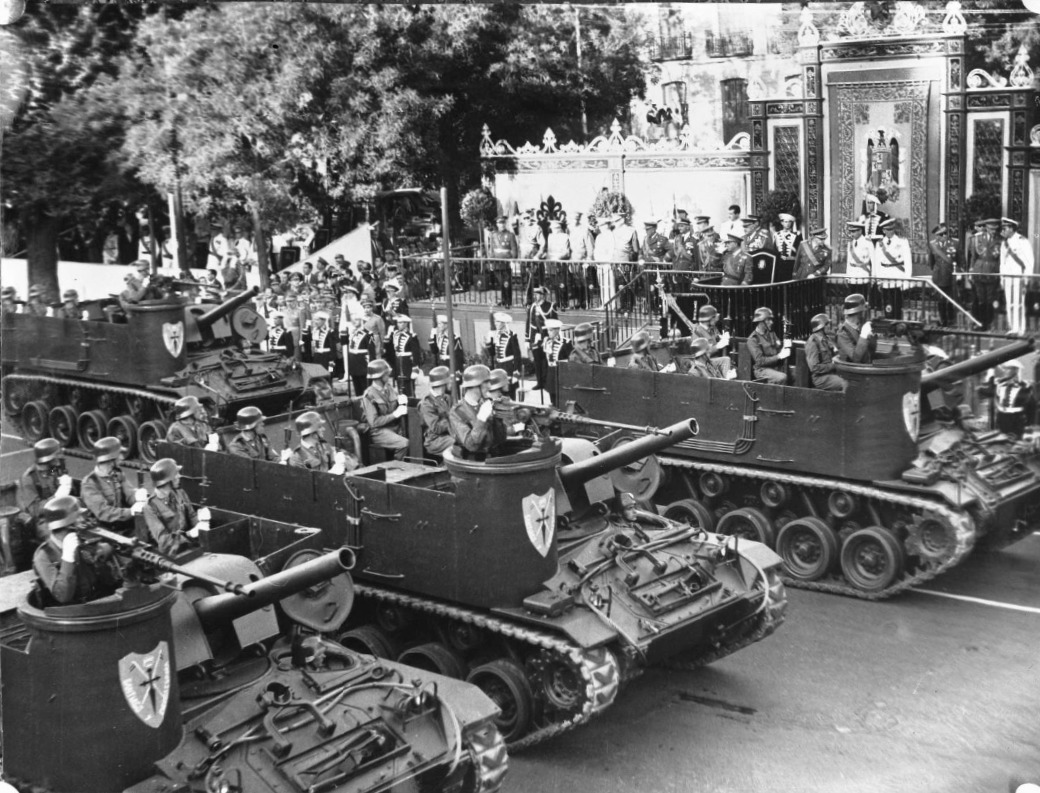
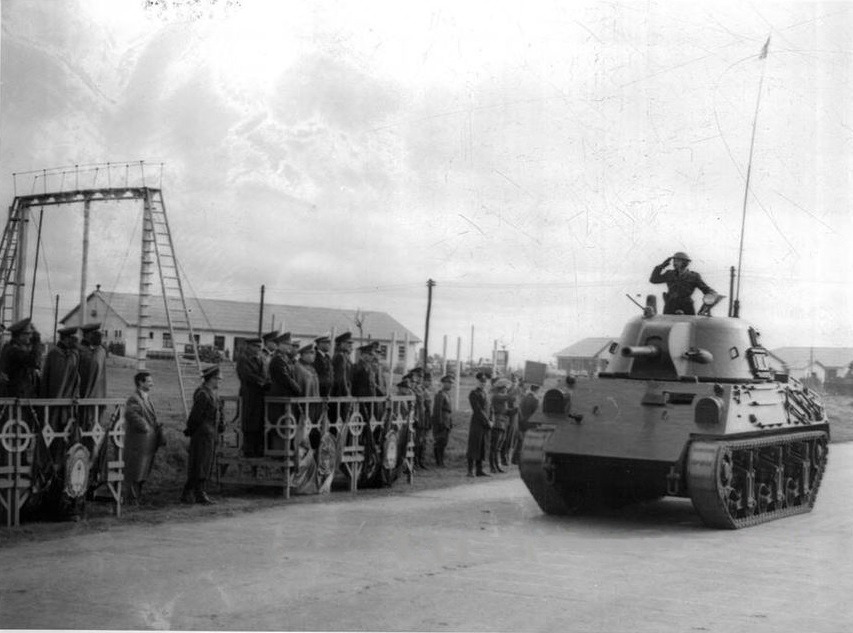
Rank 3
Spoiler
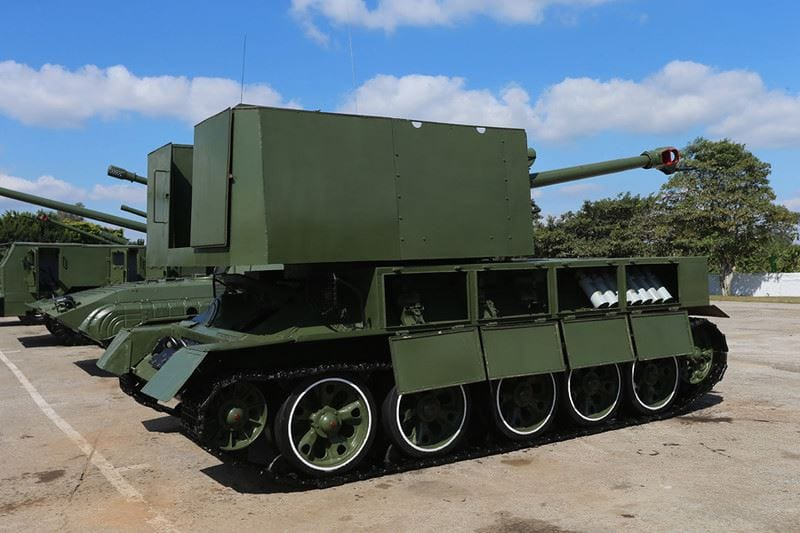
AAP T-34-122
- Description:
- The Soviet T-34 tank in Cuban service was locally modified, and this time its turret is open to accommodate a 122mm D-30 gun like the one used by the IS-6 tank, with a penetration of up to 230mm, making it a tank destroyer.
- Crew:
- 4 (Commander, Gunner, Loader, Driver)
- Armament:
- Primary: 122mm D-30 gun
- Maneuverability:
- Max. Speed: 55 km/h
- Sources:
BMS-1 Alacrán
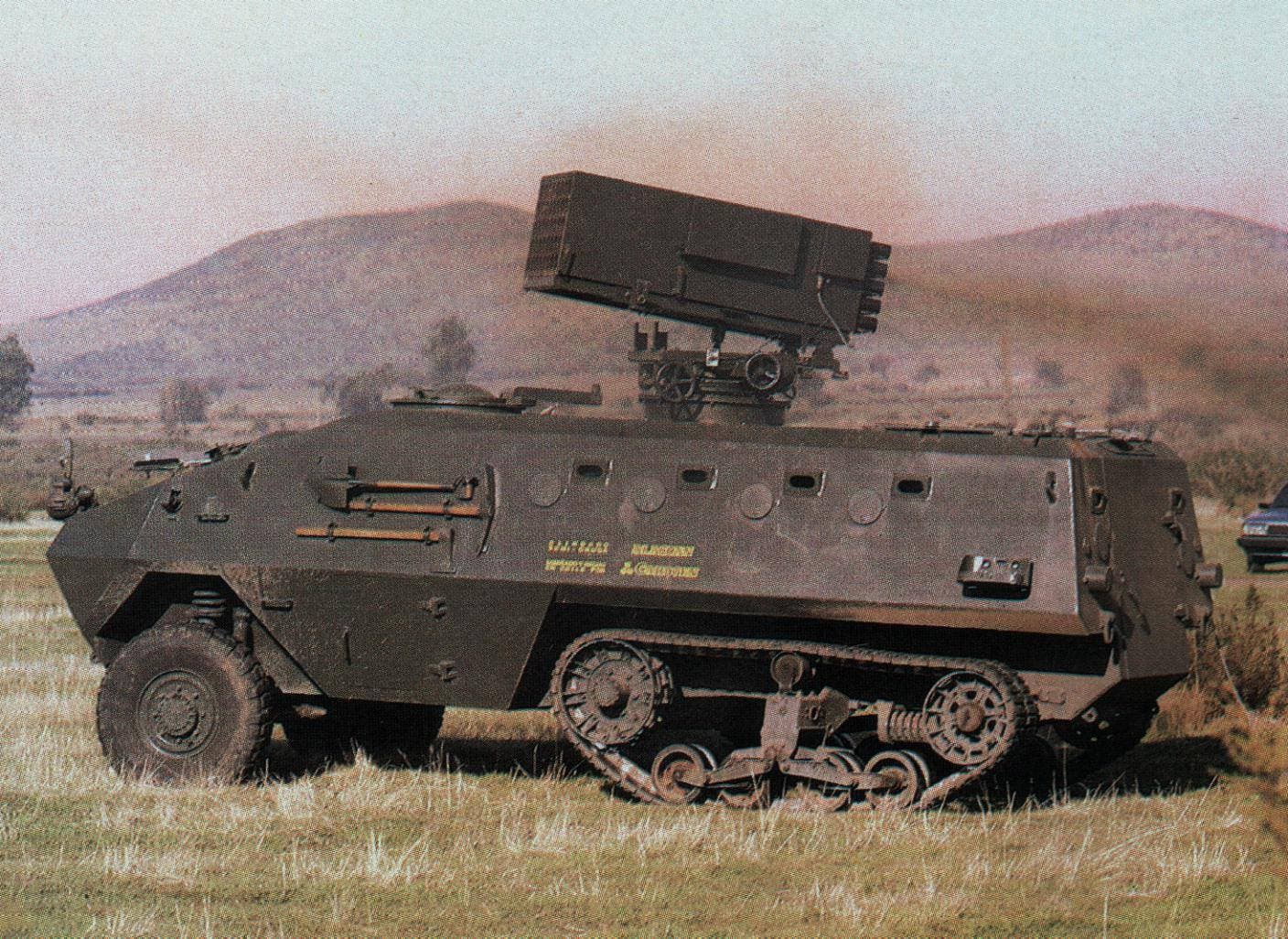
- Description:
- A half-track infantry vehicle developed and manufactured in Chile in 1983 by Industrias Cardoen. This version is equipped with a 70mm LAU-97 rocket launcher. While it can fire rockets with greater penetration, for balance reasons, we will limit it to the FZ100 rockets with a penetration of only 105mm.
- Crew:
- 3 (Commander, Gunner, Driver)
- Armament:
- Primary: LAU-97 70mm rocket launcher
- Maneuverability:
- Max. speed: 70 km/h
- Sources:
Rank 4
Spoiler
VTP-2 Escarabajo
- Description:
- Infantry transport vehicle designed and built in Chile by Cardoen Industries in 1982, it had a 20 mm Oerlikon KAA automatic cannon intended for anti-aircraft defense, other variants were proposed but never built.
- Crew:
- 2 (Commander, Driver)
- Armament:
- Primary: GAD-AOA turret with an Oerlikon KAA 20-mm Autocannon
- Maneuverability:
- Max. speed: 100 km/h
- Sources:
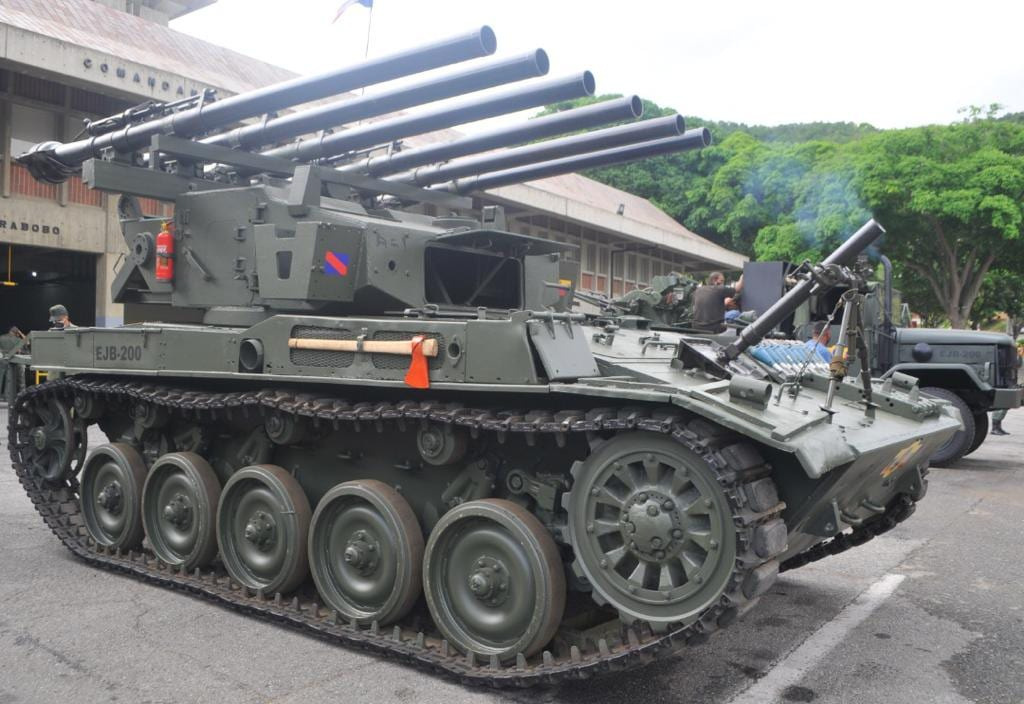
AMX-13 Maisanta
- Description:
- The French AMX-13 in Venezuelan service was locally modified to carry six 106mm M40A1 recoilless rifles, giving it a configuration similar to the American M50 Ontos.
- Crew:
- 2 (Commander, Driver)
- Armament:
- Primary: 6x 106 mm Recoilless Rifle M40A1
- Maneuverability:
- Max. Speed: 60~km/h
- Sources:
Piraña 6x6 (HS-90)
- Description:
- Mowag Piranha built under license in Chile by Cardoen industries, in this version the turret and cannon of the AML-90 were installed.
- Crew:
- 3 (driver, gunner, commander)
- Armament:
- Primary: 90 mm DEFA F1 cannon
- Maneuverability:
- Max. speed: 100 km/h
- Sources:
- http://www.memoriachilena.gob.cl/archivos2/pdfs/MC0067618.pdf
- Famae-Cardoen Piraña (1981)
- Janes Land-Based Air Defence 1992-93 by Tony Cullen, Christopher F. Foss
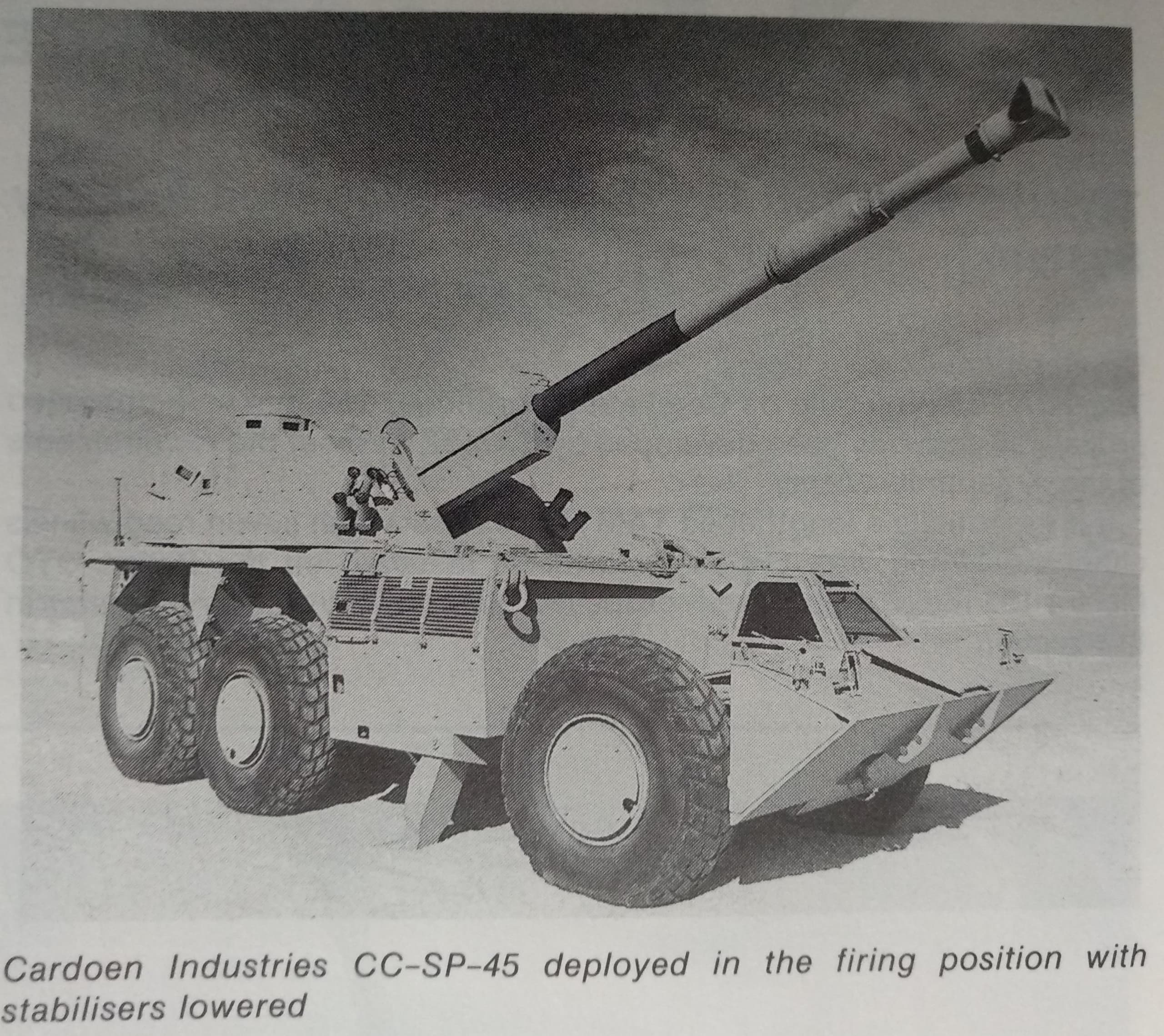
CC-SP-45
- Description:
- G6 self-propelled artillery, manufactured under license in Chile in 1987 by Cardoen Industries and locally known as the CC-SP-45. By 1990, six of these vehicles had already been manufactured, but due to political problems, the agreement was terminated.
- Crew:
- 6 (Commander, Gunner, Loader, Loader, Loader, Driver)
- Armament:
- Primary: 155 mm G6 L/45 cannon
- Maneuverability:
- Max. speed: 86 km/h
- Sources:
Grenadier Repot.
- Description:
- Modernization of the Mowag Grenadier made in Argentina in 1987, it was installed Hispano Suiza Lynx turret, and with it the 90mm DEFA921 F1 gun the same as the one found in the French AML-90, due to the greater weight the engine and gearbox were replaced.
- Crew:
- 3 (Commander, Gunner, Driver)
- Armament:
- Primary: 90 mm DEFA F1 cannon
- Maneuverability:
- Max. Speed: 100 Km/h
- Sources:
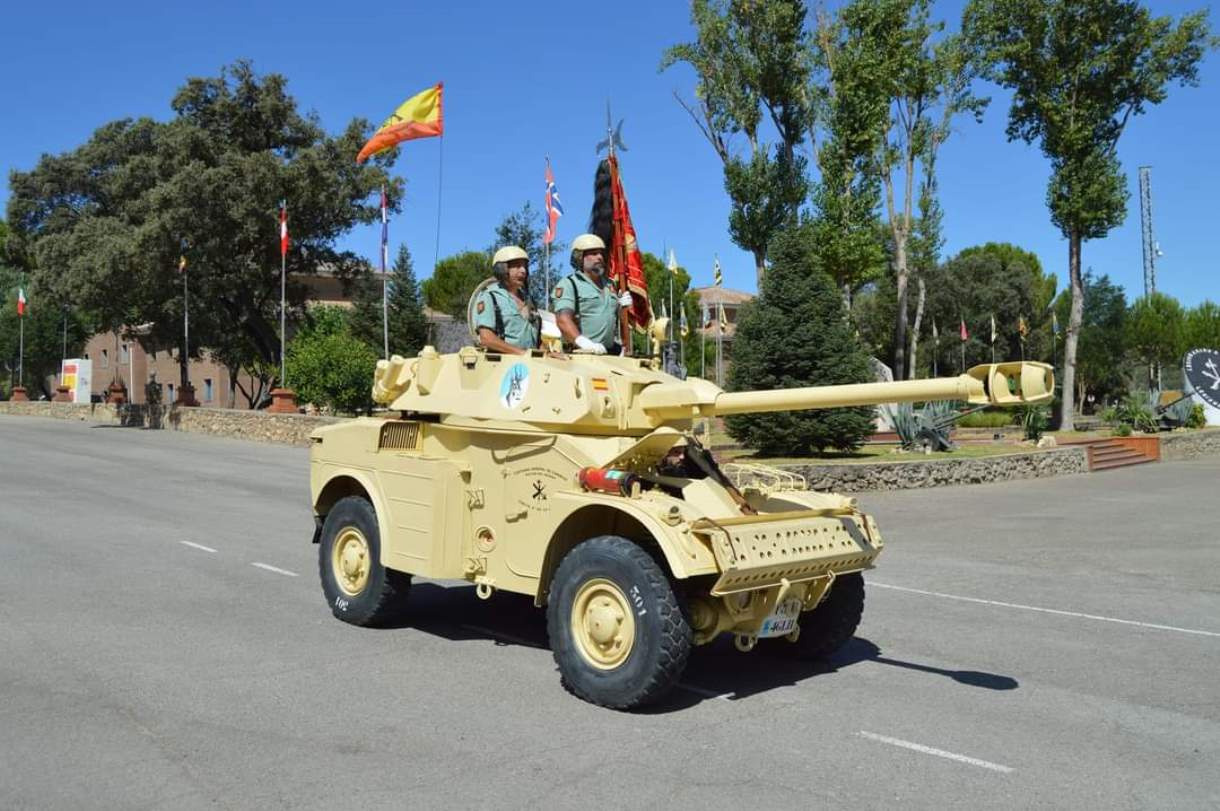
AML-90
- Description:
- French AML-90 light vehicle in service with the Spanish army.
- Crew:
- 3 (driver, gunner, commander)
- Armament:
- Primary: 90 mm DEFA F1 cannon
- Maneuverability:
- Max. speed: 91 km/h
- Sources:



Rank 5
Spoiler
Piraña 8x8 (CSE 90)
- Description:
- Mowag Piranha, license-built in Chile by FAMAE, was seen at FIDAE 1992 in Chile alongside another Piranha variant. This 8x8 version uses a CSE 90 turret with a 90 mm Cockerill MK III gun capable of firing APFSDS-T ammunition. Has a laser rangefinder and ballistic computer.
- Crew:
- 3 (Commander, Gunner, Driver)
- Armament:
- Primary: CSE 90 turret with a 90 mm Cockerill MK III gun
- Maneuverability:
- Max. speed on roads: 100 km/h
- Sources:
EE-9 M4
- Description:
- Brazilian-made armored vehicle armed with a Cockerill Mk.3 cannon. Colombia acquired 128 units in 1982. The M4 version acquired by Colombia incorporates a laser rangefinder.
- Crew:
- 3 (Commander, Gunner, Driver)
- Armament:
- Primary: 90 mm Cockerill Mk.3 cannon
- Maneuverability:
- Max. Speed: 100 km/h
- Sources:
VAE
- Description:
- Prototype of armored on wheels developed in Argentina with the support of foreign companies, it was built in France and sent for tests to Argentina, its main function was to transport troops although Argentina requested that it have greater firepower so a 20 mm Rheinmetall Rh202 autocannon was installed.
- Crew:
- 3 (Commander, Gunner, Driver)
- Armament:
- Primary: 20 mm Rheinmetall Rh202 autocannon
- Maneuverability:
- Max. Speed: 92 km/h
- Sources:
M41/60E
- Description:
- In 1985, Spain and Israel developed a joint project called the M-41/60E. It was a modernized M41 Walker Bulldog tank fitted with a 60mm HVMS cannon firing APFSDS ammunition. The engine was also replaced with a better one, and side skirts were added. Although the tank performed excellently, the vehicle was not adopted and remained a prototype.
- Crew:
- 4 (Commander, Gunner, Loader, Driver)
- Armament:
- Primary: 60mm HVMS cannon
- Maneuverability:
- Max. Speed: 72 km/h
- Sources:
HWK-11 (HS-90)
- Description:
- The German-designed HWK-11 infantry fighting vehicle was delivered to Mexico in 1964, with vehicles subsequently manufactured locally. At some point during its service, one of these vehicles was armed with a French HS-90 turret mounting the 90mm DEFA F1 cannon, likely taken from the ERC-90 vehicle, also in Mexican service.
- Crew:
- 3 (Commander, Gunner, Driver)
- Armament:
- Primary: 90 mm DEFA F1 cannon
- Maneuverability:
- Max. Speed: 70 km/h
- Sources:
Piraña 6x6 LAU-97
- Description:
- Mowag Piranha built under license in Chile by Cardoen industries, this version was fitted with a LAU-97 rocket launcher capable of firing up to 40 FZ49 rockets that penetrate up to 350 mm of armor, which gives this version great anti-tank capability.
- Crew:
- 3 (driver, gunner, commander)
- Armament:
- Primary: LAU-97 70mm rocket launcher, 40 rockets
- Maneuverability:
- Max. speed: 100 km/h
- Sources:
- http://www.memoriachilena.gob.cl/archivos2/pdfs/MC0067618.pdf
- Famae-Cardoen Piraña (1981)
- Janes Land-Based Air Defence 1992-93 by Tony Cullen, Christopher F. Foss
- Janes AA 1991-92 p.293
TOA (TC-13)
- Description:
- In 1993, the Spanish company Santa Bárbara Sistemas developed the TC-13, a one-man turret armed with a 25mm M-242 automatic cannon. This turret was mounted on a Spanish M113 as a test, but it never progressed beyond a prototype.
- Crew:
- 3 (Commander, Gunner, Driver)
- Armament:
- Primary:
- Maneuverability:
- Max. speed:
- Sources:
VC Patagón
- Description:
- Light tank developed in Argentina. It is the chassis of a SK-105 Kürassier with an FL-12 turret from the AMX-13 and armed with the 105 mm cannon. The project was finally canceled in 2008 because it was not economically convenient.
- Crew:
- 3 (Commander, Gunner, Driver)
- Armament:
- Primary: FL-12 turret with 105 mm gun
- Maneuverability:
- Max. Speed: 70 km/h
- Sources:
AMX-30 “El niño”
- Description:
- Prototype of a Spanish AMX-30E whose engine was replaced with a more powerful one; the appearance of the tank’s engine area also changed.
- Crew:
- 4 ( Commander, Gunner, Loader, Driver)
- Armament:
- Primary: 105 mm CN105 F1 cannon
- Maneuverability:
- Max. speed: 65 km/h
- Sources:
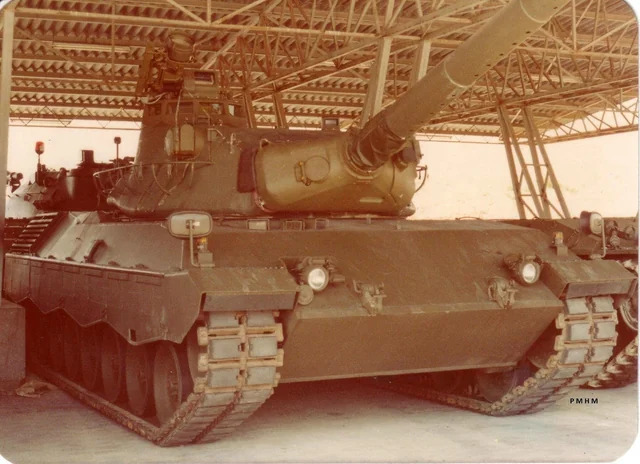
LEOX
- Description:
- A prototype of a Spanish AMX-30E with its turret removed and installed on a Gepard chassis. The project did not prosper and was abandoned.
- Crew:
- 4 ( Commander, Gunner, Loader, Driver)
- Armament:
- Primary: 105 mm CN105 F1 cannon
- Maneuverability:
- Max. speed: 66 km/h
- Sources:

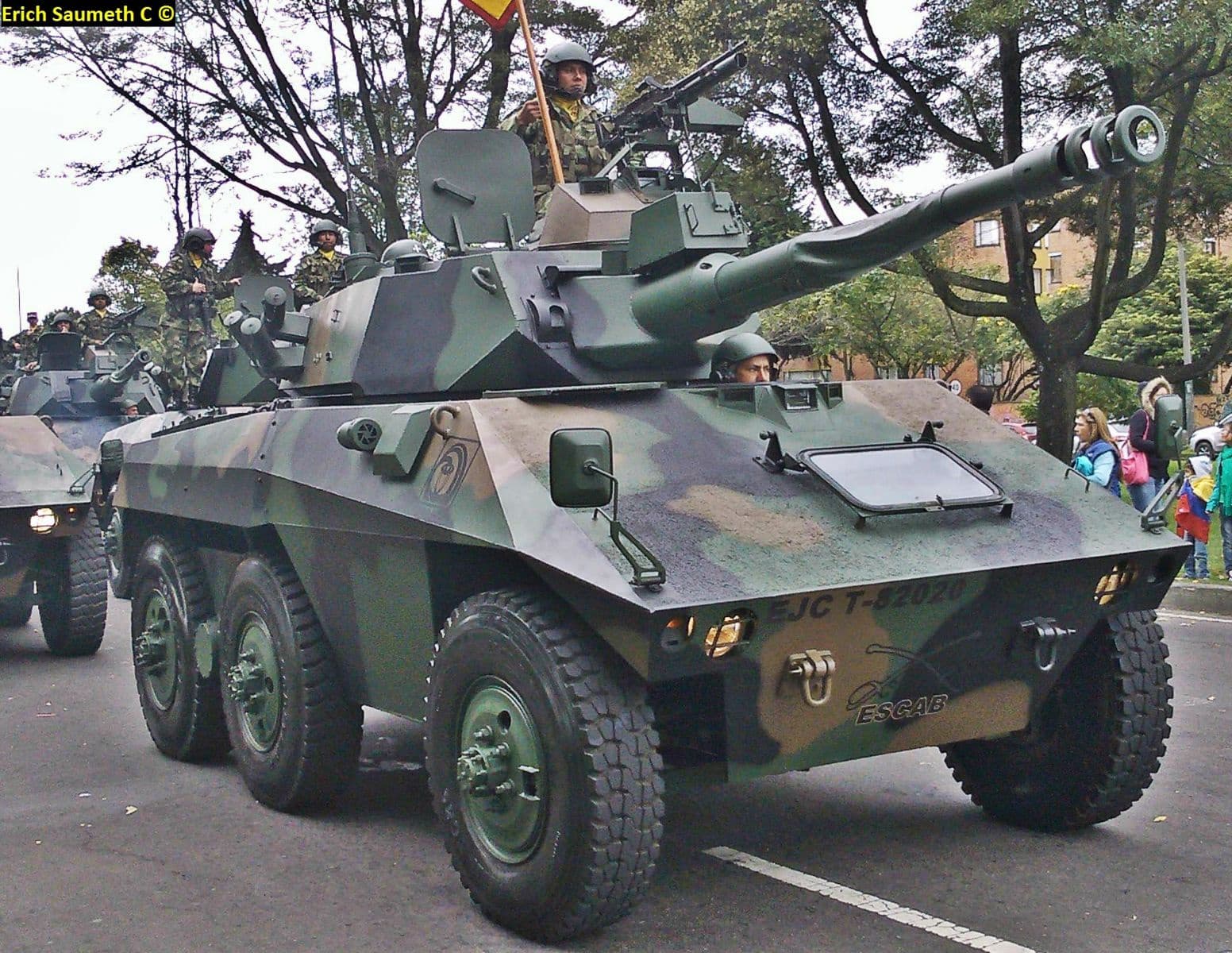

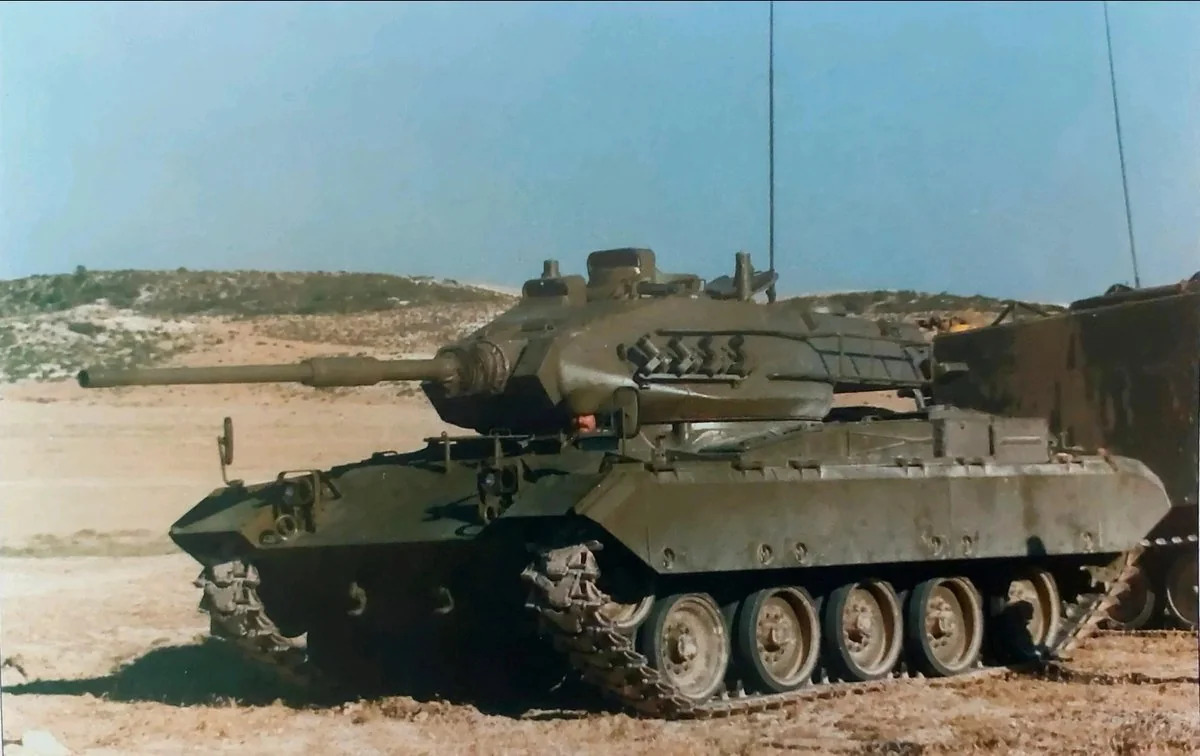
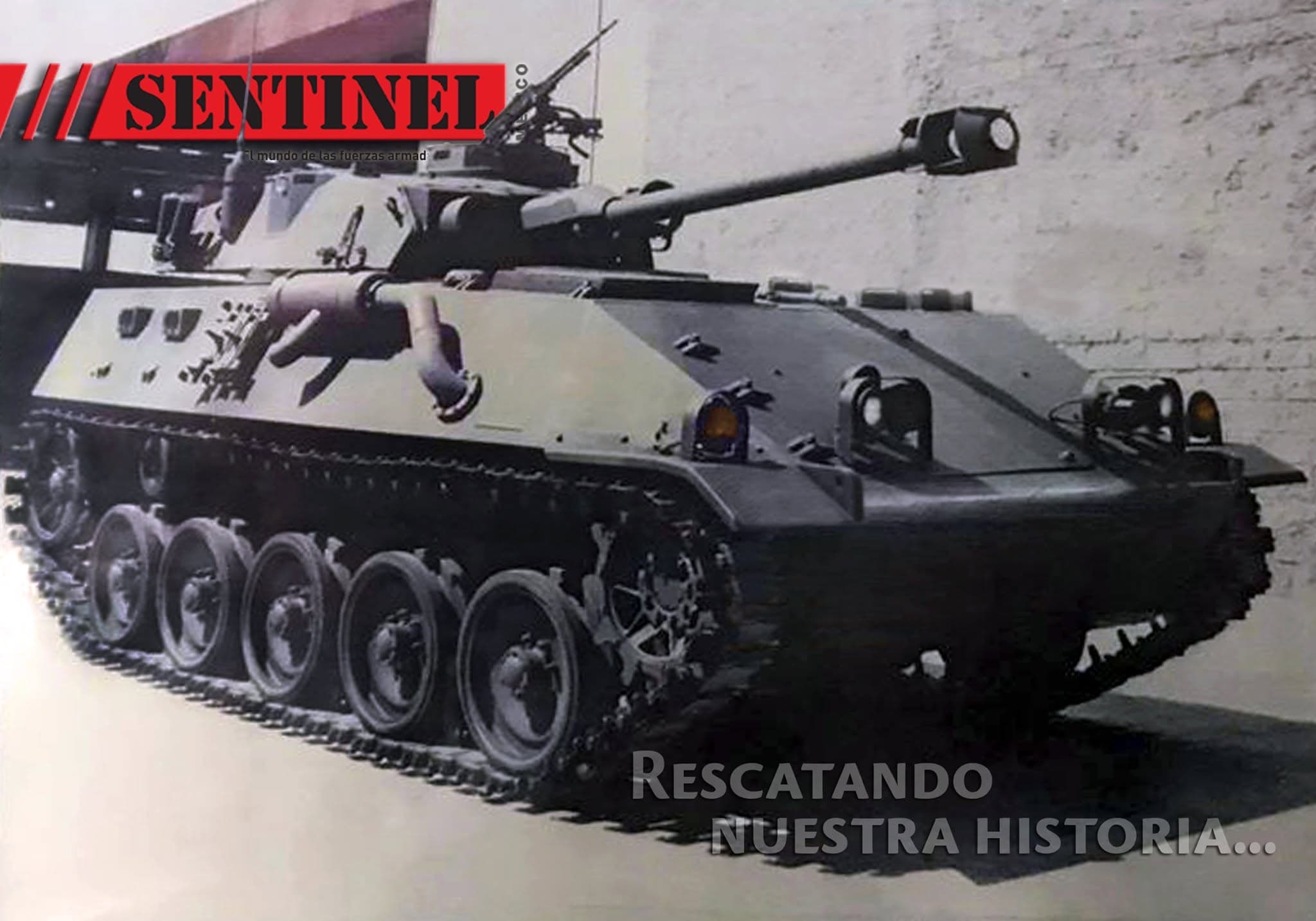


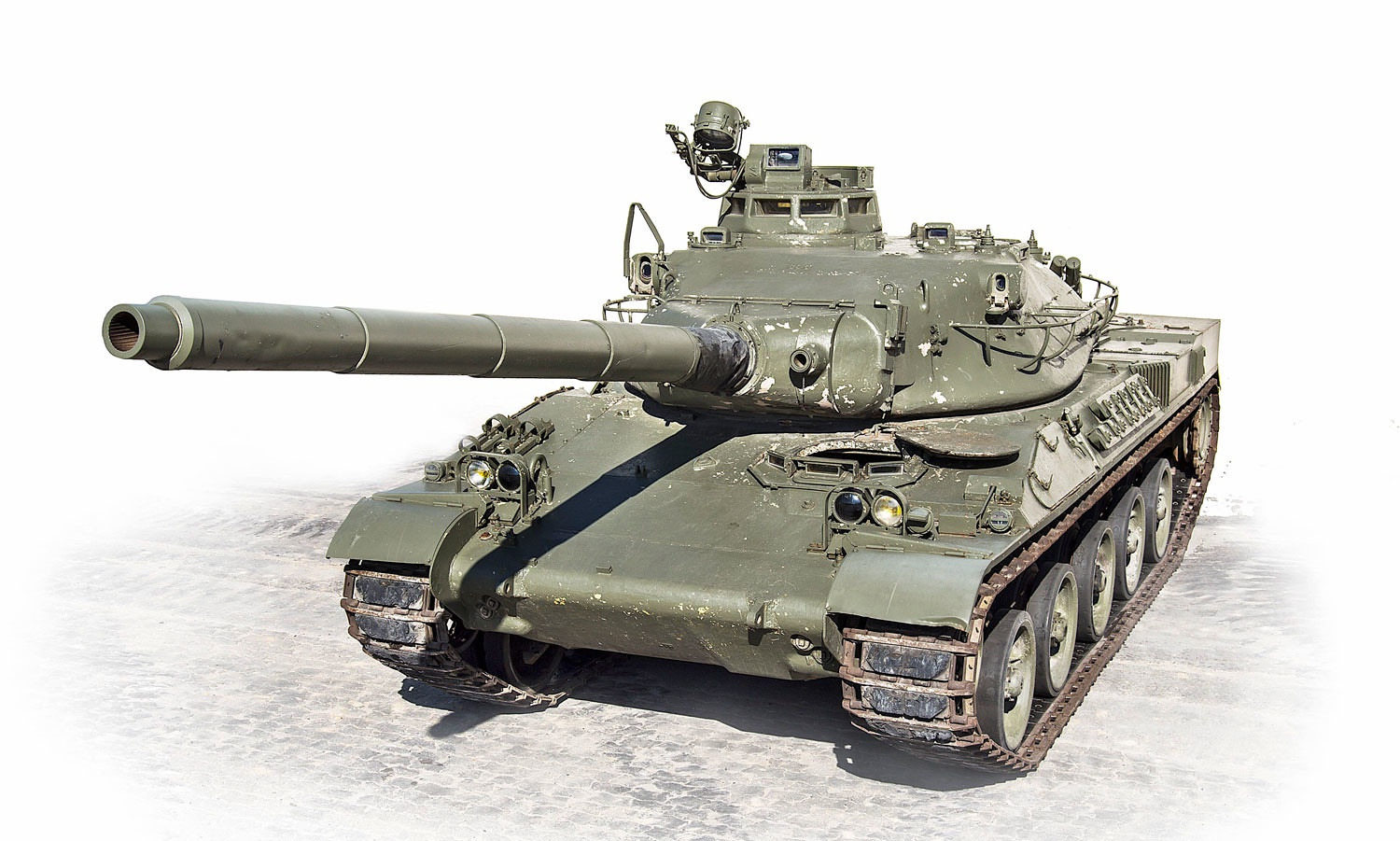
Rank 6
Spoiler
VAPE-1
- Description:
- Prototype of armored on wheels developed in Argentina with the support of foreign companies, it was built in France and sent for tests to Argentina, it was the heaviest version of the VAE since this version had higher caliber armament being this a GIAT F4 90 mm cannon mounted on a samm A.R 90 turret. Due to the Argentine economic crisis, the project was abandoned. The VAPE-1 being made by Renault.
- Crew:
- 3 (Commander, Gunner, Driver)
- Armament:
- Primary: GIAT F4 90 mm cannon mounted on a samm A.R 90 turret
- Maneuverability:
- Max. Speed: 100 km/h
- Sources:
Tiran 5Sh
- Description:
- T-55 tanks captured by the Israelis were later modified by replacing their original cannons with 105mm M68 guns. It is currently the most powerful tank in Uruguay.
- Crew:
- 4 (Commander, Gunner, Loader, Driver)
- Armament:
- Primary: 105mm M68 cannon
- Maneuverability:
- Max. Speed: 51 km/h
- Sources:
T-55M1 León
- Description:
- The Soviet tank acquired by Peru in 1972 was one of many the tanks the country acquired, which at the time positioned it as a regional armored power. During the 2000s, the Peruvian company Casanave modernized some of these tanks. One of these projects was the T-55M1 León, which incorporates a laser rangefinder, a ballistic computer, and the capacity to fire four Malyutka anti-tank missiles mounted in the turret, as well as APFDS ammunition.
- Crew:
- 4 (Commander, Gunner, Loader, Driver)
- Armament:
- Primary: 100 mm D-10T2S cannon, 4x Malyutka anti-tank missiles
- Maneuverability:
- Max. Speed: 50 km/h
- Sources:
Piraña 6x6 HVMS
- Description:
- The Mowag Piranha, manufactured under license in Chile by FAMAE, was presented at FIDAE 1992. This version uses the Israeli IMI HVMS 60mm cannon, capable of firing APFSDS-T ammunition. It also features a turret designed by IMI for the M113, which has an automatic reloading system. The turret also incorporates a laser rangefinder, and the cannon is fully stabilized.
- Crew:
- 3 (Commander, Gunner, Driver)
- Armament:
- Primary: 60 mm IMI HVMS (Hyper Velocity Medium Support) Gun
- Maneuverability :
- Max. speed: 100 km/h
- Sources:
TAM VCLC
- Description:
- Multiple rocket launcher vehicle developed in Argentina, uses a TAM chassis and is armed with up to 36 Israeli LAR-160 rockets.
- Crew:
- 3 (Commander, Gunner, Driver)
- Armament:
- Primary: 36x 160mm LAR-160 rockets
- Maneuverability:
- Max. Speed: 78 km/h
- Sources:
M41E TUA “Cazador”
- Description:
- A prototype of a Spanish M41 wallker bulldog equipped with an Under Armour TOW turret capable of firing TOW anti-tank missiles. The prototype was presented in 1983, and although it was successfully tested, the project did not prosper and the vehicle was not adopted.
- Crew:
- 4 (Commander, Gunner, Loader, Driver)
- Armament:
- Primary: Dual TOW ATGM Launcher
- Maneuverability:
- Max. Speed: 80 km/h
- Sources:
TAM 2IP
- Description:
- The second improved version of the Argentine TAM, was presented in 2016 during the Argentine Army Day, its main improvement is the addition of an additional armor kit provided by Israel’s IMI that covers the tank almost in its entirety.
- Crew:
- 4 (Commander, Gunner, Loader, Driver)
- Armament:
- Primary: 105mm FMK.4 Model 1L cannon
- Maneuverability:
- Max. Speed: 78 km/h
- Sources:
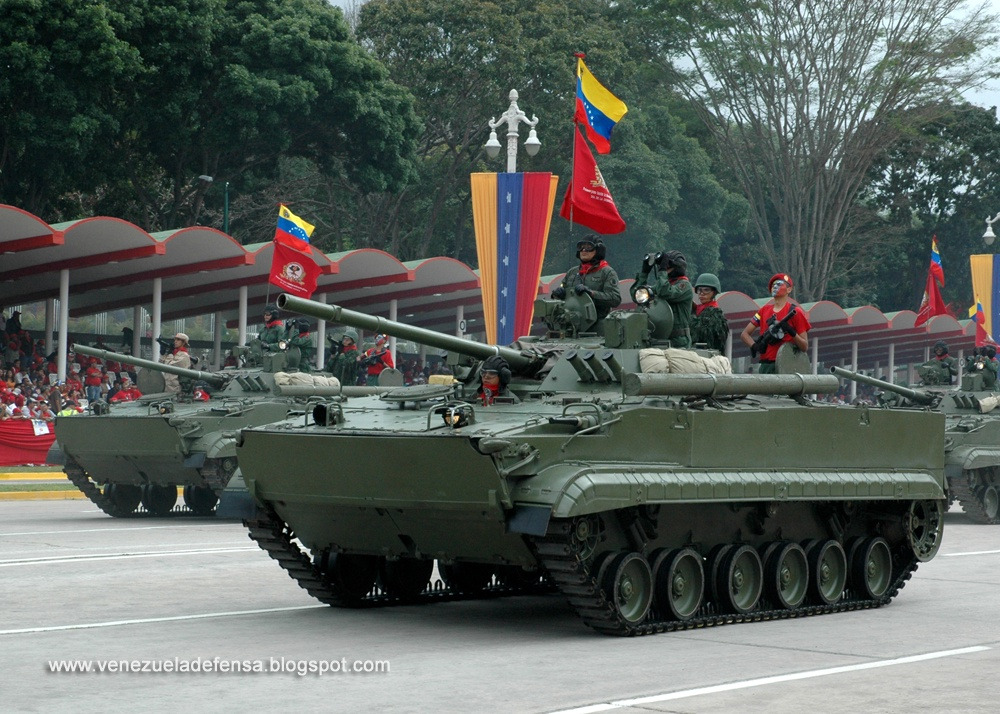
BMP-3
- Description:
- Russian infantry fighting vehicle, Venezuela acquired more than 120 vehicles starting in 2011.
- Crew:
- 3 (Commander, Gunner, Driver)
- Armament:
- Primary: 100 mm 2A70 cannon
- Maneuverability:
- Max. Speed: 70 km/h
- Sources:
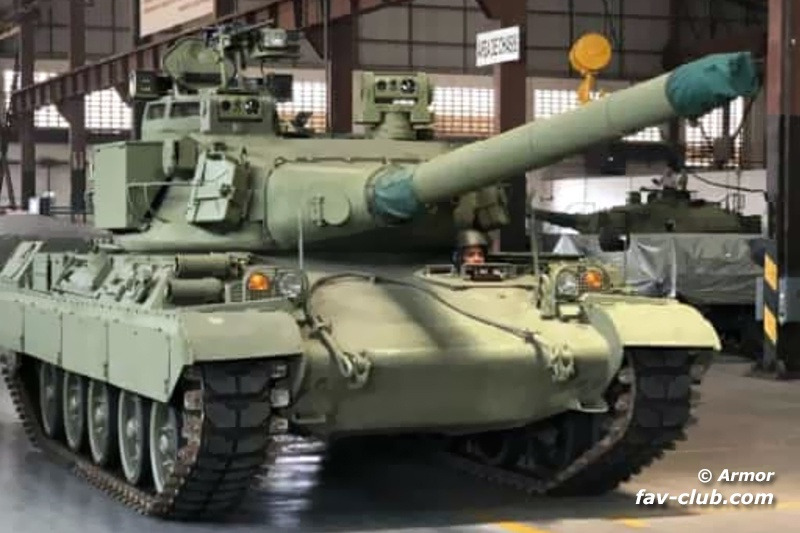
AMX-30VE
- Description:
- The French AMX-30B tank, in Venezuelan service since 1971, underwent several modernizations over the years. The last and most significant upgrade provided the commander and gunner with thermal imaging, a laser rangefinder, a stabilized gun, and access to APFSDS ammunition. Following these improvements, the tank was renamed AMX-30VE.
- Crew:
- 4 (Commander, Gunner, Loader, Driver)
- Armament:
- Primary: 105mm CN-105-F1 cannon
- Maneuverability:
- Max. Speed: 65 km/h
- Sources:
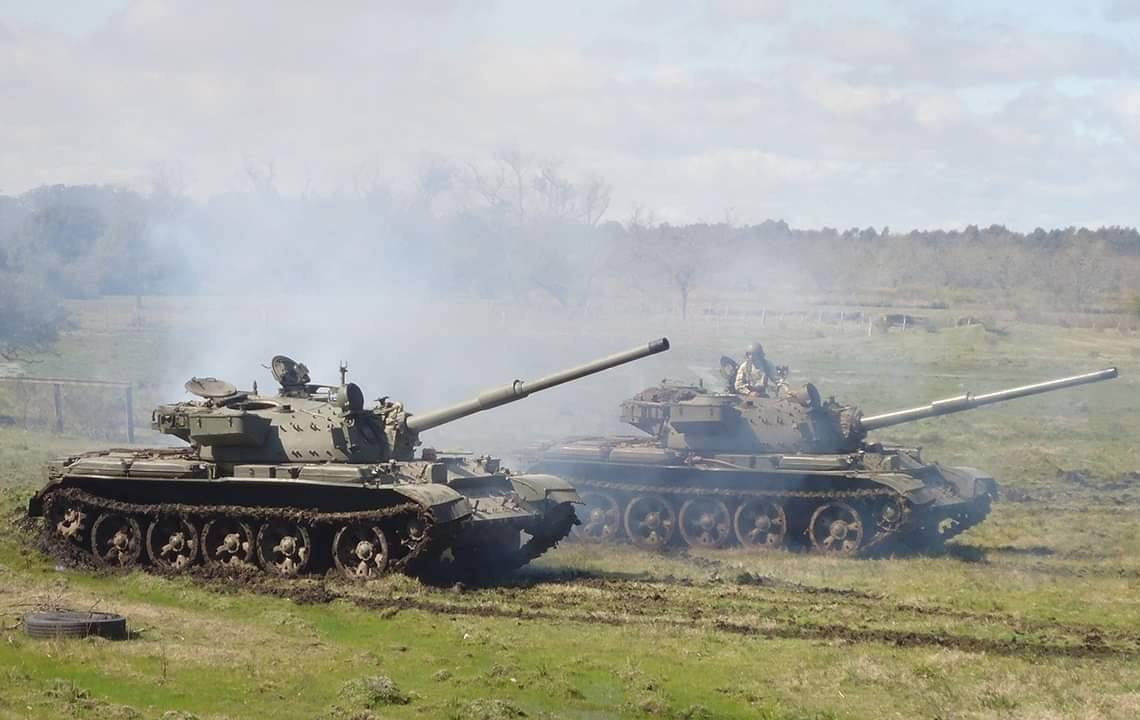
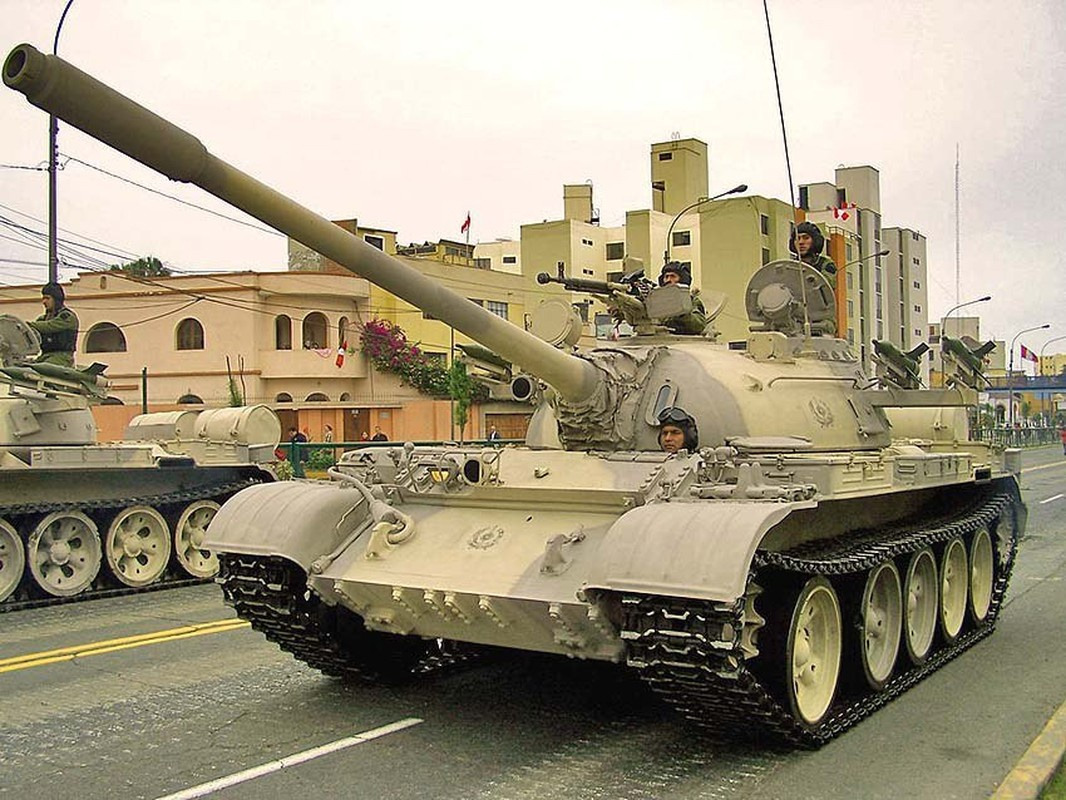
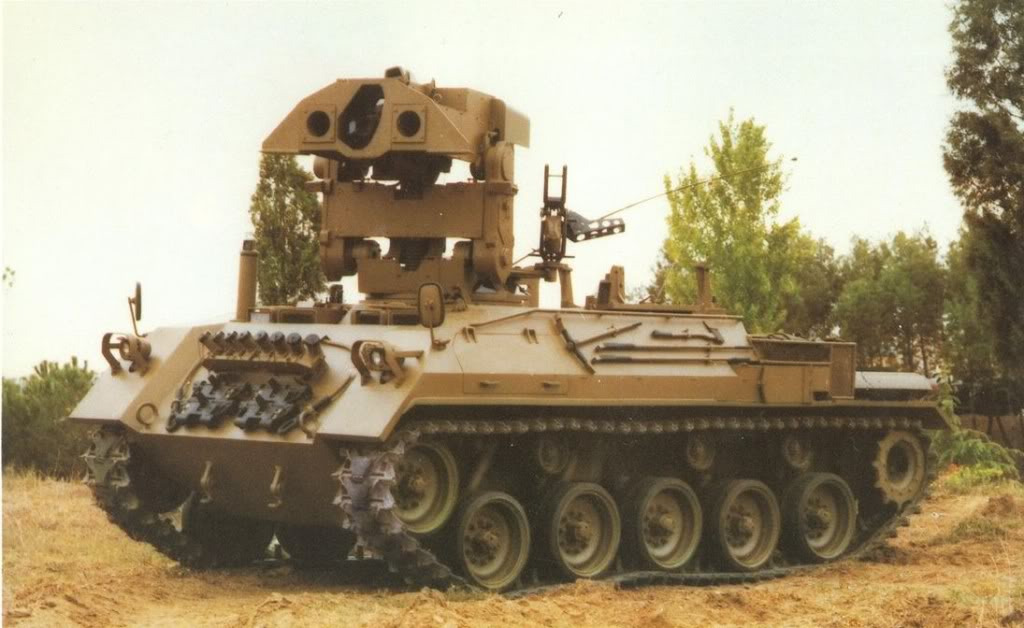
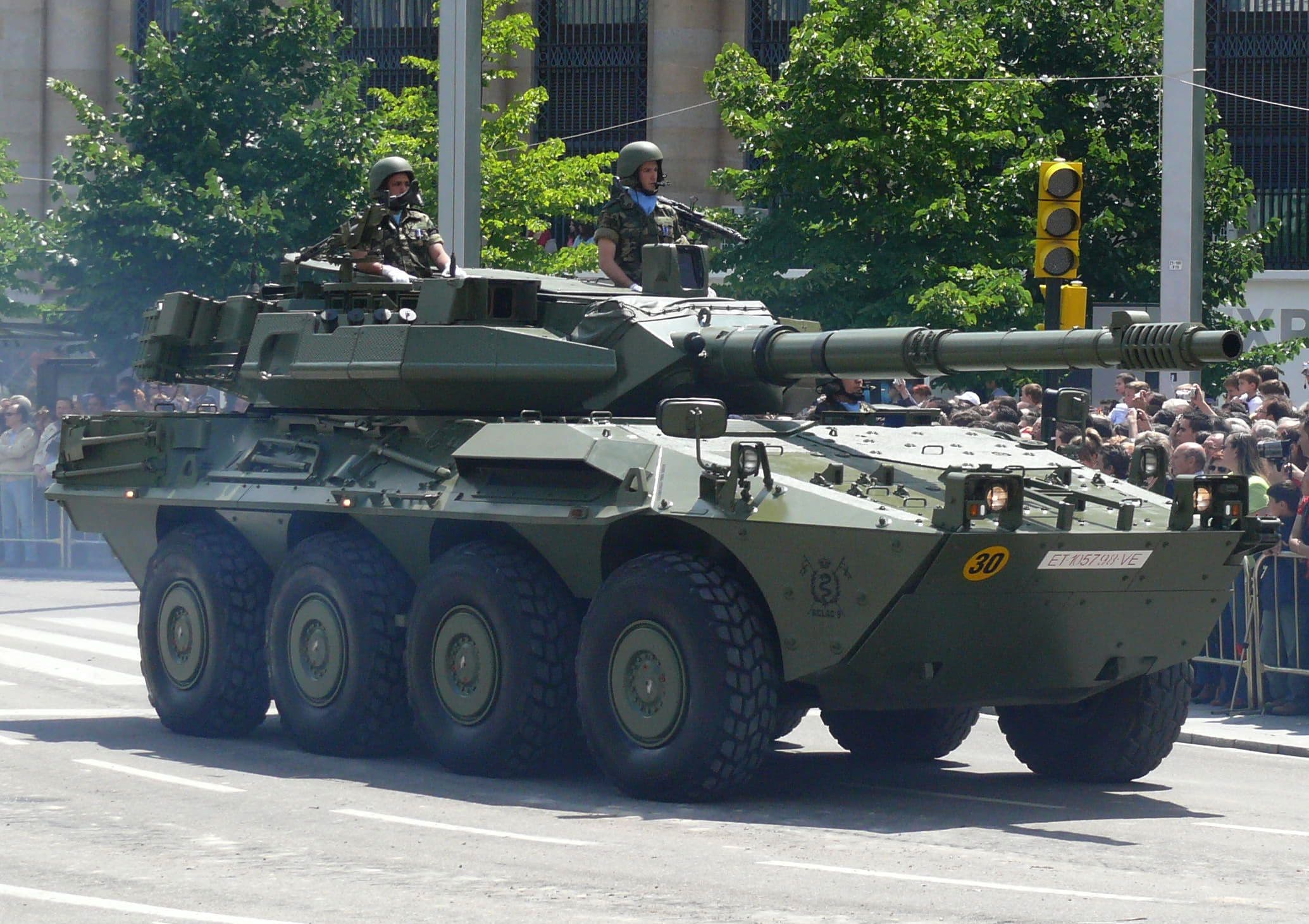
VRCC
- Description:
- The Vehículo de Reconocimiento y Combate de Caballería Centauro, or VRCC Centauro, is the export version of the Italian Centauro for the Spanish Army. The first batch of these vehicles began to arrive in the year 2000 and differs from the Centauro B1 in some aspects such as having different frontal armor, smoke grenades and a second machine gun on the roof.
- Crew:
- 4 (Commander, Gunner, Loader, Driver)
- Armament:
- Primary: 105 mm OTO Melara 105/52 cannon
- Maneuverability:
- Max. Speed: 110 km/h
- Sources:




Rank 7
Spoiler
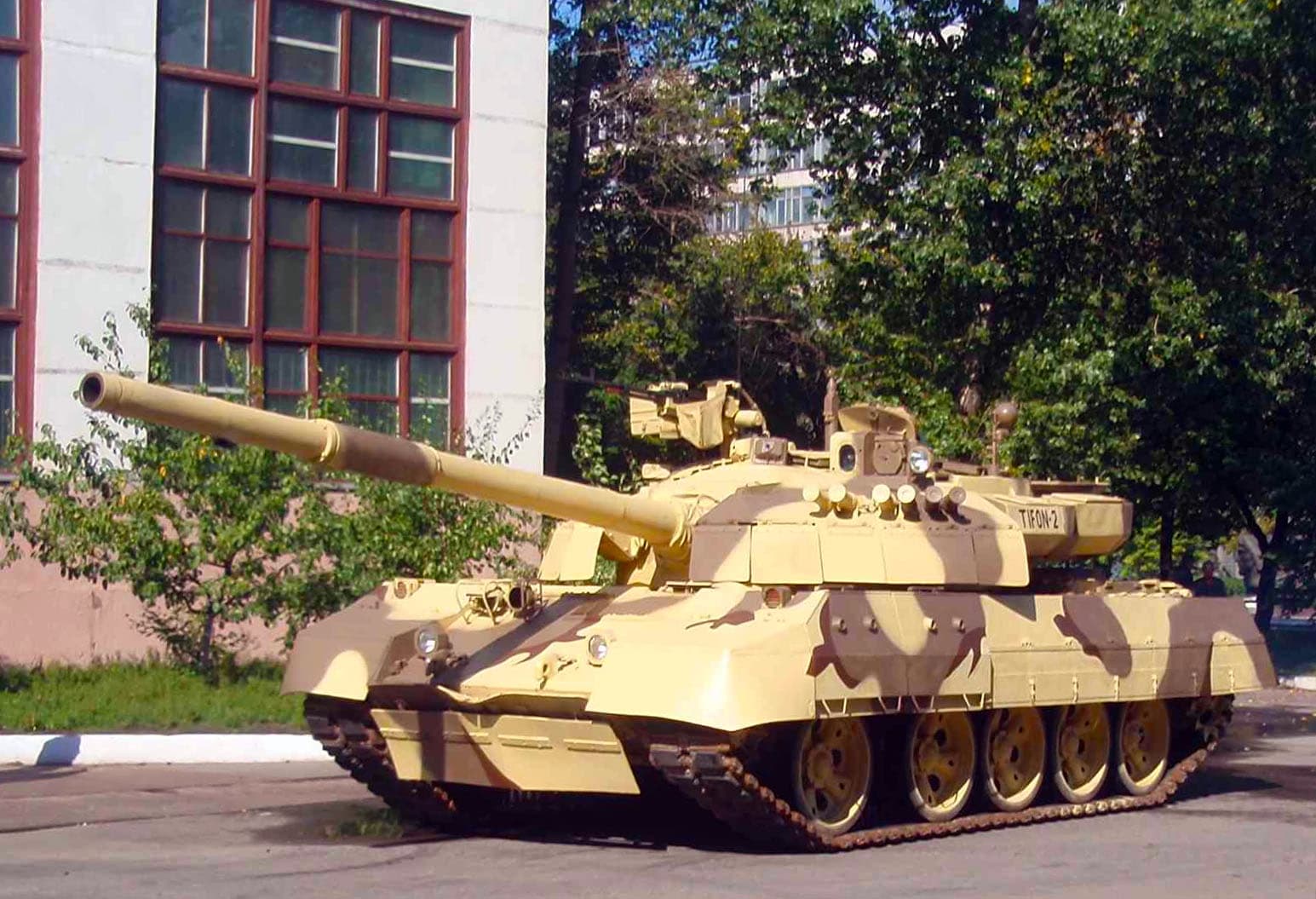
Tifón-2A
- Description:
- The Typhoon-2A was a modernization project for Peruvian T-55 tanks carried out by the Peruvian company Casanave and KMDB of Ukraine. The modernization included DEFLEKT composite armor, NOZH explosive reactive armor, a 125mm cannon with bustle autoloader, a 1050hp engine, and third-generation thermal imaging cameras for the gunner and commander. Ultimately, it was not adopted by the Peruvian Army.
- Crew:
- 3 (Commander, Gunner, Driver)
- Armament:
- Primary: 125mm L/48 KBM-1M smoothbore gun
- Maneuverability:
- Max. Speed: 78 km/h
- Sources:
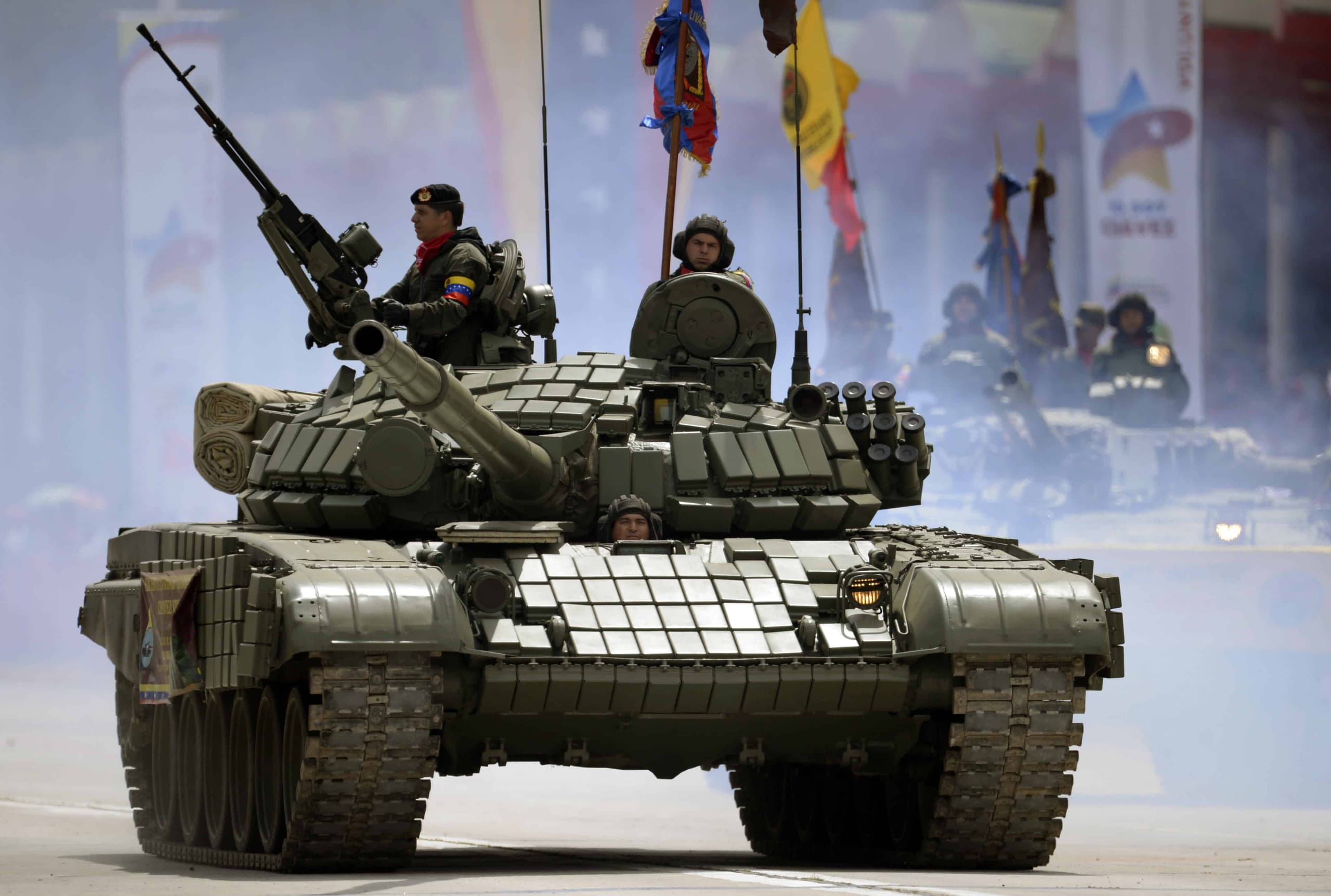
T-72B1
- Description:
- The Russian main battle tank was acquired by Venezuela in 2009; Venezuela operates at least 92 of these tanks. It is currently Venezuela’s main battle tank.
- Crew:
- 3 (Commander, Gunner, Driver)
- Armament:
- Primary: 125 mm 2A46M cannon
- Maneuverability:
- Max. Speed: 60 km/h
- Sources:
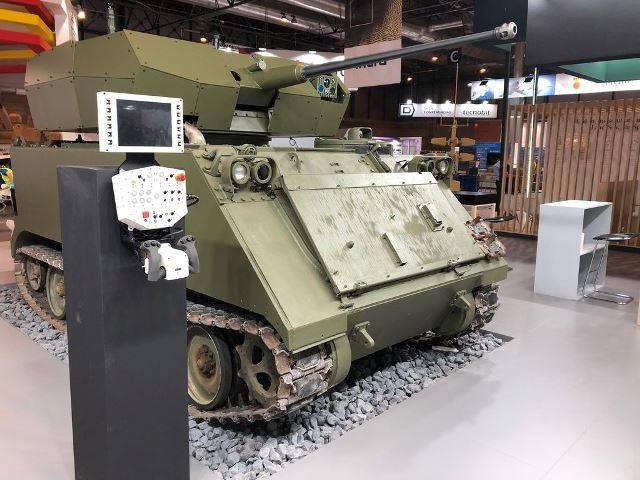
TOA Cerberus
- Description:
- The Cerberus turret, manufactured by an alliance between Escribano, Indra, and Leonardo’s Spanish subsidiary, was tested on an M113 (TOA) of the Spanish Army, donated for this purpose. The turret has a stabilized 30mm Bushmaster cannon and two Spike LR anti-tank missiles, as well as a laser rangefinder and third-generation thermal imaging.
- Crew:
- 4 (Commander, Gunner, Loader, Driver)
- Armament:
- Primary: 30mm Bushmaster Mk44, Dual Spike LR ATGM Launcher
- Maneuverability:
- Max. Speed: 65 km/h
- Sources:
VCR Dragón D1
- Description:
- The first prototype of the VCR Dragón infantry fighting vehicle, equipped with the Tizona turret, is fitted with a 30mm ATK Bushmaster MK44-ABM dual-plane stabilized automatic cannon and a Spike LR missile launcher.
- Crew:
- 3 (Commander, Gunner, Driver)
- Armament:
- Primary: Bushmaster Mk44-ABM, Spike-LR Launcher
- Maneuverability:
- Max. Speed: 100km/h
- Sources:
T-72B1MS
- Description:
- The T-72B1MS “White Eagle,” operated by Nicaragua since 2016, is an export variant of the improved T-72B1. It is capable of firing ATGMs, has third-generation thermal cameras for the gunner and commander, and a faster turret rotation system. It is currently one of the most powerful tanks in Latin America
- Crew:
- 3 (Commander, Gunner, Driver)
- Armament:
- Primary: 125 mm 2A46M cannon
- Maneuverability:
- Max. Speed: 60 km/h
- Sources:
VCR Dragón D2
- Description:
- The second prototype of the VCR Dragón infantry fighting vehicle, equipped with a Toledo 30S turret, is fitted with a two-plane stabilized 30mm ATK Bushmaster MK44S autocannon and also features a Spike LR missile launcher.
- Crew:
- 3 (Commander, Gunner, Driver)
- Armament:
- Primary: Bushmaster Mk44S Stretch, Spike Launcher
- Maneuverability:
- Max. Speed: 100km/h
- Sources:
Lince
- Description:
- During 1980, Spain attempted to develop its own MBT called Lince, developed by the German company Krauss-Maffei and the Spanish company Santa Bárbara Sistemas. Following a similar design to the German Leopard 2A4 but lighter, a full-size mockup of the tank was even built. However, due to the high cost of development, the project was abandoned in favor of modernizing the Spanish AMX-30s.
- Crew:
- 4 (Commander, Gunner, Loader, Driver)
- Armament:
- Primary: Rheinmetall 120 mm L/44 cannon
- Maneuverability:
- Max. Speed: 70 km/h
- Sources:
Leopard 2A4CHL (MCS)
- Description:
- In 2015, a FibroTex package was installed in a Leopard 2A4CHL of the Chilean army. The kit tested was called “multispectral cloak”. The kit provides electro-optic mimicry and protection against electromagnetic detection, which helps make the tank much more difficult to detect and therefore not as easily prey to anti-tank missiles or other infrared-guided devices or thermal systems. This new version of the Chilean Leopard also includes the most powerful Israeli M322 ammunition that penetrates up to 589 mm.
- Crew:
- 4 (Commander, Gunner, Loader, Driver)
- Armament:
- Primary: Rheinmetall 120mm L/44 smoothbore gun
- Maneuverability:
- Max. speed: 68 km/h
- Sources: