- Yes
- No
M-50 HVMS (M4A4)
History:
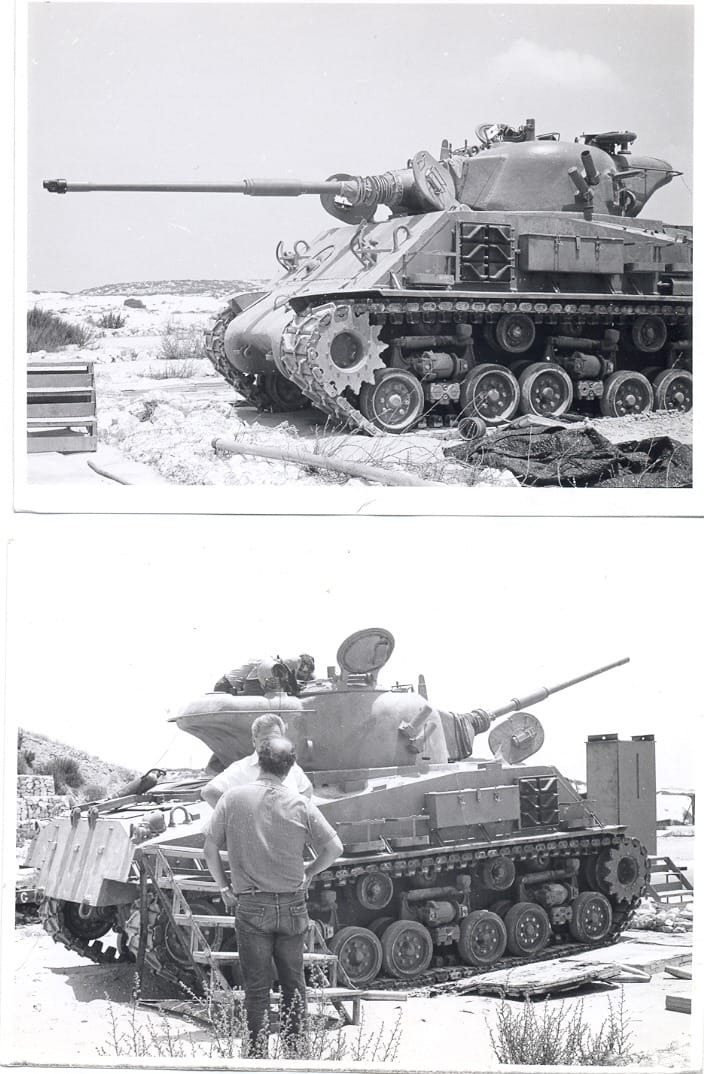
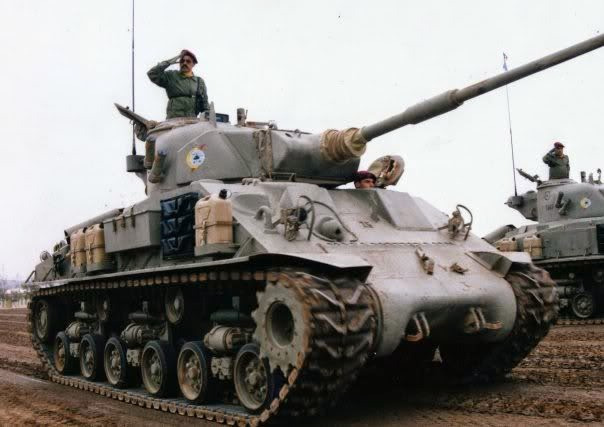
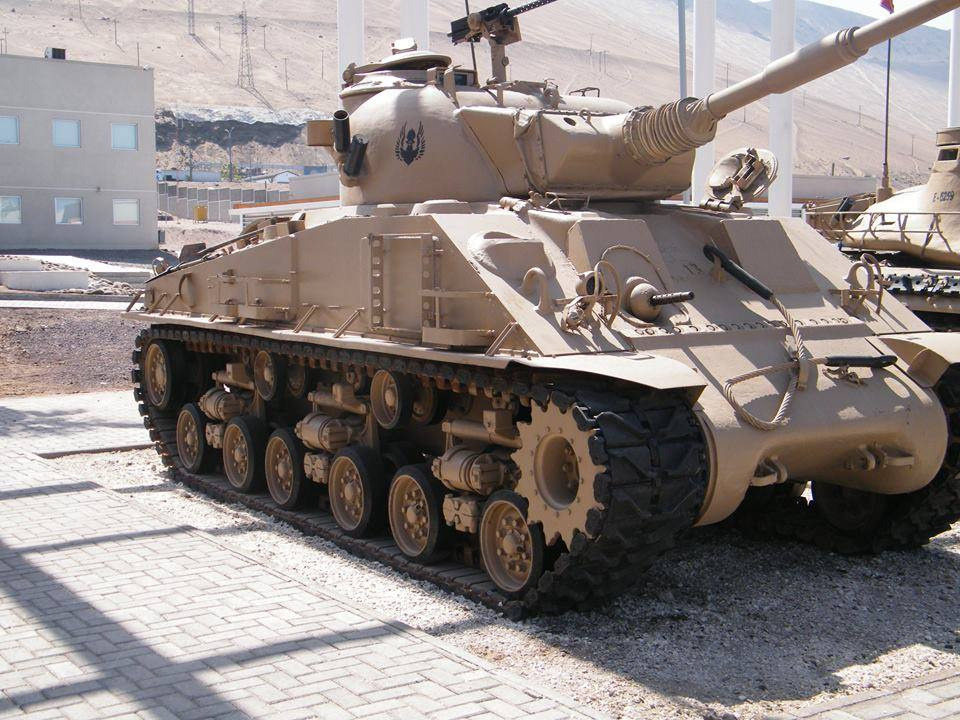
Originally the M-50 was born from a joint project between France and Israel in 1954 to improve the capabilities of the Israeli Shermans by providing them with greater firepower, due to this they were equipped with the 75 mm SA50 L/57 tank gun that equipped the AMX-13 / 75 that were also acquired by Israel. By 1956 the first Israeli Shermans of the M4A4 variant began to be equipped with the new cannons but due to the weight and length of the new gun it was necessary to modify the Sherman turret by adding a counterweight to the rear of the turret, they were also fitted with the better performance HVSS suspension. These new modified Shermans were called by the Israelis as M-50 due to the name of the SA50 L/57 cannon and fought against Egyptian tanks where they performed very well.
During the 1970s and early 1980s, Chile was in a constant state of alert due to the growing border tension with its neighbors, mainly Argentina and Peru, which had better tanks. During those years, Chile was under a military dictatorship, so the United States imposed a military procurement embargo, also known as the Kennedy Amendment, which made the acquisition of weapons difficult. During the 1970s, Chile only had old M4A1E9 Shermans, M24 Chaffee and M41 Walker Bulldogs, which were incapable of standing up to the Peruvian T-54/T-55s or the Argentine Repowered Shermans armed with 105 mm cannons. This improved somewhat when Brazil was willing to sell Chile EE-9 Cascavel vehicles armed with 90 mm cannons, which far exceeded the anti-tank capabilities of the old Chilean tanks, but this would not be enough.

During the 70s Chile attempted to purchase tanks in Europe, specifically AMX-30B tanks from France and SK-105 tanks from Austria, but due to the aforementioned military dictatorship France decided not to finalize the sale until the early 80s and Austria decided to sell the tanks to Argentina and Bolivia. The only country willing to sell tanks to Chile was Israel, which would sell the South American country a total of 150 M-51 Sherman tanks armed with 105mm cannons capable of piercing the aforementioned Peruvian and Argentine tanks. Thus, in 1980 the purchase would be finalized and Israeli instructors would travel to Chile to create a new armored doctrine based on their vast combat experience.
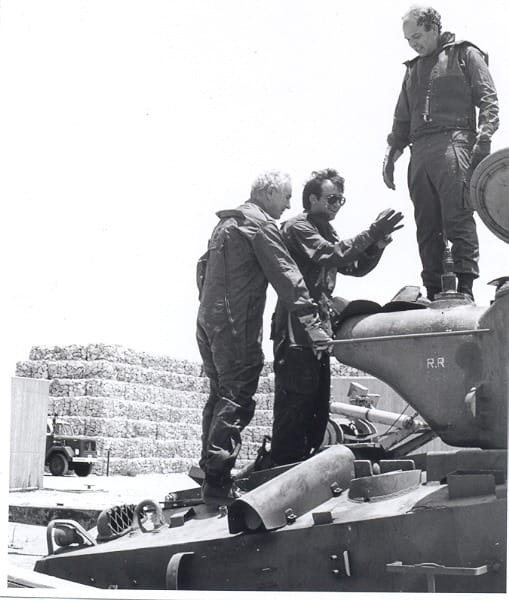
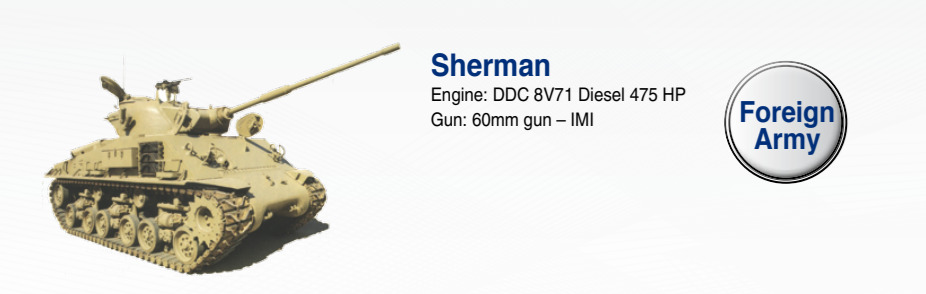
After a few years in 1988 Chile and Israel would reach a new agreement now for the purchase of 30 M-50 tanks (depending on the source the amount varies) from which the cannon had been removed so the Israeli company IMI offered to install the 60mm HVMS (High Velocity Medium Support) gun that was also selected to be installed in the old M24 Chaffee that the Chilean army had in reserve thus creating the Super Chaffee.
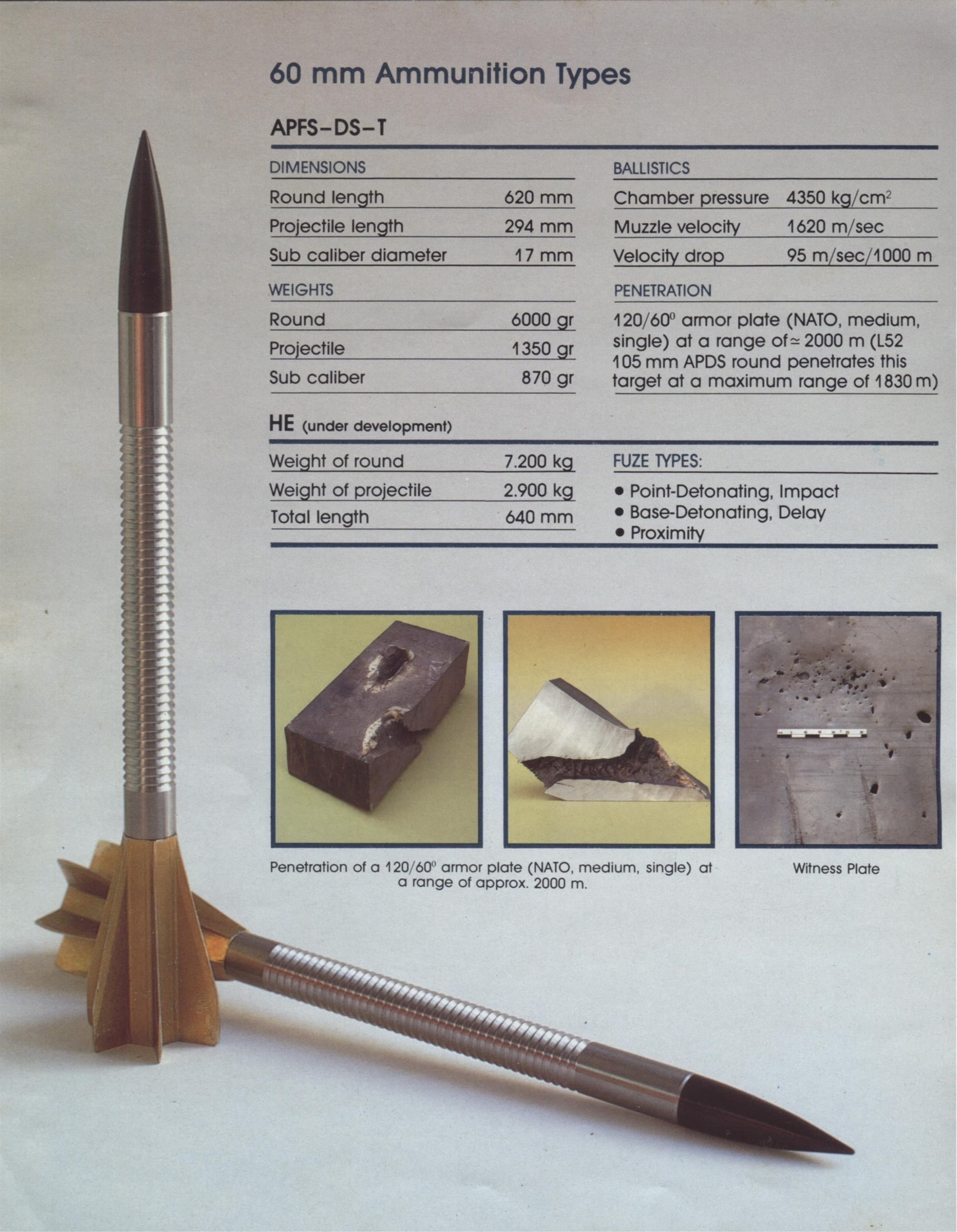
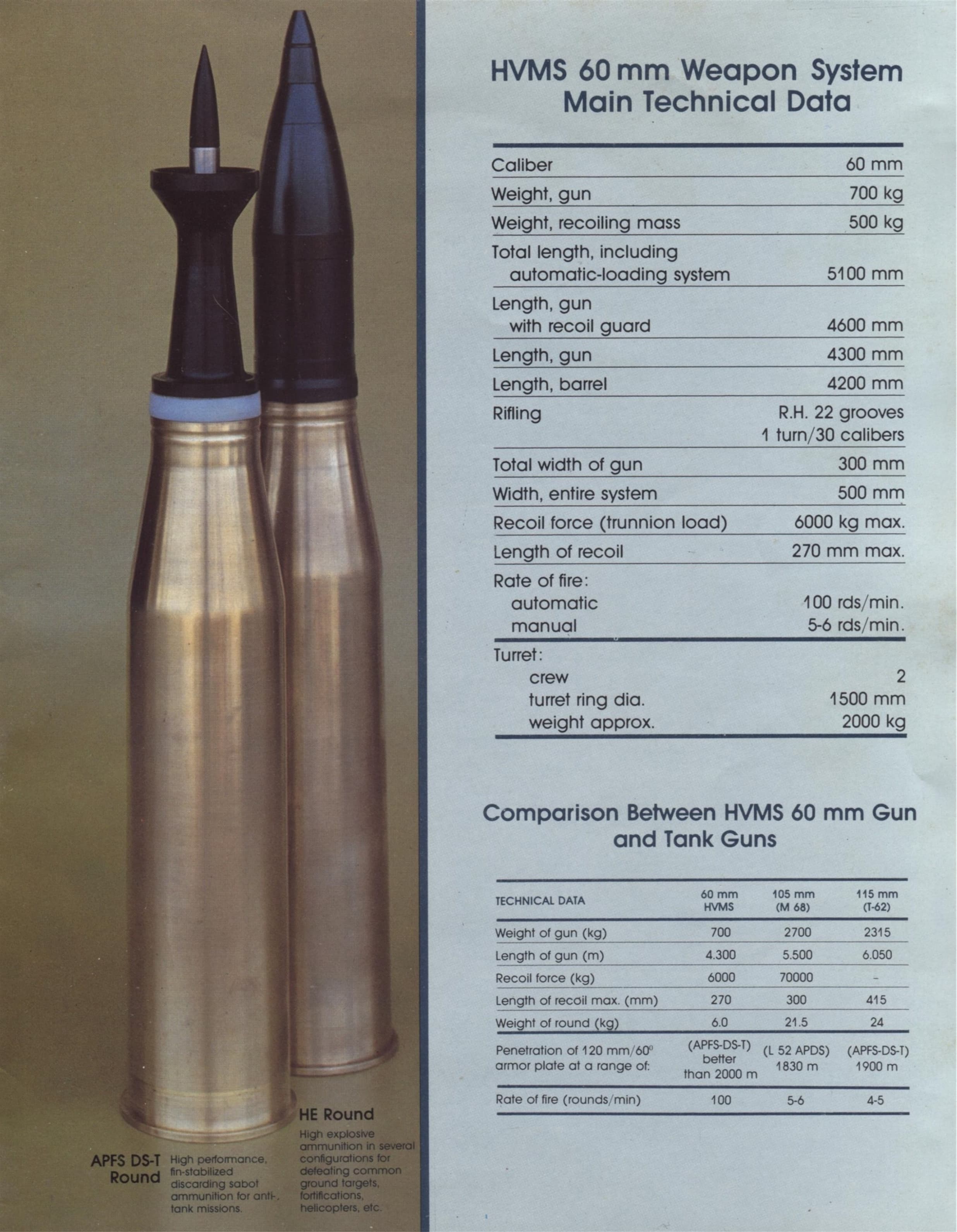
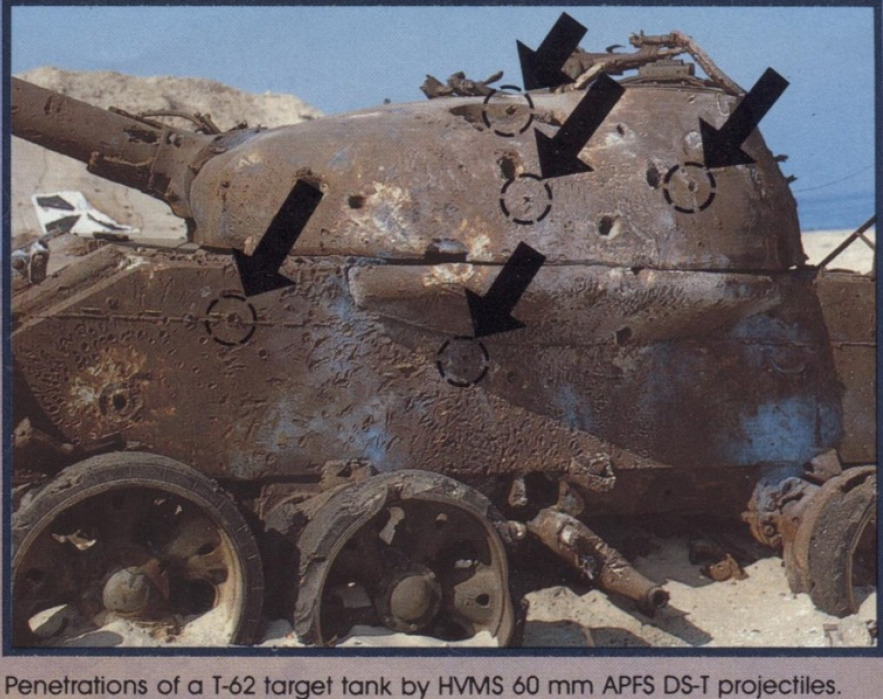
The gun weighed 700 kg and as its name indicates, it was capable of firing APFSDS-T ammunition at high speed with a muzzle velocity of 1,620 m/s that could penetrate 120mm of armor angled at 60 degrees from a distance of 2,000 meters, which gave the new M-50 HVMS a great anti-tank capacity. There was also a test where this gun managed to penetrate the side armor of two T-62 side by side at 2000 m, which would be ideal since at that time Chile had to deal with the T-55 of its neighbor Peru in the face of a possible conflict. It could also use high explosive ammunition that was used more for the destruction of bunkers and other objectives. The cannon reloading was manual but it had a modification manufactured by Madeco, a large local Chilean steel and hydraulic company. This modification made in Chile it consisted of a simple vertical breech block system that allowed for a rate of fire of 12 shots per minute, that is, 5 seconds of reloading which was not bad at all.
Although the M-50s received by Chile had three different hulls (M4A1, M4A3, M4A4), in this publication we will only focus on the M4A4 hull since it was the one that underwent the most modifications during its service in Chile.
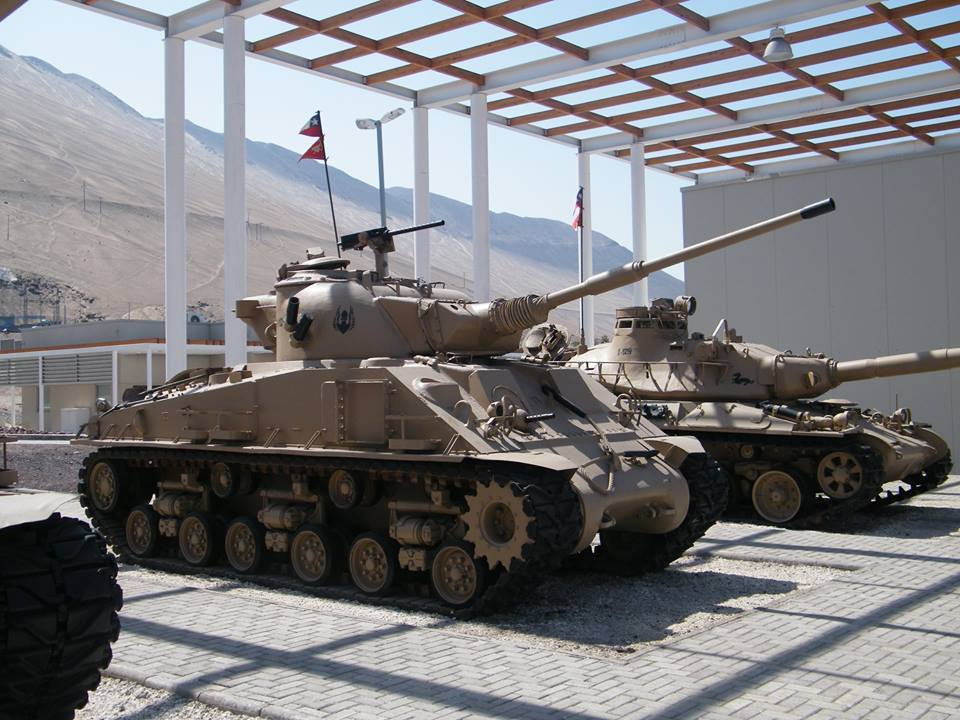
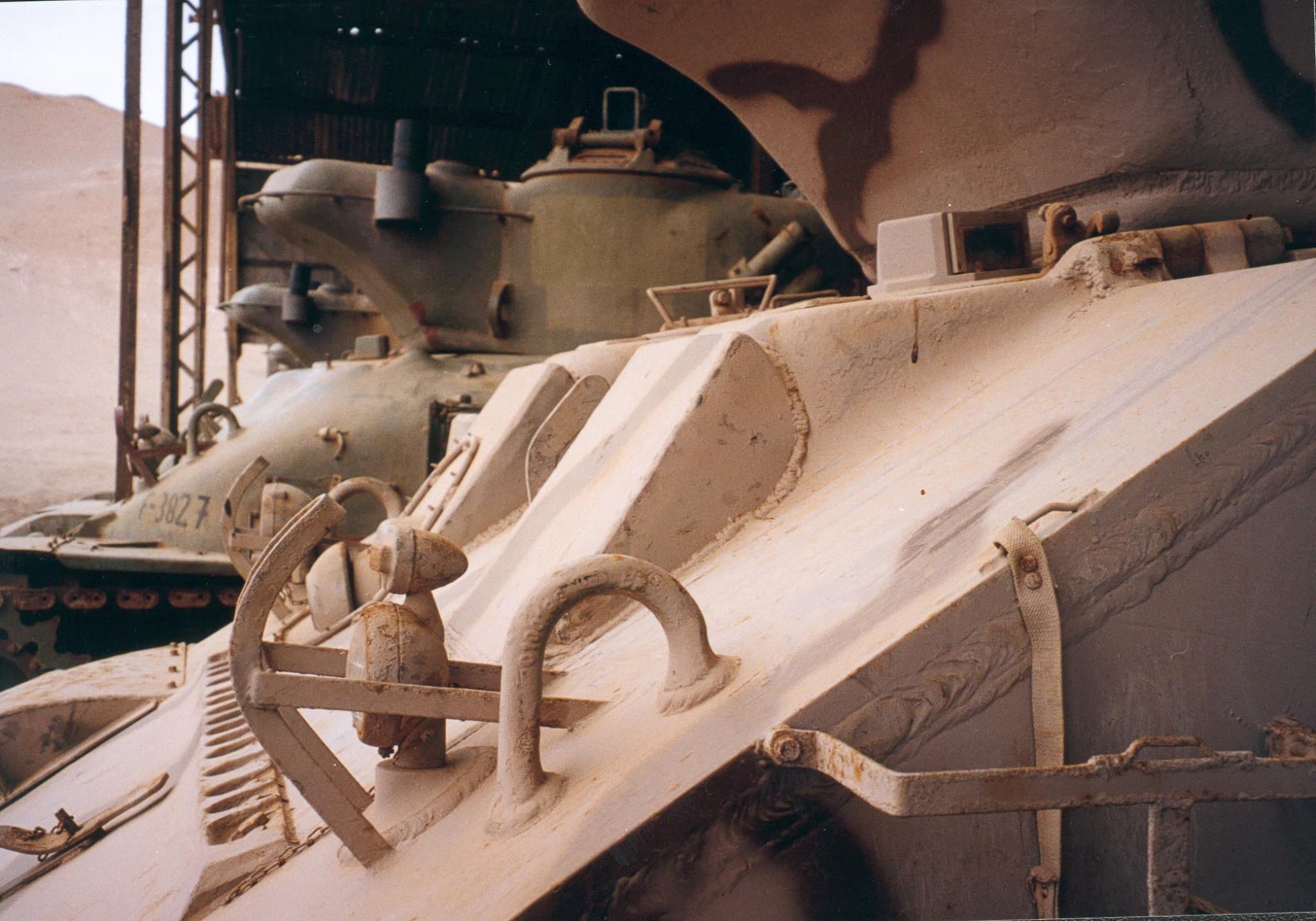
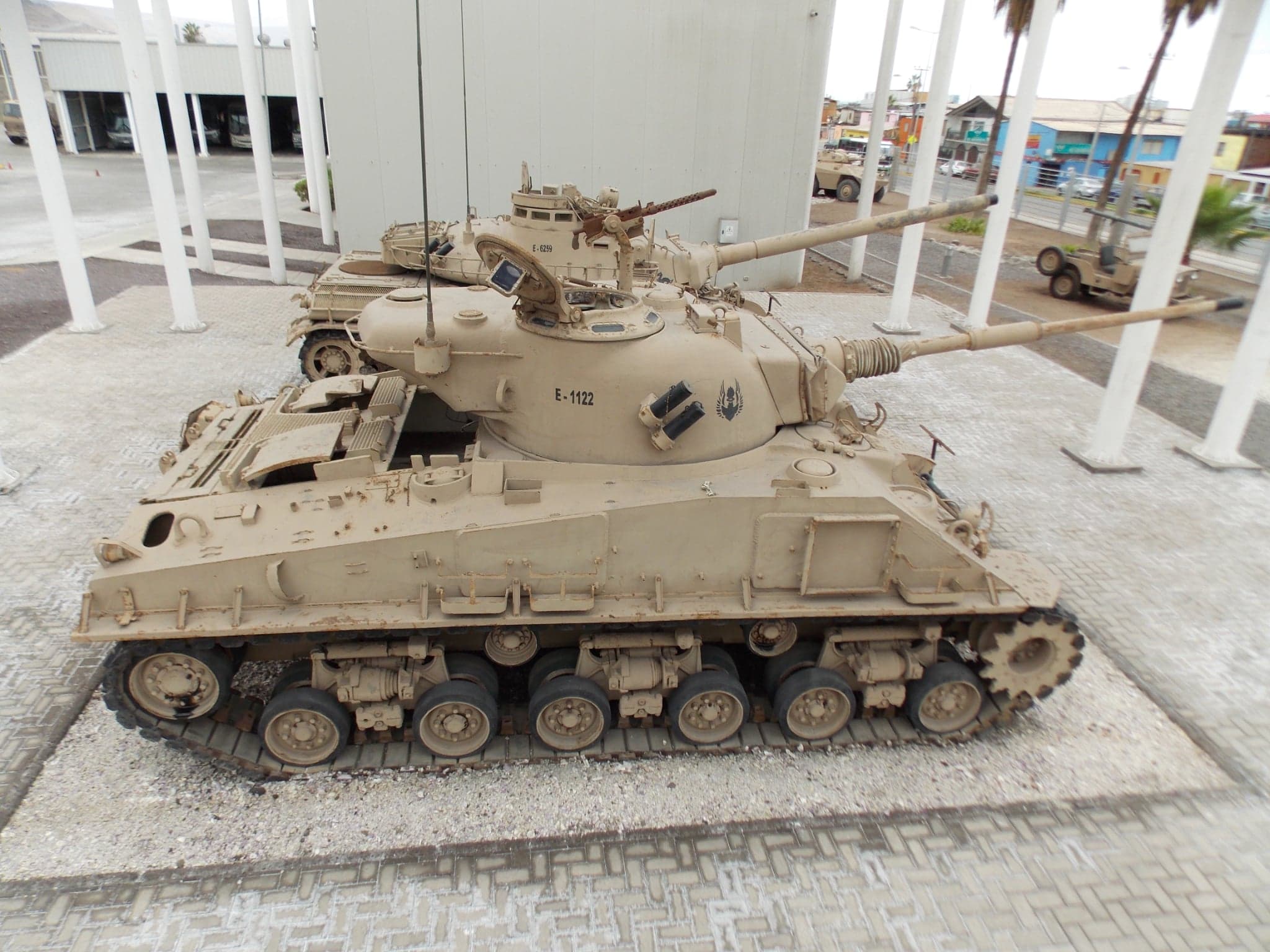
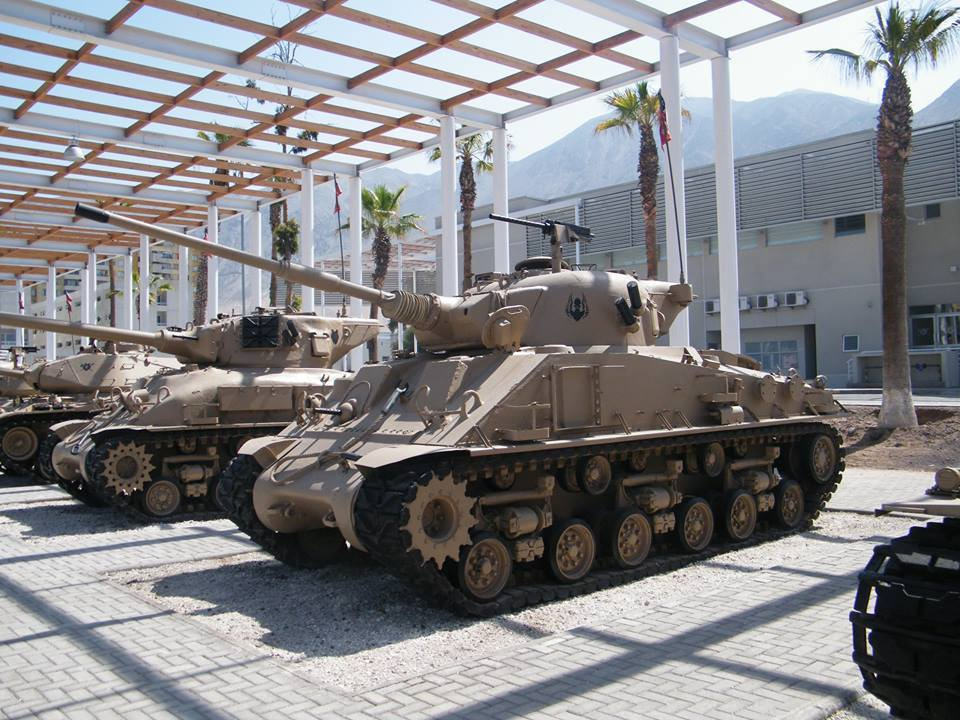
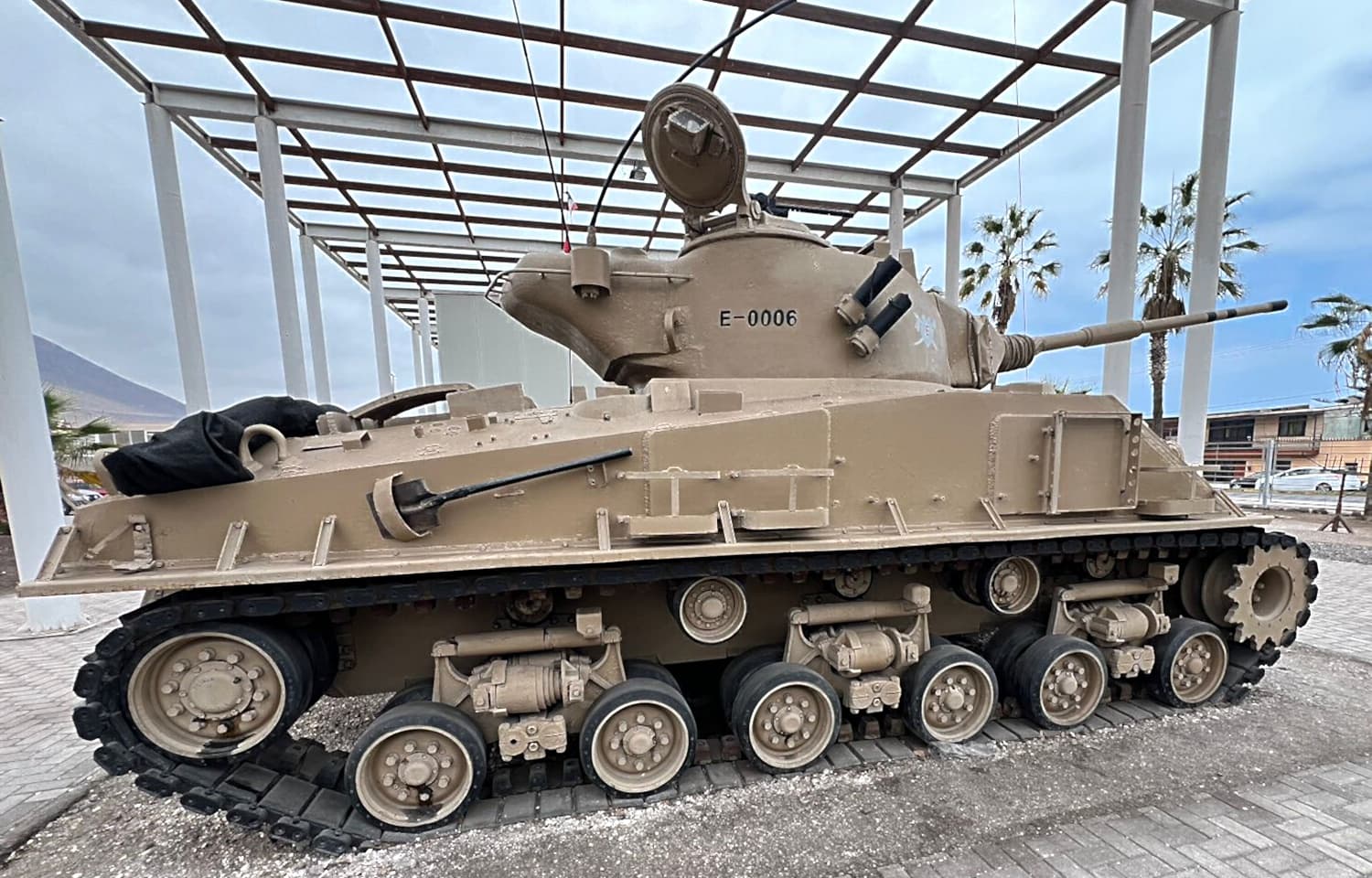
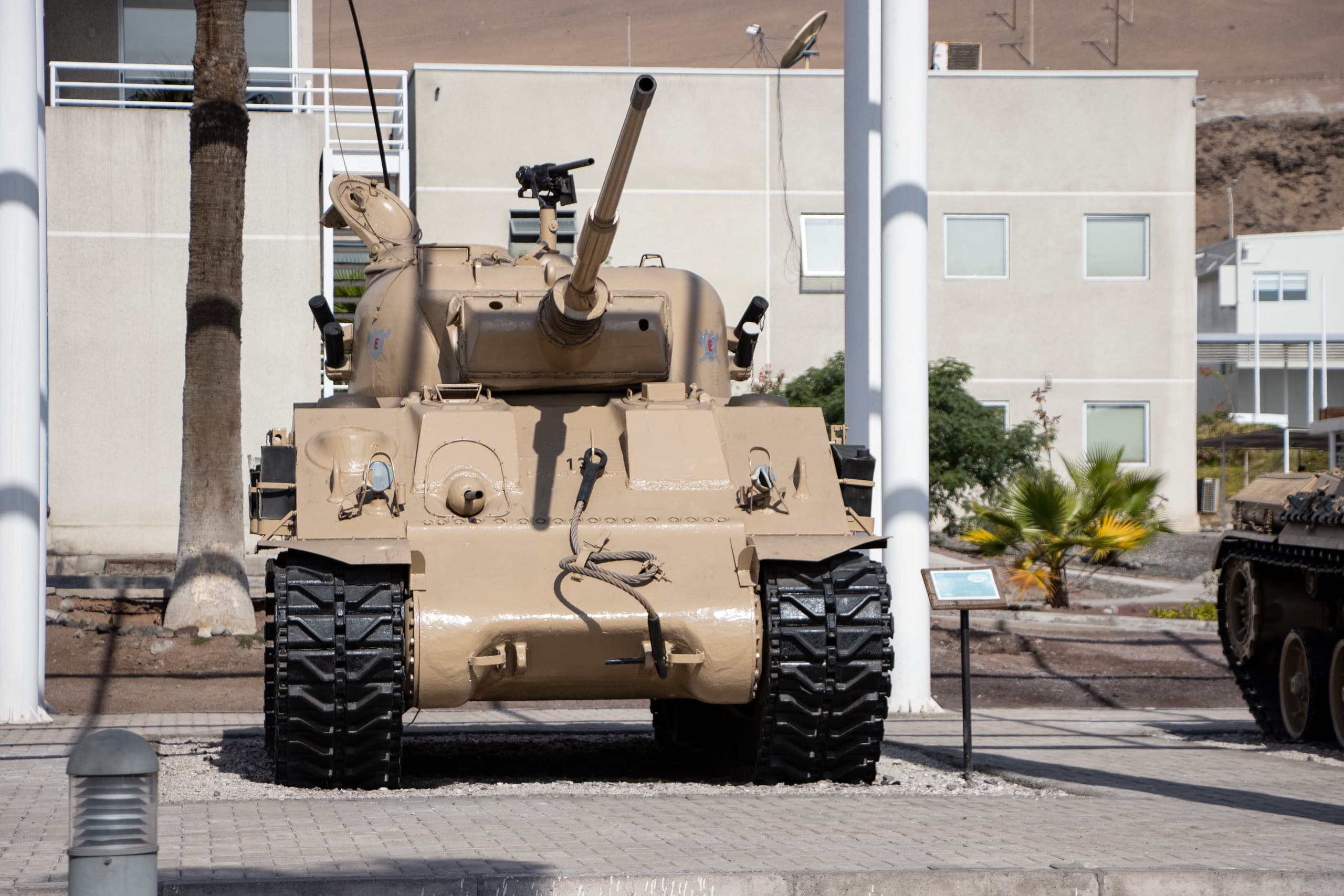
One of the modifications made in Chile that often goes unnoticed is that the front area in the M4A4 hull was modified, just in front of the driver and co-pilot, this was done to install a new infrared periscope similar to the one used in the M113 personnel carrier, for this the front part of the hood was cut and that area was extended forward, just behind the armor plates applied to some M4A4 in service in other countries, in fact an additional armor plate had to be welded on the sides to fill the missing area, this modification is easily noticed if you look at the M-50 HVMS with the M4A4 hull from the side and compare it to any other M4A4 in service in another country. The new rotating driver’s periscope is also easily recognizable if you compare it to the original periscope since it is larger.
The hull of the M4A4 maintains its classic and widely known armor of 50.8 mm on the front and 38.1 mm on the sides and rear, although it also adds an additional armor plate of 25.4 mm on the sides of the hull protecting the ammunition deposits and on the front protecting the driver and the machine gunner in front, although due to the modification made in Chile this is a single complete welded piece.
As for the M-50 HVMS turret, it had 76 mm frontal armor, the gun mantlet was between 63-100 mm and the protruding gun mantlet was 51 mm. On the sides and rear of the turret the armor was 51 mm. Some of the M-50s received by Chile also had an additional 38.1 mm thick armor plate on the turret protecting the gunner and commander.
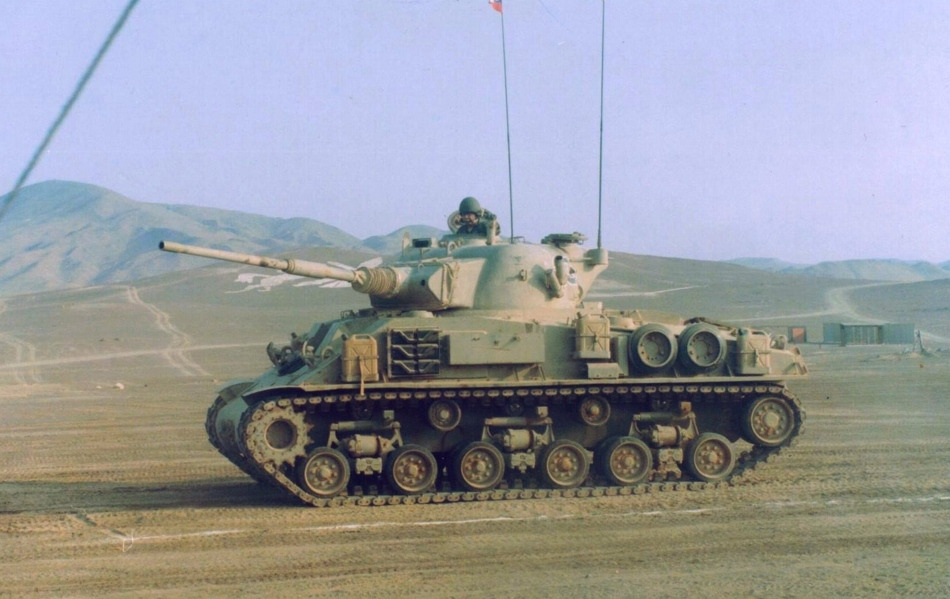
Another modification was the replacement of the original engine with a new Detroit Diesel 8V-71T engine with 475 HP of power, which was more powerful than the original, giving the tank a maximum speed of 41 km/h. This work was carried out by the Israeli company Nimda, which installed this same engine in the Chilean M-51 and M-41. To this day, you can still see their Powerpacks catalog on Nimda’s website, where the Chilean M-50 HVMS appears along with the engine model that was installed, so we have the exact model and power mentioned above.
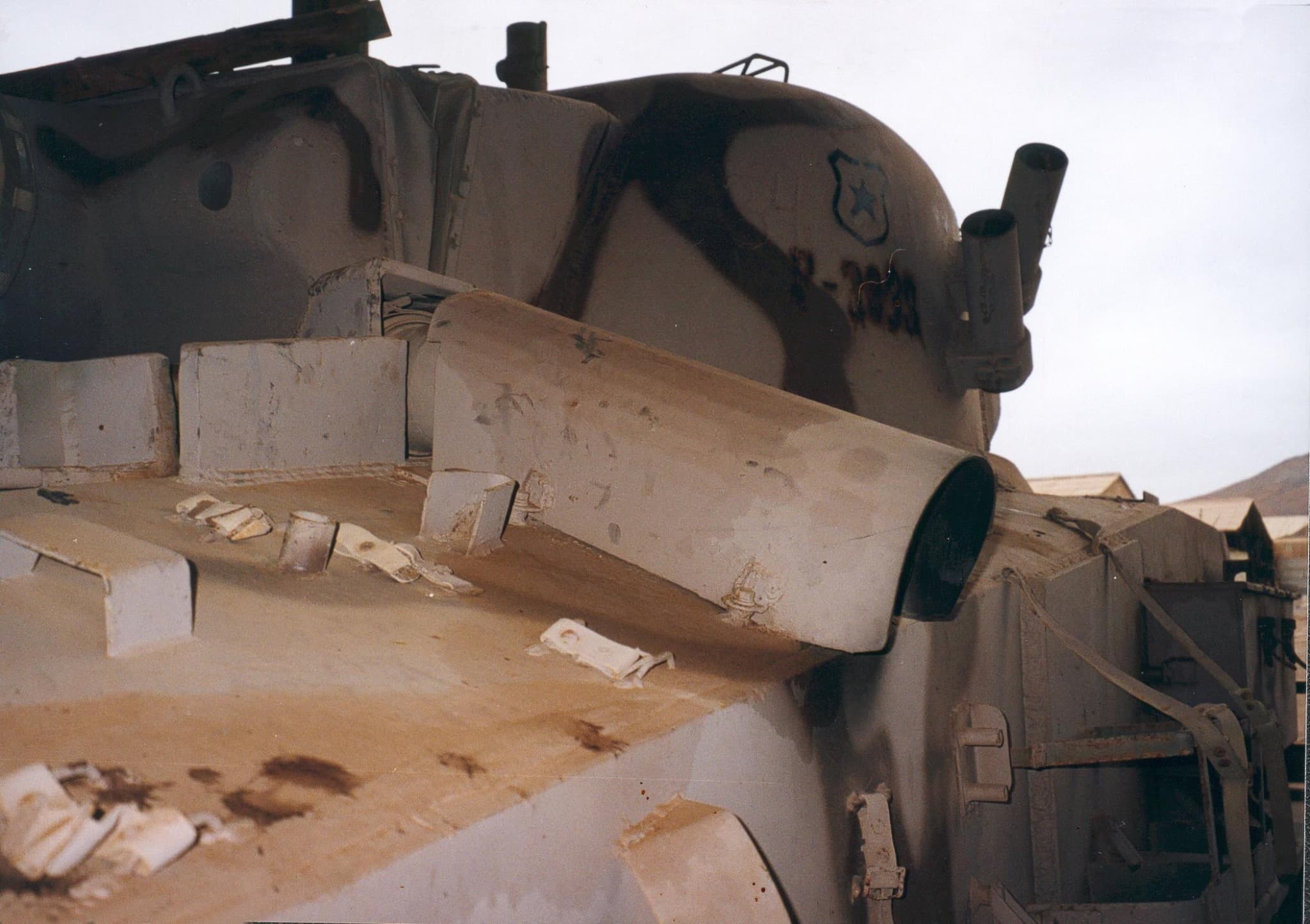
To carry out the installation of the new engine, significant modifications had to be made to the engine deck. To do this, a hole was cut in the upper rear part of the tank to allow the new exhaust outlet to exit, which would now be above the engine platform and exit through the right side of the tank’s hull. A protective cover was also welded over the engine.


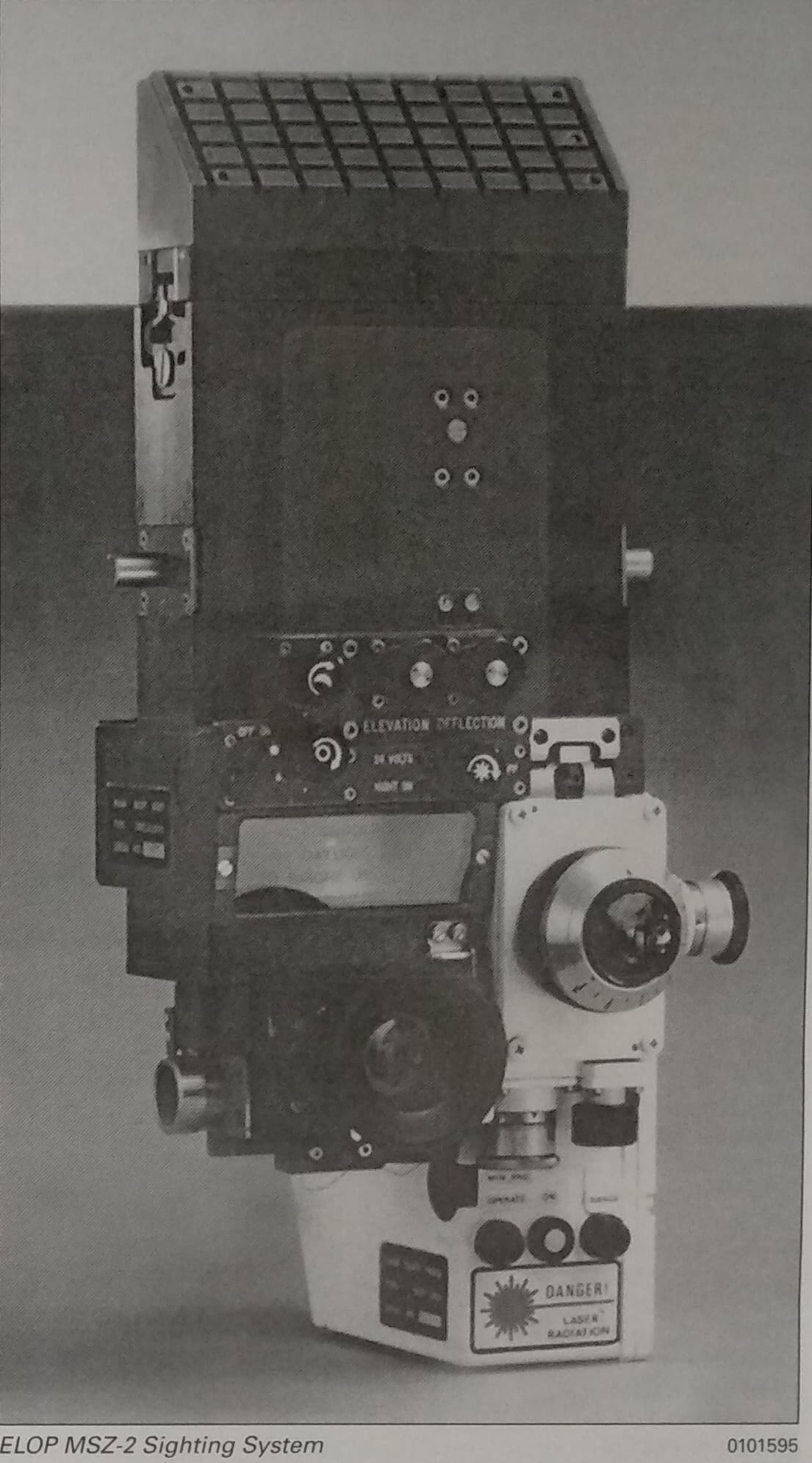
The last of the modifications, and one of the most important, greatly improved the combat capability of the M-50 HVMS by equipping it with the latest technology available at the time. This was the MSZ-2 system from the Israeli company Elop, which added a new periscope for the tank gunner. This new system allowed the gunner to observe the battlefield, measure distances, and aim at targets both day and night. The system consisted of two viewing channels, one on the right for daytime use and the left, which can be installed alternately and has a night elbow (x7.2) and a unitary power prism. The Day and Night Peritelescope performs all functions using the (x8) laser rangefinder elbow (MLRF).
In addition to its daylight functions, this peritelescope enables operational use at night, using a passive elbow based on an image intensifier tube. This elbow is installed in the night channel and can be easily replaced by a lower-fold prism far daylight unity magnification (x1) observation.
This system also features a laser rangefinder that allows the gunner to accurately measure the distance of the target from a range of 300 to 9990 meters, allowing shots to be fired at very long distances without missing and which, combined with the excellent penetration capacity of the 60 mm IMI HVMS cannon, turned the Chilean M-50 HVMS into a lethal tank. The laser rangefinder can also be used in combination with night vision. There was also a head mirror assembly (HMA) that could be easily mounted and detached from the MSZ-2 system and its function was to protect the gunner during movement over difficult terrain and was adjustable.
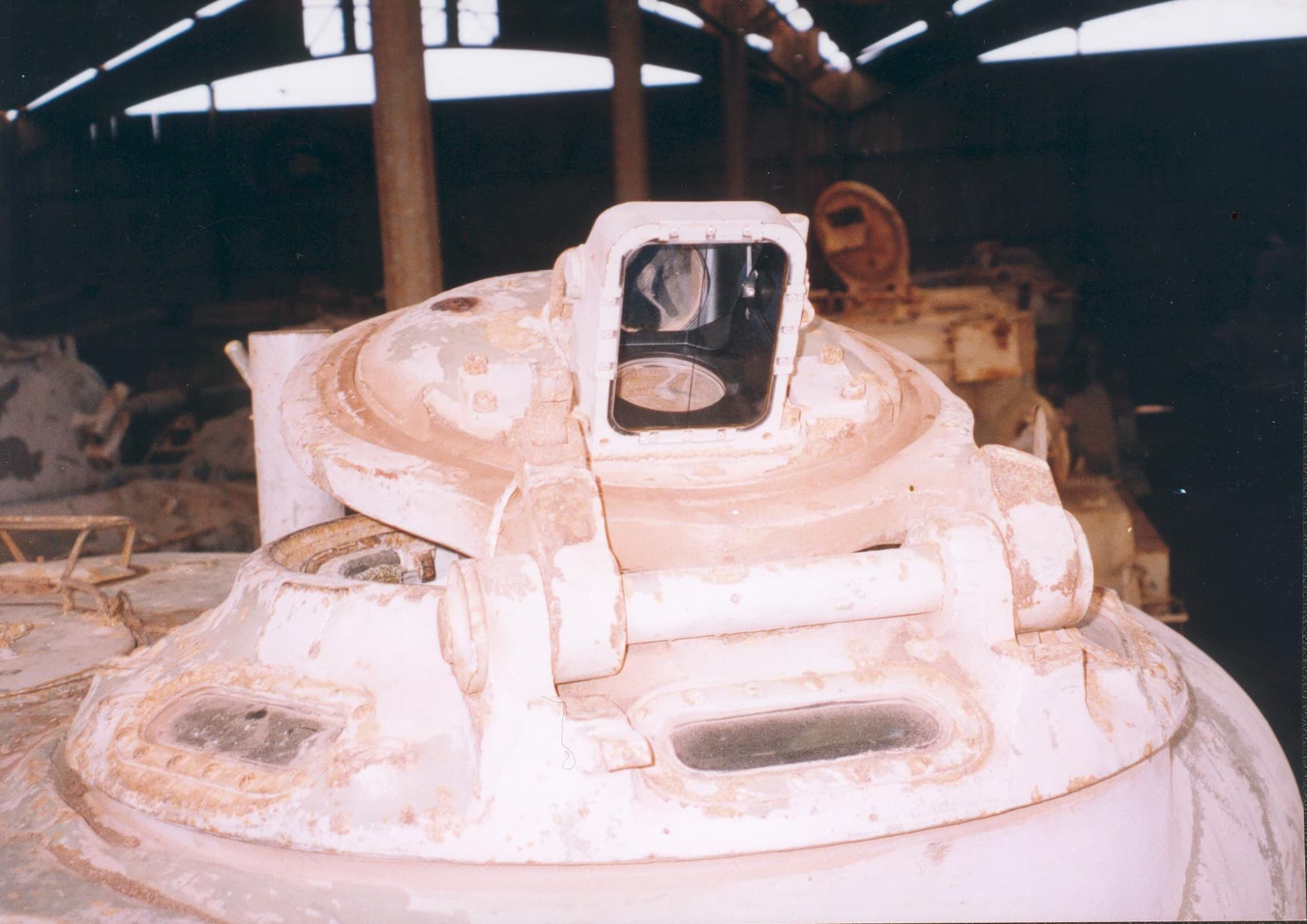
The last of the modifications only occurred in some M-50 HVMS and I personally deduce that only tank platoon commanders had it, this consisted of the installation of a new rotating periscope for the commander completely different from the original and easily recognizable since it was quite large, this was done so that the aforementioned MSZ-2 system was also installed for the commander, so the commander would also have the ability to use the laser rangefinder and give useful information to other tank commanders, it was also useful since it had night vision which greatly improved the commander’s vision and situational awareness at night.
In various photos, the new commander’s periscope can be seen on some M-50 HVMS tanks, and the MSZ-2 system could be seen when the hatch was open, confirming its use. In the photos i have seen, the new commander’s periscope was only available for the M4A1 and M4A4 hulls.
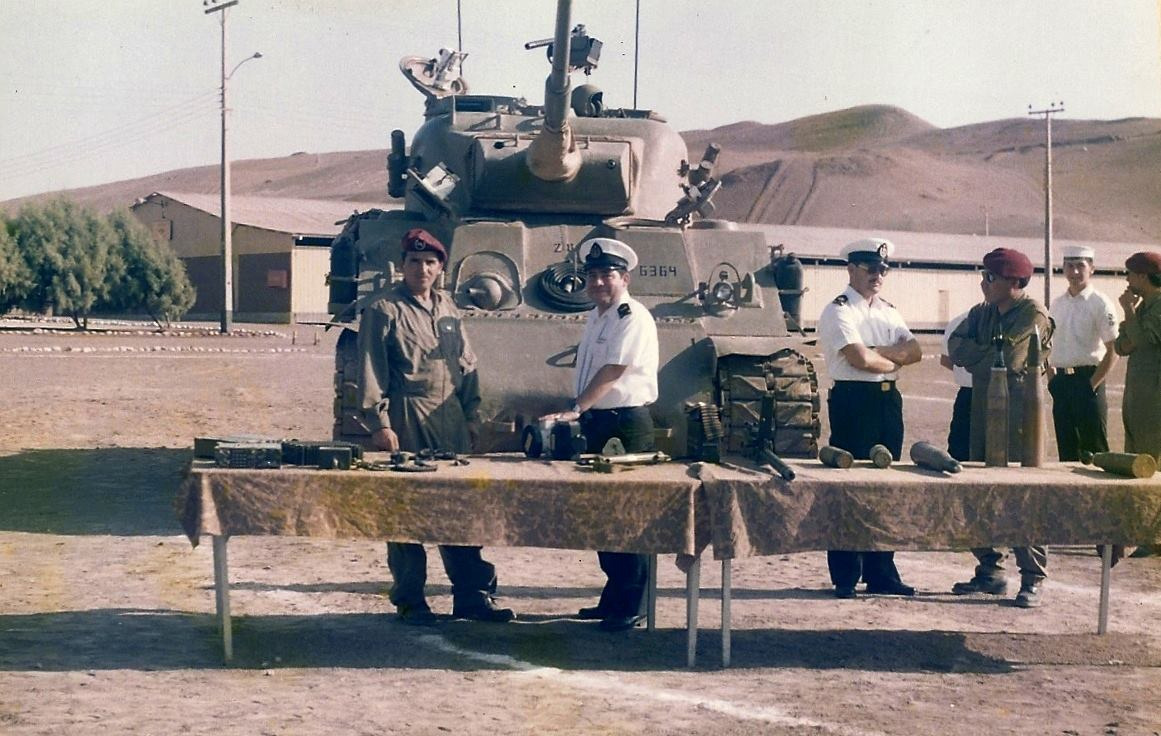
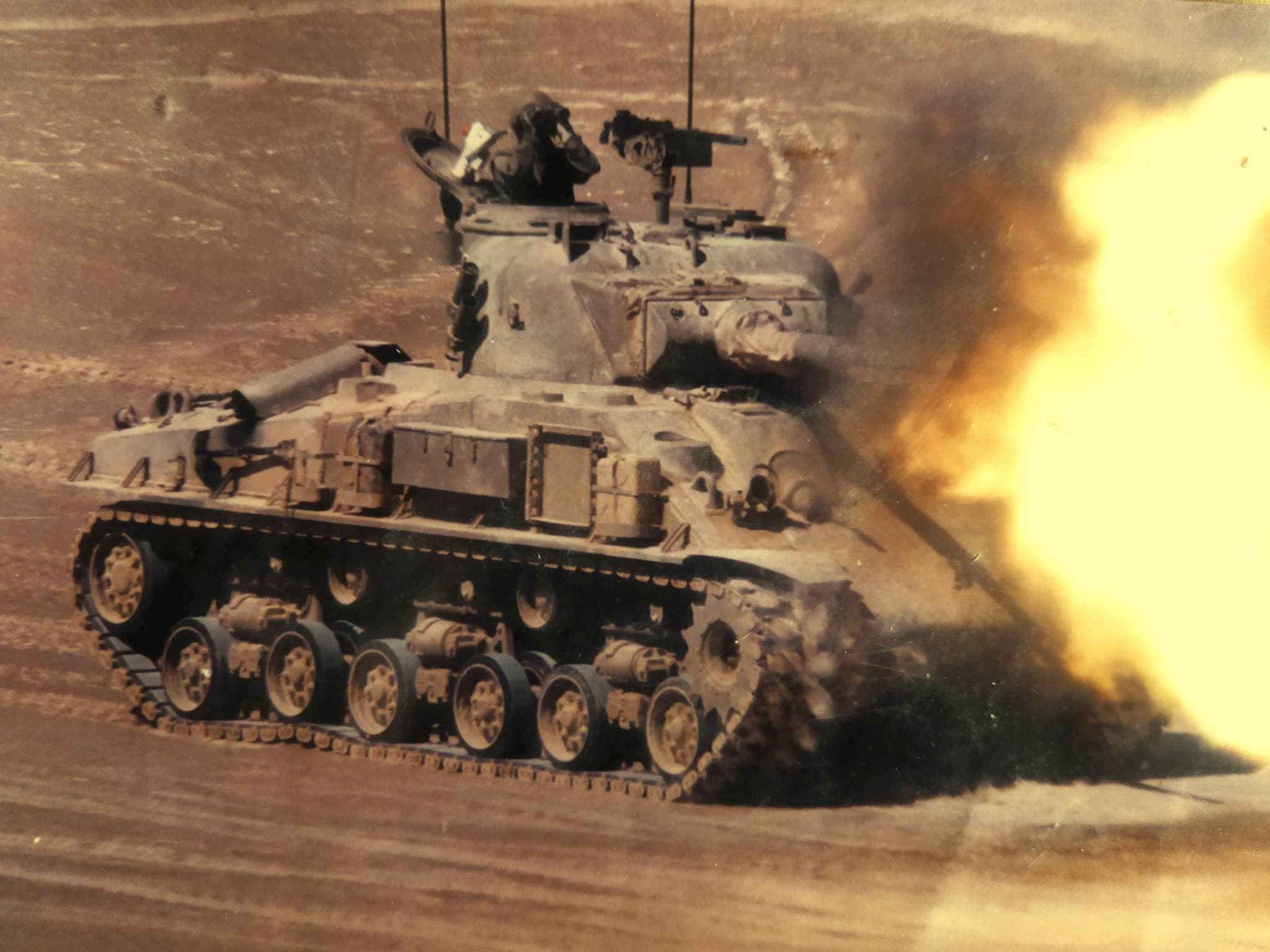
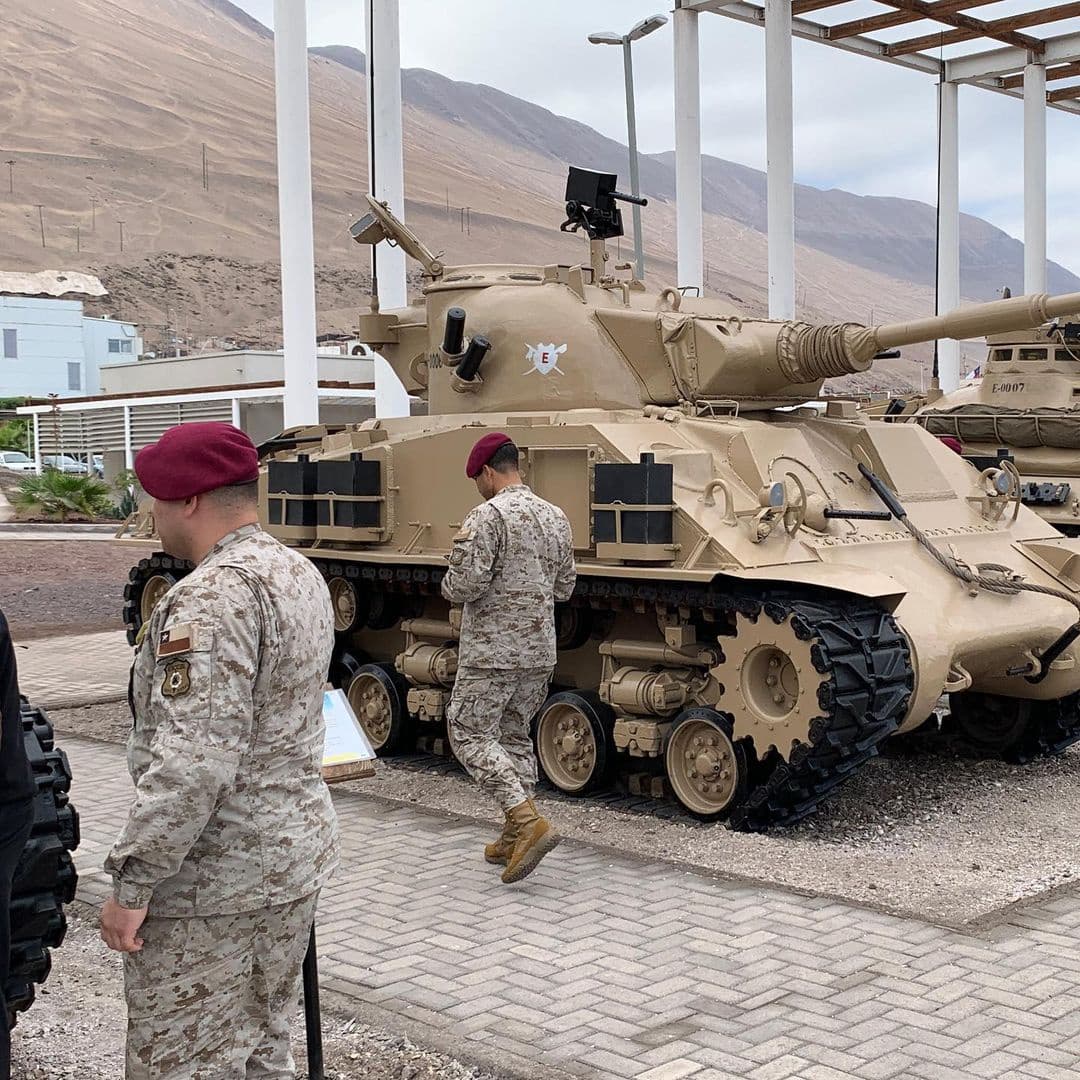
The M-50 HVMS has sometimes been erroneously referred to as the M-60 on various websites, this is a mistake, since the Chilean Army never referred to it as such and simply called it the M-50. However, for practical purposes, we added the HVMS to the name to differentiate it from when it was in Israeli service. This is easily corroborated, since in all Chilean military books where it is mentioned, it is simply called the M-50, and even its own paint scheme bears an insignia with its name.
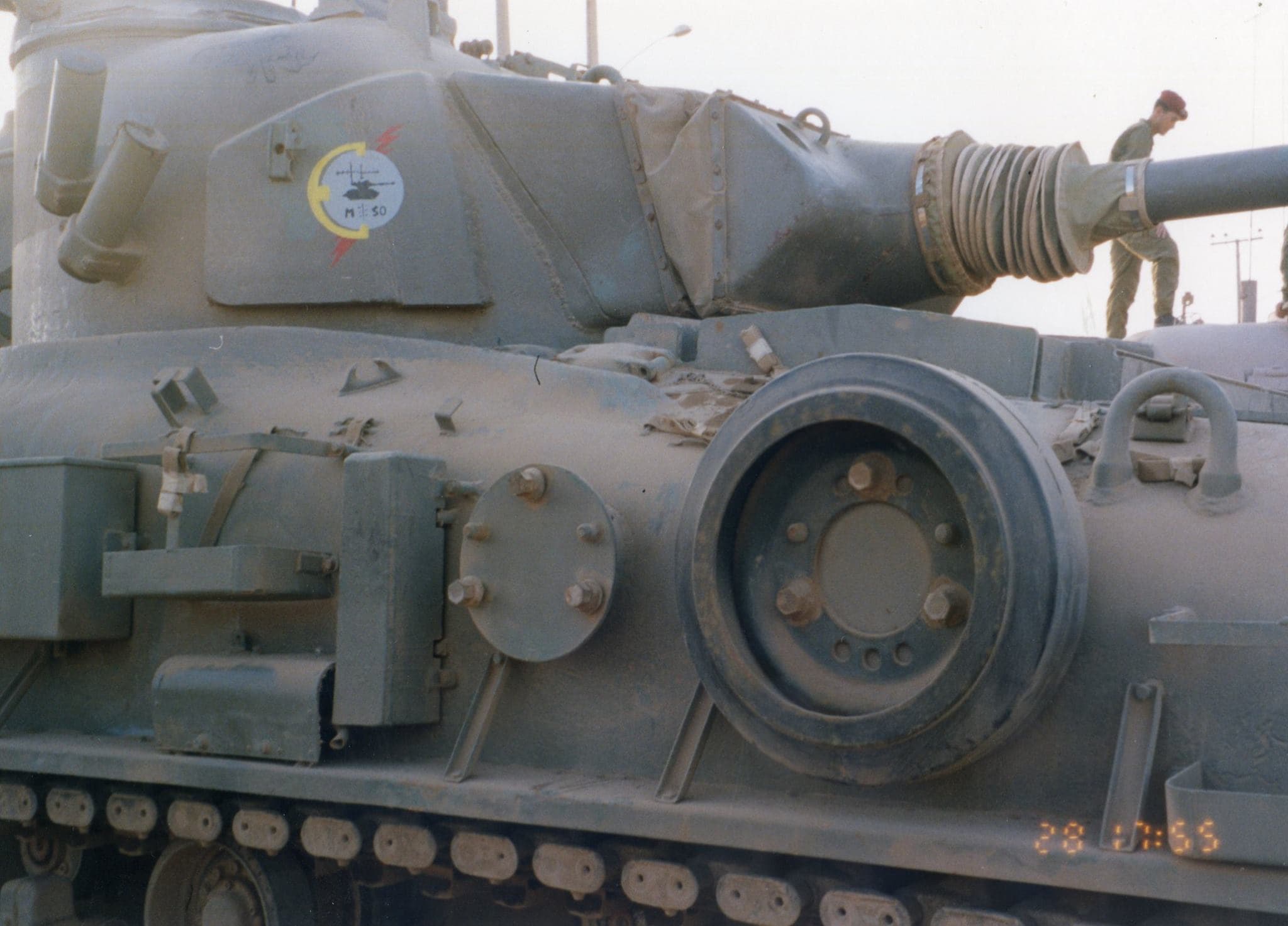
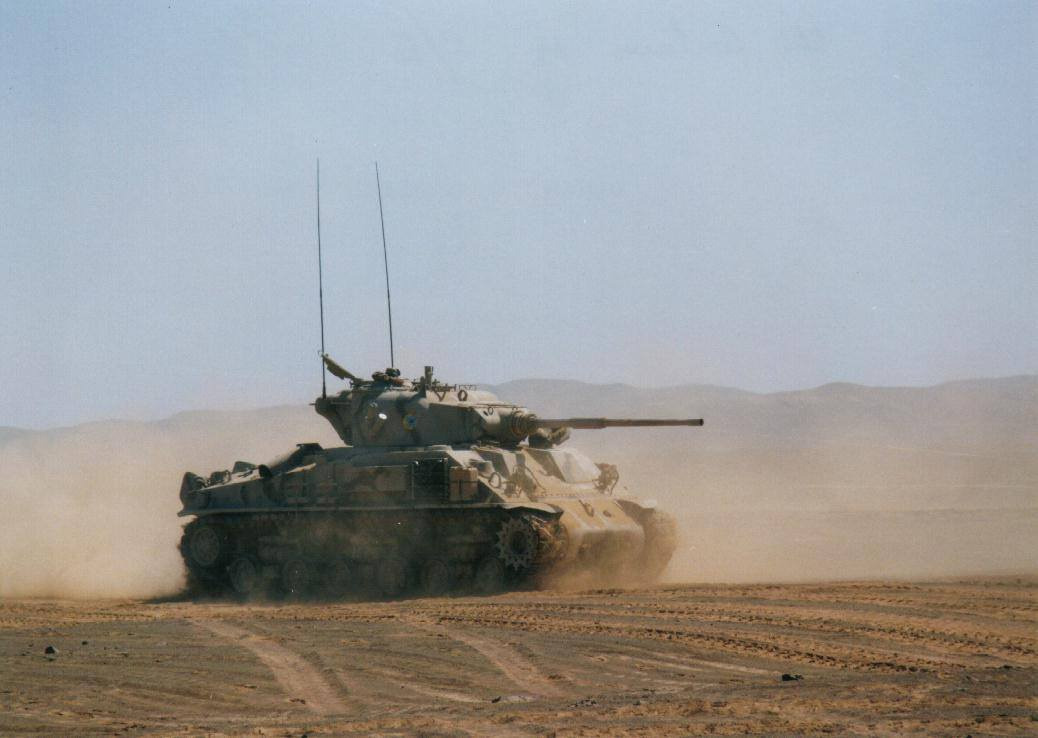
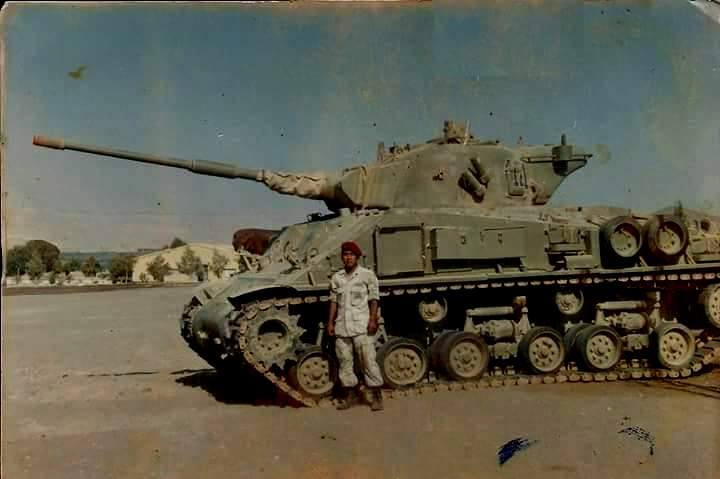
The M-50 HVMS ended its service in Chile in 2002, becoming one of the last Shermans to be in active service in the world. It was also the last variant with major modifications made to a Sherman, and therefore was the Sherman with the most firepower and the most advanced sighting and firing systems, making it the most powerful Sherman ever operated.
Specifications:
- Crew:
- 5 (Commander, Gunner, Loader, Driver, Machine gunner)
- Armament:
- Primary: 60 mm IMI HVMS (Hyper Velocity Medium Support) Gun, 12 shots per minute
- Secondary: 7.62 mm coaxial machine gun, 7.62 mm anti-aircraft machine gun. 4x smoke launchers
- Dimensions:
- Length: 6.15 m
- Width: 2.42 m
- Height: 2.24 m
- Weight: 35 Tons (32 tonnes) Total weight, battle ready
- Maneuverability:
- Engine: Detroit Diesel 8V-71T, 475 hp at 2300 rpm
- Maximum speed: 41 km/h
- Suspensions: Horizontal Volute Springs Suspensions (HVSS)
- Accessories:
- Laser Rangefinder
- Night Vision
Photos:
Sources:
- https://www.memoriachilena.gob.cl/archivos2/pdfs/MC0067618.pdf
- M-60 Sherman (M-50 with 60mm HVMS Gun) - Tank Encyclopedia
- https://www.nimda.co.il/wp-content/uploads/2021/05/Nimda_Catalog.pdf
- https://www.ejercito.cl/descargas/desktop/MTc2
- The Sherman in the Chilean Army Written by Tom Gannon
- M4 Sherman – Serie Terrestre #2 by Juan Carlos Cicalesi & Hugo Bianucci
- Jane’s Armour and Artillery Upgrades 2006-2007 (page 594)
- Jane’s Armoured Fighting Vehicle Retrofit Systems 1993-94
- Historia del Ejército de Chile, Tomo IV, Camino al Bicentenario by Academia de Historia Militar