- Yes
- No
- To USSR/China
- To UK
- To Another Tree
- No, I don’t want to see Iraq in-game.
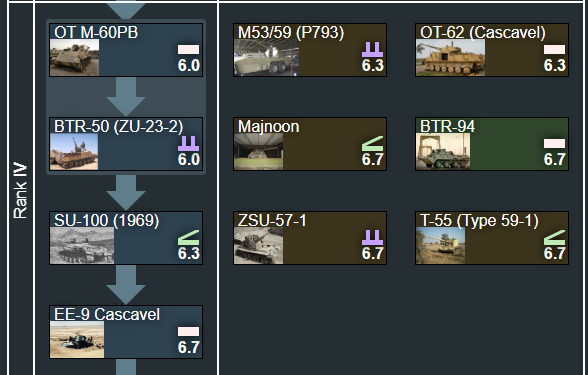
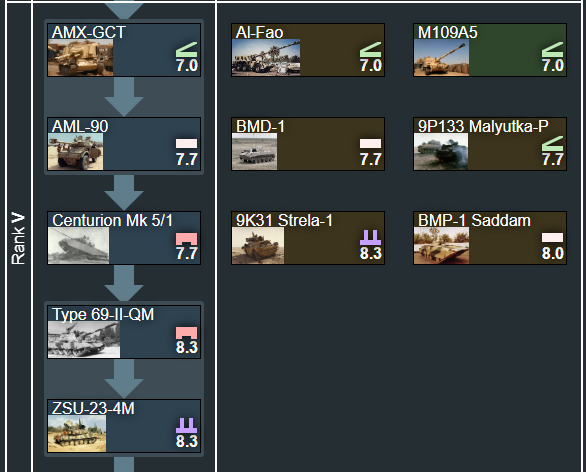
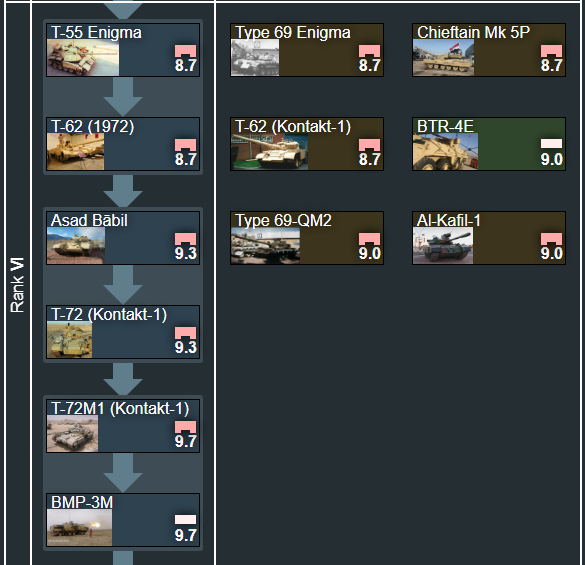
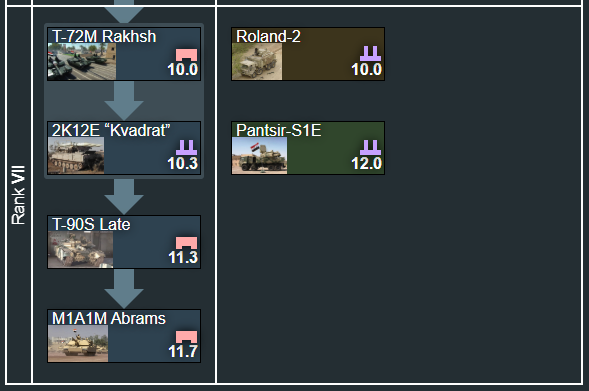
Special Thanks to:
@AspandaIV and his: Discussion of Iraqi Vehicles
@JamesPond1200-psn and his: Middle East Treaty Organization (METO) Tech Tree: The Middle East Unites!
Check out the Iraqi Air Sub-Tree here: The Iraqi Air Force Sub-Tree
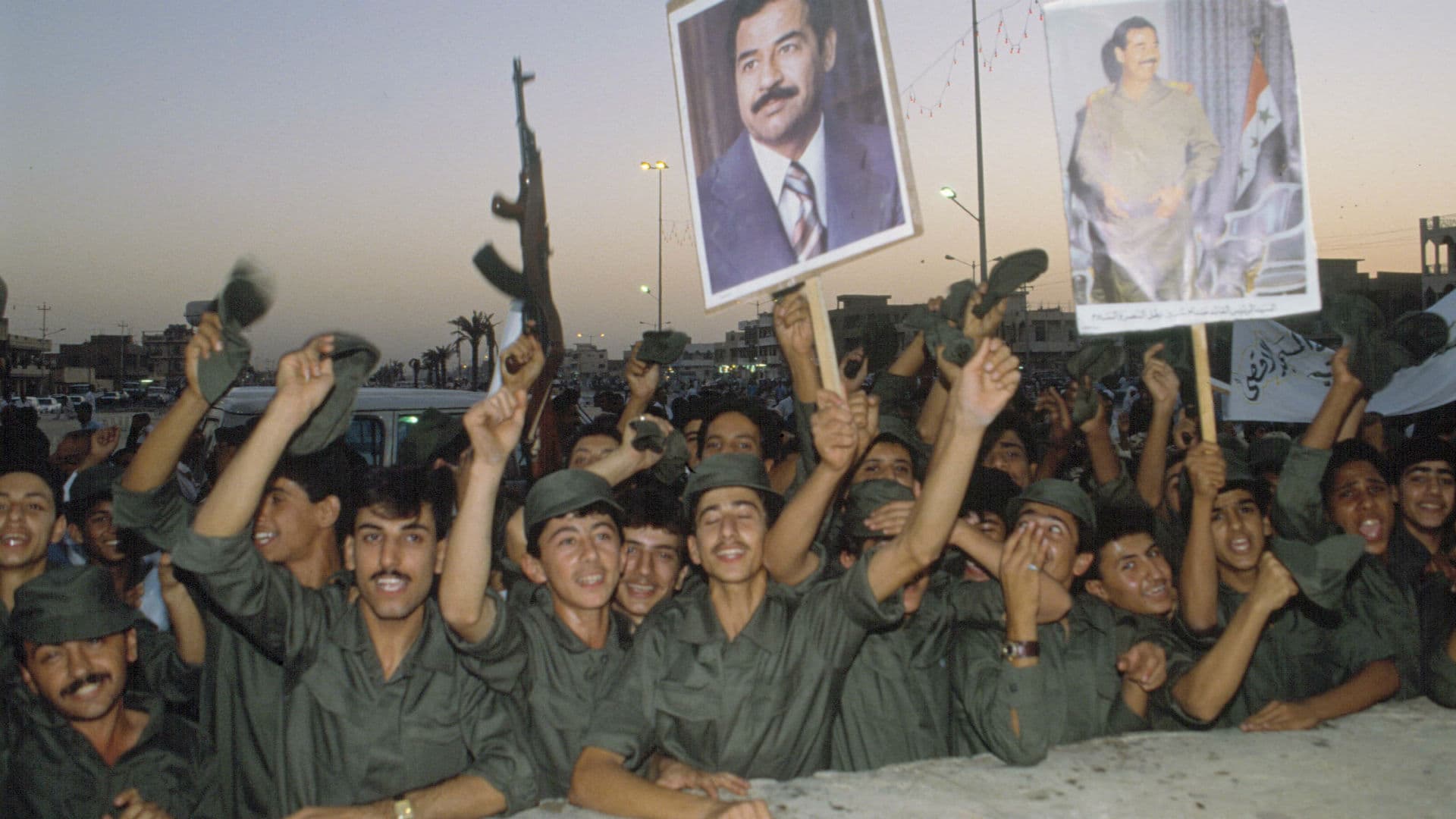
History
Spoiler


Vehicles In-Depth
Spoiler
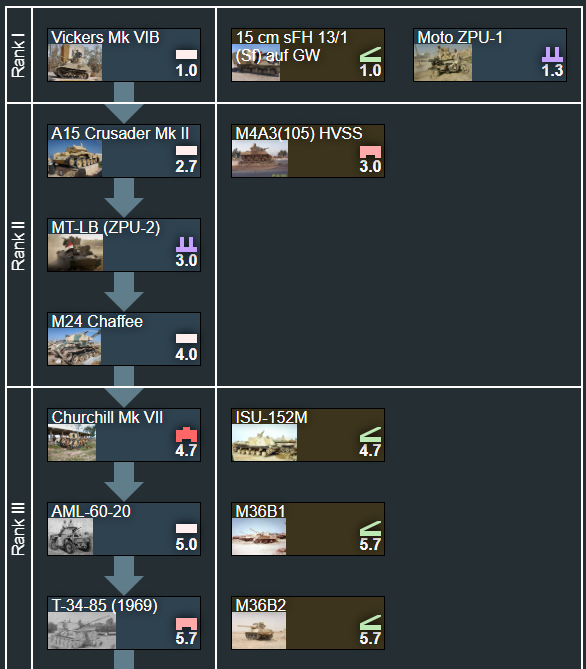
Research:
Spoiler
| Vehicle | Short history / description | Short specifications |
|---|---|---|
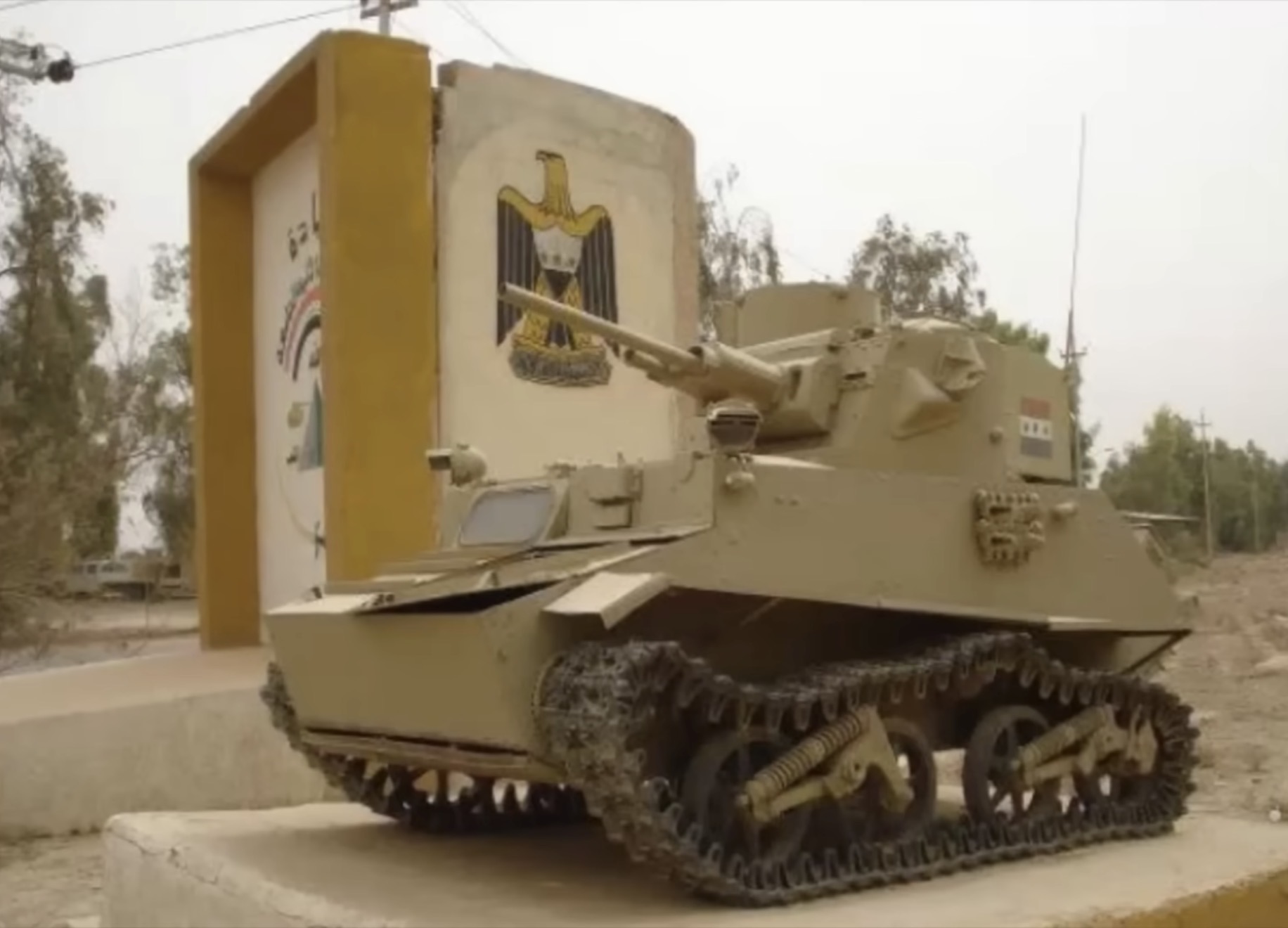
| Vickers Light Tank Mk VIB | British interwar light tank known to have survived in Iraq into the 2003 period. The Iraqi example appears to differ from a standard Mk VIB, featuring a redesigned upper glacis with what looks like an MT-LB-style driver’s window and two Soviet-style blackout projectors fitted on each side. Considering these modifications, I suspect the vehicle may have been functional at one point during the Ba’athist Era. | Type: light tank. Crew: 3. Weight: around 4.9–5.5 t. Armament: .50 inch Vickers heavy machine gun and .303 inch Vickers machine gun. Ammunition: around 400 rounds for the .50 Vickers and around 2,500 rounds for the .303 Vickers. Armour: roughly 4–14 mm. Engine: Meadows 6-cylinder petrol engine, around 86–89 hp. Suspension: Horstmann coil-spring suspension. Speed: around 55–56 km/h on road. Range: around 130 miles / 210 km. Iraqi changes: redesigned glacis, apparent MT-LB-style driver’s window, and two Soviet blackout projectors. |
Read more: Mk VI light tank - Wikipedia
| Vehicle | Short history / description | Short specifications |
|---|---|---|
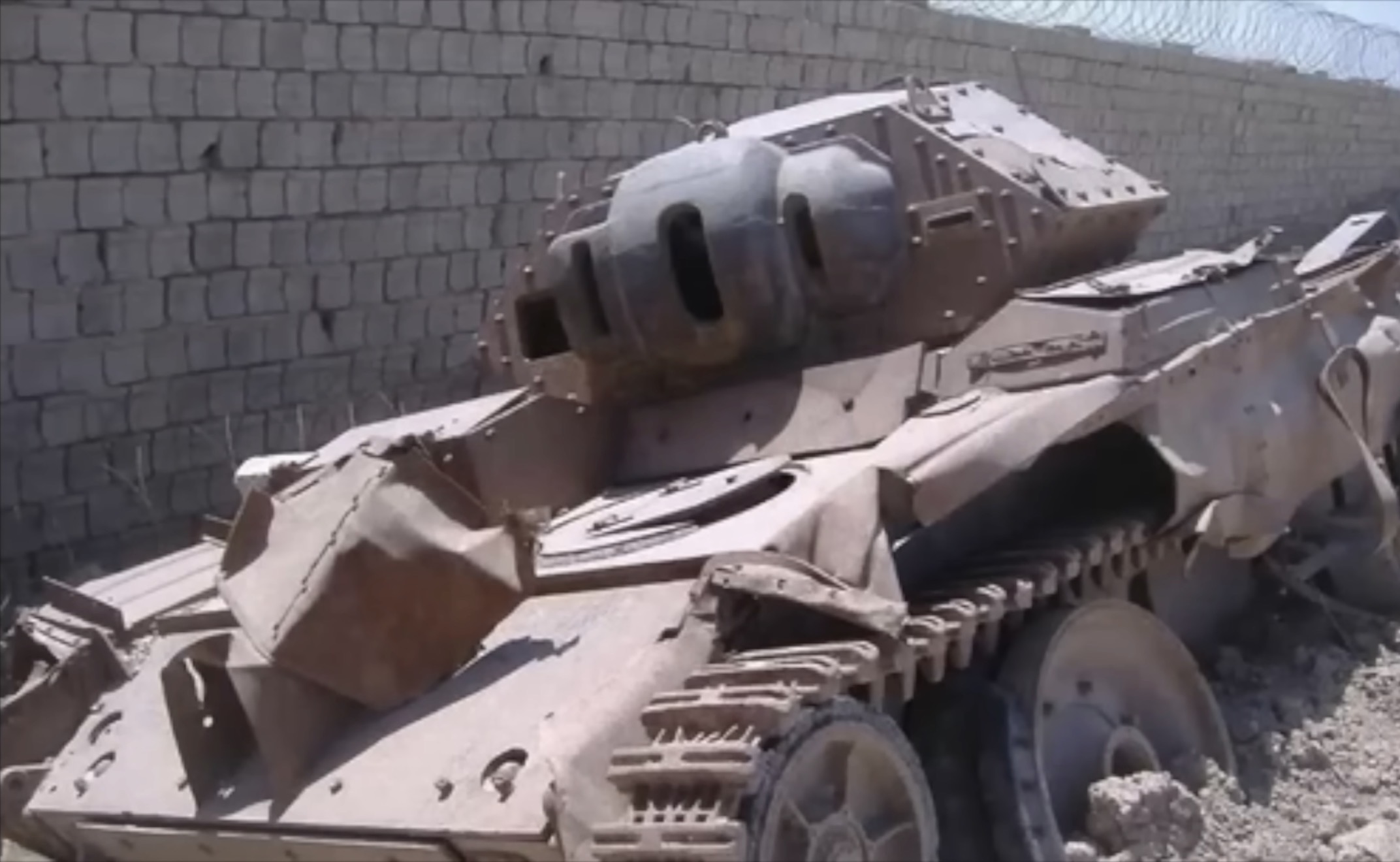
| A15 Crusader Mk II | British cruiser tank of the Second World War and an improved version of the original Crusader Mk I. The Mk II kept the same 2-pounder gun but received thicker armour, especially around the front of the hull and turret. Multiple examples were found in Iraq in 2003. | Type: cruiser tank. Crew: 5 with auxiliary hull turret, usually 4 if removed. Weight: around 20 t. Armament: 40 mm QF 2-pounder gun, 7.92 mm BESA machine gun, optional hull machine-gun turret. Ammunition: AP and APCBC for the 2-pounder. Armour: up to around 49–50 mm. Engine: Nuffield Liberty V12 petrol engine, around 340 hp. Transmission: 4-speed manual. Suspension: Christie suspension. Speed: around 42–43 km/h on road. Range: around 160 km. |
Read more: Crusader II | War Thunder Wiki
| Vehicle | Short history / description | Short specifications |
|---|---|---|
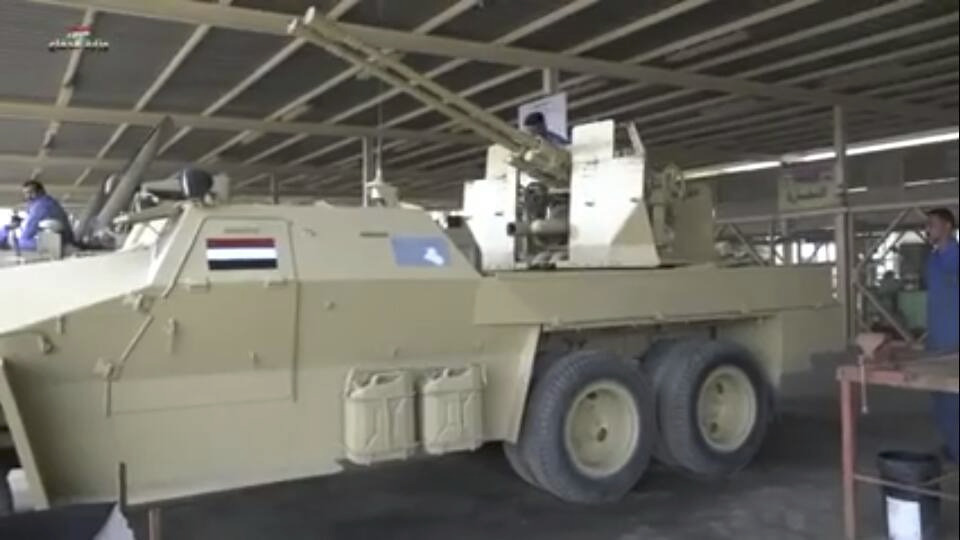
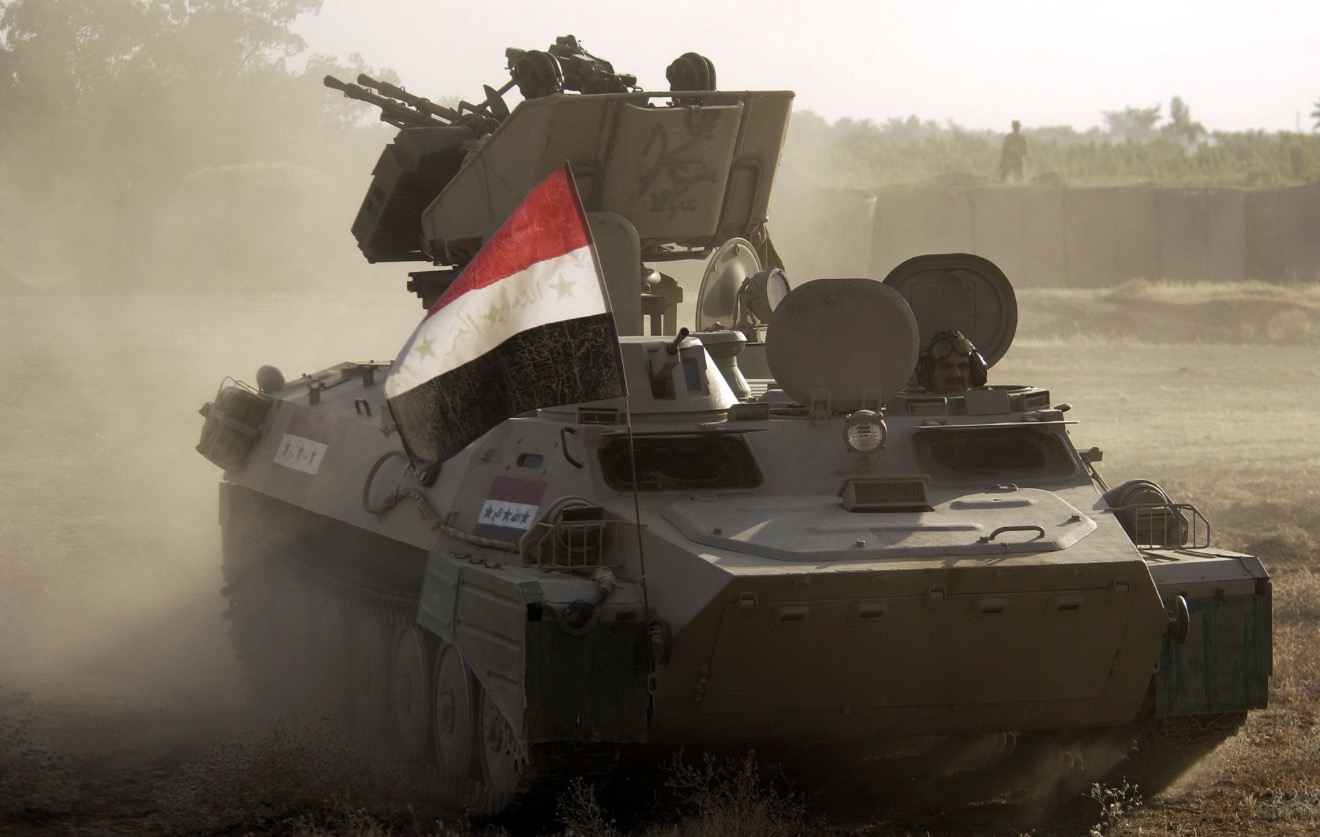
| MT-LB with ZPU-2 | Iraqi improvised anti-aircraft / fire-support vehicle made by mounting a Soviet ZPU-2 twin 14.5 mm heavy machine-gun mount on an MT-LB tracked carrier. Used as a cheap mobile gun platform for air defence, convoy protection and infantry support. It is worth noting that the same style of turret armour seen in the image has also appeared on an MT-LB fitted with a ZU-23-2 , suggesting that this may have been some form of serial or standardized turret design rather than a one-off field modification. | Type: improvised SPAA / fire-support carrier. Crew: ~4–5. Weight: ~12 t. Armament: twin 14.5 mm KPV heavy machine guns. Ammo: 14.5×114 mm API, API-T and HEI-T. Armour: ~3–10 mm. Engine: YaMZ-238 diesel, ~240 hp. Speed: ~60 km/h. Key features: light tracked chassis, high rate of fire, open gun mount, weak protection. |
Read more: …

| Vehicle | Short history / description | Short specifications |
|---|---|---|
| M24 Chaffee | American light tank used by the Royal Iraqi Army during the monarchy period. It represents Iraq’s early Western-aligned armour and a number have been captured by the coalition. | Type: light tank. Crew: 5. Weight: 18.4 t. Armament: 75 mm M6 gun, .50 cal HMG, 7.62 mm MGs. Engine: twin Cadillac petrol engines, around 296 hp. Speed: about 56 km/h. |
Read more: M24 | War Thunder Wiki
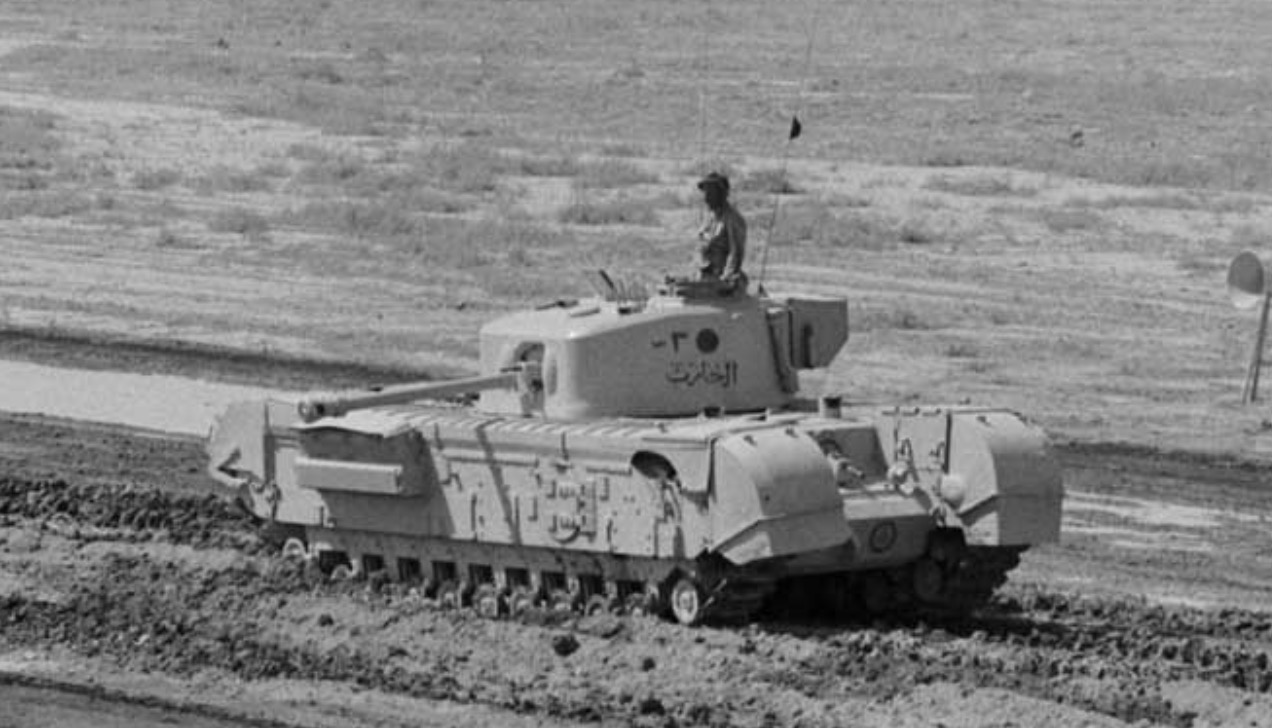
| Vehicle | Short history / description | Short specifications |
|---|---|---|
| Churchill Mk VII | British infantry tank also seen in Royal Iraqi Army service during the 1950s. I included it because one example was captured by the coalition and was likely used as a decoy. | Type: heavy infantry tank. Crew: 5. Armament: 75 mm OQF Mk V gun. Armour: up to 152 mm frontal armour. Speed: around 20–25 km/h. Role: slow but heavily armoured support tank. |
Read more: Churchill VII | War Thunder Wiki
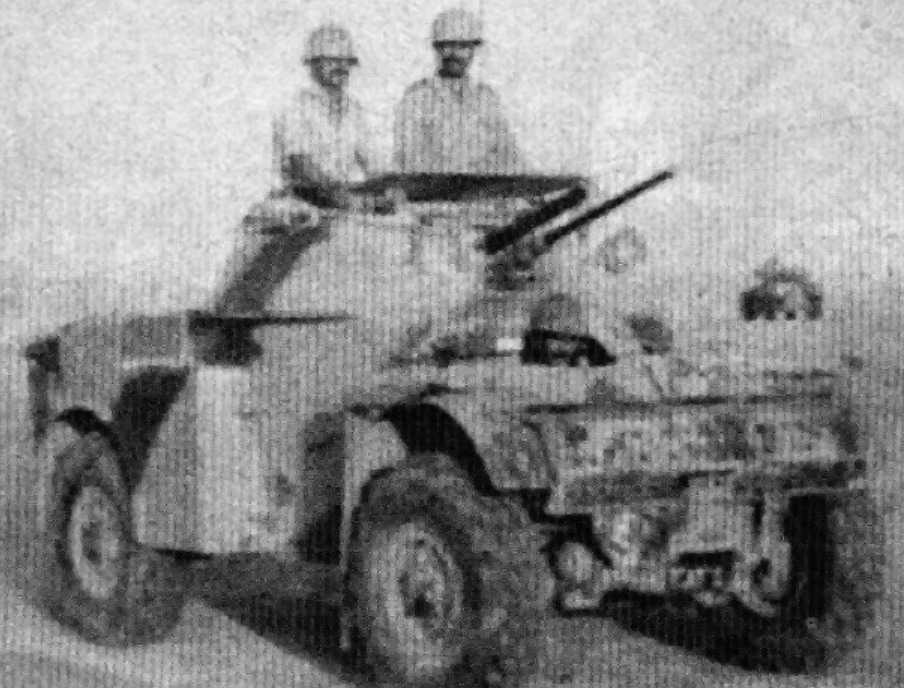
| Vehicle | Short history / description | Short specifications |
|---|---|---|
| AML-60-20 | French Panhard armoured car used by Iraq as a light reconnaissance and support vehicle. Iraq acquired both AML-60 and AML-90 types, with the AML-60 carrying a 60 mm breech-loaded mortar rather than a conventional tank gun. It also mounts an MG151/20 coaxially. | Type: 4×4 armoured car. Crew: 3. Weight: around 4.8–5.5 t. Armament: 60 mm HB/CM60A1 mortar, MG151/20 autocannon. Speed: roughly 90–100 km/h. Protection: light armour only. |
Read more: Panhard AML 60-20 (MG151), Forgotten by France
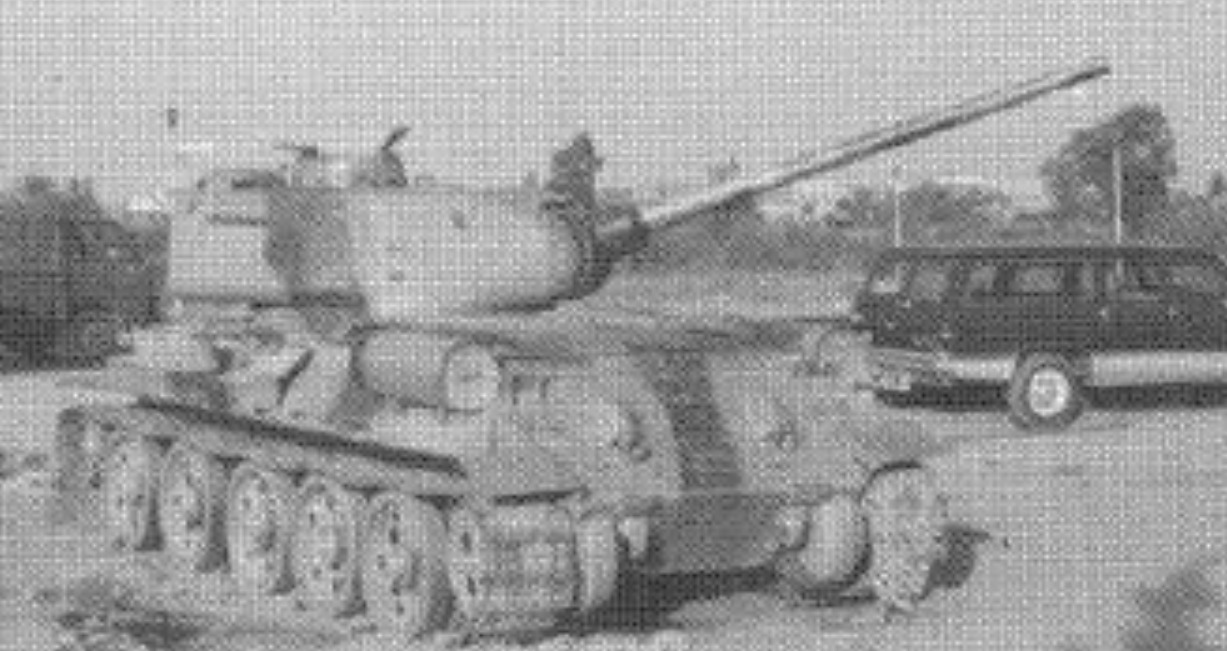
| Vehicle | Short history / description | Short specifications |
|---|---|---|
| T-34-85 (1969) | Late modernised version of the T-34-85. Iraq used a number T-34-85s. The 1969 model represents a Cold War refit with T-55 style wheels, engine-related improvements and a number of other modernisations. The vehicle shown in the photograph uses a 1944 turret, which likely lacks an electric turret traverse mechanism. It also has its smoke canisters mounted on the rear slope rather than on the sides. | Type: medium tank. Crew: 5. Weight: around 32 t. Armament: 85 mm ZiS-S-53 gun, 7.62 mm MGs. Engine: V-2 diesel, around 500 hp on upgraded models. Speed: about 55 km/h. |
Read more: T-34-85 Model 1969 – The T-34-85 of The Cold War
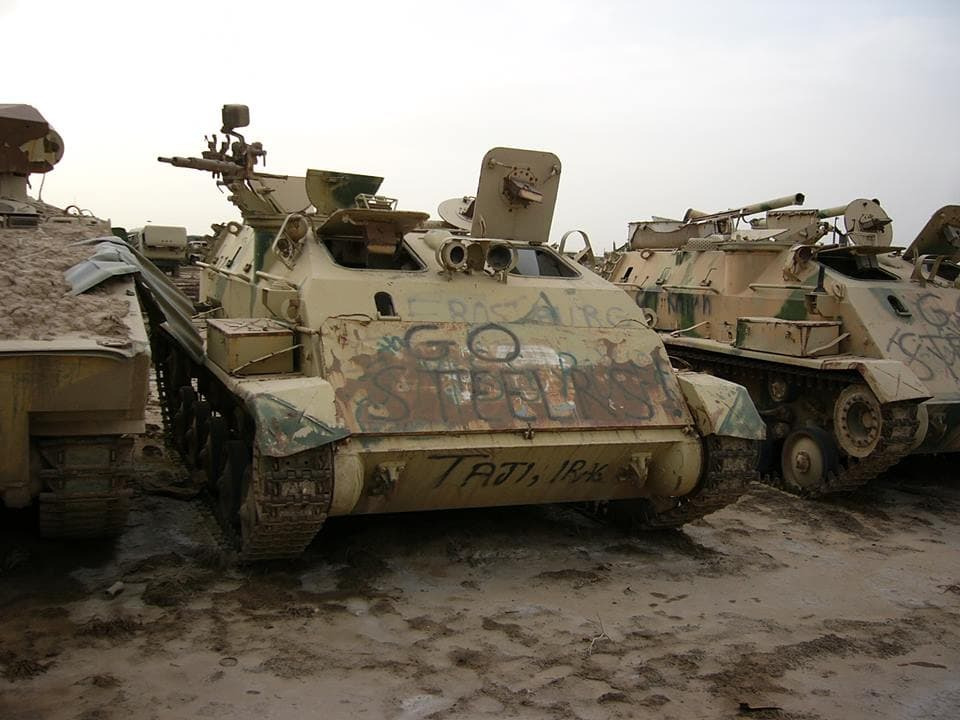
| Vehicle | Short history / description | Short specifications |
|---|---|---|
| OT M-60PB | Yugoslav anti-tank APC variant exported to Iraq. Iraqi vehicles reportedly differed mainly by using a Soviet DShK-type 12.7 mm machine gun instead of the original Browning. | Type: tracked APC / tank destroyer. Crew: 5. Weight: around 11 t. Armament: twin 82 mm recoilless rifles, 12.7 mm HMG, 7.62 mm MG. Engine: FAMOS diesel, around 140 hp. Speed: about 43–45 km/h. |
Read more: OT M-60PB in Iraqi service
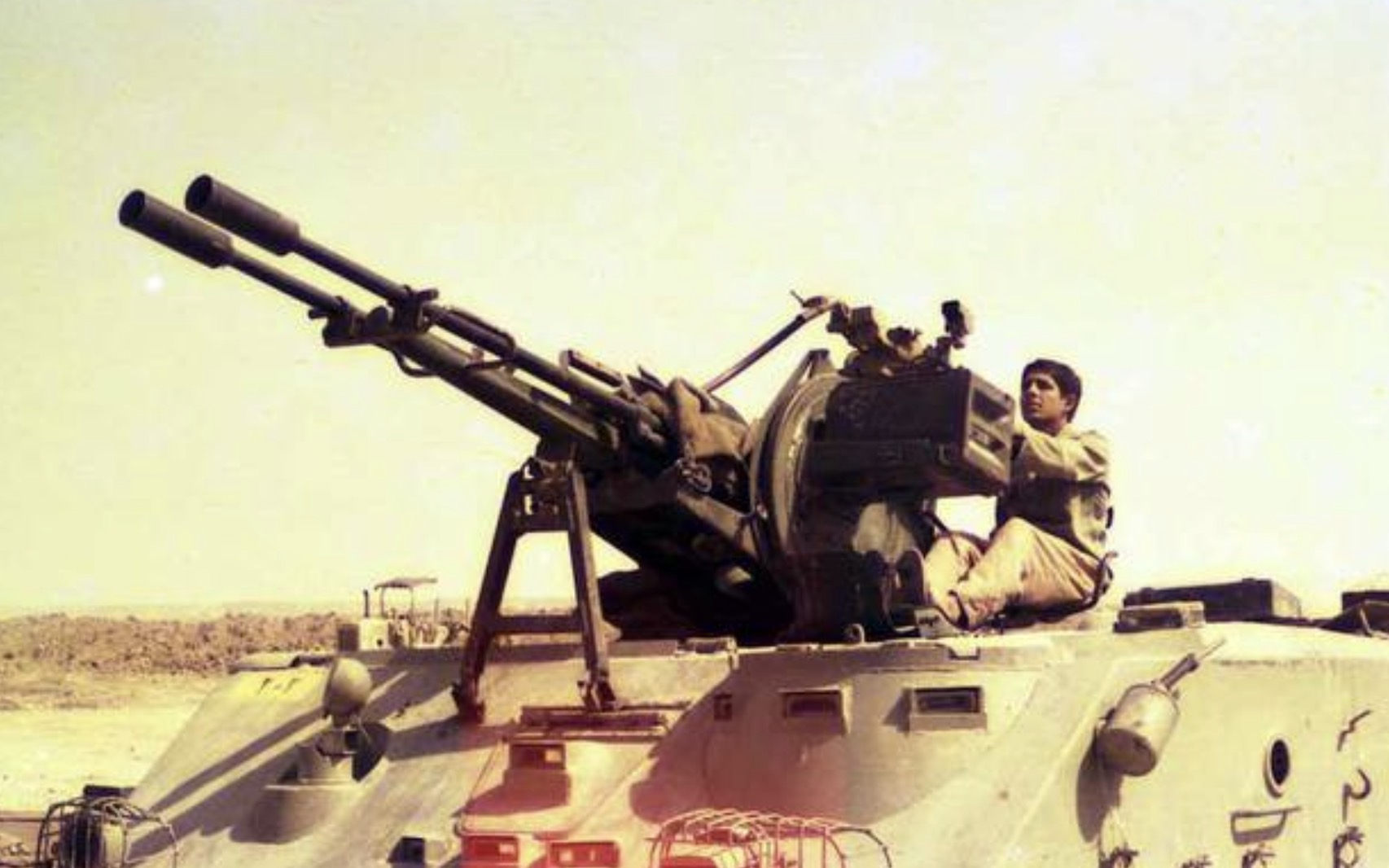
| Vehicle | Short history / description | Short specifications |
|---|---|---|
| BTR-50 with ZU-23-2 | Improvised Iraqi fire-support / anti-aircraft vehicle made by mounting a Soviet ZU-23-2 twin 23 mm autocannon on the hull of a BTR-50 tracked APC. A surprisingly popular combination in Iraq. | Type: improvised SPAA / fire-support APC. Crew: ~4–5. Weight: ~15 t. Armament: twin 23 mm ZU-23-2 autocannon. Ammo: 23×152 mm HEI-T and API-T. Armour: ~6–13 mm. Engine: V-6 diesel, ~240 hp. Speed: ~44 km/h road, ~10 km/h in water. Key features: amphibious chassis, high rate of fire, open gun mount, very light protection. |
Read more: …
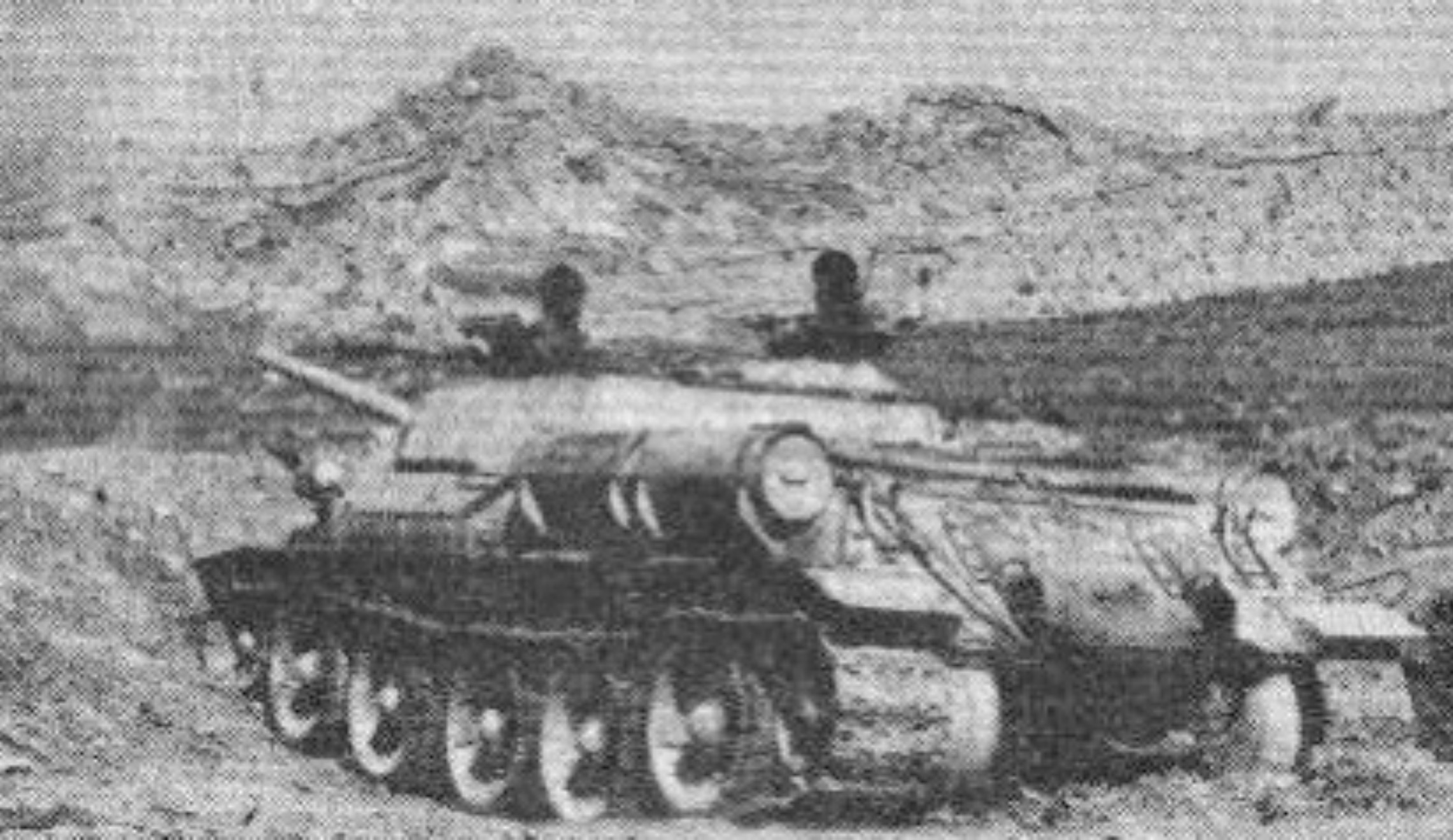
| Vehicle | Short history / description | Short specifications |
|---|---|---|
| SU-100 ( Model 1969) | Soviet T-34-based tank destroyer armed with the 100 mm D-10S gun. Iraq used SU-100s as part of its older Soviet-supplied armoured inventory, with the 1969 version representing a Cold War modernised vehicle rather than the original Second World War configuration. This Iraqi version features T-55-style road wheels and smoke canister mounts, while retaining an older-style commander’s hatch. | Type: tank destroyer. Crew: 4. Weight: ~31.6 t. Armament: 100 mm D-10S gun. Ammo: APHE/APCBC, HE, smoke, possible HEAT. Armour: up to 75 mm frontal. Engine: V-2 diesel, ~500 hp. Speed: ~50 km/h. Key features: low silhouette, strong 100 mm gun, no turret, limited traverse. |
Read more: SU-100 Model 1969 – The SU-100 of The Cold War
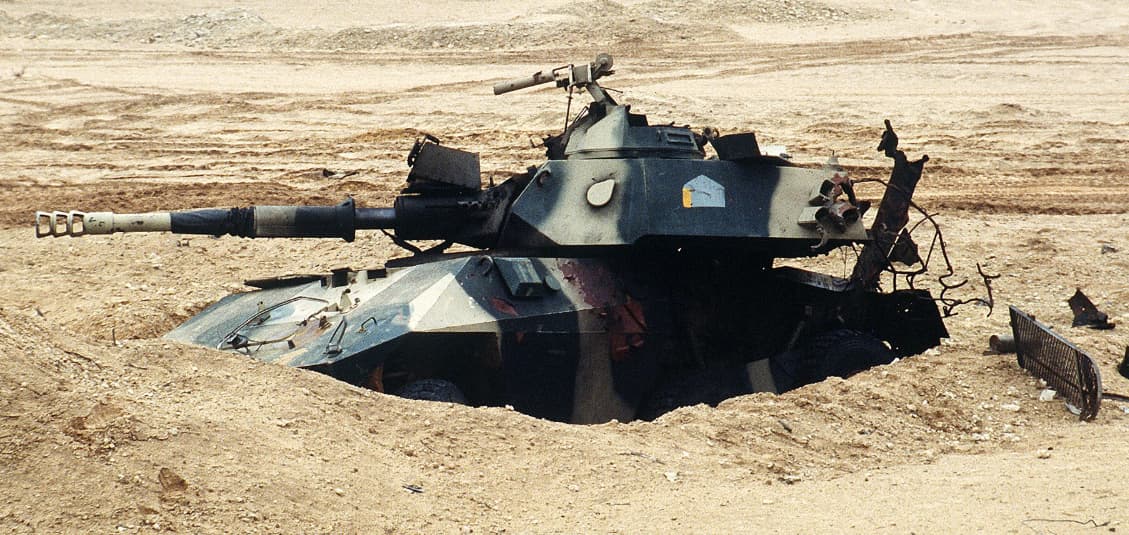
| Vehicle | Short history / description | Short specifications |
|---|---|---|
| EE-9 Cascavel M4 | Brazilian 6×6 reconnaissance/fire-support vehicle used by Iraq in large numbers. Iraqi Cascavels received a number of different local modifications. The most common additions appear to have been roof-mounted M2 Browning or DShK heavy machine guns. Some vehicles also have been fitted with a laser rangefinder. | Type: 6×6 armoured car. Crew: 3. Weight: about 12.5 t. Armament: 90 mm EC-90 III low-pressure gun, M2 Browning or DSHK, coaxial 7.62 mm MG, roof MG. Engine: Detroit Diesel 6V53, 212 hp. Speed: up to 100 km/h. Range: about 750 km. |
Read more: ENGESA EE-9 CASCAVEL M4: the brazilian light tank

| Vehicle | Short history / description | Short specifications |
|---|---|---|
| Centurion Mk 5/1 | British post-war tank visible in Royal Iraqi Army parade material. It represents the peak of Iraq’s early Western tank fleet before the shift toward Soviet equipment. | Type: medium / main battle tank. Crew: 4. Armament: 20-pounder gun, 7.62 mm MGs. Key feature: two-plane stabiliser. Protection: strong turret and hull for its period. Role: early high-tier Western-style MBT. |
Read more: Centurion Mk.5/1 | War Thunder Wiki

| Vehicle | Short history / description | Short specifications |
|---|---|---|
| AMX-GCT / AMX-30 AuF1 | French 155 mm self-propelled gun based on the AMX-30 chassis. Iraq received the type during the 1980s, making it one of the most powerful artillery vehicles available to the Iraqi Army. It is a large but mobile high-calibre support vehicle with devastating HE, a fast autoloader and very poor protection. | Type: self-propelled gun. Crew: 4. Weight: around 43.5 t. Armament: 155 mm CN 155 AuF1 / GCT F1 howitzer, 12.7 mm M2HB machine gun. Ammunition: HE, HE-VT/proximity fuse, smoke. Ammunition carried: 42 rounds. Loading system: autoloader. Rate of fire: up to 8 rpm. Engine: Hispano-Suiza HS-110 diesel, about 680 hp. Speed: around 60 km/h. Protection: light armour, roughly 20–30 mm. |
Read more: AuF1 | War Thunder Wiki
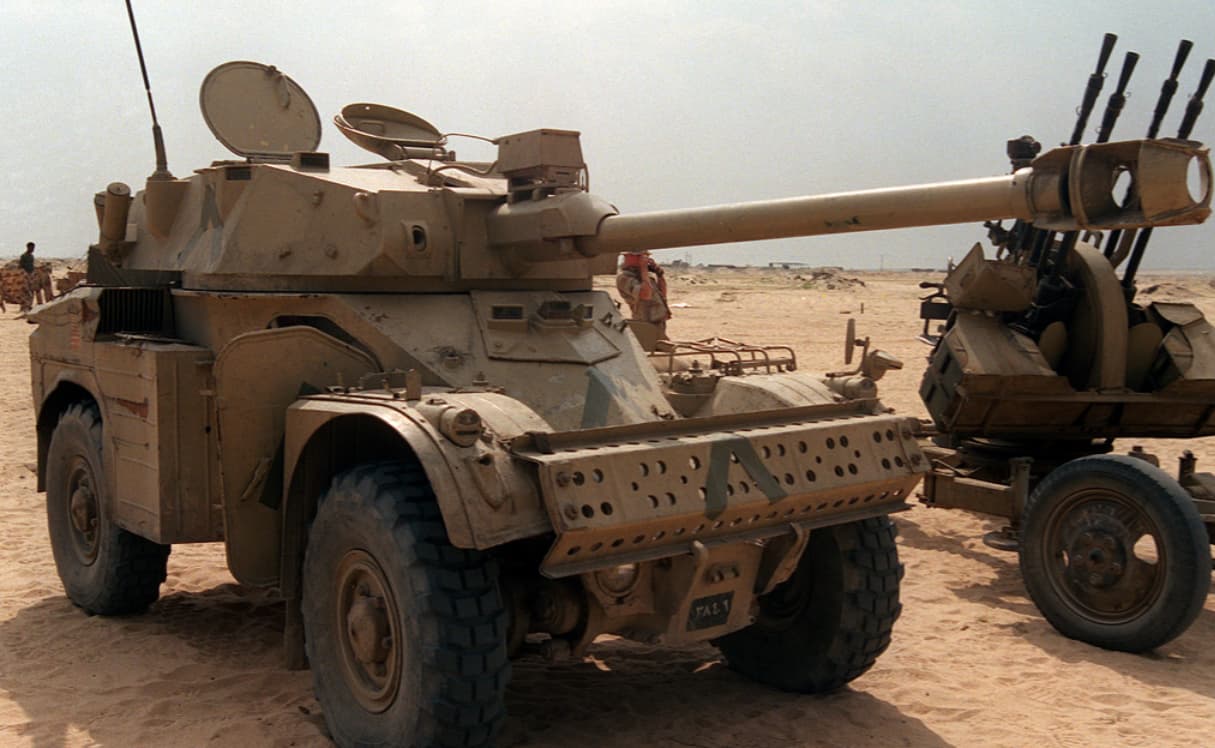
| Vehicle | Short history / description | Short specifications |
|---|---|---|
| AML-90 | French wheeled fire-support vehicle used by Iraq for reconnaissance. Its 90 mm low-pressure gun gave Iraqi reconnaissance units much heavier punch than ordinary scout cars. Some Iraqi vehicles also appear to have been modified with a laser rangefinder mounted above the cannon. | Type: 4×4 armoured car. Crew: 3. Weight: about 5.5–6 t. Armament: 90 mm D921/F1 low-pressure gun, 7.62 mm MGs. Ammo: around 20 rounds. Speed: roughly 90–100 km/h. Protection: light armour. |
Read more: AML-90 | War Thunder Wiki
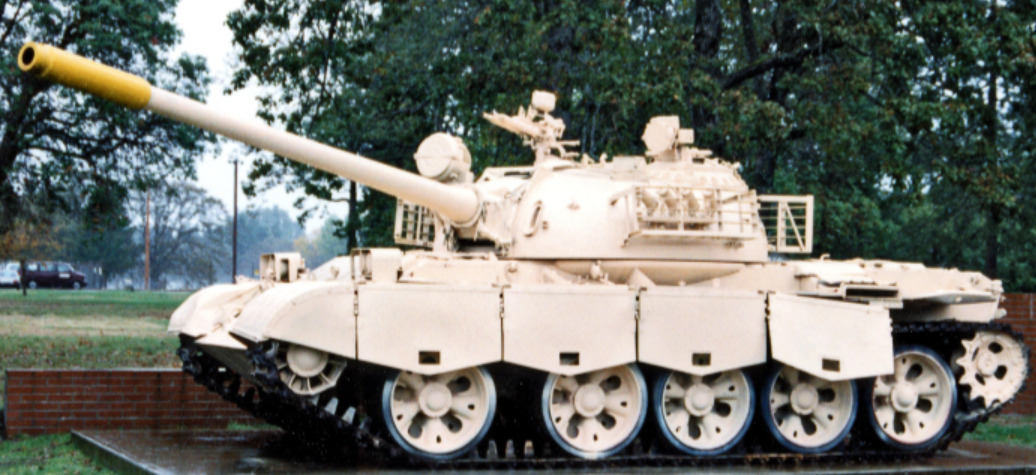
| Vehicle | Short history / description | Short specifications |
|---|---|---|
| Type 69-II-QM | Iraqi version of the Chinese Type 69-II family. It was one of the most important Iraqi tanks of the Iran–Iraq War and Gulf War period. The best-equipped versions featured two-plane stabilisation, side skirts, smoke grenade launchers, turret baskets or slat armour, and a laser rangefinder. Some sources also argue that the APFSDS rounds used by these tanks may have offered better penetration than the best 125 mm rounds available to Iraq at the time. | Type: main battle tank. Crew: 4. Weight: around 36.5–36.7 t. Armament: 100 mm rifled gun, 7.62 mm MGs, 12.7 mm AA MG. FCS: laser rangefinder, ballistic computer and two-plane stabiliser. Engine: 580 hp diesel. Speed: about 50 km/h. |
Read more: Iraqi Type 69-II-QM — Iraq’s Unsung Armoured Warrior
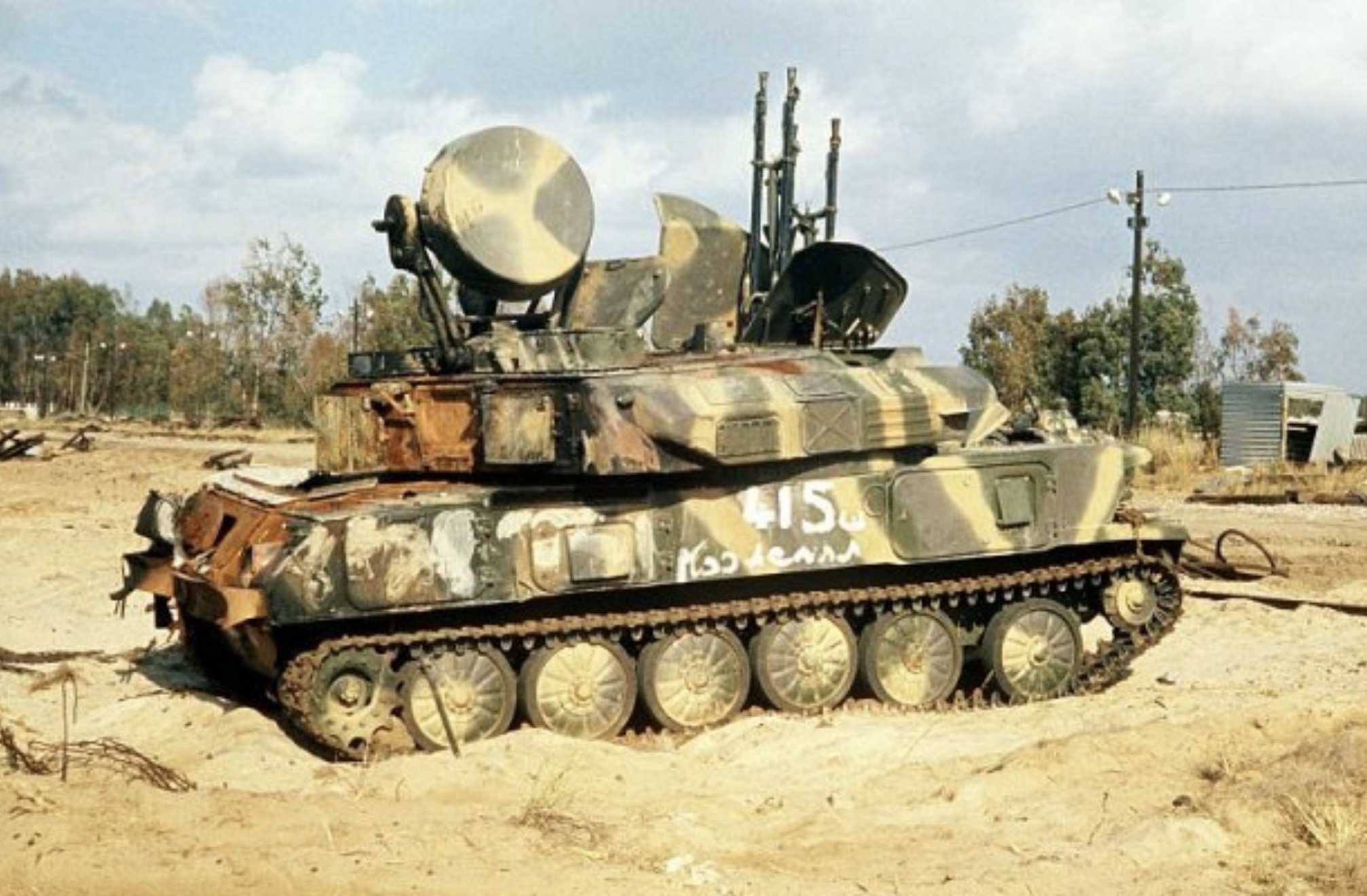
| Vehicle | Short history / description | Short specifications |
|---|---|---|
| ZSU-23-4M “Shilka” | Soviet tracked self-propelled anti-aircraft gun used by Iraq as part of its Ba’ath-era air-defence network. The ZSU-23-4M was an improved Shilka variant with modernised 2A7M autocannons and reliability upgrades over earlier models. The key visual difference from the V version can be seen on the turret cheeks. The distinctive turret cheek housings on the ZSU-23-4M are ventilation-system covers, giving the M version the more familiar Shilka appearance. | Type: tracked self-propelled anti-aircraft gun. Crew: 4. Weight: around 19–21 t depending on variant. Armament: four 23 mm 2A7M autocannons in the AZP-23 “Amur” mount. Ammunition: around 2,000 rounds of 23×152 mm ammunition. Ammunition types: HEI/HEI-T and API-T. Rate of fire: around 3,400–4,000 rpm combined. Effective range: about 2–2.5 km against air targets; longer maximum ballistic range. Elevation: roughly -4° to +85°. Turret traverse: 360°. Radar: RPK-2 / 1RL33 “Gun Dish” fire-control radar, with search and tracking capability against low-flying aircraft. Engine: V-6R/V-6R-1 diesel, around 280 hp. Speed: around 50 km/h on road. Range: roughly 450 km on road. Suspension: torsion bar. Armour: light welded steel, around 9–15 mm. Protection: resistant only to small arms and shell fragments. Special features: radar-guided fire, optical backup sighting, stabilised turret, NBC protection and smoke equipment depending on vehicle fit. |
Read more: NVA Fla-SFL 23/4 - #2 by Little_relaxed45-psn
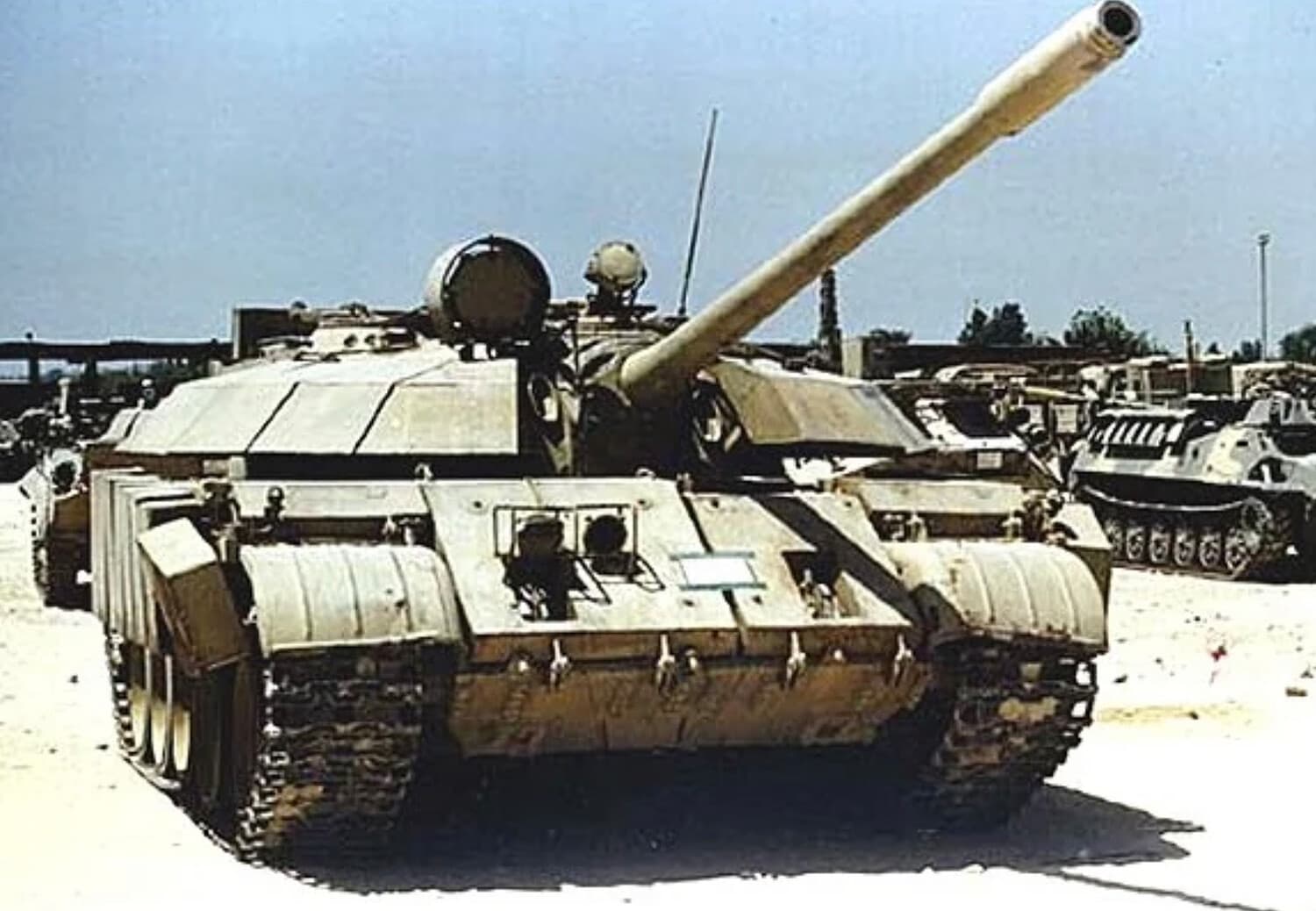
| Vehicle | Short history / description | Short specifications |
|---|---|---|
| T-55 Enigma / Al-Faw | This was an Iraqi armour upgrade for T-55-family tanks , using large armour boxes fitted around the turret and hull. These boxes were filled with layered rubber-and-metal sandwich armour. Despite its crude appearance, the upgrade proved surprisingly effective and was reportedly capable of defeating some modern ATGMs. However, the added weight had a noticeable impact on the vehicle’s mobility. The counterweight on the rear of the turret was added to distribute the added armour weight more evenly across the turret ring and to assist the turret slewing mechanism when operating on slopes. | Type: upgraded medium tank / MBT. Crew: 4. Weight: about 41 t. Armament: 100 mm D-10T2 gun, 7.62 mm MG, optional 12.7 mm DShK. Protection: large spaced/composite armour blocks. Engine: standard T-55-family diesel, no major power upgrade (as far as the evidence goes). |
Read more: T--55 "Al-Faw" – The Iraqi Enigma
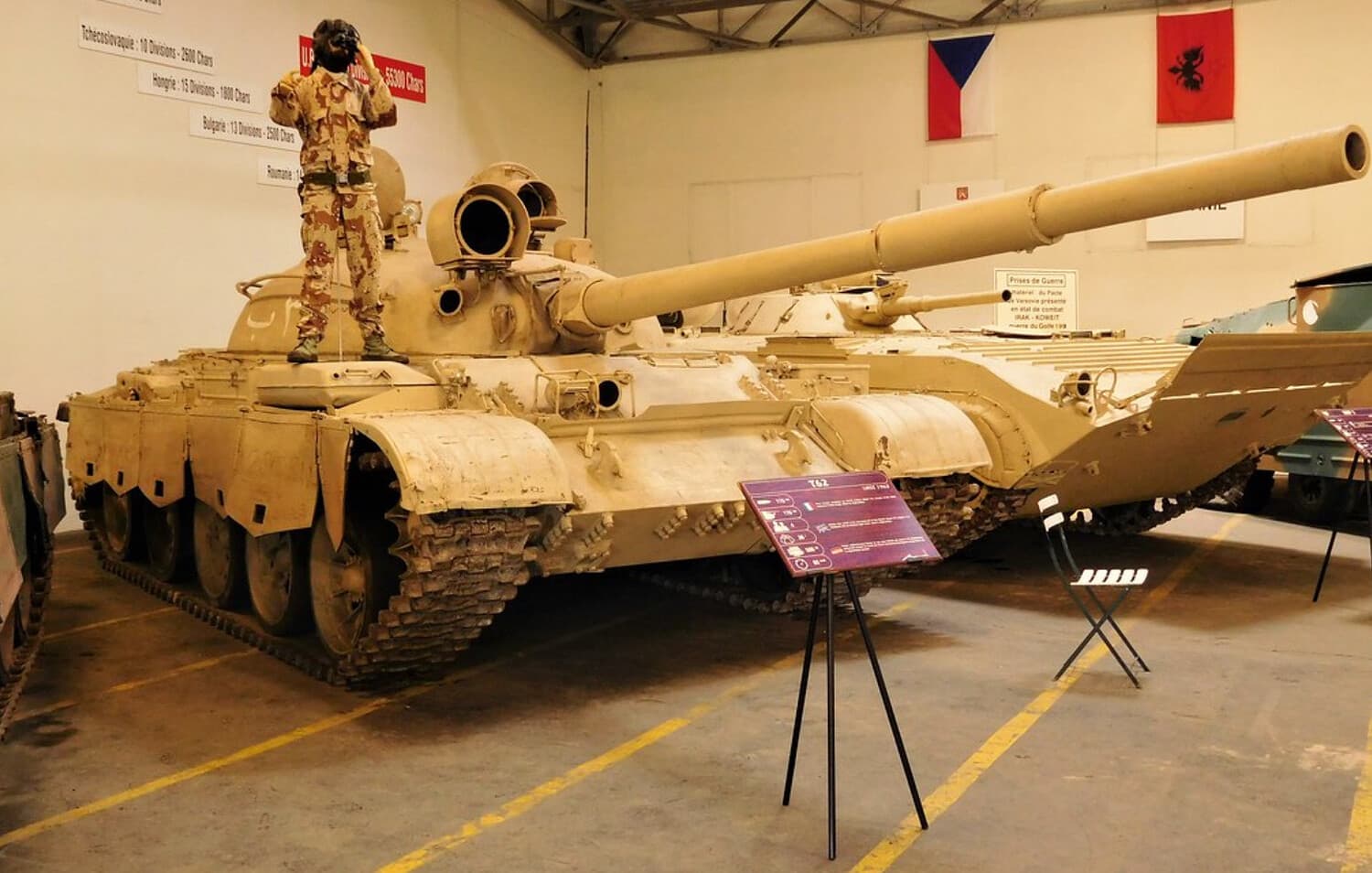
| Vehicle | Short history / description | Short specifications |
|---|---|---|
| T-62 Model 1972 | Iraqi modification of the standard T-62 Model 1972. Unlike the Kontakt-1-equipped version, this vehicle is a simpler modification fitted with Chinese side skirts and armoured shields around the infrared searchlights. Iraq modified a number of T-62s in this way. | Type: main battle tank. Crew: 4. Weight: around 37 t. Armament: 115 mm U-5TS smoothbore gun, 7.62 mm PKT coaxial MG, 12.7 mm DShK AA MG. Ammunition: APFSDS, HEAT-FS, HE. Engine: V-55V diesel, about 580 hp. Speed: around 50 km/h. Protection: standard T-62 armour, side skirts and armoured searchlight shields. |
Read more: Iraqi T-62 Model 1972 (Kontakt-1) – A Rare Iraqi T-62 Modernization
| Vehicle | Short history / description | Short specifications |
|---|---|---|
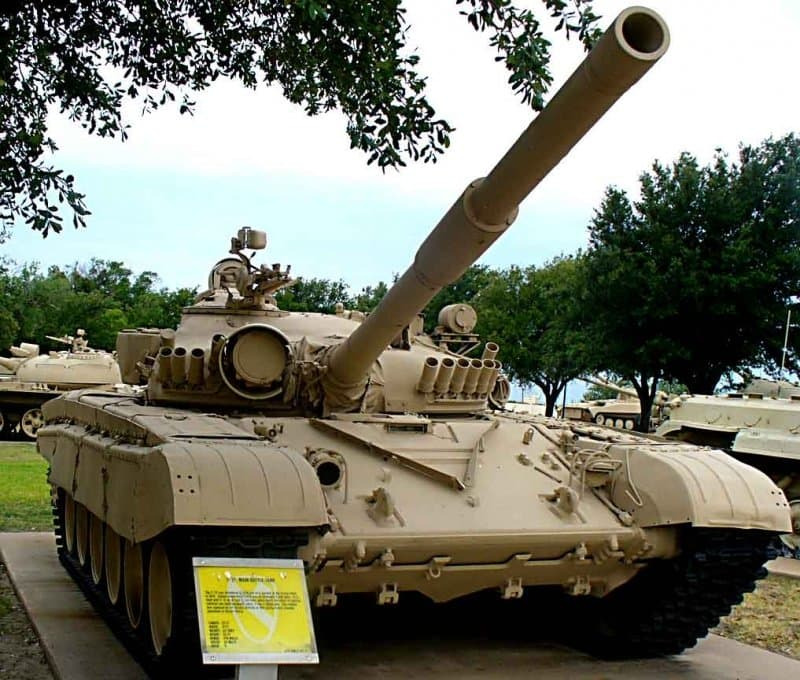
| Asad Babil | This is an Iraqi-assembled T-72M1 , commonly known as the Lion of Babylon. Compared to a standard T-72M1, it reportedly features a weaker or differently designed armour package, but is fitted with an ATGM spoofing system. Some sources also claim that certain vehicles were equipped with French thermal optics. | Type: MBT. Crew: 3. Weight: about 41.5 t. Armament: 125 mm 2A46-series smoothbore, autoloader, 7.62 mm PKT, 12.7 mm AA MG. Engine: V-12 diesel, around 780 hp. Speed: around 60 km/h. Base: T-72M1. |
Read more: Asad Bābil: The Iraqi Lion
| Vehicle | Short history / description | Short specifications |
|---|---|---|
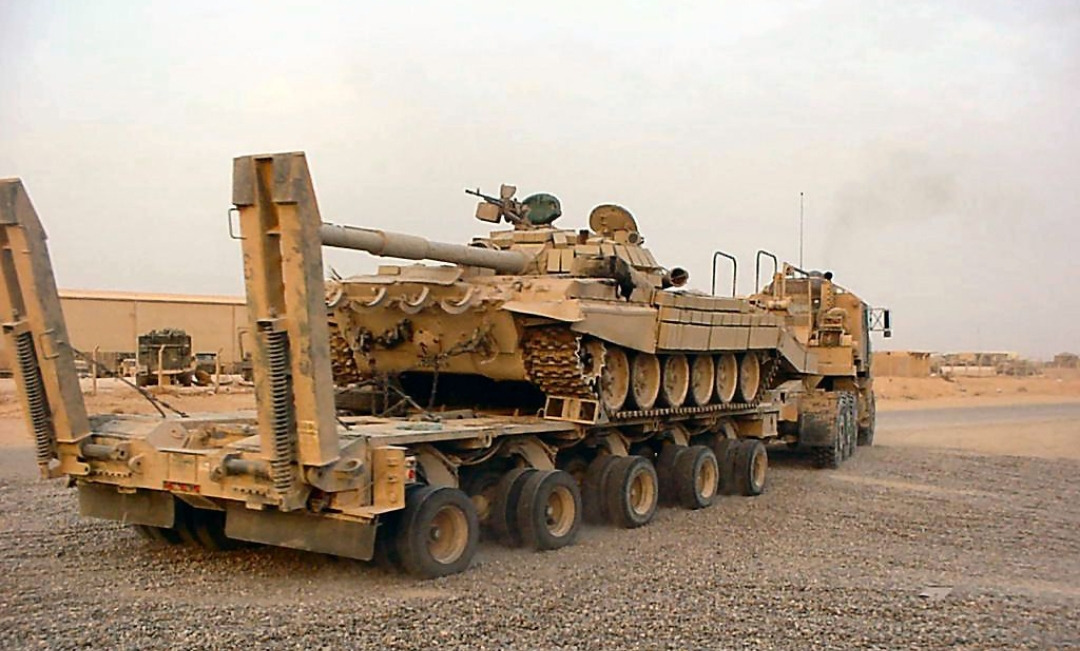
| T-72 (Kontakt-1) | Rare Iraqi ERA-equipped early T-72 configuration. This is essentially a T-72 Ural with Kontakt-1. It does not have smoke grenade launchers and is not equipped with a laser rangefinder. | Type: MBT. Crew: 3. Armament: 125 mm 2A46 smoothbore, 22-round carousel autoloader, PKT coaxial MG, 12.7 mm AA MG. Protection: T-72 Ural armour plus locally fitted ERA blocks. Engine: V-46 diesel, about 780 hp. Speed: around 60 km/h. |
Read more: Iraqi T-72M1 (Kontakt-1) – A Rare Iraqi T-72 Modernization
| Vehicle | Short history / description | Short specifications |
|---|---|---|
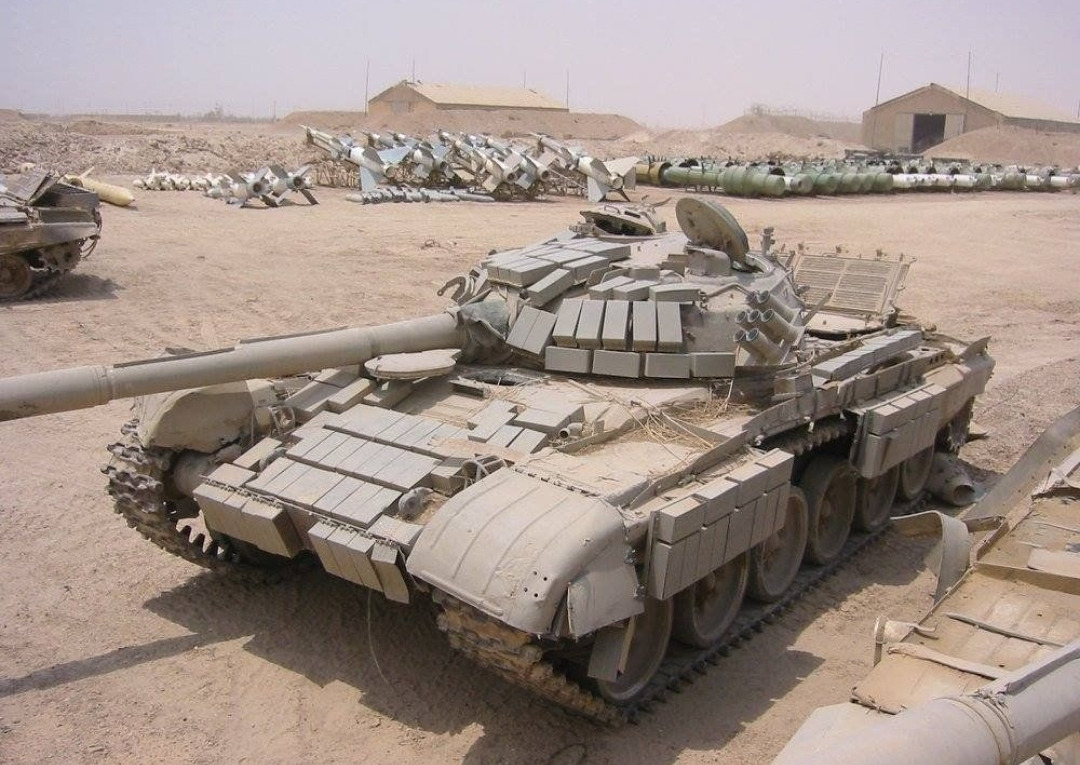
| T-72M1 (Kontakt-1) | Later Iraqi ERA-equipped T-72M1. It is effectively a T-72M1 fitted with a Kontakt-1-style ERA package , arranged to resemble the armour layout of a T-72S . However, the exact origin of these ERA blocks is unknown. | Type: MBT. Crew: 3. Weight: around 41–42 t before ERA. Armament: 125 mm 2A46 smoothbore, 22-round autoloader, PKT, 12.7 mm NSVT. FCS: TPD-K1 laser rangefinder. Protection: export T-72M1 armour plus ERA. Engine: V-46-6, 780 hp. |
Read more: Iraqi T-72M1 (Kontakt-1) – A Rare Iraqi T-72 Modernization
| Vehicle | history / description | specifications |
|---|---|---|
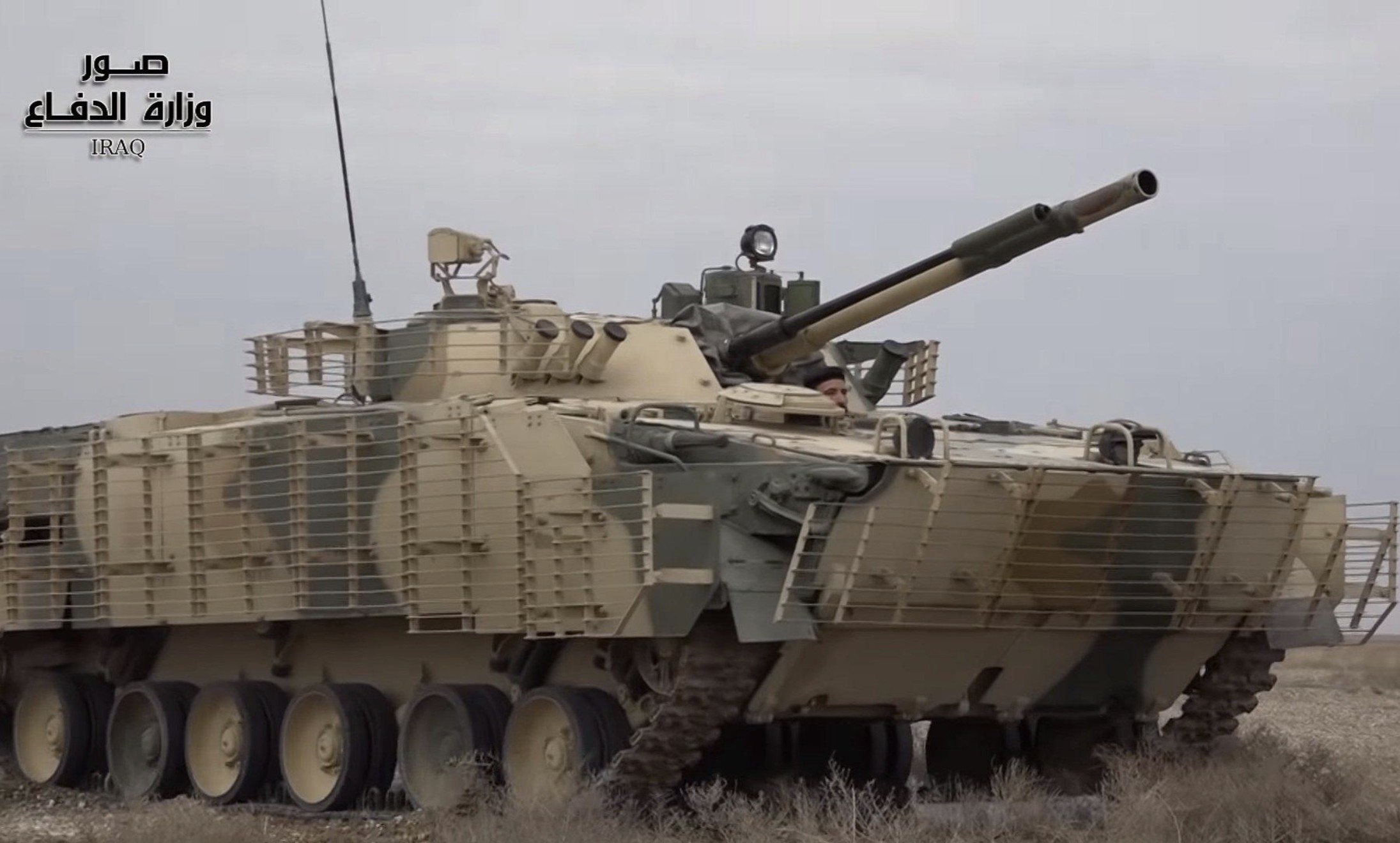
| BMP-3M | Modern Russian infantry fighting vehicle supplied to the post-2003 Iraqi Army. Iraqi BMP-3M vehicles are late export vehicles, visually fitted with add-on/slat armour around the hull and turret. Deliveries began in 2018, with Iraq ordering a large batch from Russia. | Type: amphibious IFV. Crew: 3. Passengers: 7. Weight: ~22 t. Armament: 100 mm 2A70 gun-launcher, 30 mm 2A72 autocannon, 7.62 mm coaxial MG, two 7.62 mm bow MGs. Ammo: 100 mm HE-Frag, ATGMs, 30 mm AP/HE. Missile: 9M117-series laser-guided ATGM. Protection: aluminium/steel armour with add-on/slat armour. Engine: UTD-32 diesel, ~660 hp. Speed: ~70 km/h road, ~10 km/h water. Key features: thermal sight, stabilised weapons, amphibious, heavy IFV firepower, light armour. |
Read more: BMP-3 | War Thunder Wiki
| Vehicle | Short history / description | Short specifications |
|---|---|---|
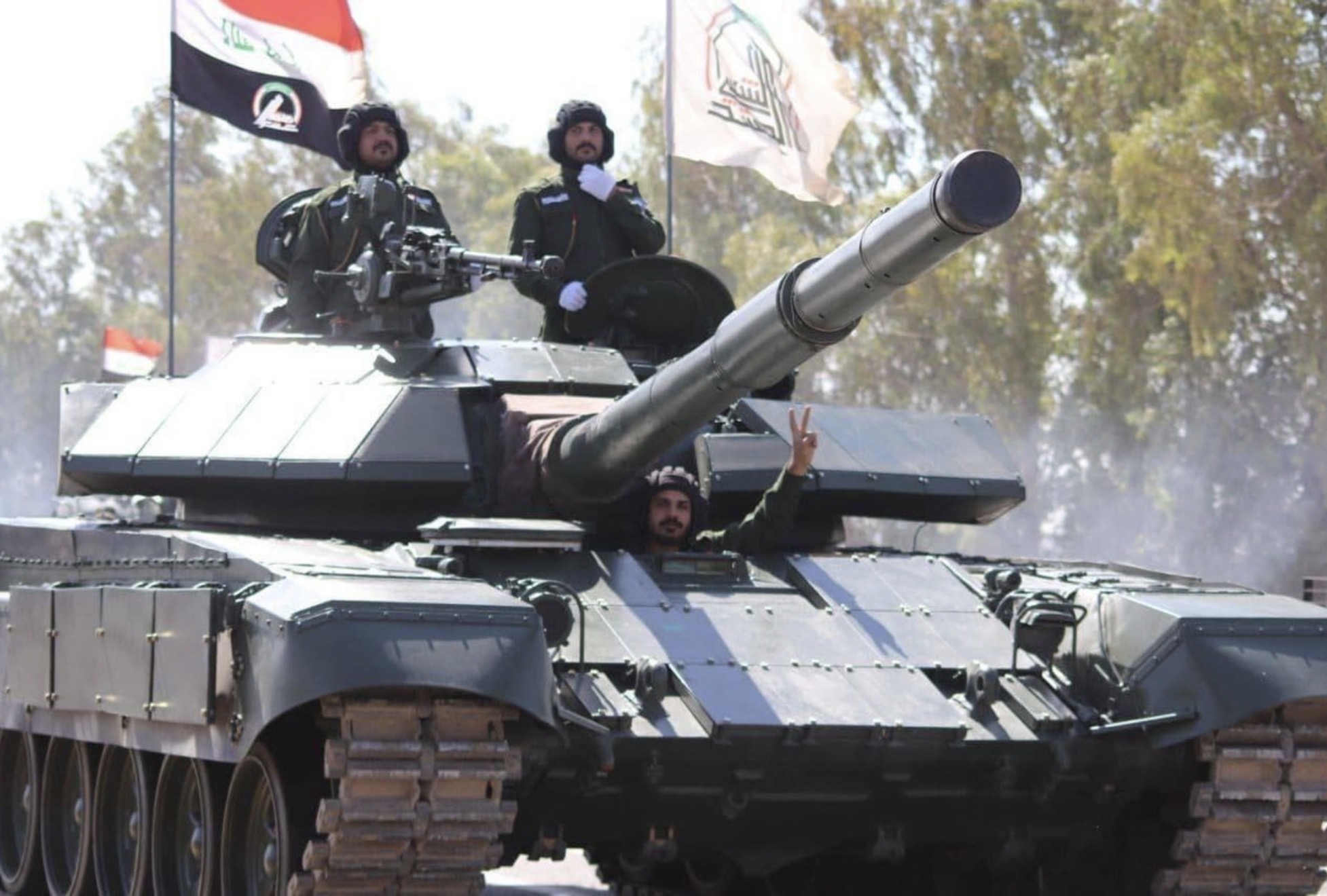
| T-72M Rakhsh | Iranian modernization package for older T-72M/T-72M1 tanks, sometimes described as a cheaper alternative to the Iranian Karrar upgrade. Iraqi examples were shown by the Popular Mobilization Forces / PMF around 2021, reportedly with Iranian assistance. The Iraqi/PMF vehicles appear to use the improved armour and sighting package, but lack the roof-mounted remote weapon station. | Type: upgraded main battle tank. Crew: 3. Chassis: T-72M/T-72M1. Weight: estimated ~43–46 t depending on armour package. Engine: likely V-46 diesel, 780 hp, unless upgraded locally. Speed: roughly 55–60 km/h road. Main armament: 125 mm 2A46 smoothbore gun with carousel autoloader. Ready ammunition: 22 rounds in carousel, about 39–44 rounds total depending on configuration. Ammunition: APFSDS, HEAT-FS and HE-FRAG; gun-launched ATGM capability is possible on fuller Iranian/Karrar-level packages but not clearly confirmed for Iraqi PMF vehicles. Secondary armament: 7.62 mm PKT coaxial MG, 12.7 mm roof MG or possible RWS depending on vehicle; Iraqi examples may lack RWS. Fire-control: upgraded gunner sight, likely thermal/night capability; some Iranian descriptions mention improved sighting and a thermal imager for the driver. Protection: new turret and hull armour package with ERA, likely Kontakt-5-style or Iranian ERA blocks; extra side protection. Smoke launchers: likely retained or modernized depending on vehicle. Key features: much better protection and optics than a baseline Iraqi T-72M1, but still based on the older T-72 hull, with uncertain ammunition quality, uncertain ATGM capability, and unclear standardization across Iraqi examples. |
Read more: Iran Gave Upgraded Tanks To Its Iraqi Proxies | 21st Century Asian Arms Race
| Vehicle | Short history / description | Short specifications |
|---|---|---|
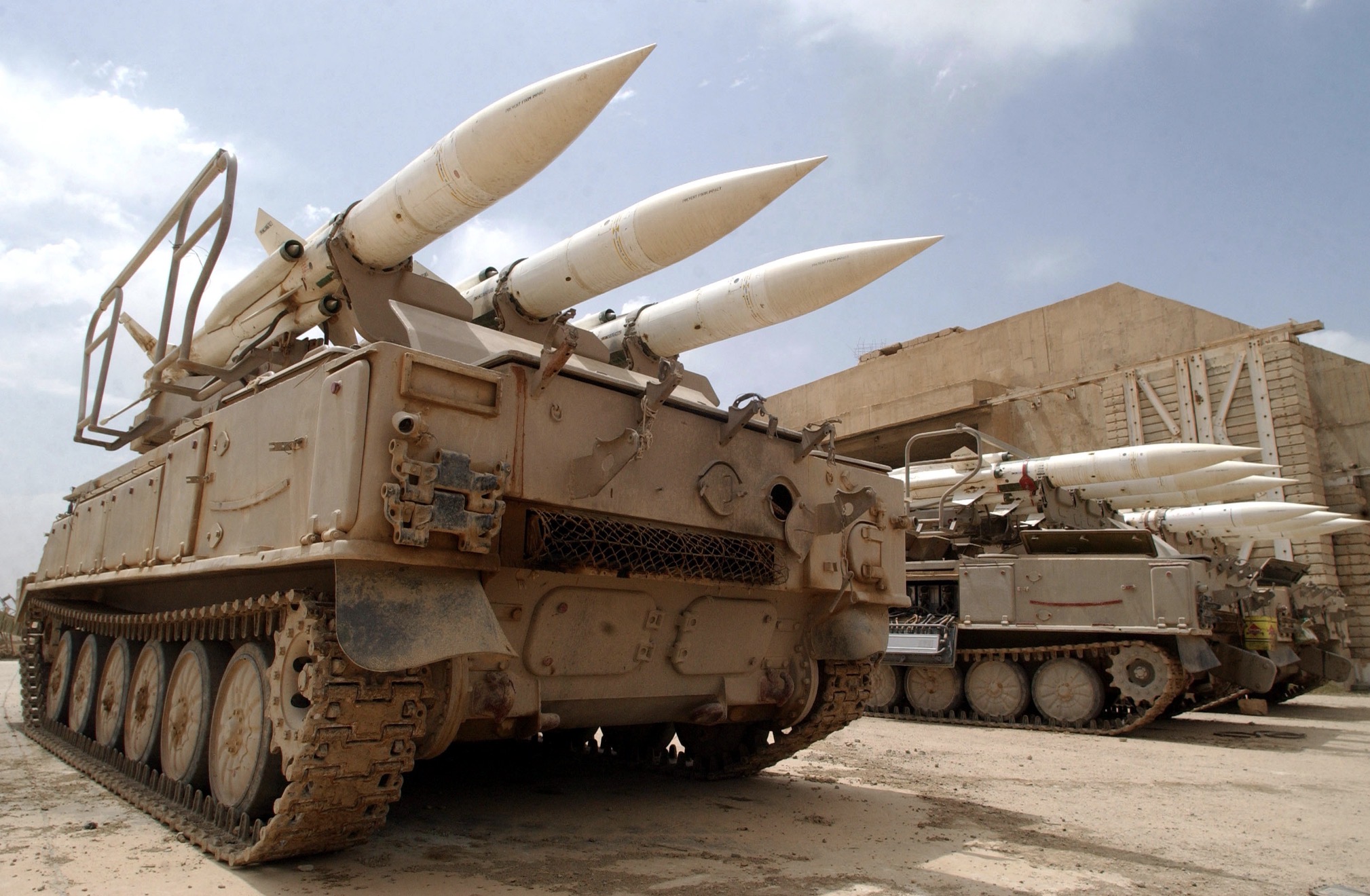
| 2K12E “Kvadrat” / SA-6 Gainful | Export version of the Soviet 2K12 Kub mobile surface-to-air missile system. Iraq used the Kvadrat as part of its Ba’ath-era air-defence network, where it provided medium-range mobile protection against aircraft. The system consisted of a tracked missile launcher, radar vehicle, transloader and support vehicles. It was one of Iraq’s main Soviet-supplied mobile SAM systems during the Iran–Iraq War, the 1991 Gulf War and the period leading up to the 2003 invasion. | Type: mobile medium-range surface-to-air missile system. Launcher vehicle: 2P25ME tracked TEL. Crew: 3. Weight: around 19.5 t with missiles. Chassis: GM-578 tracked chassis. Armament: three 3M9-series surface-to-air missiles. Missile weight: around 600 kg. Warhead: around 57 kg blast-fragmentation warhead with proximity fuze. Guidance: command guidance with terminal semi-active radar homing. Radar vehicle: 1S91 “Straight Flush” radar for search, tracking and target illumination. Engagement range: roughly 4–24 km depending on missile version. Engagement altitude: roughly 100 m to 7–14 km depending on missile version. Missile speed: around Mach 2.8. Reload vehicle: 2T7-series transloader. Road speed: around 45–50 km/h. Deployment time: around 5 minutes. Protection: lightly armoured tracked chassis, vulnerable to aircraft, artillery and autocannon fire. |
Read more: 2K12 “Kub-M3” SA-6 “Gainful” — The Three Fingers of Death
| Vehicle | Short history / description | Short specifications |
|---|---|---|
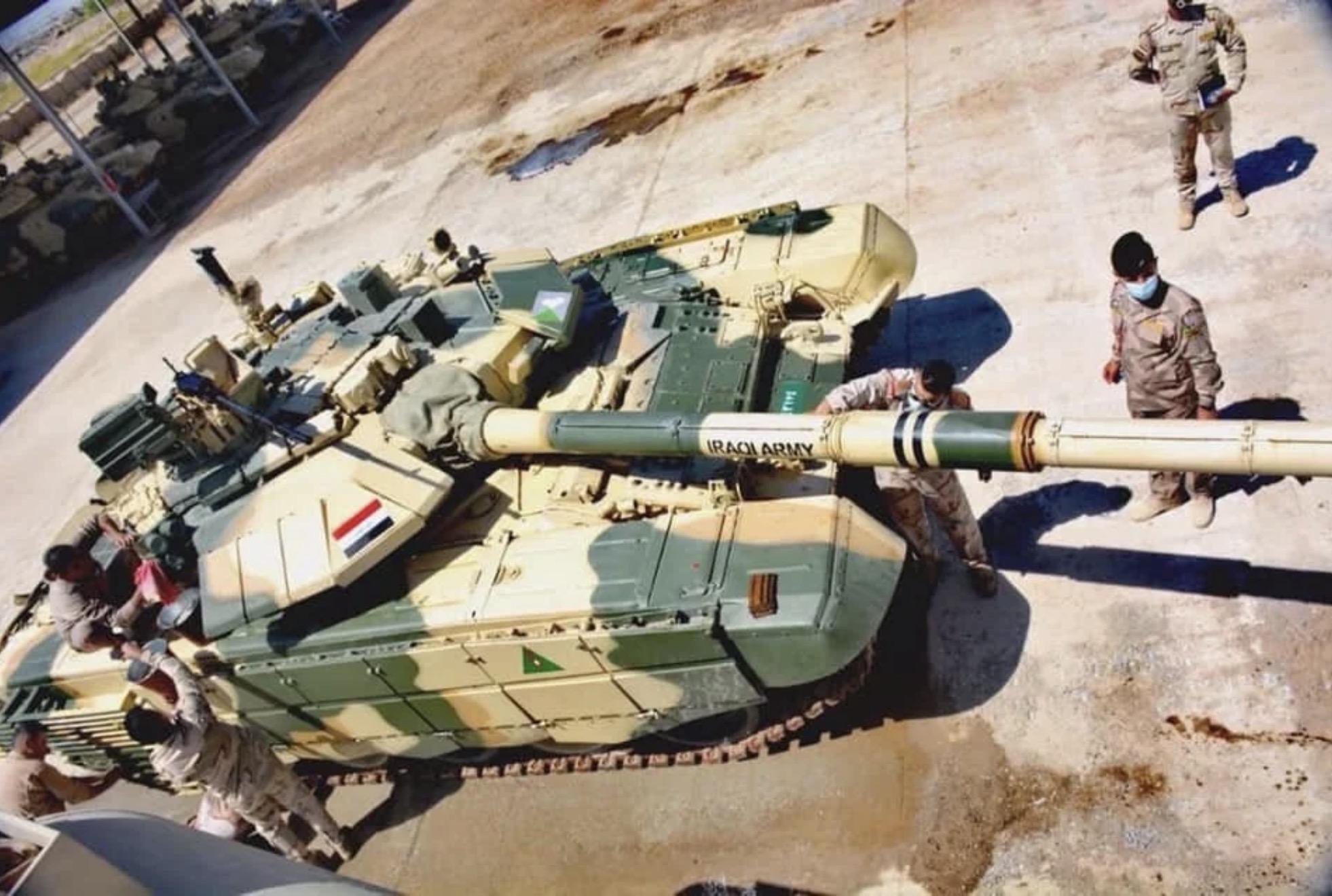
| T-90S | Russian export main battle tank supplied to the post-2003 Iraqi Army. Iraqi T-90S tanks are late-production vehicles with the later welded turret, Relikt-style ERA side skirts and slat armour around the engine bay. They became some of Iraq’s most modern armoured vehicles, acquired partly due to the restrictions placed on the use of U.S.-supplied M1A1 Abrams MBTs. | Type: main battle tank. Crew: 3. Weight: ~46–48 t. Armament: 125 mm 2A46M smoothbore gun, 7.62 mm coaxial MG, 12.7 mm roof MG. Ammo: APFSDS, HEAT-FS, HE-FRAG, ATGMs. Protection: composite armour, ERA, Relikt-style side skirts, rear slat armour. Engine: V-92S2 diesel, ~1,000 hp. Speed: ~60 km/h. Key features: autoloader, thermal sight, laser rangefinder, laser warning receivers, stabilised gun, smoke launchers, Shtora-style dazzlers replaced with ERA. |
Read more: Почему элитные иракские танкисты выбрали Т-90 вместо "Абрамсов" - Российская газета
| Vehicle | Short history / description | Short specifications |
|---|---|---|
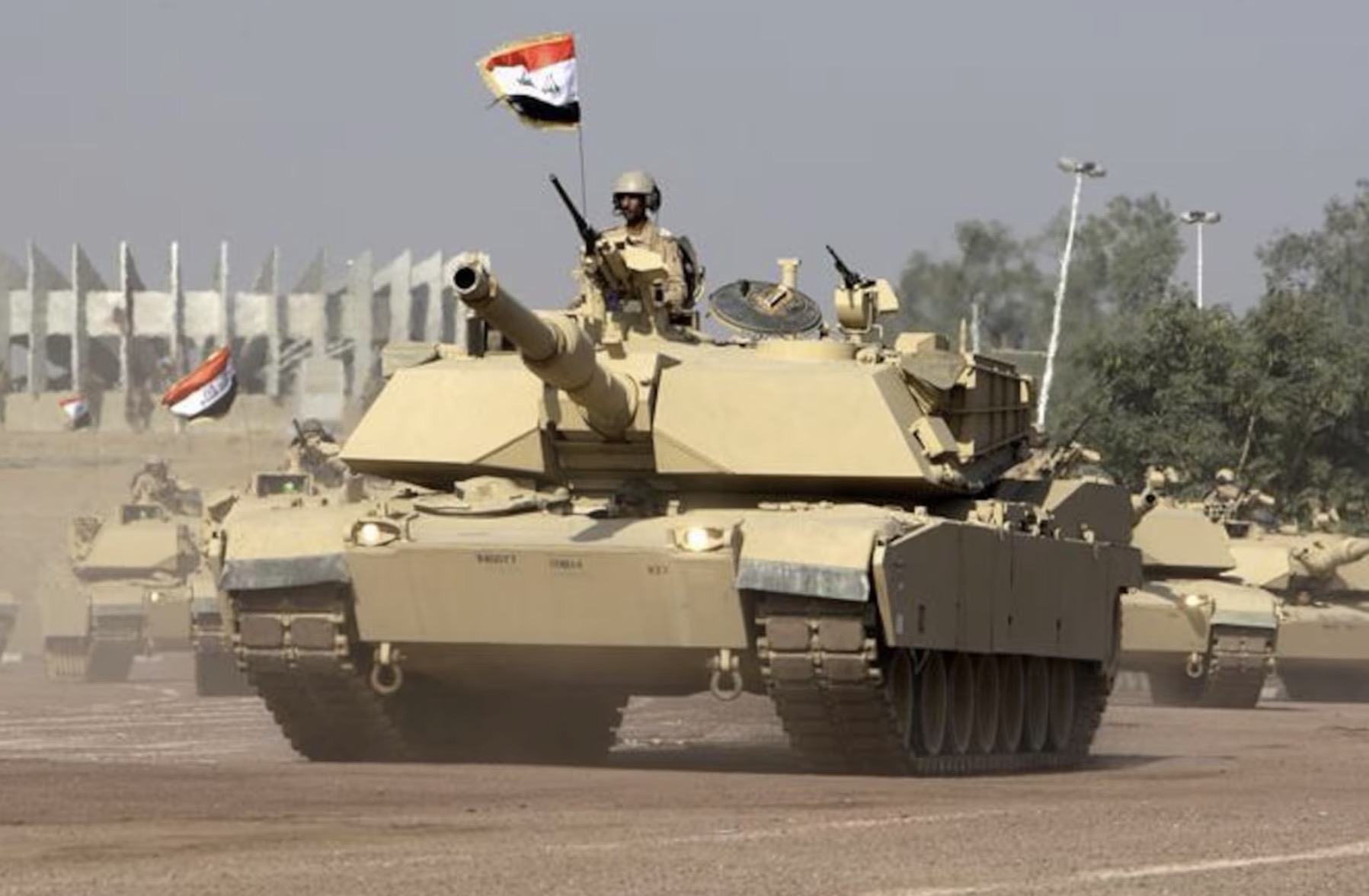
| M1A1M Abrams | Export version of the American M1A1 Abrams supplied to the post-2003 Iraqi Army. The Iraqi M1A1M kept the main Abrams layout and 120 mm gun, but lacked some sensitive U.S. equipment and did not use depleted-uranium armour. It became one of the most modern tanks in Iraqi service. | Type: main battle tank. Crew: 4. Weight: ~63 t. Armament: 120 mm M256 smoothbore gun, 7.62 mm coaxial MG, 7.62 mm loader’s MG, 12.7 mm M2HB commander’s MG. Ammo: APFSDS, HEAT-MP, canister depending supply. Armour: composite armour, export non-DU package. Engine: Honeywell AGT1500 gas turbine, 1,500 hp. Speed: ~67 km/h. Key features: stabilised 120 mm gun, thermal sights, laser rangefinder, strong mobility, heavy fuel and maintenance demands. |
Read more: M1A1 | War Thunder Wiki
Premium:
Spoiler

| Vehicle | history / description | specifications |
|---|---|---|
| Iraqi motor-trike with ZPU-1 / 14.5 mm KPV | Improvised Iraqi light technical made by mounting a single 14.5 mm KPV/ZPU-1 anti-aircraft gun on the rear cargo bed of a three-wheeled motorcycle or motor-trike. I have included this vehicle officially to give the lower tiers some extra anti-air capability, and unofficially, just for a laugh. I mean, look at it. It actually looks surprisingly decent. Both the gunner and driver can sit on the vehicle at the same time, and I honestly would not be surprised if it turned out to be a relatively stable design. | Type: improvised motor-trike technical / very light SPAAG. Crew: estimated 2; driver, gunner, and possible ammunition handler. Chassis: civilian three-wheeled cargo motorcycle or tuk-tuk-style motorbike; exact model unknown. Drive: usually rear-wheel drive / motorcycle drivetrain. Protection: none; crew fully exposed. Armament: 1 × 14.5 mm KPV heavy machine gun on ZPU-1-type mount. Calibre: 14.5×114 mm. Feed: belt-fed, commonly 150-round belts/boxes on ZPU mounts. Ammunition types: API, API-T and incendiary/tracer types. Rate of fire: ~600 rds/min cyclic for the KPV; practical fire about ~150 rds/min in short bursts. Muzzle velocity: about 1,000–1,005 m/s. Traverse: 360° on the normal ZPU-1 mount. Elevation: about −8° to +88°. Effective range: roughly 1.4 km against air targets; practical ground-fire reach around 2–3 km, with maximum ballistic range much farther. |
Read more: …
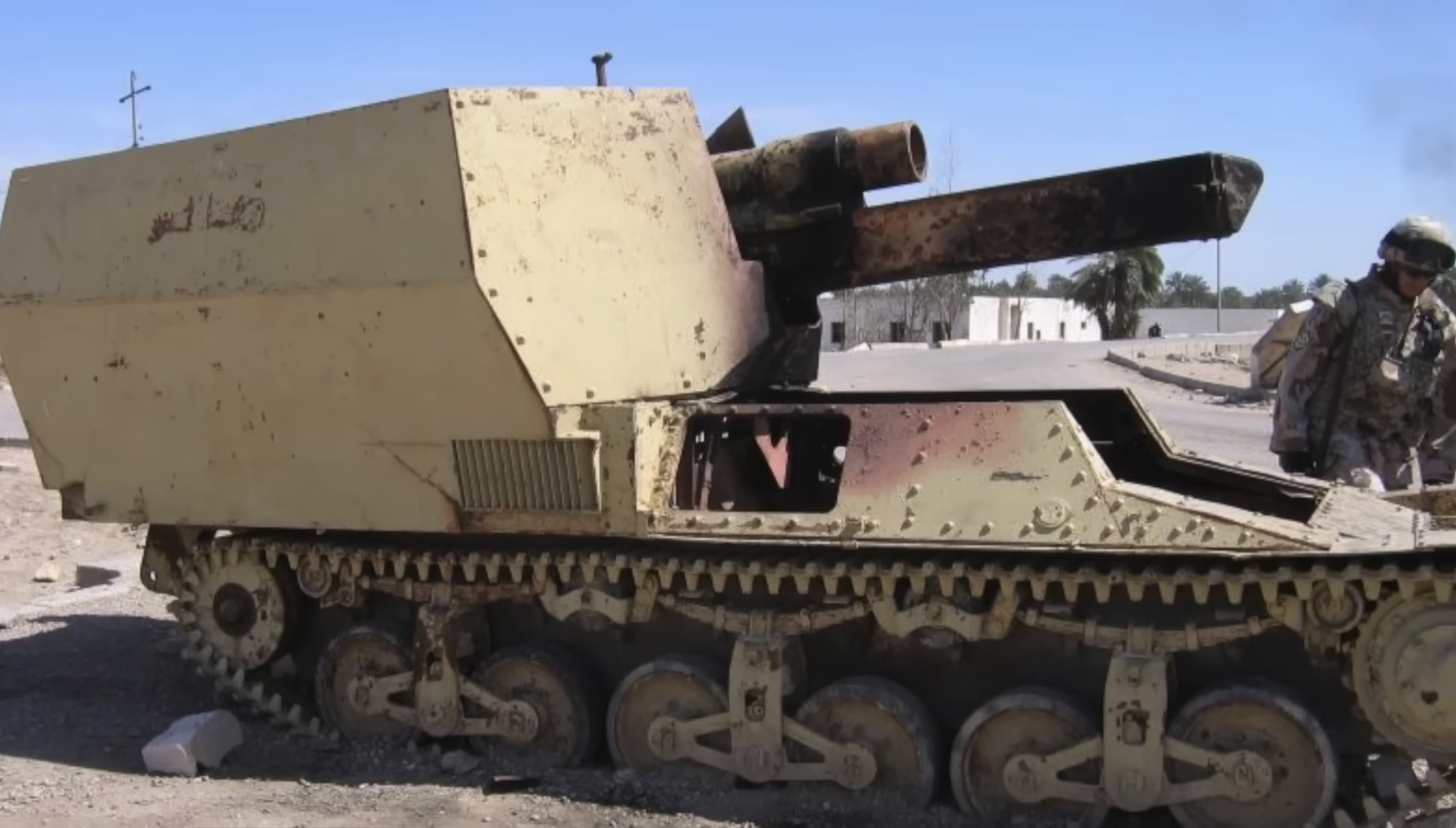
| Vehicle | history / description | specifications |
|---|---|---|
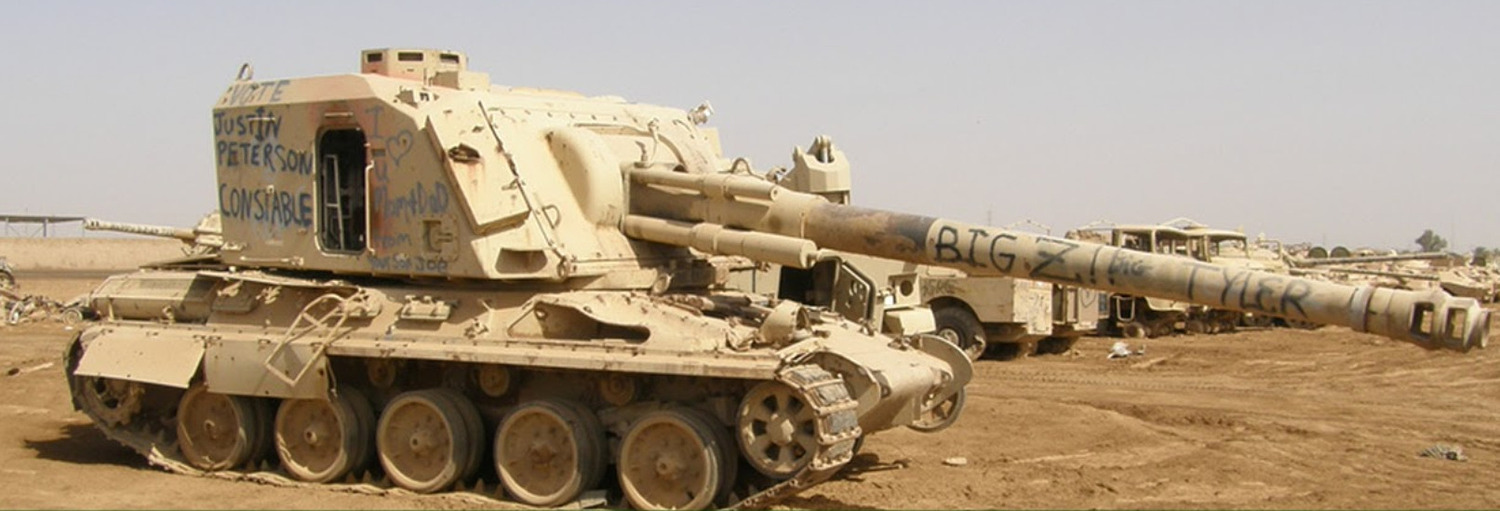
| 15 cm sFH 13/1 (Sf) auf GW Lorraine Schlepper(f) | German Second World War self-propelled gun based on the captured French Lorraine 37L chassis. It mounted the older 15 cm sFH 13/1 heavy field howitzer in a lightly armoured, open-topped casemate. A surviving example was later found in the country as a gate guardian at a military base. Its damaged barrel may indicate that it had been used by Iraqi forces at some point. | Type: self-propelled howitzer. Crew: usually 4–5. Weight: around 8.5 t. Armament: 150 mm sFH 13/1 L/17 howitzer. Ammunition: HE and smoke; limited onboard ammunition. Chassis: Lorraine 37L tracked carrier. Engine: Delahaye 103TT 6-cylinder petrol engine, around 70 hp. Speed: around 35 km/h. Range: about 120–130 km. Protection: thin armour, open-topped fighting compartment. Role: mobile artillery / indirect fire support. |
Read more: 15 cm s.F.H. 13/1 L/17 (Sfl.) auf Geschützwagen Lorraine Schlepper(f)

| Vehicle | history / description | specifications |
|---|---|---|
| M4A3(105) HVSS Sherman | American Sherman variant armed with a 105 mm howitzer and fitted with HVSS suspension. At least one example was reportedly captured by Iraq during the Iran–Iraq War. The surviving vehicle was later found by U.S. forces at an Iraqi military base during Operation Iraqi Freedom, restored, and used as a gate guardian. The tank still featured its original World War II-era U.S. markings when it was captured. | Type: medium tank / assault support tank. Crew: 5. Weight: around 33 t. Armament: 105 mm M4 howitzer, coaxial .30 cal Browning MG, bow .30 cal Browning MG, roof-mounted .50 cal M2HB. Ammunition: HE, HEAT, smoke. Ammunition carried: around 66 rounds for the 105 mm howitzer. Armour: about 63 mm hull front, 38 mm hull sides, around 76 mm turret front. Engine: Ford GAA V8 petrol engine, around 500 hp. Suspension: HVSS with wider tracks. Speed: around 40–42 km/h. Range: around 160 km. Key features: powerful 105 mm HE/HEAT, stabilised gun, improved ride and cross-country handling from HVSS. Iraqi relevance: captured from Iran and later found in Iraq by U.S. forces. |
Read more: M4A3 (105) | War Thunder Wiki
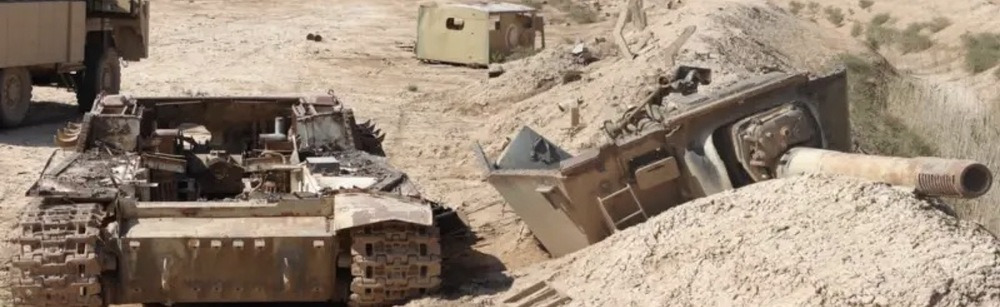
| Vehicle | history / description | specifications |
|---|---|---|
| ISU-152M | The Iraqi vehicle was most likely an ISU-152M, designated Object 241M. This was the second major modernization of the wartime ISU-152, completed in 1959 using components derived from the IS-2M. The upgrade improved mechanical reliability, operational range, observation equipment, communications, night-driving capability (the projector cage on this hulk is a giveaway), and crew working conditions while retaining the original 152 mm ML-20S gun-howitzer. At least one example is known to have been present in Iraq in 2003, although its precise origin and operational history remain uncertain. | Type: Heavy assault gun / self-propelled gun. Crew: 5. Combat weight: 46 t. Main armament: 152.4 mm ML-20S Model 1937/43 gun-howitzer. Ammunition: 20 separate-loading rounds. Secondary armament: 12.7 mm DShKM heavy machine gun with 250 rounds, fitted only to some vehicles. Sights: ST-10 direct-fire sight and Hertz panoramic sight. Direct-fire range: up to 6,200 m. Maximum indirect-fire range: approximately 13,000 m. Armour penetration: approximately 123 mm at 1,000 m with an armour-piercing projectile. Armour: 90 mm casemate front, 60 mm upper glacis, 90 mm lower glacis, 100 mm gun mantlet, 60 mm casemate rear, 30 mm roof, and 20 mm floor. Engine: V-54K-IS liquid-cooled V-12 diesel producing 520 hp. Maximum road speed: 40 km/h. Cross-country speed: approximately 18–20 km/h. Operational range: approximately 400–500 km on roads. Fuel capacity: 560 litres internally and 360 litres externally. Communications: R-113 radio and TPU R-120 intercom. Key modernization features: TPK-1 commander’s observation device, MK-4 gunner’s observation device, BVN driver’s night-vision equipment, revised engine-heating system, self-recovery log, two BDSH smoke canisters, and improved mechanical reliability. |
Read more: …
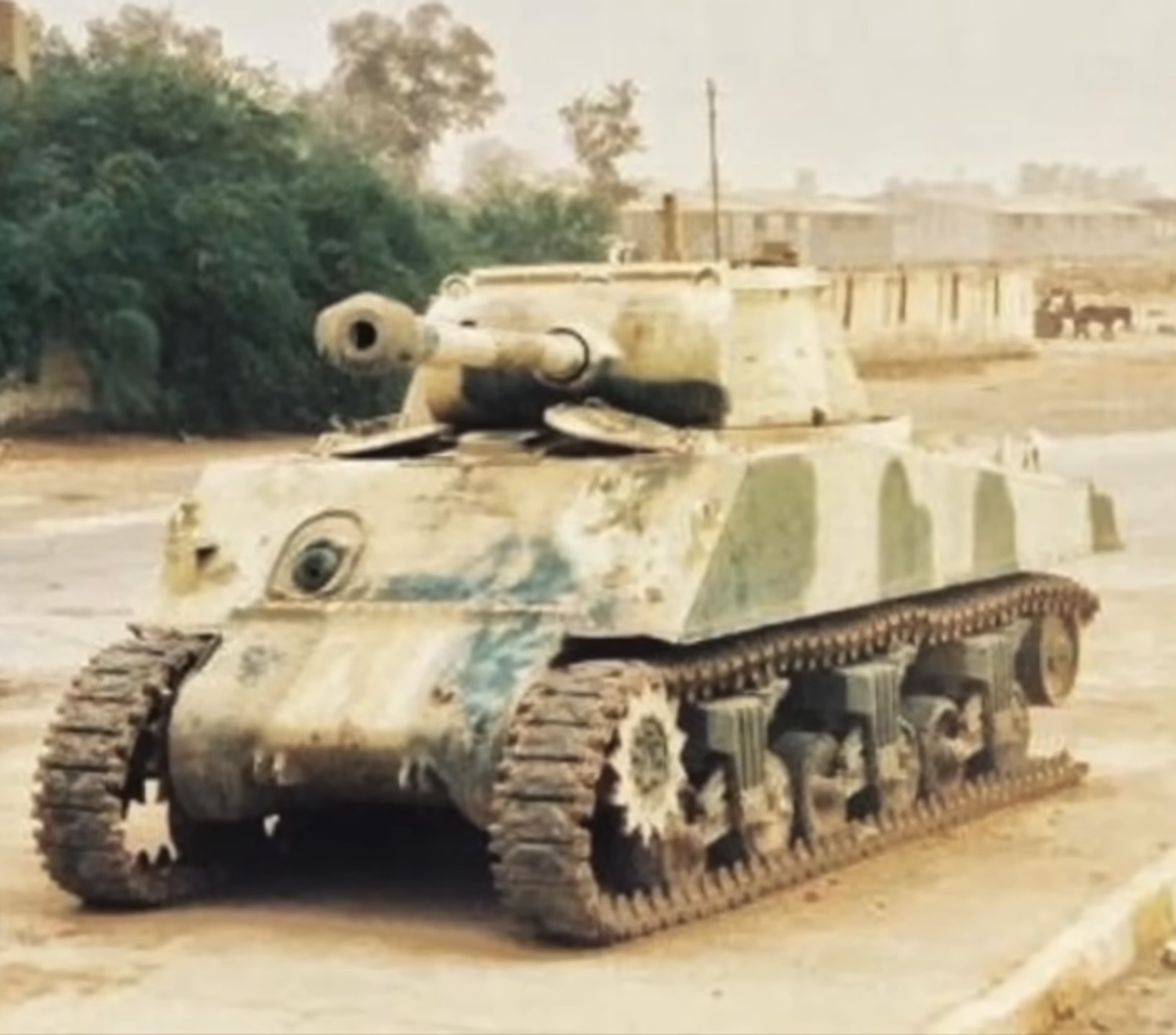
| Vehicle | history / description | specifications |
|---|---|---|
| M36B1 GMC | American tank destroyer built by mounting the M36 turret and 90 mm gun onto an M4A3 Sherman hull. The Iraqi example is a captured Iranian vehicle. Photographic captions identify at least one Iraqi-held M36B1 as having been used around Baghdad in 2003, where it was later found abandoned and apparently damaged during the fighting. | Type: tank destroyer. Crew: 5. Weight: around 30.9–31 t. Armament: 90 mm M3 gun, .50 cal M2HB machine gun, bow .30 cal machine gun retained from the M4A3 hull. Ammunition: AP, APCBC, HE, smoke, HVAP if available. Ammunition carried: around 47 rounds historically; 64 rounds in War Thunder’s M36B1 model. Hull: welded M4A3 Sherman hull. Turret: open-topped M36 turret. Armour: about 63 mm hull front, 76 mm turret front. Engine: Ford GAA V8 petrol engine, around 500 hp. Speed: around 40–48 km/h. Protection: good hull for a tank destroyer, but open-topped and vulnerable to artillery, aircraft and machine-gun fire from above. |
Read more: M36B1 | War Thunder Wiki
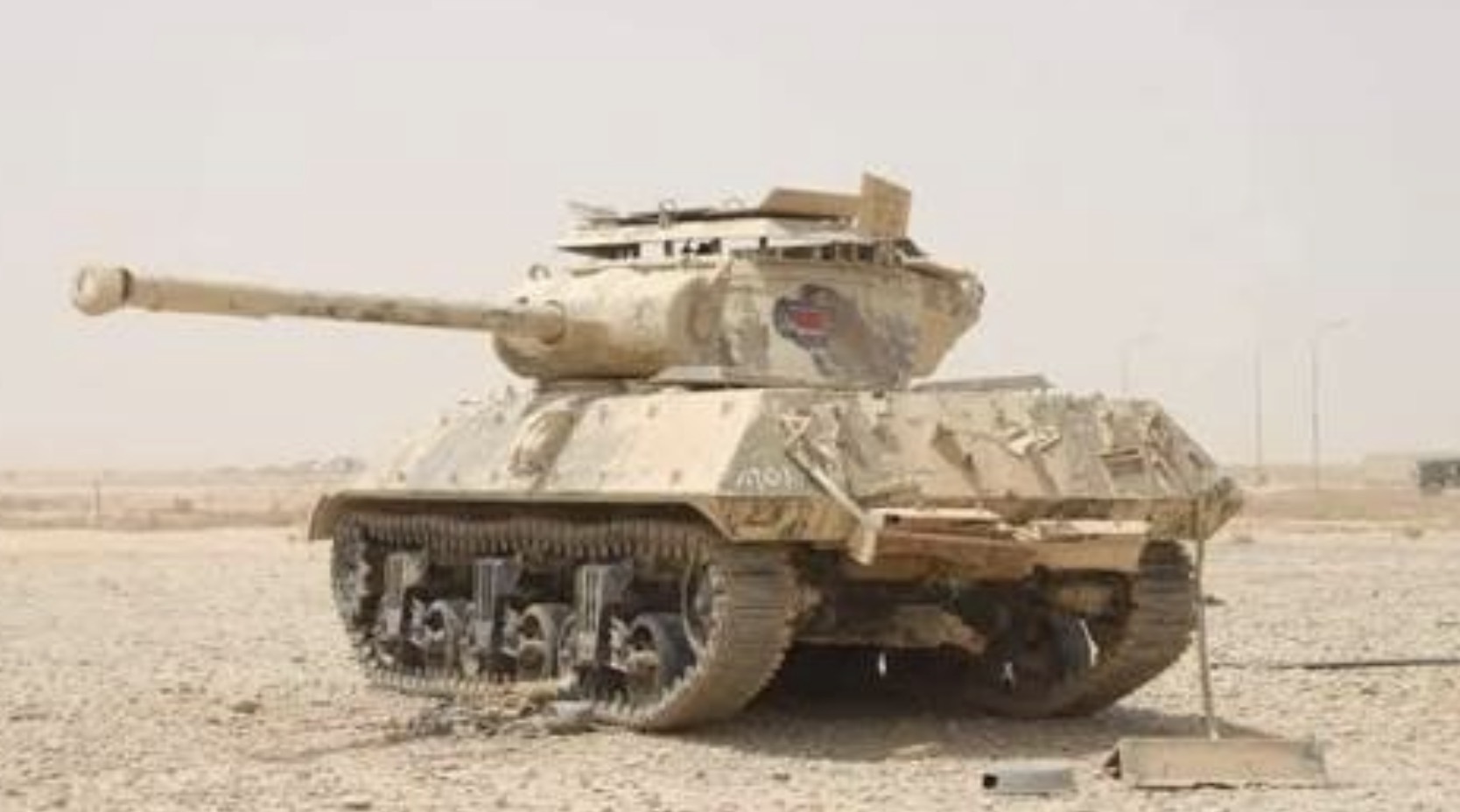
| Vehicle | history / description | specifications |
|---|---|---|
| M36B2 GMC | American tank destroyer based on the M10 GMC hull and fitted with the M36 turret armed with a 90 mm gun. The M36B2 differed from the M36B1 because it used the M10-style hull rather than the Sherman hull, and it was powered by a diesel engine. Multiple vehicles were either disabled or captured by Coalition forces. | Type: tank destroyer. Crew: 5. Weight: around 29.5–30 t. Armament: 90 mm M3 gun, .50 cal M2HB heavy machine gun. Ammunition: AP, APCBC, HE, smoke, HVAP if available, and post-war HEAT depending on ammunition supply. Ammunition carried: around 47 rounds. Hull: M10-style welded hull. Turret: open-topped M36 turret, sometimes fitted with an armoured roof kit. Armour: around 38–51 mm on the hull front, around 76 mm on the turret front. Engine: General Motors 6046 twin diesel engine, around 375 hp. Speed: around 40–48 km/h on road. Range: roughly 240 km. Suspension: vertical volute spring suspension. Protection: lightly armoured and open-topped, vulnerable to artillery, aircraft and machine-gun fire from above. Strengths: powerful 90 mm gun, good penetration for its rank, decent mobility. Weaknesses: thin armour, exposed crew, slow turret traverse and poor survivability. |
Read more: M36B2 | War Thunder Wiki

| Vehicle | history / description | specifications |
|---|---|---|
| M53/59 Praga P793 | Iraqi upgraded version of the Czechoslovak M53/59 Praga SPAAG. The original M53/59 used twin 30 mm cannons, but Iraq converted some vehicles with a Chinese/NORINCO P793-type twin 37 mm gun system, to simplify ammunition supply and improve firepower. The M53/59 itself was already used by Iraq, including around the Gulf War period. | Type: wheeled SPAAG / fire-support vehicle. Crew: 4–5 estimated. Chassis: Praga V3S-based 6×6 armoured truck. Weight: base M53/59 about 10.3 t, likely slightly heavier with the P793 gun mount. Armour: light steel armour, around 6–10 mm, mainly against small arms and fragments. Engine: Tatra T912-2 6-cylinder diesel, about 110 hp. Speed: about 60 km/h road. Range: about 500 km. Armament: 2 × 37 mm P793 Type B autocannons. Ammunition: 37×252 mm-type AA ammunition, HE/frag and AP-type rounds depending on supply. Rate of fire: about 380 rds/min per barrel cyclic. Muzzle velocity: about 1,000 m/s. Effective AA range: about 4 km. Practical ground range: about 3.5 km. Traverse: 360°. Elevation: roughly −10° to +85°. Fire-control: optical/electro-optical sighting only; no onboard radar. |
Read more: …
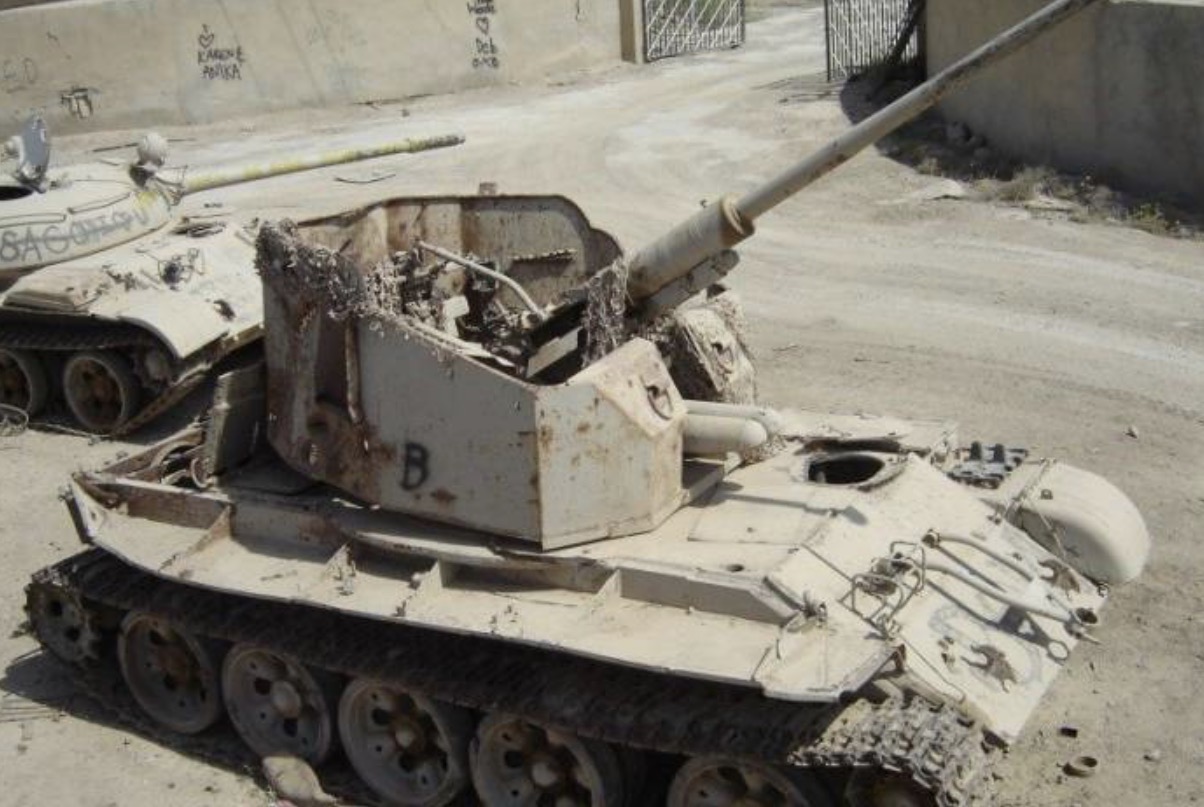
| Vehicle | history / description | specifications |
|---|---|---|
| ZSU-57-1 / T-55/S-60 | Improvised Iraqi heavy fire-support / anti-aircraft vehicle, not a standard Soviet production type. Essentially a T-55 tank chassis with the turret removed and a single 57 mm AZP S-60 anti-aircraft gun mounted in an armoured fighting compartment. | Type: improvised tracked SPAAG / fire-support vehicle. Crew: estimated 4–6, with driver in hull and gun crew in the armoured open fighting compartment; exact crew not published. Chassis: T-55 MBT hull. Engine: V-55/V-54 V-12 diesel, commonly 500–580 hp depending on hull variant. Weight: estimated ~32–38 t; base T-55 is ~36 t before turret removal and S-60/armour conversion. Speed: likely up to ~45–48 km/h road using T-55 drivetrain. Range: likely up to ~400–500 km on road depending on fuel and conversion weight. Armour: T-55 welded steel hull; typical hull protection about 100–120 mm front, ~79 mm upper side, 60 mm rear; gun crew protected by added armour plates, probably open-top/lightly protected against small arms and fragments. Armament: 1 × 57 mm AZP S-60 autocannon. Ammunition: 57×347/348 mm SR, fed by 4-round clips; HE, HEI-T, FRAG-T and AP/APC-T types. Rate of fire: ~70 rds/min practical, 105–120 rds/min cyclic. Muzzle velocity: ~1,000 m/s. Elevation: about −2/−4° to +85/+87°. Traverse: 360° if mount is unobstructed. Effective AA range: ~4 km optical, up to ~6 km with radar/fire-control system; this Iraqi conversion appears to lack radar, so practical AA capability is limited. Ground/direct-fire range: often quoted up to ~3–5.5 km sighting range, with maximum horizontal fire up to ~12 km. |
Read more: …
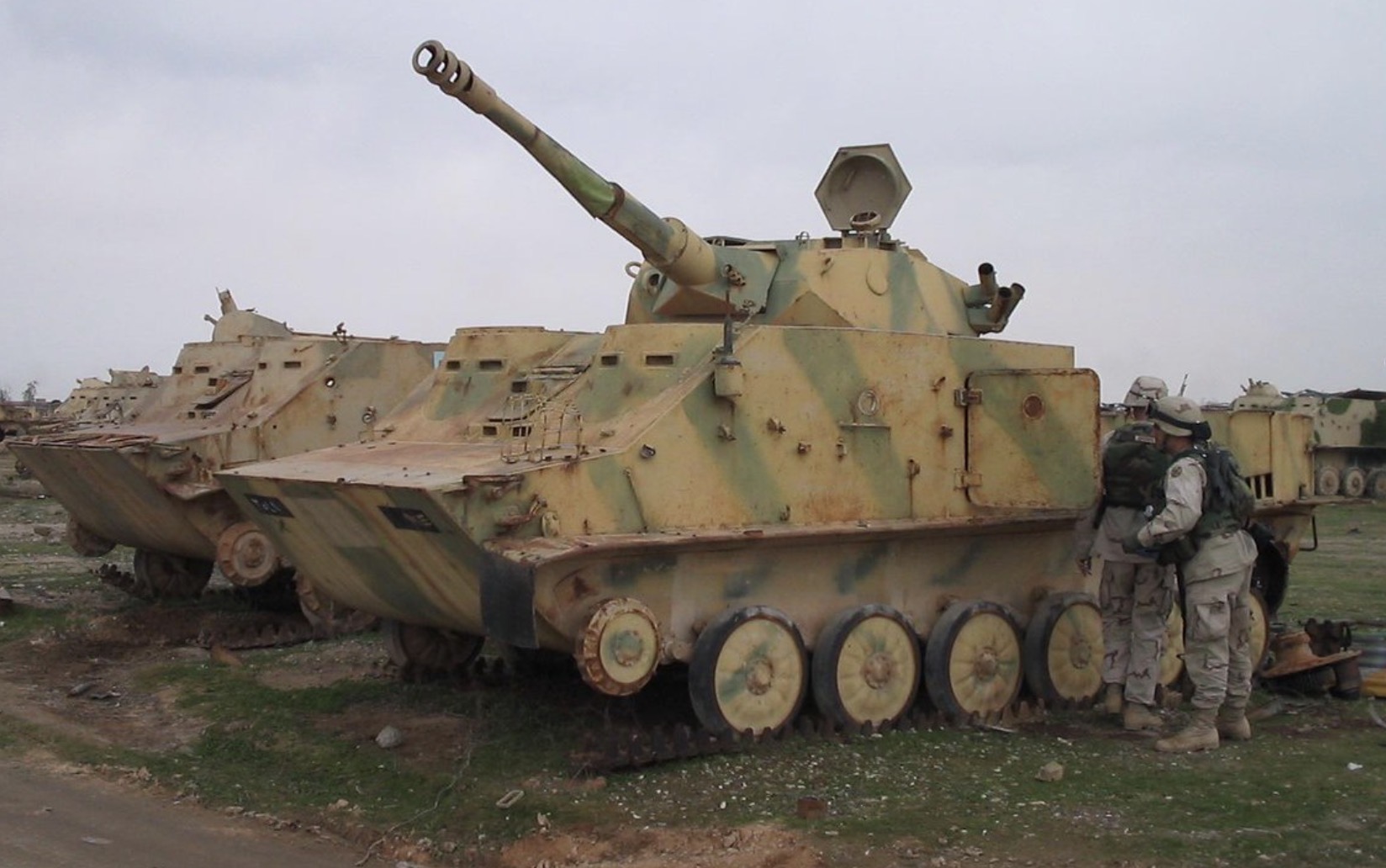
| Vehicle | history / description | specifications |
|---|---|---|
| OT-62 with EE-9 Cascavel turret | Iraqi fire-support conversion based on the OT-62 TOPAS tracked APC. Iraq modified at least some vehicles by fitting the EE-9 Cascavel 90 mm turret, turning the large APC hull into a light fire-support vehicle. Compared with a standard Iraqi EE-9 Cascavel, it is larger, heavier, slower, tracked instead of wheeled, and lacks both the roof .50 cal and laser rangefinder in this configuration. | Type: tracked fire-support vehicle / improvised light tank. Crew: estimated 3–4. Weight: estimated ~16–18 t. Armour: light steel armour, roughly 6–10 mm on the OT-62 hull. Engine: 300 hp diesel. Speed: roughly 55–60 km/h road, likely slower than the base OT-62 due to the turret. Main armament: 1 × 90 mm EE-9 Cascavel / EC-90 low-pressure gun. Ammunition: HE, HEAT, HESH and smoke depending on supply. Secondary armament: likely 1 × coaxial 7.62 mm MG only; no .50 cal. Fire-control: optical sight only, no laser rangefinder, no stabilizer. Key features: tracked mobility and 90 mm firepower, but thin armour, large profile, slower mobility, and weaker fire-control than regular Iraqi Cascavels. |
Read more: …
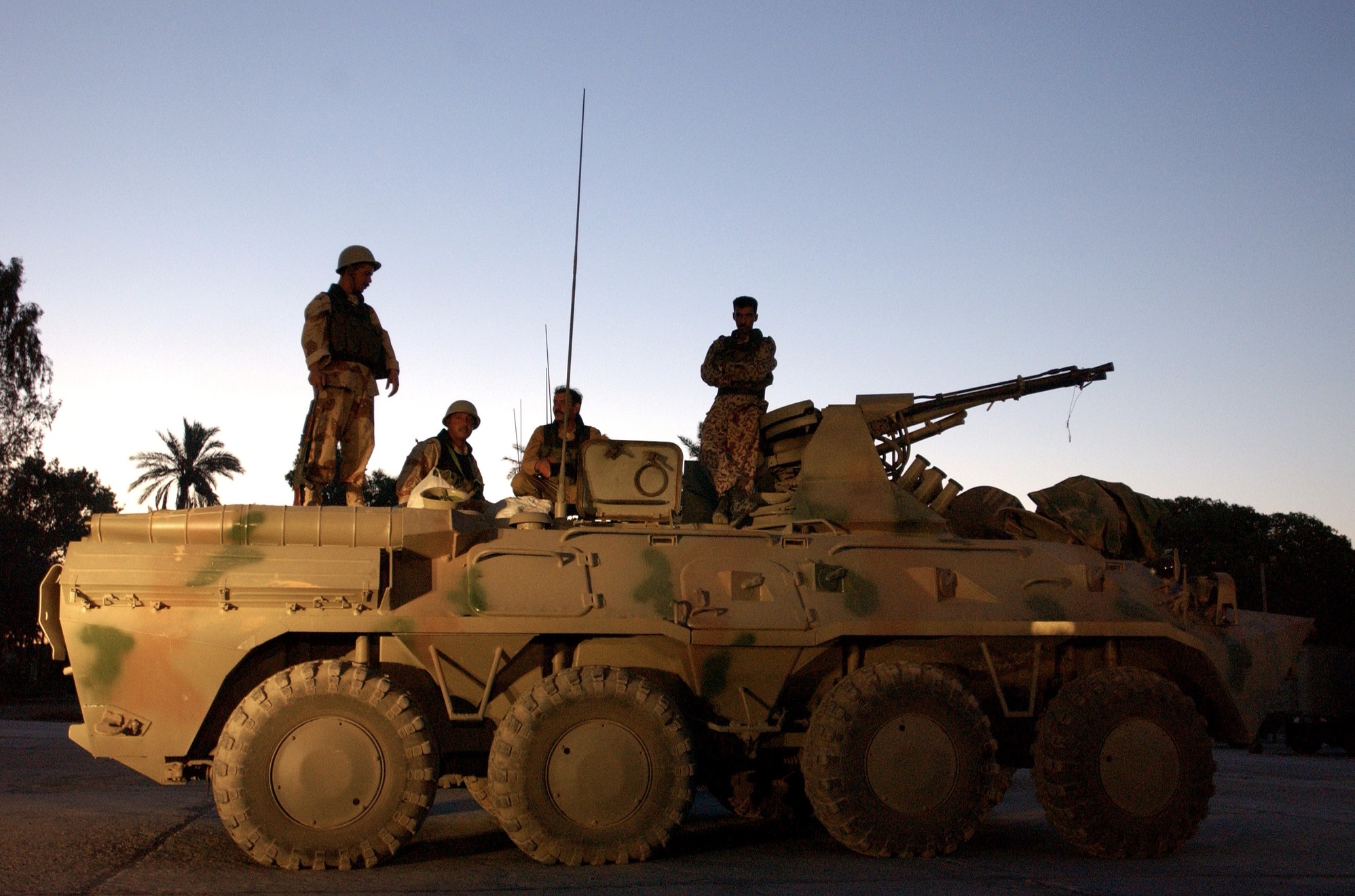
| Vehicle | history / description | specifications |
|---|---|---|
| BTR-94 (BAU-23×2) | Ukrainian export APC based on the BTR-80 chassis. Jordan originally purchased 50 vehicles, which were later donated to the new Iraqi forces in 2004, where they served with Iraqi security / mechanised police units. Unlike the BTR-4E, it has no ATGMs and is mainly useful as a fast autocannon support vehicle. | Type: 8x8 armoured personnel carrier / fire-support vehicle. Crew: 3. Passengers: up to 10 infantry. Weight: around 13.6–13.8 t. Armament: twin 23 mm 2A7M automatic cannons in the BAU-23×2 turret, plus 7.62 mm PKT coaxial machine gun. Ammunition: around 200 rounds of 23 mm and around 2,000 rounds of 7.62 mm. Rate of fire: up to around 850 rpm combined for the twin 23 mm guns. Equipment: optical sight, target illumination device, search radar for ground/air target detection, smoke grenade launchers. Engine: V12 diesel, around 300 hp. Drive: 8x8. Suspension: independent wheeled suspension. Speed: around 85 km/h on road, around 9 km/h in water. Range: around 600 km. Protection: light armour against small arms and fragments, broadly similar to BTR-80-level protection. Amphibious: yes. Iraqi relevance: 50 ex-Jordanian vehicles transferred to Iraq in 2004. |
Read more: BTR-94 - Wikipedia
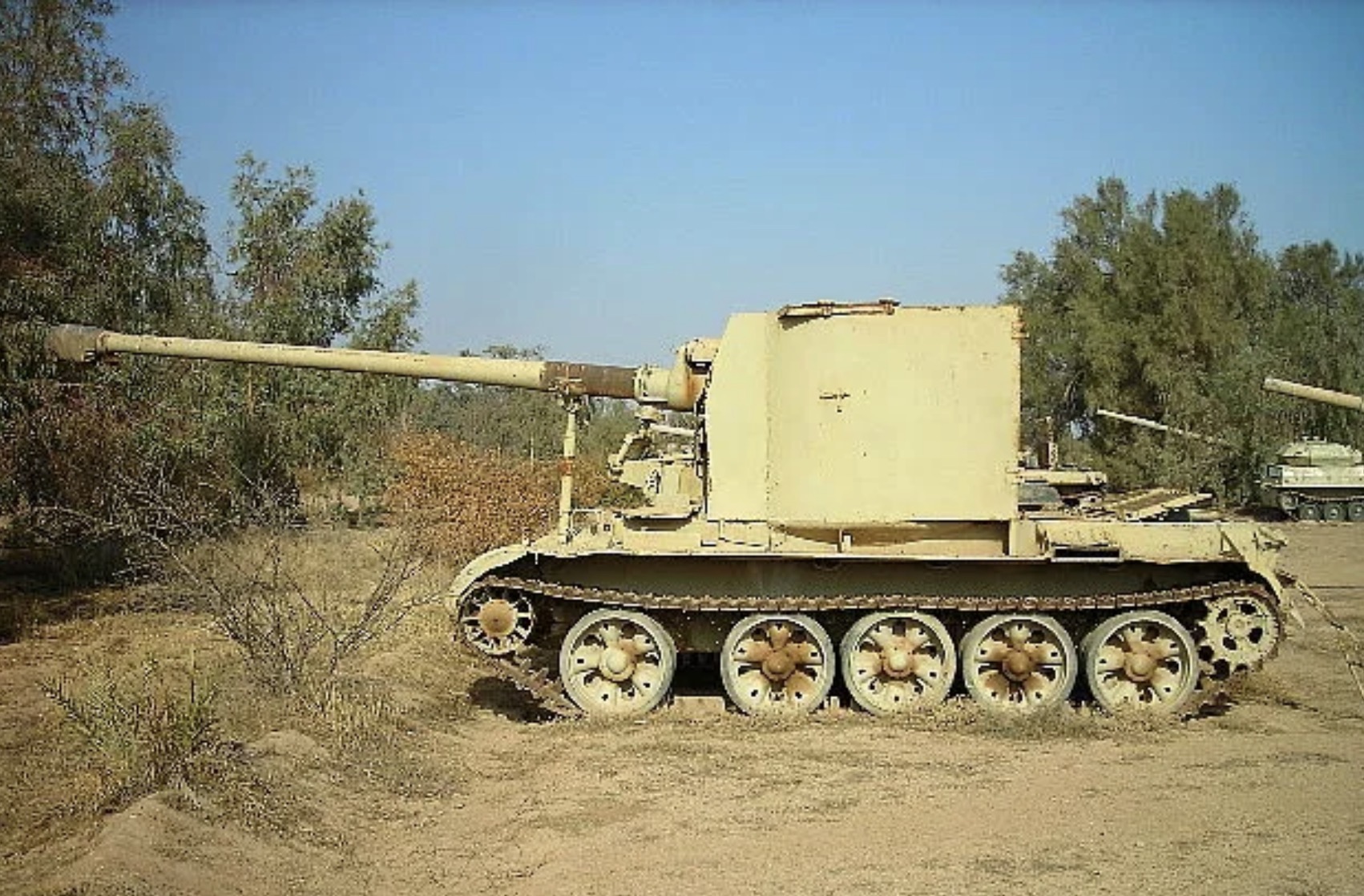
| Vehicle | history / description | specifications |
|---|---|---|
| T-55/130 / T-55 130 mm SPG | Improvised Iraqi/MEK-linked self-propelled gun based on a T-55 chassis with the turret removed and replaced by a crude armoured casemate/superstructure mounting a 130 mm Type 59-1 field gun. It was photographed in Diyala, Iraq, around 2007, and may have been a one-off or very limited conversion. Tank Encyclopedia notes that the exact history is unclear, but the gun is most likely a Chinese Type 59-1, not a Soviet M-46. | Type: improvised tracked SPG / tank destroyer. Crew: estimated 4–6. Chassis: T-55 / possible T-55 LD hull. Weight: estimated 38–42 t. Armour: T-55 hull armour, with crude armoured box around the gun crew; superstructure likely protects only against small arms and fragments. Engine: V-55 diesel, 580 hp. Speed: likely around 40–50 km/h road, slower than a normal T-55 due to weight and gun mounting. Main armament: 1 × 130 mm Type 59-1 field gun. Barrel length: 52.7 calibres. Elevation/depression: about −2.5° to +45°. Traverse: limited, around 58° total for the original gun mount, likely less or similar on the vehicle. Rate of fire: theoretical 7–9 rds/min, but likely lower in the cramped hull. Ammunition: separate-loading 130 mm HE, smoke, illumination and possible AP/anti-armour rounds. Ammo carried: photo-based estimate around 12 ready/stowed rounds inside. Maximum range: about 27 km with standard HE, up to 30–37 km with extended-range Chinese ammunition if available. Fire-control: basic optical/direct and artillery sights, no stabilizer, no laser rangefinder, no thermal sight. |
Read more: T-55/130 Self-Propelled Gun - Tank Encyclopedia

| Vehicle | history / description | specifications |
|---|---|---|
| Majnoon | Iraqi 155 mm wheeled self-propelled gun designed with Gerald Bull’s involvement. It was shown with the Al-Fao at the 1989 Baghdad Arms Fair, but remained a prototype and did not enter normal production. | Type: 6×6 SPG prototype. Weight: about 43 t. Armament: 155 mm gun. Range: about 30.2 km with ERFB, 38.8 km with ERFB-BB. Rate of fire: up to 4 rpm. Speed: about 90 km/h road. |
| Al-Fao | Iraqi 210 mm wheeled self-propelled gun and one of Iraq’s most ambitious artillery projects. Like Majnoon, it was displayed in 1989 but never reached full production. | Type: 6×6 heavy SPG prototype. Weight: about 48 t. Armament: 210 mm gun. Range: about 45 km with ERFB, 57.3 km with ERFB-BB. Projectile: about 109 kg. Rate of fire: up to 4 rpm. Speed: about 90 km/h road. |
Read more: Al-Fao the 210mm armed Al-pha
| Vehicle | history / description | specifications |
|---|---|---|
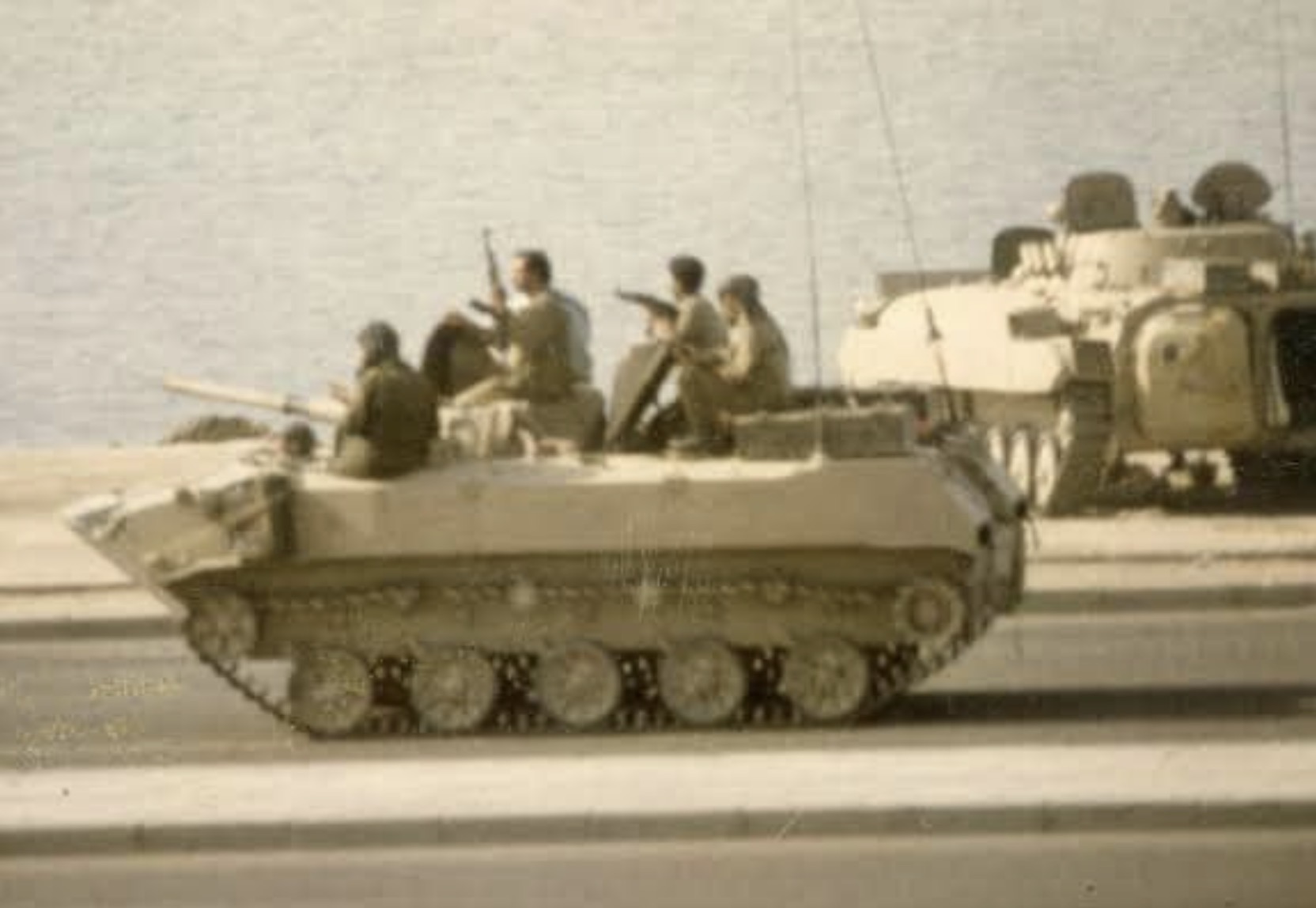
| BMD-1 | Soviet airborne amphibious infantry fighting vehicle designed for VDV/paratrooper forces. It entered service in 1969, was first publicly shown in Moscow in 1973, and was built to be much smaller and lighter than the BMP-1 so it could be air-dropped by parachute or airlifted. Iraq operated BMD-1s under the Saddam-era Iraqi Army; U.S. National Archives imagery records an Iraqi Army BMD-1 destroyed near At Tubah Hamra during Operation Iraqi Freedom in March 2003. | Type: airborne tracked IFV / light amphibious combat vehicle. Crew: 3 + 4 soldiers, or sometimes listed as 2 crew + 5–6 carried personnel depending on configuration. Weight: ~7.5 t. Armament: 1 × 73 mm 2A28 Grom smoothbore gun, 1 × 9S428 ATGM launcher for 9M14/9M14M Malyutka / AT-3 Sagger, 1 × 7.62 mm PKT coaxial MG, 2 × 7.62 mm bow PKT MGs. Armour: welded aluminium, around 6–23 mm; light protection only. Engine: 5D-20 V-6 diesel, ~240 hp. Speed: ~70–80 km/h road, ~10 km/h swimming. Range: ~320–600 km depending on source/load. Dimensions: length ~5.4 m, width ~2.5–2.63 m, height ~1.97 m. Amphibious: yes, water-jet propulsion. Key features: parachute-droppable, very compact, high mobility, NBC protection, night vision; weak armour and cramped interior. |
Read more: BMD-1: Venerable Service

| Vehicle | history / description | specifications |
|---|---|---|
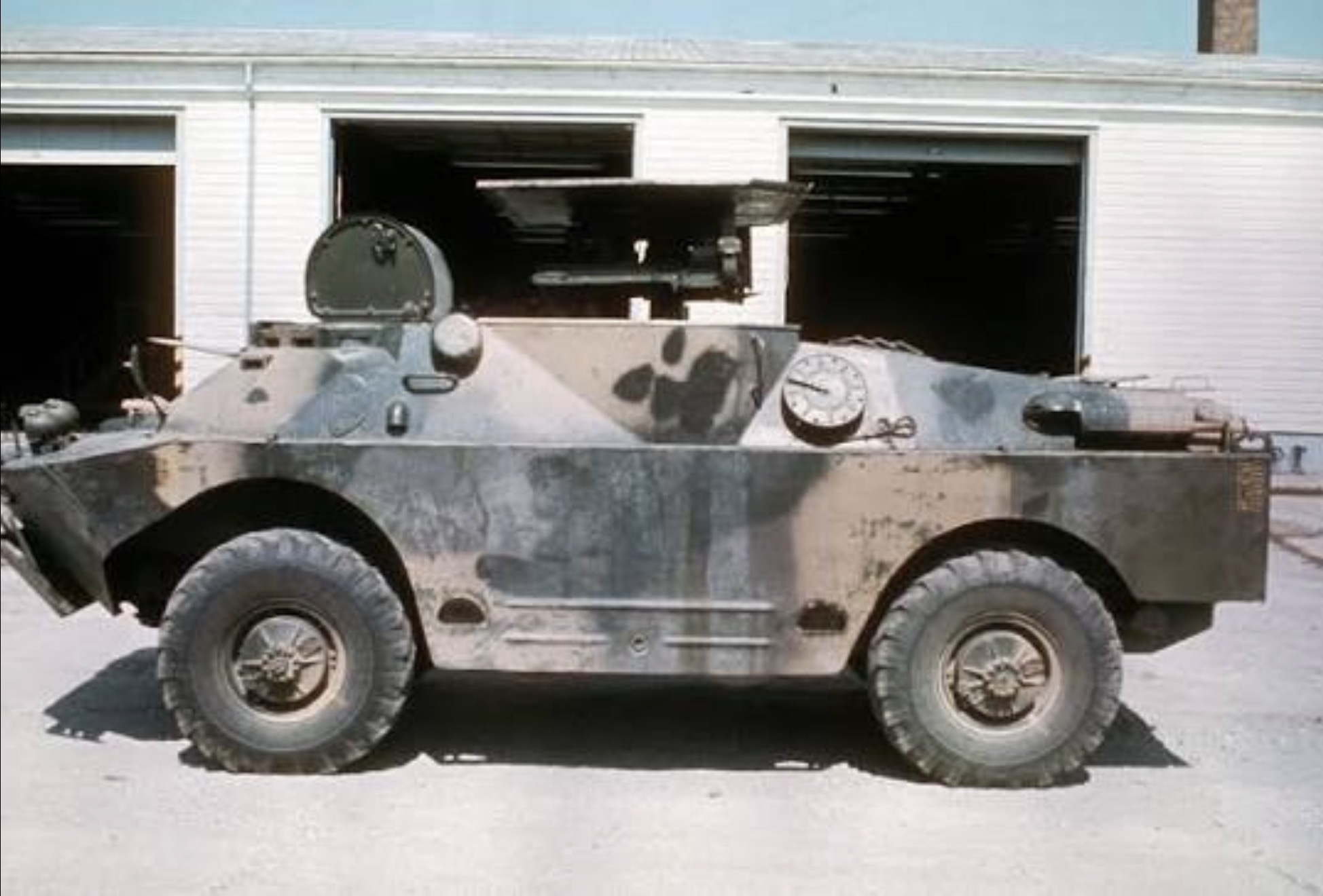
| 9K31 Strela-1 / SA-9 Gaskin | Soviet short-range mobile surface-to-air missile system used by Iraq as part of its mobile air-defence network. It was based on the BRDM-2 armoured car and carried four ready-to-fire infrared-guided missiles for engaging low-flying aircraft and helicopters. Surprisingly rare. | Type: short-range SAM vehicle. Crew: 3. Weight: ~7 t. Armament: four 9M31 / 9M31M infrared-guided missiles. Guidance: passive IR homing. Range: ~0.8–4.2 km. Altitude: ~30–3,500 m. Chassis: BRDM-2 4x4 amphibious armoured car. Armour: ~7–14 mm. Engine: GAZ-41 petrol, ~140 hp. Speed: ~100 km/h road. Key features: amphibious, no gun armament, no search radar, limited all-aspect capability. |
Read more: 9K31 Strela-1M
| Vehicle | history / description | specifications |
|---|---|---|
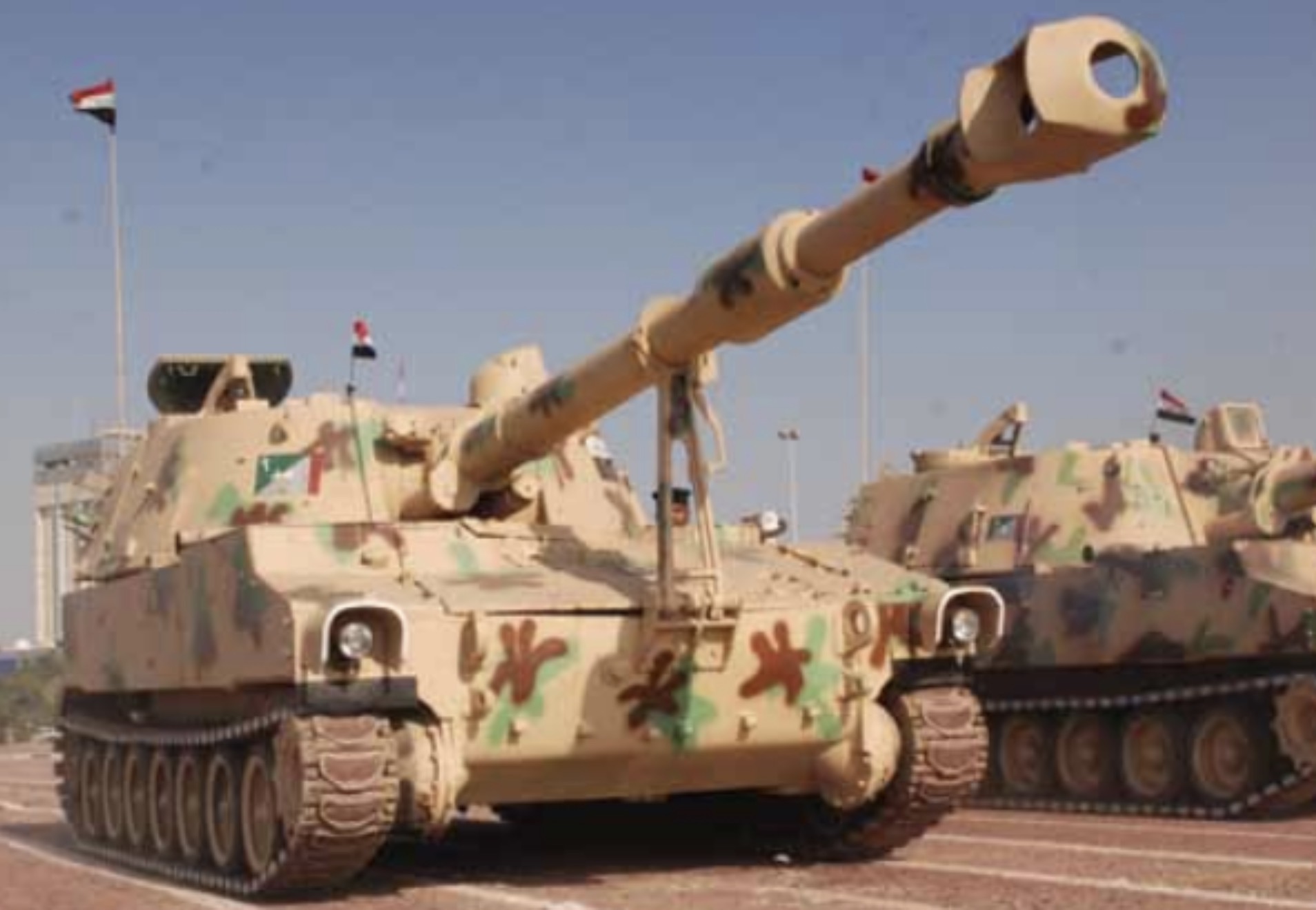
| M109A5 / M109 155 mm SPH | American tracked 155 mm self-propelled howitzer used by the Iraqi Ground Forces. Iraq’s post-2003 artillery fleet has included ex-U.S. M109 self-propelled howitzers, and Iraqi exercises still show 155 mm M109 SPHs in use alongside M198, D-30 and BM-21 artillery. The M109A5 is the upgraded long-barrel version, replacing earlier M109 guns with the M284 155 mm cannon and M182 mount, giving better range than older M109A1/A2/A3 types. | Type: tracked self-propelled howitzer. Crew: usually 6. Armament: 1 × 155 mm M284 howitzer, plus roof-mounted .50 cal M2 HMG or 40 mm Mk 19 on some versions. Calibre: 155 mm / 39-calibre. Ammunition carried: 36 complete 155 mm rounds. Range: ~23.5 km unassisted, ~30 km with rocket-assisted projectile. Traverse: 360°. Rate of fire: about 4 rds/min burst, 1 rd/min sustained. Weight: ~24.9 t combat loaded. Length: ~9.17 m with gun. Width: ~3.1 m. Height: ~3.0 m. Speed: ~56 km/h road. Range: ~349–354 km. Protection: aluminium armour, protected against small arms and shell splinters; not intended for close combat. Key features: tracked mobility, shoot-and-scoot artillery support, NATO-standard 155 mm ammunition, long-range indirect fire. |
Read more: M109 howitzer - Wikipedia
| Vehicle | history / description | specifications |
|---|---|---|
| 9P133 Malyutka-P | Soviet BRDM-2-based tank destroyer armed with the 9K11P Malyutka-P anti-tank missile system. It was developed in 1969, entered production in 1971, and was exported to several countries including Iraq. Compared with the earlier 9P122, the 9P133 used improved sighting/control equipment and could fire the 9M14P Malyutka-P, a semi-automatic wire-guided version of the AT-3 Sagger. | Type: wheeled ATGM carrier / tank destroyer. Crew: 2. Chassis: BRDM-2 4×4 amphibious scout-car hull. Weight: 7.2 t. Armour: 6–12 mm, small-arms and fragment protection only. Engine: GAZ-41 V8 petrol, 140 hp. Speed: 95 km/h road. Range: 750 km road. Armament: pop-up launcher for 9M14P Malyutka-P / AT-3C Sagger C missiles. Ready missiles: 6 on launcher. Total missiles carried: 18. Missile guidance: SACLOS wire-guided. Missile range: 400 m–3,000 m. Missile penetration: about 520 mm RHA. Missile speed: about 130 m/s. Combat deployment time: 20 seconds. Rate of fire: up to 2 launches/min. Fire-control: optical sight and semi-automatic guidance, no stabilizer, no thermal sight, no laser rangefinder. Key features: low-profile BRDM hull, hidden pop-up missile launcher, good road mobility and strong ATGM punch for its era; weak armour, slow missile flight, limited close-range defence, and poor survivability once spotted. |
Read more: Боевая машина ПТУР 9П133 ПТРК 9К11П "Малютка-П"
| Vehicle | history / description | specifications |
|---|---|---|
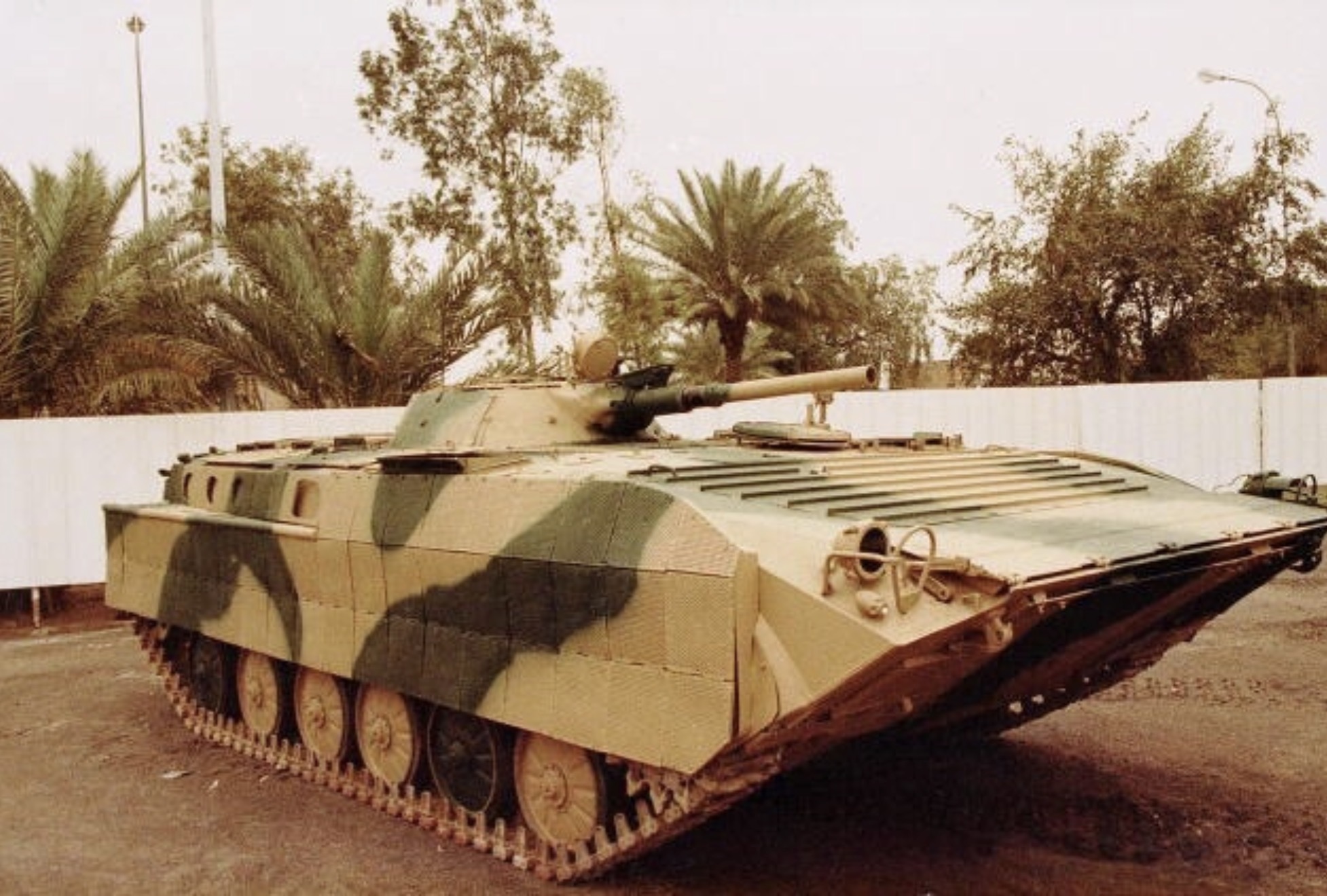
| BMP-1 Saddam / Saddam II | Iraqi BMP-1 armour upgrade developed before the Gulf War. The first version, Saddam, was shown at the 1989 Baghdad exhibition and added about 1,250 kg of appliqué armour to the hull sides and turret, intended to protect against 12.7 mm and 14.5 mm AP rounds from 200 m. It reportedly did not enter production because the extra armour overloaded the chassis and no stronger engine was fitted. The later Saddam II used rubber side skirts, lighter extra armour on the upper hull sides, and an ATU box on the left rear hull; it was mainly used by the Iraqi Republican Guard. | Type: tracked infantry fighting vehicle. Crew: 3 + 8 infantry. Weight: base BMP-1 13.2 t; Saddam I roughly 14.4–14.5 t with appliqué armour. Armour: base BMP-1 6–33 mm, with extra side/turret armour on Saddam version. Engine: UTD-20 V6 diesel, 300 hp. Speed: base 65 km/h road / 45 km/h cross-country; Saddam variants likely slower due to added weight. Range: about 600 km road / 500 km off-road. Armament: 1 × 73 mm 2A28 Grom low-pressure gun, 1 × 9M14 Malyutka / AT-3 Sagger ATGM launcher, 1 × 7.62 mm PKT coaxial MG. Ammunition: 40 × 73 mm rounds, 4 × ATGMs, about 2,000 × 7.62 mm rounds. Fire-control: basic optical sighting, no thermal sight, no laser rangefinder, no stabilizer. Key features: better side protection than a normal BMP-1, but heavier, slower, still lightly protected, and vulnerable to autocannon fire, mines and modern AT weapons. |
Read more: List of BMP-1 variants - Wikipedia
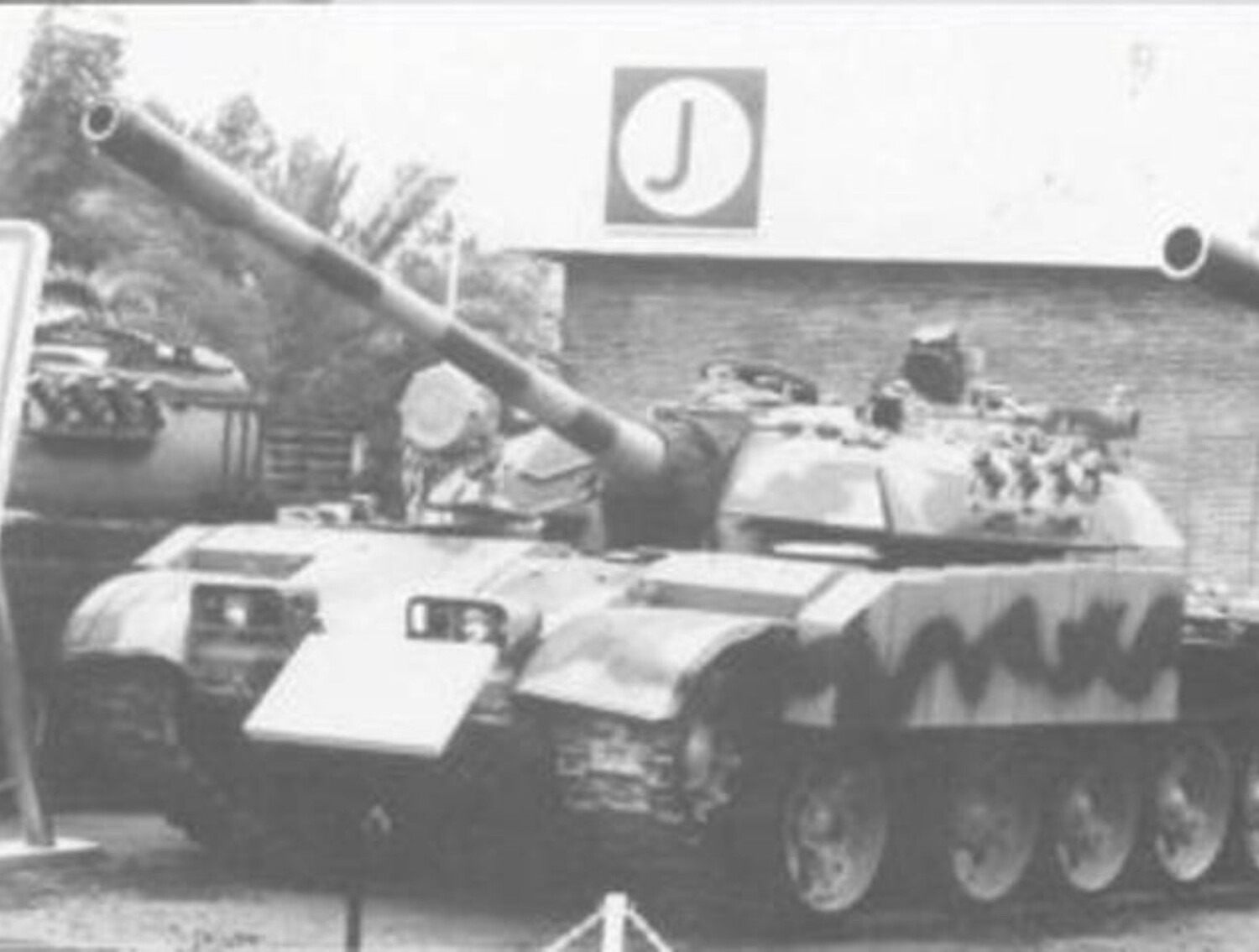
| Vehicle | history / description | specifications |
|---|---|---|
| Type 69 Enigma | Early Enigma-style prototype based on a Chinese Type 69 rather than the later T-55-based examples. It is fitted with smoke grenade launchers and Chinese-style headlights, but appears to lack the rear counterweight seen on later versions. | Type: prototype upgraded MBT. Base: Type 69-II. Crew: 4. Armament: 100 mm gun. Protection: early Iraqi Enigma-style add-on armour blocks, smoke launchers on the display vehicle. Mobility: likely close to Type 69-II but heavier. |
Read more: T--55 "Al-Faw" – The Iraqi Enigma
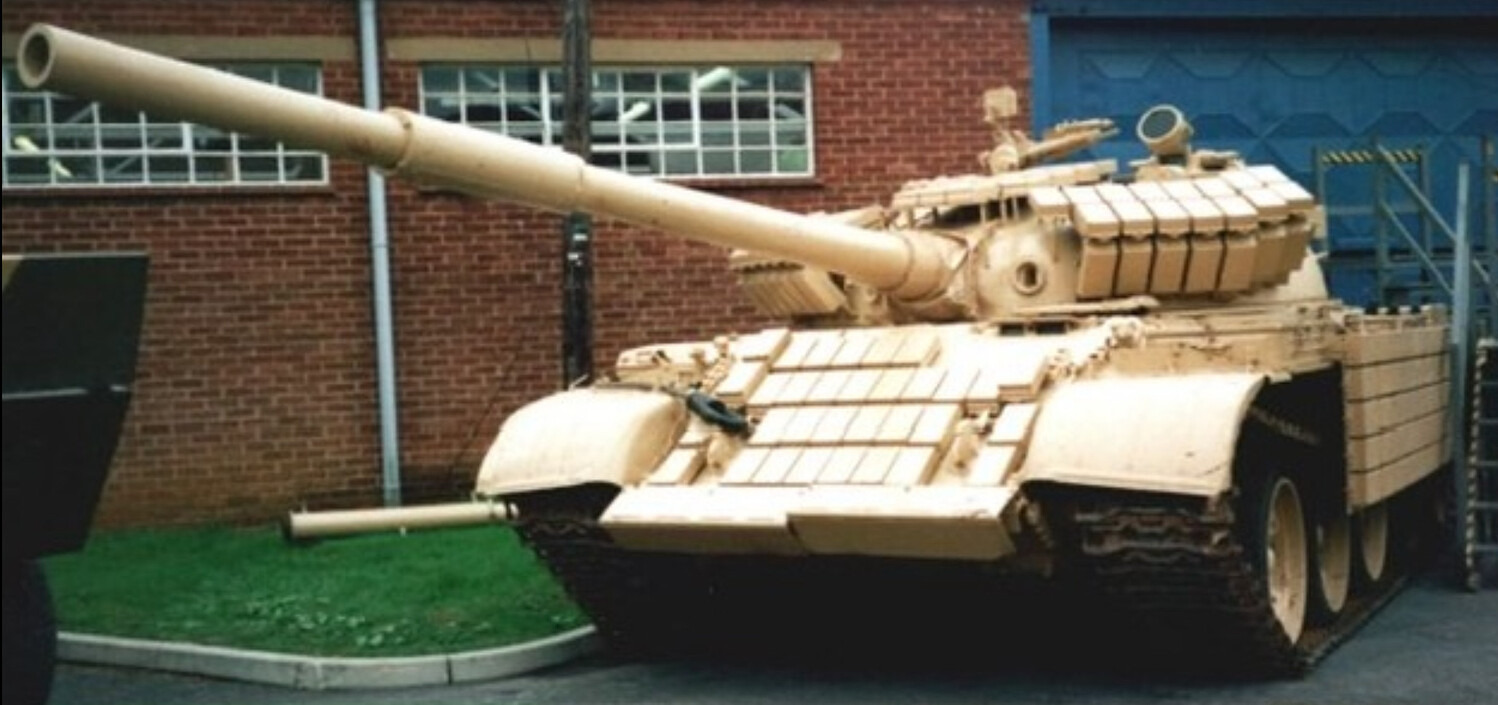
| Vehicle | history / description | specifications |
|---|---|---|
| T-62 (Kontakt-1) | Rare Iraqi T-62 Model 1972 fitted with Kontakt-1 ERA blocks. This vehicle should not be confused with the Soviet T-62MV . The Iraqi version is essentially a standard T-62 fitted with Kontakt-1 ERA , rather than a full Soviet MV-standard modernization. | Type: MBT / rare modification. Crew: 4. Weight: about 37 t plus ERA. Armament: 115 mm U-5TS smoothbore, 7.62 mm PKT, 12.7 mm DShK. Engine: V-55V, about 580 hp. Speed: about 50 km/h. Protection: standard T-62 armour plus ERA blocks. |
Read more: Iraqi T-62 Model 1972 (Kontakt-1) – A Rare Iraqi T-62 Modernization
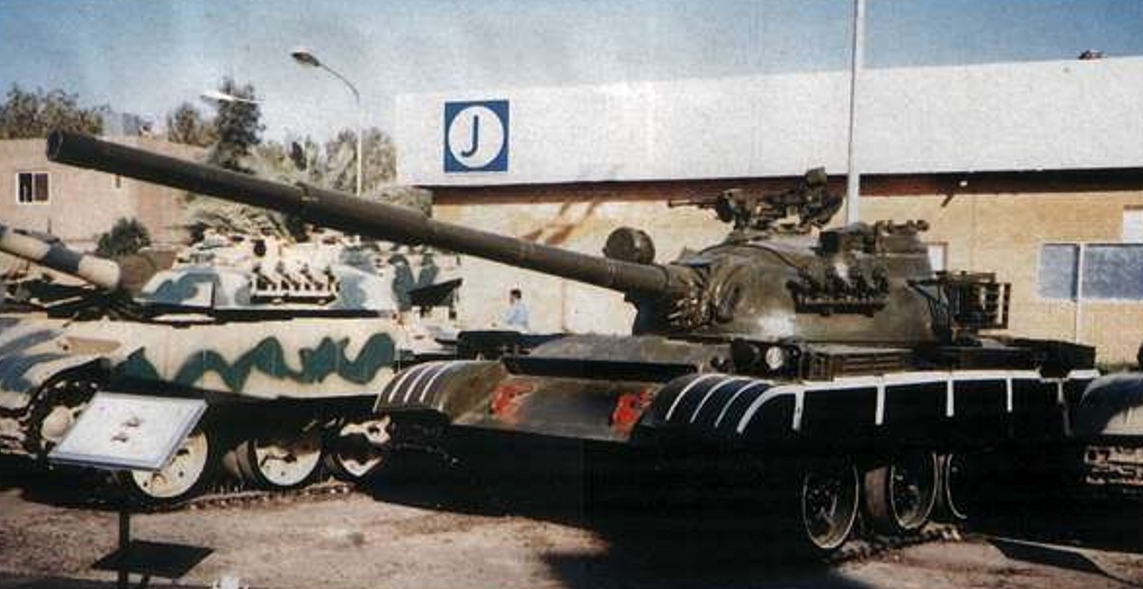
| Vehicle | history / description | specifications |
|---|---|---|
| Type 69-QM2 | Iraqi Type 69 upgrade associated with a 125 mm smoothbore gun. This tank is fitted with an autoloader and supposedly includes a laser rangefinder. It also reportedly features an appliqué armour plate on the glacis, a shell ejection port, and an enlarged turret. In addition, it retains the standard Type 69-II equipment package, including smoke grenade launchers, rear turret slat armour, and rubber side skirts. | Type: experimental/upgraded MBT. Base: Type 69-II. Crew: likely 3 if fitted with T-72-style autoloader. Armament: 125 mm smoothbore gun. FCS: claimed laser rangefinder. Protection/mobility: broadly Type 69-II level. |
Read more: Iraqi Type 69-QM2 – A Rare Iraqi Type 69 Modernization
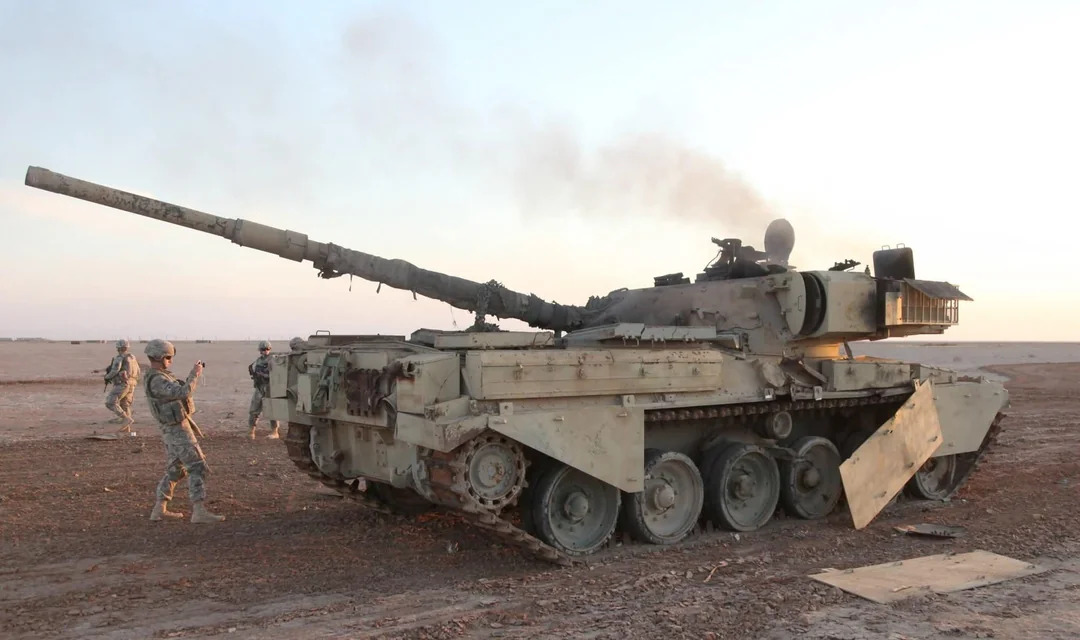
| Vehicle | history / description | specifications |
|---|---|---|
| Chieftain Mk 5P | Iranian export version of the British Chieftain Mk 5. The “P” suffix stood for Persia, and this model formed part of Iran’s large pre-1979 Chieftain fleet. Some Iranian Chieftains were captured by Iraq during the Iran–Iraq War. It appears that the Chieftain on the picture above has been used against the coalition in 1991 or 2003. More recently, some Iraqi fighters reportedly refurbished several Chieftain Mk 5P tanks, returning them to service and making them part of the modern Iraqi Ground Forces inventory. | Type: main battle tank. Crew: 4. Weight: around 54 long tons / about 55 t. Armament: 120 mm L11-series rifled gun, 7.62 mm coaxial machine gun, 7.62 mm commander’s machine gun, and smoke grenade launchers. Ammunition: APDS, HESH, smoke; later APFSDS depending on ammunition availability. Ammunition carried: around 64 rounds of 120 mm ammunition. Engine: Leyland L60 multi-fuel engine, around 750 hp on later Mk 5P standard. Transmission: TN12 semi-automatic transmission. Suspension: Horstmann suspension. Speed: around 40–48 km/h on road. Range: roughly 400–500 km on road depending on fuel fit. Protection: heavy cast turret and well-sloped upper glacis, with very strong turret-front protection for its era. Fire control: optical sighting system, coincidence/ranging machine gun or later improved fire-control features depending on fit. Strengths: powerful 120 mm gun, strong turret armour, good hull-down performance. |
Read more: Chieftain Mk 5 | War Thunder Wiki

| Vehicle | history / description | specifications |
|---|---|---|
| BTR-4E | Ukrainian 8x8 armoured fighting vehicle ordered by Iraq after 2003 as part of the rebuilt Iraqi Army’s modernisation programme. The Iraqi vehicles are BTR-4E export models, with the main combat version fitted with the BM-7 “Parus” remote weapon station and Russian Konkurs ATGM. | Type: 8x8 infantry fighting vehicle / armoured personnel carrier. Crew: 3. Dismounts: around 7 infantry. Weight: around 21–22 t depending on configuration. Armament: 30 mm ZTM-1 automatic cannon, 30 mm KBA-117 automatic grenade launcher, 7.62 mm KT-7.62 / PKT-type coaxial machine gun, and anti-tank guided missiles. Missiles: Two 9M113 Konkurs ready-to-fire ATGMs. Ammunition: 30 mm AP/HE, 30 mm grenade rounds, 7.62 mm ammunition and ATGMs. Engine: diesel engine, around 490–500 hp depending on batch. Drive: 8x8. Speed: around 100–110 km/h on road. Range: roughly 600–700 km. Protection: light armour against small arms and shell fragments, with better frontal protection than older BTR-series vehicles. Equipment: smoke grenade launchers, modern optics, remote weapon station and rear troop compartment. Iraqi relevance: post-2003 Iraqi Army vehicle acquired from Ukraine, not a Ba’ath-era vehicle. |
Read more: BTR-4 - Wikipedia
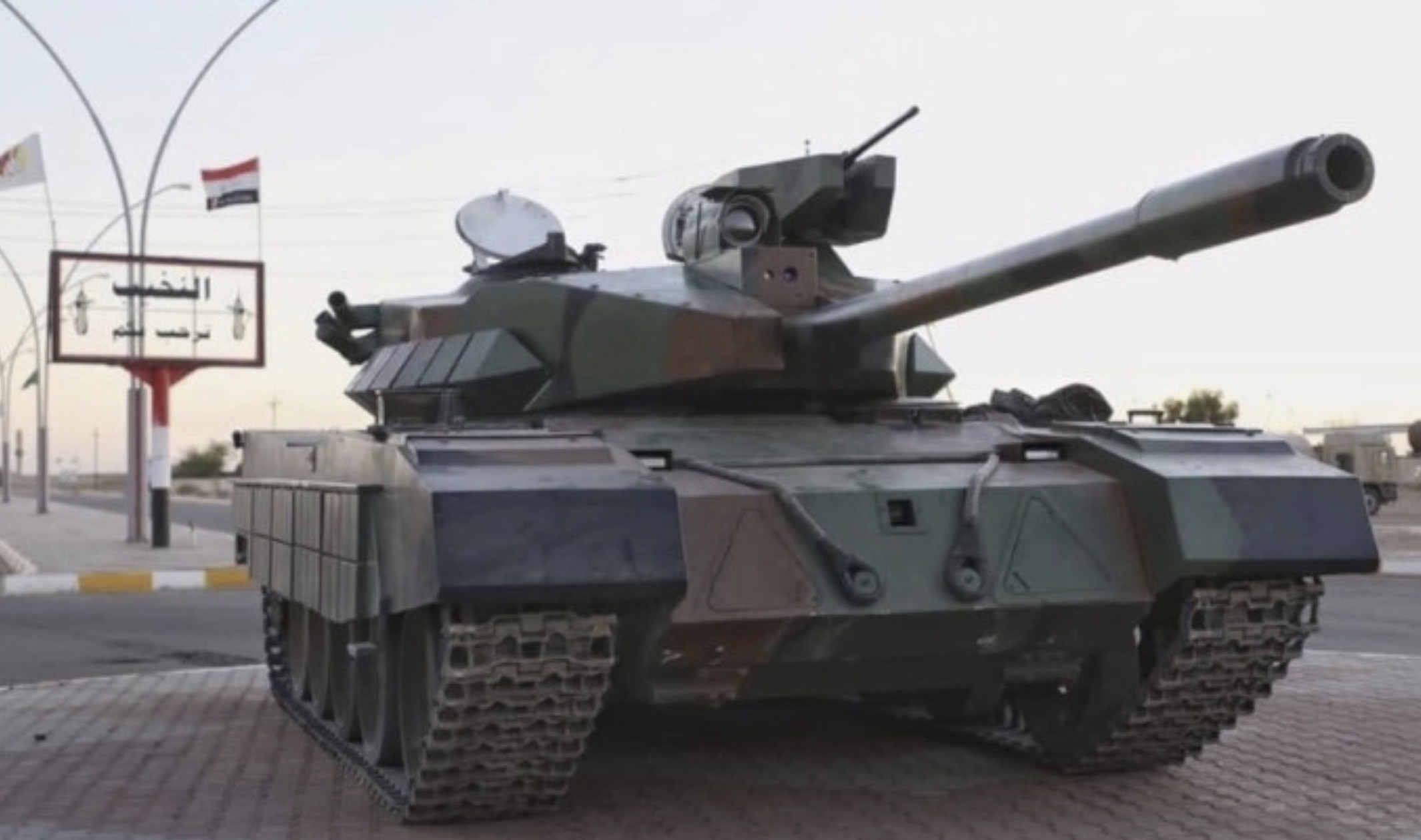
| Vehicle | history / description | specifications |
|---|---|---|
| Al-Kafil-1 / Al-Kafeel-1 | Iraqi Type 59-based main battle tank project developed by the Abbas Combat Division / PMU-linked Iraqi workshop network. It was publicly unveiled around 2019–2020 as an indigenous Iraqi upgrade after the anti-ISIS war. The tank keeps the basic T-55/Type 59 hull concept but adds a heavily redesigned turret, extra armour, ERA blocks, anti-RPG chain armour, cameras, modern sights, and a remote weapon station. Army Recognition notes that official technical details are limited, so some figures must be treated as estimated. | Type: upgraded main battle tank. Crew: reported 3. Base chassis: T-55 / Chinese Type 59. Weight: unknown; likely heavier than the ~36 t base T-55 due to added armour. Engine: Ukrainian 12-cylinder diesel, 580 hp. Transmission: automatic, 5 forward / 1 reverse. Main armament: 100 mm D-10T rifled gun. Direct-fire range: reported accurate range around 3 km; indirect/arcing fire claimed up to 12 km. Loading: manual; ammunition separated, with stowage reportedly below the hull and behind the turret. Secondary armament: remote-controlled 12.7 mm M2 .50 cal, additional roof 12.7 mm DShK-type MG, and 7.62 mm PK coaxial MG. Fire-control: modern day/thermal cameras, 360° situational awareness system, screens for crew, likely laser rangefinder/modern sighting package. Protection: added armour, ERA, modified turret, anti-RPG chain/slat-style rear protection, smoke grenade launchers. Speed: unknown; base T-55 is about 48–50 km/h, but Al-Kafil-1 is probably slower due to added armour. Key features: much better optics, crew awareness, protection and remote weapon capability than a standard T-55; weaknesses are still the old 100 mm gun, old hull base, uncertain armour quality, likely limited mobility, and prototype/very limited-production status |
Read more: Al-Kafil-1 – The Iraqi Guardian
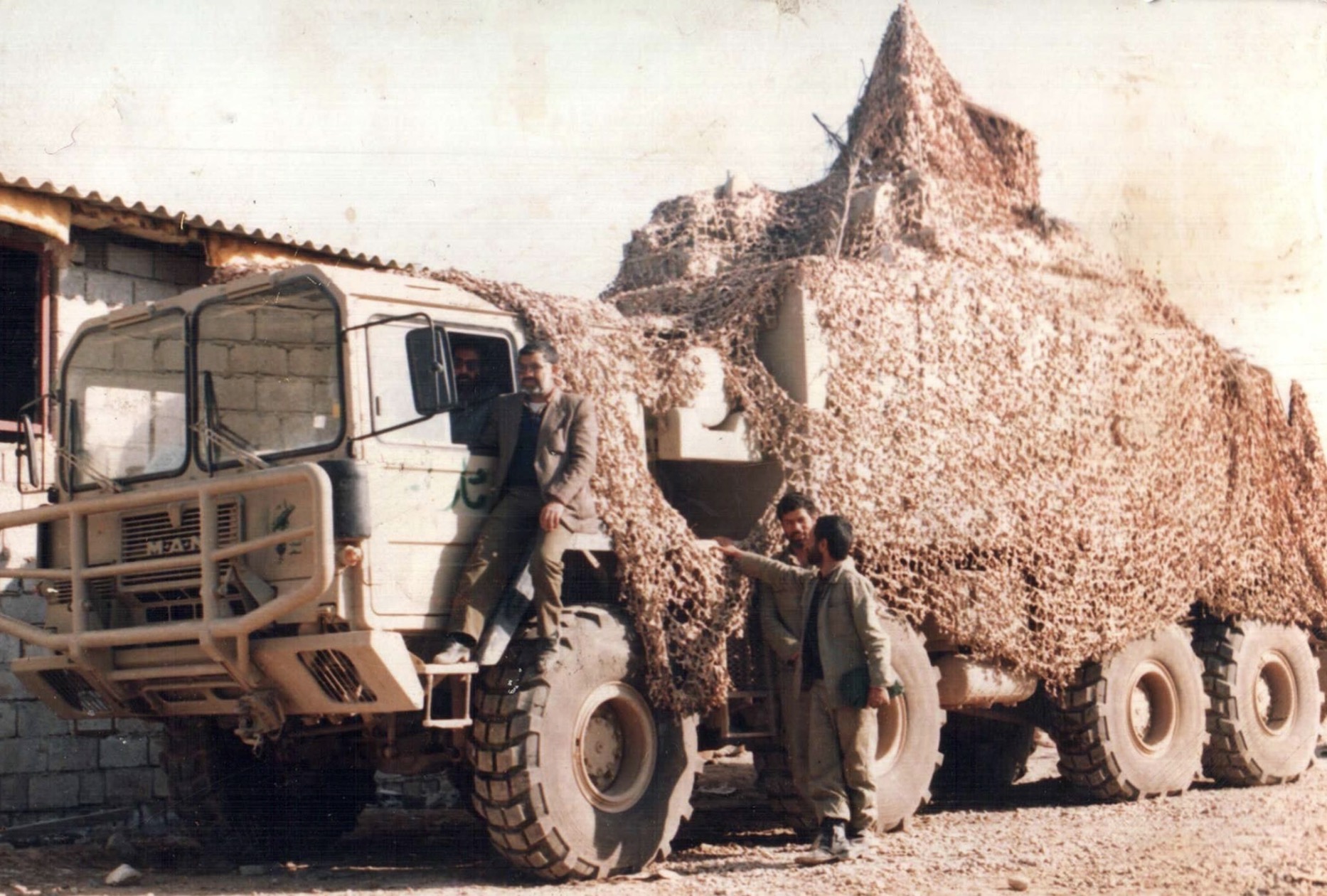
| Vehicle | history / description | specifications |
|---|---|---|
| Roland-2 / Iraqi Roland-2 | Franco-German short-range self-propelled surface-to-air missile system developed by Messerschmitt-Bölkow-Blohm and Aérospatiale-Matra. Unlike Roland-1, Roland-2 added radar target and missile tracking, giving it true all-weather capability while retaining optical backup. Iraq used Roland-2 during the Iran–Iraq War and Gulf War; Russian sources state Iraq had roughly 40–100 Roland-2 systems by 1991, while another Russian source claims Iraq acquired 100 wheeled MAN-chassis Roland-2 vehicles plus 13 AMX-30R tracked vehicles. | Type: short-range self-propelled SAM / SHORAD. Crew: 3. Chassis: AMX-30R tracked chassis for the tracked Iraqi/French-style version; Iraq also reportedly used MAN wheeled Roland-2 launchers. Armament: 2 ready-to-fire Roland SAM launch tubes, with 8 reload missiles carried internally on AMX-30R. Missile: Roland solid-fuel SAM in sealed launch container. Missile weight: 66.5 kg. Missile length: 2.4 m. Diameter: 160 mm. Wingspan: 500 mm. Warhead: 6.5 kg fragmentation / hollow-charge type with proximity or impact fuze. Max missile speed: about 560 m/s / Mach 1.6. Engagement range: 500 m–6.2/6.3 km. Engagement altitude: 15 m–5.5 km. Target speed: up to about Mach 1.2–1.3. Guidance: command guidance with radar or optical tracking; Roland-2 can switch between radar and optical modes. Radar: pulse-Doppler search radar, roughly 15–18 km detection range. AMX-30R weight: about 33 t. AMX-30R engine: HS-110 diesel, 720 hp. Road speed: about 60 km/h. Range: about 600 km. Armour: AMX-30 chassis protection, around 30 mm maximum; protects against small arms and fragments, not tank guns or ATGMs. |
Read more: Зенитно-ракетный комплекс Roland-2 | Ракетная техника
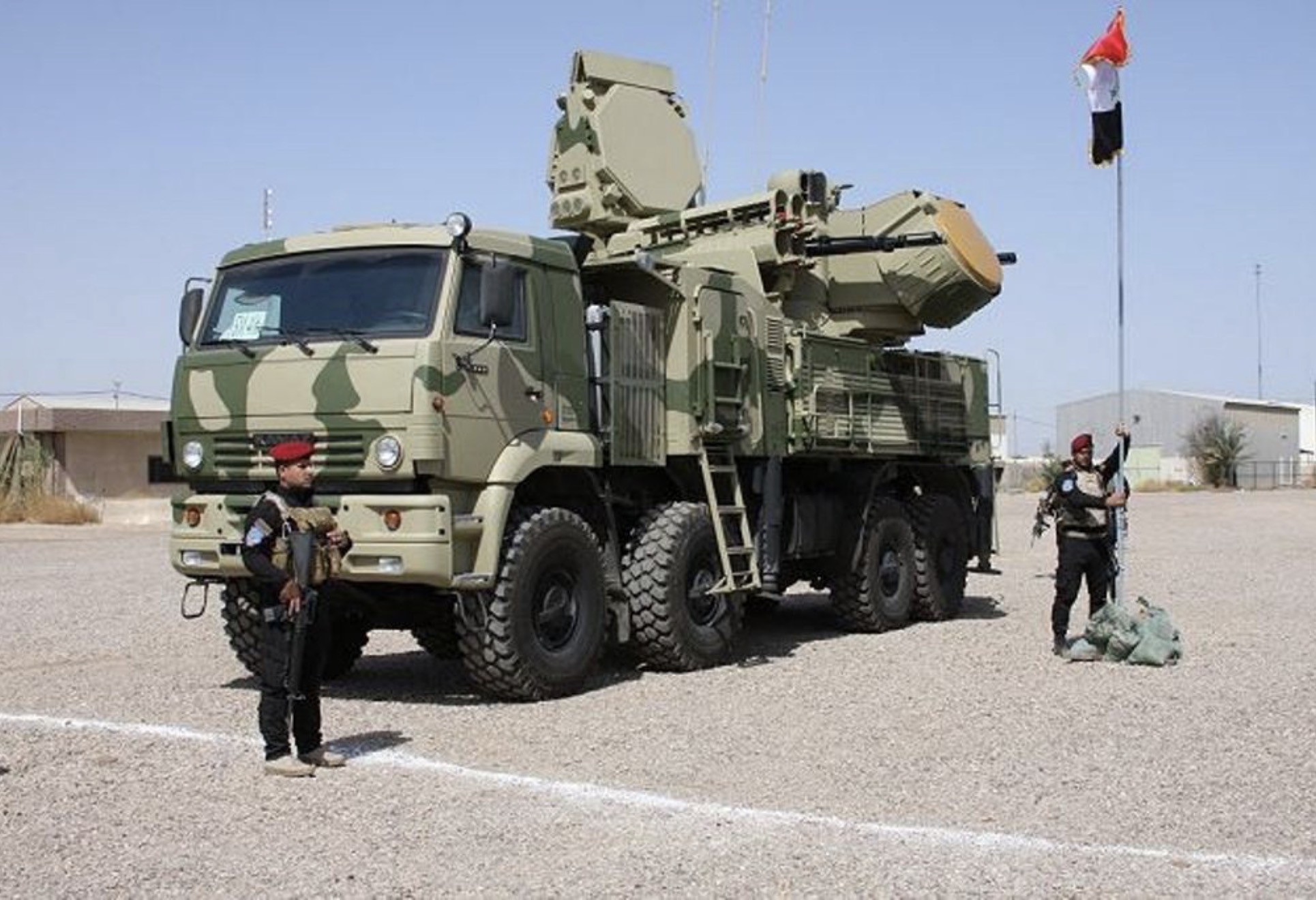
| Vehicle | history / description | specifications |
|---|---|---|
| Pantsir-S1E / Pantsir-S1 | Russian short-to-medium-range air-defence missile and gun system bought by post-2003 Iraq. It combines radar-guided missiles and 30 mm autocannons on a wheeled chassis, giving Iraq a mobile point-defence system against aircraft, helicopters, drones and precision weapons. Iraq received Pantsir-S1 systems from Russia, with deliveries reported as completed by 2016. | Type: missile/gun SPAA. Crew: 3. Chassis: 8x8 truck, usually KamAZ-type. Armament: 12 × 57E6-E SAMs, 2 × twin 30 mm 2A38M autocannons. Gun ammo: ~1,400 rounds. Missile range: ~1.2–20 km. Gun range: ~200 m–4 km. Altitude: up to ~15 km with missiles, ~3 km with guns. Guidance: radar/optical tracking with radio-command missiles. Key features: search radar, tracking radar, electro-optical backup, no armour, strong anti-air capability but poor ground survivability. |
Read more: Pantsir-S1 | War Thunder Wiki
Sources
Spoiler
Video
https://youtu.be/XanoreTMPco?si=T8ZSeQgQtK13AVNS
List of current equipment of the Iraqi Ground Forces - Wikipedia
https://nsarchive2.gwu.edu/NSAEBB/NSAEBB129/part16-iraq_threat.pdf?utm_source
https://www.britannica.com/topic/Baath-Party
https://www.marines.mil/Portals/1/Publications/Iraq%20Profile.pdf?utm_source
https://history.state.gov/milestones/1989-1992/gulf-war?utm_source
https://www.cia.gov/readingroom/docs/DOC_0001520654.pdf?utm_source
https://www.net-maquettes.com/pictures/type-69-iraqi-walkaround/
https://www.army-guide.com/eng/product130.html?utm_source
http://www.missing-lynx.com/reviews/russia/takom2054reviewcs_1.html
https://447bg.org/tanks-vehicles/type59-tank/
The Chinese Type 69 Tank - TankNutDave.com
https://milinme.wordpress.com/2013/11/03/the-royal-iraqi-army-1957-military-parade/?utm_source
https://tanks-encyclopedia.com/coldwar/france/gtc-155mm/?utm_source
https://www.army-guide.com/eng/product551.html?utm_source
https://www.forecastinternational.com/archive/disp_old_pdf.cfm?ARC_ID=1115
https://www.toadmanstankpictures.com/iraniansherman.htm?utm_source
Source that mentions the hunt for ERA equipped T-72 tanks: ArtOfWar. Ломачинский Андрей Анатольевич. Командировка. 10-12
T-72 Soviet Main Battle Tank (1972)
https://war-book.ru/osnovnoj-tank-t-72-irak3/
Основной танк Т-72 | Флот 3000
Medium tank Al Faw / Enigma. Simple modernization of the T-55 in Iraqi
In Development: T-55 Enigma | Armored Warfare - Official Website
T-55 series of main battle tanks
T-55 Enigma tank, medium, 100mm
T-54/T-55 operators and variants - Wikipedia
Non-explosive reactive armor - Wikipedia
T-62 Main Battle Tank with ERA (Russia)
Comprehensive Soviet/Russian vehicle collection
Iraqi T-62 battle tank pictures from military photos on webshots
https://shushpanzer-ru.livejournal.com/3675120.html
https://yuripasholok.livejournal.com/9111318.html?
Zaloga, S., Kinnear, J. (1996). T-34-85 Medium Tank 1944 - 1994. Osprey Publishing . Available at: https://prussia.online/Data/Book/t-/t-34-85-medium-tank-1944-94/Osprey%20NV%20020%20-%20[20c]%20-%20T-34-85%20Medium%20Tank%201944-94.pdf?utm_source
Saddam’s Supergun And Verne’s Columbiad: Science Fiction in the News
Al-Fao | Military Wiki | Fandom
Iraqi heavy artillery pre Desert Storm | Secret Projects Forum
German Self-Propelled Artillery Guns of the Second World War Craug Moore