Would you like to see this T-72 in-game?
- Yes
- No
0
voters
Iraqi T-72M1 (Kontakt-1)
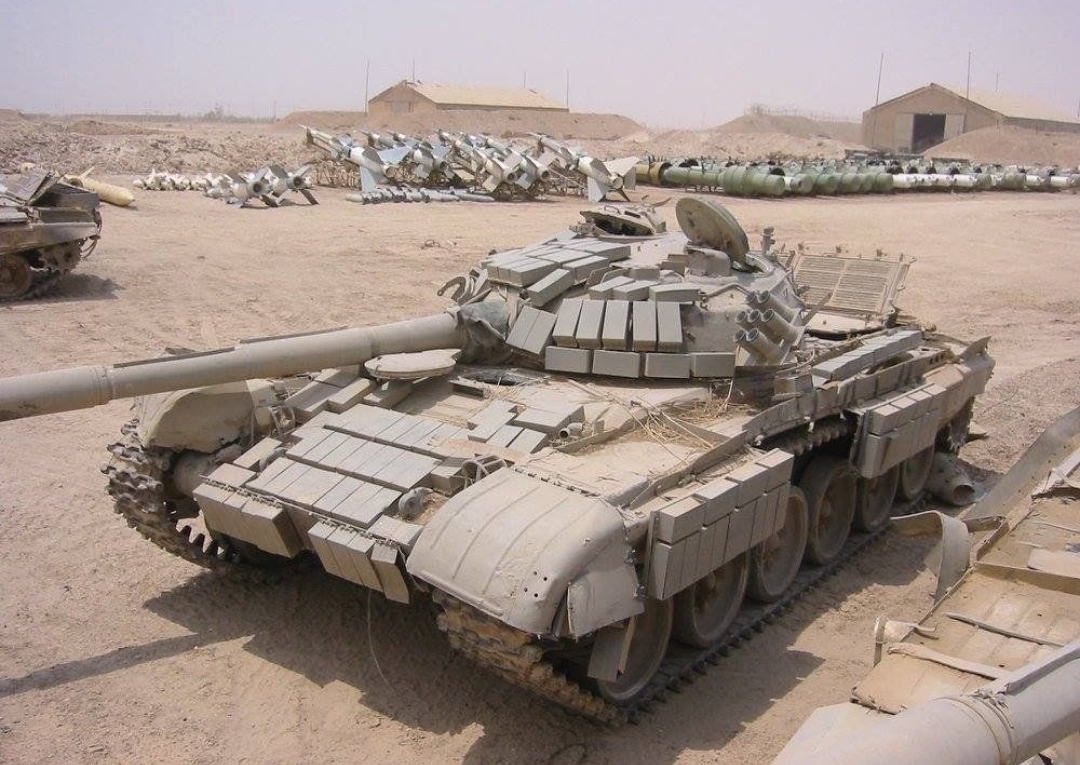
Among Iraq’s armored fleet, one of the rarest configurations was a T-72M1 variant fitted with Kontakt-1 explosive reactive armor (ERA). Photographic evidence confirms that Iraqi ERA-equipped T-72s existed in multiple examples and were applied to more than a single T-72 variant. In fact, Iraqi ERA-equipped T-72s appeared in two distinct configurations: one based on the early T-72, and another derived from the T-72M1. This suggestion is for the T-72M1 variant, as it was equipped with a more advanced laser rangefinder and smoke grenade launchers, features absent on the early T-72 based version.
To summarize, the Iraqi T-72M1 equipped with ERA is essentially a slightly downgraded Soviet T-72AV made to look like a T-72S, assuming the ERA blocks were genuine and fully functional.
Iraqi T-72s Variants
Spoiler
Iraq began acquiring T-72 tanks in the late 1970s. In 1979–1980, the Soviet Union delivered around 100 export-spec T-72 Ural or simply T-72 tanks armed with a 125 mm smoothbore gun and fitted with a TPD-2-49 optical rangefinder. In January 1982, Poland supplied 250 T-72M tanks, and after a short embargo was lifted in September that year, the USSR resumed deliveries. Over time, Iraq received roughly 1,100 T-72s, including Polish T-72M, Soviet T-72M1, and kits for local assembly at the Taji plant. Locally built tanks were named Asad Babil (“Lion of Babylon”) and were based on the T-72M1 design. For details on the differences between the Lion and M1, refer to this suggestion.
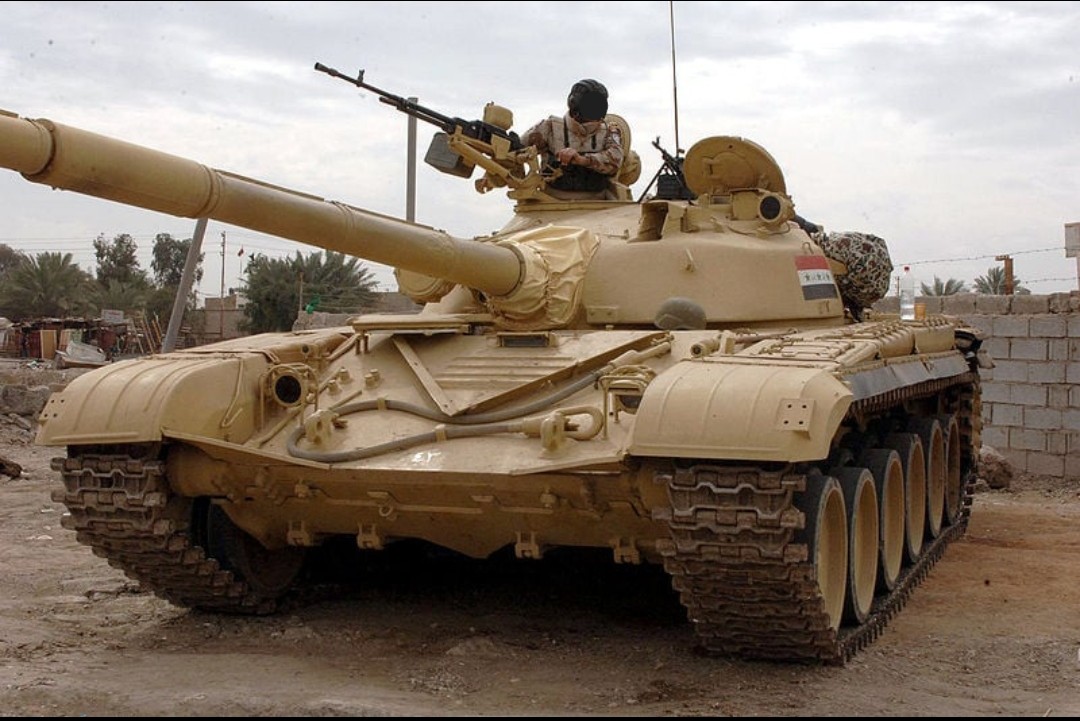
To name the export T-72’s (prior to the T-72S):
T-72
172M-E (Warsaw Pact T-72 Ural)
172M-E1 (non-Warsaw Pact T-72 Ural)
T-72M
172M-E2 (early Warsaw Pact T-72M)
172M-1-E3 (later model Warsaw Pact T-72M)
172M-1-E4 (non-Warsaw Pact T-72M (based on the later Warsaw Pact model))
T-72M1
172M-1-E5 (Warsaw Pact T-72A)
172M-1-E6 (non-Warsaw Pact T-72A)
Combat History of Iraqi T-72 Tanks
Spoiler
Iran–Iraq War (1980–1988)
The T-72’s first combat use came during the Iran–Iraq War, where it quickly proved superior to most Iranian armor. In the battles of Kesre-Shirin and Al-Amarah, Iraqi T-72s destroyed formations of Iranian Chieftain tanks without losing a single vehicle of their own. In engagements like the Third Battle of Khorramshahr, they also knocked out Iranian M60A1s and other Western-supplied tanks. By the end of the eight-year war, Iraqi T-72 losses totaled about 60 tanks, a fraction compared to the hundreds of armored vehicles Iran lost, and a testament to their technical edge at the time.
Gulf Wars
During Iraq’s August 1990 invasion of Kuwait, Republican Guard T-72 units overran Kuwaiti tank formations, reportedly losing only a single T-72 in combat. In Operation Desert Storm, Iraqi T-72s, most being downgraded export T-72M and T-72M1 models, faced advanced Western tanks like the M1A1 Abrams and Challenger 1. Lacking composite armor, thermal sights, modern fire-control systems, and using outdated 125 mm APFSDS rounds, the Iraqi T-72s were completely outclassed. Coalition tank gunnery and long-range engagements, coupled with overwhelming air superiority, inflicted devastating losses. Entire brigades of Iraqi armor were destroyed at ranges where they could not return effective fire. Notable tank battles, such as the Battle of 73 Easting and the Battle of Kuwait International Airport, saw U.S. forces destroy large numbers of T-72s without losing a single Abrams to tank fire. Confirmed Iraqi successes against Abrams were rare, sources indicate around 10 Abrams were disabled and fewer than 5 destroyed in all of Desert Storm, with most losses likely not caused by the T-72s.
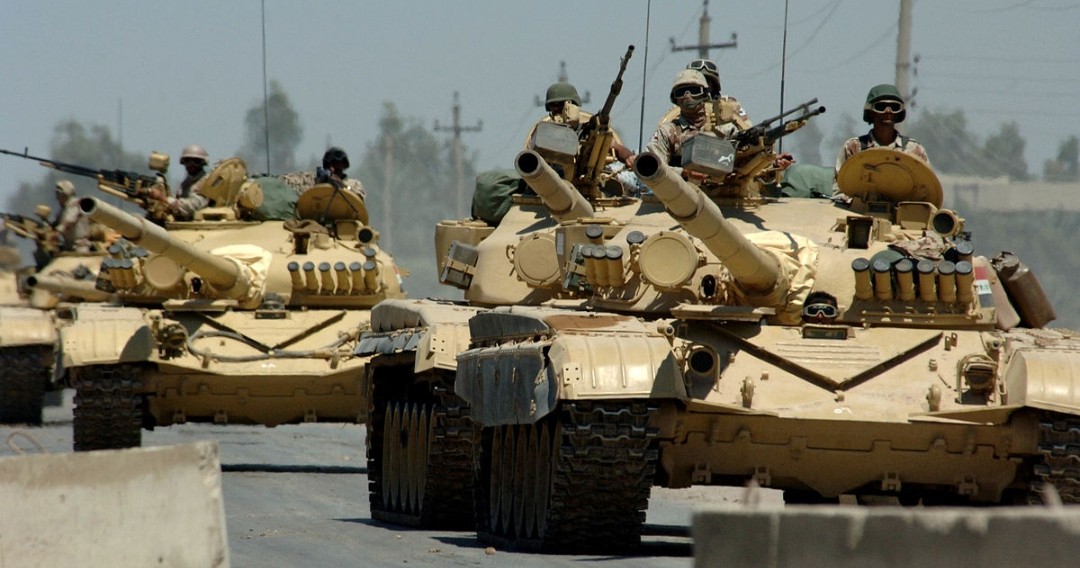
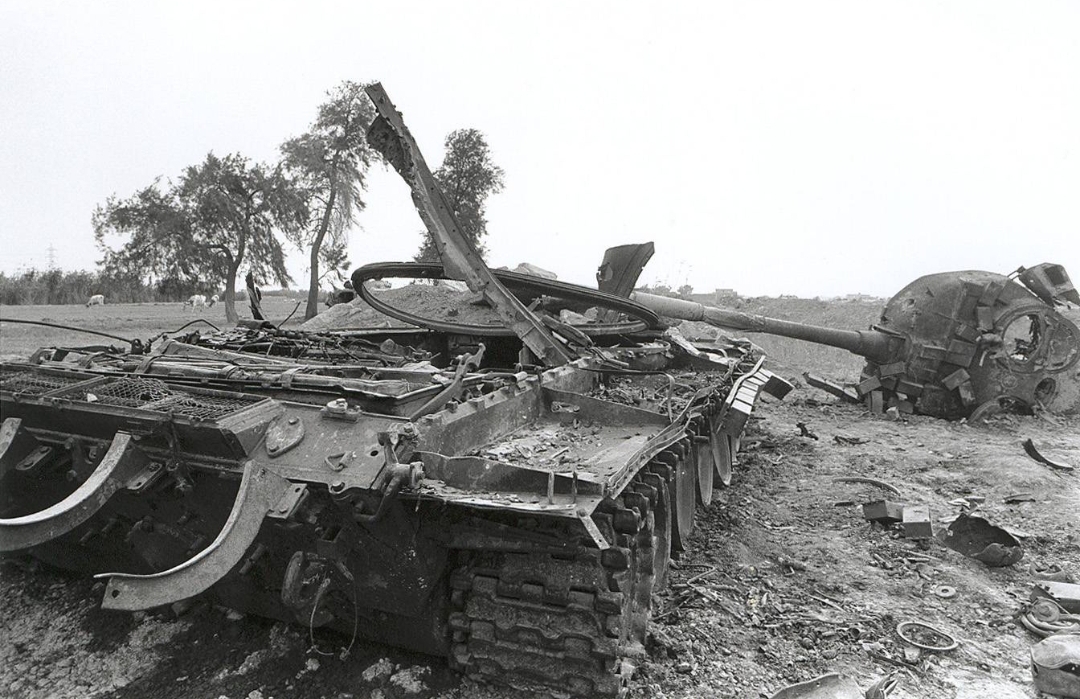
It is highly likely that Iraqi ERA-equipped T-72s were modified after the events of 1991, and therefore would not have been involved in the First Gulf War. Nevertheless, they did see combat during the 2003 invasion of Iraq; however, the details of their employment remain scarce. At least one example was destroyed beyond repair by anti-Saddam forces.
After the U.S.-led invasion in 2003, many surviving Iraqi T-72s were destroyed, captured, scrapped or put into storage. In the 2010s, however, Iraq began refurbishing the remaining vehicles and even purchased some additional units. A number of these T-72s remain in service today, now operating alongside their newer T-90 counterparts and even former adversaries; M1A1 Abrams tanks.
A Closer Look at Iraqi T-72M1 with ERA
Spoiler
Drawing on their experiences from the Iran–Iraq War, the Iraqi military recognized that their entire tank fleet was vulnerable to modern anti-tank threats, particularly infantry-operated ATGMs and RPGs. Efforts to obtain explosive reactive armor (ERA) faced multiple obstacles: restrictions from foreign suppliers, limited financial resources and political constraints linked to the ongoing arms embargoes and shifting alliances. Despite these challenges, evidence suggests Iraq may have acquired a small batch of ERA and managed to fit it to a handful of tanks. The images in question were taken in the 21st century, making it highly likely that these upgrades were commissioned or became possible only after the events of 1991.
Close examination of available photographs reveals at least two ERA-equipped versions of T-72; one fitted with the TPD-2-49 optical rangefinder and another later model (my suggestion) without it. The absence of an electro-optical interference pod indicates that the tank shown in the images below is not an Asad Babil, but rather a standard T-72M1. The side-skirt ERA blocks differ from the typical Soviet configuration: instead of being mounted on rubber panels, some of the tanks appear to have them fixed to metal plates. Based on the available imagery, the ERA layout, particularly on the side skirts, appears largely consistent across all observed vehicles (if equipped). The general arrangement seems inspired by the Soviet T-72S, though the exact layout is slightly different. The origin of these blocks remains unclear, and it is uncertain whether they were genuine Kontakt-1 units or some type of knock offs. I am skeptical that these are NERA blocks, as effective NERA arrays typically need to be much larger to offer meaningful protection. The worst-case scenario is that these are simply mock-ups or visual mimics, intended to deceive hostile intelligence into overestimating the tank’s capabilities. However, for the purposes of War Thunder, we will proceed under the assumption that these are genuine ERA blocks (Kontakt-1).
To distinguish an ERA-equipped T-72M1 from an M/Ural variant, the presence of smoke grenade launchers is a key indicator. T-72 Ural and early T-72M tanks did not feature smoke launchers in their standard configuration, whereas the T-72M1 and Asad Babil were factory-equipped with them. Iraqis appear to have fabricated their own side-mounted smoke launchers, by repurposing the units normally fitted to the turret cheeks and mounting them on custom brackets along the turret sides. It is highly likely these Iraqi ERA-fitted T-72s did not receive upgraded engines or other mobility improvements, since the ERA coverage itself was relatively light and would not have required major performance modifications.
To summarize, the Iraqi T-72M1 equipped with ERA is essentially a slightly downgraded Soviet T-72AV made to look like a T-72S, assuming the ERA blocks were genuine and fully functional.
T-72M1

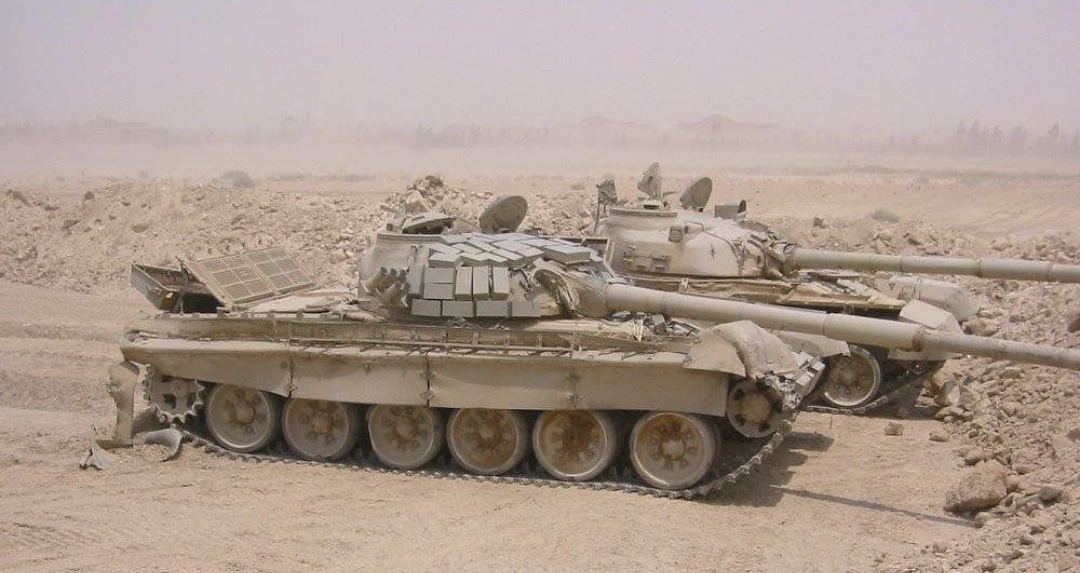
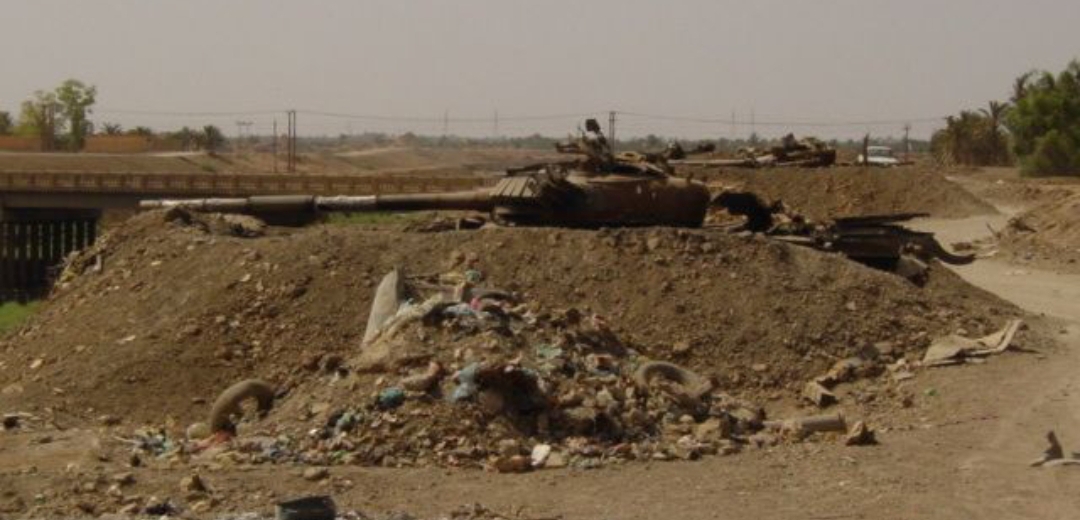
ERA-equipped T-72 with TPD-2-49 (for comparison)
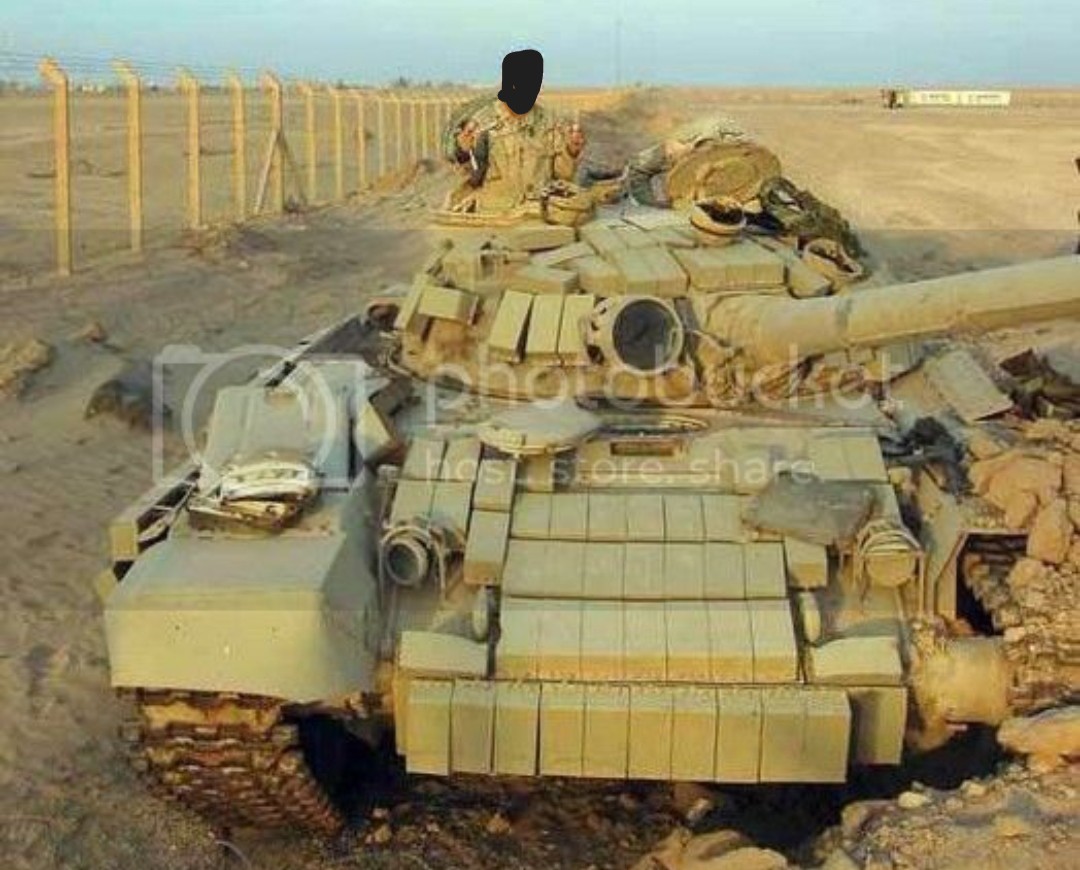
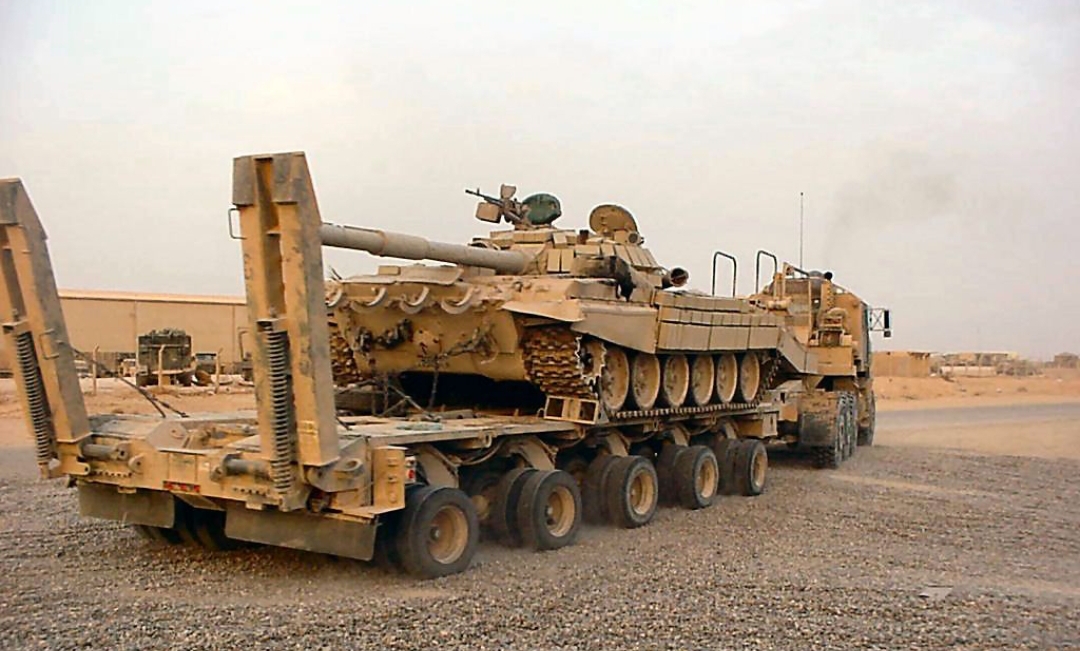
T-72S (for comparison)
Spoiler
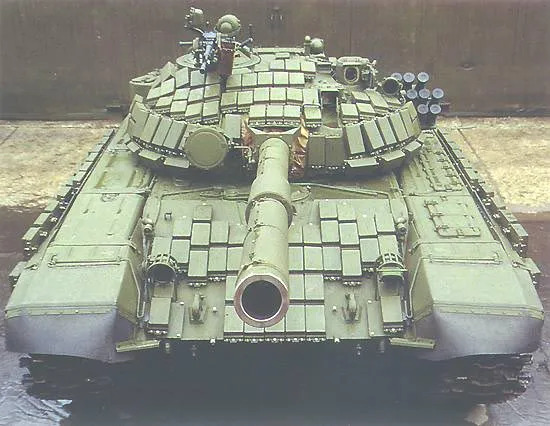
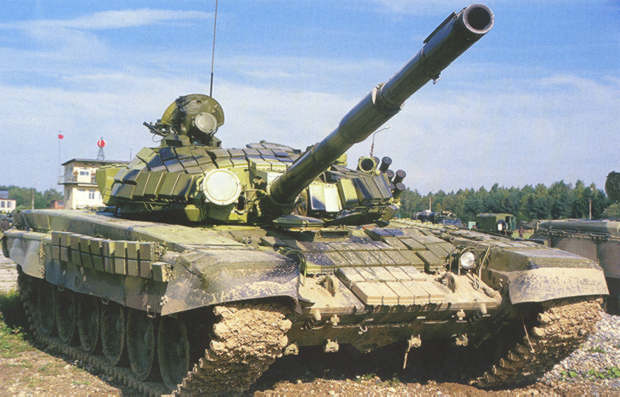
Iraqi T-72M1 (Kontakt-1) Specifications
Spoiler
General
- Type: Main Battle Tank (MBT)
- Country of origin: Soviet Union
- Crew: 3 (commander, gunner, driver)
- Service entry: Early 1980s
Dimensions & Weight
- Combat weight: ~41–42 tons
- Length (gun forward): 9.53 m
- Hull length: 6.95 m
- Width: 3.59 m
- Height: 2.23 m
- Ground clearance: ~0.49 m
Estimated Weight Increase due to ERA
- Net increase: ~0.8–1.0 metric tons
Armament
- Main gun: 125 mm 2A46 smoothbore
- Ammunition types:
- APFSDS
- HEAT
- HE-FRAG
- Ammunition types:
- Autoloader capacity: 22 rounds (carousel)
- Total ammunition carried: ~39 rounds
- Coaxial machine gun: 7.62 mm PKT
- Anti-aircraft machine gun: 12.7 mm NSVT (commander-operated)
Fire Control & Optics
- Fire-control system: TPD-K1 laser rangefinder
- Gunner’s sight: Day/night (active IR with searchlight)
- Commander’s sight: TKN-3
- Stabilization: 2-plane gun stabilizer
Protection
- Base armor:
- Composite armor in turret front (export-grade, reduced vs Soviet T-72A)
- ERA: Kontakt-1 (unconfirmed)
- Smoke system:
- 12 × 81 mm smoke grenade launchers
Mobility
- Engine: V-46-6 V-12 diesel
- Power output: 780 hp
- Power-to-weight ratio: ~18.5 hp/ton
- Transmission: Manual
- Top speed (road): ~60 km/h
- Operational range:
- ~460 km (internal fuel)
- ~700 km (with external drums)
Sources
Spoiler
Source that mentions the hunt for these tanks: ArtOfWar. Ломачинский Андрей Анатольевич. Командировка. 10-12
Just checking • mungfali.com
https://btvt.info/
T-72 Soviet Main Battle Tank (1972)
https://war-book.ru/osnovnoj-tank-t-72-irak3/
Основной танк Т-72 | Флот 3000
Tankograd: T-72: Part 1
Tankograd: T-72: Part 2