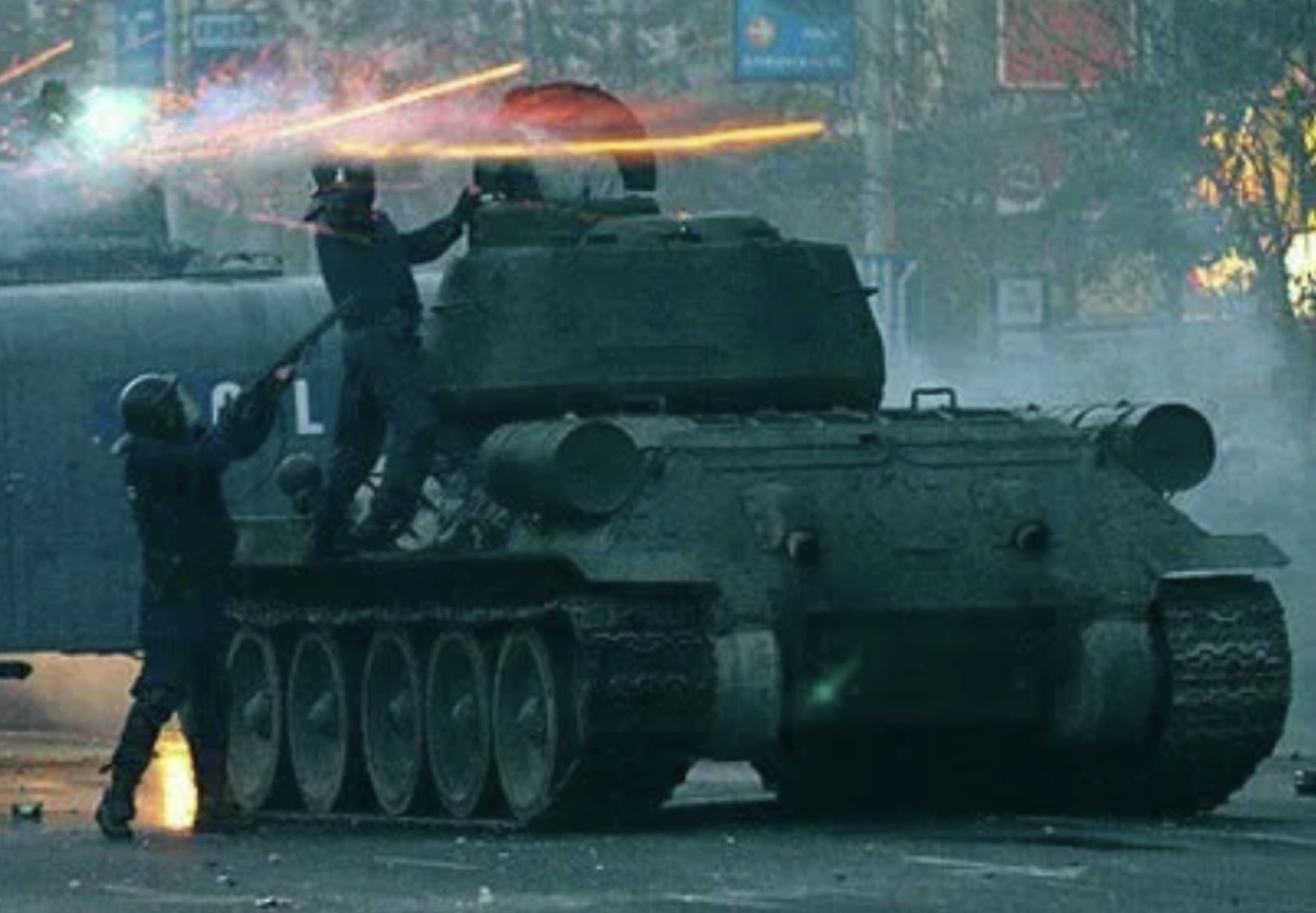
Would you like to see T-34-85 (1969) in-game?
How would you like to see T-34-85 (1969) in-game?
- As a Tech-Tree Vehicle
- As a Premium Vehicle
- As a Squadron Vehicle
- As an Event Vehicle
- I said No
T-34-85 Model 1969
Introduction
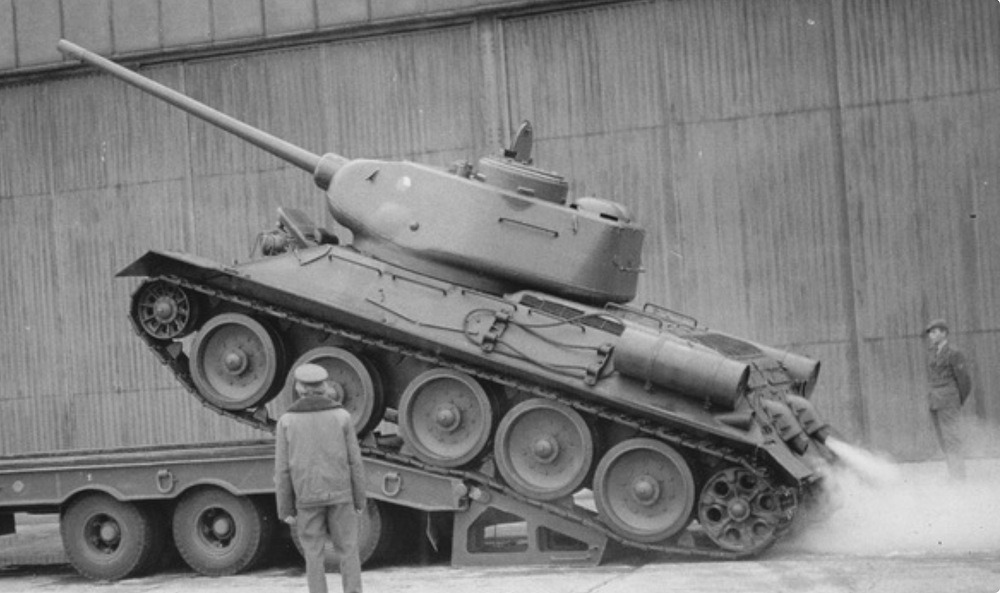
The T-34-85 (1969) or Model 1969, also sometimes semi-incorrectly referred to as the “T-34-85M”, represents the final and most comprehensive post-war modernization of the legendary T-34-85. This upgrade program aimed to extend the tank’s combat effectiveness and service life well into the Cold War. The 1969 standardization brought together nearly all previously developed improvements, ranging from mobility and optics upgrades to communications and external modifications, into a single, unified package. Rather than being an entirely new variant, the Model 1969 was the culmination of successive modernization efforts, incorporating enhancements trialed in earlier programs to create the most refined version of the T-34-85 platform.
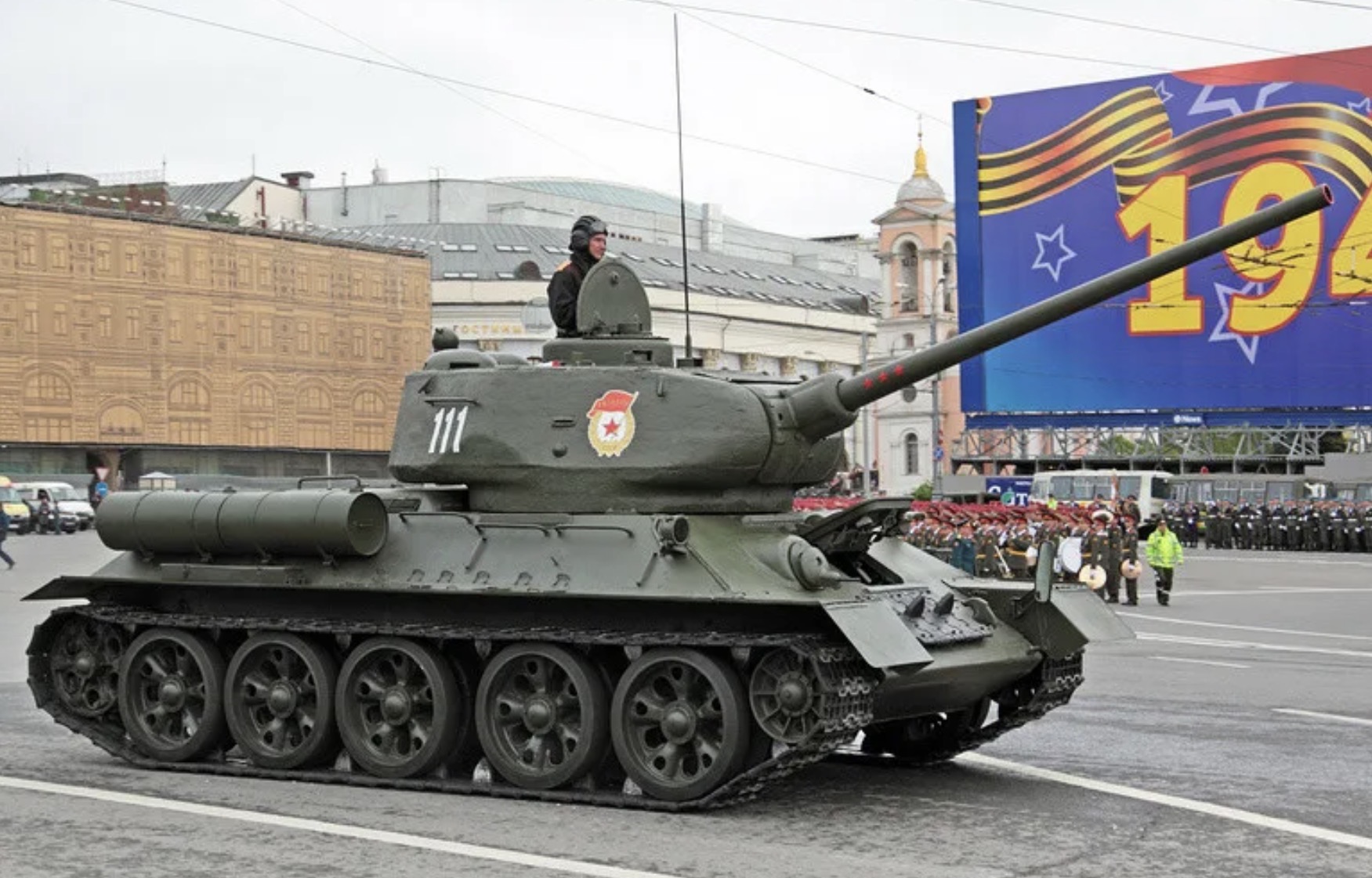
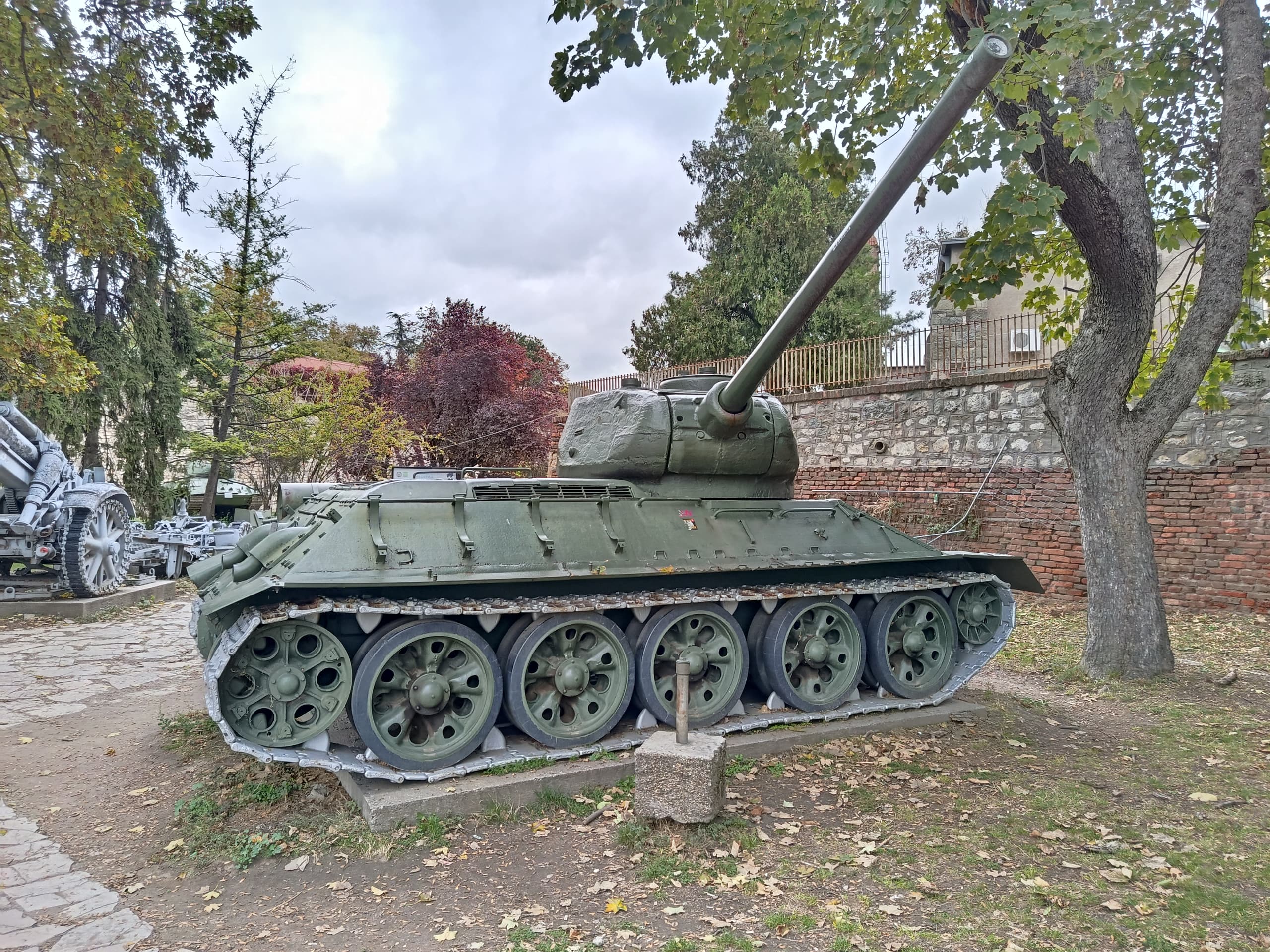
The above image depicts a historically confirmed variant of the T-34-85 (1969). Zaloga: “Post-war, remaining T-34-85s in the Red Army were put through two major rebuilds, resulting in the Model 1960 and Model 1969 variants. This is a T-34-85 Model 1969. Some rebuilds include the reinforced mounting for the external fuel tanks, the new starfish wheels, and the infra-red driver’s headlight on the left side, with the white light searchlight sometimes moved to the right side. This tank has a post-war composite turret with split mushroom vents.”
T-34-85 (1969) History
View
The development of the T-34 began in the late 1930s as a response to the need for a modern, well-armored, and mobile tank to replace outdated Soviet designs. It evolved from a series of prototypes, starting with the BT series of fast tanks, particularly the BT-7M, which served as a testbed for a new diesel engine and sloped armor concepts. This led to the A-20, a 4-roadwheel prototype with thin armor, and then the more advanced A-32, which introduced 5 road wheels, thicker armor, and a 76.2 mm gun. Finally, the A-34 prototype, tested in 1939, became the direct ancestor of the T-34. After successful trials, it entered mass production in 1940 as the T-34 Model 1940. From there, it evolved rapidly through wartime upgrades, culminating in the T-34-85 in 1944. After World War II, the T-34-85 underwent a series of modernization programs aimed at extending its service life. This series of enhancements ultimately culminated in the T-34-85 (Model 1969), which incorporated most of the key modifications developed over the previous two decades.
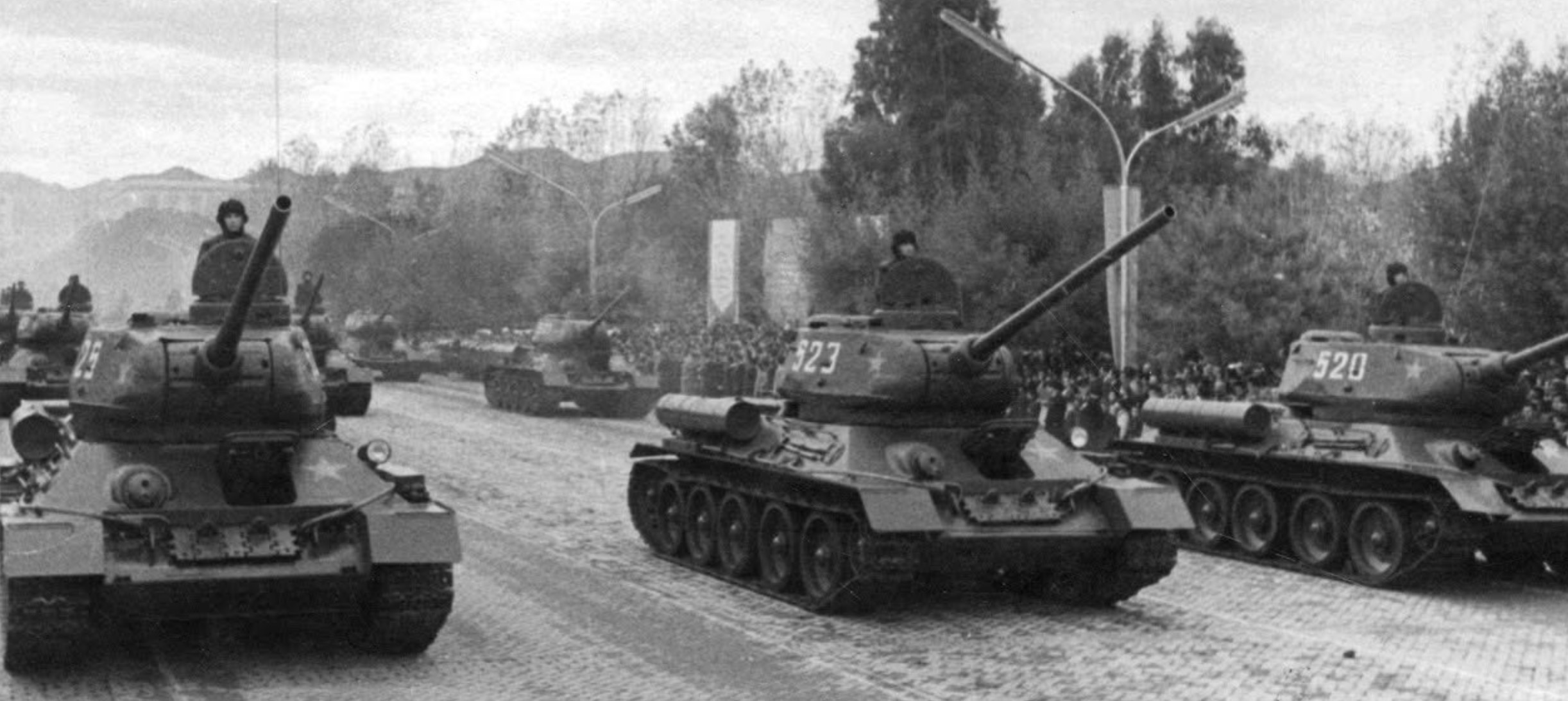
Why bother with T-34s in the late 1960s? The answer is simple: thousands of T-34-85s had already been produced and were sitting in storage. Rather than scrapping them, it made far more sense to transfer them to allied states and movements in support of broader political and strategic objectives. Many of these allies lacked trust, resources, infrastructure, and training required to operate more sophisticated armored vehicles. In that respect, the T-34 was actually well suited to the role. It was mechanically simple, rugged, and easy to maintain compared to newer tanks.
It’s also important to avoid viewing these conflicts through the lens of Cold War superpowers. Just because advanced anti-tank weapons such as the TOW missile existed in U.S. service at the time did not mean that every sandal-wearing rebel group in Africa or the Middle East had access to them. In many cases, insurgent forces possessed few or no effective anti-tank weapons at all. Under those conditions, an aging T-34 could still provide valuable fire support, protection, and a significant psychological advantage. As a result, despite its age and obsolescence against modern armies, the T-34-85 continued to achieve a measure of success in a number of post-war conflicts.
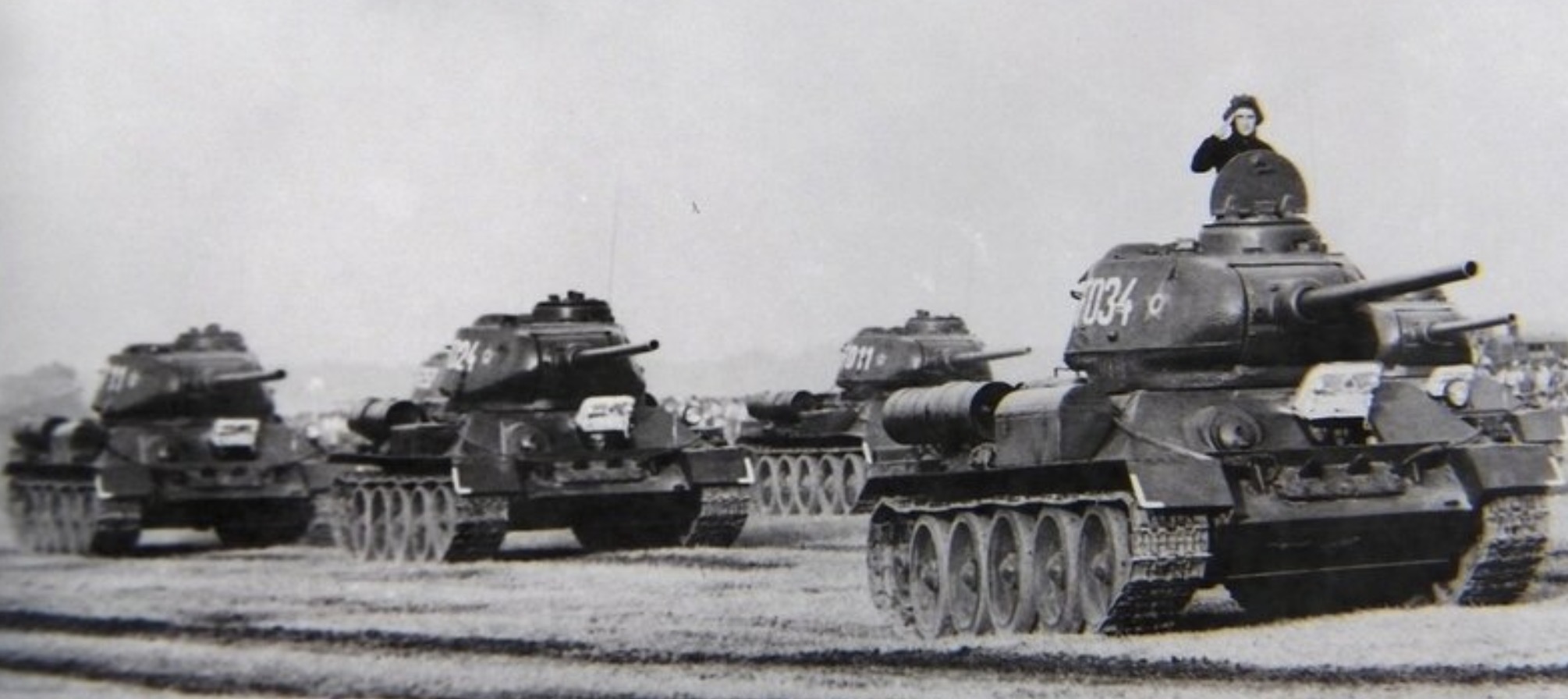
In the Soviet Union, these tanks remained in service at least into the late 1970s and stayed on the books until 1993. Their role was essentially to fill gaps in the USSR’s vast armoured force structure, remaining in secondary, reserve, or low-priority formations until enough newer tanks became available to replace them.
Interestingly, the SU-100 was also modernized alongside the T-34-85 during the 1960s, something you can read more about here.
P.S These postwar upgrades are often collectively and somewhat incorrectly referred to as the T-34-85M, a general designation encompassing various national and factory-level refits. This classification is somewhat supported by Przemysław Skulski in his own research and publications. He specifically states that "in some countries (Vietnam, for instance) called the 1969 version “T-34-85M.” Nevertheless, this suggestion is going to maintain the T-34-85 (1969) designation.
T-34-85 (1969) — Full List of Visible Upgrades
- Two 200-liter rear auxiliary fuel drums
- Two БДШ-5 (BDSh-5) smoke bombs
- МЗА-3 (MZA-3) refueling unit in the left-side stowage box
- Split turret ventilation system with separate intake and extractor mushroom vents
- Improved single-piece commander’s cupola hatch
- ТПК-1 (TPK-1) or ТПКУ-2Б (TPKU-2B) commander’s observation device
- ТВН-2 (TVN-2) driver’s night-vision device
- ФГ-125 (FG-125) infrared illuminator on the right front hull
- ФГ-102 (FG-102) visible-light headlamp with СМУ blackout hood on the left front hull
- С-58 (S-58) electric horn
- ГСТ-64 (GST-64) red turret marker/clearance lamp
- Rear-facing ФГ-126 (FG-126) visible-light turret lamp
- Late 830 mm T-55-pattern “starfish” road wheels
- Squared front mudguards/fenders
- Wooden glacis splash/deflector board
- External rear electrical socket
- Р-123 (R-123) VHF radio installation
Important: Lack of Uniformity
Spoiler
It is imperative to note that not all Cold War T-34-85s received every upgrade that I listed above. Equipment varied depending on the year of refurbishment, refurbishment facility, end user requirements, and export configuration. In his work, Steven Zaloga refers to the modernized Cold War-era T-34-85s as the T-34-85 Model 1969, even though he acknowledges that these tanks often lacked full uniformity in their upgrades.
Model 1969 is often confused with the Model 1960, as the two share several external features. T-34-85 Model 1960 should have primarily been an internal postwar modernization, so externally many examples should closely resembled late-war T-34-85s. Model 1969 represented a further modernization of this existing standard, most notably incorporating T-55-type “starfish” road wheels, the TVN-2 improved night-driving system, and the R-123 radio. Because modernizations were carried out progressively during overhaul rather than through a new production run, some Model 1960 tanks later acquired individual Model 1969 features, especially the later road wheels, making visual identification incredibly difficult.
“To put it simply”, a T-34-85 fitted with T-55-style “starfish” road wheels can generally be identified as having reached the Model 1969 modernization standard, even if some of the other associated upgrades are absent. These wheels were introduced as part of the later modernization and were not included in the original Model 1960 standard. However, their presence should not be taken to mean that the tank necessarily received every Model 1969 modification, as upgrades were applied progressively during overhaul. Conversely, not every Model 1969 received the T-55-style wheels, so their absence does not rule out a late-modernized vehicle. In such cases, other external features should be examined to distinguish a Model 1960/69 from an essentially unmodernized late-production 1945–46 tank. The most useful details are the external MZA-3 fuel-pump stowage box, night driving headlights, and especially the BDSh-5 smoke-canister mounting points on the left sloping hull side. The presence of either the MZA-3 fuel-pump box or the left-side BDSh-5 mounting points is particularly strong evidence that the vehicle received the Model 1960 modernization or a later derivative of it, as both features were introduced as part of the Cold War modernization program.
The schematic above clearly illustrates the main problem with identifying these vehicles. The top drawings show an almost complete modernization package while retaining the earlier turret-roof configuration. The bottom drawing, by contrast, incorporates the improved turret roof, yet still retains T-54-style road wheels and the rear-mounted smoke canisters. Interestingly, both configurations are shown with the rear-mounted FG-126 spotlight on the turret. However, I have found no photographic evidence of a vehicle combining the apparent “full” Model 1969 upgrade package with this rear-mounted projector. Photographic evidence does exist for the FG-126 on 1960s-modernized vehicles, while the most upgraded Model 1960/69 examples appear to carry only the simpler GСТ-64 red marker/position lamp in this location.
Skulski and Zaloga often differ from Russian-language sources in how they date and classify the postwar modernization program. While they attribute many of the later modifications primarily to the Model 1969, Russian sources tend to place a greater number of these changes within the earlier Model 1960 modernization program or its subsequent updates. Because individual vehicles were modernized progressively and surviving examples often combine features from different stages, identifying a specific tank as strictly Model 1960 or Model 1969 can be difficult. For this reason, I will occasionally use the broader Model 1960/69 designation. It should nevertheless be remembered that the Model 1969 represents the most refined form of the T-34-85 modernization program. Whatever features are considered unique to the 1969 modernization, these vehicles also incorporated the improvements introduced during the earlier Model 1960 program and its intermediate modifications.
P.S This is also why this suggestion has undergone so many edits. Much of that process was simply me repeatedly fact-checking the available sources, correcting earlier assumptions, and trying to reconcile the often contradictory information surrounding these postwar modernization variants. After working through numerous sources, I believe I have finally arrived at a much more accurate understanding of the subject.
Model 1969 In-Depth
Spoiler
Engine and Road Wheels
View
In the 60s the tanks were upgraded with the V-2-34M-11 diesel engine, producing 520 hp. This enhancement provided a modest boost in performance and reliability compared to the original V-2-34 engine. In addition, numerous startup assistance upgrades were introduced to help the vehicle start reliably in adverse conditions, particularly in cold weather. Cooling, Lubrication and Air-Filtration systems were also improved. This source has plenty of schematics and will go into far more detail on this matter.
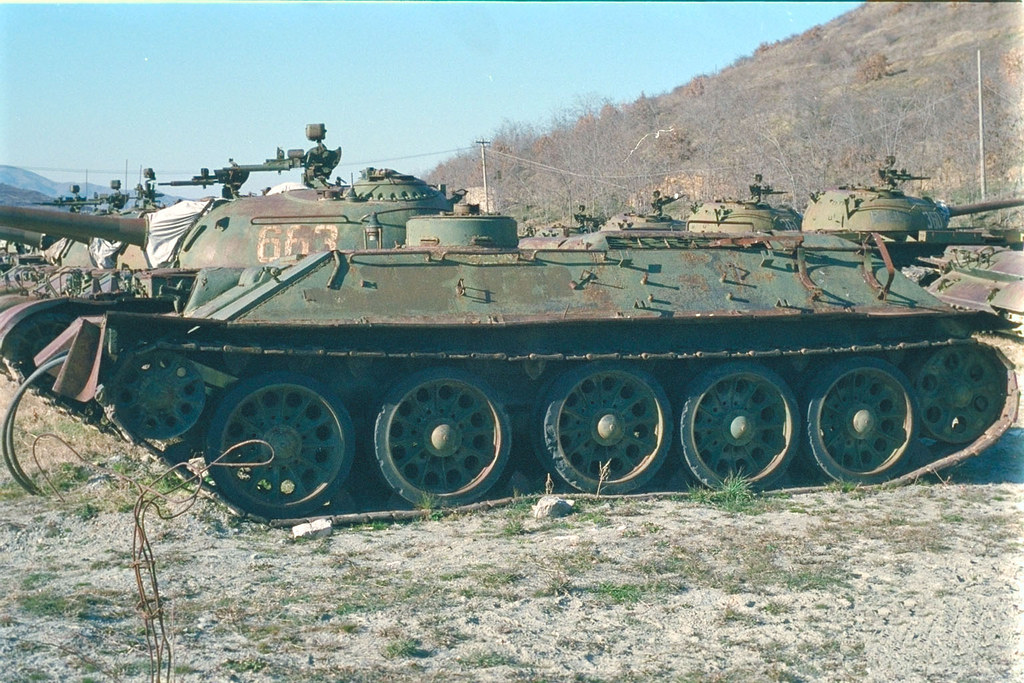
The T-34-85 (1969) incorporated T-55-style ‘starfish’ pressed steel road wheels, replacing the original cast or stamped wheels commonly seen on earlier T-34-85s. While visually similar to those used on the T-54/55, these wheels were not interchangeable between the tank types due to differences in hub design.
The T-55-style “starfish” road wheels did not provide a dramatic improvement in the T-34-85’s mobility. Their main advantage was a newer, robust and increasingly standardized wheel design that could be supported by the Soviet Union’s enormous T-54/55-era production and maintenance infrastructure. Their adoption simplified the long-term overhaul and spare-parts supply of an aging T-34 fleet while replacing the older, more complex wheel patterns as existing stocks were exhausted.
On this T-34-85 the T-54 style wheel is at the back, while the rest are T-55 style wheels. Upon closer inspection you will also notice that they both are also slightly physically different to those of their T-54/55 counterparts.
The T-34-85 (1969)'s wheel is on the left.
Zaloga refers to the above Iraqi T-34-85 (equipped with T-55 style wheels and a 1944 turret) as a T-34-85 (1969). He claims that any T-34-85 with T-55 style “Starfish” wheels is a T-34-85 (1969). However, he also acknowledges that “not all T -34-85 Model 1969 received this new wheel; it was added only when existing stocks of the older wheels were exhausted at local rebuilding plants.”
Fuel
View
The 1960/69 version introduced two barrels fuel barrels on an inclined stern sheet with a capacity of 200 liters each. The tank could travel 300 km on internal fuel and ~615km with the full fuel drum kit, given that the fuel consumption of the T-34-85 on roads averaged around 1.9–2.2 liters/km. The tank spare parts kit included a small-sized MZA-3 filling unit, placed in a transport position in a metal box mounted outside on the inclined left side of the hull. It simplified the refueling process, given that the external fuel drums were not connected to the engine. A rear external electrical socket was also fitted to power a portable service lamp and the МЗН-3 (MZN-3) refueling unit directly from the tank’s electrical system.
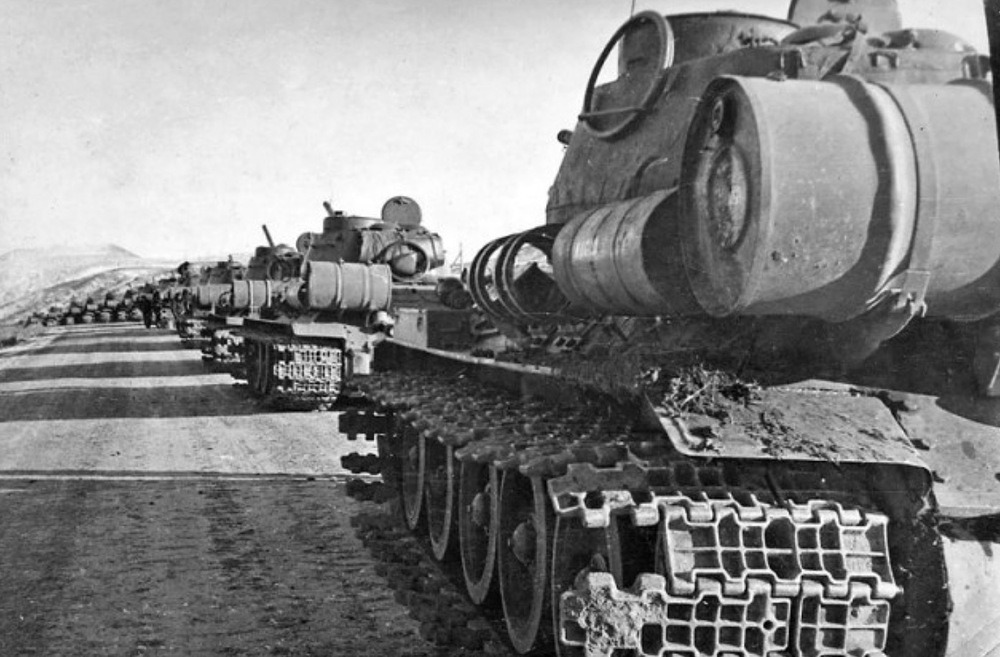
The inward fuel drum holders on the T-34-85 can be mounted in different configurations, either positioned inside (closer to the engine access hatch) or outside the exhaust pipes, effectively shifting the entire fuel drums closer together toward the center or further apart toward the edges of the rear hull. This means the mounting layout is not standardized and may vary depending on the tank’s production batch, modernization program, or operator preference. Additionally, the fuel drums can be mounted at different vertical positions on the rear armor slope. When mounted too high, the drums risk obstructing the turret’s full rearward rotation, unless they are removed before combat. The gallery below includes examples of the T-34-85 Model 1960/9 where the fuel drums are positioned closer together and lower, minimizing interference with turret movement and reflecting one of the more practical configurations seen in the field.
If the smoke-canister mounts remained at the rear of the tank or were not fitted, some Model 1960/69 vehicles could carry an additional original-style cylindrical auxiliary liquid tank on the left side of the hull, in the position otherwise used for the relocated smoke canisters. This increased the total number of external cylindrical fuel tanks carried by the vehicle to four. See the Night Vision section or the Video for an example of such arrangement.
It should be noted that some Model 1969 tanks did not carry these auxiliary fuel drums.
Smoke
View
The T-34-85 (1960/69) featured the TDP smoke generation system, which utilized MDSh smoke canisters mounted externally on the side. The side-mounted smoke canisters were introduced only when the tank was meant to be fitted with the two 200-litre rear fuel drums, as these occupied the original rear mounting positions. If the additional fuel drums were not fitted, the smoke canisters retained their original mounts at the rear of the vehicle.
The T-34-85’s smoke system used two expendable BDSh-5 smoke canisters, which could be electrically ignited from the commander’s position and jettisoned from the vehicle. Once used, the individual canisters had to be replaced, although the mounting and ignition system itself was reusable. The effectiveness of the resulting smoke screen depended considerably on wind and atmospheric conditions.
It should be noted that the smoke canisters themselves are rarely seen fitted to these T-34-85s. In the vast majority of photographs, the mounting brackets are either empty or the mounts appear to have been removed entirely. The reason for this is unclear. Possible explanations include the logistical burden of storing and supplying the expendable smoke canisters, the relatively limited effectiveness of the system, or reliability issues with the electrical ignition and release mechanism. These explanations are speculative, however, as I have not found evidence establishing why the canisters were so frequently absent.
Communications and Electrical
View
In the 1960s, the T-34-85’s electrical system was thoroughly modernized as part of the broader upgrade program. This overhaul included the installation of new wiring harnesses, improved circuit protection, and updated electrical panels and connectors, replacing outdated WWII-era components. These changes increased the system’s durability, resistance to short circuits, and overall operational reliability, especially important in harsh environments. The upgrades also allowed the tank to support more advanced onboard equipment introduced in postwar refits, marking a significant leap in electrical safety and functionality for continued frontline use.
The 1969 modernization introduced a significant upgrade to the T-34-85’s communication systems by replacing the outdated World War II-era equipment with the more advanced R-123 radio set and R-124 intercom system. The R-123 was a VHF radio that offered clearer, more reliable voice transmission over greater distances and was far more resistant to interference and signal degradation than the older 10-RT series radios. This allowed for improved coordination between tank units and command elements on the battlefield. The accompanying R-124 intercom system enhanced internal crew communication, ensuring more effective operation during combat by allowing all five crew members to communicate clearly even in high-noise environments. These upgrades significantly modernized the T-34-85’s battlefield networking capabilities, aligning them more closely with the standards of newer Soviet armored vehicles of the era.
Night Vision, Projectors, Optics and Turret
View
To enhance its capabilities in night operations, the T-34-85 (1960) was fitted with the BVN night vision device for the driver, which allowed basic visibility in darkness. This system was supported by IR projectors. These infrared searchlights were mounted on the hull sides and sometimes at the top rear or of the turret, illuminating the battlefield with infrared light that was barely visible to the naked eye but detectable through the night vision optics. This setup allowed the driver to navigate and maneuver the tank in low-light or no-light conditions, something that was a significant limitation for earlier T-34 variants.
According to Zaloga, by 1969, the original infra-red night driving equipment i.e BVN on the T-34-85 was replaced with updated periscopes and modernized headlights. The 1969 modernization used the FG-102 visible-light headlamp with blackout equipment on the left front hull, while the earlier FG-100 infrared illuminator on the right was replaced by a newer FG-125. The 1969 modernization improved the T-34-85’s night-driving capability by replacing the older BVN system with the more modern TVN-2 driver’s night-vision device, paired with an FG-125 infrared illuminator. This active-infrared system allowed the driver to see roughly 50–60 meters ahead in darkness without using visible headlights, making night movement safer and more practical.
The С-58 (S-58) electric horn was mounted on the left front hull behind the headlamp and served as the tank’s external warning horn.
The Model 1960 replaced the commander’s older MK-4 rotating periscope with a TPK-1, or on some tanks a TPKU-2B. The latter was particularly useful on vehicles fitted with commander-controlled electric turret traverse: the commander could observe through the device and slew the turret toward the target he was looking at. The loader and gunner retained their roof-mounted rotating MK-4 periscopes. The driver’s two daytime viewing blocks were angled outward to increase his horizontal field of view.
Some T-34-85 (1969)s also featured improvements to the ventilation system, addressing one of the long-standing issues of the original T-34-85 design. The upgraded system enhanced air circulation within the fighting compartment. If fitted, the improved air-circulation system reversed the airflow through the turret: the rear mushroom ventilator drew fresh air in, while the forward ventilator expelled stale air and fumes. This not only improved crew comfort, but also slightly reduced the risk of overheating and internal condensation, contributing to greater operational reliability in a wider range of environmental conditions.
The tank featured a modified commander’s hatch, an improvement over the earlier wartime design. This hatch was single-piece, forward-opening. The hatch provided quicker entry and exit, which was crucial in combat emergencies. Its structure also offered better frontal protection while on the move, allowing the commander to observe the battlefield with greater safety during marches and offering better protection in case the crew is forced to abandon the vehicle.
Take note of the FG-126 projector mounted at the top rear of the turret on this T-34-85 (1960/69). The turret-mounted projector was intended for convoy signaling in low-light conditions. The Angolan T-34-85s feature the GСТ-64, a small red marker/position lamp used to indicate the tank’s position and outline during night operations. It should be noted that the FG-126 was introduced after the GCT-64, appearing from 1965 onward, but it is much less commonly seen on surviving or photographed T-34-85s. It should also be noted that on the Model 1969, the FG-126 and GСТ-64 should appear together.
Armament and Ammunition
View
The T-34-85 (Model 1969) retained the same main armament as its World War II predecessors, the 85 mm ZiS-S-53 rifled tank gun. While the gun itself was unchanged, it was supported by several important upgrades in the 1969 modernization program, including an electric turret traverse motor and modernized optics. The ZiS-S-53 was originally designed to fire AP, APBC, APCR, and HE shells, but by the Cold War period, it was also potentially capable of using the BK-367, BK-367M, 3BK2 and 3BK2M HEAT-FS shells, shaped-charge shells that have ample penetration regardless of range. However, some shells designed for the D-44 divisional gun were not interchangeable with the ZiS-S-53. The ammunition load was reorganized to accommodate 55 rounds and 1890 cartridges for the DTM machine guns.
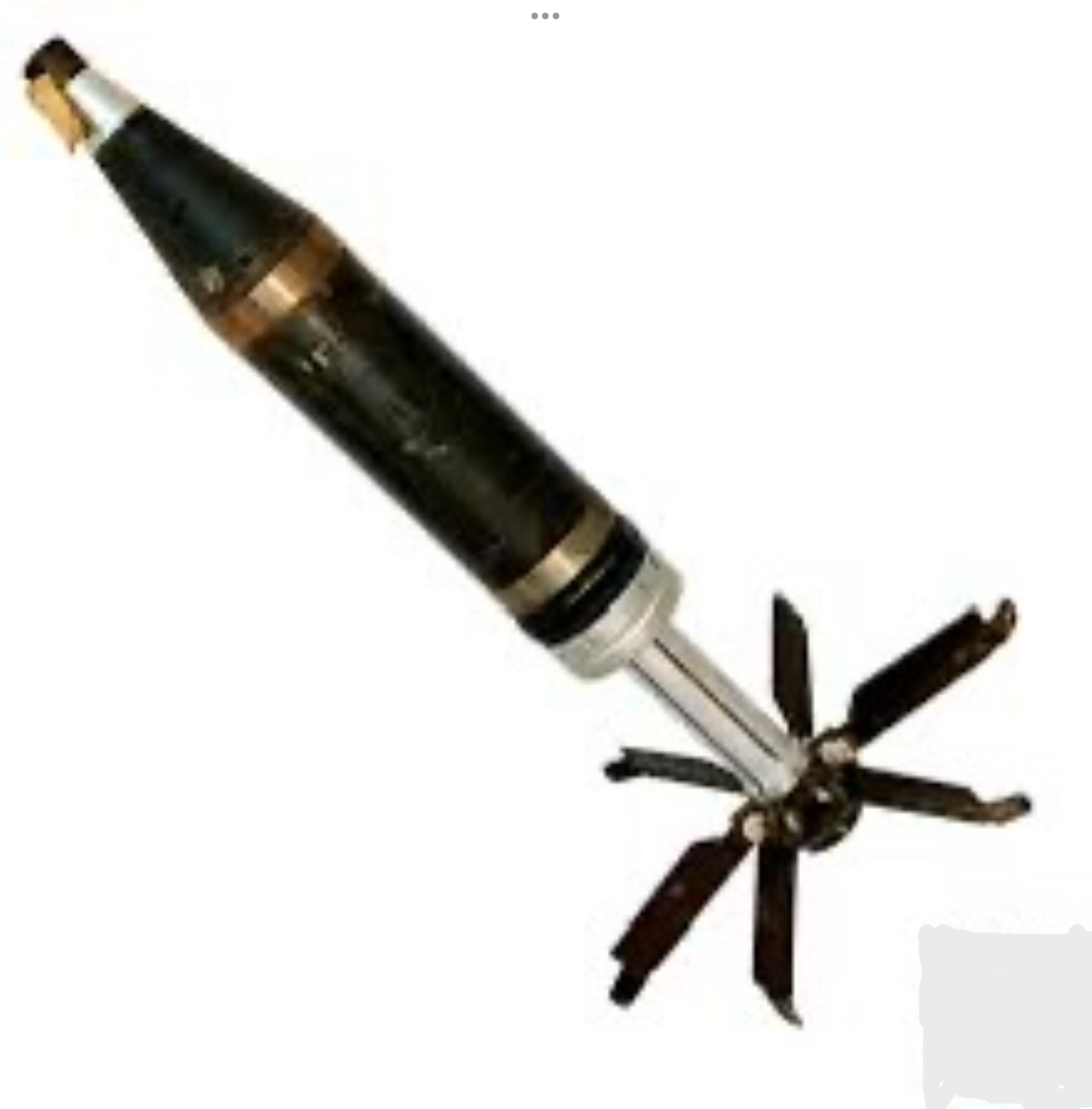
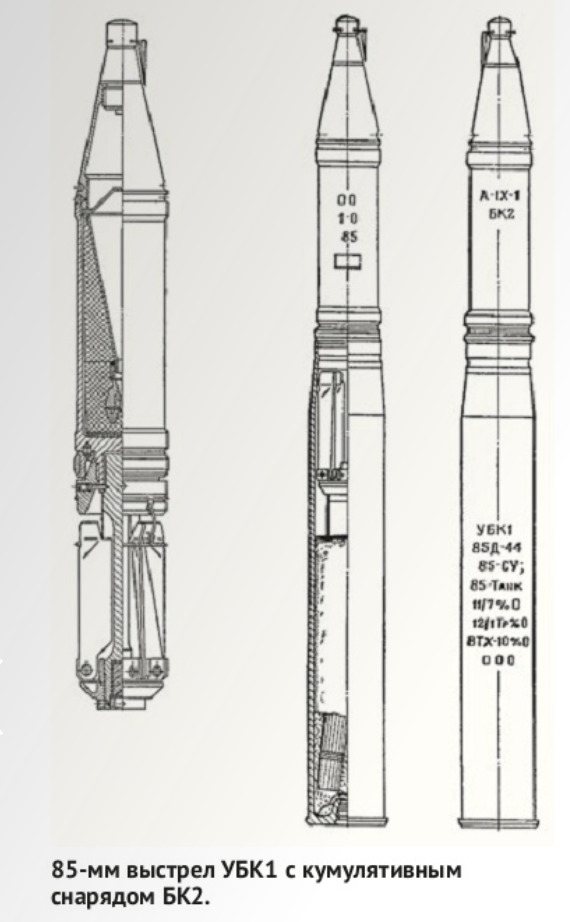
The images show a HEAT-FS round compatible with the T-34-85’s main gun, specifically the 3BK-2 and 3BK-2M HEAT-FS rounds. The 3BK-2 uses a steel-lined shaped charge, while the 3BK-2M features an improved copper liner for greater penetration.
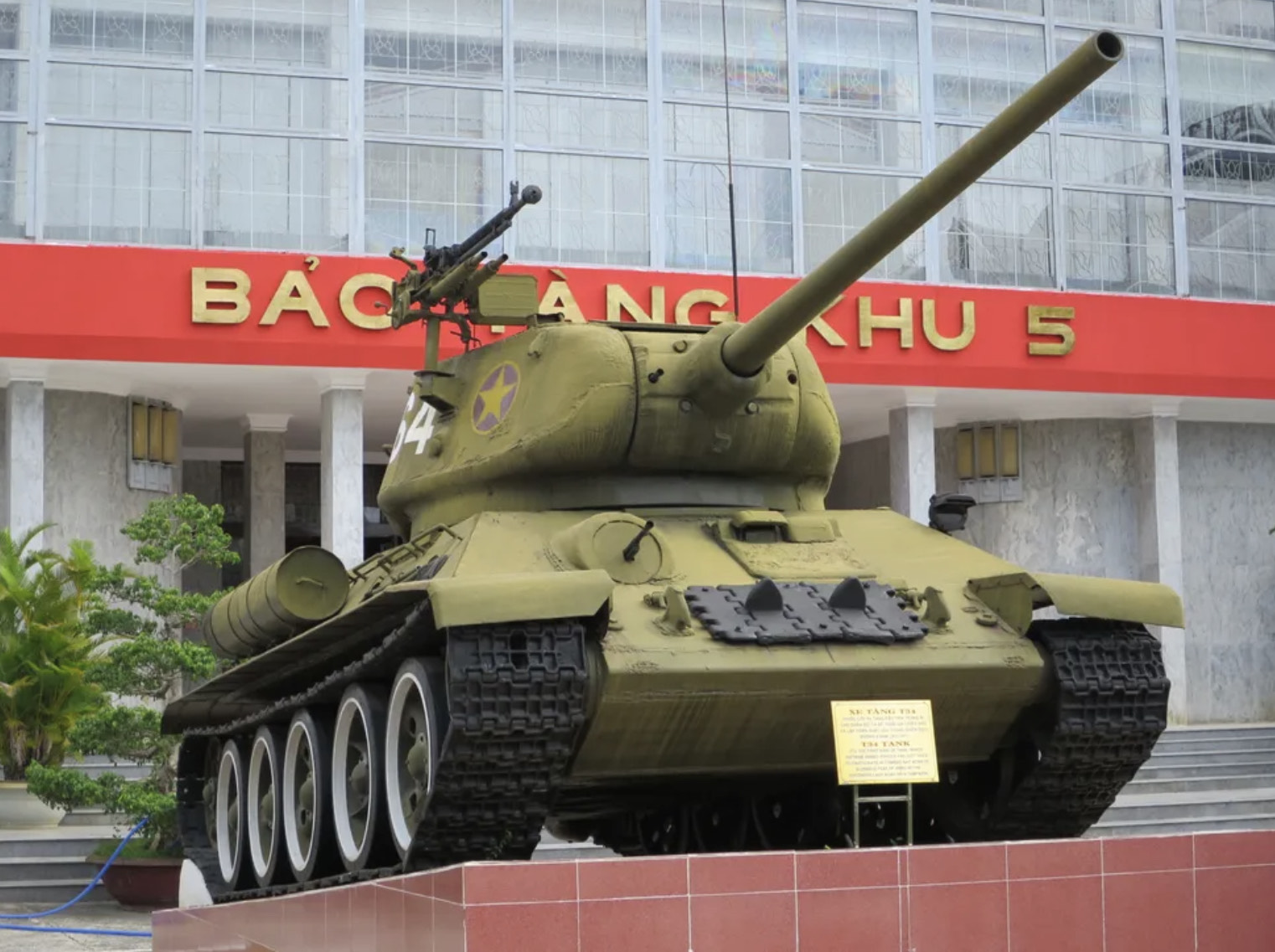
Some countries mounted heavy anti-air MGs on their modernized T-34-85 tanks, however there is no visual evidence of this from the USSR, Angola or Somalia with regards to the T-34-85 (1969) “full package” specifically. Nevertheless, if we take Zaloga’s word about the wheels, then some of T-34-85 (1969) operators mounted heavy MGs on their tanks. For example, the image below shows a Vietnamese T-34-85M featuring a simple yet distinctive DShK mount, positioned on the right side of the turret.
Summary
Spoiler
Distinguishing Features Brief
View
The most reliable way to identify a true Model 1960/69 is by looking for key external features such as the box housing for the electric fuel pump and especially side-mounted smoke canister racks. According to Steven Zaloga, the presence of T-55-style “starfish” road wheels is also a strong visual indicator of a 1969 model, although even this feature was not universal. Other elements, such as rear-mounted 200L fuel drums, upgraded traffic lights, and the revised turret ventilation system, may or may not be present on the 1960/69 modernization. There is a lack of strict standardization among Cold War-era T-34-85 upgrades. The Angolan example number “D-230” is as good as it gets, as far as the photographic evidence goes.
While retaining the core design of the original T-34-85, the T-34-85 (1960/9) can be distinguished by several key features:
Road Wheels: The adoption of T-55-style ‘starfish’ pressed steel road wheels is a clear visual indicator of the upgrade. Although similar in appearance to those on the T-54/55, these wheels were not interchangeable.
External Equipment: The addition of rear-mounted 200-liter fuel drums, relocated smoke canisters to the left side, wooden splash guard and MZA-3 filling unit box also set the T-34-85 (1960/9) apart from earlier models.
Turret Roof Modifications: Additionally, the ventilation system was upgraded with a revised turret vent layout. Unlike the original configuration, the modernized setup included one “mushroom” vent positioned at the front of the turret roof and another at the rear, providing improved airflow. Additionally, the commander’s hatch was also changed to the later version.
Night Driving Equipment: The T-34-85 (1960/9) featured different versions of I.R or normal blackout covered headlights mounted to the sides of the hull and sometimes a spotlight mounted at the rear of the turret alongside a clearance lamp.
Performance: The T-34-85 (1960/9) came with an improved engine, electronic turret traverse, improved optics and HEAT ammunition.
It’s important not to confuse the T-34-85 Model 1960/69 with Czechoslovak-manufactured/modernized T-34-85s (Type1, Type 2), which were also exported in large numbers to Africa and the Middle East. While both types often served side by side in the same armed forces, they are distinct variants. Czech-built T-34/85 are easily identified by their exceptionally smooth, high-quality turret castings, an intercom attachment below the rear left fuel tank, specific types of traffic lights, modified exhaust pipe armor and carried smoke canisters on the rear slope. They typically lack some of the most prominent 1960/9 modernization features, although, it is not a guarantee.
These vehicles should also not be confused with the Polish-manufactured/modernized T-34-85s (Type 1, Type 2, Type 3), which received a number of their own modernization features and followed a separate upgrade program.
Conclusion and Service History
Spoiler
Overall, the T-34-85 (1969)'s enhancements focused on extending the service life of the original T-34-85 by integrating updated components and systems such as improved road wheels, modernized communications equipment, uprated ammunition, improved mechanical equipment, better electrical wiring, increased fuel capacity, and night-driving capabilities. These upgrades ensured that the tank remained relevant and functional in the evolving post-WWII battlefield, even as more advanced designs like the T-55 and T-62 entered widespread service.
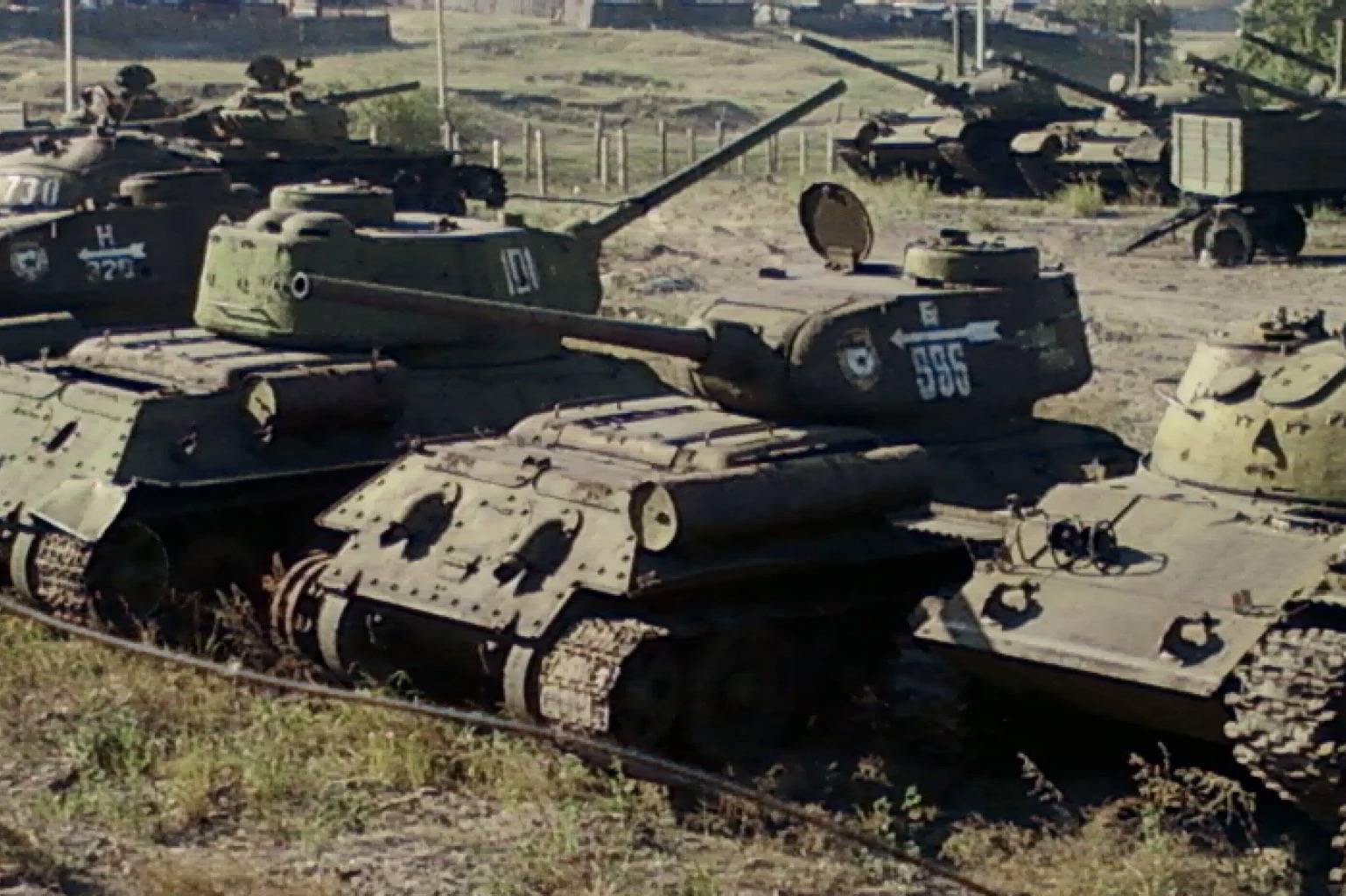
The T-34-85 (Model 1969) should be placed in the USSR tech tree, as there is clear photographic evidence of Soviet forces operating this specific modernized variant during their intervention in Afghanistan and in Chukotka. Its deployment in these instances confirms that the USSR retained and actively fielded upgraded T-34-85s well into the late Cold War era. The 281st Tank Regiment had 108th Motor Rifle Division equipped with T-44 and T-34 tanks in 1979. There is also evidence that T-34-family vehicles remained in Soviet service in the Far East surprisingly late, with examples reportedly still serving with a regiment of the 79th Motor Rifle Division at Gastello on Sakhalin during the 1980s. A limited number of surviving T-34-85s were also overhauled and specially prepared for the 1985 Victory Parade. These vehicles were referred to as the T-34-85 Model 1985, although this was specifically a parade modernization rather than a major new combat-service variant. Feskov’s Soviet ground-forces study records the 81st Reserve Tank Division at Nizhneudinsk with 320 T-34-85s in the late 1980s, alongside a number of other T-34-85s held by the neighboring 80th Reserve Tank Division. Despite having long since disappeared from frontline service, the T-34-85 remained officially on the books until 1993, when it was finally withdrawn from service by the newly formed Russian Federation.
See Model 1985
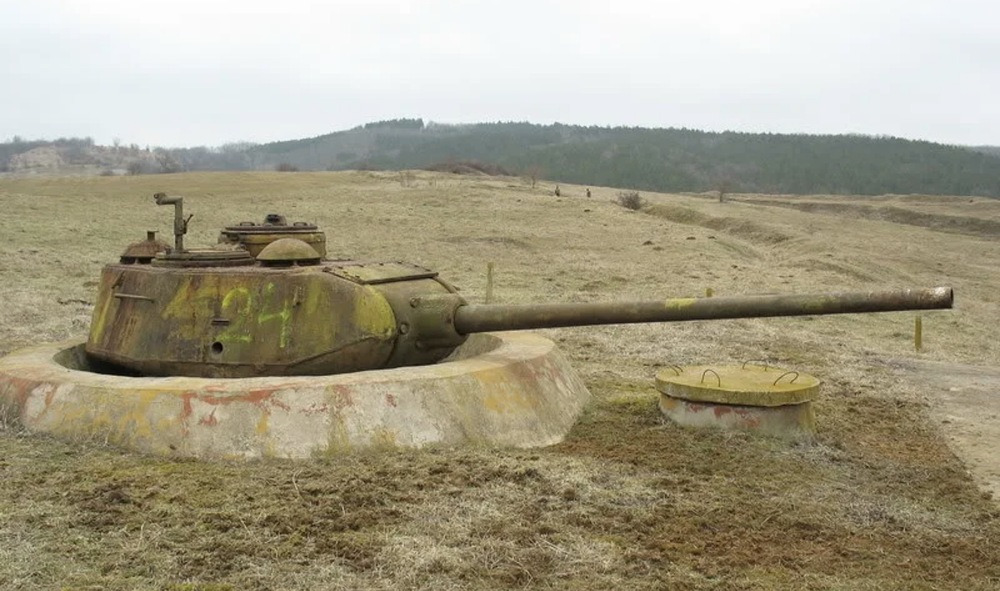
Some T-34-85 turrets were also emplaced on concrete mounts and bunker positions in the Soviet Far East and Transbaikal regions as fixed fortifications. Many of these positions appear to have remained in service well into the 1990s, with some likely surviving in an operational or maintained condition even beyond that period. You can read more about these here.
Various modernized T-34-85s remained in service with several Warsaw Pact armies long after they had disappeared from frontline tank units, serving primarily in training, reserve, mobilization, and secondary roles. Some countries retained significant numbers into the final years of the Cold War, while Romania and Bulgaria continued to possess T-34-85s into the early 1990s, after the dissolution of the Warsaw Pact itself. However, the true legacy, of the T-34-85 (Model 1960/9) specifically, lies in its vast global export footprint. These modernized variants found their way into some of the most intense conflicts of the 1980s, including wars in Africa, the Middle East, and Asia. In one form or another, the T-34-85 continued to serve in numerous other conflicts, even into the 21st century.
With over 80,000 units built, the T-34 remains one of the most iconic, influential, and long-serving tanks in military history. If you read or hear about a T-34 being used during the Cold War or even into the 2000s, it was most likely a T-34-85 (1969).
Implementation into War Thunder
Spoiler
In War Thunder, the T-34-85 (Model 1969) would feature minor yet meaningful performance improvements over the standard T-34-85 variants already in the game. It will be more mobile due to its modernized engine, and benefit from a faster turret traverse speed, thanks to the inclusion of an electric traverse motor. Most importantly, it would have access to post-war ammunition, including the HEAT rounds, giving it a significant firepower upgrade. It would also feature the ability to deploy smoke, something that most T-34-85s in-game lack. With these enhancements, the T-34-85 (1969) would realistically be the best T-34-85 in the game. However, the real appeal would be visual, with a proper Cold War-era refit featuring T-55-style road wheels, external fuel drums, and other subtle yet historically accurate cosmetic changes. These features would help the T-34-85 (1969) stand out from its WWII-era counterparts and offer players a visually rich and immersive representation of Cold War Soviet armor.
Gaijin has a consistent habit of removing Soviet rear-mounted external fuel drums from various tank models. However, when it comes to the T-34-85 (Model 1969), these fuel drums should be retained for the sake of visual impact and historical authenticity. In most documented configurations, the fuel drums are positioned in a way that does not obstruct the turret’s ability to fully traverse, including to the rear, so they would not interfere with gameplay. Moreover, photographic evidence of captured and destroyed T-34-85 (1969)s shows that many of these tanks entered combat with their external fuel drums still attached. This clearly demonstrates that, contrary to common belief, the drums were in some cases not removed before battle.
Disclaimer: All aspects of this suggestion are ultimately up to Gaijin’s discretion to decide and implement. This includes the vehicle’s battle rating (BR), nation (tree), available ammunition types, and visual features.
T-34-85 (1969) – Specifications
View
General Characteristics:
- Designation: T-34-85 (1969)
- Origin: USSR
- Type: Medium Tank
- Crew: 5 (Commander, Gunner, Loader, Driver, Radio Operator/Bow MG)
Dimensions:
- Length (gun forward): ~8.15 m
- Hull length: ~6.68 m
- Width: 3.00 m
- Height: 2.45 m
- Combat weight: ~32 tons
Mobility & Engine:
- Engine: V-2-34M-11 520 hp at 2000 rpm
- Alternatively V-2-34M
- Transmission: 5-speed manual
- Fuel Tanks:
- Internal + external (manually emptied)
- Electric fuel pump added for easier refueling
- Top Speed (road): ~61 km/h
- Maximum Range (road): ~615 km
- Road Wheels: T-55-style ‘starfish’ pressed steel
Armament:
- Main Gun: 85 mm ZiS-S-53
- Ammo Load: Up to 55 rounds (Including 3BK-2 and 3BK-2M HEAT-FS)
- Coaxial MG: 7.62 mm DT
- Bow MG: 7.62 mm DT
- Turret Rotation Speed: 21.2°/s
- Vertical Guidance: -0.5/25.0°
- Optional: Some post-war T-34-85 variants were fitted with additional heavy Anti-Air MGs
Armor:
- Hull Armor:
- Front (Upper Glacis): 45 mm @ 60° (~90 mm effective)
- Lower Glacis: 45 mm @ 45°
- Sides: 45 mm (vertical)
- Rear: 40–45 mm
- Floor: 15–20 mm (thicker under engine and fighting compartment)
- Turret Armor:
- Front: 75–90 mm (cast, rounded)
- Sides: 75 mm
- Rear: 52 mm
- Roof: 20 mm
Optics & Electronics:
- Night Driving Equipment:
- TVN-2 driver’s night-vision device + Blackout I.R headlights (on one side or both) and turret mounted projector + red identification light
- Commander’s Cupola: A one-piece hatch + modernized optics
- Radio: R-123
- Internal Systems: Fully rewired electrical system, improved reliability and safety
Historic Gallery and Conflicts
Spoiler
Angolan T-34-85 Model 1969s
Spoiler
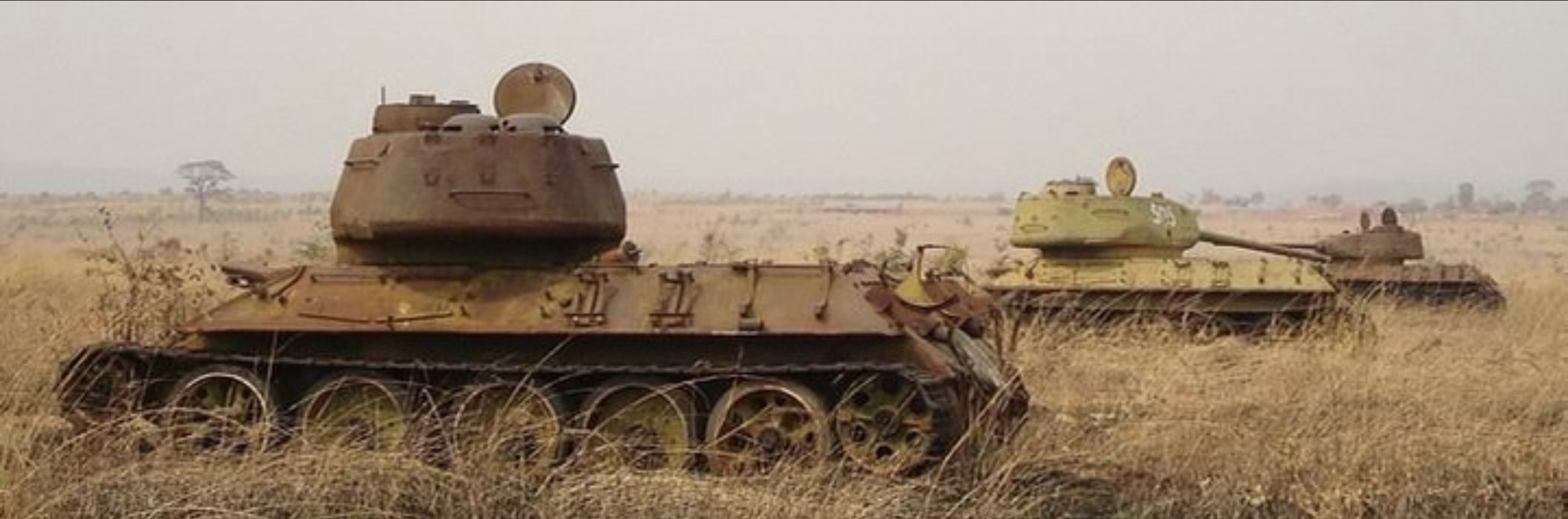
The Angolan T-34-85s offer perhaps the closest visual representation of the full Cold War upgrade package associated with the T-34-85 Model 1969. These tanks, while among the most comprehensively modernized examples in photographic records, still lacked full uniformity. That said, many images show tanks that are only missing the turret mounted projector, suggesting they were equipped with nearly all other components of the upgrade package.
Zaloga: “It shows the full range of Model 1969 features: starfish wheels, infra-red driver’s headlight, the external fuel pump box, repositioned MDSh racks on the hull side and rear fuel drum stowage racks.” And a new roof with the new hatch. Looks exactly the same as the first image provided.
In Angola, the T-34-85 (1969) saw significant service during the Angolan Civil War, which began in 1975 and lasted until 2002. These tanks were primarily operated by FAPLA (People’s Armed Forces for the Liberation of Angola) and supported by Cuban military advisors and expeditionary forces, especially during the late 1970s and early 1980s. These tanks, many of which were modernized with the Model 1969 upgrade package, were used in combat throughout the late 1970s and early 1980s. However, their limitations quickly became apparent. Cubans reportedly complained to the Soviets, stating that they could not continue fighting wars with T-34s, especially against better-armed South African and UNITA forces. This feedback played a role in the eventual delivery of T-55s and more modern equipment to the region.
Ethiopian/Somali T-34-85 Model 1969s
Spoiler
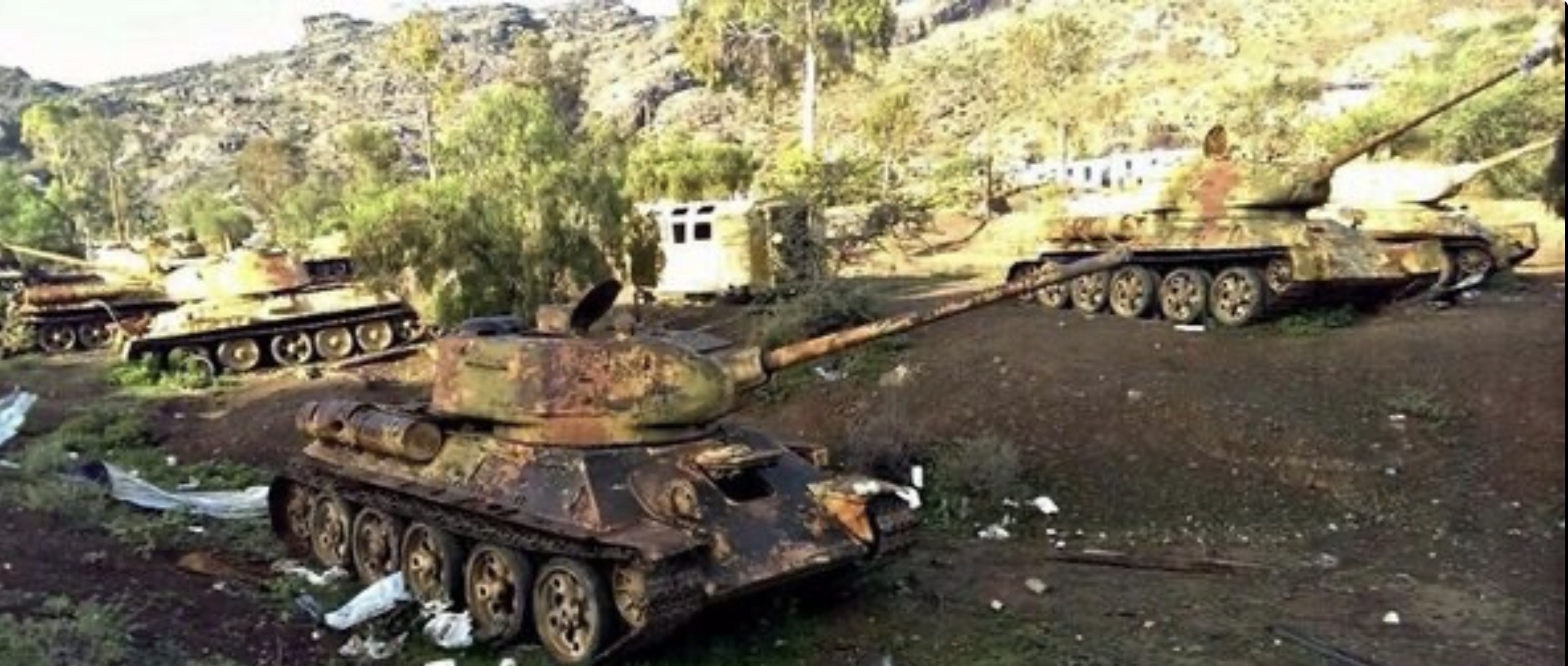
During the Ogaden War (1977–1978), both Ethiopia and Somalia deployed T-34-85 tanks in combat, including modernized versions such as the T-34-85 Model 1969. Interestingly, some Somali T-34-85s appear to incorporate nearly the full suite of post-war upgrades, missing only a few minor elements. Although Somalia operated T-34-85 Model 1969, they also made extensive use of Czechoslovak-built T-34-85 (1953). The Ethiopian Army also fielded 56 T-34-85s during the war, details on their exact configurations are less documented, though they did capture a lot of Somali tanks. After the war, Ethiopian alongside captured Somali T-34-85 Model 1969s tanks remained service well beyond the 1970s, with some examples reportedly used as late as the Badme War (1998–2000) against Eritrea.
This particular T-34-85 (1969) was abandoned by Ethiopian forces during the Badme War in the year 2000. It’s unclear whether it was a former captured Somali vehicle from the Ogaden War or part of the original Soviet delivery, but its presence on the battlefield highlights the remarkable longevity of the T-34-85 in active service.
Soviet T-34-85 Model 1969s in Afghanistan
Spoiler
The modified T-34-85 also saw service in Afghanistan, used by both Soviet forces and Soviet-aligned Afghan government troops. Its high gun elevation made it particularly well-suited for mountainous warfare, allowing it to engage targets on steep terrain where more modern Soviet tanks struggled. Additionally, its mechanical simplicity and ease of maintenance meant that it could be quickly mastered by local crews, making it a practical and reliable asset in such a rugged environment.
Community Skin: WT Live // Camouflage by FlyingDuckOfSky
Other Conflicts
Spoiler
More from Africa
In an African context, the T-34-85 had an exceptionally long service life. In many of the conflicts where these tanks appeared, opposing rebel forces were lightly equipped, with even weapons such as the RPG-7 sometimes available only in limited numbers. Under those conditions, the T-34-85 could still provide useful mobile firepower and protection. For poorer states, it also remained attractive simply because newer and more sophisticated armored vehicles were often too expensive to acquire and maintain.
Yemen
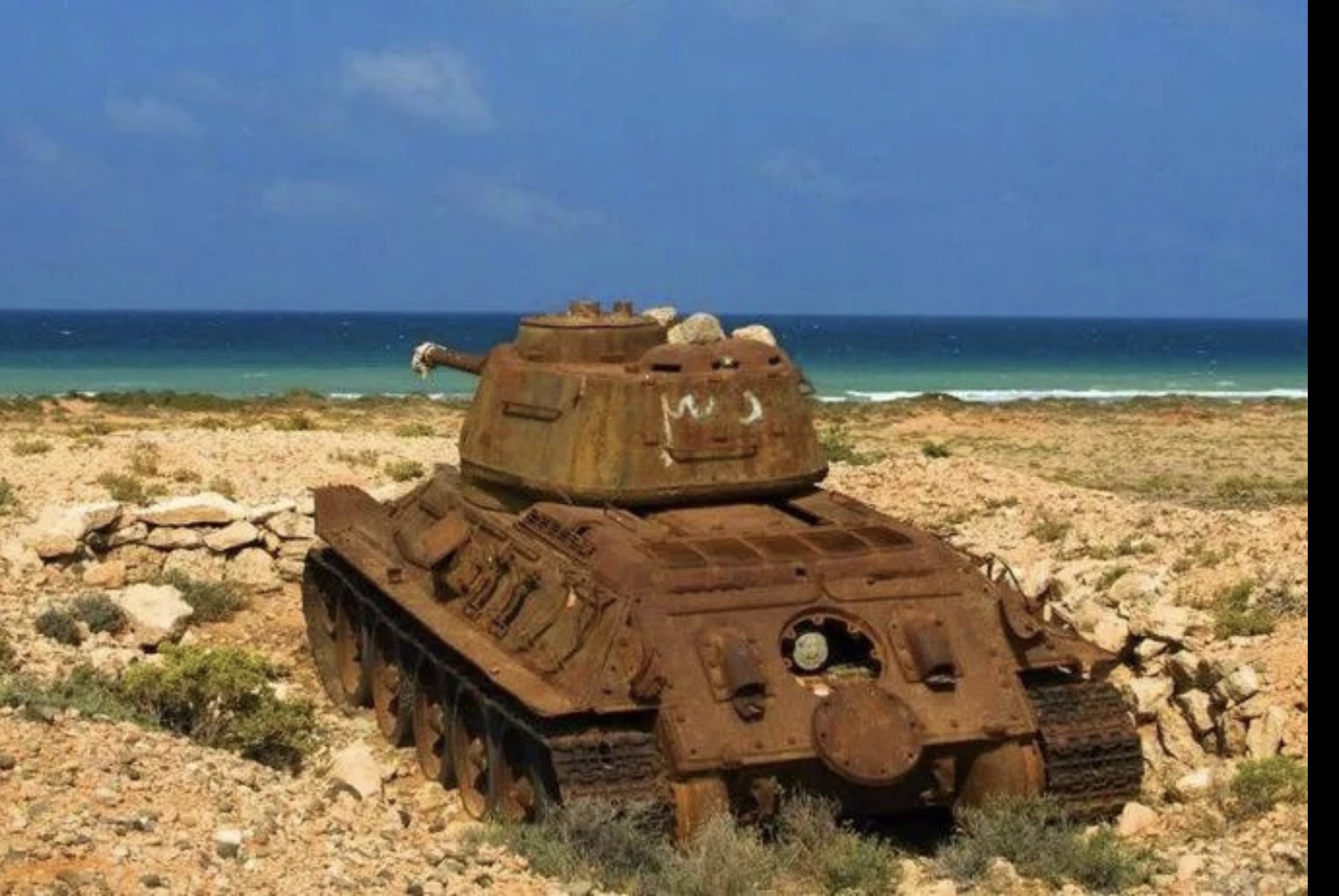
During the modern Yemeni conflict, T-34-85s have reappeared in combat. Yemen still had a number of these tanks in storage before the civil war, remnants of earlier North and South Yemeni inventories, and surviving examples were brought back into service after fighting intensified from 2014 onward. T-34-85s were documented in use by both Houthi forces and anti-Houthi/government-aligned units, with some vehicles recovered from depots or captured from opposing forces. Combat footage and photographs from the war show operational T-34-85s firing in battle, and at least several were hit by modern anti-tank guided missiles. In some cases, Yemeni crews have been seen firing the T-34-85’s main gun remotely using a rope or cord attached to the firing mechanism. A practical safety measure, allowing the crew to stand clear in case the aging gun, breech, or ammunition failed catastrophically.
Cyprus
1960s-era T-34-85s also saw combat in Cyprus, where they reportedly knocked out several M113s and may have also destroyed a Turkish tank. You can read more about their service in my suggestion here.
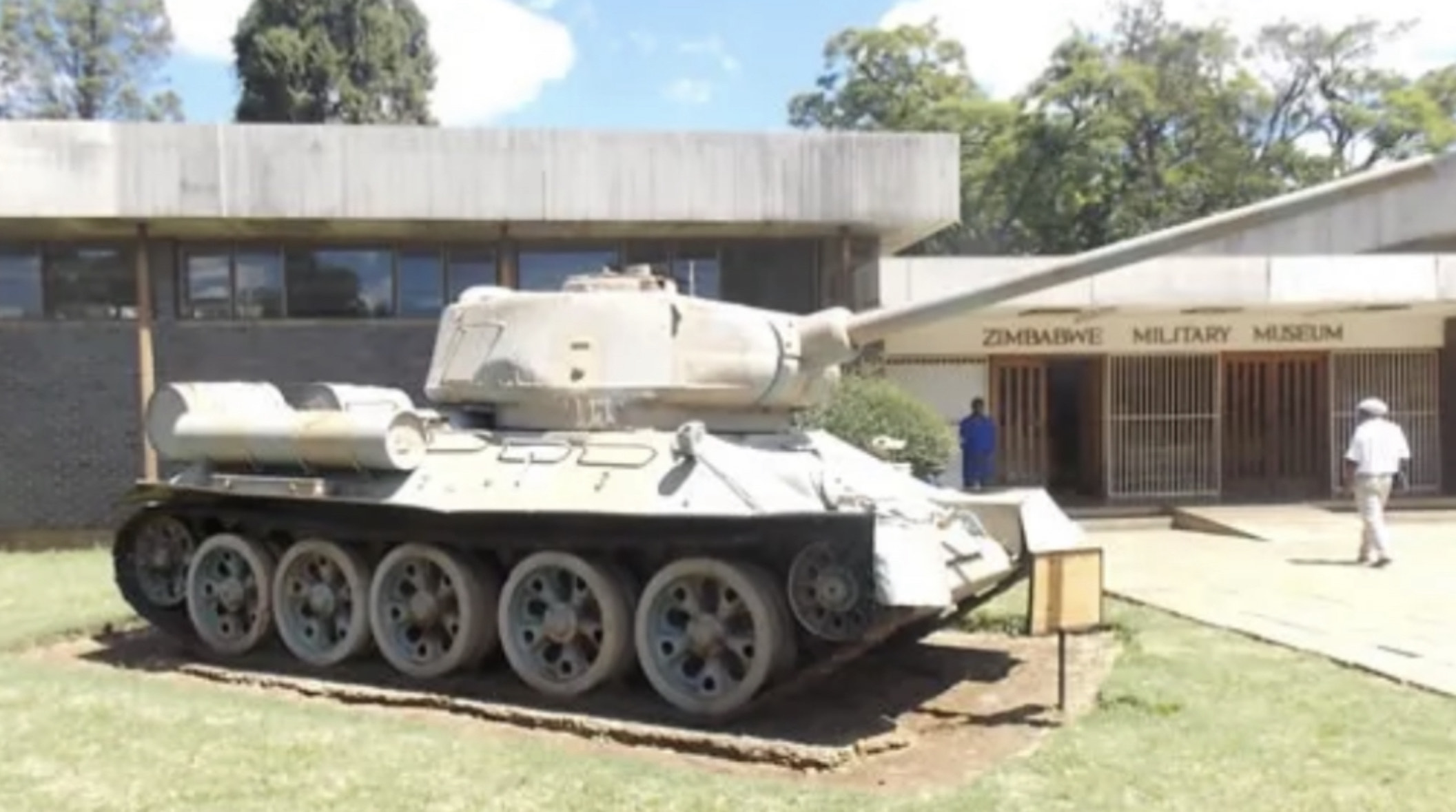
These Cypriot (likely originally Yugoslav T-34-85Bs) feature the fuel pump box, the T-55 style “starfish” road wheels, and modified projectors. Some also feature the upgraded turret ventilation with the new commander’s hatch. However, it is likely that, due to the limited operational value or poor reliability of the TDP smoke generation system, many customers (including these) chose to order these tanks without the system, thereby saving some money. However, most of these tanks still retain the wiring for the rear smoke canister mounts.
Video
Sources
View
Skulski, P. (2015). T-34-85 After WW2: Camouflage and Markings 1946 - 2016. Mushroom Model Publications. Available at: Captcha
Zaloga, S., Kinnear, J. (1996). T-34-85 Medium Tank 1944 - 1994. Osprey Publishing. Available at: https://prussia.online/Data/Book/t-/t-34-85-medium-tank-1944-94/Osprey%20NV%20020%20-%20[20c]%20-%20T-34-85%20Medium%20Tank%201944-94.pdf?utm_source
Модернизированные средние танки периода Великой Отечественной войны и опытные образцы на их базе. Техника и вооружение 2012 09
Modernized medium tanks in the postwar period. Tank T-34-85 arr. 1960
Experienced tank T-34-85 model 1960, "Object 135"
the T-34 in Somalia – wwiiafterwwii
https://www.safar-publishing.com/post/the-legend-itself-t-34-in-soviet-afghan-war
T-34 in Angola: 1970s / 1980s – wwiiafterwwii
the T-34 in Somalia – wwiiafterwwii
https://old-forum.warthunder.com/index.php?/topic/268699-russian-heat-shells-of-interest-for-the-game-a-full-ish-list/
https://en.namu.wiki/w/T-34-85/운용국
https://kriegsfunker.com/restoration/tr/r123.php
T-34 variants - Wikipedia
T-34 - Wikipedia
Dave Showell's MR Models T-34-85 Model 1969 Review
https://www.youtube.com/shorts/tWEBzRwJ1RA