World War One is considered to be a major turning point in the way battles are fought between nations and to be one of the first “modern” wars in history. Raging in the years of 1914 to 1918 World War One saw fighting throughout Europe and parts of Africa and South East Asia it saw mass innovation of weapons and tactics that would evolve into what we see today in our modern militaries and wars. One of the most impressive would be introducing the world to the fighter plane and the birth of aerial combat. With War Thunder including military aircraft from across the world and throughout history it is puzzling to see that the very beginning and crucial part of aviation history is missing, and thus I am proposing the expansion of various Tech Trees backwards in time to the very start, World War One aviation. This is one of many suggestions for this idea focusing on Great Britain.
There are a few ways that World War One aviation can be brought into the British Tech Tree:
Option 1 - Replacing reserve tier
The first idea would be to push everything in the tech tree up in rank and battle rating so that WW1 aircraft can fit with proper spacing for balancing. Whilst this could work it would have a few issues such as forcing new players to have to play through these aircraft whilst not being interested. It could also have problems with actually moving the existing tech tree around to accommodate the addition.
Option 2 - Rank 0
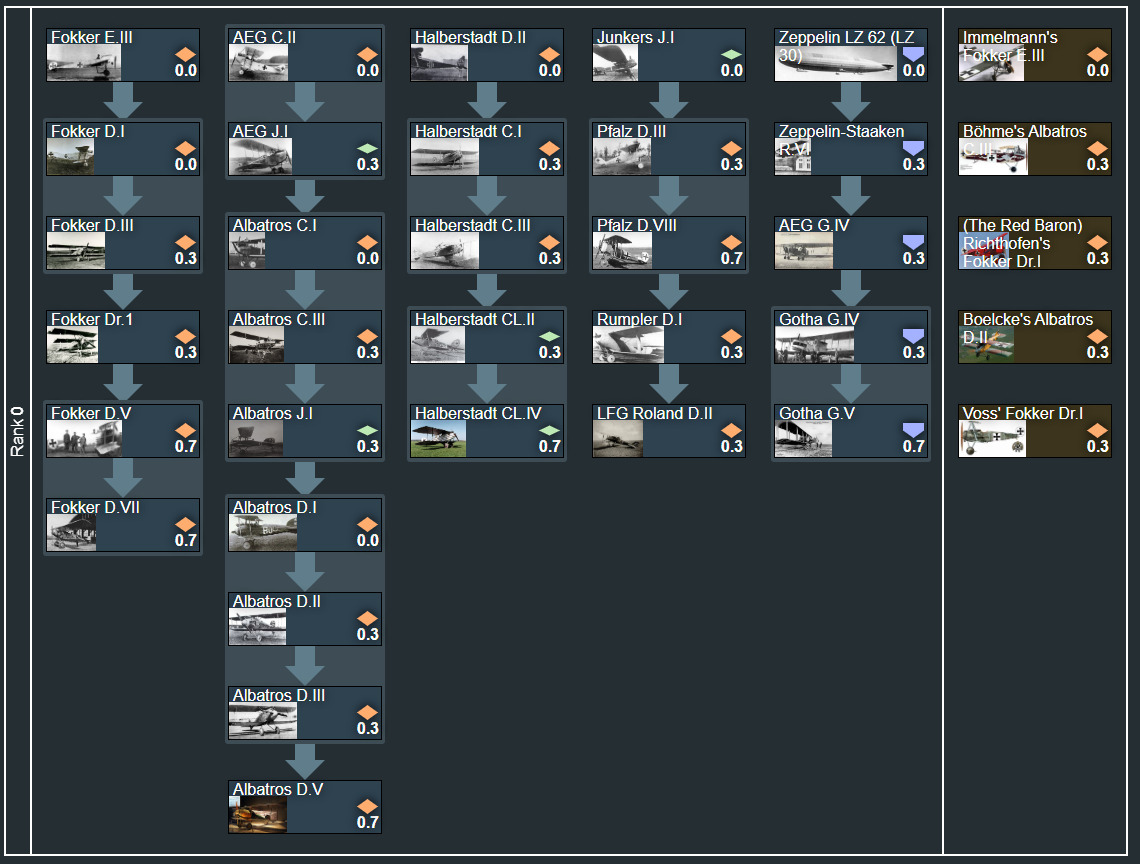
Similar to idea 1, this would have the addition of Rank 0 below the current start of the tech tree. It would be placed below reserve aircraft and be optional for players to research and play. It would have battle ratings from 0.0-0.7. I think this would be the most promising personally as again it would be completely optional as some players may not be interested in this era of aircraft. However a problem this would have is the battle ratings would be quite compressed as these aircraft would be limited to a 0.0-0.7 BR range as they are simply leagues behind even the worse reserve aircraft in-game.
Option 3 - Separate Tech Tree
This idea is similar to how Naval vehicles are split between Bluewater and Coastal. Whilst both share the same match maker they are in separate tech trees and thus require you to play the same type of vehicle to progress in that tree. With the slight change of a separate matchmakers this may be preferable for some as it could allow for less compression but with the caveat of making it harder to progress as the RP and SL cost would be far higher unless it would be changed to reflect the aircraft themselves.
With both options 1 and 2 there would be issues with the gap in capabilities between the late WW1 aircraft and current reserve aircraft, but I believe the answer to this problem would be to add more post 1918 and early interwar aircraft to minimise this gap.
Now onto the aircraft themselves, there are plenty to chose from. I have taken the liberty in creating a custom tech tree to act as an example of what could be added. I have done this in the form of Idea 2 from above:

*As a quick disclaimer the BR’s chosen are just guesses based off of engine performance, armament, and introduction date and would very well likely be different if they were ever introduced into the game.
Line 1
Airco DH.1

The Airco DH.1 was a twin seat biplane flown by the Royal Flying Corps during World War One. It entered service in 1915 in the Middle East theatre as escorts for reconnaissance aircraft. It was powered by a Renault Type W air-cooled V-8 generating 70hp and giving it a top speed of 130kph. It featured a single 7.7mm Lewis Gun mounted for the observer sat in the rear of the aircraft.
Airco DH.2

The Airco DH.2 was a development of the DH.1, it was developed as a single seat fighter and entered service in July of 1915. It would be powered by a single Gnome Monosoupape 9-cylinder rotary engine generating 100hp which gave it a top speed of 150kph. It was fitted with a single 7.7mm Lewis Gun and Le Prieur rockets for use in destorying observation ballons. You can read a bit more about it in this suggestion - Airco - Airco DH.2: The plane to end the Fokker Scourge
Airco DH.4
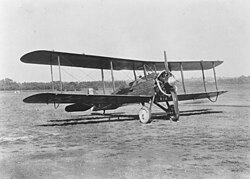
As the name suggests this is yet another continuation of the earlier DH aircraft, this one however would get rid of the pusher design and go with a more conventional design with the engine being mounted at the front. It was a twin seat aircraft that entered service in March of 1917 and saw service with the Royal Flying Corp. It was powered by the Rolls-Royce Eagle VIII water-cooled V12 engine giving out 375hp which gave it a top speed of 230kph. It was fitted with a forward firing 7.7mm Vickers machine gun and either 1 or 2 7.7mm Lewis Guns on a Scarff ring for the observer to fire.
Airco DH.5
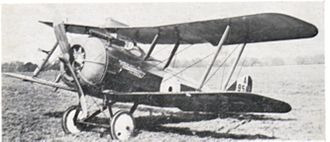
The Airco DH.5 was a single seat development of the earlier DH variants. It was one of the first aircraft to be fitted with the improved Constantinesco gun synchroniser which allowed for the gun to be mounted forward and fire between the spinning propeller blade. It was powered by the Le Rhone 9J nine-cylinder rotary engine generating 110hp which gave it a top speed of 164kph. It was fitted with a single 7.7mm Vickers machine gun and could carry four 11kg bombs under the fuseglage.
Vickers F.B.5
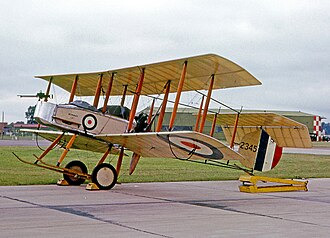
The Vickers F.B.5 was a twin seat pusher aircraft that served with the RFC. It was armed with a single 7.7mm Lewis Gun in the observers cockpit in the front. It was powered by the Gnome Monosoupape 9-cylinder rotary engine generating 100hp which gave it a top speed of 110kph.
Vickers E.F.B.7
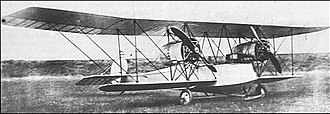
The Vickers E.F.B.7 was a prototype twin-engine fighter built in 1915 by Vickers. It was armed with a 37mm Vickers 1 pounder cannon and powered by a pair of Gnome Monosoupape engines producing 100hp each giving it a top speed of 121kph.
Vickers F.B.19
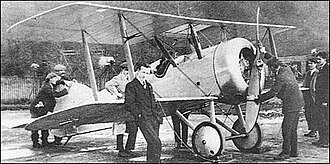
The Vickers F.B.19 was a single seat scout fighter which saw limited service with the RFC in Europe but saw service with a few squadrons in the Middle East fighting against the Ottoman Empire. It was armed with a single 7.7mm Vickers machine gun and powered by the Gnome Monosoupape engine producing 100hp to give it a top speed of 164kph.
Vickers F.B.25
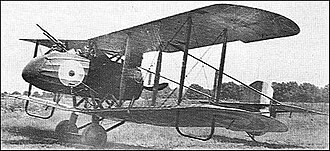
The Vickers F.B.25 was a prototype night fighter built by Vickers Limited in 1917. It was powered by the Hispano-Suiza 8 engine producing 150hp giving it a top speed of 138kph. It was armed with a single 40mm Breech-Loading Vickers Q.F cannon.
Vickers F.B.26 Vampire (B1484)
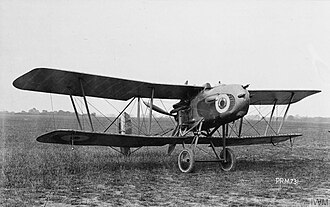
The Vickers F.B.26 Vampire was a prototype pusher biplane first built in May 1917 with the final variant being built in early 1918. The final variant was build as a ground-attack aircraft but by the time testing began the Sopwith Salamander was already put into production leading to the project being abandoned. It was powered by the Hispand-Suiza V-8 engine producing 200hp giving it a top speed of 195kph. It was armed with 3 x 7.7mm Lewis guns in an Eeman mount which could allow for the guns to tilt up at a 45° angle to attack bombers from bellow.
Vickers F.B.26 Vampire (B1485)
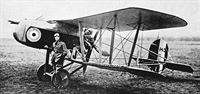
The Vickers F.B.26 Vampire (B1485) was the 3rd prototype built in early 1918 but was more ground-attack oriented so had an armoured fuselage compiling of 230kg of armour plating to protect the pilot and engine from ground fire and was powered by a Bentley B.R.2 engine providing 230hp which gave it a top speed of around 210kph. It was armed with a pair of 7.7mm Lewis guns mounted in the nose but unlike the first prototype these guns were fixed in placed rather than on an Eeman mount.
Line 2
Sopwith Pup

The Sopwith Pup was a single seat biplane that served with the Royal Naval Air Service and the Royal Flying Corps from 1916. It was very successful and would remain on the Western Front until late 1917 after being outclassed by more advanced German fighters. It was powered by a Le Rhone 9C 9-cylinder rotary piston engine generating 80hp which gave it a top speed of 180kph. It was armed with a single 7.7mm Vickers machine gun that fired through the propeller with the use of a gun synchroniser.
Sopwith 1½ Strutter
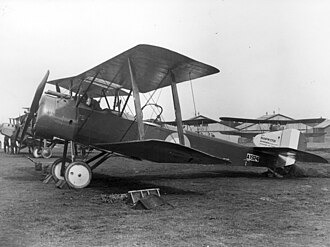
The Sopwith 1½ Strutter was the first fighter to enter service with a synchronised machine gun which let it mount forward firing weapons in a more advantageous position. It was powered by the Clerget 9B 9-cylinder air cooled rotary piston engine generating 130hp which gave it a top speed of 160kph. It was fitted with a forward firing 7.7mm synchronised Vickers machine gun and a 7.7mm Lewis gun in the observers cockpit.
Sopwith Camel
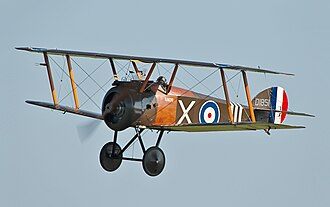
The Sopwith Camel is one of the most famous aircraft used during the First World War by the British. It would enter service with the Royal Flying Corps over the Western Front in June of 1917. It was highly manoeuvrable and it was credited with downing 1,294 enemy aircraft and proved to be a very formidable opponent for Germany fighters. It was powered by a Clerget 9B 9-cylinder air-cooled rotary piston engine with 130hp which gave it a top speed of 182kph and featured 2 forward facing 7.7mm Vickers machine guns. You can read a bit more about it in this suggestion - Sopwith Aviation Company - Sopwith Camel: The Most Successful Fighter of World War One.
Sopwith Triplane
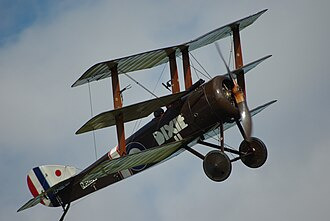
The Sopwith Triplane was the first triplane to ever see operational service with any military. Being introduced in December of 1916 to the Royal Navy Air Service over the Western Front. It was powered by the Clerget 9B 9-cylinder air-cooled rotary piston engine with 130hp. It had a top speed of 188kph and was armed with a single 7.7mm Vickers machine gun. You can read some more about it in this suggestion - Sopwith Aviation Company - Sopwith Triplane: Britain’s First and Only Triplane Fighter.
Sopwith Dolphin

The Sopwith Dolphin was a British single-seat fighter developed from the previous Sopwith Aviation Company aircraft such as the Sopwith Pup and Camel. It was introduced into service in February 1918 and saw service with the Royal Flying Corps over the Western Front. It was powered by the Hispano-Suiza 8B V-8 water-cooled geared piston engine that generated 200hp. It had a top speed of 193kph and was armed with 4 forward firing 7.7mm Vickers machine guns, 2 7.7mm Lewis Guns mounted above the pilot to attack enemies from below and could carry up to four 11kg bombs.
Sopwith Snipe
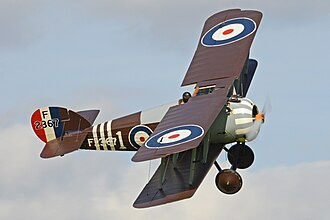
The Sopwith Snipe was a single seat biplane used by the newly formed Royal Air Force late during the First World War. It entered service in late 1918 just weeks before the end of the war. It was powered by the Bentley BR2 9-cylinder rotary engine which produced 230hp which gave it a top speed of 195kph. It was armed with 2 forward firing 7.7mm Vickers machine guns and could carry 4 x 11kg bombs.
Sopwith Salamander
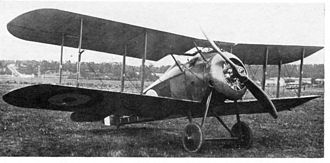
The Sopwith Salamander was a ground attack fighter built in early 1918 with it entering service just before the end of the war. Out of an total order of 1,400 units by the end of the war only 37 being completed and only 2 arriving in France. It was powered by the Bentley BR2 9-cylinder engine producing 230hp giving it a top speed of 201kph. It was armed with twin 7.7mm Vickers machine guns and could carry 4 x 10kg bombs.
Sopwith Dragonfly-Snipe
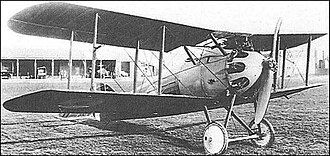
The Sopwith Dragonfly-Snipe prototype was made from the Sopwith Snipe using the ABC Dragonfly I engine in April of 1918. Orders were placed for the production variant in June of 1918 however none would be built until after the war and due to issues regarding the engine the production version would never enter service. It was armed with 2 forward firing 7.7mm Vickers machine guns and could carry 4 x 11kg bombs. It was powered by the ABC Dragonfly I engine which produced 320hp which gave it a top speed of around 230kph.
Line 3
Nieuport 12
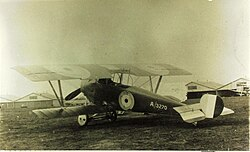
The Nieuport 12 was a armed fighter/reconnaissance aircraft used by Britain, France, and the US during WW1. It entered service with the Royal Flying Corps in 1915. It was powered by the Clerget 9Z 9-cylinder air-cooled rotary engine with 110hp which gave it a top speed of 146kph. It was armed with a synchronised 7.7mm Vickers machine gun in British service.
Nieuport 16

The Nieuport 16 was a development of the Nieuport 12. Like the Nieuport 12 it was used by various air forces such as the Royal Flying Corps. It was powered by the Le Rhone 9J 9-cylinder rotary engine with 110hp. It had a top speed of 165kph and was armed with either the 7.7mm Lewis Gun or 7.7mm Vickers machine gun and Le Prieur rockets for use against observation balloons.
SPAD S.VII
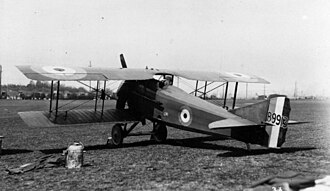
The SPAD S.VII was originally designed in France but was also built under license for British service. Entering service in August 1916 it would see success over the Western Front against German fighter aircraft of the time. It was powered by the Hispano-Suiza 8Aa 90° V-8 liquid-cooled engine which generated 150hp. This gave it a top speed of 193kph, it was armed with a single 7.7mm Vickers machine gun.
SPAD S.XII

A single SPAD S.XII would see service with the RFC for testing. It was powered by the Hispano-Suiza 8Cb V-8Cb V-8 water-cooled piston engine with 220 HP giving it a max speed of 203kph. It was armed with a 37mm Puteaux single shot cannon and a single 7.7mm Vickers machine gun
Nieuport 24
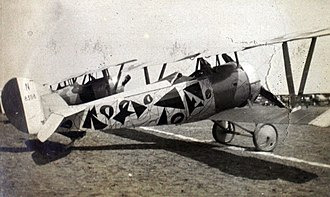
The Nieuport 24 was used by the RFC from 1917 over the Western Front. It was powered by a Le Rhone 9Jb 9-cylinder rotary engine with 130hp. It had a top speed of 176kph and was armed with a 7.7mm Lewis gun mounted to the upper wing on the Foster mounting.
Nieuport 27

The Nieuport 27 would be introduced into service with the RFC in 1917 and would remain in service until early 1918. It was powered by the Le Rhone 9Jb 9-cylinder rotary engine with 130hp which gave it a max speed of 172kph. It was armed with a 7.7mm Vickers machine gun and a 7.7mm Lewis gun mounted on the top wing.
Line 4
Beardmore WB III/SB 3
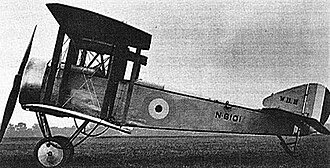
The Beardmore III was a carrier-based fighter aircraft flown by the Royal Navy Air Service in 1917. It would be powered by the Le Rhone 9C 9-cylinder air-cooled rotary piston engine generating 80hp which gave it a top speed of 166kph. It was armed with a single forward firing 7.7mm Lewis Gun.
Beardmore W.B.V
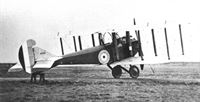
The Beardmore W.B.V was a prototype shipborne fighter that was developed in 1917. It was armed with a single 37mm Le-Puteaux cannon but after initial testing it was swapped out for a synchronised 7.7mm Vickers machine gun and a 7.7mm Lewis gun on a tripod mount. It was powered by the Hispano-Suiza 8 engine producing 200hp and giving it a top speed of 180kph.
Port Victoria P.V.2bis

The Port Victoria P.V.2bis was a single-seat seaplane prototype built and flown in early 1917. It was powered by the Gnome Monosoupape 9 Type B-2 9-cylinder engine producing 100hp giving it a top speed of 150kph. It was armed with twin 7.7mm Lewis guns mounted above the wing.
Port Victoria P.V.5

The Port Victoria P.V.5 was an experimental single-seat seaplane with light bombing capabilities. It was powered by a 150hp Hispano-Suiza engine giving it a top speed of 151kph. It was armed with a single 7.7mm Lewis machine gun and could carry 2 x 30kg bombs.
Port Victoria P.V.8
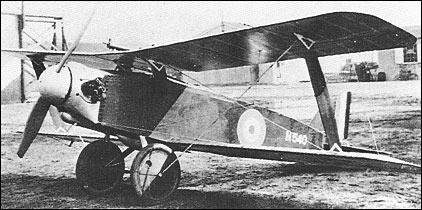
The Port Victoria P.V.8, the “Eastchurch Kitten” was a prototype biplane fighter built in 1917. It was designed to take off from short platforms on Royal Navy destroyers to be an airship interceptor. It was powered by the ABC Gnat 2-cylinder engine only producing 35hp but surprisingly could reach a top speed of 152kph. It was armed with a single 7.7mm Lewis gun mounted above the top wing.
Port Victoria P.V.9

The Port Victoria P.V.9 was an experimental seaplane built in December 1917. It was powered by the Bentley B.R.1 9-cylinder engine producing 150hp and giving it a top speed of 178kph. It was armed with a 7.7mm Vickers machine gun synchronised through the propeller and a 7.7mm Lewis machine gun mounted above the top wing.
Whitworth F.K.10
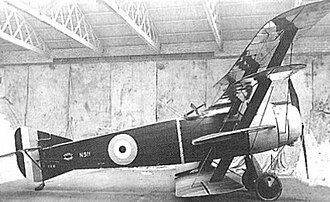
The Armstrong Whitworth F.K.10 was a twin-seat quadruplane fighter built in 1916 and served with both the Royal Flying Corps and the Royal Naval Air Service albeit in very limited numbers. It was powered by the Clerget 9N 9-cylinder engine producing 130hp which gave it a top speed of 135kph. It was armed with 1 forward firing 7.7mm Vickers machine gun and 1 7.7mm Lewis gun in the observers cockpit.
Whitworth F.K.3
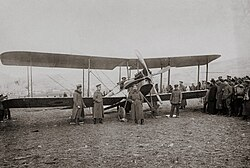
The Armstrong Whitworth F.K.3 was a twin seat biplane that entered service with the Royal Flying Corps during the early stage of the war. Due to the fast development of aircraft of the time the F.K.3 never saw operational service on the Western Front but was instead kept as trainers until being replaced shortly after by the Avro 504 however some made their way to No.47 RFC Squadron stationed in Salonika, Greece. It was powered by the RAF 1A V-8 engine producing 90hp giving it a top speed of 140kph. It was armed with a single 7.7mm Lewis gun in the rear cockpit. It could also carry up to 50kg of bombs however only if it was flown without the observer as said bombs were stored on the rear seat.
Bristol F.2B
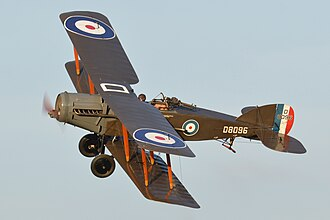
The Bristol F.2B was a twin seat reconnaissance aircraft used by the RFC during WW1. It entered service in December 1916 on the Western Front. It was powered by the Rolls-Royce Falcon III V-12 liquid-cooled piston engine generating 275hp giving it a top speed of 198kph. It was armed with 1 forward facing 7.7mm Vickers machine gun and 1 or 2 7.7mm Lewis guns mounted in the observers cockpit. It was also armed with several 110kg bombs. You can read more about it from this suggestion - Bristol F.2B: Britain’s Most Successful 2-Seat Fighter of the Great War.
Bristol M.1C
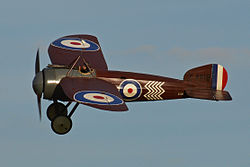
The Bristol M.1C was a single seat monoplane fighter that saw service with the Royal Flying Corps in the Middle East against the Ottoman Empire. It was the only monoplane that saw service with British forces during the war. It was powered by the Le Rhône 9J 9-cylinder engine producing 110hp which gave it a top speed of 210kph. It was armed with a single forward firing 7.7mm Vickers machine gun.
Royal Aircraft Factory S.E.5
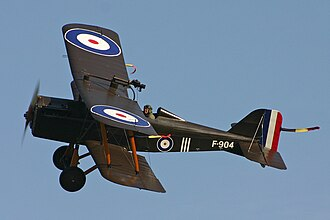
The Royal Aircraft Factory S.E.5 was a single seat fighter used during WW1 by the RFC. It was introduced into service in March of 1917 and saw wide success in the skies of the Western Front. It was powered by either the Hispano-Suiza 8 or the Wolsely Viper water-cooled V8 engine, of which generated 150hp which gave it a top speed of 222kph making it the fastest fighter used during the war. It was armed with a forward firing 7.7mm Vickers machine gun and a 7.7mm Lewis gun on the upper wing in a Foster mounting. It was also able to carry 4 11kg Cooper bombs. You can read some more about this aircraft from this suggestion - Royal Aircraft Factory S.E.5a: The Spitfire of World War One.
Royal Aircraft Factory N.E.1
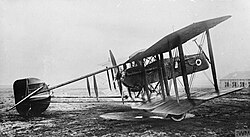
The Royal Aircraft Factory N.E.1 was a prototype night fighter built by the British Royal Aircraft Factory in 1917. It was powered by the Hispano-Suiza 8 V8 engine producing 200hp and giving it a top speed of 153kph. It was armed with a single 7.7mm Lewis gun and a 40mm Breech-Loading Vickers Q.F Mk II cannon.
Line 5
SSZ-Class Airship
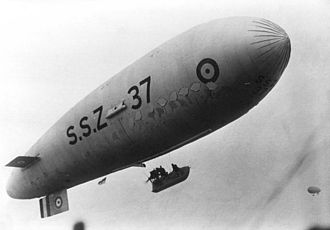
The SSZ-Class (Sea Scout Zero Class) airships were non-rigid airships used by the RNAS during WW1. They were designed for escorting convoys, searching for German U-boats, and detecting and destroying naval mines. They were powered by the Rolls-Royce Hawk engine producing 75hp giving it a top speed of 85kph. They were armed with a single 7.7mm Lewis gun and either 2 x 50kg bombs or 1 x 110kg bomb.
Vickers 23-Class Airship No.23r
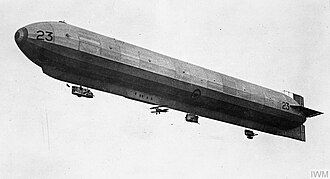
The Vickers 23-Class airship were rigid airships used by the RNAS primarily as naval scouts. No.23r was a variant that tested the practicality of “parasite fighters” were it would successfully launch a Sopwith Camel with the hope that it would be able to help defend the airship. Although never seeing combat service it did fly over the surrender of the German submarine fleet at Harwich in November of 1918. It was powered by 3 x Rolls-Royce Eagle V-12 engines producing 250hp each and a single Maybach 240hp engine salvaged from a crashed Zeppelin L33 which gave it a top speed of 84kph. It was armed with 1 x 2-pounder 40mm QF cannons and 5 x 7.7mm Lewis guns.
Royal Aircraft Factory F.E.2
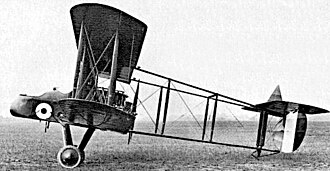
The Royal Aircraft Factory F.E.2 was a night bomber used by the RFC from late 1915. It was powered by a single Beardmore 6-cylinder water-cooled in-line piston engine which provided 160hp giving it a top speed of 147kph. It was armed with multiple 7.7mm Lewis guns for both the pilot and observer to use. It also carried up to 235kg of various bombs.
Royal Aircraft Factory R.E.7
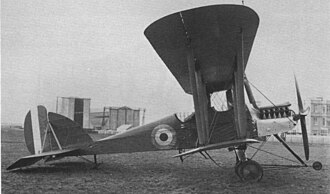
The Royal Aircraft Factory R.E.7 was a light bomber used by the Royal Flying Corps in 1915. It was powered by the Beardmore 6-cylinder water-cooled in-line piston engine generating 160hp. It had a top speed of 135kph and could carry either a single 152kg bomb or multiple smaller bombs totalling 147kg.
Royal Aircraft Factory R.E.8
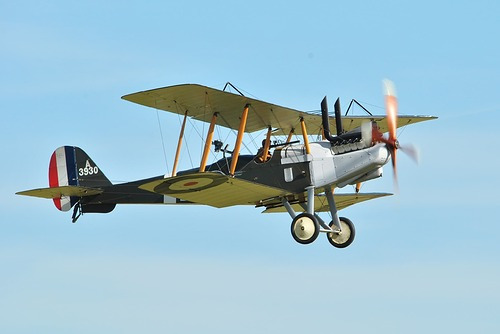
The Royal Aircraft Factory R.E.8 was a twin seat reconnaissance bomber that was introduced in mid 1916. It was powered by the Royal Aircraft Factory RAF 4a V-12 engine producing 140hp giving it a top speed of 166kph. It was armed with a single 7.7mm Vickers machine gun in the front and 2 7.7mm Lewis guns in the rear cockpit. It could carry up to 102kg of bombs.
Whitworth F.K.8
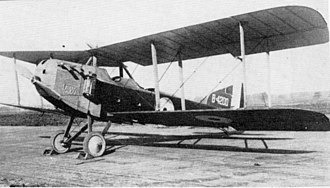
The Armstrong Whitworth F.K.8 was a twin seat biplane used by the RFC during WW1. It had the Beardmore 160hp water-cooled 6-cylinder in-line engine with a max speed of 153kph. It was armed with a forward fixed 7.7mm Vickers machine gun and a rear 7.7mm Lewis gun, it also could carry up to 118kg of various bombs.
Avro 523 Pike

The Avro 523 Pike was a twin-engine bomber used during WW1. It was powered by 2 Sunbeam Nubian engines with 162hp each. It had a top speed of 156kph and was armed with 2 7.7mm Lewis guns (one in the nose and one facing backwards) and up to 51kg of bombs carried in an internal bomb bay.
Fairey III
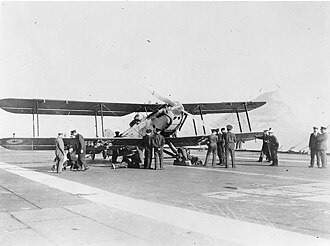
The Fairey III was a armed reconnaissance aircraft used by the RAF during WW1. It was powered by the Napier Lion XI W-12 water-cooled piston engine with 570hp and a top speed of 190kph. It was armed with a forward firing 7.7mm Vickers machine gun and a rear facing 7.7mm Lewis gun. It could carry up to 227kg of various bombs.
Airco DH.9
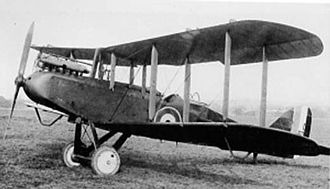
The Airco DH.9 was a bomber aircraft used by the Royal Flying Corps during the First World War. It was powered by the Armstrong Siddeley Puma 6-cylinder in-line piston engine providing 230hp which gave it a top speed of 182kph. It was armed with a forward firing 7.7mm Vickers machine gun and either 1 or 2 7.7mm Lewis guns on a Scarff ring in the rear seat. It also could carry up to 210kg of various bombs.
Airco DH.9A
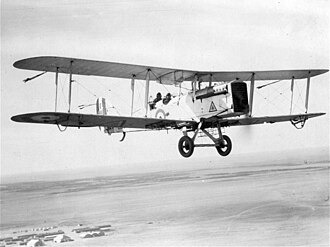
The Airco DH.9A was a variant of the aforementioned DH.9 used by the RFC. It was powered by the Liberty 12A water-cooled V12 engine which delivered 400hp which gave it a max speed of 198kph. It was armed with a forward firing 7.7mm Vickers machine gun and either 1 or 2 7.7mm Lewis guns on a Scarff ring. It could carry up to 340kg of various bombs under the wing and fuselage.
Airco DH.10 Amiens
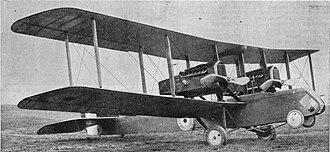
The Aico DH.10 Amiens was a twin-engine heavy bomber used by the RAF a few weeks before the end of the Great War. It was only involved in a single combat mission before the Armistice of the 11th of November 1918. It was powered by 2 Liberty 12 water-cooled V12 engines with an output of 400hp each, this gave it a make speed of 200kph. It was fitted with 2 7.7mm Lewis guns at the nose and at the rear seat. It carried up to 420kg of bombs in an internal bomb bay. You can find out more from this suggestion - Airco - Airco DH.10 Amiens: Too late to make an impact.
H.P.12
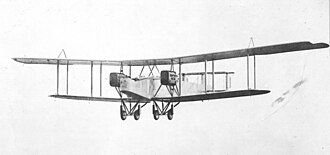
The H.P.12 or Handley Page O/400 was a twin-engine bomber used by the RAF towards the end of the war. It carried up to 910kg of bombs and was armed with 5 7.7mm Lewis guns. It was powered by 2 Rolls-Royce Eagle VIII V12 water-cooled piston engines with 360hp each, it had a top speed of 156kph. This aircraft was added to the game as part of the Great War April Fools event and was available as a reward to keep forever, you can find it in the British Tech Tree if you played the event and earned it.
H.P.V/1500
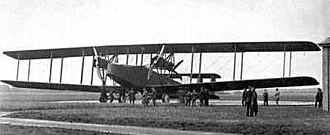
The H.P.V/1500 was a heavy bomber that entered service right at the end of the war however it was too late and would never see combat during WW1. It was powered by 4 Rolls-Royce Eagle VIII V12 water-cooled piston engines with 375hp each giving it a top speed of 166kph. It was armed with 3 7.7mm Lewis guns and could carry up to 3,400kg of bombs.
Vickers Vimy
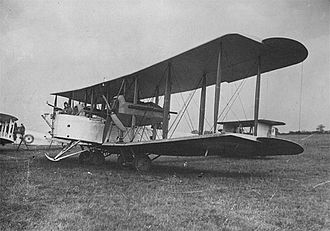
The Vickers Vimy was a heavy bomber developed in the late stages of the war and was delivered to the RFC just before the end of the war. It was powered by 2 Rolls-Royce Eagle VIII V-12 engines producing 300hp each giving it a top speed of 160kph. It was armed with a 7.7mm Lewis gun in the nose and another at the rear and could carry up to 1,123kg of bombs.
Premiums
James McCudden's DH.2
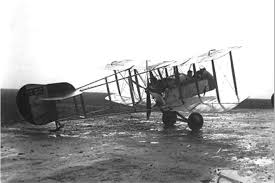

James McCudden was a flying ace of the Royal Flying Corps during the First World War. He would claim 57 aerial victories throughout the war which made him the 7th best ace of the war. The first few of his victories which were made in the Airco DH.2. He would be awarded the Victoria Cross for his actions during the war, he died in a crash on the 9th of July 1918 after his S.E.5a had engine troubles whilst taking off.
Donald MacLaren's Sopwith Camel

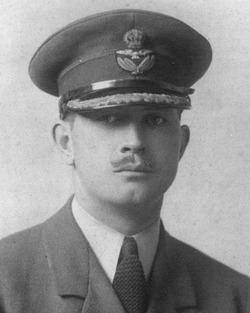
Donald Roderick MacLaren was a Canadian flying ace of World War One serving in the Royal Flying Corps. He was credited with 54 aerial victories flying the Sopwith Camel and would eventually help found the Royal Canadian Air Force after the war. He was awarded the Military Cross, the Distinguished Flying Cross, the Distinguished Service Order, the French Legion of Honour and the Croix de Guerre for his actions during the war. He would live until the 4th of July 1988, aged 95.
Arthur Roy Brown's Sopwith Camel
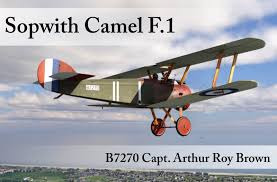

Arthur Roy Brown was a Canadian flying ace of the First World War with 10 victories whilst serving with the Royal Flying Corps. His claim to fame was his 10th aerial victory on the 21st of April 1918 where he would be credited with shooting down the most feared and deadly flying ace of the war, Manfred Albrecht Freiherr von Richthofen, Der Rote Kampfflieger, The Red Baron. He accomplished this after pursuing Richthofen and defending his fellow pilot Wilfrid “Wop” May.
Billy Bishop's Nieuport 17
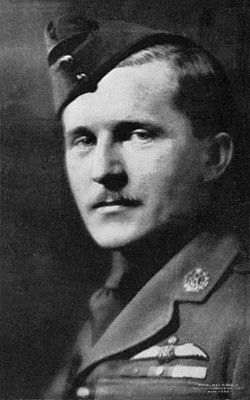
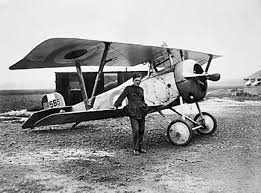
William Avery Bishop was a Canadian fighter ace flying for the RFC/RAF achieving 72 aerial victories making him the highest flying ace of the Canadian and British Empire forces. He would earn the Victoria Cross for his accomplishments whilst flying the Nieuport 17. He would go on to survive the war and then serve during WW2 where he played a key role in setting up and then promoting the British Commonwealth Air Training Plan.
Edward "Mick" Mannock's S.E.5a

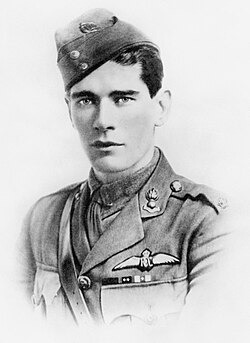
Edward “Mick” Mannock was an Irish flying ace who served with the Royal Flying Corps during the war. He would be awarded with 61 aerial victories making him the 5th deadliest ace of the war. He saw the most success flying the Royal Aircraft Factory S.E.5a. He was shot down and killed on the 26th of July 1918 after he dove down to view his latest kill and was hit by a volley of ground fire.
William George Barker's Sopwith Snipe


William George Barker was a Canadian flying ace of WW1. Later in the war he flew the Sopwith Snipe scoring 4 of his 50 aerial victories with it. (He mostly flew the Sopwith Camel but I thought there should be something else since there’s already 2 premium Sopwith Camels proposed.) He claimed his 4 aerial victories with the Snipe in a single battle with Jagdgeschwader 3 on the 27th of October 1918. He engaged with 6 Fokker D.VII’s alone and shot down 4 despite being shot in both legs and his elbow, he performed a controlled crash landing after safely getting behind British lines. He would be awarded the Victoria Cross for his actions on that day.
PB.31E
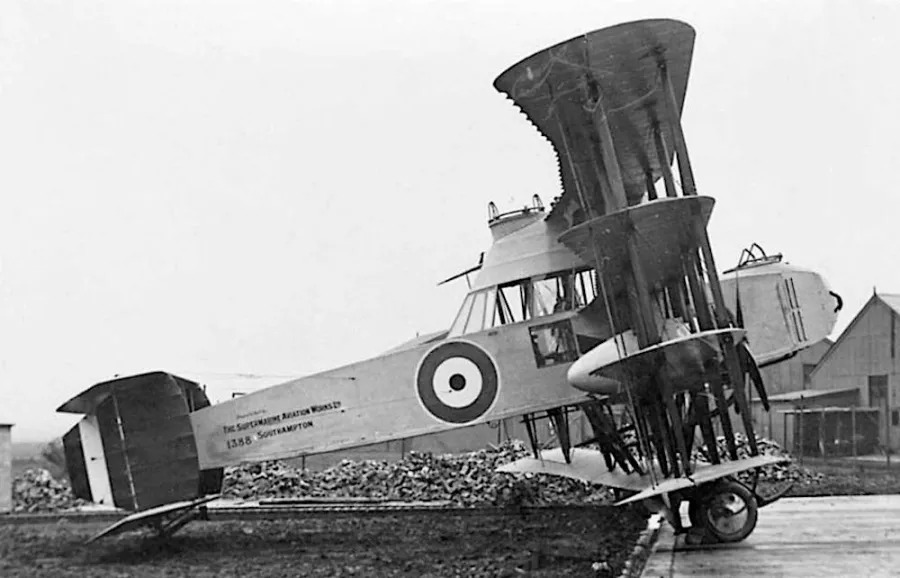
The Pemberton-Billing 31E, or also known as the Supermarine Nightkawk was an experimental quad-plane Zeppelin interceptor. It was similar to the earlier PB.29E however it featured a pair of more powerful Anzani radial engines producing 100hp each. It had an expected top speed of 121kph however it only ever reached 96kph in testing. It was armed with 2 7.7mm Lewis guns, one in the cockpit and one facing the rear on the top wing, and 1 37mm Davis cannon on the top wing. Only one prototype was built before it was cancelled in favour of other aircraft designs and the threat of Zeppelin raids on South East England vanished.
SS-Class Airship SS B.E.2c Airship
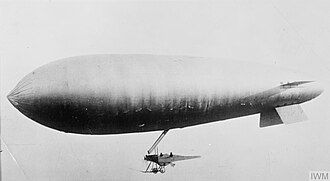
The SS-Class airships, or Submarine/Sea Scout airships, were a type of small, non-rigid airships used by the Royal Naval Air Service during the early stages of the war. It was used to help counter the threat that German U-boats posed to British shipping. A main feature was that it was cheap to produce due to it’s simple design and it’s use of a stripped down aircraft fuselage as a gondola. It was powered by an air-cooled Renault engine producing 75hp which gave it a top speed of 80kph. It was armed with a 7.7mm Lewis gun and could carry up to 73kg of bombs.
C-Class Airship
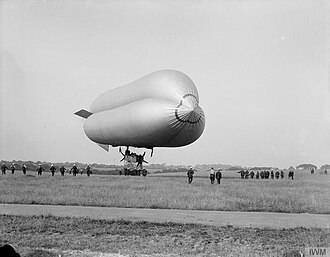
The C-Class (Coastal Class) airships were a class of non-rigid airship used by the RNAS during WW1. They entered service in 1961 and remained in use until after the Armistice. They were powered by a pair of Sunbeam engines which produced 150hp each giving them a top speed of 84kph. They were armed with up to 6 x 7.7mm Lewis guns and either 4 x 50kg bombs, 2 x 10⁴kg bombs, or various depth charges.
These were just some of the most notable aircraft I thought would work well if added to War Thunder. If you have any suggestions for any other aircraft or famous pilot premiums you would like to see then please comment below.
I believe that WW1 aviation should have a place in a game as comprehensive and dedicated to historical vehicles as War Thunder. Whilst it may not be massively popular, it would be fitting for the game to include such an important time in military history.
- Yes
- No
- Option 1 - Replace reserve tier
- Option 2 - Rank 0
- Option 3 - Separate Tech Tree
- Your own idea/One I missed
- I said no
Sources
Wikipedia Airco DH.1
Combat Air Museum - Airco DH.2
National Museum of the United States Air Force - De Havilland DH-4
The Aerodrome - Airco D.H.5
Wikipedia - Vickers F.B.5
Wikipedia - Vickers Vampire
RAF Museum - Sopwith Pup
RAF Museum - Sopwith 1½ Strutter
Wikipedia - Beardmore W.B.III
RAF Museum - Sopwith F1 Camel
Military Aviation Museum - Sopwith Triplane
Wikipedia - Sopwith Dolphin
WW1 Aviation Heritage Trust - Sopwith Snipe
Wikipedia - Nieuport 12
The Aerodrome - Nieuport 16
The Museum of Flight - Nieuport 24bis Reproduction
The Aerodrome - Nieuport 27
The Aerodrome SPAD S.VII
Military Factory - SPAD S.XII
Aviastar - Port Victoria Aircraft
Wikipedia - Armstrong Whitworth F.K.10
Wikipedia - Armstrong Whitworth F.K.3
Shuttleworth - Bristol F.2B Fighter
Royal Air Force Museum - Bristol M.1C
War History - British RFC Supermarine Nighthawk
RAF Museum - Royal Aircraft Factory SE5A
British Airships 1905-30 by Ian Castle
Wikipedia - Royal Aircraft Factory F.E.2
The Aerodrome - R.E.7
The Aerodrome Armstrong-WhitworthF.K.8
Wikipedia - Avro 523 Pike
Naval Encyclopedia - Fairey III
Imperial War Museum - Airco de Havilland DH-9
Wikipedia - Airco DH.9A
Wikipedia - Airco DH.10 Amiens
Silverhawk Author - Canadian Warplanes 1: Handley Page 0/100, 0/400, and V-1500 biplane bombers
Brookfield Aviation - Legends of Aviation # 11: Major James McCudden
The Aerodrome - Donald MacLaren
Wikipedia - Arthur Roy Brown
Wikipedia - Mick Mannock
The Aerodrome - William Barker