History
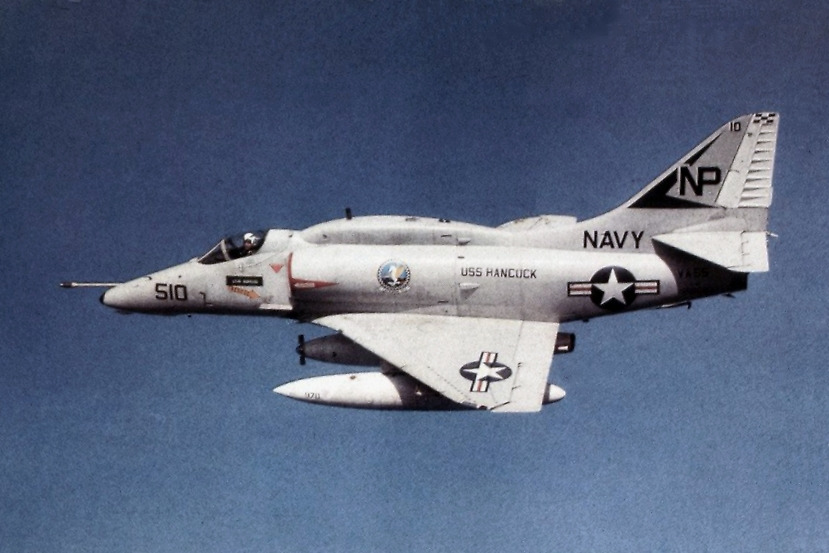
The A-4F represented the culmination of many upgrades that had gradually appeared during late A-4E production. Unlike earlier variants where features such as the avionics hump and cranked refueling probe were retrofit additions, the A-4F incorporated them from the start as standard equipment. The dorsal avionics hump, mounted between the canopy and the vertical stabilizer, provided space for additional electronic warfare and defensive systems that could not fit within the compact Skyhawk fuselage.
The aircraft also introduced a zero-zero ejection seat, giving pilots a greatly improved survival chance during low-altitude emergencies. Nosewheel steering improved carrier deck handling and ground maneuverability, while wing-top spoilers enhanced roll control and handling characteristics. Additional armor plating around the cockpit increased pilot protection during strike missions against heavily defended ground targets.
The prototype A-4F, converted from A-4E BuNo 152101, completed its first flight on August 31, 1966. Production totaled 147 aircraft. Since the variant had been designed specifically with combat operations in Southeast Asia in mind, deliveries began directly to Pacific Fleet squadrons in June 1967. The first operational units to receive the A-4F were VA-23 and VA-93, both of which deployed to Vietnam later that same year.
Standard production A-4Fs were powered by the Pratt & Whitney J52-P-8A turbojet producing 9,300 pounds of thrust. However, approximately one hundred aircraft were later upgraded with the significantly more powerful J52-P-408 engine, increasing thrust output to around 11,200 pounds. These upgraded aircraft became informally known as “Super Fox” Skyhawks due to their noticeably improved performance.
Some late-service A-4Fs also received additional electronic warfare upgrades, including the ALR-45 radar warning receiver mounted at the top of the vertical stabilizer and a small chin-mounted DECM antenna beneath the nose. These additions improved survivability against radar-guided threats and reflected the evolving combat environment experienced during the Vietnam War.
Beyond frontline combat service, the A-4F also became well known through its use by the Blue Angels flight demonstration team. Eighteen A-4F aircraft fitted with the P-408 engine served with the team from 1973 until 1986, becoming one of the most iconic aircraft used by the squadron.
After retirement from frontline attack duties, a number of surviving A-4Fs found a second life as adversary aircraft with Navy and Marine Corps training squadrons, where their compact size, maneuverability, and strong handling characteristics made them effective at dogfighting dissimilar air combat trainers.