- Yes
- No



What is the Hispanic tree?
The Hispanic Techtree comprises the countries that have Spanish as an official language, with Spain, the language’s creator, being the primary country. Chile and Argentina share historical ties, as both countries were part of the Spanish empire from the 16th century and later gained their independence from Spain in the 19th century, with Argentina helping Chile in its independence process. They are also sister nations and neighbors. The three nations share a language, history, and culture. The King of Spain visits Chile and Argentina every time there is a presidential change of command, highlighting the strong bond and brotherhood that exists today. Military exchanges and joint exercises conducted annually are also noteworthy.
Why Chile and Argentina and not other Hispanic countries?
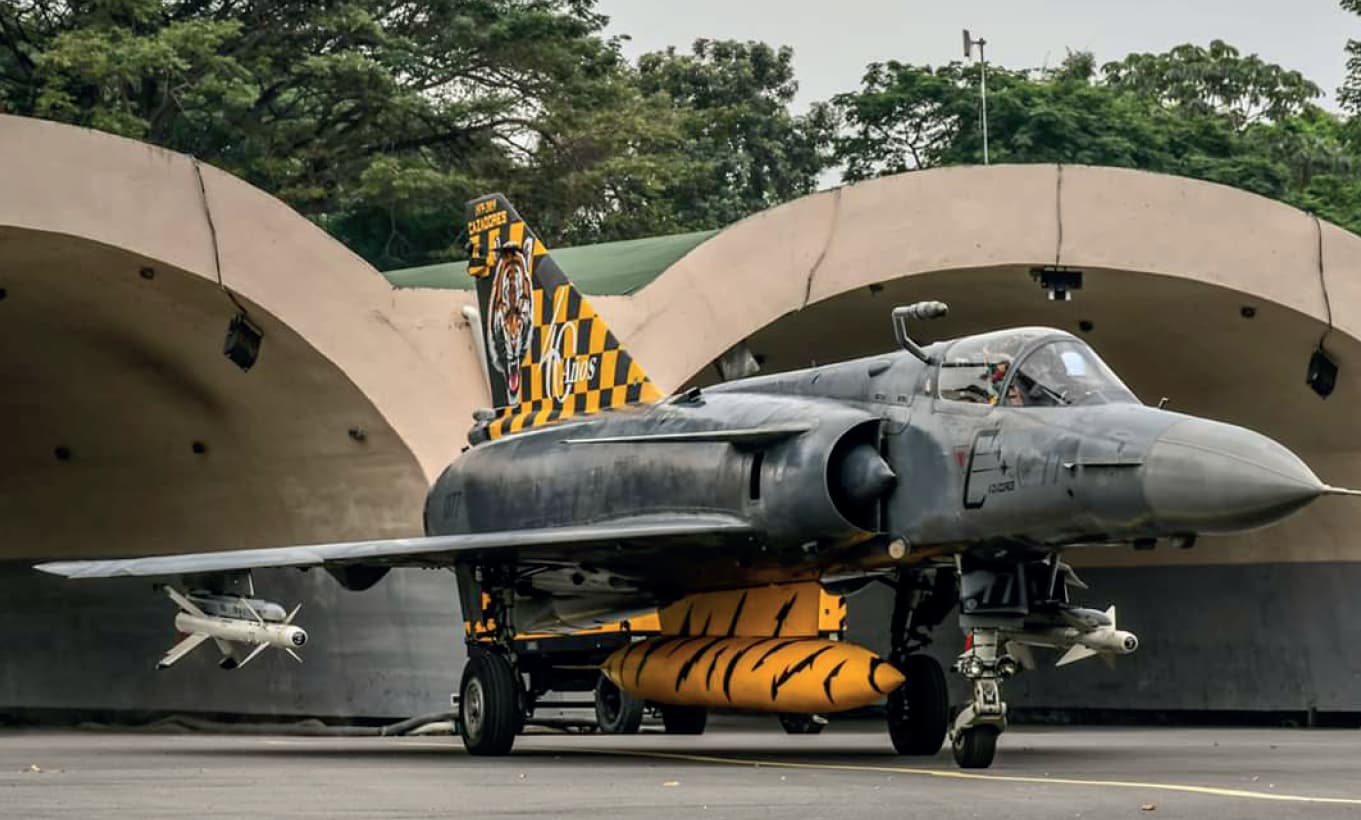
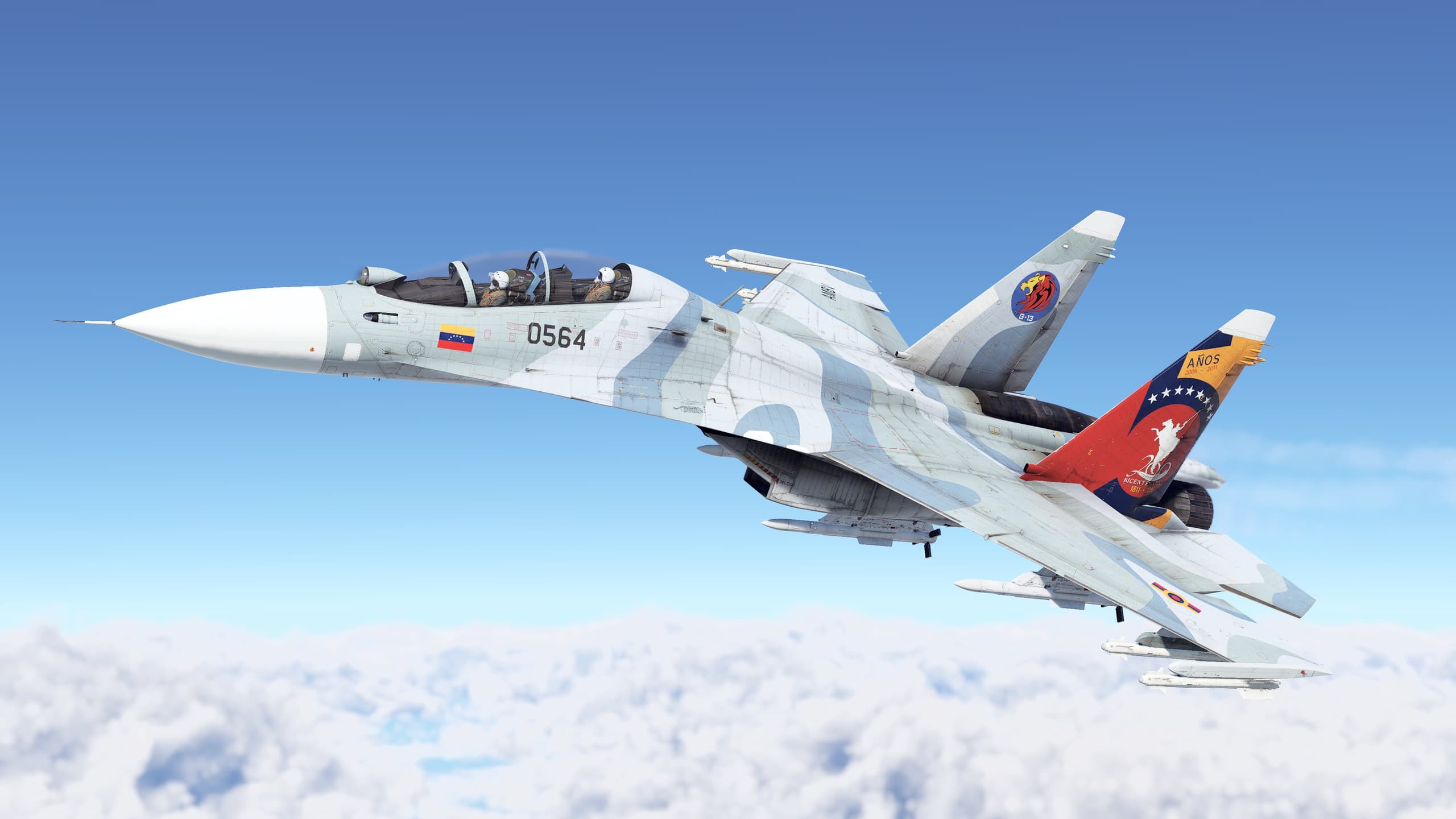
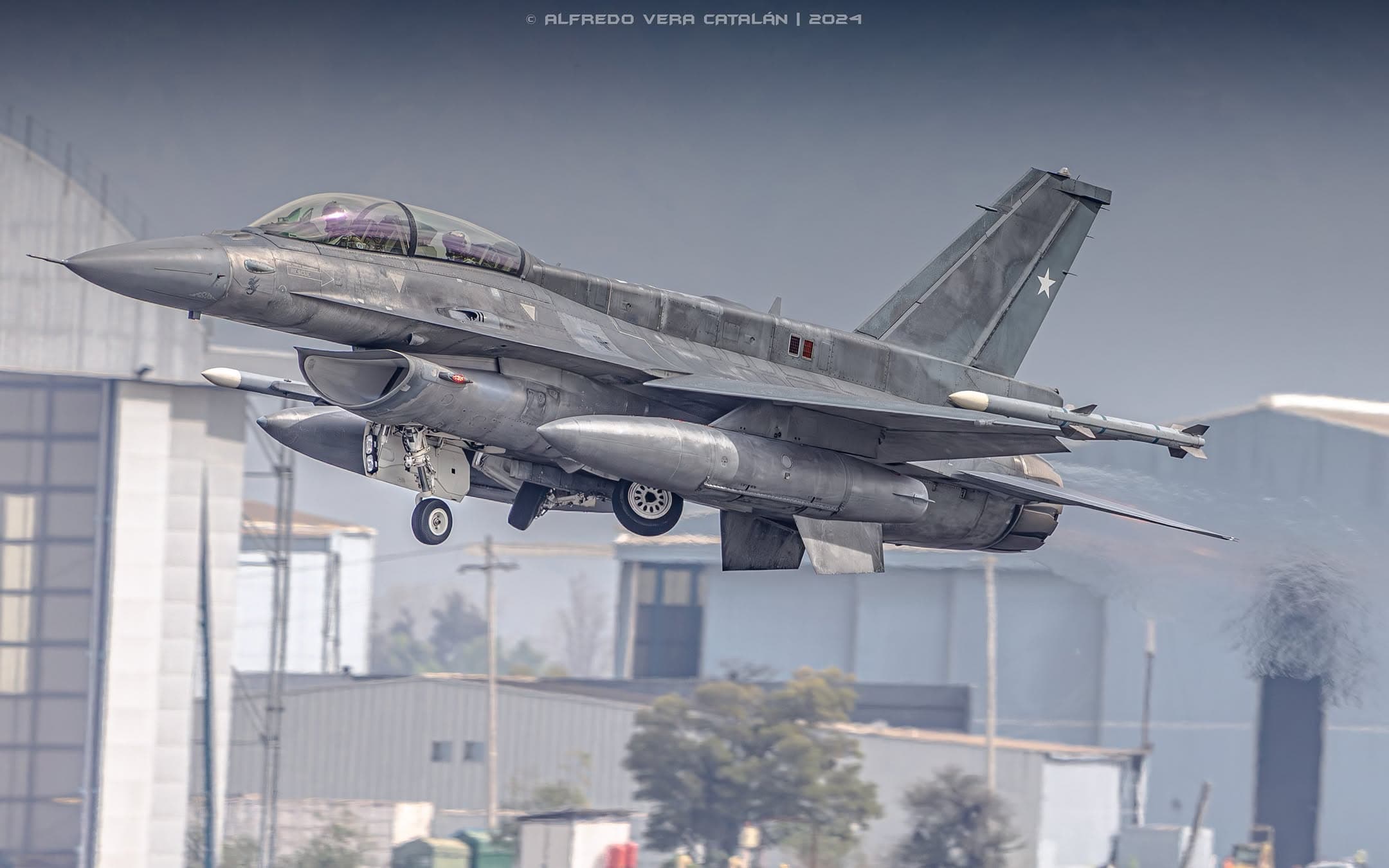
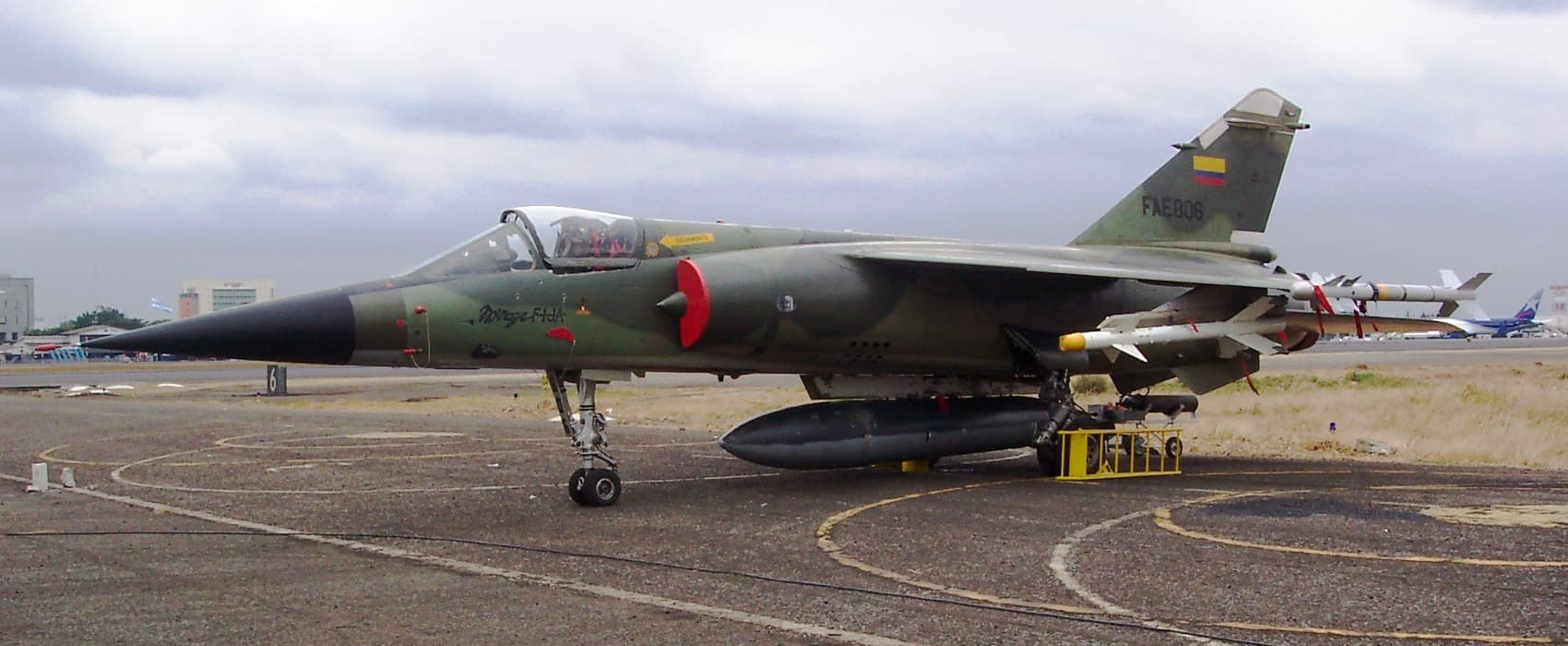
Historically, Chile and Argentina have been the leading Hispanic military powers in Latin America, making them the countries with the greatest potential to contribute aircraft. They also stand out for having developed domestic military vehicle manufacturing industries; for example, Argentina developed a large national aeronautical industry with its I.A. Calquin, Pucara, and Pampa attack aircraft, while Chile excels in the production of the Spanish C-101 aircraft, known locally as the A-36, and in unique national modifications such as the Mirage Pantera and the F-5 Tiger III. These two nations also reach the highest ranks in the game, something few other Latin American nations can achieve. Peru was also added as a third secondary nation in the highest ranks because it can contribute variety with its Russian and French aircraft, and the recent announcement of the purchase of F-16 Block 70s, which, along with the Spanish Eurofighters, will be the most powerful fighters in the tech tree. The other Hispanic countries will contribute interesting premium/event vehicles.
What about Brazil?
Brazil, despite being a Latin American country, is not considered a Hispanic country since its official language is Portuguese and it gained independence from Portugal, not Spain like other Latin American countries. Brazil could be included in the game as part of a complete Latin American tree or together with Portugal.
Why add the Hispanic Tech Tree?
Currently in War Thunder, there is little to no representation of Hispanic countries, and the vehicles that are present are scattered across different tech trees, mostly as premium or event vehicles. Argentina is a small exception, concentrating its vehicles in Germany, but again, its representation is limited beyond filling gaps in that tech tree. Adding a Hispanic tech tree is the perfect opportunity to finally unify all these vehicles into a single tech tree. Furthermore, it allows us to add all the unique vehicles these countries possess, with Spain standing out as the leading nation and the Hispanic country with the largest number of unique and domestically produced vehicles. Chile and Argentina follow, also contributing many unique aircrafts, many of which are popular on the forum and are frequently requested for inclusion. The following suggestion will provide a detailed look at all of these vehicles.

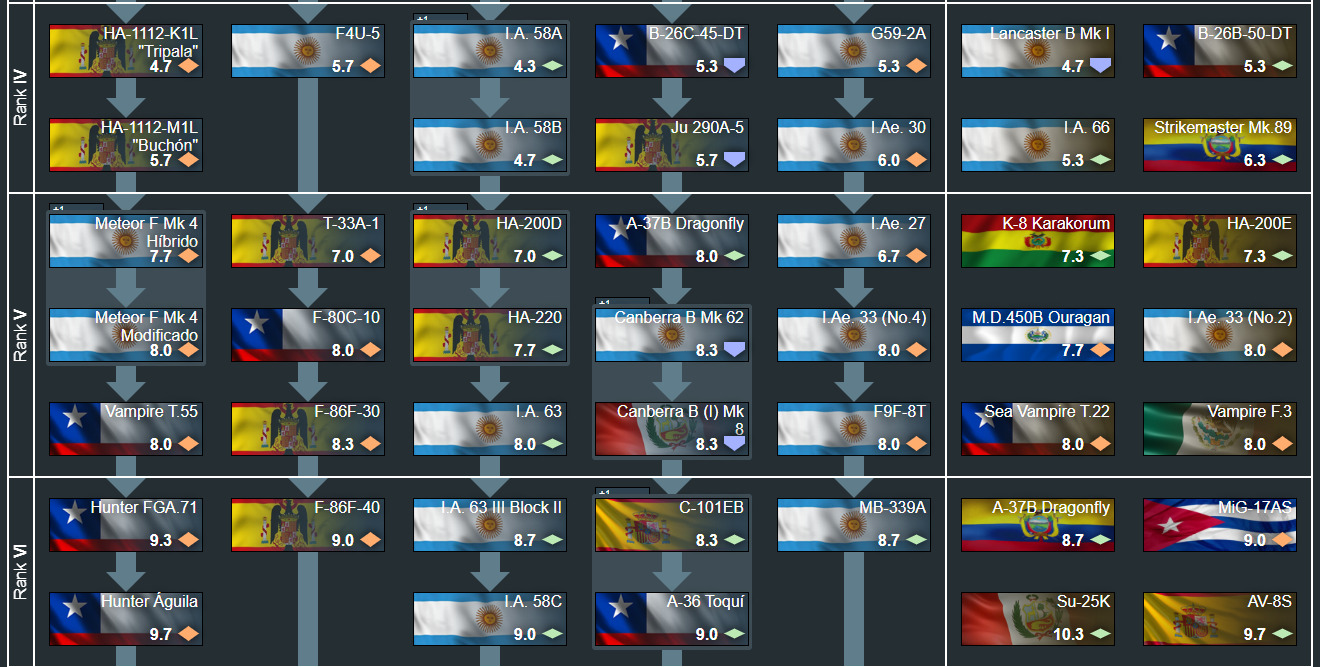

German/European Fighters
Spoiler
Rank 1
Spoiler
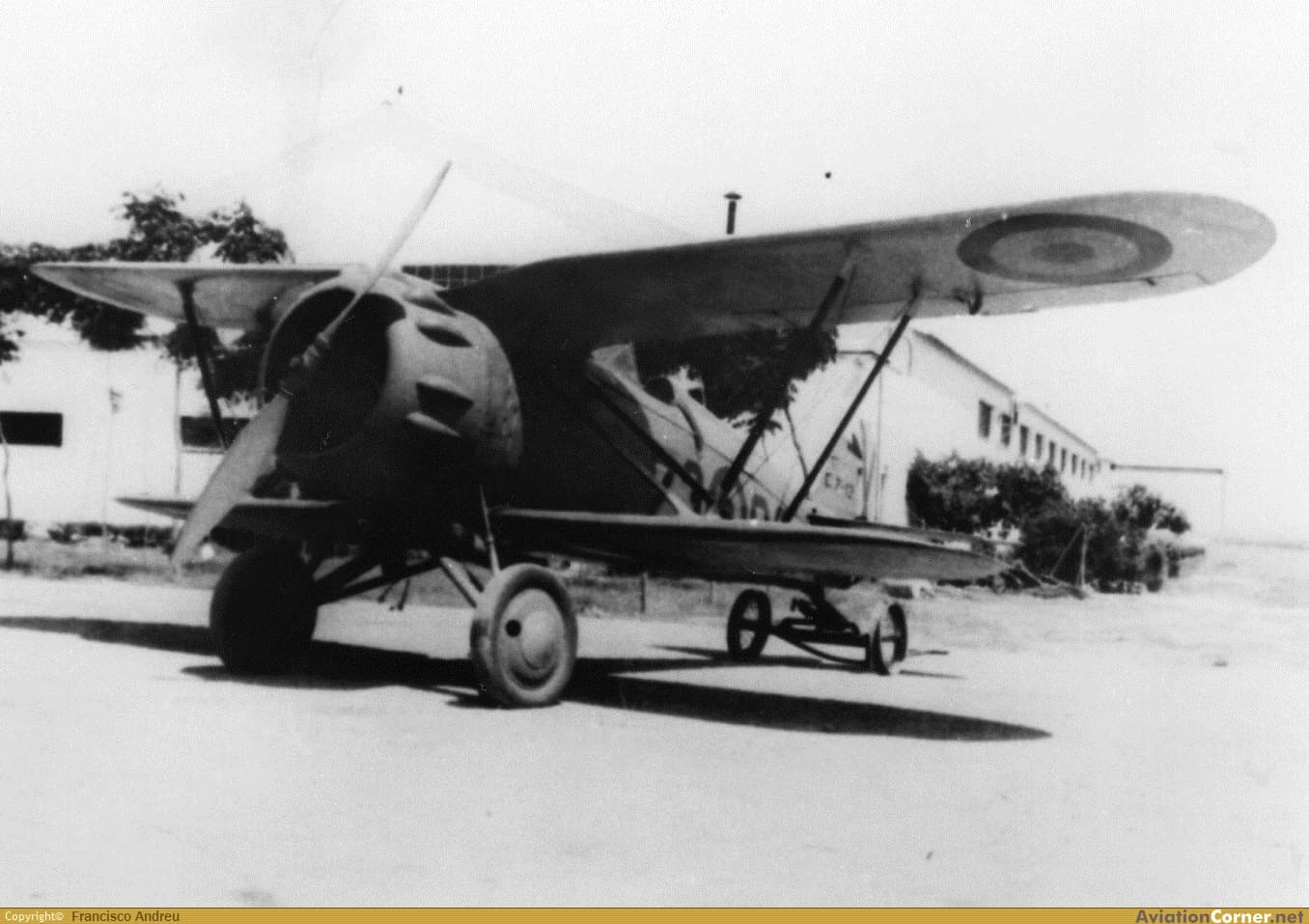
C.7 (Ro.41)
- Description:
- The Italian light biplane fighter served with Nationalist Spain during the Spanish Civil War; 28 units were acquired. It was noted for its maneuverability and climb rate, although it did not achieve any victories during the conflict.
- Crew:
- 1
- Armament:
- Primary: 2x 7.7 mm Breda-SAFAT machine guns
- Performance:
- Maximum speed: 320 km/h
- Sources:
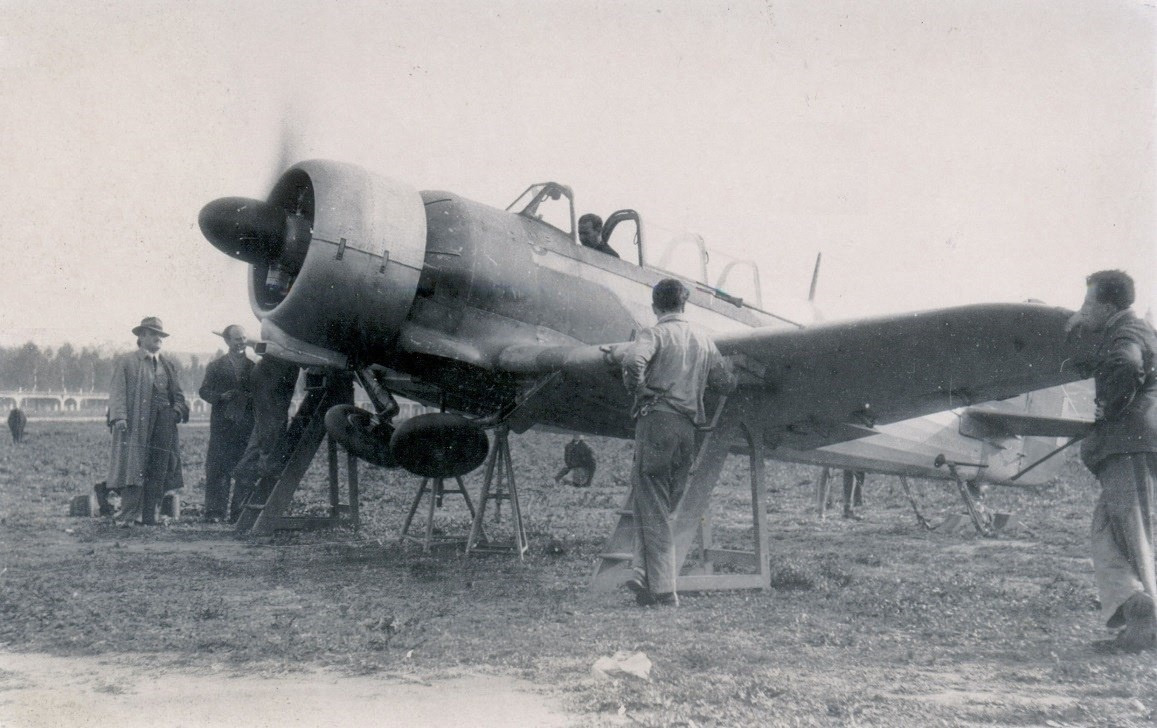
HS-42
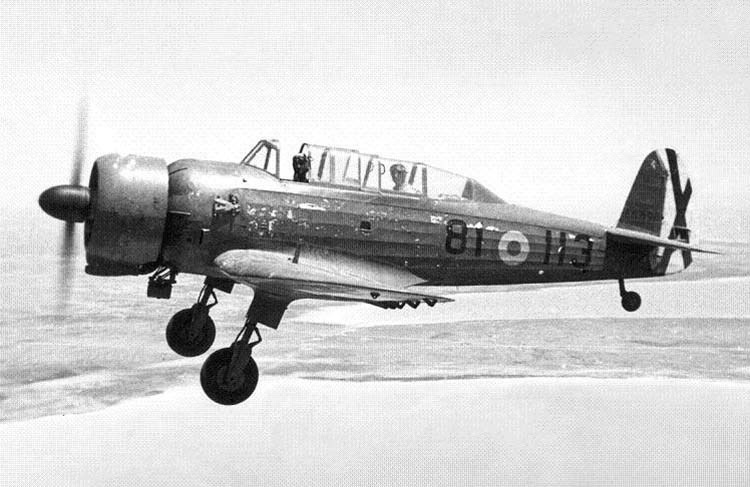
- Description:
- An advanced military training aircraft built in Spain by Hispano Aviación in the 1940s. It had a fixed landing gear, unlike its later, more advanced version. Throughout its production, it used several different engines, as the initial ones experienced problems; the last engine was the Armstrong Siddeley Cheeta XXV. They remained in service until 1955-1958.
- Crew:
- 2
- Armament:
- Primary: 2x 7.7 mm Breda-SAFAT machine guns
- Performance:
- Maximum speed: 335 km/h
- Sources:
HA-43
- Description:
- An advanced military training aircraft built in Spain by Hispano Aviación in the 1940s. Unlike the earlier HS-42 version, this version had retractable landing gear and an improved engine that enhanced its flight performance.
- Crew:
- 2
- Armament:
- Primary: 2x 7.7 mm Breda-SAFAT machine guns
- Performance:
- Maximum speed: 335 km/h
- Sources:
Bf 109 B-2
- Description:
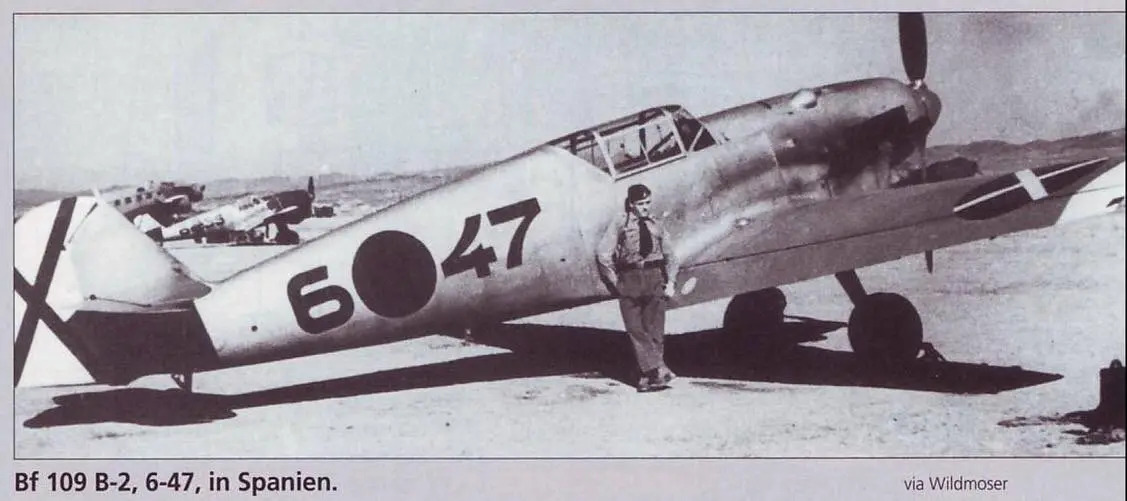
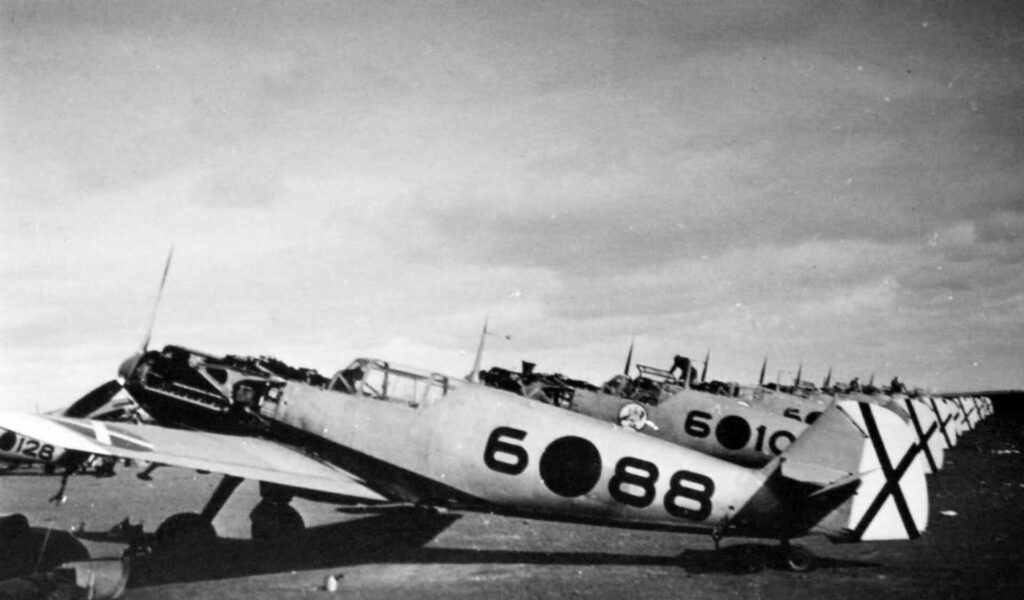
- German fighter aircraft used by Nationalist Spain in the Spanish Civil War from 1937 onwards; 22 Bf 109 B-2 aircraft were landed in Vigo. The B2 version has a Junkers Jumo 210G engine of 700 hp, slightly more powerful than the B1 version.
- Crew:
- 1
- Armament:
- Primary: 2x 7.92 mm MG 17 machine gun
- Performance:
- Maximum speed: 470 km/h
- Sources:
Bf 109 C-1
- Description:
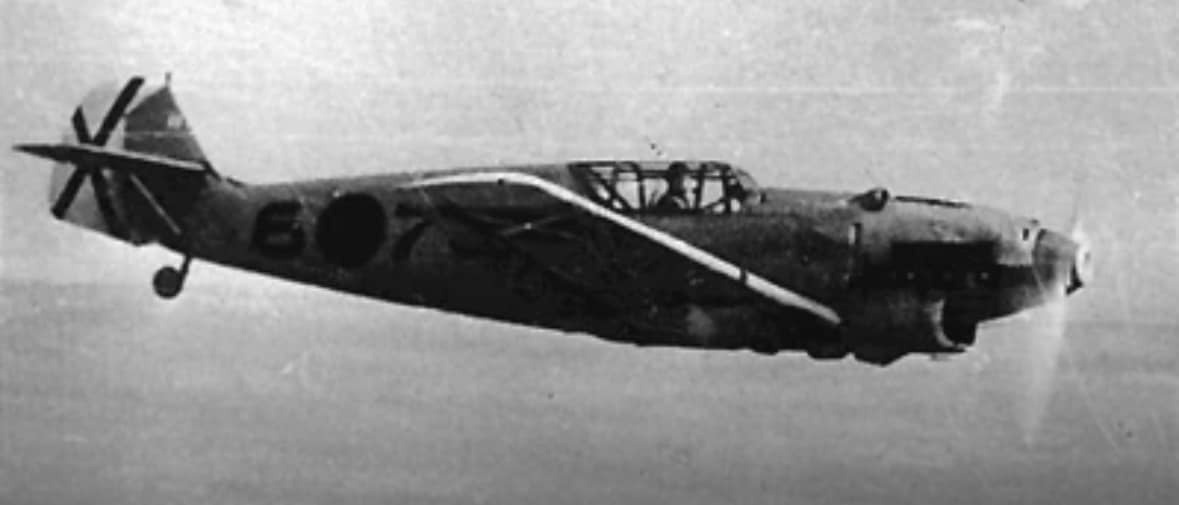
- German fighter aircraft used by Nationalist Spain in the Spanish Civil War. The new batch of the Bf 109 C-1 variant began arriving in Spain in 1938 as a replacement for the earlier B1 variant. The C1 variant incorporated the more powerful 730 hp Junkers Jumo 210Ga engine and two additional machine guns in the wing roots.
- Crew:
- 1
- Armament:
- Primary: 4x 7.92 mm MG 17 machine gun
- Performance:
- Maximum speed: 484 km/h
- Sources:
Rank 2
Spoiler
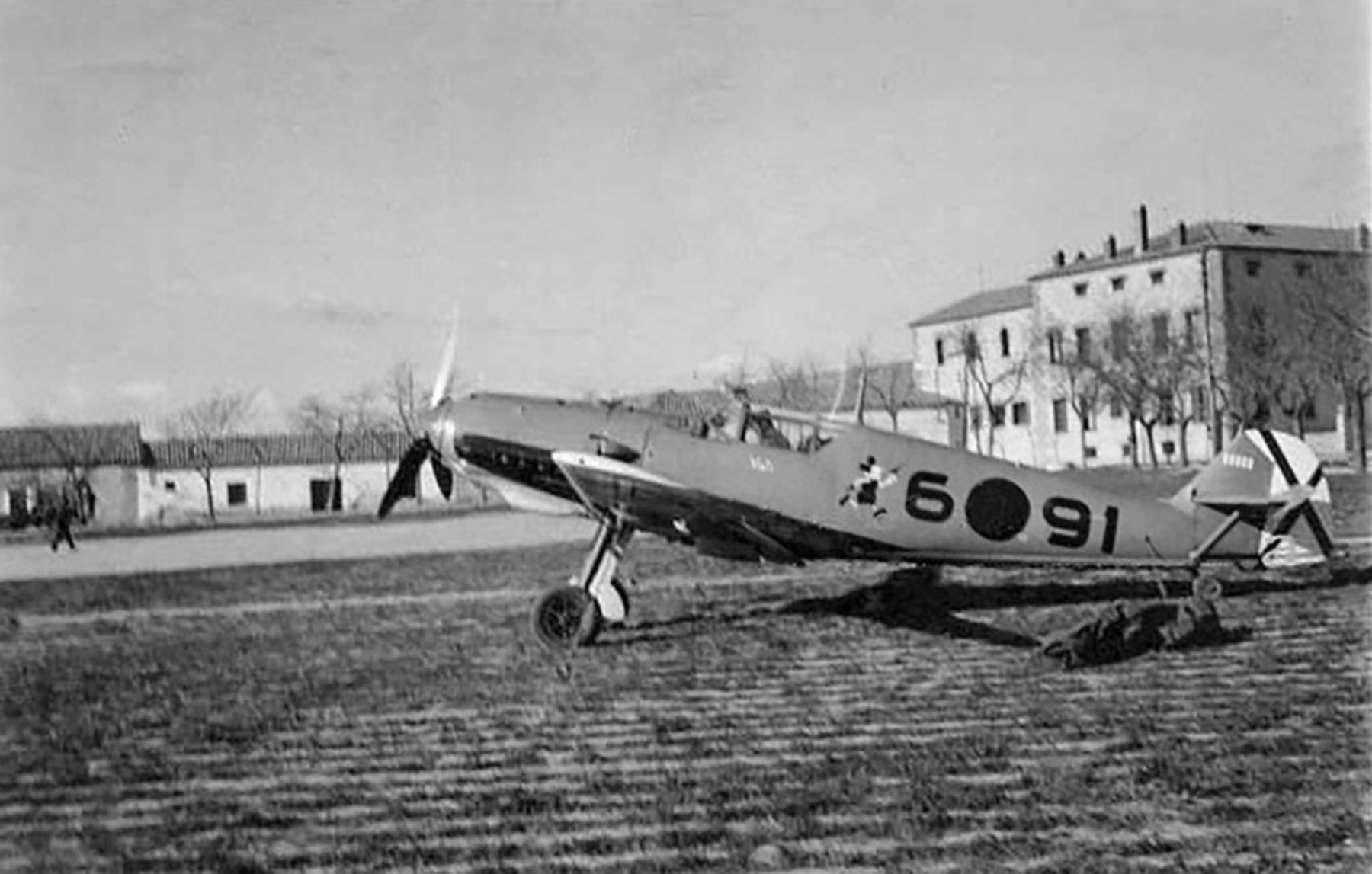
Bf 109 E-1
- Description:
- German fighter aircraft used by Nationalist Spain in the Spanish Civil War. The new batch of Bf 109 E-1s began arriving in September 1938, in the midst of the Battle of the Ebro. The E-1 variant incorporated a more powerful Daimler-Benz DB 601A engine, a new three-bladed variable-pitch propeller, redesigned wings with a new and more efficient cooling system, and increased ammunition capacity for the nose-mounted machine guns.
- Crew:
- 1
- Armament:
- Primary: 4x 7.92 mm MG 17 machine gun
- Secondary: 4x 50 kg SC50JA bomb, 250 kg SC250JA bomb, 500 kg SC500K bomb
- Performance:
- Maximum speed: 570 km/h
- Sources:
Bf 109 E-3
- Description:
- German fighter aircraft used by Nationalist Spain in the Spanish Civil War. The new batch of the Bf 109 E-3 began service in Spain during 1938. The E-3 variant retained the characteristics of the E-1 version but replaced the two 7.92 mm wing-mounted machine guns with two 20 mm machine guns.
- Crew:
- 1
- Armament:
- Primary: 2x 20 mm MG FF cannon, 2x 7.92 mm MG 17 machine gun
- Secondary: 4x 50 kg SC50JA bomb, 250 kg SC250JA bomb, 500 kg SC500K bomb
- Performance:
- Maximum speed: 570 km/h
- Sources:
Rank 3
Spoiler
Bf 109 F-4
- Description:
- German fighter aircraft used by Nationalist Spain in the Spanish Civil War. The new batch of Bf 109 F-4s began service in Spain in 1943, in the midst of World War II, with a total of 15 units received. The F-4 variant featured the more powerful DB 601 E engine and was equipped with the MG 151/20 cannon. It was mounted through the propeller hub, resulting in a higher rate of fire.
- Crew:
- 1
- Armament:
- Primary: 20 mm MG 151 cannon, 2x 7.92 mm MG 17 machine gun
- Secondary: 4x 50 kg SC50JA bomb, 250 kg SC250JA bomb, Flam C 250 incendiary bomb, 2x 15 mm MG 151 cannon (secondary)
- Performance:
- Maximum speed: 665 km/h
- Sources:
- Aviación por Leandro : 1936 MESSERSCHMITT Bf -109
- Bf 109 F-4 | War Thunder Wiki
- https://militaresescritores.es/noticias/historia-de-la-aviacion-militar-informe-salas-larrazabal-ii-el-record-alemanciado-manuel-parrilla-gil-publica-en-su-blog-este-emocionante-relato-de-las-misiones-de-la-caza-nocturna/
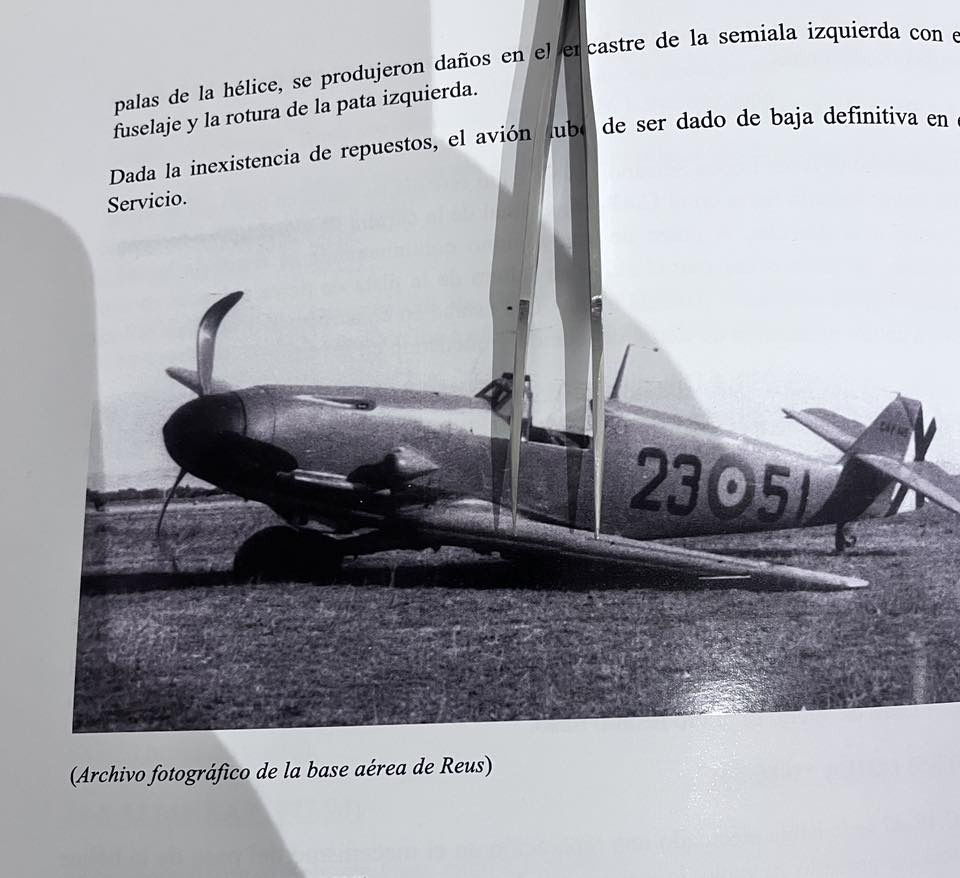
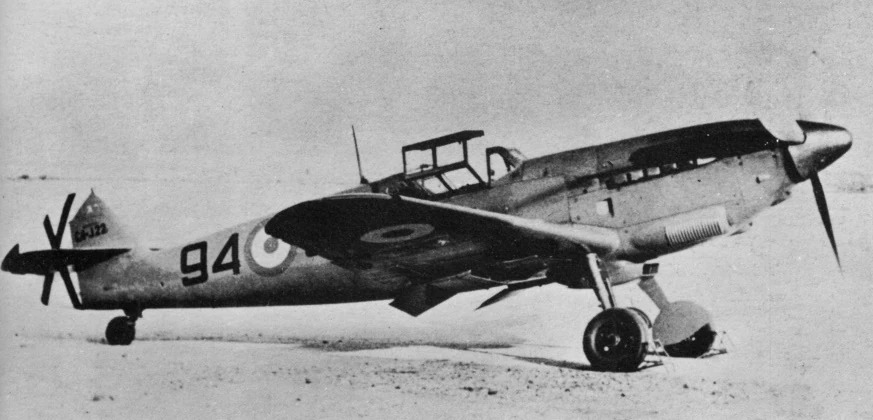
HA-1109-K1L
- Description:
- In 1942, the Spanish Government signed an agreement with Messerschmitt for the manufacture of the Bf 109G-2, although due to the Second World War and mistrust with the Spanish government, Germany did not supply the Daimler Benz DB-605A engines and the Hispano Aviacion company had to use Hispano-Suiza 12Z-17 engines. They were also armed with 80 mm rockets and two Hispano HS-404 20mm cannons.
- Crew:
- 1
- Armament:
- Primary: 2x 20 mm Hispano-Suiza HS.404/408 cannons
- Secondary: 4x 50 kg SC50JA bomb, 250 kg SC250JA bomb, Flam C 250 incendiary bomb, 2x racks of 8x 80 mm Oerlikon rockets, 2x 20 mm MG 151 cannon (secondary)
- Performance:
- Maximum speed: 600 km/h
- Sources:
Rank 4
Spoiler
HA-1112-K1L “Tripala”
- Description:
- The production version of the HA-1109-K1L was designated HA-1112-K1L and did not differ from the previous model except for some improvements to the power plant.
- Crew:
- 1
- Armament:
- Primary: 2x 20 mm Hispano-Suiza HS.404/408 cannons
- Secondary: 4x 50 kg SC50JA bomb, 250 kg SC250JA bomb, Flam C 250 incendiary bomb, 2x racks of 8x 80 mm Oerlikon rockets, 2x 20 mm MG 151 cannon (secondary)
- Performance:
- Maximum speed: 600 km/h
- Sources:
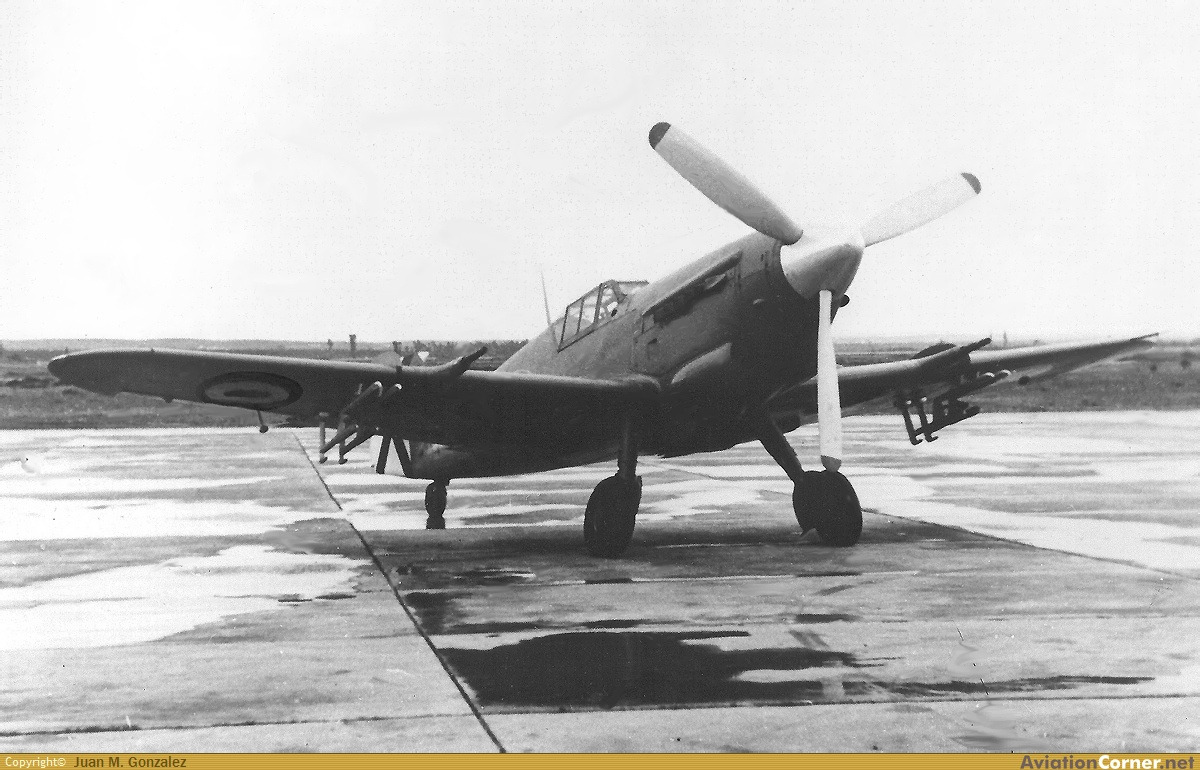
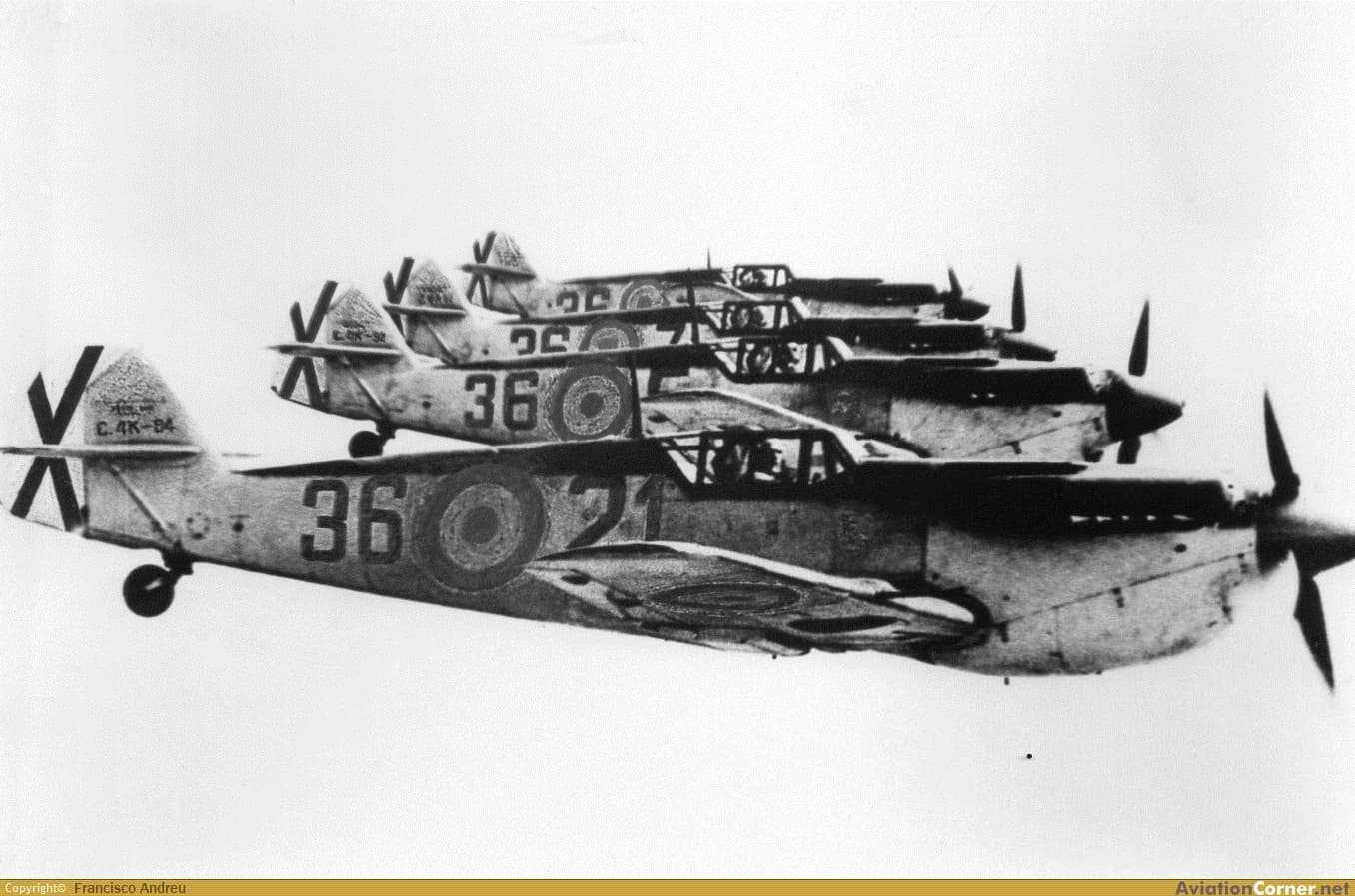
HA-1112-M1L “Buchón”
- Description:
- The final variant of the BF 109, manufactured in Spain by Hispano Aviación, was completed in 1954 and featured a 1600 hp Rolls-Royce Merlin 500-45 engine and a 4-bladed propeller, and retained the two 20 mm Hispano-Suiza 404/408 cannons of earlier versions.
- Crew:
- 1
- Armament:
- Primary: 2x 20 mm Hispano-Suiza HS.404/408 cannons
- Secondary: 4x 50 kg SC50JA bomb, 250 kg SC250JA bomb, Flam C 250 incendiary bomb, 2x racks of 8x 80 mm Oerlikon rockets, 2x 20 mm MG 151 cannon (secondary)
- Performance:
- Maximum speed: 665 km/h
- Sources:
Rank 5
Spoiler
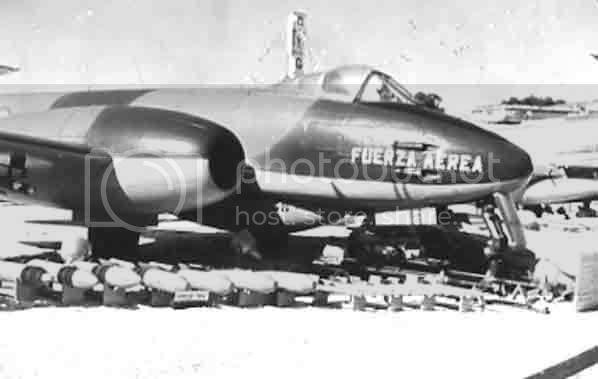
Meteor F Mk 4 Híbrido
- Description:
- British jet fighter acquired by Argentina in 1947 in a quantity of 100 units. This specific variant was modified to carry the wings of the Meteor Mk 3.
- Crew:
- 1
- Armament:
- Primary: 4x 20 mm Hispano Mk.II cannons
- Secondary: 2x 1000 lb H.E. M.C. Mk.13 bomb
- Performance:
- Maximum speed: 945 km/h
- Sources:
Meteor F Mk 4 Modificado
- Description:
- British jet fighter acquired by Argentina in 1947 in a quantity of 100 units. This specific version was locally modified to carry bombs and rockets.
- Crew:
- 1
- Armament:
- Primary: 4x 20 mm Hispano Mk.II cannons
- Secondary: 2x 1000 lb H.E. M.C. Mk.13 bomb, 8x HVAR rockets, 8x RP-3 rockets, 16x RP-3 rockets
- Performance:
- Maximum speed: 945 km/h
- Sources:
Vampire T.55
- Description:
- In 1953 Chile purchased 6 de Havilland Vampire from England in its T.55 version, which was the export version of the Vampire Trainer T.11 of the RAF thus beginning the jet age in Chile.
- Crew:
- 1
- Armament:
- Primary: 4x 20mm Hispano MK.V cannons
- Secondary: 2x 1000 lb bombs, 2x 500 lb bombs, 2x 100 lb bombs, 4x HVAR rockets, 8x SURA rockets, 8x RP-3 rockets
- Performance:
- Maximum speed: 885 km/h
- Sources:


Rank 6
Spoiler
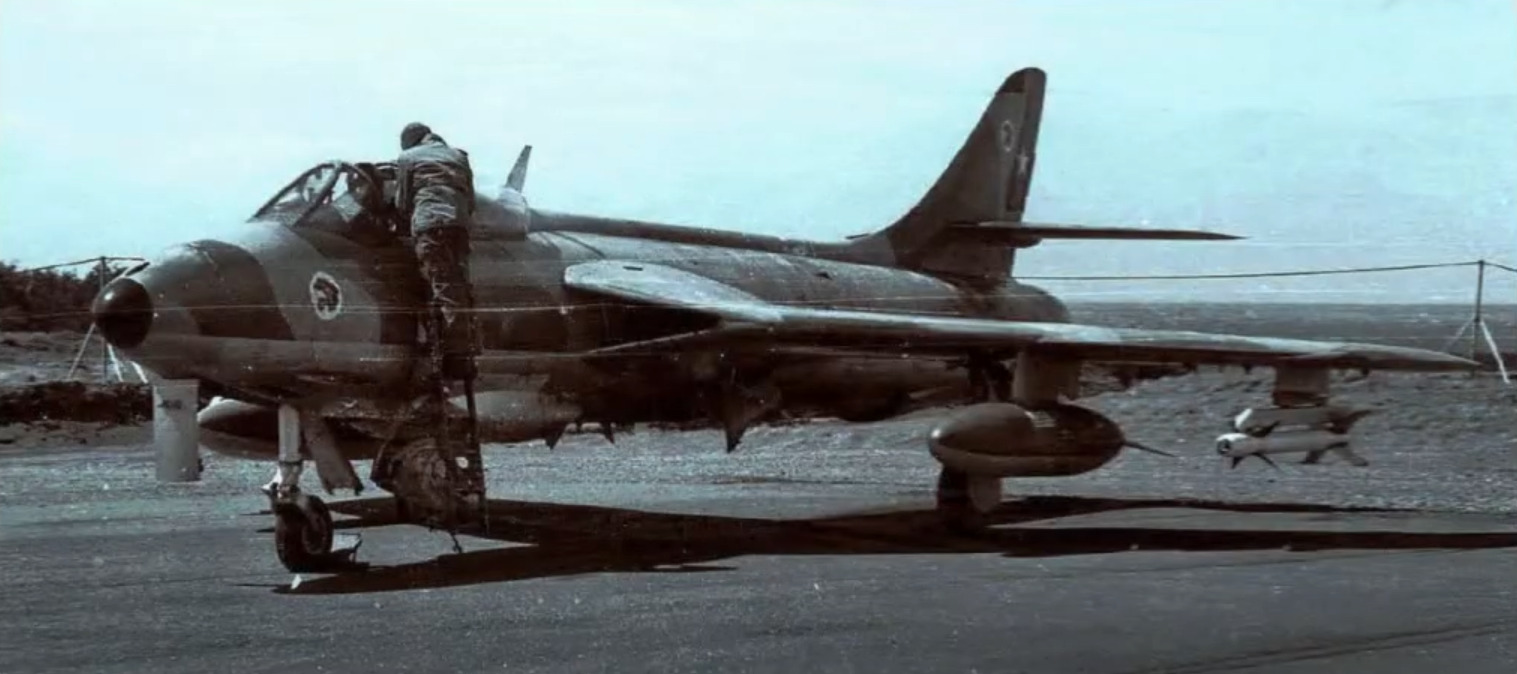
Hunter FGA.71
- Description:
- Export version for Chile of the Hunter FGA.9 ground attack fighter, being the main defense against a possible armed conflict with Argentina in the early 70s, during the Beagle crisis they were armed with Israeli Shafrir II missiles, later they were modified in Chile under the Águila program.
- Crew:
- 1
- Armament:
- Primary: 4x 30mm ADEN cannons
- Secondary: Mk.81/82/83 (including Snakeye), 4x Cardoen CB-250-K cluster bombs, 2x Cardoen CB-500-K cluster bombs, 2x 230 Gallon external fuel tanks, 32x 81mm SURA P3 rockets, 72x 68mm Matra SNEB rockets, 16x 127 mm Zuni rockets, 2x Shafrir 2
- Performance:
- Maximum speed: 1,128 km/h
- Sources:
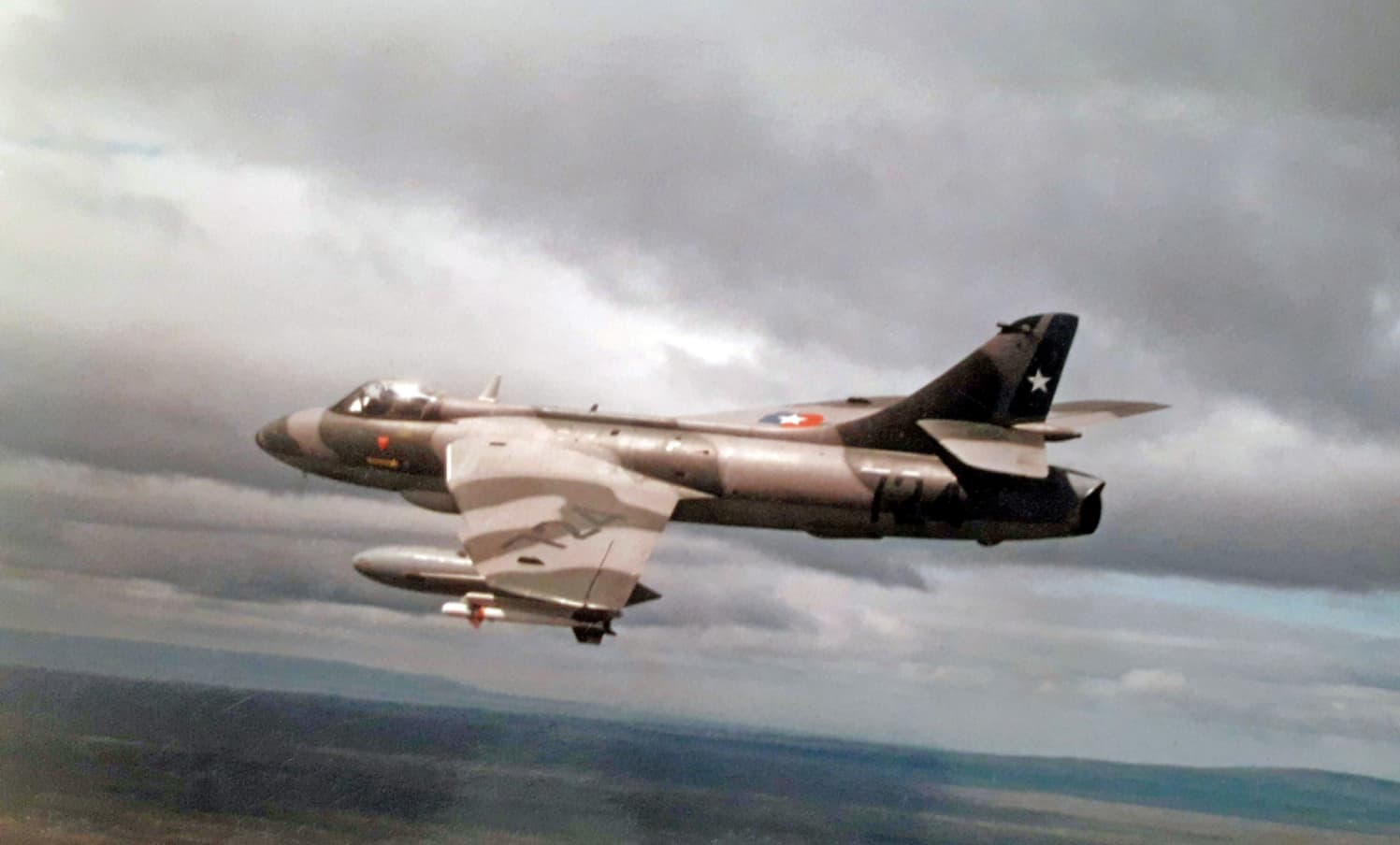
Hunter Águila
- Description:
- Modified version by Chile of the Hunter MK.71 under the “Águila” program, an indigenous RWR system called Caiquén was added, countermeasures called Eclipse (80x chaff/flare) were added. The Hunter’s avionics were improved and the cockpits of all Chilean Hunters were standardized. All these local improvements made it one of the most powerful Hawker Hunters in service in the world and one of the last in active service.
- Crew:
- 1
- Armament:
- Primary: 4x 30mm ADEN cannons
- Secondary: Mk.81/82/83 (including Snakeye), 4x Cardoen CB-250-K cluster bombs, 2x Cardoen CB-500-K cluster bombs, 2x 230 Gallon external fuel tanks, 32x 81mm SURA P3 rockets, 72x 68mm Matra SNEB rockets, 16x 127 mm Zuni rockets, 2x Shafrir 2
- Performance:
- Maximum speed: 1,128 km/h
- Sources:
Rank 7
Spoiler
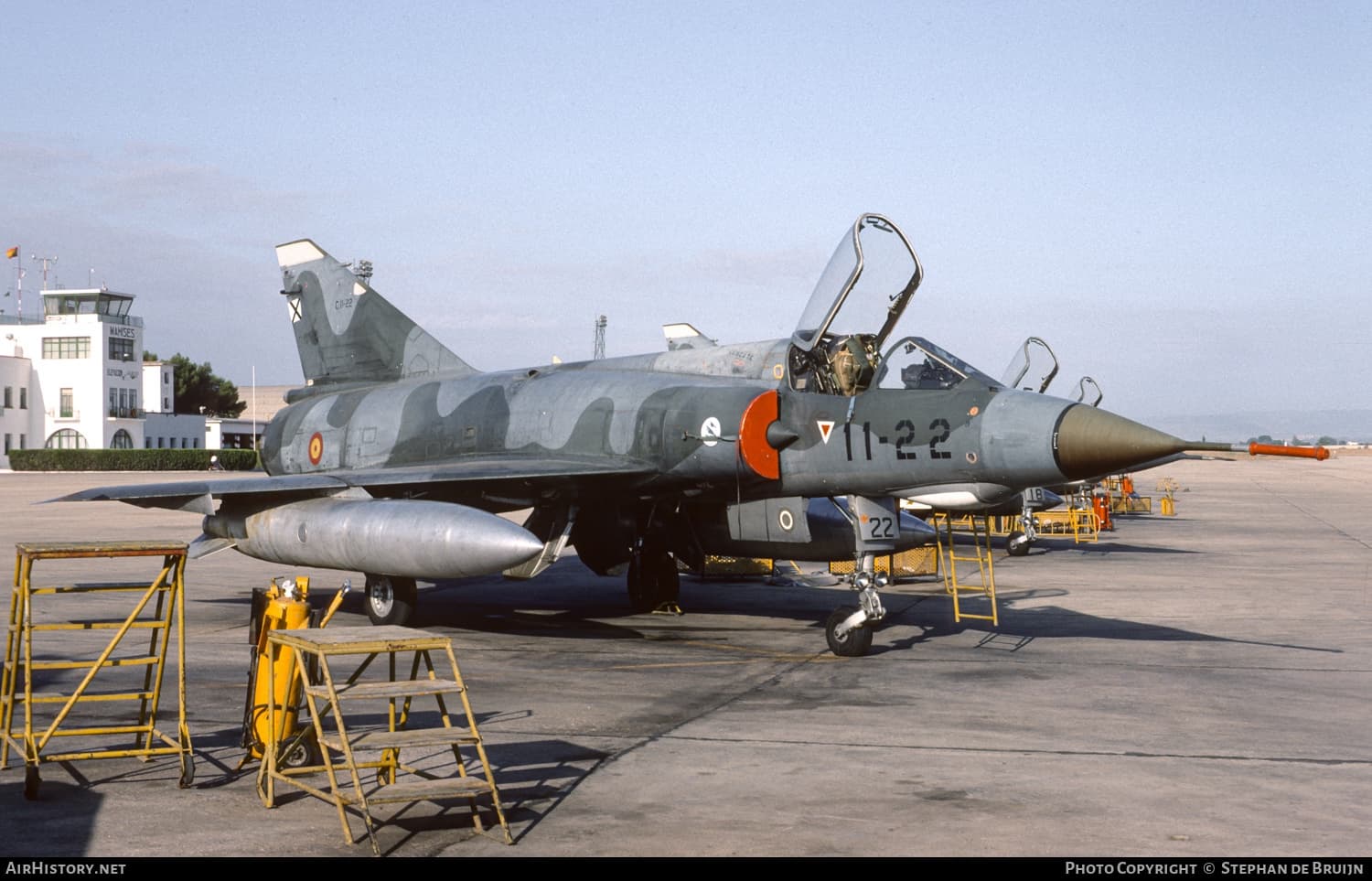
Mirage IIIEE
- Description:
- A French supersonic interceptor purchased by Spain in 1969, with a total of 30 units. The Mirage IIIEE version was equipped with the SNECMA ATAR 9C engine, which offered improved performance compared to the 9B of the previous model. It also incorporated an radar warning receiver (RWR) and, finally, a ballistic computer for ground attack. The final “E” in the name stands for España (Spain).
- Crew:
- 1
- Armament:
- Primary: 2x 30mm DEFA 552A cannons
- Secondary: AIM-9B missiles, Matra R550 Magic 1 missiles, 7x FZ49 rockets, 18x Type 23 SNEB rockets, 2x 250 kg SAMP Type 25 bomb, 2x 400 kg SAMP Type 21 bomb, AS-30 Nord air-to-ground missiles, Matra R530 missiles, Matra R530E missiles,
- Performance:
- Maximum speed: 2,160 km/h
- Sources:
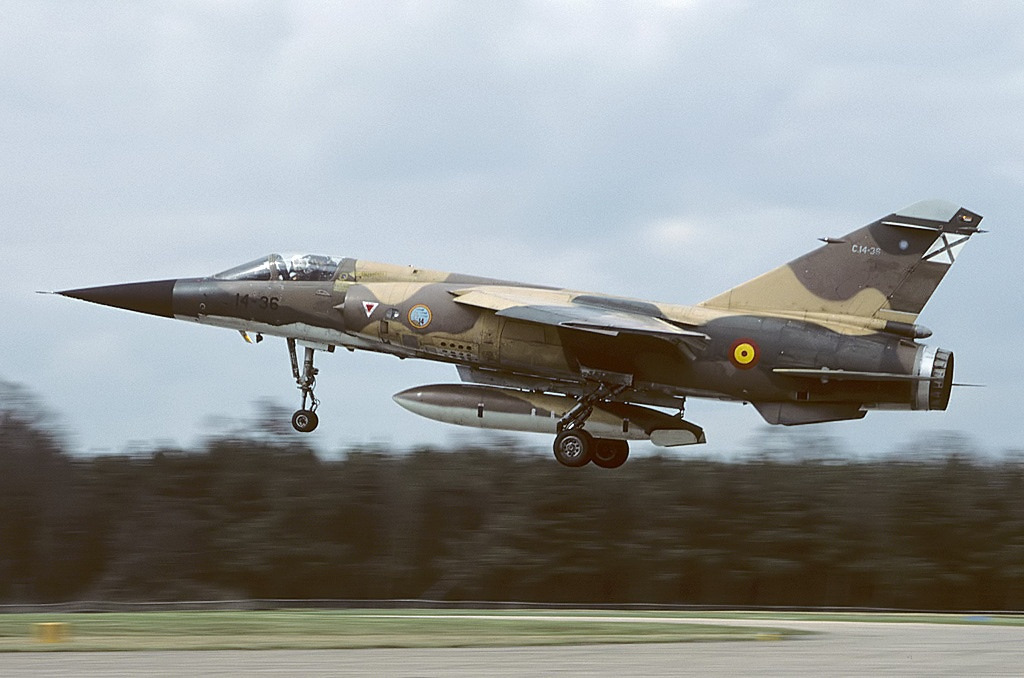
Mirage F1CE
- Description:
- The French Mirage F1CE is a supersonic fighter and attack aircraft acquired by Spain in 1975 due to escalating tensions with Morocco. An initial order of 15 aircraft was placed, but over the years more were purchased in various versions. The Mirage F1CE features the more powerful SNECMA Atar 9K-50 engine compared to the 9C, an improved Cyrano IV radar, and the higher-performance Matra Magic 2 missile. The final “E” in the name stands for España (Spain).
- Crew:
- 1
- Armament:
- Primary: 2x 30 mm DEFA 553 cannon
- Secondary: Matra R550 Magic 1/2 missiles, 250 kg SAMP Type 25 bomb, 400 kg SAMP Type 21 bomb, 500 lb SAMP Mk 82 bomb, 1000 lb SAMP Mk 83 bomb, 2000 lb SAMP Mk 84 bomb, 36x Type 23 SNEB rockets, Matra R530/R530E missiles, Matra Super 530F missiles, 216x Large caliber chaff countermeasures
- Performance:
- Maximum speed: 2,228 km/h
- Sources:
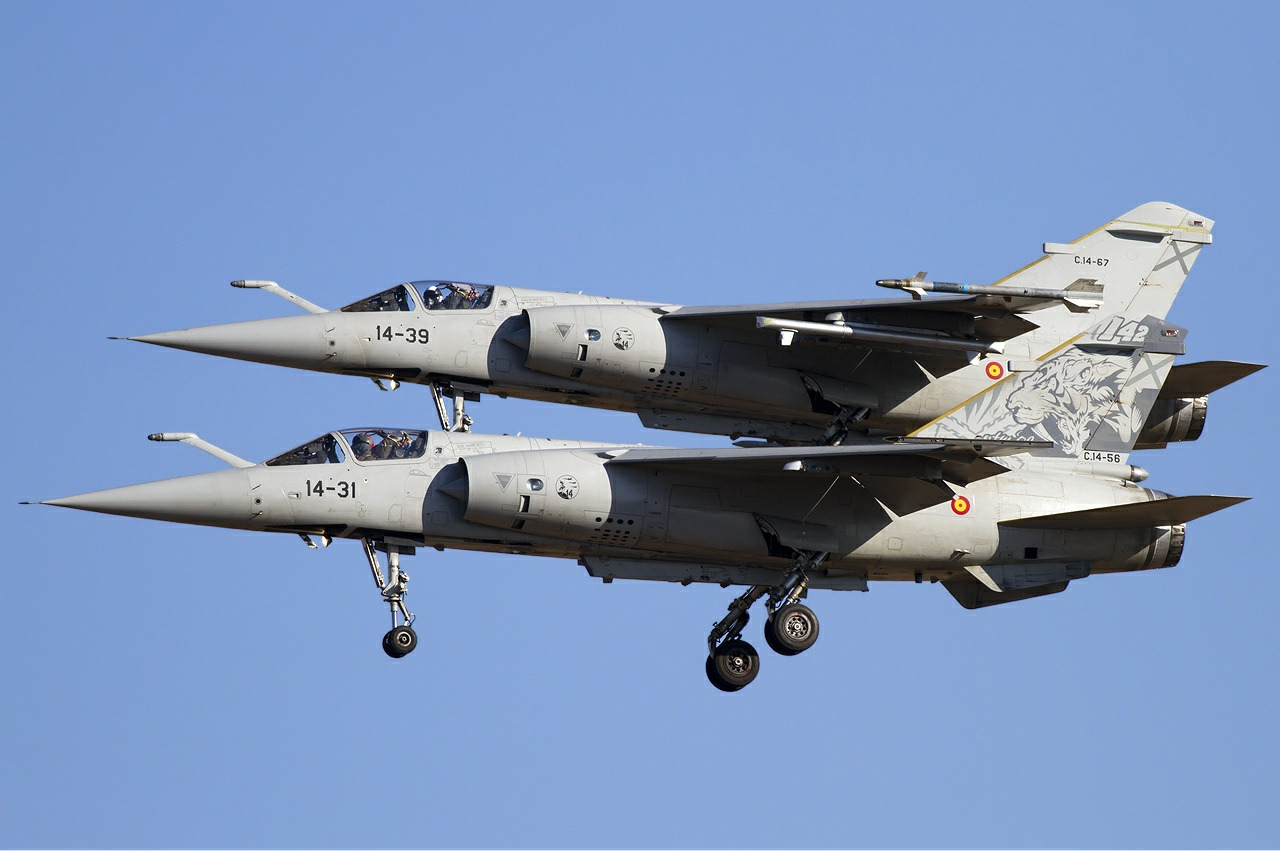
Mirage F1M
- Description:
- In 1996, Spain modernized its Mirage F1CE aircraft with the company Thomson-CSF. The modernization included an upgraded Cyrano IVM radar, improved avionics, an in-flight refueling probeand compatibility with the AM-39 Exocet anti-ship missile. After the upgrades, the aircraft were renamed Mirage F1M.
- Crew:
- 1
- Armament:
- Primary: 2x 30 mm DEFA 553 cannon
- Secondary: Matra R550 Magic 1/2 missiles, 250 kg SAMP Type 25 bomb, 400 kg SAMP Type 21 bomb, 500 lb SAMP Mk 82 bomb, 1000 lb SAMP Mk 83 bomb, 2000 lb SAMP Mk 84 bomb, 36x Type 23 SNEB rockets, Matra R530/R530E missiles, Matra Super 530F missiles, AM-39 Exocet anti-ship missile, 216x Large caliber chaff countermeasures
- Performance:
- Maximum speed: 2,228 km/h
- Sources:
Rank 8
Spoiler
Mirage 2000P
- Description:
- Between 1986 and 1987, Peru acquired a total of 12 Mirage 2000s, both single-seat and two-seat versions, designated Mirage 2000P and 2000DP respectively. These Peruvian fighters are equipped with the Thomson-CSF RDM radar and armed with the Matra R550 Magic II missile. From 1997 onward, they were equipped with Israeli Elbit Whizzard Opher/Lizard guided bombs. In 2009, the Sagem UNI 52 inertial navigation system was replaced with a Thales Totem 3000 laser-guided system. They also received Thomson-CSF TMV-004 Cayman ECM pods and the MBDA Spirale countermeasures system, which provides them with 16 flare cartridges and 112 chaff cartridges.
- Crew:
- 1
- Armament:
- Primary: 2x 30 mm DEFA 554 cannon
- Secondary: Matra R550 Magic 1/2 missiles, 18x Type 23 SNEB rockets, Matra Super 530D/F missiles, 250 kg SAMP Type 25 bomb, Elbit Whizzard Opher/Lizard guided bombs
- Performance:
- Maximum speed: 2,351 km/h
- Sources:

Rank 9
Spoiler
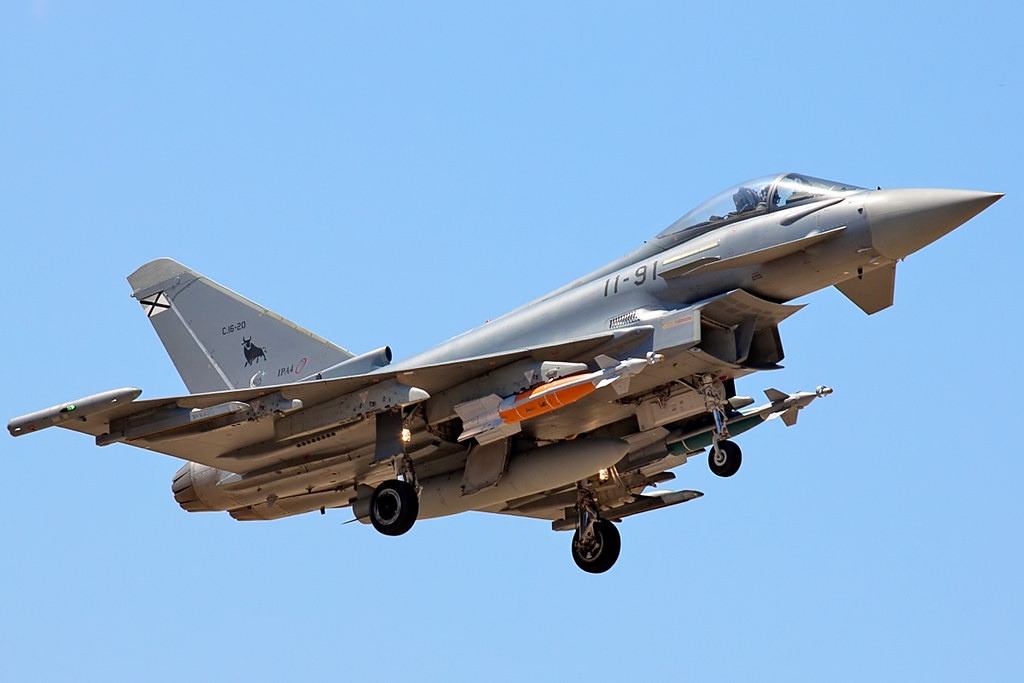
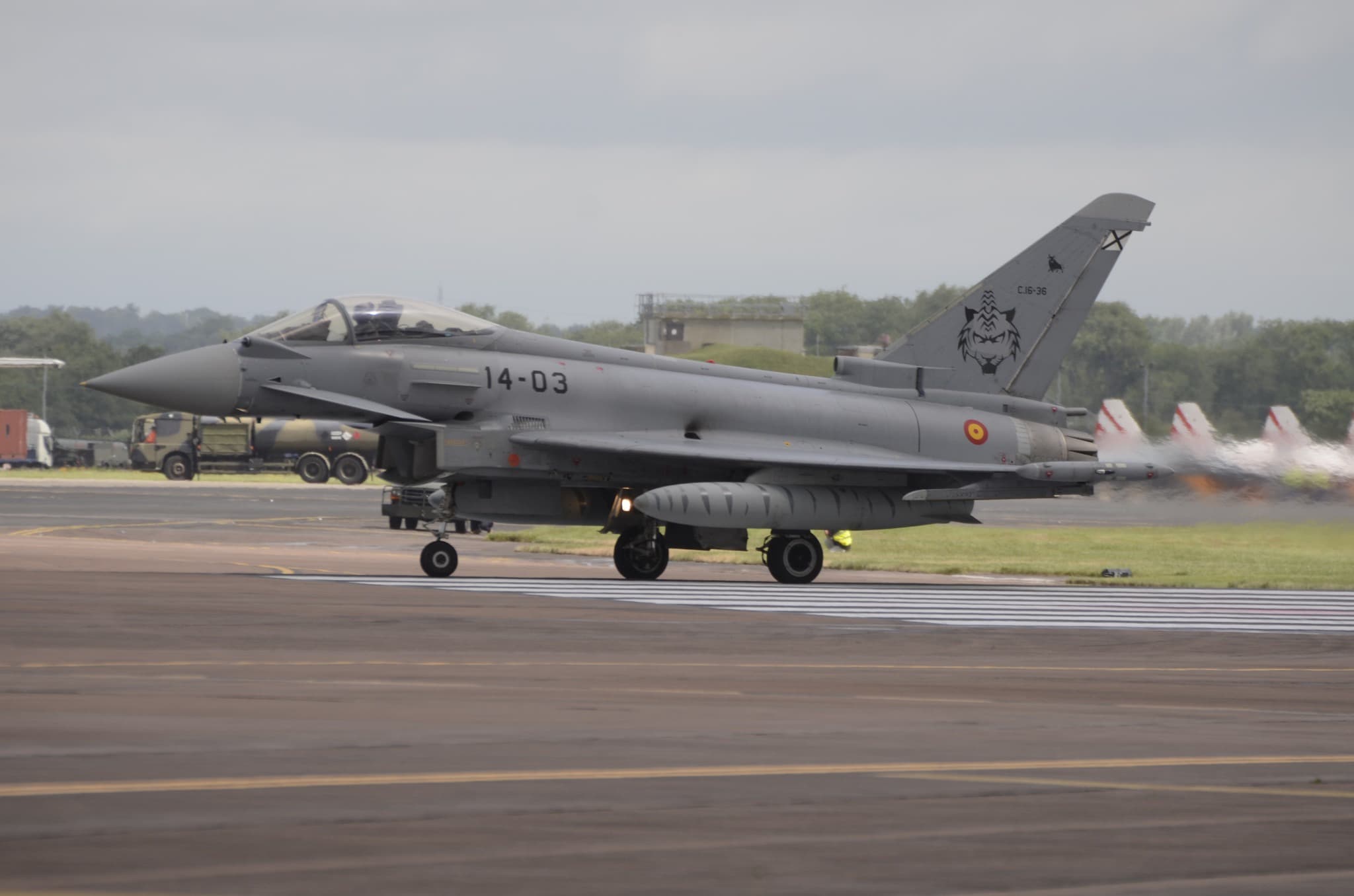
Typhoon Tranche 2
- Description:
- The Eurofighter Typhoon Tranche 2, operated by Spain since 2008, has a total of 34 units. It is equipped with the Captor-M radar, the Praetorian DASS RWR, and Link 16. In terms of armament, it can use all available NATO weapons, such as the AIM-120 AMRAAM, AIM-9 Sidewinder, etc.
- Crew:
- 1
- Armament:
- Primary: 27 mm Mauser BK27 cannon
- Secondary: AIM-9M missiles, IRIS-T missiles, Meteor missiles, AIM-120B/C missiles, GBU-10 Paveway II, GBU-16 Paveway II, GBU-48 Enhanced Paveway II, Mk 82/83/84 bombs, GBU-54B LJDAM guided bomb, GBU-62 LJDAM-ER guided bomb
- Performance:
- Maximum speed: 2,149 km/h
- Sources:
Typhoon Tranche 3
- Description:
- The most advanced version of the Eurofighter in Spain. The Tranche 3 began operating in the country between 2014 and 2019 with a total of 20 units. The Tranche 3 is compatible with the Captor-E Mk1 AESA radar, avionics, and more advanced electronic warfare systems. This version retains all the armament of previous Tranches and offers greater compatibility with more modern future weaponry.
- Crew:
- 1
- Armament:
- Primary: 27 mm Mauser BK27 cannon
- Secondary: AIM-9M missiles, IRIS-T missiles, Meteor missiles, AIM-120B/C missiles, GBU-10 Paveway II, GBU-16 Paveway II, GBU-48 Enhanced Paveway II, Mk 82/83/84 bombs, GBU-54B LJDAM guided bomb, GBU-62 LJDAM-ER guided bomb
- Performance:
- Maximum speed: 2,149 km/h
- Sources:
American Fighters
Spoiler
Rank 1
Spoiler
Fw-56
- Description:
- German advanced training aircraft used by the Republican side during the Spanish Civil War, arrived around 1937 or a little earlier, although because few arrived, their use was limited and belonged to the defeated side; very little information exists about them.
- Crew:
- 1
- Armament:
- Primary: 2x 7.92 mm MG 17 machine guns
- Secondary: 3x 10kg bombs
- Performance:
- Maximum speed: 278 km/h
- Sources:
Hawker Spanish Fury
- Description:
- The British-designed Hawker Fury Mk.I biplane fighter aircraft, ordered in 1935 by the Spanish government, were intended to be produced under license for 50 aircraft, but this never materialized. By 1936, the only three received were put into service to fight in the Spanish Civil War. They were designated the Hawker Spanish Fury because they were equipped with a different Hispano-Suiza 12Xbrs engine than the original. One of them was captured by the Nationalists.
- Crew:
- 1
- Armament:
- Primary: 2x 7.7 mm Vickers Mk IV machine guns
- Performance:
- Maximum speed: 360 km/h
- Sources:
Loire 46
- Description:
- French single-seat fighter plane from the 1930s, 5 of these planes arrived to operate in the Spanish Civil War on the Republican side in 1936. Because it belonged to the defeated side, there is not much information about its operational history or photos.
- Crew:
- 1
- Armament:
- Primary: 4x 7.5 mm MAC 1934 machine guns
- Performance:
- Maximum speed: 370 km/h
- Sources:
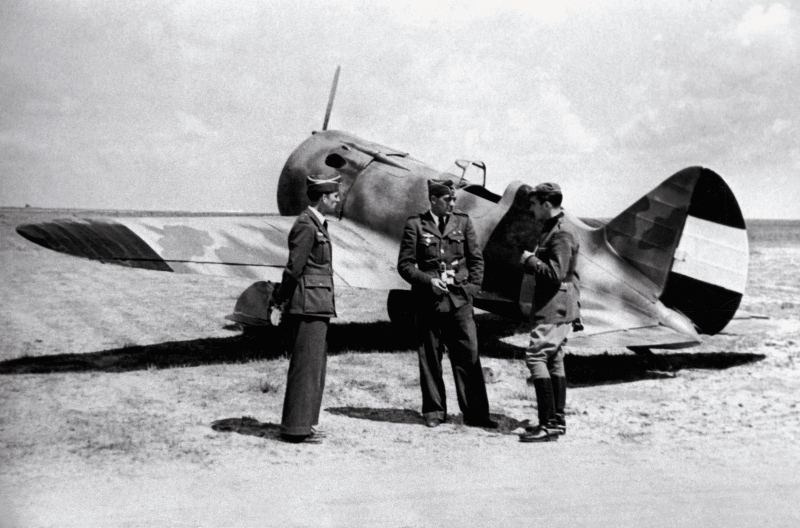
I-16 Type 5
- Description:
- Soviet fighter plane used by the Republican side during the Spanish Civil War. Hundreds of these aircraft were delivered in 1936 and they were nicknamed “Moscas” (Flies).
- Crew:
- 1
- Armament:
- Primary: 2 × 7.62 mm ShKAS machine gun
- Performance:
- Maximum speed: 445 km/h
- Sources:
I-16 Type 10
- Description:
- Soviet fighter used by the Republican side during the Spanish Civil War. It was an improved version of the I-16 Type 5 Mosca, with additional machine guns and suspended armament, hence its nickname, Super Mosca.
- Crew:
- 1
- Armament:
- Primary: 4 × 7.62 mm ShKAS machine gun
- Secondary: 6x ROS-82 rockets, 6x RBS-82 rockets
- Performance:
- Maximum speed: 453 km/h
- Sources:


Rank 2
Spoiler
G.50 bis
- Description:
- Italian fighter plane used by the Nationalist side during the Spanish Civil War. Italy sent a dozen of these aircraft in 1939.
- Crew:
- 1
- Armament:
- Primary: 2 × 12.7 mm Breda-SAFAT machine gun
- Performance:
- Maximum speed: 470 km/h
- Sources:
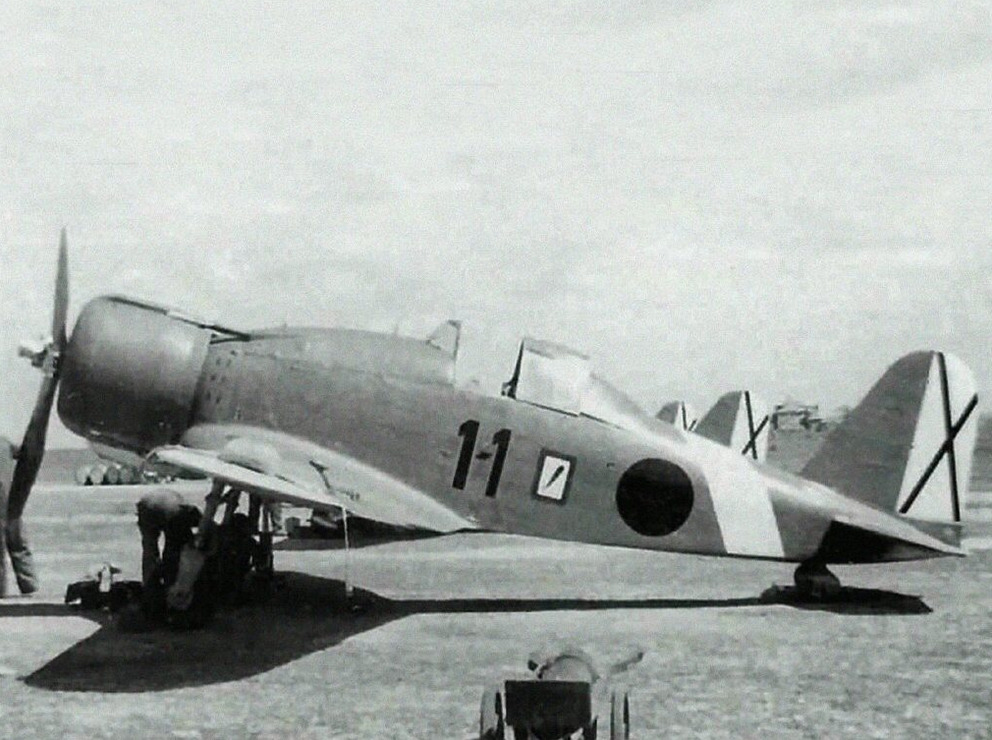
He 112 B-1
- Description:
- German fighter plane from the 1930s. The Nationalists received 17 units in 1938 where they fought in the Spanish Civil War.
- Crew:
- 1
- Armament:
- Primary: 2 × 20 mm MG FF cannon, 2 × 7.92 mm MG 17 machine gun
- Performance:
- Maximum speed: 502 km/h
- Sources:

Rank 3
Spoiler
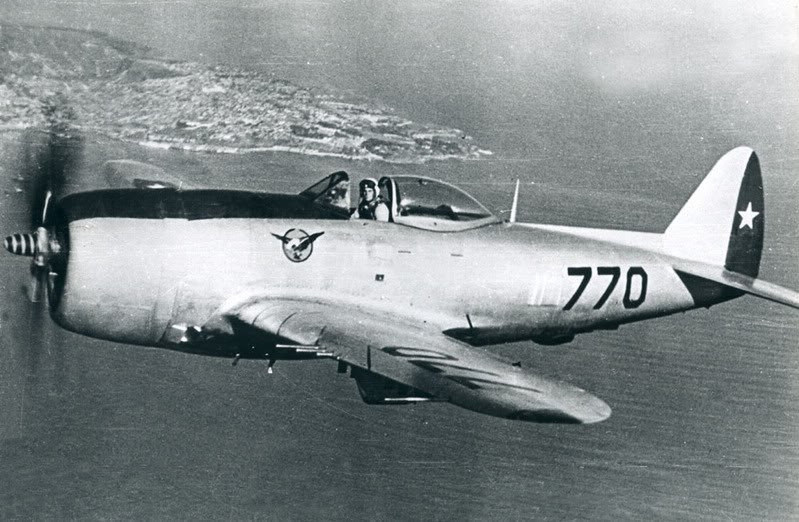
P-47D-40-RA
- Description:
- Chile operated 21 P-47D-40-RA aircraft between 1947 and 1953, the most advanced variant of the D variant. They were equipped with HVAR rocket mounts, AN/APS-13 rear warning radar, K-14 gyroscopic sight, and a dorsal fin that improved flight stability.
- Crew:
- 1
- Armament:
- Primary: 8x 12.7mm M2 Browning machine guns
- Secondary: 2x AN-M65 1000 lb bombs, 3x AN-M64 500 lb bombs, 3x AN-M57 250 lb bombs, 10x HVAR rockets
- Performance:
- Maximum speed: 714 km/h
- Sources:
Rank 4
Spoiler
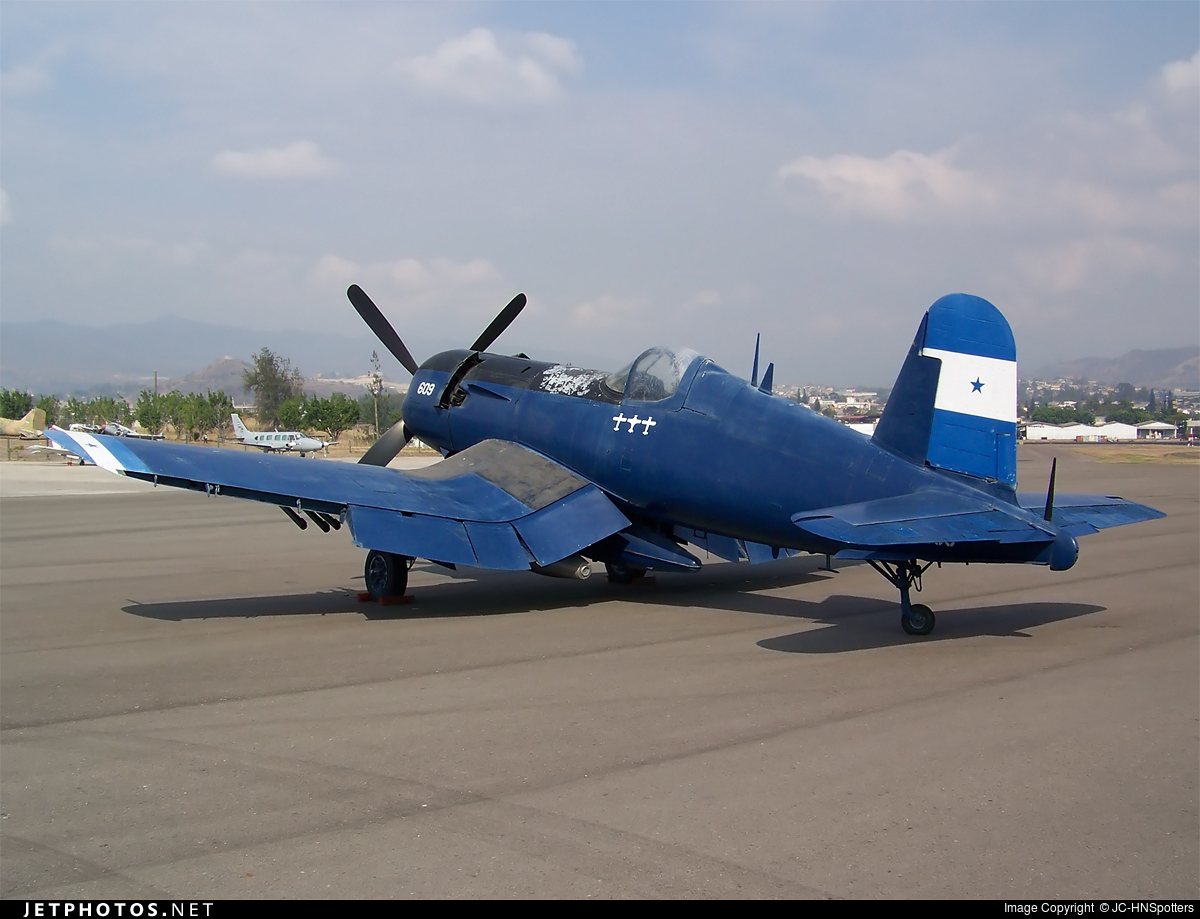
F4U-5
- Description:
- American carrier-based fighter and attack aircraft. Argentina incorporated 26 examples starting in 1956 for its Naval Aviation. This variant featured a more powerful engine, aerodynamic improvements, and superior performance.
- Crew:
- 1
- Armament:
- Primary: 4x 20 mm M3 cannon
- Secondary: 1000 lb AN-M65A1 bomb, 500 lb AN-M64A1 bomb, 250 lb AN-M57 bomb, HVAR rockets
- Performance:
- Maximum speed: 680 km/h
- Sources:

Rank 5
Spoiler
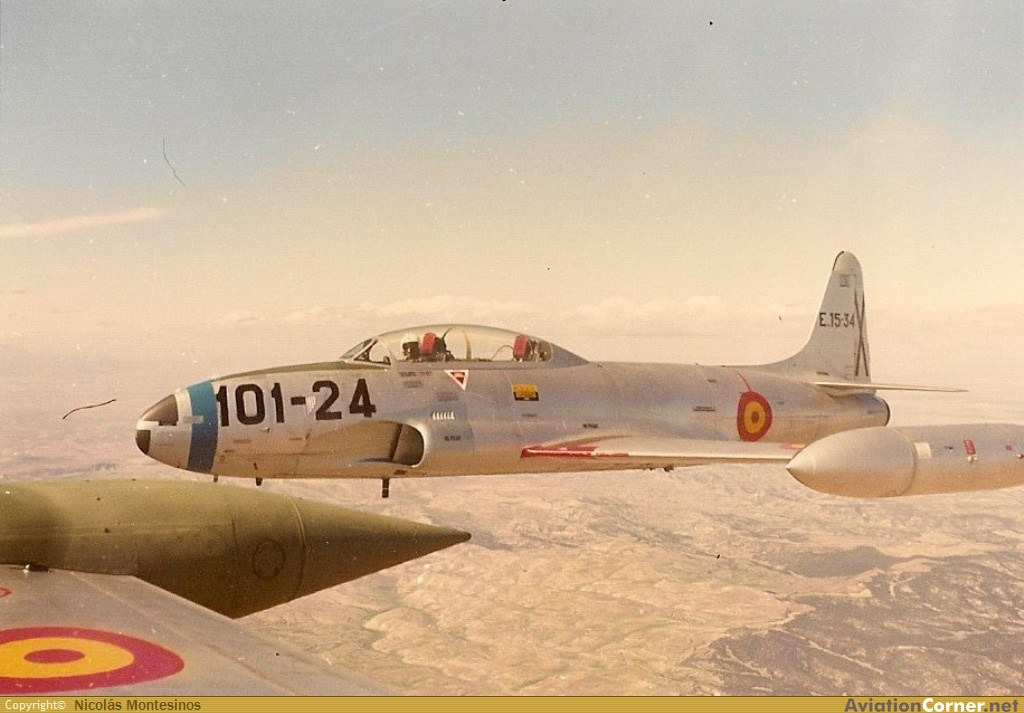
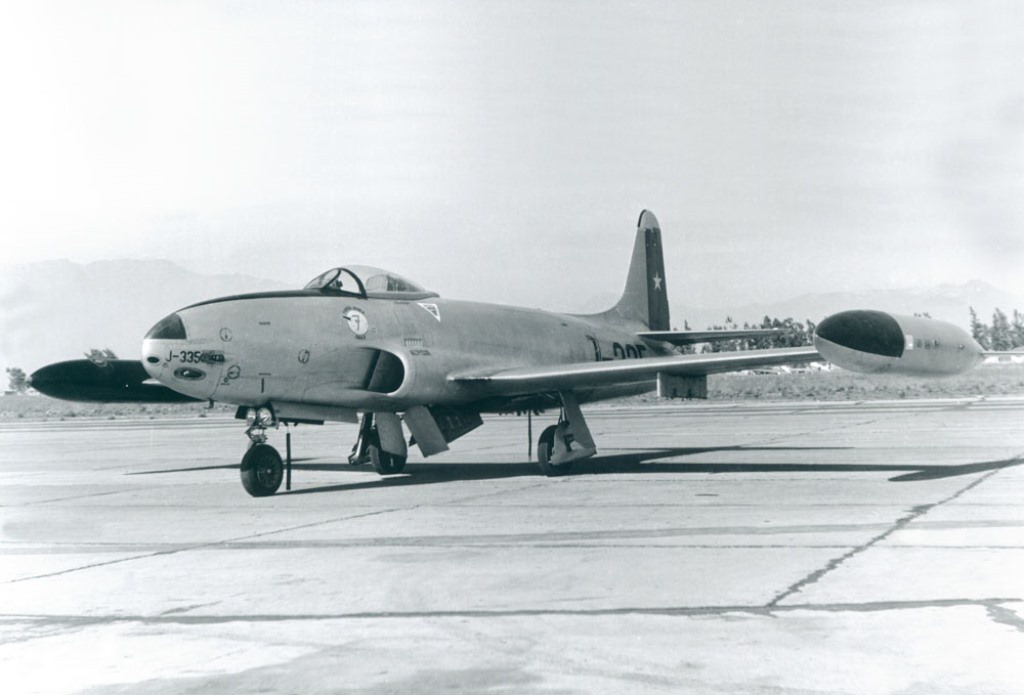
T-33A-1
- Description:
- American advanced training aircraft. Spain received 24 units starting in 1954. Although it was a training aircraft, it was armed with two 12.7 mm machine guns in the nose and two pylons for bombs or rockets.
- Crew:
- 2
- Armament:
- Primary: 2x 12.7 mm M2 Browning machine guns
- Secondary: 1000 lb AN-M65A1 bomb, 500 lb AN-M64A1 bomb, 250 lb AN-M57 bomb, HVAR rockets
- Performance:
- Maximum speed: 970 km/h
- Sources:
F-80C-10
- Description:
- American jet fighter. Chile acquired 18 units starting in 1958. Armed with six 12.7 mm machine guns, bombs and rockets, it was the last variant of the F-80 to be built.
- Crew:
- 1
- Armament:
- Primary: 6x 12.7 mm M3 Browning machine gun
- Secondary: 1000 lb AN-M65A1 bomb, 500 lb AN-M64A1 bomb, 250 lb AN-M57 bomb, HVAR rockets
- Performance:
- Maximum speed: 903 km/h
- Sources:
- F-80C-10 | War Thunder Wiki
- HISTORIA AERONÁUTICA DE CHILE: Los Primeros Reactores Lockheed en la FACh.
- Del Vampire al Viper Recargado by julio arrospide
F-86F-30
- Description:
- American jet fighter. Spain received 270 of them starting in 1955 as part of the US military aid program. They were armed with six 12.7 mm machine guns, bombs, and rockets.
- Crew:
- 1
- Armament:
- Primary: 6x 12.7 mm M3 Browning machine gun
- Secondary: 1000 lb AN-M65A1 Fin M129 bomb, 750 lb M117 cone 45 bomb, HVAR rockets
- Performance:
- Maximum speed: 1,106 km/h
- Sources:

Rank 6
Spoiler
F-86F-40
- Description:
- American jet fighter. Spain received 70 examples of this variant in the early 1970s from surplus United States Air Force aircraft. They incorporated larger wingspans with improved automatic slats, which significantly increased their maneuverability at low speeds. They retained their armament of six 12.7 mm machine guns, bombs, and rockets.
- Crew:
- 1
- Armament:
- Primary: 6x 12.7 mm M3 Browning machine gun
- Secondary: 1000 lb AN-M65A1 Fin M129 bomb, 750 lb M117 cone 45 bomb, HVAR rockets, AIM-9B
- Performance:
- Maximum speed: 1,106 km/h
- Sources:

Rank 7
Spoiler
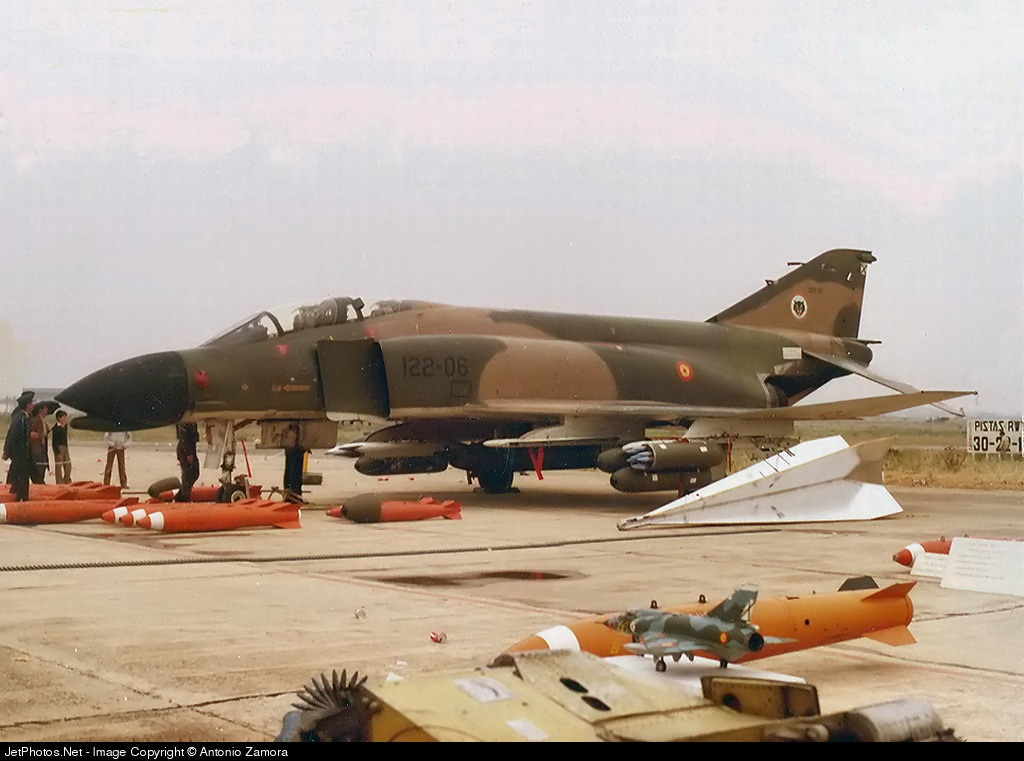
F-4C Phantom II
- Description:
- American multirole supersonic fighter. Spain received 36 units starting in 1971, making it their first fighter equipped with medium-range guided missiles.
- Crew:
- 2
- Armament:
- Primary: 20 mm GAU-4 cannon
- Secondary: AIM-7D missiles, AIM-9B/E missiles, Mk 80 series bombs, FFAR rockets, Zuni rockets, AGM-12B/C Bullpup missiles
- Performance:
- Maximum speed: 2,288 km/h
- Sources:
- https://www.outono.net/elentir/2025/04/02/los-cazas-f-4-phantom-ii-espanoles-su-avion-cisterna-y-el-triste-final-de-muchos-de-ellos/
- https://wiki.warthunder.com/unit/f-4c
- https://www.gacetaeronautica.com/gaceta/wp-101/mcdonnell-douglas-f-4c-el-phantom-ii-en-el-ejercito-del-aire/
- LOS REACTORES EN EL EJÉRCITO DEL AIRE
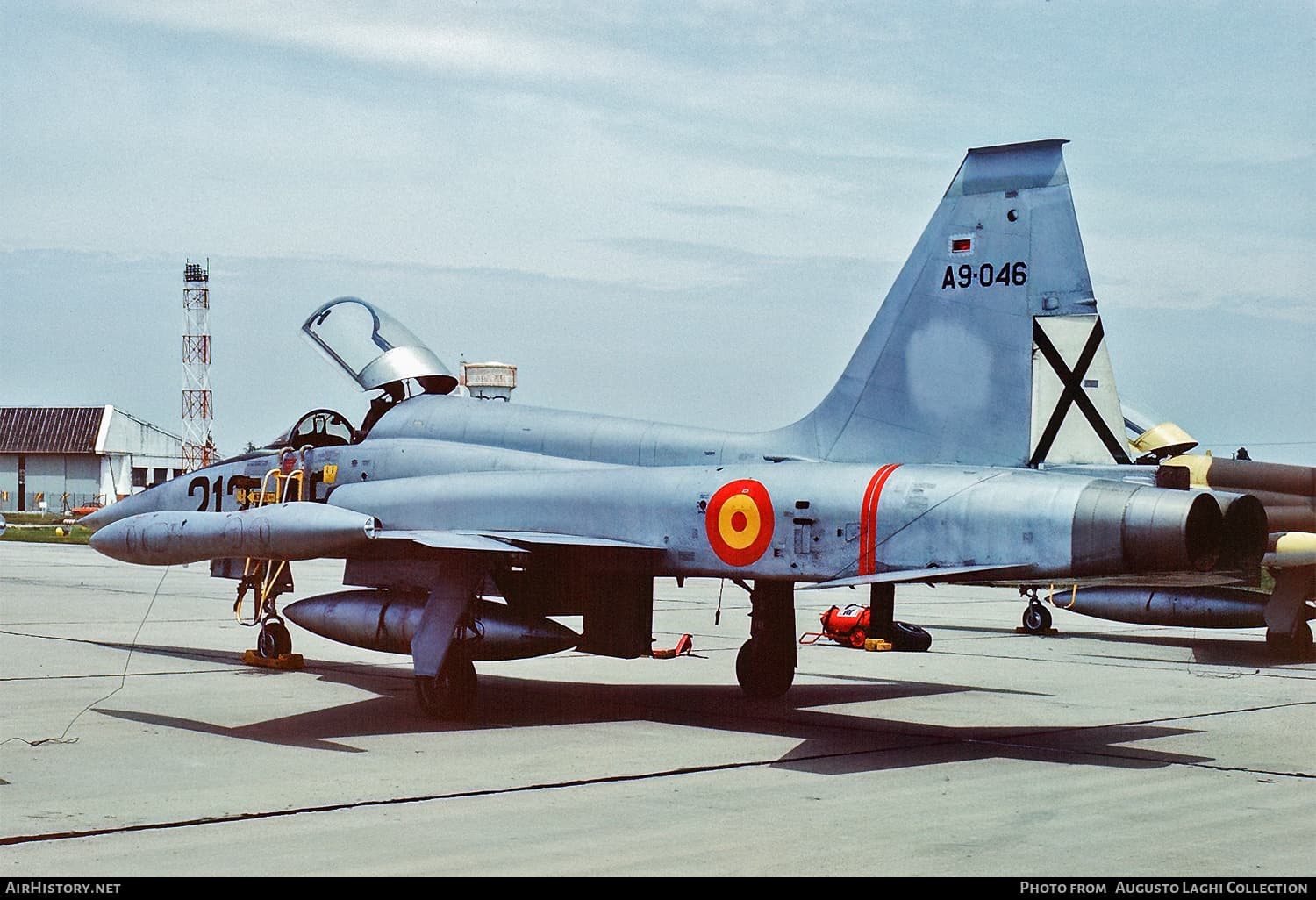
SF-5A
- Description:
- The F-5A is a US light fighter manufactured under license in Spain by CASA. Spain produced 18 single-seat F-5As, which entered service in 1970. The Spanish-built version was designated the SF-5A.
- Crew:
- 1
- Armament:
- Primary: 2x 20 mm M39A2 cannon
- Secondary: AIM-9E missiles, Mk 80 series bombs, FFAR rockets, Zuni rockets, AGM-12B Bullpup missiles
- Performance:
- Maximum speed: 1,444 km/h
- Sources:
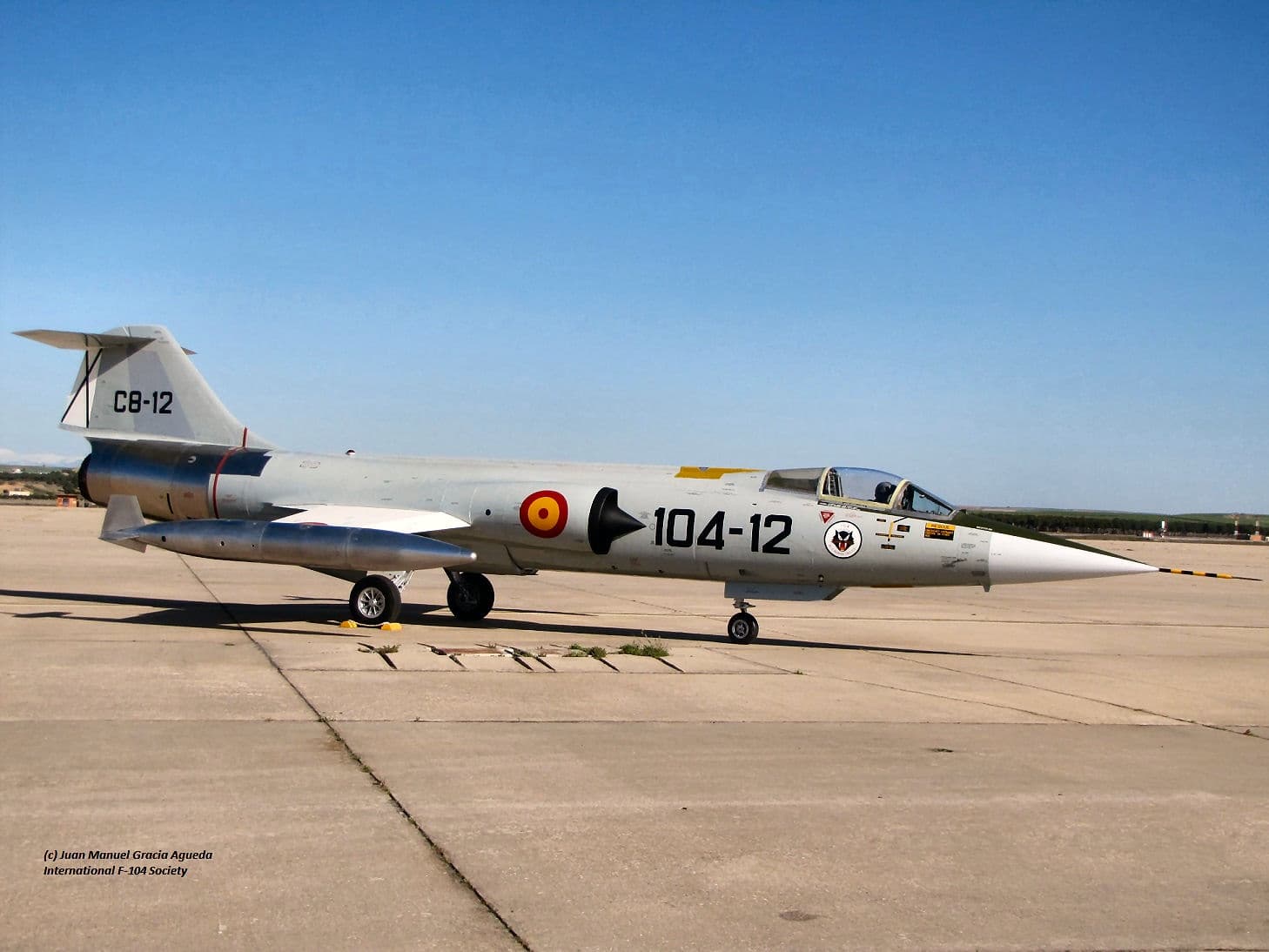
F-104G
- Description:
- American supersonic interceptor fighter. Spain received 21 units from the United States Air Force starting in 1965. They were the first Spanish aircraft capable of maintaining supersonic flight.
- Crew:
- 1
- Armament:
- Primary: 20 mm M61A1 cannon
- Secondary: AIM-9B/J missiles, Mk 80 series bombs, FFAR rockets, Zuni rockets
- Performance:
- Maximum speed:
- Sources:
Rank 8
Spoiler
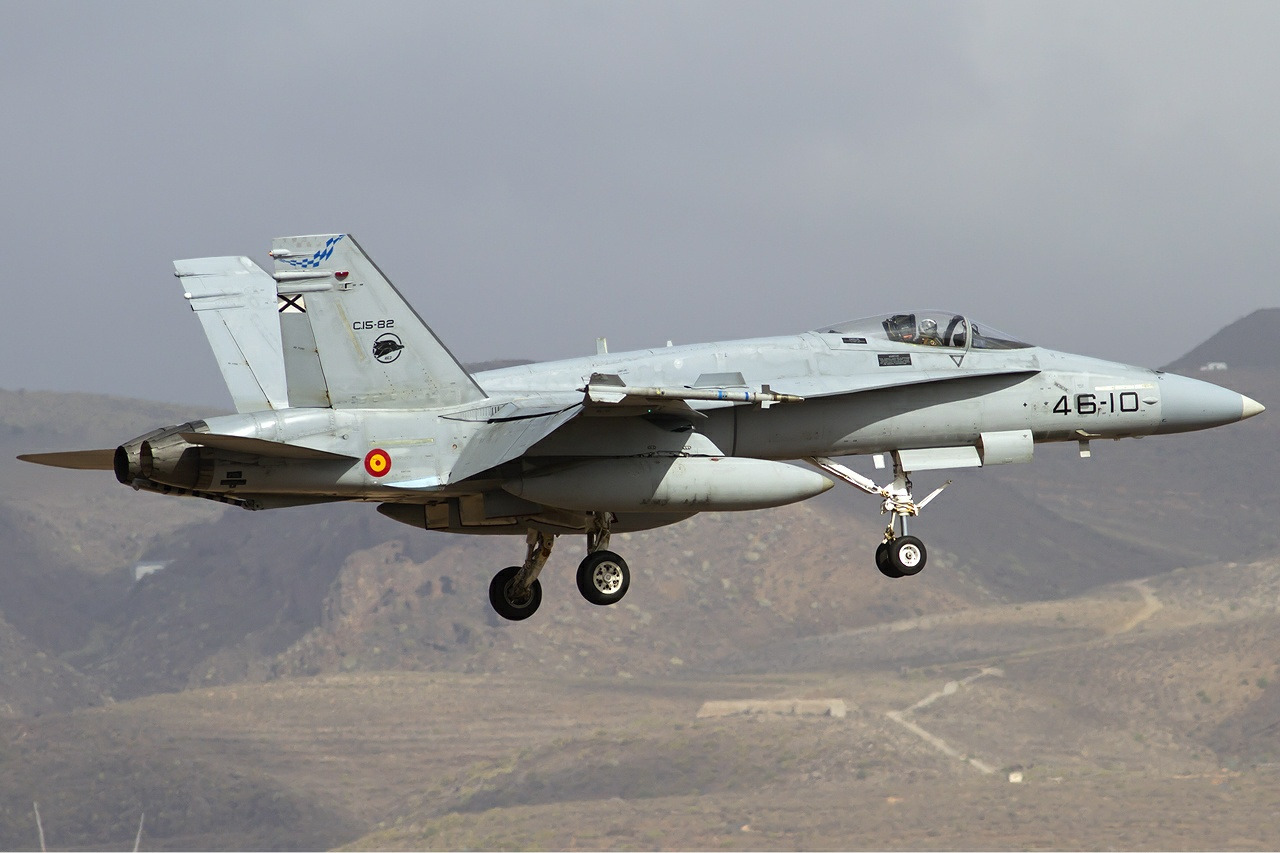
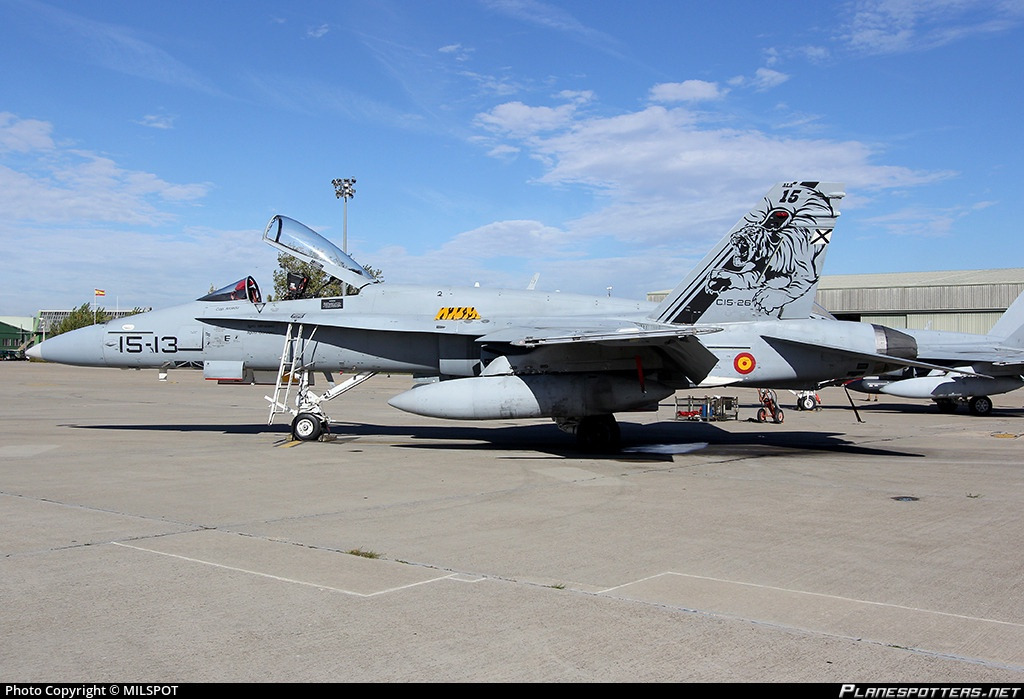
EF-18A
- Description:
- American multirole fighter. Spain acquired 72 of them starting in 1986 to replace its F-4C Phantom IIs and Mirage IIIs. They were later upgraded to the EF-18A+ standard.
- Crew:
- 1
- Armament:
- Primary: 20 mm M61A1 cannon
- Secondary: AIM-9L missiles, AIM-7F/M missiles, AGM-62A II ER/DL guided bomb, 70 mm Hydra-70 M247 rocket, Zuni Mk32 Mod 0 ATAP rockets, Mk 80 series bombs
- Performance:
- Maximum speed: 1,789 km/h
- Sources:
EF-18A+
- Description:
- American multirole fighter. In the 1990s, Spain modernized its fleet of 67 EF-18A/Bs to the EF-18A/B+ standard, incorporating improvements to avionics, mission computers, navigation systems, and electronic warfare systems similar to those of the F/A-18C. It also added new armament capabilities such as the AGM-65 missile and guided bombs, bringing it to a standard similar to an early F/A-18C.
- Crew:
- 1
- Armament:
- Primary: 20 mm M61A1 cannon
- Secondary: AIM-9L missiles, AIM-7P missiles, AGM-62A II ER/DL guided bomb, 70 mm Hydra-70 M247 rocket, Zuni Mk32 Mod 0 ATAP rockets, Mk 80 series bombs, GBU-10/12/16/24 Paveway II guided bombs, AGM-65E/F missiles
- Performance:
- Maximum speed: 1,789 km/h
- Sources:
EF-18M
- Description:
- American multirole fighter. Between 2000 and 2009, Spain modernized 67 EF-18A/Bs to the EF-18M/BM standard, incorporating the AN/APG-65(V)3 radar, new mission and electronic warfare systems, as well as compatibility with modern weaponry such as the IRIS-T and precision-guided bombs, although lacking the more advanced AN/APG-73 radar carried by the American F/A-18C Late, it does not reach their level.
- Crew:
- 1
- Armament:
- Primary: AIM-120B/C missiles, IRIS-T missiles, AIM-9L/M missiles, AIM-7P missiles, AGM-62A II ER/DL guided bomb, 70 mm Hydra-70 M247 rocket, Zuni Mk32 Mod 0 ATAP rockets, Mk 80 series bombs, GBU-10/12/16/24/48 Paveway II guided bombs, AGM-65E/F missiles
- Secondary:
- Performance:
- Maximum speed: 1,789 km/h
- Sources:

Strike Aircrafts
Spoiler
Rank 1
Spoiler
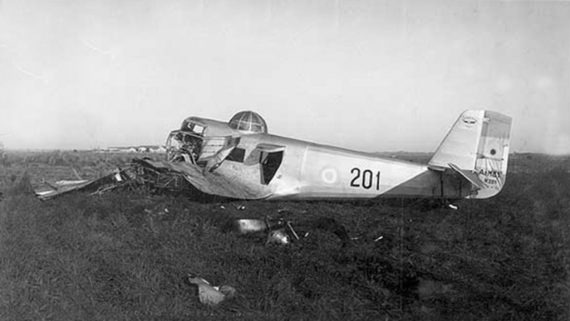
I.Ae. 22 DL
- Description:
- Argentine advanced training aircraft, locally manufactured. It entered service in 1944 and 201 were built, making it one of the most numerous training aircraft produced in Argentina. It could carry bombs and rockets for light attack.
- Crew:
- 2
- Armament:
- Primary: 2x 7.65mm Madsen Machineguns, 1x 7.65mm Madsen MG (dorsal)
- Secondary: 50kg Bombs, 15kg Bombs, 11kg rockets
- Performance:
- Maximum speed: 290 km/h
- Sources:
Ro.37bis
- Description:
- Italian reconnaissance and light attack aircraft. Spain received 67 examples starting in 1936 during the Spanish Civil War. It had a light attack capability as it carried bombs of different sizes.
- Crew:
- 2
- Armament:
- Primary: 3× 7.7 mm Breda SAFAT
- Secondary: 36x 5 kg, 90x 2 kg
- Performance:
- Maximum speed: 330 km/h
- Sources:
He 70F-2
- Description:
- German fast reconnaissance and light attack aircraft. Spain operated units derived from the 28 He 70s sent by the Condor Legion from 1936 onwards. It had a rear machine gun for self-defense and bombs for ground attack.
- Crew:
- 2
- Armament:
- Primary: 1 × 7.92 mm MG 15 machine gun in the rear cockpit
- Secondary: 6x 50 kg, 24x 10 kg bombs internally
- Performance:
- Maximum speed: 360 km/h
- Sources:
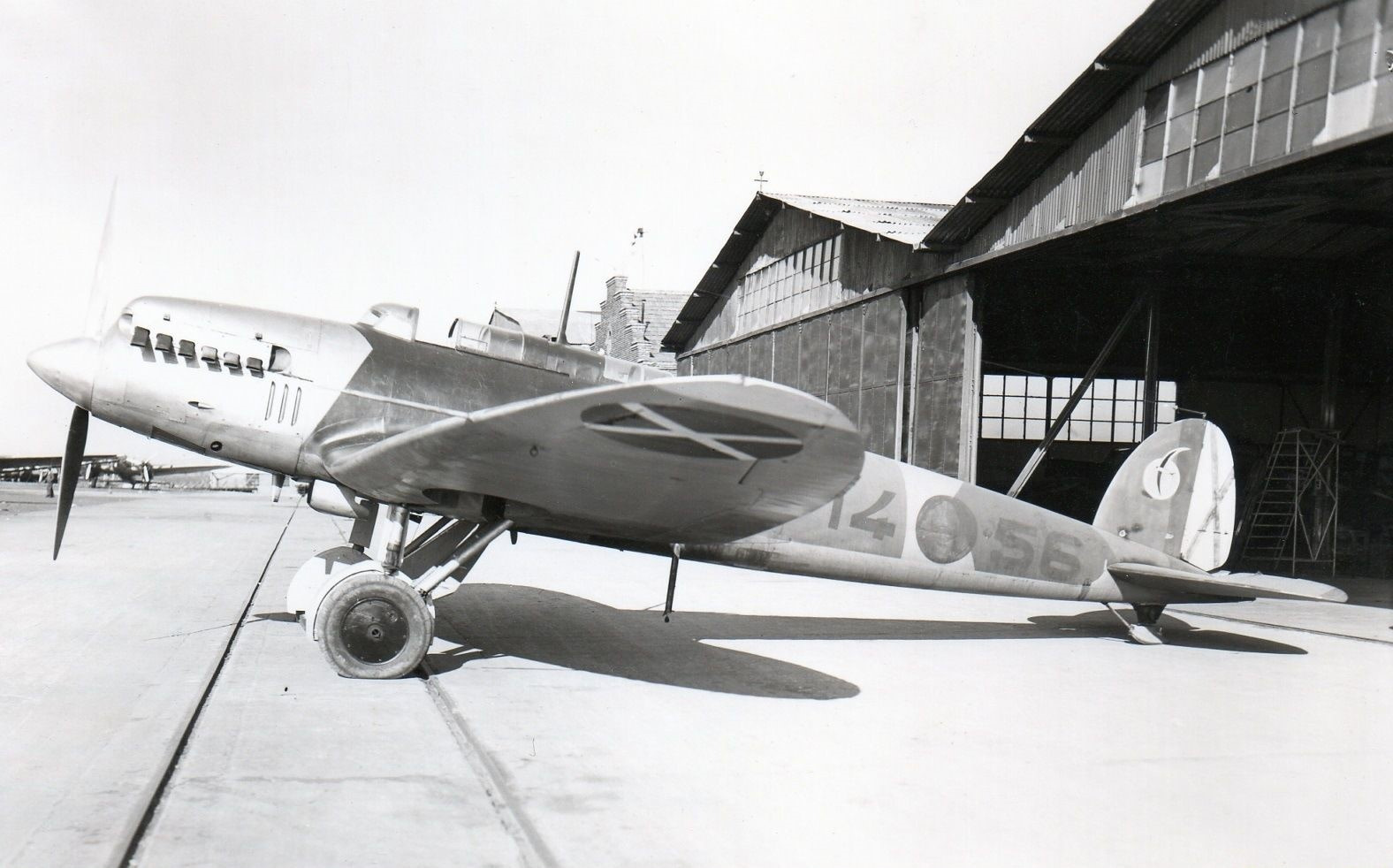
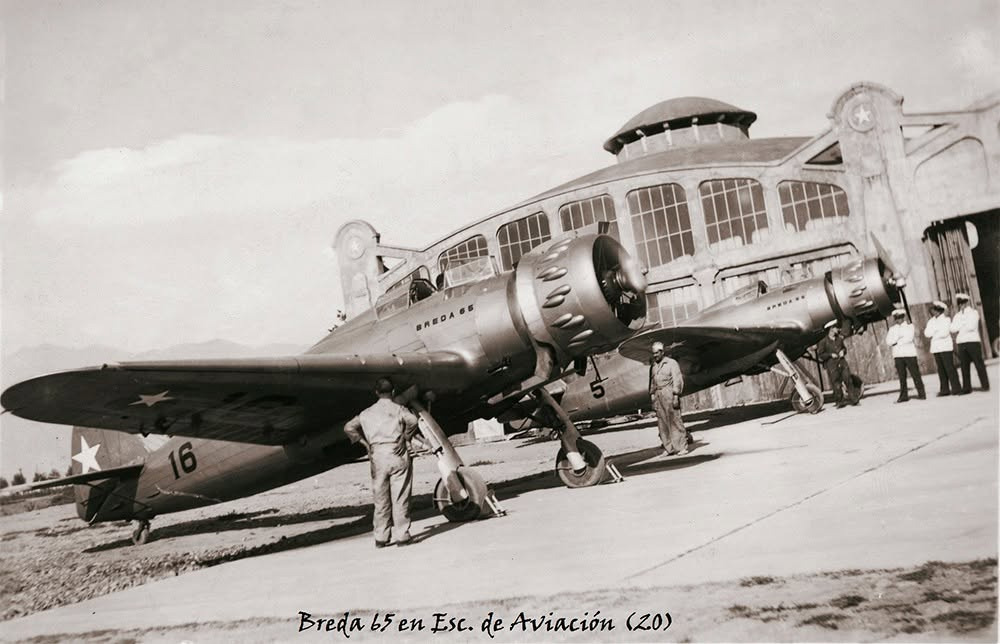
Ba.65 Tipo Chile
- Description:
- Italian Breda Ba.65 attack aircraft. The Chilean aircraft had a special designation given by the manufacturer since they were different from the original version, these Chilean aircraft had a 14-cylinder Piaggio P.XI R.C.40 engine and the Italian-made Breda-SAFAT machine guns were replaced by Danish Madsen machine guns of 12.7 mm and 7.62 mm caliber.
- Crew:
- 1
- Armament:
- Primary: 2x Danish Madsen 12.7 mm machine guns, 2x Danish Madsen 7,62mm machine guns
- Secondary: 20x 10 kg bombs , 4x 100 kg bombs, 4x 50 kg bombs
- Performance:
- Maximum speed: 490 km/h
- Sources:
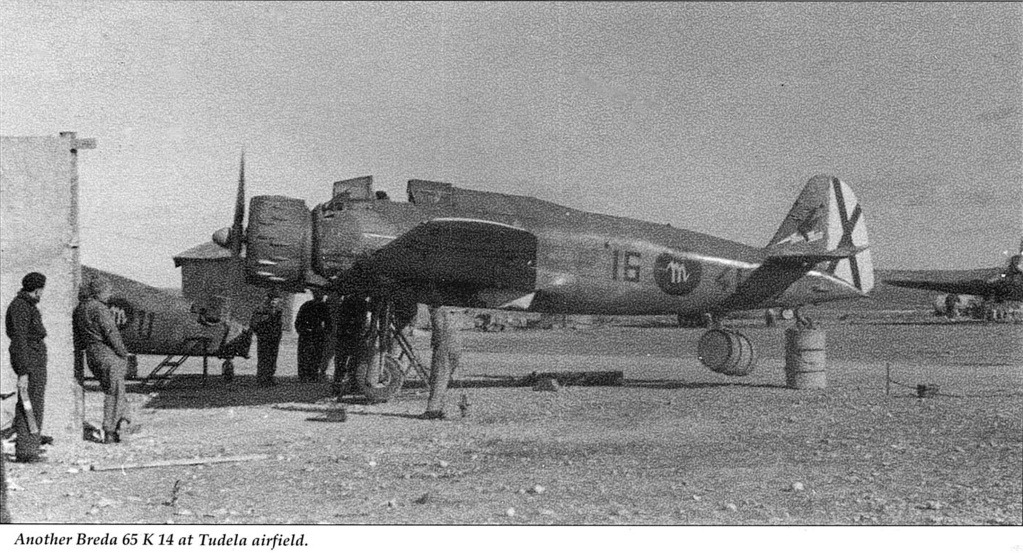
Ba.65 (K.14)
- Description:
- Italian attack and close air support aircraft. Spain received 23 examples starting in 1937 during the Spanish Civil War. Used in ground attack and tactical support missions, this version used the K-14 engine.
- Crew:
- 2
- Armament:
- Primary: 2x 12.7 mm Breda-SAFAT machine gun, 2x 7.7 mm Breda-SAFAT machine gun
- Secondary: 4x 100 kg SAP 100M bomb, 2x 100 kg GP 100T bomb, 4x 100 kg SAP 100M bomb
- Performance:
- Maximum speed: 490 km/h
- Sources:


Rank 2
Spoiler
I.Ae. 35 Tipo 1B
- Description:
- Argentine light attack and training aircraft, locally manufactured. It entered service in 1953 and 47 were built. It could carry bombs and rockets.
- Crew:
- 4
- Armament:
- Primary: 2x 12.7mm Browning Machineguns, 2x 12.7mm Browning MG (dorsal turret)
- Secondary: 2x 100 kg bomb, 4x 50 kg bomb, 2x 127mm rocket, 8x 56 mm rocket
- Performance:
- Maximum speed: 380 km/h
- Sources:
I.Ae. 24 (early)
- Description:
- Argentine light bomber and attack aircraft, locally manufactured. It entered service in 1947 and 100 units were built. Designed to replace World War II-era equipment, the early version was armed with 12.7 mm machine guns.
- Crew:
- 4
- Armament:
- Primary: 4x 12.7mm AN/M3 machine guns
- Secondary: 750 kg of bombs, 10x 75mm rockets
- Performance:
- Maximum speed: 440 km/h
- Sources:
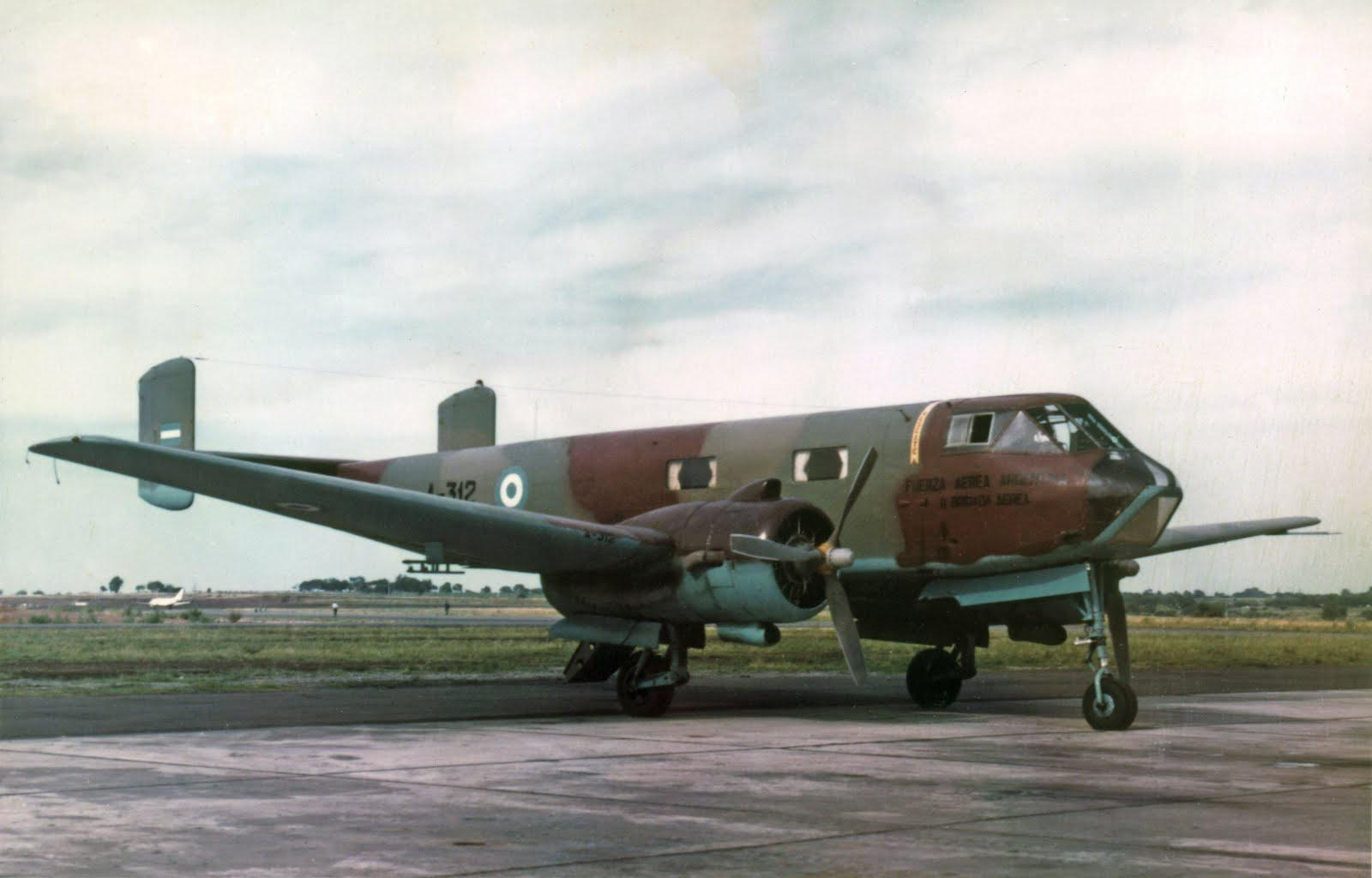
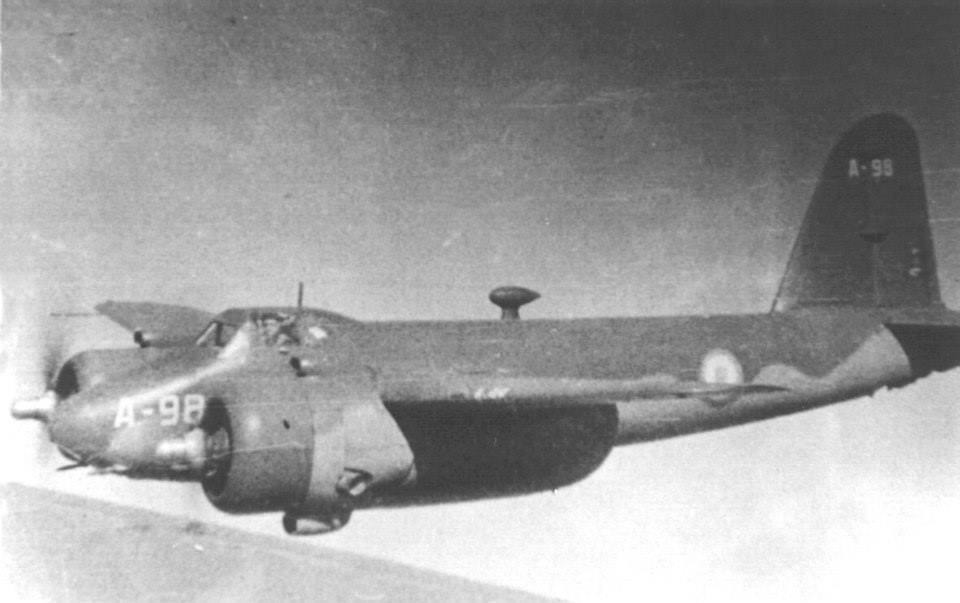
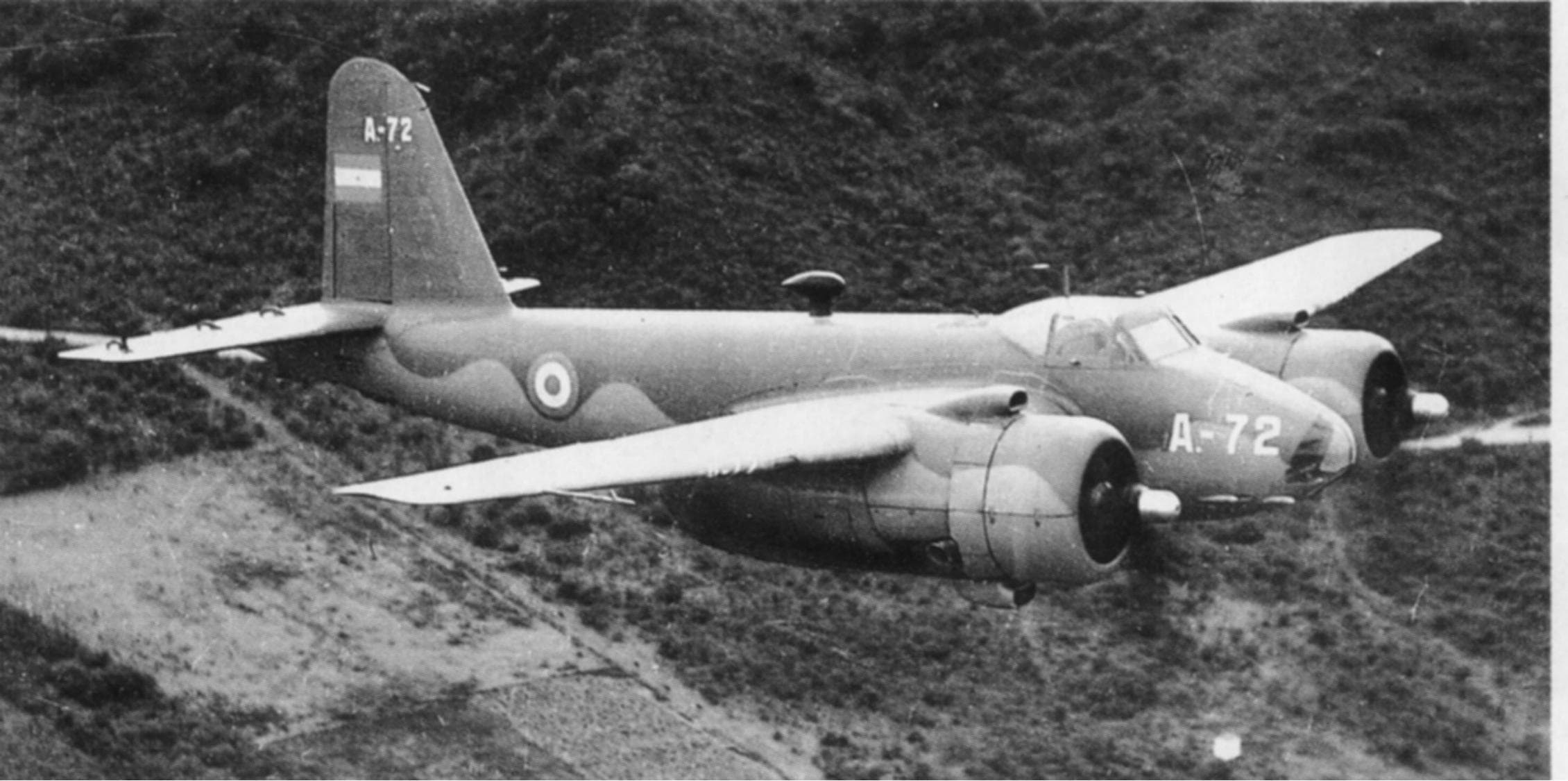
I.Ae. 24
- Description:
- The late version of the I.Ae. 24 Calquín replaced the 12.7 mm machine guns with 20 mm cannons
- Crew:
- 4
- Armament:
- Primary: 4x 20mm Hispano Suiza 804 autocannon
- Secondary: 750 kg in bombs, 12x 11kg rocket, 10x A-3-F / A-3-H 101.6mm rocket, 2x 21cm rocket + 10x 8cm rockets
- Performance:
- Maximum speed: 440 km/h
- Sources:
Rank 3
Spoiler
PC-7
- Description:
- Swiss light attack and training aircraft. Chile received 10 units in 1980 for advanced pilot training. It could also be used in light support missions thanks to its capacity to carry machine guns, rockets, and bombs.
- Crew:
- 2
- Armament:
- Primary: 2 x FN Herstal 7.62x51mm machine gun double magazines
- Secondary: Mk.81/82 bombs, CB-130 cluster bombs, 70mm rocket launchers
- Performance:
- Maximum speed: 412 km/h
- Sources:
T-28P
- Description:
- US light attack and counterinsurgency aircraft. Argentina acquired 65 units starting in 1967. Used for close air support and ground attack. It was also used as a carrier-based attack aircraft.
- Crew:
- 2
- Armament:
- Primary: 2x pods with two 12.7mm Browning M2 machine guns
- Secondary: 4x 125kg bombs, 4x Matra Type 122 or 361 rocket launchers
- Performance:
- Maximum speed: 566 km/h
- Sources:


Rank 4
Spoiler
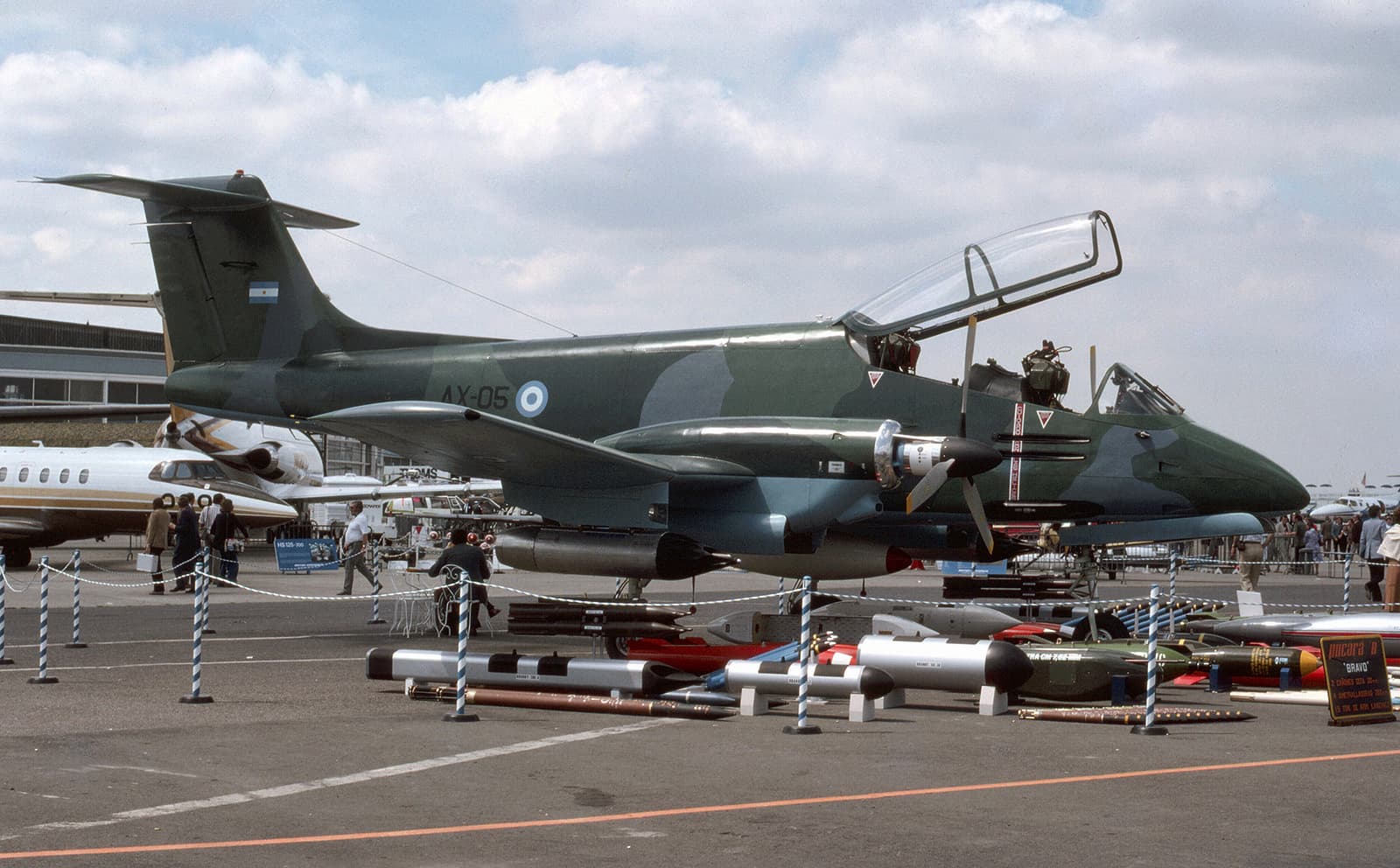
I.A. 58A
- Description:
- Argentine light attack and counterinsurgency aircraft, locally manufactured. It entered service in 1975 and 110 units were built. It was used by Argentina during the Malvinas (Falklands) War.
- Crew:
- 2
- Armament:
- Primary: 2x 20 mm Hispano DCA-804 cannon, 4x 7.62mm FN-Browning M2-30 machineguns
- Secondary: 1500 kg of bombs, 4x 70mm FFAR LAU rocket pods, 4x 57mm Aspide rockets in ARM-657 Mamboreta pods
- Performance:
- Maximum speed: 576 km/h
- Sources:
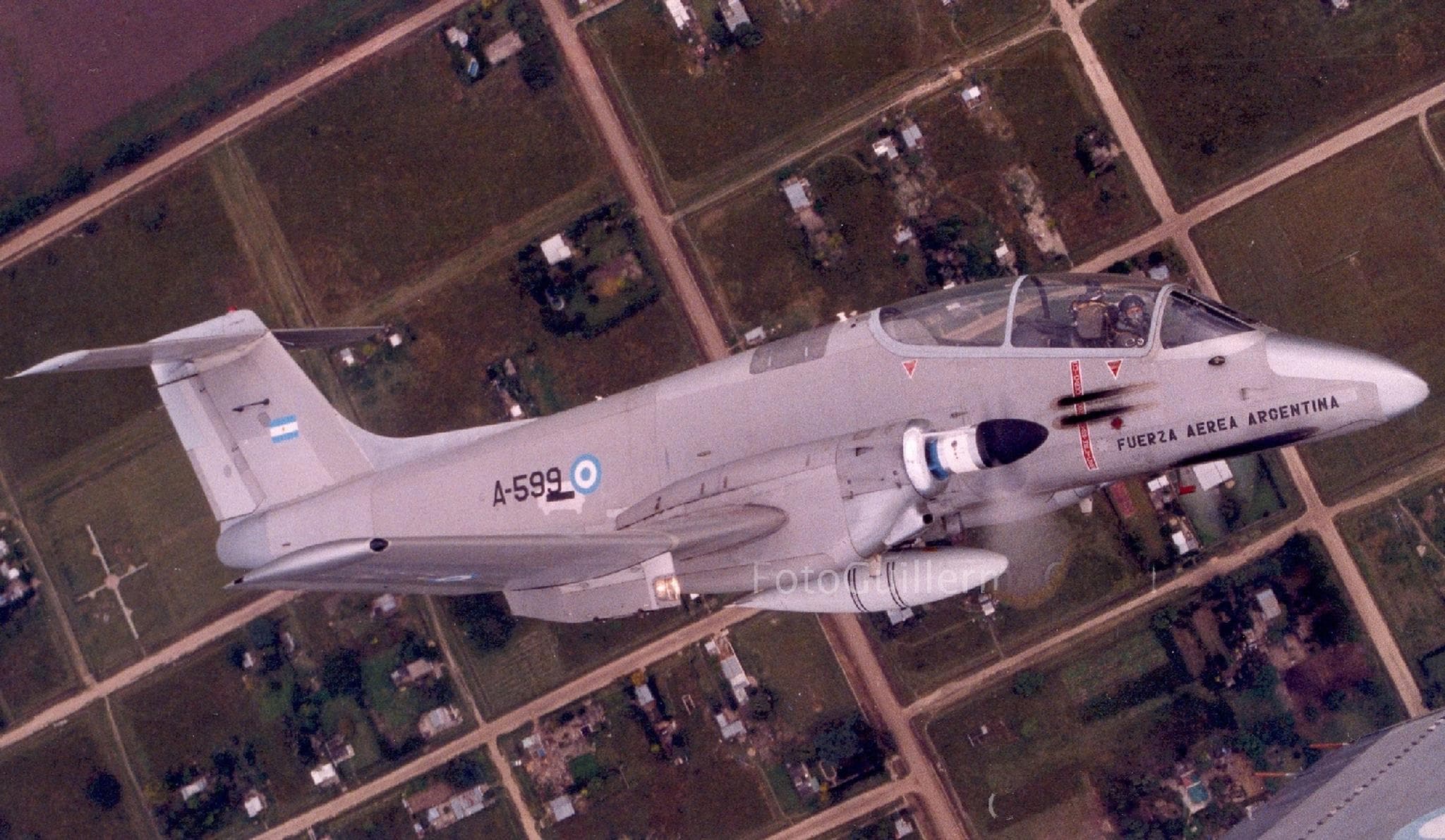
I.A. 58B
- Description:
- Argentine light attack and counterinsurgency aircraft, locally manufactured. Developed in the late 1970s as an improved version of the IA 58A, one prototype was built. It incorporated 30mm DEFA cannons and various armament upgrades, but did not enter mass production.
- Crew:
- 2
- Armament:
- Primary: 2x 30mm DEFA 553 cannons, 4x 7.62 mm FN-Browning M2-30
- Secondary: 1500 kg of bombs, 4x 70mm FFAR LAU rocket pods, 4x 57mm Aspide rockets in ARM-657 Mamboreta pods
- Performance:
- Maximum speed: 480 km/h
- Sources:
Rank 5
Spoiler
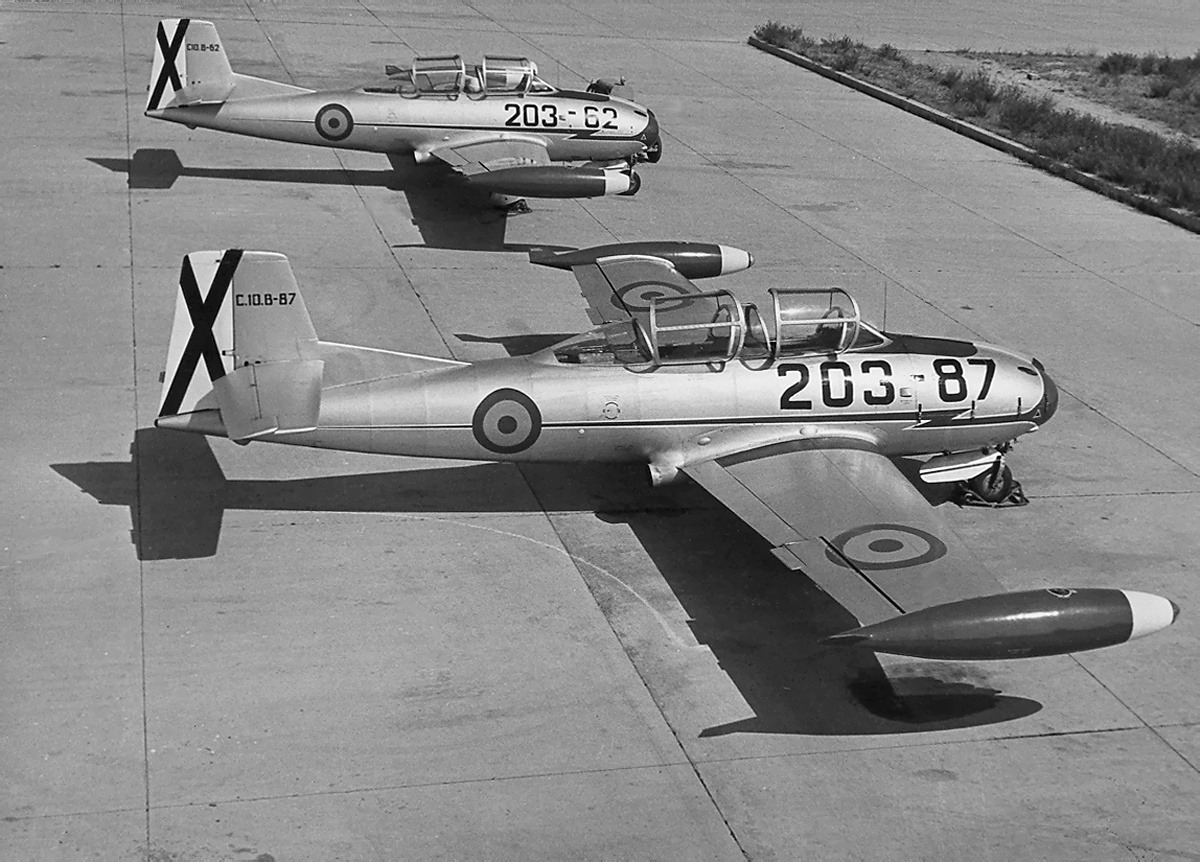
HA-200D
- Description:
- Spanish advanced trainer and light attack aircraft, locally manufactured. It entered service in 1967, and 30 units of the HA-200D version were built. Used for advanced training and tactical support, it was the most numerous variant.
- Crew:
- 2
- Armament:
- Primary: 2x 12.7mm Browning M3 machine guns
- Secondary: 50, 100, 250 kg bombs
- Performance:
- Maximum speed: 650 km/h
- Sources:
HA-220
- Description:
- A locally manufactured Spanish light attack aircraft. It entered service in 1975, with 25 units built by converting HA-200s. It featured a better engine and could carry a wider variety of armament, including bombs and rockets. The cockpit for the second crew member was removed to accommodate an additional fuel tank. It was the most powerful combat variant of the Saeta family and was designated the Super Saeta.
- Crew:
- 1
- Armament:
- Primary: 2x 12.7mm Browning M3 machine guns, 2x 7.7mm Breda-CETME Machine Guns
- Secondary: 2x 12.7mm Browning machine gun pods, bombs and rockets in different sizes
- Performance:
- Maximum speed: 700 km/h
- Sources:
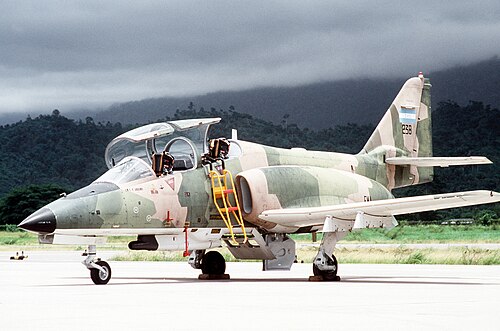
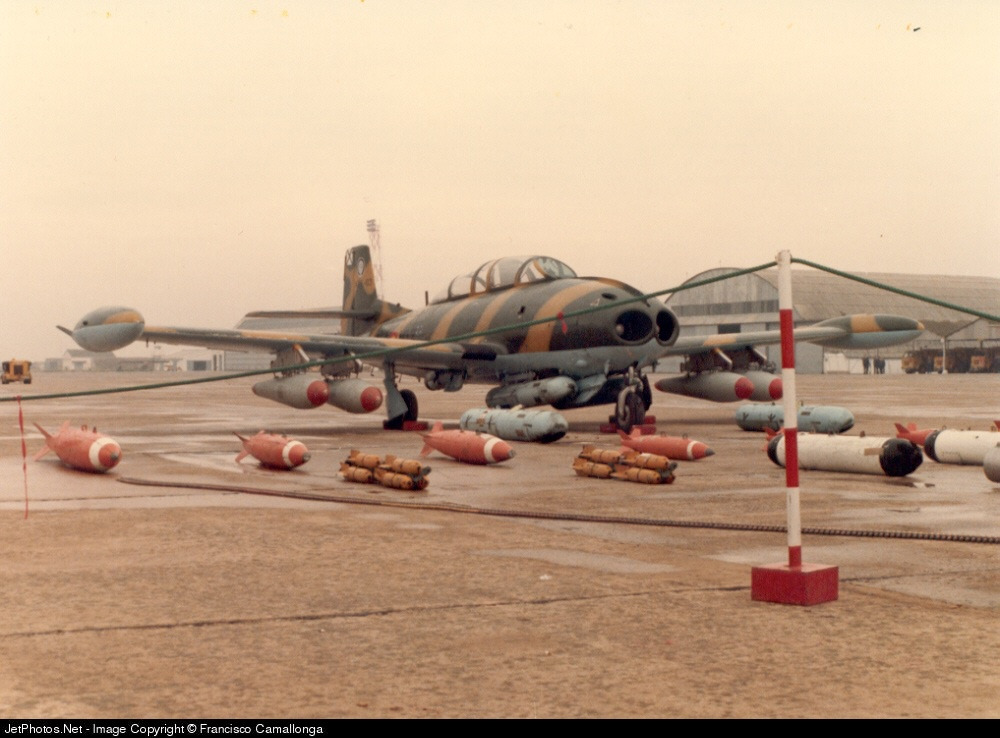
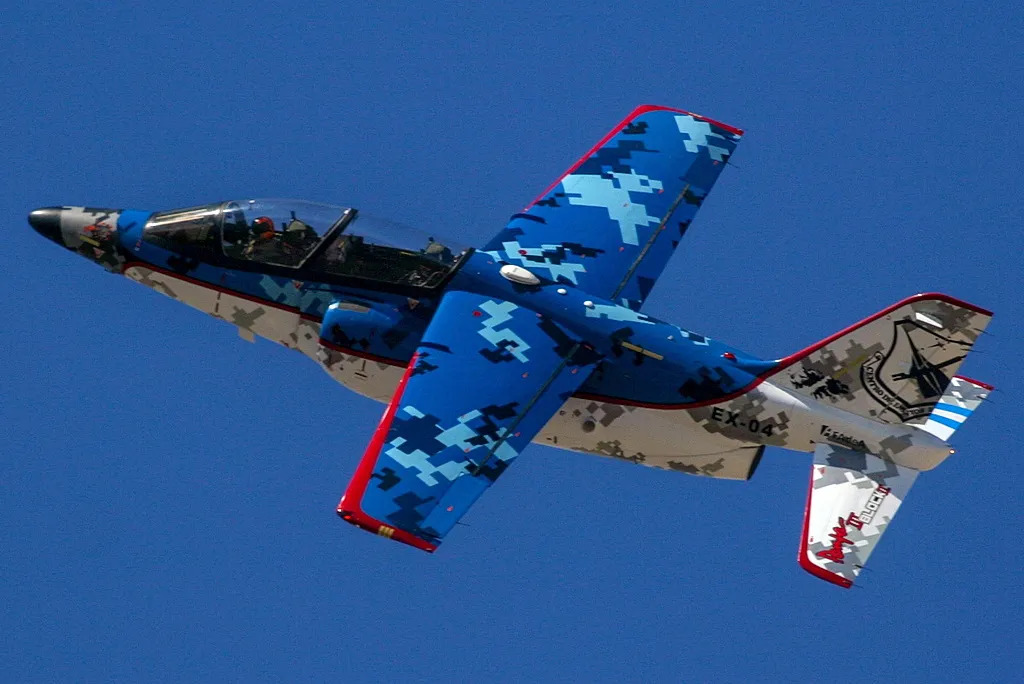
I.A. 63
- Description:
- Argentine advanced trainer and light attack aircraft, locally manufactured. It entered service in 1988, and 27 units of the original version were built. Armed with 7.62 mm machine gun pods, a 30 mm DEFA ventral pod, 57 mm and 70 mm rockets, and Mk.81/Mk.82 bombs, it was the Argentine Air Force’s primary jet trainer.
- Crew:
- 2
- Armament:
- Primary: 30mm DEFA-GIAT 552 autocannon
- Secondary: 1550 kg in bombs, 6x 70mm FFAR rocket pods, 6x 57mm Aspide rockets in ARM-657 Mamboreta pods, 4x 7.62mm Colibrí MG Pods
- Performance:
- Maximum speed: 820 km/h
- Sources:
Rank 6
Spoiler
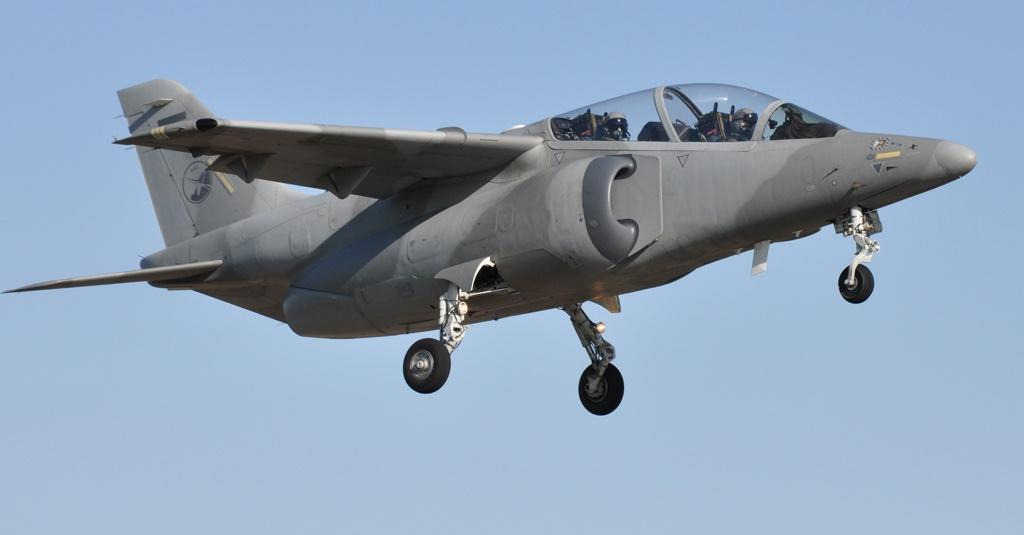
I.A. 63 III Block II
- Description:
- Argentine-made, locally manufactured advanced training and light attack aircraft. It entered service in 2021, and at least six units in this configuration had been delivered by 2024. It incorporates advanced digital avionics, an Embedded Virtual Avionics (EVA) system, a datalink, and enhanced capabilities for tactical training and light attack.
- Crew:
- 2
- Armament:
- Primary: 1x 30mm DEFA-GIAT 554 autocannon, 2x 7.65mm MG
- Secondary: 2420 kg in bombs, 127mm ZUNI rocket pods, 70mm FFAR rocket pods, 57mm Aspide rockets in ARM-657 Mamboreta pods, 7.62mm Colibrí MG pods, 12.7mm MG pods, CITEFA AS-25K ASM Missiles
- Performance:
- Maximum speed: 890 km/h
- Sources:
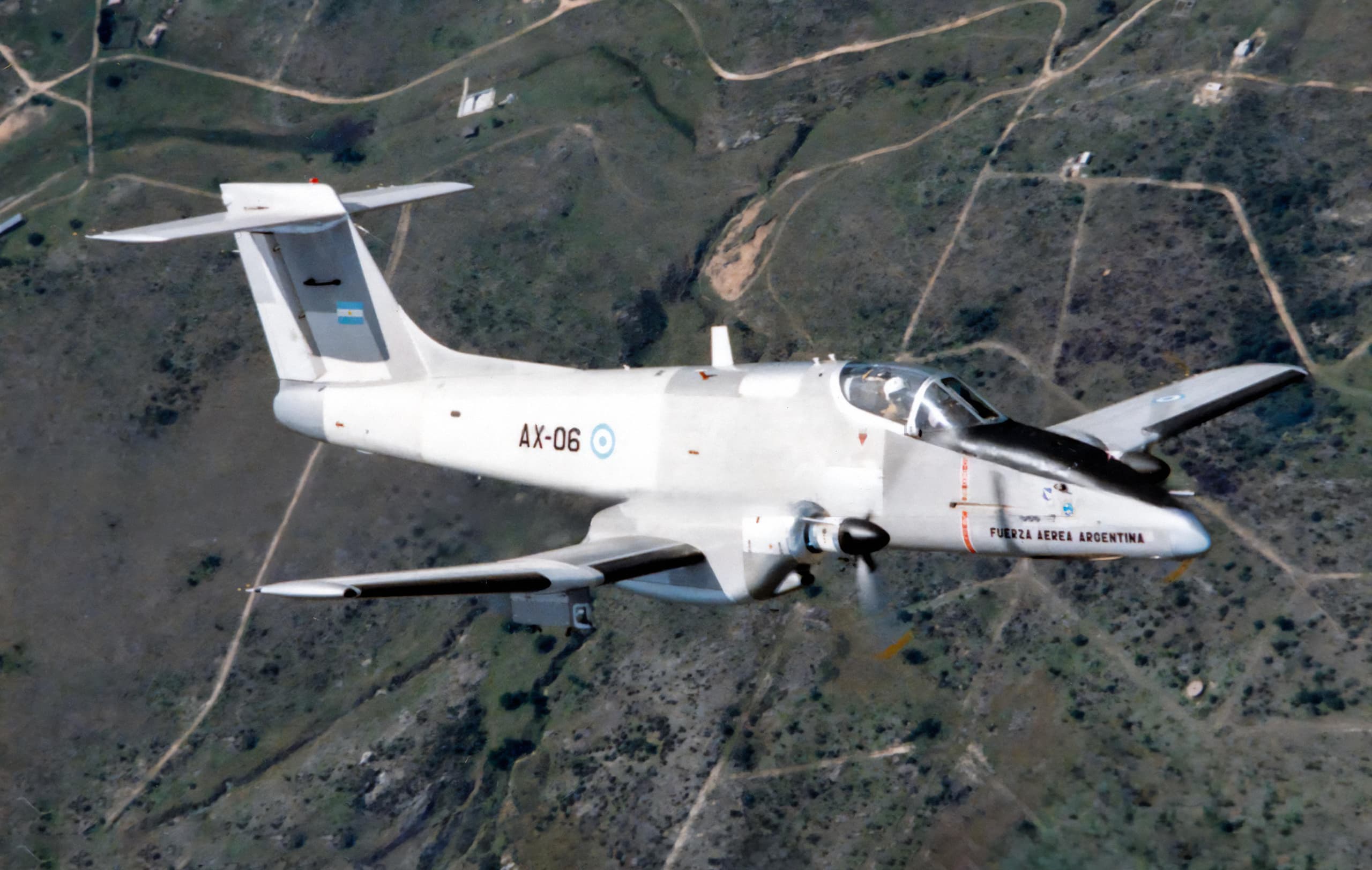
I.A. 58C
- Description:
- Argentine light attack and counterinsurgency aircraft, locally manufactured. It made its first flight in 1985 and one prototype unit was built. Developed after the Falklands War, it was a single-seat version with reinforced armament, greater protection, and the capability to carry air-to-air and anti-ship missiles.
- Crew:
- 1
- Armament:
- Primary: 3x 30mm DEFA autocannons, 2x 7.62mm FN-Browning M2-30 machineguns
- Secondary: 1000 kg in bombs, 4x 70mm FFAR rocket pods, 4x 57mm Aspide rockets in ARM-657 Mamboreta pods, 2x Matra R.550 Magic I AAM, 2x CITEFA MP1000 Martin Pescador ASM, 2x CITEFA AS-25K ASM
- Performance:
- Maximum speed: 576 km/h
- Sources:
Rank 7
Spoiler
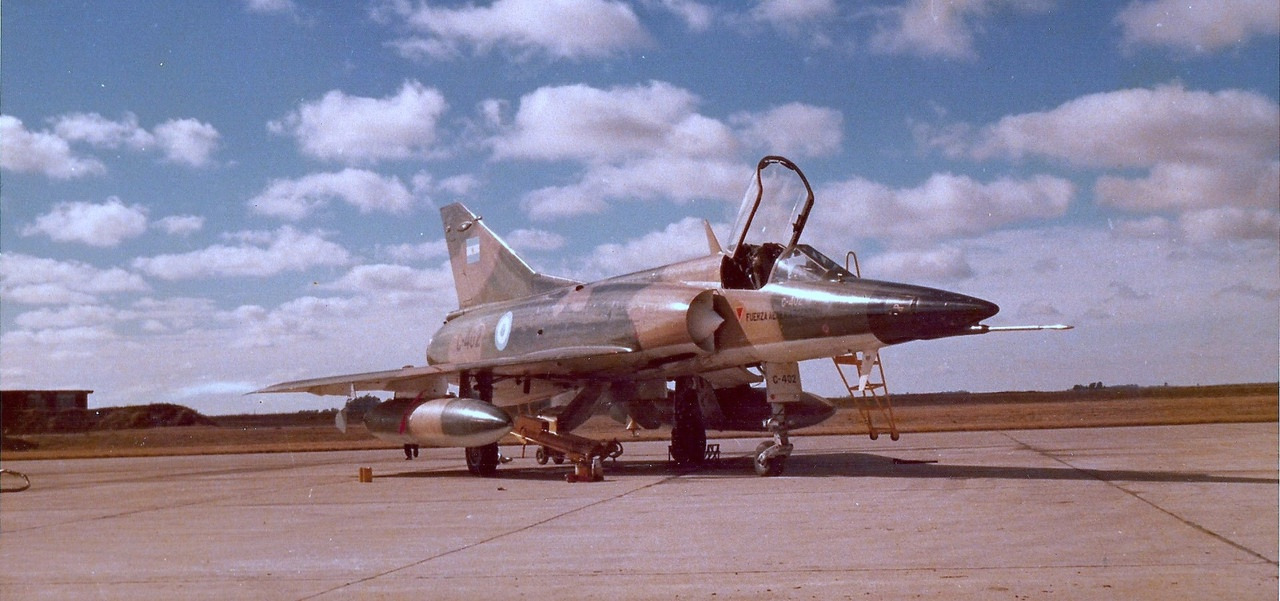
Dagger
- Description:
- An Argentine supersonic fighter derived from the Mirage 5, purchased from Israel. It entered service in 1978, with a total of 39 aircraft delivered. It served as the Argentine Air Force’s primary attack aircraft during the Falklands War.
- Crew:
- 1
- Armament:
- Primary: 2x 30mm DEFA 552 cannons
- Secondary: 1000lb bombs, 115/125/130/250kg bombs, FFAR rockets, Zuni rockets, Shafrir 2 MIssiles
- Performance:
- Maximum speed: 2350 km/h
- Sources:
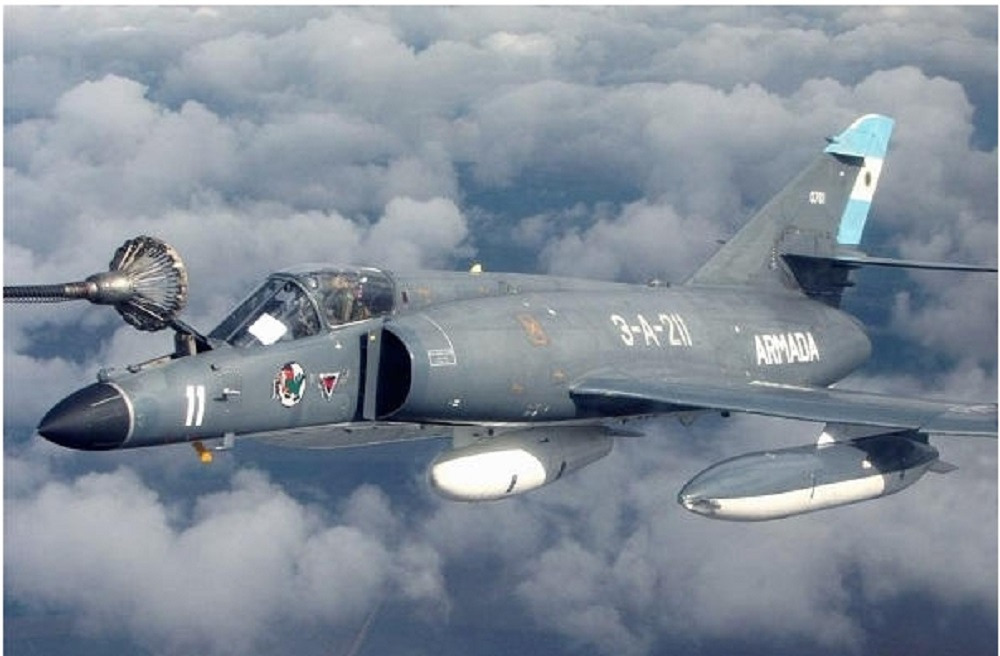
Super Etendard
- Description:
- Argentine supersonic naval fighter-bomber. It entered service in 1980 and 14 units were acquired. Optimized for maritime attack, it could employ AM-39 Exocet missiles, Matra R550 Magic missiles, bombs and rockets, playing a key role in Argentine naval air operations during the Falklands War.
- Crew:
- 1
- Armament:
- Primary: 2x 30 mm DEFA 553 cannon
- Secondary: Matra R550 Magic 1 missiles, AS-30L Nord missiles, Mk 80 series Bombs, Samp series bombs, Type 23 SNEB rockets, GBU-12 Paveway II guided bomb
- Performance:
- Maximum speed: 1,380 km/h
- Sources:
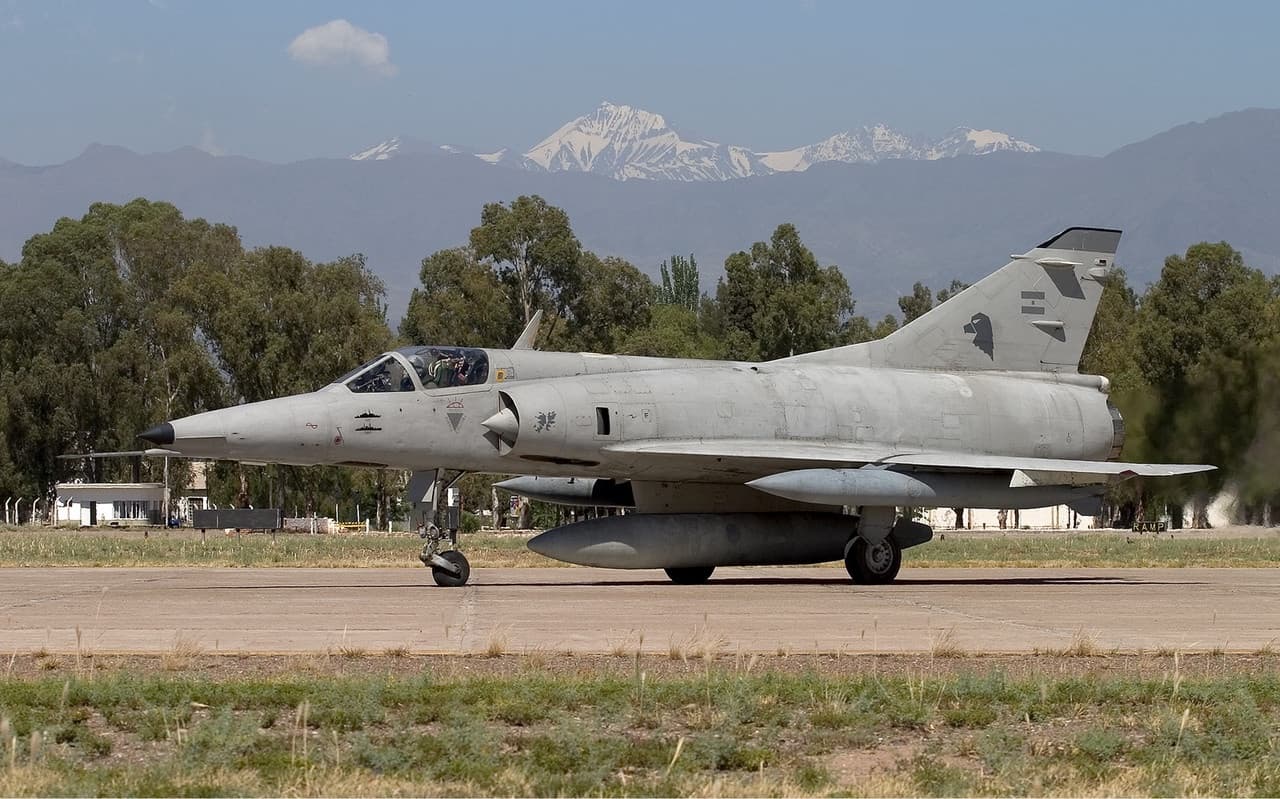
Finger
- Description:
- Argentine supersonic fighter, a locally upgraded Dagger. It entered service in 1983, and 26 units were modified. It incorporated improved avionics, the ability to carry more modern air-to-air missiles, and enhanced combat performance, becoming Argentina’s primary interceptor.
- Crew:
- 1
- Armament:
- Primary: 2x 30mm DEFA 552 cannons
- Secondary: 1000lb bombs, 115/125/130/250kg bombs, FFAR rockets, Zuni rockets, Shafrir 2 Missiles, AIM-9L/M Missiles
- Performance:
- Maximum speed: 2350 km/h
- Sources:
Rank 8
Spoiler
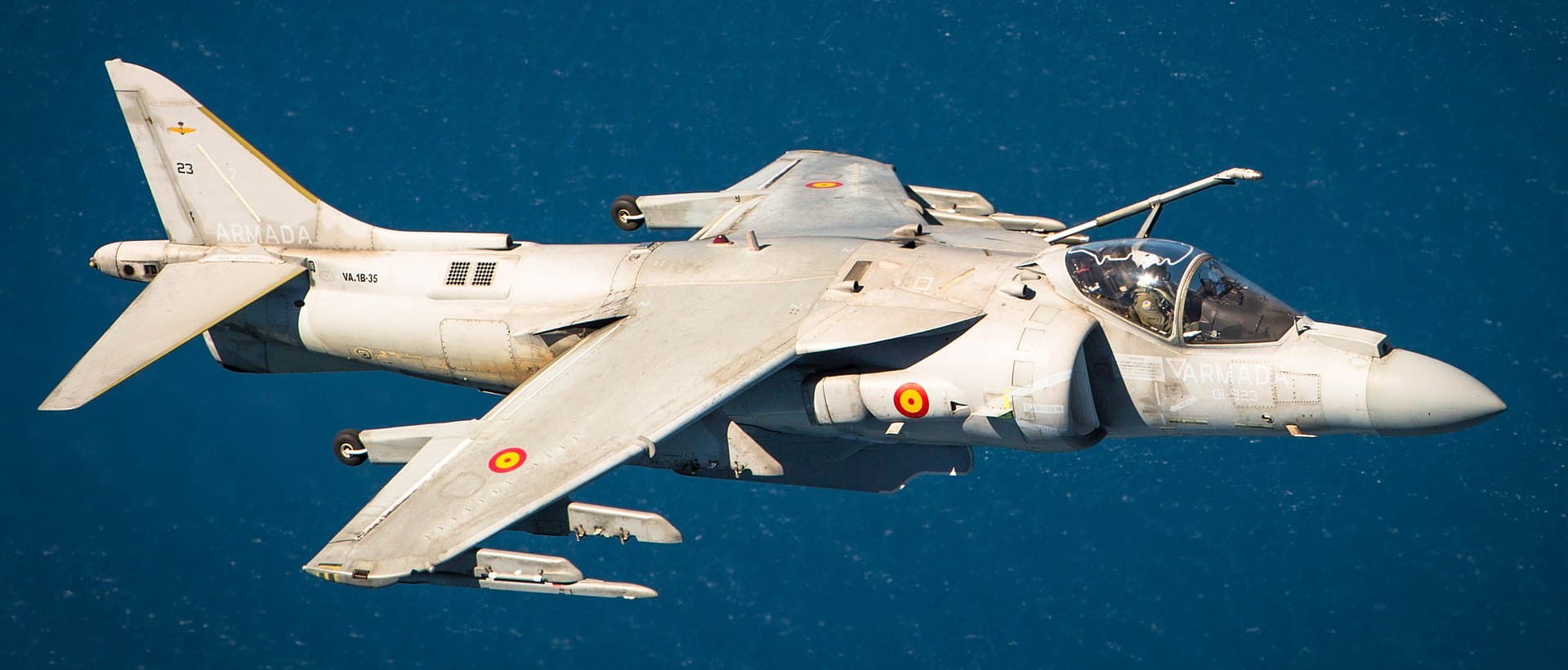
AV-8B Plus
- Description:
- Spanish carrier-based attack aircraft. It entered service in 1996, and Spain acquired 17 units. Armed with AIM-9L and AIM-120 missiles, AGM-65 Maverick missiles, guided bombs, and rockets, it was the first Spanish aircraft with BVR combat capability.
- Crew:
- 1
- Armament:
- Primary: 25 mm GAU-12/U cannon
- Secondary: AIM-9L/M Missiles, AIM-120 Missiles, Mk 80 series bombs, FFAR rockets, Zuni rockets, AGM-65D/G missile, GBU-12/16/32/38/54B/ JDAM guided bombs
- Performance:
- Maximum speed: 1,134 km/h
- Sources:
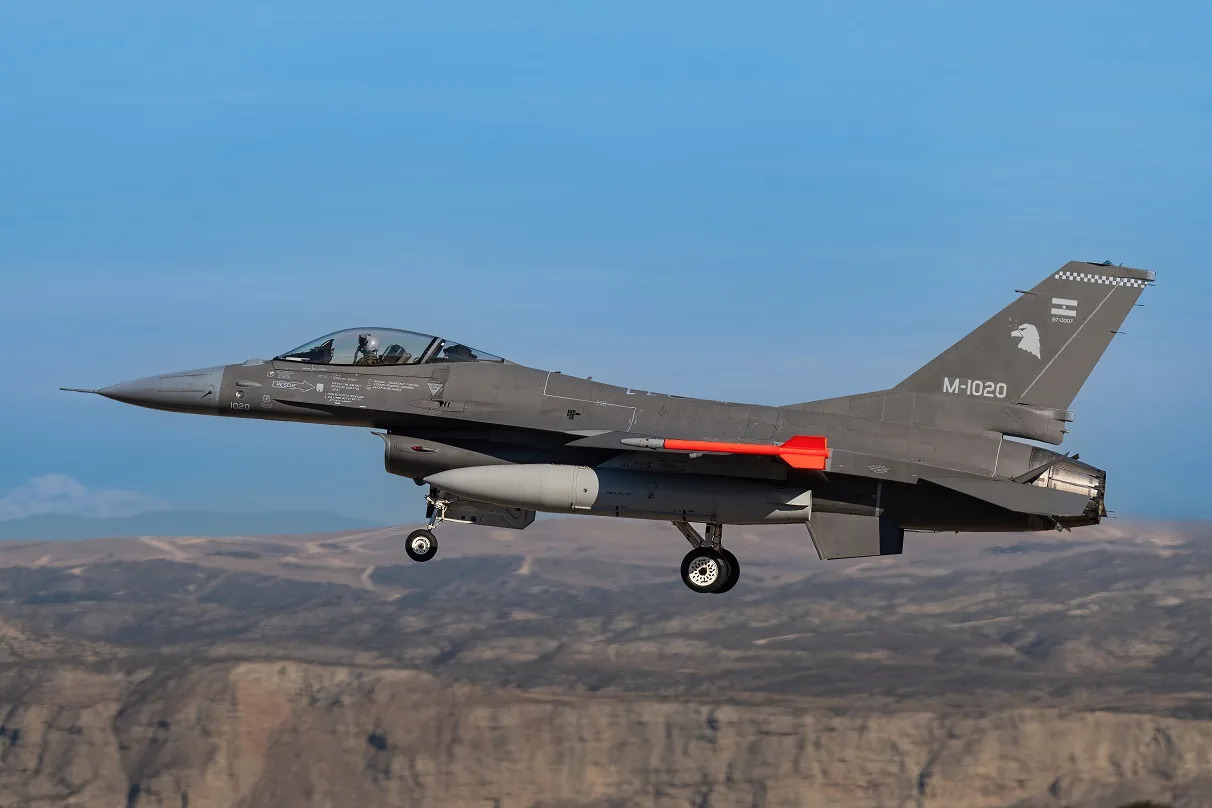
F-16AM M6.5
- Description:
- A US multirole fighter jet operated by Argentina. It entered service in 2025, and Argentina acquired 24 units. Armed with AIM-9M and AIM-120 missiles, AGM-65 Maverick missiles, and guided bombs, it is currently the most advanced combat aircraft in the Argentine Air Force. The M6.5 standard is one of the highest that an F-16 can have, and they are currently being upgraded to the M6.6 standard.
- Crew:
- 1
- Armament:
- Primary: 20 mm M61A1 cannon
- Secondary: AIM-9L/M Missiles, AIM-120 Missiles, Mk 80 series bombs, FFAR rockets, Zuni rockets, AGM-65D/G missile, GBU-12/16/32/38/54B JDAM guided bombs, GBU-54B/62 LJDAM guided bombs
- Performance:
- Maximum speed: 2,146 km/h
- Sources:
Peru Fighters/Bombers
Spoiler
Rank 1
Spoiler
SB 2M-100A
- Description:
- A Soviet medium bomber operated by the Spanish Republican side. It entered service in 1937, with 31 units delivered. Armed with four 7.62mm ShKAS machine guns and capable of carrying up to 600 kg of bombs, it was notable for being one of the fastest bombers of the Spanish Civil War.
- Crew:
- 3
- Armament:
- Primary: 4x 7.62mm ShKAS machine guns
- Secondary: 600 kg of bombs
- Performance:
- Maximum speed: 430 km/h
- Sources:
Do 17 E-1
- Description:
- A German medium bomber operated by the Spanish Nationalist side. It entered service in 1937, with 15 units delivered to the Condor Legion. Armed with four 7.92 mm MG 15 machine guns and carrying up to 500 kg of bombs, it was used for bombing and reconnaissance missions during the Spanish Civil War.
- Crew:
- 4
- Armament:
- Primary: 4x 7.92mm MG 15 machine guns
- Secondary: 500 kg of bombs
- Performance:
- Maximum speed: 355 km/h
- Sources:
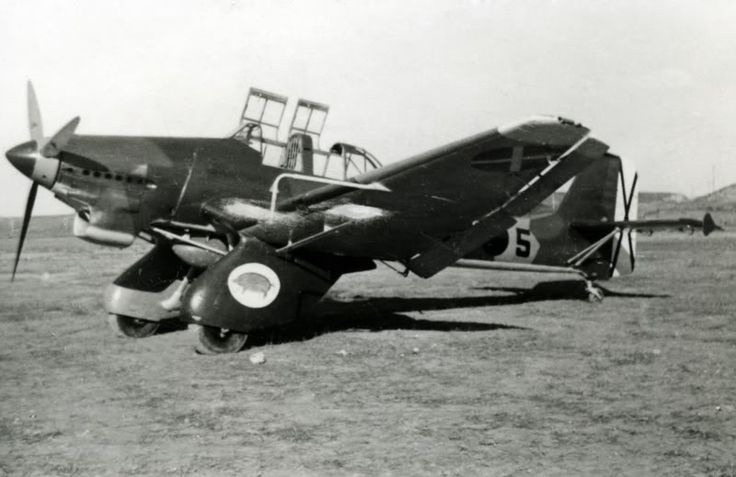
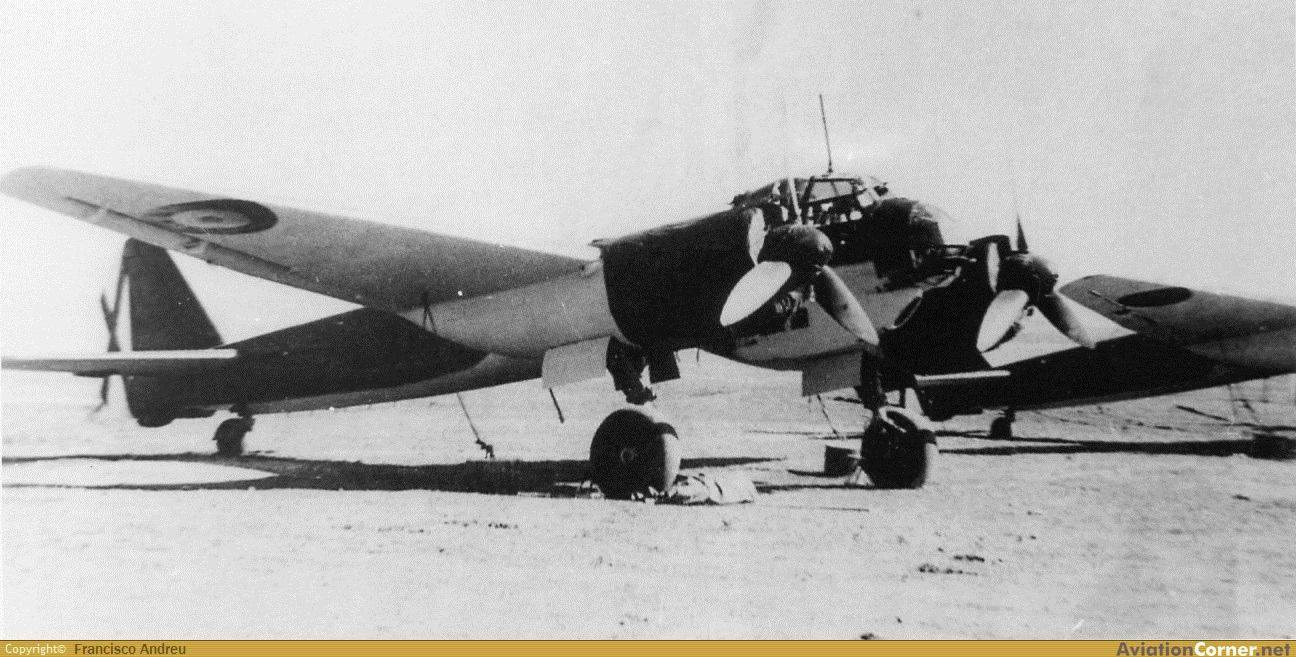
Ju 87 A-1
- Description:
- German dive bomber. Three pre-production and early series units were secretly sent to Spain in early 1938 to be tested under real combat conditions, and were used during the Spanish Civil War by the K/88 experimental group of the Condor Legion.
- Crew:
- 2
- Armament:
- Primary: 1x 7.92 mm MG 17 machine gun, 1x 7.92 mm MG 17 machine gun
- Secondary: 250 kg bombs, 500 kg bombs
- Performance:
- Maximum speed: 320 km/h
- Sources:
- https://barbarroja0300h.com/2020/01/31/junkers-ju-87-stuka/
- https://plane-encyclopedia.com/ww2/junkers-ju-87a-stuka/
- https://historiaparanodormiranhell.blogspot.com/2017/10/1936-39-blitzkrieg-en-espana-5-parte.html
- https://historiasdelaviacion.blogspot.com/2019/02/aviones-bombarderos-de-la-ii-guerra.html
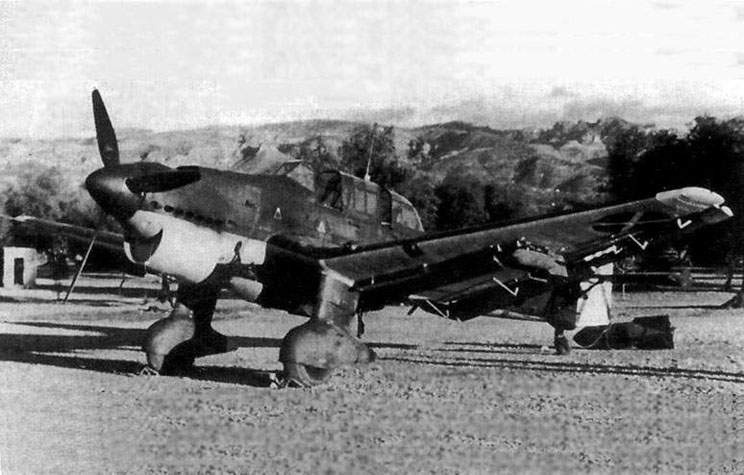
Ju 87 B-1
- Description:
- German dive bomber. A few Ju 87 B-1s arrived in Spain in October 1938 where they participated in the Spanish Civil War.
- Crew:
- 2
- Armament:
- Primary: 2x 7.92 mm MG 17 machine guns, 7.92 mm MG 17 machine gun
- Secondary: 1000 kg SC1000L2 bomb, 500 kg SC500K bomb, 250 kg SC250JA bomb, 50 kg SC50JA bomb
- Performance:
- Maximum speed: 383 km/h
- Sources:
- https://amodelcastillo.blogspot.com/2018/10/curiosidades-stukas-en-espana.html
- https://wiki.warthunder.com/unit/ju-87b-2
- https://historiaparanodormiranhell.blogspot.com/2017/10/1936-39-blitzkrieg-en-espana-5-parte.html
- https://historiasdelaviacion.blogspot.com/2019/02/aviones-bombarderos-de-la-ii-guerra.html
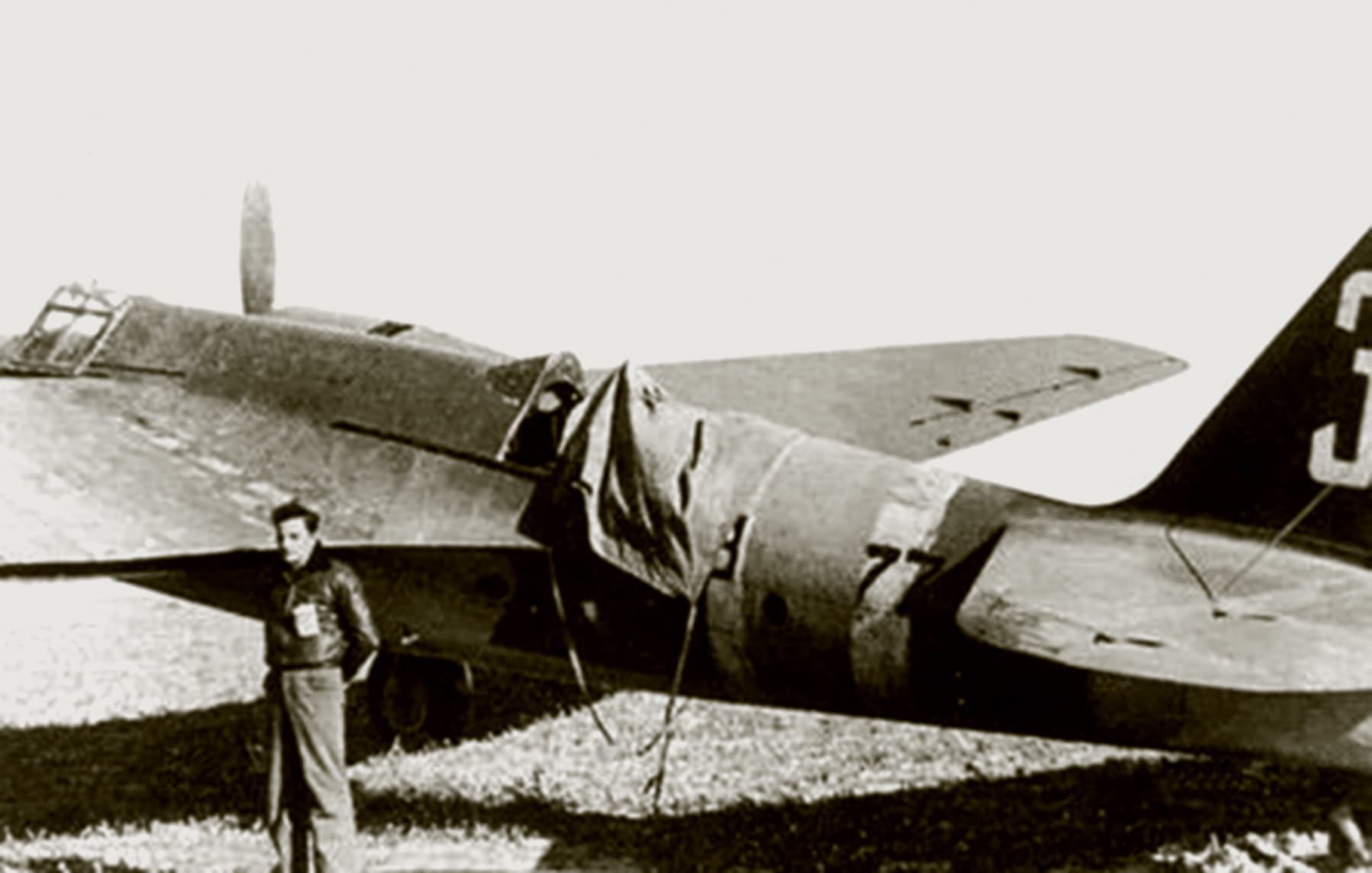
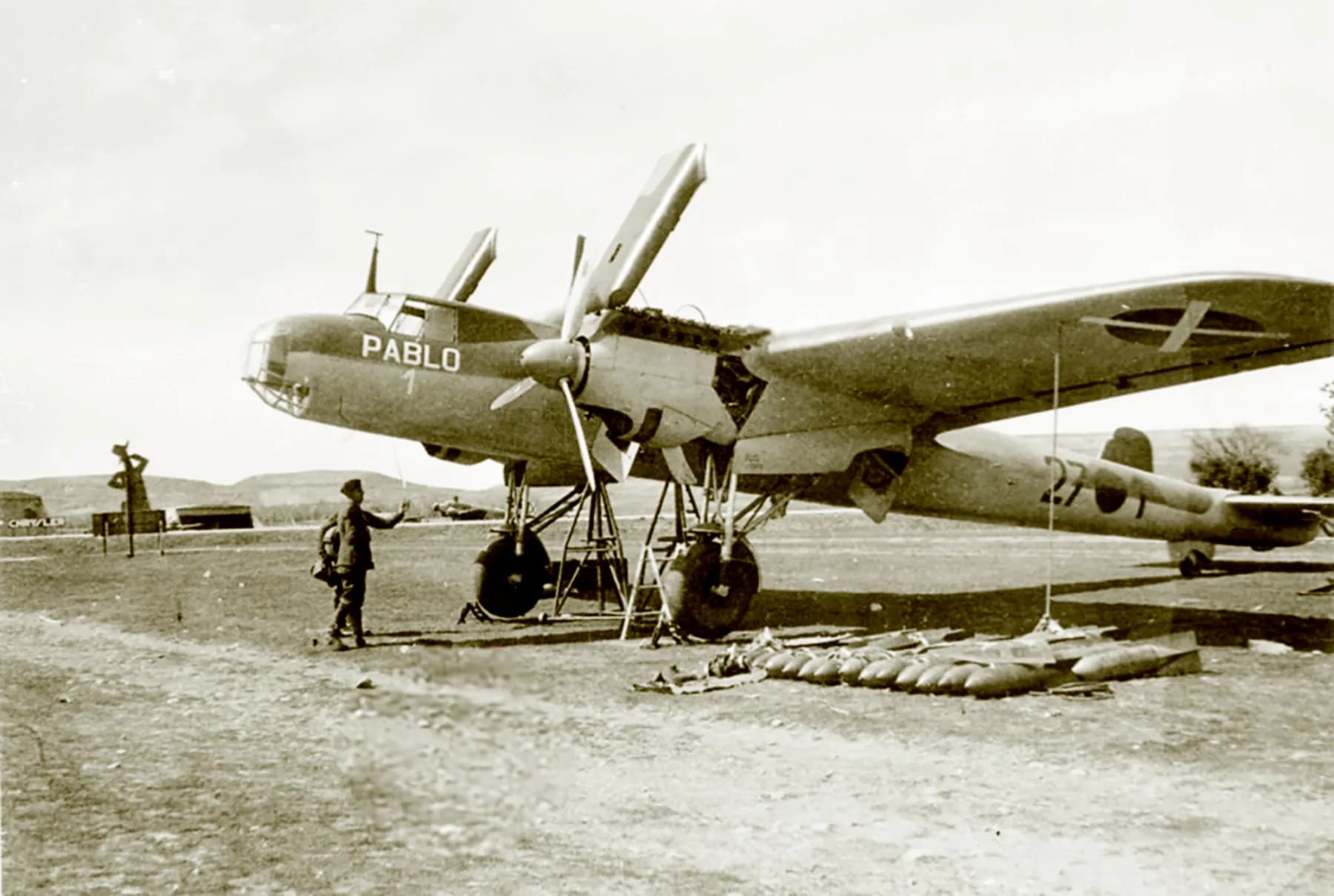
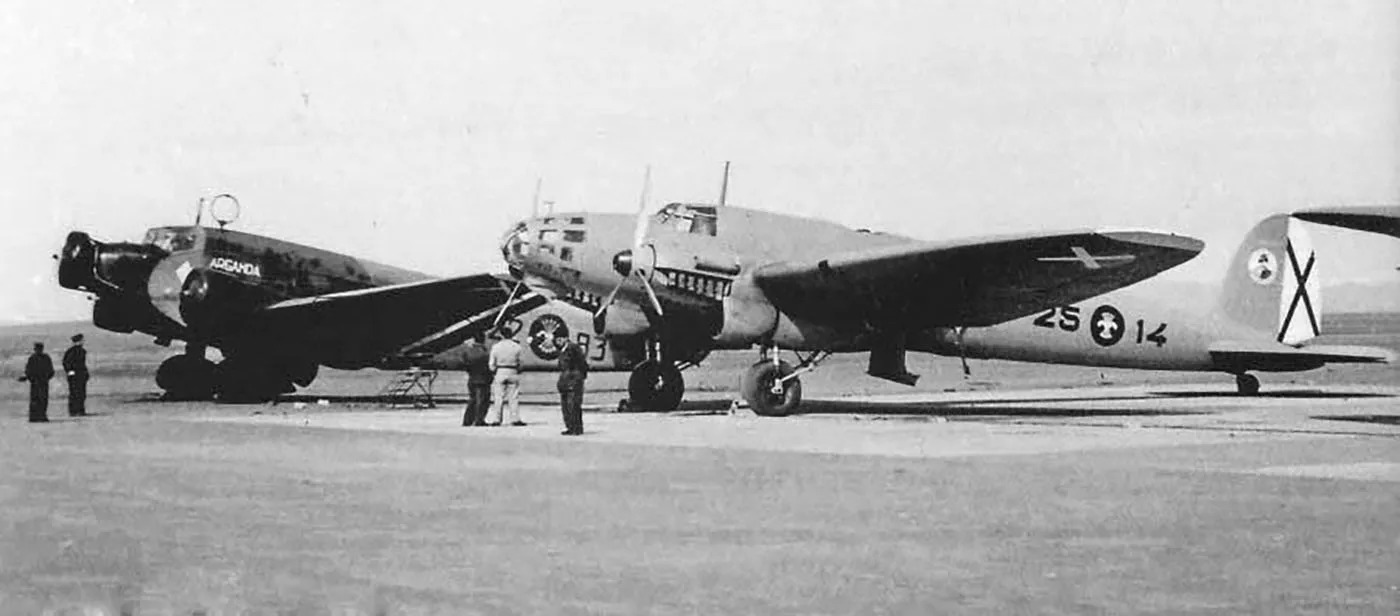
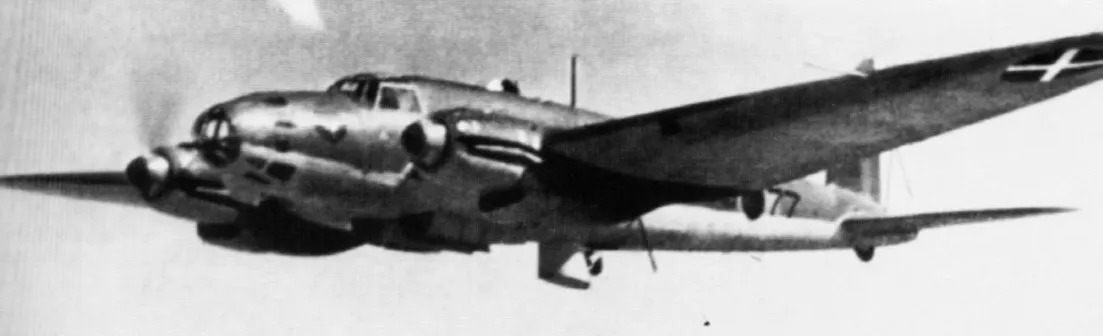
He 111 B-2
- Description:
- German medium bomber. The He 111 B-2 was an early variant that arrived in Spain in 1937 to participate in the Spanish Civil War. This specific variant was equipped with more powerful engines than previous versions.
- Crew:
- 5
- Armament:
- Primary: 3x 7.92 mm MG 15 machine guns
- Secondary: 1,500 kg of bombs
- Performance:
- Maximum speed: 370 km/h
- Sources:
- https://bombardeos.wordpress.com/atacantes/aparatos/heinkel-he-111b1-b2-e1-y-e3-pedro/
- https://en.wikipedia.org/wiki/Heinkel_He_111
- https://www.outono.net/elentir/2024/08/02/casa-2111-pedro-la-historia-del-ultimo-bombardeo-de-la-aviacion-militar-espanola/
- https://www.defensa.com/laminas-historicas/heinkel-he-111-ejercito-aire-espanol
Rank 2
Spoiler
Ca.310
- Description:
- Italian twin-engine reconnaissance and light bomber aircraft. 16 aircraft were sent to Spain in July 1938 to participate in the Spanish Civil War; they could carry up to 450 kg of bombs.
- Crew:
- 3
- Armament:
- Primary: 3x 7.7 mm Breda-SAFAT
- Secondary: 450 kg of bombs
- Performance:
- Maximum speed: 365 km/h
- Sources:
He 111E-1
- Description:
- German medium bomber. It arrived in Spain in late 1938 to participate in the Spanish Civil War with approximately 90 units. It could carry up to 2,000 kg of bombs.
- Crew:
- Armament:
- Primary: 3x 7.92 mm MG 15 machine guns
- Secondary: 8x 250 kg SC250JA bomb, 32x 50 kg SC50JA bombs
- Performance:
- Maximum speed: 435 km/h
- Sources:
Ju 88 A-4
- Description:
- German dive bomber. Spain acquired ten Ju 88 A-4s in 1943, to which 13 more were added throughout World War II, which were interned in Spain for repairs. This variant had more powerful engines and additional defensive armament.
- Crew:
- 4
- Armament:
- Primary: 7.92 mm MG 81 machine gun, 2x 7.92 mm MG 81 machine guns, 2x 7.92 mm MG 81 machine guns
- Secondary: 1000/500/250 kg bombs
- Performance:
- Maximum speed: 455 km/h
- Sources:

Rank 3
Spoiler
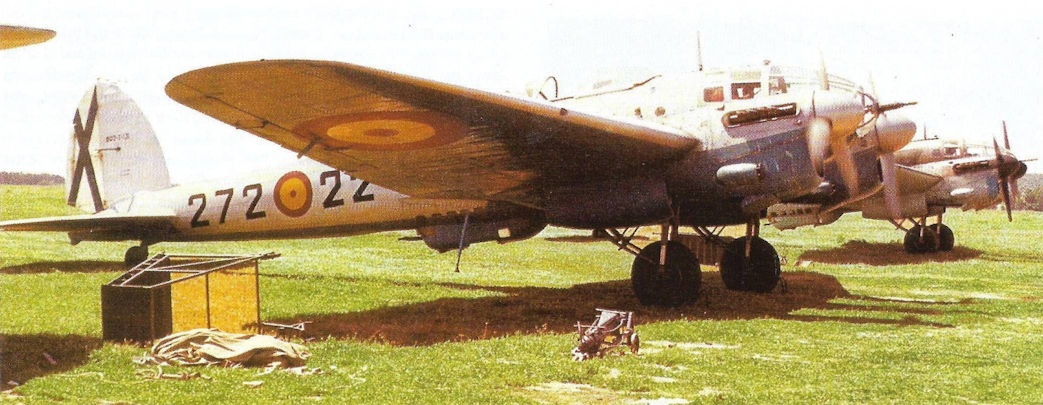
CASA 2.111A
- Description:
- A medium bomber derived from the Heinkel He 111H-16 and produced under license in Spain by CASA. After having previously operated He 111s in different versions, Spain decided to manufacture the most advanced version under license, the first of which flew in 1945. This version had more defensive armament than previous versions and a new engine.
- Crew:
- 5
- Armament:
- Primary: 20 mm MG FF/M cannon, 13 mm MG 131 machine gun, 2x 7.92 mm MG 81 machine guns, 2x 7.92 mm MG 81 machine guns
- Secondary: 1000/250/50 kg bombs
- Performance:
- Maximum speed:
- Sources:
Rank 4
Spoiler
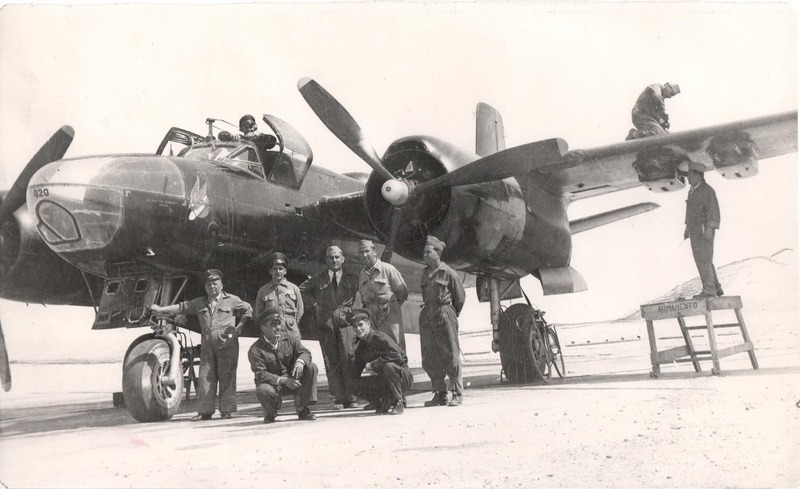
B-26C-45-DT
- Description:
- Bomber version of the B-26 Invader with a transparent nose and sight. Between 1954 and 1960, Chile received a total of 38 B-26C Invaders from different production blocks. In Chile, eight 12.7 mm machine guns were mounted in the wings via pods. Of the 38 B-26Cs, 3 were of the B-26C-45-DT model (serial numbers 44-35753, 44-35754, 44-35730).
- Crew:
- 3
- Armament:
- Primary: 2x 12.7 mm machine guns, 4x twin 12.7mm underwing machine gun pods, 2x 12.7 mm machine guns in upper turret, 2x 12.7 mm machine guns in rear aircraft turret.
- Secondary: 4000 lbs of bombs carried internally (100, 500, 1000, 2000 lb), 14x HVAR rockets
- Performance:
- Maximum speed: 569 km/h
- Sources:
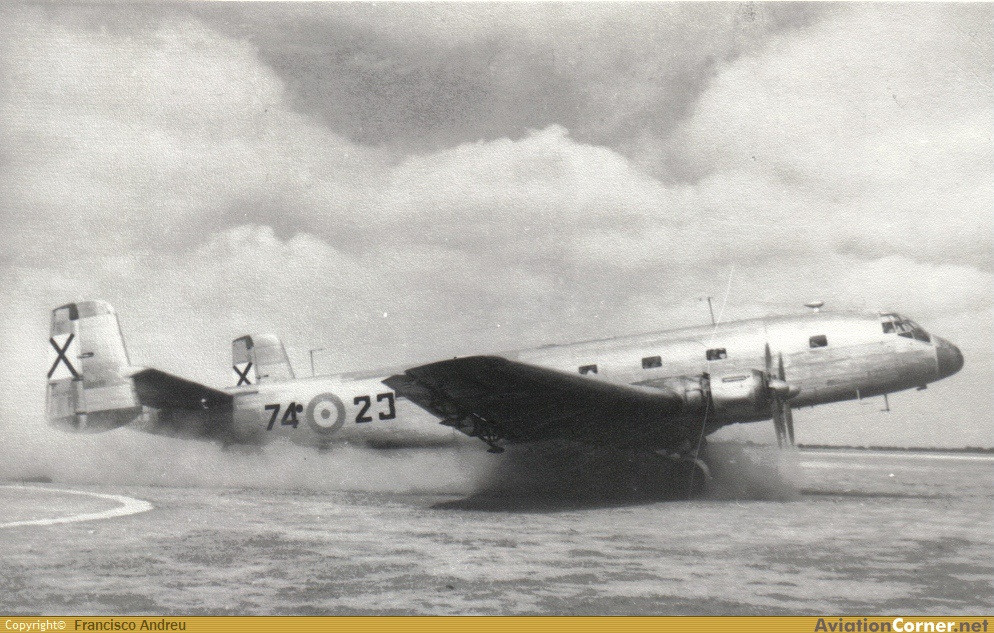
Ju 290A-5
- Description:
- A long-range transport aircraft, maritime patrol aircraft, and heavy bomber of late World War II, the Ju 290 A-5 (registration D-AITR) made an emergency landing in Spain in 1945, sustaining damage. It was later auctioned and subsequently acquired by the Spanish Air Force, becoming a flagship aircraft, although its service life was short-lived. The A-5 version was a formidable fortress, boasting extensive defensive armament and a bomb load capacity of up to 3,000 kg.
- Crew:
- 9
- Armament:
- Primary: 2x 20mm dorsal MG 151/20 cannon, 1x 20mm tail MG 151/20, 2x 20mm waist MG 151/20, 1x 20mm gondola MG 151/20, 2x 13mm gondola MG 131 machine guns
- Secondary: 3,000 kg of bombs
- Performance:
- Maximum speed: 440 km/h
- Sources:
Rank 5
Spoiler
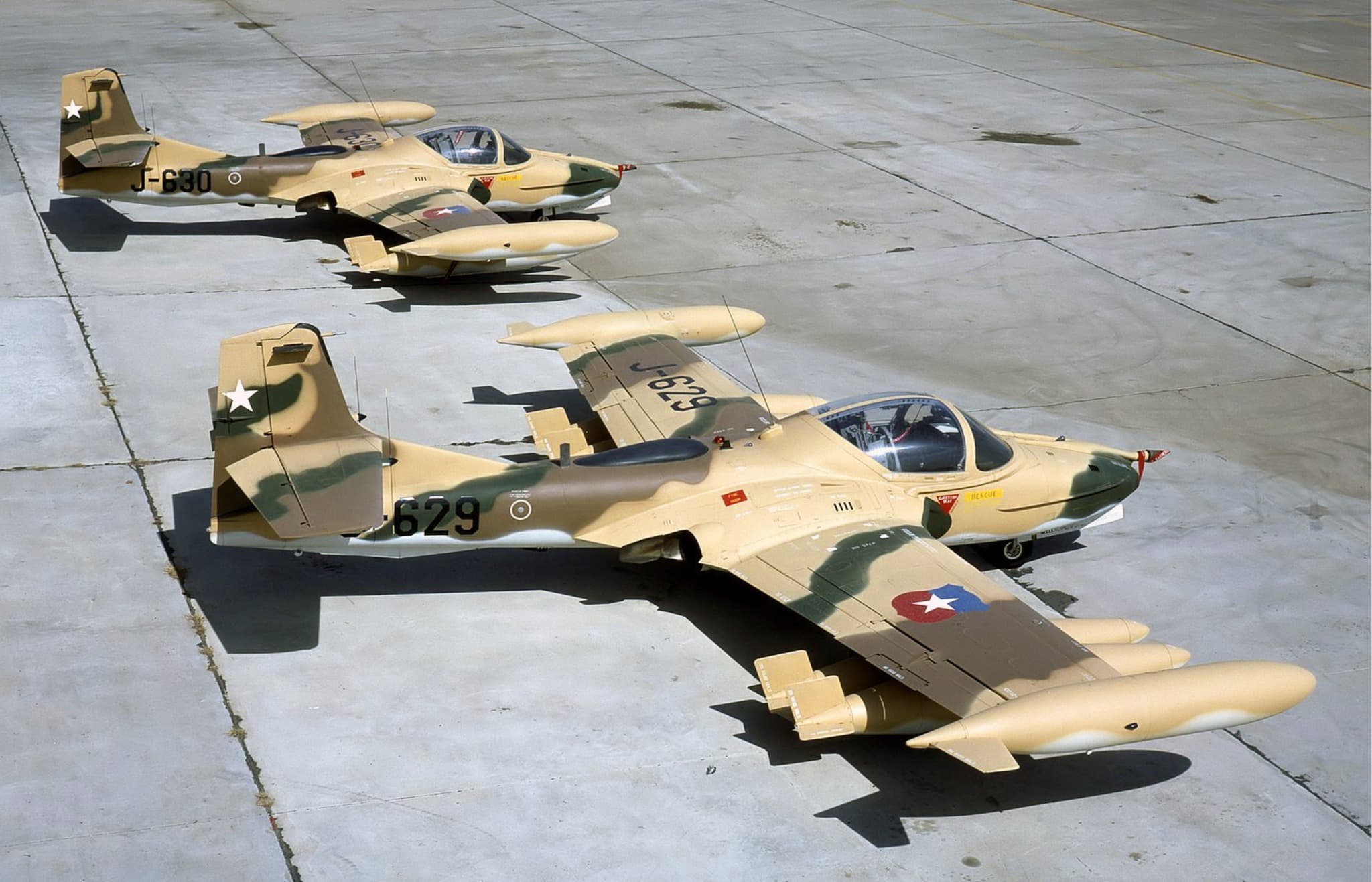
A-37B Dragonfly
- Description:
- American light attack and counterinsurgency aircraft. Chile acquired 32 aircraft starting in 1975. They were characterized by carrying a large amount of ground attack weaponry, with up to 8 pylons. They were equipped with a wide range of bombs and rockets. The Shafrir II missiles were subsequently tested.
- Crew:
- 2
- Armament:
- Primary: 1x GAU-2B/A 7.62mm Minigun mounted in the nose.
- Secondary: Mk 81/82 bombs, Famae BF 750 lb, Famae 375 kg, Condib-70 anti-runway bomb, CB-250K cluster bomb, Ferrimar WB-500-F cluster bomb (227 kg), TAL 1 cluster bomb (220 kg), Napalm bomb, FFAR rockets, Zuni rockets.
- Performance:
- Maximum speed: 816 km/h
- Sources:
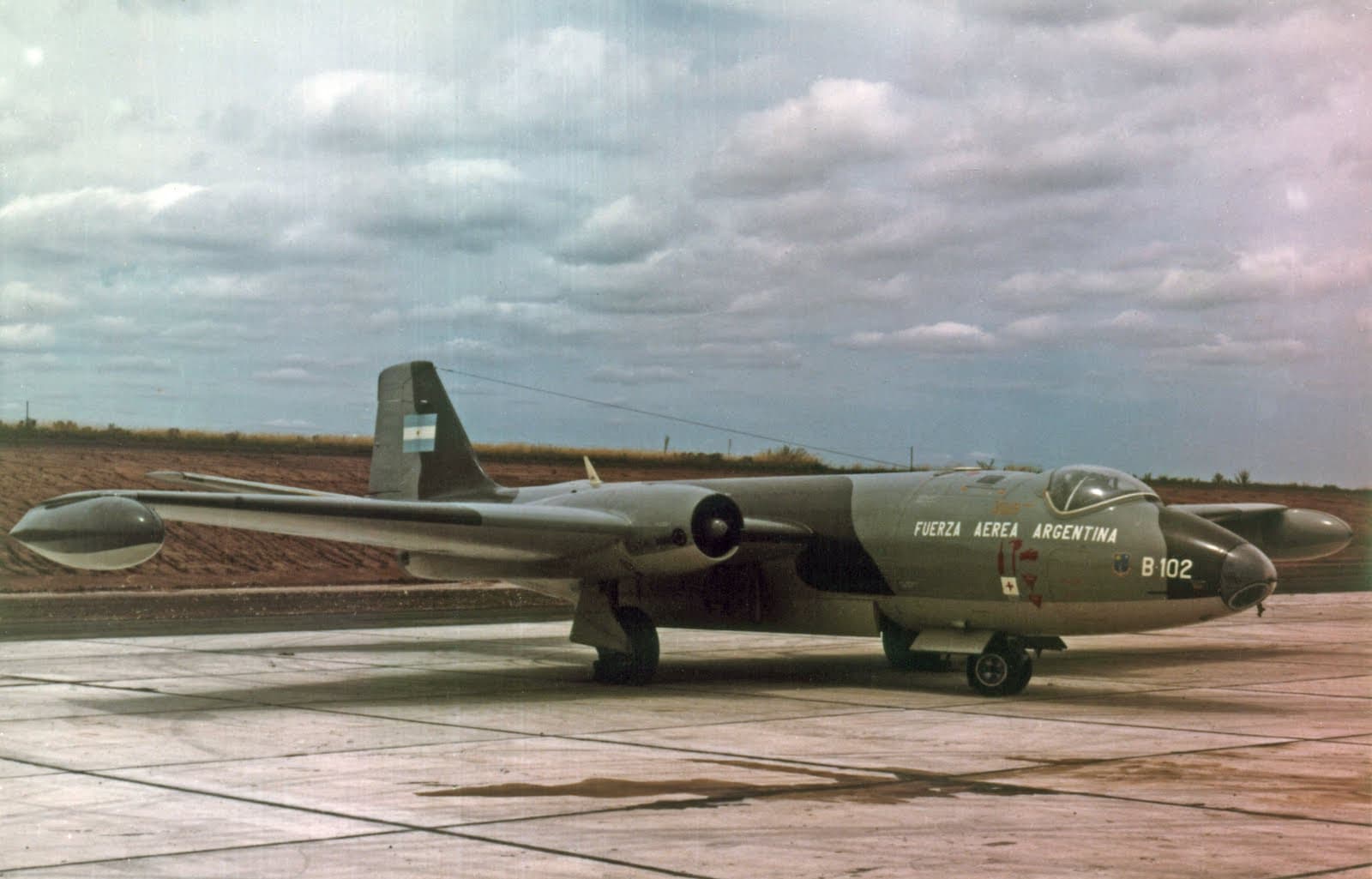
Canberra B Mk 62
- Description:
- British jet bomber. Argentina acquired 10 B Mk 62 bombers, which were refurbished B Mk 2s, in the 1970s. Later, during the Malvinas (Falklands) War, they participated in night bombing runs. Being an early version, they lacked the 20mm machine guns of later versions.
- Crew:
- 3
- Armament:
- Primary: None
- Secondary: 4000/1000/500 lbs bombs
- Performance:
- Maximum speed: 880 km/h
- Sources:
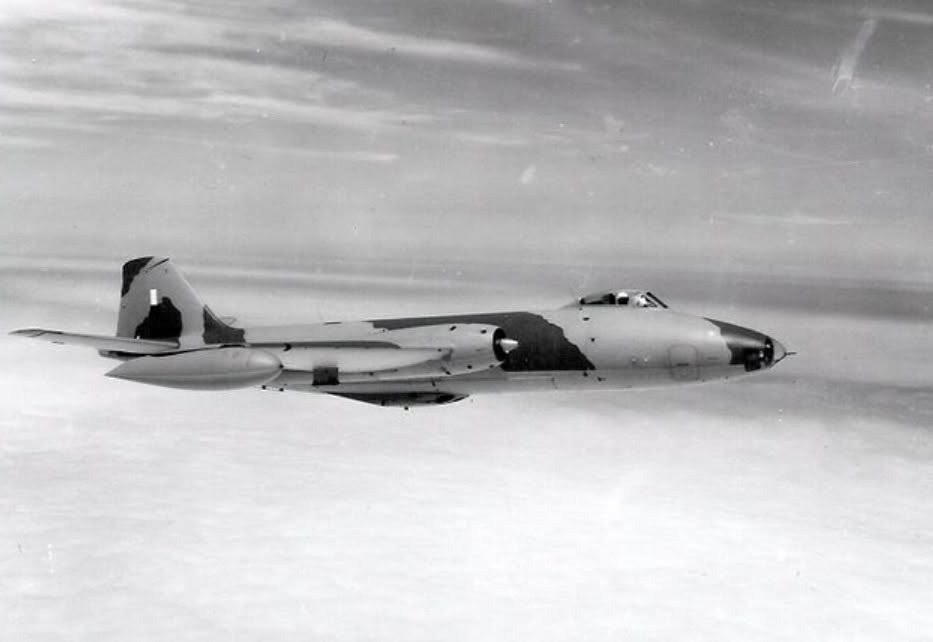
Canberra B (I) Mk 8
- Description:
- British jet bomber. Peru acquired many of these bombers over the years; one of the versions acquired was the Canberra B (I) Mk 8 in 1956. Unlike previous versions, this version did have the four 20mm offensive machine guns and maintained its bombing capability, although it reduced the total weight capacity of the internally loaded bombs, but added underwing pylons.
- Crew:
- 3
- Armament:
- Primary: 4x 20 mm Hispano Mk.V cannon
- Secondary: 1000/500 lb bombs
- Performance:
- Maximum speed:
- Sources:
Rank 6
Spoiler
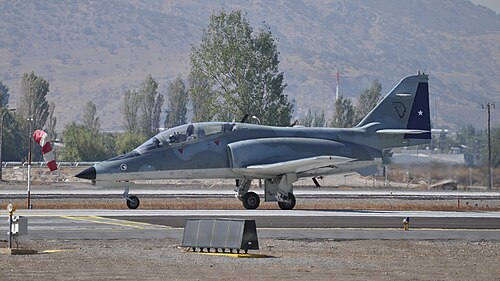
C-101EB
- Description:
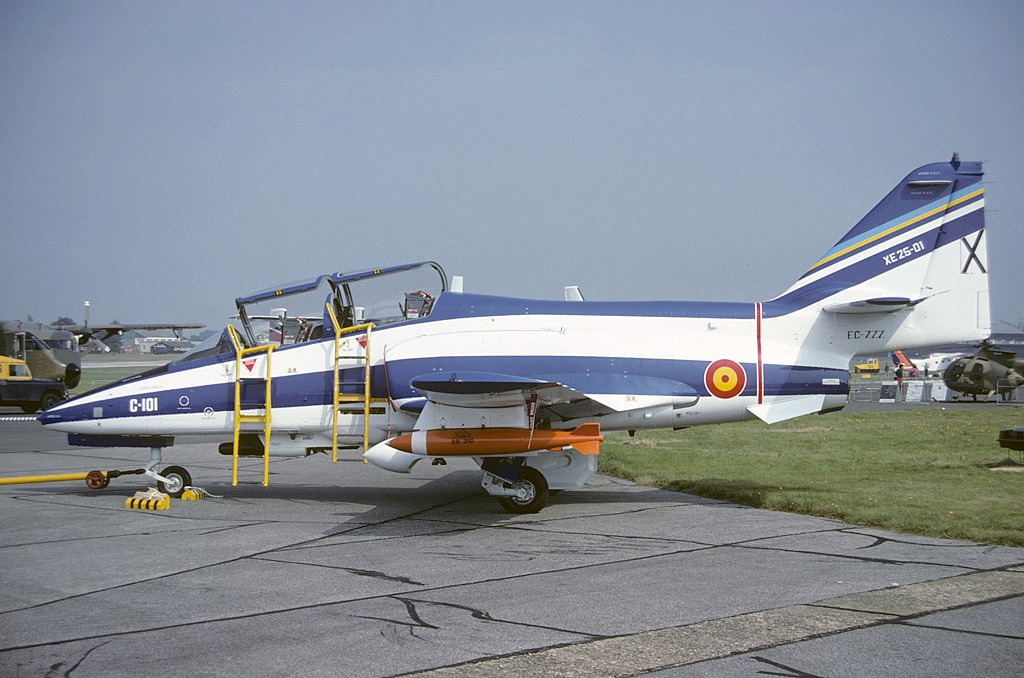
- The C-101EB is an advanced training and light attack jet designed and manufactured in Spain by CASA. It is the basic version operated by the Spanish Air Force. Initially, it had a 30mm cannon in the belly and underwing pylons for bombs and rockets, but later Spain only used the aircraft for advanced training. It also has the least powerful engine.
- Crew:
- 2
- Armament:
- Primary: 1x 30 mm DEFA 553 cannon
- Secondary: Mk 81/82 bombs, FFAR rockets, Zuni rockets
- Performance:
- Maximum speed: 770 km/h
- Sources:
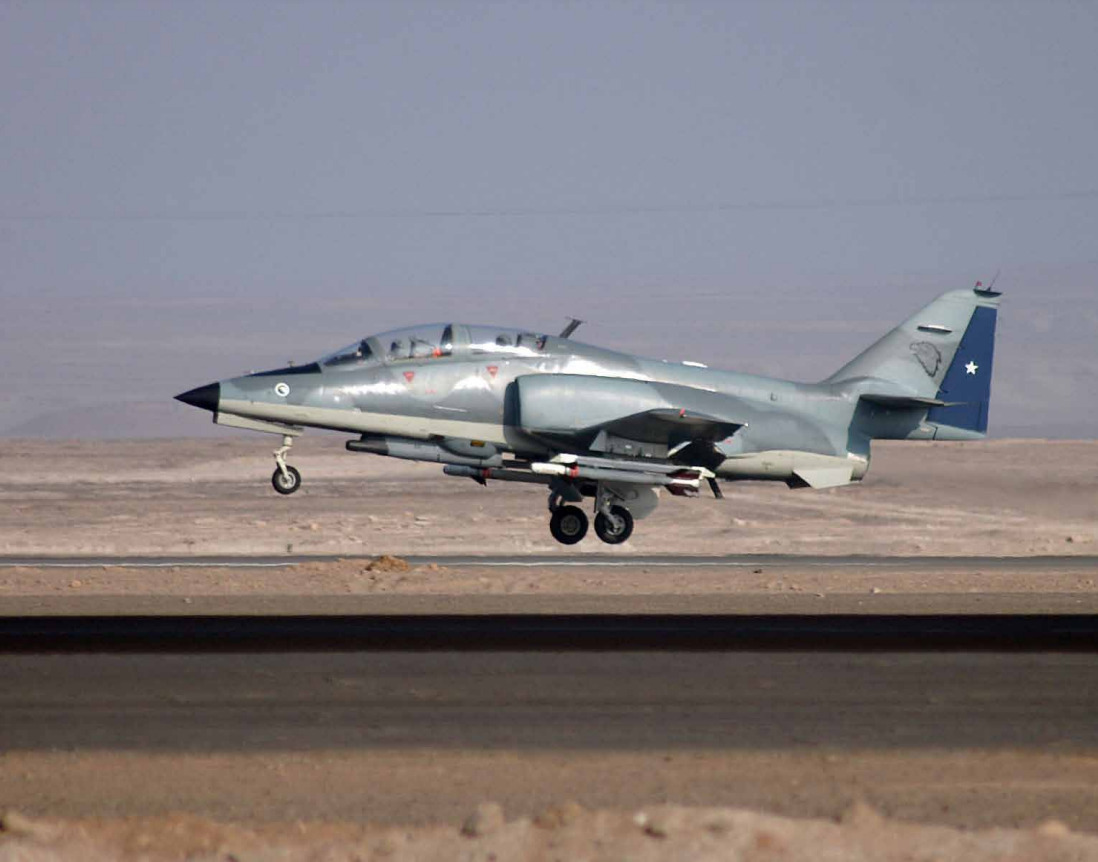
A-36 Toquí
- Description:
- An advanced training and light attack jet designed in Spain. Chile manufactured the more advanced C-101CC version under license, which has a more powerful engine and greater armament, locally designated as the A-36 Halcon. Later, in the 1990s, they were modernized to the more powerful A-36 Toqui version, which added more advanced avionics, the Toqui rangefinder radar, Shafrir II air-to-air missiles, and Sea Eagle anti-ship missiles.
- Crew:
- 2
- Armament:
- Primary: 1x 30 mm DEFA 553 cannon, 2x 12.7mm M3 Browning machine guns
- Secondary: Mk.81/82 bombs, SAMP 250 kg bombs, CB-250-K/CB-500-K cluster bombs, CFB 27600 anti-personnel bomb, ALAMANT 100-gallon (378 kg) napalm tanks, FFAR rockets, Zuni rockets, 2x Shafrir II, 2x Anti-ship missile Sea Eagle.
- Performance:
- Maximum speed: 834 km/h
- Sources:
Rank 7
Spoiler
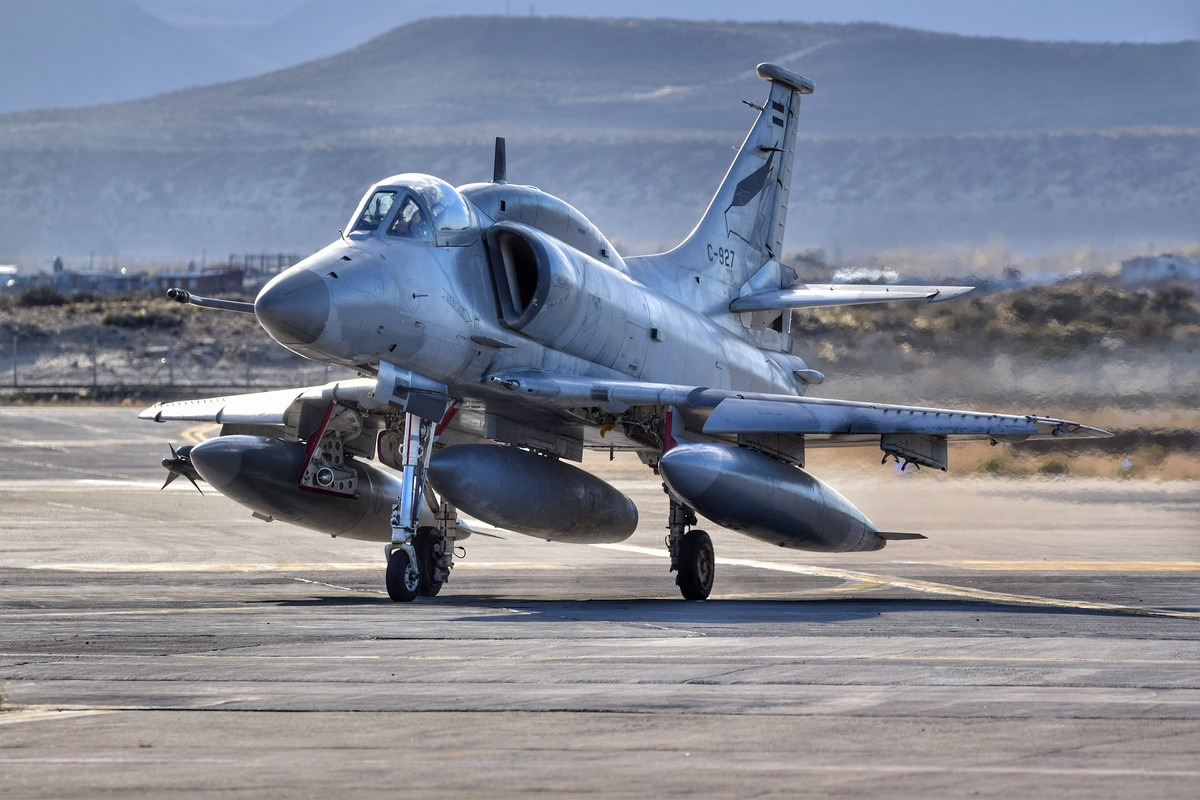
A-4AR
- Description:
- Modernized American A-4M fighter-bomber. In the late 1990s, Argentina acquired this modernized version, which was characterized by having F-16A avionics, carrying an AN/APG-66V2 (ARG-1) radar and advanced weaponry such as the AIM-9L/M missiles, as well as the homologation of the AGM-65 Maverick missile. The improved version became known as the A-4AR.
- Crew:
- 1
- Armament:
- Primary: 2x 20mm Colt Mk.12 cannons
- Secondary: Mk.82, BK/BR-250, Mk.17, IMI 115 bombs, FFAR rockets, Zuni rockets, Shafrir 2 Missiles, AIM-9L/M Missiles, AGM-65 Missiles
- Performance:
- Maximum speed: 1080 Km/h
- Sources:
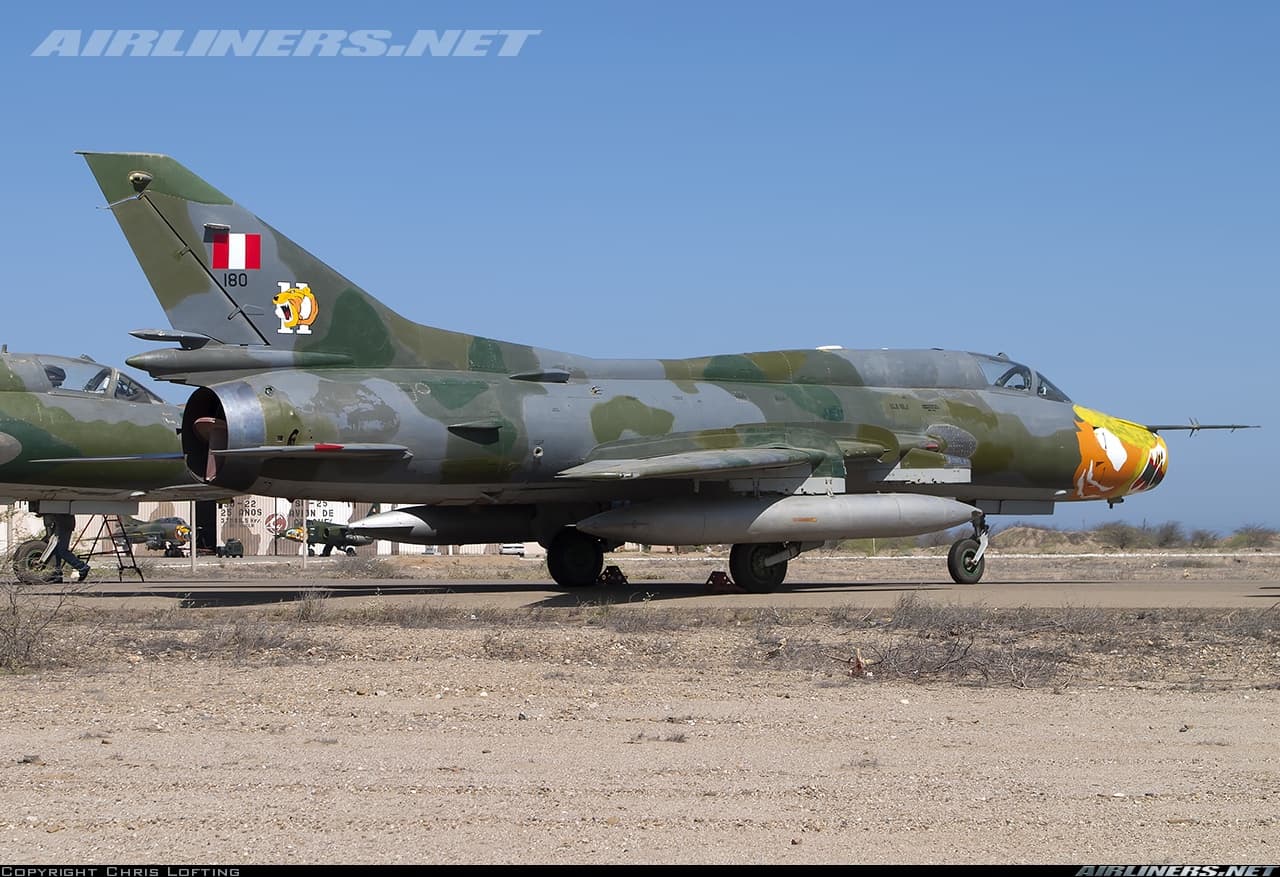
Su-22M3
- Description:
- Ground attack aircraft and supersonic bombers operated by the Peruvian Air Force. In 1981, they purchased the more advanced SU-22M3 version. During the 1990s, they participated in the Cenepa War, where they carried out bombing missions. They are notable for their speed, maneuverability, and the enormous amount of weaponry available.
- Crew:
- 1
- Armament:
- Primary: 2x 30 mm NR-30 cannon
- Secondary: R-60/60MK missiles, 500/250/100 kg bombs, Kh-23M/25ML/29L missiles, S-25L missiles, S-25O rockets, S-24B rockets, S-8KO rockets, S-3K rockets
- Performance:
- Maximum speed: 2,232 km/h
- Sources:
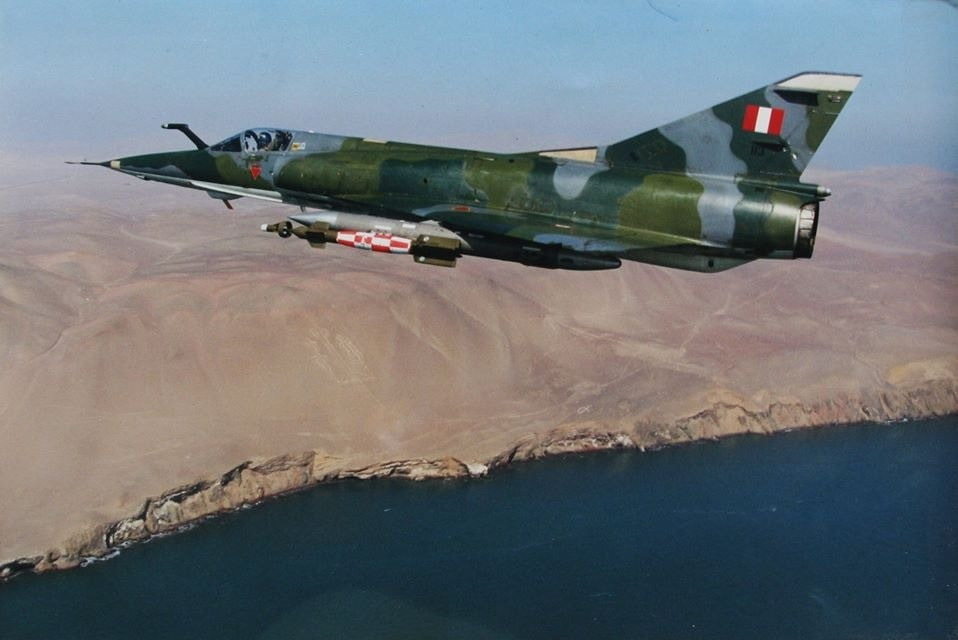
Mirage 5P4
- Description:
- French supersonic attack fighter operated by Peru. It entered service in the late 1980s as a result of the modernization of the Mirage 5P, with 10 units upgraded to the P4 standard. It incorporated a HUD, Thomson-CSF TMV630 laser rangefinder, HOTAS controls, an in-flight refueling probe, and the capability to employ R.550 Magic missiles as well as guided bombs.
- Crew:
- 1
- Armament:
- Primary: 2x 30mm DEFA 552 cannons
- Secondary: Matra R.550 Magic 1 missiles, 500/400/250 kg bombs, 68mm SNEB rockets, Lizard/Griffin LGB
- Performance:
- Maximum speed: 2350 km/h
- Sources:
- https://en.wikipedia.org/wiki/Dassault_Mirage_5#CITEREFChenelLiébertMoreau2014
- Pucara magazine number 34
Rank 8
Spoiler
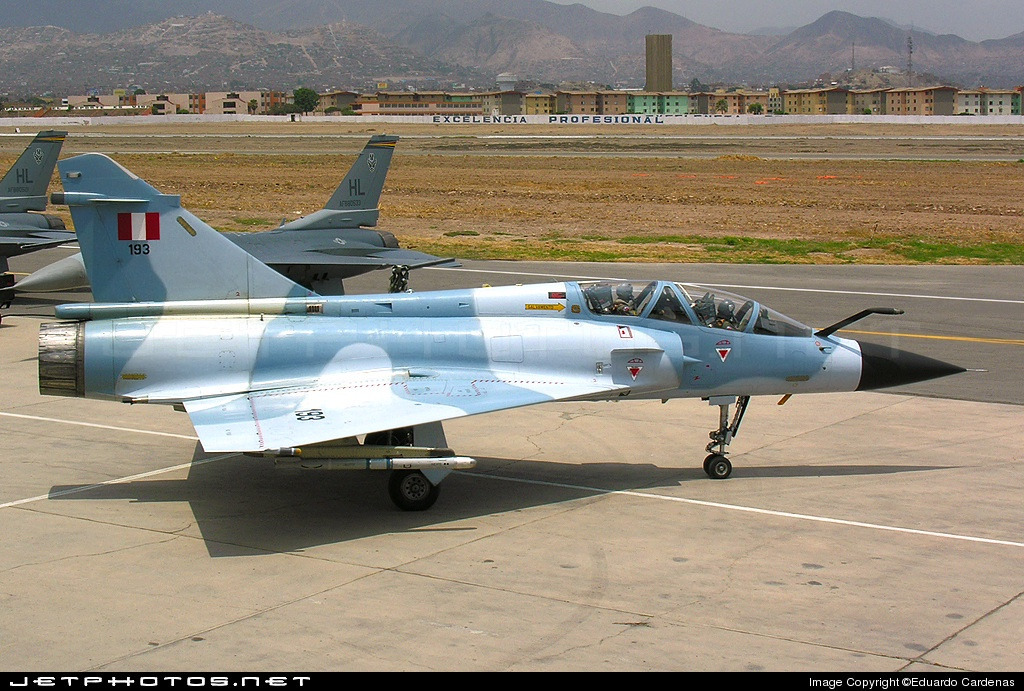
Mirage 2000DP
- Description:
- A French fighter jet and ground attack aircraft operated by Peru. It entered service in 1986, and two units were acquired. It is the two-seat version of the Mirage 2000P, retaining virtually the same combat and attack capabilities.
- Crew:
- 2
- Armament:
- Primary: 2x 30 mm DEFA 554 cannon
- Secondary: Matra R550 Magic 1/2 missiles, 18x Type 23 SNEB rockets, Matra Super 530D/F missiles, 250 kg SAMP Type 25 bomb, Elbit Whizzard Opher/Lizard guided bombs
- Performance:
- Maximum speed: 2,351 km/h
- Sources:
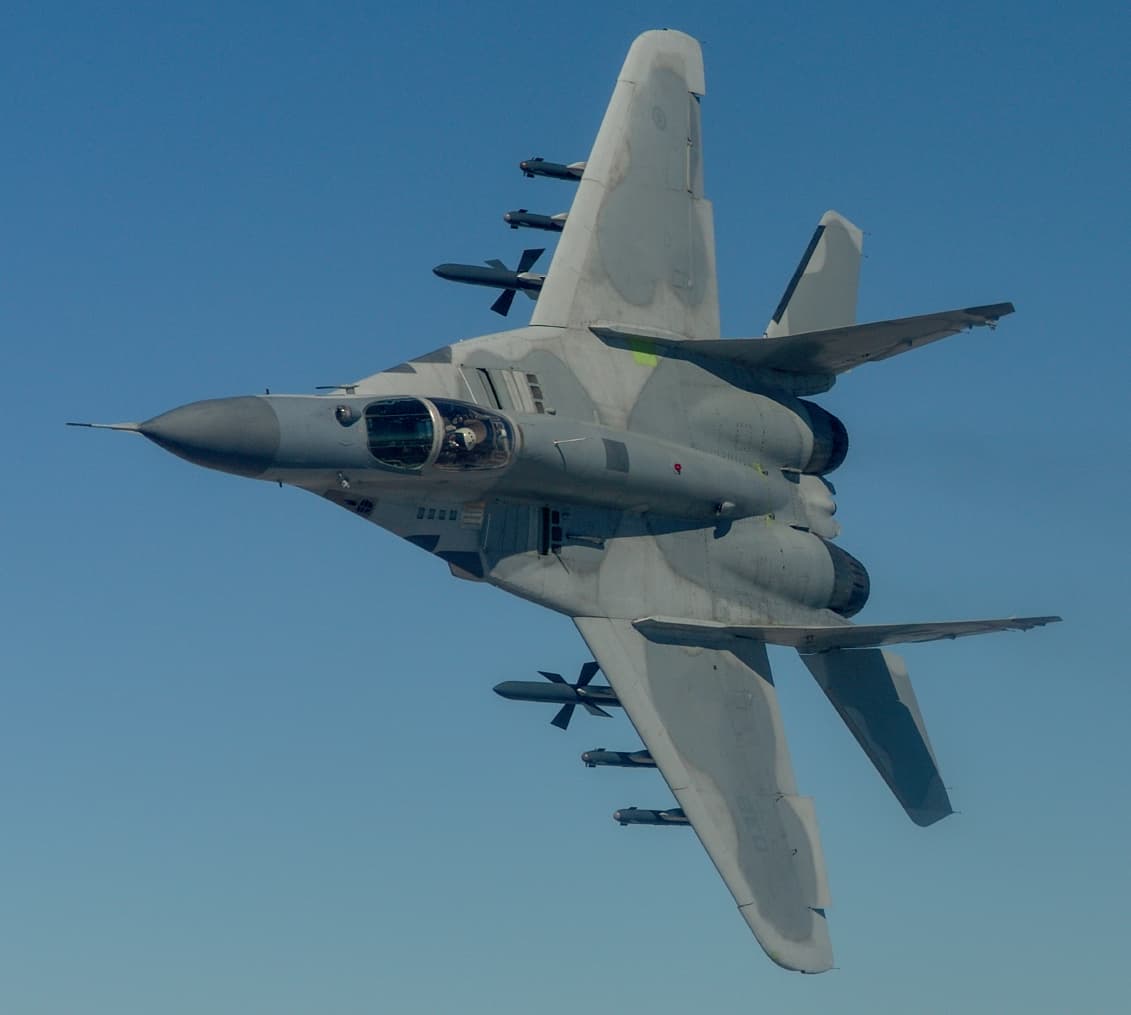
MiG-29S (9-13S)
- Description:
- Russian air superiority fighter. Peru purchased 18 MiG-29S (9-13S) fighters to Belarus, an improved variant. It incorporates four new Ts-101M computers, a new RLPK-29M (Sh104M) radar system with a Phazotron N109M Topaz radar with a range of 80 km/h, IRST, and R-73, R-27, and R-77 missiles.
- Crew:
- 1
- Armament:
- Primary: 1x 30mm GSh-30-1 cannon
- Secondary: R-73/R-27/R-77 missiles, 500/250/100 kg bombs, S-8KO rockets, S-24B rockets
- Performance:
- Maximum speed: 2,448 km/h
- Sources:
MiG-29SMP (9-13S)
- Description:
- A modernized version of the MiG-29S (9-13S), the modernization of the Peruvian fleet was authorized at the end of 2008. The modernized variant was designated MiG-29SMP (9-13S). They received an N019MP radar allowing them to carry more air-to-air and air-to-ground weaponry, such as Kh-29T/L and Kh-31P/A missiles and Kab-500Kr guided bombs. It also included HOTAS and a digital cockpit.
- Crew:
- 1
- Armament:
- Primary: 1x 30mm GSh-30-1 cannon
- Secondary: R-73/R-27/R-77 missiles, 500/250/100 kg bombs, S-8KO rockets, S-24B rockets, Kh-29T/L missiles, Kh-31P/A missiles, Kab-500Kr guided bombs
- Performance:
- Maximum speed: 2,448 km/h
- Sources:

Rank 9
Spoiler
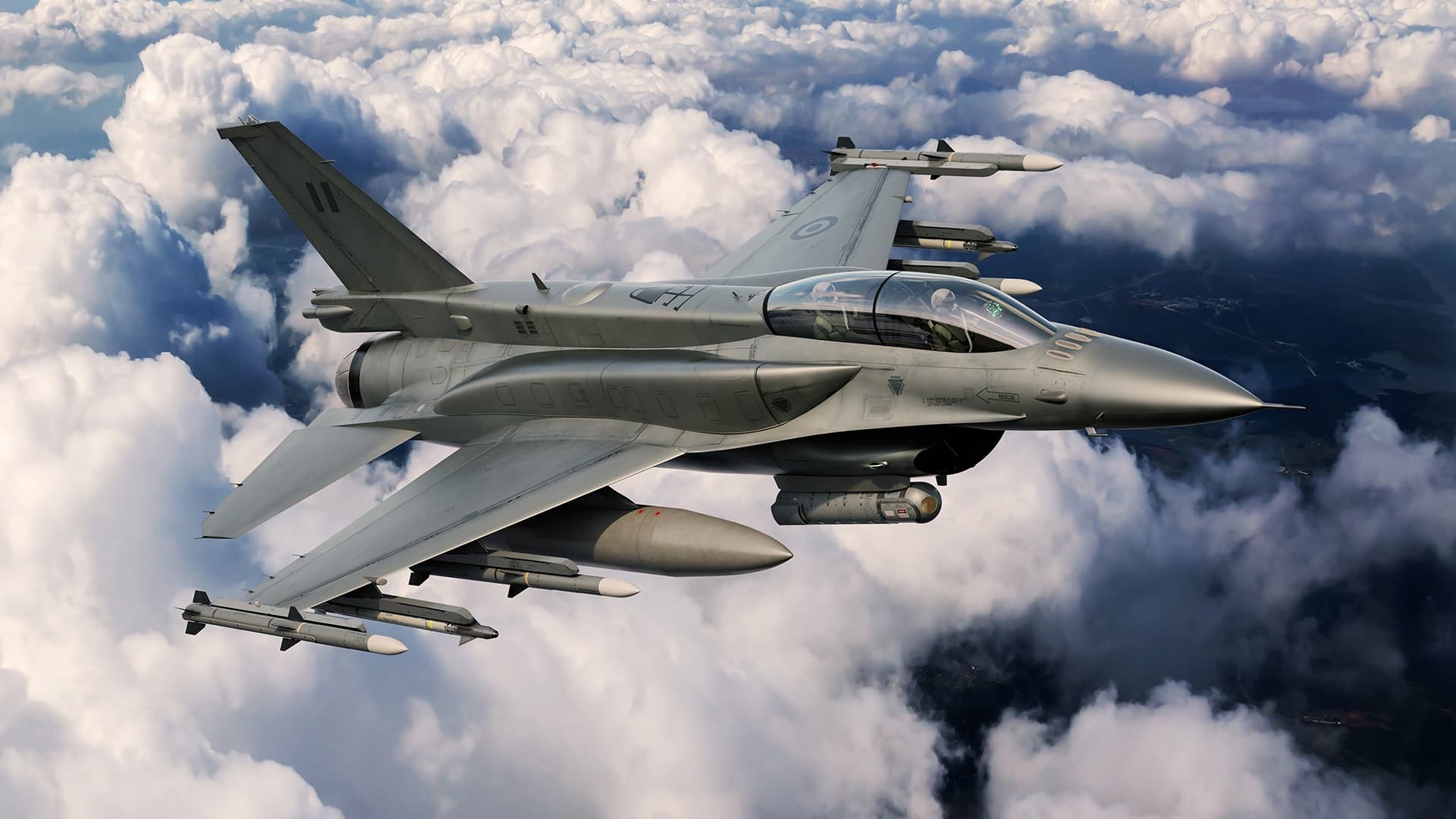
F-16V
- Description:
- A US multirole fighter jet will be operated by Peru. On April 20, 2026, the Peruvian Air Force signed a contract to acquire 24 units. This version incorporates the AN/APG-83 SABR AESA radar, Link 16 data link, JHMCS II helmet-mounted display, Auto-GCAS system. Armed with AIM-9X and AIM-120C AMRAAM missiles, as well as AGM-88 HARM, AGM-84 Harpoon, and JDAM/Paveway guided bombs.
- Crew:
- 1
- Armament:
- Primary: 1x 20mm M61A1 Vulcan cannon
- Secondary: AIM-9X Block II Missiles, AIM-120C-7/8 Missiles, AGM-65G Missiles, GBU-24 Paveway III, GBU-31/32/38/54 JDAM, Mk 80 series bombs, Hydra 70 rockets, Zuni rockets,
- Performance:
- Maximum speed:
- Sources:
Chile/Peru/Argentina Fighters
Spoiler
Rank 1
Spoiler
Ar 95 L
- Description:
- Version with fixed landing gear of the German Arado Ar 95, these aircraft were used as reconnaissance, to confront other planes and light attack aircraft since they could carry bombs, because this version has a fixed gear for land missions, they did not carry torpedoes.
- Crew:
- 2
- Armament:
- Primary: 2x 7.92 mm MG 17 machine guns, 1x flexible 7.92 MG 15 machine gun in rear cockpit
- Secondary: 500 kg of bombs
- Performance:
- Maximum speed: 310 km/h
- Sources:
NA-50
- Description:
- American fighter operated by Peru. It entered service in 1939 and seven units were acquired. Developed specifically for the Peruvian Air Force from the NA-16 trainer.
- Crew:
- 1
- Armament:
- Primary: 2x 7.65 mm M1919 Browning machine guns
- Secondary: 250 kg of bombs
- Performance:
- Maximum speed: 450 km/h
- Sources:
8A-3P
- Description:
- American attack aircraft operated by Peru. It entered service in 1939 and 10 units were acquired. It was an export version of the A-17A with retractable landing gear, a more powerful engine, and dive-bombing capability.
- Crew:
- 2
- Armament:
- Primary: 5x 7.62mm Browning machine guns
- Secondary: 550 kg of bombs
- Performance:
- Maximum speed: 383 km/h
- Sources:
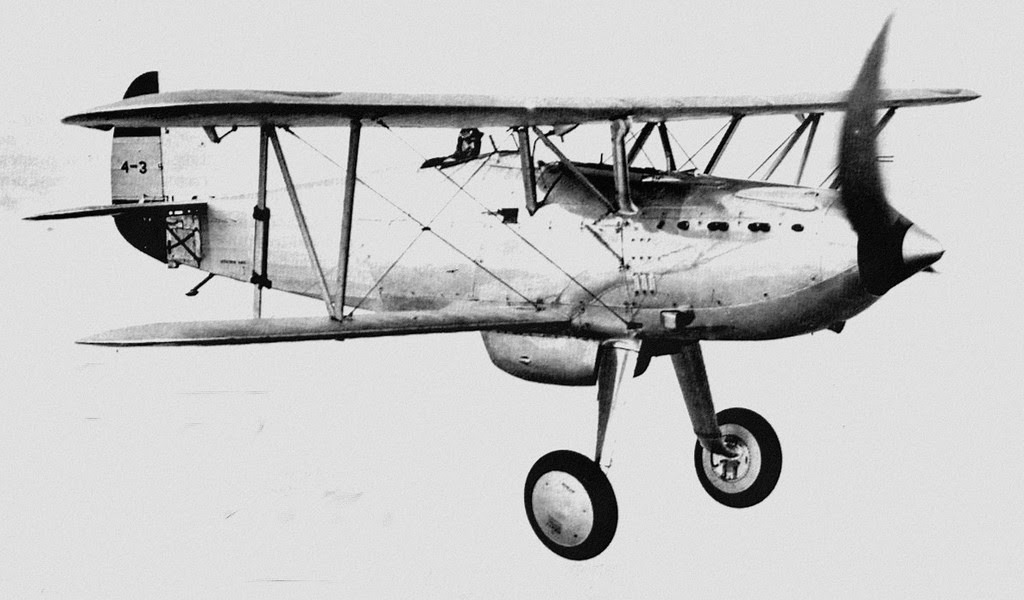
Hawk IV
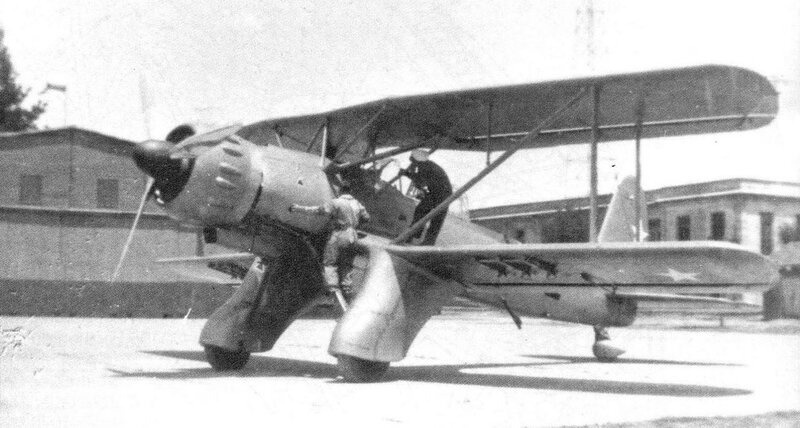
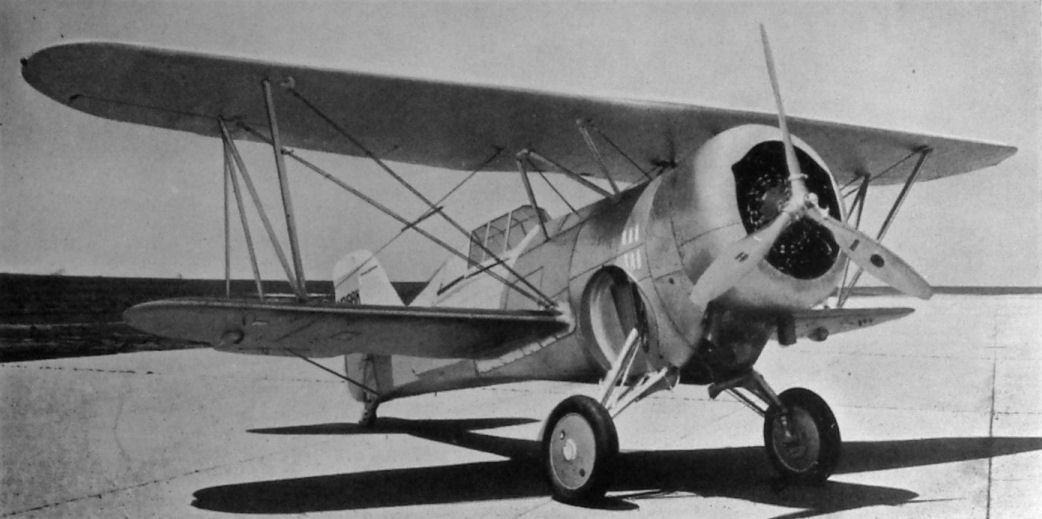
- Description:
- American fighter operated by Argentina. It entered service in 1936, and one unit was acquired, derived from the BF2C Goshawk. This prototype incorporated retractable landing gear and a more powerful engine than previous Hawks, serving as a testbed for future evolutions of the Hawk family.
- Crew:
- 1
- Armament:
- Primary: 1x 7,62 mm M1919 machinegun, 1x 12,7mm m2 browning machinegun
- Secondary: 1x 500 lb bombs, 4x 100 lb bombs
- Performance:
- Maximum speed: 410 km/h
- Sources:
Hawk H-75O
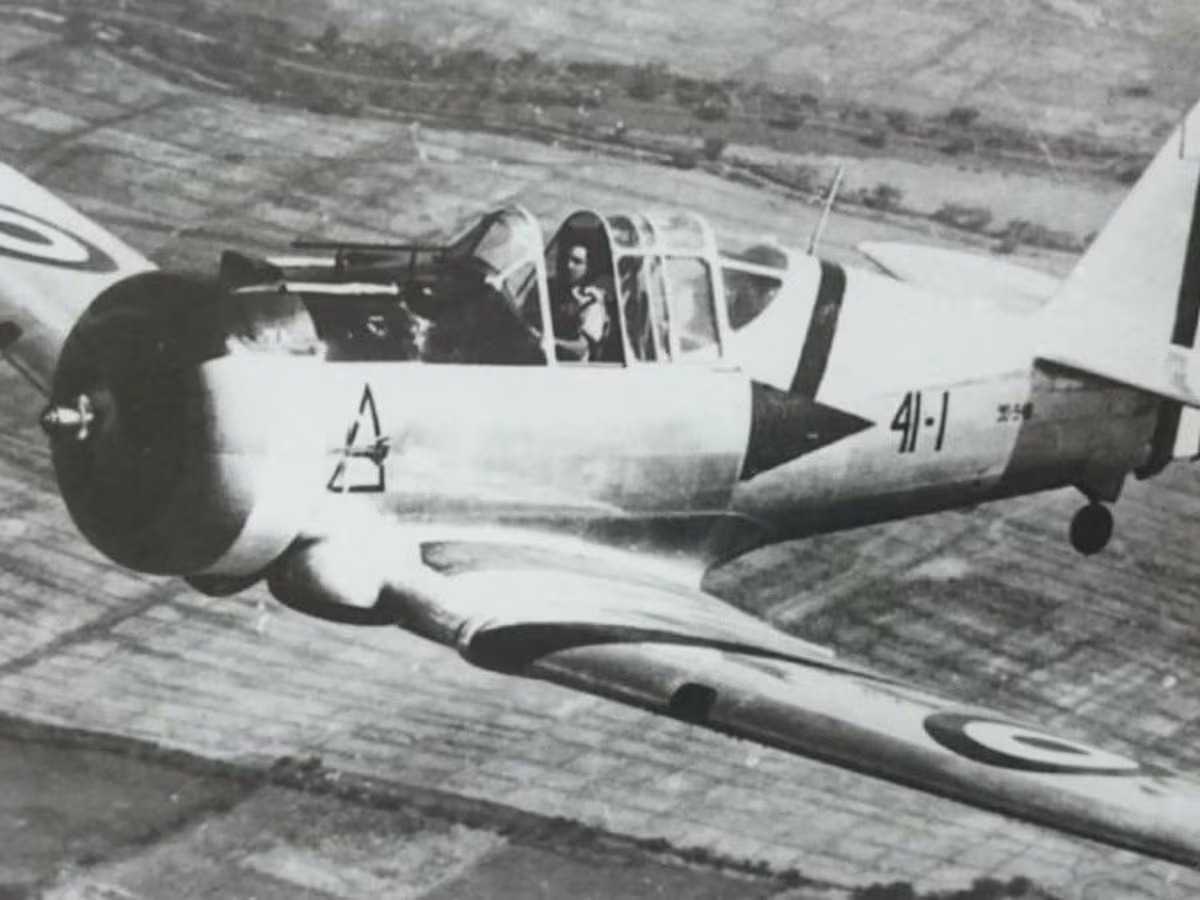
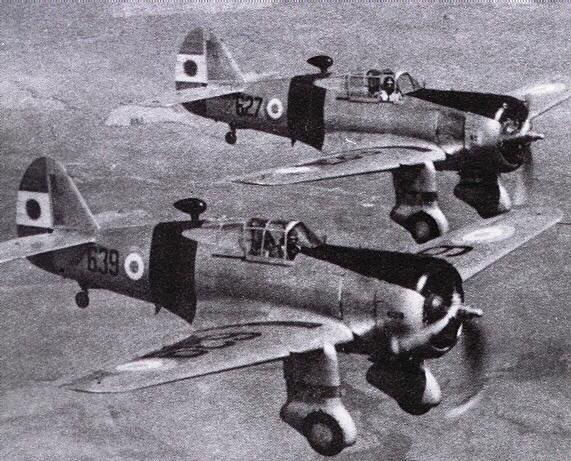
- Description:
- American fighter operated by Argentina. Thirty units were acquired in 1938, and 20 were subsequently manufactured locally. It was an export version of the Curtiss P-36 Hawk, developed specifically for Argentina. These aircraft differed in having a fixed landing gear and a 1,000 hp Wright Cyclone GR-1820 radial engine.
- Crew:
- 1
- Armament:
- Primary: 3x Madsen 7.65mm and 1x 11.35mm machine guns
- Secondary: 136 kg of bombs
- Performance:
- Maximum speed: 488 km/h
- Sources:

Rank 2
Spoiler
Hawk H-75O (Oerlikon)
- Description:
- Argentine modification of one of the Hawk H-75Os to carry 20mm Oerlikon cannons in its wings; there is not much information about it.
- Crew:
- 1
- Armament:
- Primary: 2x Oerlikon 20mm machine guns
- Secondary: 136 kg of bombs
- Performance:
- Maximum speed: 488 km/h
- Sources:
A-24B
- Description:
- American attack and dive bomber aircraft operated by Chile. In 1944, 12 Douglas A-24B Banshees (SBD-5) arrived in Chile. It was better in several aspects than its predecessor, the SBD-3, but the most important was its more powerful 1,200 hp engine and the ability to fire FFAR rockets
- Crew:
- 2
- Armament:
- Primary: 2x 12.7 mm M2 machine guns, 2x 7.62 mm M1919 machine guns (rear), 2x Douglas DGP-1 Twin 12.7 mm Gun Packages
- Secondary: 1x 1600 lb armor-piercing bomb, 1x 1000 lb bomb, 1x 500 lb bomb, 1x 650 lb depth bomb, 1x 325 lb depth bomb, 2x 325 lb depth bombs, 2x 100 lb bombs, 8x FFAR rockets
- Performance:
- Maximum speed: 439 km/h
- Sources:
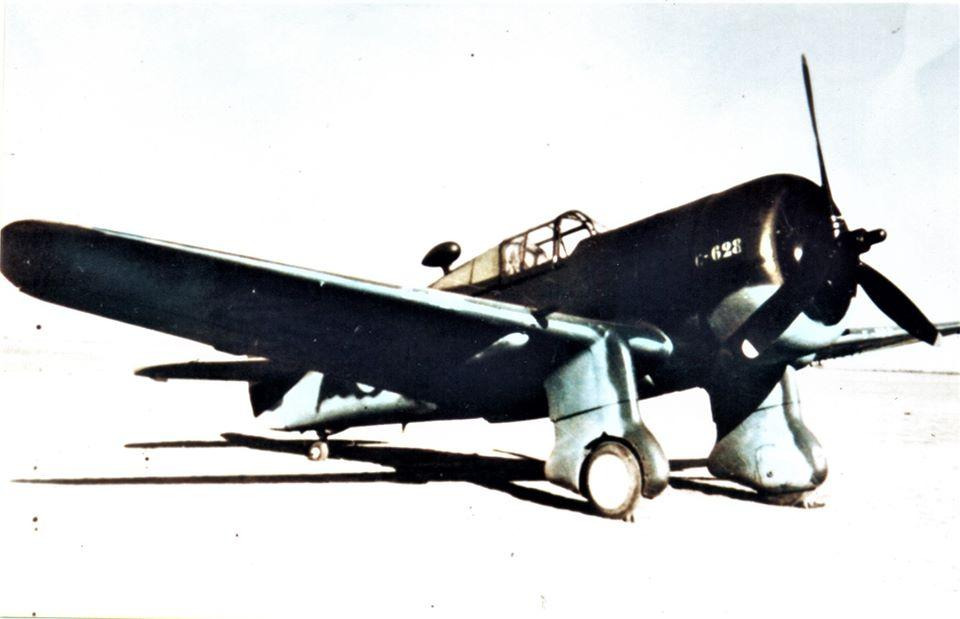
H-75A-8
- Description:
- The Peruvian-operated American fighter jet was a P-36G Hawk, although its export designation was H-75A-8 Hawk. This variant incorporated the 1,200 hp Wright R-1820-95 Cyclone engine and carried more offensive armament. It entered service in Peru in 1942, and 28 units were acquired through the American Lend-Lease program.
- Crew:
- 1
- Armament:
- Primary: 2x 12.7 mm M2 Browning machine guns, 4x 7.62 mm Browning machine guns
- Performance:
- Maximum speed: 501 km/h
- Sources:


Ranks 3
Spoiler
G.55A
- Description:
- Italian fighter operated by Argentina. It entered service in 1947, and 30 units were acquired. It was an export and advanced training version of the G.55 Centauro, armed with three 20mm cannons and two 12.7mm machine guns, giving it considerable firepower.
- Crew:
- 1
- Armament:
- Primary: 3x 20 mm MG 151 cannon, 2x 12.7 mm Breda-SAFAT machine guns
- Secondary: 2x 100 kg GP 100T bombs, 2x 50 kg GP 50 bomb
- Performance:
- Maximum speed: 646 km/h
- Sources:

Rank 4
Spoiler
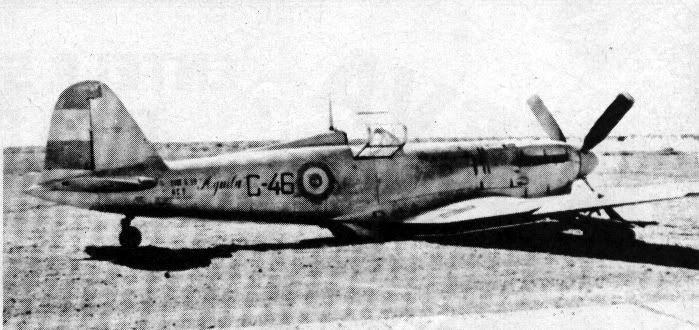
G59-2A
- Description:
- The Italian post-war fighter operated by Argentina was a derivative of the G55 but featured an additional 20mm machine gun. It entered service in 1951, and one unit was acquired for evaluation in Argentina. The only one in service was nicknamed “Águila” (Eagle).
- Crew:
- 1
- Armament:
- Primary: 4x 20 mm MG 151 cannon, 2x 12.7 mm Breda-SAFAT machine guns
- Secondary: 2x 100 kg GP 100T bombs, 2x 50 kg GP 50 bomb
- Performance:
- Maximum speed: 593 km/h
- Sources:
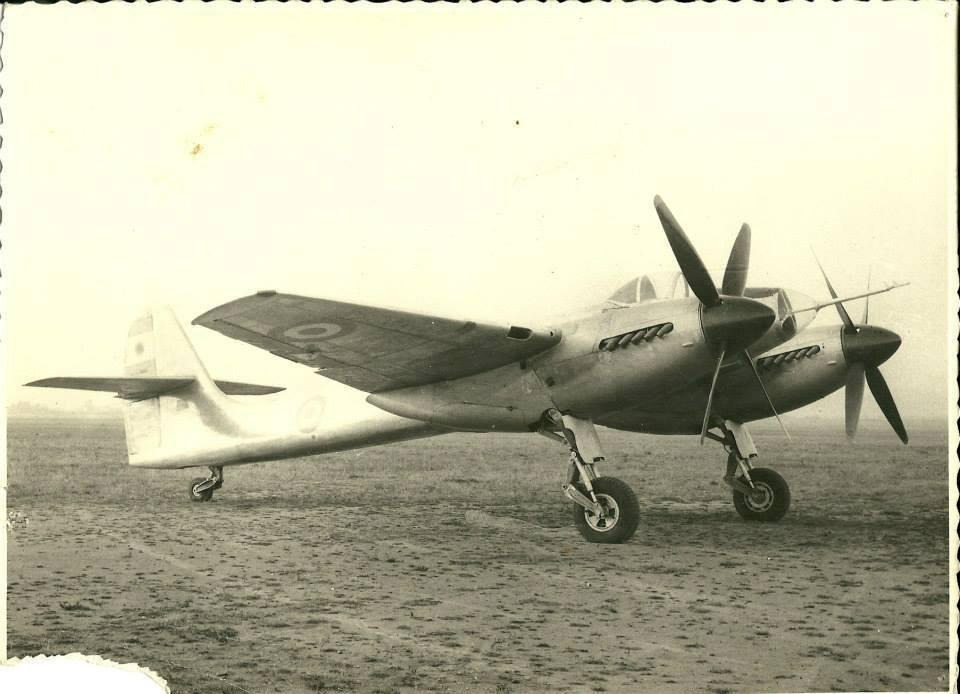
I.Ae. 30
- Description:
- Argentine fighter, interceptor, and escort aircraft. It made its first flight on July 17, 1948, and one unit was completed, while two others remained unfinished; one of these carried four 20mm cannons. Designed as a high-speed escort fighter for Argentine bombers.
- Crew:
- 1
- Armament:
- Primary: 4x 20mm Hispano-Suiza 804 cannons
- Secondary: 250 kg bomb
- Performance:
- Maximum speed: 740 km/h
- Sources:
Rank 5
Spoiler
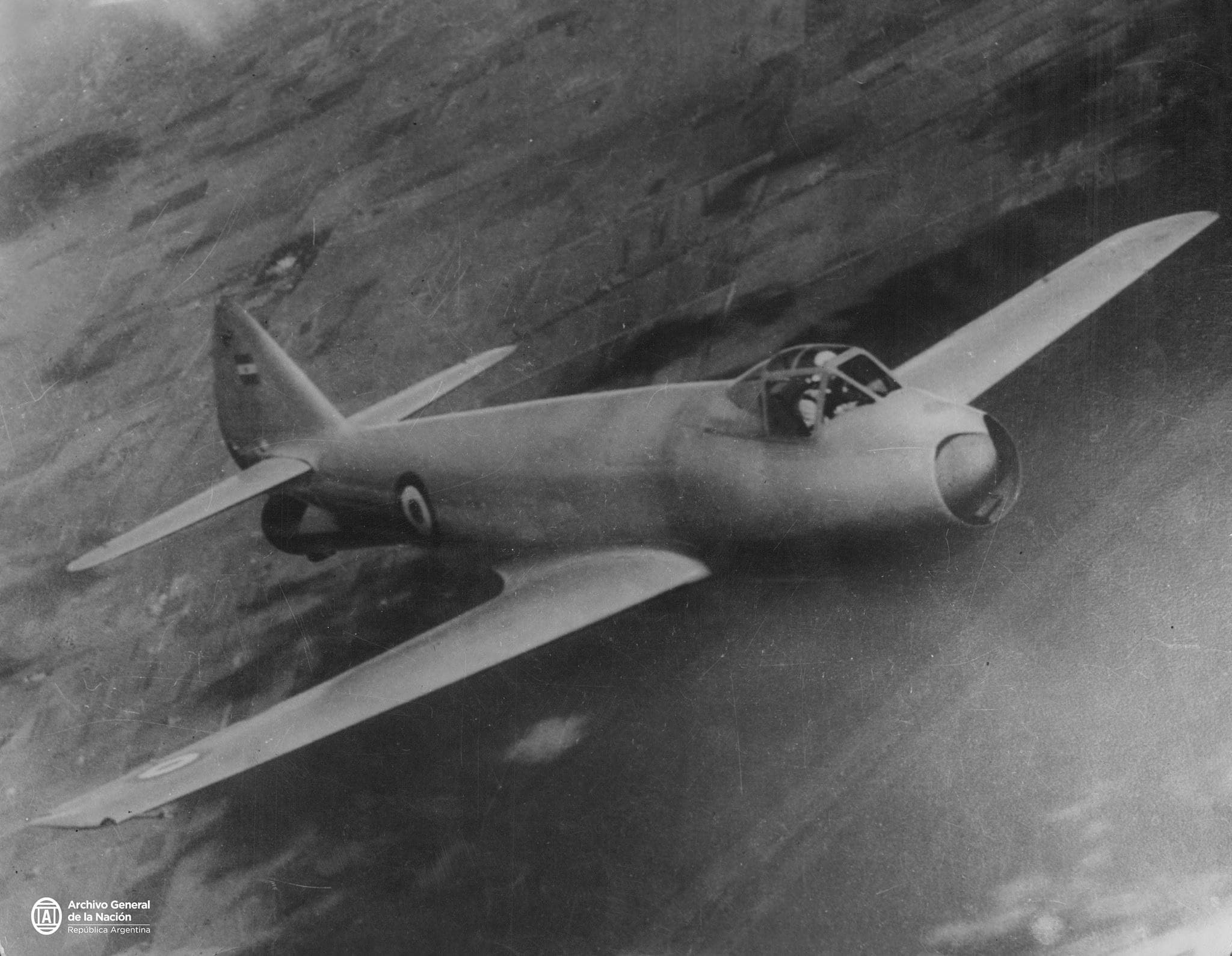
I.Ae. 27
- Description:
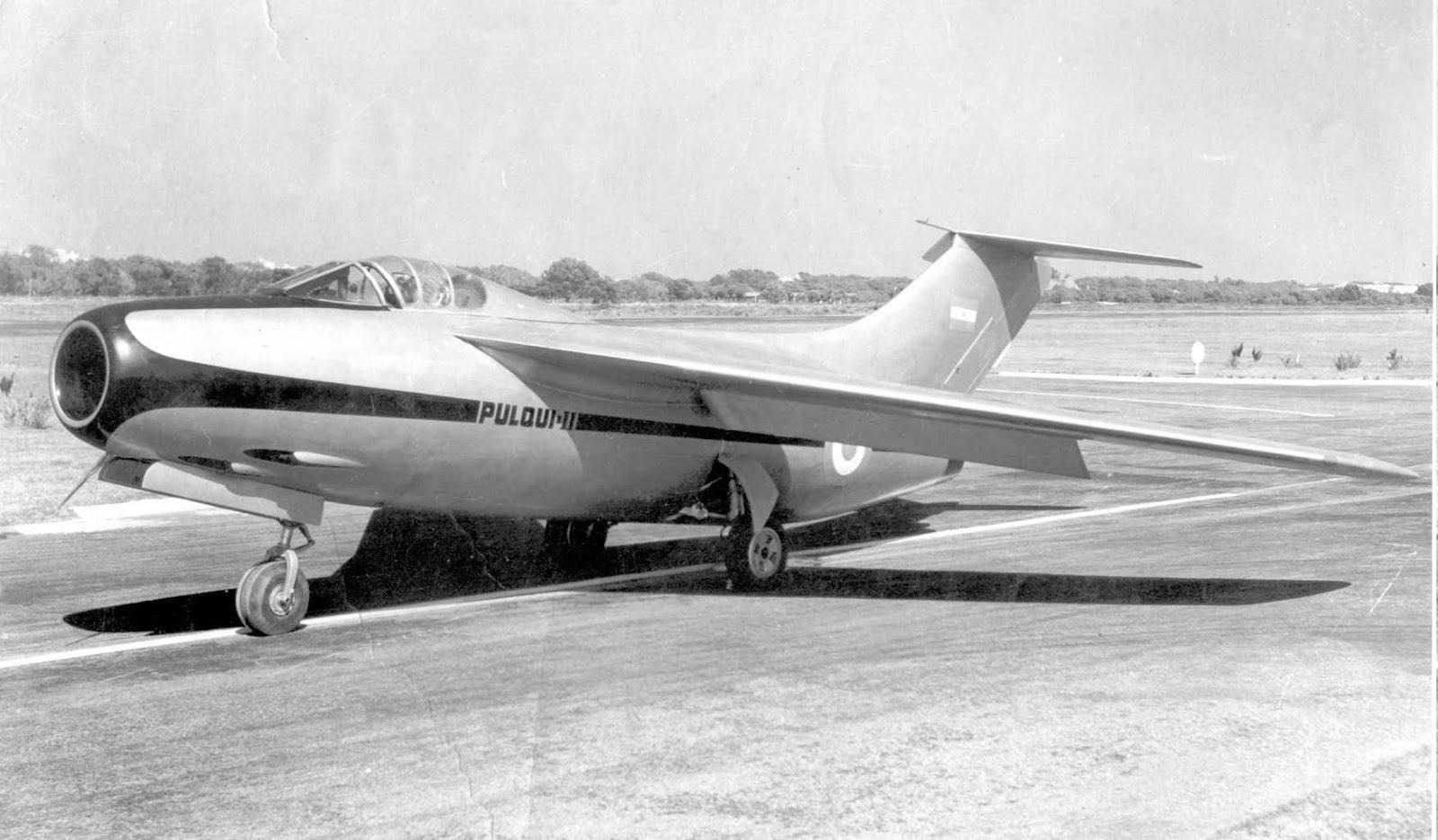
- Argentine jet fighter. It first flew on August 9, 1947, and only one unit was built. It was the first jet aircraft designed and flown in Latin America. Its planned armament was four 20mm cannons, and it reached a maximum speed of 720 km/h. It was used as a basis for the development of the Pulqui II.
- Crew:
- 1
- Armament:
- Primary: 4x 20mm Hispano-Suiza 804 cannons
- Performance:
- Maximum speed: 720 km/h
- Sources:
I.Ae. 33 (No.4)
- Description:
- Argentine jet fighter. It flew in 1953 and was the fourth prototype of the Pulqui II program. It incorporated boundary layer barriers on the wings, a pressurized cockpit, a film camera, and was the first prototype equipped with the final armament consisting of four 20mm cannons.
- Crew:
- 1
- Armament:
- Primary: 4x 20mm Hispano-Suiza MK5 cannons
- Performance:
- Maximum speed: 1.080 km/h
- Sources:
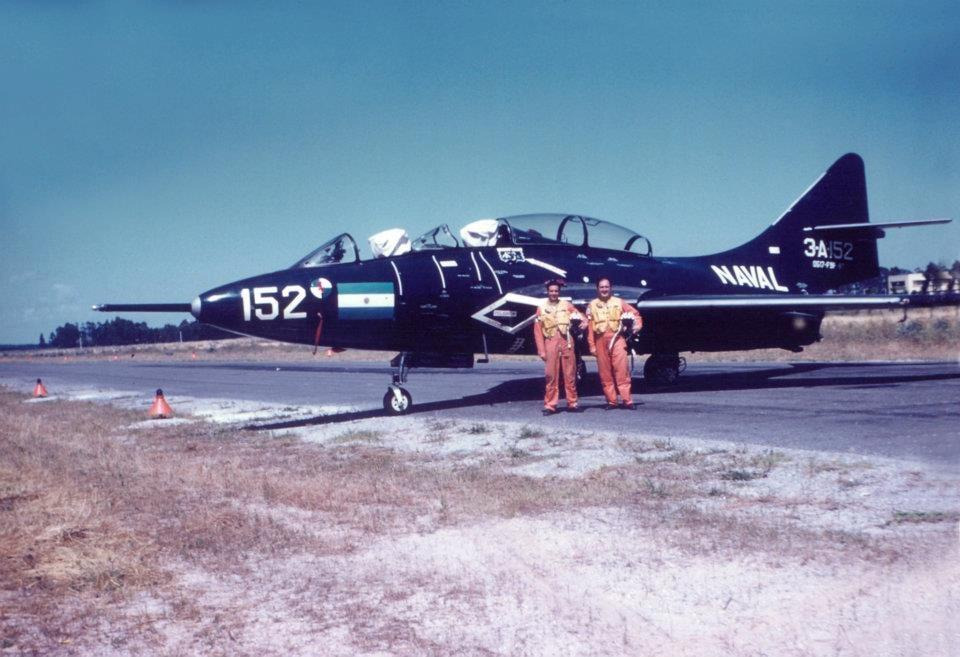
F9F-8T
- Description:
- A US advanced training aircraft operated by Argentina. It entered service in 1962, and two units were acquired for the Argentine Naval Aviation. Besides the USA, Argentina was the only operator.
- Crew:
- 2
- Armament:
- Primary: 2x 20mm MK16 cannons
- Secondary: 1000 lb LDGP Mk 83 bomb, 500 lb AN-M64A1 bomb, FFAR Mighty Mouse rockets, AIM-9B missiles
- Performance:
- Maximum speed: 1,041 km/h
- Sources:
Rank 6
Spoiler
MB-339A
- Description:
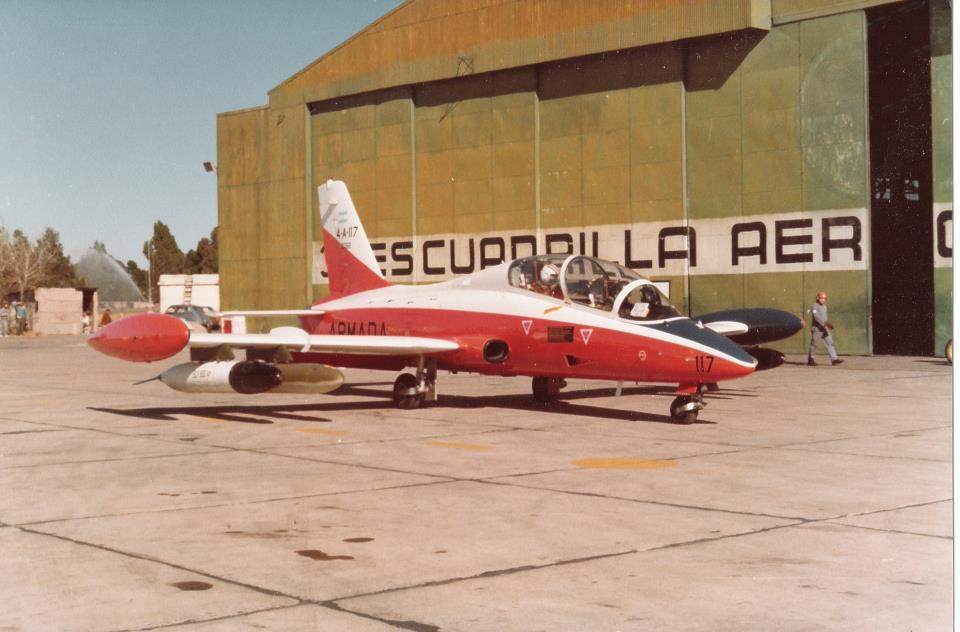
- An Italian advanced training and light attack aircraft operated by Argentina. It entered service in 1981, and 10 units were acquired for the Argentine Naval Aviation. It later participated in the Falklands War. It was armed with 30mm cannon pods on each wing, rocket launchers, and bombs.
- Crew:
- 2
- Armament:
- Primary: 2x 30mm DEFA Cannon Pods
- Secondary: 4x 57 or 68 mm rocket launcher pods, 2x 250 kg bombs
- Performance:
- Maximum speed: 971 km/h
- Sources:
Rank 7
Spoiler
Mirage 50C
- Description:
- French supersonic interceptor and attack aircraft. Chile acquired six Mirage 50Cs between 1982 and 1983; it was notable for having a more powerful Atar 9K-50 engine and an Agave radar. In Chile, it was armed with Shafrir II missiles, bombs, and rockets.
- Crew:
- 1
- Armament:
- Primary: 2x 30mm DEFA 552A cannons
- Secondary: Mk 80 bombs, Cardoen CB-130/CB-500/CB-250-K/CB-500-K Cluster Bombs, Ferrimar WB-250-F/WB-500-F cluster bombs, 68mm SNEB rockets, Shafrir 2 missiles
- Performance:
- Maximum speed: 2350 km/h
- Sources:
Mirage Elkan
- Description:
- French supersonic interceptor and attack aircraft. Chile acquired 15 modernized Mirage 5MA MirSIPs from Belgium. They featured various upgrades, including a Thomson-CSF TMV630 laser rangefinder, countermeasures, and the ability to fire AIM-9P missiles. After their arrival in Chile, they were renamed Mirage Elkan
- Crew:
- 1
- Armament:
- Primary: 2x 30mm cannons DEFA 552A cannons
- Secondary: AIM-9B/P3 missiles, FFAR rockets, Mk 80 series bombs, Griffin LGB
- Performance:
- Maximum speed: 2160 km/h
- Sources:
Mirage Pantera
- Description:
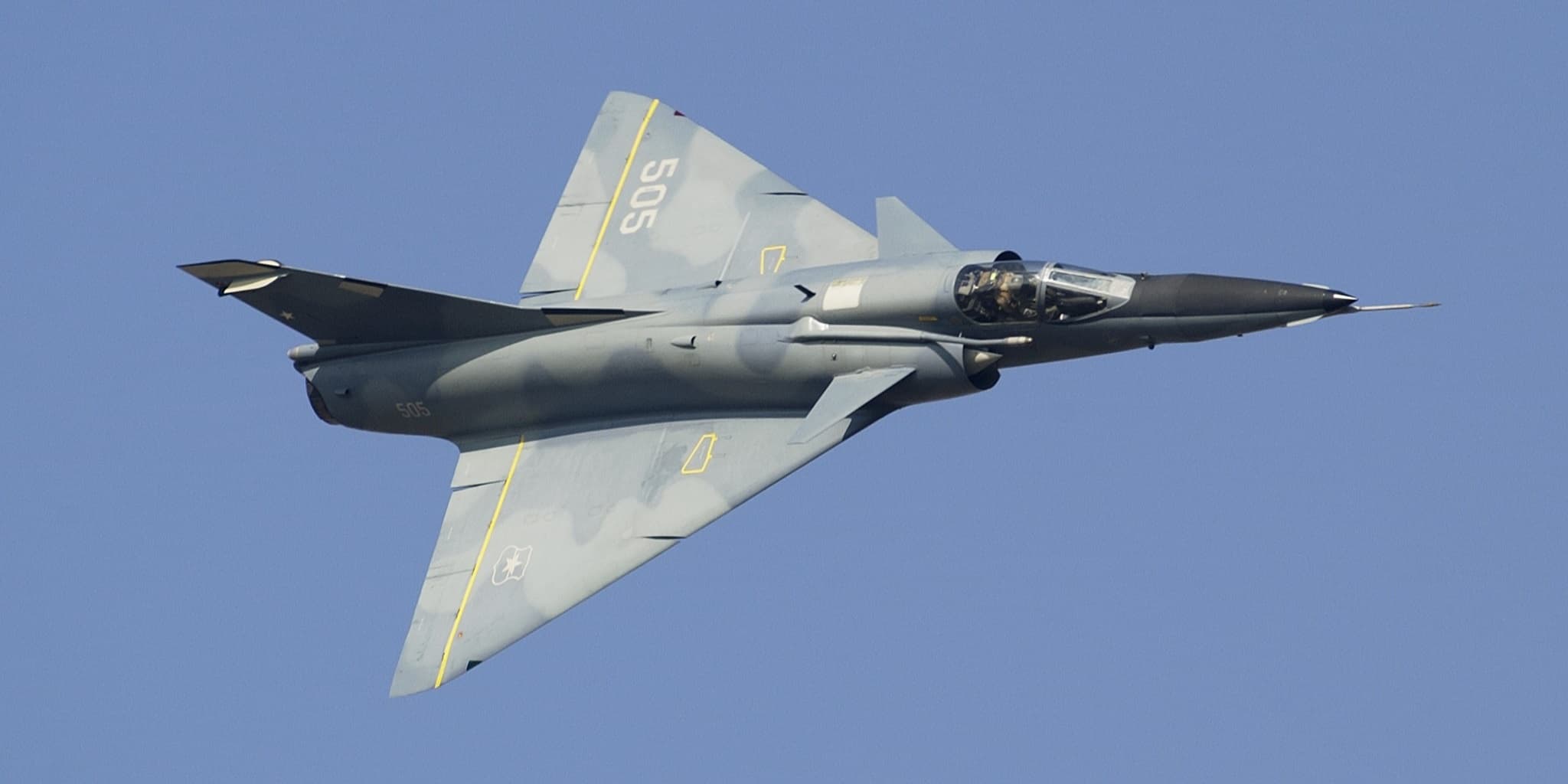
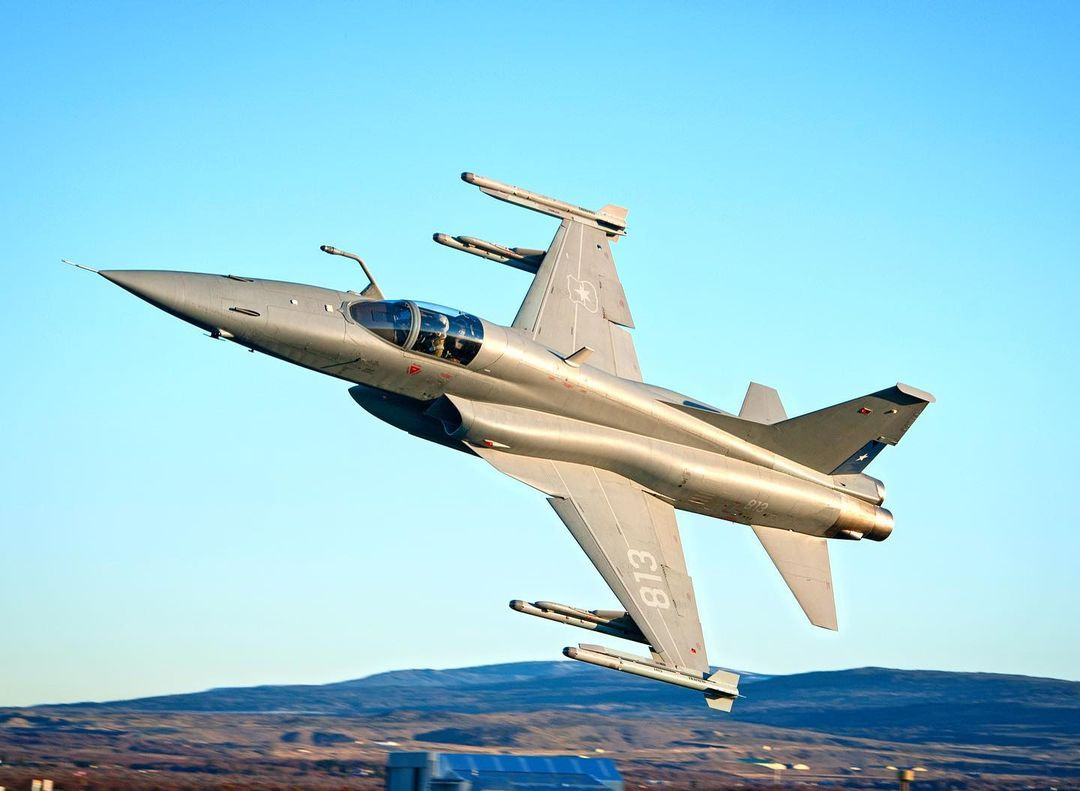
- French supersonic interceptor and attack aircraft. Modernized with Israeli assistance, the Mirage 50C and FC models incorporated canard fins, had their noses lengthened to accommodate an ELTA EL/M2001B radar, had their RWR replaced with a locally produced Caiquén III, were fitted with countermeasures, two new missile launchers, and integrated Python III missiles. Following these upgrades, they were renamed Mirage Pantera.
- Crew:
- 1
- Armament:
- Primary: 2x 30mm DEFA 552A cannons
- Secondary: Mk 80 bombs, Cardoen CB-130/CB-500/CB-250-K/CB-500-K Cluster Bombs, 68mm SNEB rockets, Shafrir 2 missiles, Python III missiles
- Performance:
- Maximum speed: 2350 km/h
- Sources:


Rank 8
Spoiler
F-5E Tiger III+
- Description:
- American interceptor fighter. Chilean F-5 Tiger IIs, modernized by Israeli companies, were fitted with the ELTA EL/M-2032 radar, a locally developed Caiquén III RWR, two new missile hardpoints, integration of Python III and IV missiles, Derby missile homologation, and other avionics upgrades. After all the improvements, they were designated F-5E Tiger III+.
- Crew:
- 1
- Armament:
- Primary: 2x 20mm Pontiac M39A3 cannons
- Secondary: AIM-9J/P missiles, Python III/IV missiles, Derby missiles, AGM-65 F/G missiles, Zuni rockets, FFAR rockets, Mk 80 series bombs, CB-130/500 cluster bombs, LGB Griffin
- Performance:
- Maximum speed: 1,875 km/h
- Sources:
F-16AM M4
- Description:
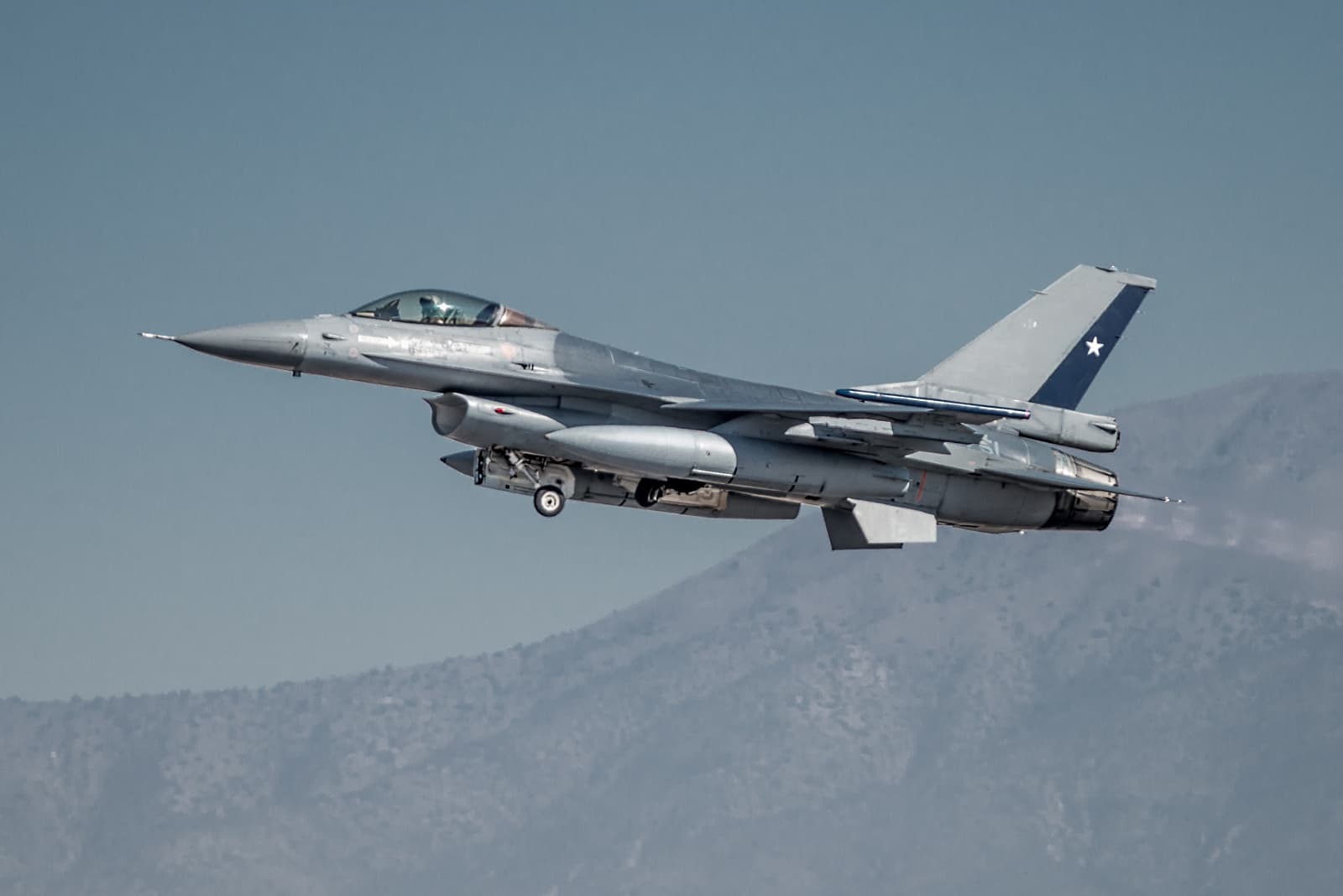
- American multirole fighter. In 2009, Chile acquired 36 F-16AM/BM Block 15 MLUs from the Netherlands. These fighters were upgraded to the Tape M4 and are equipped with the AN/APG-66(V)2A radar, which has a TWS mode. They have improved avionics and the capacity to carry long-range AIM-120 missiles, as well as guided bombs and air-to-surface missiles.
- Crew:
- 1
- Armament:
- Primary: 1x 20mm M-61A1 multibarrel cannon
- Secondary: AIM-120C-5/7 missiles, AIM-9L/M missiles, AGM-65F/G missiles, Mk 80 series bombs, Griffin LGB, Opher LGB, GBU-10, GBU-12 Paveway II and III, GBU-31 JDAM, LGB GBU-16, FFAR rockets
- Performance:
- Maximum speed: 2,164 km/h
- Sources:
F-16C+ Late
- Description:
- American multirole fighter. In 2002, Chile purchased 10 F-16C Block 50+ Late aircraft, which differ from the Early version in that they feature an improved AN/APG-68(v)9 radar and a more powerful General Electric F110-GE-129 engine. They also have the ALQ-211(v)4 AIDEWS electronic warfare suite. They are armed with AIM-120C5/7 and Python IV missiles, as well as a wide range of surface-to-air weaponry.
- Crew:
- 1
- Armament:
- Primary: 1x 20mm M-61A1 multibarrel cannon
- Secondary: AIM-120C-5/7 missiles, Python IV Missiles, AIM-9L/M missiles, AGM-65F/G missiles, Mk 80 series bombs, Griffin LGB, Opher LGB, GBU-10, GBU-12 Paveway II and III, GBU-31 JDAM, LGB GBU-16, GBU-54B LJDAM, FFAR rockets
- Performance:
- Maximum speed: 2414 km/h
- Sources:

Premium/Event
Spoiler
Rank 1
Spoiler
Ar 95 W
- Description:
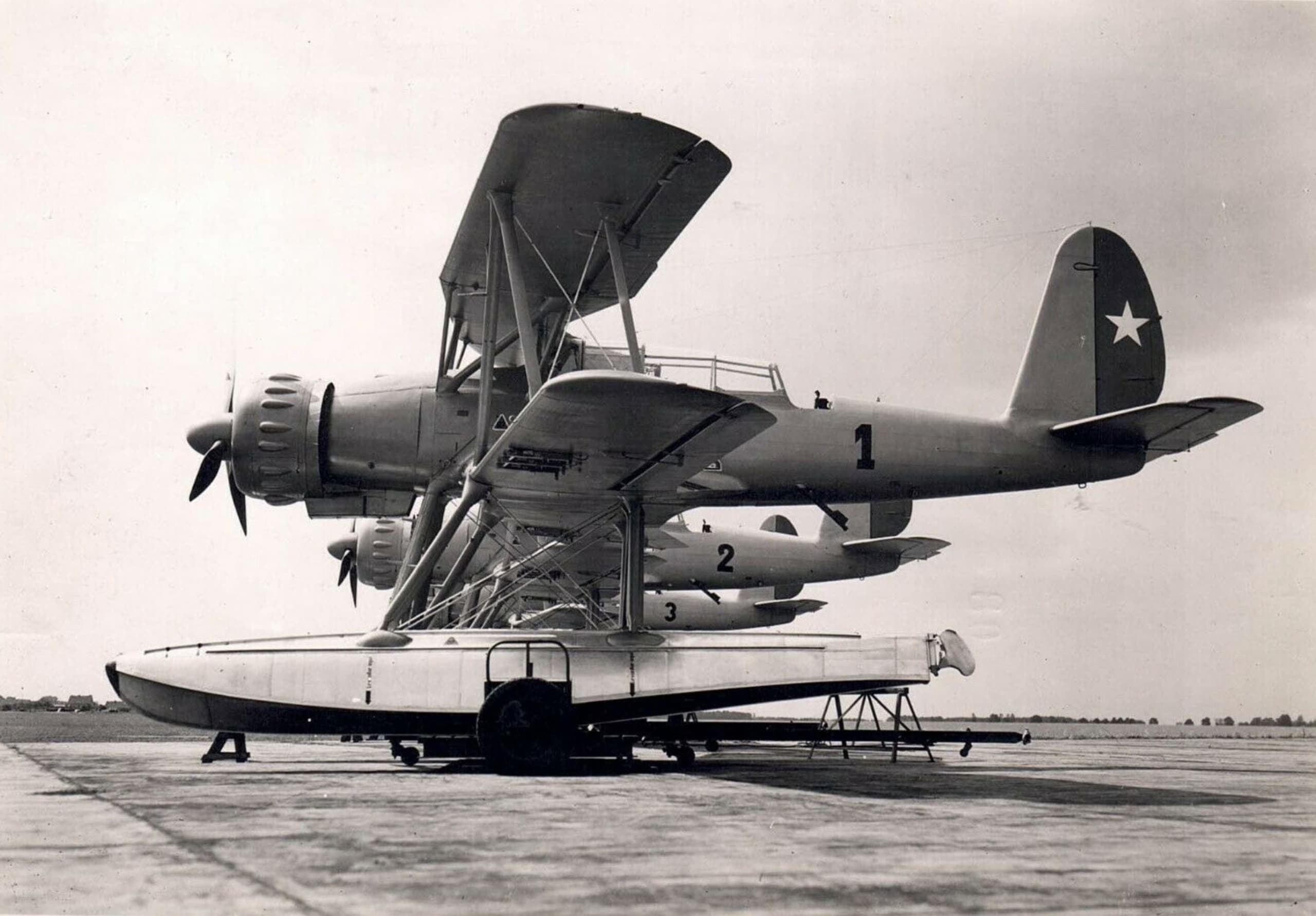
- Version with floats of the German Arado Ar 95 seaplane, these aircraft were used as reconnaissance and naval bombardment since they could carry a torpedo or a lot of weight in bombs.
- Crew:
- 2
- Armament:
- Primary: 2x 7.92 mm MG 17 machine guns, 1x flexible 7.92 MG 15 machine gun in rear cockpit
- Secondary: 800 kg torpedo, 500 kg of bombs
- Performance:
- Maximum speed: 310 km/h
- Sources:
He 45C
- Description:
- A German reconnaissance and light bomber aircraft operated by Spain during the Spanish Civil War by the Nationalist side. It entered service in 1937, and approximately 40 units were received through the Condor Legion.
- Crew:
- 2
- Armament:
- Primary: 1x 7.92mm MG 17 m machine gun, 1x 7.92mm MG 15 machine gun
- Secondary: 300 kg of bombs
- Performance:
- Maximum speed: 290 km/h
- Sources:
He 51 C-1
- Description:
- German biplane fighter operated by Spain during the Spanish Civil War by the Nationalist side. It entered service in 1936 with the arrival of the Condor Legion, and a total of 79 were received.
- Crew:
- 1
- Armament:
- Primary: 2x 7.92mm MG 17 machine guns
- Secondary: 6x 10kg bombs
- Performance:
- Maximum speed: 330 km/h
- Sources:
Quiñones’ NA-50
- Description:
- The NA-50 was piloted by Peruvian war hero José Quiñones Gonzales, who died in action during the Ecuadorian-Peruvian War. To this day, he is remembered in Peru as one of its greatest heroes.
- Crew:
- 1
- Armament:
- Primary: 2x 7.65 mm M1919 Browning machine guns
- Secondary: 250 kg of bombs
- Performance:
- Maximum speed: 450 km/h
- Sources:
He 60E
- Description:
- German carrier-based reconnaissance seaplane operated by Spain during the Spanish Civil War by the Nationalist side. It entered service in 1937.
- Crew:
- 2
- Armament:
- Primary: 1x 7.92mm MG 17 machine gun, 1x 7.92mm MG 17 machine gun
- Secondary: 200 kg of bombs
- Performance:
- Maximum speed: 240 km/h
- Sources:
Ar 68E
- Description:
- German biplane fighter operated by Spain during the Spanish Civil War by the Nationalist side. In January 1937, three examples arrived at the Condor Legion. They were later transferred to Spanish pilots of Group 9.
- Crew:
- 1
- Armament:
- Primary: 2x 7.92mm MG 17 machine guns
- Secondary: 6x 10kg bombs
- Performance:
- Maximum speed: 335 km/h
- Sources:
HA-132L
- Description:
- The Italian Fiat CR.32 biplane fighter aircraft, manufactured under license in Spain by Hispano Aviación in the 1940s. Its designation was HA-132L. 100 units were manufactured.
- Crew:
- 1
- Armament:
- Primary: 2x 12.7 mm Breda-SAFAT machine guns
- Performance:
- Maximum speed: 372 km/h
- Sources:
JU 86 K-6
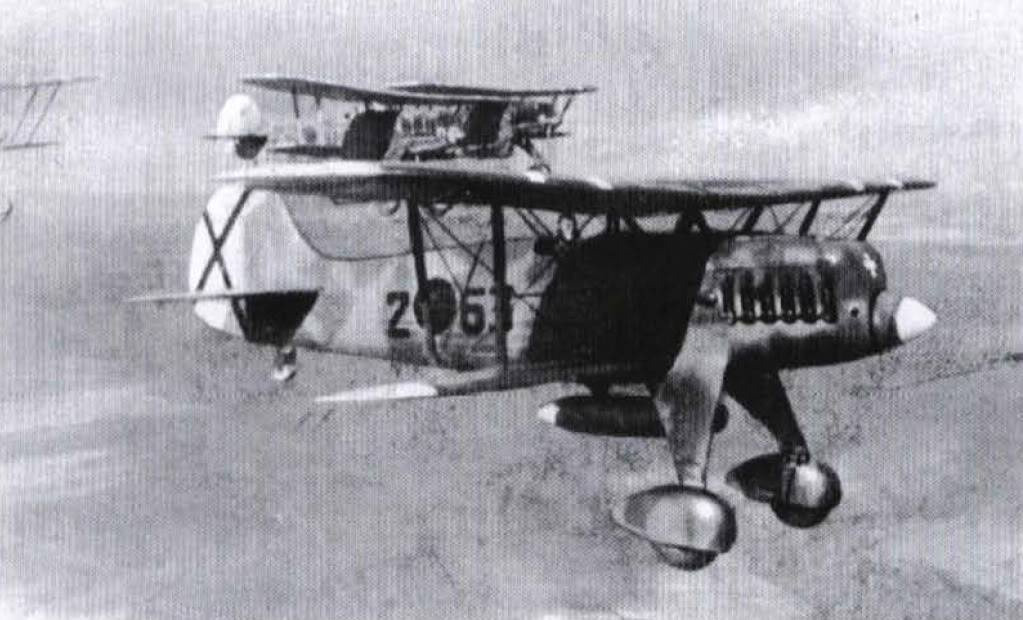
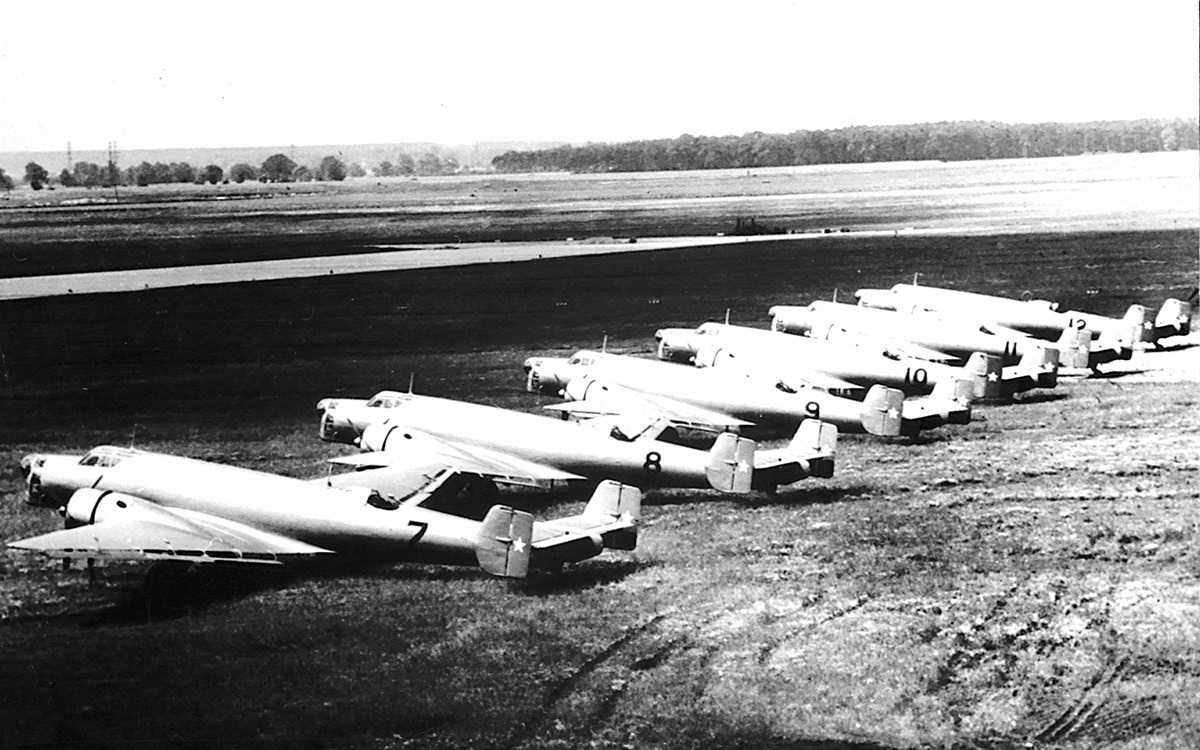
- Description:
- German medium bomber. 12 of these bombers were acquired by Chile in 1937. The Chilean JU 86s received the export designation K-6 and in Chilean service were armed with the 7.62 mm Madsen Model 1937 mobile defensive machine guns that were standard in Chile at the time. The Chilean JU 86-K6s used the American Pratt & Whitney Hornet R-1690-S1EG engines of 875 hp.
- Crew:
- 4
- Armament:
- Primary: 3x 7.62 mm Madsen machine guns
- Secondary: 4x 250 kg SC250 bombs, 16x 50 kg SC50 bombs
- Performance:
- Maximum speed: 395 km/h
- Sources:

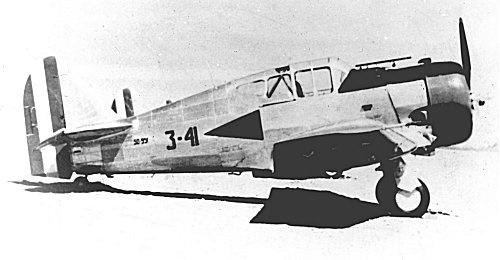
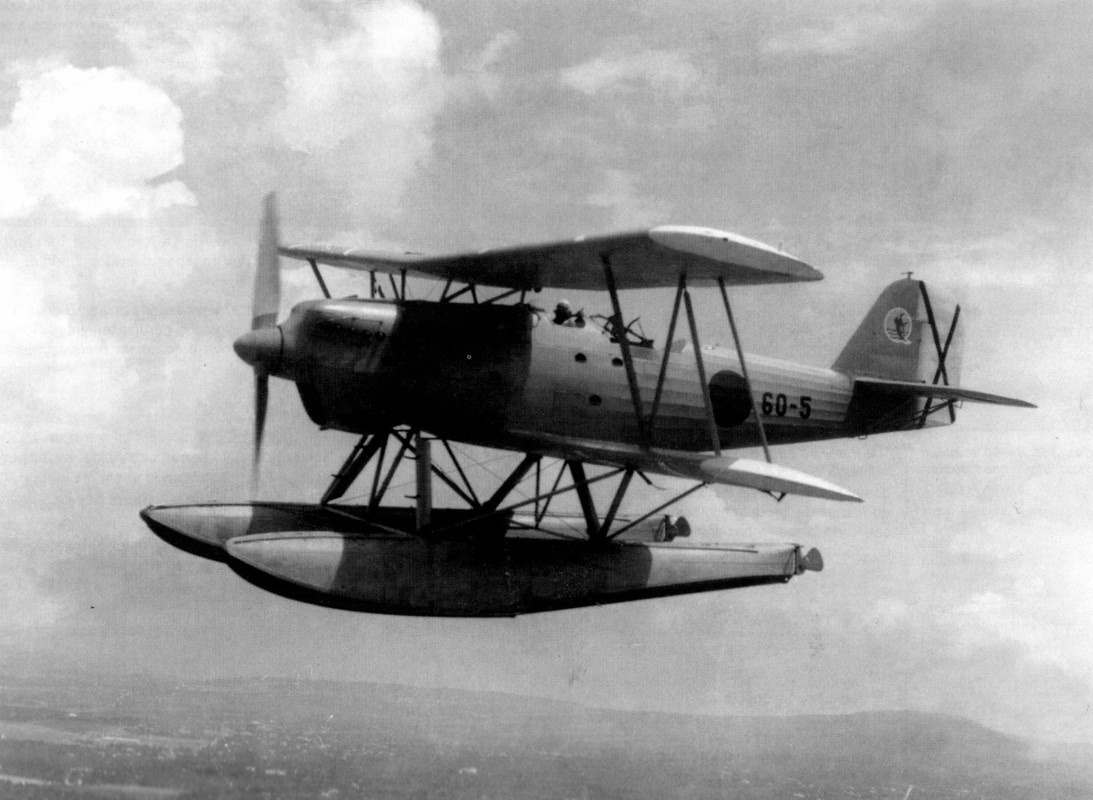
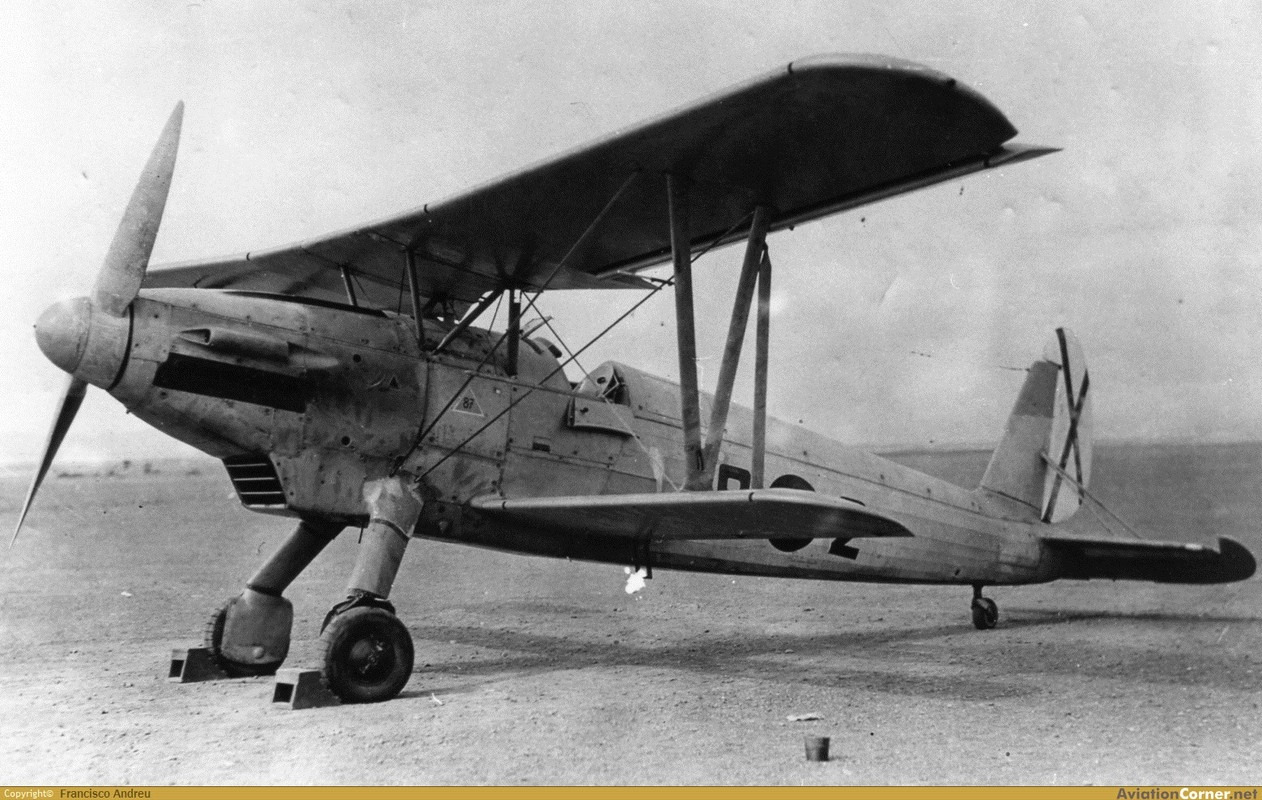
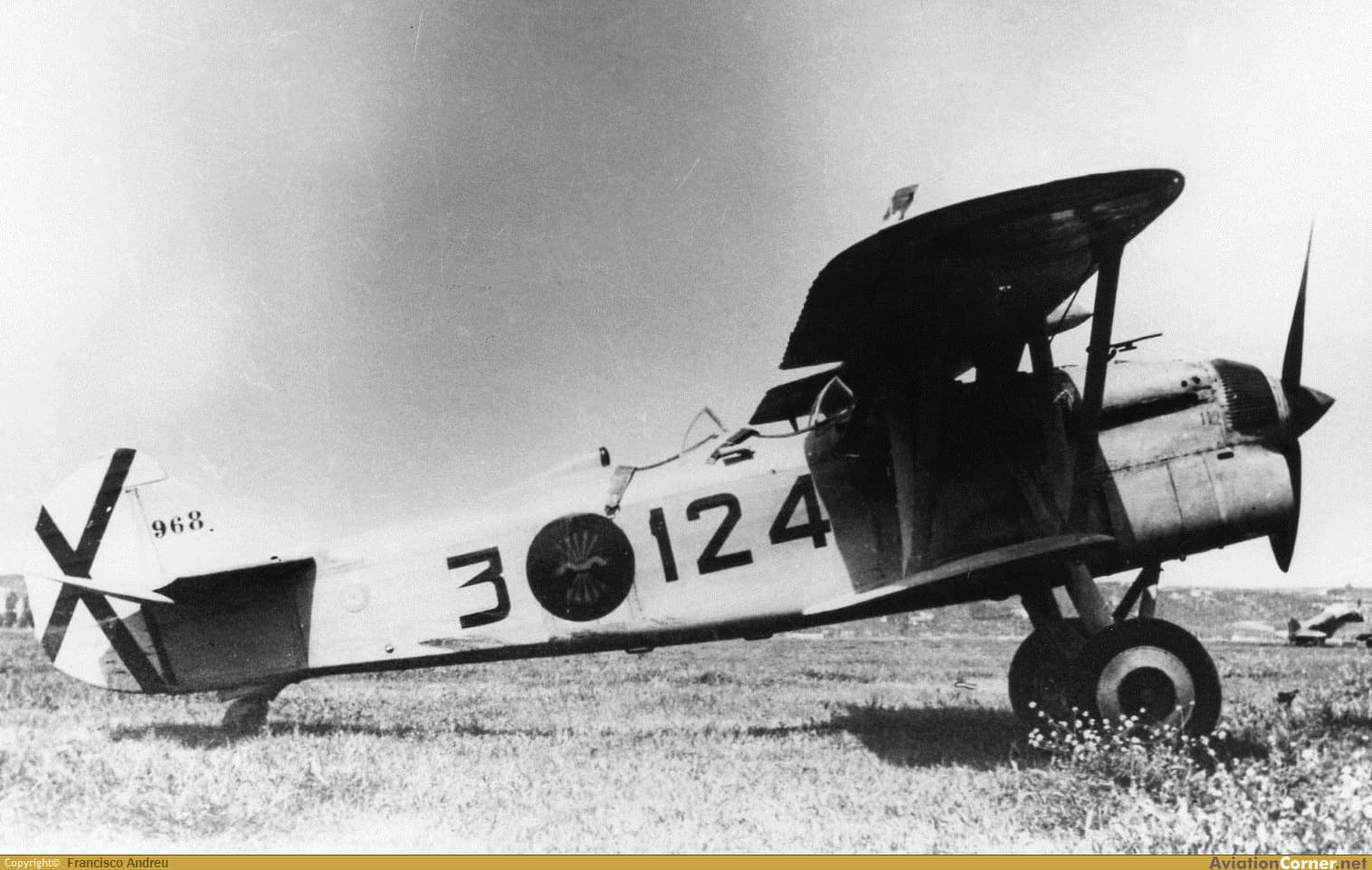
Rank 2
Spoiler
8A-2
- Description:
- American light attack and dive bomber aircraft operated by Argentina. It entered service in 1938 and 30 units were acquired. It was an export version of the Northrop A-17A, designed specifically for the Argentine Air Force.
- Crew:
- 2
- Armament:
- Primary: 2x 11.65mm Madsen machine guns, 2x 7.35mm Madsen machine guns, 1x 7.35mm Madsen machine gun
- Secondary: 600 kg of bombs
- Performance:
- Maximum speed: 360 km/h
- Sources:
Ca.135 “Tipo Peru”
- Description:
- Italian medium bomber operated by Peru. It entered service in 1937, and six units were acquired. It was a specially modified version to meet Peruvian requirements. It incorporated more powerful engines, a larger ordnance load, and improved defensive armament.
- Crew:
- 4-5
- Armament:
- Primary: 5x 12.7mm Breda-SAFAT machine guns
- Secondary: 2x 1760 lb bombs, 2x 1100 lb, 4x 550 lb, 12x 220, 110 lb bombs, 12x 44 lb incendiary
- Performance:
- Maximum speed: 400 km/h
- Sources:
Bréguet 460
- Description:
- A French medium bomber operated by Spain during the Spanish Civil War by the Republican side. Spain acquired one example in 1936 for evaluation and possible licensed production. It was a very rare bomber, and very few were produced in total.
- Crew:
- 4
- Armament:
- Primary: 1x 20mm Hispano-Suiza HS.404 cannon, 1x 7.5mm MAC 1934 machine gun, 1x 7.5mm MAC 1934 machine gun
- Secondary: 1000 kg of bombs
- Performance:
- Maximum speed: 400 km/h
- Sources:
Ca.135 “Tipo Spagna”
- Description:
- Italian medium bomber operated by Spain during the Spanish Civil War by the Nationalist side. In 1938, seven were assigned to the Aviación Legionaria (Spanish Legionary Air Force) for operations in Spain. The aircraft were re-engined with 1,000 hp Fiat A.80 RC.41 engines.
- Crew:
- 4-5
- Armament:
- Primary: 3x 12.7mm Breda-SAFAT machine guns
- Secondary: 1474 kg of bombs
- Performance:
- Maximum speed: 365 km/h
- Sources:
SM.79-I
- Description:
- An Italian medium bomber operated by Spain during the Spanish Civil War by the Nationalist side. It arrived in 1937 with the Italian Aviazione Legionaria. After the war, several remained in Spain and continued serving in the Spanish Air Force for years.
- Crew:
- 5-6
- Armament:
- Primary: 2x 12.7mm Breda-SAFAT machine guns, 2x 12.7mm Breda-SAFAT machine guns, 1x 7.7mm Lewis or Breda machine gun
- Secondary: 1250 kg of bombs
- Performance:
- Maximum speed: 430 km/h
- Sources:
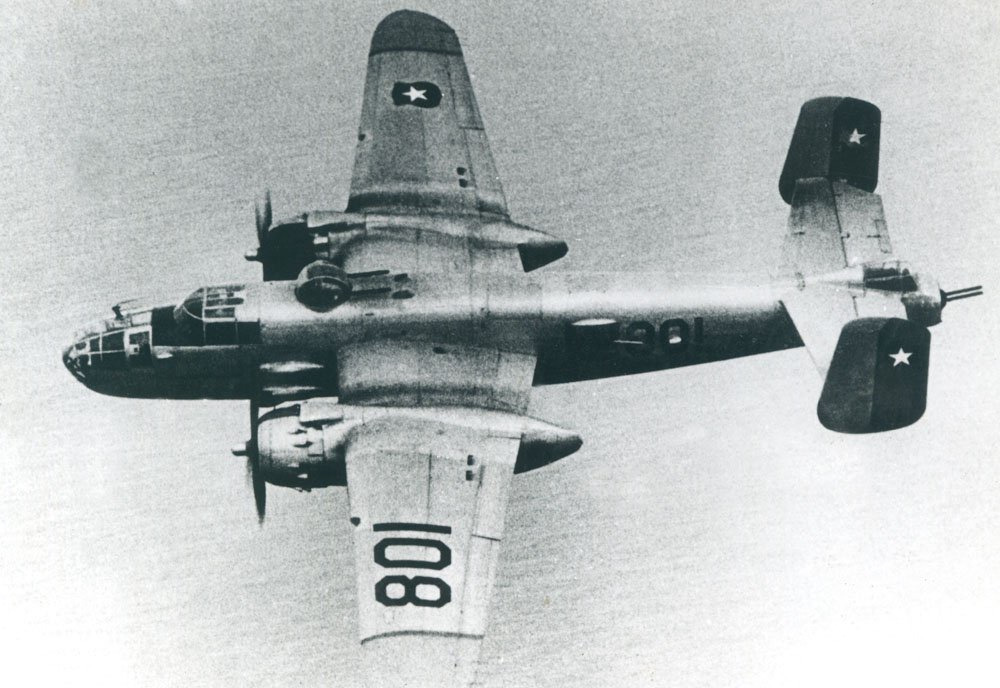
B-25J-25
- Description:
- American medium bomber. In 1947, a total of 12 units of the B-25J-25 model were received, characterized by having bulletproof crew seats.
- Crew:
- 7
- Armament:
- Primary: 6x 12.7 mm M2 machine guns, 3x 12.7 mm M2 machine guns, 4x 12.7 mm M2 machine guns
- Secondary: 1500 kg of bombs
- Performance:
- Maximum speed: 444 km/h
- Sources:

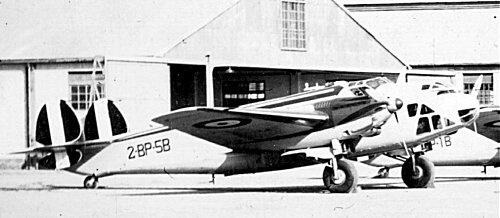
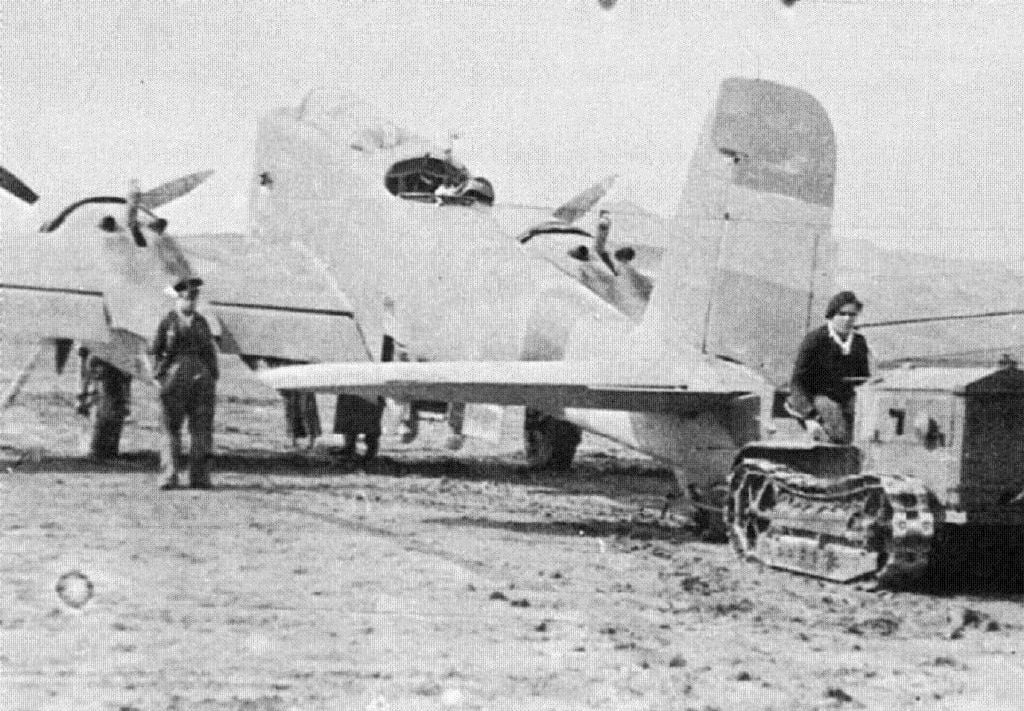
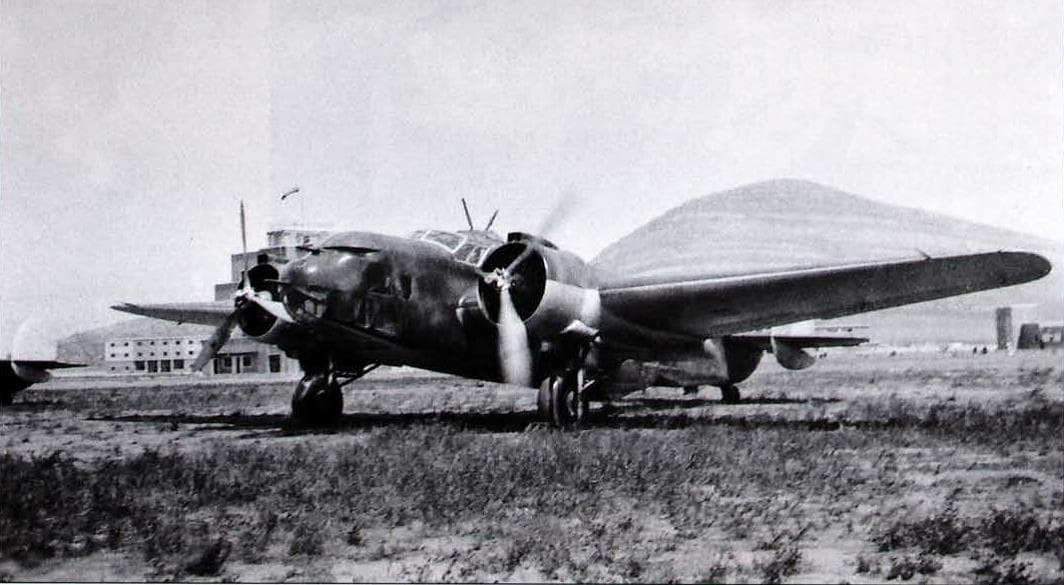

Rank 3
Spoiler
P-63E-1
- Description:
- American fighter jet. Five P-63E-1s were exported to Honduras, which stood out for having a more powerful engine.
- Crew:
- 1
- Armament:
- Primary: 1x 37mm M10 cannon or 1x 20mm T31 cannon, 2x 12.7 mm M2 Browning machine guns
- Secondary: 3x 500-lb M64 bombs
- Performance:
- Maximum speed: 660 km/h
- Sources:
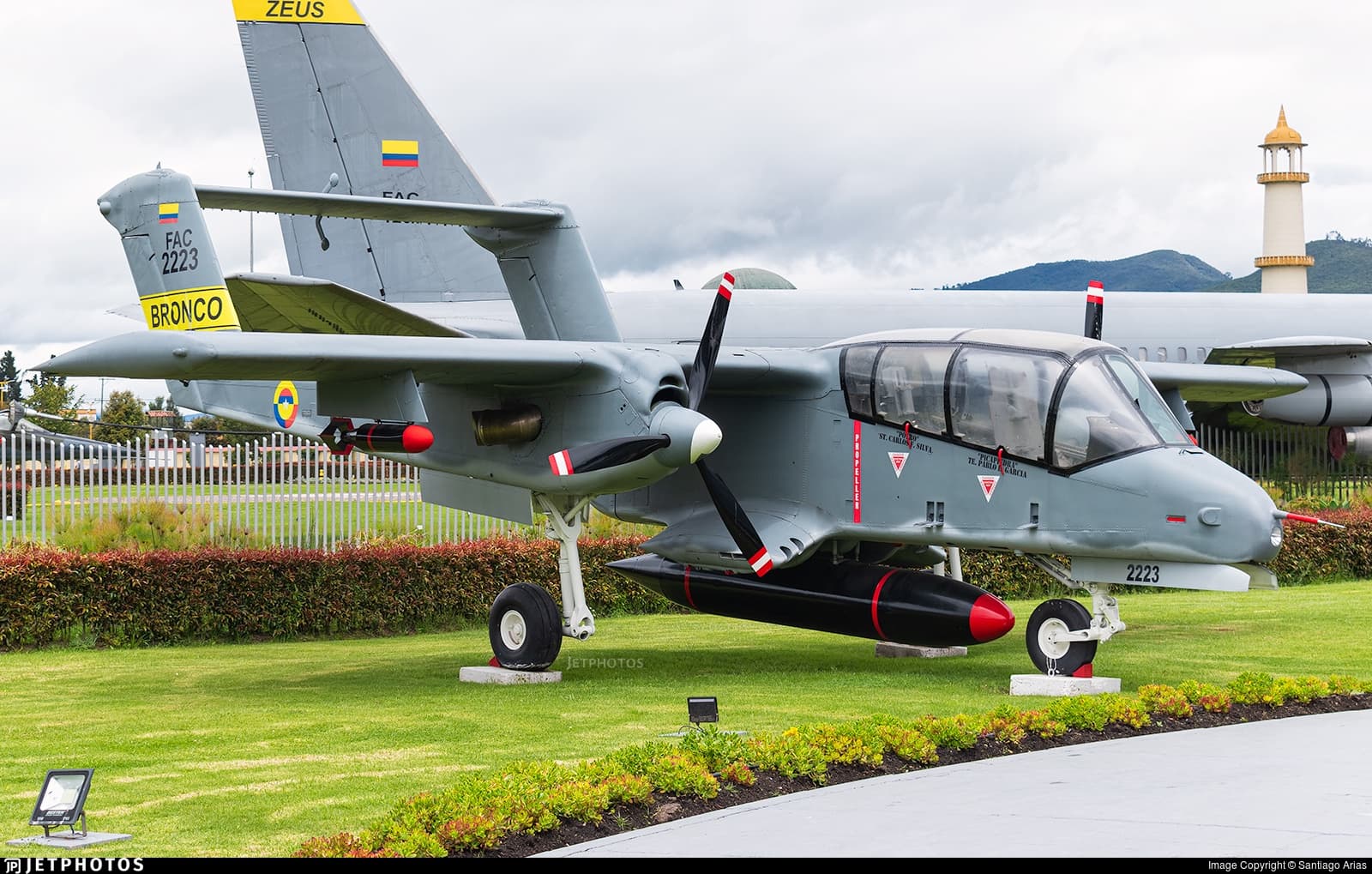
OV-10A
- Description:
- American light attack and observation aircraft. Colombia acquired 22 OV-10 Bronco aircraft in 1991. It was an aircraft used for light attack and COIN (Counterinsurgency) operations, as it was armed with machine guns, bombs, and rockets.
- Crew:
- 2
- Armament:
- Primary: 4x 7.62mm M60C machine guns
- Secondary: FFAR rockets, Zuni rockets, 250/500 lb bombs
- Performance:
- Maximum speed: 452 km/h
- Sources:
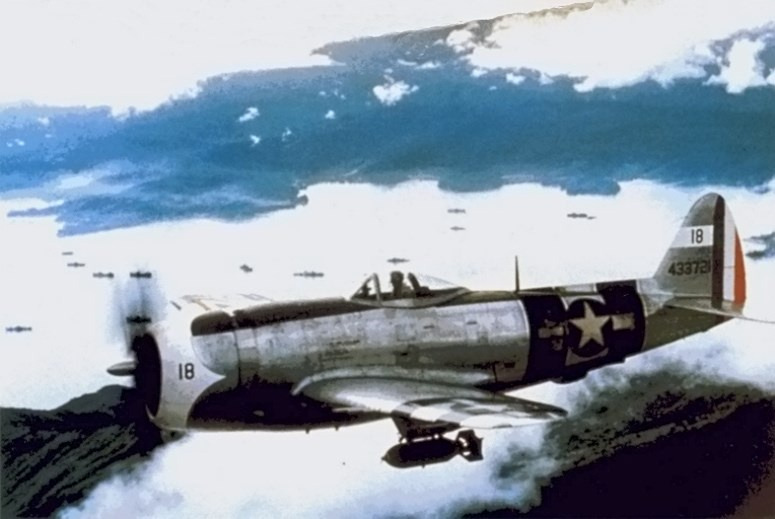
P-47D-30-RA
- Description:
- American fighter and fighter-bomber operated by Mexico during World War II. It entered service with the Mexican Expeditionary Air Force (FAEM) in 1945, and the 201st Fighter Squadron “Águilas Aztecas” where they fought against the Japanese.
- Crew:
- 1
- Armament:
- Primary: 8x 12.7 mm M2 Browning machine guns
- Secondary: 2x AN-M65 1000 lb bombs, 3x AN-M64 500 lb bombs, 3x AN-M57 250 lb bombs, 10x HVAR rockets
- Performance:
- Maximum speed: 714 km/h
- Sources:

Rank 4
Spoiler
Lancaster B Mk I
- Description:
- British heavy bomber operated by Argentina. It was acquired along with the Gloster Meteor and the Avro Lincoln after World War II. Argentina bought 15 examples, the last arriving in January 1949.
- Crew:
- 5
- Armament:
- Primary: 6x 7.7 mm Browning machine guns
- Secondary: 9979 kg of bombs
- Performance:
- Maximum speed: 451 km/h
- Sources:
I.A. 66
- Description:
- A prototype of the I.A. 58A Pucará with more powerful Garrett TPE-331-11 engines. It was designated I.A. 66 and was easily recognized by its numbering AX-06
- Crew:
- 2
- Armament:
- Primary: 2x 20 mm Hispano DCA-804 cannon, 4x 7.62mm FN-Browning M2-30 machineguns
- Secondary: 1500 kg of bombs, 4x 70mm FFAR LAU rocket pods, 4x 57mm Aspide rockets in ARM-657 Mamboreta pods
- Performance:
- Maximum speed: 576 km/h
- Sources:
B-26B-50-DT
- Description:
- Chilean B-26C Invader bombers modified in 1966 under the “Gun Nose” project. The bomber’s transparent nose was replaced with a solid one, and six 12.7 mm machine guns were installed. The defensive turrets were also removed, so the aircraft was now focused exclusively on ground attack. After the modification, they were designated B-26B.
- Crew:
- 3
- Armament:
- Primary: 6x 12.7 mm machine guns in the nose, 4x twin 12.7mm underwing machine gun pods
- Secondary: 4000 lbs of bombs carried internally (100, 250, 500, 1000 lb), 14x HVAR rockets
- Performance:
- Maximum speed: 569 km/h
- Sources:
Strikemaster Mk.89
- Description:
- A British-designed light attack and advanced training aircraft operated by Ecuador. It entered service in 1972 when the Ecuadorian Air Force received 22 aircraft. It was used for armed training, close air support, and counterinsurgency operations, and saw action in the Cenepa War in 1995.
- Crew:
- 2
- Armament:
- Primary: 2x 7.62 mm FN 60.30 machine gun
- Secondary: 2x 7.62 mm FN 60.30 machine gun, Type R80 SURA rockets T-80, Type 23 SNEB rockets, Mk 82 bombs
- Performance:
- Maximum speed: 776 km/h
- Sources:

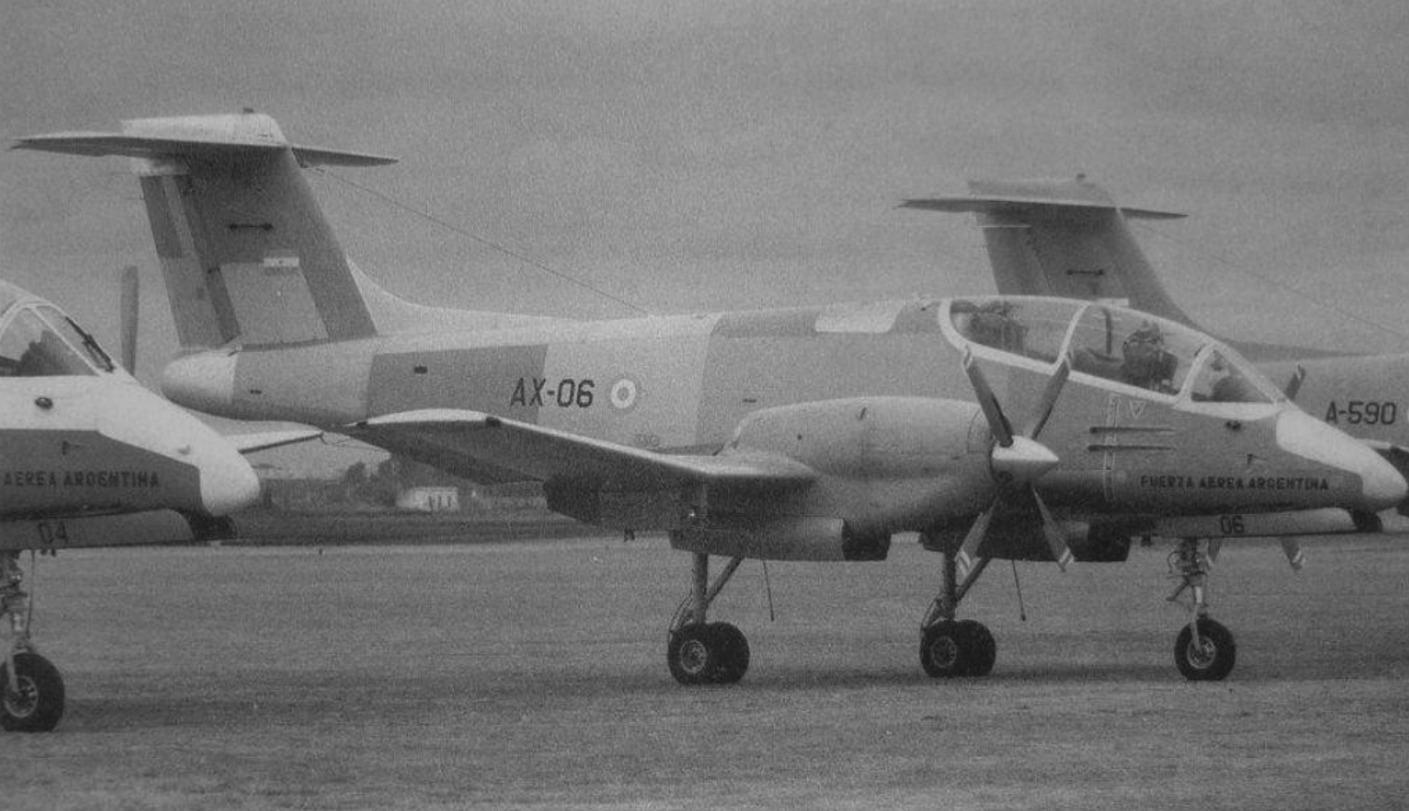

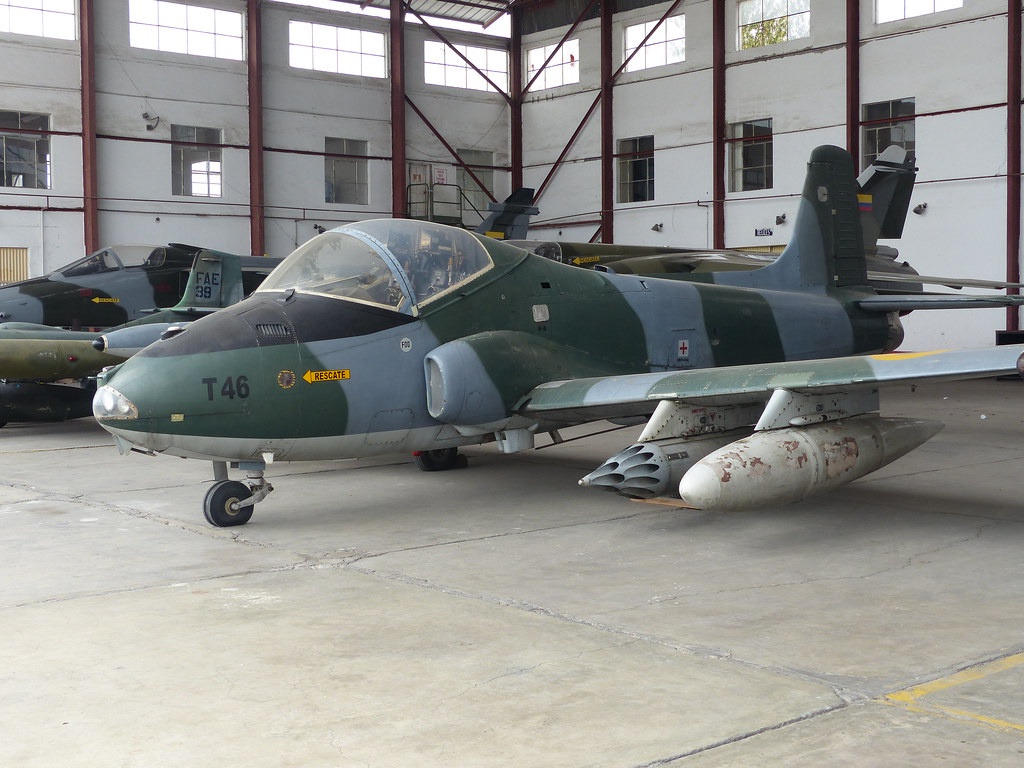
Rank 5
Spoiler
K-8 Karakorum
- Description:
- The Chinese Hongdu JL-8 advanced training and light attack aircraft is operated by Bolivia. The Bolivian Air Force acquired six aircraft in 2010. Its export designation is K-8, and although it can use PL-5 missiles, Bolivia does not use them.
- Crew:
- 2
- Armament:
- Primary: 1x 23 mm cannon
- Secondary: 200/250 kg bombs, 57 mm unguided rocket pods
- Performance:
- Maximum speed: 800 km/h
- Sources:
- https://www.infodefensa.com/texto-diario/mostrar/3143894/fuerza-aerea-boliviana-incorpora-aviones-entrenamiento-combate-k-8
- https://en.wikipedia.org/wiki/Hongdu_JL-8
- https://www.airforce-technology.com/projects/hongdu-k8/?cf-view
- https://www.defensa.com/bolivia/estrella-k-8w-karakorum-fuerza-aerea-boliviana-ya-ha-perdido-dos
M.D.450B Ouragan
- Description:
- French jet fighter-bomber operated by El Salvador. The Salvadoran Air Force acquired 18 aircraft from Israel between 1973 and 1978. The aircraft were refurbished by IAI before delivery. Although they used Shafrir II missiles, these will not be included for balancing reasons.
- Crew:
- 1
- Armament:
- Primary: 4x 20 mm M50 cannons
- Secondary: 1000/500 lb bombs, T10 140/151 rockets
- Performance:
- Maximum speed: 942 km/h
- Sources:
Sea Vampire T.22
- Description:
- British-origin jet aircraft, this unique special variant was built for the Royal Navy and was widely known as the Sea Vampire. Chile acquired six of this special model in 1972. In service in Chile, it was armed with a wide variety of bombs and rockets.
- Crew:
- 1
- Armament:
- Primary: 4x 20mm Hispano MK.V cannons
- Secondary: AN-M65 1000 lb bombs, Mk.81/82 bombs, 500 lb Aerea 559G1 napalm bombs, Expal 65kg bombs, 375 kg bombs, HVAR rockets, SURA rockets, RP-3 rockets
- Performance:
- Maximum speed: 882 km/h
- Sources:
HA-200E
- Description:
- The Spanish advanced training and light attack aircraft. It was the combat version of the HA-200 Saeta and was the first version to incorporate rocket launchers.
- Crew:
- 2
- Armament:
- Primary: 2x 12.7mm Browning M3 machine guns
- Secondary: rockets in different sizes
- Performance:
- Maximum speed: 700 km/h
- Sources:
I.Ae. 33 (No.2)
- Description:
- Argentine jet fighter. In 1959, prototype number 2 was the first to fly.
- Crew:
- 1
- Armament:
- Primary: 4x 20mm Hispano-Suiza MK5 cannons
- Performance:
- Maximum speed: 1080 km/h
- Sources:
Vampire F.3
- Description:
- British jet fighter operated by Mexico. The Mexican Air Force acquired 15 Vampire F.3 aircraft in 1961, making it the first jet fighter to fly in that country.
- Crew:
- 1
- Armament:
- Primary: 4x 20 mm Hispano Mk.V cannon
- Secondary: 1000/500 lb bombs, RP-3 rockets
- Performance:
- Maximum speed: 882 km/h
- Sources:
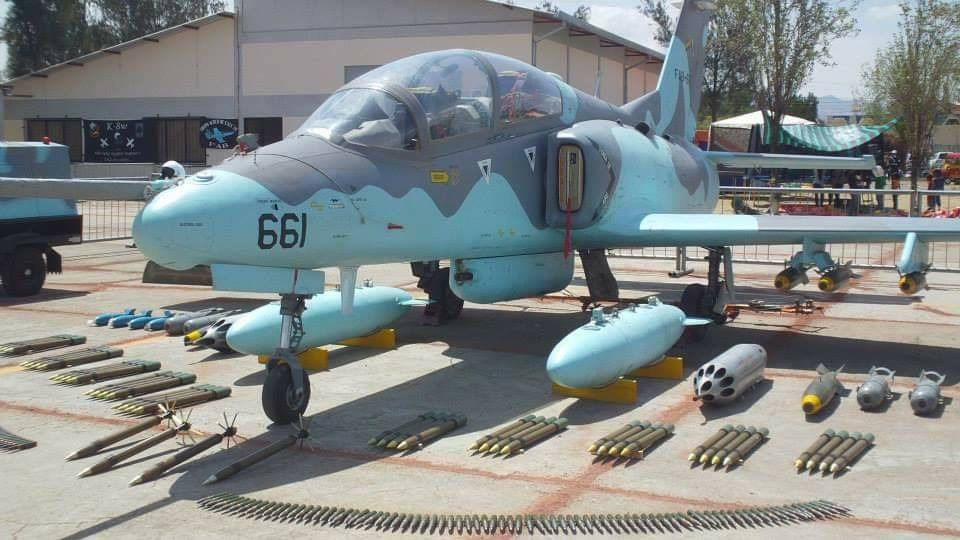
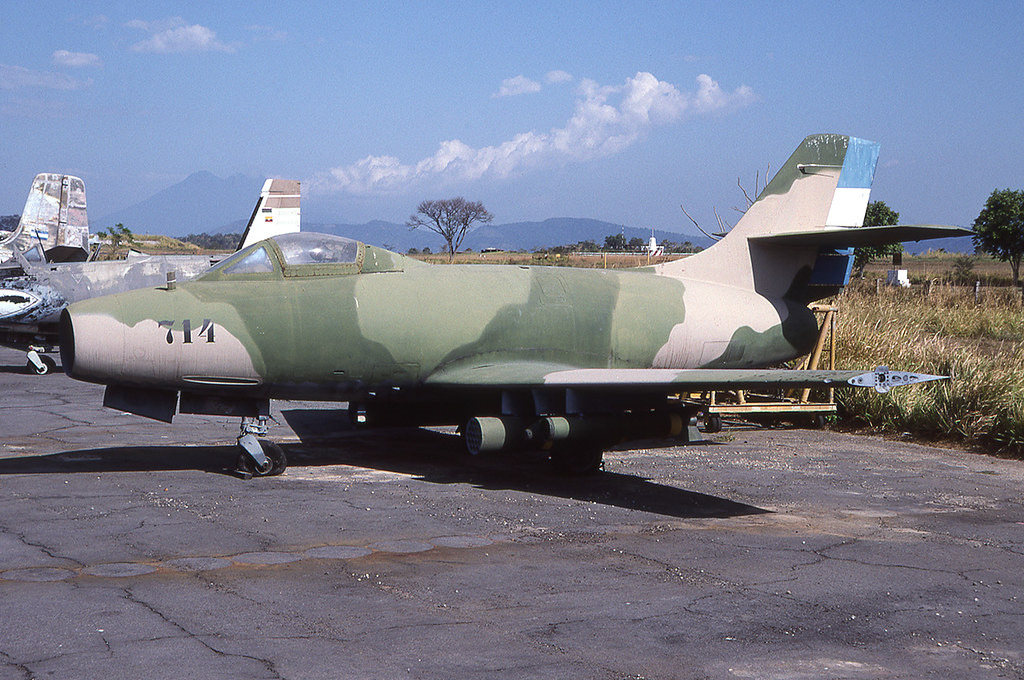
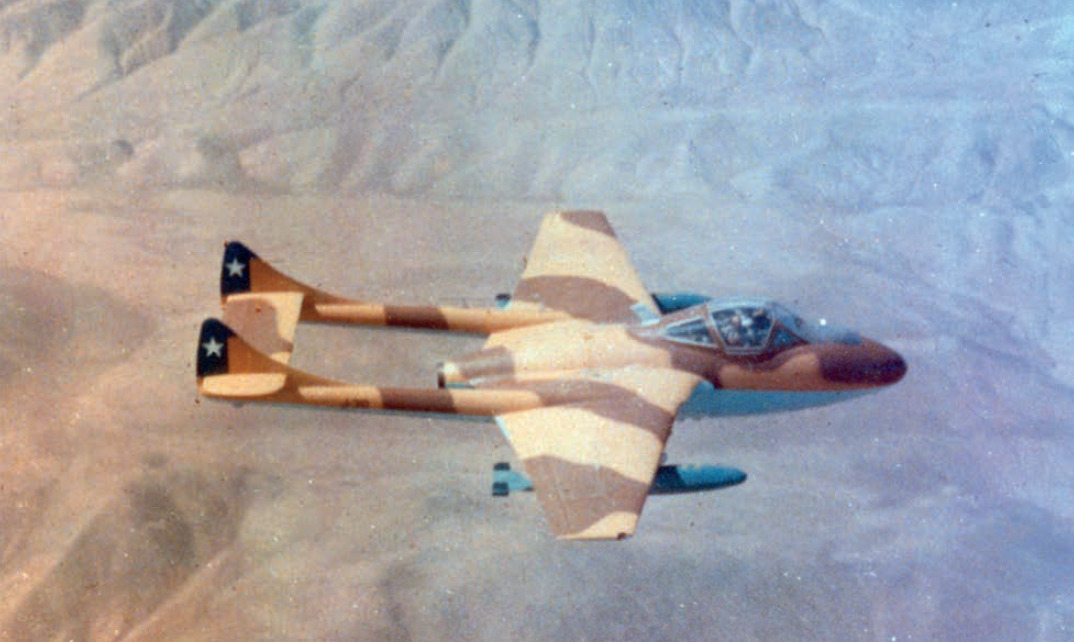
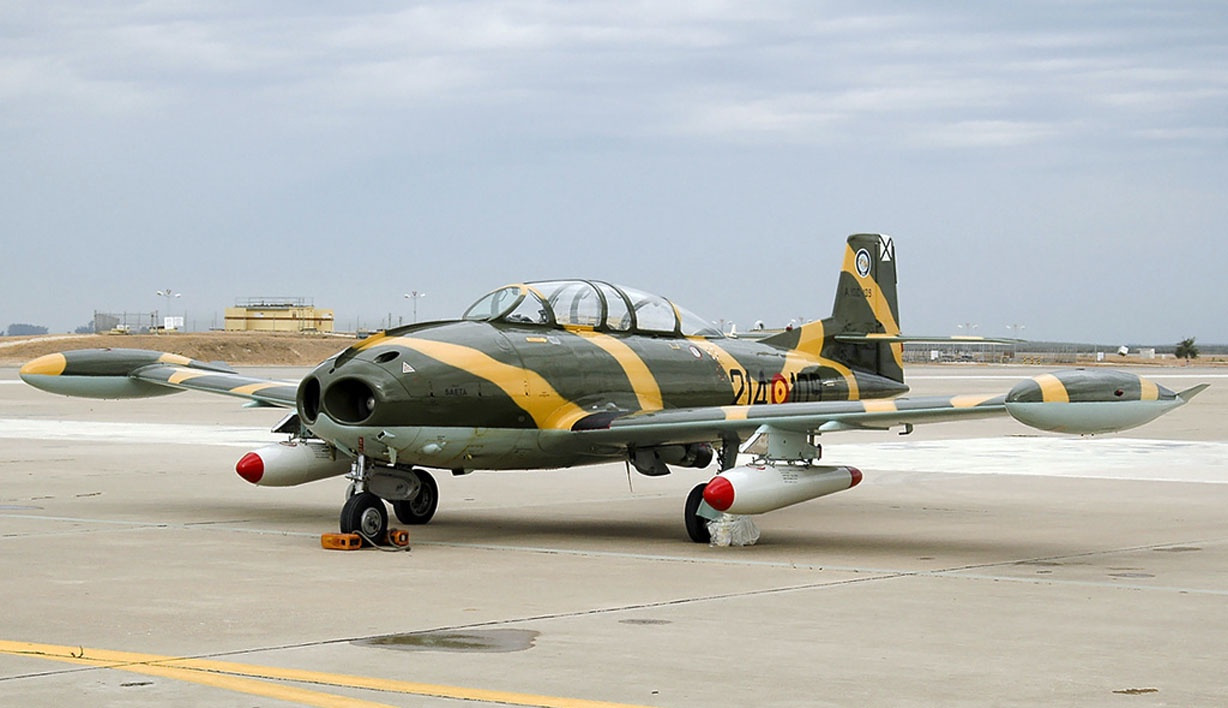
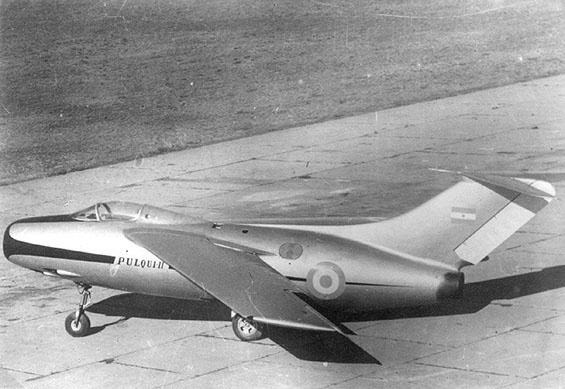
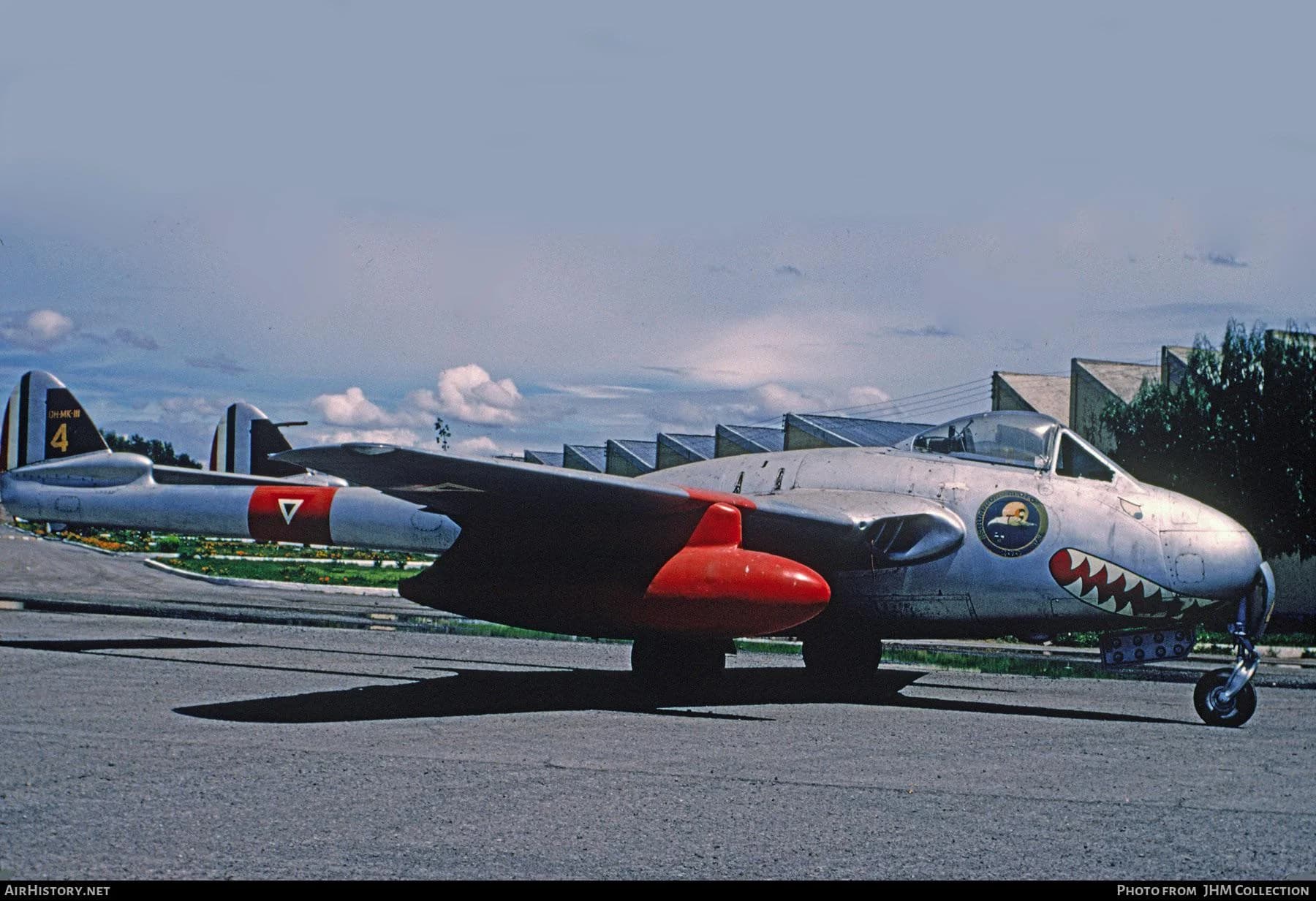
Rank 6
Spoiler
A-37B Dragonfly
- Description:
- American light attack aircraft operated by Ecuador. The Ecuadorian Air Force received 18 aircraft starting in 1976. The A-37Bs participated in the Cenepa War of 1995. They were also modernized with Shafrir II missiles, RWRs, and countermeasures.
- Crew:
- 2
- Armament:
- Primary: 1x 7.62mm GAU-2B/A Minigun
- Secondary: 500/250 lb bombs, FFAR rockets, Zuni rockets, Shafrir II Missiles
- Performance:
- Maximum speed: 816 km/h
- Sources:
- Air Wars between Ecuador and Peru Volume 3 by Amaru tincopa
- https://en.wikipedia.org/wiki/Cessna_A-37_Dragonfly
Su-25K
- Description:
- Soviet-era attack and close air support aircraft operated by Peru. The Peruvian Air Force acquired 18 Su-25Ks in the late 1990s from Belarus.
- Crew:
- 1
- Armament:
- Primary: 30 mm GSh-30-2 cannon
- Secondary: R-60/60M missiles, 500/250/100 kg bombs, S-25O/F/FM rockets, S-5KP rockets, S-8KO rockets, S-13OF rockets, Kh-25/25ML missiles, S-25L missiles
- Performance:
- Maximum speed: 979 km/h
- Sources:
- https://www.defensa.com/peru/seman-entrega-cuarto-25-fuerza-aerea-peru
- https://wiki.warthunder.com/unit/su_25
- https://es.topwar.ru/161594-vvs-peru-poluchili-tretij-shturmovik-su-25-modernizirovannyj-rossiej.html
- https://es.rbth.com/technologias/86641-primeras-imagenes-aviones-ataque-su-25-peru-modernizacion
MiG-17AS
- Description:
- Soviet fighter operated by Cuba. The Revolutionary Air Force received numerous MiG-17s during the 1960s, including examples upgraded to the MiG-17AS standard, which can use the R-3S air-to-air missile.
- Crew:
- 1
- Armament:
- Primary: 37 mm N-37D cannon, 2x 23 mm NR-23 cannon
- Secondary: 250 kg OFAB-250sv bomb, S-21 rockets, R-3S missiles
- Performance:
- Maximum speed: 1,114 km/h
- Sources:
AV-8S
- Description:
- American carrier-based attack fighter operated by Spain. The Spanish Navy acquired 10 AV-8S, also called Matador, in 1976, becoming the first foreign operator of the Harrier. They were later sold to Thailand.
- Crew:
- 1
- Armament:
- Primary: 2x 30 mm ADEN Mk.4 cannons
- Secondary: AIM-9P missiles, FFAR rockets, Zuni rockets, 1000/500/250 lb bombs
- Performance:
- Maximum speed: 1,156 km/h
- Sources:
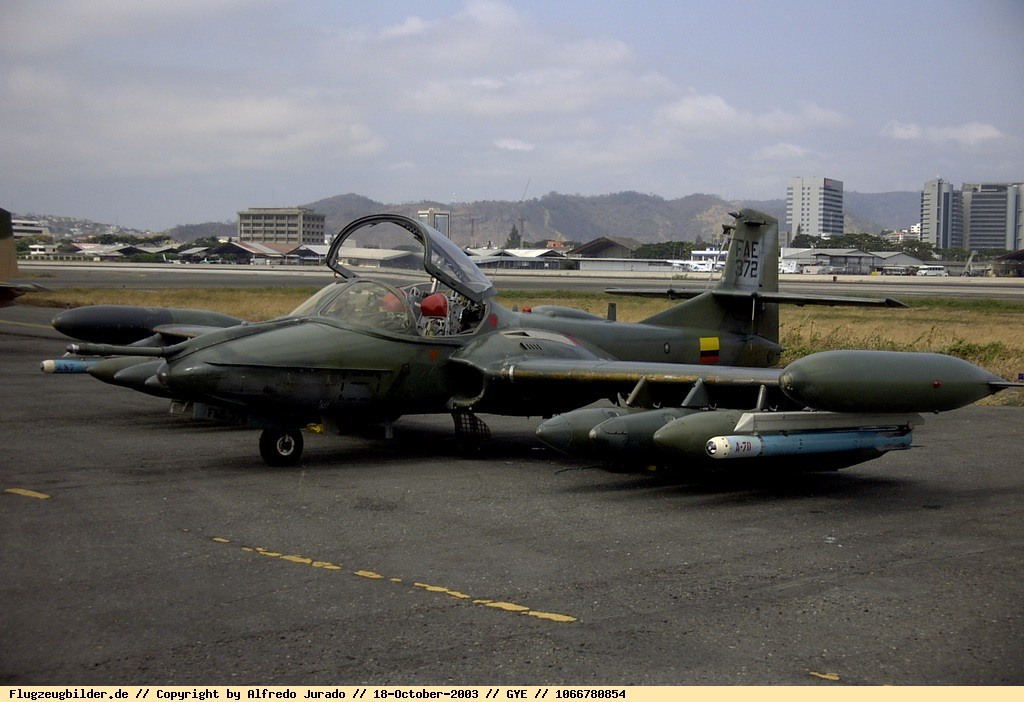
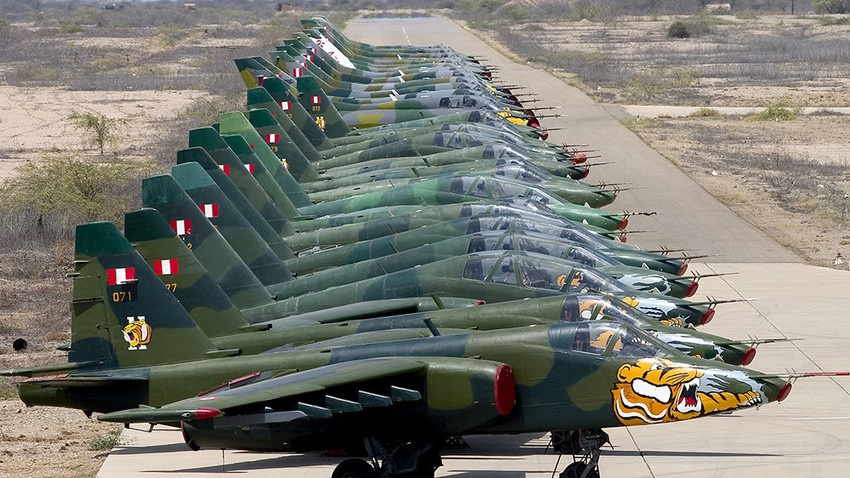
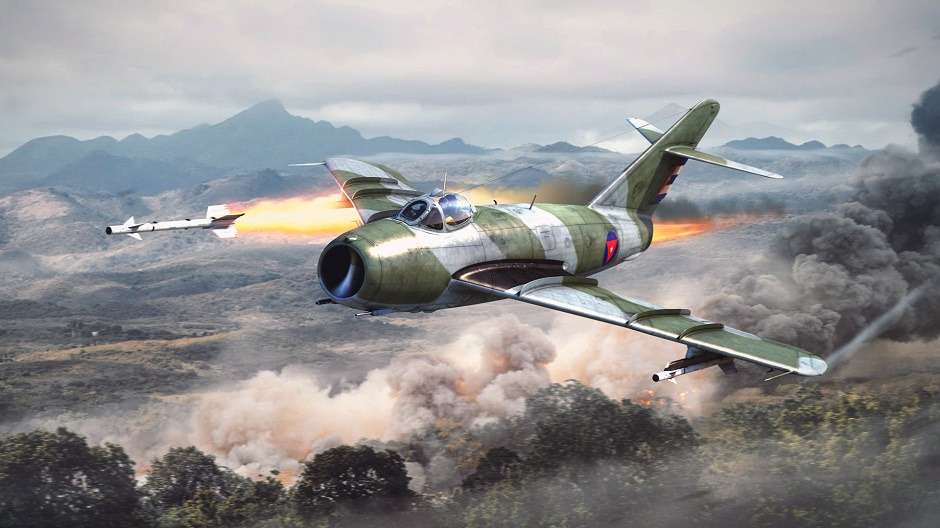
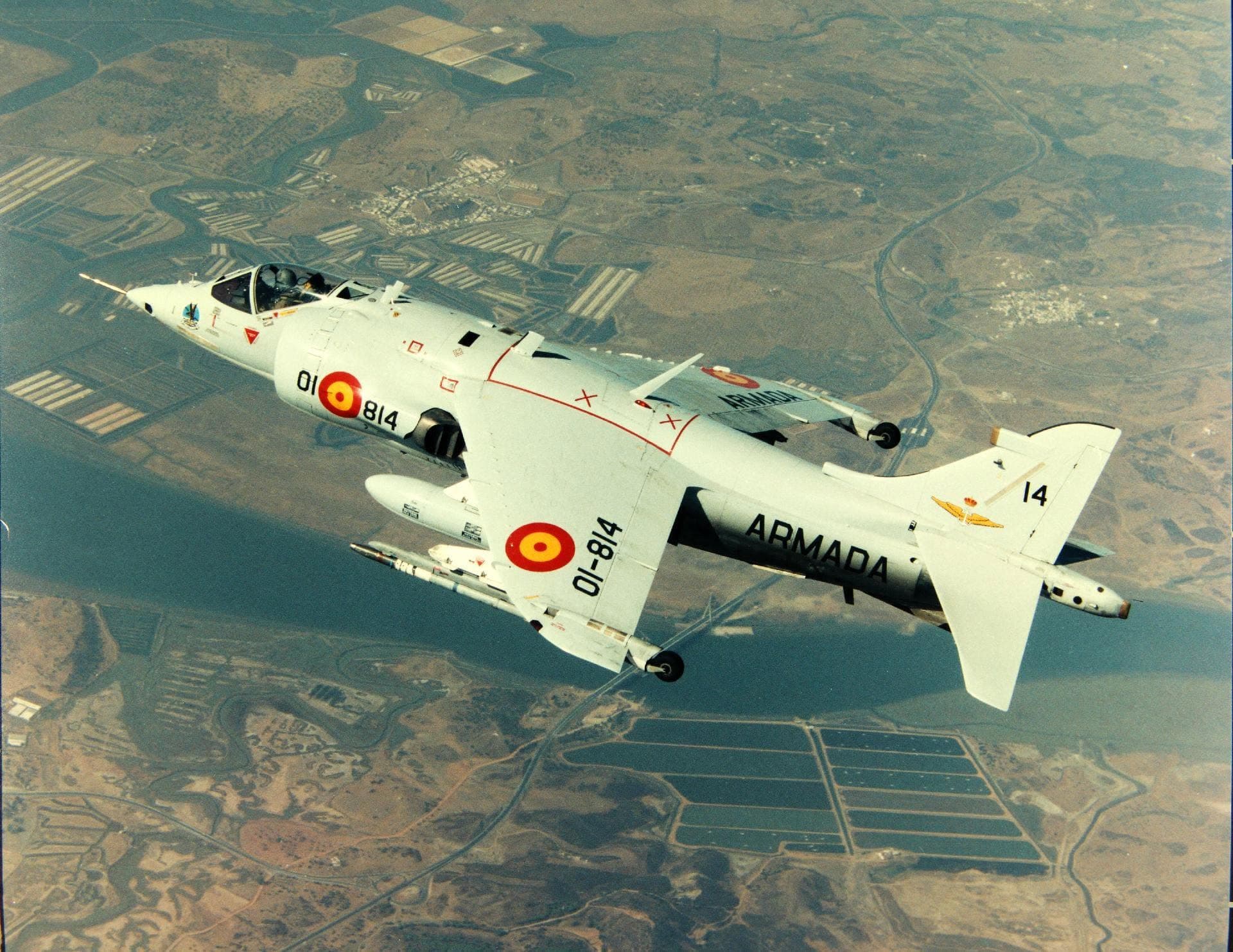
Rank 7
Spoiler
C-101DD
- Description:
- The C-101DD variant was proposed by CASA during the 1980s as an armed evolution of the C-101 with improved avionics and expanded combat capabilities. It featured a HOTAS, ALR-66 RWR, HUD, countermeasures and AGM-65 compatibility. It was displayed at several international air shows carrying various armaments but failed to generate interest and attracted no customers.
- Crew:
- 2
- Armament:
- Primary: 1x 30 mm DEFA 553 cannon
- Secondary: Matra Magic 1 Missiles, AGM-65 Missiles, Mk.81/82 bombs, SAMP 250 kg bombs, FFAR rockets, Zuni rockets
- Performance:
- Maximum speed: 834 km/h
- Sources:
F-5E
- Description:
- American supersonic fighter jet operated by Mexico. The Mexican Air Force acquired 10 single-seat F-5Es and 2 two-seat F-5Fs in 1982. They use AIM-9P3 missiles and the typical armament of an F-5E, and no modernization is known. It is currently Mexico’s most powerful fighter jet.
- Crew:
- 1
- Armament:
- Primary: 2x 20mm Pontiac M39A3 cannons
- Secondary: AIM-9P3 Missiles, Zuni rockets, FFAR rockets, Mk 80 series bombs
- Performance:
- Maximum speed: 1,875 km/h
- Sources:
- https://wiki.warthunder.com/unit/f-5e
- https://www.infodefensa.com/texto-diario/mostrar/5390607/interceptores-f-5e-f-43-anos-senales-remplazo
- https://www.infodefensa.com/texto-diario/mostrar/2949358/aviones-f5-mexico-40-anos-antiguedad-miras-renovados
- https://www.pucara.org/post/el-necesario-reemplazo-de-los-f-5e-mexicanos
Jaguar ES
- Description:
- Anglo-French supersonic fighter-bomber operated by Ecuador. The Ecuadorian Air Force acquired 10 single-seat Jaguar ES and 2 two-seat Jaguar EB aircraft in 1977, becoming the only South American operator of the Jaguar. The Ecuadorian Jaguars operated the powerful R-550 Magic II missile.
- Crew:
- 1
- Armament:
- Primary: 30 mm ADEN Mk.4 cannon
- Secondary: R550 Magic 2 missiles, 1000/540 lb bombs, 70 mm CRV7 M247 rocket, Type 23 SNEB rockets, Paveway II (Mk.13) 1000-lb guided bomb
- Performance:
- Maximum speed: 1,609 km/h
- Sources:
Mirage 5 Mara
- Description:
- Peruvian Mirage 5P fighters were sent to Argentina in 1982 to replace the aircraft lost by Argentina during the Malvinas (Falklands) War. Ten were received, but none saw combat. In Argentine service they were designated Mirage 5 Mara.
- Crew:
- 1
- Armament:
- Primary: 2x 30mm DEFA 552 cannon
- Secondary: R550 Magic 1 missiles, 400/250 kg bombs, Type 23 SNEB rockets
- Performance:
- Maximum speed: 2,160 km/h
- Sources:
F-5E Plus
- Description:
- The Chilean F-5E Tiger II was modernized in Israel under the “F-5 Plus” program. This prototype was seen flying in Israel carrying AIM-9P and Python III missiles. The modernization includes MIL-STD 1553B, ELTA EL/M 2032 radar, EL-Op head-up display and two monochrome multifunction displays, Litening pod, Caiquén III RWR (DM/A-104), and Eclipse chaff and flare dispenser (DM/A-202).
- Crew:
- 1
- Armament:
- Primary: 2x 20mm Pontiac M39A3 cannons
- Secondary: AIM-9J/P missiles, Python III missiles, AGM-65 missiles, Zuni rockets, FFAR rockets, Mk 80 series bombs, CB-130/500 cluster bombs, LGB Griffin
- Performance:
- Maximum speed: 1,875 km/h
- Sources:
Mirage 50EV
- Description:
- Venezuelan Mirage IIIEV and Mirage 5V aircraft were modernized to the Mirage 50EV standard. The modernization included the installation of a more powerful Atar 9K-50 engine, Cyrano IVM3 radar, Exocet anti-ship missile, in-flight refueling probe, canards, AN/ALE40 chaff/flare dispenser, Sherlock radar warning receiver, and other avionics upgrades. They also integrated more advanced weaponry such as the Matra R.550 Magic II missile.
- Crew:
- 1
- Armament:
- Primary: 2x 30mm DEFA 552 cannons
- Secondary: R.550 Magic I/II missile, AIM-9B missile, R530/530E missile, 1000/500 lb bombs, 400/250 kg bombs, Matra JL-100R rockets, Nord AS-30 missiles, AM39 Exocet missiles
- Performance:
- Maximum speed: 2350 km/h
- Sources:
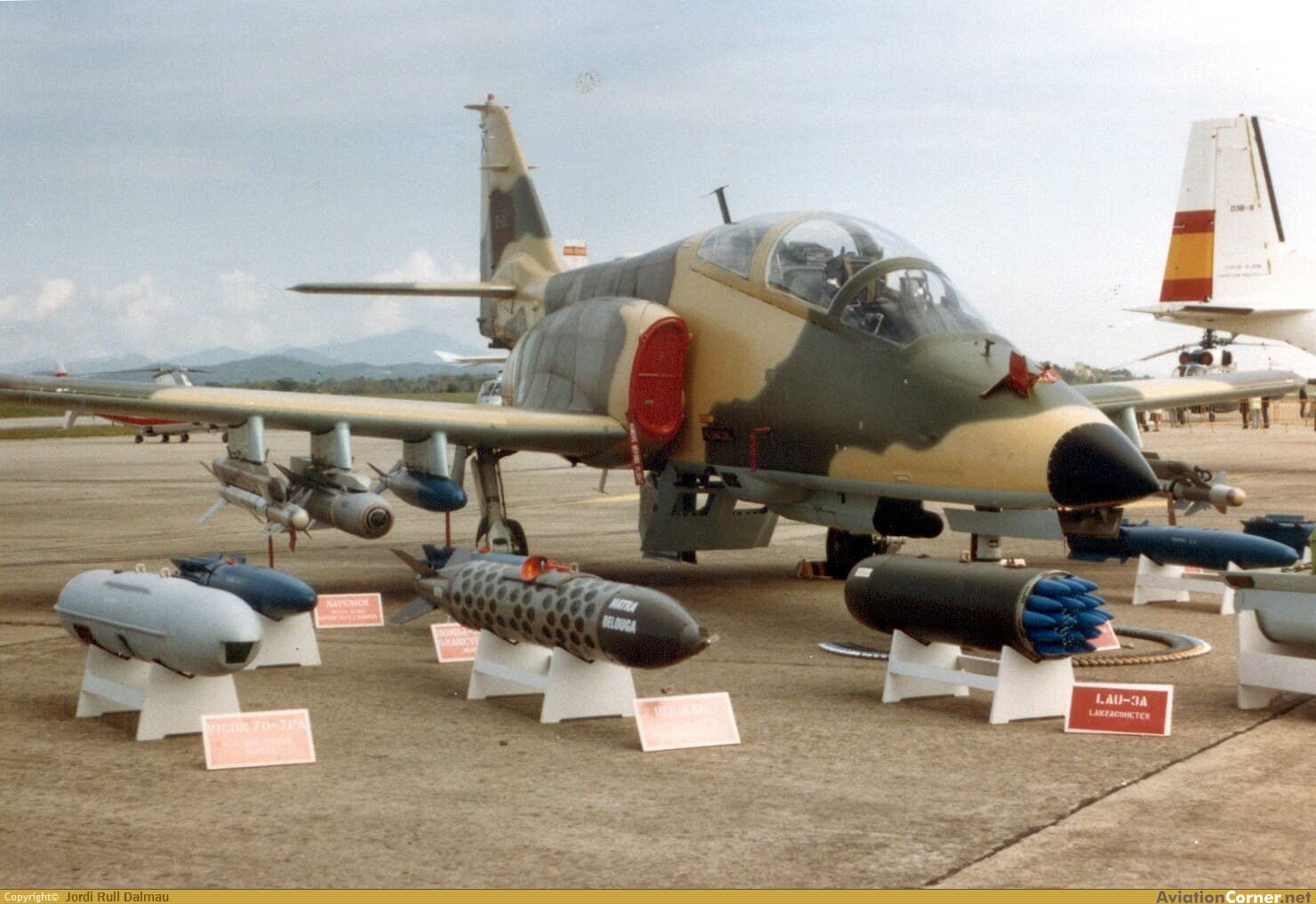
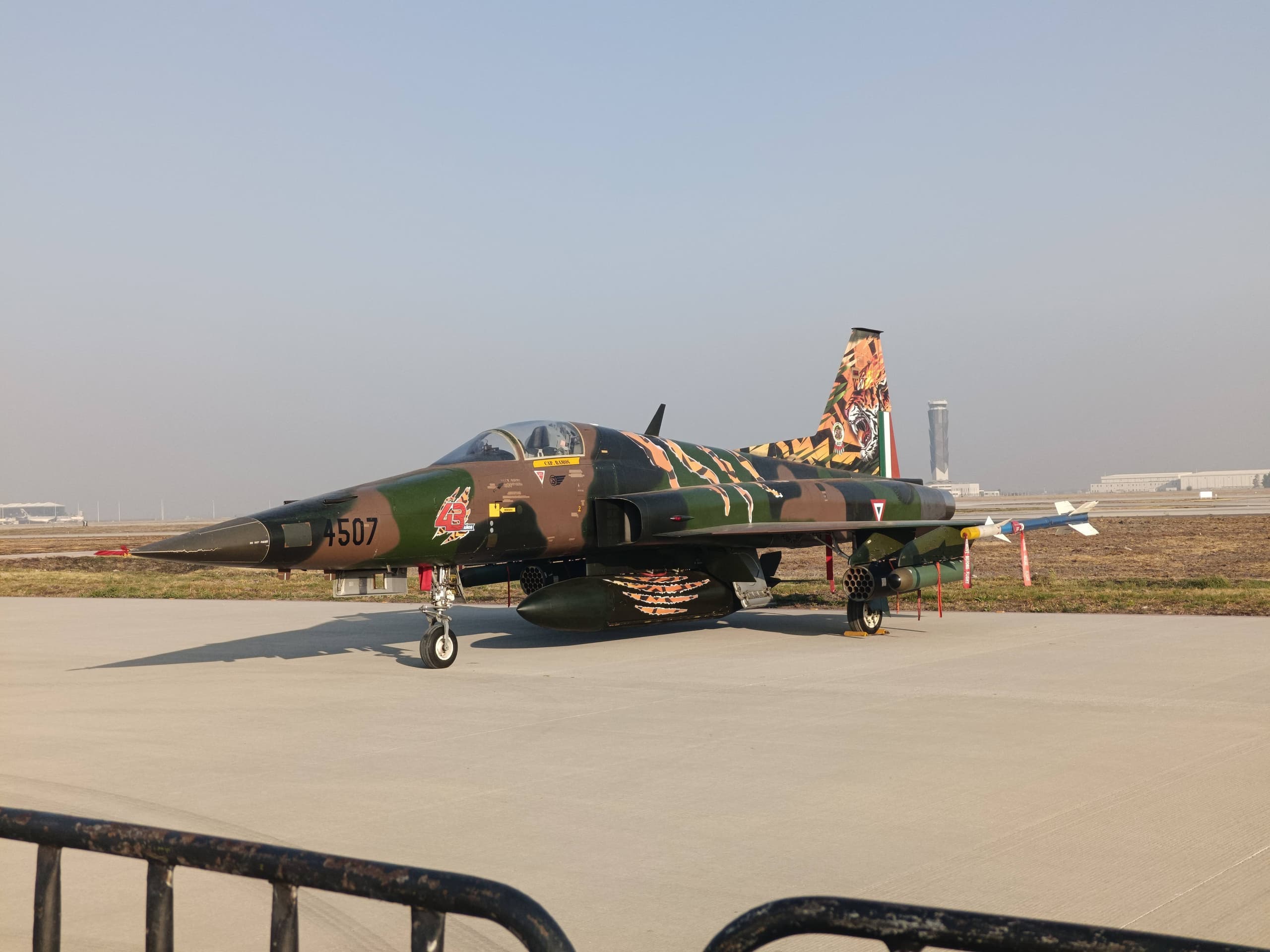

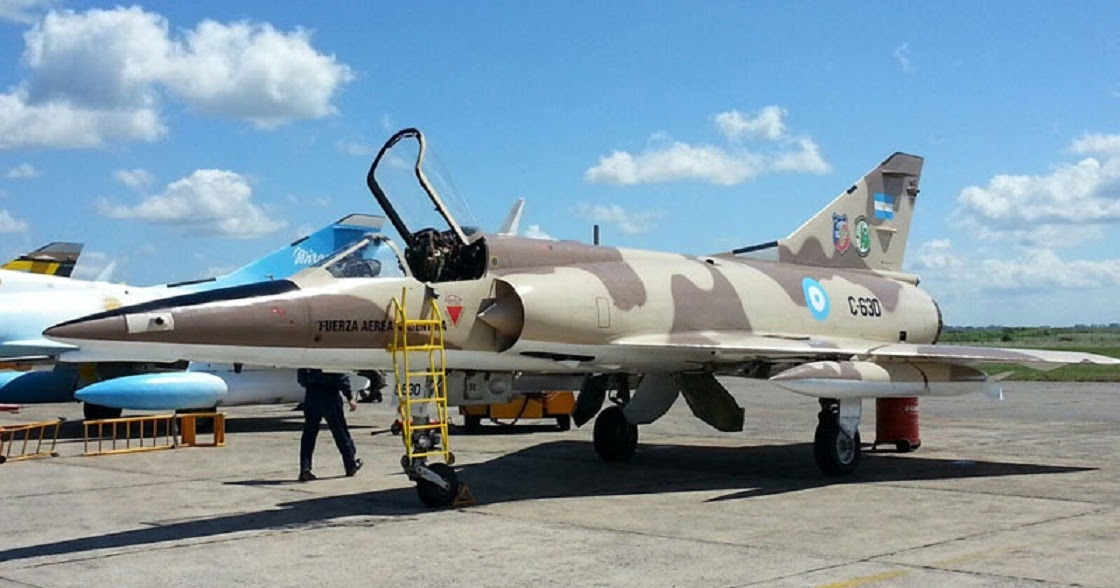
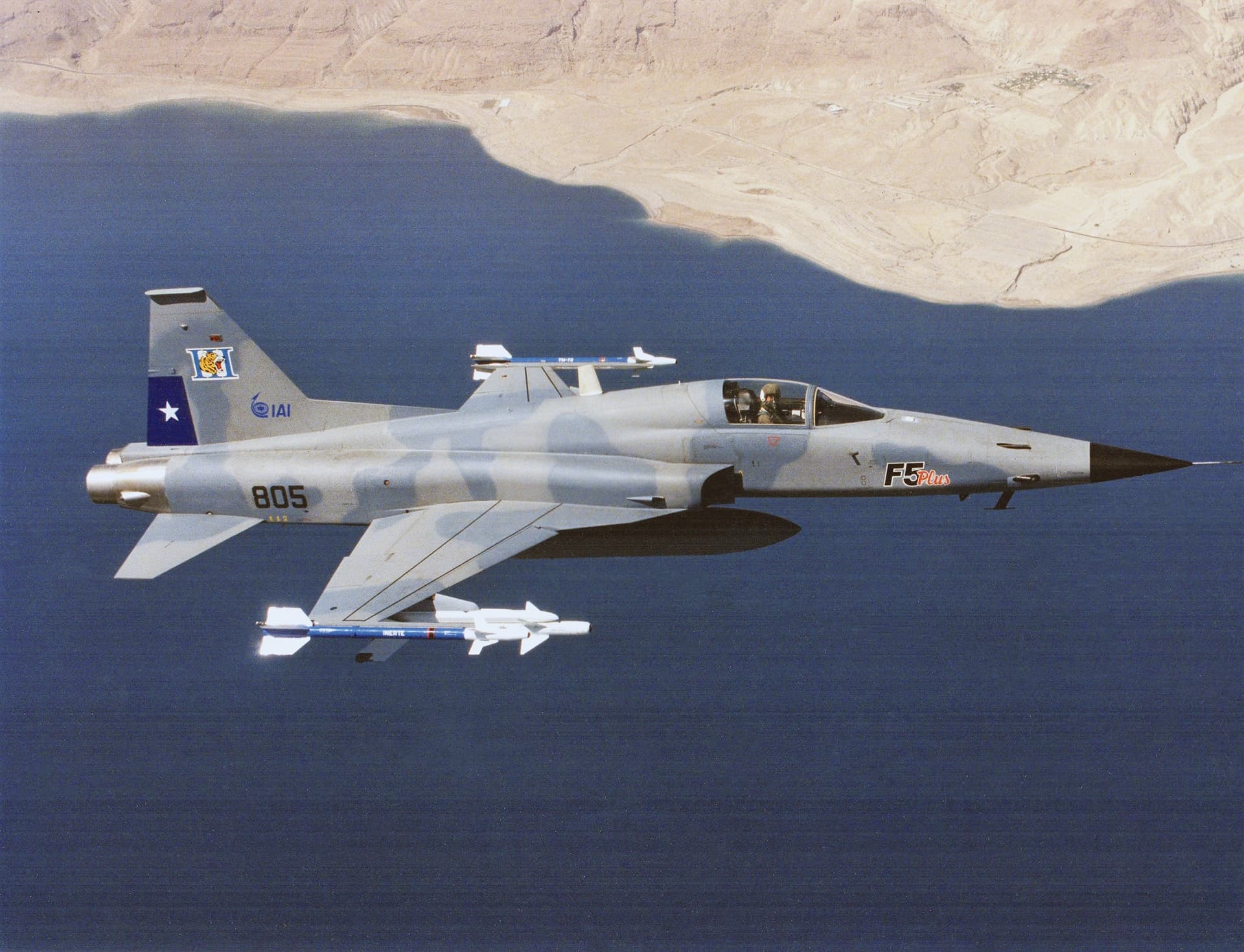
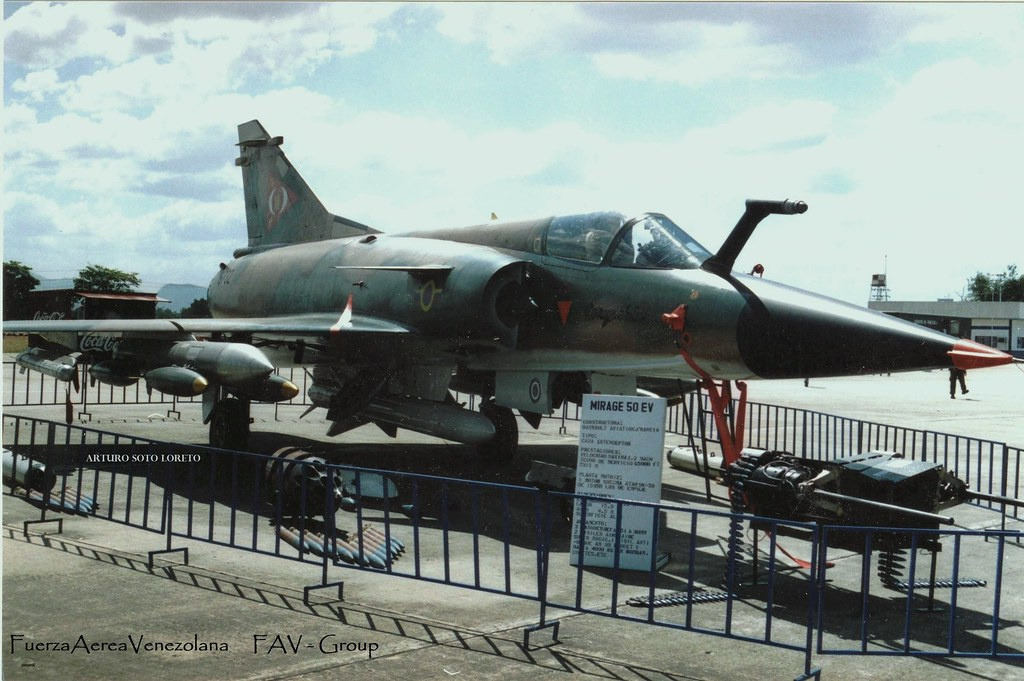
Rank 8
Spoiler
Cheetah C
- Description:
- In 2010, Ecuador purchased 12 Denel Aviation Cheetahs from South Africa, 10 of which were Cheetah C. These fighters have canards, an Atar 9K-50C-11 engine, ELTA EL/M-2032 radar, HOTAS, an in-flight refueling probe, an Elbit HUD, SPJ 200, RWS 200, and CFD 200 countermeasures. In Ecuadorian service, they are armed with Python III missiles, and although the Ecuadorian Air Force has Python IV missiles, they have not been seen in use.
- Crew:
- 1
- Armament:
- Primary: 2x DEFA 553 cannons
- Secondary: Python III Missile, Lizard LGB, Durandal bombs, Beluga cluster bombs, Samp series bombs, Type 23 SNEB rockets
- Performance:
- Maximum speed: 2,350 km/h
- Sources:
Su-30MK2 AMV
- Description:
- In 2006, Venezuela signed a contract for the acquisition of 24 Su-30MK2 AMV units. This is the same as in the game, and if the Hispanic tree is implemented, it should be moved from Russia to this tree.
- Crew:
- 1
- Armament:
- Primary: 30 mm GSh-30-1 cannon
- Secondary: R-73E missiles, R-27ER1/ET1 missiles, RVV-AE missiles, S-8KO/13OF rockets, S-25O/F/FM rockets, Kh-29L/TD missiles, Kh-59ME missiles, 1500/500/250/100 kg bombs
- Performance:
- Maximum speed: 2,304 km/h
- Sources:
F-16D+ Late
- Description:
- In 2002, Chile acquired 10 F-16 aircraft: six F-16Cs and four F-16D Block 50+ late versions. These aircraft are equipped with the more powerful General Electric F110-GE-129 engine, the ITT Exelis ALQ-211(V)4 AIDEWS pod, Link 16, and the AN/APG-68(V)9 radar. Their armament includes AIM-120C-5/7 and Python IV missiles, as well as a large array of air-to-ground weapons. Starting in 2006, the two-seat F-16D integrated a large structure on top of the aircraft, housing 120 additional countermeasures.
- Crew:
- 2
- Armament:
- Primary: 1x 20mm M-61A1 multibarrel cannon
- Secondary: AIM-120C-5/7 missiles, Python IV Missiles, AIM-9L/M missiles, AGM-65F/G missiles, Mk 80 series bombs, Griffin LGB, Opher LGB, GBU-10, GBU-12 Paveway II and III, GBU-31 JDAM, LGB GBU-16, GBU-54B LJDAM, FFAR rockets
- Performance:
- Maximum speed: 2414 km/h
- Sources:
- https://forum.warthunder.com/t/lockheed-martin-f-16d-block-50-late-latest-production-version/192415
- https://www.f-16.net/f-16_users_article9.html
- https://tallyho.cl/20-anos-de-la-llegada-de-los-primeros-f-16-block-50-a-la-fuerza-aerea-de-chile/
- https://www.defensa.com/chile/f-16d-block-50-fuerza-aerea-chile-20-anos-desde-presentacion
Mirage F.1JA
- Description:
- French supersonic fighter jets of the Ecuadorian Air Force (FAE). Between 1979 and 1980, Ecuador acquired 16 of these single-seat Mirage F.1JAs, which participated in the Cenepa War in 1995, where they shot down enemy aircraft. Subsequently, in 1997, they were modernized with the installation of a Thales Totem 3000 Inertial Reference System, a GPS receiver, and an Elisra Self-Protection System (SPS)-45 (V), which integrated the radar warning receiver (RWR) with electronic defense systems and chaff and flare dispensers. Finally, Python III missiles were installed on pylons alongside the R550 Magic 2 missiles, increasing the total number of IR missiles to four.
- Crew:
- 1
- Armament:
- Primary: 2x 30 mm DEFA 553 cannon
- Secondary: R550 Magic 2 missiles, Python III missiles, R530/530E missiles, Super 530F missiles, 2000/1000/500 lb bombs, 400/250 kg bombs, Type 23 SNEB rockets
- Performance:
- Maximum speed: 2,228 km/h
- Sources:
- Mirage F1C | War Thunder Wiki
- Air Wars between Ecuador and Peru Volume 3 by Amaru tincopa
- https://www.fae.mil.ec/mirage-f1-aeronave-icono-de-la-fuerza-aerea/
- https://noticiaslatam.lat/20220210/mirage-y-kfir-los-aviones-de-combate-que-ecuador-aun-recuerda-con-orgullo-1121507140.html
Kfir C.10
- Description:
- The Kfir C.10 is the most advanced version of the Kfir family and was acquired only by Colombia. Among its advantages are an AESA radar, a DASH helmet-mounted display (HMD) for target acquisition, and Derby radar-guided missiles. With the inclusion of the Hispanic tree, this aircraft should be moved from the Israeli to the Hispanic tree.
- Crew:
- 1
- Armament:
- Primary: 2x 30 mm DEFA 552A cannon
- Secondary: Derby missile, Python III missile, 3000/2000/1000/750/500 lbs bombs, FFAR rockets, Zuni rockets, 20 mm GAU-4 cannon, GBU-12/49 Paveway II guided bomb, SPICE 1000 guided bomb
- Performance:
- Maximum speed: 2,376 km/h
- Sources: