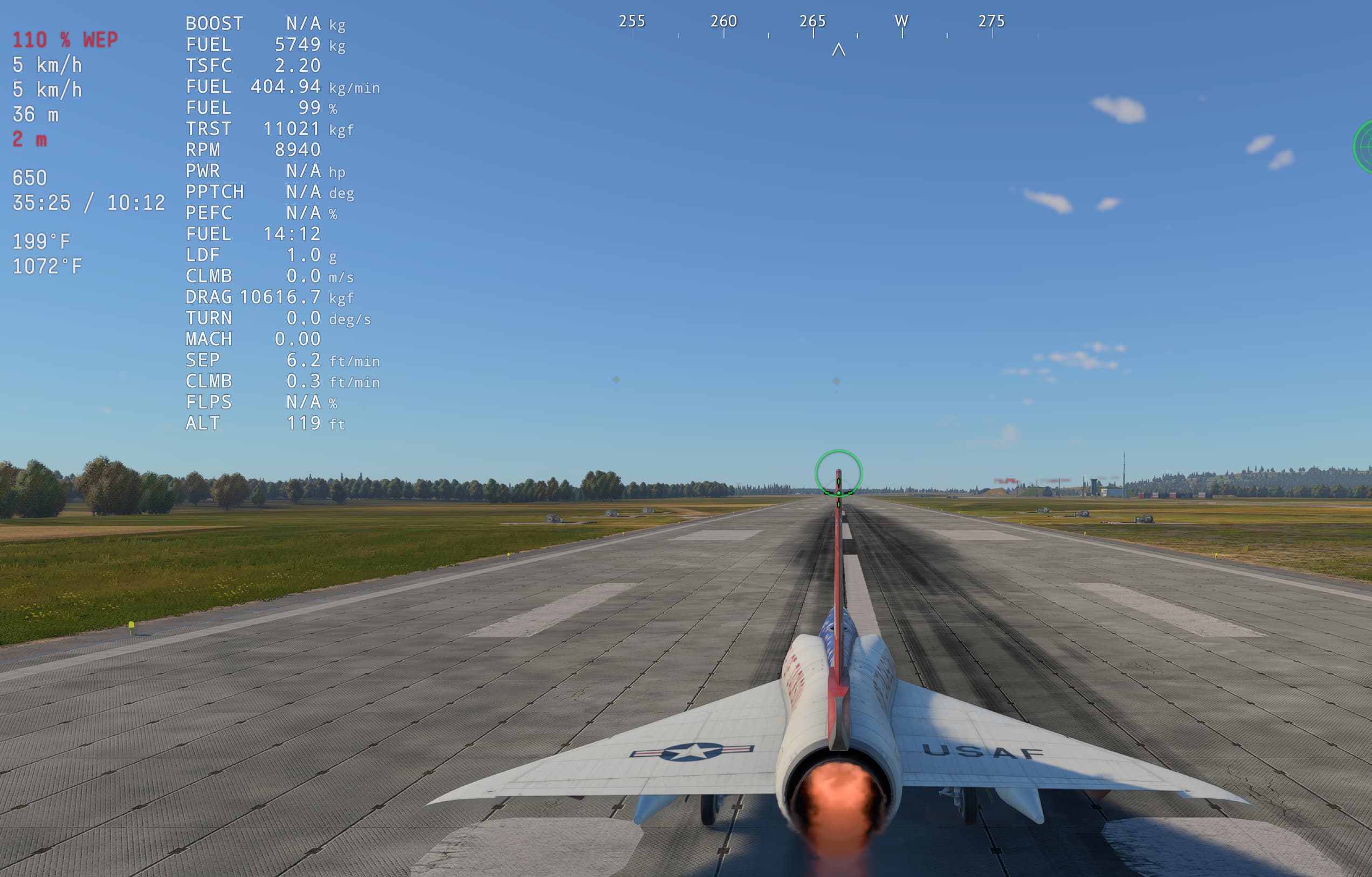
This topic is made to prove:
-
The channel losses of F-102A are not the same as the F-100DFIXED -
The AIM-4A/D are not inferior to the AIM-4F/G, but rather an equal.
-
that AIM-4F/G do not fit within the F-102A
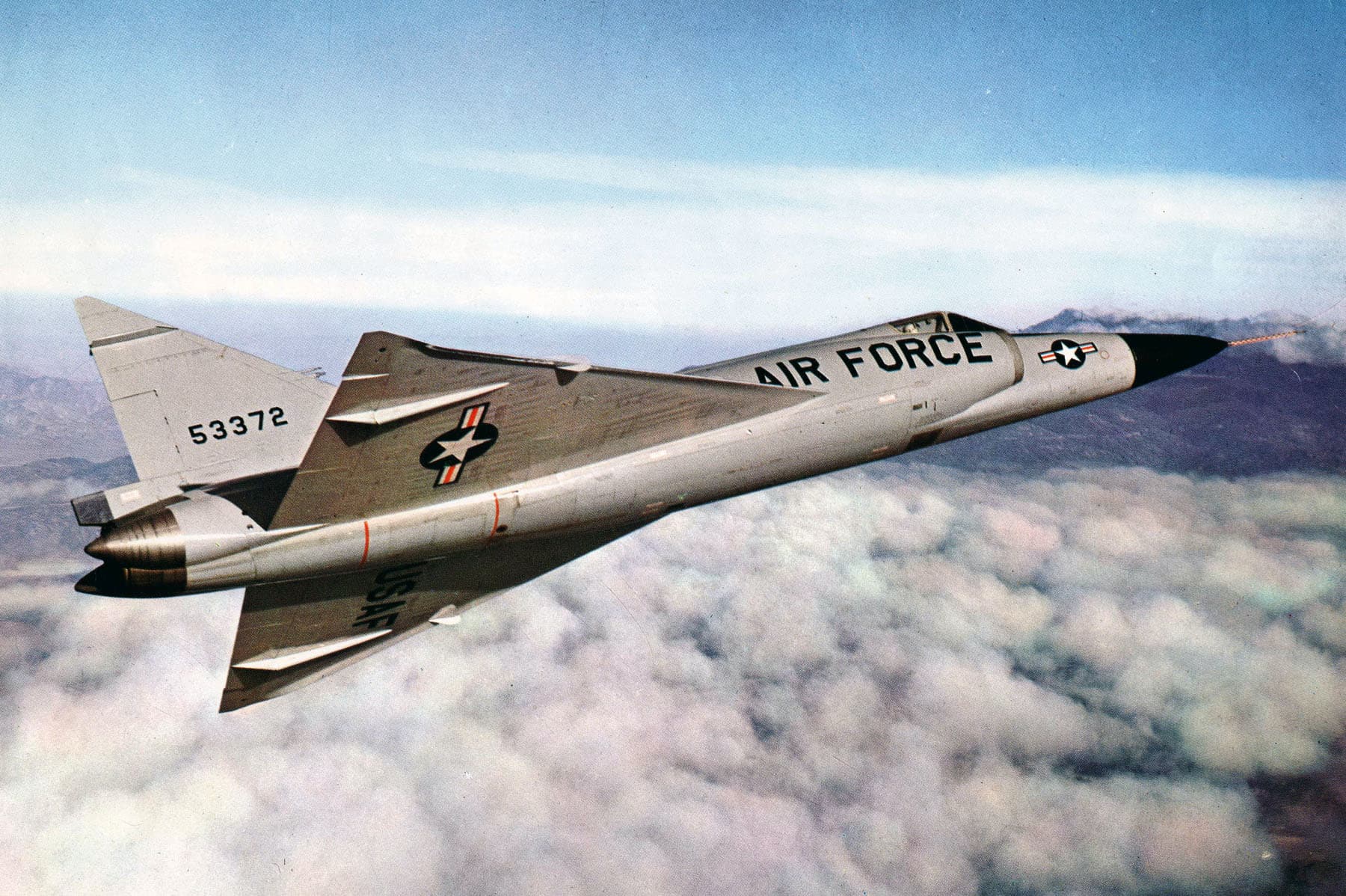
To Preface, this links to these Bug reports
F-102A incorrect Afterburning thrust
F-102A Missing AIM-4A/B/C/D Falcon Missiles
Incorrect AIM-4 Falcons on the F-102A
All Three of these reports have been denied
The Issue at hand
To Deny the F-102A’s afterburner report, the Developers had used the F-100D manual to prove the current thrust (from dev server) of F-102A was correct (~1440kgf thrust loss / 25%), Not only this wrong. It is very wrong, As F-102A has no similarities in their propulsion beyond using J57, but both use different variants.
The AIM-4A and AIM-4D are not inferior missiles to the AIM-4F and AIM-4G “Super” Falcons, at worst they are side-grades, at best they are plainly superior. They accelerate significantly faster, are significantly faster in general, with a much lower time to target. This superiority in the major categories is not indicative of an inferior missile. Just because the AIM-4G/F are alphabetically later than AIM-4A/D does not make them worse automatically.
Engine Thrust of the J57-P-23A
ARCHIVED. ISSUE IS FIXED
Within the respective Manuals, their installed thrusts static thrusts are as follows:
F-100D (J57-P-21A):
- Military Thrust (100%) - 8,300 lbf [1]
- Maximum Thrust (WEP) - 13,000 lbf [1]
F-102A (J57-P-23A): (5% Duct losses)[2]
- Military Thrust (100%) - 9,714 lbf [3]
- Maximum Thrust (WEP) - 15,238 lbf [3]
these are the intended thrusts on their engines, currently the F-102A (as of last dev server) 9,722 lbf of thrust on military thrust (correct within 0.08%), and 12,831 lbf on full afterburner (19% Under-performing), this is unacceptable, especially when Primary sources state so and the developers refuse to believe them.
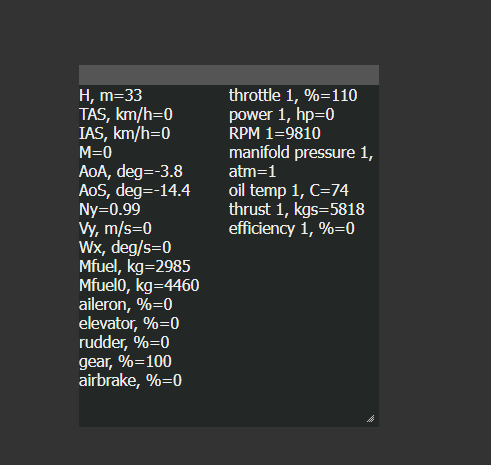
Localhost thrust from dev server (5818kgf), 5820kgf was visible on the X-ray
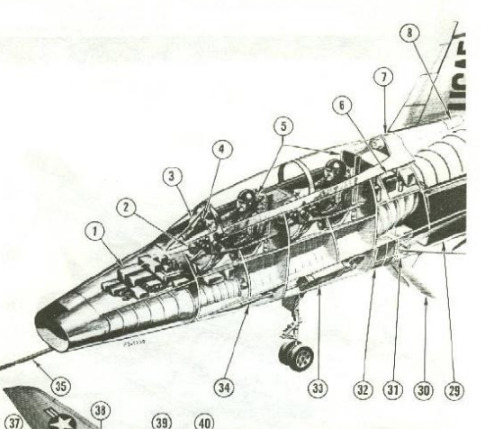
As can be seen clearly on the F-102A and F-100D, their intakes are extremely different, leading to wildly different channel losses, with the F-100D, featuring a single large intake duct, with a path that changes direction within the aircraft as to make room for the cockpit
 [1]
[1]
the F-102A Features a Bifurcated intake duct, with a more direct route toward the engine than the F-100D, which would reduce the channel/duct losses felt within the engine. this is but once piece of evidence to show that the F-102A does not have the same duct losses of the F-100D
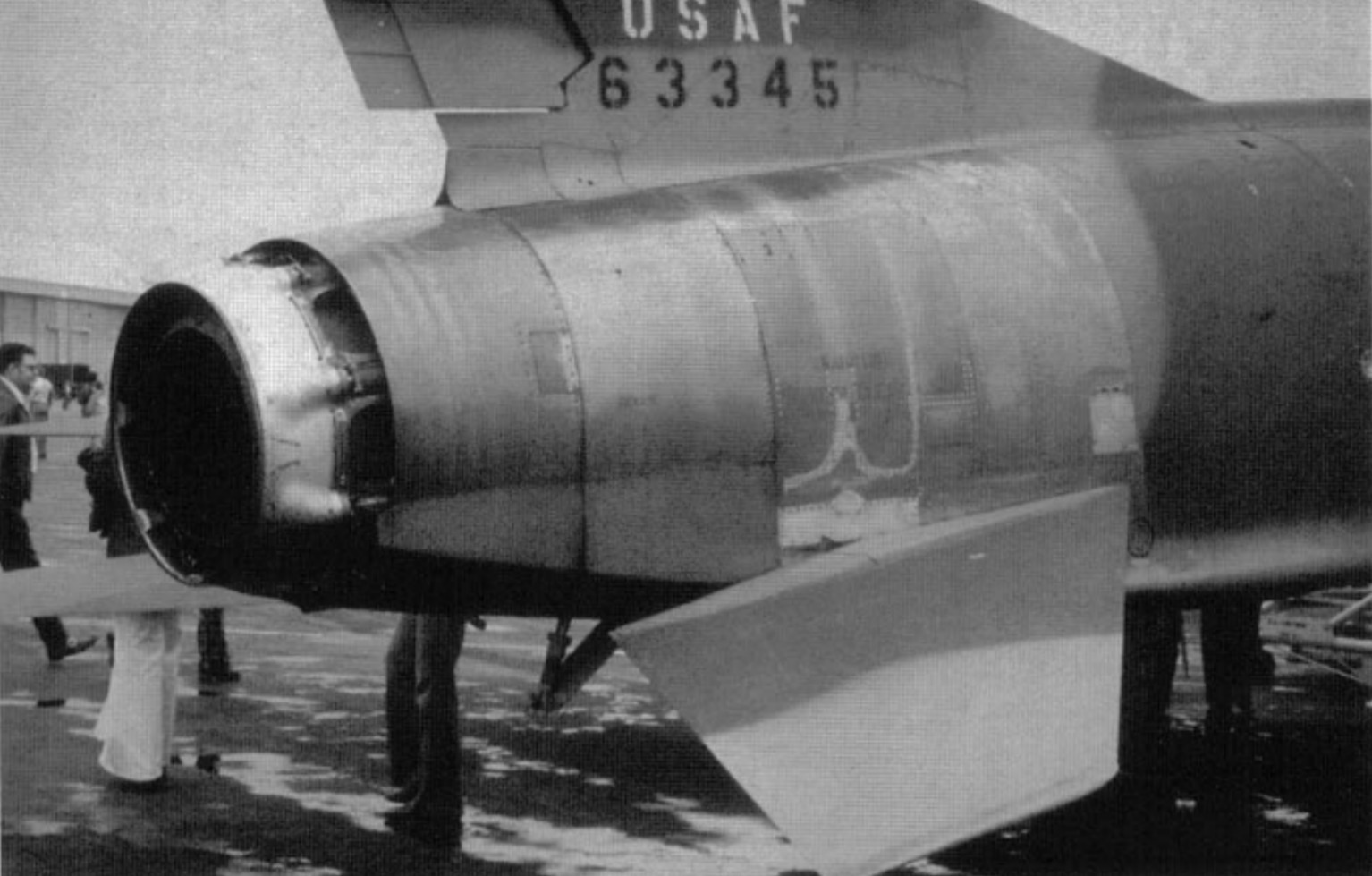
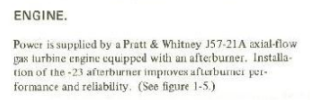
In US Air National Guard service[4], the F-100 was later refitted with the J57-P-23A nozzle under Project Pacer [5] from retired F-102As.[6] While normally stated to increase the reliability of the older “eyelid” style nozzle on unmodified F-100’s. The Flight manual for F-100D/F also states that the Nozzle change “improves Afterburner performance”[1], which once again shows that the F-102A would not have the same losses as F-100D, as the F-102A Afterburner nozzle transplanted onto F-100D, with all else the same, increases the thrust of the J57-P-21A engine.
 [1]
[1]
The way the War Thunder devs have denied the report is not only incorrect (see above sections) it is ridiculous. this is the equivalent of setting the thrust of the F-14A based off of the F-111A (Both use TF30 engines). given how different the F-100D and F-102A are, the data should be fully incompatible enough to even consider it transferable between airframes, However the War Thunder developers think otherwise. which is absurd, especially when they have previously denied reports of the same engine in different aircraft due to duct loss changes (F-16 and F-15 with F100-PW-220 engines for example), then how do they think a different aircraft and different engine should have the same duct losses?
The AIM-4 Falcon and F-102A
It is often believed that the AIM-4F and AIM-4G are plainly superior to the earlier AIM-4A and AIM-4D, Hence the designation “Super Falcon”, however this is incorrect, they never received the name “Super Falcon” officially[7][8][9][10] While AIM-4F and AIM-4G have superior manoeuvrability (at the same speeds), they cannot reach the same speeds as the earlier falcons,
The performance mentioned here will be important in the Opening volleys of a match, and where people still maintain altitude.
Both AIM-4F and AIM-4G reaching at maximum, 1200 feet per second faster than their launching aircraft[7][9] maxing out with a top speed of 2.9 mach from a mach 2 launch at 40,000ft.[8][10]
[8] [10]
Both AIM-4F and AIM-4G Graphs are identical.
as compared to the AIM-4A, which reaches a maximum of 1900 feet per second faster than the launching aircraft.[11] This leads to the AIM-4A reaching a higher top speed than the AIM-4F/G despite nearly half the launch speed at Mach 1.2 in the otherwise same conditions, however it does lose speed quicker.
[12]
AIM-4A
AIM-4D is slightly worse than this, reaching a max speed of 1700 feet per second higher than the launching aircraft[13] and reaches a maximum speed of Mach 2.9 from a Mach 1.14 launch at 40,000ft.
[14]
AIM-4D
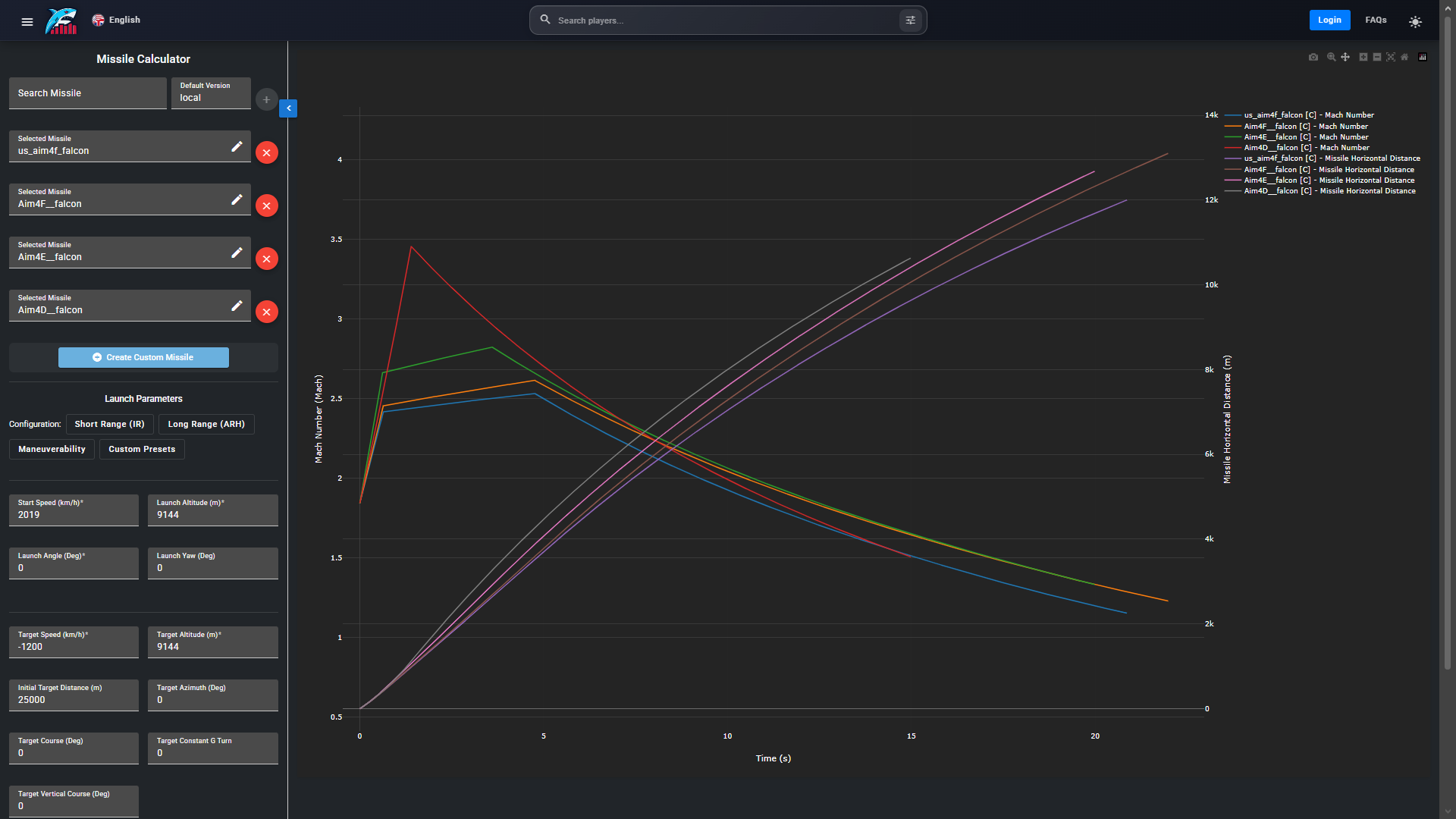
in addition, the above graph from statshark, shows the earlier falcon staying faster up until ~7 seconds into flight, meaning it will have a significantly shorter time to target in most circumstances.
This can be corroborated within the game (dev server) with the in built missile comparison feature, where the superior speed is clearly visible, and also shows a quicker time to target
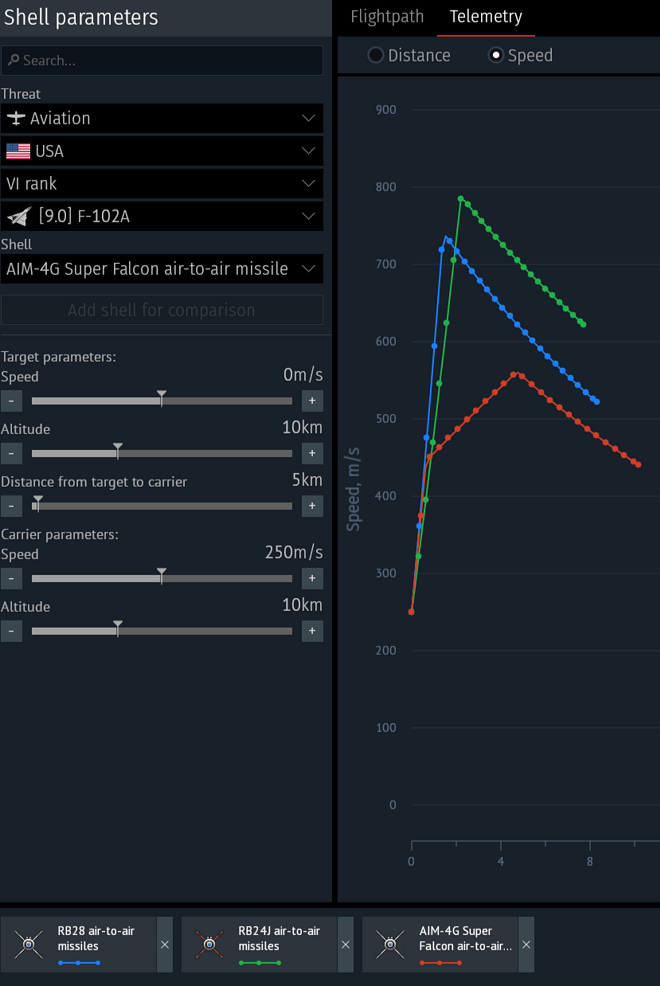 RB28 is the swedish designation for AIM-4D.
The speed of the AIM-4F/G is disproportionately visible at lower altitude, at sea level, and at a launch speed of Mach 0.8 (likely the typical you’ll see in game), the AIM-4A sees a top speed of just under Mach 2.2 [12] and AIM-4D seeing a top speed of mach 2.3 in the same conditions. [14]
[12]
AIM-4A
[14]
AIM-4D
Whereas the AIM-4F/G see a top speed of <mach 1.4 in the same situation, though maintain this up until 5 seconds in flight, which is roughly equal to the AIM-4D, despite the AIM-4D’s higher speed
[8] [10]
The Graph is Identical between AIM-4F and AIM-4G.
The above shows that until 5 seconds into flight, the AIM-4A and AIM-4D are faster than the AIM-4G/F, by a large margin, meaning time to target is much shorter.
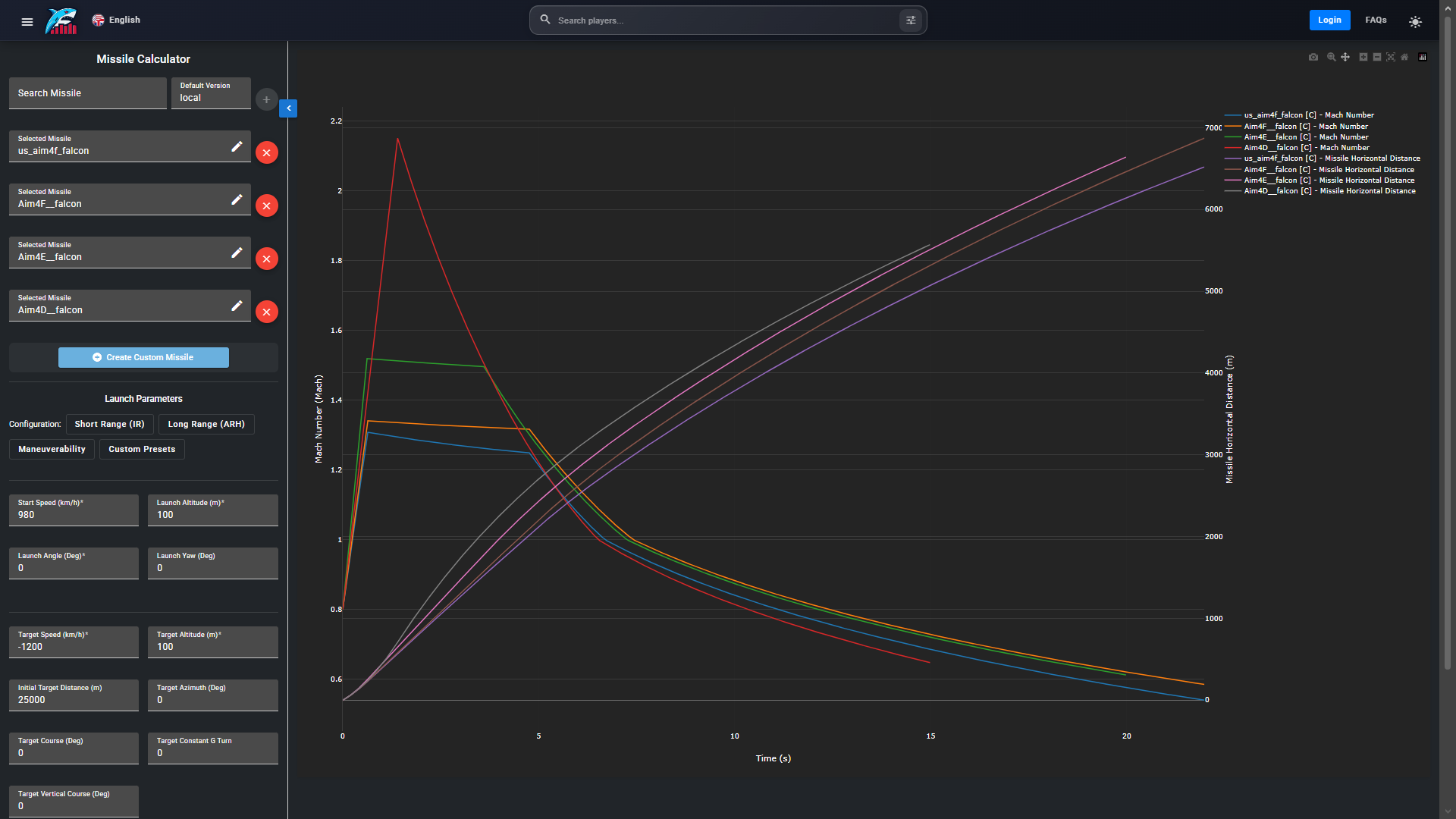
This is supported by the above graph, provided through StatShark, where the AIM-4D has a major speed advantage over the AIM-4F until 5 seconds into flight, after which AIM-4F pulls ahead slightly.
The AIM-4F/G are optimized for high altitude manoeuvring, managing a maximum of ~32G at mach 2.9 which is their maximum speed at 40,000ft from the F-106A, while in the same place the AIM-4A manages ~20G[12], and AIM-4D manages ~18G at their maximum speeds.
*It must be noted that the Super falcons can only manage this at a speed and G that would be impossible for the F-102A to reach as the data is from the F-106A at roughly mach 2[8] [10], equalizing the launching speed, super falcons may only pull around the same at maximum, but will maintain this speed for longer than the earlier falcons.
While at sea level AIM-4A and AIM-4D managing an estimated 15-16G turn at its maximum speed (estimate based on mach 1 launch speed), reducing to 11-12G as the missile falls below mach 1.45 [12] [14], whereas AIM-4F/G outperform this, with a ~13G turn at mach 1.5 which is their maximum speed at sea level.[8] [10]
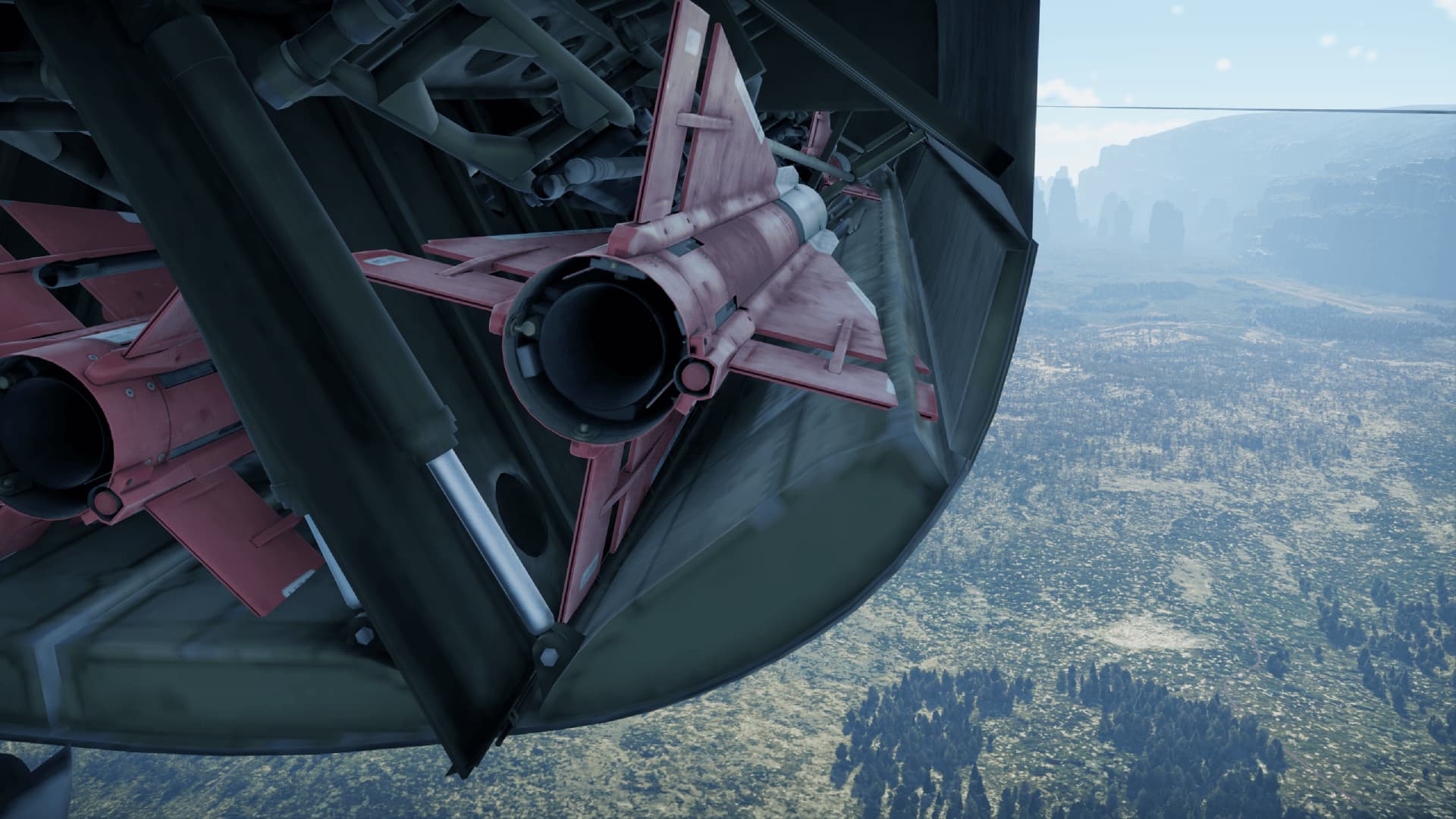
Aside from the performance differences of the AIM-4A/D and AIM-4G/F, the “Super Falcon” physically does not fit within the aircraft’s outer bays, (much like AIM-26), which primary suggest (shown by this bug report: Community Bug Reporting System) and is further confirmed by Gaijin’s own F-102A model in game which plainly displays the AIM-4F/G shown, clipping into the missile bay structure
In addition there is no evidence that the AIM-4G/F was ever fitted onto F-102A in the first place, shown by the lack of reference to the F-102A within the AIM-4F or AIM-4G SMCs, while it specific states only the F-106A[8] [10], both of which were made healthily within the F-102’s service life, this is compared to the AIM-4A SAC which shows F-89H, F-102A and F-101B, this does not apply the AIM-4D SAC, as it pre-dates any F-4 Phantom trials of the AIM-4 Falcon (beginning in late 1964)[15] while the SAC available to me is dated September 1963.
In addition the SMC for AIM-4G and AIM-4F only state the MA-1 Fire control system of the F-106A, and make no reference to MG-10 fitted to F-102A[8] [10]
Conclusion
- The F-102A Should receive its true engine thrust, roughly 6,900kgf from a ~5% channel loss figure,[2] as quoted in a primary document, and applied to the uninstalled thrust of 16,000 lbf on full afterburner. [3]
- The F-102A should receive its correct AIM-4A and AIM-4D missiles, which will help its performance, and remove the ahistorical AIM-4G and AIM-4F.
- Ensure future responses to bug reports require a much deeper look and research into when primary documents are involved.
The F-102A would be much improved if these changes were to go through, Providing it with enough thrust to effectively disengage despite its high induced drag thanks to its delta wing, greatly mitigating its lack of gun, and allow for it to more effectively set up a new missile shot.
The AIM-4A/D is broadly equal to the AIM-4F/G, and of which does not fit within the missile bay of F-106, and infact would be superior compared to in game.
Left: RB28 (AIM-4D) | Right: AIM-4G
*NOTE: This is from the dev server, the characteristics may be incorrect
I would also like to note, Even if AIM-4A needs further work, AIM-4D is ready to put on the F-102A due to RB28 being ready for the J35J/XS, as a placeholder until AIM-4A is finished, either, 1) AIM-4F can be kept as a placeholder, 2) transfer the AIM-4F seeker onto the AIM-4D as a placeholder
Sources
[1] T.O. 1F-100D(I)-1, Flight manual F-100D(I) & F-100F(I) - 31st July 1973
[2] F-102A Flight Training manual
[3] T.O. 1F-102A-1 Flight manual F-102A & TF-102A - 27th December 1971
[4] F-100 Super Sabre in action - Don Greer
[5] North American F-100 Super Sabre - Peter E. Davies with David W. Menard
[6] Air National Guard: F-100 Restoration - USAF Master Sgt. Vincent De Groot
[7] AIM-4F Characteristics Summary - September 1963
[8] AIM-4F Standard Missile Characteristics - September 1963
[9] AIM-4G Characteristics Summary - November 1971
[10] AIM-4G Standard Missile Characteristics - September 1963
[11] AIM-4A Characteristics Summary - September 1963
[12] AIM-4A Standard Missile Characteristics - September 1963
[13] AIM-4D Characteristics Summary - November 1963
[14] AIM-4D Standard Missile Characteristics - September 1963
[15] Canadian Museum of Flight - Hughes AIM-4 Falcon
I would like to thank @Nostalgistic, @Jadenbetter-live, @Ramonnoodleseuro, @lglscs and @Geamr for helping me compile this together.
For Further reading, see below:
F-102A Related Bug Reports
- Weapons & Systems Reports:
- [DEV] Incorrect AIM-4 Falcons on the F-102A — Not a Bug
- [DEV] F-102A Missing SUU-11 Gunpods — Accepted (Fwd as a suggestion)
- [DEV] F-102A Missing AIM-26B Missiles — Accepted (Fwd as a suggestion)
- [DEV] F-102A Missing AN/ALE-2 Chaff Dispensers — Accepted (Fwd as a suggestion)
- [DEV] Greek F-102A IRST doesn’t exist. — Accepted
- [DEV] F-102A Incorrect Search Radar Ranges — Pending
- [DEV] F-102A missing gyroscopic sight/EEGS for rockets — Accepted (Fwd as a suggestion)
- [DEV] F-102A missing missile range calculation function on radar — Pending
- [DEV] F-102 Lacks proper cockpit radar symbology — Accepted
- [DEV] F-102A radar missing IFF — Fixed
- [DEV] F-102 lacks ability to evenly mix IR and SARH missiles — Pending
- [DEV] F-102A Missing AIM-4A/B/C/D Falcon Missiles — Not a Bug
- [DEV] F-102A cannot fit the “super falcons” in most bays — Accepted for review
- [DEV] F-102A missile bay incorrect sequence — Accepted
- [DEV] F-102A incorrect missile bay opening time — Pending
- F-102A radar lacks chaff resistance — Pending
- Flight Performance & Aircraft Model Reports:
- [DEV] F-102A incorrect Afterburning thrust — Not a Bug
- [DEV] F-102A Fuel tank X-ray incorrect — Accepted
- [DEV] F-102A Incorrect landing gear rip speed — Accepted
- [DEV] F-102A VNe incorrect — Accepted
- [DEV] F-102A Engine temperatures incorrect — Accepted
- [DEV] F-102A engine overheating time incorrect — Accepted
- [DEV] F-102A incorrect MNe — Accepted
- [DEV] F-102A incorrect drag chute deployment speed — Fixed
- [DEV] F-102A pulls too many Gs — Accepted
- [DEV] F-102A Maximum Speeds incorrect — Accepted
- [Dev] F-102A: Incorrect wing span — Pending
- [DEV] F-102A incorrect nozzle behaviour — Accepted
- [DEV] F-102A Engine duct loss incorrect — Fixed
- Non-Dev Bug Reports:
- Missiles missing target because they aim at empty space — Accepted (highly Important for the AIM-4) — Hinted at during the recent BVVD post here
- Missiles like Matra 530, AIM-4F wrongly lose track up close — Pending
- AIM 4G/F should not be called “Super Falcons” — Pending