Steel Veterans of the Great Patriotic War in Cold War Service
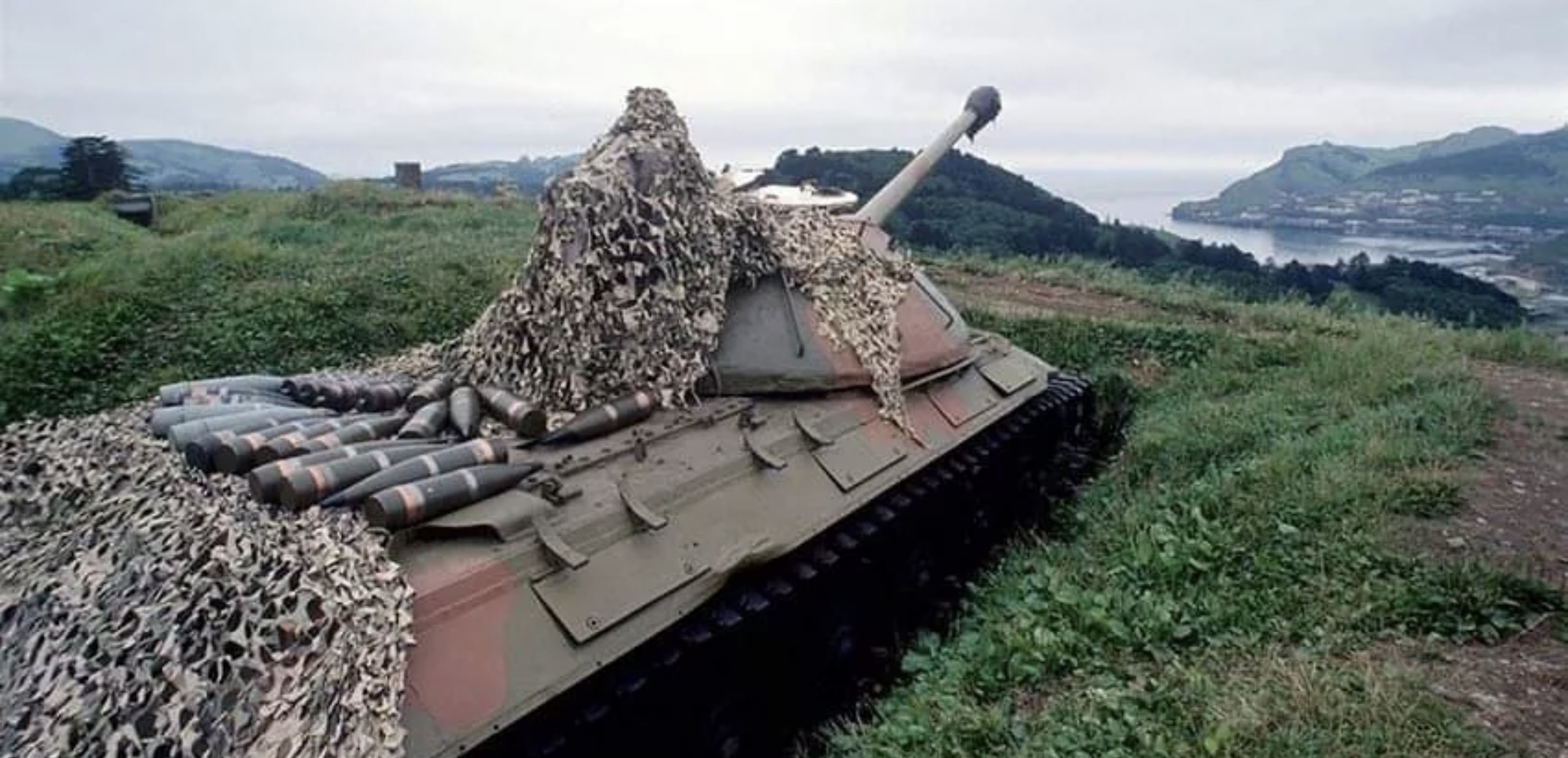
The photograph above shows an IS-3M stationed on the Kuril Islands. It may well be one of the last known photographs of a Second World War-era armored vehicle still serving in an active Soviet or early Russian military role.
Today I want to discuss a very niche, but fascinating, subject: the continued service of Soviet World War II-era armored vehicles during the Cold War, with a particular focus on their use within the Soviet Armed Forces themselves. Many of these wartime machines went on to enjoy remarkably long careers with foreign operators, and some remained in service, or even saw combat, well into the modern era. What is discussed far less often, however, is how long the very same vehicles continued to serve within the Soviet Union after 1945, often in roles far removed from those for which they had originally been designed. That lesser-known chapter of their history is what I’ll be focusing on today.
Despite fielding a vast variety of armored vehicles during the Second World War, only a relatively small number of types remained in Soviet service for a significantly extended period. The following vehicles are the primary examples:
Although all of these tanks first entered production during the Second World War, each underwent a range of postwar modifications intended to bring it closer to Cold War Soviet service standards. These upgrades commonly included improved radio and communications equipment, more powerful or more reliable engines, greater fuel capacity and operational range, enhanced night-driving equipment, including infrared devices for the driver, and updated optics and observation systems. They also benefited from access to newer ammunition types, most notably HEAT rounds, which eventually became available for all of the main guns fitted to the vehicles discussed above. Depending on the type, there were also numerous smaller changes aimed at improving reliability, crew effectiveness, maintainability, and compatibility with postwar Soviet doctrine and logistics. For a more detailed breakdown of the modernization history of each vehicle, you can click on its name and read the dedicated section covering its individual upgrades and service changes.
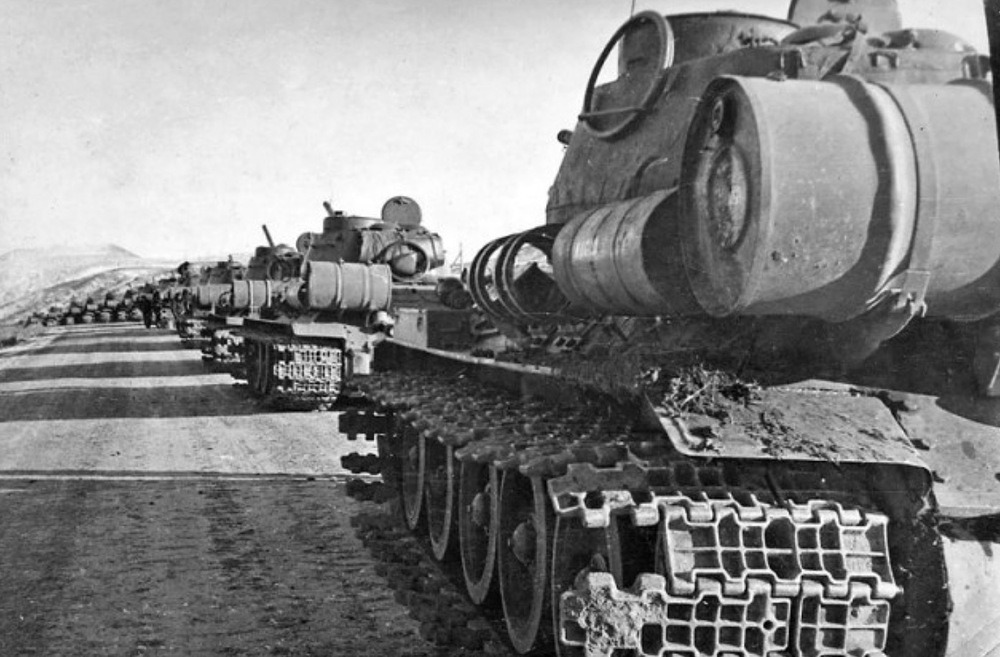
The photograph above shows a T-34-85 Model 1969 in Chukotka during the mid-1970s, where it formed part of the local defenses protecting strategically important Soviet installations against the possibility of an enemy landing.
P.S. If you come across a WWII-era Soviet vehicle in a museum, memorial, or parade, there is a good chance that it incorporates at least some of the postwar modifications discussed above. As a result, museum labels and exhibition materials can sometimes be misleading when they present a vehicle simply as a “WWII example” without acknowledging later upgrades made during its Cold War service. Truly original, wartime-condition vehicles are comparatively rare, especially when preserved in good condition. To avoid confusion, I recommend checking the individual vehicle suggestions above, where I highlight the main visual and technical differences between these postwar-modernized machines and their original Second World War configurations.
For members of the War Thunder community, particularly those interested in creating Tech-Tree suggestions that include Soviet vehicles, this is especially important to keep in mind. Postwar modernizations were often substantial enough that a vehicle should not automatically be treated as identical to its wartime counterpart simply because it retained the same basic name. A T-34-85 Model 1944, for example, differs in a number of meaningful ways from the later T-34-85 Model 1960 and Model 1969 modernizations. These differences can directly affect what B.R the vehicle might get in-game.
Most Soviet WWII vehicles exported abroad, and many of those later seen fighting in Cold War conflicts, were most likely no longer in their original wartime configuration. Depending on the country, the date of export, and the period in which they saw combat, they often received partial or substantial modernization packages.
The Cold War Service

There were several ways in which these vehicles continued to serve in the Soviet Union during the Cold War, which I have divided into three broad categories. The first was continued service as regular combat vehicles, still performing essentially the same battlefield role for which they had originally been designed. The second was their use as part of defensive fortifications, where they could be employed in several different forms: completely static and dug into prepared positions, stripped down to a turret mounted on a concrete bunker, or retained as a mobile firing point capable of moving between prepared defensive positions when required. The third category covers the many vehicles that found entirely new purposes after their original combat role had become obsolete. Some were converted into engineering, recovery, firefighting, training, target, or experimental vehicles, while others were adapted for alternative combat roles, including missile-launching and other specialized duties. The following sections will examine these different forms of Cold War service in greater detail.
In Service as Regular Tanks
Click to Read More
The reason supposedly obsolete vehicles remained in active Soviet formations is relatively straightforward. The Soviet Union was an enormous country with an enormous military and a vast territory to defend, and replacing every older vehicle with a brand-new tank would have been unnecessarily expensive and logistically inefficient. If a T-34-85, IS-series tank, or older self-propelled gun still had usable mechanical life, a serviceable gun, and large stocks of compatible ammunition, there was little reason to discard it immediately.
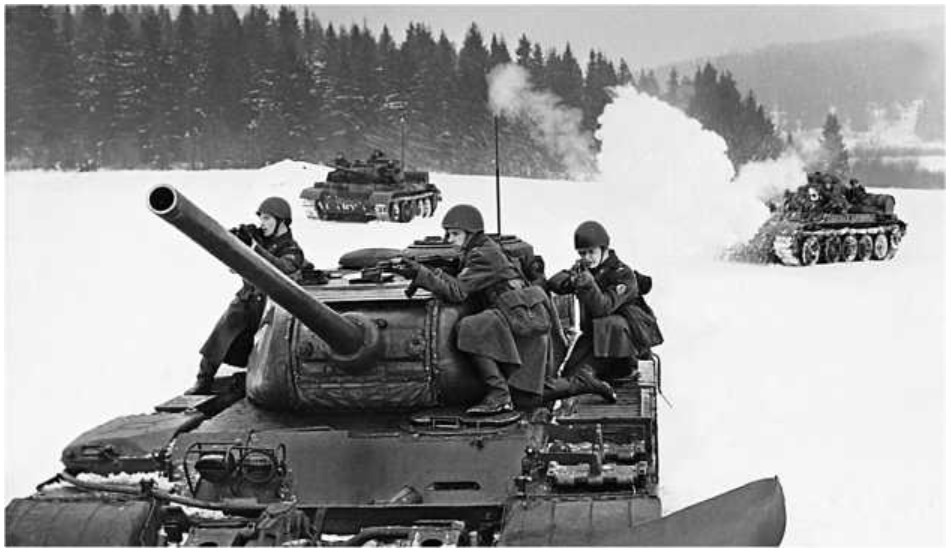
The photograph above depicts a T-44M participating in Soviet military exercises during the 1970s.
It is also important not to judge these vehicles solely by whether they could defeat the newest Western tanks. While vehicles such as the M60 and Leopard 1 were capable of fighting modern Soviet armor, they did not make up the entirety of NATO’s vehicle fleet, and many potential opponents still operated older or more lightly protected equipment. More importantly, tanks were not used exclusively to fight other tanks. An older Soviet vehicle could still be highly effective against infantry, bunkers, fortified positions, soft-skinned vehicles, buildings, and defensive strongpoints. In those roles, a powerful 85 mm, 100 mm, 122 mm, or 152 mm gun remained dangerous regardless of how outdated the chassis itself had become.
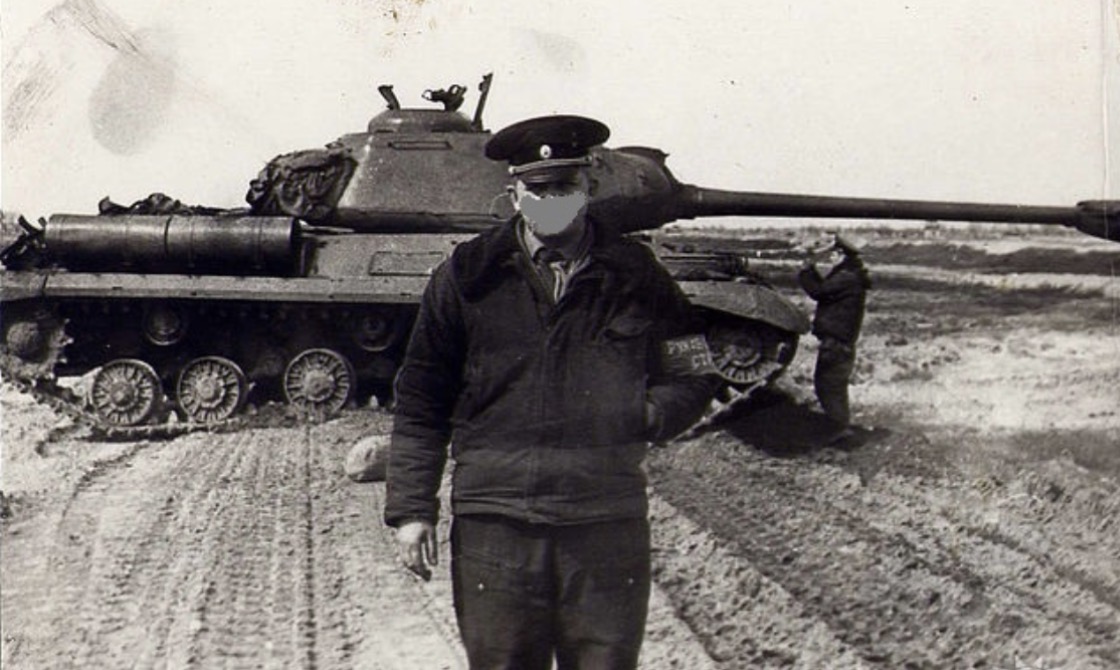
The photograph above reportedly depicts an IS-2M during the mid-to-late 1970s.
Throughout my research into the Cold War service of Soviet World War II-era armored vehicles, one pattern appears repeatedly: most of these vehicles continued to see some form of normal mobile service in Soviet formations at least until the end of the 1970s. By the 1980s, however, the picture becomes much more complicated. Mentions of their use as ordinary frontline combat vehicles had largely disappeared. I have been able to confirm that IS-2Ms and ISU-152Ks were still participating in Soviet military exercises during the 1980s. Three ISU-152Ks were also reportedly taken out of storage and returned to service as heavy tractors during the Chernobyl disaster liquidation. Of these three vehicles, two were subsequently abandoned within the contaminated zone. Another particularly unusual case was the SU-100. During the early 1980s, more than a hundred SU-100s were modified into remotely controlled target vehicles capable of starting, moving across the training ground, and even firing a single preloaded round. These vehicles were employed during major exercises such as Zapad-81, Zapad-83, Zapad-84, and Osen-88. Other vehicles remained mechanically serviceable for ceremonial or potentially operational purposes. A number of T-34-85s and SU-100s were taken from storage, refurbished, and returned to running condition for the 1985 Victory Parade.
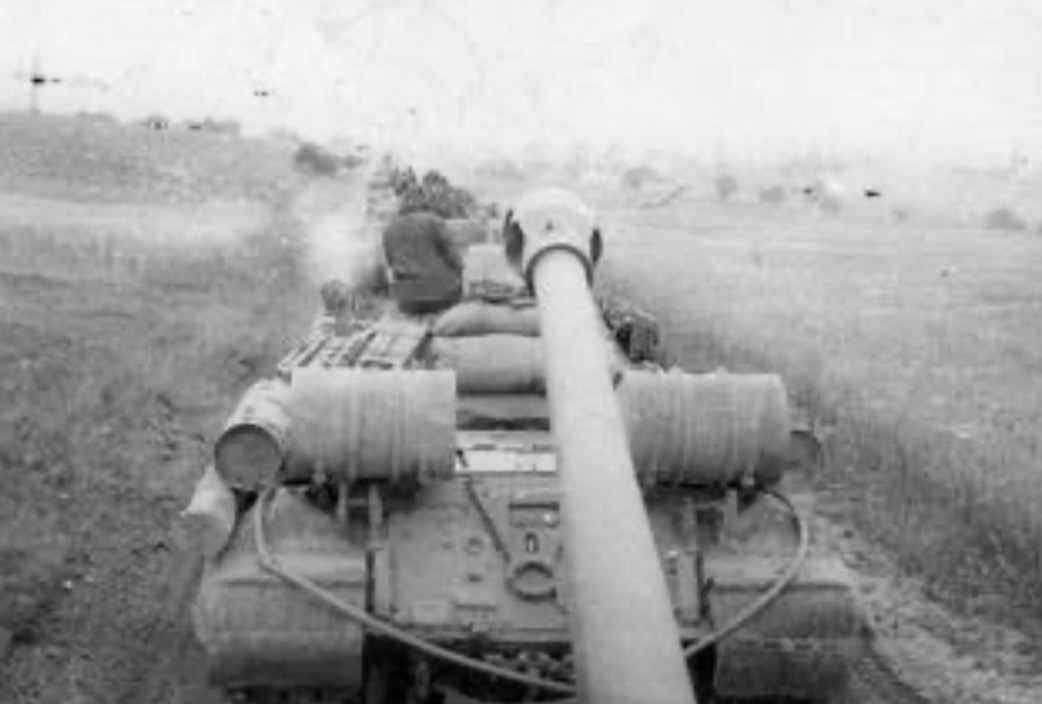
The photograph above depicts an IS-3M participating in Soviet military exercises during the 1970s.
The evidence discovered also states that hundreds of Second World War-era armored vehicles were still being retained in storage or reserve formations in Transbaikalia and the Soviet Far East during the 1980s. The reasoning behind this was fairly straightforward. These regions were generally lower priorities for the most modern Soviet equipment, particularly compared with Central Europe, and many of the likely local opponents did not require the same concentration of cutting-edge armor. Against China especially, older tanks could still be useful.
The same logic applied to Sakhalin, the Kurils and Chukotka. The geography of the region strongly favored the defender. Any Japanese or American attempt to seize these remote areas would have faced major logistical and geographic difficulties. Older equipment therefore still had considerable value as part of a layered defensive system. Small or hastily assembled landing forces could potentially be contained by local reserve, fortified, and second-line formations, while a major amphibious operation would have required such extensive preparation and concentration of forces that Soviet intelligence would likely have detected it in advance. That warning time would have allowed more modern Soviet units to be redeployed or reinforced into the threatened area. In this context, retaining older T-34s, IS-series tanks, and other Cold War relics was not necessarily irrational: they did not need to defeat the most advanced enemy formations on their own, only to provide local defense, delay an attack, support fortified positions, and buy time for stronger forces to arrive.
By the 1980s, the introduction of newer tanks on high-priority fronts increasingly pushed older Cold War designs such as the T-54/55 and T-62 into secondary formations. In turn, these vehicles began replacing the remaining Second World War-era equipment still serving in lower-priority units. In some cases, formations that had previously relied on IS-3s or other wartime vehicles were re-equipped directly with relatively modern armor instead. As a result, reports of World War II-era vehicles still being used as regular combat vehicles become far scarcer during the 1980s, even though many continued to survive in reserve.
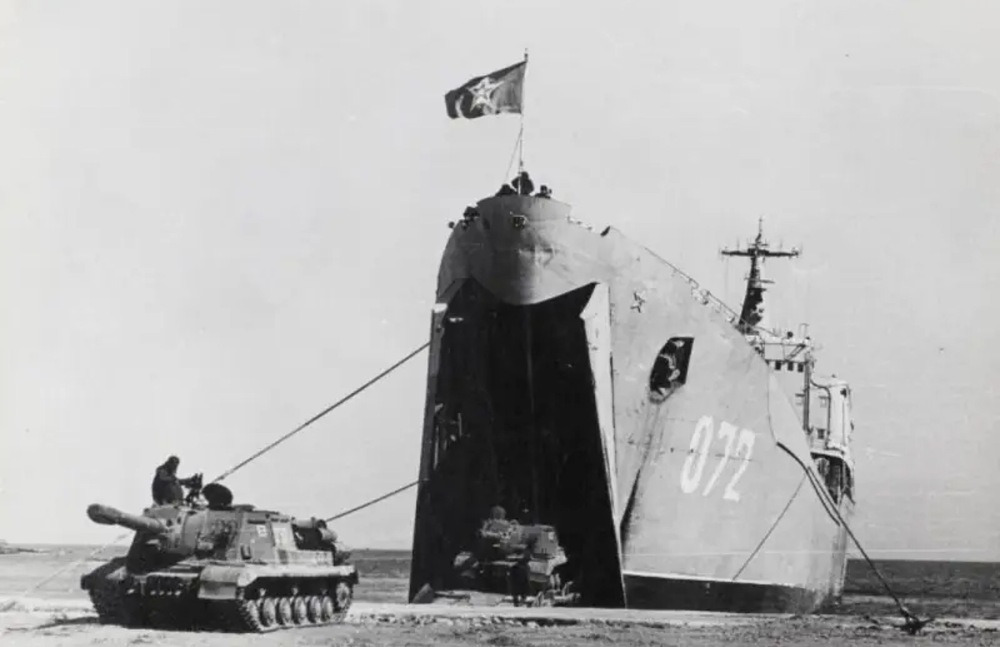
The photograph above depicts an ISU-152K participating in Soviet naval exercises during the early 1980s.
Meanwhile, Soviet forces in Afghanistan operated alongside Afghan Army T-34-85s and SU-100s, and Soviet personnel may occasionally have operated these vehicles themselves. The T-34-85 was particularly well suited to certain aspects of mountainous warfare, as its gun could elevate to roughly +22°, allowing it to engage infantry, firing positions, and fortifications located high on surrounding slopes. Although its limited gun depression could still be a disadvantage in some terrain, the tank’s relatively simple construction, powerful 85 mm gun, and ability to deliver direct high-explosive fire meant that even this Second World War design could remain useful in Afghanistan’s difficult mountainous environment.
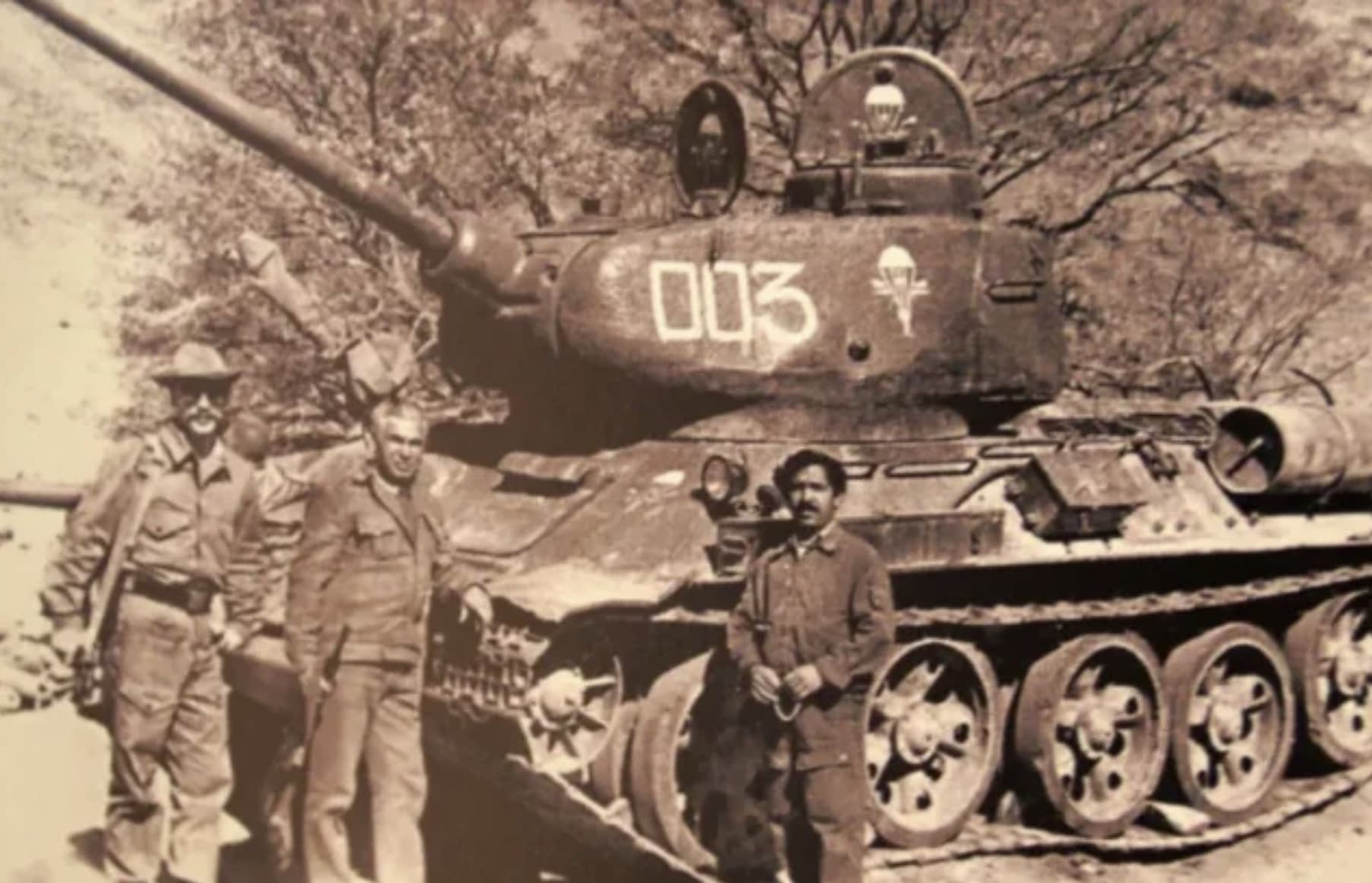
The photograph above depicts a T-34-85 Model 1969 carrying Soviet Airborne Forces markings in Afghanistan.
Outside the Soviet Union, some of these vehicles went on to enjoy even longer careers, with a few reportedly remaining involved in active combat decades later. T-34-85s and SU-100s have appeared in the fighting in Yemen, while an ISU-152-series vehicle was reportedly destroyed during the 2003 invasion of Iraq. Several countries, including North Korea, Cuba, and Vietnam, have also retained quantities of Second World War-era Soviet armor in reserve/storage. Vietnam is a particularly notable example, as surviving T-34-85s and SU-100s have been maintained in remarkably good condition. Their post-Soviet and foreign service histories could easily fill an entire discussion of their own, however, so I will leave that for a separate topic.
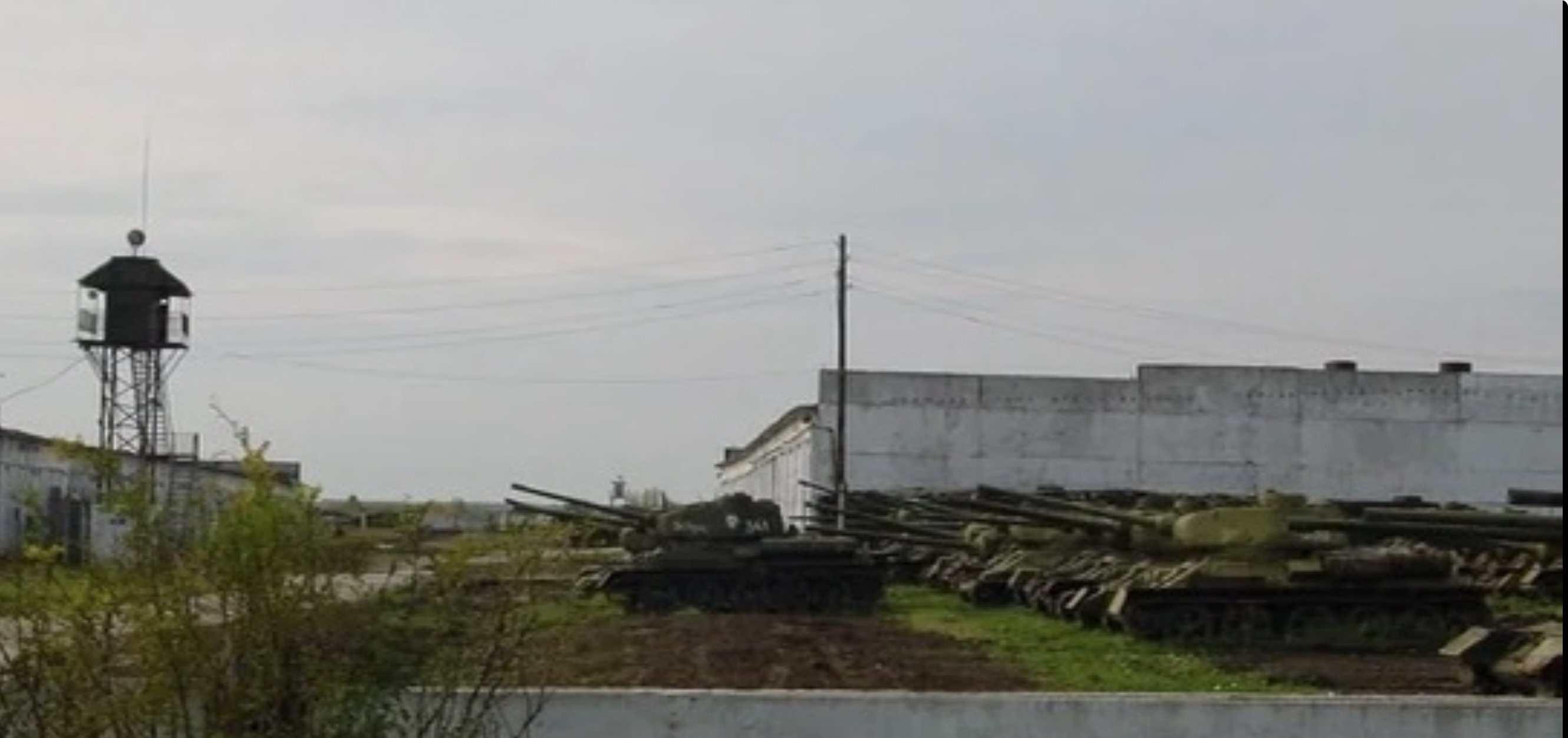
The photograph above depicts T-34-85s and SU-100s at a storage base during the 1990s.
What is particularly remarkable is that many of these supposedly obsolete vehicles were not formally removed from service until after the collapse of the Soviet Union, under the administration of the Russian Federation. The clearest illustration of this is the 1990 Treaty on Conventional Armed Forces in Europe (CFE), whose official list of existing battle-tank types still included the T-34. The formal retirement dates are equally striking. The T-34-85 was officially removed from Russian service in 1993, the IS-2M in 1995. The IS-3M survived on paper even longer, being officially removed from the Russian Ministry of Defense inventory only in 1997; Russian technical sources give the same 1997 date for the IS-4 as well. By these dates, however, most surviving examples were by then in storage or assigned to fortified regions serving as static firing points, particularly along the former Sino-Soviet frontier and the Sakhalin/Kuril Archipelago.
On a positive note, many of these vehicles have survived in remarkably good condition, with a number of examples still running and driving today in museums, private collections, and heritage organizations. In that sense, at least part of their long service history has been preserved rather than lost entirely.
In Service as Fortifications
Click to Read More
Following the Sino-Soviet split, the Soviet Union became increasingly concerned about the possibility of a major conflict with China and dramatically strengthened its forces along the Chinese frontier. At the same time, Moscow also had to consider threats elsewhere in the Pacific: Japan continued to claim the southern Kuril Islands, Soviet planners had to account for the possibility of American and Japanese operations against Sakhalin and the Kurils, and the northeastern approaches facing Alaska could not simply be left undefended. Maintaining these enormous and geographically isolated territories therefore required a substantial permanent military presence, even though many of these areas were far removed from the Soviet Union’s highest-priority European fronts. By the end of the 1980s, the scale of this commitment was enormous. Across the wider Soviet Far Eastern strategic direction, contemporary estimates put the force at roughly 600,000 personnel, divided between approximately 271,000 troops oriented primarily against China and 326,000 facing the Pacific/Japanese-American direction.
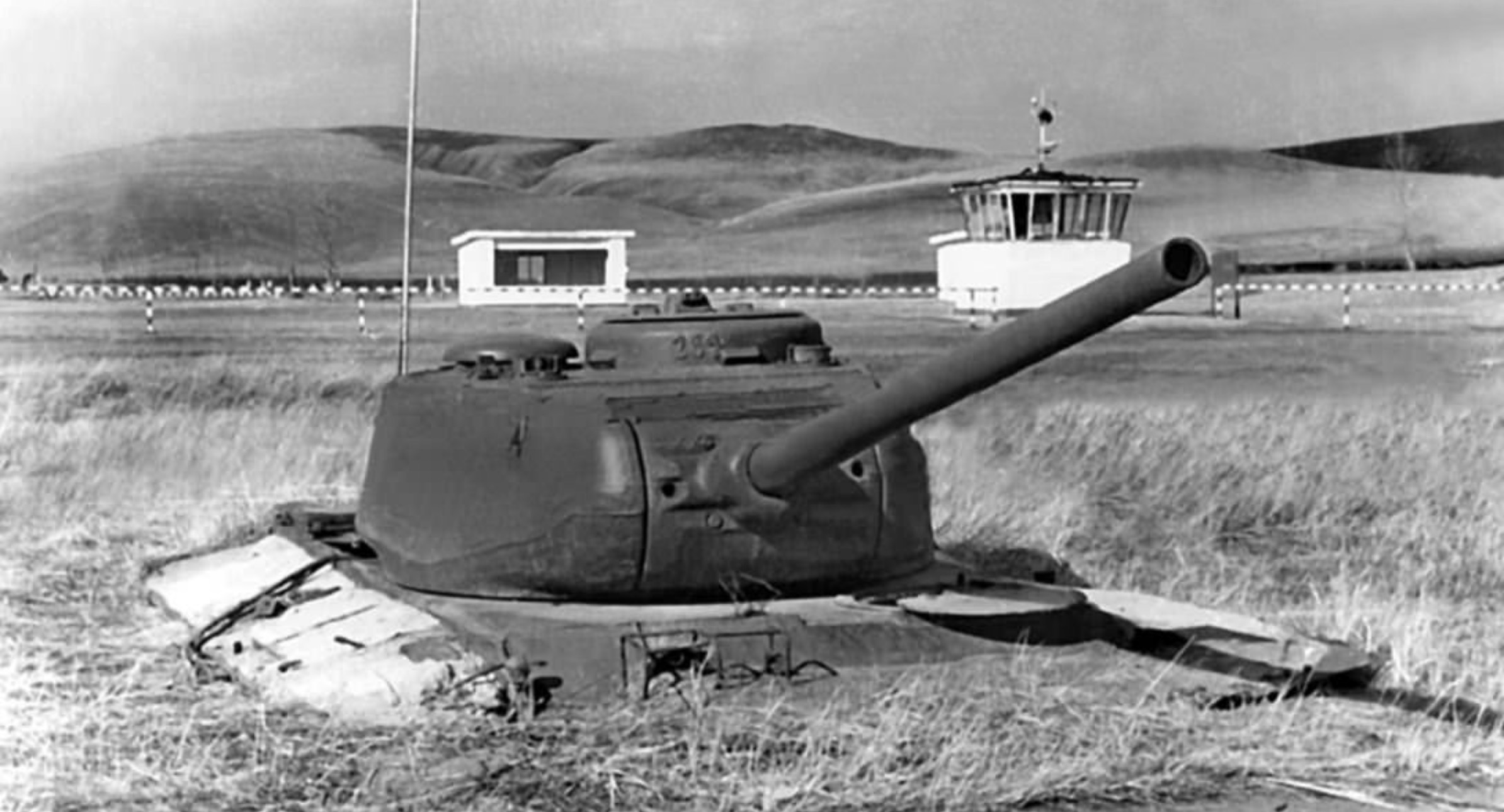
The photograph above depicts a dug-in T-44M on the Sino-Soviet border, with much of the hull buried below ground level so that only the turret and upper structure remained exposed.
However, even a military power as vast as the Soviet Union had to establish clear priorities, and the Transbaikal and Far Eastern regions generally received less attention than the central European theater. Many lower-priority formations were therefore maintained at reduced peacetime strength and relied heavily on conscripts and reservists who would only bring the unit up to full strength after mobilization. Such formations were naturally better suited to static and prepared defensive warfare, where terrain, fortifications, and pre-planned fields of fire could compensate for limited training and readiness. This did not mean that the region lacked elite or highly capable units, only that they were far less concentrated there than in Eastern Europe.
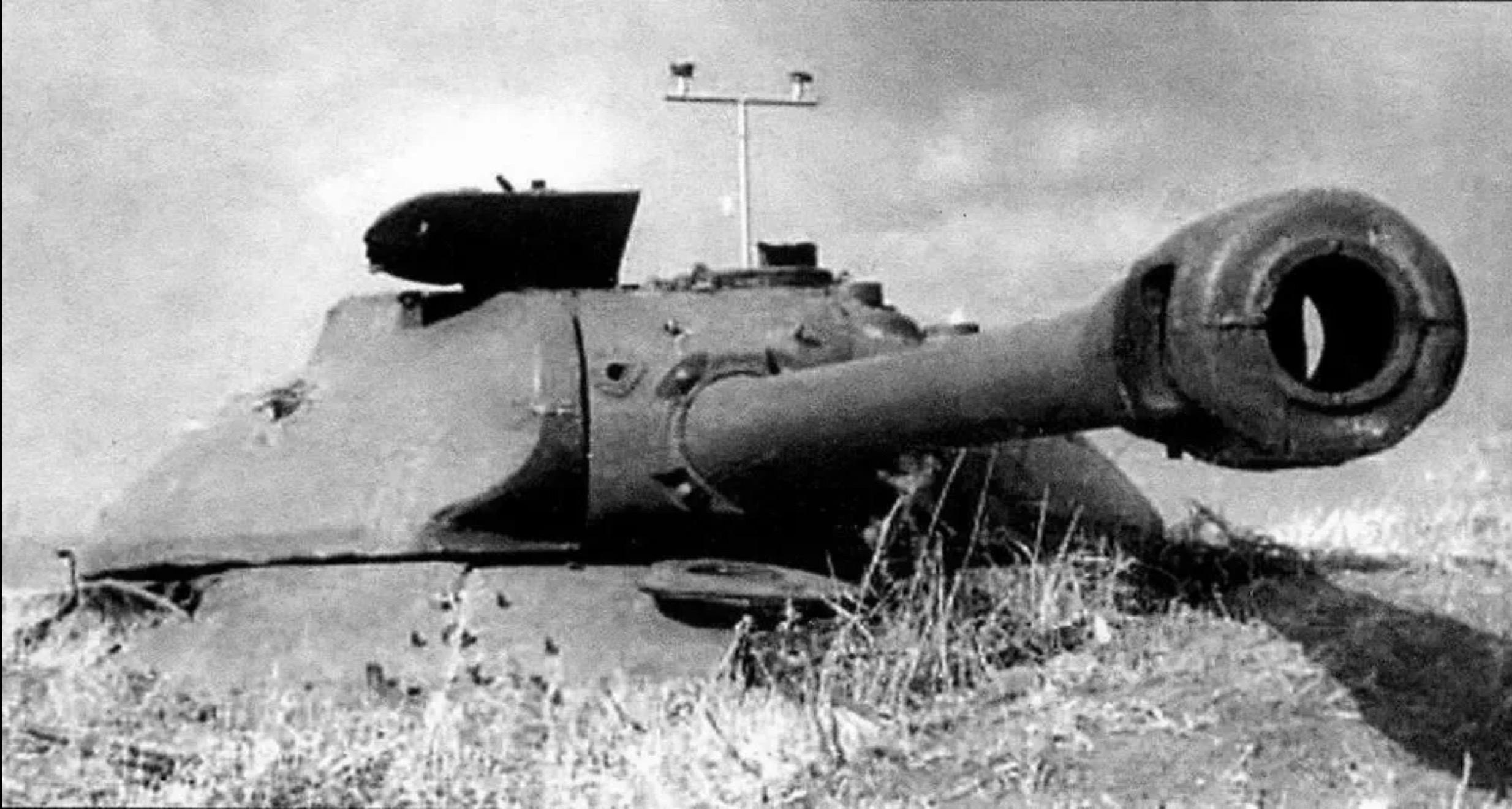
The photograph above depicts a dug-in IS-3M on the Sino-Soviet border.
In that context, static tank firing points made a great deal of sense. An older WWII-era turret or complete tank placed in a prepared position could provide considerable firepower without requiring the maintenance, fuel, or mobility of a modern armored vehicle. The simplicity of these systems was also an advantage: manually operated traverse and elevation mechanisms, no electronics, and no requirement to be familiar with tank maneuver tactics made them suitable for reservists and mobilized personnel. More importantly, their guns were still powerful enough to threaten most Chinese or Japanese armored vehicles likely to be encountered in the region. For a defensive force expected primarily to hold prepared positions and delay an attacker, an old T-34, IS-series, or similar turret could therefore remain useful long after the vehicle itself had become obsolete as a maneuver tank.
There were broadly three ways in which obsolete tanks were incorporated into Soviet defensive systems, although the exact arrangement varied between fortified regions. The simplest was to use the entire tank as a stationary firing point, known as an НТОТ (неподвижная танковая огневая точка). A complete vehicle would be driven into a prepared fighting position and dug in so that little more than the turret and upper hull remained exposed. Once permanently installed, the engine and much of the running gear could be removed, with the freed internal space used for additional ammunition. These vehicles were grouped into РТОТ, or companies of tank firing points. The surrounding defensive position could include trenches, ammunition recesses. other more conventional bunkers and protected communication routes so that crews could reach and service the firing point without unnecessarily exposing themselves to fragments and small-arms fire.
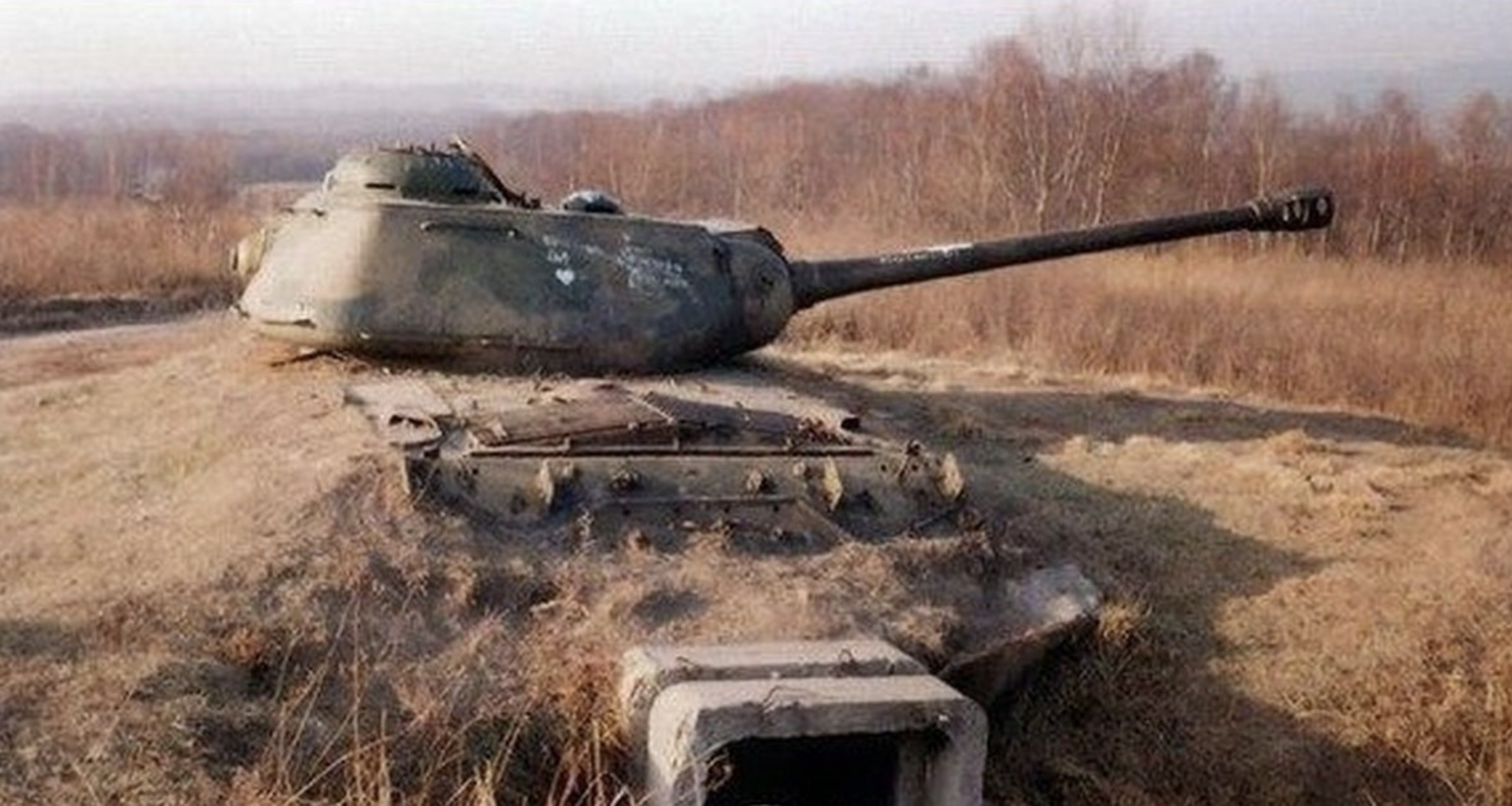
The photograph above depicts an IS-2M partially buried in the ground and converted into a fortified firing position, with a clearly visible entrance between the tracks allowing the crew to access the interior from below while remaining protected from enemy fire and shrapnel.
A more sophisticated, and considerably more expensive, solution was to dispense with the tank hull entirely and build a purpose-designed reinforced-concrete bunker around the turret. Soviet engineers produced standardized fortifications for various turrets, organized into ВТБ/АВТБ turret platoons (ВТБ (Взвод танковых башен) => “Platoon of Tank Turrets”/АВТБ (Артиллерийский взвод танковых башен) => “Artillery Platoon of Tank Turrets”). These were not simply turrets sitting on blocks of concrete: later designs incorporated protected entrances, ammunition rooms, spent-case collection areas, electrical and ventilation equipment, crew accommodation, heating and filtration systems beneath the turret. One standardized T-54/T-44M installation could hold around 180 rounds and provide full 360-degree traverse. Such positions formed part of larger bunker and trench networks and were considerably more capable than an improvised buried tank.
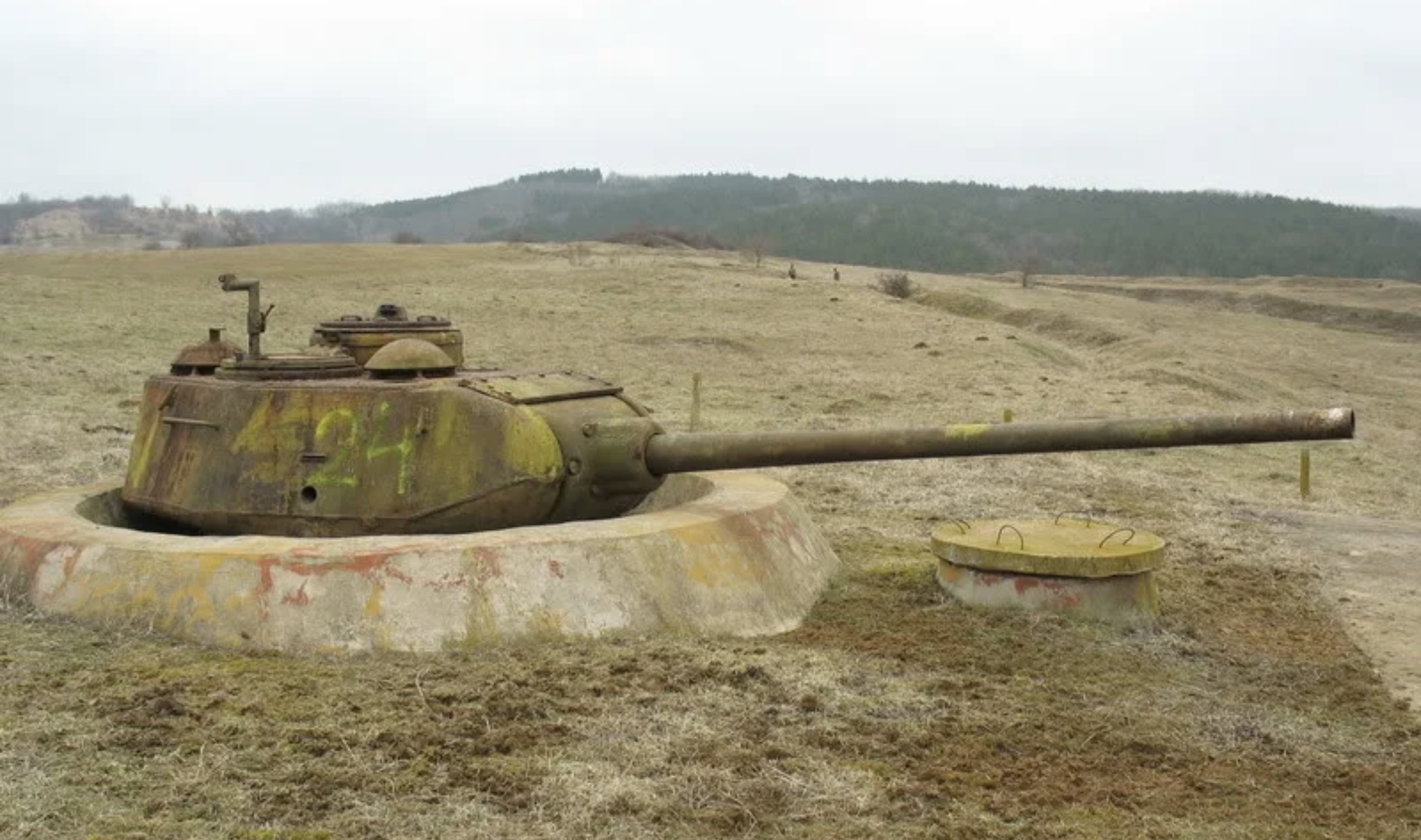
The photograph above depicts a T-34-85 turret mounted on a concrete bunker.
The third method is perhaps the most interesting because it blurred the distinction between a tank and a fortification. Some obsolete tanks remained fully mobile and were kept in parks or protected shelters with fuel and ammunition, ready to drive to pre-surveyed defensive positions when an alert was given. Soviet accounts of the Sino-Soviet frontier describe IS-3 and IS-4 platoons being held in excavated shelters for border security, while other sources state that serviceable IS-3Ms remained in their garages with full ammunition loads and fuel specifically so they could occupy prepared firing positions during an alarm. A similar system reportedly existed on the Kurils: one account from an Iturup veteran states that IS-3s were still mobile in 1983–84 and were expected to drive to prepared coastal positions; as their engines eventually failed, they were progressively converted into permanent firing points.
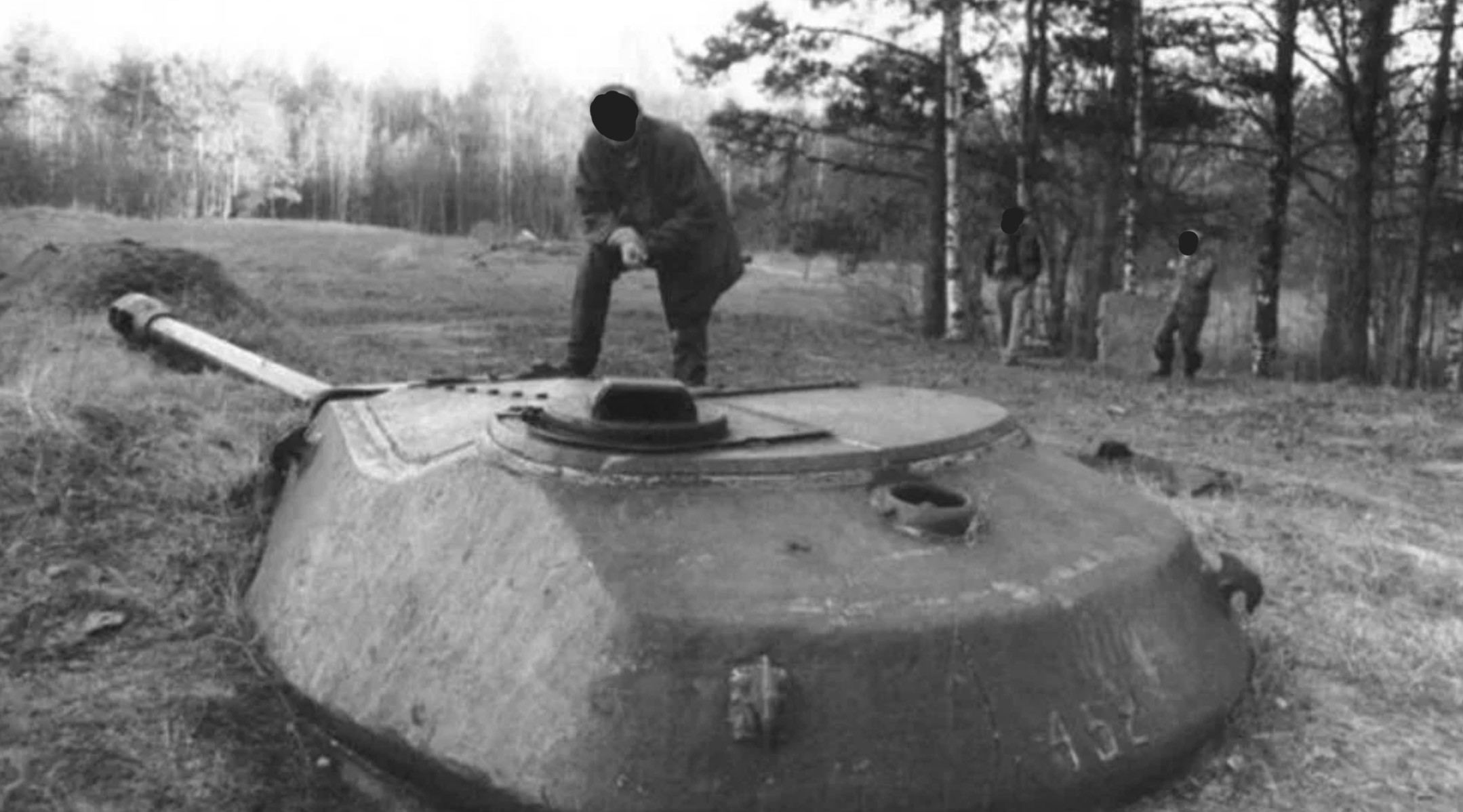
The photograph above depicts an IS-4M turret installed in one of these fortified defensive positions.
I should also add that the Second World War vehicles were not the only obsolete tanks incorporated into these defensive systems. Early T-54 turrets became particularly common as permanent fortification weapons, especially once their host tanks were being displaced from more important formations. On Sakhalin, for example, documented artillery platoons of tank turrets consisted of six T-54 turrets mounted over prepared fighting compartments, complete with ammunition storage and protected communications. The Transbaikal fortified regions also received large numbers of complete T-54s and T-55s. Even the notoriously troublesome IS-4 ended up in this role: the 97th and 114th Fortified Regions created in 1966 operated IS-4s alongside T-34-85s, IS-2s, IS-3s, T-54s, T-55s and OT-55s, and one account records 80 IS-4s arriving from storage in Belarus in 1968.
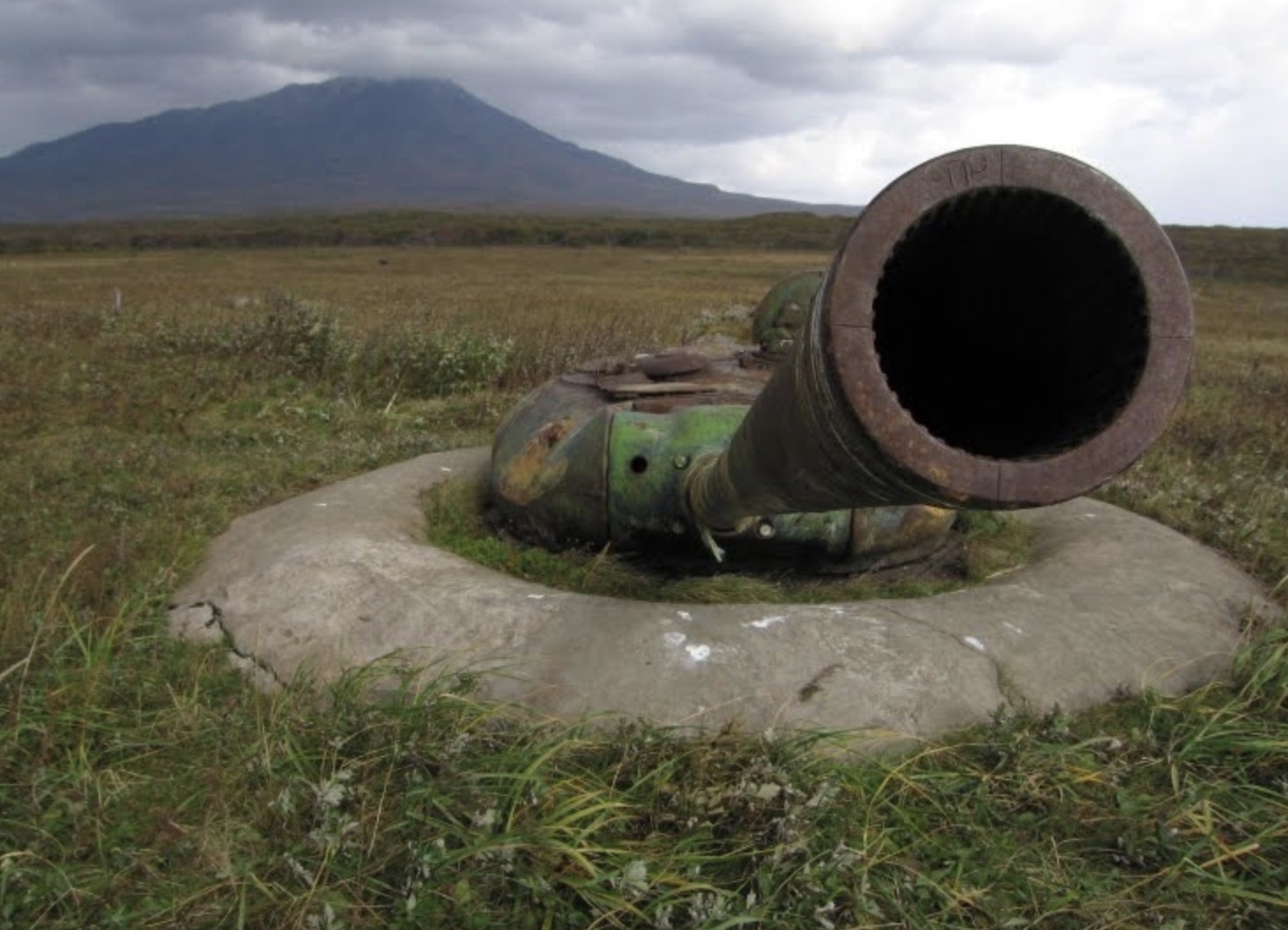
The photograph above depicts an early T-54-1 turret mounted on top of a concrete bunker.
There could also be a practical division of fire missions within these fortified systems. The 85 mm and 100 mm weapons were particularly well suited to direct fire against landing craft, armored vehicles, infantry positions and other visible targets, while the large 122 mm D-25T of the IS-2, IS-3 and IS-4 was fully capable of firing from closed positions or indirectly. Soviet IS-2M and IS-3 manuals explicitly provide equipment and procedures for closed-position fire, including a side level and turret azimuth markings. The IS-2M manual gives approximately 15 km as the maximum range using the side level, while the IS-3 technical manual gives the same figure. This made heavy tanks positioned on commanding ground potentially useful as improvised artillery as well as direct-fire strongpoints.

The photograph above depicts an early T-54-2 turret mounted on top of a concrete bunker.
For comparison, the approximate gun ranges were:
| Weapon | Vehicle | Point-blank/direct-shot range* | Sighted direct-fire range | Maximum/closed-position range |
|---|---|---|---|---|
| 85 mm ZiS-S-53 | T-34-85 | ~900–950 m | 5.2 km | ~13.8 km |
| 100 mm D-10T | T-54 | ~1.0–1.1 km | 6.8–6.9 km | ~15.6 km |
| 122 mm D-25T | IS-2/IS-3/IS-4 | ~1.0–1.1 km | 5 km | ~15 km |
*“Point-blank range” here is the Soviet дальность прямого выстрела, normally calculated against a target around two meters high; it should not be confused with the maximum distance at which the gun could engage a visible target.
Schematics:
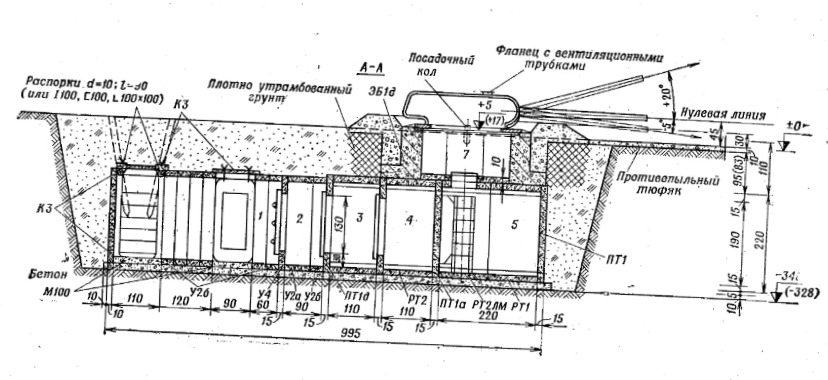
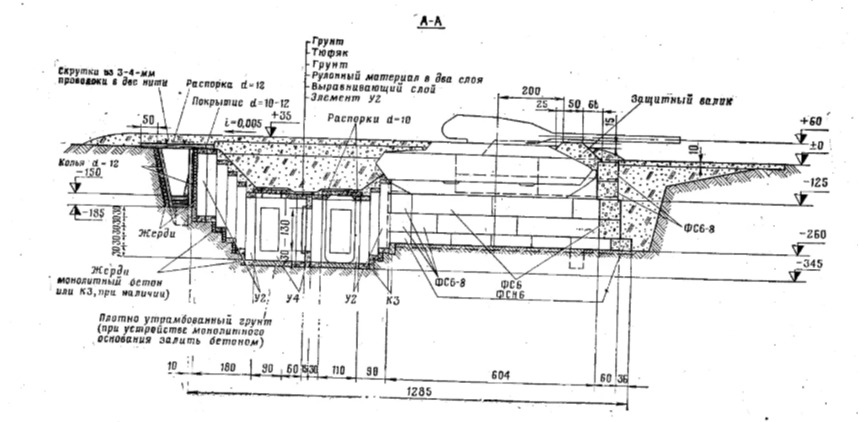
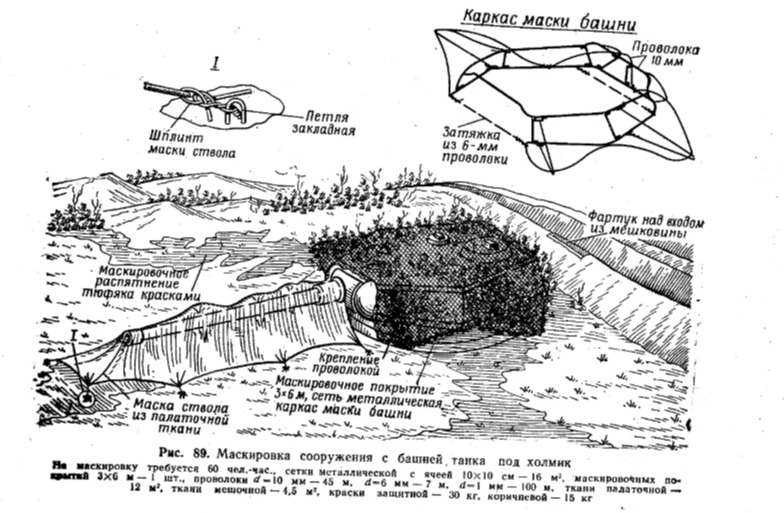
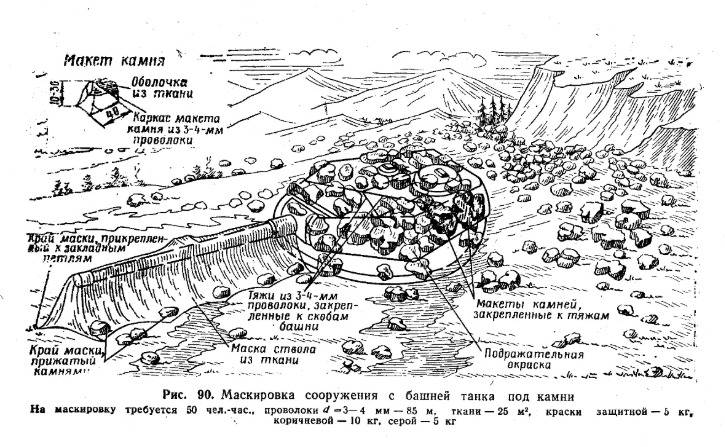

Thankfully, none of these Far Eastern tank-fortification systems ever had to fulfil the purpose for which they had been constructed. Their service lives were nevertheless extraordinary. Many of the Second World War-era tanks incorporated into Soviet fortified regions remained in use until the collapse of the USSR and were inherited by the newly formed Russian Armed Forces. The IS-2M itself was not officially removed from Russian service until 1995, while other heavy tanks and fortified positions survived even longer.
The end of their service was not a single event. Some RTOТ units have been disbanded during the reductions of 1993–94, particularly on the Kuril Islands, but the physical positions often remained armed, guarded or at least under military control for years afterward. At Starodubskoye on Sakhalin the surviving IS-2M firing points were not fully disarmed until the early 2000s, when their gun breechblocks, sights and radios were removed. On the Russian-Chinese frontier, the fortified district itself was finally abandoned during the Russian-Chinese border settlement in the mid-2000s.
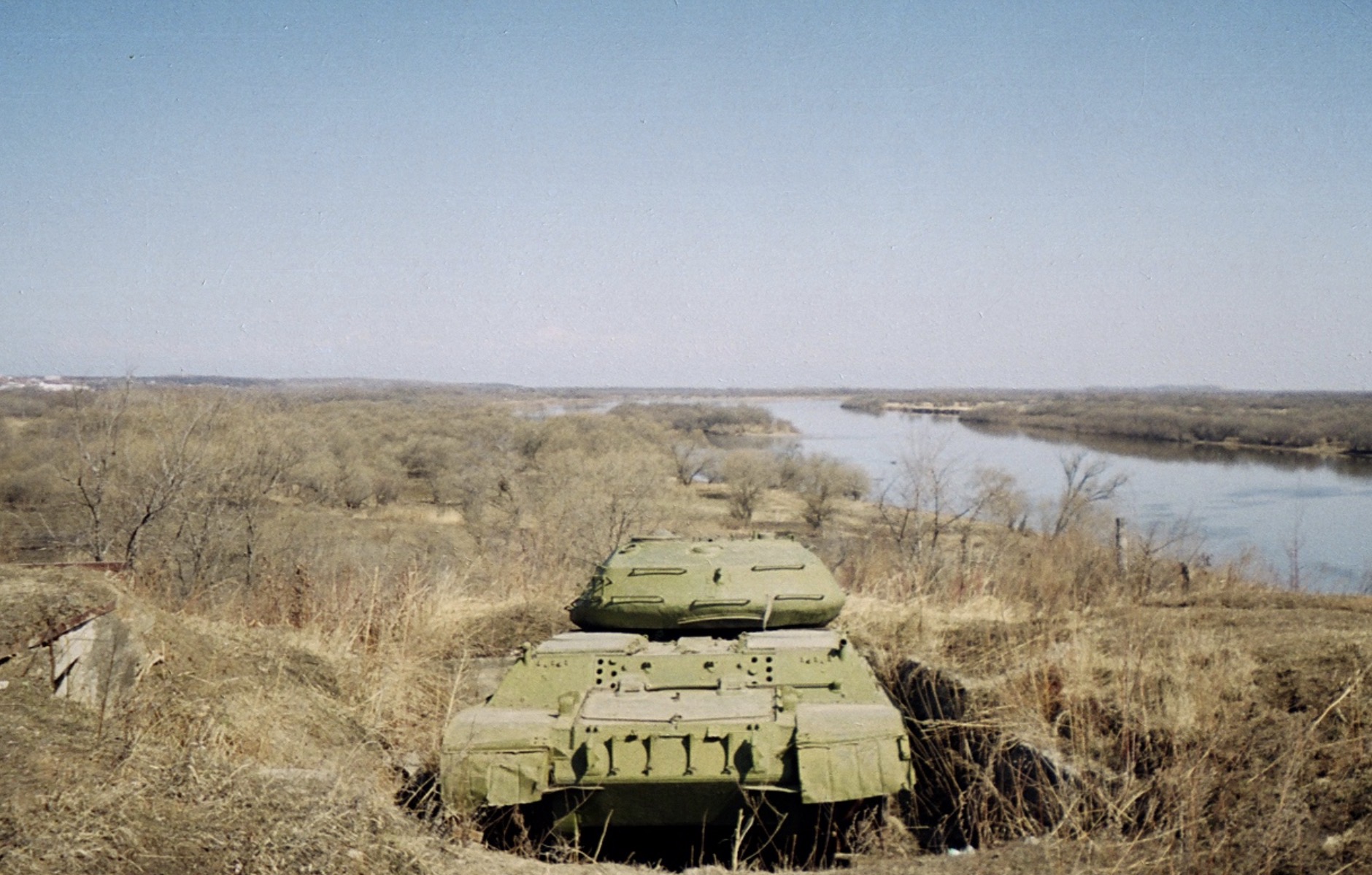
The photograph above depicts an IS-4M permanently resting on its defensive position.
In the present day, many of these tanks can still be found silently guarding the defensive positions they were assigned decades ago. In some cases, their turrets and guns can still be traversed or elevated, although the weapons themselves were usually rendered unusable when the positions were abandoned, with breech components removed or barrels deliberately disabled. Even in this condition, they remain fascinating remnants of the Soviet defensive system and have increasingly become informal historical landmarks and tourist attractions.
Unfortunately, their preservation is far from guaranteed. Scrap-metal thieves and vandals have gradually stripped many positions of valuable components, and some former firing points have lost their turrets or other major parts entirely. Exposure to the harsh Far Eastern climate has caused further deterioration. Given their unusual history and the rarity of surviving Cold War fortified tank positions, it would be highly desirable for at least some of these sites to receive formal protection and preservation. There is also a certain irony in their present status. Some surviving tanks and fortified positions are reportedly still formally registered as property of the Russian Ministry of Defence, despite having been abandoned for years and effectively functioning as historical monuments.
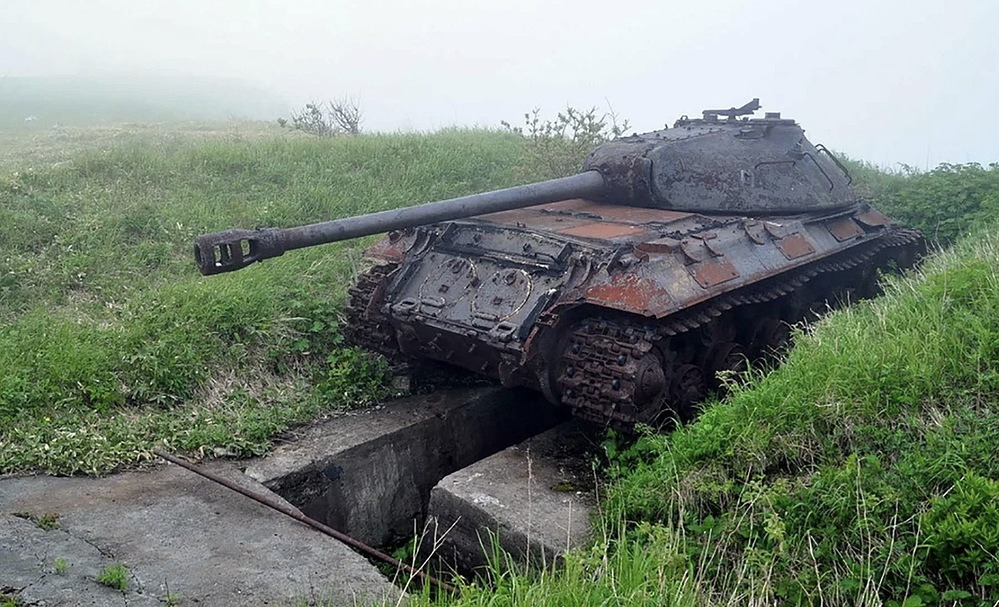
The photograph above shows an IS-3M positioned in a pre-prepared firing emplacement in the present day. This is representative of the condition in which many surviving examples can still be found.
The Soviet Union was by no means the only country to employ this type of fortification. Vietnam, Bulgaria, and a number of other states also incorporated obsolete tank turrets or complete armored vehicles into fixed defensive positions, often for coastal defense, border protection, or the reinforcement of prepared strongpoints. However, the scale and variety of these foreign systems make them a substantial topic in their own right, and best be discussed another time.
In Service in Secondary Roles
Click to Read More
In the previous section, we discussed the reuse of obsolete tank turrets in fortified positions. This section will examine the other half of the equation: the recycling of the chassis themselves. Many of these aging vehicles were given entirely new careers with the Engineering Troops, armored recovery and training establishments, and the rapidly expanding Soviet missile forces.
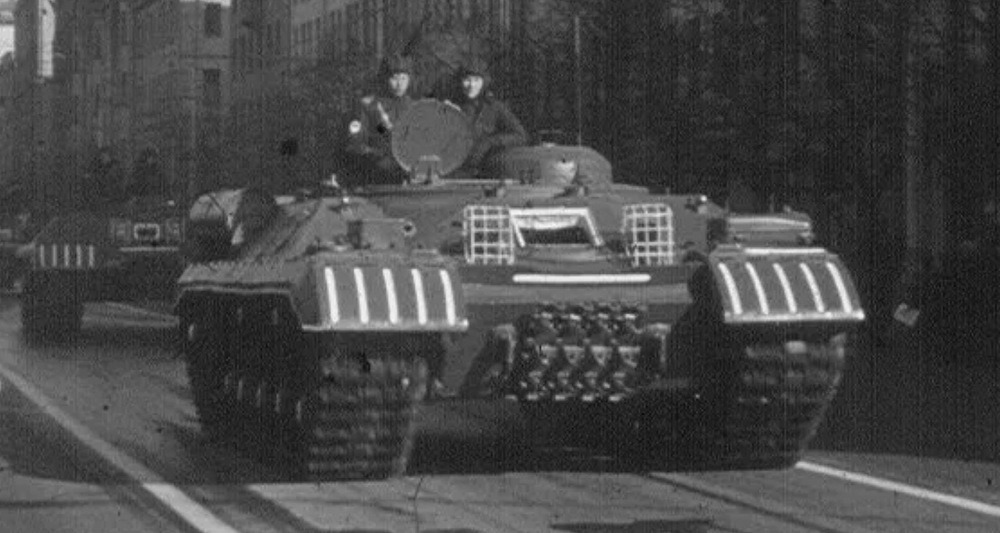
IS-2M-T Heavy Tank Tractor
In many cases, the obsolescence of a vehicle’s armament did not mean that the vehicle itself had become useless. Most of these designs still possessed good cross-country performance, robust suspensions, and mechanically useful tracked chassis. In the case of the T-34/SU-100 and T-44 families, their mobility and road speed remained respectable even by much later standards. As a result, scrapping an otherwise serviceable chassis simply because its gun or armor had become outdated would have been wasteful. Reusing these vehicles as tractors, recovery machines, engineering vehicles, or as other platforms allowed the Soviet military to extract many additional years of service from equipment that no longer had much value in its original combat role.
Strategic
In this regard, the ISU-152K family stands out as perhaps the most remarkable example. Unlike most of the other examples discussed here, which were relegated to recovery, engineering or training duties once their original combat role had ended, the ISU-152K chassis was adapted for another genuinely combat-related purpose. In that sense, it represents one of the very few cases in this discussion where a Second World War Soviet vehicle found a new battlefield role rather than simply a secondary support function or static duty.
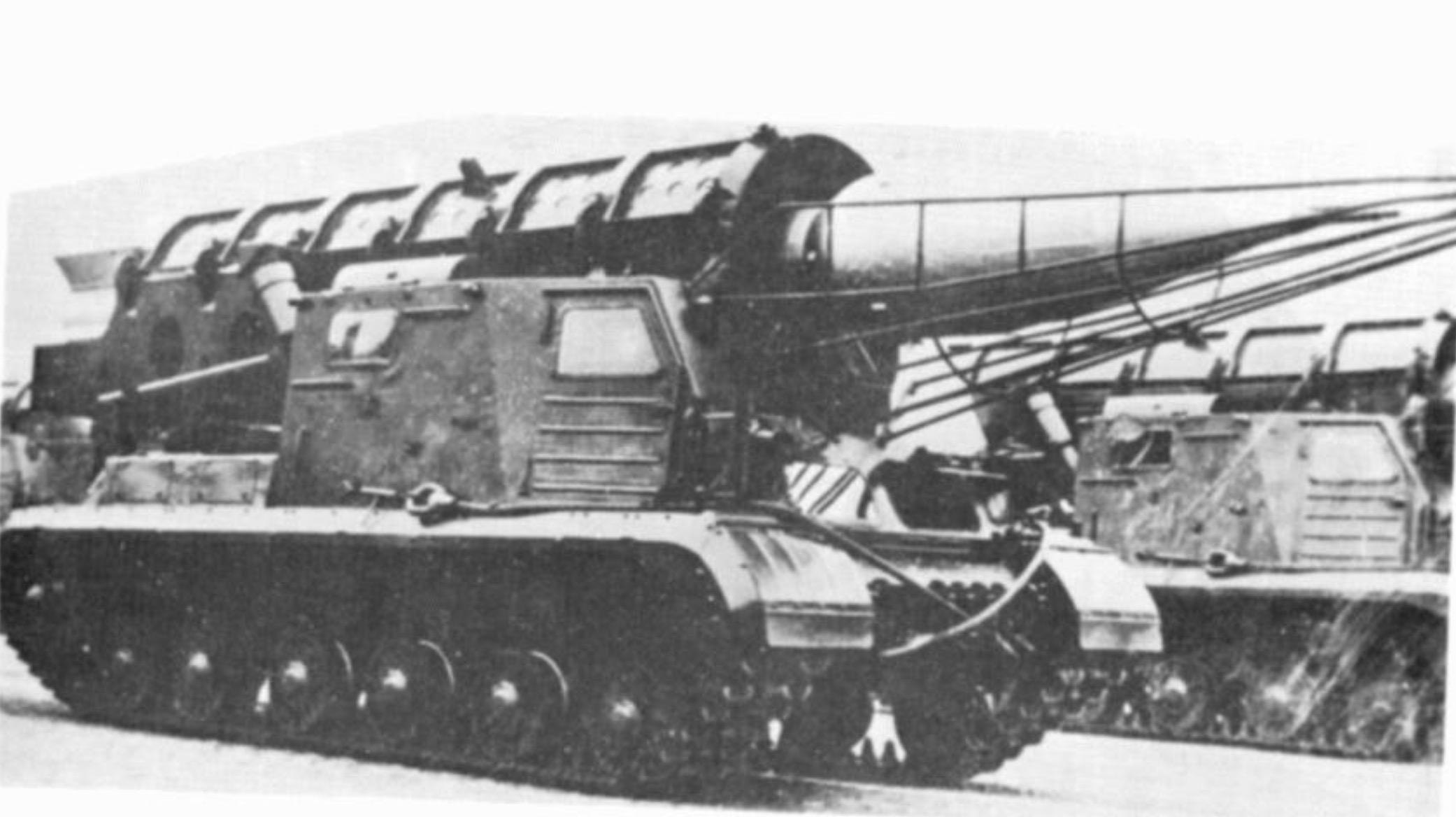
2K4 Filin (FROG-1)
The first major example was Object 804 , better known as the 2K4 Filin tactical missile complex , known to NATO as FROG-1. Developed during the second half of the 1950s, the enormous launcher carried the unguided 3R2 rocket, intended primarily as a battlefield nuclear delivery weapon. Thirty-six 2P4 launchers were produced in 1957–58. Its career was extremely brief. The 2K4 Filin was formally removed from service in February 1960, after only about two years, because the much more practical 2K6 Luna had already superseded it.
Even more important was Object 803 / 8U218 , the self-propelled launcher for the R-11M (8K11) operational-tactical missile, better known in the West as Scud-A. The R-11M entered service in 1958 and could carry a nuclear warhead to targets roughly 150 kilometers away. Once again, the automotive and running-gear lineage of the wartime ISU had been transformed into something its original designers could scarcely have imagined: a mobile ballistic-missile launcher. The Scud-A itself did not remain in Soviet frontline service for very long. The last troop launch of an R-11M took place on 18 May 1965, after which the missile was withdrawn as the improved R-17 replaced it.

R-11 (8K11)/SCUD-A
The successor R-17 (8K14), or Scud-B, initially used another heavy tracked launcher: Object 810 / 2P19 , itself developed from the same ISU heavy-chassis lineage. The R-17 with 2P19 was accepted for service in 1962 . Production of the tracked launcher ceased that same year as development shifted toward a wheeled replacement, and from 1967 the famous MAZ-543-based 9P117 began replacing it. Remarkably, however, this did not mean the immediate disappearance of the old tracked machines. The replacement process took years, and surviving 2P19 launchers remained in some Soviet formations for decades , particularly in areas where a tracked chassis offered advantages. Some sources indicate that examples were still present in units in the far north and Caucasus into the late 1980s.

Lisa
There was also one particularly unusual afterlife for this family of heavy tracked missile launchers: air-defense target practice. The original S-25M system was removed from combat alert around Moscow in 1982, as its positions were progressively taken over by the much more modern S-300P. The enormous stocks of S-25 missiles did not simply disappear, however. Successive generations were converted into target missiles, including Kunitsa, Sobol, Belka, Zvezda and, eventually, the Strizh family, allowing obsolete surface-to-air missiles to remain useful for testing new air-defense weapons and training operational missile crews. An early mobile target complex known as Lisa is particularly interesting in this context. An S-25 target-missile launching arrangement mounted on tracked equipment associated with the 8K11/R-11M missile complex. The R-11M’s 8U218 launcher was itself based on the ISU-152K chassis, meaning that the automotive descendants of a Second World War self-propelled gun found yet another highly unusual role. Nor did the story end with the Soviet Union. Strizh targets based on former S-25 missiles continued to be fired during Russian air-defense exercises well into the 2010s. In 2015, NPO Molniya began production of a later Strizh-1-2A series using withdrawn 5Ya25M and 5Ya24 missiles. According to the manufacturer, 114 targets were produced before production of this particular family finally came to an end.
Engineering
A particularly common second life for Second World War-era armored vehicles was their conversion into armored recovery and combat engineering vehicles, allowing otherwise obsolete chassis to remain useful long after their original combat roles had ended.
Combat engineering and recovery vehicles exist to keep armored forces moving, fighting, and surviving when terrain, obstacles, mines, or mechanical failures would otherwise stop them. Engineering vehicles clear mines, breach obstacles, prepare routes, dig positions, move earth, remove wreckage, and sometimes assist with demolitions or bridge work. Their armor allows them to perform these tasks close to the front line. Armored recovery vehicles perform a different but related role. They tow disabled or damaged tanks, recover vehicles stuck in mud or difficult terrain, and carry equipment such as winches, cranes, and repair tools for field maintenance.
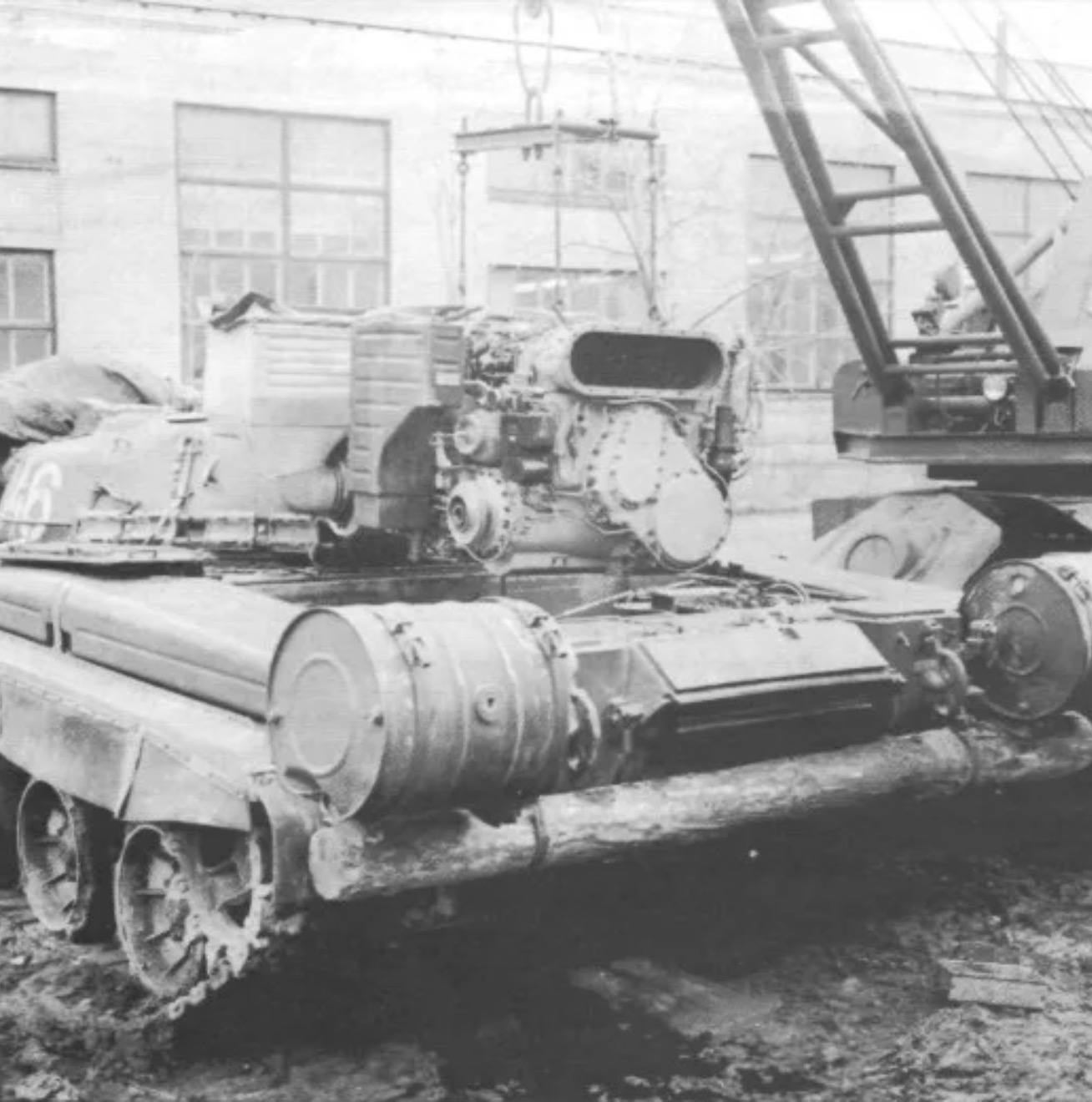
An especially interesting photograph above shows a T-34-based crane vehicle working on a much newer T-80 tank.
Removing the main armament, turret, and ammunition could substantially reduce a vehicle’s overall weight and therefore lessen the strain placed on its engine, transmission, suspension, and running gear, helping to extend the useful life of an aging chassis. Another reason these conversions could remain useful for so long was the enduring nature of engineering and recovery work. Tasks such as towing disabled vehicles, clearing obstacles, moving earth, recovering stuck equipment, and supporting battlefield repairs change far less dramatically than front-line combat requirements. A tank expected to fight modern enemy armor needs increasingly sophisticated protection, fire-control systems, sensors, ammunition, and communications. An engineering or recovery vehicle, by contrast, can remain effective with comparatively modest upgrades as long as its chassis is reliable, mobile, and powerful enough to perform the required work. This made older armored vehicles particularly well suited to decades of secondary service.

BTS-4. These machines were originally based on T-44M hulls.
This does not mean that these vehicles were confined to safe rear-area duties. Combat engineering and recovery vehicles often operated close to the front line, accompanying armored columns, recovering damaged vehicles under fire, clearing routes, and working in areas threatened by mines, ambushes, and artillery. The BTS-4 family provides a particularly striking example. The original BTS-4 was developed from the T-44M chassis, while later variants used T-54/55-derived hulls. During the war in Afghanistan, Soviet BTS-4Ds sometimes received additional armor and defensive armament; some were even fitted with a ZU-23-2 twin 23 mm antiaircraft gun on their cargo platform and used as improvised armored fire-support vehicles.
The IS-2M and ISU family both produced specialized recovery vehicles. The IS-2M gave rise to the IS-2M-T heavy tank tractor, intended to evacuate heavy tanks and self-propelled guns and assist crews with minor battlefield repairs. The ISU family produced the simpler ISU-T, followed by the much more capable BTT-1 and BTT-1T, equipped with combinations of winches, towing equipment, a rear earth anchor, cargo platforms and a small crane.
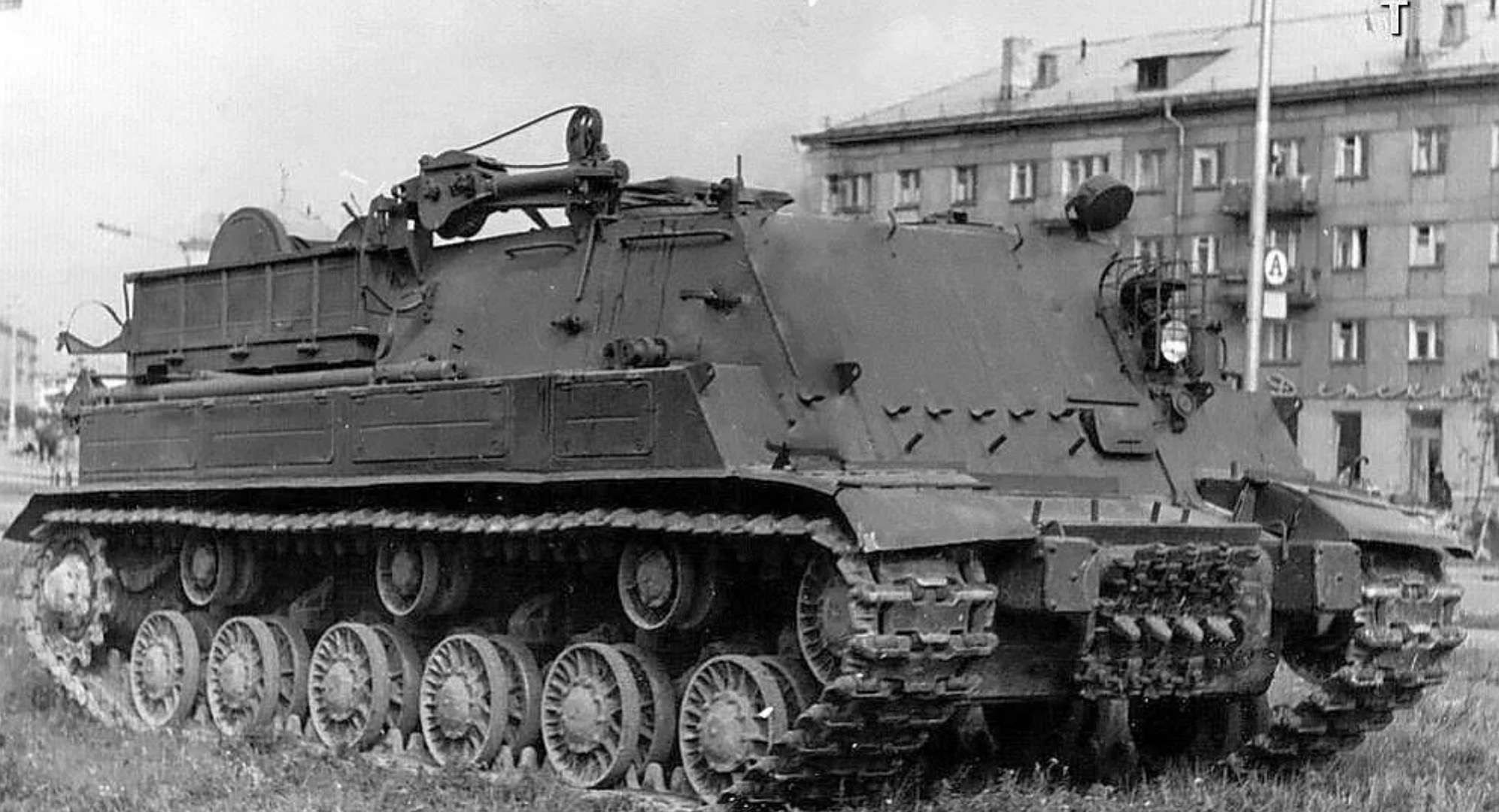
At least one BTT-1T heavy recovery tractor was used during the Chernobyl disaster response. That vehicle was ultimately abandoned there, and its remains are still present in the Chernobyl Exclusion Zone today.
The SU-100 was a much rarer example. A small number of SU-85/SU-100-family vehicles were disarmed and employed as tractors, but unlike the T-34-T they apparently never received a widely used official designation. Russian archival research indicates that these conversions simply had their guns and ammunition racks removed; SU-100-derived tractors were especially uncommon and were often transferred relatively quickly into the civilian economy.
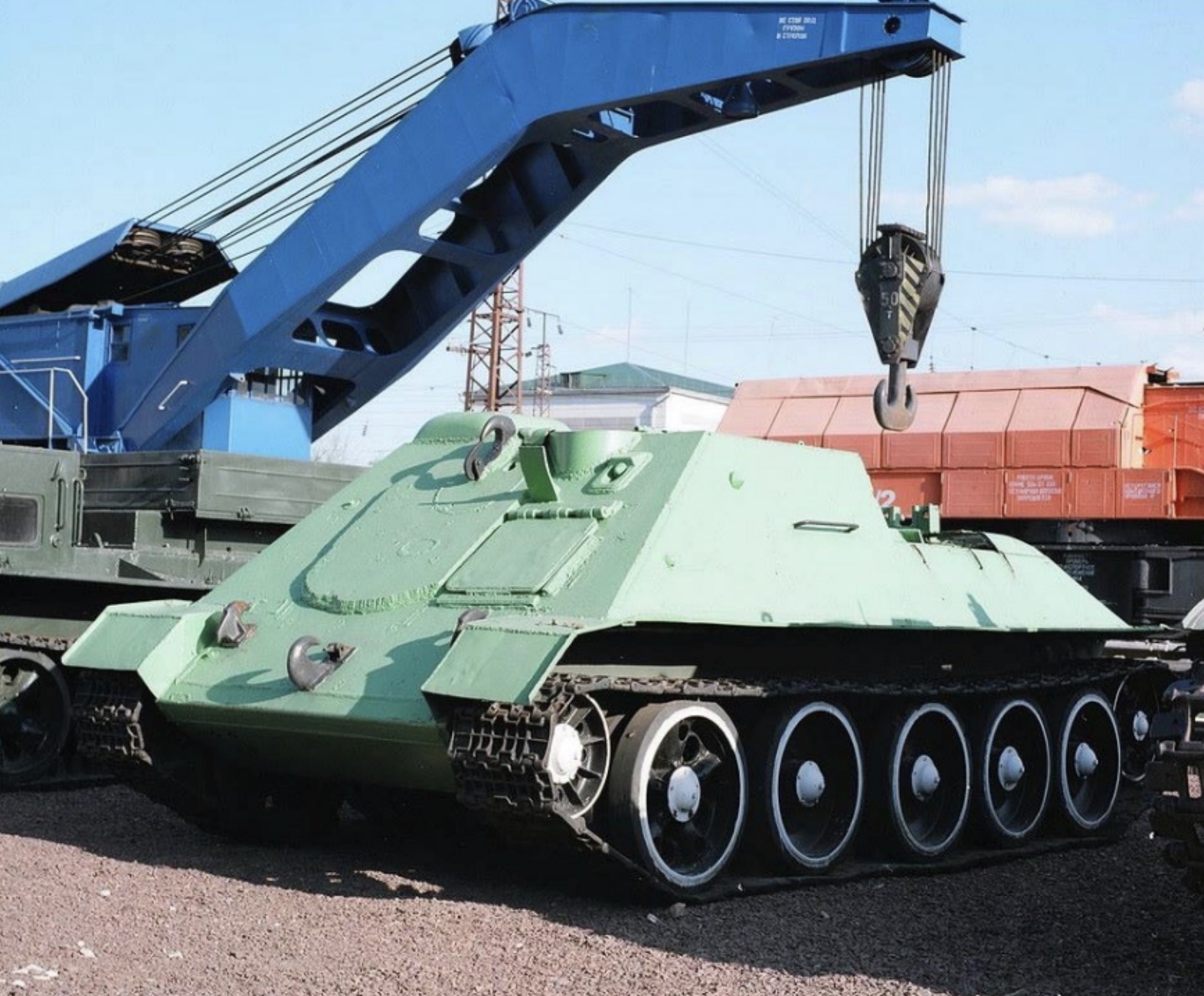
SU-100 Tractor.
The undisputed king of these conversions, however, was the T-34. Its enormous production run, mechanical simplicity, good cross-country mobility and continued availability of spare parts made its chassis useful for an extraordinary variety of secondary roles:
- T-34-T armored recovery tractor — the turret was removed and replaced by a working/cargo platform. Better-equipped versions carried a 14-tonne-class winch, a 3-tonne crane boom, towing gear and tools, allowing them to recover disabled tanks and assist with repairs.
- SPK-5 / SPK-5/10M self-propelled crane — replaced the turret with a rotating crane installation. It was intended primarily for field maintenance, particularly removing and installing tank turrets and other heavy components; later versions could lift approximately 10 tonnes.
- KT-15 crane-transporter — another specialized T-34-based recovery/maintenance vehicle intended to lift and transport heavy tank components.
- BTU-equipped T-34/T-34-T — vehicles fitted with bulldozer equipment for moving earth, clearing obstacles and preparing routes or positions.
- STU-equipped vehicles — fitted with snow-clearing equipment.
- PT-3 mine-roller carriers — T-34s could carry the PT-3 track-width mine roller, allowing them to create passages through minefields ahead of following vehicles.
- Chemical/radiological reconnaissance conversions — remarkably, significant numbers of T-34-85s had their armament removed in the 1960s and 1970s and were converted for chemical reconnaissance and related specialist duties.
- There were also experimental crane variants, including the SPK-3A and SPK-10.
This makes the T-34 an exceptional example of how thoroughly the Soviet Union exploited aging armored vehicles.

BTU-equipped T-34-T with T-55-style “Starfish” roadwheels.
Firefighting
Another remarkable second life for Soviet WWII armour was found not in the military, but in the fire services, where the same ruggedness and cross-country mobility that had made vehicles such as the T-34 and ISU-152 effective fighting machines made their obsolete chassis exceptionally useful for tackling major industrial and forest fires. Experiments began almost immediately after the war, with demilitarized T-34 and even BT-7 chassis being fitted with water tanks, pumps, and fire monitors for use around ammunition depots and fuel-storage sites, while in Siberia the idea developed much further. From the 1950s, T-34 chassis were converted into purpose-built firefighting vehicles for the huge timber-storage complexes of Krasnoyarsk Krai, including thirteen PV-120 vehicles built between 1957 and 1965, each carrying around 10,000 litres of water, followed in the early 1980s by the PLV-6-17, which carried 17,000 litres and an elevated high-capacity fire monitor.
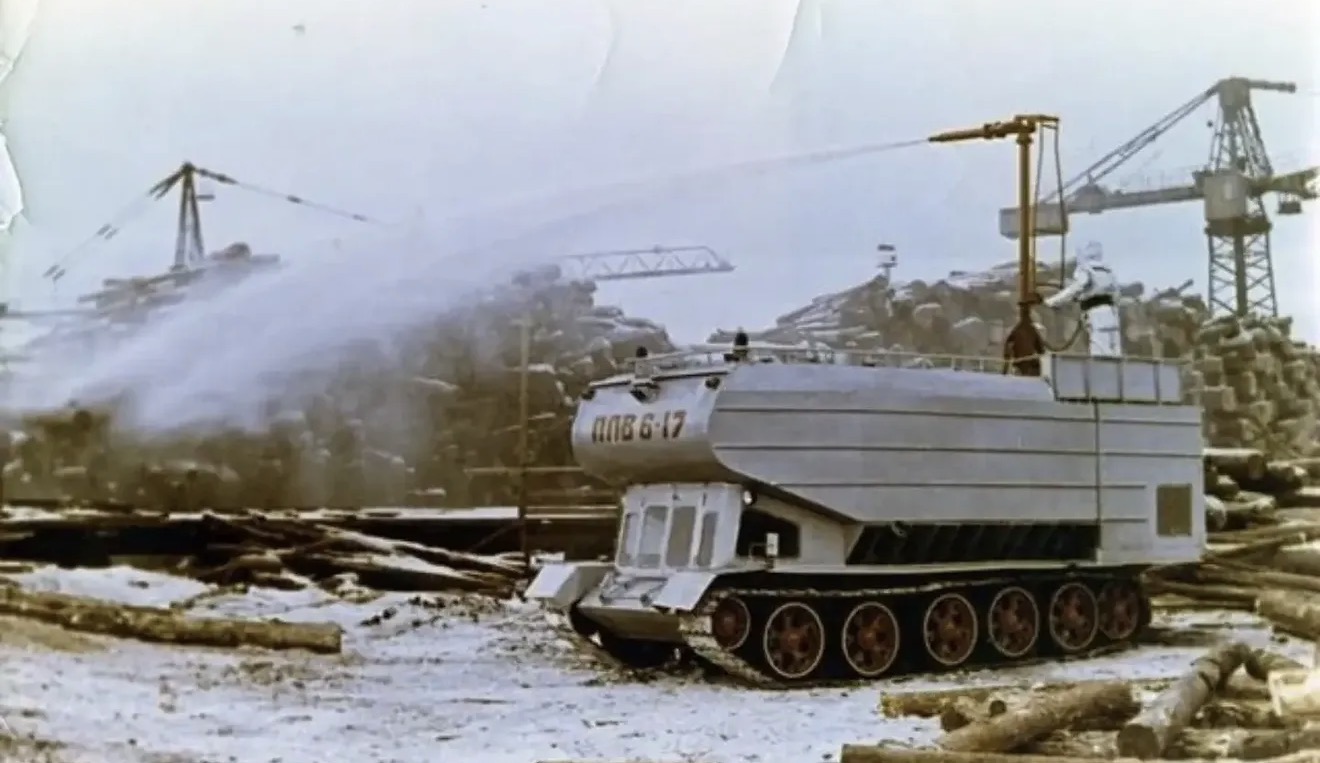
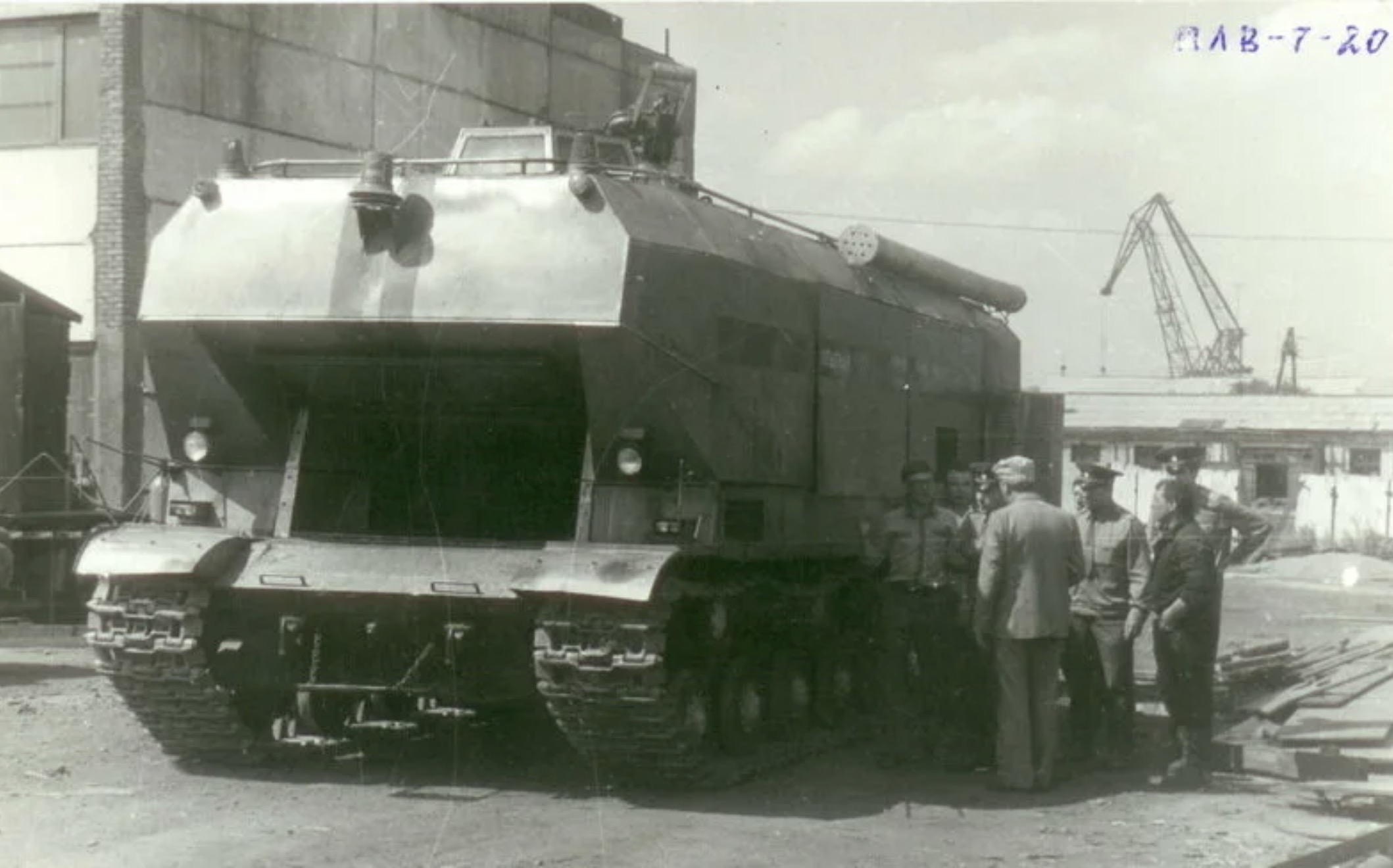
When the T-34 chassis eventually became too worn out to remain practical, the Soviets turned to another veteran of the Great Patriotic War: in 1985 development began on the PLV-7-20, based on the ISU-152 chassis, resulting in a roughly 50-tonne firefighting vehicle carrying about 20 tonnes of water and an elevating monitor capable of directing a powerful jet into burning timber stacks from above. The T-34-based PV-120 and PLV-6-17, together with the ISU-152-based PLV-7-20, were still specifically listed in Soviet firefighting regulations as late as 1991. More than forty years after WWII, the chassis of the T-34 and ISU-152 were therefore still performing useful work, only instead of advancing through enemy fire, they were now being driven directly into fires of an entirely different kind.
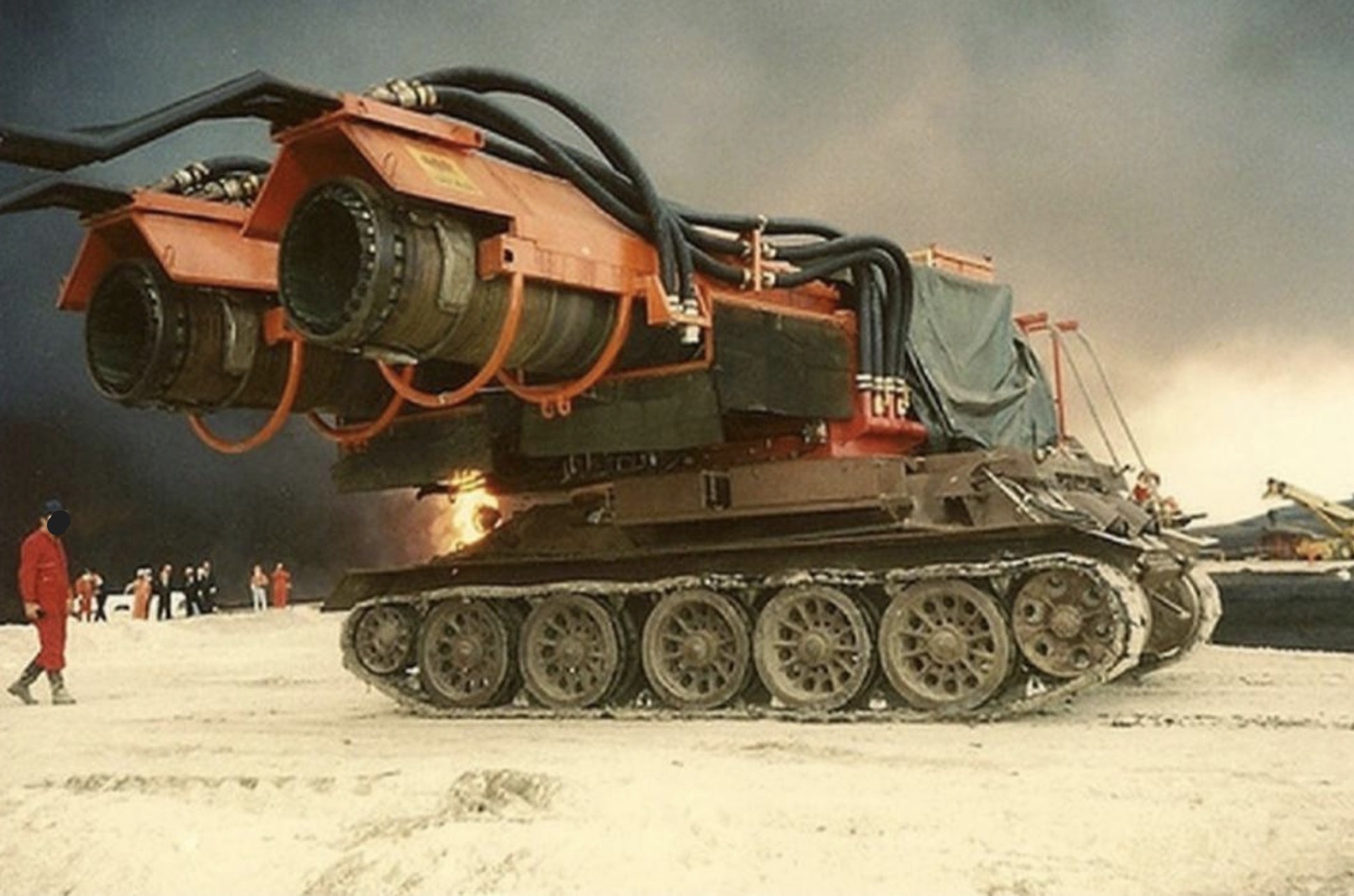
One of the most spectacular firefighting conversions of a Soviet WWII vehicle actually appeared outside the USSR. In Hungary, engineers combined the chassis of a veteran T-34 with two turbojet engines from MiG-21 fighters to create the extraordinary Big Wind firefighting vehicle. Rather than carrying its own large water supply, the machine received water from external pumps and injected it into the jet exhaust, producing an immense high-velocity cloud of water, steam and gas capable of cutting into burning oil-well fires. Completed in 1991, Big Wind was deployed almost immediately to Kuwait, where it was used against the enormous oil fires left by the retreating Iraqi forces. Although the tracked jet-powered machine itself was Hungarian, its operating principle followed earlier Soviet AGVT-100 gas-water firefighting systems, which had used surplus aircraft engines on truck chassis since the 1960s.
Target Practice
Another secondary role for these older vehicles was, of course, their use as range targets. This was probably one of the most universal, and ultimately one of the most common, fates of obsolete armored vehicles. Old tanks and self-propelled guns could remain useful for decades as live-fire targets, allowing crews to train against realistic armored silhouettes and giving the military a practical use for these vehicles. Some were left largely intact, while others were stripped of engines, weapons, or other valuable components before being placed on firing ranges.
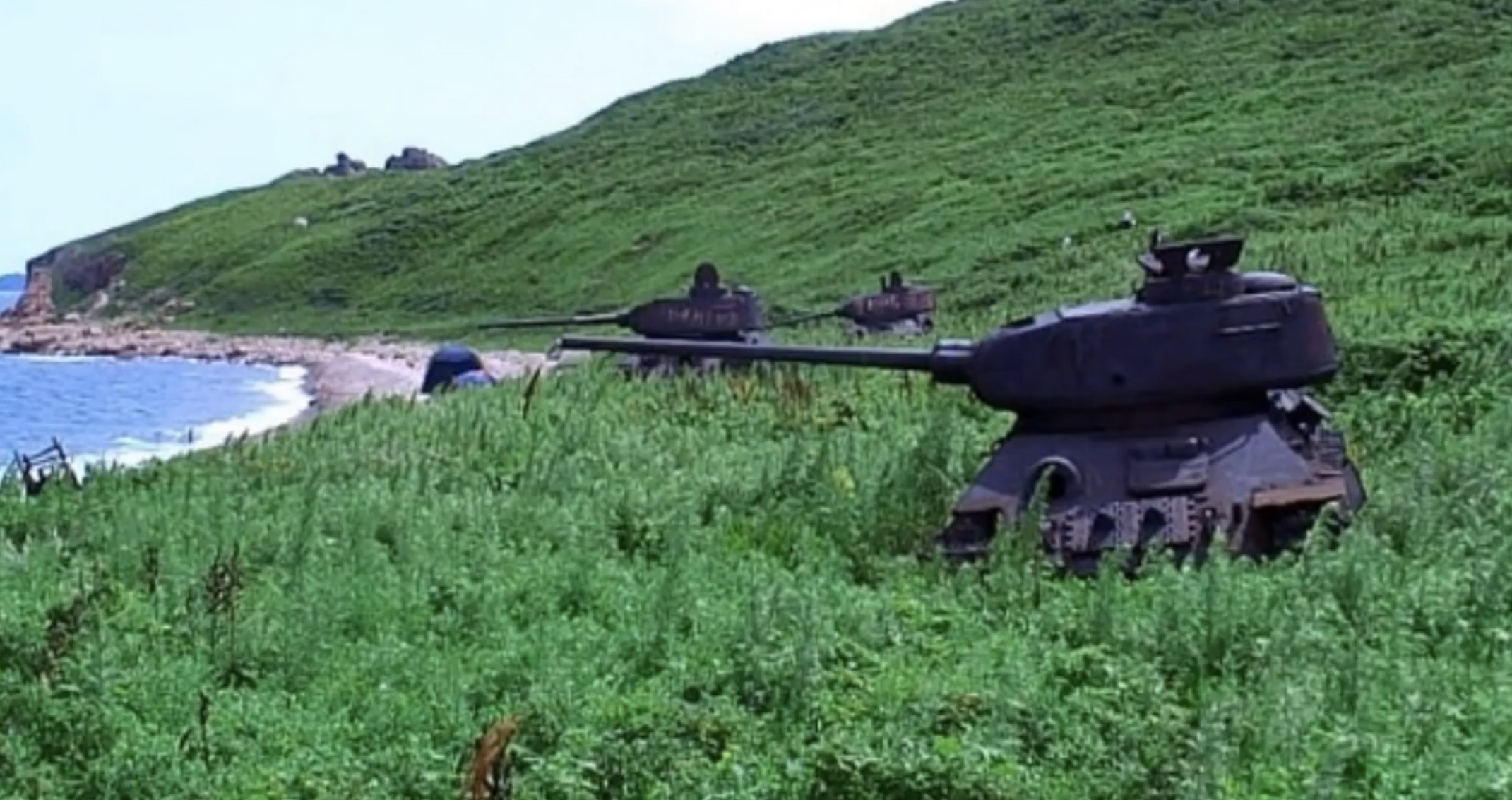
T-34-85 target tanks on Zheltukhin Island, Peter the Great Gulf, Primorsky Krai. The vehicles were used as targets at a Soviet Pacific Fleet training range.
Another fate for a number of surviving Second World War vehicles was their use in Soviet nuclear-weapons testing. Obsolete tanks, self-propelled guns, aircraft and other military equipment were deliberately positioned at varying distances from nuclear detonations so that engineers could study the effects of blast, heat and radiation on military hardware.
Conclusion
I hope you enjoyed reading through the sections above. I spent quite a bit of time researching and putting all of this together, primarily to help inform the War Thunder community, but also for anyone else who happens to come across the post and finds this rather niche subject interesting. If you have additional information, unusual photographs, corrections, criticism, or simply your own thoughts on the topic, feel free to leave them in the comments, there are almost certainly obscure examples and details that I have missed. Thanks again for taking the time to read through it all.