- Yes, as a Tech-Tree Vehicle
- Yes, as a Premium Vehicle
- Yes, as a Squadron Vehicle
- Yes, as an Event Vehicle
- No, I do not want to see this T-54 in-game.
T-54-2M (1960)
Introduction
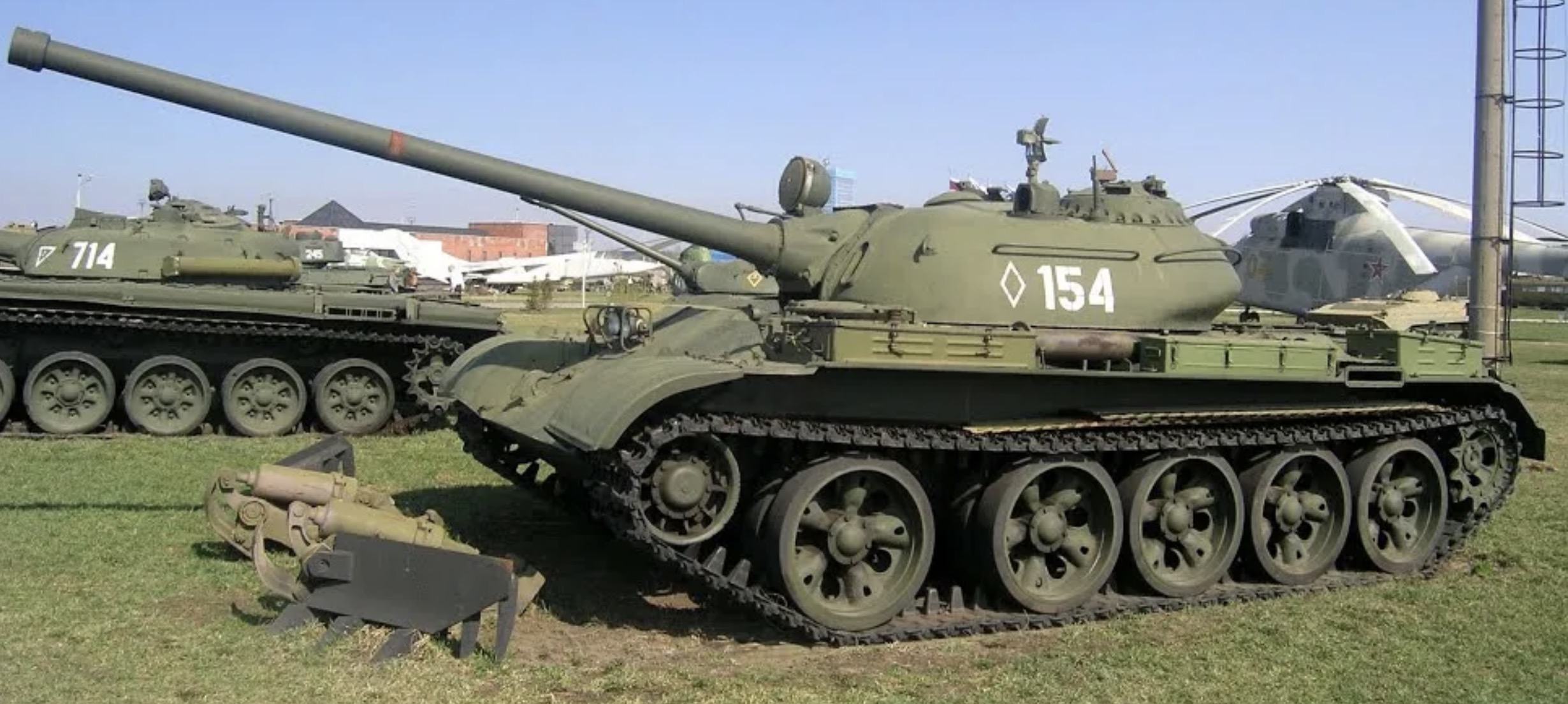
The modernization included:
- STP-2 “Tsiklon” two-plane gun stabilizer
- Modified D-10T with a counterweight on the muzzle
- TPN-1 infrared gunner’s night sight
- L-2 infrared searchlight
- Improved commander night-observation equipment
- TVN-2 driver infrared night-vision device
- IR-filtered and blackout driver’s headlight for night driving
- Rotating fighting-compartment floor
- Gun safety fencing
- Improved communications equipment
- Other equipment associated with T-54B standard
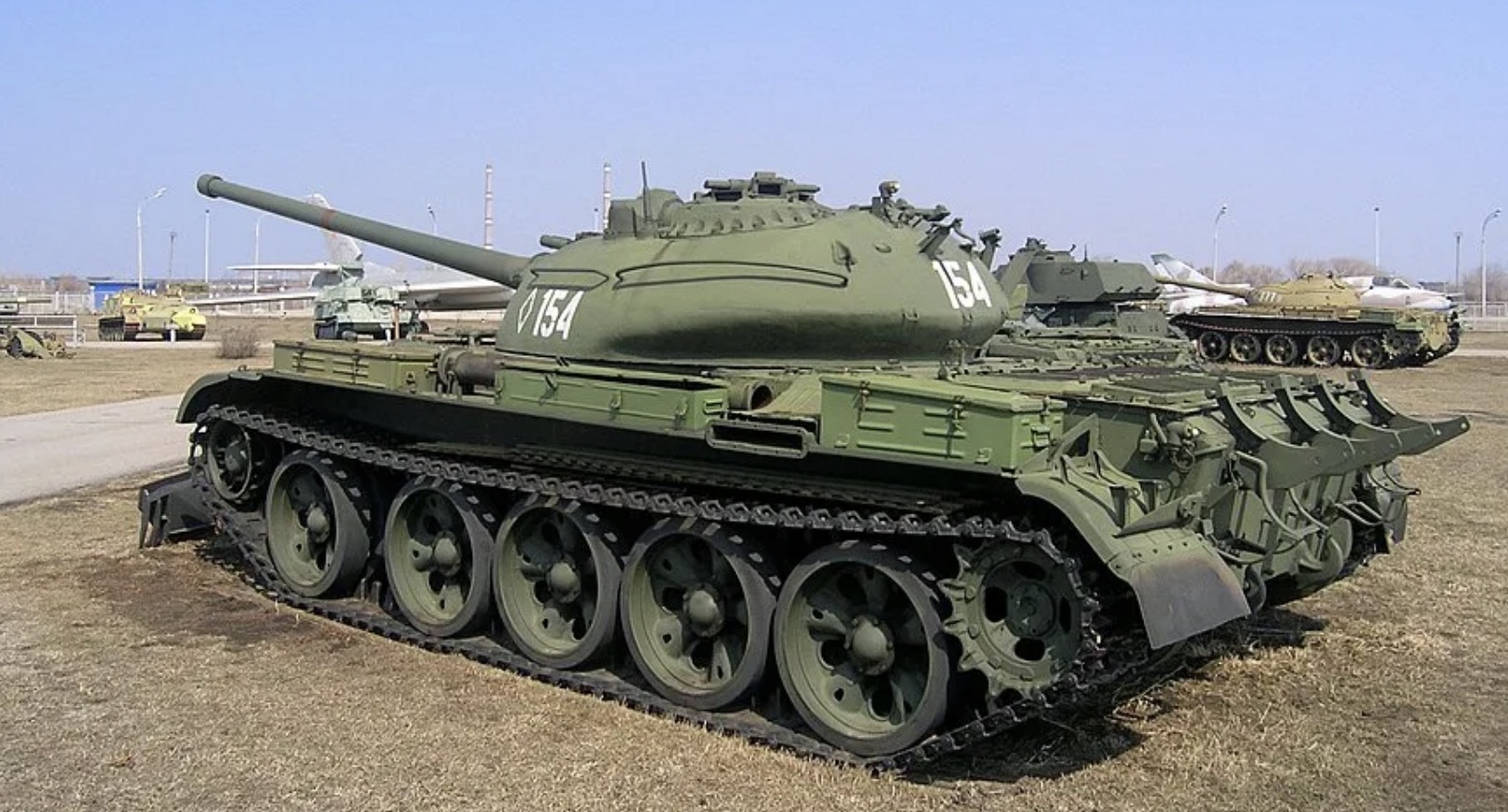
- T-55-derived running-gear components
- 580 HP Diesel (Optional)
- Access to newer ammunition
History
Spoiler

1960+ Modernization In-Depth
Spoiler
The modernization included:
- STP-2 “Tsiklon” two-plane gun stabilizer — the most important improvement of the modernization. Unlike the STP-1 system of the T-54A, which stabilized the gun only in elevation, the STP-2 stabilized both the gun vertically and the turret horizontally. The electro-hydraulic system automatically attempted to hold the gun and coaxial machine gun on the gunner’s selected line of aim while the tank was moving and also provided powered laying in both planes. On the T-54B, the system provided laying speeds of approximately 0.07–4.5°/s vertically and 0.07–15°/s horizontally.
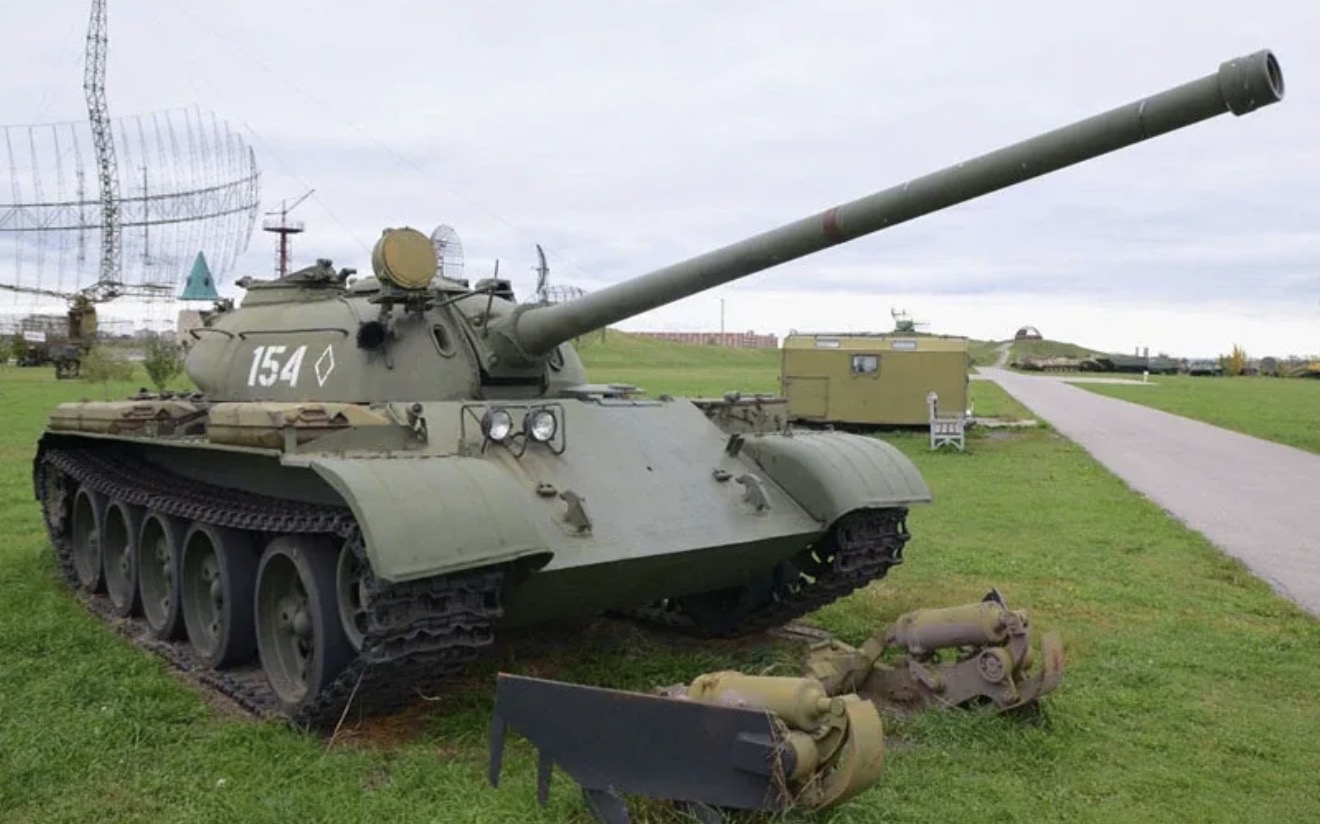
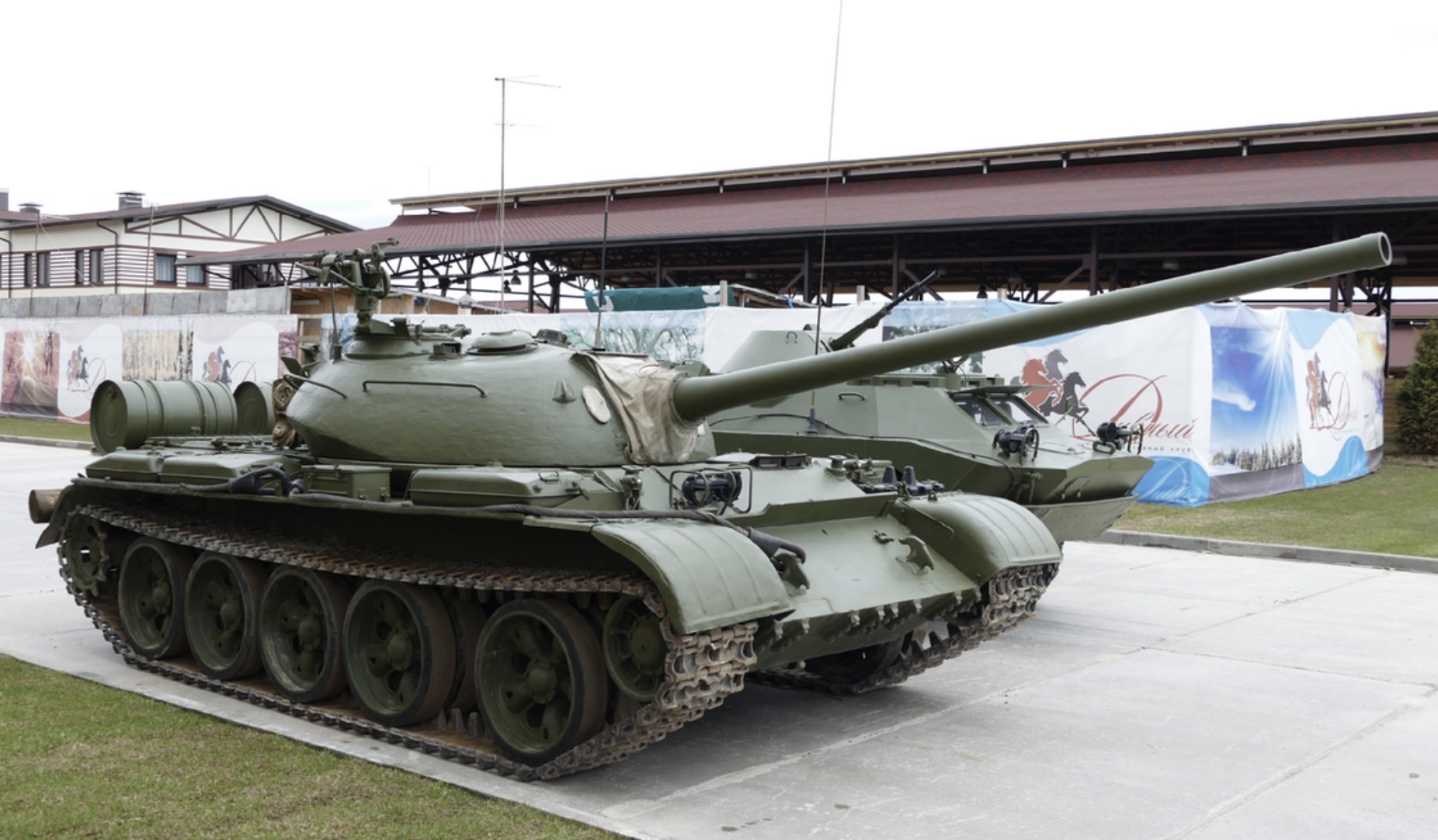
- Original D-10T modified for the STP-2 system — early T-54s did not necessarily have their original gun replaced outright by a newly manufactured D-10T2S. During overhaul, the existing D-10T could be brought to the functional level of the D-10T2S by installing components required for the STP-2 stabilizer. Because the original D-10T had different balancing characteristics, it received the characteristic counterweight around the muzzle. This counterweight is one of the most obvious external identifiers of a T-54-2 modernized to T-54B level.
- TPN-1-22-11 infrared gunner’s night sight — the gunner’s original MK-4 observation device was replaced by the TPN-1 active-infrared night sight, giving the gunner an actual night-fighting capability rather than simply night-driving equipment. The TPN-1 was part of the standard T-54B night-fighting system.
- L-2 infrared searchlight — the TPN-1 required an infrared illuminator. A special mounting was welded to the right side of the original turret, with the searchlight carried in trunnions on this bracket. A parallelogram linkage connected it to the gun, allowing the searchlight to follow the gun’s elevation while retaining the original T-54-2 turret casting.
- Improved commander’s observation equipment — the earlier TPKUB commander’s observation device was replaced by the improved TPKU-2B, while the commander’s night-vision equipment was upgraded from the TKN-1 to the TKN-1S standard on rebuilt tanks. This gave the commander substantially improved day and active-infrared night observation capability.
- TVN-2 driver infrared night-vision device — the driver received the same basic active-IR night-driving equipment associated with the T-54B. The TVN-2 was a binocular device which could be installed in either its combat or travel position. Its high-voltage power unit was mounted in the driver’s compartment, while the sight itself was stored behind the driver’s seat when not in use.
- Infrared driving headlights — the TVN-2 worked together with the tank’s headlights fitted with infrared filters . Russian technical descriptions specifically mention the standard FG-10 headlights fitted with IR filters for operation with the TVN-2. To the naked eye these produced little useful illumination, but the reflected infrared light was visible through the driver’s TVN-2 device.
- Rotating fighting-compartment floor — the early fixed fighting-compartment arrangement was replaced by a rotating platform which moved together with the turret. This was particularly important for the loader, who no longer had to continually reposition himself around equipment fixed to the hull floor as the turret traversed. The platform was mounted on a ball-bearing support and incorporated a safety/yielding arrangement intended to reduce the danger of trapping crew members. Installing it required rearrangement of equipment and ammunition inside the fighting compartment.
- Gun safety fencing — a protective guard was installed around the moving portions of the gun and recoil mechanism. This helped prevent the loader and other crew members from being struck or trapped by the breech and associated equipment as the stabilized gun automatically moved in elevation while the tank was travelling.
- Upgraded electrical system — the STP-2 stabilizer and the expanded night-fighting equipment placed considerably greater demands on the electrical system. T-54B standard therefore incorporated the more powerful G-5 5 kW generator, replacing the lower-output generator used on earlier variants. This was necessary to provide sufficient electrical power for the stabilizer and other new equipment.
- Modernized radio and intercom equipment — the T-54B standard used the R-113 VHF radio station for external communications and the R-120 tank intercom for communication between crew members. During continuing overhaul programs these were themselves superseded: from 1966, rebuilt T-54s began receiving the newer R-123/R-123M radio and R-124 intercom, together with the GPK-59 gyrocompass. A tank’s precise radio fit therefore depended on the date of its overhaul.
- Underwater-driving equipment — bringing the early T-54 fleet toward later standards also included equipment for underwater driving (OPVT) for some tanks. The T-54B’s OPVT equipment allowed prepared tanks to cross water obstacles along the bottom rather than requiring a bridge.
- Later sights and machine guns — From 1965, tanks undergoing overhaul began receiving the improved TSh-2B-32 and later TSh-2B-32P gunner’s sights, while the older SGMT machine guns were progressively replaced by the PKT. These later sights are particularly relevant to the use of improved ammunition introduced during the 1960s.
- T-55-derived running gear — T-54 obr.1949 vehicles brought to T-54B level have running gear borrowed from the T-55. In particular, the T-55-style “starfish” road wheels were one of the most easily identifiable features of these modernized tanks.
- Further T-55 commonality during later overhauls — Older T-54 variants could receive such components as the 580 hp V-55 engine, RMSh dry-pin/rubber-metal-hinged tracks.
Ammunition
Spoiler
The standard D-10 family ammunition remained available, including:
- BR-412 APHE
- BR-412B APHEBC
- BR-412D APCBC
- OF-412 high explosive
Specifications
Spoiler
Crew: 4
Combat weight: approximately 35.5–36 tonnes
Engine: V-54 diesel
Power: 520 hp
Maximum speed: approximately 48 km/h
OR
Engine: V-55 V-12 diesel
Power: 580 hp
Power-to-weight ratio: approximately 16.1 hp/t
Maximum speed: approximately 50 km/h
Armament
Main gun:
100 mm D-10T, modified for use with the STP-2 stabilizer
Stabilization:
STP-2 “Tsiklon”
Two-plane stabilization
Ammunition capacity:
Approximately 34 rounds, depending on overhaul configuration
Ammunition
- BR-412 APHE
- BR-412B APHEBC
- BR-412D APCBC
- OF-412 HE
- 3BK5 / 3BK5M HEAT-FS
- BR-412P
Possible later ammunition:
- 3BM8 APDS
Secondary Armament
- 7.62 mm coaxial machine gun
- 7.62 mm hull machine gun
- 12.7 mm DShK anti-aircraft machine gun
Fire-Control and Night Equipment
Main gun sight:
TSh2B-series telescopic sight
From 1961:
TSh2B-32, including a dedicated scale for 3BK5 HEAT ammunition
Later:
TSh2B-32P
Gunner night sight:
TPN-1 infrared sight
Gunner IR illuminator:
L-2 infrared searchlight
Commander night equipment:
TKN-series infrared observation equipment
Driver night vision:
TVN-2 active infrared night-vision device
The driver could replace his daytime observation periscope with the TVN-2 and use an IR-filtered headlamp to illuminate the road.
Armor
Hull
Upper glacis:
100 mm at 60°
Lower glacis:
Approximately 100 mm
Hull sides:
Approximately 80 mm
Turret
Front:
Up to approximately 200 mm
Sides:
Up to approximately 160 mm
Rear:
Approximately 65 mm
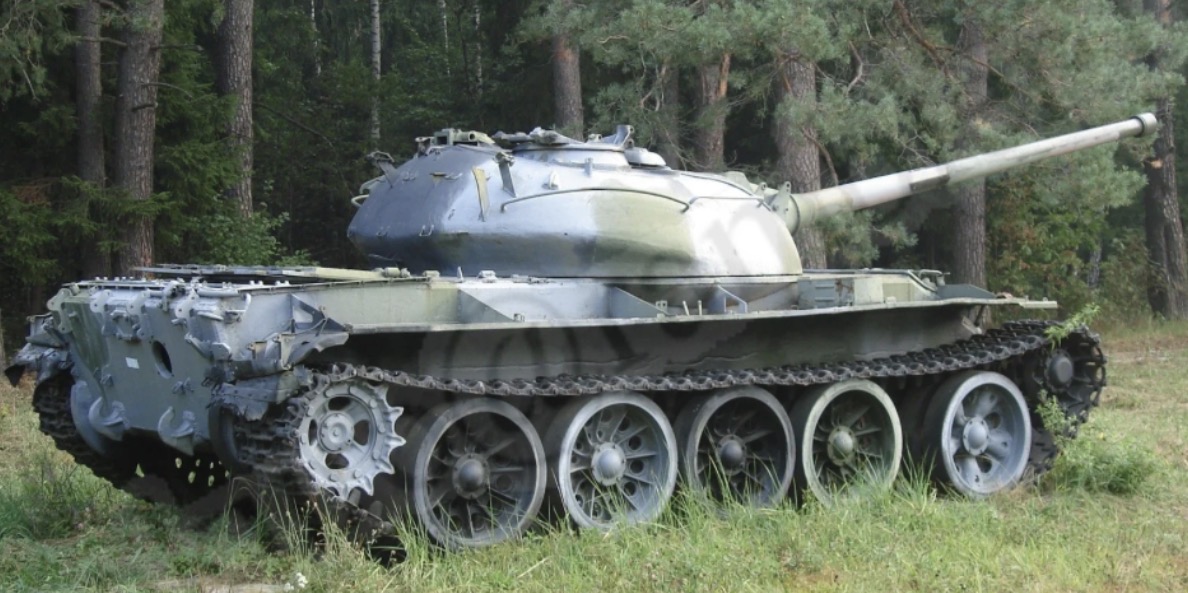
The vehicle retained the characteristic T-54 obr.1949 turret, including its distinctive rear undercut.