Would you like to see ISU-152K in-game?
- Yes, as a Tech-Tree Vehicle
- Yes, as a Premium Vehicle
- Yes, as a Squadron Vehicle
- Yes, as an Event Vehicle
- No, I do not want to see ISU-152K in-game.
0
voters
ISU-152K (Object 241K)

Introduction
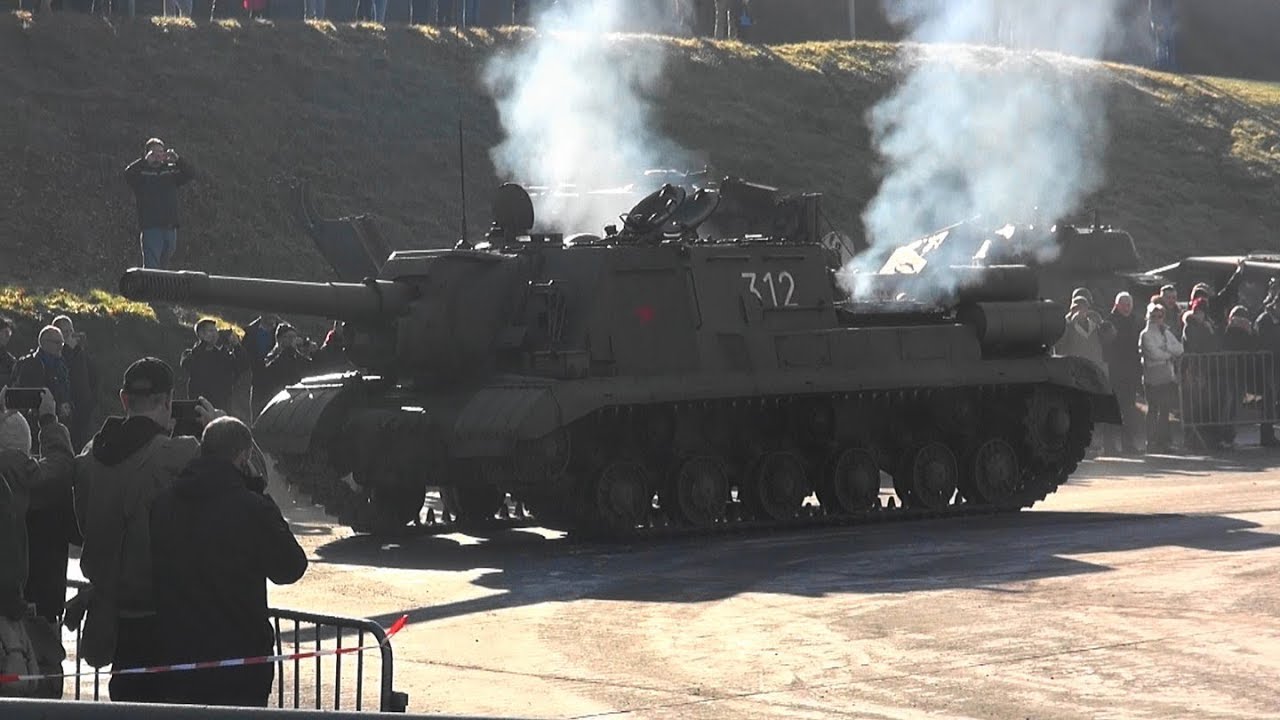
The ISU-152K, designated Object 241K, was a comprehensive postwar modernization of the Soviet ISU-152 heavy self-propelled gun. Existing wartime ISU-152s were rebuilt during major overhauls, receiving a new engine installation, redesigned cooling and fuel systems, improved observation and sighting equipment, increased ammunition stowage, modern communications and extensive changes to the roof, engine compartment, running gear and external equipment. The ISU-152K was intended to make the surviving wartime vehicles more reliable, easier to operate and better suited to the logistical and tactical requirements of the postwar Soviet Army.
P.S Technically, the ISU-152K was not the final modernization of the ISU-152, as it was followed by the later ISU-152M. The K was, however, the more extensive and sophisticated conversion. Whereas the M was essentially an overhauled standard ISU-152 fitted with selected components and improvements associated with the IS-2M modernization program, the K incorporated a substantially redesigned engine compartment, ejector cooling, greater fuel and ammunition capacity, improved optics, a new commander’s cupola and major changes to the roof, external stowage and running gear. In practical terms, the ISU-152K was the more thoroughly modernized and capable vehicle, which is why I would much rather see it represented in War Thunder than the comparatively conservative ISU-152M.
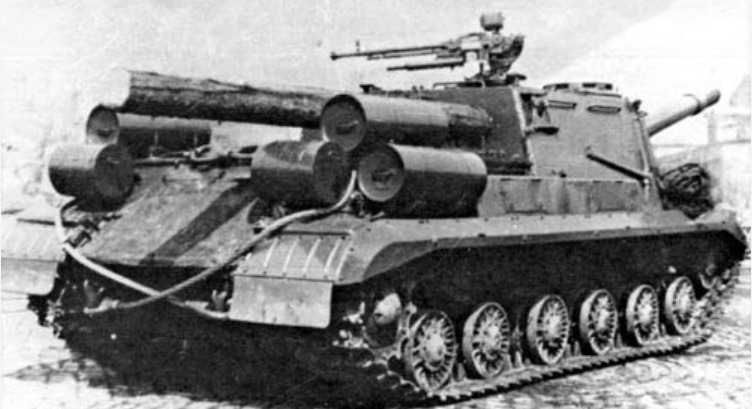
ISU-152K Identification Summary:
- Raised rotating commander’s cupola with TPKU and seven TNP blocks;
- Additional loader’s roof hatch with the DShKM mounting;
- Localized armor improvements;
- A ring around the base of the cannon near the mantlet;
- PS-10 sight installation;
- Ejector-cooling engine deck with large grilles and lateral diffuser outlets;
- Four 90-litre fuel tanks arranged around the rear deck;
- Long welded side stowage boxes;
- New tracks and T-10 wheels;
- Improved 520 HP V-54K was installed;
- Full front, side and rear IS-2M style mud shields;
- Protected headlight and horn fittings;
- Two green front marker lights fitted near the outer top edges of the casemate
- BDSh smoke canister mounts;
- Large unditching log;
- Optional rear mounts for two 200-litre drums.
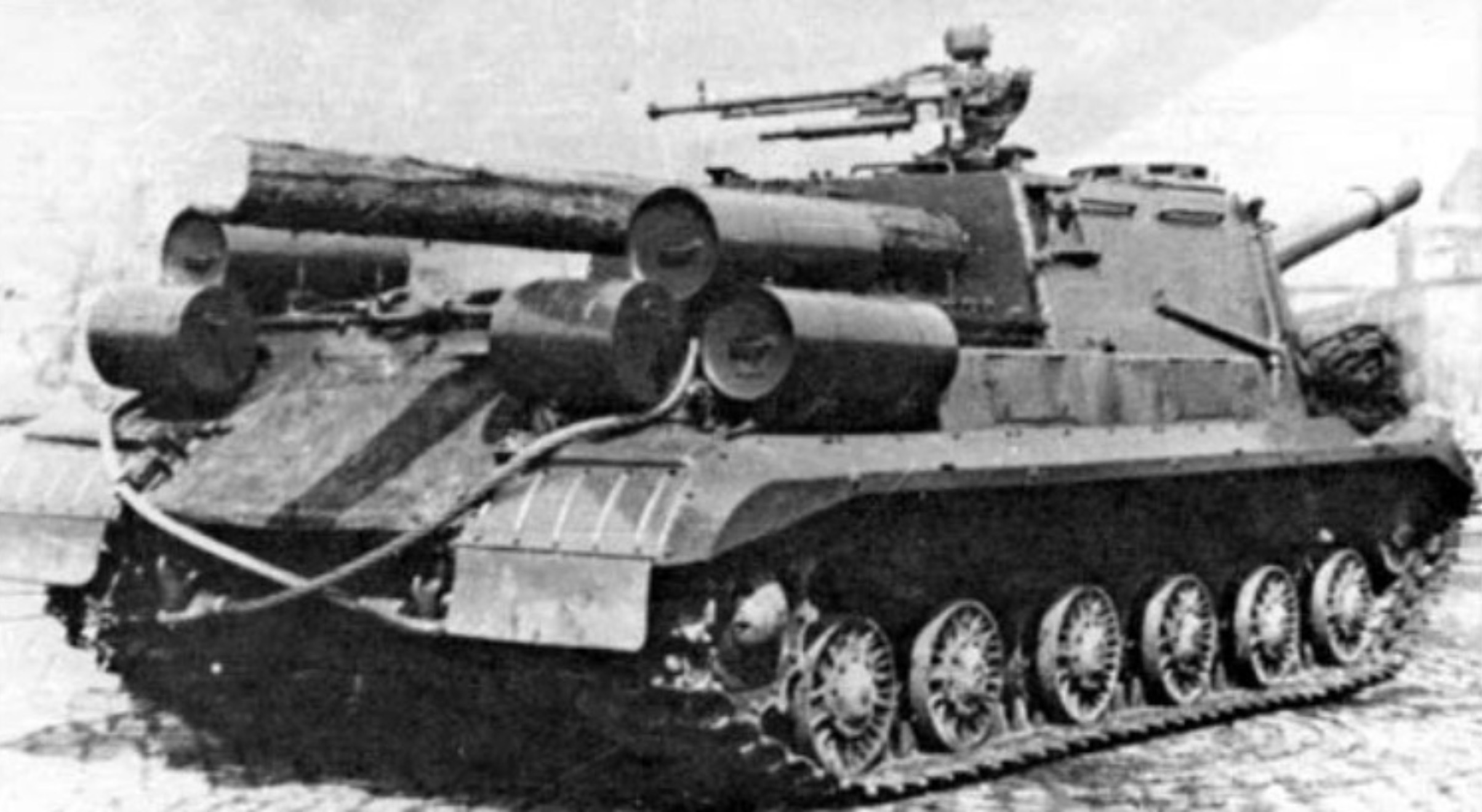
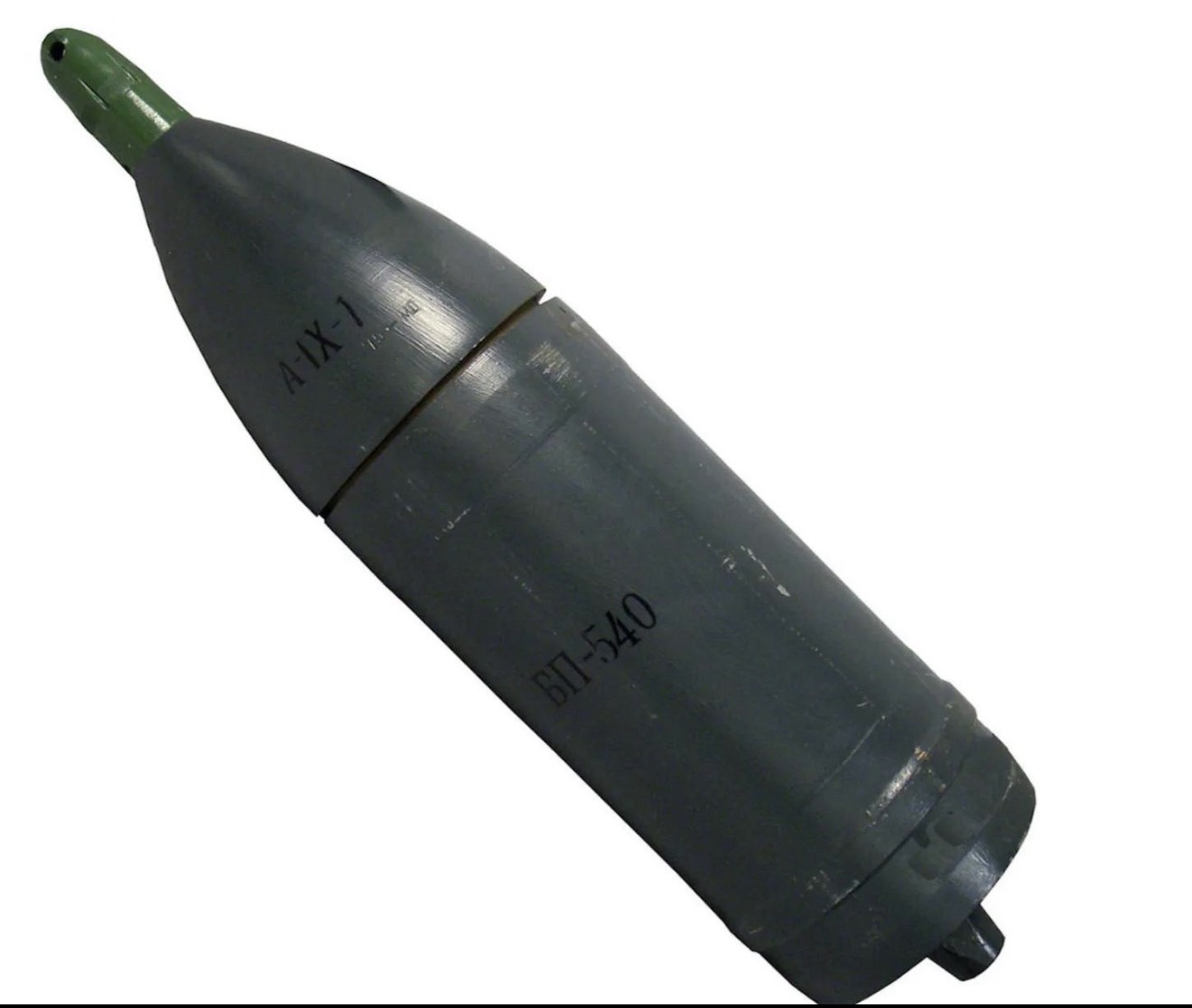
P.S The ISU-152M was capable of firing the post-war 53-BP-540 HEAT projectile using the 3VBП2 round and 4Zh6 propelling charge.
Development of the ISU-152
Spoiler
The origins of the ISU-152 lay in the Red Army’s requirement for a heavy self-propelled gun capable of accompanying tanks and infantry during assaults on fortified positions. Its immediate predecessor, the SU-152, had entered service in early 1943 and combined the chassis of the KV-1S heavy tank with the powerful 152.4 mm ML-20S gun-howitzer. The vehicle proved effective against bunkers, buildings, artillery positions and armored vehicles, but its future was limited by the decision to discontinue the KV series. In September 1943, the State Defence Committee ordered the development of a replacement based on the new IS heavy-tank chassis. The prototype, Object 241, was completed in October and accepted for service as the ISU-152 on 6 November 1943. Production began at the Chelyabinsk Kirov Plant and continued after the war at Leningrad, with the final vehicles completed in 1947.
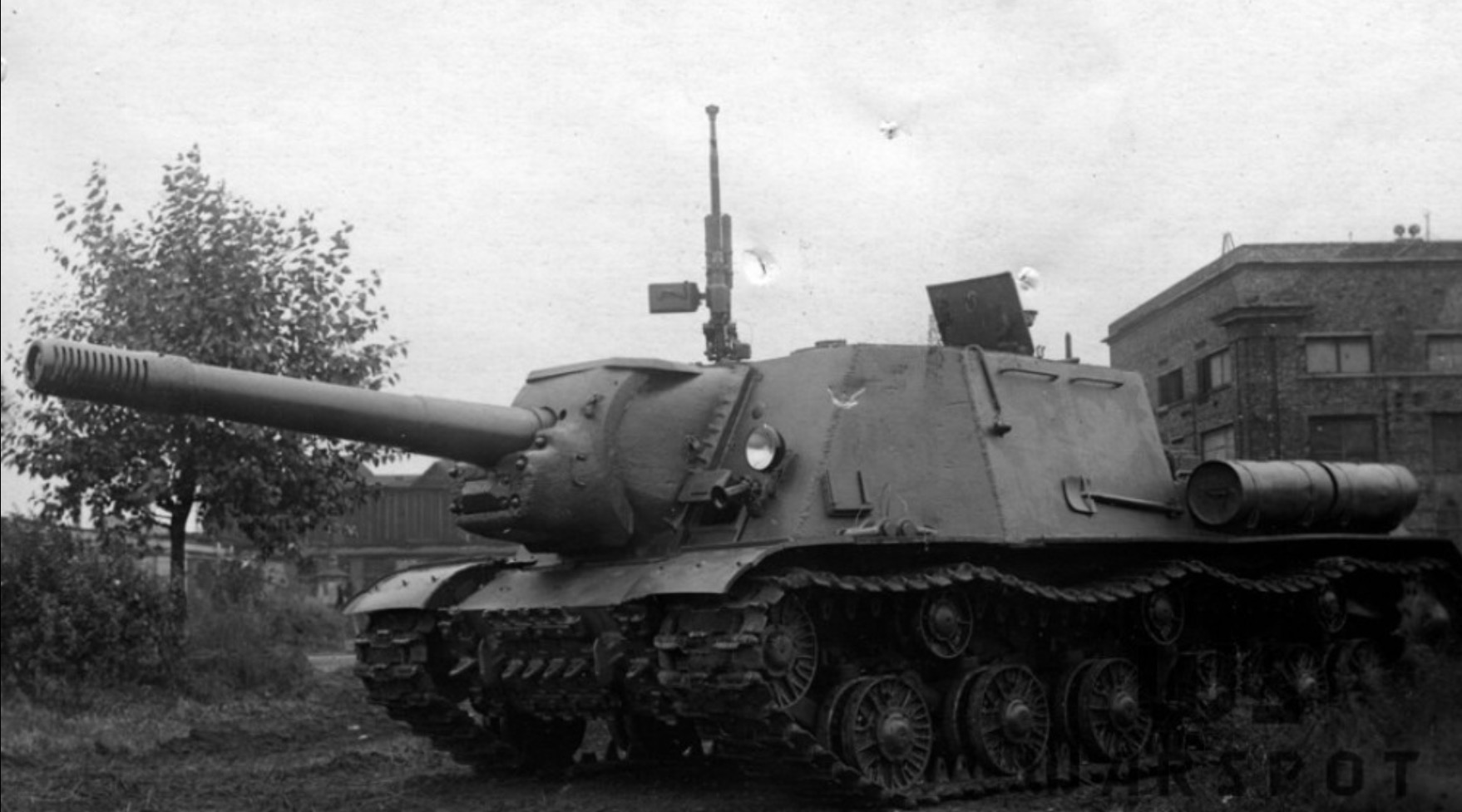
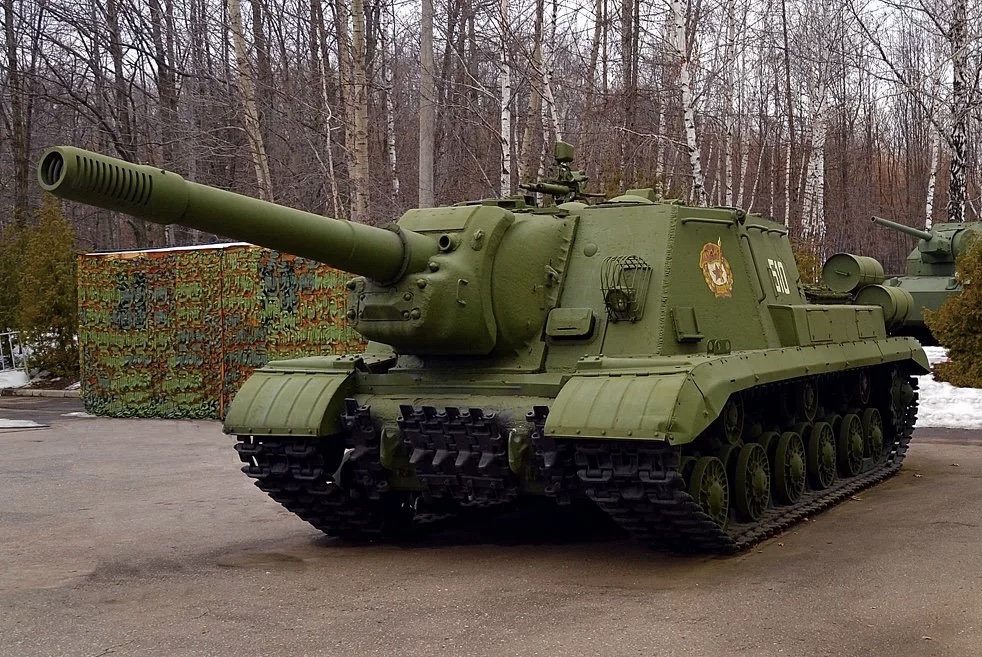
The photograph above shows an original ISU-152 for reference. The easiest way to distinguish it from the later ISU-152K and ISU-152M is the driver’s headlight, which was given a protective cage during both modernization programmes. The original ISU-152 can also be distinguished from the ISU-152K/M by its road-wheel hub covers, which have five bolts instead of ten on the upgraded models.
The ISU-152 retained the ML-20S, a vehicle-mounted version of the ML-20 field gun-howitzer. It fired separate-loading ammunition: the projectile and propellant charge were handled independently. High-explosive projectiles weighed more than forty kilograms, while the armor-piercing projectile weighed nearly forty-nine kilograms. The ammunition was difficult to handle inside the confined casemate, and the normal rate of fire was approximately two rounds per minute. Although the ISU-152 acquired a formidable reputation as a destroyer of German heavy armor, its principal function was heavy fire support. Its high-explosive shell was particularly effective against fortifications, urban strongpoints and field defenses. The vehicle could also fire from covered positions using an artillery panorama, although its limited maximum elevation and small ammunition supply prevented it from functioning as efficiently as a purpose-designed self-propelled howitzer.
The ISU-152K Modernization In-Depth
Spoiler
Development and general character
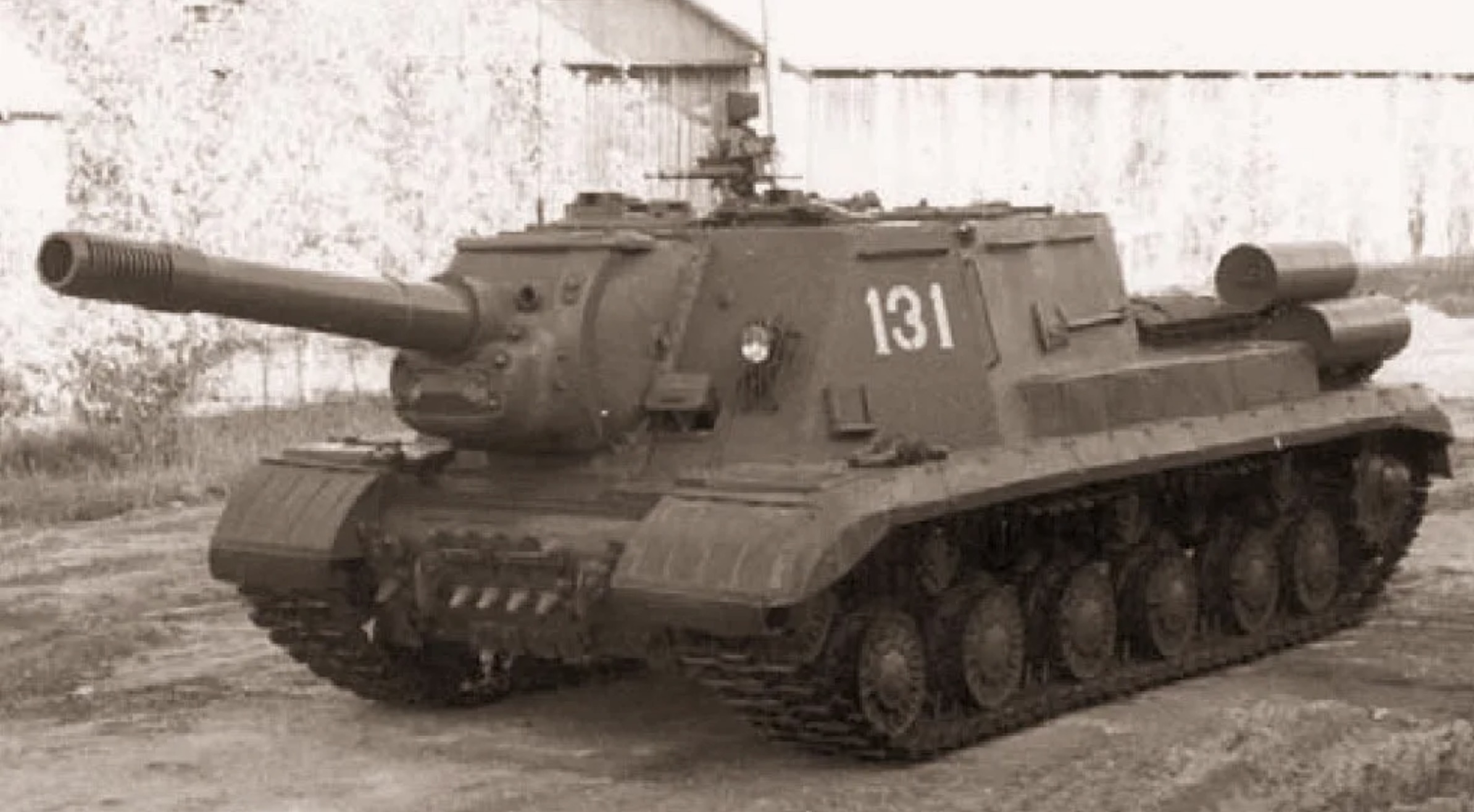
The ISU-152K modernization was developed at the Leningrad Kirov Plant during the middle of the 1950s. The designation is usually associated with vehicles rebuilt from approximately 1955 or 1956 onward. The modernization was extensive enough to alter the vehicle’s external appearance and much of its internal arrangement, but it did not change the basic fighting concept. The crew remained in the forward armored casemate, the engine and transmission remained at the rear, and the ML-20S remained the main armament. The principal changes concerned the power plant, cooling system, fuel capacity, ammunition stowage, observation equipment, gun installation, crew hatches, fire-protection equipment and running gear. The ISU-152K’s engine compartment, roof, internal fuel system, fighting-compartment stowage and external equipment were substantially reconstructed.
Engine and ejector cooling system
The original V-2IS diesel was replaced by the V-54K, a postwar twelve-cylinder diesel of the V-54 family. It produced approximately 520 horsepower, so the modernization did not significantly increase nominal engine power. The principal benefits were greater reliability, improved component standardization and better supportability within the postwar Soviet maintenance system. The K abandoned the original fan-driven radiator cooling arrangement and used an ejector system. Exhaust gases were directed through ejector nozzles, producing a flow that drew cooling air through the radiators. This eliminated the large mechanically driven cooling fan but required a different exhaust system, radiator installation, engine-compartment roof and internal arrangement. The engine had separate exhaust branches and ejector pipes along the cylinder blocks. The radiators, oil tank, fuel tanks, coolant pipes, air-cleaning system and engine heater were altered accordingly. New air cleaners were installed.
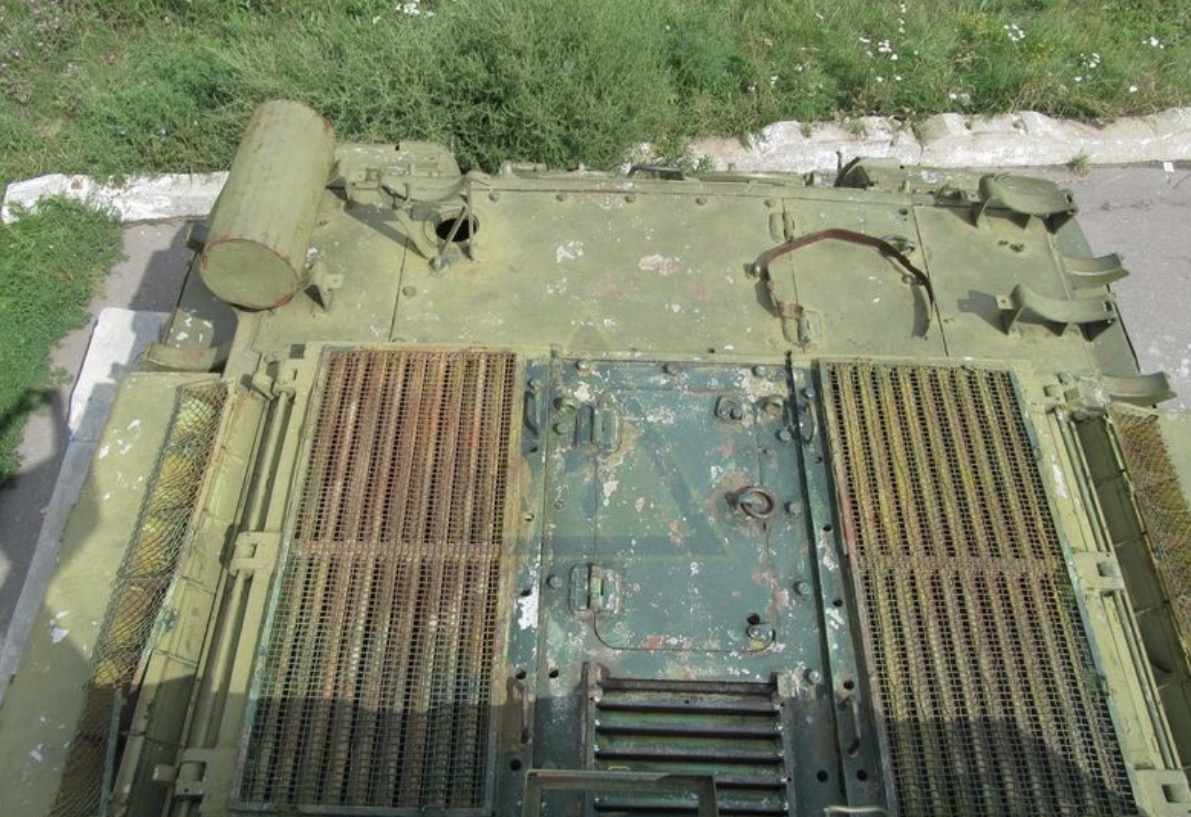
P.S The ejector installation required a visibly different engine deck. The K had redesigned air-intake and exhaust openings, altered access panels and a different arrangement of grilles over the radiators. This makes the engine-compartment roof one of the most dependable external distinctions between an ISU-152K and an ISU-152M.
Fuel capacity and range
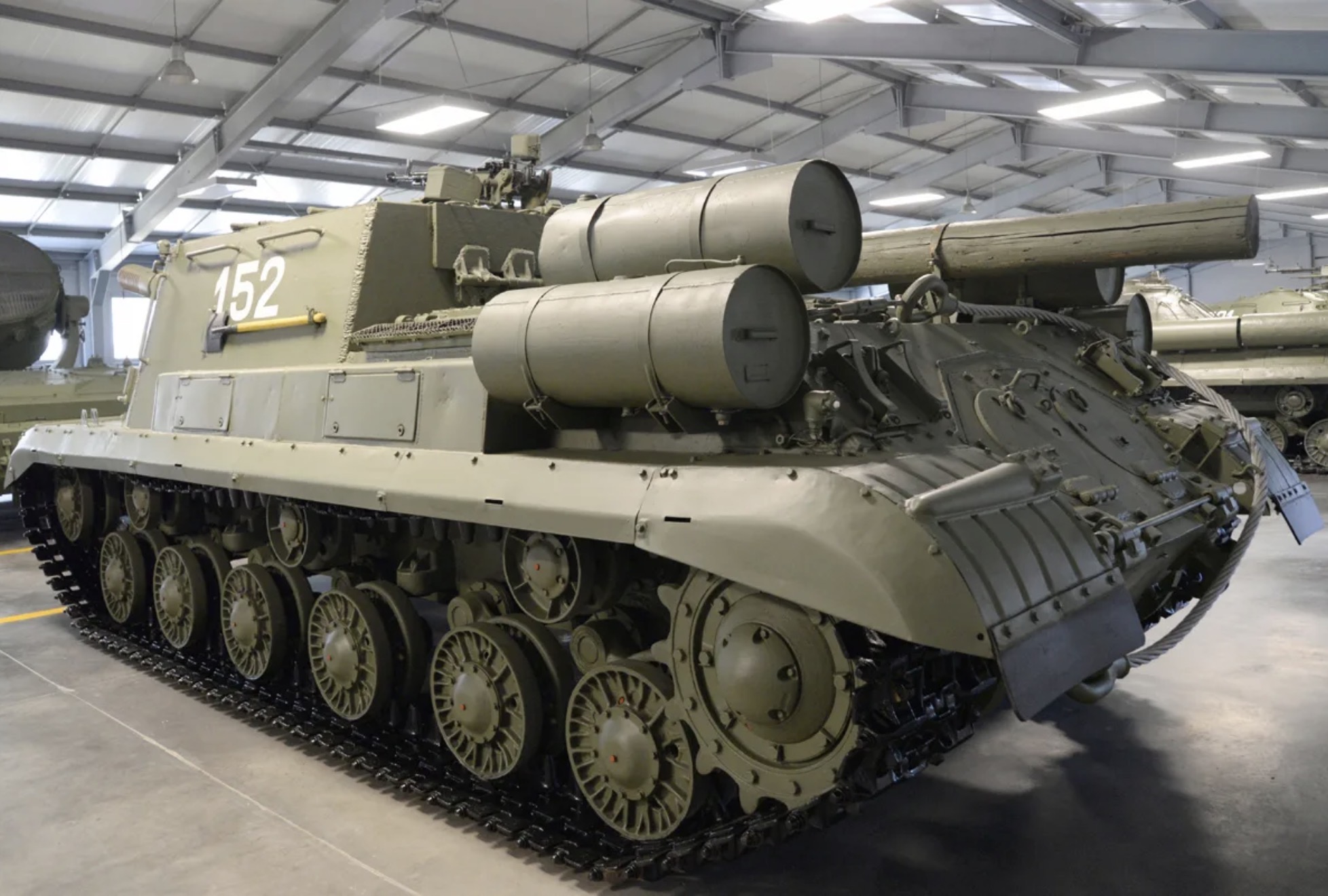
The ISU-152K received a much larger fuel installation than the wartime vehicle. A total capacity of approximately 1,280 liters and a road range of about 360 kilometers. The exact usable capacity would have depended on whether all removable external tanks were fitted, but the increase was substantial. Combat weight rose to approximately 47.2 tonnes, while maximum road speed remained broadly similar to that of the original vehicle. The K had six internal fuel tanks and four external cylindrical tanks connected to the fuel system. The internal tanks were redistributed around the fighting and engine compartments as part of the general reconstruction. The external tanks were mounted in a characteristic arrangement around the rear portion of the vehicle. The long stowage boxes introduced along the sides occupied space where external tanks had previously been carried. As a result, the forward external tanks were moved onto the engine-compartment roof. On a complete ISU-152K, the four external tanks appear in two vertically arranged pairs around the rear deck rather than in a simple longitudinal row. This stacked arrangement is one of the most conspicuous external characteristics of the K.
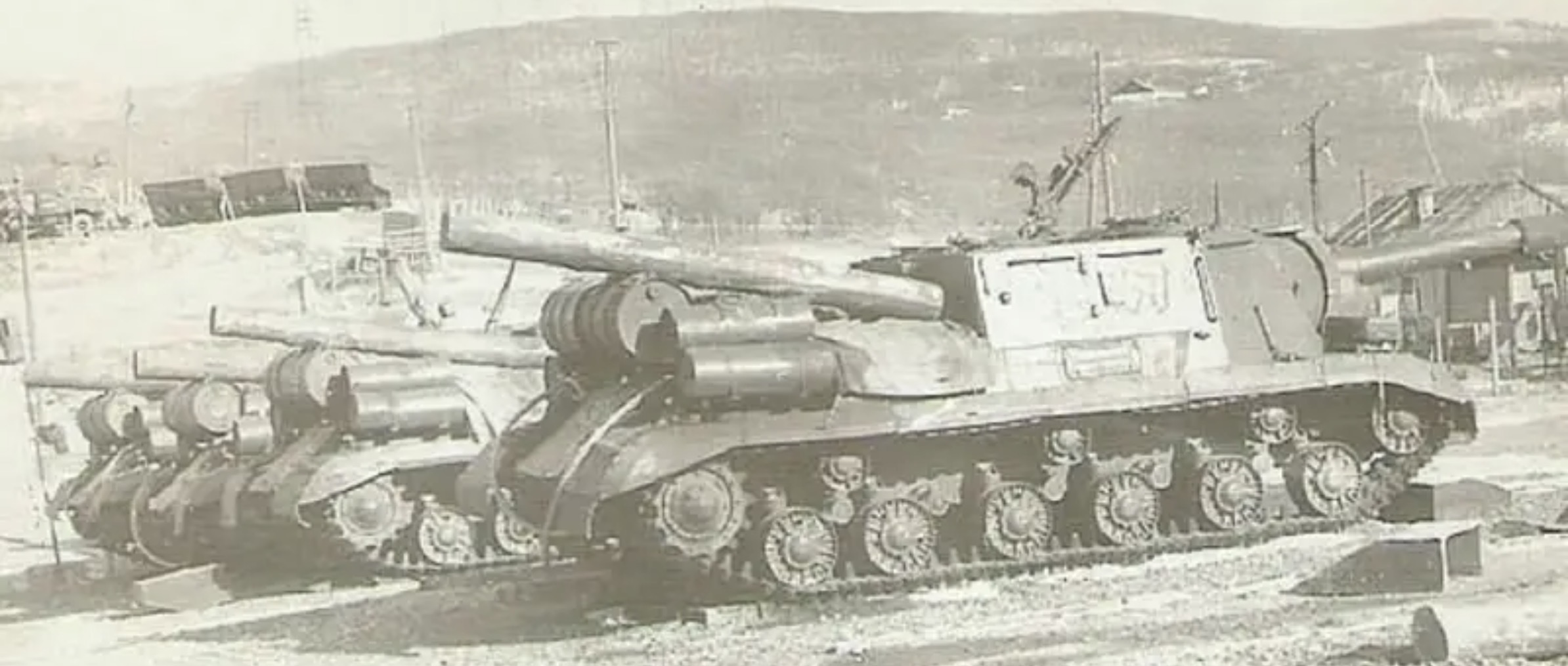
The ISU-152K could also be fitted with brackets on the sloping rear hull plate for two standard Soviet 200-litre fuel drums. Directly beneath them were mounts for BDSh smoke canisters, reproducing the same general arrangement used on modernized IS-2M heavy tanks. Many vehicles also carried a large unditching log across the rear hull, which could be secured to the tracks to help the vehicle free itself from mud or soft ground.
Casemate roof, commander’s cupola and crew hatches
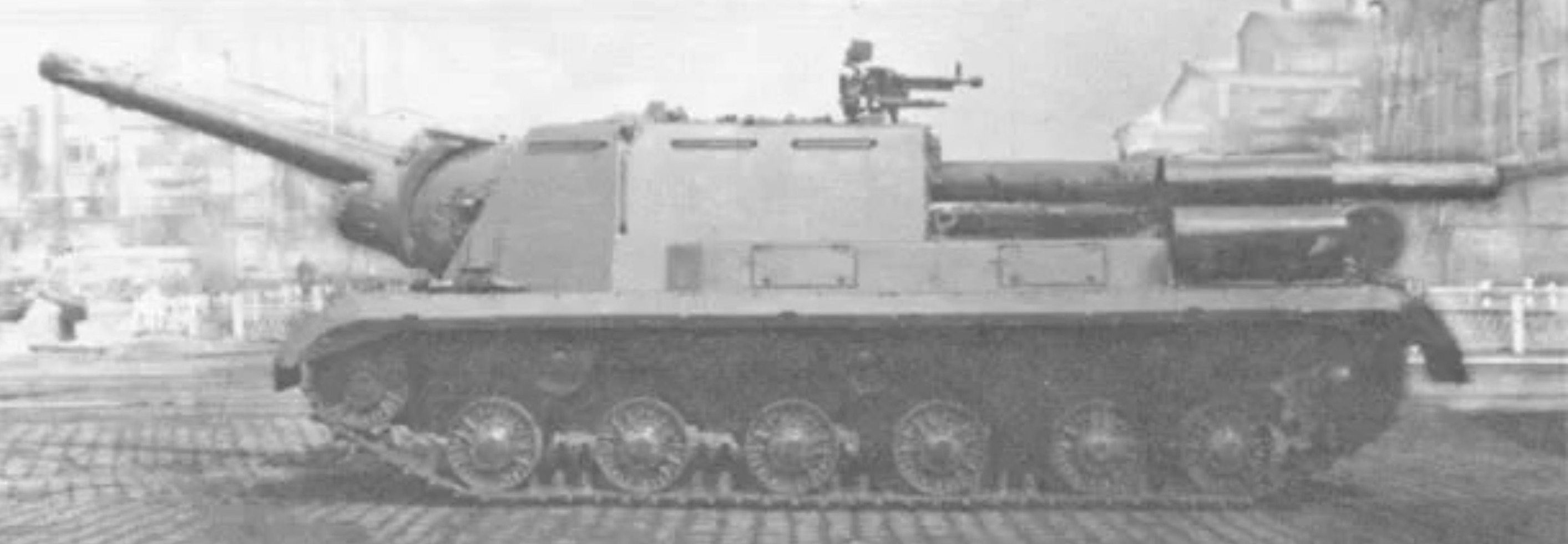
The casemate roof was extensively altered. The ISU-152K received a new rotating commander’s cupola fitted with one TPKU commander’s observation device and seven TNP vision blocks. The cupola could rotate through 360 degrees, while the surrounding observation blocks provided the commander with substantially better all-round visibility than the wartime hatch and periscope arrangement. The commander’s hatch had a spherical cover mounted on a distinctive hinge arrangement. The K also received an additional loader’s hatch behind the commander’s cupola. This was the “third hatch”. The roof-mounted 12.7 mm DShK machine gun was relocated in connection with the new hatch arrangement. The DShKM was mounted on the additional loader’s hatch behind the commander’s cupola, rather than in the original wartime commander-operated position. It was normally operated by the right-side loader or breech operator. From an elevated front-right or rear-right viewpoint, the combination of the raised cupola, observation blocks, additional loader’s hatch and relocated machine gun is one of the clearest ways of identifying an ISU-152K.

Sighting and observation equipment
The original ST-10 telescopic direct-fire sight was replaced by the improved PS-10. The Hertz artillery panorama was retained for indirect fire. The PS-10 did not change the ballistics of the ML-20S. The passage of the sight through the frontal gun mounting was altered. A protective sleeve and an external ring or collar were installed around the sight opening. This fitting protected the sight aperture against dirt and weather and reduced glare. The gun mounting itself received several mechanical changes. The travel lock was redesigned, the attachment of the recoil-brake cylinder was strengthened, lubrication arrangements were improved, needle bearings were introduced in parts of the mounting, and the elevation and traverse mechanisms received yielding links intended to protect them from shock loads. These changes improved reliability and maintenance but did not alter the basic traverse limits or maximum elevation of the weapon. The ISU-152K also received night-driving equipment. Its main headlight and horn were enclosed within a protective metal cage to prevent damage from branches, debris and minor impacts. Some vehicles were fitted with blackout projectors of the type commonly seen on other Soviet armored vehicles of the Cold War period, although this equipment does not appear to have been installed uniformly across the entire ISU-152K fleet.
Ammunition stowage
The main-gun ammunition supply increased from approximately twenty rounds on the original ISU-152 to thirty rounds on the ISU-152K. Because the ML-20S used large separate-loading ammunition, this was a major internal change. New projectile and propellant-charge racks were distributed through the fighting compartment. Equipment, fuel tanks and crew stores had to be repositioned to make room. The increase represented a fifty-percent improvement in the vehicle’s immediately available ammunition and reduced its dependence on frequent resupply. The larger ammunition load is specifically identified in the 1973 manual as a feature distinguishing the K from the ISU-152M.
Track guards, fenders and external stowage
The ISU-152K had a distinctive system of track guards, mud shields and fenders similar to the IS-2M. Long welded rectangular boxes were mounted along the track guards on both sides of the vehicle. These served as containers for spare parts, tools and other equipment. They were not merely detachable toolboxes placed on the fenders but were integrated into the external arrangement. Outer mud shields covered more of the upper track run, while the front and rear mudguard wings were redesigned to suit the new stowage boxes, fuel tanks and engine compartment. The supports for the external tanks were also different.
Local armor and protection changes
The ISU-152K did not receive a new armored hull or a general increase in frontal and side armor. Its basic protection remained that of the wartime donor vehicle. There were, however, local protective changes. A shaped 20 mm armor plate on the underside of the hull ahead of the drive sprockets, modifications to the bottom plate, additional rear protection and armor for certain running-gear service openings. The exact configuration could differ according to the production series and overhaul history of the donor hull. Some vehicles reportedly received an additional plate approximately 15 mm thick over the upper portion of the moving gun mask. This was a local applique, not an increase in the thickness of the entire mantlet, and it was fitted only to some vehicles. The ISU-152K also featured a prominent thick collar at the base of the gun barrel, protruding out of the mantlet. Its exact purpose is unclear to me. The K also received automatic fire-extinguishing equipment. This was a meaningful improvement over the original vehicle because the internal fuel installation, engine compartment and ammunition stowage created serious fire hazards.
Communications
The wartime radio and intercom were replaced by more modern postwar equipment. The R-113 radio and R-120 crew intercom are associated with the modernization. These systems provided more reliable communication within Soviet armored formations and were better standardized with other postwar vehicles.The communications modernization was an important part of adapting the ISU-152 to Cold War service.
Ammunition
Spoiler
The most important aspect of the modified ISU-152s is the fact that they could use the post-war 53-BP-540 HEAT projectile. When fired from the ML-20S as part of the 3VBP2 round with the 4Zh6 propelling charge, it had a muzzle velocity of roughly 680 m/s and could penetrate about 250 mm of armour at a perpendicular impact. As a shaped-charge projectile, its penetration remained largely consistent over distance, giving the ageing ISU-152K and ISU-152M a much more credible anti-tank capability against post-war armour than their wartime ammunition alone would suggest.
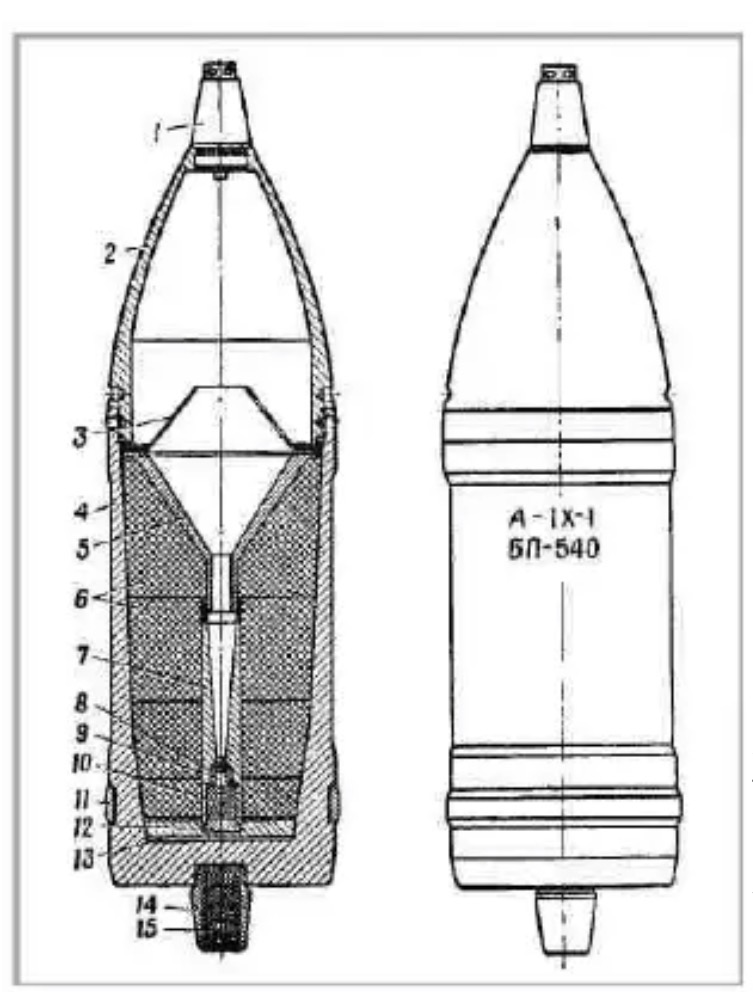
Apart from the 53-BP-540 HEAT round, the modified ISU-152s retained the established ammunition of the ML-20S:
- 53-BR-540 — sharp-nosed APHE-T projectile, weighing 48.8 kg and fired at about 600 m/s.
- 53-BR-540B — blunt-nosed APHEBC-T projectile with a ballistic cap. It had the same approximate muzzle velocity but performed somewhat better against sloped armour.
- 53-OF-540 — the principal 43.56 kg high-explosive fragmentation shell, containing approximately 5.86 kg of explosive and fired at 655 m/s.
- 53-OF-530 — a lighter 40 kg high-explosive fragmentation howitzer shell.
- 53-O-530A — a 40 kg fragmentation projectile intended mainly against personnel and exposed positions.
- 53-G-545 — a heavy 56 kg concrete-piercing projectile intended for bunkers and reinforced fortifications.
Post-War Service
Spoiler
Soviet Service
The ISU-152 remained valuable after 1945 because the Soviet Union possessed large numbers of the vehicles and because their 152 mm high-explosive firepower was still useful. New Soviet self-propelled artillery programs progressed slowly during the 1950s, while military and political attention increasingly shifted toward tactical missiles. Modernizing existing ISUs offered an economical means of retaining heavy mobile artillery.

One of the most important Cold War combat deployments occurred during the Hungarian uprising of 1956. ISU-152s, including vehicles identifiable as ISU-152Ks, were used in Budapest. Their large-caliber guns were suitable for engaging barricades and fortified positions in buildings, but the vehicles were vulnerable in narrow streets, where their still limited visibility, restricted gun traverse and weak close-range protection could be exploited. Photographs show K-standard vehicles destroyed, abandoned or captured during the fighting.
As Soviet tanks became faster and better armed, the ISU-152 became less suitable for accompanying armored formations in mobile operations. Its protection was inadequate against modern tank guns and shaped-charge weapons, while its automotive performance could not match vehicles such as the T-54, T-55 and T-62. Its role consequently shifted away from a front-line assault gun and toward heavy fire support and, where necessary, indirect artillery fire. This artillery role was not ideal. The ML-20S had a limited maximum elevation, a narrow horizontal traverse and a relatively low rate of fire. Even the K’s thirty-round ammunition supply was modest by the standards of later self-propelled howitzers. Nevertheless, the destructive effect of its 152 mm projectiles remained useful until modern turreted systems such as the 2S3 Akatsiya entered widespread service. Most Soviet ISU-152s were removed from front-line artillery units during the 1960s and 1970s. 55th Marine Division of the Pacific Fleet used them at least until 1983!
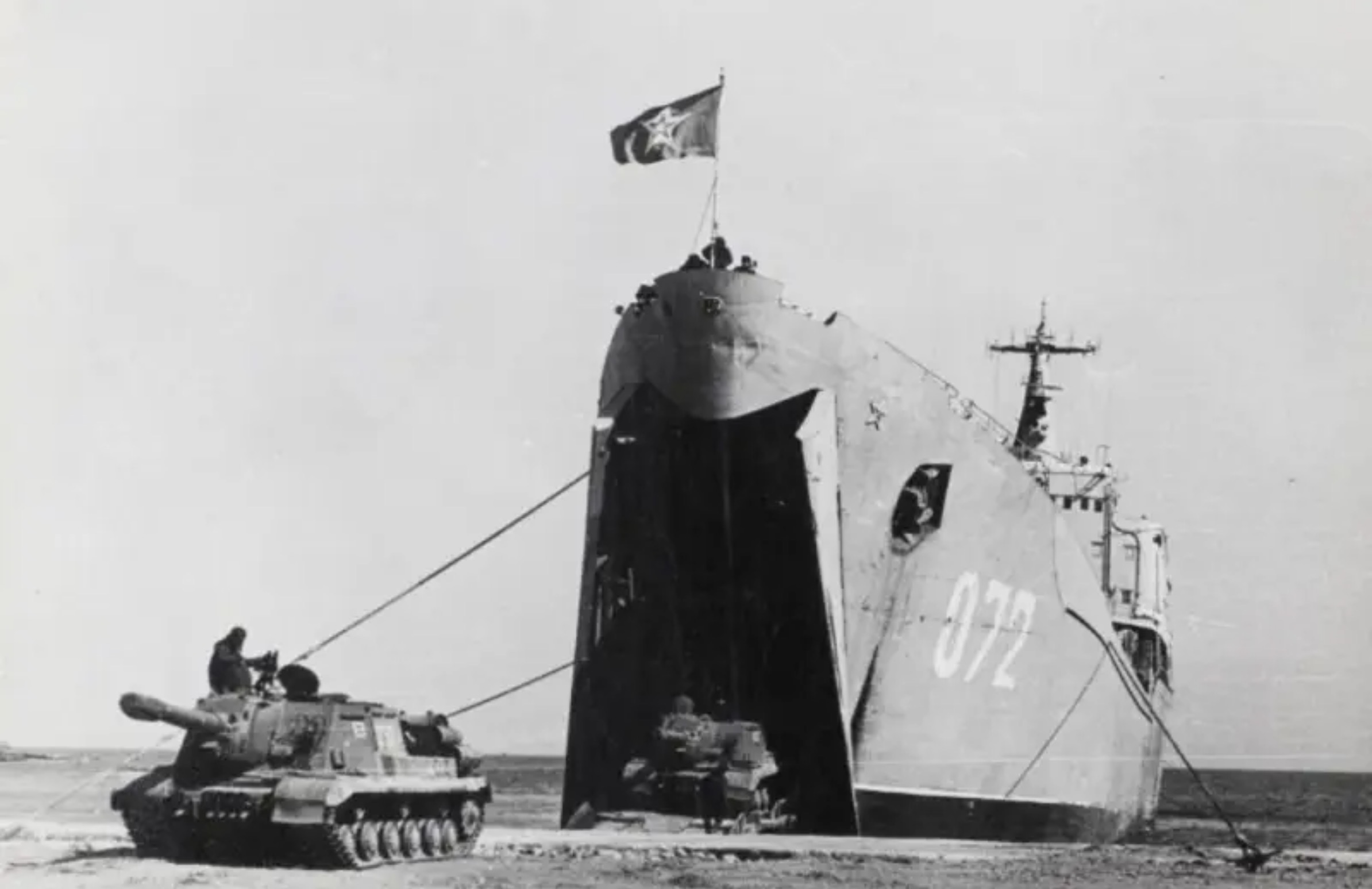
Nevertheless, the chassis still remained valuable after the gun vehicle itself had become obsolete. From 1959 onward, ISU hulls were converted into BTT-1 and BTT-1T heavy armored tractors and recovery vehicles. Other ISU-derived chassis were used for early Soviet tactical missile launchers, including tracked launchers associated with the R-11 and R-17 missile families. These conversions exploited the strength and load-bearing capacity of the heavy IS running gear.
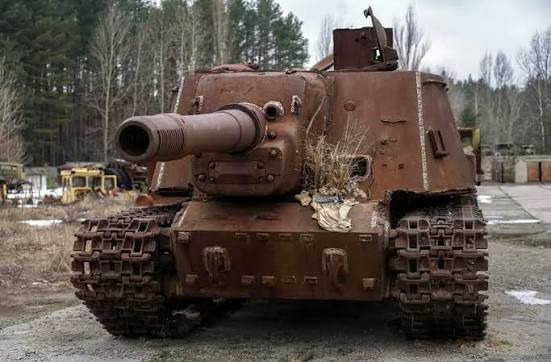
One of the last well-documented Soviet uses of the ISU-152K occurred during the response to the Chernobyl nuclear accident in 1986. Three ISU-152Ks were reportedly brought from storage and employed as heavily armored tractors and demolition vehicles. Their mass and robust construction allowed them to push down contaminated or unstable structures and move through areas where lighter equipment was less suitable. Stories that the vehicles fired their 152 mm guns at the damaged reactor building are not supported by the available accounts. The ISUs were used for mechanical demolition and debris work rather than as artillery. At least two were subsequently abandoned in the exclusion zone because of radioactive contamination.
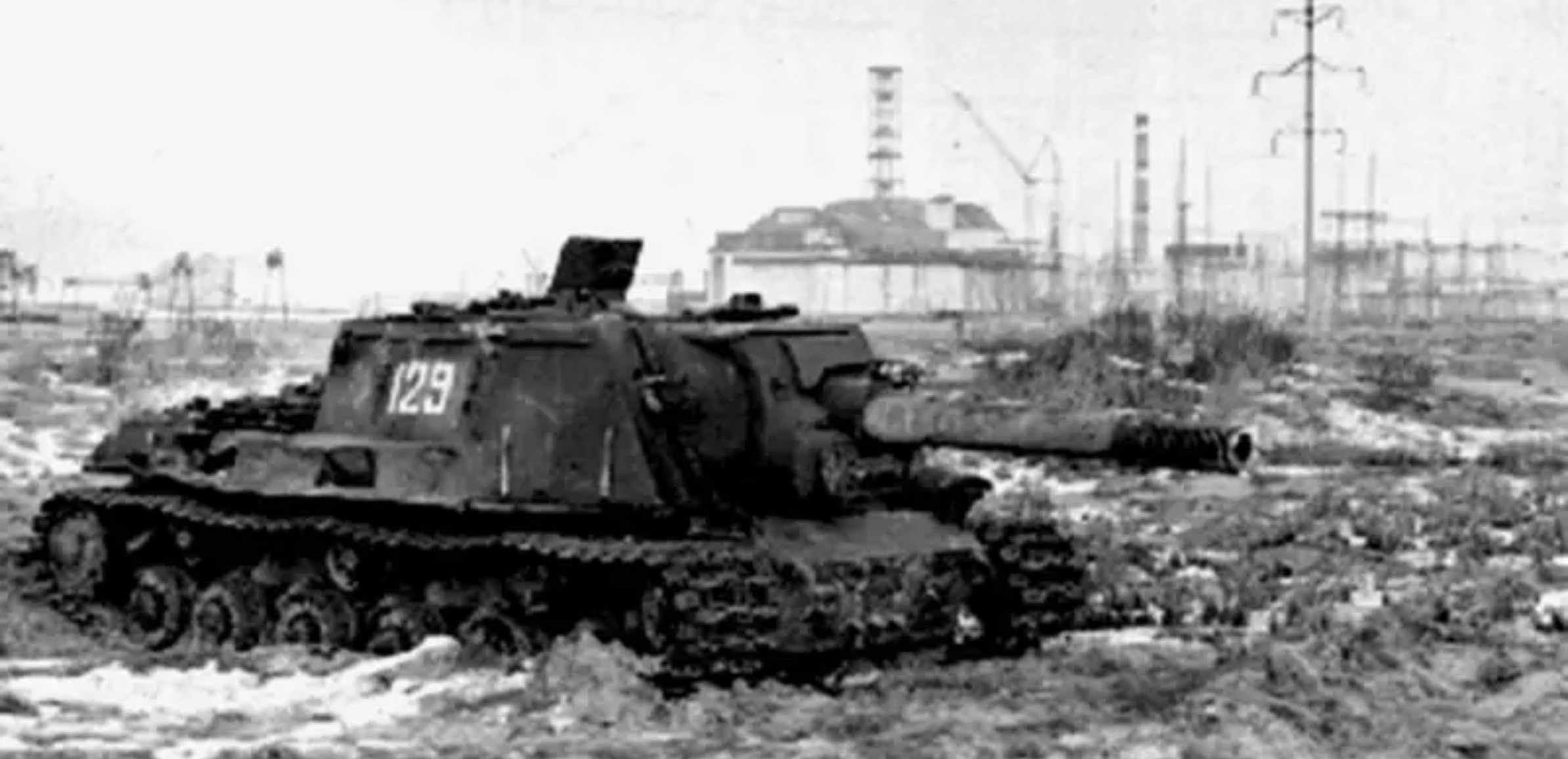
By the end of the Cold War, the ISU-152 had ceased to be a relevant operational artillery system and were likely completely retired from service in the early 90s. Surviving vehicles are primarily museum exhibits, monuments or stored hulks.
Foreign Service
Poland used ISU-152s during the final stages of the Second World War and received additional vehicles after 1945. They remained in Polish armored and self-propelled-artillery units through the 1950s and into the early 1960s. After withdrawal from combat service, some of the best surviving chassis were disarmed and converted into recovery or technical-support vehicles. Czechoslovakia introduced thirty-six ISU-152s under the designation SD-152 in 1950. They initially served with the 1st Tank and Self-Propelled Regiment at Strašice. After the regiment was disbanded in 1956, the vehicles remained in storage. Between 1966 and 1972, stored ISU-152s were still earmarked as potential reinforcement for a Czechoslovak border-guard brigade. Romania received twenty-four ISU-152s in the early 1950s. Designated T-152 in Romanian service, these vehicles were assigned to the artillery units of the 6th, 7th and 57th Tank Divisions and reportedly remained in service until the late 1980s.
Finland captured two ISU-152s during the Continuation War. One was briefly employed in its original configuration, while the other was disarmed and converted into a heavy recovery tractor. This vehicle remained in Finnish service until 1964.
In 1955, when Soviet forces withdrew from the People’s Republic of China, they left sixty-seven ISU-152s to the People’s Liberation Army; reference sources indicate that forty-five were still held in storage in China during the early 1990s. Several ISU-152s also reportedly took part in the Korean War, and after the armistice North Korea received as many as fifty heavy self-propelled guns. Some may still remain in reserve, while Western sources claim that at least one vehicle was later used in connection with North Korea’s missile-development program.
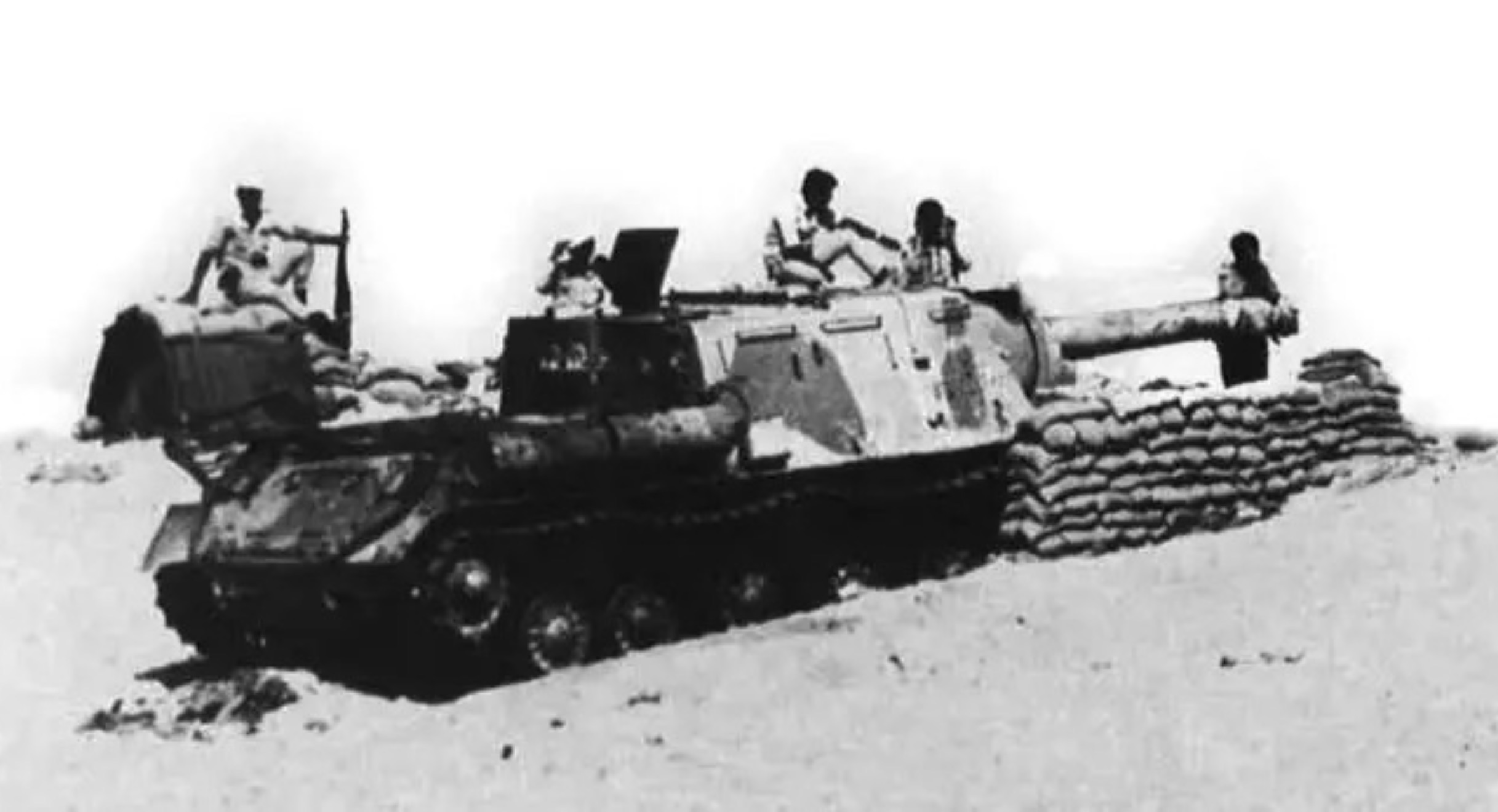
Egypt obtained at least a regiment-sized group of ISU-152s during the early 1960s. These appear generally to have been standard vehicles rather than Soviet ISU-152Ks, although some received infrared night-driving equipment. Egyptian ISUs were encountered by Israeli forces during the wars of 1967 and 1973. Some were employed from prepared or dug-in positions along the Suez Canal, where their limited mobility mattered less and their large high-explosive shells could be used as defensive artillery. Several ISU-based vehicles were captured by Israel.
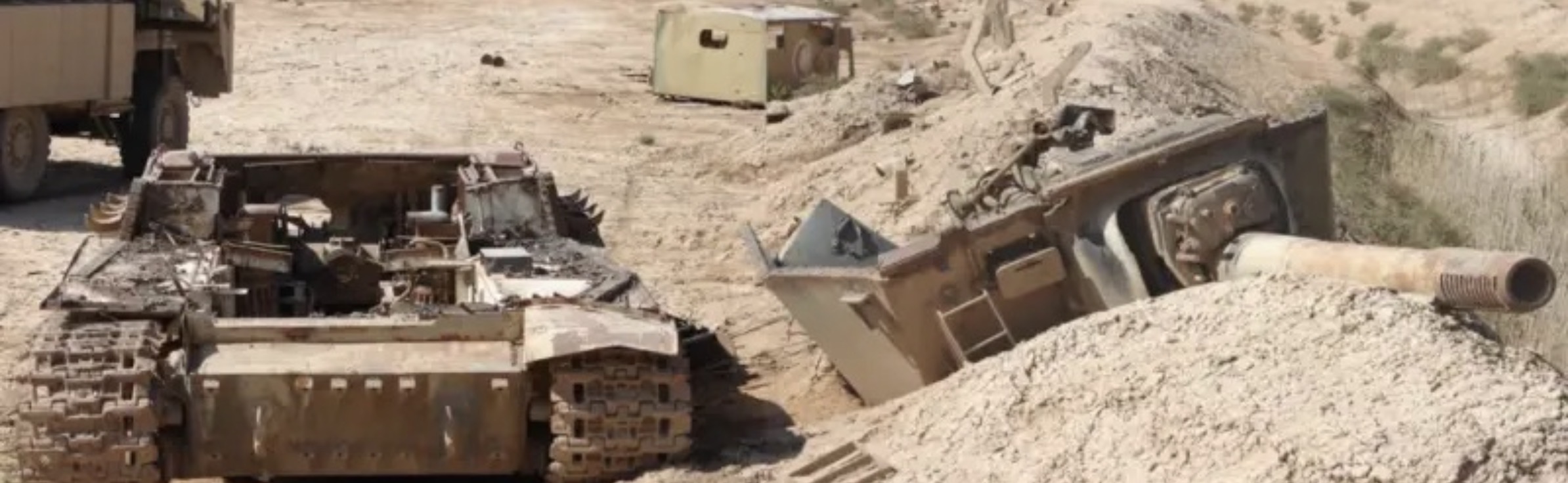
Iraq reportedly had a small number of ISU-152s under the rule of Saddam Hussein, and at least one example was photographed as a wreck near Fallujah during or shortly after the 2003 invasion. The vehicle was destroyed by a powerful coalition munition, possibly an air-delivered weapon, which caused its ammunition to detonate and tore the armored casemate away from the hull. The precise model of the vehicle, its operational condition and the circumstances of its destruction remain uncertain. If the vehicle was genuinely employed by Iraqi forces during the conflict, this would represent the last known military use of the ISU-152.
Specifications
Spoiler

General characteristics
| Specification | ISU-152K |
|---|---|
| Official designation | ISU-152K |
| Factory/project designation | Object 241K |
| Type | Heavy assault gun / heavy self-propelled artillery vehicle |
| Modernization plant | Leningrad Kirov Plant |
| Development | Approximately 1953–1955 |
| Principal conversion period | 1955–1958 |
| Crew | 5 |
| Crew positions | Commander, driver, gunner, loader and breech operator |
| Combat weight | 47.2 tonnes |
| Layout | Fighting and driving compartments forward; engine and transmission rear |
| Exact number converted | Not securely established |
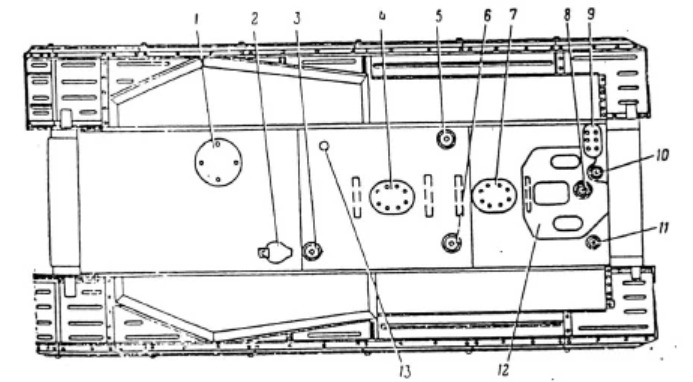
Drawing shows bottom hatches arrangement.
Dimensions
| Dimension | Measurement |
|---|---|
| Overall length, gun forward | 9,050 mm |
| Hull length | 6,543 mm |
| Overall width | 3,235 mm |
| Overall height | 2,870 mm |
| Ground clearance | 470 mm |
| Track gauge | Approximately 2,420 mm |
| Length of track contact/base | Approximately 4,310 mm |
| Height of gun axis | Approximately 1,800 mm |
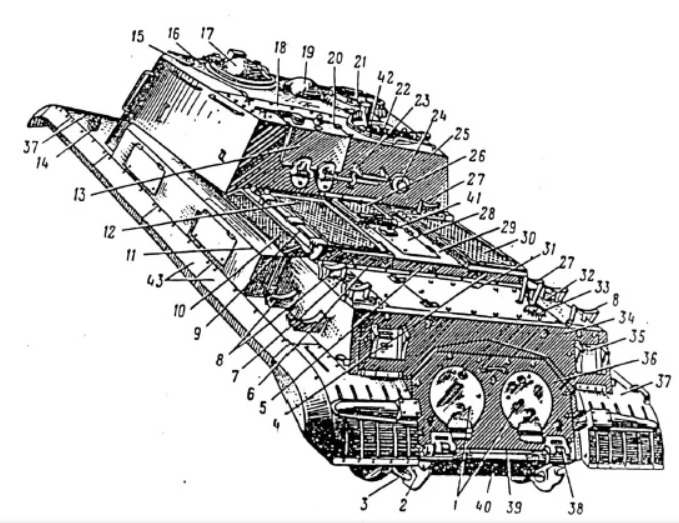
Armor protection
| Armor area | Nominal thickness |
|---|---|
| Casemate front | 90 mm |
| Casemate cheeks and upper sides | 75 mm |
| Lower hull sides | Up to 90 mm |
| Upper hull front | 60–90 mm, depending on donor hull and plate |
| Lower hull front | Approximately 90 mm |
| Rear hull and casemate | 60 mm |
| Roof | 30 mm |
| Main hull floor | 20 mm |
| Gun mantlet/moving armor | Approximately 100 mm, with production variation |
A distinctive K-specific feature was a shaped 20 mm belly plate fitted beneath the forward part of the hull, ahead of the drive sprockets. This was local underside protection buff.
Some rebuilt vehicles also received a local 15 mm applique plate above the upper portion of the moving gun mask. This was not universal and should not be interpreted as making the entire mantlet 115 mm thick. Other machines lacked the plate or carried a differently shaped moving shield.
Main armament
| Specification | Detail |
|---|---|
| Gun | 152.4 mm ML-20S gun-howitzer, model 1937/43 |
| GRAU index | 52-PS-544S |
| Barrel length | Approximately 28.8–29 calibers |
| Breech | Interrupted-screw/piston type |
| Ammunition | Separate-loading projectile and cartridge case |
| Ammunition carried | 30 rounds |
| Maximum practical rate of fire | Approximately 2 rounds per minute |
| Elevation | −3° to +20° |
| Traverse | Approximately 3° left and 7° right, 10° total |
| Direct-fire sight | PS-10 telescopic sight |
| Indirect-fire sight | Hertz artillery panorama with extension |
| Firing mechanism | Electrical and manual mechanical release |
| Gun travel lock | Redesigned K-pattern mounting |
Ballistic performance
| Characteristic | Approximate value |
|---|---|
| Direct-fire range | Up to 3,800 m |
| Direct-shot range against a 2.5–3 m target | Approximately 800–900 m |
| Maximum range with standard full-charge HE projectile | Approximately 12,800–13,000 m |
| Normal rate of fire | 1–2 rounds per minute |
Compatible principal ammunition
| Projectile | Type | Projectile weight | Muzzle velocity | Approximate maximum range |
|---|---|---|---|---|
| OF-540 | High-explosive fragmentation | 43.56 kg | 655 m/s | 12.8 km |
| BR-540 | Armor-piercing | 48.8 kg | 600 m/s | 4 km |
| BR-540B | Armor-piercing, improved form | 46.5 kg | 600 m/s | 4 km |
| O-530A | Fragmentation | 40 kg | 670 m/s | 11.8 km |
| BP-540 | HEAT | 27.67 kg | 680 m/s | 3 km |
A transcription of the Soviet description gives twenty-one cartridge cases along the right side, six beneath the gun and three on the left below the projectile racks.
Secondary and crew armament
| Weapon | Ammunition |
|---|---|
| 12.7 mm DShKM antiaircraft machine gun | 300 rounds |
| Crew small arms | Normally two AK-pattern rifles |
| Hand grenades | Carried for local defense |
Sights and observation equipment
| Position | Equipment |
|---|---|
| Gunner | PS-10 direct-fire sight and Hertz panorama |
| Commander | Rotating TPKU binocular observation instrument |
| Commander’s cupola | Seven fixed TNP observation blocks |
| Driver | Improved periscopic observation equipment; MK-4 is reported on reconstructed vehicles |
| Fighting compartment | Roof ventilation unit beneath an armored cover |
Engine
| Specification | Detail |
|---|---|
| Engine | V-54K |
| Type | Four-stroke, V-12 liquid-cooled diesel |
| Maximum output | 520 hp at approximately 2,000 rpm |
| Power-to-weight ratio | Approximately 11.0 hp/tonne |
| Cooling system | Exhaust-ejector cooling |
| Cold-weather equipment | Engine-coolant preheater |
| Air filtration | Revised postwar air-cleaning system |
Transmission and steering
| Component | Specification |
|---|---|
| Main clutch | Multi-disc dry clutch |
| Gearbox | Mechanical four-speed gearbox with range multiplier |
| Forward gears | 8 |
| Reverse gears | 2 |
| Steering | Two-stage planetary steering mechanisms |
| Final drives | Two-stage combined final drives |
| Control system | Mechanical |
Fuel system
| Fuel-system element | Capacity or arrangement |
|---|---|
| Internal fuel tanks | 6 |
| External cylindrical tanks | 4 × 90 litres |
| Total quoted capacity | Approximately 1,280 litres |
| External tanks connected to engine system | The two lower tanks |
| External tanks not connected directly | The two upper tanks |
| Optional supplementary drums | 2 × 200 litres, not permanently plumbed into the system |
Mobility
| Performance | Figure |
|---|---|
| Maximum road speed | 40 km/h |
| Typical cross-country speed | 15–20 km/h |
| Commonly quoted road range | Approximately 360 km |
| Museum road-range range | 350–500 km, depending on conditions and fuel counted |
| Cross-country range | Approximately 140–300 km |
| Maximum gradient | Approximately 36° |
| Maximum side slope | Approximately 30° |
| Trench crossing | Approximately 2.5 m |
| Vertical obstacle | Approximately 1.0 m |
| Fording depth without preparation | Approximately 1.3 m |
Running gear
| Component | Specification |
|---|---|
| Suspension | Individual torsion bar |
| Road wheels | 6 twin road wheels per side |
| Return rollers | 3 per side |
| Drive sprocket | Rear |
| Idler | Front |
| Track engagement | Pin/lantern type |
| Standard K track width | 720 mm |
| Track pitch | 160 mm |
| Track type | Steel, small-link, single-guide-horn pattern |
Electrical equipment, communication and fire protection
Communication equipment varied over the K’s long service life:
| Period/configuration | Equipment reported |
|---|---|
| Early or original K conversion | 10-RT radio and TPU-47 intercom |
| Later overhaul configuration | R-113 radio and R-120 intercom |
| Some later repairs | “Granat” radio-family equipment with R-120 intercom |
Video