Would you like to see this IS-4 in-game?
- Yes, as a Tech-Tree Vehicle
- Yes, as an Event/Squadron/Premium Vehicle
- Yes, as a Modification to the Existing IS-4M
- No, I do not want to see IS-4M (1959) added to the game.
0
voters
The Experimental Modernization of the IS-4M
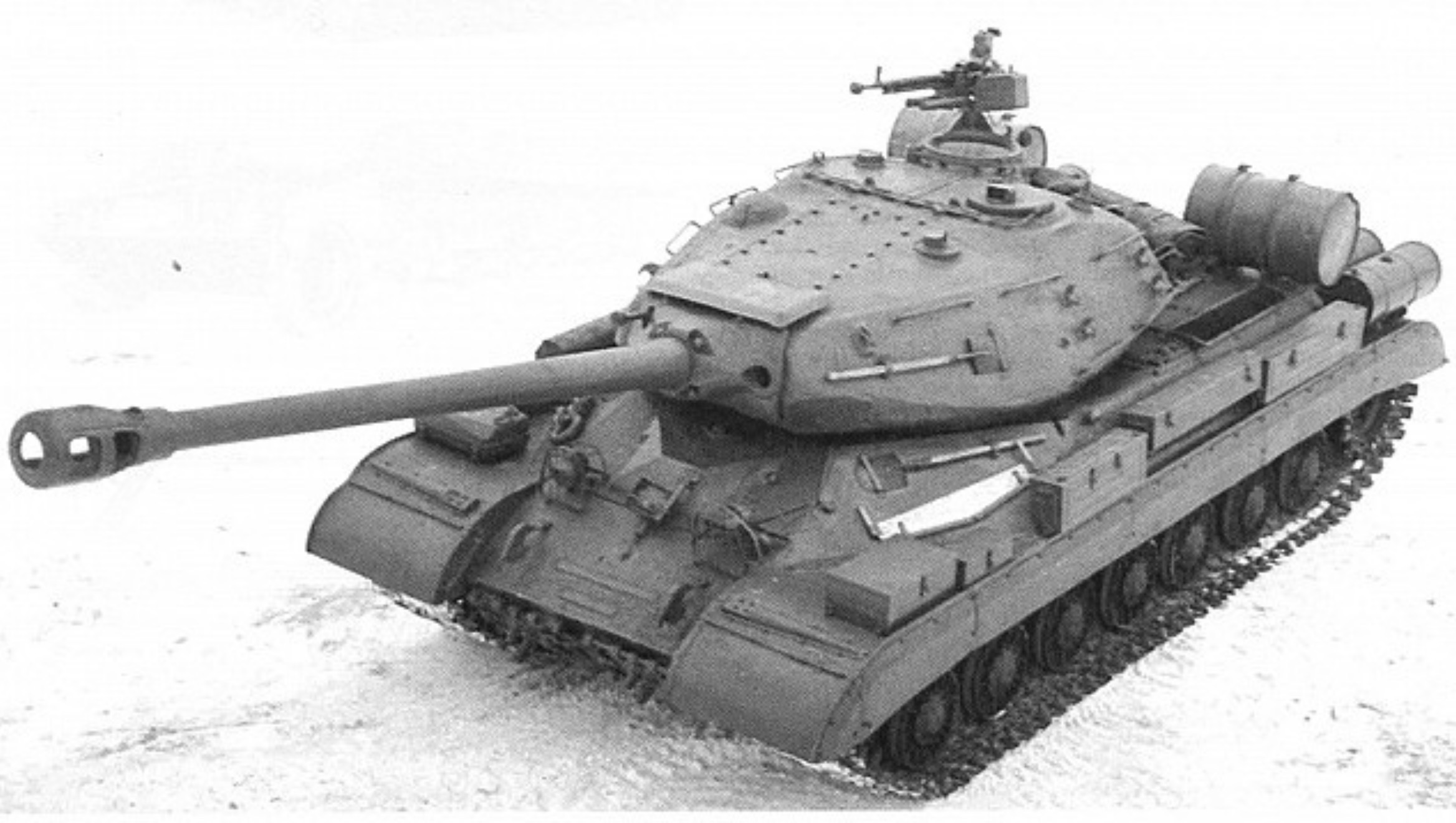
IMPORTANT: This is not an identical vehicle to the one currently represented in War Thunder. It has clear physical differences compared to the in-game version. This configuration actually existed as a single prototype.
Introduction
By the end of the 1950s, the IS-4 was already approaching the end of its useful career as a Soviet heavy tank. Designed during the closing stages of the Second World War and introduced immediately afterward, the IS-4 had achieved an exceptional level of armor protection, but at the cost of enormous weight, limited mobility and importantly considerable mechanical complexity which resulted in awful reliability and service life. These shortcomings had already resulted in an extensive modernization program during 1949–1951, producing the improved IS-4M standard to which almost the entire surviving fleet was eventually converted. The modernization solved many of the tank’s reliability problems, but it could not change its fundamental characteristics.
The greatest weakness of the IS-4 and IS-4M was their powerplant and cooling system. The mechanically driven cooling arrangement was complex, unreliable, and consumed a substantial amount of engine power simply to operate. This reduced the power available for propulsion and contributed to poor mobility, overheating, accelerated component wear, and a shortened service life for the engine and associated drivetrain components.
Against this background, one IS-4M underwent a final and unusually extensive experimental modernization in 1959. During a major overhaul at the Chelyabinsk Tractor Plant, the tank was fitted with a T-10-type ejector engine-cooling system, additional 200-litre fuel drums, an additional oil tank, a TVN-1 driver’s night-vision device and associated night driving headlights. Its tools and external equipment were also rearranged. The vehicle was subsequently tested at the NIIBT proving ground. However, the modification was never introduced on the remainder of the IS-4M fleet.
Differences from the base IS-4M:
- The engine deck was extensively reworked to accommodate the new ejector-type cooling system.
- The vehicle received two FG-10 headlights, both mounted within protective cages. One served as a conventional headlight, while the other was fitted with a blackout cover and could be fitted with an infrared filter for use with the driver’s night-vision equipment.
- Three additional shovels were carried externally. Two were mounted on the turret cheeks, while the third was positioned on the left side of the hull, above the saw.
- Two 200-litre external fuel drums were mounted horizontally on the upper rear portion of the engine deck.
- A spare oil tank was installed on the right-hand mudguard, with a fuel-pump box mounted directly behind it.
- The driver’s hatch area was modified with additional fittings and a mounting bracket for the TVN-1 night-driving device.
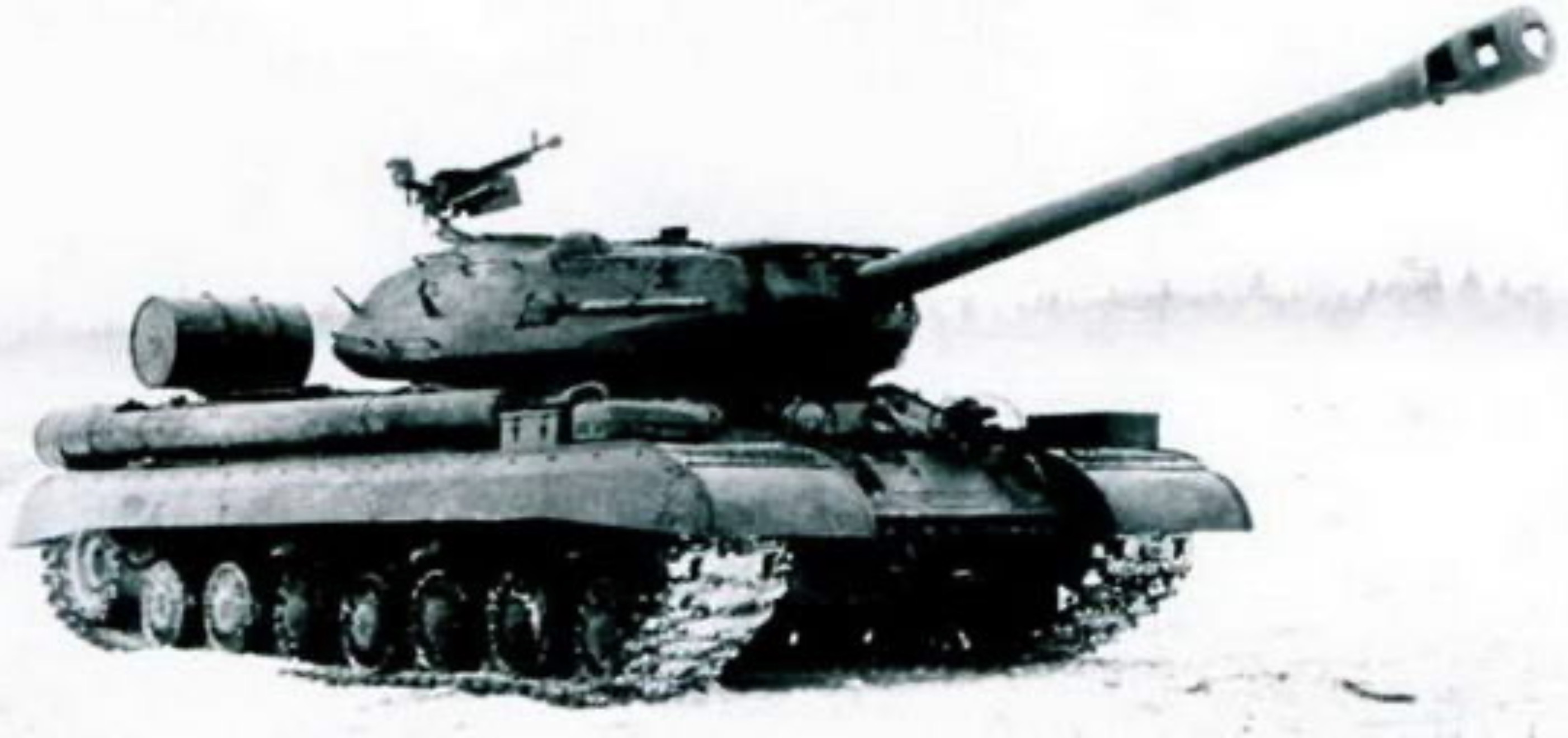
From a War Thunder perspective, In my opinion this modernization would work well as a researchable modification for the existing IS-4M. Alternatively, it could be introduced as a premium vehicle, potentially as part of a larger vehicle pack. Visually, the new external features would give the tank a more distinct Cold War appearance, comparable in concept to the modernization packages of the IS-2M and IS-3M.
History
Spoiler
The IS-4 originated as Object 701, developed at the Chelyabinsk Kirov Plant under N. L. Dukhov beginning in late 1943. The tank was formally accepted for service on 29 April 1946, although extensive design corrections delayed proper series production until 1947. Its defining characteristic was protection. At approximately 60 tonnes, the IS-4 carried up to around 250 mm of armour on the front of its cast turret, while the upper hull front was 140 mm thick and the lower front reached 160 mm. The sides of the hull were also exceptionally thick. It was among the most heavily protected production tanks of its era. Armament consisted of the familiar 122 mm D-25T, with thirty separate-loading rounds, together with two 12.7 mm DShK heavy machine guns. The engine was the supercharged V-12 diesel producing 750 hp , giving a nominal maximum road speed of approximately 43 km/h .
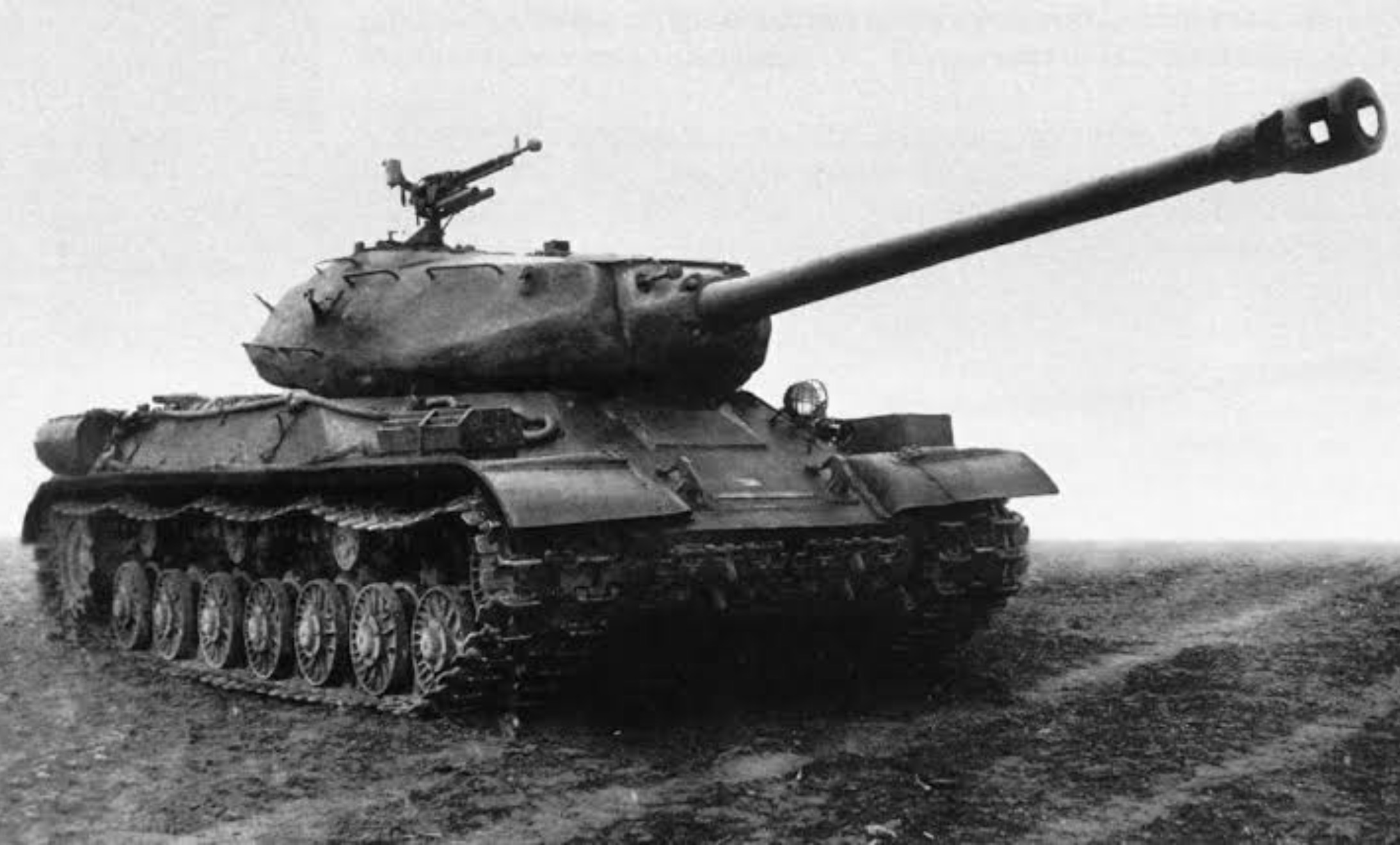
The problem was that the enormous armour protection produced a tank whose weight exceeded the capacity of many contemporary bridges and transport systems. The tank also suffered from unreliable transmission components, poor manoeuvrability and relatively high ground pressure. Most importantly, its armament offered little improvement over the much lighter IS-2 and IS-3. Production was therefore short. A total of 219 standard IS-4s were produced during 1947–1949, followed by 25 newly built IS-4Ms in 1951. In addition, 217 earlier IS-4s were modernized.
The IS-4M
The standard IS-4M resulted from the 1949–1951 reliability programme. The modernization addressed the V-12 engine, transmission, final drives, running gear, air filtration, fighting-compartment ventilation, ammunition racks, electrical system and several other installations. The later V-12M retained the same 750 hp output, but reliability was improved. Road wheels and the idler were strengthened, the transmission was revised, dust-deflector plates were fitted and a second turret exhaust fan was added. By 1 January 1952, all earlier IS-4s had reportedly been brought approximately to the 1951 IS-4M standard.
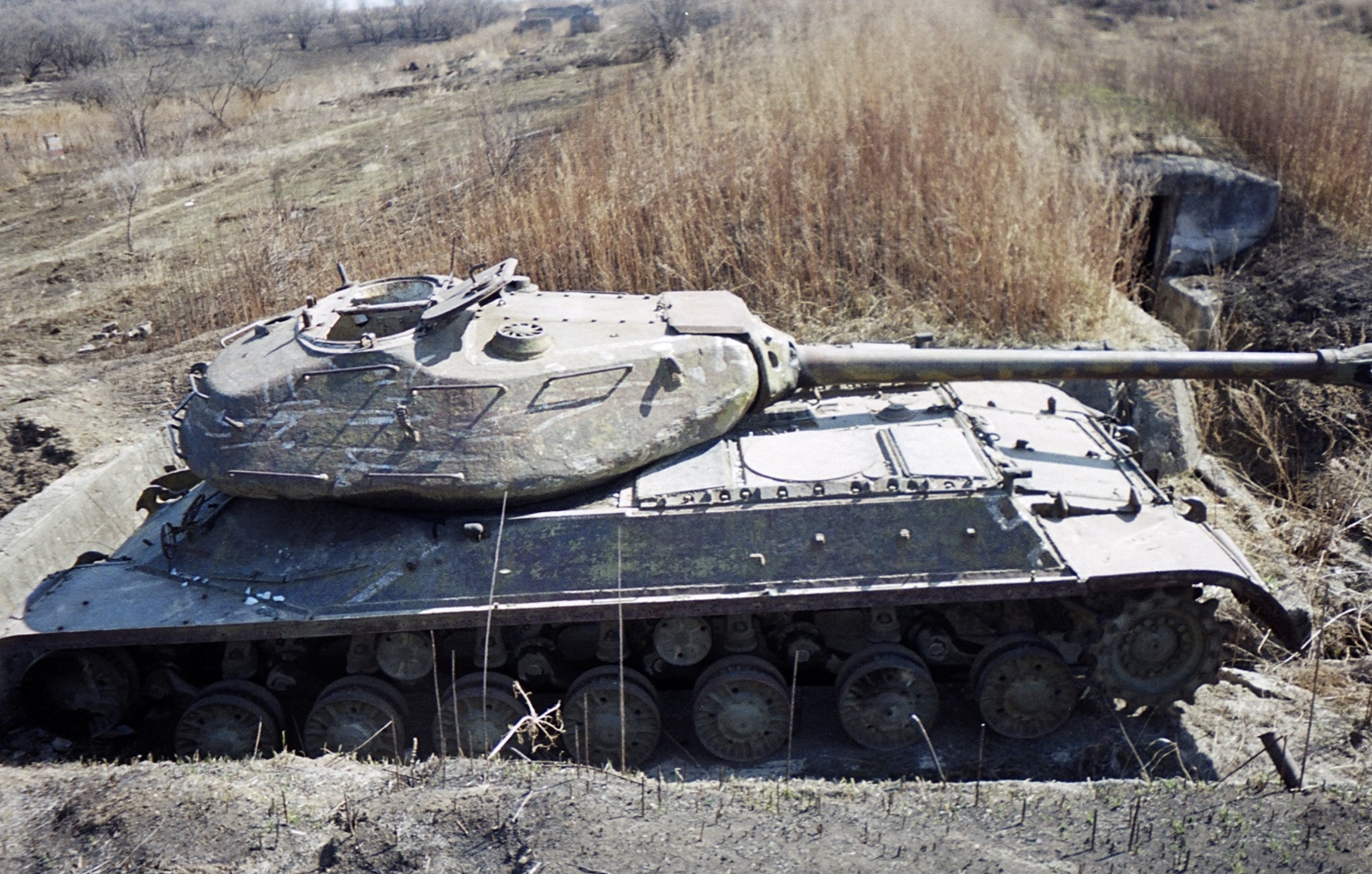
Despite the improvements, the IS-4M remained an extremely heavy tank with no corresponding increase in firepower. Its operational career was consequently uneventful. A large proportion of the early vehicles had spent considerable time in reserve storage. A smaller number served in the heavy tank/self-propelled artillery regiments of the 5th Guards Mechanized Army, where they remained into the beginning of the 1960s. They were then transferred to Transbaikal and Primorye, where they were stored or intended for use as firing positions in fortified regions along the Soviet-Chinese frontier. Thus, by roughly the beginning of the 1960s, the IS-4 had effectively ceased to serve as a regular mobile frontline tank, being withdrawn from such duties earlier than some of its older wartime predecessors, including the IS-2M and IS-3M. Nevertheless, some vehicles remained functioning as parts of fortifications on the Sino-Soviet border for decades afterward, and the type was not formally removed from the Russian military inventory until 1997.
The 1959 Prototype
The ejector-cooled IS-4M was a one-off 1959 experimental modernization intended to correct the tank’s long-standing cooling problems by adopting a T-10-style ejector system. It successfully reached NIIBT trials, but the conversion was never applied to the rest of the IS-4M fleet. Available Russian sources do not state that the system failed its trials. The project came too late in the IS-4’s service life, when production had long since ended and the type was already being displaced by the T-10 and withdrawn from active service. By then, the 60-ton IS-4 was expensive, logistically awkward and being superseded by the lighter T-10, which already incorporated an ejector cooling system from the outset. The prototype’s fate is unknown.
Modernization of 1959 In-Depth
Spoiler
In 1959, during a major overhaul at the Chelyabinsk Tractor Plant, one IS-4M was selected for a further experimental modernization. I will refer to this vehicle as IS-4M (1959). Its purpose was to test whether several technical solutions already being employed on newer Soviet heavy tanks, particularly the T-10, could be adapted to the older IS-4M.
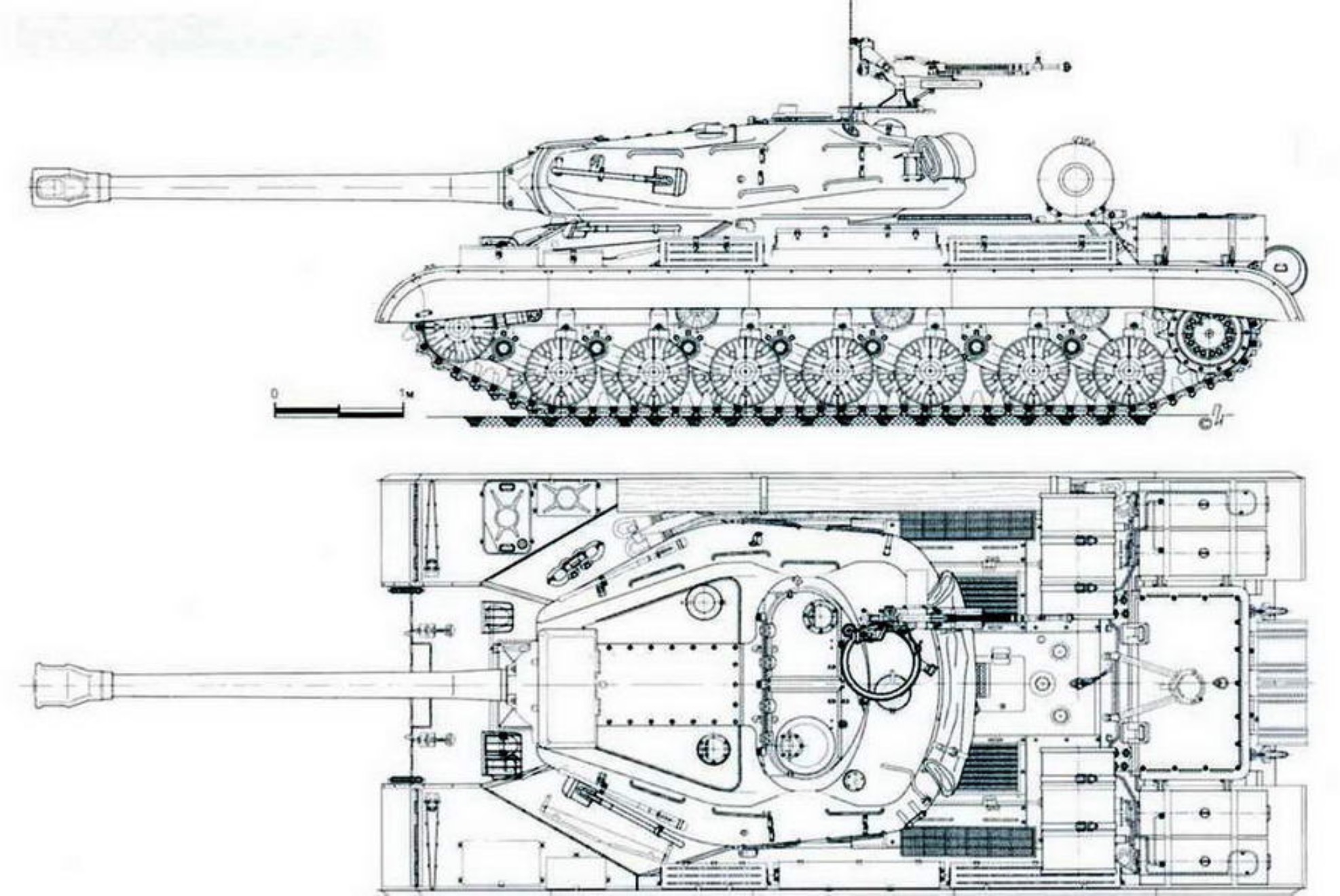
The most important alteration was the replacement of the IS-4M’s conventional engine-cooling arrangement with an ejector cooling system of the type used on the T-10. The standard IS-4M retained a cooling system based around mechanically driven fans. Such a system required a mechanical drive from the engine and contained a number of shafts and associated components necessary to turn the cooling fans. The ejector system operated on a different principle, using the energy of the engine’s exhaust gases to create airflow through the cooling system. In doing so, it eliminated the need for the traditional mechanically driven cooling-fan arrangement. The modification therefore represented a substantial alteration to the tank’s engine compartment even though the engine itself was not replaced.
The IS-4’s original cooling system imposed a considerable parasitic load, with Soviet testing recording power expenditure for cooling the tank’s aggregates equivalent to approximately 8.5–19.2% of engine power, depending on operating conditions. Its twin mechanically driven axial fans formed part of a relatively complex drive arrangement and generated considerable noise. The ejector system solved these issues. The old system also suffered from serious hot-air recirculation, with tests recording heated recirculated air amounting to as much as 18.6% of the airflow entering the radiator intake grilles. The ejector system would have reduced the IS-4’s chronic problem with hot-air recirculation around the radiator intakes, allowing the engine to maintain high output more reliably during prolonged operation and in warmer conditions.
However, the IS-4M’s engine remained in the approximately 750 hp class, and there is no published evidence that the 1959 machine exceeded the normal IS-4M’s roughly 43 km/h maximum speed or that the vehicle saw any improvement in acceleration, hill-climbing ability and sustained cross-country performance.
The experimental tank also received additional 200-litre fuel drums. Large standardized external drums were becoming increasingly common on Soviet tanks as a means of increasing operational range without requiring major changes to the internal fuel system. A fuel pump, also used on many other Soviet tanks, was added to the vehicle’s equipment kit. It allowed the crew to transfer fuel from external containers that were not directly connected to the tank’s fuel system, such as the two 200-litre fuel drums. An additional oil tank was installed at the same time. It its addition increased the vehicle’s carried lubricating-oil supply and formed part of the broader attempt to improve its automotive endurance. The external arrangement of tools and entrenching equipment has also been altered and slightly improved.
Another significant improvement was the introduction of proper night-driving equipment. The driver received a TVN-1 infrared night-vision device, something absent from the original IS-4M configuration. A hinged mounting bracket was fitted in front of the driver’s hatch. When the device was required, the bracket could be raised into its operating position; when travelling normally, it could be folded out of the way. The TVN-1 allowed the driver to see using infrared illumination and represented a major improvement in the tank’s ability to move at night.
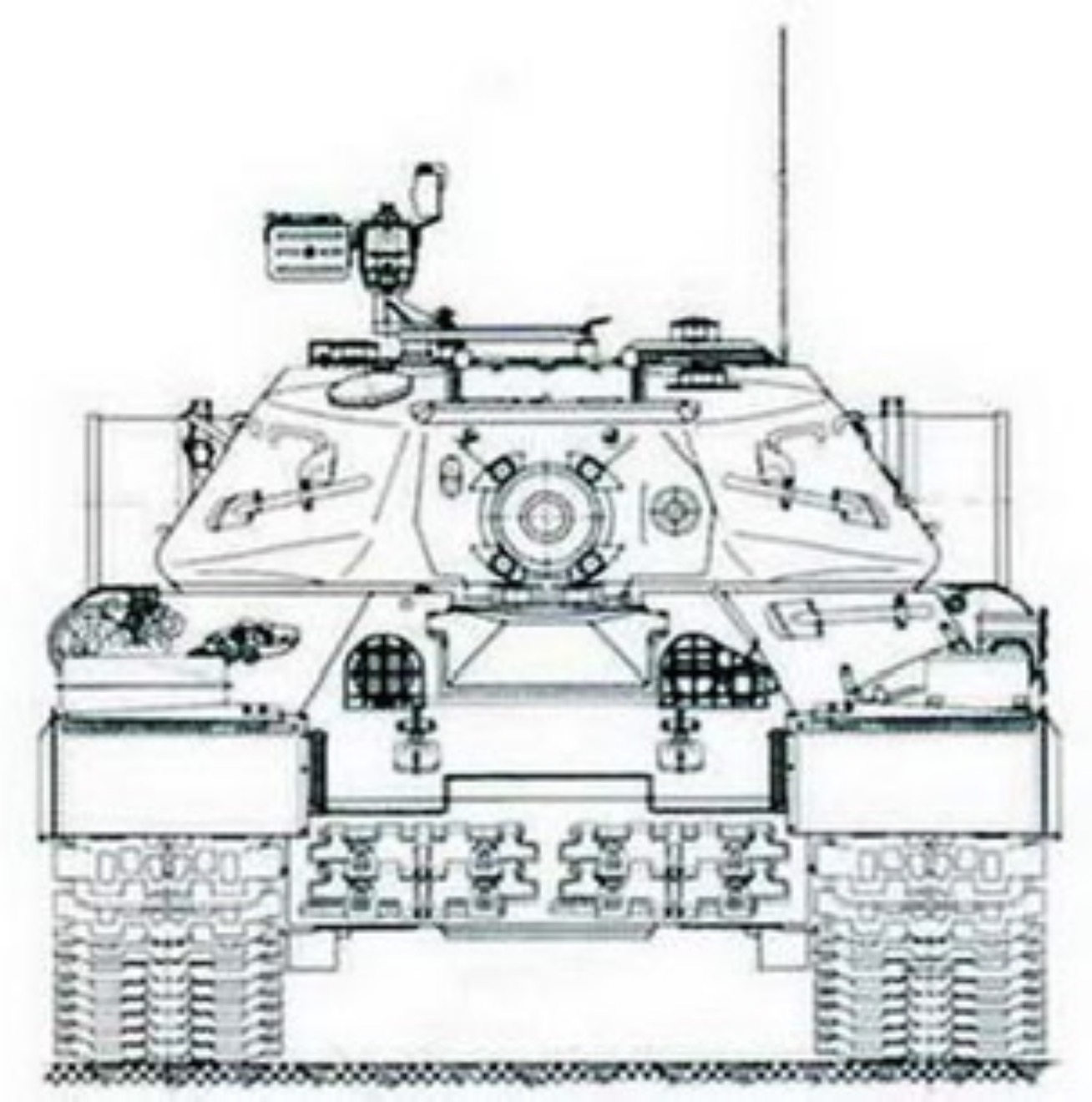
The installation of the TVN-1 was accompanied by a revised headlight arrangement. A second FG-10 headlight was installed on the right side of the tank. The left FG-10 normally carried a blackout attachment, but this could be replaced by an infrared filter when the TVN-1 was being used. Experience with the same night-driving equipment on the T-10 demonstrated why additional illumination was useful: trials of the TVN-1 with only one FG-10 restricted night-driving speed because of the limited illuminated field, whereas the addition of another light improved the driver’s ability to maintain higher average speeds in darkness.
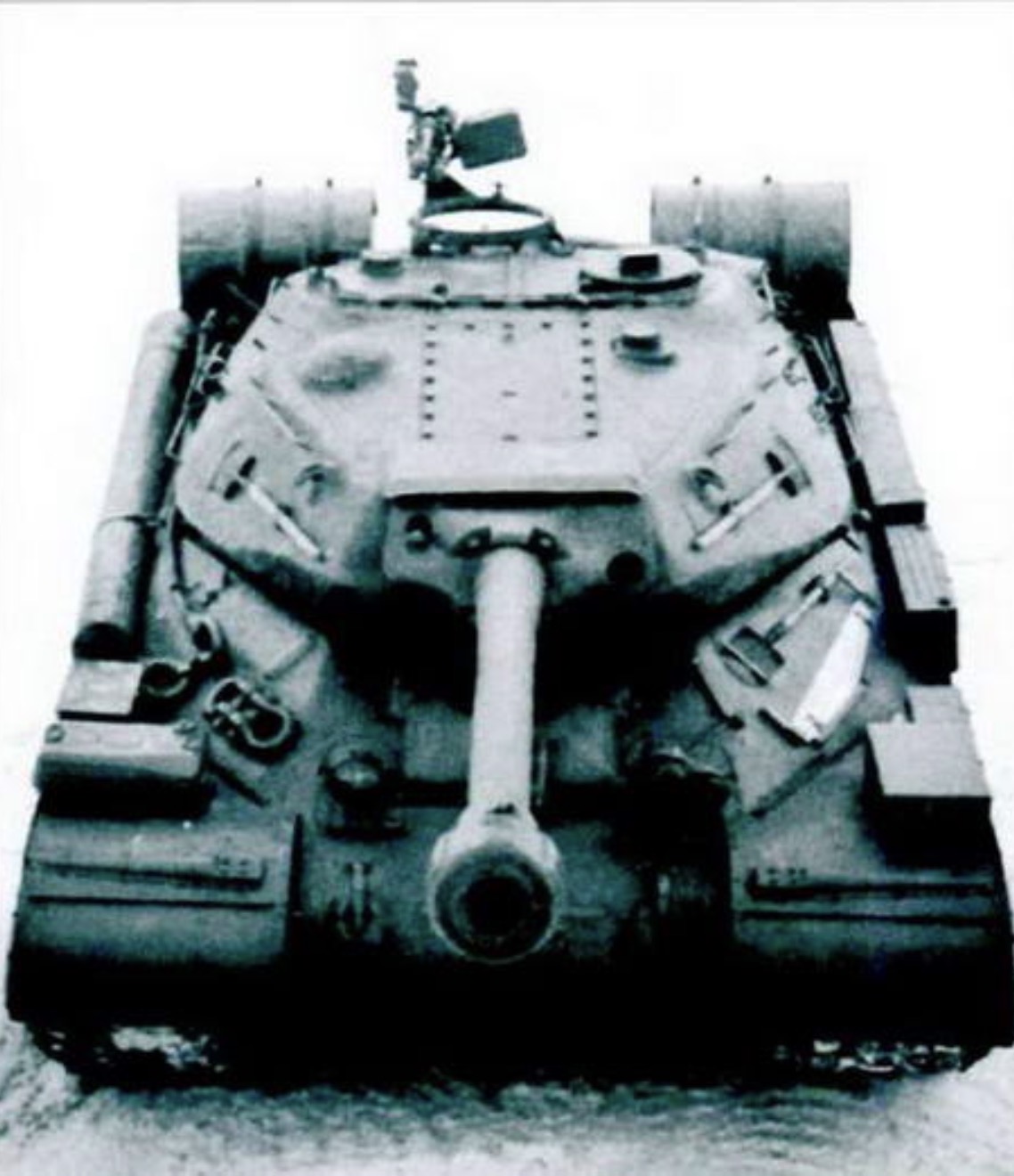
Beginning in 1958, IS-4Ms undergoing major overhaul had their older 10RT radio and TPU-4-Bis-F intercom replaced with the newer R-113 radio and R-120 intercom. This was a general fleet modernization and was not unique to the 1959 experimental vehicle. This was one of the more common modernizations of the older Soviet armored vehicles.
Specifications IS-4M (1959)
Spoiler
| Specification | Value |
|---|---|
| Type | Experimental heavy tank modernization |
| Year | 1959 |
| Number converted | 1 |
| Conversion location | Chelyabinsk Tractor Plant (ChTZ) |
| Trials | NIIBT proving ground, 1959 |
| Crew | 4 |
| Combat weight | Approximately 60 t; no 1959-specific weight published |
| Length, gun forward | Approximately 9.79 m |
| Width | Approximately 3.26 m |
| Height | Approximately 2.48 m |
| Ground clearance | 410 mm |
| Engine | V-12M-series supercharged diesel |
| Rated power | 750 hp (551 kW) |
| Power-to-weight ratio | Approximately 12.5 hp/t nominal |
| Cooling | T-10-type ejector liquid-cooling system |
| Transmission | Planetary mechanical transmission |
| Gears | 6 forward / 3 reverse |
| Maximum road speed | Approximately 43 km/h; no documented increase |
| Standard road range | About 170 km before considering the new drums |
| Additional fuel | 2 × 200 L external fuel drums = 400 L |
| Additional oil storage | One additional external oil tank |
| Main armament | 122 mm D-25T rifled gun |
| Main-gun ammunition | 30 rounds |
| Rate of fire | Approximately 2–3 rpm |
| Secondary armament | 2 × 12.7 mm DShK/DShKM |
| MG ammunition | Approximately 1,000 rounds |
| Night equipment | TVN-1 driver’s infrared night-vision device |
| Headlights | Two FG-10 lamps; left lamp could receive an IR filter |
| Radio | Likely R-113 with R-120 intercom after the 1958 overhaul programme |
| Suspension | Individual torsion bar |
| Road wheels | 7 per side |
| Track width | 720 mm |
| Ground pressure | Approximately 0.9 kg/cm² |
| Maximum gradient | Approximately 35° |
| Trench crossing | Approximately 2.8 m |
| Vertical obstacle | Approximately 0.9 m |
| Fording depth | Approximately 1.5 m |