Would you like to see T-44M in-game?
- Yes, as a Tech-Tree Vehicle
- Yes, as a Premium Vehicle
- Yes, as a Squadron Vehicle
- Yes, as an Event Vehicle
- No, I do not want to see T-44M in-game.
0
voters
T-44M
Introduction
The T-44M is a modernized version of the Soviet T-44 medium tank. While the original T-44 was developed during the Second World War, it arrived too late to see wartime combat and instead became one of the USSR’s early post-war armored vehicles. Even after the T-54 entered service, the Soviet Union did not immediately throw the T-44 away. Like many older Soviet vehicles, it was kept in use and later upgraded to make it more suitable for Cold War service. The main purpose of the modernization was to make the T-44 easier to maintain, more reliable, longer-ranged, and better suited to Cold War service alongside vehicles such as the T-54 and T-55. The modernization preserved the basic T-44 platform while bringing many of its mechanical and operational systems up to more modern Soviet standards. Modernized T-44 tanks remained in Soviet service until the late 1970s, by which time they had largely been relegated to training, reserve, and secondary roles.
Importantly for War Thunder, the T-44M being a Cold War modernization, means that it could potentially make use of HEAT ammunition developed for its 85 mm cannnon during the post-war period.
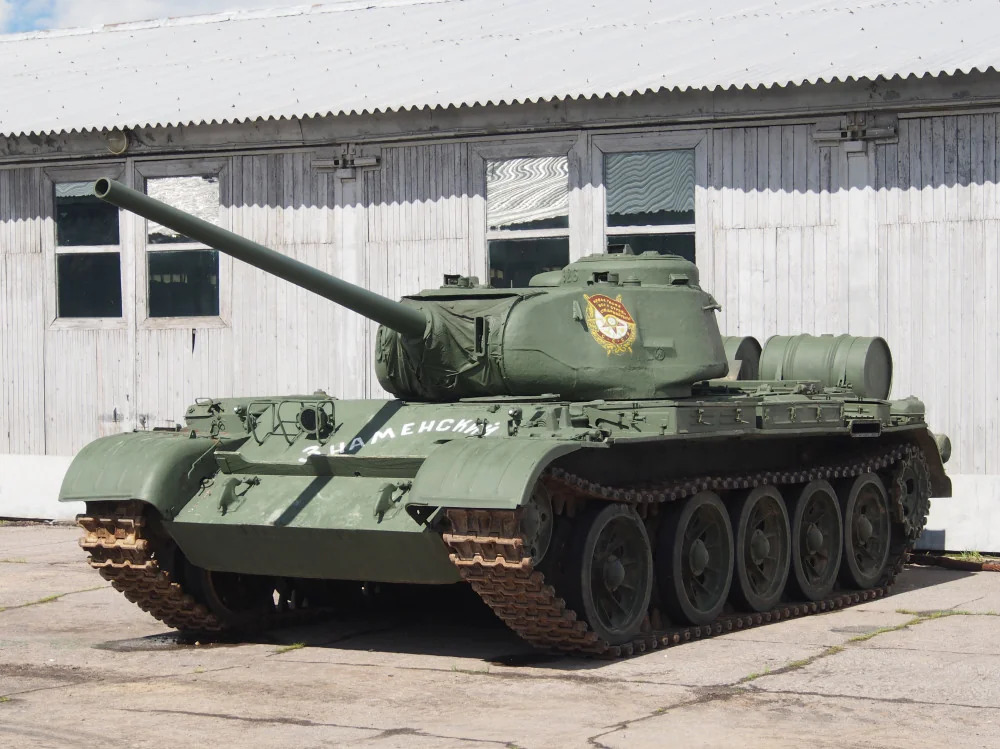
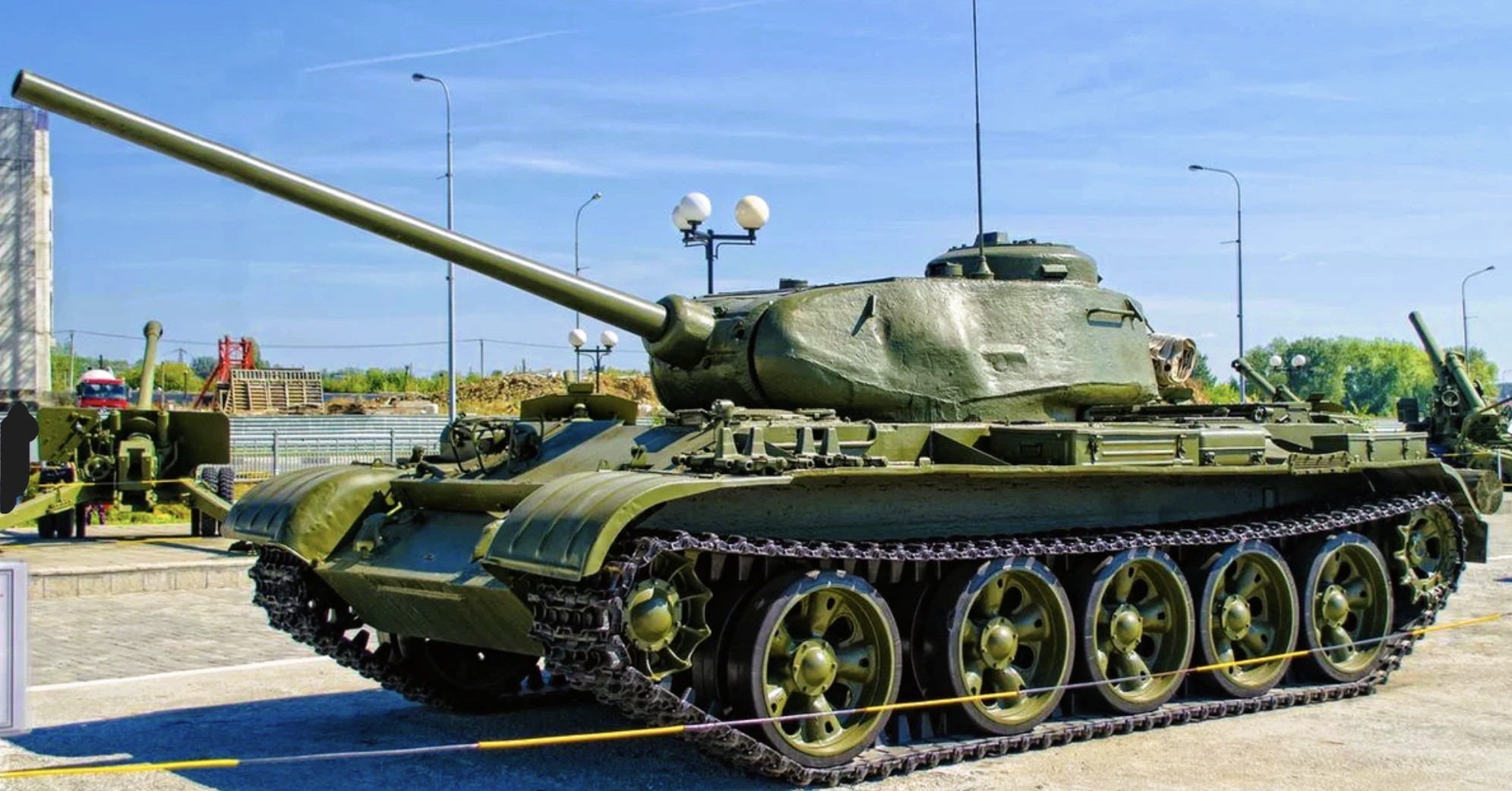
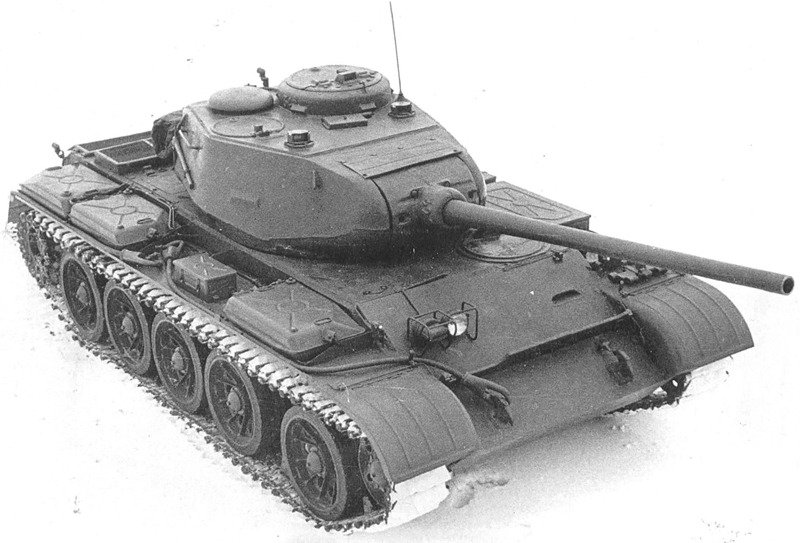
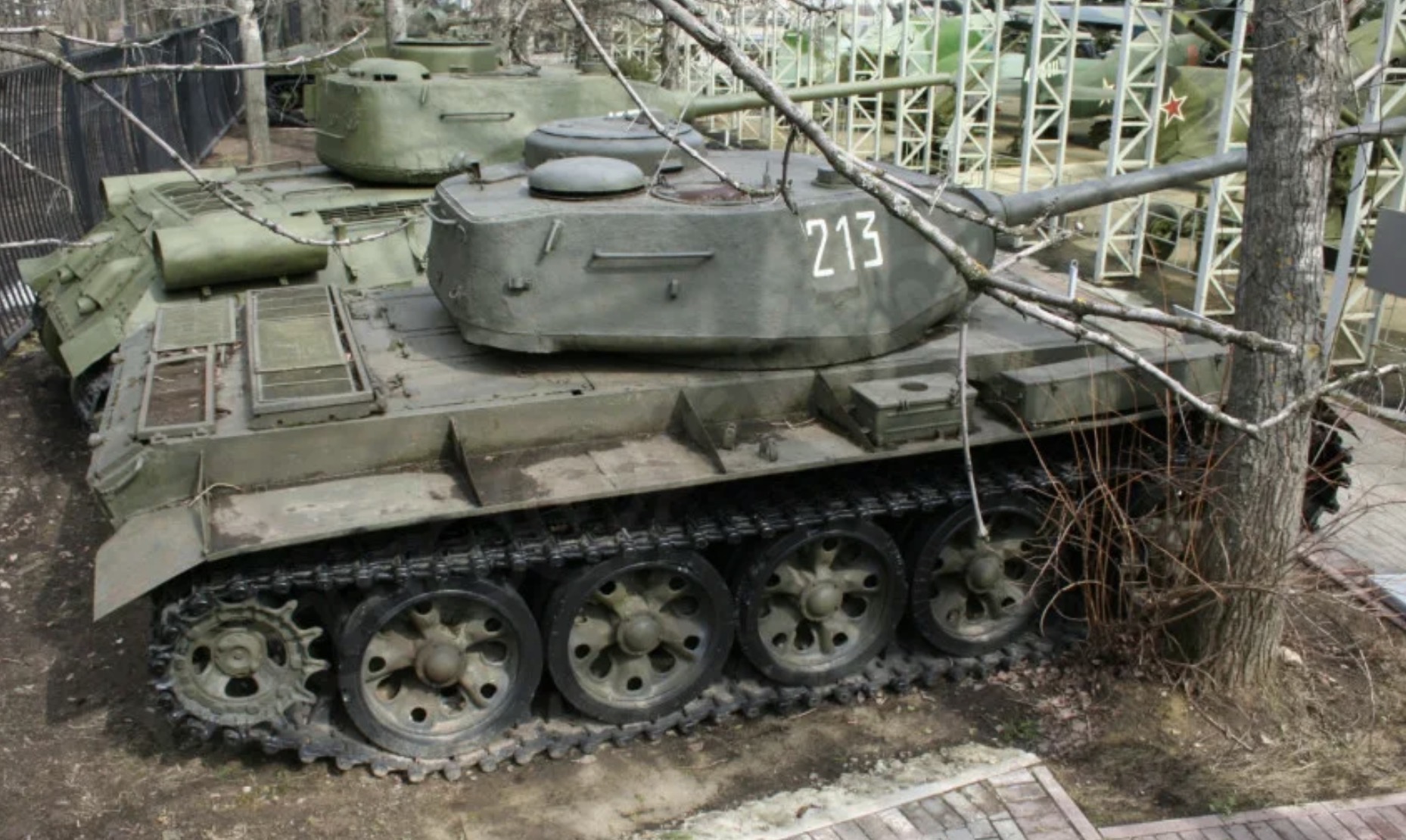
T-44M Identification Summary:
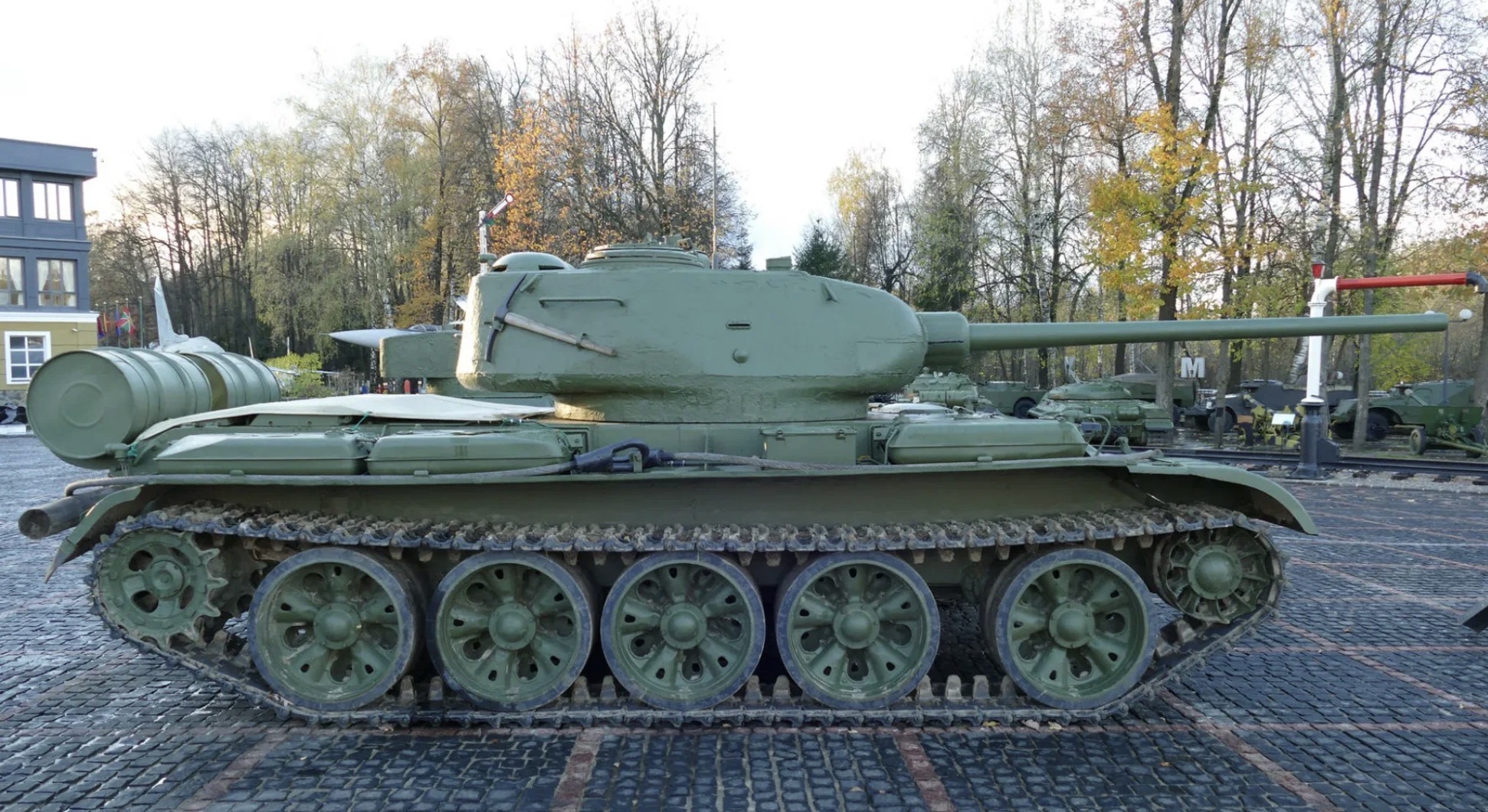
- T-54-style front and rear mudguards
- T-54-style external equipment and fuel tanks mounted along the hull sides
- T-54-style light arrangement
- T-55-style “starfish” road wheels on some vehicles
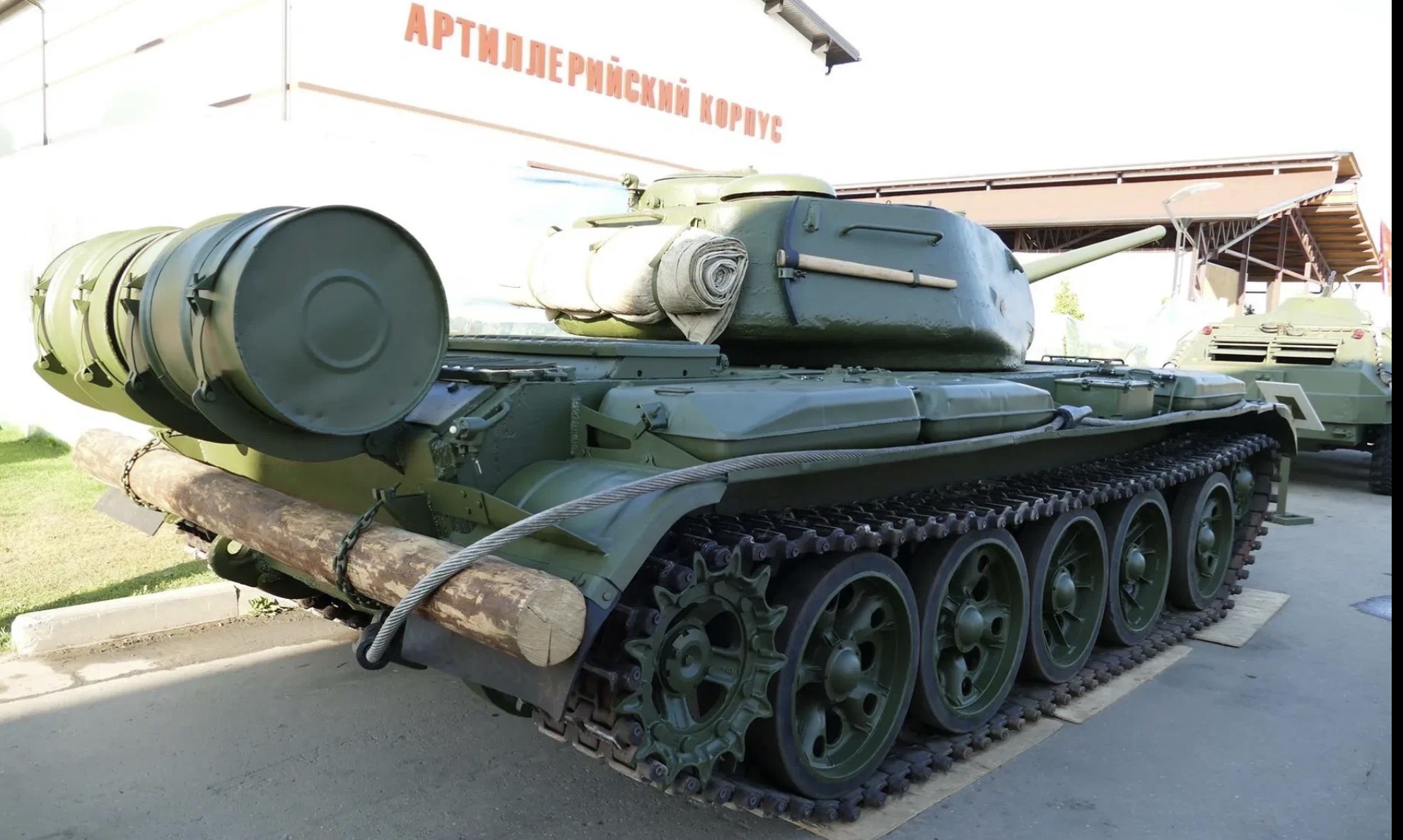
- Two 200-litre fuel drums mounted at the rear of the hull
- Removed turret side pistol ports
- FG-100 infrared headlamp mounted at the front for the driver’s night-vision system
- Updated small-link tracks with T-54-type drive sprockets
- Modified exhaust area on the left side of the hull
- Various smaller hull changes around the engine and transmission area
- Wooden splashguard was added to the glacis plate
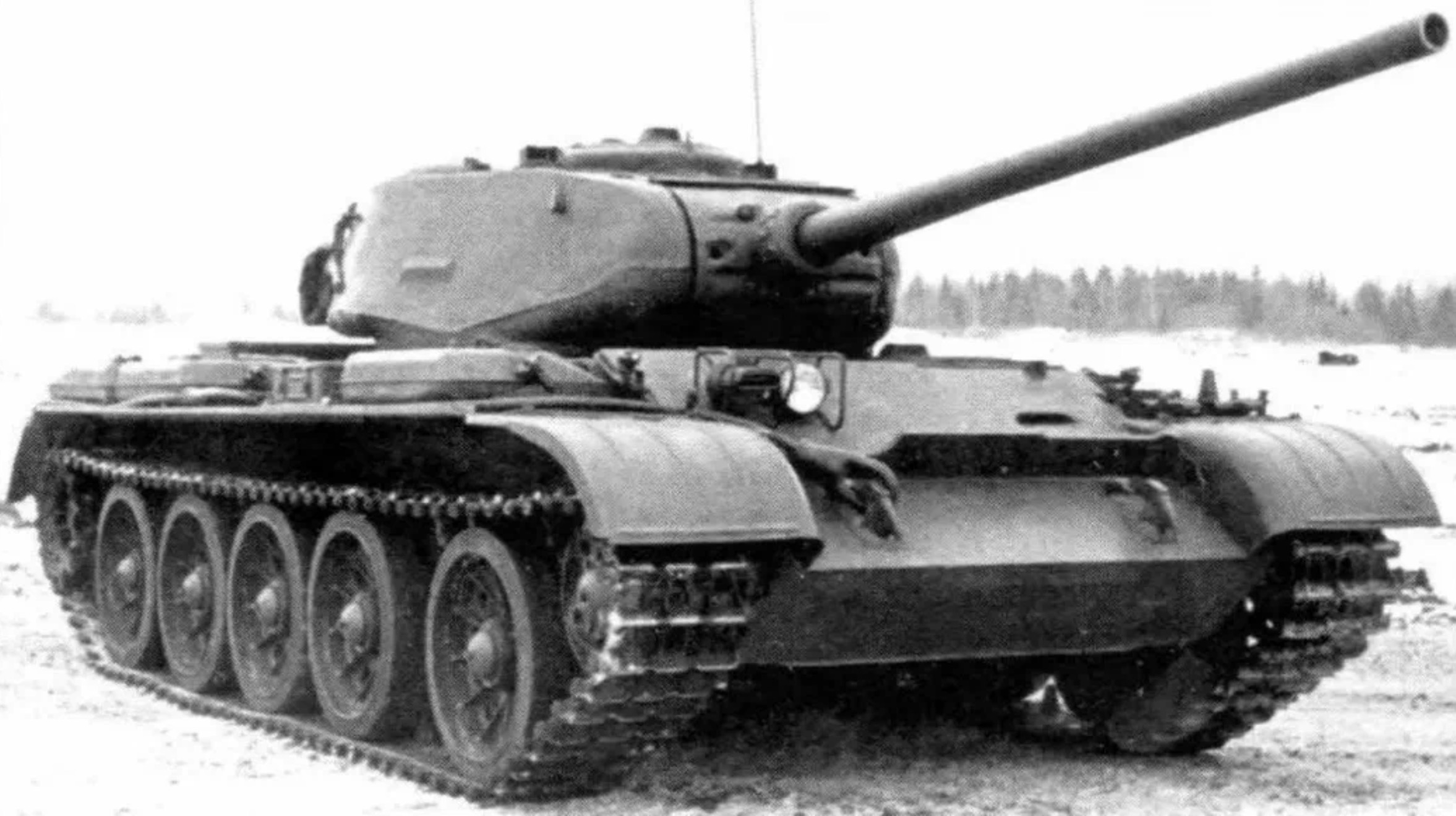
P.S. Some T-44M tanks did not receive every modernization feature. Certain vehicles appear without items such as the infrared projectors, wooden splash guard, or T-54-style mudguards, so the exact visual configuration could vary from tank to tank.
History of the T-44(M)
Spoiler
The T-44 was developed during the Second World War as the intended successor to the T-34-85. Although it kept the same 85 mm ZiS-S-53 gun, its overall design was far more advanced. It used a new hull layout with a transversely mounted engine, allowing for a shorter hull, better armor layout, and a more centrally placed turret. It also replaced the T-34’s Christie suspension with torsion bars, giving the tank a lower profile and more modern internal arrangement. Accepted into service in late 1944, the T-44 arrived too late to see combat during the war. Production continued until 1947, with around 1,800 vehicles built. Although never as famous as the T-34 or T-54, the T-44 was an important transitional design, influencing the layout of later Soviet tanks, especially the T-54. Several experimental T-44 variants with 100 mm guns were tested, but none entered mass production, as the USSR focused on the more capable T-54 instead. By the late 1950s, the T-44 was no longer suitable as a first-line tank, but surviving vehicles were still mechanically useful. Rather than scrapping them, the USSR modernized the type with systems and components from newer Soviet tanks, creating the T-44M.
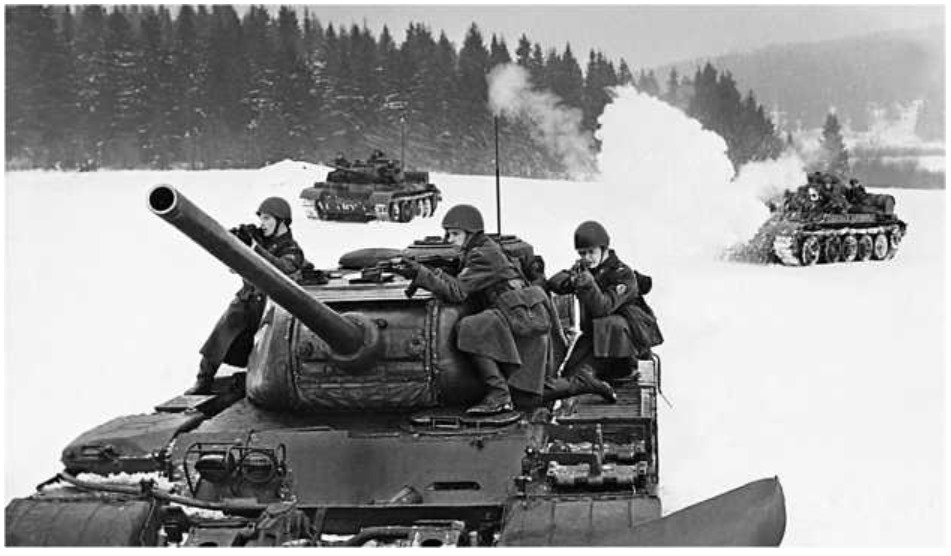
The T-44M remained a genuine mobile Soviet tank throughout the 1970s, with T-44Ms photographed conducting tactical exercises in 1973 and night marches in the Leningrad Military District as late as January 1977. T-44s were reportedly still assigned to the 281st Tank Regiment of the 108th Motor Rifle Division in December 1979, although the regiment was considered too obsolete to deploy to Afghanistan. During the early 1980s, surviving T-44s appear to have been relegated to secondary duties or storage. Some T-44Ms also continued to serve in the Soviet Transbaikal and Far Eastern regions as static defensive firing points along the Chinese border, with examples potentially remaining in this role into the 1990s. You can read much more on these types of Soviet fortifications here.
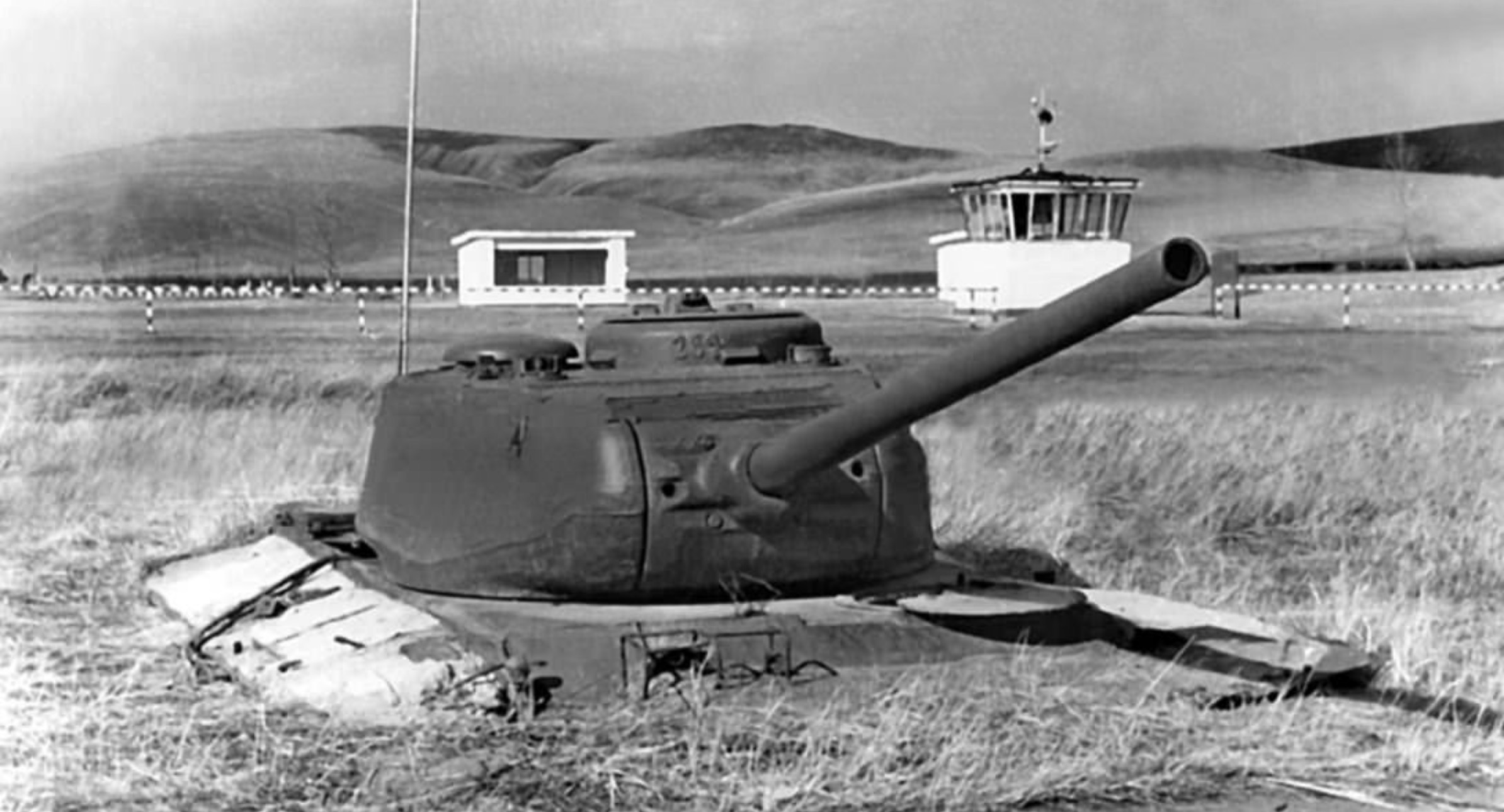
The T-44 was not exported to foreign armies. Some vehicles served outside the USSR with Soviet units stationed in Warsaw Pact countries, but they remained Soviet Army vehicles.
T-44M In-depth
Spoiler
The T-44M modernization was developed in the late 1950s and introduced during major overhauls around the end of the 1950s and early 1960s. The work was connected with the Kharkov design bureau, which had also played a central role in the development of the original T-44. The modernized vehicle was sometimes associated with the factory designation Object 136M. The modernization focused on bringing the vehicle’s mechanical systems closer to T-54 standards. This made the T-44M easier to maintain within the Soviet armored fleet and extended the useful life of the remaining vehicles.
Mobility
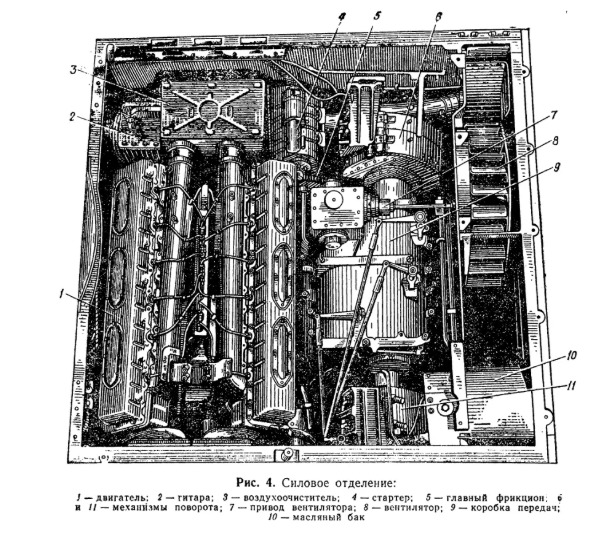
One of the most important changes was the replacement of the original V-44 diesel engine with the V-54 engine, rated at 520 horsepower. This was the same general engine family used in the T-54. Alongside the new engine, the tank received updated cooling, lubrication, and air-cleaning systems, including the VTI-4 air cleaner. A preheating system was also fitted to improve engine starting in cold weather. The transmission and running gear were also modernized. The T-44M received a number of T-54-derived transmission components, including revised gearbox and steering elements. The older track and drive system was replaced with small-link tracks and compatible drive sprockets. Reinforced idler wheels were also fitted, while the basic torsion-bar suspension layout remained unchanged. The fuel system was improved as well. The T-44M carried 500 litres of fuel in internal tanks and three 95-litre external fuel tanks connected to the fuel system. Later vehicles could also carry two 200-litre fuel drums mounted at the rear of the hull, although these were not directly connected to the fuel system. These changes significantly improved the tank’s operational range, increasing it to roughly 420–440 km on roads. Naturally, some tanks received T-55-style “starfish” road wheels.
Firepower and Ammunition
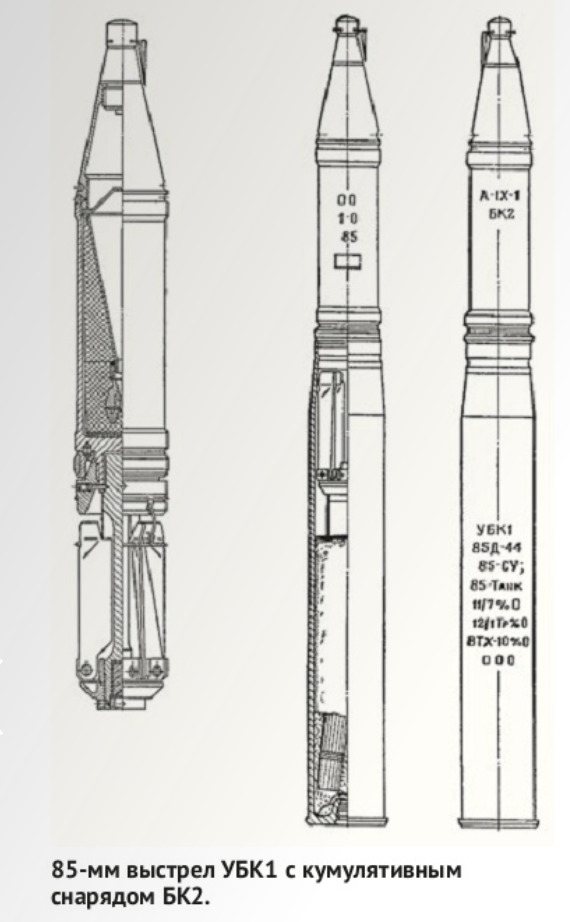
The T-44M retained the 85 mm ZiS-S-53 gun. This meant that its firepower remained broadly similar to that of the T-34-85, though the T-44M carried a larger ammunition load of 61 rounds. Available ammunition included armor-piercing, sub-caliber, and high-explosive fragmentation rounds such as BR-365, BR-365K, BR-365P, OF-365, and OF-365K. The T-44M’s ZiS-S-53 gun could likely fire post-war 85 mm HEAT rounds developed for the same gun family, such as BK-367/BK-367M or 3BK2/3BK2M. However, Russian T-44M ammunition lists I found do not include them in the vehicle’s standard loadout. The gun was aimed using the TSh-16 telescopic sight, and the turret retained both manual and powered traverse. Secondary armament consisted of two 7.62 mm DTM machine guns. One was mounted coaxially with the main gun, while the other was mounted in the hull. The commonly listed machine-gun ammunition load was 1,890 rounds. The T-44M therefore did not gain much in terms of offensive capability, but its existing armament remained adequate for training, reserve duties, and secondary combat roles.
Protection
The armor layout was also largely unchanged. The hull was made from rolled armor plates, with the thickest frontal sections reaching 90 mm. The turret was cast, with frontal armor reaching up to around 120 mm. During modernization, the hull and turret did not receive a major redesign. However, some smaller changes were made, including modifications connected with the new exhaust and transmission systems, as well as the removal of the small side firing ports in the turret. Smoke equipment remains uncertain. TopWar states that the vehicle was not equipped with smoke-screen laying equipment, while BTVT states that the T-44M used reusable thermal smoke equipment.
Miscellaneous
The T-44M also received improved observation and night-driving equipment. The driver was provided with the TVN-2 night-vision device, supported by an FG-100 infrared headlight mounted on the front of the tank. This allowed the vehicle to be driven in low-light conditions, bringing it closer to Cold War operational standards. The commander’s observation equipment was also improved compared with the original wartime configuration. Communications were another major part of the modernization. The T-44M received the R-113 radio station and the R-120 tank intercom. This allowed the vehicle to communicate more effectively with other Soviet tanks and command posts. For the Soviet Army, this was an important upgrade, as older wartime communication equipment was no longer adequate for Cold War armored operations. A command version, known as the T-44MK, was developed in the early 1960s. This version received additional radio equipment, including the R-112 radio, a 10-metre antenna, and an auxiliary charging unit. To make room for this equipment, some ammunition stowage had to be removed, reducing the number of main-gun rounds carried.
T-44MS
There was also an experimental stabilized version T-44MS. This vehicle was fitted with the STP-2 “Cyclone” two-plane gun stabilizer and tested in the 1960s. At least one prototype also received improved night-fighting equipment, including a gunner’s night sight and searchlight. However, the stabilizer did not provide enough improvement to justify the drawbacks. It reduced the ammunition load, worsened crew working conditions, and complicated access to ammunition stowage. As a result, the stabilized version was not accepted into service.
Specifications
Spoiler
General
- Country of origin: Soviet Union
- Vehicle type: Medium tank
- Base vehicle: T-44
- Modernized version: T-44M
- Modernization period: Late 1950s to early 1960s
- Crew: 4
- Role: Reserve, training, secondary combat, and support duties
Dimensions and weight
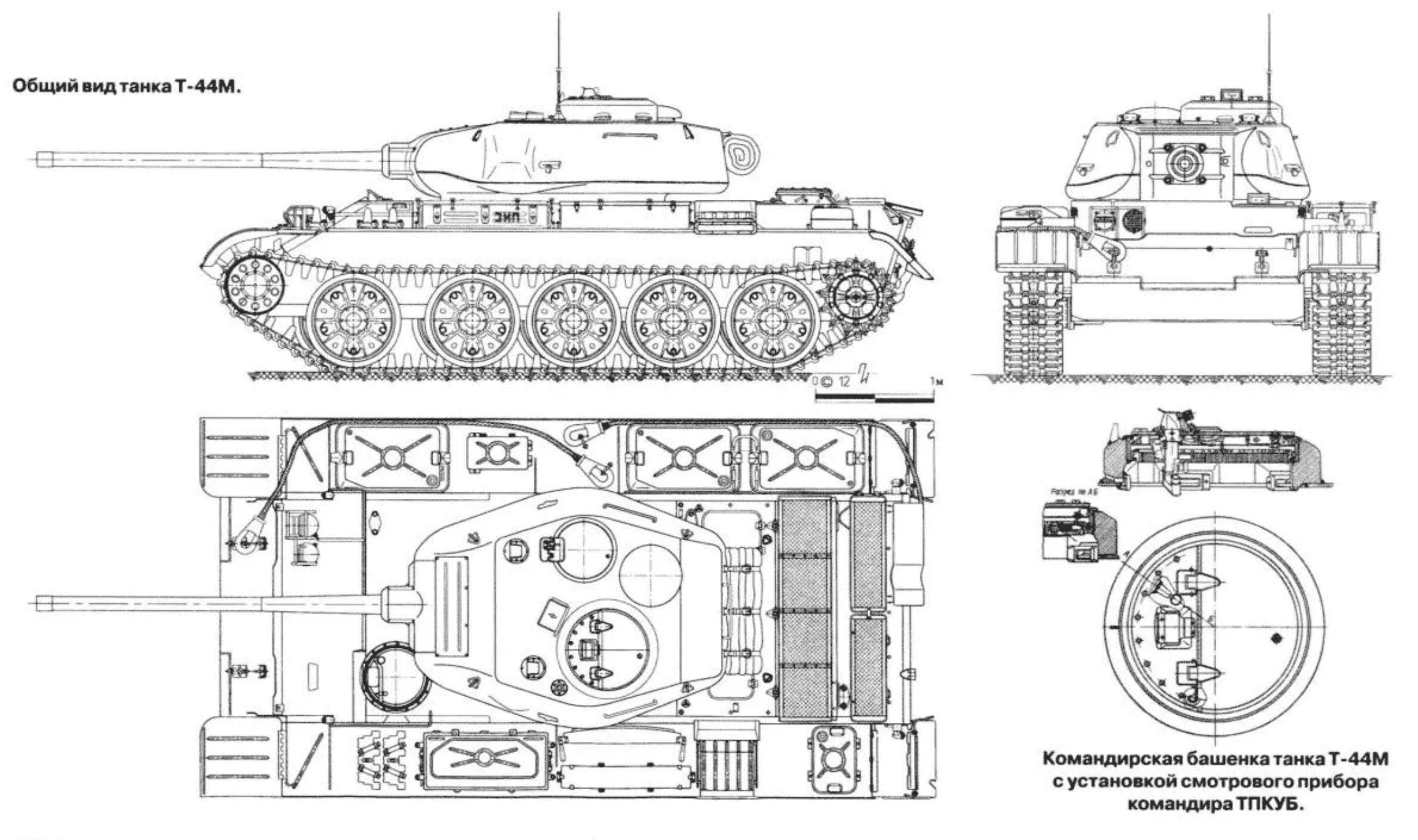
- Combat weight: Approximately 32–33 tonnes
- Hull length: Approximately 6.07 m
- Length with gun forward: Approximately 7.6 m
- Width: Approximately 3.18 m
- Height: Approximately 2.4 m
- Ground clearance: Approximately 0.43 m
Armor
- Hull construction: Welded rolled armor
- Turret construction: Cast armor
- Hull armor thickness: 15–90 mm depending on location
- Upper frontal hull: Approximately 90 mm
- Hull sides: Approximately 75 mm
- Turret front: Up to approximately 120 mm
- Armor changes during modernization: No major armor redesign; only smaller structural and technical changes
Main armament
- Main gun: 85 mm ZiS-S-53 rifled tank gun
- Ammunition carried: 61 rounds
- Gun elevation: -5° to +20°
- Practical rate of fire: Approximately 6–8 rounds per minute
- Main sight: TSh-16 telescopic sight
- Maximum aimed range: Approximately 5,200 m
- Maximum ballistic range: Approximately 12,200 m
Main gun ammunition
- BR-365: Armor-piercing round
- BR-365K: Armor-piercing round
- BR-365P: Sub-caliber armor-piercing round
- OF-365: High-explosive fragmentation round
- OF-365K: High-explosive fragmentation round
- BK-367 / BK-367M: Post-war HEAT round (!)
- 3BK2 / 3BK2M: Post-war fin-stabilized HEAT round (!)
Secondary armament
- Machine guns: 2 × 7.62 mm DTM
- Machine-gun layout: One coaxial machine gun and one hull machine gun
- Machine-gun ammunition: Approximately 1,890 rounds
Mobility
- Engine: V-54 diesel
- Power output: 520 hp
- Transmission: Mechanical, modernized with T-54-derived components
- Suspension: Individual torsion-bar suspension
- Tracks: Small-link tracks with compatible T-54-type drive sprockets
- Maximum road speed: Approximately 50 km/h
- Road range: Approximately 420–440 km
Fuel system
- Internal fuel capacity: 500 litres
- External connected fuel tanks: 3 × 95 litres
- Additional rear fuel drums: 2 × 200 litres, not directly connected to the fuel system
Optics and night equipment
- Driver night-vision device: TVN-2
- Infrared headlight: FG-100
- Commander observation equipment: Improved post-war observation device
- Gunner sight: TSh-16 telescopic sight
Communications
- Radio: R-113
- Intercom: R-120
- Command variant: T-44MK with additional R-112 radio, 10-metre antenna, and auxiliary charging unit
Related variants
- T-44M: Main modernized version
- T-44MK: Command version with additional radio equipment
- T-44MS: Experimental stabilized version fitted with the STP-2 “Cyclone” two-plane stabilizer
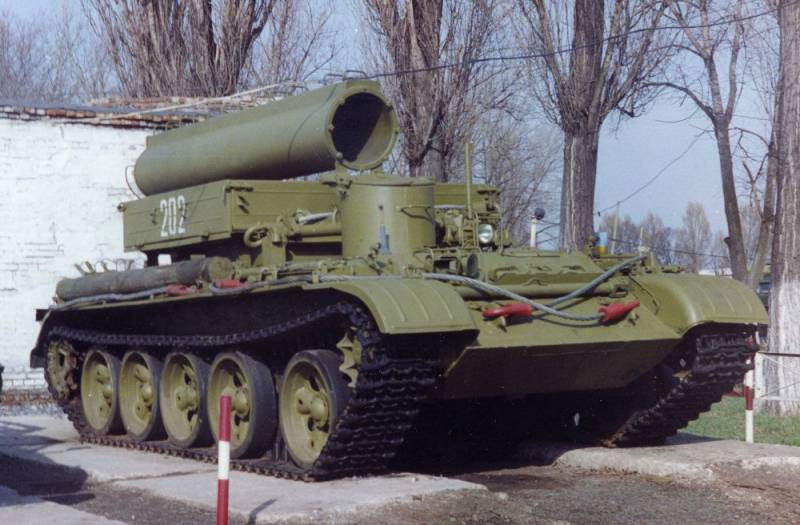
- BTS-4: Armored recovery or tractor conversions based on the T-44 chassis