Gaijin’s actual standards are “whatever we feel like” these days
13 Likes
Luft’ 46
RIP to the creator of that site.
3 Likes
It says as much here. This is not news and has been the case since 2013. Even then these guidelines change and aren’t fixed, same as what Gaijin considered what fits in-game.
If a suggestion was passed in the past, this does not always mean it’s still relevant today.
6 Likes
For a while a fixed armament could be argued to be a guy with a Javelin on top of armored car.
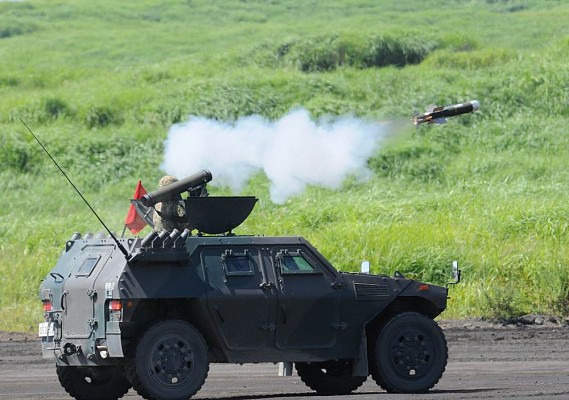
This is not allowed today because its not a real fixed armament. (with infantry I hope to see Komatsu LAV)
So yes true on the changing rules and relevancy does change.
pls with iraq paint job
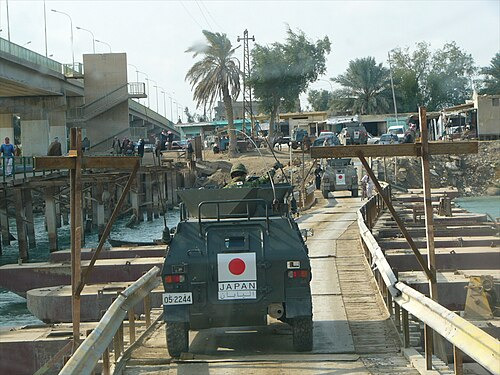
Apparently this is why Iraq has so many manga books. USA give out chocolate Japan peace keeper give out $150 manga used collection for free. FYI I just realized this could be a cool decal for Japan the Japan in Arabic.)
3 Likes
Unfortunately… since most times that causes the vehicles to be implemented inaccurately, and then when we make reports pointing out the inaccuracies, and what needs to change, they might be accepte,d but never fixed… that could be avoided if the devs tried to confirm the information on the suggestions with sources, to see if they match.
I’m totally fine with paper/unfinished vehicles being introduced to War Thunder if:
- We have a good amount of drawings that allow us to model the vehicle with reasonable accuracy, rather than it being guesswork.
Ironically, the Ostwind II introduced by Gaijin is total guesswork. We have an existing drawing for the Ho-Ri.
- A unique part of it was built, and/or its performance can be reasonably presumed based on some sort of testing, or real-world performance if it was derived from an existing vehicle.
For example, in the case of the Ho-Ri, it uses an engine for which we know its performance. Additionally, the most unique part of it, the gun, was built and tested.
- It was actually intended to be built.
In my opinion, design projects like the H-44 battleship shouldn’t be in War Thunder. The Ho-Ri was planned to be produced as evidenced by the production plans.
I see no reason why vehicles like the Ho-Ri can’t come to War Thunder, especially as we get increasingly modern vehicles. In all honesty, the performance of advanced composite armor in MBTs and the RCS of fifth-generation fighters is going to be more guesswork than anything substantiated in War Thunder.
9 Likes
In 1943, Japan should have been fighting in the Northeast region of China, and the Republic of China’s army should not have needed such light tanks. Were they really produced?
1 Like
If you’re talking about the Ho-Ri, the gun was built and tested. Steel plates were produced, and it utilized a modified Chi-Ri chassis
4 Likes
1 Like
Thank you very much
1 Like
Rules basically are unique parts built which the Ho-Ri II was. As long as enough data is given (a shape) then it can be proposed and added issue being with stuff like O-I which all we have is track link and little data. This has to much guess work as cast metal track link could be fake.
Ships can be blueprint because naval architecture half the battle is the math no second chance! or you end up like the Vasa!

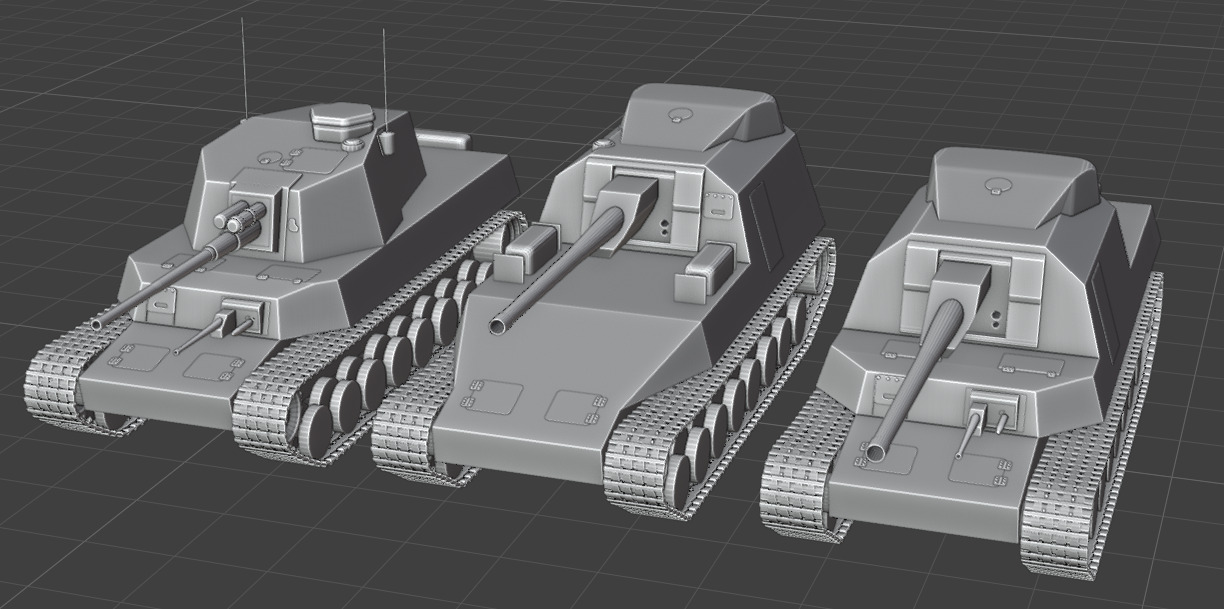
Some months ago I made a simple and unfinished model of Chi-Ri while trying to learn how to use Blender a little bit. Yesterday morning I modified it to (sloped) Ho-Ri to try and explore its physical dimensions. It’s very basic because I’m a beginner, but nonetheless it conforms to the dimensions on the drawings.
At the stage of the mockup, they had apparently not yet decided the gun depression solution, so I based the casemate on “Ho-Ri II.” I’ve determined that the roof bulge must have spanned the whole width if they were to enable the gun to use its full field of fire. If it was like Amusing Hobby’s model, then it would only be able to achieve 10 degrees of depression when aiming directly forwards. Because the gun is offset to the right, this symmetrical full-width roof extension accommodates both the breech recoil and loading tray.
Although it looks a bit goofy, from my examination of the sideview blueprint, I think there is actually evidence that it was generally shaped like this. It could be more or less rounded on the sides.
As an aside, in War Thunder, the UFP of sloped Ho-Ri seems unrealistically thick. The sloped armour of Japanese tanks typically targeted an effective thickness slightly superior to the thickness of the flat plates. I suspect that the UFP was actually between 30~50mm thick to target an equivalent of 75~125mm (slightly superior, accounting for toughness of the plate against ricocheting rounds).
My theory is that the sloped Ho-Ri mockup was 7.4m long (the chassis being slightly extended from Chi-Ri by moving the idler back), and through this model I was able to get a pretty close matchup to the mockup photograph, so I think it’s likely correct. This is the chassis length of “Ho-Ri II” if it was truncated to only span from sprocket to idler. Such a compact chassis was allowed by moving the engine forward and putting all crew in the superstructure.
Edit:
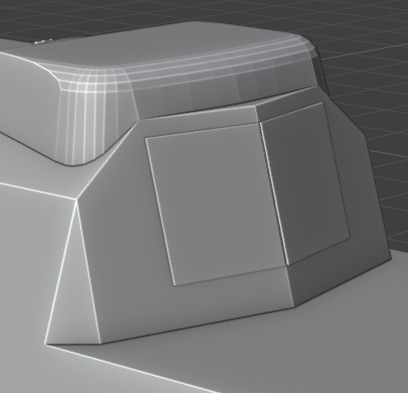
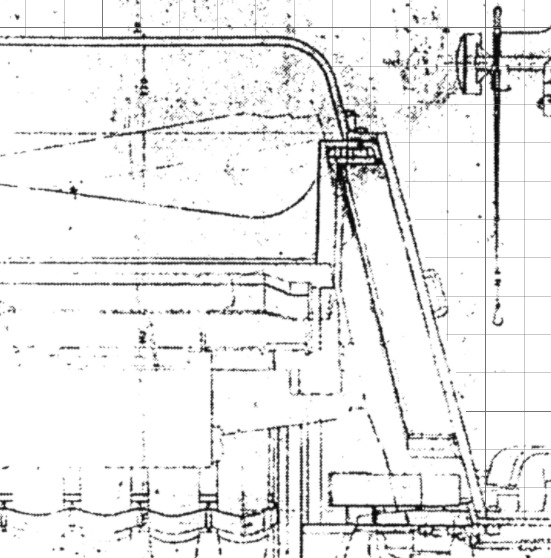
There’s one more slightly interesting detail I wanted to mention. The back of the casemate of Ho-Ri is most likely angular in a somewhat similar fashion to the Ho-Ni III, rather than being a single flat plate tilted 15 degrees forward (such as on the Amusing Hobby model). There are several reasons that this seems to be the case, but the main one is the profile of the back door on the drawing.
19 Likes
What is this genius anti overpressure hat ?
a 20mm plate straight into the fighting compartment

13 Likes
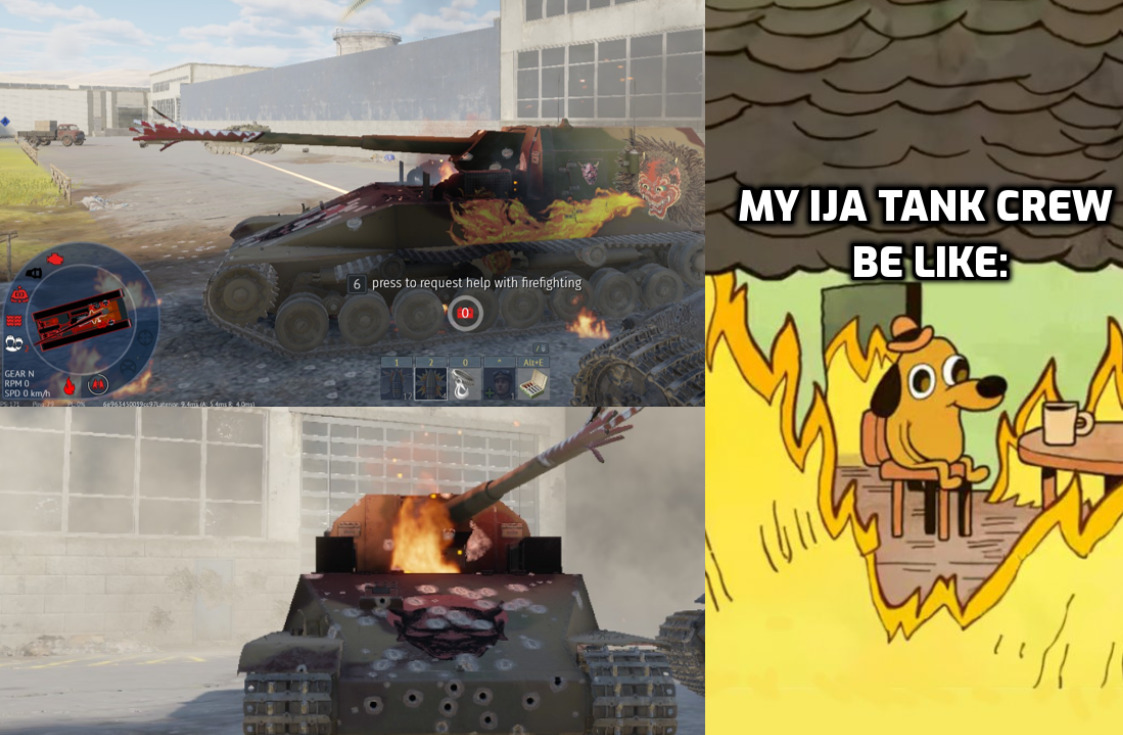
finally, Ho-Ri waifu edition.
1 Like
The true replacements.
I’m stealing that image for sure
1 Like
or bounce
Excellent work
1 Like