Sim-u-late-or
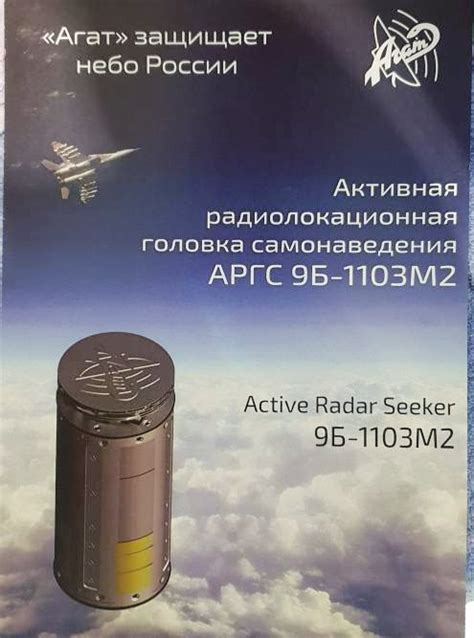
yeah i was also looking for the seeker of the r-77-1 recently
but all i could find were the ones for the base r-77 and the one you sent which is supposedly an AESA seeker
Spoiler

1 Like
But that does not answer my question. Do they really do this in real life? Is there any footage of them doing it? I am not questioning their ‘‘intellect’’.
In that incident when the F-18 was shot by friendly fire while approaching their carrier group (December 2024), did they try to shoot down the incoming missiles (and succeed)? Or did they eject?
A similar thing happened now in Kuwait. A F-15E was shot down by a F-18 in a friendly fire incident (according to official sources). Is there any evidence the missile interception tactic has been attempted? If it were that reliable shouldn’t they have succeeded in intercepting that missile?
Multipathing and notching is extremely rare irl too. Do you want those removed
Also, when did I say there were unintellectual or offended anyone? I am merely asking if the so called iron dome meta is the “meta” in real life too.
I am sorry if I was not clear enough when I asked my question.
Not that i could find it mate. That has been my point all along. No real life scenario has been seen about shooting down A2A missiles with A2A missiles from another plane. Yet, some people just claim that some missile has been advertised as capable of taking down other A2A missiles and that is good for the game. The missile in question is not even in the game yet alone proven to have shot any A2A missile.
3 Likes
Could say the same for multipathing… notching is slightly more used irl but its still very rare…
Multipathing - I agree. I really want a rework and refinement of this mechanic.
Notching - I was not aware it was not employed in real life. If that is the case then, yes, I want it removed (from SIM only).
Nah. that was not directoed towars you. some people think that what we have in game is realistic. so simply, I just asked whether the real life pilots and air forces have been insufficiently intellectual enough to think what War Thunder pilots have been doing so far.
1 Like
This may be a little wall of text but bear with me
Radar resolution is essentially the ability of the radar to discriminate separate targets in close proximity in range and/or bearing
You have 2 subcategories
Range resolution
Think of it as if the targets are in a single file line in relation to you.
- 2 targets at the same bearing, but different distances.
- Example: One aircraft behind another, or an aircraft behind a missile right after launch.
Angular resolution
2 targets flying at the same range, but close together side-by-side.
- Most people have encountered angular resolution problems when engaging AI aircraft in formation, as the lock will fluctuate between them both without locking a single one properly.
- example: 2 wingmen flying in wingtip formation
The combination of both gives you the resolution cell, which is, simplifying, a 3D cube in space which the radar can’t discern between different targets if they are in close proximity.
So what problems would these present?
First of all, the radar resolution depends a lot on bandwidth and pulse.
To have better resolution, and less inaccuracy, you need a shorter pulse width, which means less range.
In simple terms, you trade range for accuracy. To keep the same amount of energy in the pulse, you’d need to increase peak power output, which has a hard cap due to joule effect, in other words, “thermal throttling” otherwise you melt the radar set.
From long ranges, you wouldn’t be able to spot launches reliably off the rail. You wouldn’t be able to detect the missile at all due to the small RCS as well.
TLDR: For basic pulses, better resolution = shorter pulse = trash detection range. Modern radars cheat this a bit using Pulse Compression (chirping the signal to get both range and resolution), but the fundamental problem of the massive RCS difference inside that resolution cell still absolutely ruins the radar’s ability to separate the two.
Furthermore
The return of the aircraft launching it would drown out the return (if any) of the missile.
radars have automatic gain control to prevent this, it works much like aperture or ISO in cameras, which means it decreases the sensitivity to avoid being jammed by the own returns. In effect, the radar with AGC would cease detection of smaller returns if larger returns were present. It’s like trying to hear someone whisper in a metal concert. The large return effectively “masks” the smaller return.
Even using PD filtering and fast-fourier transforms, the sidelobe leaks from the larger target would make it harder to put a velocity filter and call it a day to discern the AAM from the launcher, at least until enough separation happened.
Regarding track file: Even IF the radar resolves the missile, the track file logic of a non-AESA radar will drop lock. The computer’s kinematic filters are expecting a jet pulling 9Gs, not a hypersonic pencil pulling 35Gs. The radar software will literally classify the missile’s acceleration as a false positive or garbage data and refuse to maintain track.
This changes for AESA stuff, which, granted, I am not knowledgeable enough at this time to comment on. I suspect most of the issues are mitigated a lot and thus iron dome meta might actually be accurate from the LAUNCHER radar, but not the MISSILE radar, but this is a guesstimate and I would need further research.
I gave a specific scenario, not an entire BVR timeline.
IRL the default tactic is to maintain kinetic energy and distance to avoid the range of enemy missiles.
Consider this:
IRL, notching is
- Much harder due to notch angles requiring much more precision
- Much less situational awareness, you are in a real cockpit, not using digital interfaces.
- If you fail the notch, you don’t go “back to hangar”. You die.
So what do you think the gameplay of sim would look like?
5 Likes
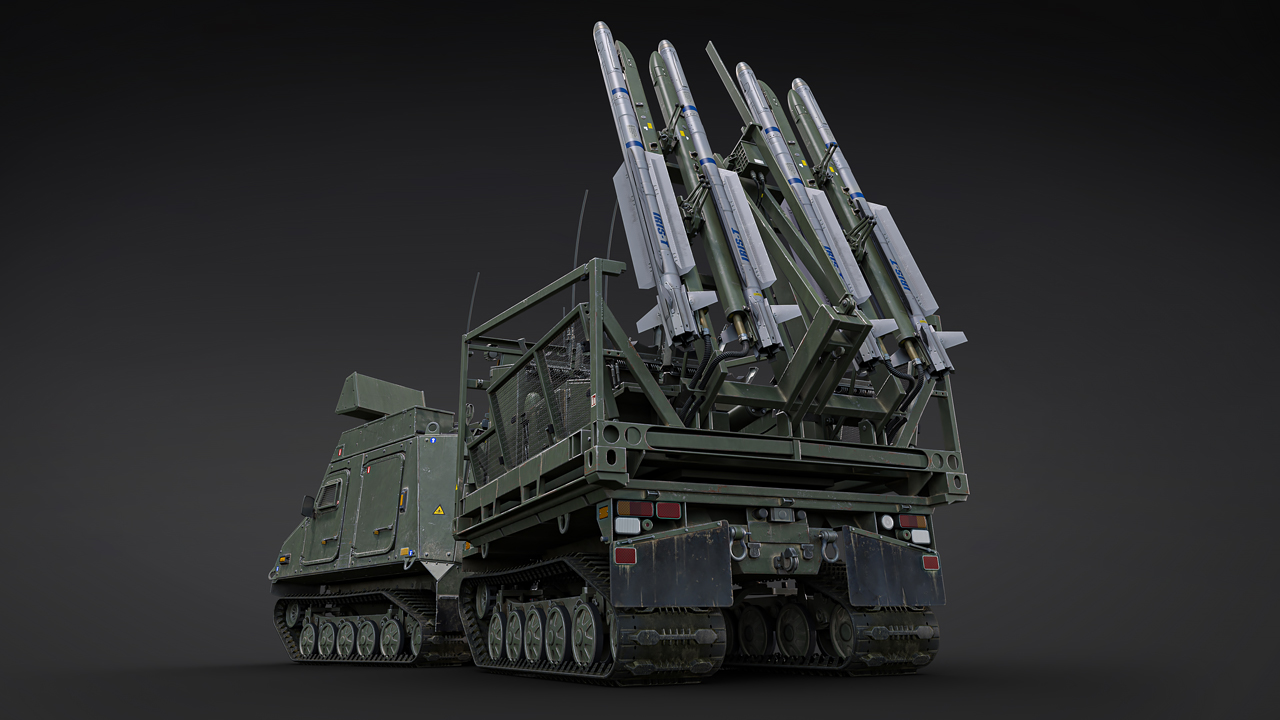
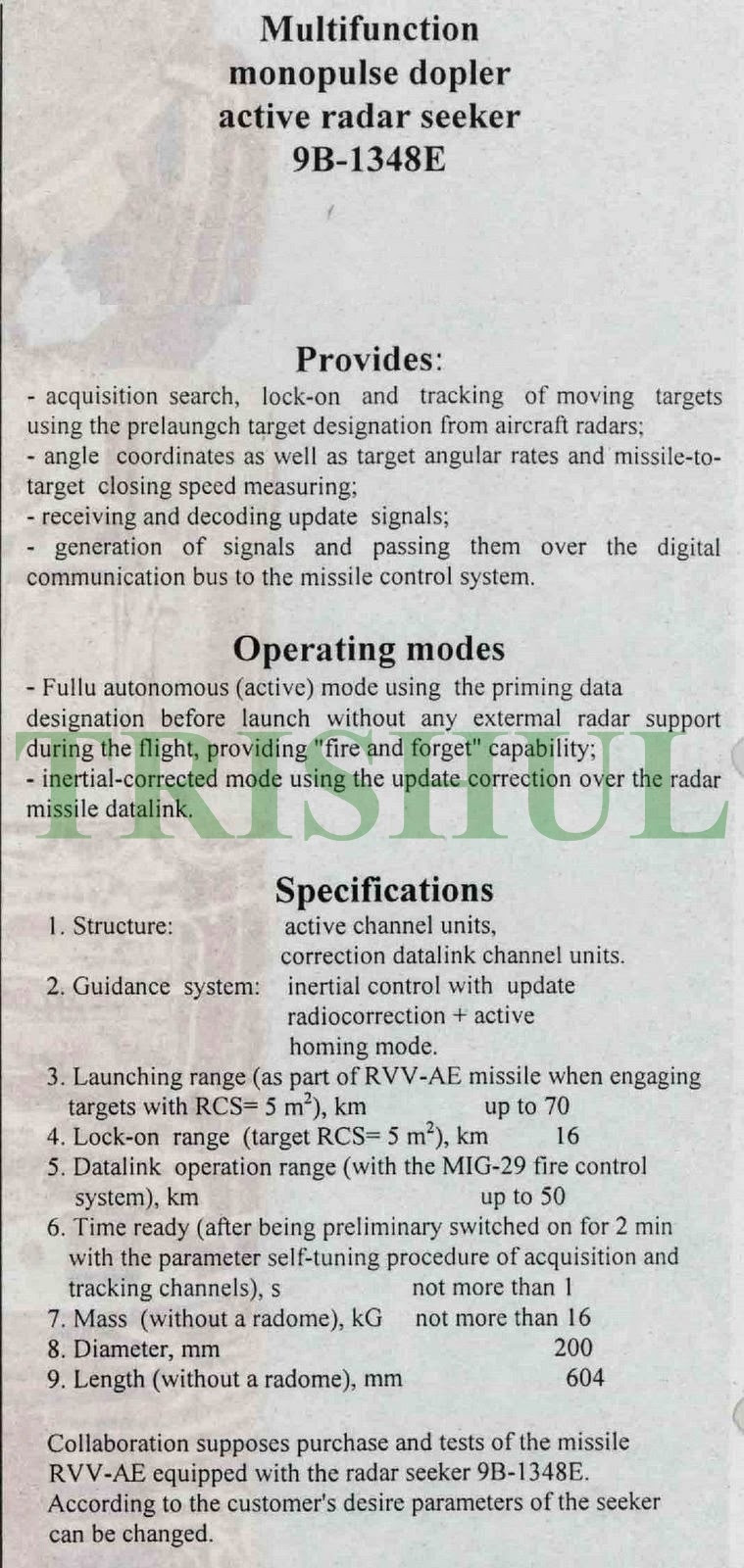
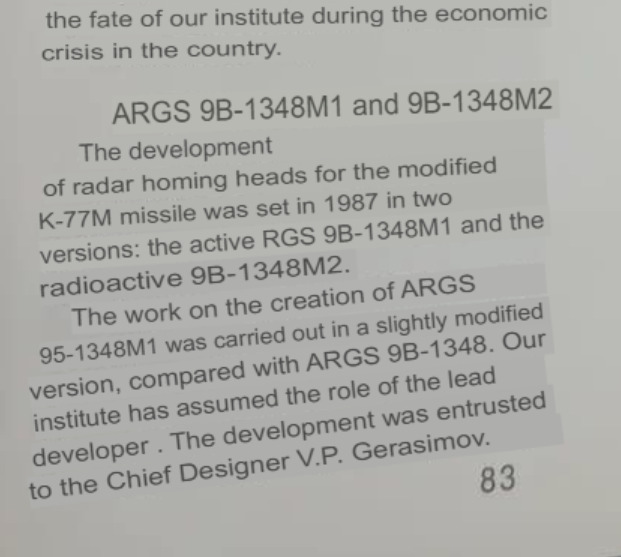
If it’s not 9b1103m2 that looks to be used on r77m, then I’m thinking its 9b 1348m1 or m2. 9b 1348e is the seekerhead that export r-77 uses, so surely the m version would be the one that modernized version of r-77 uses. I can’t find any information on it other than from this.
9b1348e for r-77
9b1348m1/m2"
source of second image
I want it to be as realistic as possible without becoming just another DCS (we don’t need to control everything manually in the cockpit). It is sim after all.
We already have arcade and air rb for an arcadish experience.
Of course this is just an opinion. I understand many would find the game boring or unplayable if I had my way.
There is a difference of realism in physics and capabilities (which is the core problem) vs doctrine
The discussion is about the former.
Regarding the latter, there is zero realistic doctrine in WT because there is no one to enforce it and death is meaningless. Also because a lot of things are missing such as EWRs, GCIs, FACs, properly sized maps and so on.
Yes, but what would the gameplay look like?
Multipathing is completely overblown and improperly modelled. It should absolutely be removed.
1 Like
I don’t think that the “iron dome” tactic ingame is as fool proof as this thread seems to imply, as even in 1 v 1 situations you can usually counter it by firing 2 missiles, one vertically and one horizontally, as the tws radar has to lose track of one missile to follow the other.
It seems to me that the real reason people are so annoyed by it is that it further validates the missile spam tactic already taking place in top tier meta (sending multiple missiles at one target hoping one of them gets the kill), which is not going to stop even if air to air missiles are no longer allowed to collide. Regardless I can think of a few solutions to at least mitigate the “iron dome” meta:
- Increase the aircraft performance penalty of carrying overly large amounts of missiles
- Decrease radar signature of the missiles themselves
- Make proxy fuses lag a few fractions of a second, making them ineffective above very high closure rates. If anything, this would be more realistic and you probably deserve the intercept if you manage a direct hit at +mach 6 closure rates.
- Add radar jamming, rocket launched chaff and towed decoys as alternatives to notching and multipathing
Honestly, i think we are long overdue for this last item. Done right, it can make the biggest effect towards negating radar missile spam.
Ok, then what do aircraft with poor rwr or that require short range weapon employment but face long range weapons do?