So what? How does this contradict the idea that ERA provides different percentages of protection against different projectiles?
This is fully implemented in the game.
So what? How does this contradict the idea that ERA provides different percentages of protection against different projectiles?
This is fully implemented in the game.
Getting the exactly same Equivalent protection for any two rounds would be a mathematical miracle, and ingame we have the exact same protection for ALL rounds. The protection offered by armor is fixed value but ERA is % based. Just for the sake of simplicty lets take imagined numbers -
3BM42: 300(Armor) + (50% of 528) = 564
Type 10: 300 + (50% of 712) = 656
Even if efficiency for Type 10(and any other round) is different there is no way you’ll get the same final Equivalent protection for all of them.
What you referring to is that ingame ERA % effectiveness for each round is adjusted in that way so that final Equivalent protection is the same as for 3BM42 but it is not how it should work.
In the game, ERA provides protection in millimeters rather than percentages of APFSD.
This is a perfectly normal assessment, since the percentage is directly related to the “flat” value.
I don’t understand what you’re doing. You yourself complain that ERA gives the same percentage of protection against different shells in the game (although this is not the case). And then you come up with these calculations yourself. A priori, ERA cannot give the same percentage of protection against very different shells.
Let’s take some hypothetical figures in X-rays (they are far from accurate):
280 mm of flat protection.
That’s 61.2% protection against 3bM42 (280/457) and 45.5% against Type 10 (280/615).
Literally different % of protection from different shells
What nonsense is mixed up here. Incorrect shell penetration, incorrect base armor.
Whatever excuses you make and screenshots you provide of one off non pens, you cannot explain why in game tests do not match the footage. When encountering 2 ERA blocks, even DM13 at 1000m penetrates the 60mm plate of the turret armour in game. In real life DM13 would be almost completely stopped by Duplet. You cannot get around the fact that equal to or more than 400mm of kinetic penetration was stopped in the test footage. The armour in game simply does not provide the same protection. It is about 100mm less.
No, I already said that 60mm HHA at an angle slightly more than 50 degrees in a multi-layer barrier provides much more protection than 57mm (457-400)
Cheers
Do you ever get tired of bad faith arguments?
3BM42 penetrates more than 500mm at 50 degrees both in game and real life, you have yourself made this clear several times in the past.
Only 93mm residual penetration means more than 400mm was stopped, close to 430mm (524-93).
But let’s say because the test footage had the module with multiple steel layers so it’s stronger than the 60mm turret plate in game. You said that maybe a 60mm penetration would actually be stopped by 70 or 80mm plate without support.
Let’s say that it’s 80mm (pure speculation), since BM42 has 524mm penetration at 100m, this means the actual residual penetration was 124mn exactly. So still 400mm was stopped.
There is no way around the numbers, 400mm or more was stopped. You magically want to give the test footage more residual penetration than what was recorded and still 400mm was stopped. In reality it was 430mm.
Also since I know you are just gonna bring up some other poor excuse that doesn’t make sense, I would like to point you towards several other issues with the vehicle in game, such as the misaligned AA Machine gun, its limited traverse limits, the remaining armour holes, and the inability of Duplet to stop ATGMs that it should be capable of stopping. Most of these have already been mentioned on the ru Forum. Perhaps you can use your CM role to fix the vehicle in these other ways if you are unable to comprehend how its armour works.
What should a single nizh block of protection be? Like at 160 or 180 of ke protection and 550 to 600 for chemical.
If we take the test footage at face value, it should be roughly >200mm KE protection.
However, if Ralin’s theory- that the 60mm plate provides more protection due to multiple plates behind it, holds water, which I will concede, does make some theoretical sense (idk about 80mm tho), then the protection should be between 180-190mm against KE.
As for protection against chemical munitions, I don’t really know. Right now the ERA seems to be broken and doesn’t stop warheads it should be able to even with the nerfed tiles. Neither have I done as extensive research on the chemical protection as I have on KE. So I don’t really know what those values should be.
I love your explanation and i hope they do fix it.
Some random video i found about duplet ERA.
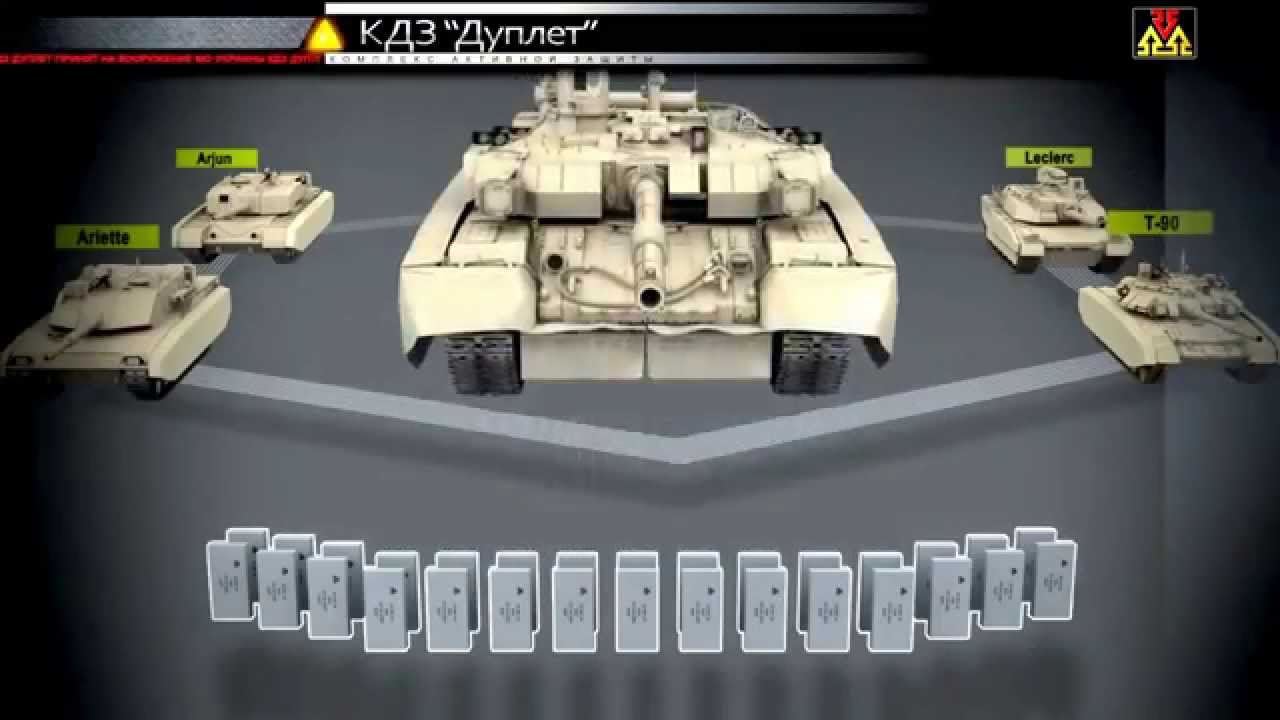
Heres the site of the creators and has some information about duplet.
So many issues. Nice double standards Gaijin
Let me reiterate: the game displays normalized armor penetration/resistance at a 0-degree angle everywhere.
Therefore, you can’t calculate penetration at an angle and then try to pass it off as a normalized result.
Are you even going to take into account the coefficients for steel and multilayer barriers?
Perhaps if the penetration rate was 93mm in a wooden barrier, you would also equate it to steel?
You simply can’t correctly calculate the residual penetration of a shell. Until you learn how, you’ll never succeed.
I repeat, a 60mm turret plate provides equivalent protection of 120mm+, so the ERA protection is: 454 - 120 = 334mm at best.
This isn’t a theory. I literally told you how it works in the game.
The game ERA exceeds the data on this website. Many claim the website lists a different version of the ERA, which is newer but almost 1.5 times weaker.
This sounds rather amusing, but technically, the ERA here has a different name.
The 100m penetration is 262mm at 60 degrees, at 0 degrees the penetration is 454mm.
If you look at the plate being tested, it is at around 50 degrees not 0 degrees, therefore, we will use the 262mm figure, not the 454mm figure. Use the Pythagorean theorem to calculate what the actual penetration on LOS is for the dart hitting the angled plate. It is 524mm.
The residual penetration on the steel module is 60mm on the normal. Taking into account the 50 degree angle it was struck on, the projectile dug in 93mm from the LOS.
Therefore 524-93 = 431mm was stopped.
The only possible case in which we need to mess around with steel hardness is if the test module is made of unhardened steel, which is very much a possibility.
But assuming both the module and the tank are made of hardened RHA, we do not need to take into account anything, the result would be the same on both of them.
You claim that it is impossible to calculate the residual penetration of a shell and then proceed to spew out this:
524mm penetration, not 454mm. Please observe that the plate is at an angle not at 0 degrees.
The game makes no distinction between supported and unsupported plates and how much penetration they stop.
False, the manufacturer itself claims this, including saying that the new element is several times lighter than older models. Give the real story.
I don’t dispute that. But these figures aren’t applicable to the game because the resistance is specified differently.
What you see with an X in the protection analysis is the normalized resistance to penetration at 0 degrees. Is that clear to you?
We need this because the 3BM42 doesn’t penetrate 524mm of high-hardness steel. And it certainly doesn’t penetrate 524mm of high-hardness steel in a spaced barrier.
The 60mm-thickness of the front turret armor plate is at least 120mm compared to modern APFSDSs.
Therefore, you have no right to assume that if it’s penetrated 60mm, the shell lost 431mm of penetration, as it lost significantly less.
This is a very rough estimate, and I’m making it only because you’re making yours.
There’s no point in providing specific ERA protection figures, as they’re extremely difficult to calculate accurately.
The game doesn’t use LOS angled thickness. Stop wasting my time.
Firstly, I mentioned that the game models multipliers for multilayer barriers and steel hardness, so you can’t ignore them (but you don’t), and secondly, when assessing the ERA’s durability, the developer may well take into account the fact that the steel was conditionally infinite in tests.
reduced weight while maintaining the characteristics of the old one. Give the real story.
The BM Oplot uses better steel compared to the t-80u, but I don’t think gaijin wants to do hardness for all the tanks in warthunder.