The AIM-4/26 Falcon - History, Design, Performance & Discussion

Once you see it, you cannot unsee it…

I remember arguing with someone that the missile wasn’t being guided by the center of the radar box but it was actually tracking the 3d model, but i was clearly too naive. It’s ridiculous how the ir guided missile tracks thin air to perfectly miss the giant 6 engined bomber yet manages to hit a flying wing, and deserves a bug report.

https://community.gaijin.net/issues/p/warthunder/i/heSC9eAY5PAL


Until this is fixed, I would suggest the best course of action is to avoid using an aim 4 on a target unless it’s flying at an 30º angle relative to you or more, knowing that the reference point it’s homing towards is probably above the fuselage because of the vertical stabilizer.

9 Likes

Oh yeah. I’ve noticed this several times before. Good that there’s finally a report out for it.

this makes aim-4s only usable when your 30 degrees above or below a target

this is just incase anybody was wondering from where they got the info: the info is pulled from the international f-104 society’s magazine “zipper,”, Tho not all of them are digitized and i do not know which edition it was pulled from

more stuff on the AIM-4H
Robert Talley – SBRC-SBRS History

it seems the aim-4h is the same length as the aim-4d unless i read it wrong
and there were 9 tests in total of the aim-4h and they fitted a bigger warhead

also

AIM-4D-8 is a variant of the falcon
COMMITTEE ON ARMED SERVICES UNITED STATE : US Senate : Free Download, Borrow, and Streaming : Internet Archive

1 Like

If the aim-4d-8 is a variant, then I would guess it’s the version that was able to resupply it’s coolant from the wing pylon to extend it’s operational lifetime after it was activated, like it was implemented in the aim-9d and sucessors. From “The hughes falcon missile family”

AIM-4D Success
The AIM-4D finally achieved a confirmed kill in late 1967. On 26 October, a flight of four F-4Ds, Ford flight, escorted two RF-4Cs on a reconnaissance mission near Phuc Yen AB and encountered six MiG-17s. Ford 03 fired an AIM-4D at a MiG-17 in a head-on pass, but was unable to observe the missile’s performance as the pilot broke off to avoid another incoming MiG-17. The crew observed a parachute in the area of the potential intercept, but could not confirm an AIM-4D kill.
Ford 04, acting as Ford 03’s wingman during the engagement, had far better luck, firing an AIM-4D at a range of 6,000 feet in a tail-chase engagement of an additional MiG-17. This time, the crew watched as the AIM-4D flew directly up the MiG-17’s jetpipe and detonated. The NVAF pilot ejected for the AIM-4D’s first confirmed kill.
The AIM-4D would go on to score three additional confirmed kills in early 1968. AIM-4Ds destroyed MiG-21s on 3 January and 5 February, with a MiG-17 kill occurring on 8 January. With the cessation of Operation ROLLING THUNDER on 1 April, the AIM-4D lost any chance of improving its reputation. Further use in combat may have resulted in a greater success rate, as the 8th TFW received 274 extended-cooling AIM-4Ds around this time. By the time the air war resumed in earnest in 1972, the F-4D possessed AIM-9 capability, replacing the AIM-4D. The AIM-4D remained on hand with F-4D units until earlier in 1972, however, formally withdrawn from the theater on 22 April.

4 Likes

A picture of the XAIM-4H
The US war machine : an illustrated encyclopedia of American military equipment and strategy : Dornan, James E : Free Download, Borrow, and Streaming : Internet Archive


(same image but flipped so you can read it)

you can see the lasers at the back of the missile(the two dots) they were later implemented on the AIM-9L (probably as the DSU-15/B AOTD ) according to the Robert Talley - SBRC-SBRS history link (scroll up a bit)

the F-4D and the F-4E should both be able to carry the missile

It seems the XAIM-4H is practically identical to the AIM-4D aside from the IRCCRM , better electronics and proximity fuze so you only have to find the weight to get the performance

12 Likes

Holy smokes, never did I think I’d see the day where I could actually see a photo of the XAIM-4H lol. Fantastic find!

1 Like

This is just how much i asume the thing weighs and is probably not ture
the DSU-15/B AOTD(the one on the 9l which is based on the one on the XAIM-4H) weighs around 9lb
ADA070975.pdf page 31 (it seems i forgot to note that the source for the aim-9 claim was this link Robert Talley – SBRC-SBRS History)

this is just asuming they used the warhead on the aim-4G
which weighed 2.25 lb more than the on the AIM-4D

so it would weigh in at around 145.25 lb pre launch and 114.25 lb at burnout

the only other figure for how much this thing weighs (160lb from an illustrated guide to modern airborne missiles) is likely false since it also gets the guidance wrong

2 Likes

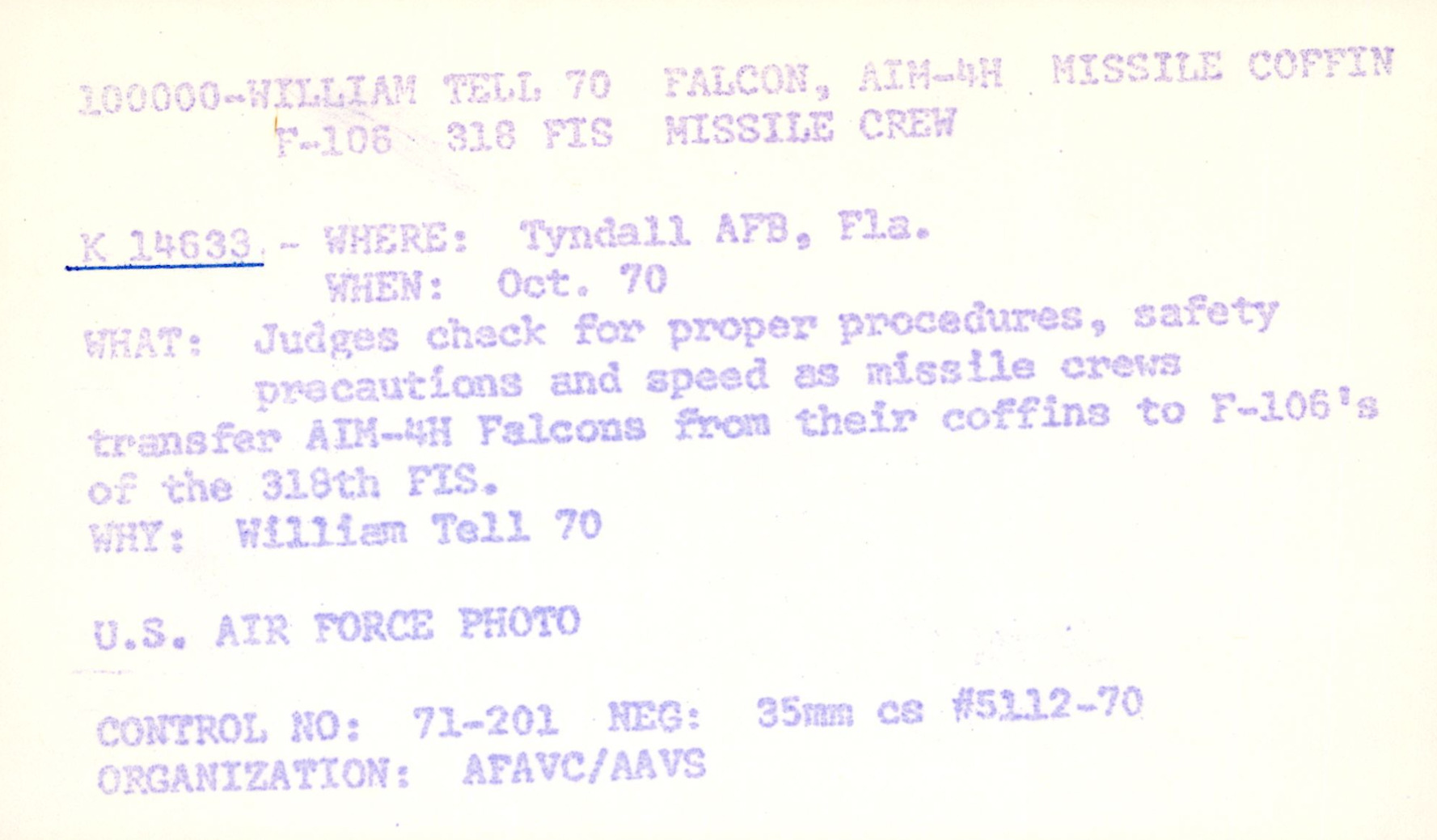
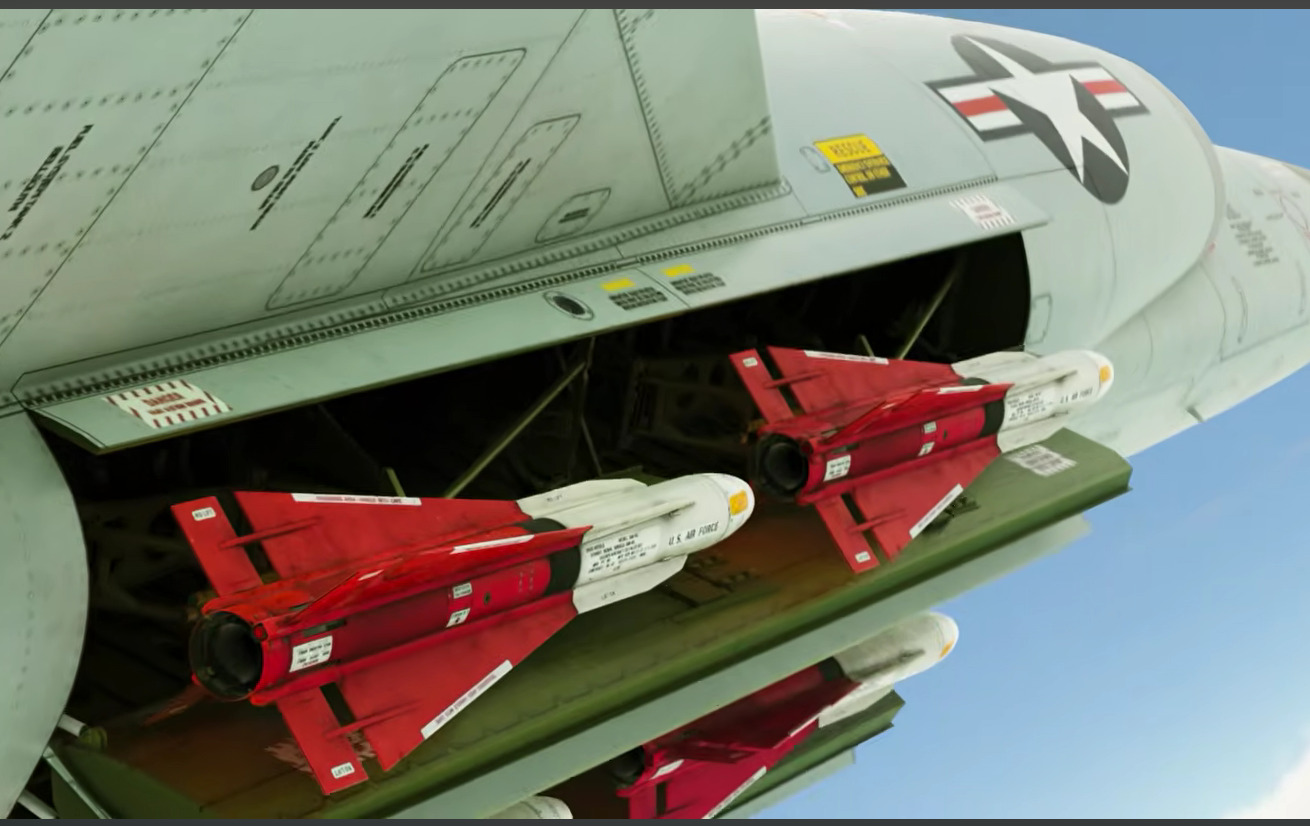
found this (f-106 with AIM-4H)


[Shelflist to Color Photographs of U.S. Air Force Activities, Facilities, and Personnel: K14600 thru K14699]

kinda lines up with timeline of the hmd tests

6 Likes

I updated the stats on the missiles to represent their turning abilities at sea level as opposed to pure maximum which is rarely reached
Some graphs just dont show peak performance at sea level however so some are educated guesses

Would anyone be able to figure out the maximum Fin aoa and general max aoa for the missiles?

we would get more accurate performance with it

9 degrees for the AIM-26 Wayback Machine

2 Likes

9 degrees for the aim-26 at sea level, when launched at maximum speed. Keep in mind that the FCS adjusts the control surface deflection according to the launch parameters to make sure the missile won’t exceed it’s g-limits in flight, which in warthunder is modelled as an actual g-limiter in the missile.

So the absolute maximum fin AoA is 29º / general max aoa is anybody’s guess, but note that the “fin AoA” parameter in warthunder is used to tweak the turn radius of the missile, rather than representing the actual simulation of the fin AoA it should have.

2 Likes

suggestion for the XAIM-4H The XAIM-4H - The Poor Man’s AIM-9M - Suggestions / Aircraft - War Thunder — official forum

5 Likes

after looking at the AIM-4D SMC again it should have a guidance delay of 1.5 seconds since the Launch zone says minimum flight time of 1.5 seconds

also @Jadenbetter-live could you add the XAIM-4H to the list

1 Like

More accurately is this

what details are available that are primary?

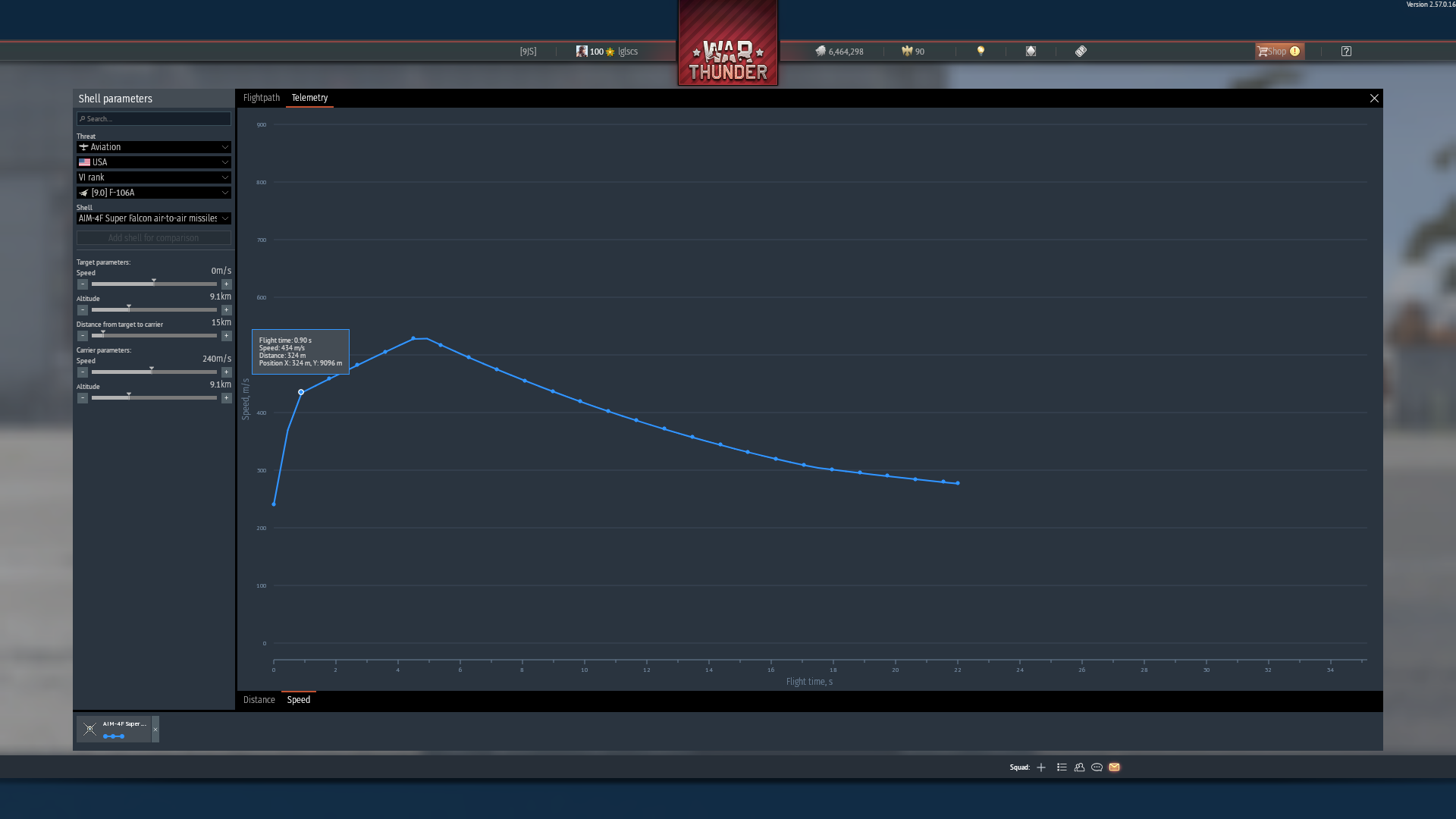
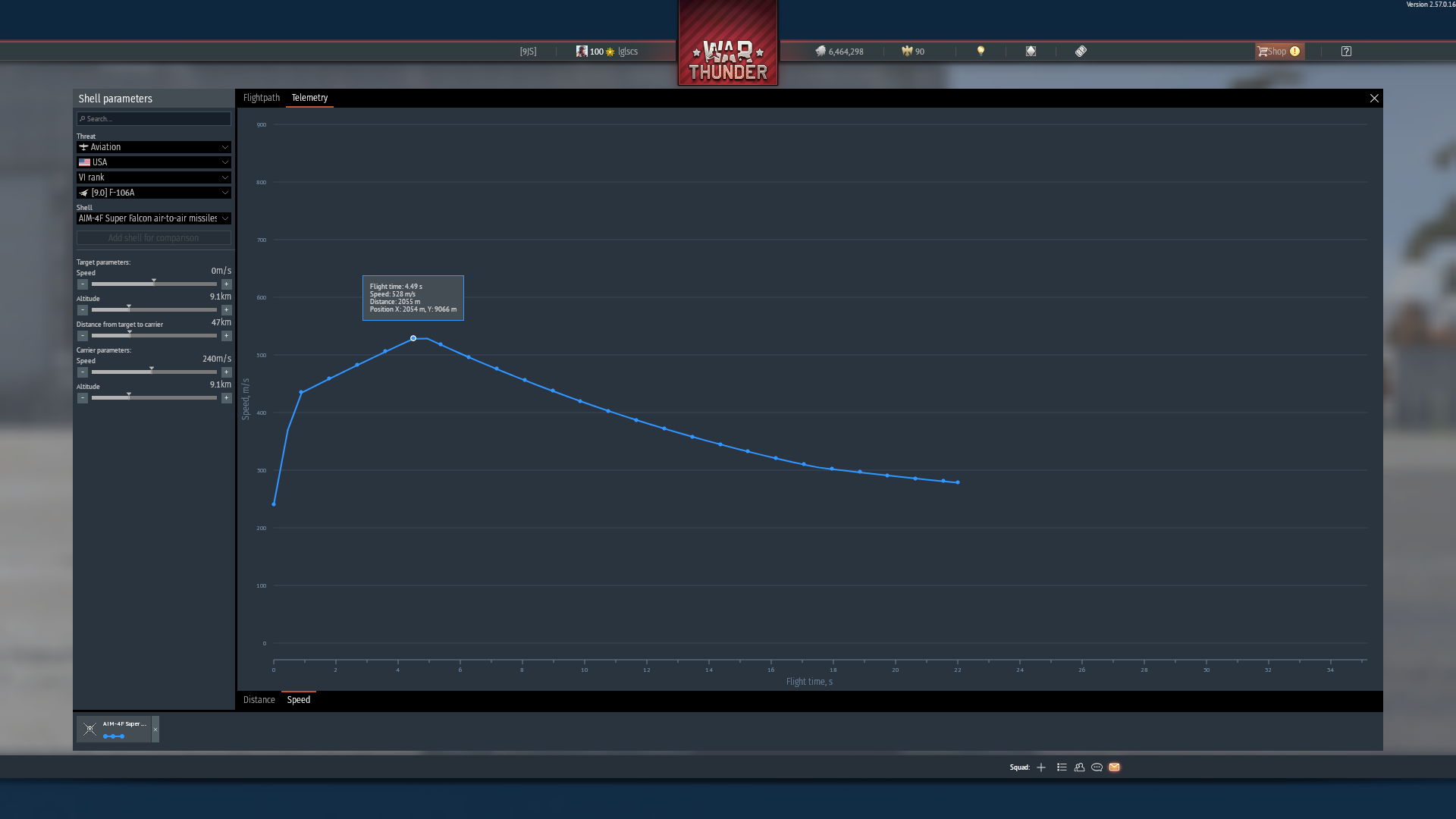
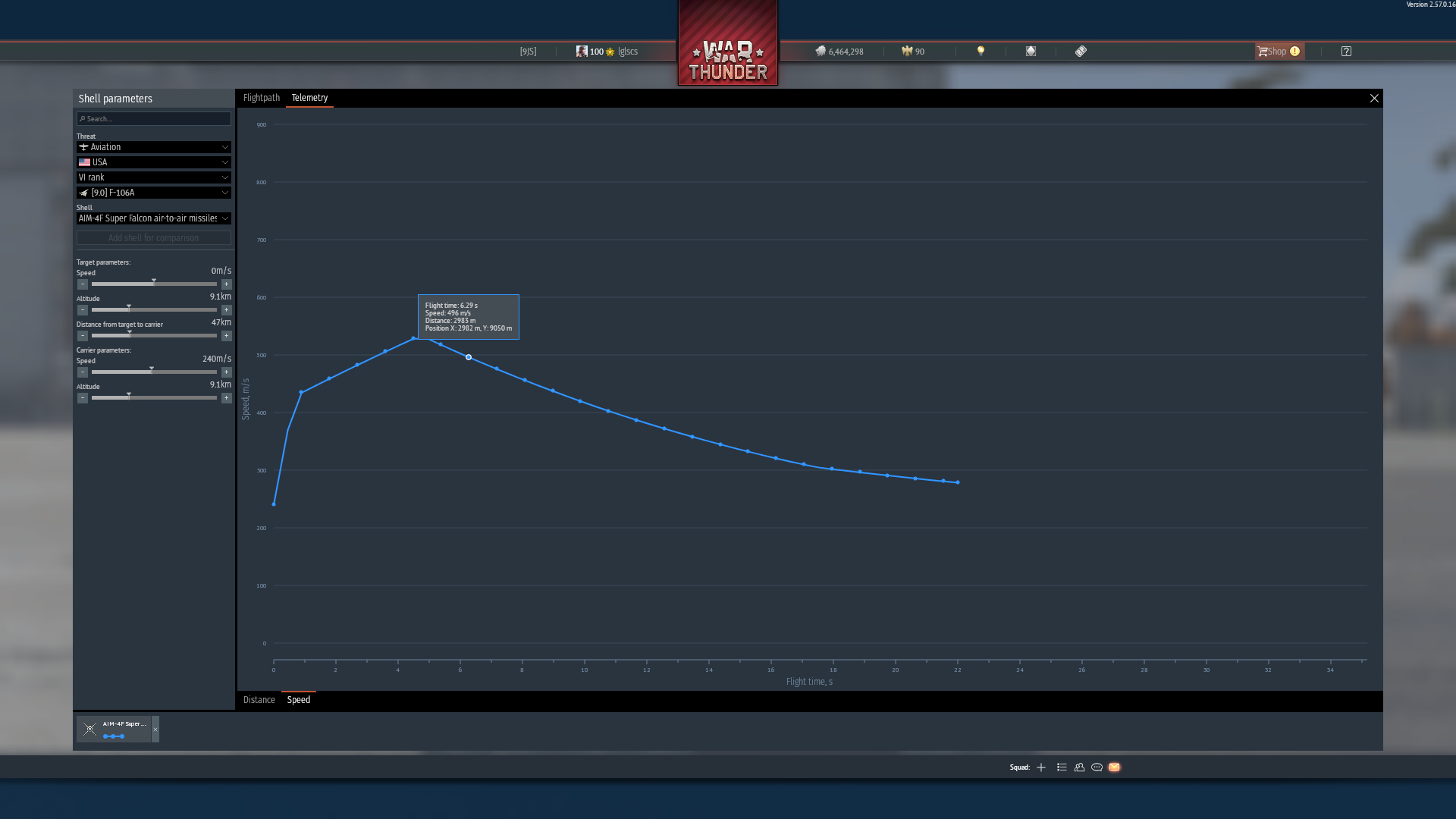
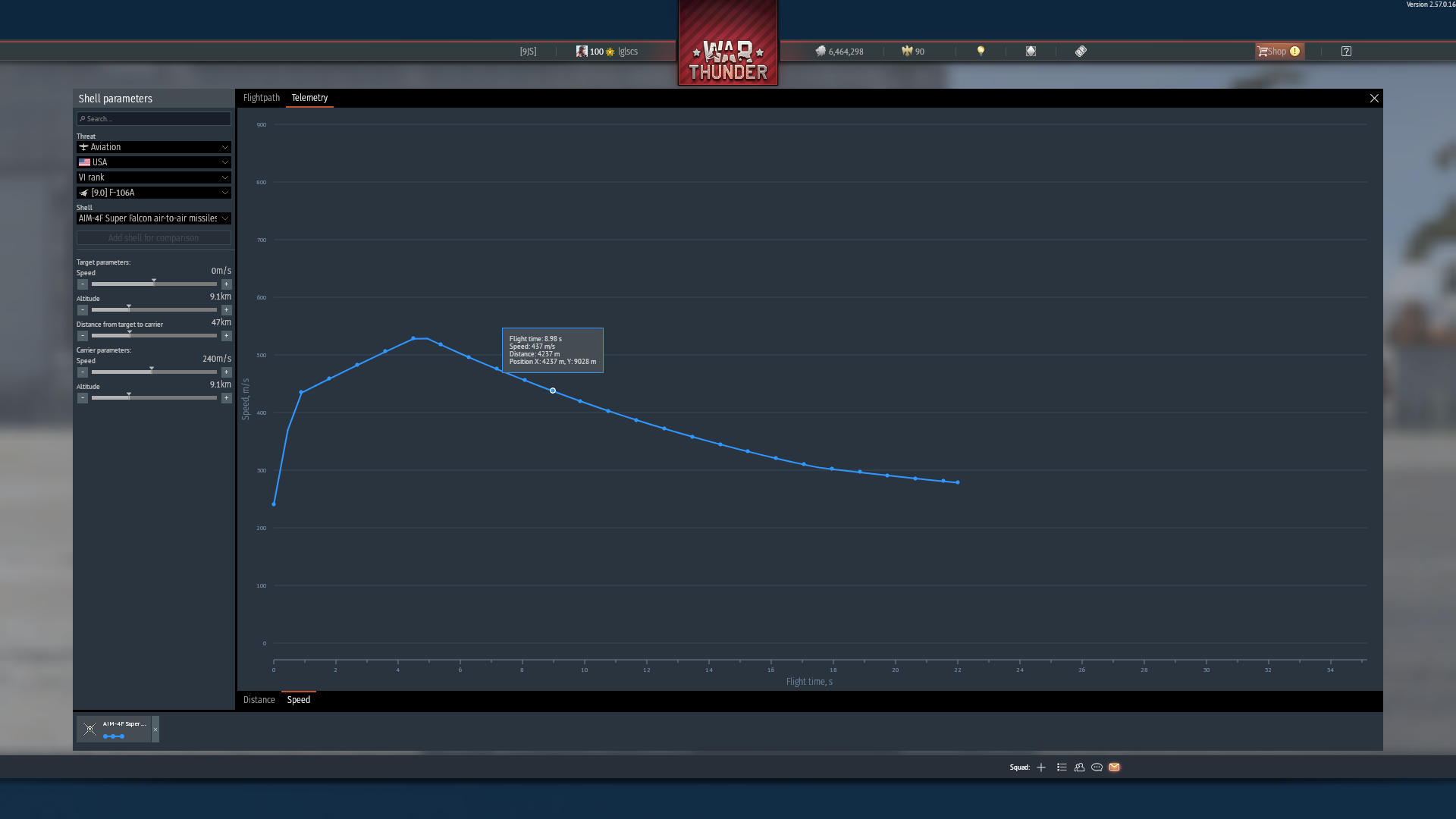
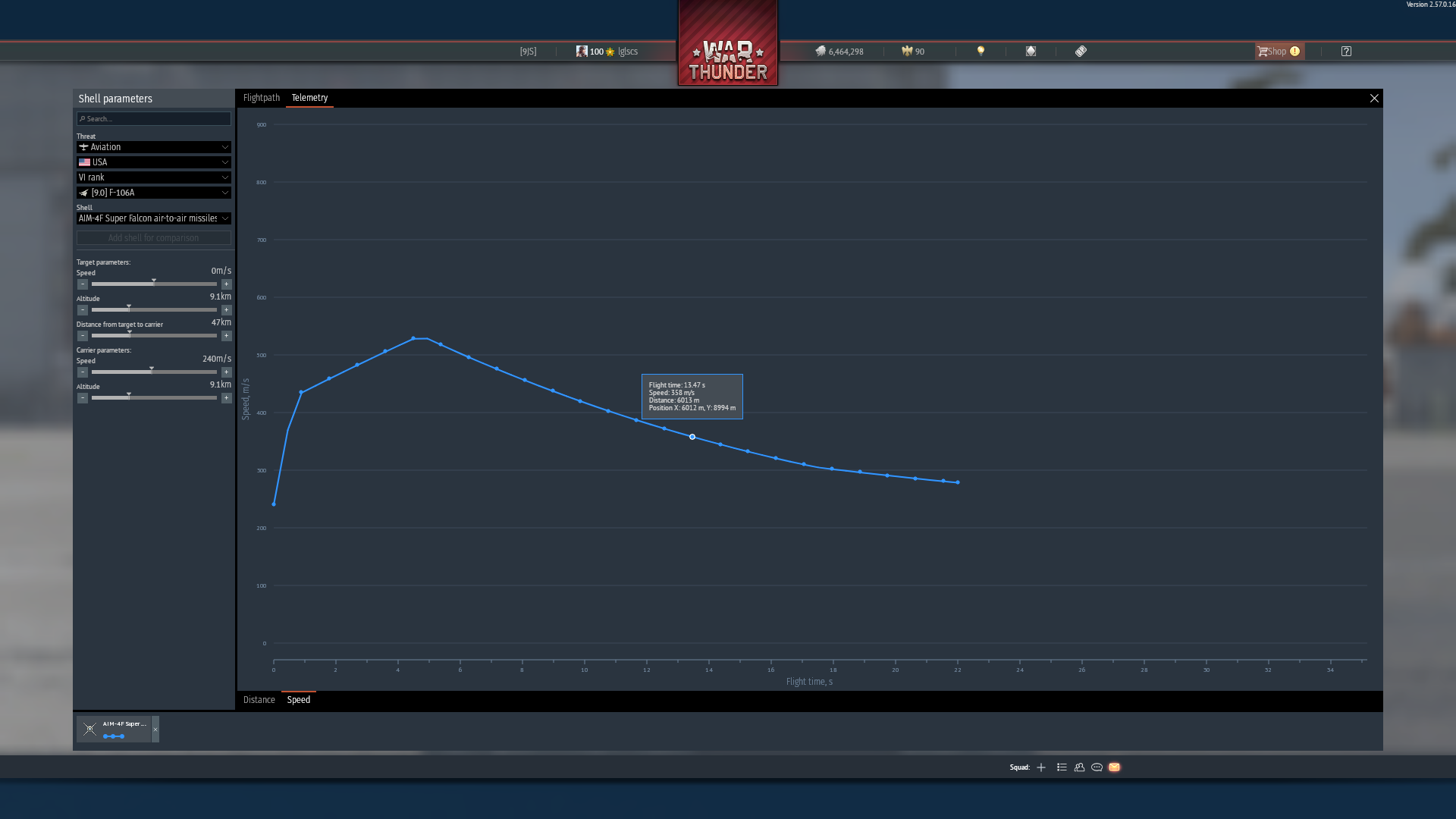
Well, given that they added thrust variation with altitude for the phoenix i took the trouble of compiling the speed and time information that’s in the graphs and the tables from the aim-4f SMC into a straightforward table:

As expected, there is a noticeable thrust increase with altitude, but it’s never particularly fast compared to other missiles. Still much better than the ingame one at 40000 feet, even within the limits of the comparison tool:


Most of the primary source documents i have just refrence names of people who worked on it. the only primary source that really says anything about the missile is Robert Talley’s report Robert Talley – SBRC-SBRS History which doesn’t say much about it other than confirming the larger warhead, proxy fuze being located at the rear of the missile, solid state electronics, and the fact that the dimensions stayed the same which were also confirmed by the photo of the missile itself