- Yes
- No
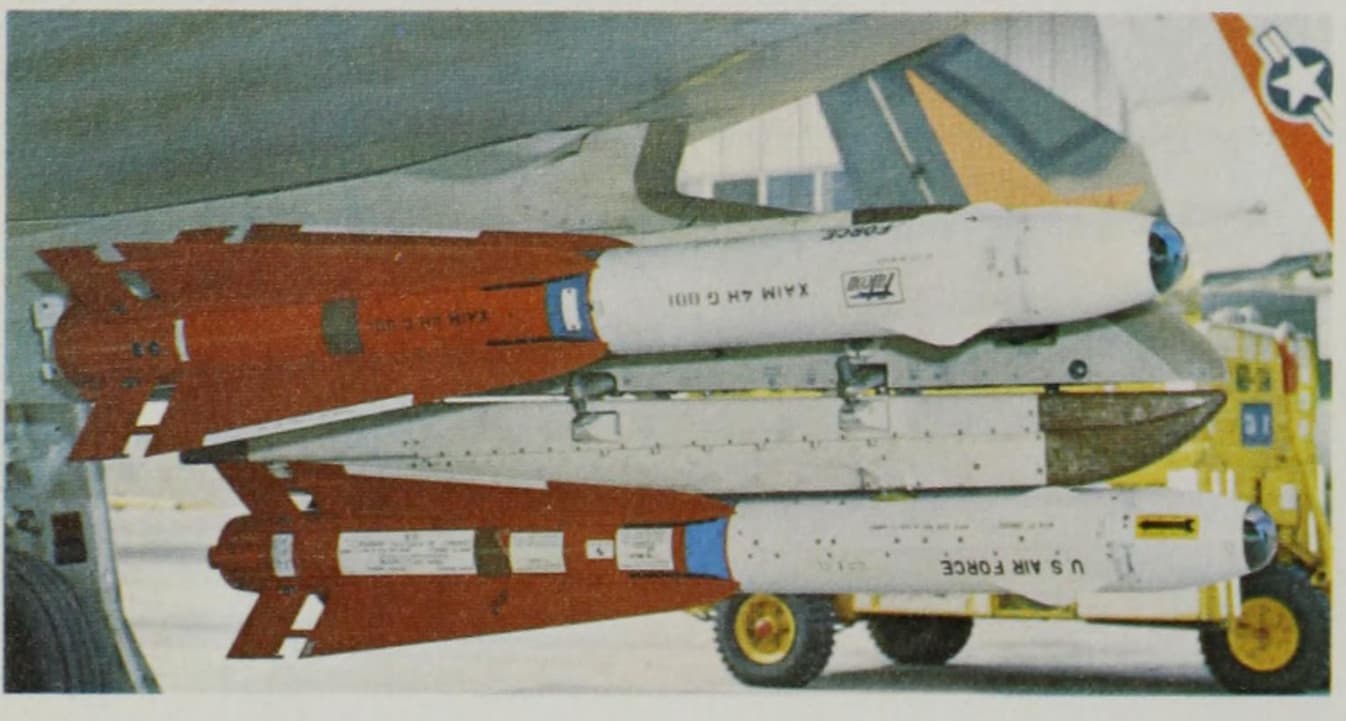
(only known picture of it on the internet, it is mounted on a F-4D in the picture)
i would like to suggest the XAIM-4H (also known as the AIM-4H) for the F-4E phantom II and F-106a (and F-4D if it is ever implemented)
History
The falcon missile family started in 1951 with the GAR-1(AIM-4A) a SARH guided missile, with multiple variants following soon after the: the AIM-4B an ir guided missile, the AIM-4C an improved pylon capable AIM-4B, AIM-4E a SARH missile, AIM-4F/G “super” falcon both were extended versions of the falcon with improved seekers (the F being radar and the G being ir), and finally the AIM-4D which was a recycled AIM-4C with the improved seeker of the AIM-4G made for anti-fighter use
The XAIM-4H was a prototype missile based on the AIM-4D-8(the extended cooling variant of the AIM-4D). It was made to correct the shortcomings of the AIM-4D(and the D-8) in Vietnam. Such shortcomings as the lack of a proximity fuse , the lack of capabilities in anti-fighter combat and the fact that the pilot had a difficult time firing the missile due to the amount of switches needing to be switched.
There were only 25 missiles ever made. It was developed from 1969 to 1971, in the Santa Barbara Research Center (SBRC) by the Hughes Aircraft Company with Program Manager Deniz Claud E and Head of SBRC Robert M. Talley on a 15 million dollar contract.
It was tested in Eglin Air Force Base and at Edwards Air Force base by Plans and Requirements Deputy Chief of Staff Robert T. Herres. There were 9 tests conducted with 4 hits and 5 misses. There were two confirmed tests on Qf-104s at Eglin AFB( 55-2969 and 56-747 nicknamed ”Queenie” ) in all successful tests the fuse worked properly. A few missiles were loaded onto a f-106a of the 318th FIS during William Tell 70 at Tyndall AFB.
It was canned in 1971 due to budgetary reasons by a committee due to the fact that they saw the XAIM-4H as unnecessary since they had already modified the AIM-4D in the form of the AIM-4D-8. And due to them seeking a common air force and navy IR missile.
However, the laser proximity fuse of the XAIM-4H did not go to waste as the proximity fuse was later modified for use in the AIM-9L and later variants of the sidewinder as the DSU-15a/b under contract N00123—73—C—0256.
Characteristics
The main features of the XAIM-4H was the laser proximity fuse, the gate width IRCCM and the larger warhead and is otherwise the same (the g pull, length, wingspan, fin aoa, diameter are the same).
-
WIng Span: 20in (50.8cm)
-
Length: 79.2in (201.168cm)
-
Diameter: 6.4in (16.256cm)
-
Thiokol M58A2 Solid Rocket Motor
-
Laser proximity fuse (the two dots at the back of the missile in the photo)
-
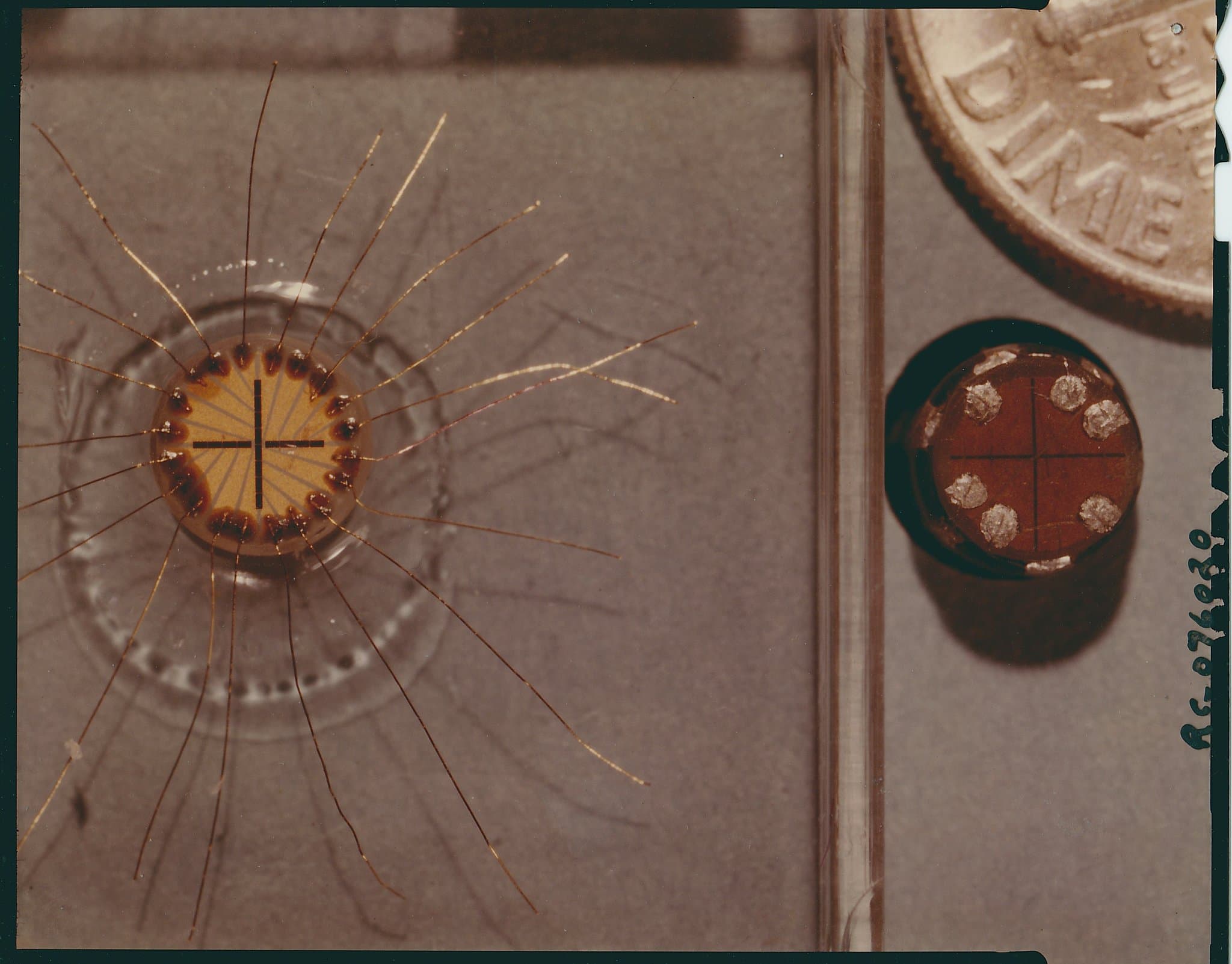
Gate width IRCCM
-
Solid State Electronics
-
Weight: exact weight unknown; confirmed to exceed AIM-4D baseline weight
Spoiler
All i know is that it definitely did not weigh 160lb as that figure is pulled from Bill Gunstone’s An
illustrated guide to modern airborne missiles which contains incorrect information on
the missile (the book confuses the laser proximity fuse as Active Laser Homing, and bases the stats such as weight, wingspan and diameter on the AIM-4F/G super falcon)
it likely weight in around 145 ish pounds -
Larger/Enhanced warhead
Notes:
- In game visually the only difference would be the texture
- The weight would depend on how heavy you make the warhead and improved electronics (as the proximity fuse should be weigh something close to 9lb)
- The missile was probably all-aspect since the better electronics and the fact that the seeker on the AIM-4D(and AIM-4G since they shared the same seeker) was semi-all-aspect already
- If you’re wondering about the performance in game, imagine a slightly slower AIM-9J that’s all aspect and has Gatewidth IRCCM and losses all of its speed after 5 seconds
sources:
Robert Talley – SBRC-SBRS History Discusses the history of SBRC and mentions the features of XAIM-4H and how many tests were conducted
The US war machine : an illustrated encyclopedia of American military equipment and strategy : Dornan, James E : Free Download, Borrow, and Streaming : Internet Archive source for the picture and for the F-4D
Arming America’s Interceptors: The Hughes Falcon Missile Family general history of the XAIM-4H
QF-104 drones - International F-104 Society International F-104 Society source for the tests on the XAIM-4h on the qf-104 and source for f-4E
Under Maintenance page 31 second source for the AIM-9l proximity fuze being derived from XAIM-4H
SECURITY STATUS OF EXPECTED VISITORS TO HEADQUARTERS FROM MIT ALFRED P. SLOAN PROGRAM - 2 APRIL 1971 : Central Intelligence Agency : Free Download, Borrow, and Streaming : Internet Archive source for the name of the program manager
DTIC ADA540187: Sailor to Airman: The Military Career of General Robert T. Herres : Defense Technical Information Center : Free Download, Borrow, and Streaming : Internet Archive source for the guy who managed the tests
[Shelflist to Color Photographs of U.S. Air Force Activities, Facilities, and Personnel: K14600 thru K14699] source for F-106
[Shelflist to Color Photographs of U.S. Air Force Activities, Facilities, and Personnel: K58400 thru K58499] second source for F-4E
ADA070975.pdf source for the proximity fuse wight in the notes and confirms the SBRC aim-9l thing
CIA Reading Room cia-rdp72-00337r000400120027-3: AUTHORIZING APPROPRIATIONS FOR FISCAL YEAR 1971 FOR MILITARY PROCUREMENT, RESEARCH AND DEVELOPMENT, FOR THE CONSTRUCTION OF FACILITIES FOR THE SAFEGUARD ANTI-BALLISTIC MISSILE SYSTEM, RESERVE COMPONENT STRENGTH, AND FOR OTHER PURPOSES : CIA Reading Room : Free Download, Borrow, and Streaming : Internet Archive sourcew for its cancelation
the source for the IRCCM is the picture in the spoiler