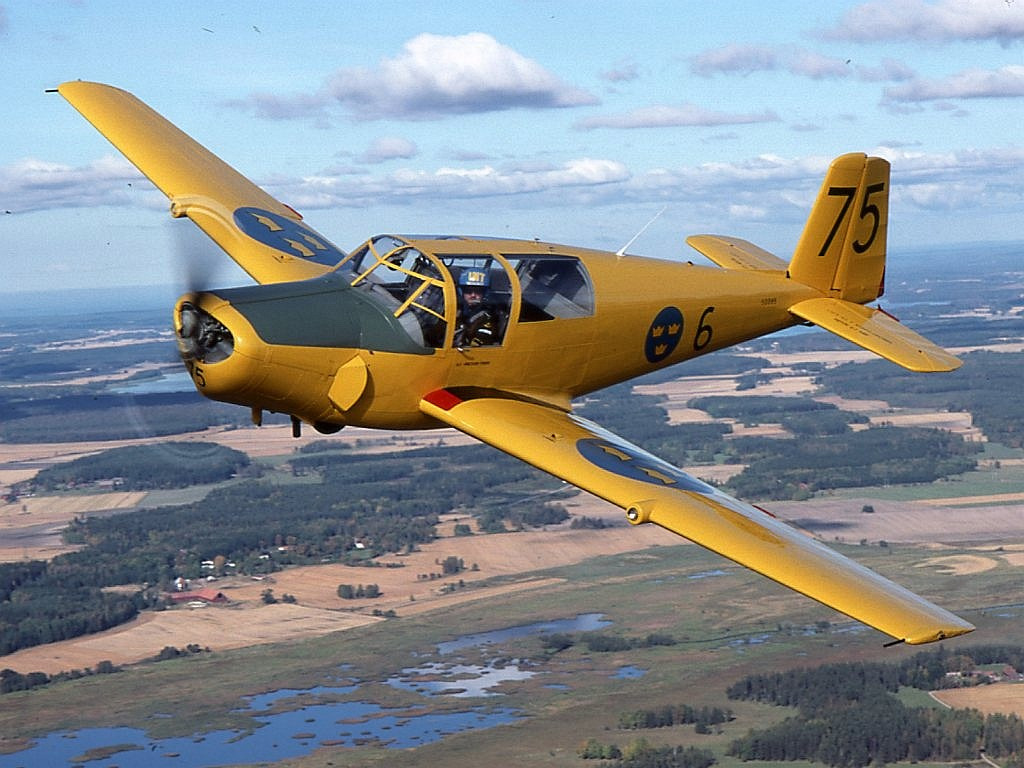


If you are an aviation enthusiast, you will most likely recognize this plane through another aircraft: the Bücker Bü 181 Bestmann. It is indeed not a coincidence that they both share very similar looks and design choices. They were both designed by the famous Swedish engineer A J Andersson (not to be confused with AJ 37 Viggen).
After A J Andersson had designed several airframes, such as the Bü 131 and 133 for the German Bücker Flugzeugbau he shifted his focus toward his Sweden. In 1939 he joined Saab, where he became the chief designer for the Saab 17, 18 and importantly the Saab 91 Safir.
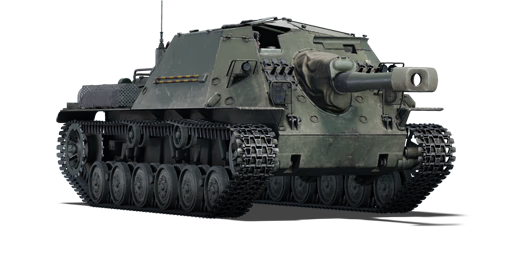
The plane was supposed to use the same flat engine as the Ikv 103 - yes, the tank destroyer, but those engines were instead reserved for only ground vehicles, which was probably for the best - as the Safir instead would use a Gipsy Major and later a Lycoming series engine.
When designing the Safir, he took a lot of inspiration from his earlier designs, especially the Bü 181 Bestmann. To make things even more confusing, the Swedish air force actually operated the Bü 181 Bestmann, under the designation Sk 25.
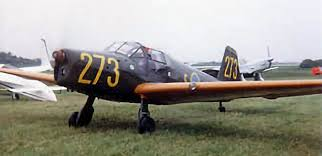
The Saab 91 Safir took flight for the first time towards the end of 1945, just after the war had ended, and entered service within the Swedish Air Force 1952 - when they were looking to replace their aging Bestmanns. It served until 1993, but was replaced by the Sk 61 Bulldog in the early 70s.
Today, many still fly within the civilian aerobatic association Team 50.
The Saab 91 Safir flew under several designations under the Swedish Air Force.
-
Saab 91A → Tp 91 — Duties: Liaison and Personnel transport | 10 units
-
Saab 91B → Sk 50B — Duties: Basic training, Liaison, Weather reconnaissance | 76 units
-
Saab 91C -->Sk 50C — Duties: Basic training, Liaison, Weather reconnaissance and Personnel transport | 14 units
-
Saab 91D → Sk 50D — Duties: Basic training, Liaison, Weather reconnaissance and Personnel transport | ?? units
Notably, in 1947, the Safir set a world record in non-stop flying during a ferry flight to Addis Ababa (Ethiopia) from Bromma (Sweden). The flight was piloted by the famous humanitarian hero Carl Gustav Von Rosen (who you can read about here) and took over 30 hours. Unfortunately, a barograph was not in use, meaning that the world record couldn’t be viewed as valid.
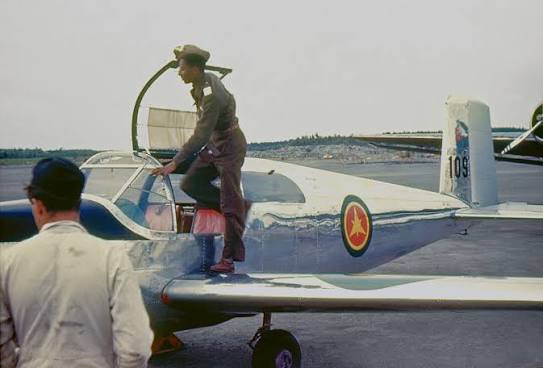
The Swedish Air Force wasn’t the only military operator of the Saab 91. Norway, Finland, Austria, Japan, Tunisia and Ethiopia also operated the Saab 91 as trainers within their respective militaries.

Japan, however only operated one (very interesting) single unit, which was a Saab 91B that was bought in 1953 for research purposes. Once in Japan, it received the name Saab X1G or Nihon Hikoki X1G. It was heavily modified for STOL research (short take off and landing) and received a unique livery and interesting modifications.
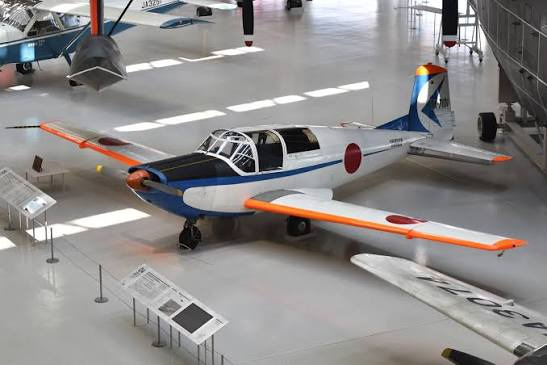
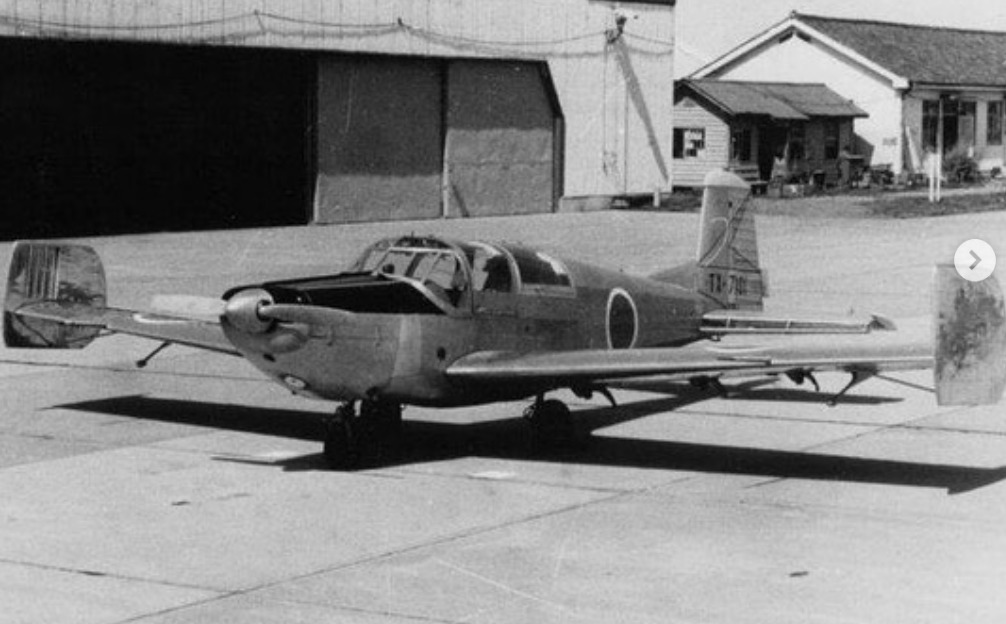
However, Japan was not the only nation to play around with modifications. Sweden was quite creative as well…
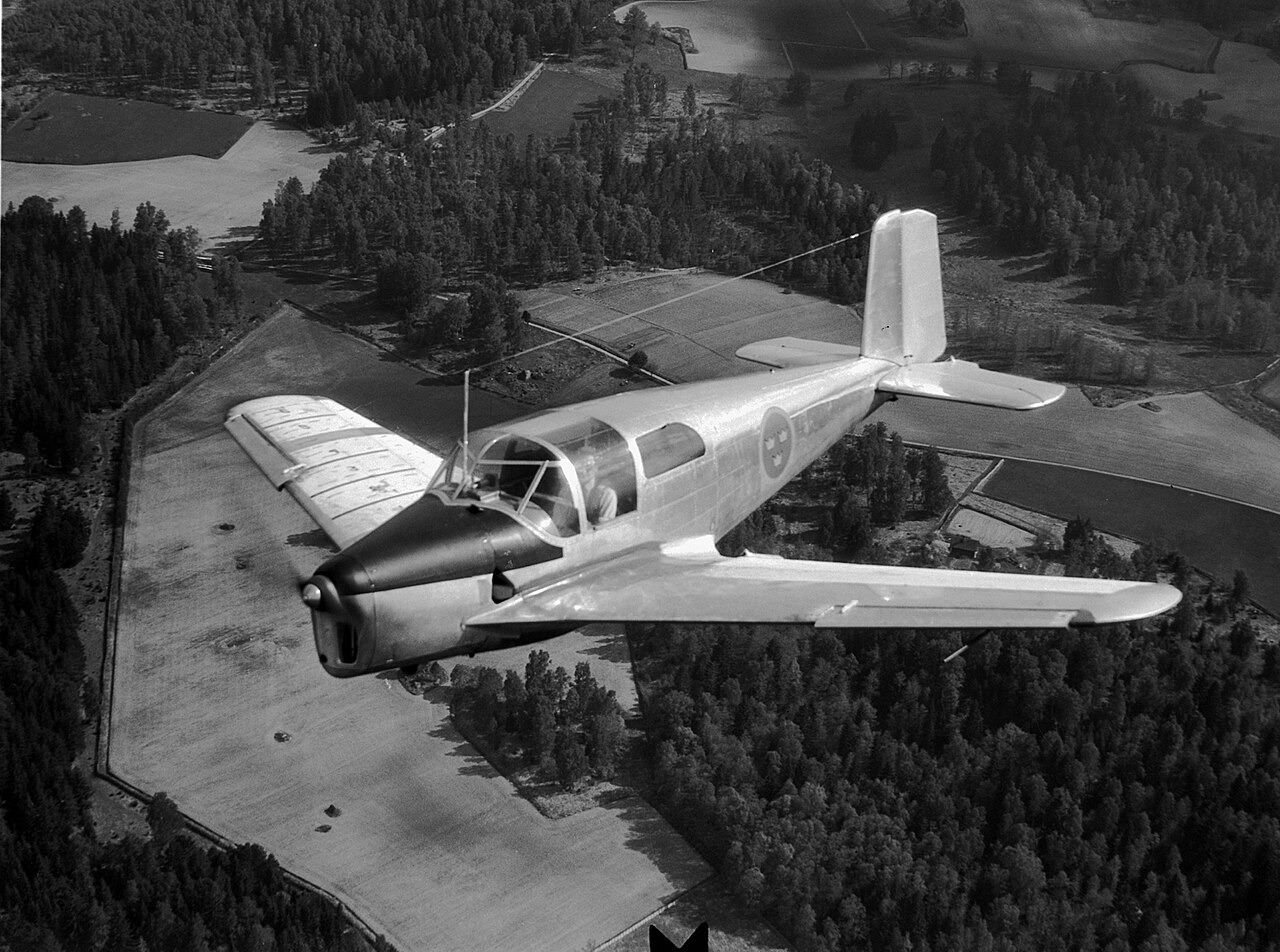
The Saab 201 was an experimental aircraft developed by Saab in 1947 from the prototype Safir to evaluate the flight characteristics of swept wings before the introduction of the Saab 29 Tunnan. It was created by modifying the prototype of the Saab 91 Safir, fitting it with a half-scale version of the Tunnan’s wing. During extensive flight testing, engineers investigated low-speed handling, stability, and the most effective flap settings, providing valuable aerodynamic data that reduced the development risks of Sweden’s first swept-wing jet fighter. After the Saab 29 successfully completed its maiden flight in 1948, the aircraft’s original mission was considered complete.
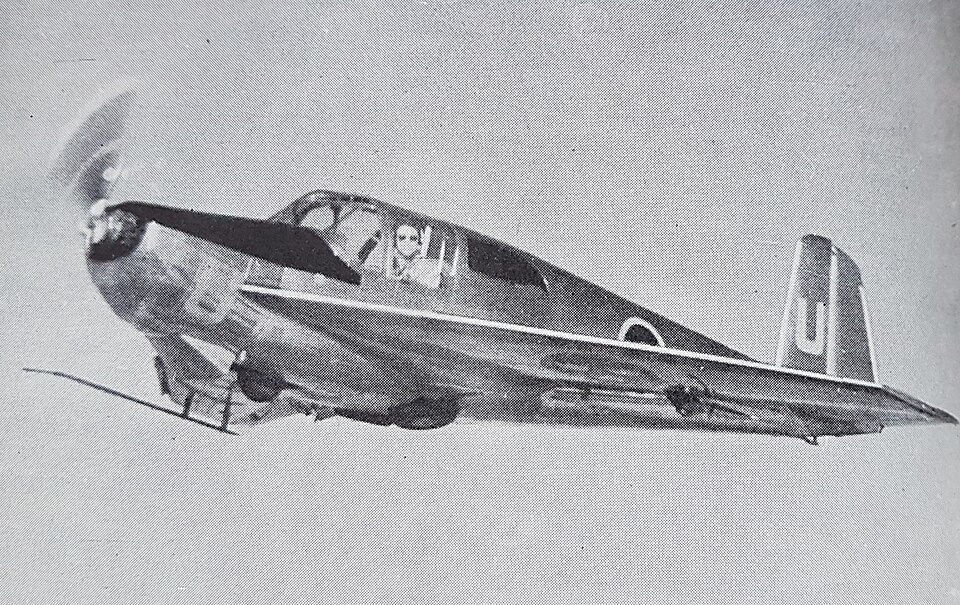
The aircraft was then rebuilt as the Saab 202, featuring a newly designed swept wing with leading-edge slats and other aerodynamic refinements intended for the development of the Saab 32 Lansen. Flight tests focused on validating the Lansen’s wing design and further improving Saab’s understanding of swept-wing aerodynamics. The Saab 202 continued testing until the early 1950s, after which it was retired. Although only a single airframe was ever built, first as the Saab 201 and later converted into the Saab 202, it played a crucial role in the successful development of two of Sweden’s most important early jet aircraft.
Since the Saab 91 was a basic trainer, it wasn’t necessarily designed around armament. Therefore - options were quite limited. However, when Ethiopia placed an order in the late 50s - they had a requirement: The planes needed to be able to be equipped with offensive machine guns for gunnery practice. Saab accepted the deal and started developing the necessary tech and documentation around the mission.
Two browning 7,62mm machine guns would be able to be installed in the wings. Probably as they were cheap to fire and reliable. For this - several things had to be done, which included three Saab 91: Two Sk 50Ds and one Sk 50B. The Sk 50B (91.308) would be the test bench for the installation tests and firing evaluations. Holes were made in the wings and the machine guns were fitted. The more powerful m/22 8mm machine guns were mostly used for the tests with one in each wing - even though the Browning 7.62 was the supposed standard. - This proving that the Saab 91, even though basic had quite an impressive choice of arms.
Around the opening for the guns, reinforcements were made to the wings and the weapons were connected to several control systems within the cockpit. The other Sk 50s - the two Sk 50Ds got Browning machine guns installed and were delivered to Ethiopia
The Sk 50D had wing tanks - which is why the two armed Ethiopian Safirs were Sk 50C/Ds with a special modification which had the fuel tanks in the same configuration as the A/B variants i.e in the body rather than in the wings.
Thanks to all this research and evaluation - every Sk 50 / Saab 91 without a wing tank in the way could technically and practically be fitted with with machine guns.
Several quite reliable sources also state that the Sk 50 was able to carry light or practice bombs as well as rockets. What type of these is unknown.
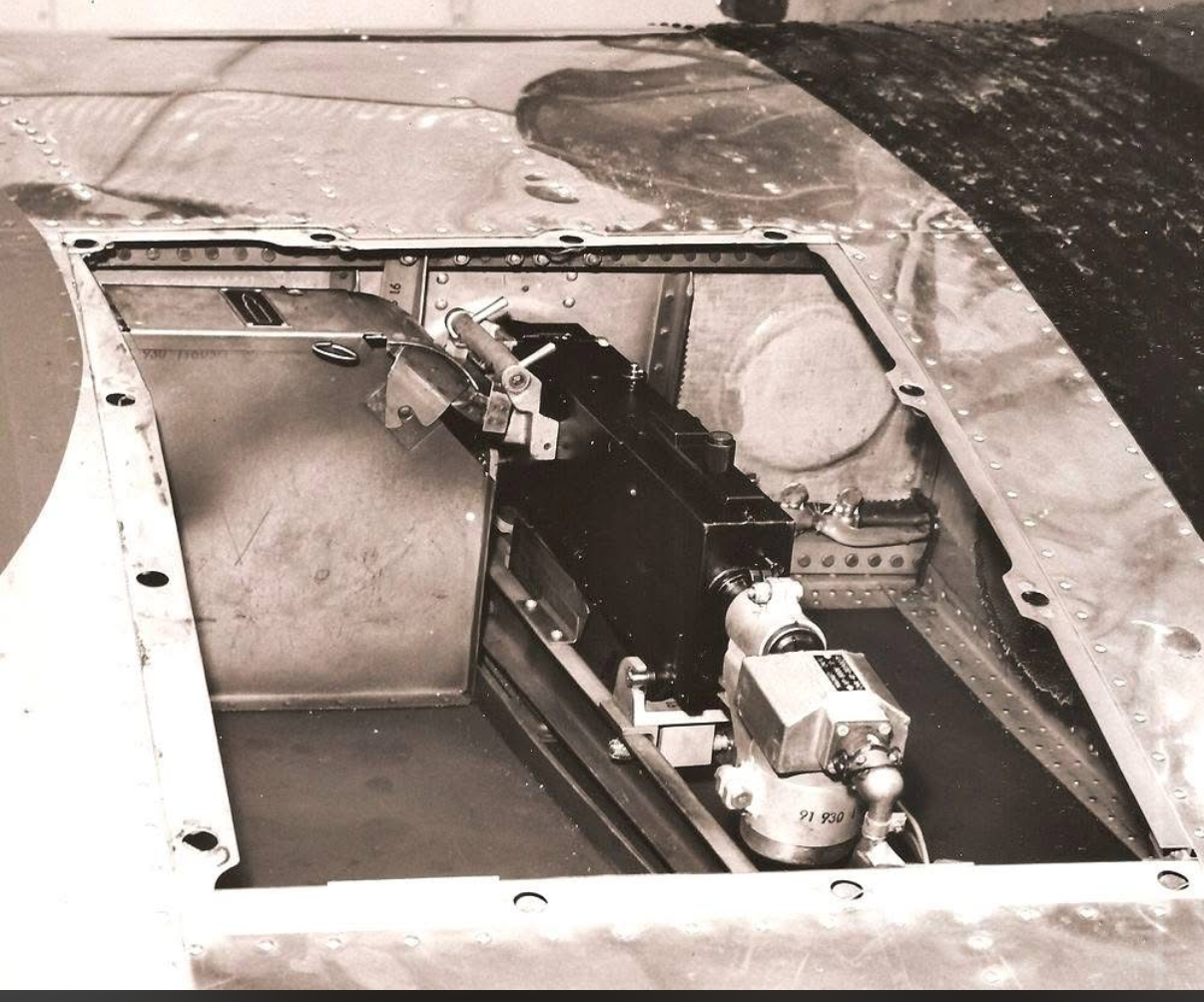
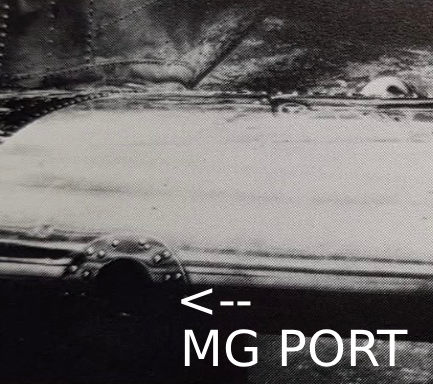
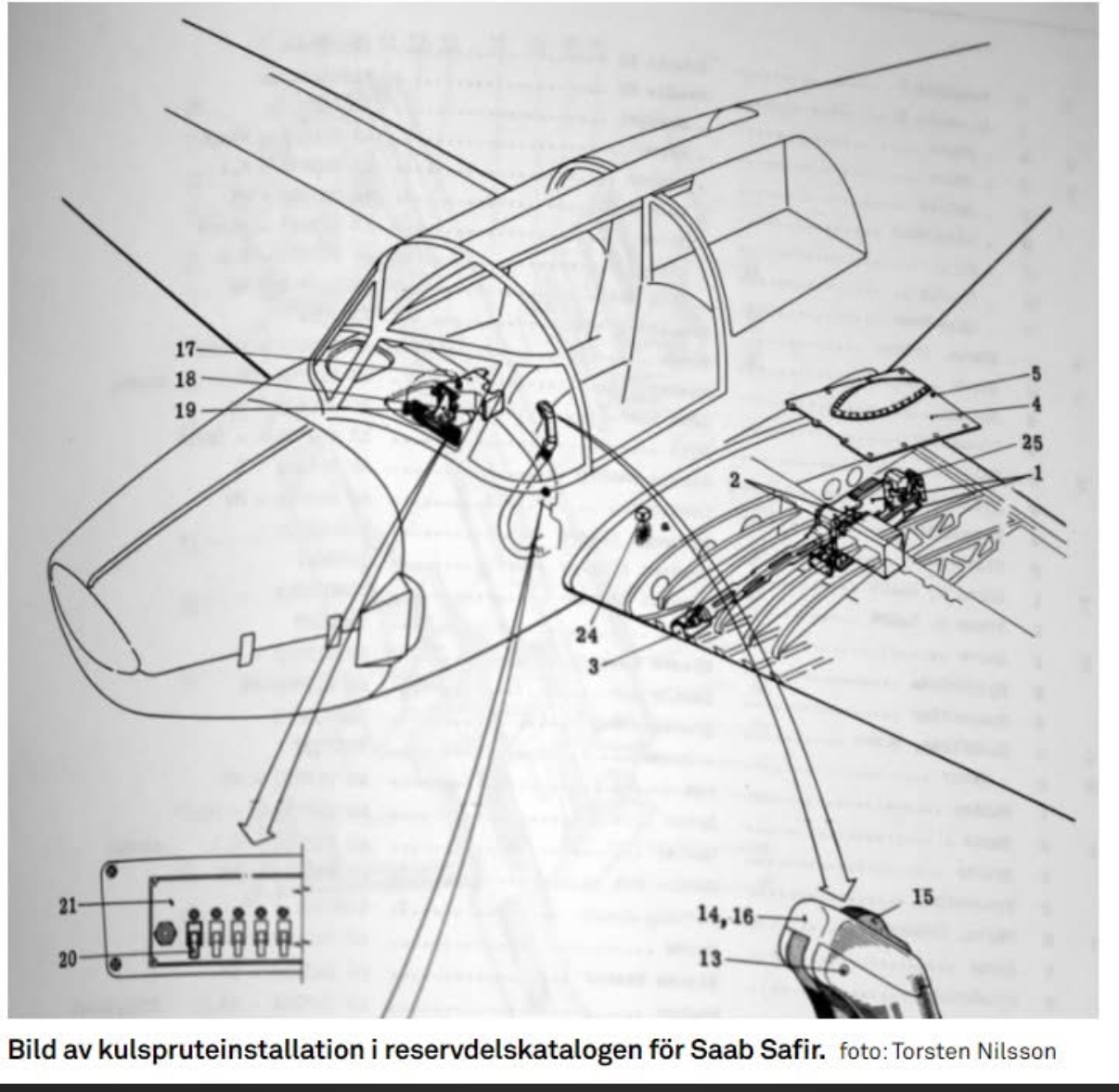
Image credits
-
Saab Republished by F. Lagerquist
-
Saab
Specifications - Sk 50B
Crew: 1-3: 2 was standard
Passenger capacity: 1
Total seats: 3
Length: 7.9m
Wingspan: 10.6m
Height: 2.2m
Wing area 13,6 m²
Empty weight: 740 kg
MTOW: 1075 kg(?)kg
Engine: 1 x 190 hp 6 cylinder flat engine - Lycoming O-435
Max speed: 325 km/h
Service ceiling: 5000m
Climb rate: 5.0 m/s
Wing loading: 73.2 kg/m2
Power/mass 0.1049 kW/kg
Agility: High - Used for aerobatics
Characteristics: Stable - (low winged), easy to fly and forgiving
Armament
- 2x Browning 7.62mm Machine guns
or
- 2x ksp m/22 8mm Machine guns
- Light/Practice Bombs (Type/Quantity: N/A)
- Rockets (Type/Quantity: N/A)
Note: If you have any info at all regarding ground ordnance, please send me a PM or comment! :)
Fun facts:
-
Many Saab 91 Safirs were partly or fully built in the Netherlands, because Saab was operating at maximum capacity during that period.
-
The name Safir holds an interesting story: There was a naming contest internally within Saab, a project director had the name “Safir” come up in a dream. The name won and is why it got the name.
-
The Safir was mainly projected for civilian air travel in the early stages of development.
-
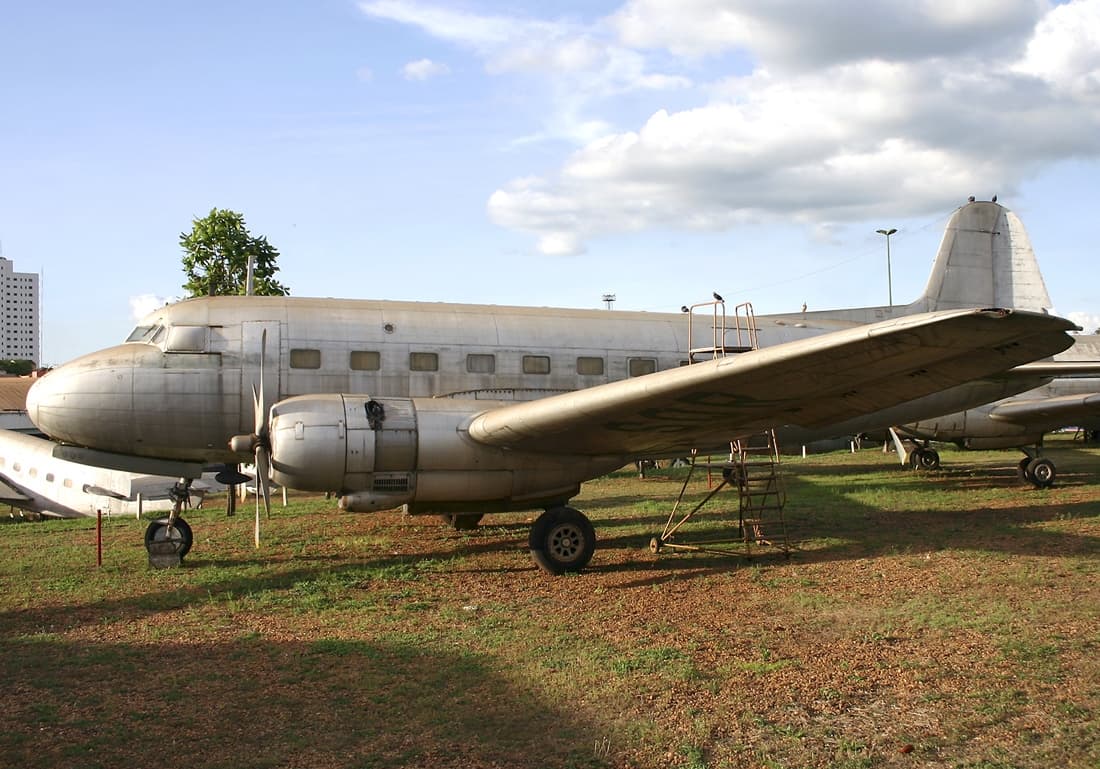
The entire project originated from a single idea, which later branched into two separate aircraft projects: Saab 91 Safir and Saab 90 Scandia, seen below.
-
The Safir is a movie star, playing a big part in the movie Gula Divisionen - which is the Swedish equivalent to Top Gun, but from 1954. Instead of F-14s there are J 29s.
-
The landing gear retracted very fast, under a second but were manually controlled and were spring loaded instead of hydraulic.
-
The Saab 91 Safir is widely regarded as a very safe and forgiving trainer aircraft for its time, with stable handling characteristics and low accident tendencies within its class.
Credits
By Renato Spilimbergo Carvalho - http://www.airliners.net/photo/Saab-90A-2-Scandia/1165914/, GFDL 1.2, File:Saab 90А-2 Scandia.jpg - Wikimedia Commons
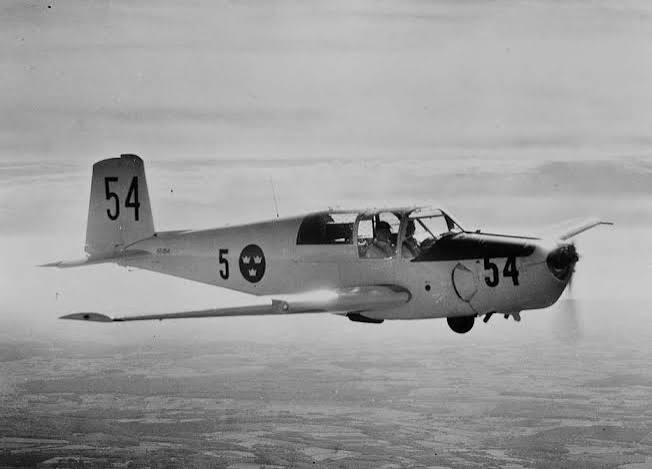
The Sk 50B presents a highly unique addition to War Thunder. As a basic trainer outfitted with light, yet quite powerful offensive capabilities, its modest top speed and nimble flight characteristics position it perfectly as a somewhat competitive yet accessible Rank I, approximately at Battle Rating 1.0 or 1.3. Placed within the Swedish aviation tech tree, preferably as a standard researchable vehicle, it would offer players a taste of Sweden’s foundational post-war aviation history. Its superb aerobatic handling would make it an absolute joy to fly in both Air Realistic and Simulator battles, allowing players to out-turn heavier, less maneuverable early monoplanes, maybe even some biplanes!
It’s in-game role would be hard to specify, as trainers don’t have their own dedicated role - but it would likely be added as a fighter, if Gaijin doesn’t find out what ground attack weapons it had, and how they were mounted. If it gets cleared out, it could also get added as a strike aircraft.
Furthermore, the aircraft brings excellent potential for visual customization and progression. While this suggestion focuses on the Swedish Air Force variant, the inclusion of an Ethiopian camo or even a premium counterpart would highlight the aircraft’s diverse international service. In terms of gameplay progression, the Safir offers an actual modification grind. It could start stock with the standard 7.62mm Browning machine guns, with players unlocking the harder-hitting 8mm ksp m/22 machine guns as an upgrade - preferably equipped through the load out menu. If further documentation ever comes to light regarding its light bomb and rocket loads, it could even serve as a light, high-precision close air support (CAS) option in low-tier Ground Realistic battles, providing a Swedish early-game lineup.
Sources
Saab
Kalmar Läns museum
Flygvapenmuseum
Historien om ett skolflygplan
https://svfplhist.home.blog/sk-50-tp-91-historik/
[Saab 91 Safir – Wikipedia
](https://sv.wikipedia.org/wiki/Saab_91_Safir)[https://www.secretprojects.co.uk/threads/nihon-hikoki-x1g3.33159/
](https://www.secretprojects.co.uk/threads/nihon-hikoki-x1g3.33159/)[https://www.globalsecurity.org/military/world/europe/j-91.htm
](Saab J-91 Safir)SAAB 91 Safir – All Aero
Continent Ablaze: The Insurgency Wars in Africa 1960 to the Present 185409128X, 9781854091284
[Making sure you’re not a bot!
](Making sure you're not a bot!)[DigitaltMuseum
Also a huge thanks to the dedicated Saab 91 Facebook group. Thanks to all those kind people who share their knowledge and republished photos.
Did you find anything that looks wrong? Don’t hesitate to DM me and I’ll fix it! If you have some more info or specifications to share, please do so in the comments.
- Yes!
- No.
-
1.0
-
1.3
-
1.7
-
2.0+
-
Other/no