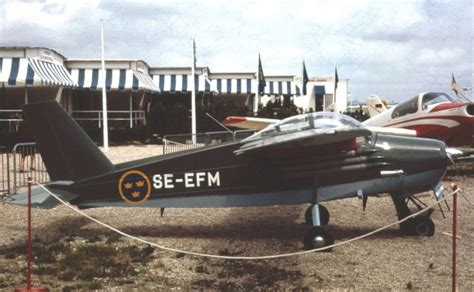
Malmö Flygindustri is a brand name rarely heard in conversations about military aviation - War Thunder Forum is no different, except for the MFI-17, that was quite recently passed to the devs.
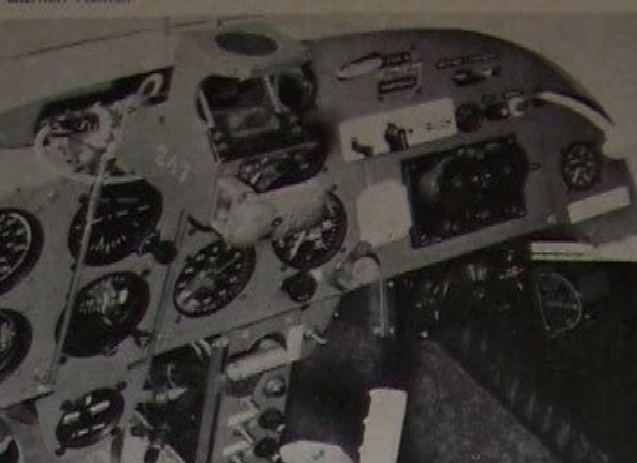
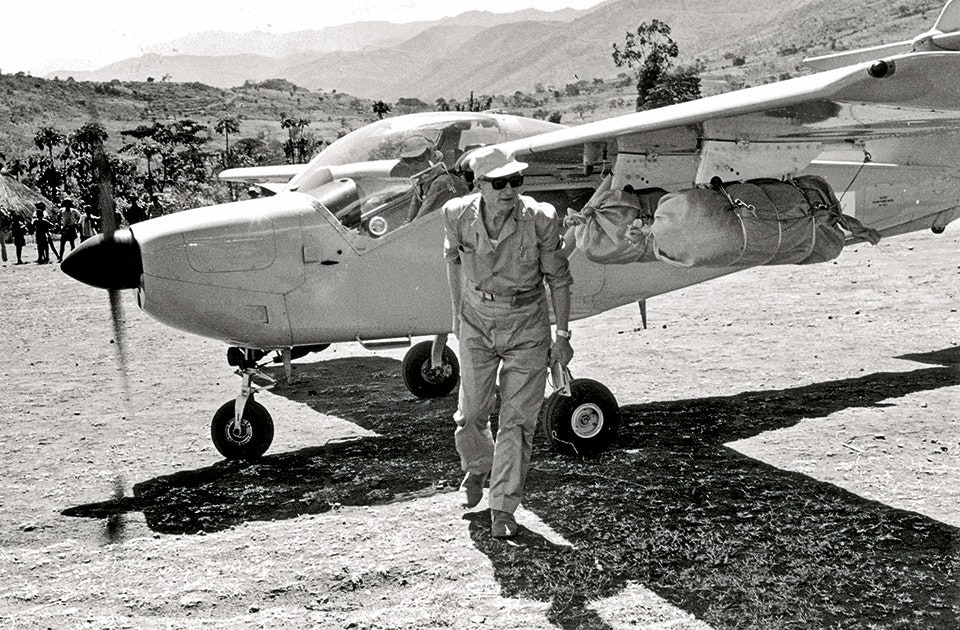
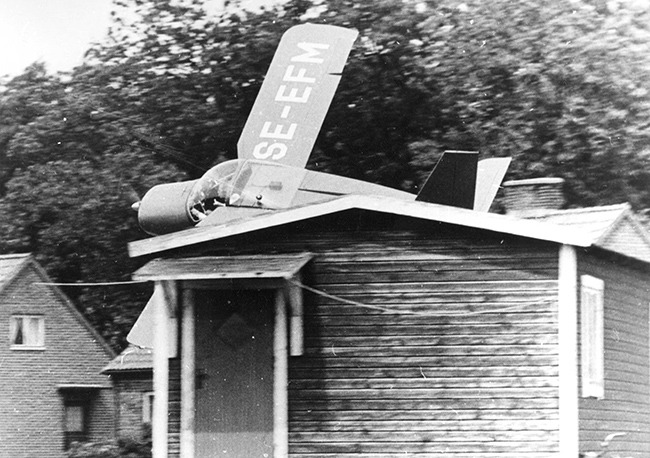
The MFI-9B is a very basic, very light trainer and COIN-aircraft with a very unique history. Its story began in the 1950’s as an amateur project as the BA-7, built by Björn Andreasson in the USA, and was later fully developed in 1961 into the MFI-9 by Malmö Flygindustri in Malmö - Sweden.
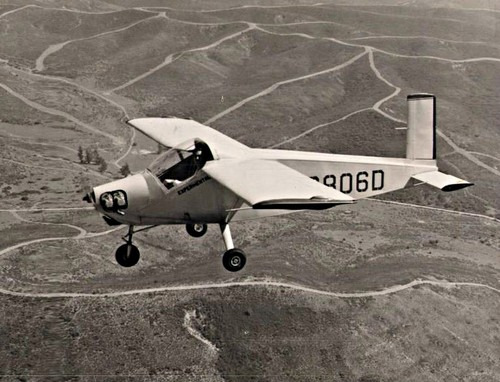
Read more and picture credits
Björn Andreasson skriver om sin BA-7 1959 - Lae - inte bara en stad på Nya Guinea
MFI-9, also known as MFI-9 Junior had a bigger cockpit and a more powerful engine than the BA-7. The MFI-9 family was expanded in 1963 when the MFI-9B Militrainer was built - a trainer and supporter that could be outfitted with hardpoint pylons with up to an estimated load of 100 kg per wing.
The MFI-9 was also built under license by Bölkow, under the name Bo 208 Junior. These versions notably had a 3-bladed propeller instead of the standard, 2-bladed ones and were only built with civilian aviation in mind.
At first, the Swedish Air Force showed a certain interest in these ultra-light attack platforms, but they later concluded that an ultra-light attack platform wasn’t really needed in the SwAF. However, in the 1960’s when the Swedish Defence Materiel Administration (FMV) announced its intention to replace the Air Force’s Sk 50 Safir trainer and the Army Aviation’s FPL 51B artillery spotting and forward air control aircraft, a flood of manufacturers responded with proposals. Once the bidding period closed, two aircraft were announced as the finalists: The Scottish Aviation Bulldog, and the MFI-15 - different and larger, but based, on the MFI-9. After a lot of wrangle (that you can read more about in the link), the Bulldog was chosen as the winner - with the designation Sk 61 Bulldog.
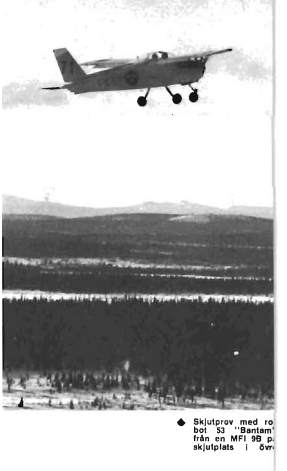
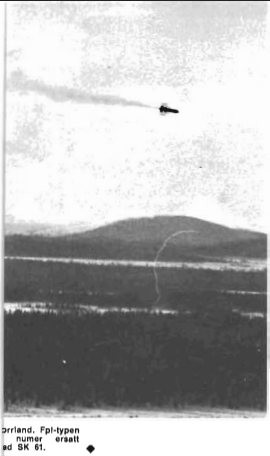
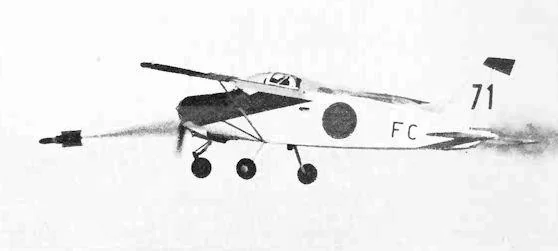
During this process, 10 MFI-9Bs had been leased by the Swedish Air Force for evaluation purposes - to find out if MFI was capable of building a potent enough trainer. During this period, the MFIs were successfully tested and regularly armed with BANTAMs, rockets and gun pods - which led to the successful implementation of BANTAMs on the Sk 61B
Combat record and more history
Combat record? I thought this was the jet age… and wasn’t Sweden one of the most neutral nations in the World at this point? You’d be correct on both points. However, a humanitarian crisis was developing at this point in Africa. And one man wanted to stop that.
The Biafra–Nigeria conflict, also known as the Nigerian Civil War, took place between 1967 and 1970. It began when the southeastern region of Nigeria, dominated by the Igbo ethnic group, declared independence as the Republic of Biafra.
The roots of the conflict lie in ethnic tensions, political instability, and colonial legacies left by British rule. After Nigeria gained independence in 1960, rivalry between the country’s major ethnic groups escalated. A series of military coups in 1966 and violent pogroms against the Igbo population in northern Nigeria led many Igbos to flee back to the southeast, increasing demands for self-determination.
In May 1967, Biafra declared independence. The Nigerian federal government responded with military force, aiming to preserve national unity. The war quickly turned brutal. Nigeria imposed a blockade on Biafra, cutting off food and medical supplies. This led to a catastrophic famine, in which an estimated one to two million civilians, mostly children, died from starvation and disease.
International involvement was limited and divided. The Nigerian government received support from countries such as the United Kingdom and the Soviet Union, while Biafra gained sympathy and some backing from France, and humanitarian organizations. Images of starving Biafran children shocked the world (and Sweden, importantly) and played a major role in the development of modern humanitarian aid movements.
In January 1970, Biafra surrendered.
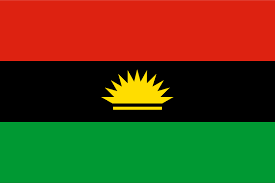

Notable is how inferior the Biafran military was, compared to the Nigerian’s who had modern aircraft, such as the MiG-17’s and Il-28’s, while the Biafran’s flew one disarmed, but radar-outfitted B-26, along with a DC-3 which utilized homemade bombs made from oil barrels.
This conflict, while still ongoing resulted infuriated the Swedish pilot Carl Gustaf von Rosen.
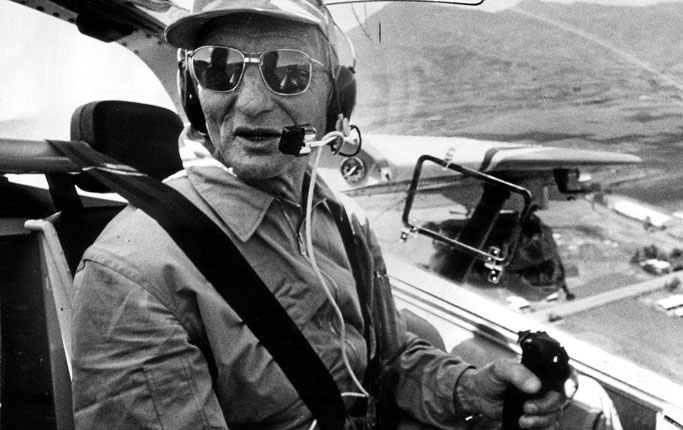
Von Rosen was born in 1909 and nephew to the political opposite uncle: Hermann Göring. Unlike Göring, Von Rosen was known for his humanitarian efforts through the red cross and the UN. Additionally, he served KLM and the Swedish Air Force and also gifted three aircraft for the Finnish Air Force during the Soviet invation 1939. One of which was a DC-2 converted into a bomber.
Von Rosen knew from his own experience that smuggling aid by land into Biafra was practically impossible because of the Nigerian blockade, and runways used for taking in aid were additionally destroyed. Larger aircraft dropping aid were vulnerable, and faster aircraft, too fast. “Maybe the solution was to head the other way and go small and slow. Von Rosen made the suggestion to the Biafran high command that perhaps they should use what he dubbed as “MiniCOIN” – Miniature Counter Insurgency aircraft.” (militarymatters.online)
What this resulted in was the proposal of ordering small training aircraft that could be converted to light attack platforms. His proposal was approved, and he aquired five MFI-9Bs with his own money.
These aircraft were brought to Biafra and repainted with suitable camouflage. The model overall was perfect for the job. It was small enough to not get hit, slow enough that their missions could be carried through and stable enough to easily hit their targets. Additionally, the visibility, and STOL-capabilities were also excellent.
Fun fact: It is said that France and Tanzania’s government were the final reasons for Von Rosens successful plan actually succeeding - aiding through transport and intelligence.
Except for the camouflage, they were also equipped with four new pylons and 68mm rockets were added to the newly acquired arsenal. But this arsenal needed pilots. Von Rosen couldn’t fly all five aircraft by himself. So he recruited ground crew and seven pilots. Four of them being Swedes, and three of them being of Igbo origin. The newly founded branch of the Biafran Air Force would call themselves, and their planes the Biafran Babies - named after the starving children.
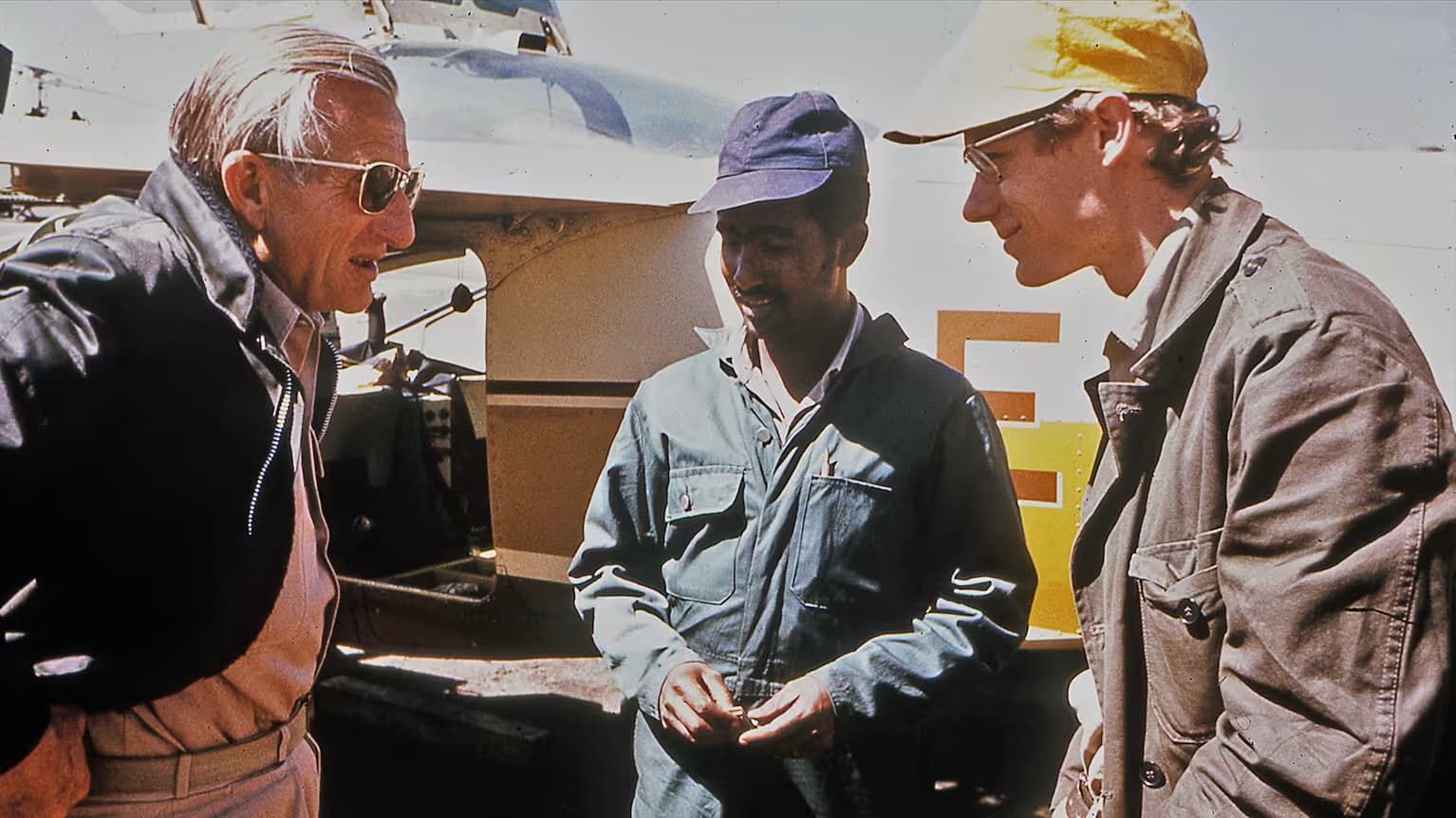
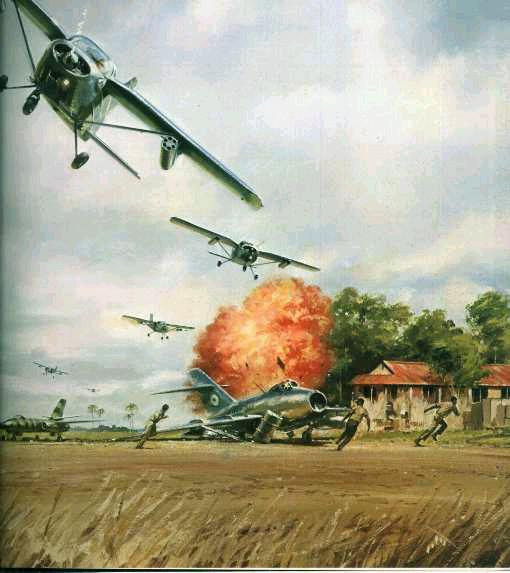
In May 1969, the first mission was completed. A strike mission, just after noon targeting one of the main bases: Port Harcourt. The five MFI-9Bs flew close to the tree tops, utilizing the classic Swedish tactic of flying not more than a few meters over the tree tops. Ironically, the first pieces of equipment to attack the Biafrans, and the first to attack the Nigerians were both Swedish made. Bofors 40mm anti-aircraft guns were the first to get hit by the MFI-9s. Both made in Sweden.
Allegedly Von Rosen nearly got hit by a 40mm shell, and the nearby force caused him to vear, nearly hitting the ground. Von Rosen was thankful for the toughness and agility of the MFI. As the MFIs neared their main targets, they fired their rocket pods and successfully took out two MiG-17s and two IL-28s before going home.
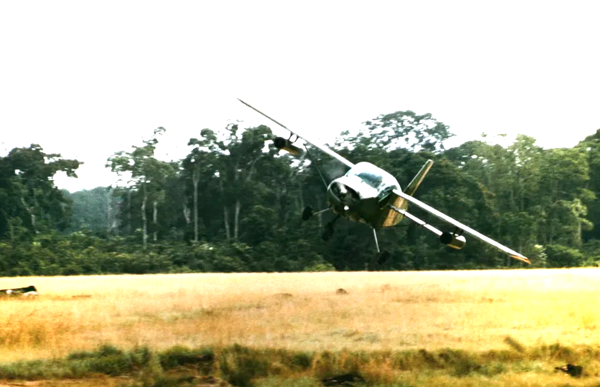
The upcoming attacks were too, successful, taking out or damaging multiple airfields and jets. One MiG-17 was taken out while taking off to attack the attacking MFIs.
The only aircraft ever with a double ground-to-ground enemy kill
During one of the attacks, one of the Swedish pilots briefly lost control of the MFI and landed on the runway of the enemy base while attacking. While still on ground, the MFI fired rockets on two parked aircraft - resulting in a double ground-to-ground-kill.
Unfortunately, this highly effective tactic wasn’t effective for so long. After a few attacks, the Nigerian bases were basically on 100% readiness, awaiting a strike from the Biafran babies at any moment. Thus, the Biafran Babies switched tactics. Instead of going for airfield strikes, they were now focusing on ground targets, and other strategic, lesser defended targets such as powerplants.
Pilots additionally refer to the MFI as sturdy and durable. Understandable with the fact in mind that they often came back with bullet holes, but were swiftly repaired.
Except for military strikes, the Biafran Babies also loaded large sacks filled with food and other types of aid under the hardpoints, dropping them on villages.
MFI-15/17
Read more in this fantastic text, or watch it through the video format.
Type: Mini COIN, Trainer, Ultra-light, Heli-hunter
In active duty: 1966-67 (Sweden) 1969 (Biafra)
Manufacturer: MFI (Malmö Flygindustri)
Origin: Sweden
Length: 5,8 m
Wingspan: 7,4 m
Engine: Rolls-Royce Continental O-200-A
Engine power: 100hp
Top speed: 240 km/h
Max alt: 4 500m
Climb rate: 500m/min
Empty weight: 340 kg
Max take off weight: 575 kg
Air-to-air combat record: 0
Air-to-aircraft on ground combat record: 6-10+
Ground-to-ground combat record: 2
Losses: 0
Other features: Could be equipped with pontoons
Armament
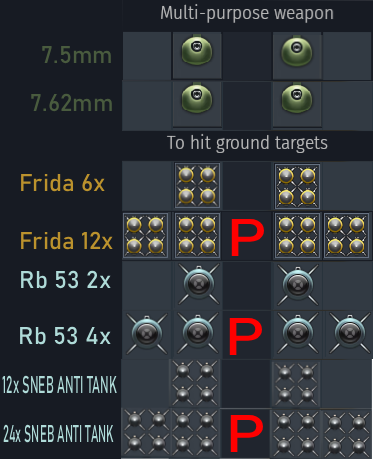
Note! The MFI-9 was technically capable of carrying up to four weapon groups, especially since the Rb 53 didn’t even need pylons to be mounted. But there’s little proof for this. Therefore, the armament where four hardpoints are in use are marked with a red ‘P’ - to show that they are potential armament choices, and not a part of the suggestion itself.
2x 7.5mm gun pod
2x 7.62mm gun pod
4x-6x ARAK (75mm Frida)
12x SNEB 68 mm (2.68") - Anti-tank rockets in pods
2x Rb 53 BANTAM MCLOS/wired anti-tank missiles (1 was standard)
Unconfirmed armament - not a part of the suggestion
2x 7x rocket Abel pod
Fun fact 2: The MFI-9s nose wheel was slightly turned to the right to counter the engine torque twist.
The MFI-9B Militrainer would be one unconventional aircraft, if added to War Thunder. In practice, it could be really scary, even without the missiles. Like a low tier Strikemaster. But there would be a major problem. Since the missiles are very potent when fired at a pretty close distance and at low speed. The best way to solve that would be to add TWO versions of the same aircraft. One version at low-tier would be a strike aircraft, perfect for rocket-torpedoing at a BR of 2.3 (GRB) and 1.3 (ARB) offering good survivability, agility and weapons, for the tradeoff of a low speed. This version would also realistically be named “MFI-9B” or “MFI-9B Junior”.
The other version, armed with the missiles would sit at 6.7 (GRB) and 1.7 (ARB) and it would be named “MFI-9B Militrainer”. This solution would be decently easy to implement, since they are copy-pastes of eachother. It would additionally offer a simpler, more straight forward experience for player while also giving them more planes in quantity to unlock and experience.
…would be to add just one version with only the missiles, and just split the BRs - 6.7 GRB and 1.7 ARB. This solution would also be decently easy to implement as well, but harder to understand for the playerbase.
What do you think?
- Two planes (one with, and one without MSL) recommended
- One plane with missiles - split BRs
- No/Don’t care
Note that the best thing would be to have a separate COIN/Ultra-light attack tree/sub-tree, or to add it to the heli-tree. But currently, that is unrealistic.
The standard paint-scheme would be that of the Swedish Air Force (FC-department)
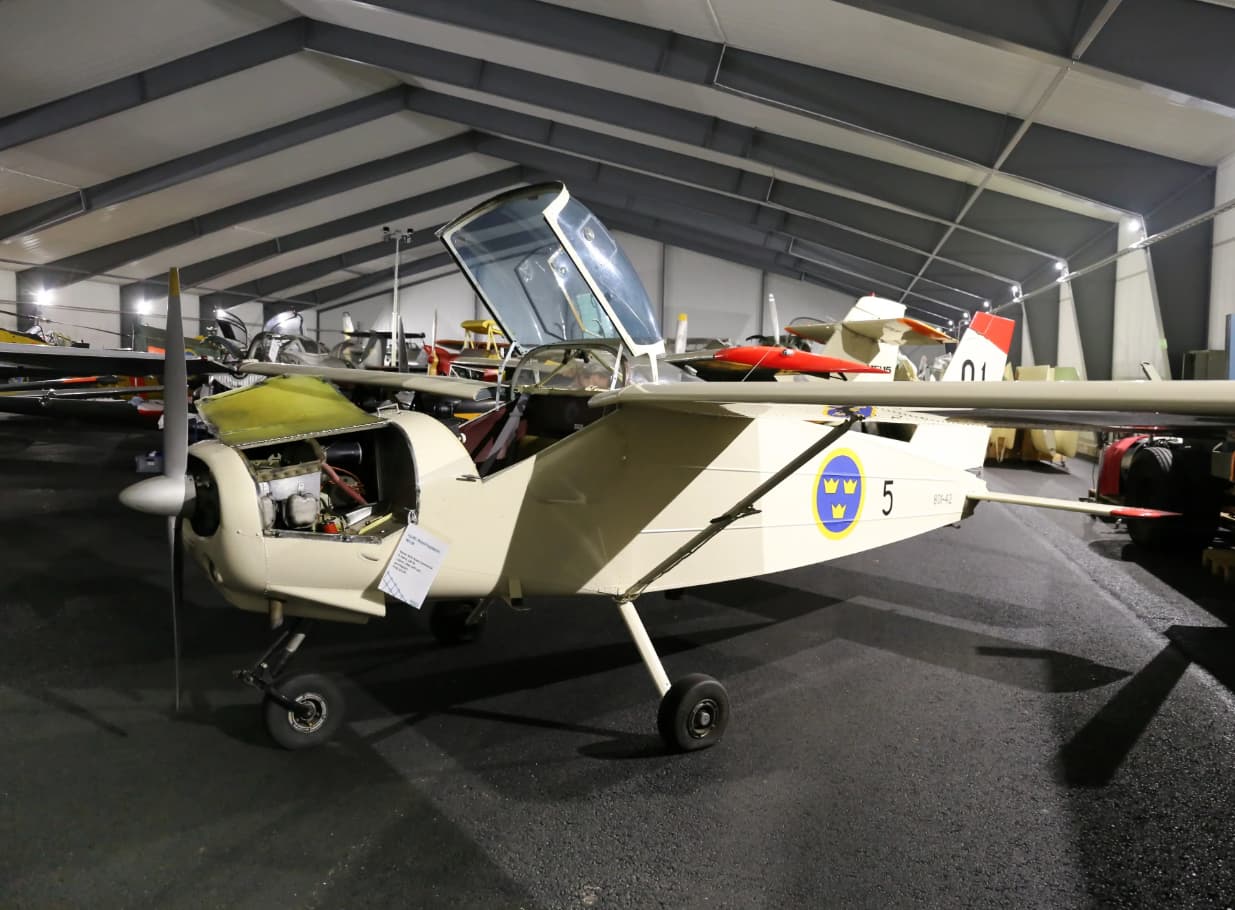
Picture: Flygvapenmuseum: Flygplan -Flygvapenmuseum / DigitaltMuseum CC by 4.0 - cropped.
The unlockable (e.g 100 kills) livery could be the camouflaged one.
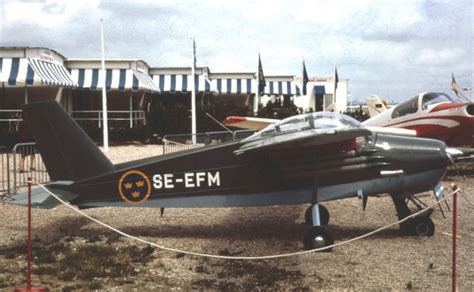
Another unlockable livery (e.g destroy an aircraft with a rocket) would be the classic, iconic and historical Biafra Baby livery.
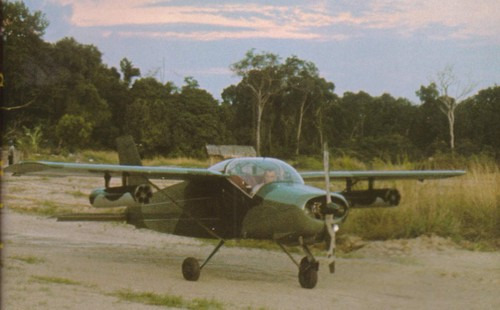
- Yes!
- No.
Sources
Flygvapennytt: https://www.aef.se/Flygvapnet/Tidskrifter/FV_Nytt/Flygvapennytt_1972-2_och_3.pdf
Flygvapenmuseum
Flygplan -Flygvapenmuseum / DigitaltMuseum
Malmö MFI-9 Junior - Wikipedia
Malmö flygindustri MFI-9 – Wikipedia
Fpl 801 MFI-9B Militrainer
Malmö Flygindustri MFI-9B. - LUFT-farkoster - SoldF.com Forum
Flygplan -Flygvapenmuseum / DigitaltMuseum
Making sure you're not a bot!
Malmö MFI-9 MiniCOIN; The Mercenary “Biafra Babies” - Forgotten Aircraft - Military Matters
Hanssin-Jukka - Teknos
Björn Andreasson skriver om sin BA-7 1959 - Lae - inte bara en stad på Nya Guinea
https://www.youtube.com/watch?embeds_referring_euri=https%3A%2F%2Fmilitarymatters.online%2F&v=Dq_yBd7v1AQ
