- Yes
- No
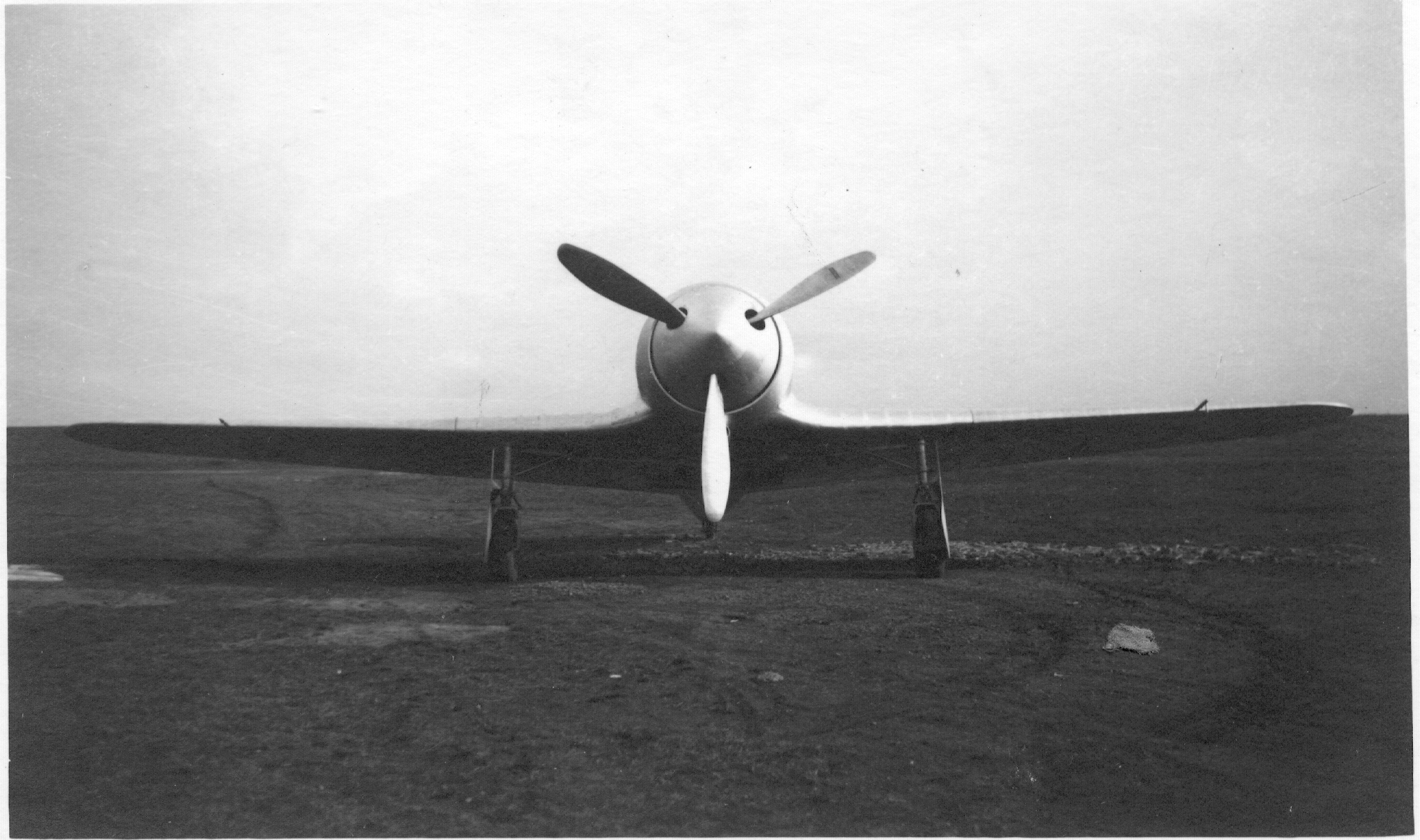
The story of the Renard R.37 begins in late 1936, when Alfred Renard started working on a new fighter for the Belgian Air Force, which was still equipped with the utterly obsolete Fairey Fireflies in its fighter squadrons.
As a private venture with no funding from the government, Renard completed his design in mid-1937, and the prototype, the R.36, first flew on November 5 1937.
With extremely promising performances, vastly surpassing all French fighters of the time and being a very serious competitor to the likes of the Hawker Hurricane, it caught the attention of the French, the Bulgarian, especially the Chinese, and lastly, somewhat unenthusiastically, of the Belgian Air Force.
However, in order to attract foreign orders, Renard had to secure an order for Belgium itself as a guarantee, but as the top brass of Belgian aviation viewed Belgian designs with distrust, this would prove extremely problematic…
As the R.36 prototypes was undergoing flight tests, Renard was studying and designing a few more variants for the export market and other purposes; the R.36 B would be a two-seater variant, the R.36 E would be a training version with a weaker engine, and a few engines were considered to power them all, including the Gnome-Rhône 14N21!
The R.36 version powered by the Gnome-Rhône engine, initially designated the R.36-14N in reference to the engine, would end up being built at the same time as a second variant equipped with a Rolls Royce Merlin II, the R.38 (or R.36-M initially).
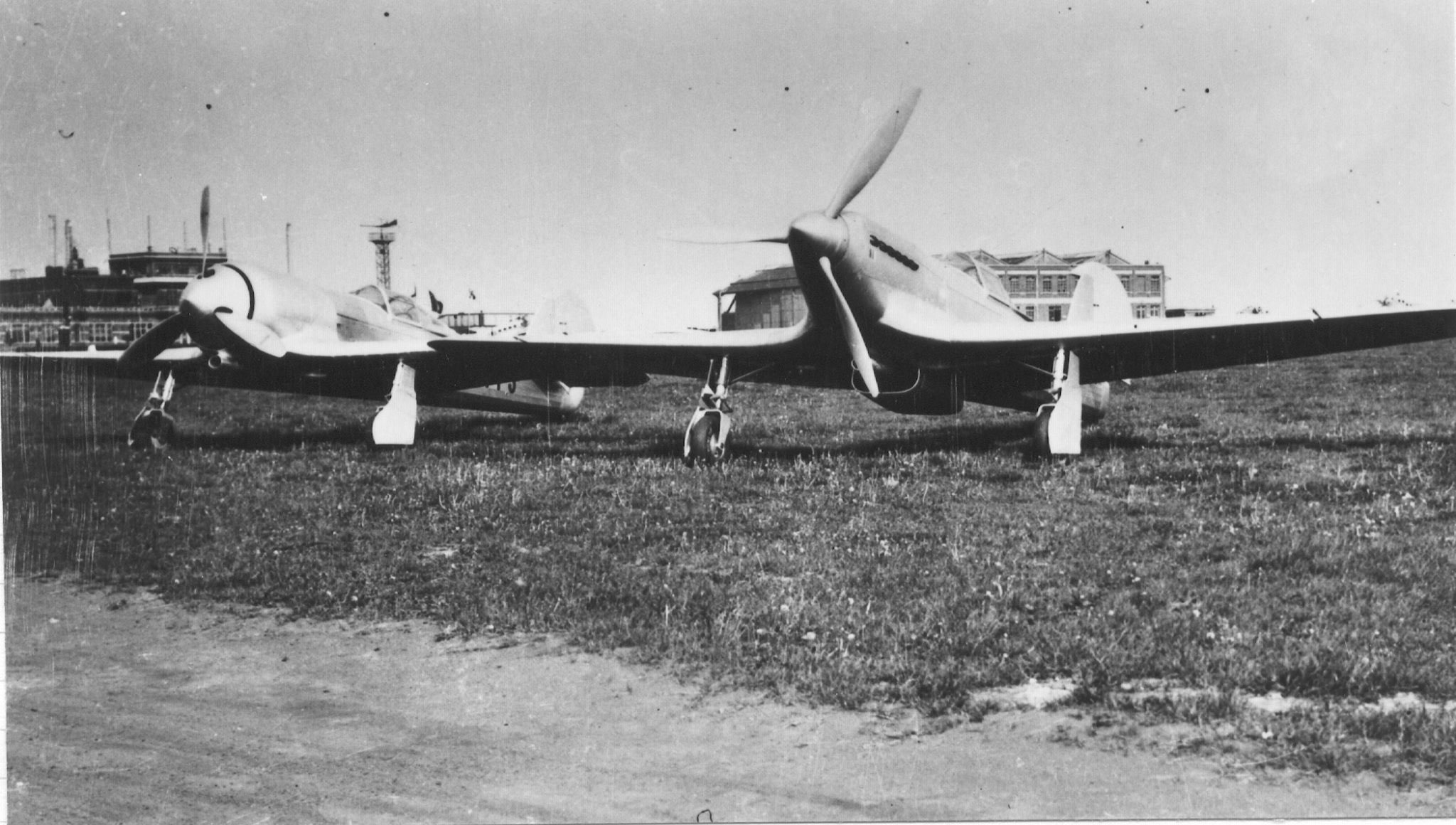
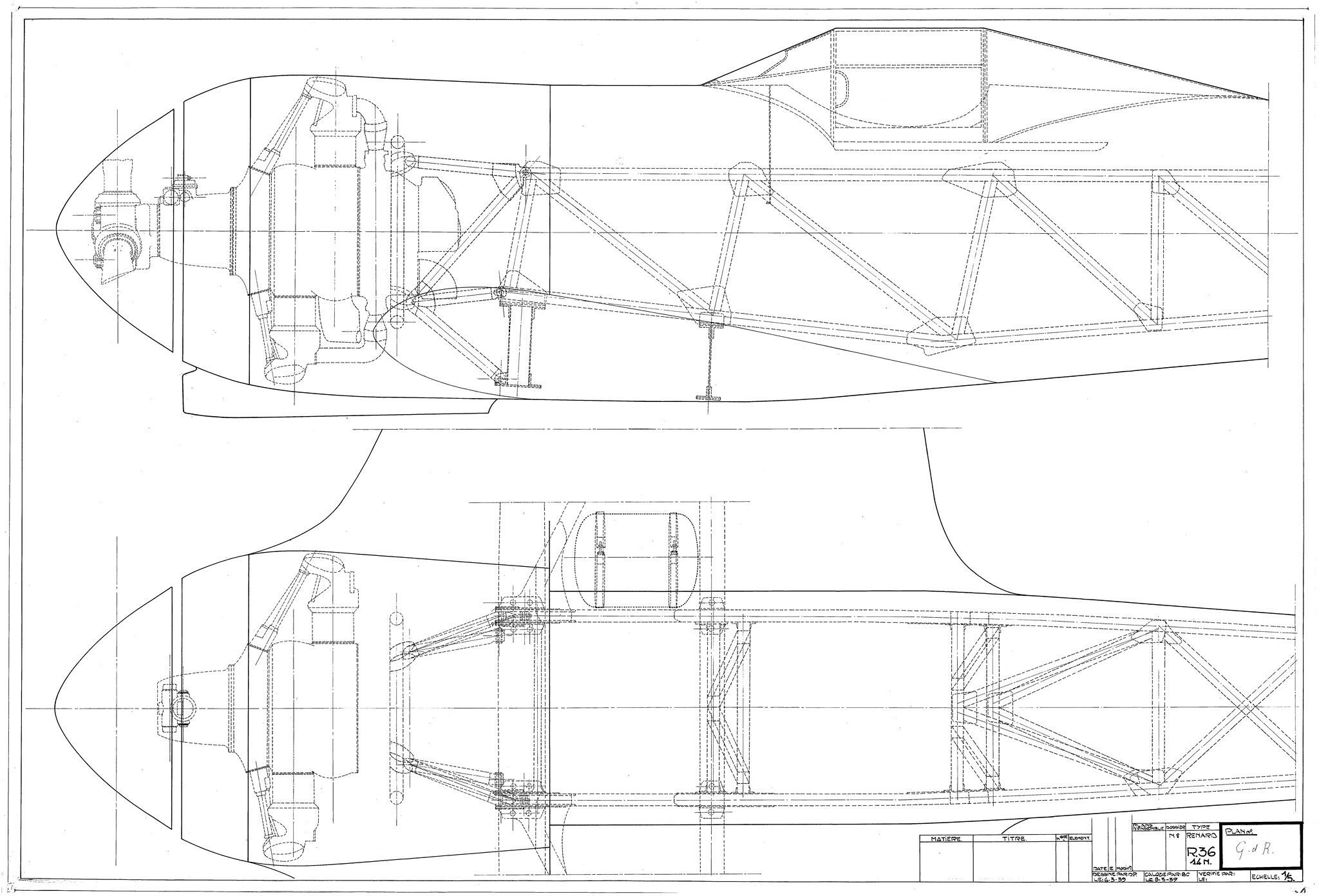
The R.37 featured a very close-cowled engine with little room for air to pass through, possibly leading to cooling issues but also improved aerodynamics over other radial engine designs.
The aircraft, despite its big nose, was projected to have a higher top speed than the R.36 thanks to the powerful engine, however, as the radial did not allow a cannon to be mounted in the nose contrary to the Hispano engine equipping the R.36, only the four wing-mounted machine guns remained, although they could be upgraded by two 13.2 mm FN machine guns.
Work on the R.37 progressed slowly however, as concerns over cooling and availability of the engine surely played a part, but also because the R.38, powered by the Merlin engine, proved to be a lot more promising.
Those issues around cooling also prompted Renard to consider a replacement of the engine by a Pratt & Whitney Twin Wasp, and this configuration was proposed to the Chinese to no avail…
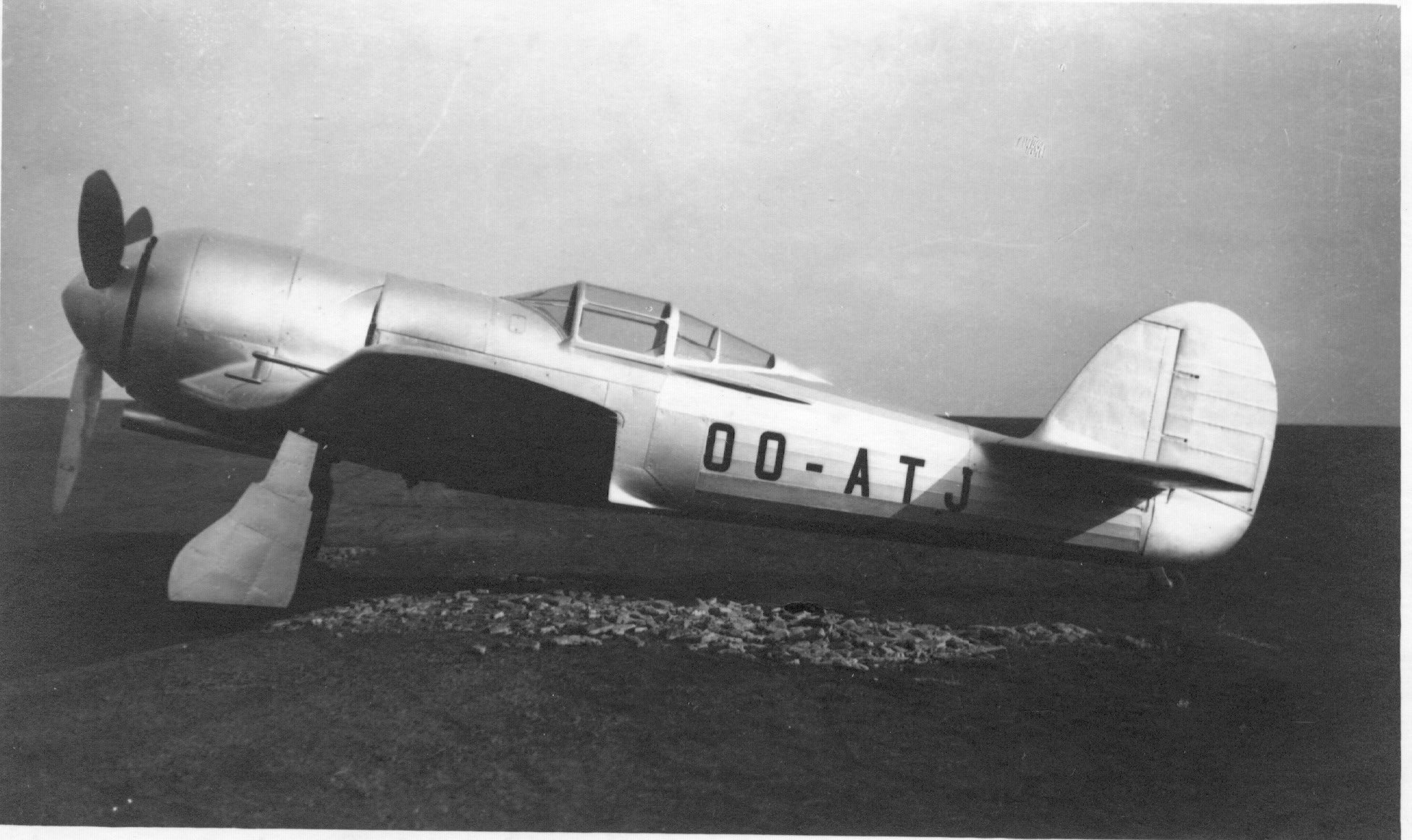
The story of the Renard fighters ends tragically; the R.36 crashed in January 1939, causing the cancellation of the order by the Belgian Air Force in favor of the Hurricane, causing foreign governments to lose interest in the different variants, as they would have to pay full price with little guarantees due to the lack of economies of scale.
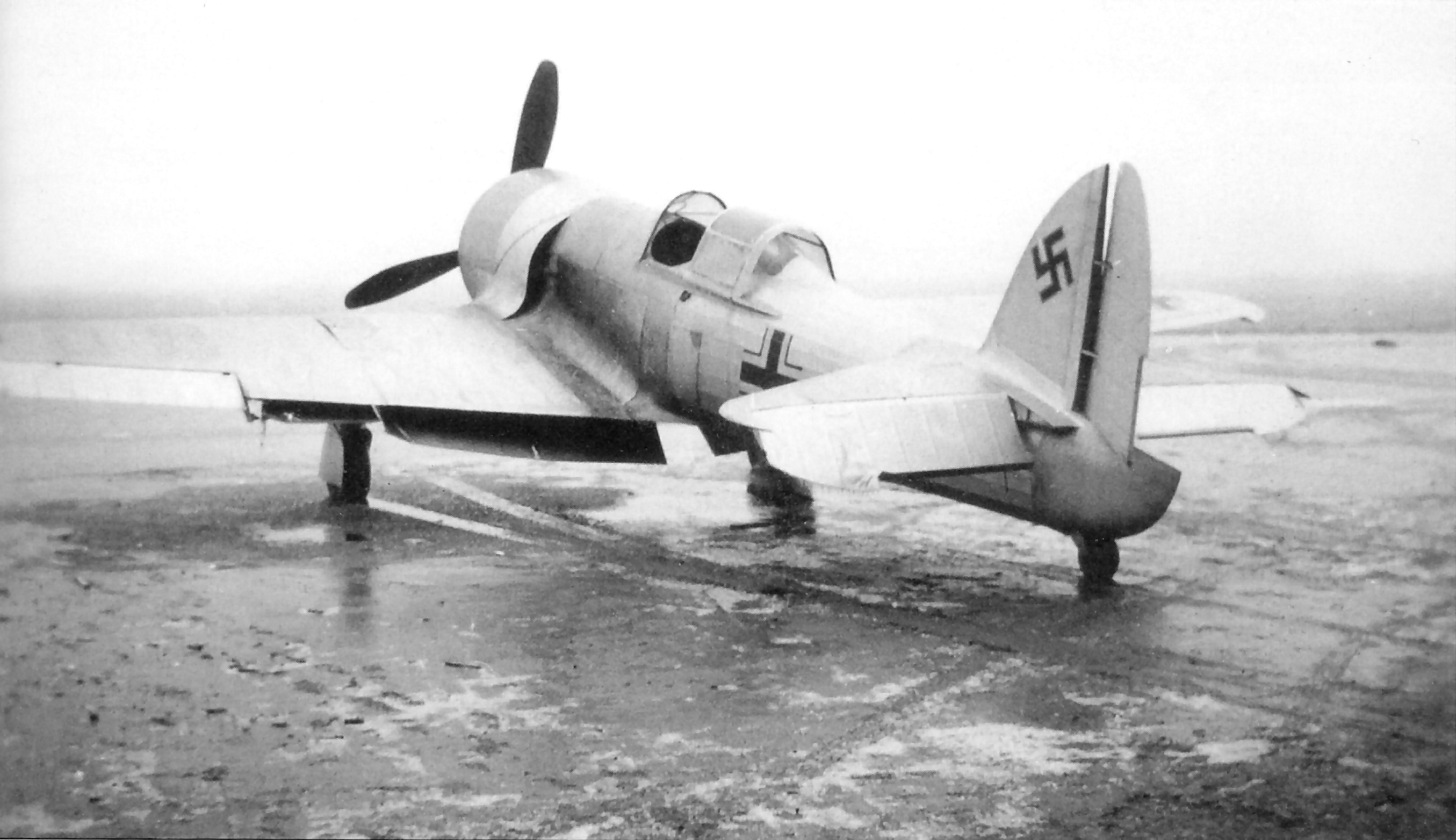
The Renard R.37 ended up abandoned by the time of the German invasion in May 1940, and it hadn’t even flown once by that point. While the R.38 was evacuated to Bordeaux, the R.37 was left in a hangar in Evere when the Germans arrived, where they captured it and a German flew it back to Germany, unknowingly performing the R.37’s very maiden flight!
Engine: Gnome-Rhône 14N21 (1050 hp)
Wingspan: 11.64 m
Length: 8.4 m
Height: 2.9 m
Wing area: 20 m²
Empty weight: 1810 kg
Loaded weight: 2460 kg
Wing loading: 123 kg/m² - Est. Turn time: 15 s
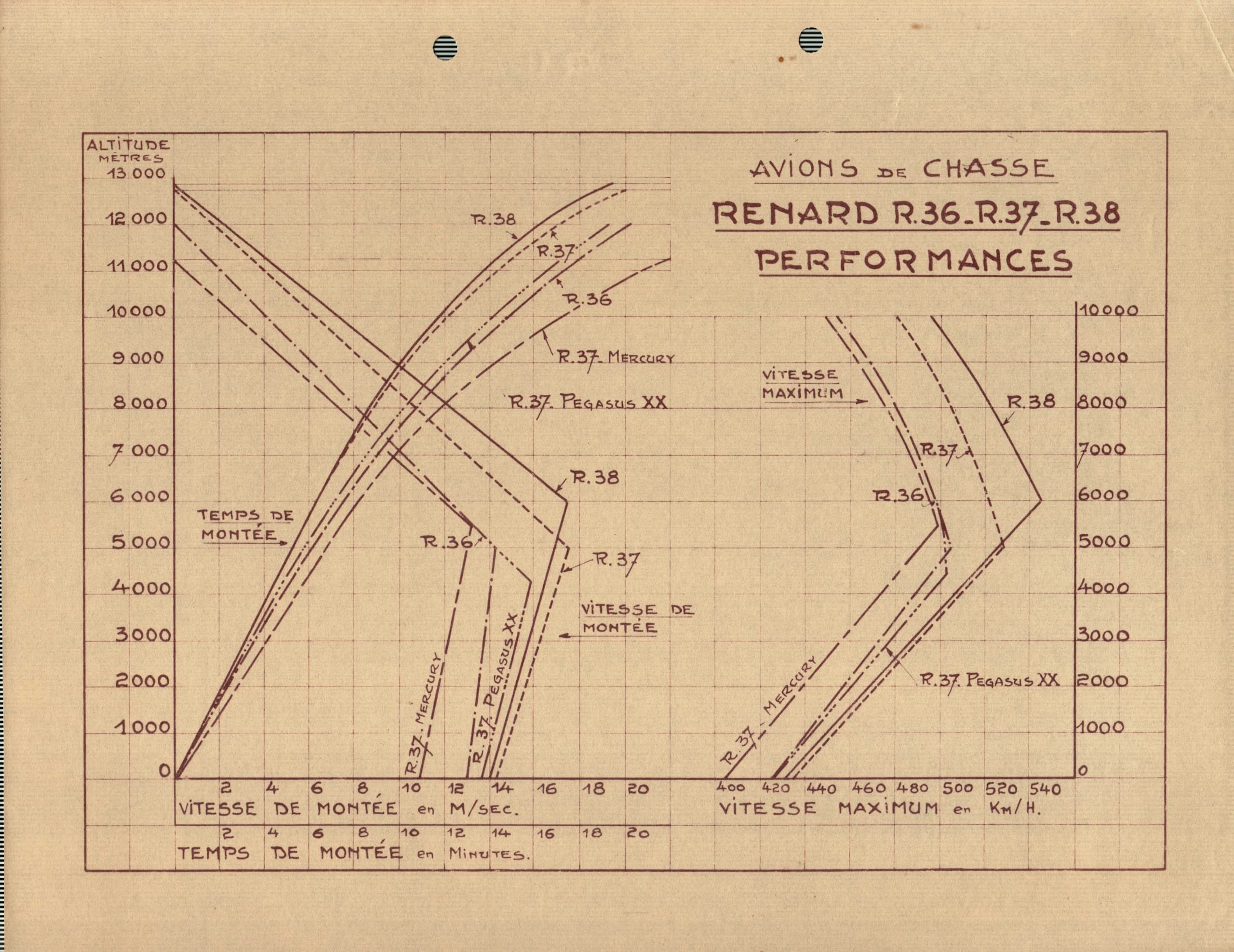
Max speed: 527 km/h at 5000 m
Never exceed speed: >800 km/h (structural limit)
Armament: 4 × 7.7 mm FN-Browning machine guns or 2 × 13.2 mm FN-Browning machine guns
Payload: 8 × 10 kg bombs* + 1 grenade launcher with 30 grenades (yes, grenades)
Climb rate: 17.5 m/s
Service ceiling: 11500 m
Range: 1000 km
*It was planned to equip the plane with a 200kg torpedo for coastal defence, but very little is known about said torpedo.
As for the flight performances, like with other Renard fighters, the predominant quality is the maneuverability.
Top speed is decent, and armament is either poor or quite good depending on the configuration, but the turning radius and climb rate of the R.37 are stellar!
Thanks to the low wing loading and the low stall speed of about 125 km/h, the playstyle should be similar to that of the Spitfire or even the more nimble Japanese fighters. One advantage it has over the Spitfire is the possibility of using combat flaps, allowing it to be a formidable opponent in a dogfight.
For Sim players, excellent cockpit visibility and a decent structural limit speed should also be nice to have, as well as excellent low-speed handling thanks to the thick wings, although those are probably one of the main reason of the unimpressive top speed.
However, the complete lack of self-sealing fuel tanks and any armor protection are also major downsides, don’t get too close to enemy fire!


Sources:
“Renard R-36/37/38 & 40”, Nicolas Godfurnon