
Yup, again, buffing CMs is way more logical then to allow unpopular metas.
You’re basically saying giga buff anything that has like 300 chaff. Okay…
No :) if you read what i posted earlier, i think all planes you mentioned other then the J15T are fine wherre they are at.
If you feel planes need +300 chaff, again i dont want to argue on how the game should be played. Dont wanna be the “skill issue” guy. Just have better cm discipline
Bro pulls the skill issue card lmao ok
Do you have any other points to bring up for this discussion besides sim player base is small and you shot missiles down to save you when you ran yourself out of chaff a few times?
The mica, AAM-4, and such, are advertised as being capable of shooting down missiles, not AAMs specifically.
To be more specific, they’re usually referring to either ASMs, or cruise missiles. Which tend to have somewhat larger RCSs then AAMs, and more easy to intercept flight paths.
Also for like, the AAM-4, it has a relatively tight engagement zone, even for ASMs, so hitting AAMs at the ranges we do in WT would be basically impossible. Although thats mostly due to the missile’s extremely long fuse delay IRL.
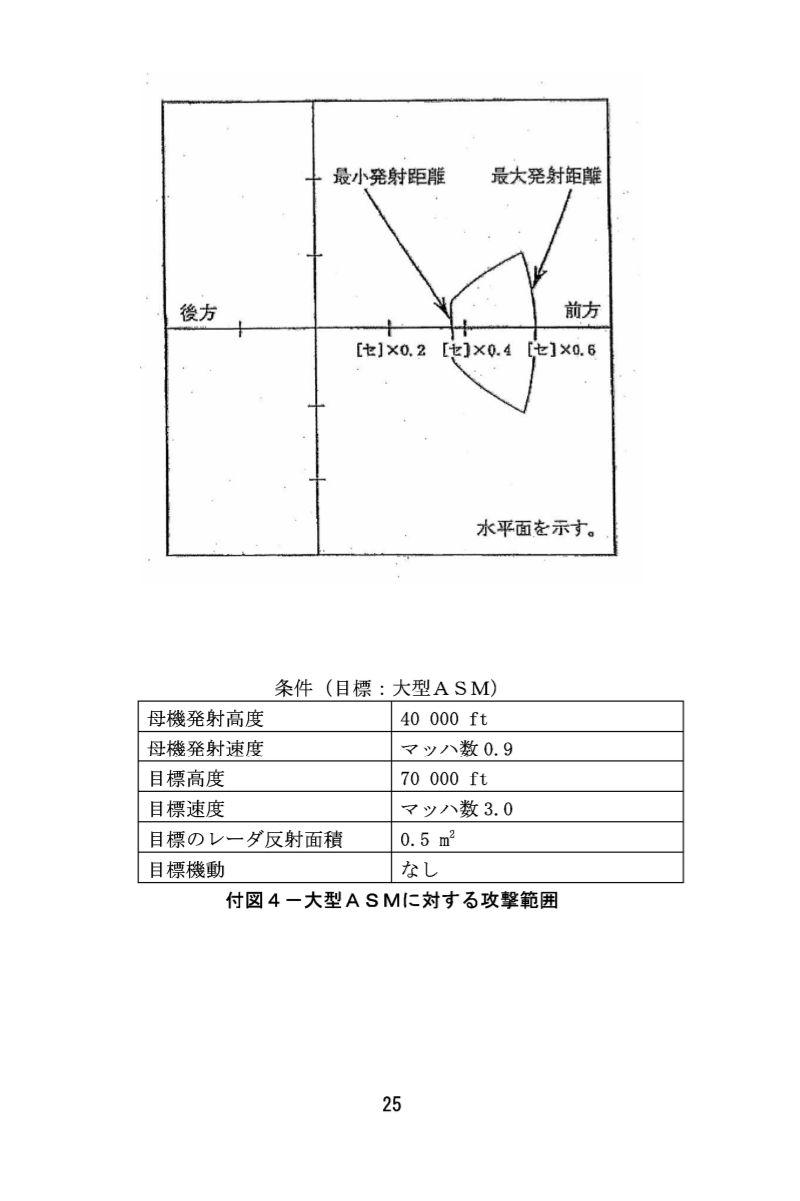
Even then an AESA radar in close range would be able to see the missile and intercept it if it was on a simple flight path in a low energy state. They’re not invisible.
Define low energy state?
If it’s coming in from 30-40 km yeah it’s basically a cruise missile at that point, but fired under 20 km? Not that low energy lol, it’s still well over Mach 2 or dependent on the missile, Mach 3+
If the missile is flying somewhat in a straight path it you should still theoretically intercept it if you’re quick enough but any other trajectory it would be harder to get a solution. It’s just entirely dependent how easily the missile can calculate to intercept
Air to air missiles have been intercepting cruise missiles since the 1950’s, it’s hardly something only possible with new technology.
As for AAM’s vs AAM’s, while it’s certainly possible in real life, there are reasons why it’s unlikely:
- missile rcs is small enough that the missile will only be detected at a much shorter range than the aircraft that launched it, giving very little reaction time.
- The closure rates of an AAM vs AAM head on intercept are so high (at least mach 5 or 1600 m/s for modern missiles) that it’s unlikely for the proxy fuses of either missile to trigger at all (for a 1600 m/s closure rate against a 4 meter AAM , the proxy fuse must be able to activate within 0.0025 seconds).
- The very small frontal area of an AAM means that a direct impact intercept is very unlikely
I heard that gaijin unrealistically buffed the rcs of every airborne munition to help anti air players in GRB defend against the onslaught of air to ground missiles, so at least on that end it should be easy to bring back air to air missile rcs back to reasonable levels. Tweaking proxy fuses so that they need a few miliseconds of contact before activating should be doable, even if some players might complain that proxy fuses are now “broken” if they no longer activate in extreme out of envelope situations. And if you manage to intercept an AAM with a direct hit from another AAM, honestly fair play.
So it’s definitely plausible to intercept another air to air missile depending on the circumstances. I just don’t think it’s ok to remove the mechanic entirely just rather to correct the RCS values of the missiles themselves. I found a quora post that had more relevant info regarding to how well radars can track air to air missiles.
“The body of an AIM-9X missile has the RCS size of 0.1 square meters, or -10 dBsm.”
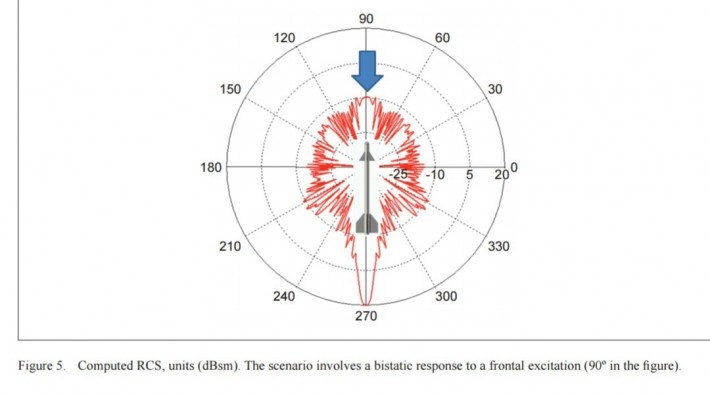
"The larger AIM-120 has an identical body and presumably a slightly larger RCS of 0.1–0.5 square meters.
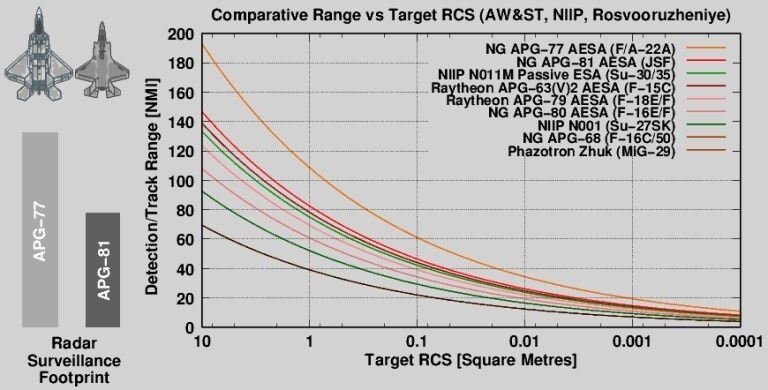
Among the most advanced fighter-type radars in service today, detection range varies significantly. For the target RCS value of 0.1 square meters, it ranges from 22nm/40km for the early N010 Zhuk to 95nm/175km for the N035 Irbis-E. And for the RCS value of 0.5 square meters, that range would be about 120nm/225km."

“The radar is not the primary line of defense in detecting an inbound missile. A MAWS is an avionics component dedicated for this task, which detects any form of active radar energy or laser illumination. Radar systems are in most cases programmed to identify in flight missiles, hostile and friendly, useful in enhancing pilot’s situational awareness.”
There is a lack of info regarding how far the AIM-120 seeker can detect something that small, though there are modern missiles out there with AESA seekers that would probably have no problem tracking such a small target.
"Detection range for an incoming AIM-120 AMRAAM against an AESA radar depends on variables; give ranges and the key factors so the figure can be interpreted correctly.
Typical detection-range bands (approximate, order-of-magnitude):
- Very optimistic scenarios (large AESA aperture, high transmitted power, clean environment, favorable aspect): 50–120+ km.
- Typical modern fighter-class AESA against a mid‑range small target like an AMRAAM: 20–60 km.
- Degraded/realistic tactical scenarios (clutter, low-probability-of-intercept missile coatings/shaping, edge-on aspect, low RCS payload/boattail): 5–20 km.
- Worst-case (small aperture AESA, heavy clutter, jamming, low RCS aspect): detection may be <5 km or effectively near zero until flare/visual/IR acquisition.
Key factors that control detection range:
Radar cross section (RCS) of the missile
Radar parameters:
- Peak and average power, antenna aperture (gain), beamforming, receiver sensitivity, noise figure.
- Frequency and waveform
- Aspect, range geometry and closure rate
- Clutter, background and environment
- Electronic warfare and stealth coatings
- Signal processing and operator thresholds
- Range vs. track vs. classification
Expect detection of an incoming AIM-120 by a modern fighter-class AESA typically in the tens of kilometers (roughly 20–60 km) in realistic conditions, with possibilities extending above 100 km for very large, high-power naval/AEW AESAs in ideal conditions and falling below 10–15 km in adverse/cluttered/jammed/low-RCS scenarios. Exact numbers require specifying radar aperture/gain, transmitted power, missile RCS by aspect, environment and signal-processing choices."
In conclusion I would expect the AIM-120 to be able to track and intercept another similar sized air-to-air missile within 10-20 km if its not too fast or maneuvering hard. More modern missiles with an AESA seeker would probably be able to track it even further.
There’s a big difference between the detection range of the radar on a fighter plane, and the radar on a missile because of the very constrained frontal area and battery power of the missile. If we make a rough scaling saying that detection range is proportional to radar diameter, knowing that the radar on a f-15 has 0,915m in diameter while the radar on an AIM-120 has at most 0,170 mm, and assuming there’s no practical difference in terms of detection range between AESA and PESA within the very narrow cone searched by the missile, we can say that if an AESA F15 detects the missile at 40 NM, then the AIM-120 itself would only lock in at 7 NM, in an absolute ideal scenario. In a more practical scenario, it would be 20 NM fighter/3NM missile, so at a 1600 m/s closure rate the missile would have about 3,375 seconds to adjust it’s trajectory - sounds a bit more difficult than it is currently in game…
So basically 5.5 km - 13 km is a more reasonable range for a missile to missile intercept?
The bigger limiting factor should be closure rate, actually. If you launch from longer ranges, the fighter’s radar will still detect the missile when it gets close enough, and the more the missile travels the more speed it loses, making for an easier intercept - but in that scenario, turning cold and saving up your own missile would be the better tactical option.
As ranges get closer the time available for interception decreases, so there might be a sweet spot around 7 Nm/ 12 km, but i figure that at 8 km or below there should be basically no time for guidance unless the fighter is already pointed directly at the incoming missile, let alone selecting and launching multiple missiles to target multiple incoming missiles…
So tweaking the rcs alone might not be enough to realistically mitigate the problem, you need to tweak the proxy fuses and possibly slightly increase the time it takes to select and launch a missile at each individual target.
Claiming that War Thunder’s sensor modeling is more realistic than DCS is a technical joke that doesn’t hold water. You are confusing a list of database parameters with actual physical systems simulation.
Here is a reality check for anyone who thinks WT is almost a simulator:
- IR Missiles aren’t luck, they’re physics: In DCS, if an R-73 or an AIM-9X hits you, it is not bad luck. It is because you failed to understand Gate Stealing or how the seeker discriminates flares based on contrast and relative motion. In DCS, seekers have real Gimbal Limits and tracking rates. In War Thunder, everything is heavily scripted and mediated to make the game playable for mouse-aim users.
- Radars - Toys vs. Instruments: Mentioning side lobes in War Thunder is laughable. In DCS, side lobe energy creates actual Main Lobe Clutter and Side Lobe Clutter that you must manually manage. You don’t just press a button to lock. You have to understand the difference between HPRF (High Pulse Repetition Frequency) for closing targets and MPRF for flanking/cold targets, because Doppler physics in DCS is unforgiving. If you don’t know what a Velocity Gate is, you simply cannot operate the radar in DCS.
- Avionics isn’t a menu: In War Thunder, the radar is a magic circle. In DCS, every high-fidelity module like the F-16, F/A-18, or F-14 has its own unique code simulating the specific radar processor of that airframe. You have to manually manage scan bars, azimuth, and antenna elevation while interpreting raw data on the MFD. In War Thunder, the game plays for you; in DCS, you are the computer.
- War Thunder is a great encyclopedia of technical data applied to arcade gameplay. DCS is an environment that simulates electromagnetic waves and fluid dynamics. Saying WT is better because it considers altitude, something DCS has done since 2008 with complex atmospheric models, just proves you have never opened a 400-page flight manual.
The difference is simple: War Thunder is a game where you pretend to pilot. DCS is a simulator where, if you don’t study the physics of the sensors, you won’t even get off the ground with a functioning weapon system. Comparing them is an insult to actual simulation.
Please re-read your last response, because it is absolutely false that the radar system in DCS is simplified. Please, do your research properly before spreading misinformation: there is currently no simulator more reliable than DCS. In terms of sensor physics, PRF management, and Doppler filters, DCS is the industry gold standard. Compared to DCS, War Thunder Sim is nothing more than an ‘Arcade’ mode. To suggest otherwise ignores the extreme granularity of DCS systems, which are built directly from real-world flight manuals.
Hem…no???
I think we are confusing 2 different things here, DCS is more realistic than warthunder in it’s system modelling; For example, the way the player interfaces with the plane and the way the plane transmits information to the player is extremely detailed and unique for each plane model, while warthunder uses the same generic user interface for every plane.
Warthunder is more realistic than dcs in it’s physics modelling, since (last time I checked) countermeasures in DCS still work as dice rolls instead of properly interacting with the seekers, doing 4g barrel rolls completely defeats the guidance of advanced missiles instead of requiring sharp cranking, correctly notching a missile instantly and completely defeats it instead of forcing it to guess where you’ll be and readquire you, warheads don’t have blast patters, and the realism of the radar sets is entirely dependent on the limitations built in by the module developers as dcs itself doesn’t account for sidelobes or clutter, among other things.
As for damage and flight models models, honestly i would put DCS and Warthunder on par because both have examples of realism and extreme cartoonishness.
In short, DCS has modules whose parameters are very fine tuned to match real life in a very simplistic world, Warthunder has models with VERY questionable parameters, in a fairly in depth world. But to get back on topic, from your perspective what is the main reason why you don’t see missiles being used to intercept other missiles in dcs (and real life) as often as you are currently seeing in warthunder?