History
On April 3, 1951, the USAF authorized and commenced the ambitious Project Gun-Val, established by directive AFMPE-EN/2/11, Evaluation of Aircraft Armament. This effort was comprehensive and evaluated a number of weapons and weapon prototypes, both foreign and domestic, for use in operational fighters then in service, as well as the developing Century Series fighters. These weapons were evaluated for their effectiveness against fighter-to-fighter, fighter-to-bomber, and fighter-to-ground targets. Aircraft that participated in the effort included the F-86F, F-89C, F-94B, and supposedly the F-84F as well.
The purpose of Gun-Val was to develop solutions for installing advanced guns in aircraft without the integration and gun gas problems as encountered during testing with the F-86F and its 20 mm cannons, where engine compressor stalls and the explosive accumulation of spent gun gases were reported. Problems of this nature were considered gun system problems rather than primarily aircraft component issues.
The primary focus of the effort centered on domestic and foreign 20 mm and 30 mm weapons. The .60 cal weapons were also considered and briefly evaluated but were immediately dropped. The weapons tested fell into four categories: belt-fed, revolver-type, Gatling, and magazine-fed.
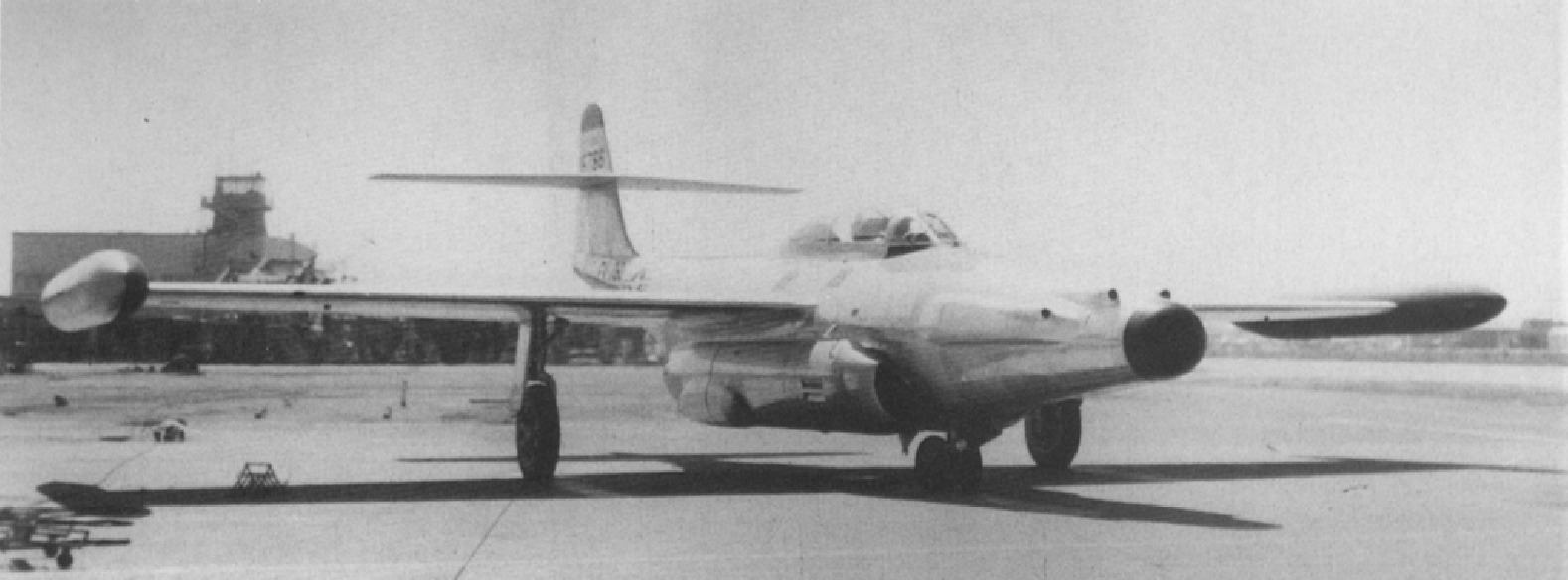
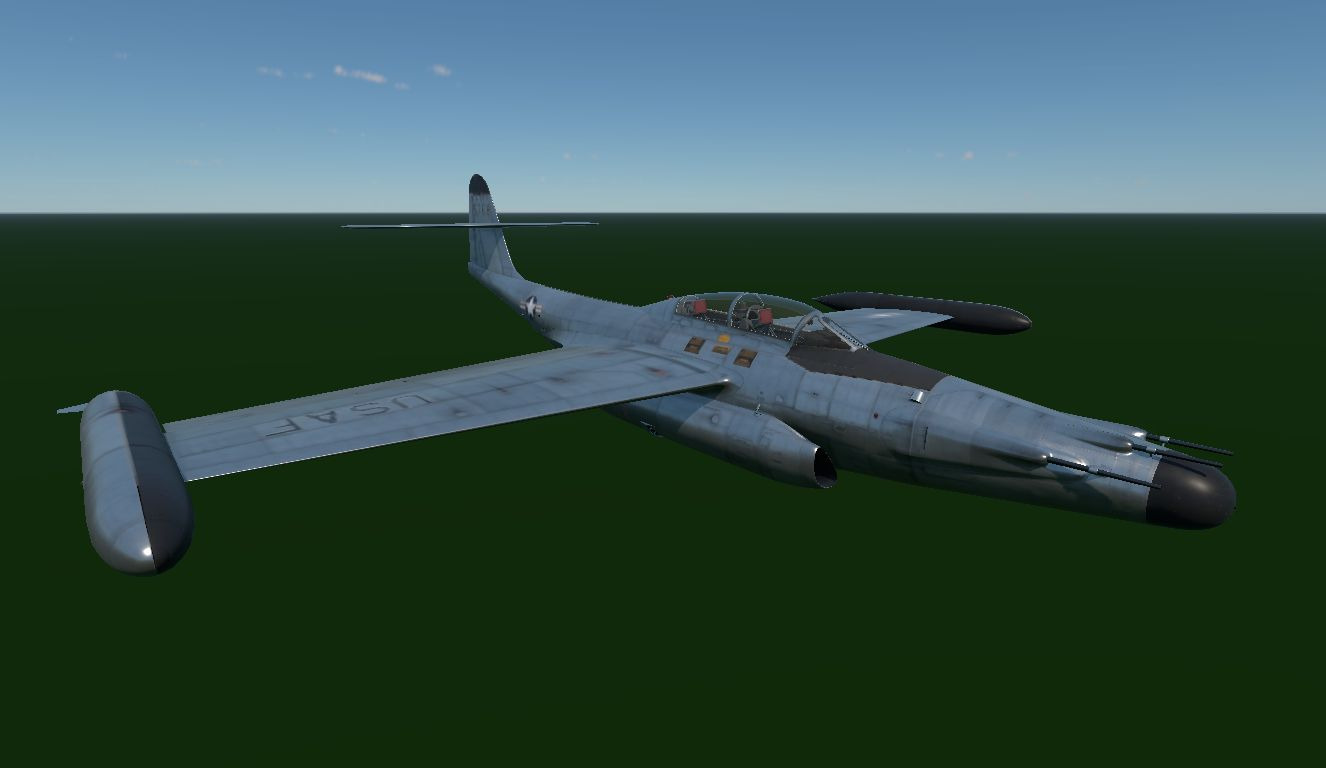
Under Contract AF 33(038)-14995, four F-89C aircraft were assigned for weapon testing under Gun-Val. Aircraft serial numbers 51-5766 (N-2125) and 51-5772 (N-2131) were allocated to testing the Swiss 30 mm Oerlikon 302RK cannon, while serial numbers 51-5795 (N-2154) and 51-5796 (N-2155) were assigned to testing the T-110E3 rocket launcher, firing T-131 spin-stabilized rocket projectiles.
The F-89C represented the first major production version of the Scorpion and the final cannon-armed variant of the aircraft. It incorporated all the changes demanded by the Air Force to make the F-89A a fully operational and safe aircraft. Its primary armament consisted of six 20 mm cannons. A total of 164 F-89Cs were built. During its service life, the F-89C received various engine upgrades to improve performance.
The F-89C-25-NO (51-5766) and F-89C-30-NO (51-5772) in this project received the upgraded J35-A-33 powerplant, which offered improved performance over the older J35-A-21 originally installed in earlier F-89 models.
Armament system evaluations of the 30 mm Oerlikon 302RK cannon on the allocated F-89Cs were conducted at Edwards AFB and the Naval Ordnance Test Station, China Lake, California. The project, initiated on April 3, 1951, was completed in late 1954.
The 30 mm Oerlikon 302RK was the product of the Oerlikon Machine Tool Works, Buehrle and Company, Zurich, Switzerland. The gun, a revolver-type weapon, was an automatic, gas-operated design adaptable to both fixed and flexible mountings. It fired electrically primed, link-belt-fed SS/k HE ammunition. As the gun was completed and designed in August 1951, by December 1951, four 30 mm Oerlikon 302RK cannons with 100 rounds per gun had been fitted into the nose of the F-89C and were aimed through an A-1CM optical sight. Ranging and tracking information was provided by the E-1 fire control system and the AN/APG-33 radar, both of which were retained. Initial firing tests revealed unacceptable barrel whip. To remedy this condition, the barrels were shortened, reducing their overhang beyond the radome, and barrel restraints were installed to control the remaining barrel whip.
Engineering acceptance flights were conducted by Northrop at Edwards AFB from August 1952 through November 1953 using F-89C serial 51-5766. Three ground-firing tests and fourteen air-firing tests were completed, during which 3,600 rounds were fired. Northrop test pilot reports noted that the aircraft’s handling qualities, buffet, and stall characteristics were comparable to those of the production F-89C. Radar performance was generally satisfactory, but the heavy recoil of the guns caused several radar malfunctions, indicating the need for greater-than-normal operational maintenance. The firing rate was 937 rpm, higher than the M2 .50 caliber machine gun’s 800 rpm.
During ground-firing tests, it was determined that the muzzle flash was excessive, affecting the pilot’s vision. Oerlikon-designed flash suppressors were installed, but they provided little reduction in muzzle flash and instead damaged the radome by directing the muzzle blast energy radially outward from the gun. Gun gas purging was also considered inadequate.
The 302RK armament installation was tested in its “as received” condition and was found to be very unreliable. Gun-firing tests indicated that barrel life was approximately 250 rounds when firing 40-round bursts and about 1,000 rounds when firing 20-round bursts. This was because improvements resulting from testing and development were not available for foreign weapons as they were for the domestic weapons under evaluation, in addition to installation and operational issues caused by the total weight of the guns and ammunition.
Because of the program’s test results and the general unreliability of the 302RK cannon installation, a joint Headquarters USAF and Gun-Val Committee decision was made in 1954 to discontinue the evaluation of the F-89C’s Oerlikon 302RK cannon armament combination.