History
On April 3, 1951, the USAF authorized and commenced the ambitious Project Gun-Val, established by directive AFMPE-EN/2/11, Evaluation of Aircraft Armament. This effort was comprehensive and evaluated a number of weapons and weapon prototypes, both foreign and domestic, for use in operational fighters then in service, as well as the developing Century Series fighters. These weapons were evaluated for their effectiveness against fighter-to-fighter, fighter-to-bomber, and fighter-to-ground targets. Aircraft that participated in the effort included the F-86F, F-89C, F-94B, and supposedly the F-84F as well.
The purpose of Gun-Val was to develop solutions for installing advanced guns in aircraft without the integration and gun gas problems encountered during testing with the F-86F and its 20 mm cannons, where engine compressor stalls and the explosive accumulation of spent gun gases were reported. Problems of this nature were considered gun system problems rather than aircraft component issues.
The primary focus of the effort centered on domestic and foreign 20 mm and 30 mm weapons. The .60 cal weapons were also considered and briefly evaluated but were immediately dropped. The weapons tested fell into four categories: belt-fed, revolver-type, Gatling, and magazine-fed.
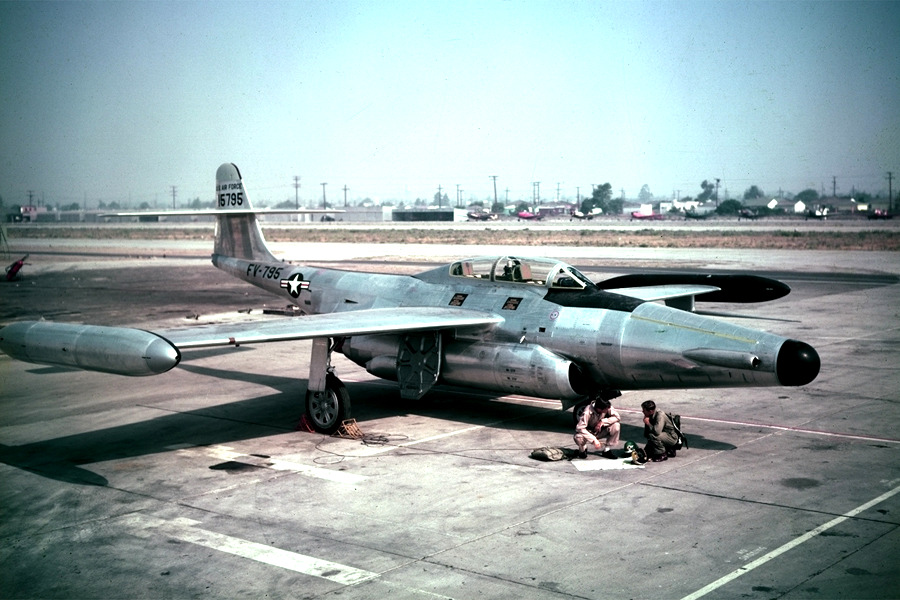
Under Contract AF 33(038)-14995, four F-89C aircraft were assigned for weapon testing under Gun-Val. Aircraft serial numbers 51-5766 (N-2125) and 51-5772 (N-2131) were allocated to testing the Swiss 30 mm Oerlikon 302RK cannon, while serial numbers 51-5795 (N-2154) and 51-5796 (N-2155) were assigned to testing the T-110E3 rocket launcher, firing T-131 spin-stabilized rocket projectiles.
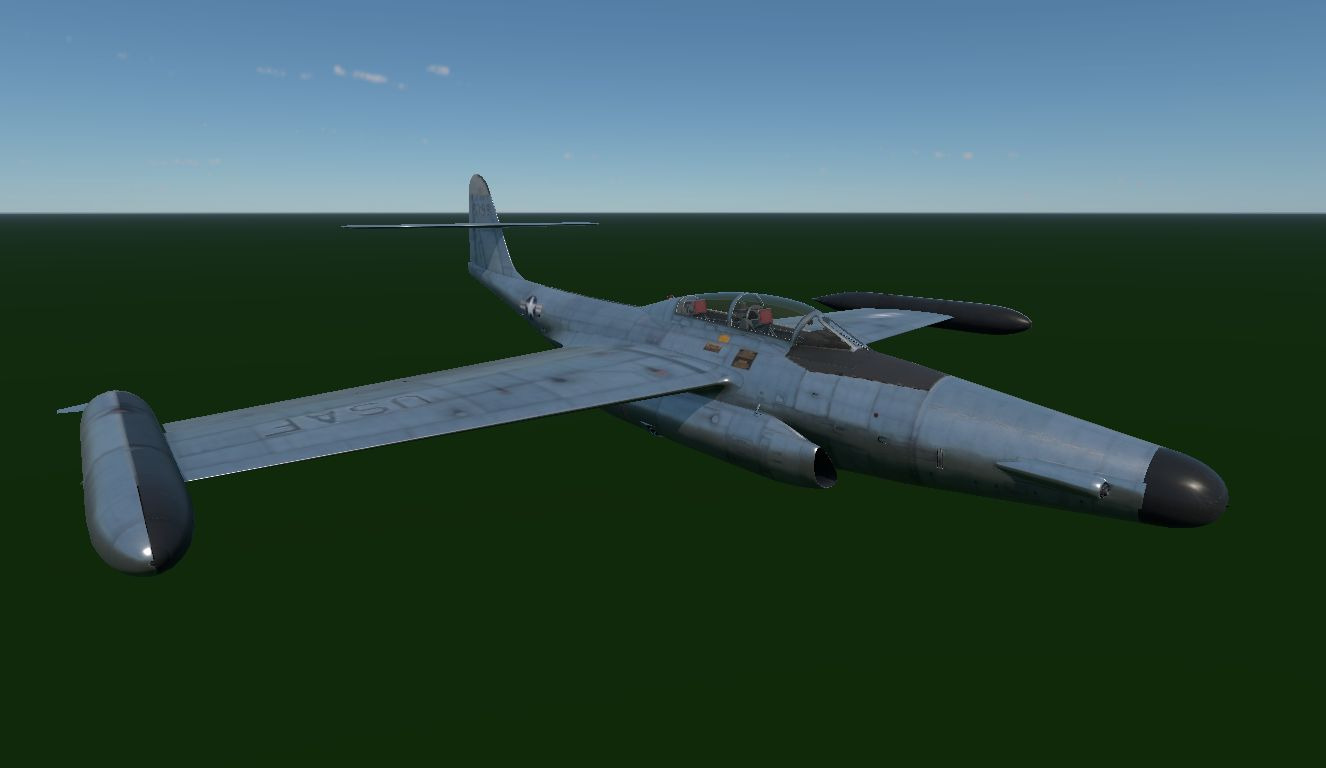
The F-89C represented the first major production version of the Scorpion and the final cannon-armed variant of the aircraft. It incorporated all the changes demanded by the Air Force to make the F-89A a fully operational and safe aircraft. Its primary armament consisted of six 20 mm cannons. A total of 164 F-89Cs were built. During its service life, the F-89C received various engine upgrades to improve performance.
The F-89C-30-NO (51-5795) and F-89C-30-NO (51-5796) assigned to this project received the upgraded J35-A-33A powerplant, which offered improved performance and reliability over the older J35-A-21 originally installed in earlier F-89 models.
Unlike the primary focus on 20 mm and 30 mm cannons, these F-89Cs were selected for the installation of the T-110E3 rocket guns. This research and development effort was performed by the Department of the Army Ordnance Corps under the requirements and sponsorship of the Air Force. At the time the T-110E3 weapon was selected for participation in Project Gun-Val, development had progressed to the firing phase of the first experimental model, which was successfully test-fired in January 1952. The first T-110E3B (lightweight model) launcher was delivered to the Air Force in October 1952. For the aircraft installation tests, eight launchers were delivered during 1953, with four more delivered during the first quarter of 1954.
The launchers were mounted on both sides of a vertical web panel along the centerline of the nose assembly. This installation rotated each launcher 90° from its normal mounting position. The nose contour of the F-89C was lengthened to accommodate the launcher installation. The radar antenna was positioned as close as possible to the edge of the radome. The heavy recoil forces of the launchers, approximately 35,000 lb per gun, were distributed throughout the fuselage structure.
Under the initial F-89 production contract, AF 33(038)-1817, the AMC procured two F-89C aircraft to test the T-110E3 launcher. The test aircraft were scheduled for modification while still on the Northrop assembly line. F-89C 51-5795 was instrumented to measure the quantity of explosive gun gases generated and to record aircraft fire control performance at the time of firing. F-89C 51-5796 contained only the basic armament. Design of the T-110E3 automatic rocket gun nose installation began in August 1951, with installation commencing in November 1951. During ground-firing tests, the muzzle blast locally dished the skin, loosened rivets, and pulled the radome loose. Stainless steel blast plates were then installed in these areas to reduce these effects.
The rocket gun, two of which were installed, was a closed-breech weapon with a rifled barrel measuring 94.25 inches in length and weighing 360 lb each. Each gun was fed by a magazine holding 25 rounds, for a total capacity of 50 rounds. The ammunition consisted of the T-131 2.75-inch spin-stabilized rocket. A booster charge contained in the cartridge case launched the rocket through the rifled barrel, providing a muzzle velocity of 1,200 fps. The rocket propellant, an internal-burning grain cast directly into the rocket, was ignited by the hot launching gases to further accelerate the projectile during flight. Ignition of the rocket motor occurred as the rocket left the barrel and, with a burn time of 0.5 to 0.7 seconds, achieved a burnout velocity of 2,800 fps (3,580 fps, including the aircraft’s velocity contribution). Flight stabilization was achieved by the rocket’s spinning motion. The launch spin rate of 400 rps was approximately doubled during flight by the action of the rocket’s canted nozzles. Range at burnout was approximately 390 yards. The rate of fire was 27 rps (810 rpm).
Northrop conducted engineering acceptance flight tests with F-89C 51-5795 at Edwards AFB from April through November 1953. During this period, the aircraft demonstrated the rocket gun installation and its performance. The rocket gun was supported by the AN/APG-33 radar working in conjunction with the A-1CM gunsight. Flight tests conducted without firing the guns found the aircraft to be as stable as the standard F-89C. The installation did not degrade the aircraft’s handling qualities or its stall and buffet characteristics.
Live-fire tests conducted during both maneuvering and stabilized level flight indicated a high degree of firing accuracy during tactical maneuvers. Throughout the live-round firing tests, the radar and gunsight operated satisfactorily. The T-110E3 delivered 140 lb of projectiles per second onto the target, along with 27 lb of high explosive.
However, the radome required periodic replacement because the heat and muzzle blast from the guns shredded the outer skin coating. Full-burst (25-rpg) firing unexpectedly caused random engine flameouts. Modifications to the engine fuel feed resolved the problem and allowed satisfactory gun firing up to 40,000 ft. Gun gas purging, however, remained a serious issue. A unique ram-air purge system was designed that installed a sheet-metal shroud around the magazine, confining all gun gases to the launcher. In addition, mechanically operated purge doors installed in each gun-bay access door supplied ram air for purging. This largely resolved the gun gas purging issue, but the service life of the launcher remained limited to 900 rounds because of erosion of the forward casting caused by exposure to hot gas leakage. It was also discovered that corrosion of the airframe, engine, and installed systems was caused by the launch charge and rocket propellant gases, which remained a serious deficiency throughout the test program.
As a result of the Gun-Val tests, the T-110E3 rocket launcher was considered satisfactory from an engineering standpoint for future operations. However, the shortage of equipment, the engineering changes required, and the limited value of obtaining additional data made further testing impractical. The Gun-Val Committee decided to discontinue the evaluation. Despite the impressive lethality of the T-110E3 armament system, it was ultimately abandoned in 1954 as the US Air Force shifted toward the adoption of guided and unguided missiles for future interceptors.