Would you like to see this in-game?
- Yes
- No
0
voters
Which model of the B-25D would you like to see implemented? (Multiple choice; choose up to 5)
- Standard B-25D-5
- B-25D Strafer (solid nose with more forward-firing MGs and other modifications)
- B-25D with Mediterranean Modifications (ventral turret removed; waist and tail MGs added)
- I have a specific model in mind (please comment)
- I want all B-25D variants
- Don’t care, just gimme any B-25D model
- I said “No” in the first poll
0
voters
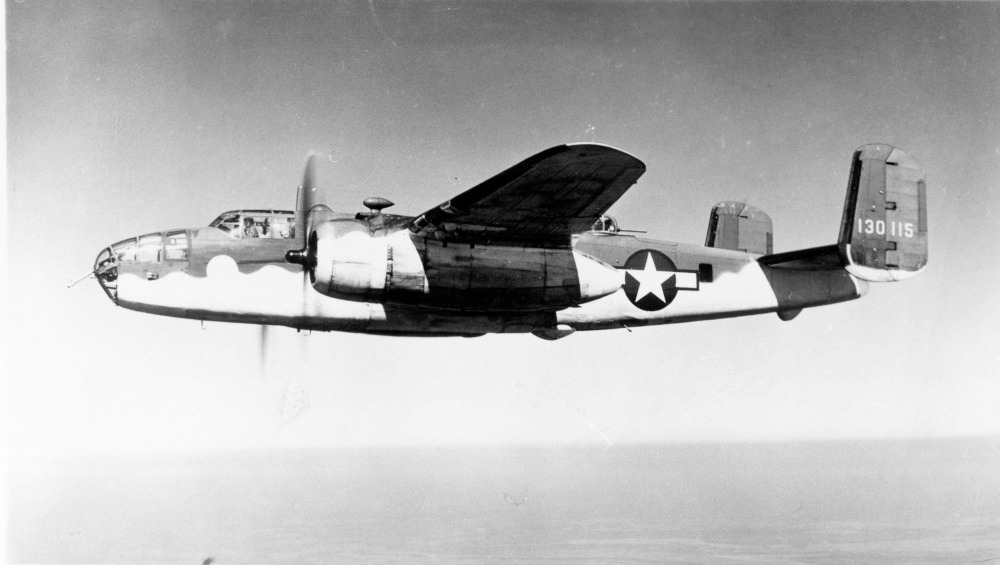
North American B-25D Mitchell
Hello everybody. I’d like to suggest the North American B-25D Mitchell for the US aviation tree in War Thunder. This variant was the second most-produced Mitchell during World War II. The B-25D was virtually identical to the B-25C, except that it was built at North American’s Kansas City plant rather than the Inglewood, California facility. Its introduction was driven by the US Army’s excessive wartime demand. Like the B-25C, the B-25D saw service in both the Mediterranean and Pacific theaters.

Related Suggestions
Mitchell Family:
- B-25
- B-25A
- B-25B
- B-25C - Made by @slowmo21too-psn
- B-25G
- B-25H
- B-25J (Strafer)
- NA-98X
- PBJ-1C
- PBJ-1D
- PBJ-1J (Glass Nose)
British Mitchell Family (made by @lxtav):
Sources
- EE-393 Wartime Tactical Planning Characteristics & Performance Charts (1 July 1945)
- Profile Publications - The North American B-25A to G Mitchell (1965)
- Walk Around B-25 Mitchell - Walk Around Number 12 (1997)
- Warbird Tech Vol. 12 - North American B-25 Mitchell (1998)
- B-25 Mitchell in Detail & Scale - D&S Vol. 60 (1999)
- Crowood Aviation Series - North American B-25 Mitchell (2001)
- Osprey Combat Aircraft 032 - B-25 Mitchell Units of the MTO (2002)
- B-25 Mitchell - Detail in Action (2022)
- North American B-25 Mitchell - Wikipedia
- North American B-25D Mitchell
- B-25C/D Strafers
- Mediterranean Modifications of B-25C/D
Thank you for taking the time to read my suggestion! 😃