Monthly Decals for July!

Hey everyone! We’re back with a new set of decals for you for July, we hope you’re staying cool! We have quite an eclectic mix this time around with a little bit of everything, personal markings, squadron markings, graffiti, the lot. We have also discovered that our decal artist dislikes clowns very much, sorry Fenris!

We’ve also got a small survey for you if you have the time, just some short questions about the monthly decal event, what decals you like, whether the event enhances your enjoyment of the game, things like that. It should only take a minute or so, please consider clicking below if you’d like to give some feedback.

The following decals are available from July 9th (11:00 GMT) until August 10th (09:00 GMT).

All tasks can be completed using vehicles that are rank III or higher.

New decals

“Downs’ Clowns” Emblem, USA

Deal 10 tons of base damage while using US Bombers

“Downs’ Clowns” nose art, 92nd Bombardment Group (Medium), 325th Bomb Squadron, U.S. Air Force. During the Korean War, it was typical for nose art to be themed around the pilot of the aircraft. Self-deprecating and lighthearted humor was also especially common, so pilot Downs and his crew of clowns fit right in. Not too much is known about the aircraft and crew themselves; what is noted is that during 1951, their aircraft was heavily damaged by an attacking MiG-15 while on a raid and was written off as a loss after landing. The marking was painted on the nose under the cockpit on B-29 44-86284 while the aircraft was based at Yokota, Japan.


I./ZG 26 Emblem “Ringelpitz”, Germany

Defeat 50 players using German Aircraft

“Ringelpitz” (Ring o’ Roses) Emblem, 1st Group, Zerstörergeschwader (Destroyer Wing) 26, Luftwaffe. ZG 26 was formed on May 1st 1939, and was one of the first destroyer units to be equipped with the new Bf 110 heavy fighters. This emblem was designed around 1940 and was inspired by routine combat with the RAF. It depicts a black fish-like plane with British roundels being outmaneuvered by a red crocodile-like plane with German roundels, fittingly with the bullets coming out of the nose, much like the gun placement on the Bf 110. The design was perhaps overly optimistic, however. Despite the relative success of the plane as a whole, it would seldom come out on top in a maneuvering dogfight. The emblem was widely used during the Battle of Britain era and was inherited by II./ZG 2 after its reorganization in the spring of 1942. The emblem was painted on the nose of the group’s Bf 110 fighters.


FFI Emblem, France

Earn 15000 score while using French Ground Vehicles

An emblem of the FFI (Forces Françaises de l’Intérieur), French Resistance. The French Forces of the Interior was a more formal composition of the French Resistance, structured formally on February 1st 1944. It was vital to the Allied war effort after the Normandy Landings and was responsible for gathering intelligence, harassing German supply lines, and helping to liberate towns and villages ahead of the main Allied force. While primarily a light infantry formation, it captured and commandeered a wide variety of armored vehicles from the Germans, many of which were originally French. These tanks were generally hastily painted with the Cross of Lorraine and “FFI” inscriptions, with no standardized placement. This specific FFI inscription was painted on the side of the hull of a reclaimed B1 Bis, which proudly drove through the streets of Paris after the city was liberated in August 1944.


Grupo de Aviación N.º 1 (Ataque) Emblem, Uruguay

Destroy 70 Ground or Water targets using Aircraft

The emblem of Grupo de Aviación N º1 (Ataque) (Air Squadron No. 1 (Attack)), Uruguayan Air Force. Originally formed on August 5th 1955 as a reconnaissance unit, the group fielded a variety of trainers and light attack aircraft, including the T-6 Texan and P-51 Mustang. It later evolved into Uruguay’s primary ground-attack squadron in 1981, after receiving a set of IA-58A Pucará strike aircraft from Argentina. It was stationed at the Santa Bernardina air base in Durazno and primarily took part in reconnaissance and ground attack operations in conjunction with the army. In total it operated 11 Pucarás until March 17th 2017, when the unit was disbanded after accruing 23,000 flight hours. The emblem was sporadically painted high on the tails of some of their Pucarás, just under the elevator.


5. Opklaringseskadron Emblem, Denmark

Earn 20 “Intelligence” awards while using Swedish Light Tanks

An unofficial emblem of 5. Opklaringseskadron (5th Reconnaissance Squadron), Royal Danish Army. The 5th Squadron was formed in the 1990s and fielded distinctive “Black Recce Leopards”, painted in almost all black. Regulations were light regarding personal crew art, which resulted in an unusually wide variety of markings painted on its tanks. It’s unclear as to whether this marking is a direct reference to anything in particular; it may just be a funny doodle by one of the crew members. It was painted on the rear storage door of Leopard 1A5DK 62481 sometime during the 1990s.


Returning decals

29th Sentai 2nd Chutai Emblem “Dokuro”, Japan

Finish in position 1-3 three times using Japanese Aircraft

A tail marking of the 29th Sentai, 2nd Chutai, IJAAF. The squadron was initially formed as a reconnaissance group on July 15th 1939, filling both short and long-range recon roles. In February 1944, however, the 29th Sentai reformed as a pure fighter regiment, equipped with the Ki-44. The marking it adopted during this period is exceptionally rare among Japanese identification symbols. Geometric shapes made up the vast majority of tail emblems, making this one especially remarkable. It was likely chosen as the shift in operational role was very distinct, so it needed an equally distinct emblem. The lower red and white band represents the 29th Sentai, while the yellow stripes represent the 2nd Chutai. During late 1944, the unit suffered heavy losses, and the marking was retired after the unit transitioned to the Ki-84. During its operations in 1944, the distinctive skull marking was painted on both sides of the tail on their Ki-44 fighters.


168th IAP Emblem, USSR

Defeat 20 players using air-to-air missiles while using Soviet Aircraft

An emblem of the 168th Fighter Aviation Regiment, Soviet Air Force. The 168th was formed in 1940 in the Odessa Military District at Kirovograd airfield, equipped with I-16s. It served throughout the Second World War and was granted the Order of Suvorov for its collective successes. This emblem was created in the late 1980s, when the regiment was deployed to Afghanistan under the 40th Combined Arms Army. It depicts an eagle gripping a lightning bolt against a teal circle, very typical motifs for Soviet aviation markings. The swept-back wings of the bird also fittingly mirror the aircraft on which it was painted, the MiG-23MLD. The emblem was painted on the regiment’s MiG-23s during its deployment in Afghanistan, on the engine intakes behind the cockpit. Usage of the emblem halted shortly after deployment, when the regiment was absorbed into the 85th Guards Fighter Aviation Regiment in 1991.


151st Combined Arms Brigade Emblem “Thunder Flying Tiger”, China

Win 10 battles using Chinese Tanks

The emblem of the 151st Combined Arms Brigade, 82nd Group Army, PLA. The 151st Brigade has an especially rich lineage and history; it was formally founded in November 1937 and took part in many major conflicts, even earning the honorific “Heroic Unit” (英雄部队) title in 1951. During this time, it was known as the 113th Division and would carry this name until 2017, after which it was restructured into the 82nd Group Army and the division was split into two brigades. One half retained the 113th identity, while the other became the 151st Brigade. Both brigades kept the iconic “Flying Tiger” design from their shared legacy. In the 151st Brigade’s version of the emblem, the number 151 is worked into the design next to the tiger (一五一). The emblem is not permanently applied to the brigade’s tanks and is only seldom seen during training exercises. It was placed on the turret sides of the brigade’s ZTZ99A tanks, in the center of the front four ERA blocks.


132ª Brigata corazzata “Ariete” Emblem, Italy

Play 20 battles while using Italian Ground Vehicles with a minimum of 60% Battle Activity

The primary emblem of the 132nd Armored Brigade “Ariete”, Italian Army. The Ariete division was formally founded on February 1st 1939, making up Italy’s primary armored force during the Second World War. It was officially declared lost after its defeat at the Second Battle of El Alamein, but was reactivated post-war in 1948, returning to divisional size in 1952. On October 1st 1986, the entire divisional level of the army structure was abolished, and the three brigades that formed the division (Mameli, Garibaldi, and Manin) were split and continued as separate brigades under the 5th Army Corps. At this point, the Manin brigade was renamed, inheriting the original Ariete name, which it uses today. In 1986, the brigade was equipped with the M60A1 and Leopard 1A2, before transitioning to the C1 Ariete in 1995. The ram shield in the pre-1995 era was typically positioned on the left fenders at both the front and rear of the tanks, along with the brigade number, 5941. For a time it was also placed on the upper left corner of the lower plate on their C1 Ariete tanks.


1st Mine Countermeasures Squadron Emblem, Britain

Score 20000 Damage using British Coastal Vessels

The heraldic badge of the 1st Mine Countermeasures Squadron, Royal Navy. The squadron was initially equipped with several Ton-class minesweepers in the post-war years, tasked with neutralizing mines in the UK home waters. After the Cold War, it transitioned to the significantly more advanced Sandown-class, and currently also operates autonomous MCM vessels. The red rampart lion in their badge is an ancient Scottish symbol that reflects the current home base of the squadron at HMNB Clyde on the west coast of Scotland. The key aptly represents the squadron serving as the “key” to safe passage through the waters they protect.


Monthly markings can be found in a special tab at the bottom of the customization menu, (Monthly Decals) after a month, they’ll be moved to their corresponding category.

You can check the exact terms and track the progress of completing tasks for these decals by going to your Player Profile > Decals > Monthly Decals. From here, click the “Track progress” button on each decal to track from the hangar.

All of the emblems will come with a detailed description. This will generally consist of the history of the marking, its design, which vehicles used it, and where it was often placed on vehicles historically if applicable (some emblems are taken from badges, which weren’t always applied). This way you can more easily recreate the original positioning if you’d like.

That’s all for today, thanks for reading down to the bottom! We hope you like the selection for July and thank you generally for participating in these events, they’re fun to make. Give the survey a look if you can, and we’ll see you in August!

11 Likes

🙀🙀this look like orange man
image

Still waiting for monthly decals devblog for July

What do you mean?

3 Likes

This one’s funny

4 Likes

Hes like me fr fr, now i can feel represented

New reaction image for the forum just dropped

3 Likes

Another round of my favorite event. And always great to read the historic bits. Only thing that would be nice would be to make it possible to grind the decal with the actual vehicle, if the vehicle is below rank III.

1 Like

Well if anyone have free time, perhaps your vote could bring some Lithuanian decals into the game? :) thank you

and

image

1 Like

I think everybody should ask for these decals to be added in the survey, I just think they are neat (and totally didn’t suggest them…)

Spoiler

Immortal 809 NAS Phoenix Decal
Immortal 809 NAS, Squadron Badge
British Vehicle Recognition Number Decals
Royal Engineers Text Decal

no decals for israel?

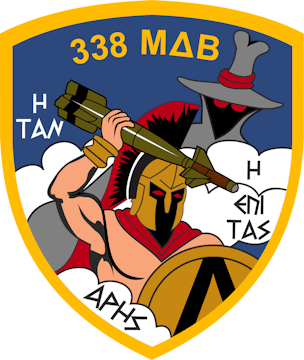
338-Squadron_mesa_selida
Spooky?

Why?!? Why?!? Why?!? Why does it have to be Rank III?!? There is 0 harm in letting us grind these with Rank I and II vehicles! It’s a Decal!! Not some vehicle! Remove this stupid requirement (this is not me attacking the devs, this is me criticizing the game. So do not delete this comment, take the criticism and take notes).

This is a little awkward

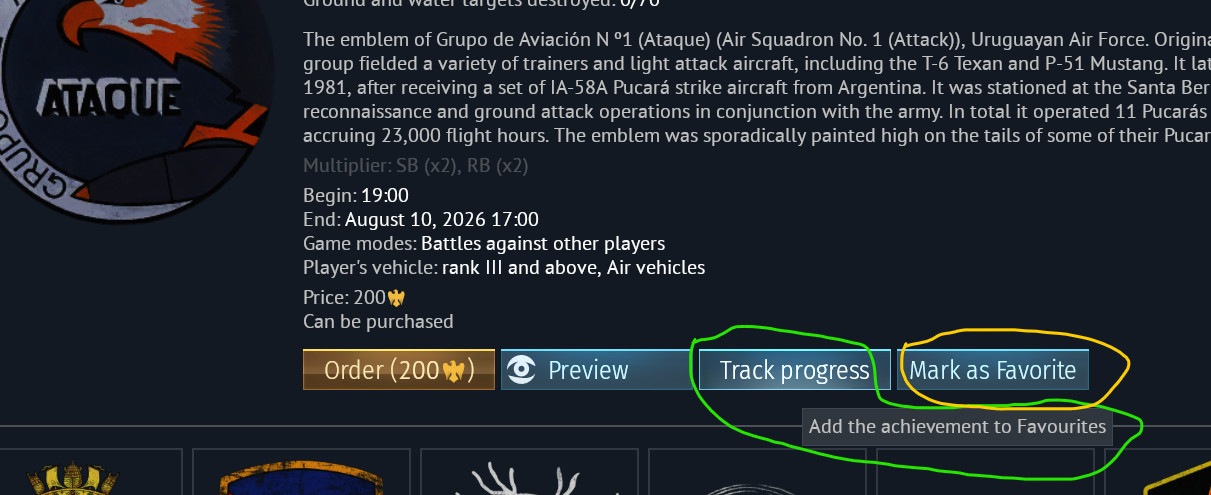
The tool tip for “Track Progress” says to add it to favourites… then there is a button that also states Mark as Favorite…

Ignoring the spelling differences, as that isn’t what this post is about (although that does look bad), it is confusing having two different messages talking about adding to favourites which are completely different things (one being the achievement/task favourites, the other being the decal favourite)

Nice decals though! Looking forward to getting them :)

(interested to know if this is similar in other languages?)

Looks nice.

Regarding the survey, here’s a few things I would like to add:

About the 3rd question: the decal is not a reason to play a new nation, but since I will play all nations/vehicles class, I don’t worry about not getting them during a specific month, because I know they will be back at some point. For exemple, I recently started playing Chinese aircrafts, and I was able to grab returning decals. That’s what makes this event enjoyable for me at least.
I know there is some kind of inbalance for returning decals, as the US had a lot of them, more than say, Israel, for example.

About the 4th question: Skill-based decals aren’t my favorite, but as the number of battles required is low (3 to 5) that’s fine. Specific requirements should not be gold achievements (like “Survivor” and or “Heavy Metal Hero”, etc.).

Finally, the detailed descriptions are one of the best thing that was added to the user interface.

some creator will call these decals FOMO lol, nice decals