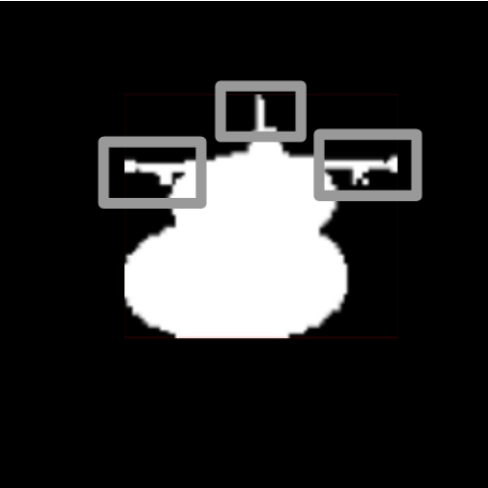
LDIRCM (and DIRCM) can involuntarily affect multiple missiles at the same time

So many words, so many sentences, and not a single source of data.

Modern airborne DIRCM/LDIRCM sources are typically 10W ~100W optical output per head in the relevant IR bands (SWIR/MWIR).

Source:
https://aaltodoc.aalto.fi/bitstreams/3fca737e-244d-429f-be09-80a400bfdf26/download

Helsinki University of Technology
Department of Electrical and Communications Engineering
Applied Electronics Laboratory

And another reading material: 红外对抗:各类飞机定向红外对抗综述

Volume 7 of the Infrared Handbook, 3.3.5.1 Detector Damage

2 Likes

IRIS-T and pretty much all other IIR missiles have HOJ capability that will lead them directly along the path of the LDIRCM beam into the target. There’s no reality where LDIRCM beats IIR without becoming a DEW that can actually put holes in missile skin from decent distance.

Also with a 2 way datalink, some missiles can straight up ignore the seeker’s output wholesale and still complete an intercept.

2 Likes

The thing is, the Seeker does not see the Laser Beam as few pixels in a high quality, high contrast image.

When large area of the Seeker is Dazzled or Blinded, the whole image becomes a high-brightness mess or even blank image, therefore no valid guidance data can be processed out of it.
You dont have a dark image with a bright spot (the presumed laser beam) into it to guide on.
Your whole image is a blank and bright and you have no data to use.

That is exactly the reason why LDIRCM was developed: to ensure full disruption of the image.

No. you can most definitely get the Gradient back. If it was actually that bright you would have the sun shade activate or be a DEW class emitter not an IR jammer.

Jammers abuse aspects of the Guidance methodology to break the optical lock

1 Like

Jammers abuse aspects of the Guidance methodology to break the optical lock

That is not the case for LDIRCM. As I said it before, the main idea behind LDIRCM is to completely blind the missile’s seeker, so that no useful data can be extracted and processed out of the image.

You are mistaking modern LDIRCM for earlier DIRCM systems.

Edit: even the sources you provided explain that the Seeker itself or even the dome’s surface can be permanently damaged.

Also bear in mind that the book you provided is from 1993. In that period LDIRCM was in early stages of research and development, and no LDIRCM systems were officially adopted in any country.

How much energy does it require? It’s well outside of what a L-DIRCM jammer is rated for, let alone what a Helicopter could spare for it’s onboard electronics.

Remember the President-S for example is only rated for 3.5 kVA.

Physics do not change suddenly or the mechanics behind a Threat system alter all to much.

you aren’t suddenly increasing performance by an order of magnitude. And if you are that’s a DEW, not a Jammer.

The fancy words you put to it don’t really matter. Jammer, countermeasure, call it how you like.

What matters is how it works, and why it was designed in the first place. Conventional DIRCM was not enough to deter modern IR and IIR missiles.
Creating false target Silhouettes, Shapes, at different places around the target, emitting pulsating IR signatures in order to achieve an oscilated or dithered Target Centroid that constantly shifts along the image, and therefore generates oscilating steering outputs was simply not enough, since modern missiles can analyze the image in real time and ignore such areas of the image to keep the Centroid steady.

Therefore a completely different approach was needed: complete occlusion of the Seeker’s sensor. Blind it, flash it, burn it if you want to, its ability to capture and process image has to be affected in order to achieve the desired result.

Neither is LDIRCM and Gaijin’s implementation is complete fantasy.

Meaning even though the LDIRCM system is trying to blind only the first missile from said salvo, the rest of the missiles can also be involuntarily blinded by the laser beam, due to its Divergence. This is especially true for scenarios where both the launcher and the helicopter are stationary in space.

Total power output is spread across the whole beam, if the beam expand that much, the amount that hits the seeker will lower and thus be unable to do anything…

3 Likes

Yes, because if you look at the ALQ-144A(V), it’s an all analog system that use two spinning interrupters to impart the proper waveform to an incoherent Arc source that is projected broadly into the scene.

So it’s very energy inefficient, and is a Passive system and is always emitting which is very bad for IR signature reduction (RAH-66 used bays to hide it like the F-22 and it’s Sidewinder bay).

This eats up a huge portion of the energy budget, let alone the wasted energy radiated into space.

Laser based systems are much more energy efficient, are Actively cued by the MAWS, and have an extended range due to being carefully directed in an actually useful direction.

They still use the same defeat mechanisms, though being properly digital there’s more that can be achieved, and with the potential for full identification of the threat a specific waveform could be generated tailored to defeating it instead of needing to cycle though generically effective waveforms.

1 Like

The ALQ-144A(V) has NOTHING to do with modern DIRCM or LDIRCM systems that we are discussing in this topic.
It is first-generation omnidirectional IR jammer, and it only works against first generation pin-scan or conical-scan reticle seekers.

And no, laser based systems do not use the same defeat mechanisms. You need to learn the basics before diving in the deep. Laser based systems do not
-rely on injection of false temporal modulation signal into the seeker, (like 1st generation systems)
-Create a false spatial hotspot in space around the helicopter

They:
-Project a directed spot
-Shift the perceived centroid position (depending on seeker’s algorithm sophistication)

Additionally the laser can completely Blind or dazzle the seeker making the image unusable.

It does not require micron-level precision painting upon the seeker. It requires maintaining sufficient irradiance within the seeker’s instantaneous Field of View.
Which is understandable, since it would be impossible to precisely move a tiny beam upon the seeker’s internal focal plane array, while both the missile and the aircraft are moving relative to each other.

1 Like

All laser beams have some degree of divergence due to Difraction.

Also you cannot be hoping to hit an incoming missile’s seeker with a beam spot of few milimeters.

And one more thing, which is very important:: The laser’s divergence cannot be arbitrarily small because diffraction sets a fundamental limit proportional to the wavelength divided by the beam diameter.

Modern LDIRCM systems operate in the near-IR, typically around 1–2 µm wavelength.
At Turret exit Aperture of 20mm, and Divergence of 0.1mrad, (which is quite conservative, but still achievable):
The spot diameter would be ~200mm at 2 km distance.
(The minimum physicaly possible Divergence at this wavelength would be 0.03mrad)

I personally think this is unrealistically small. I assume most systems can produce a spot with diameter up to 500mm at 2km range, to be able to reliably illuminate the missile. As the missile closes in, the spot would be less in diameter obviously, but higher in intensity.

Good luck hitting an incoming missile with a small beam 5-10 mm in diameter for any reasonable amount of time.

Neither is LDIRCM and Gaijin’s implementation is complete fantasy.

As I already answered to another person: currently it is not properly modelled ingame. It is completely static and simply covers the port and starboard hemispheres of the helicopter. (For Mi-28NM).

If they implement it correctly, ingame we will only see difference when multiple missiles approach from vastly different angles, or when missiles that acquire image of the target before launch are used (for example R-74, R-74M2 and AIM-9X.

Are there even any example of what constitutes a DIRCM, system that isn’t based on a Laser? But a Reflector. I’ve never heard of one that isn’t. So the specification of Laser seems redundant to some degree.

So then why the move to the POST seeker for the FIM-92, clearly if an IR only Rosette scanner was sufficient to deal with all forms of jamming & countermeasures they wouldn’t go to such efforts or be able to justify the expense to include a surplus UV channel even though the IR handbook clearly makes obvious that an waveform effective for use against Rosette seekers exist (after all it is just a Conically scanning, Conical scan seeker at differing rates).

How would they go about achieving this without modulation? or actually being an offboard system.

So how would this impact dual band (IR/UV) seekers like that of the FIM-92B and later considering it can rely on the UV channel for guidance and it’s fairly obvious even if it was able to shift it’s characteristic frequency to such an outlandish degree, or be broadband there is no visual report. none of these systems even operate in the UV band (except maybe the latest Revisions to the President -S system).

1 Like

Are there even any example of what constitutes a DIRCM , system that isn’t based on a Laser? But a Reflector. I’ve never heard of one that isn’t. So the specification of Laser seems redundant to some degree.

You are right. With the advancements in Laser technology you will probably not find such modern system. Early Russian DIRCMs used high intensity lamps mounted in turrets.

Plus they have become obsolete due to missile advancements.
From what I can find at first glance, L418-5 uses SP3-1500 lamp. It can produce modulated IR and UV light.

Early AN/AAQ-24 Nemesis also used lamps and later switched to laser diodes.

So then why the move to the POST seeker for the FIM-92, …

Because it was not sufficient.
The POST seeker is resistant to modulation jammers, plus it has dual band discrimination and imaging capability.

How would they go about achieving this without modulation? or actually being an offboard system.

A bright spot is enough. You have already shifted the Centroid. If you want to move it without modulating the Intensity, you can simply move the beam around (Beam Steering, aka Jitter).

So how would this impact dual band (IR/UV) seekers

The UV channel in modern dual band POST seekers is there mainly for flare discrimination.

I really doubt companies that manufacture these systems would deliberately omitt protection from such old missiles from the 80s and 90s like the FIM-92B.

Additional clarification about Jitter.

Imagine you are driving at night, and your windscreen is dirty. Headlights from oncomming traffic make a bright patch on your windscreen that covers large portion of it, making it difficult for you to see. As your vehicle and oncomming traffic steer along the road, the angle at which that light hits your windscreen changes and the spot can move around.

Not in game, yet. Still waiting by the way.

Contrast range extension for POST seeker FIM-92 var.

Would the turret & MAWS sensor even have the requisite pointing accuracy to keep the optical aperture illuminated?

Short of an active Radar detection system, optical sensors probably wouldn’t have the resolution required.

No, it is fully capable of providing Guidance, in fact it is preferred to the IR seeker where needed;

As per the referenced Patent in the above report

“In difficult weather conditions, against low-flying targets and at night, guidance in infrared mode is used, and when launching from a long distance and against weakly emitting targets, photocontrast mode is used.”

3 Likes

no kidding

i never said that.
i explicitly stated

you are making one very big assumption here.
that a DIRLCM system CAN do that. while individual seeker specifications vary and determine the exact affect, an imaging IR seeker does exactly that, makes an image.
a laser fired directly into the seeker (assuming seeker perpedicular is directly in line with the DIRLCM) will cause the immediate center of the seeker to becoem saturated (in case of no protective films) and the surrounding seeker elements to suffer from source blooming

image

more often than not, this is not just a big “IM HERE” sign for an IIR seeker but also, with a polariser filter, blooming can be stopped almost entirely and the rest of the usable image can be utilised in order to maintain track on target using a vairety of methods such as Feature tracking, Home-on-Jam.
Hell, even IR missiles with “Push-Ahead” or more commonly known as Suspension tracking can keep guiding themselves in via IOG. DIRLCM wont cause missiles to veer off course as they do in game.

secondly, a fast moving SAM is not going to be affected for as long a duration as compared to, shall we say a PARS 3 LR which travels at a maximum of 0.9M.

this is so absurd its kinda sad

IRIST contains a dataset of targets. the imaging IR seeker cannot use feature tracking:

image

if it cannot recognise those features to be of the target itself.

so your assumption is horribly wrong

wrong

size, and type are already identified by the launch platform, being SLM, it has NCTR and even Typhoon has NCTR, especially well using PIRATE but also with ECRS.

wrong. dazzling will only cast a big light source in the center of the seeker. the missile, especially IRIST SLM receives tracking data from the following:

Datalink: it can guide itself all the way in using DL, unlike in game
Standard IR Track: tracking an IR signature
IIR track: using IR tracking of a target image
Feature tracking: part of Standard IIR track
HoJ: by placing the center of the targets emitted radiation in the center of the seeker, it can simply guide itself in a similar manner to a SAL munition
Suspention tracking: the main form of tracking based on IOG in missiles such as 9M.

Dazzling wont do you any good against IRIS-T

and i havent even mentioned the specific seeker type of IRIS-T being different from other IIR SAM/AAMs AND having a two color seeker.

5 Likes

@Armen_Lozone

You and some others in different topics have been copy pasting bunch of images without context. If you don’t provide the original source for the image so we can see under what conditions it was taken how can we draw any conclusions from it?

Provide exact sources for the images so we can see at what distance they have been captured, and with what equipment.

Dazzling will only cast a big light source in the center of the seeker. the missile, especially IRIST SLM receives tracking data from the following:

The topic is about LDIRCM, not about redundant guidance channels and data links.

the imaging IR seeker cannot use feature tracking, if it cannot recognise those features to be of the target itself.

Exactly.
That is what I’ve been trying to tell you this whole time. You are contradicting yourself.

If you don’t see any features or outlines of such, how can you tell with certainty what you are looking at?

A rhetorical question.

@tripod2008

Not in game, yet . Still waiting by the way.

I don’t really believe this (imaging) can be simulated or even modelled in game anywhere near the way it works in real life.

Would the turret & MAWS sensor even have the requisite pointing accuracy to keep the optical aperture illuminated?

That is exactly why Divergence matters. You cannot use a miniature beam with Width of few milimetters and hope to be able to move it in relation to an incoming missile at ranges of few kilometers. That is why I gave the Headlight example above.

“In difficult weather conditions, against low-flying targets and at night, guidance in infrared mode is used, and when launching from a long distance and against weakly emitting targets, photocontrast mode is used.”

Photocontrast has nothing to do with an UV channel and is something different. It is basically optical tracking based on brightness contrast against background.

you are new here arent you…

im the author of the topic Proof of LDIRCCM capability in IIR against Laser DIRCM

if you actually want to attain knowledge, i suggest reading it up. i have attached all sources and proofs of claims

those topics are entirely relevant to tackle people who beleive DIRLCM can be used to effectively mislead or dazzle IIR seekers. not to mention the scenario you speak of is an exception. not the norm.
only in VERY optimal circumstances can this even be utilised.

far from it. you are digging yourself into a deep pit of misunderstandings. A bit far from your dishonest and incomplete referencing of my words, my original quote is:

This is in no way affirming your stance, but rather pointing out that IRIST and modern IIR missiles in general posses, as i so CLEARLY stated:

however that seems to have escaped your understanding

IF an IIR missile cannot see features of the target due to DIRLCM then it simply applies HoJ or suspension tracking or literally any of the other tracking methods.
it doesnt need to see the features.

4 Likes

Once again, the mirracle ‘HoJ’ to save the day.

When the algorithm cannot determine a reliable silhouette or parts of silhouette to use for target discrimination, it will simply fall back to tracking the strongest energy source in the band, or even use the saturating point to acquire a valid Centroid if filtering fails. (what you call HoJ)
The document 'Requirements for laser countermeasures against imaging seekers
William D. Caplan" that you provided

Does not mention anything about Bright spot moving. It assumes the spot is static in relation to the aircraft.

Let me ask you something:

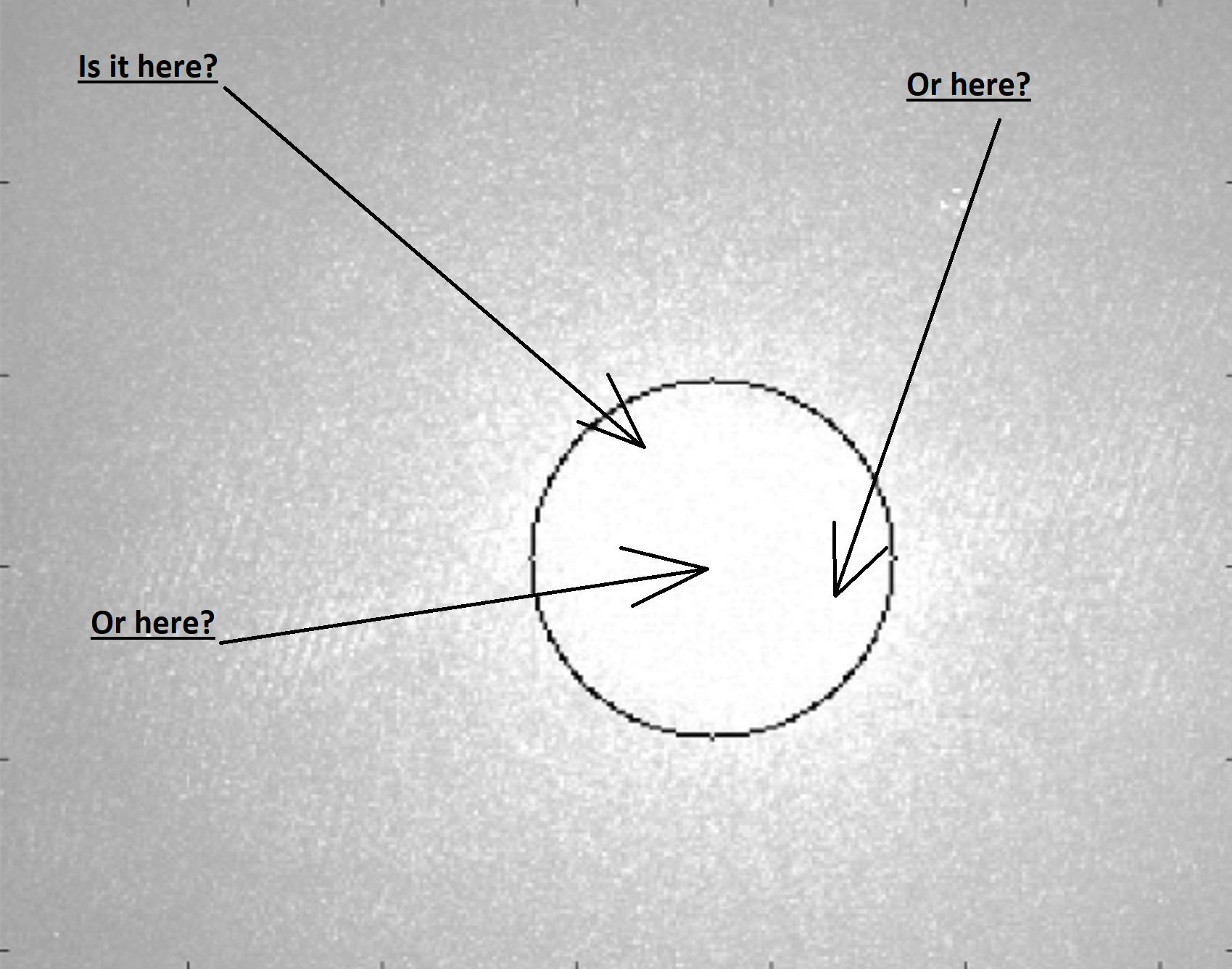
In this image: https://www.researchgate.net/figure/Dazzle-against-HgCdTe-FPA_fig3_284156197

Where exactly is the aircraft?

When the algorithm has switched to ‘HoJ’, the Optical Centroid (in this case Intensity Centroid) becomes the Track Point.

Now what will happen to the steering input when that bright patch starts circling and moving upon the seeker, even growing in size or shrinking?

The answer is:
Guidance output is proportional to Centroid displacement from Boresight.
If the motion frequency is within the guidance loop bandwidth you will get steering command oscillations, which will lead to further tracking instability and increased Miss distance.

Of course the oscillatioins will not be so abrupt as in early generation missiles that lacked adequate temporal filtering and control-loop BW limitations.

But the difference versus a Lamp based DIRCM is obvious.

Needless to say, this is exactly why modern LDIRCM systems have to rely on Micro Jitter and Intensity modulation in order to achive a non static dazzling of the seeker.