No, it’s not a marketing lie. All IIR missile are DIRCM capability, u can check president-s booklet.
Not how it works, it mostly burns through and fry’s the seeker head. Worst case scenario the missile cant see anything and spins out of control, Its effectively like pulling a bed sheet over the missiles head but with heat.
@Armen_Lozone asked me to tell you that you are Special and didnt read the post regarding time to burn or anything else
4 Likes
Nope. The laser power is too low.
Works only for 1-3 gen IR missile. Check President-S brochure.
2 Likes
You know how accurate and powerful that laser would need to be to burn the seeker within a few seconds?
2 Likes
Doesn’t have to burn it. Heating it up slightly will do since that lowers the contrast and so on. The point of argument is how effective that really is.
Never disputed that, guy I responded to made the specific claim that DIRCM is supposed to fry the seeker, which again is a ridiculously difficult task.
2 Likes
“200W nominal, 250W peak”
CIRCM - Common Infrared Countermeasures - Northrop Grumman | Northrop Grumman -AH64E DIRCM
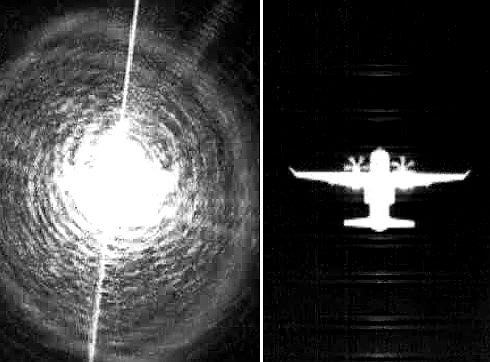 -Air bus c295 with a similar system,
As you can see. The image is totally usable for chase mode. The sheer amount of time that would be needed to avidly physically damage the seeker isn’t a luxury the defender has
It’s a power supply, not output power, genius.
How was the photo taken?
3 Likes

We are still waiting for the original source of the images including additioinal contextual information from said source. The link from Northrop does not include these images.
The seeker does not have to be ‘burned’ or physically damaged. It is enough to dazzle it so it cannot produce high contrast image that can be further used to establish a valid Target Centroid for guidance purposes.
You don’t know that.
There is no information from what distance that image was taken. The image could be taken from more than kilometer away and the target can be anywhere inside that bright patch. Also this patch can be made to appear moving or changing in size as the modulation pattern of the beam changes how the seeker’s processing interpets the signal, by for example, using Jitter (beam steering) or altering the intensity, making the Tracking Centroid oscillate.
for you and i, but launched missiles have methods of calculating distance to target. even without using LRF.
no. its directly in the center of the bloom. literally no other way it can be seen. you cant argue to look at the sun and then say, it cuold be anywhere in the overall circle of light you see.
DISCLAIMER: (I AM NOT ENCOURAGING YOU TO LOOK AT THE SUN, YOU WILL HARM YOUR EYES)
reveals target features and extremeties
meaning that the seeker suffers less blooming and saturation can be countered via its own processing techniques
1 Like
its directly in the center of the bloom. literally no other way it can be seen.
Once again, bullshit.
The dazzle does not appear fixed in space around the Aircraft. It appears in the seeker itself. This is explained in details in one of the documents you provided.
Surface scattering of the dome, aberrations and bloom cause a dazzle region that is offset and can move with angle changes.
As a basic and correct optical analogy: if you take a laser pointer and point it into camera lense, and move it around, you will see a bright saturated region on the image. You can tilt the laser pointer around it’s axises and you will see how the bright spot moves around, changes shape and size.
Here is an example video that clearly shows this.
https://www.youtube.com/shorts/ilNH3j1G-SI
The document “Requirements for laser countermeasures against imaging seekers” Does not investigate the effect of active modulation of the source with the intent to dynamically shift the target centroid in order to introduce guidance error (I explained it in detail in the other topic). It simply states: (re-phrased): ‘if we have a dazzle region on the seeker, the geometric center of that spot must be where the aircraft it located, therefore this type of countermeasure won’t work’.
On the other hand it nonchalantly mentions that lasers with output power as low as 100 Watt can cause damage to FPA matrices, while asserting a position that LDIRCM systems are practially useless agains missiles using IIR seekers, which by itself is absurd, considering the advancements in laser diode and other emitters in the past 30 years.
1 Like
Filthy language out please
Do you understand ANYTHING about what LOS is?
No matter where the target is.
If it is emitting a laser, anything can follow the center of that laser to arrive at the emitting source.
Its simple.
I don’t know how you don’t understand that. Or maybe you do but you refuse to accept it.
Assumptions
Let me assume something too for u.
Surface scattering won’t take place because IR seekers have highly specialised and clear substance domes.
With filters. Not just software but hardware as well.
Any offset will be due to missile trajectory not being dead on. Pointing dead on will eliminate offset. And if the offset is large, the seeker’s elements have that much of a greater angle to detect the target behind the DIRCM.
As an even more basic analogy.
Keep bringing that camera closer and closer while the camera follows the light/ laser source.
Deviations keep reducing until “impact”.
It also does not take into account that missiles have countermeasures for such erroneous guidance.
A simple suspension gate will allow the missile (irl ofcourse) to cost the best most optimal path while conserving energy and reducing bleed
Not to mention that active modulation by itself is is own worst enemy when facing IIR seekers.
Any sort of pulse feature against an Imaging sensor won’t cause over saturation for more than it’s pulse duration making that the seeker can maintain lock during every moment the pulse shuts off or as you aptly stated: modulates.
It seems once again you missed the point.
High power lasers CAN damage FPA seekers.
But not during short periods of time.
Modulation, distance, filters and, specifically in the case of IRIST, reflective scanning mirrors, reduce damage/ increase time and power needed.
You might like to note that none of the DIRLCM systems, unlike DIRCM systems, are direct emitters.
They are all reflectors. With power losses incurred in so many sections of the flow that you would realistically not trust it against an IIR seeker
2 Likes
Not to sound like an twat, but how do people not understand that… Its literally how our eyes work closer the object is the more we can distinguish its features
Thats the input not the output
trust me… it needed to be said lol.
ive been arguing with exactly those kind of people about this
2 Likes