We’re constantly refining many vehicle and weapon parameters, and the Heavy Cavalry major update is no exception. While tuning missile flight models to better match their real-world counterparts, we’ve introduced new missile mechanics, and we’re excited to share them with you!
The Effect of Pressure on Rocket Engine Thrust
One of the major changes is related to a new mechanic used in missiles: the dependence of the rocket engine’s exhaust velocity on atmospheric pressure. Previously, rocket engines in the game always produced a certain “average” thrust, usually for an altitude of approximately 1,000 meters. Now, thrust will increase when the external pressure decreases, and consequently with increasing altitude.
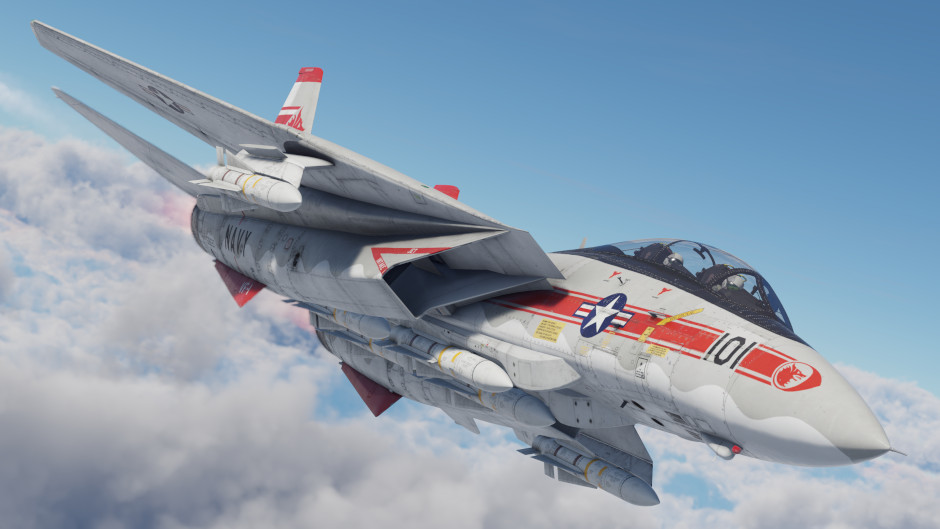
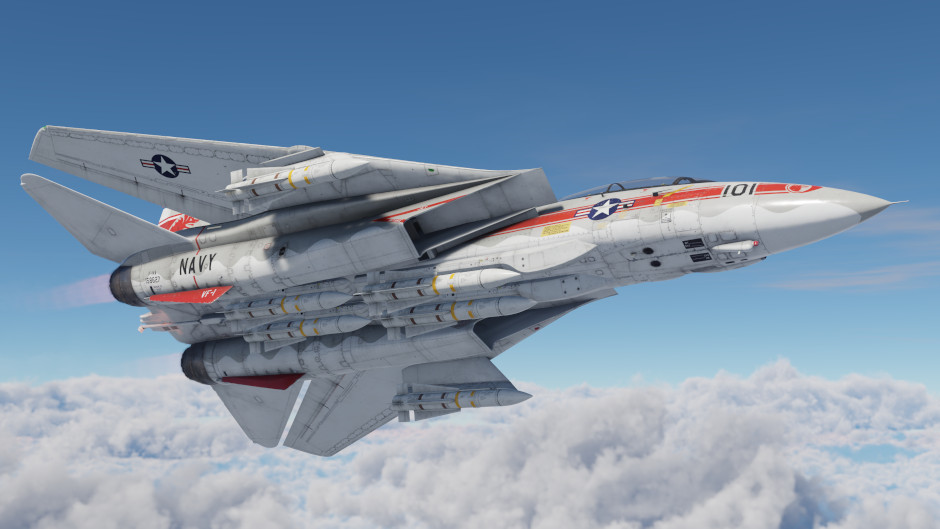
The first missiles to use this mechanic are the AIM-54 Phoenix family. In the future, along with modifications to existing missiles based on your reports and newly available data, we plan to add this mechanic to all other missile systems.
AIM-54
Thanks to your reports, we’ve significantly reworked the flight model of the Phoenix missiles in this major update. In addition to the thrust-pressure relationship that we wrote above, which allow missiles to fly a little bit faster and further at higher altitudes, changes have been made to nearly every parameter, including those related to maneuverability. For example, the maximum G-force has increased from 17G to 22G and 25G for the AIM-54A and AIM-54C respectively, and the maximum trim angle of attack has doubled from 12.5 to 25 degrees. This will allow these missiles to better turn toward the target and operate more effectively at relatively short ranges, making them slightly more versatile.
Missile Air-breathing Engine Improvements
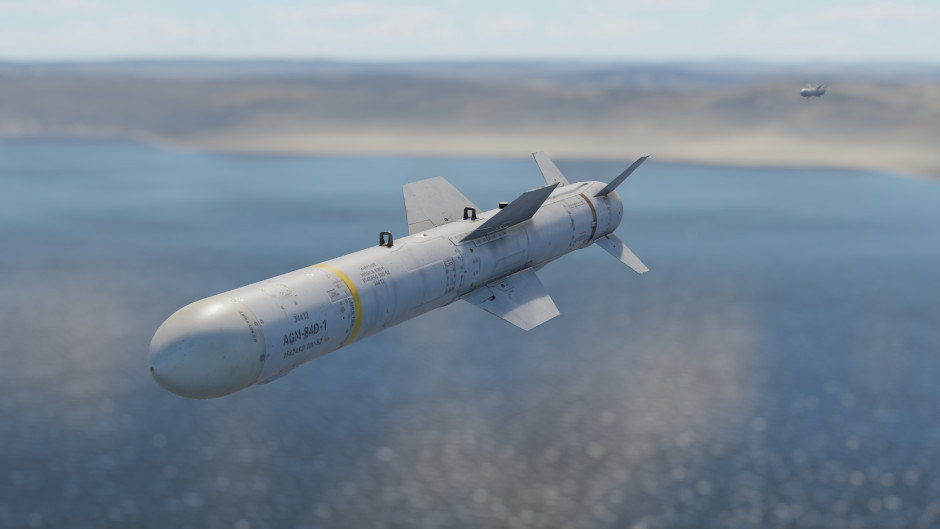
We’ll not only be introducing the new ramjet found on the new Kh-31, but we’ll also be introducing turbojet engines on a number of existing missiles, including the AGM-84 and Kh-59M. While fuel consumption and thrust for these engines were previously constant, after the update, they will depend on flight speed and altitude. The higher and faster the missile flies, the less fuel it consumes, but the thrust decreases.
Autopilot Engine Activation
In the previous major update, we introduced the I-DERBY ER missile, which is the first dual-pulse missile in the game. In Heavy Cavalry, it’s joined by the British ALARM anti-radiation missile, whose engine also fires in two stages: once at launch and again at the optimal moment of flight.
In reality, one of the things the second pulse on ALARM is needed for is loitering munition capabilities. Upon arrival at the loitering point, the missile deploys a parachute and slowly falls, waiting for a target to appear, after which it jettisons the parachute and re-ignites the engine. In the game however, at least for now, the second pulse will be used for only two purposes: maximizing range, so the launch vehicle can remain as far away from the threat as possible, and increasing the missile’s velocity in the terminal portion of its trajectory.
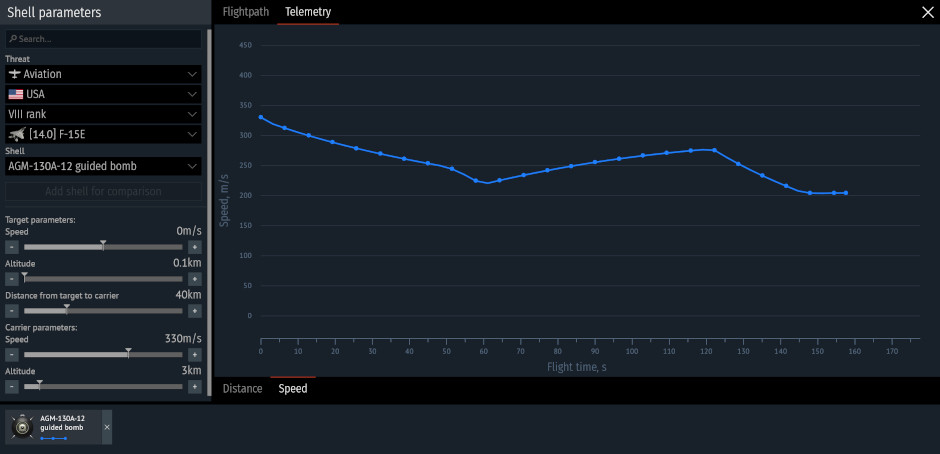
However, the ability to activate the engine in flight isn’t limited to dual-pulse rocket engines. This update adds a delayed engine start mechanic to the PGM-500, PGM-2000, and AGM-130A-12 guided bombs, significantly increasing their range. Engine operation can also be clearly seen on the new missile comparison screen below! Before booster activation, the speed decreases in flight, and then begins to increase as thrust appears.
Altitude Hold
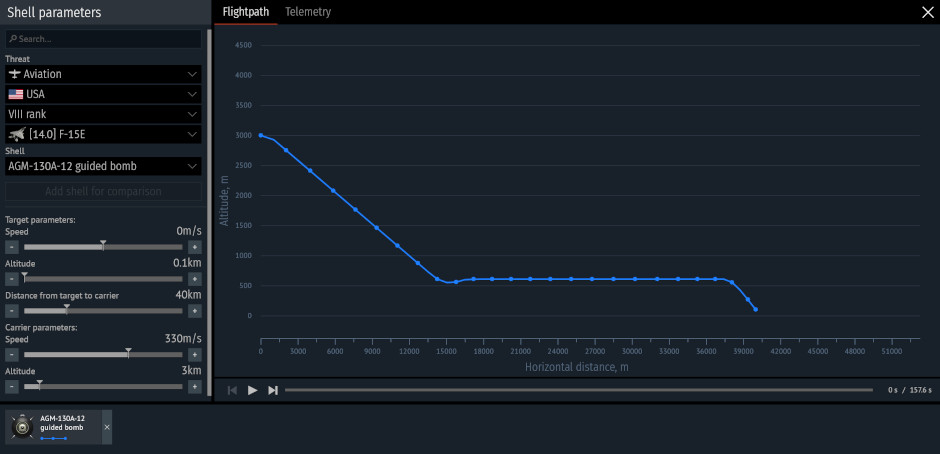
Some bombs and missiles, including those with in-flight correction capabilities, maintain their cruising altitude instead of climbing and then diving, which, among other things, makes them more difficult for the enemy to intercept. This update adds this capability to the following bombs and missiles: AGM-130A-12, PGM-500, PGM-2000, AJ.168, LMUR, CM-502KG, and SPIKE-ER.
As a reminder, helicopter ammunition will not have man-in-the-loop capabilities in this update. We plan to add it in the next major update once most nations have helicopters with suitable armament.
Our Future Plans
This update will introduce the technical ability to change lift coefficient based on Mach number. It increases at subsonic speeds, drops sharply at transonic speeds, and gradually decreases at supersonic speeds. The first missiles to be simulated with this physics feature will be the AIM-7 and R-27 series missiles. We’re currently working on refining their flight models to bring their drag, thrust, and maneuverability data closer to real-world counterparts, and plan to release these changes after the Heavy Cavalry major update.
Mechanics for changing lift coefficient based on speed will be added to all missiles in the game in the future, and we will keep updating the flight models of various bombs and missiles based on your reports and emerging data, while simultaneously implementing various new mechanics for older missiles.
That’s all for today! The Heavy Cavalry major update is coming soon, and you’ll be able to try out the updated missiles for yourself.