Yea I’m going to go to Gaijin’s building and beg them for a bomber buff.
direct quote:
“Next comes the issue of the high-explosive fragmentation impact of 20-30mm shells on the aircraft’s skin. Fragments and explosions from these shells do not penetrate the skin reliably, reducing the damage to internal modules. […] components and assemblies located inside the wing and fuselage will suffer damage if the impact is close to these modules.”
*the game does not reflect reality
1 Like
But
I’m so confused
2 Likes
Dude, do you guys seriously not understand what I’m saying? What I said was against you calling detailed modeling a ‘NERF’—I have zero issues with detailed modeling. In fact, I think the game will be much better with detailed modeling/coding and that it will make the current DM far more logical. That’s all I was trying to say.
In fact, I think we’ll be able to recreate real-life footage even better this way, allowing us to see just how consistent the current model actually is. By the way, I literally just downed a B-29 with 1 Falcon missile and 2 IR missiles, which felt pretty consistent to me lol—I honestly can’t believe there are still people who can’t pull that off. It just makes no sense to engage with people who keep spamming a single video even after their own claims were disproven in the previous topic.
Anyway, I’ve posted nearly 300 messages on this topic and talking really gets us nowhere. I guess the only option left is to just watch fighters dogfight among themselves and mindlessly shoot each other down every match lol
Any news from Gajin how long this experiment is planned to run? Its no fun to play against bombers and attackers in Air and Ground modes. Wounder how torpedo bombers do in Naval against AA.
1 Like
Read about said improvements and changes from the post.
3 Likes
Air Assault PVE mode is COMPLETELY uplayable. Impossible to win because the bombers are indestructible…
From 10 games 10 loss always. Noone can do anything about B29 waves, and if only 1 plane is able to drop down his bombs = Instant loose… THX GAIJIN for NOTHING in this game mode!!!
3 Likes
That’s always going to be what the game boils down to because gamemodes are designed around killing other players being the main objective. Fighters are made for that kind of thing, so they were destined to be the focal point of the match.
Bombers are fundamentally incompatible with current Air AB/RB format since their entire job isn’t really that relevant to progressing the battle. They could be completely immortal and it still wouldn’t change much because fighters almost always have the speed and maneuverability to avoid bombers if they wish, choosing to instead focus on the other aircraft actually affecting the outcome of battle.
For bombers to become both fun and viable, there needs to be a rework to existing gamemodes. Everything else up til that point are band-aid fixes.
2 Likes
This has been the established gameplay for 99% of the time since the game was released in 2013.
1 Like
Wow, your historical knowledge is REALLY impresive. Shot down in droves you say?
The British Imperial War Museum put the number of American heavy bombers lost per mission lost in combat across the whole war at appx 1.7% - prior to the introduction of the P51 in 1943 the number was up to 3.3%, with the higher risk missions of the war. While crewmen had, during the hardest times, 30% chance of survival this didn’t mean the bomber had a 30% chance of survival. (In other words: Meat bags packed into an airframe with tin foil for armor are a heck of a lot squishier than the machine itself.)
Yes, on SOME missions losses were pretty heavy, Schweinfurt in August 1943, out of nearly 400 B-17s sent, 60 were shot down. Around 16%. If ten bombers spawn in a mission in War Thunder, which is rare, that’s about 2 downed. And War Thunder doesnt have 88s, random mechanical or crew failures from men and machines puhed too far.
Imperial War Museum
National Museum of the USAF
Axis History Forum
But those are B-17s which are the best of the best, what about the war as a whole:
The USAAF 8th Air Force had…averaged over the whole war, a 1.7% to 2.1% daylight strategic bombing aircraft loss.
US Army Air Force Statistical Digest
RAF Bomber Command lost an average of 2.2% to 2.4% during nighttime raids over Europe (Lanc., Halifax)
The National Archives
The Luftwaffe lost about 3.5% to 4.5%…
German Federal Archives
While the Imperial Japanese armed forces experienced the worst average at 5% to 7%
[US Strategic Bombing Survey (Pacific)(https://www.history.navy.mil/)
And just some closing remarks:
- The 5% “Hard Ceiling”: Historically, a 5% loss rate was considered the absolute mathematical limit of sustainability for a bomber command. If an air force consistently lost 5% of its bombers per mission, a crew could not mathematically survive a 25 or 30-mission deployment tour. When the USAAF hit a 16% to 20% loss rate during the single-day Schweinfurt raids of 1943, they were forced to completely halt deep-penetration daylight bombing until fighter escorts arrived.
National Museum of the Air Force
Bomber Command Museum Archives
- The “Damaged vs. Destroyed” Ratio: A key argument for Gaijin’s 2026 update was to model the fact that historical bombers came home heavily damaged but still intact. The Eighth Air Force historical rule of thumb was that 5 to 10 bombers returned with heavy damage for every 1 bomber that was completely shot down. In War Thunder’s pre-buff meta, structural damage instantly sheared wings off, compressing that ratio into a near-instant kill.
Our trusted friend the European Canadian
- The Geography Problem: Real missions spanned hundreds of miles where a damaged bomber could limp along for an hour to find a friendly airfield. In War Thunder, bombers spawn roughly 15km away from a swarm of climbing interceptors, concentrating a 6-hour gauntlet of historical air defense into a 3-minute death trap.
And finally The Snail in his own words. All Hail the Snail.
So…droves?
As a university educated military historian and passionate student of the subject of warfare from ~1750 to Present, I know the value of doing my research before speaking. (Yes, I can present you a picture of my degree…)
Your chance my friend…please present yours.
I understand the desire to get points and bump your grind. I really am sympathetic: I got my Fakours nerfed because the bottom half of the player base bitched and moaned about their premium airplanes getting destroyed because they couldn’t fly defensively.
Let’s make a deal: I’ll support what ever you want to do with bombers IF you support putting MY beloved pet back down to 13.0 ARB… because, and agains looking at statistics, there are PLENTY deadlier missiles in WT, including the PL-12, AIM-120C-5, and the R-77-1.
6 Likes
You sir are a treasure. Thats what we need to see, SOURCES
1 Like
You’d have to have absolutely no knowledge of the game to say that.
1 Like
This post was flagged by the community and is temporarily hidden.
1 Like
This post was flagged by the community and is temporarily hidden.
2 Likes
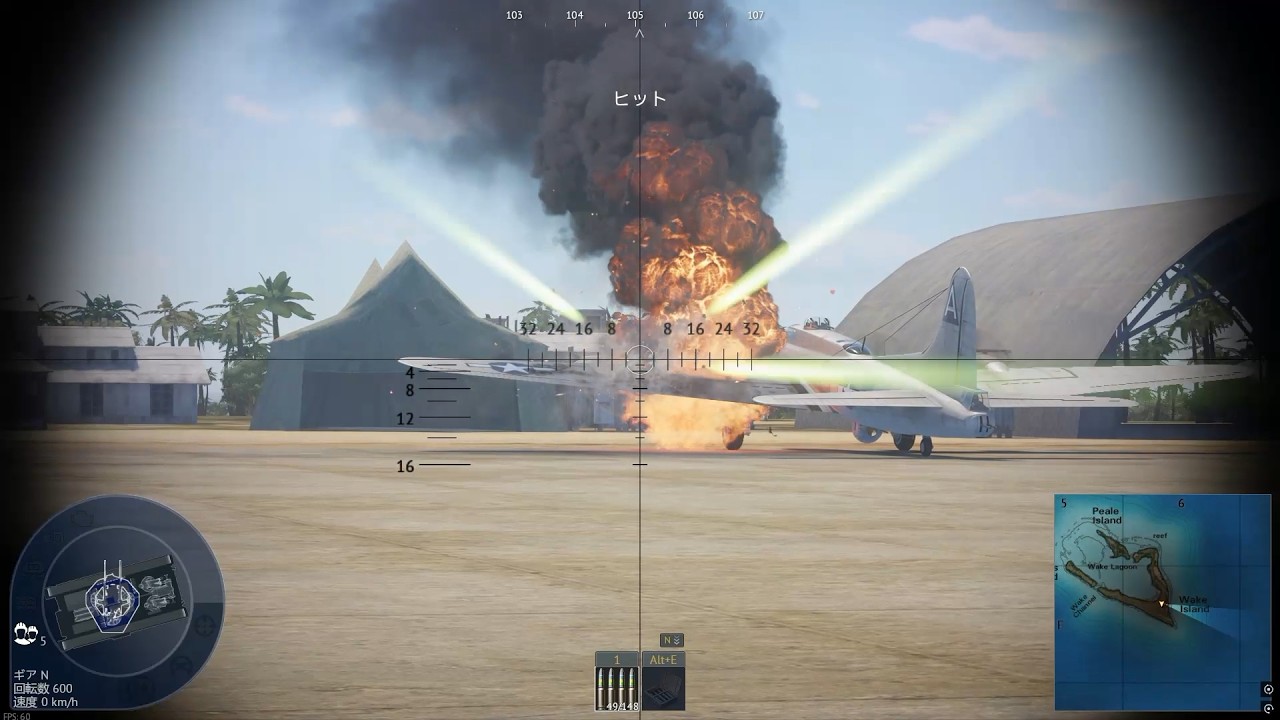
I tested the buffed B-17G with the following anti-aircraft weapons:
- 12.7 mm M2HB AA gun, API / M13 MGMC
- 20 mm FlaK 38 cannon, HEI / Wirbelwind
- 37 mm FlaK 43 cannon, HEI / Ostwind
I aimed at the wings and tail rather than the cockpit, since crew kills would interfere with the damage test. This is what happened.
The problem is the round you used is not the one that do the damage, is the Minengeschoss, look at the difference and this HEIT doesn’t do much damage to the bombers modules
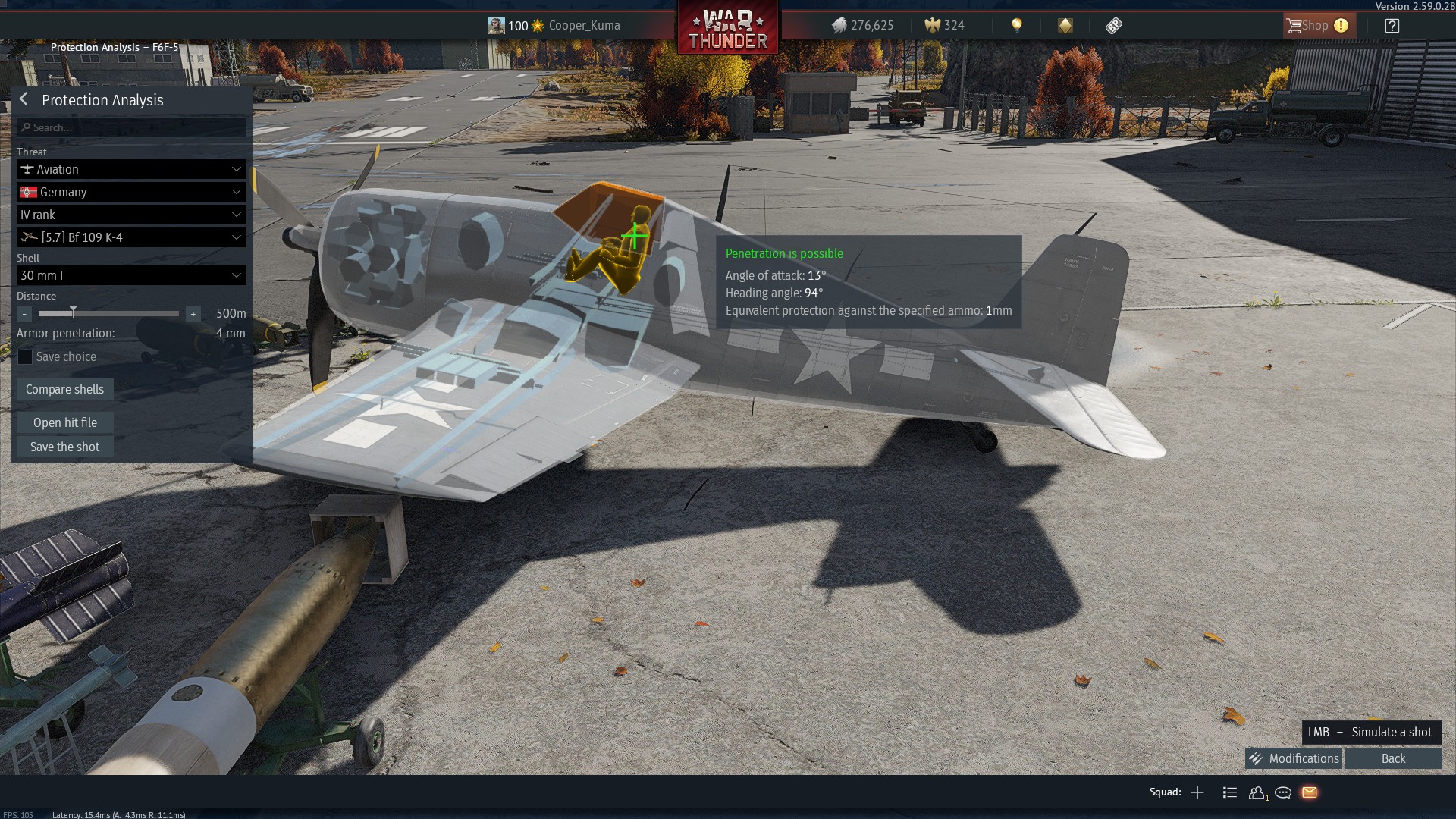
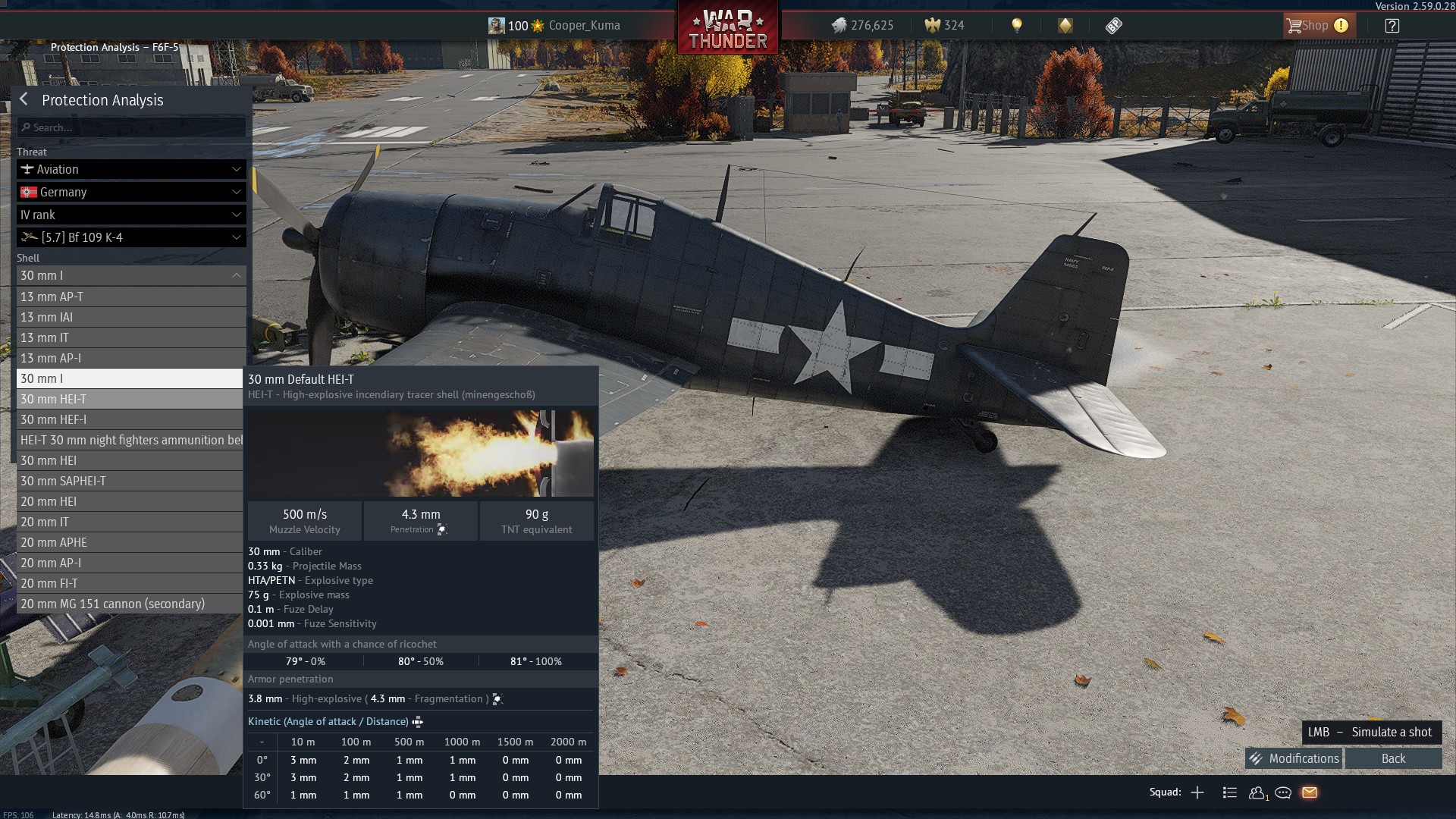
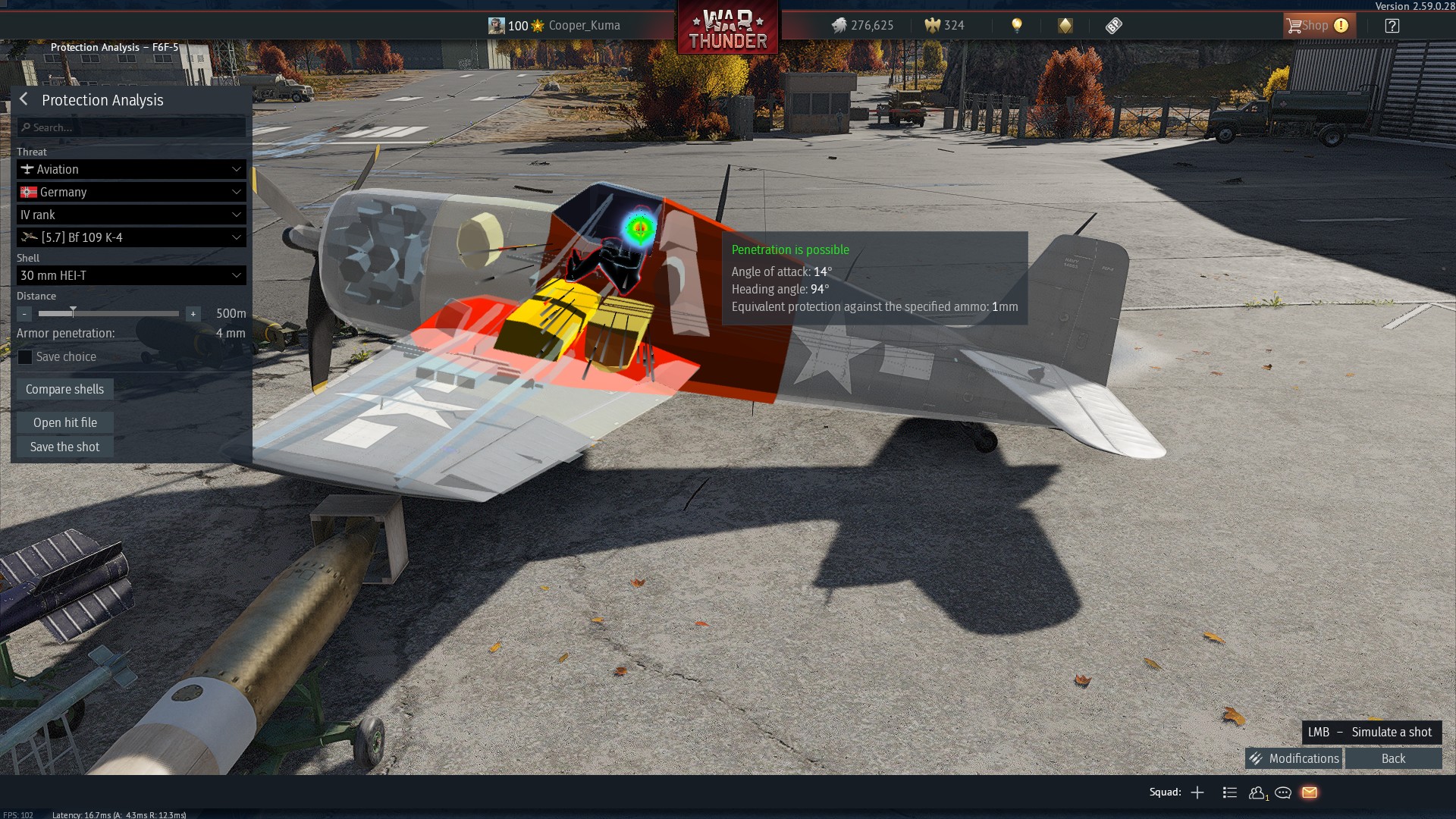
Look at the difference
EDIT:
This is the same round and look at the difference with a bomber, it’s doesn’t have armored glass

and the engine? red at best (hitting it)
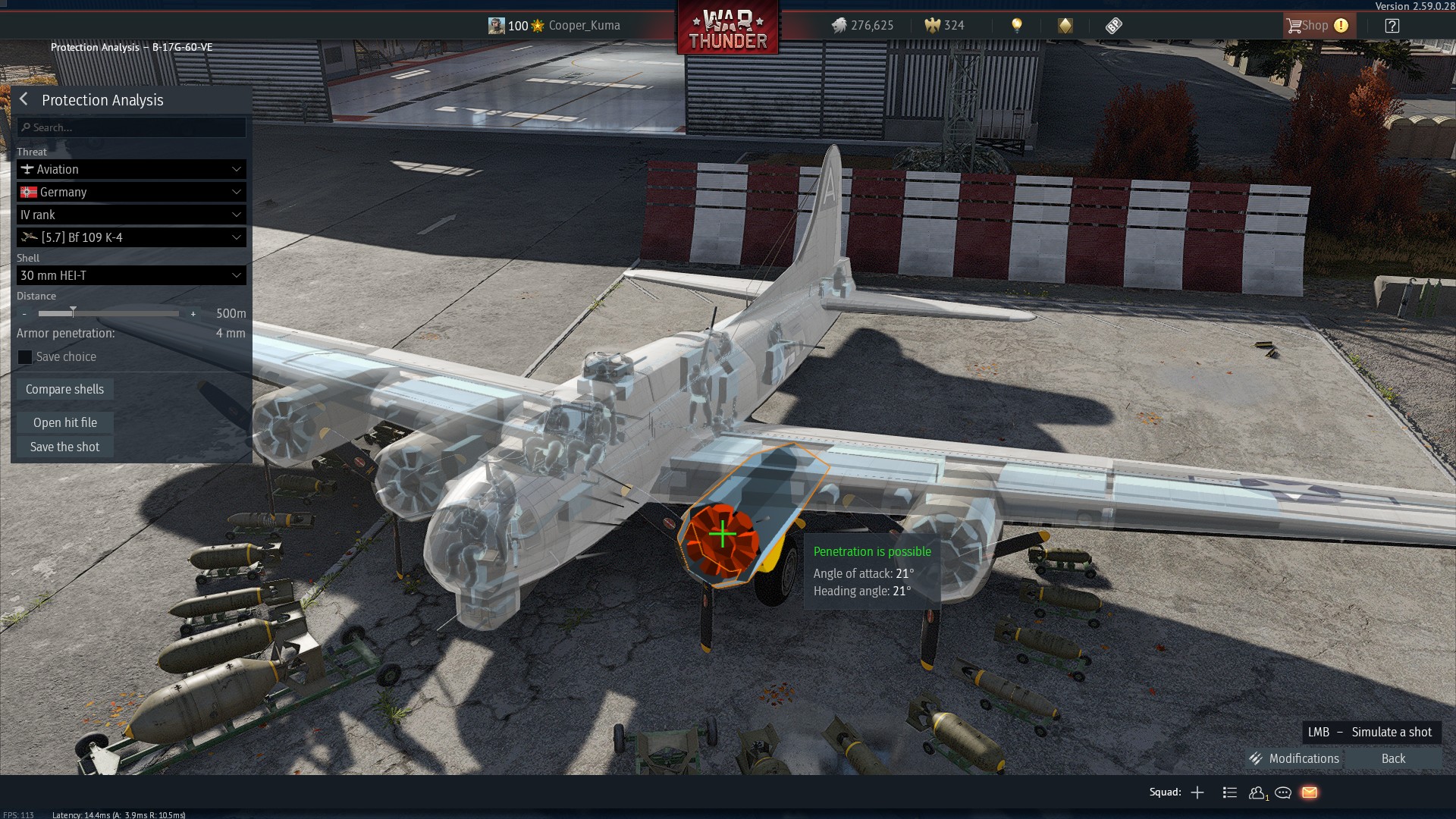
2 Likes
Comment about the engine, A 1946 report by the US did find that the B17 and B25 engines could take 2-3 20mm iirc
1 Like
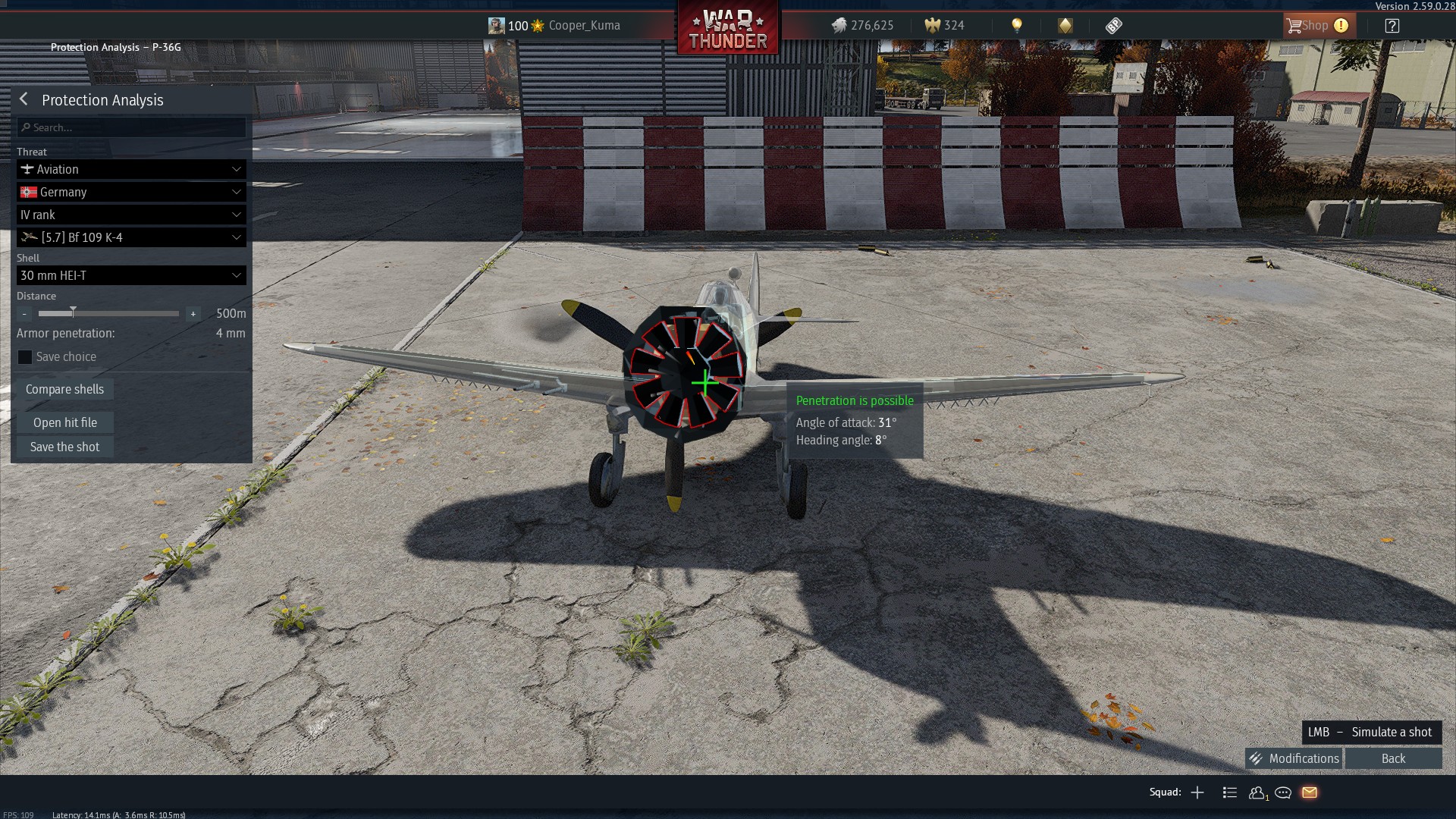
Another replay becuase I’M USING THE 30MM MK 108 WITH THE MINEGESCHOSS FOR THOSE TEST
Despite i am not involved in this - and idc - a short replay to your essay:
As long as you work with flaws statistical data - your results are flawed.
The reliance on average percentage loss rates is a convenient way to smooth out the real cost of the Combined Bomber Offensive. Those averages mix the high-loss deep penetrations of 1943 with the far larger volume of sorties flown later under long-range escort, plus milk runs, weather aborts and lightly defended targets. The resulting low single-digit figures are mathematically correct and still give a distorted impression of what crews actually faced.
Absolute numbers are harder to dismiss.
US heavy bomber combat losses in the European theater (primarily Eighth Air Force) already exceeded 5,500. Add the Fifteenth Air Force operating from Italy and the total climbs well past 7,000–8,000 heavy bombers lost against Germany and its allies. Medium bombers add further hundreds. Bomber Command’s own operational losses sit between roughly 8,300 and over 10,000 aircraft depending on the exact definition used. Those are not marginal figures.
Your claim that airframes were tougher than the men inside them also misses the practical point - and show that a degree can’t replace common sense:
Contemporary operational research showed that a large share of total losses began with engine or fuel-system damage that forced aircraft out of formation (USAAF) or immediate and total loss (RAF BC) due to way lower combat ranges and instant fuel fires. Protecting the systems that kept the aircraft flying could have saved more crews than added crew armour. Focusing only on the percentage of aircraft that returned therefore understates the real human cost of the planes that did not return.
“Dying in droves” is rhetorical. Using carefully averaged percentages that dilute the worst periods with the easiest ones is simply the other side of the same selective reading.
Absolute losses and the way those losses were counted matter more than the smoothed wartime average.
2 Likes