- Yes
- No

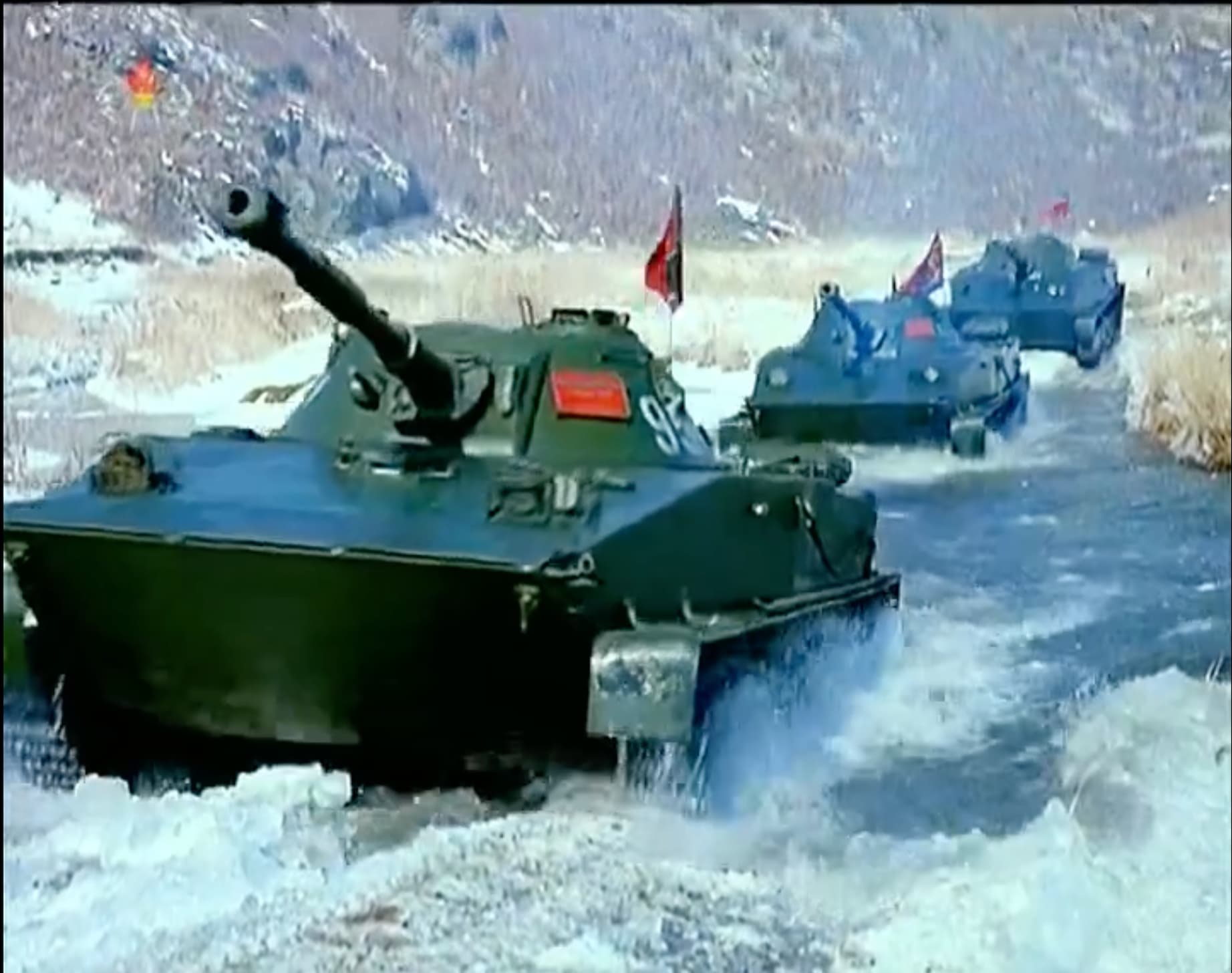
TL;DR: Soviet PT-76B, assembled locally in North Korea
History
During the Korean War (1950–53), the Korean People’s Army (KPA) was equipped primarily with T-34s — mostly the T-34-85, although some 76mm models were also used — and SU-76s. These were used to great effect at the start of the war, although their age quickly became apparent against the M26s, M46s, and Centurions used by American and British forces. An estimated additional 1000 T-34-85s were acquired immediately after the end of the war. In the mid-1950s, North Korea received their first T-54s, although initial deliveries were small in number. More substantial deliveries of T-54s, T-55s, and Chinese Type 59s came in the 1960s.
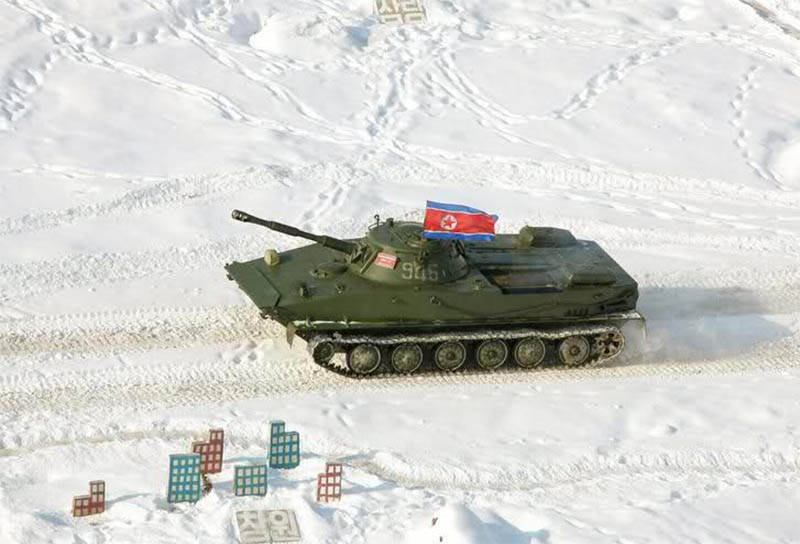
While the T-54/55-series was good for the time, particularly compared to South Korea’s 90mm-armed M47s and M48s (the latter only acquired from the mid-1960s onwards), North Korea was lacking light armoured vehicles. They still had very large stocks of T-34-85s, but that was largely it. An unknown number of SU-100s likely remained in service, as did around 12 IS-2s, but these were hardly light. To remedy this, they ordered an unknown number of PT-76s from the USSR, and in 1967, began domestic production under the name 1967-model amphibious tank [1967년식 수륙땅크]. Just one year later, they began domestic production of the T-55 under the name 1968-model heavy tank 68 [1968년식 중땅크 ≪68≫] — or so they claim.
Note:
Most vehicles produced around this time feature a very similar naming pattern, e.g.:
- 68, or 1968-model heavy tank 68 [1968년식 중땅크 ≪68≫], for the domestic Type 59
- 69, or 1969-model armoured personnel carrier 69 [1969년식 장갑차 ≪69≫], for the BTR-60PB copy
- 323, or 1973-model armoured personnel carrier 323 [1973년식 장갑차 ≪323≫], for the domestic APC
The PT-76B reportedly has the name 1967-model amphibious tank. Based on the above naming scheme, it may be called the 67, although this is not explicitly confirmed — although I personally believe it is highly likely. As such, I will be referring to it as the 67 throughout this post.
In the case of the 68, full-scale production likely actually began in 1973, and was actually of slightly modified Type 59s — not T-55s. It is similarly likely that local assembly of knock-down kits, not actual domestic production, for the PT-76 also began in the early 1970s, although preparation of factories for this purpose likely did take place in the late 1960s. It is unknown how many PT-76s were locally assembled — or how many were received straight from the USSR. Multiple PT-76s were spotted in the country, according to CIA reports, as early as 1968.
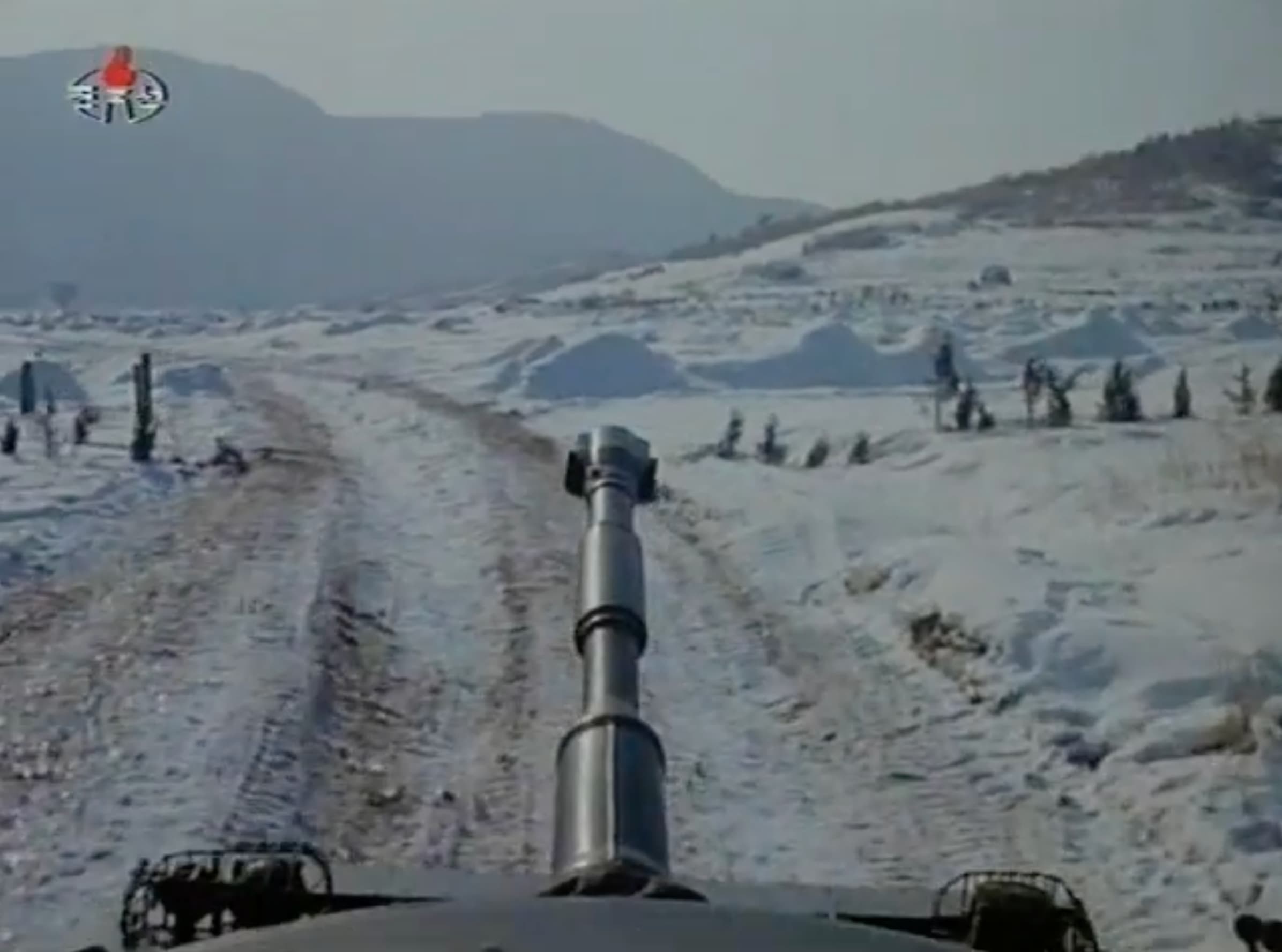
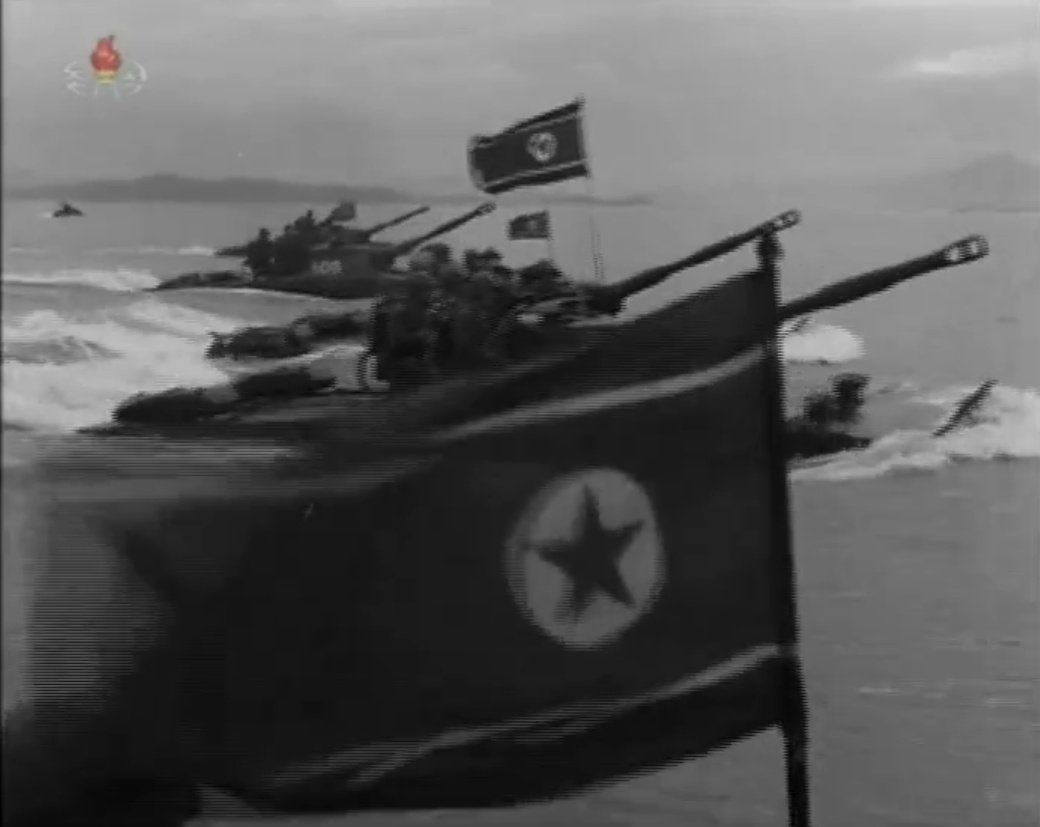
The 67s — specifically the PT-76B model, identifiable by the double-baffle muzzlebrake and the two-plane stabiliser (as seen by the ability to fire on the move) — were complemented soon after, around the early 1970s, by small deliveries of Type 62 and Type 63 light tanks from China. These vehicles are rarely spotted, and may have been pulled from service by now. The 67, however, remains in service to this day, and was most notably seen during a 2012 documentary celebrating Kim Jong Un, who had become leader just a few months prior — in some clips, he was seen driving vehicle no. 951.

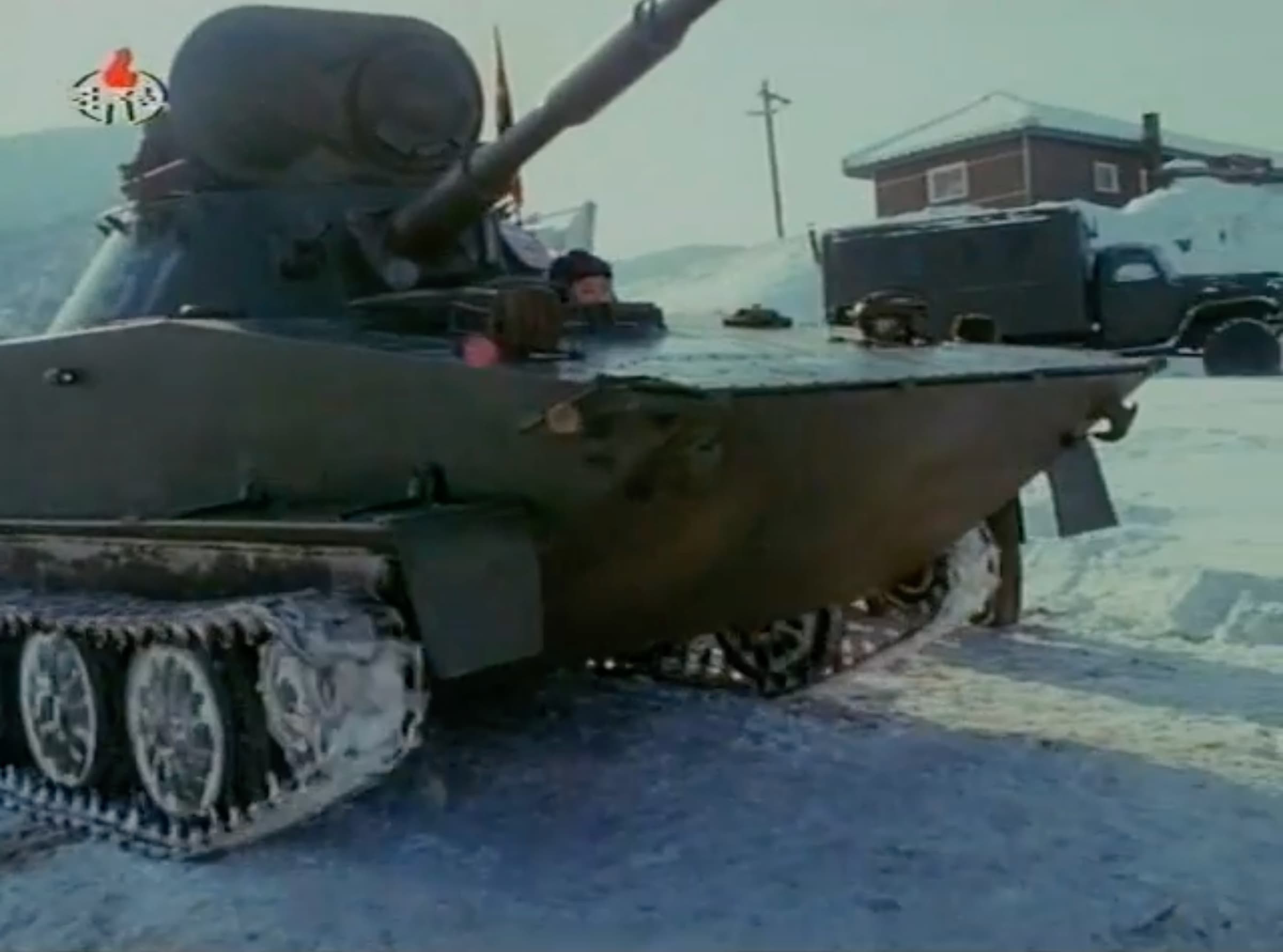
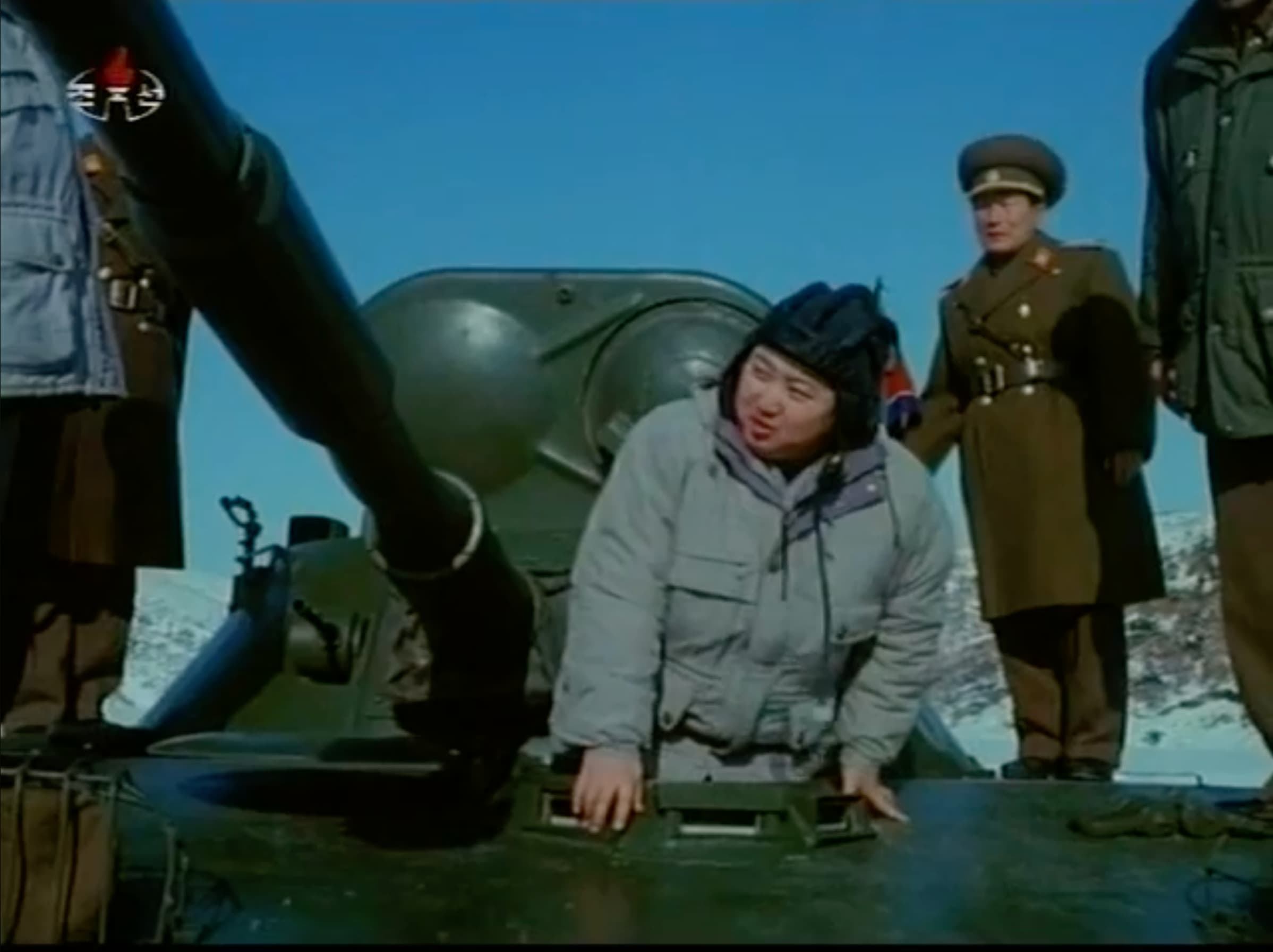
Kim Jong Un driving a 67
Although highly obsolete, the 67 aided North Korea massively in the development of a number of other amphibious vehicles. The first of these was likely the 323-based light tank — it housed a PT-76-inspired turret housing an 85mm cannon on the chassis of the 323 APC, which had been modified with PT-76-style waterjets. This vehicle likely had a limited production run sometime in the mid-to-late 1970s, before being succeeded by the Sinhŭng light tank. The Sinhŭng was first produced in 1981, and used a new chassis, albeit with large influence from the 67 and the Chinese Type 63, with a very similar turret to the 323-based light tank. The 67’s influence also extended to tracked and wheeled APCs — the Chunma-D tracked APC, entering production in 2009, used the same amphibious chassis as the Sinhŭng, and the ‘M2010’ 6x6 and 8x8 APCs, which themselves have a number of derivatives, use the waterjets and possibly also the engine of the 67.
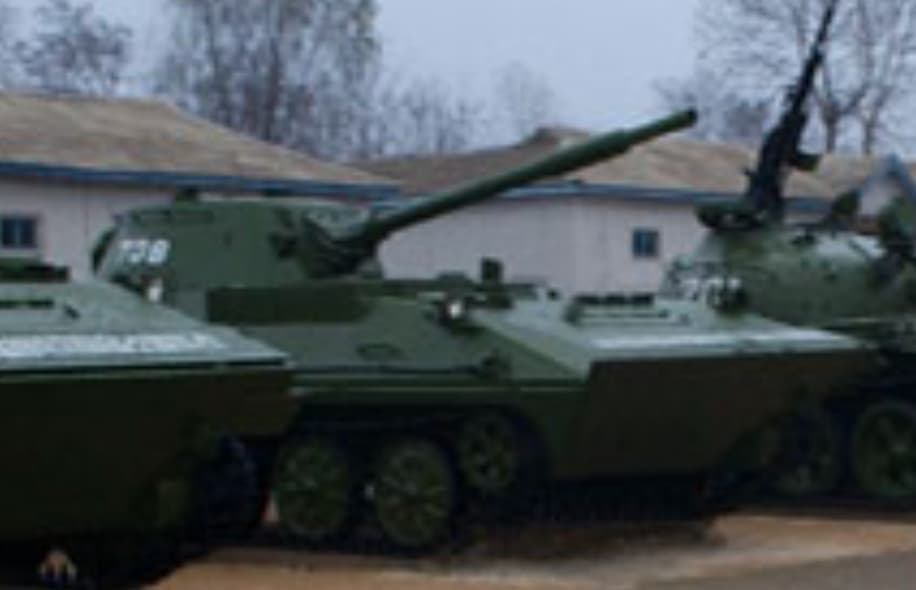
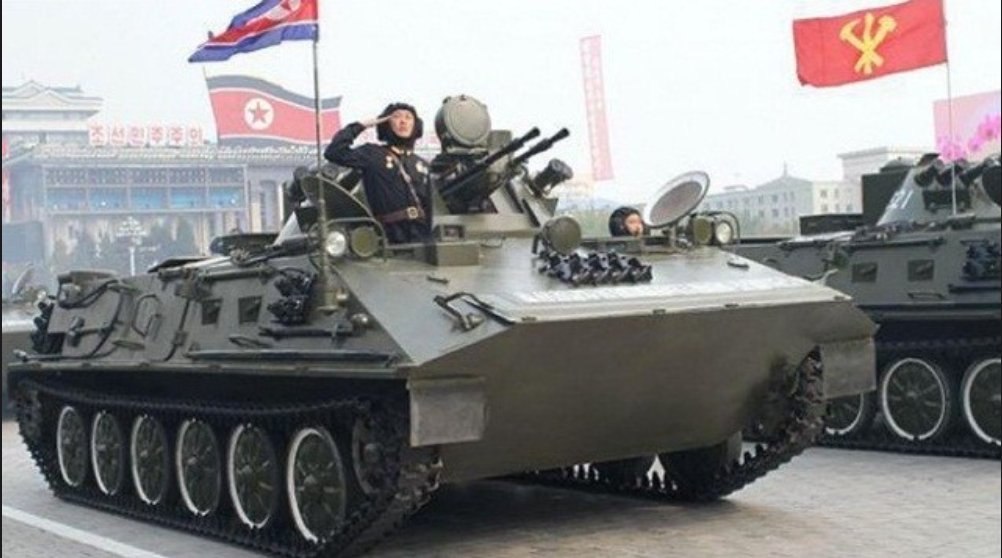
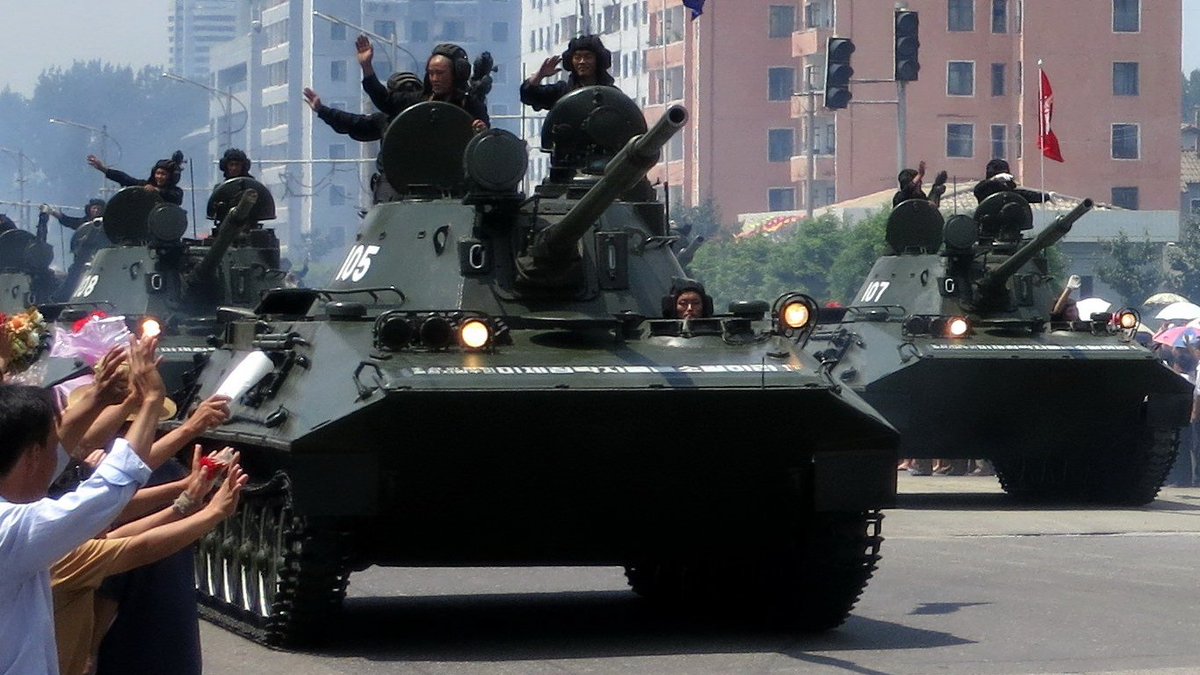
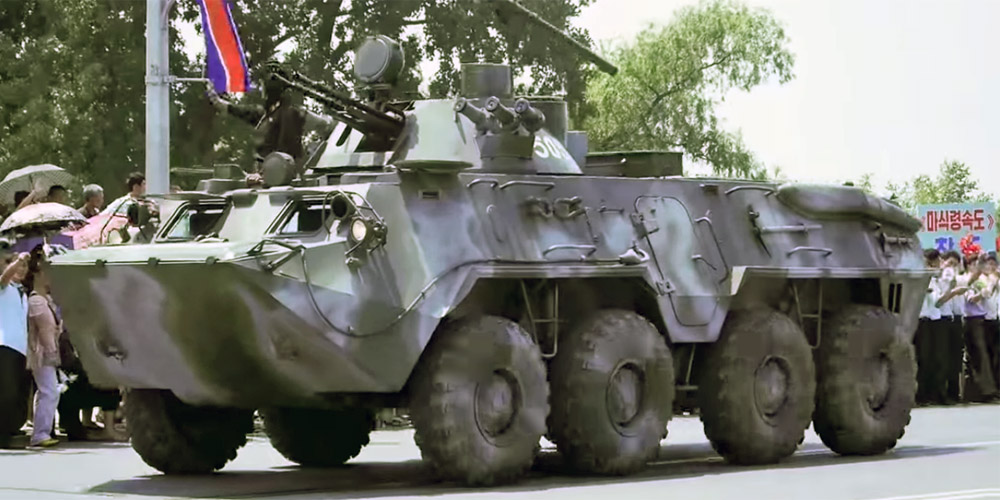
Domestic vehicles, all of which share some characteristics from the 67. Clockwise, from top-left: 323-based light tank, Chunma-D APC, Sinhŭng light tank, ‘M2010’ 8x8 APC
Characteristics
The 67 is armed with a two-plane stabilised 76mm D-56TS main cannon. This is capable of firing APHE, APCR, and HEAT-FS rounds — BR-354 APHE penetrates 99mm @ 0° @ 10m, BR-354N APCR penetrates 152mm @ 0° @ 10m, and BK-354M HEAT-FS penetrates 200mm @ 0° @ 10m. 40 rounds can be carried. The main gun can elevate -4°/+30°, at 6°/second. The whole turret traverses at 20°/second. The 67 is also armed with a coaxial 7.62mm SGMT, for which 1000 rounds can be carried.
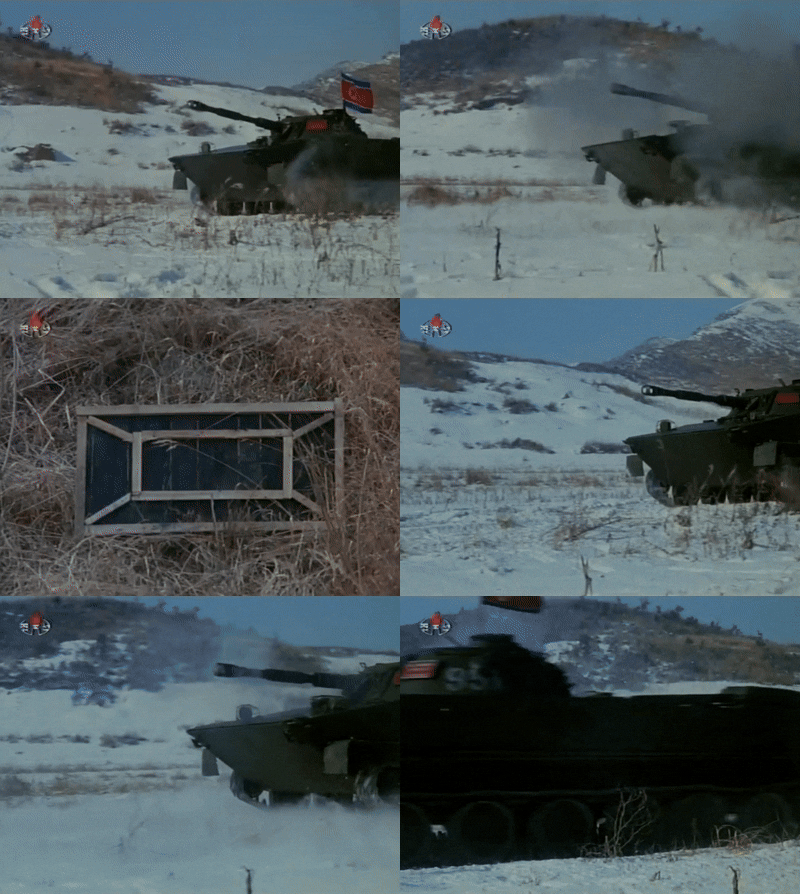
67 firing on the move
The 67 is lightly-armoured: the upper front plate measures 10mm at 80°, and the lower front plate 13mm at 45°. The sides measure 13mm at 0°, and the rear 6mm at 0°. The turret is similarly lightly armoured, measuring 15mm all around, sloped at 15°.
Despite is classification as a light tank, the 67 is not exceptionally mobile. It is fitted with a V-6 diesel engine, producing 240hp. The 67 weighs 14t, giving it a power-to-weight ratio of 17.1hp/t. It has a top speed of 44km/h forwards, 6km/h backwards, and 10km/h in water. The 67 is also fitted with an ESS system.
Conclusion
The 67, while copy-paste, would be a welcome addition to a United Korea Ground Forces Tech Tree — essential not only because it would be a much-needed low BR (5.3) light tank, but also because of its large historical importance to North Korea’s domestic light armoured vehicle industry.
Specifications
Armament
- 76mm D-56TS
- Two-plane stabiliser
- 40 rounds
- Ammunition
- BR-354 APHE
- 99mm @ 0° @ 10m
- BR-354N APCR
- 152mm @ 0° @ 10m
- BK-354M HEAT-FS
- 200mm @ 0° @ 10m
- OF-350M HE
- 13mm @ 0° @ 10m
- BR-354 APHE
- Vertical Guidance
- -4°/+30° @ 6°/second
- Horizontal Guidance
- 360° @ 20°/second
- 1x 7.62mm SGMT (coaxial)
- 1000 rounds
- AP-I/API-T belt
- 13mm @ 0° @ 10m
Armour
- Hull
- UFP: 10mm @ 80°
- LFP: 13mm @ 45°
- Sides: 13mm @ 0°
- Rear: 6mm @ 0°
- Turret
- Front: 15mm @ 15°
- Sides: 15mm @ 15°
- Rear: 15mm @ 15°
- Roof: 6mm
Mobility
- Speed
- +44km/h / -6km/h on land
- 10km/h in water
- Weight
- 14t
- Engine power
- 240hp, 17.1hp/t
Other
- Crew
- 3
- Smoke
- ESS
Images
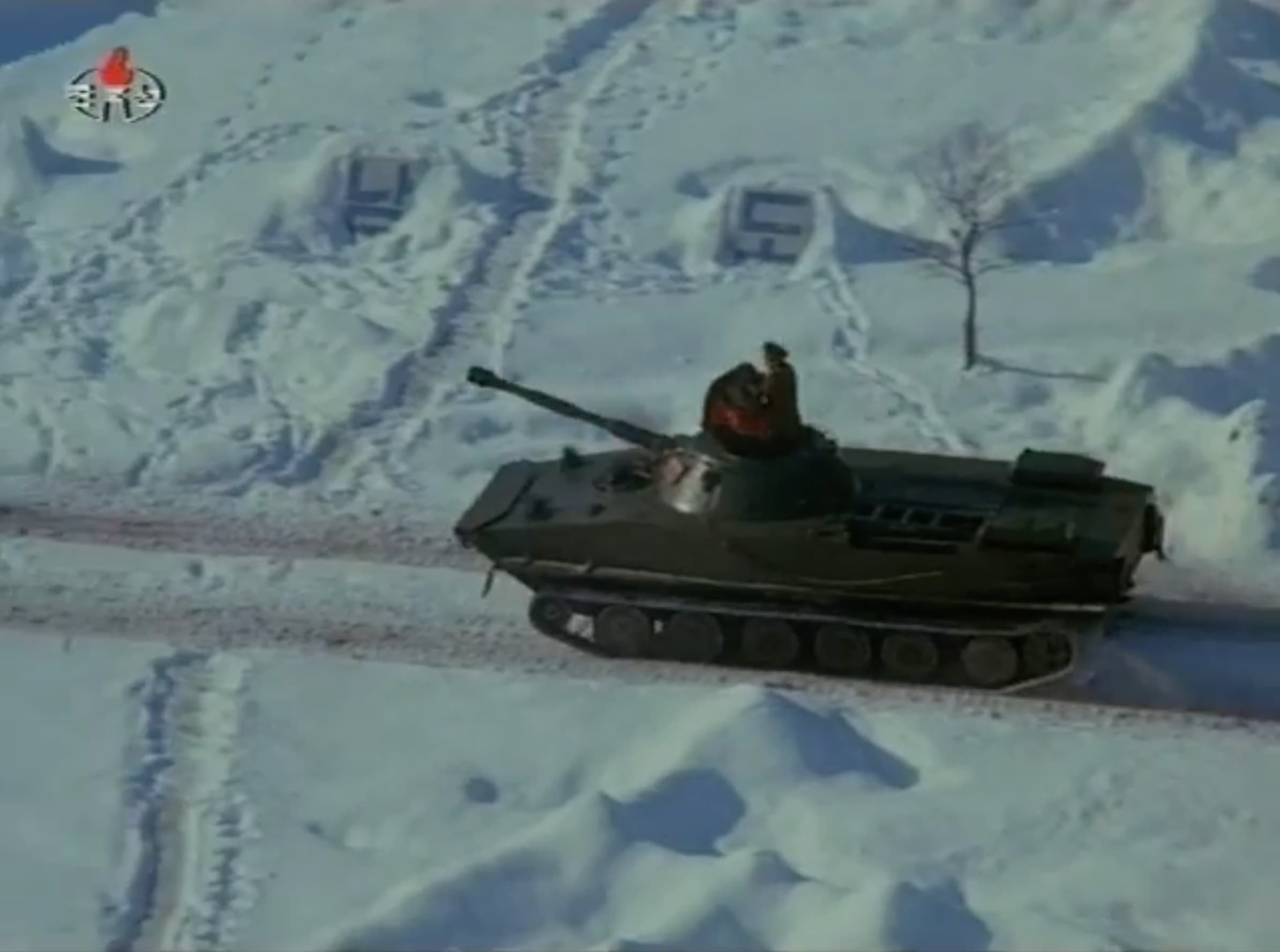
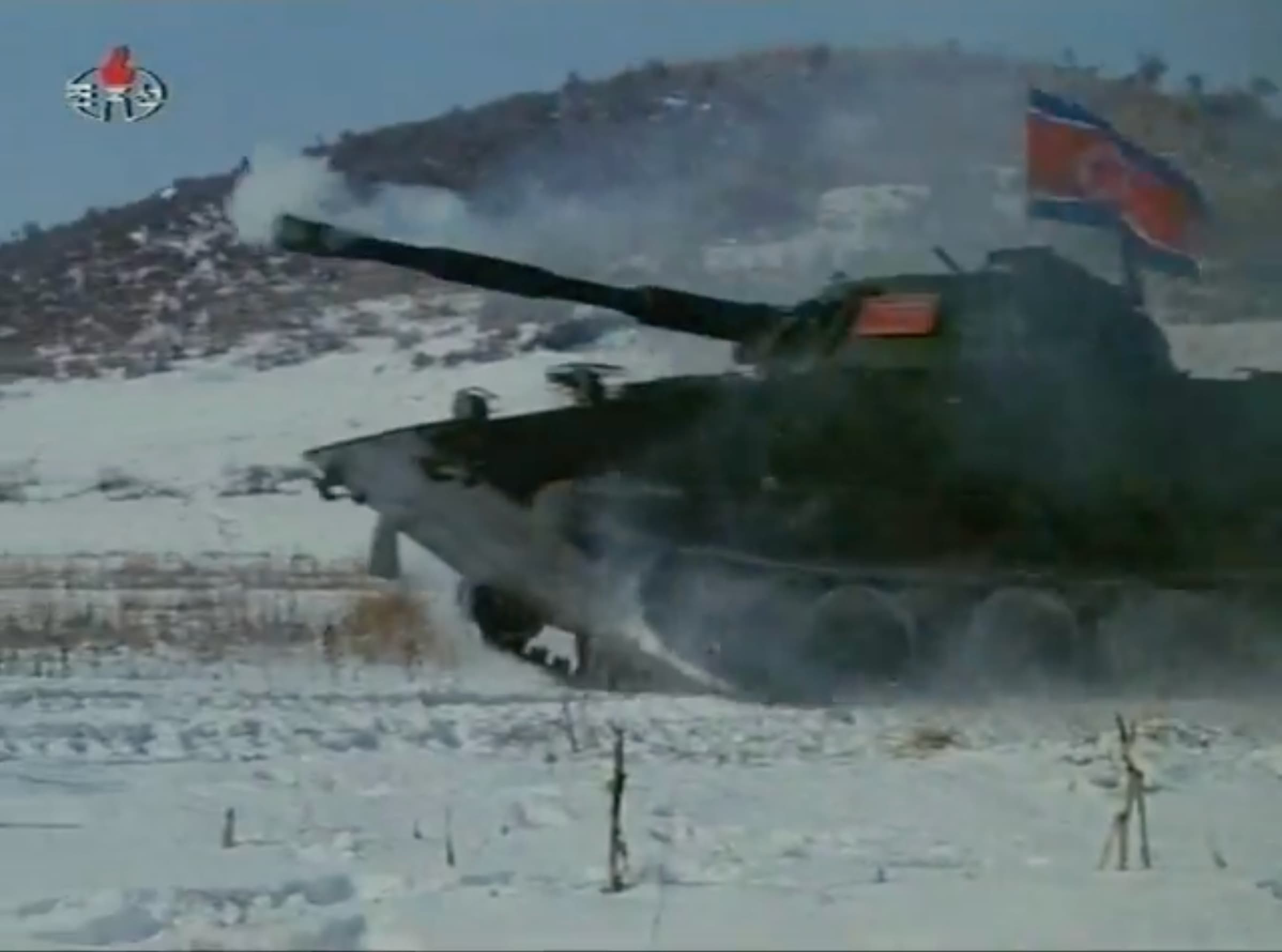
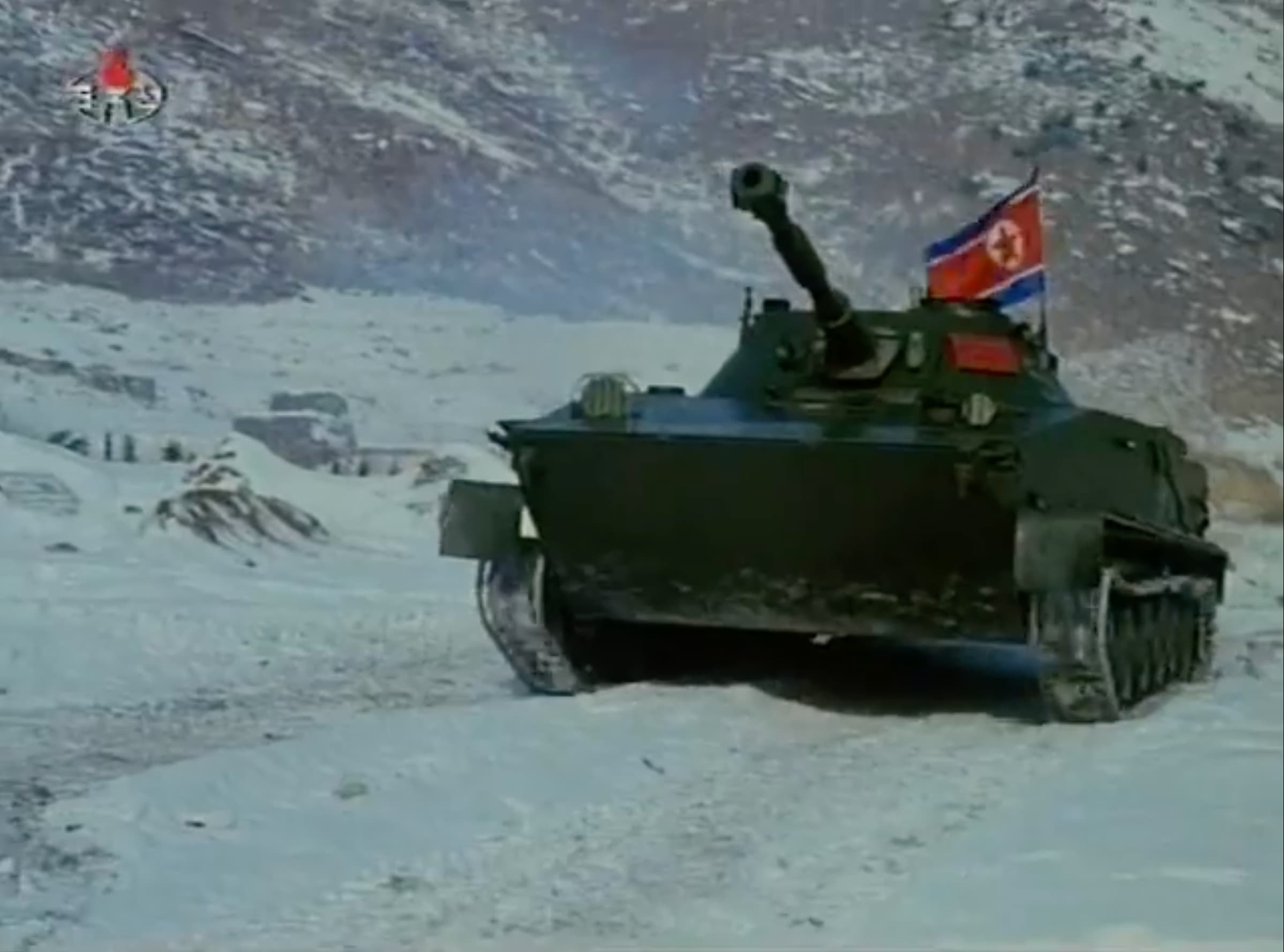

Sources
Spoiler
The Armed Forces of North Korea — On the Path of Songun. Stijn Mitzer and Joost Oliemans.
무장장비관 견문록(1) ‘불새’를 쏘는 ‘무적의 첨단전차’:자주시보
Kumchon Army Barracks — North Korea. CIA Report, 1968
https://tanks-encyclopedia.com/coldwar/ussr/soviet_pt-76.php
https://www.youtube.com/watch?v=VxBLe9A2gXY
67 footage @12:03–13:11