F-15EX will not be added to warthunder because F-15EX is not currently in warthunder type statement
2 Likes
Do you know how little they care about the MiG-23? If they actually fixed longstandings bugs with it id be more optimistic but considering they havent im not getting my hopes up in the fact that they will implement it
they care enough to move them down to 11.3 in sim because the players are too trash to avoid turnfighting planes they can’t turnfight
1 Like
Balancing plane =/= caring about planes functionality :)
i just said they care “enough” to even just balance it, even if they’re unbalancing it
-М. Дрофа, Е.А. Федосова - Авиация ПВО России и научно-технический прогресс: боевые комплексы и системы вчера, сегодня, завтра: монография / под ред, 2005
The upgraded P-24 (R-24M) missile is characterized by significantly higher noise immunity, as well as the appearance of a fundamentally new mode - targeting a helicopter hovering above the ground.
Nothing about higher G, different fins etc
-Р. Ангельский, В. Коровин - Отечественные управляемые ракеты класса «воздух-воздух» Часть 2.
This source has a single mention of the R-24M (Product 140M)
Later, the rocket underwent another modernization in accordance with a joint decision of the Air Force, the Ministries of Radio Industry and the Aviation Industry dated October 28, 1983. Already in 1984, the first four launches of K-24M missiles were carried out, equipped with advanced seeker systems with increased noise immunity and the ability to capture low-speed targets. In 1985, the MiG-23M N“420 launched four combat and one telemetry K-24M, including a Tu-16 jamming system and an Mi-4 helicopter standing on the ground with the engine running and the rotating propeller. In 1986, eight more launches were carried out on the MiG-21, which simulates cruise missiles, after which the R-24M (“product 140M”) was adopted.
Nothing else. So this just says better seekerhead.
В. Марковский, К. Перов - Советские авиационные ракеты “воздух-воздух”, 2005
The P-24P had a monopulse RGS-24 type seeker, as well as an on-board frequency tuning unit for the carrier, which made it possible to shorten the preparation time for flight
(the P-23P required special equipment from the SNO kit for this). The missiles hit maneuvering and low-altitude
targets more effectively, had high noise immunity, and made it possible to selectively hit objects in close formation. In addition to the GOS, the R-24 received a new PRD-287 engine, a modified wing configuration, and a warhead equipped with a Starling detonator. The overall layout of the missiles has also undergone changes: the gas generators from the central compartment were moved to the tail, to the rudders, and the turbogenerators of the power supply system were moved forward behind the warhead, to the consumers - the autopilot and the seeker. Subsequently, to combat jamming-proof targets, the GOS was upgraded, assigning the name R-24RM to the missile.
Again R-24RM only GOS upgraded nothing else again.
I would really like to know in what exact parts you found the higher G or lock range. Because this all just reads like nothing but a base R-24R with improved electronics.
1 Like
Smh smh like a better seeker can enhance a missiles agilty so on smh smh
would be it, like R-40R and R-40RD
Then it would be mentioned anywhere.
nah the R-24Ms better seeker allows it to bend time and space to make the target unable to move out of the intercept path

I found a photo of what appears to be an R-24M!! A real one!! MiG-23P, 393rd Guard Fighter Air Regiment PVOs at Privolzhskiy, Astrakhan, 1988. You can clearly see the fins tapering differently compared to a normal R-24R, matching that drawings that show the M having different fins from the R
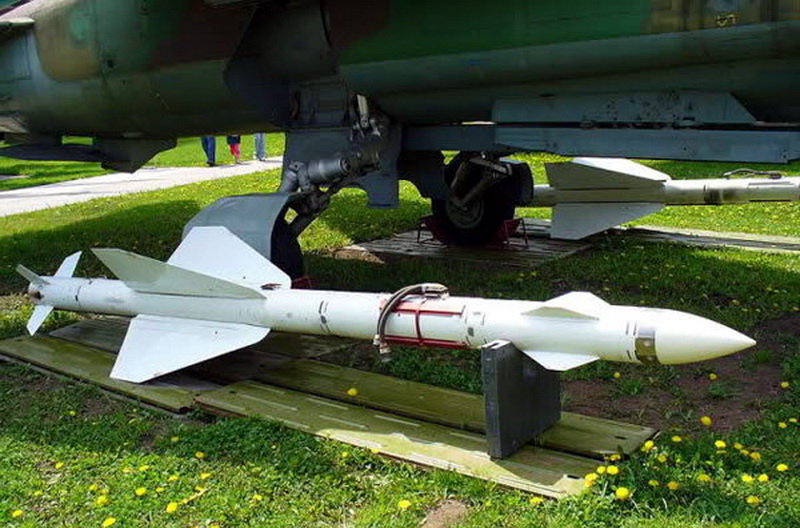

So, I guess those drawings of it are actually real, unless this photo is fake. Either way, it’s cool to actually see an R-24M
5 Likes
Damn. What a nice finding. Didnt expect that at all today morning.
But just to be double sure…cant we somehow double check that fin angle so to be sure its not visually by perspective? Lately, I can’t believe my eyes. :D
1 Like
This photo seems to be from a gallery, some PVO Strany airman taking photos around Astrakhan Air Base one fine January day in 1988. Conveniently, comrade photographer did indeed take multiple angles of MiG-23P No. 23:

(Look how obvious the tapered fins are! It matches the drawings!!!)

And while I’m here, the rest of comrade photographer’s gallery:



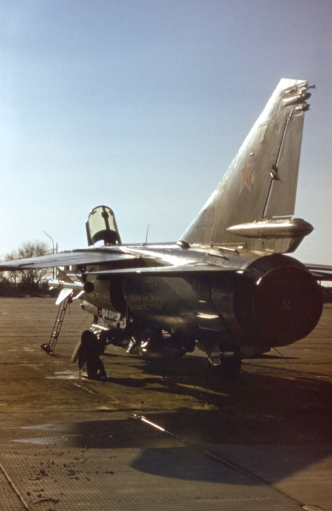


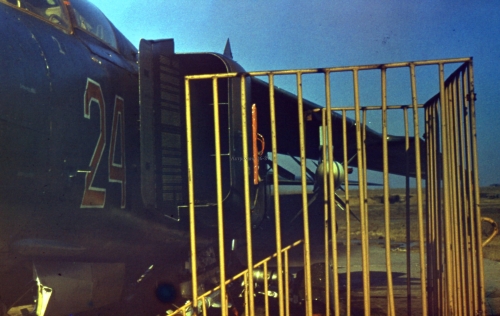

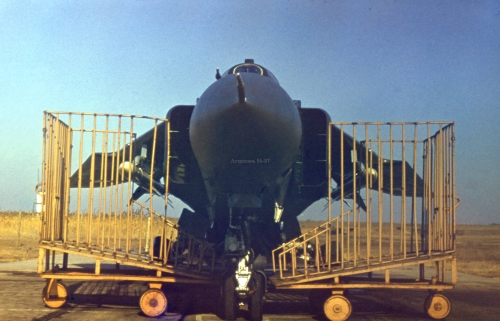
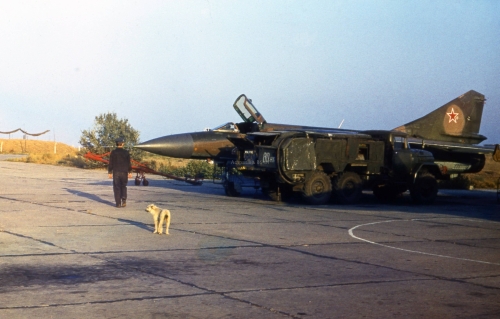



Astrakhan Airfield, Russian SFSR, USSR, January 1988. I wonder if I’m the first person to notice those missiles are R-24Ms? Maybe I’m the first since the people in these photos. Ain’t history fun?
5 Likes
I was trying to measure it in Paint by protractor on both pictures and it really looks like 94° (expected fin angle of R-24M) instead of 91° (fin angle of R-24R). I always measured the opposite fins to establish a reference plane from which I could take measurements. But its not very accurate mainly in those small differences.
1 Like

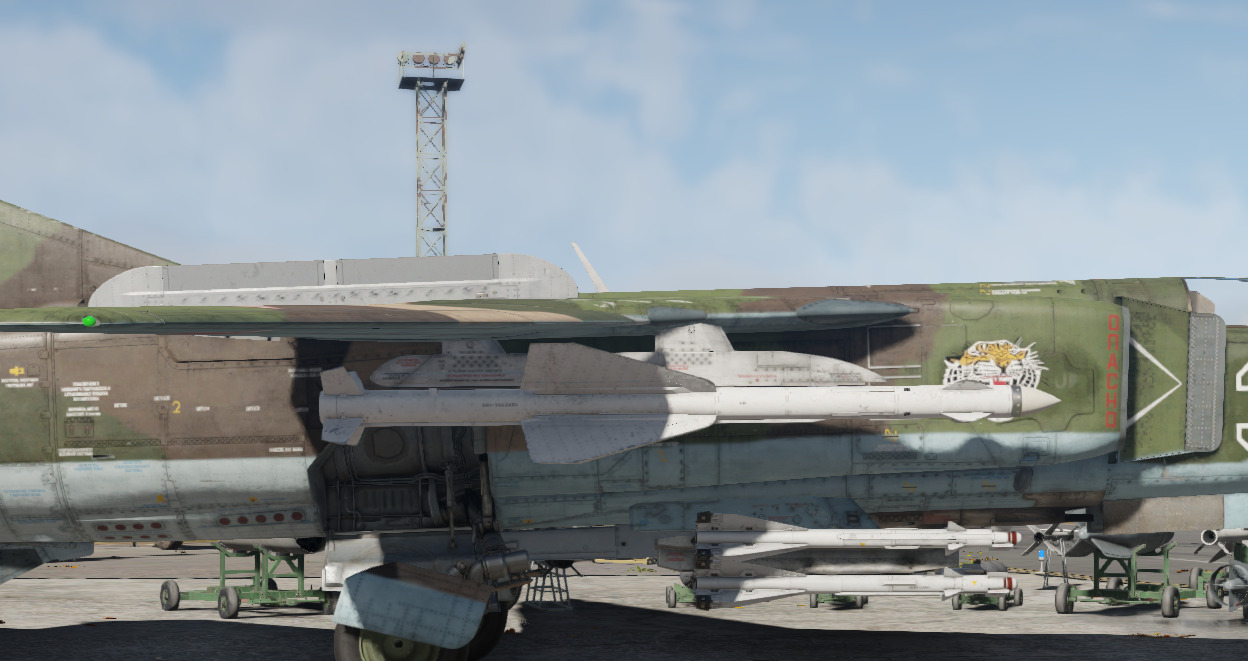
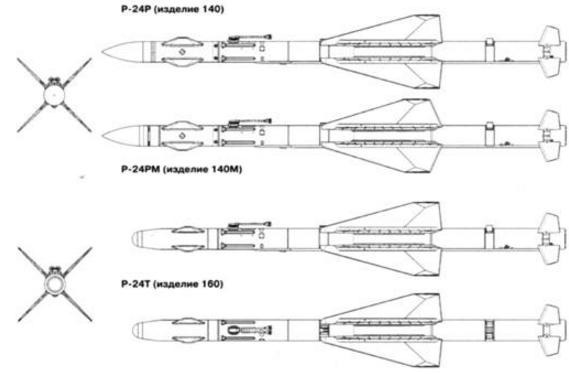
Someone on a discord server I’m in shared this, it seems like the R-24M was exported - which would mean it’s fair game for the German Flogger too. It’s a much better side-on look, lining up the angles it seems like R-24R is 91° and R-24M is about 112-113° on the schematics and on the real thing
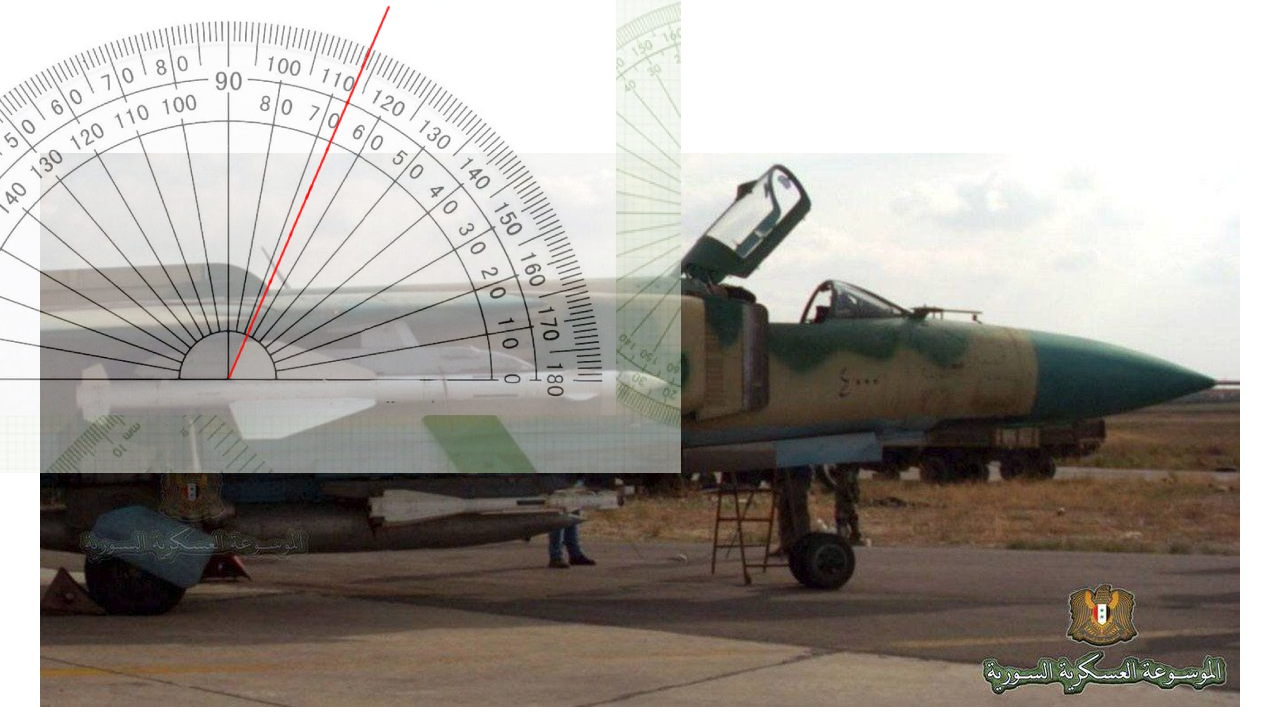
1 Like
Damn. What a finding. Now its 100% confirmed. Looks like I little bit messed angles before as I was probably in hurry, tired or combination of both :D
So question is how big change in aerodynamics of missile it made.
1 Like
probably not that much since those fins arent used as control surfaces
i could see those fins being changed due to some specific issue at certain speeds/altitude/aoa
2 Likes
I would say 95 degrees for basic R-24R and for R-24M 115 degrees from scheme after I measured it again and now correctly :D
1 Like
I agree, I don’t see this having much of an impact, but obviously it’s something. The R-23 had completely flat fins and then the R-24 added an extra 5° and went from 20 to 24G? This one went from 95° to 115°, so it could be something- but the R-24 was also a complete redesign of the R-23, new rocket motor and I think control surfaces, so probably at least a G or two
+different seeker cone, more powerful engine and probably also different weight distribution compared to R-23
1 Like
no those surfaces wouldnt increase g-pull since those fins are only lift generators
the fin aoa of the fins at the back are what dictades the g-pull