Coastal Fleet Tech Tree
- Yes
- No
Changelog
:)
Welcome to this suggestion for a United Korea coastal fleet tech tree — combining the unique vehicles of both North and South Korea!
The Democratic People’s Republic of Korea (DPRK), more commonly known as North Korea, was founded on 9th September 1948, 3 years after Korea was liberated with the surrender of Imperial Japan and the end of World War 2. Soviet forces entered the North on the 10th August, just four days before Japan announced their surrender. They faced little Japanese resistance, and by 24th August, had reached Pyongyang. During this time, the USSR agreed with the US to divide Korea along the 38th Parallel, and set up independent governments on either side. Despite the existence of the provisional People’s Republic of Korea — a network of decentralised people’s councils — the Soviets began to take control of the councils, incorporating them into their own political structures or infiltrating them with pro-Soviet politicians. On the 8th February 1946, the Provisional People’s Committee of North Korea was formed, with Kim Il Sung as its leader. This transitioned into the fully independent DPRK just two years later.
The Republic of Korea (ROK), more commonly known as South Korea, declared its independence on the 15th August 1948. Unlike the Soviet Union, which pursued a policy of co-optation, the US declared the provisional PRK illegal in December 1945, and ran the country as a military government. Syngman Rhee was elected president on July 20th 1948. His rule quickly became authoritarian, and led to a number of large-scale protests and uprisings, generating immense amounts of unrest.
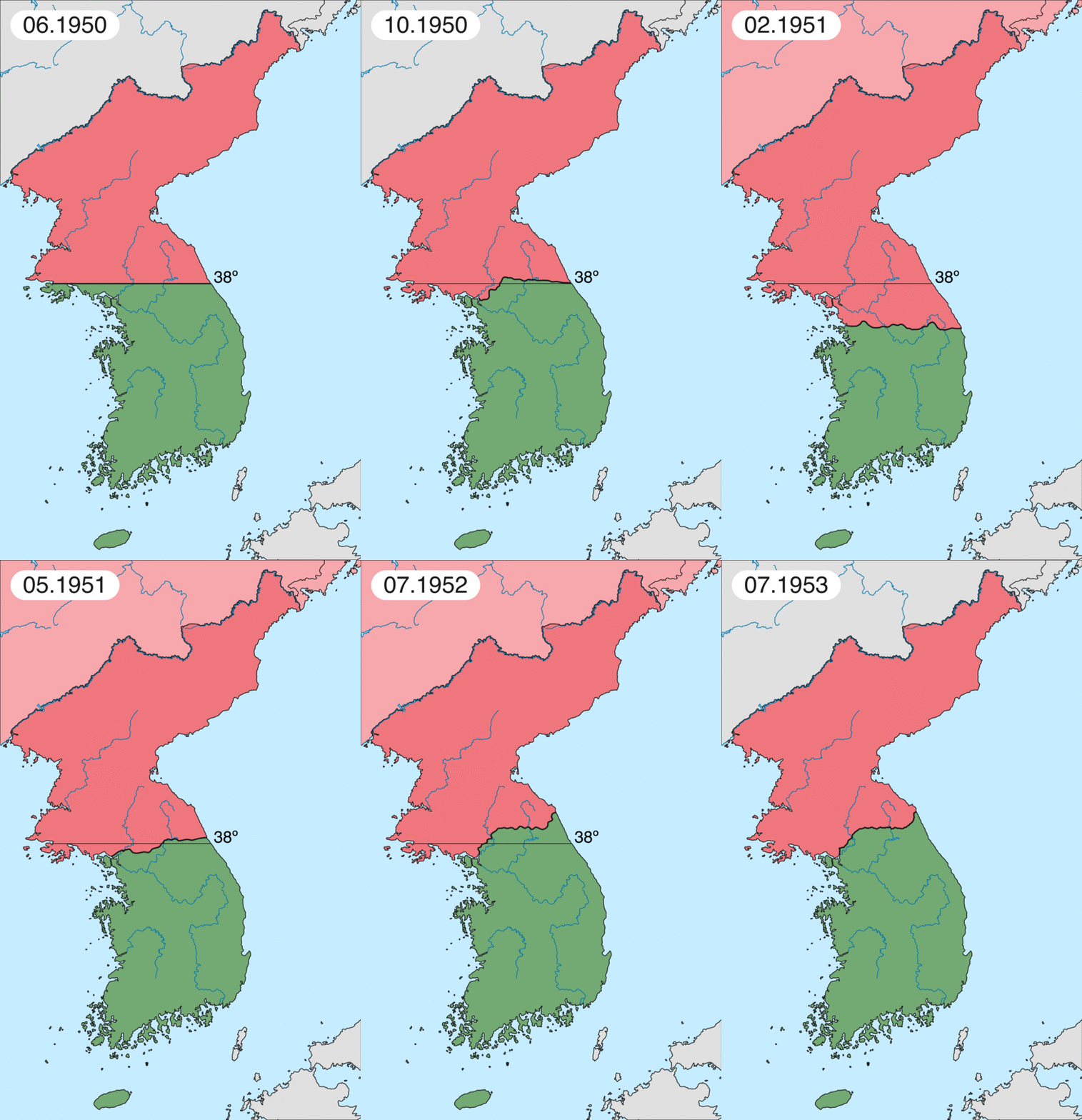
This political instability quickly reached a boiling point on 25th June 1950, when North Korean forces invaded the South. The Korean War saw fierce fighting between North and South Korean forces. The North was supported heavily by Soviet and Chinese troops, and the South by American and UN troops. Anywhere from 1.6–4 million civilians and hundreds of thousands of soldiers died in just three years. An armistice was signed on 27th July 1953, ordering a ceasefire and the establishment of the Demilitarised Zone (DMZ). The two states have been in a frozen conflict since, occasionally engaging in border skirmishes, with no official peace treaty in sight.
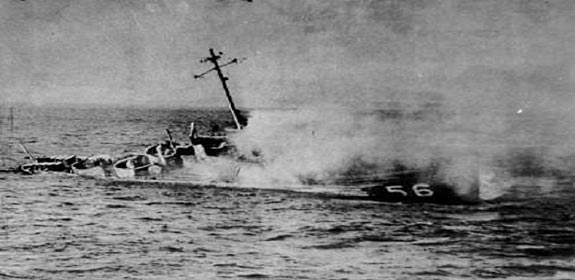
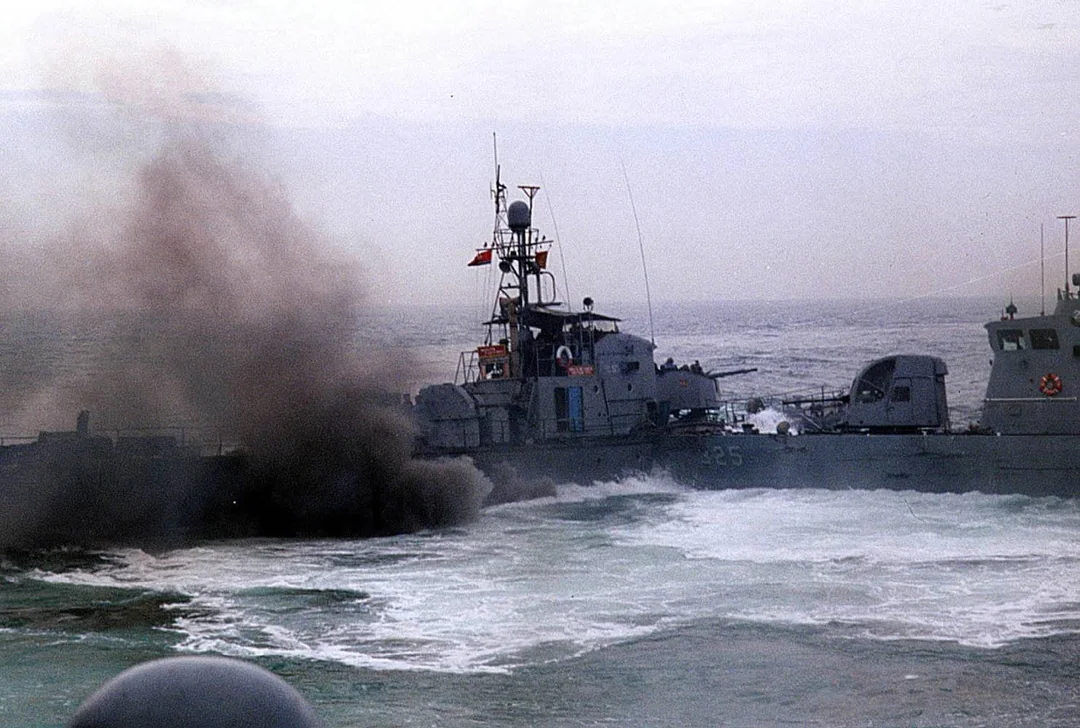
The Korean People’s Army Naval Force (KPANF) was officially founded on June 5th 1946. It saw fairly limited use during the Korean War — at least compared to the KPA and KPAAF. They operated a number of Soviet G-5 torpedo boats, alongside converted civilian boats, but were completely outmatched by the US Navy. They claim to have sunk 564 ships in total, but actually only sunk 5 USN ships. In the 1950s and 60s, the KPANF began to receive a number of larger Soviet and Chinese ships, including the Pr. 201 and Type 062, alongside large numbers of torpedo boats, many of which are still in service today. They also began their own domestic construction of ships, initially with copies of the Pr. 201, which expanded rapidly to include their own designs. In the early 1970s, North Korea produced the Najin-class frigates, which held the title of the KPANF’s longest ships until they were surpassed in 2024 by the new Choe Hyon-class destroyers. Until the 2010s, North Korea’s navy was severely outdated and ill-equipped, with much of the fighting force consisting of '50s and '60s-era torpedo boats and gunboats. However, they have attempted to turn this around over the last decade, with ships such as the Nampo-class, Amnok-class, and Choe Hyon-class entering service, all with decently advanced radar, fire control systems, and guided missiles.

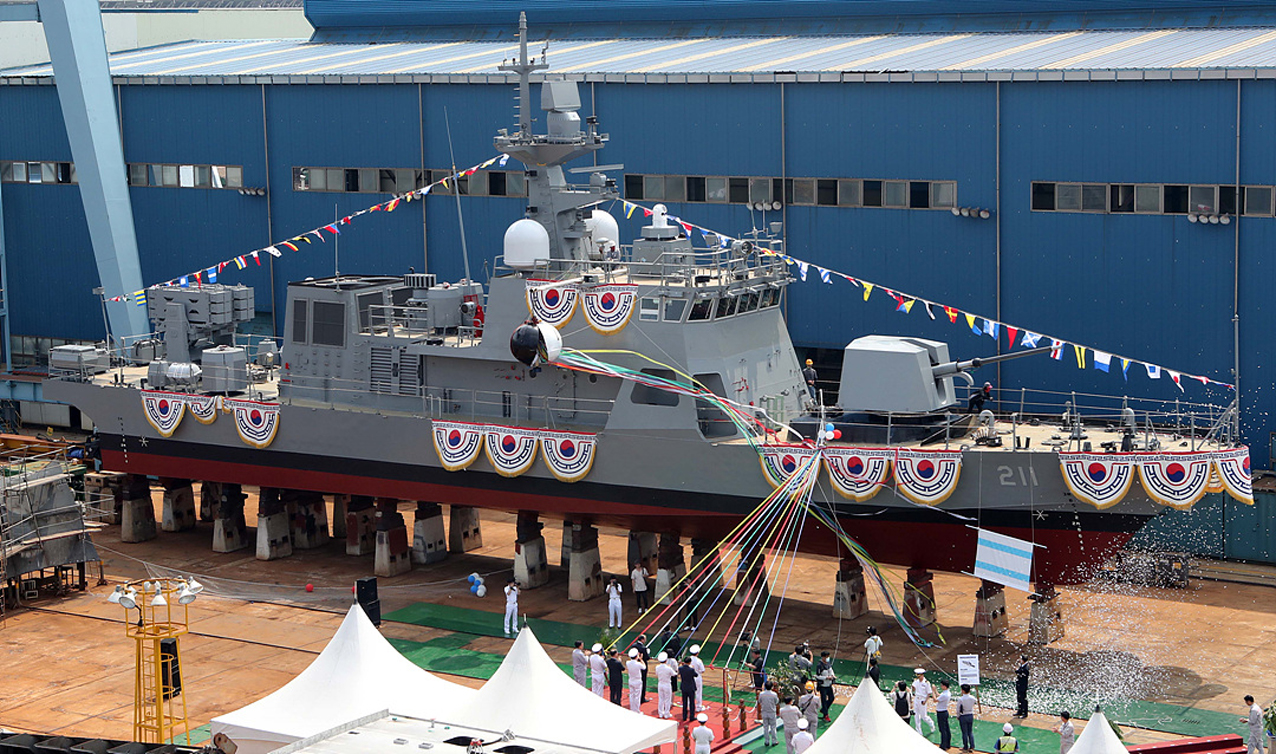
The Republic of Korea Navy (ROKN) was officially founded on November 11th 1945. Much like the KPANF, it saw little action during the Korean War — South Korea primarily relied on the USN for naval activities. However, they did operate larger ships than the KPANF, including Baekdusan, a former USN PCE-461 submarine chaser. The ROKN was primarily equipped with former US ships during the Korean War and in the following two decades, from small PT boats up to destroyers. The first domestic boats — the Jebi-class — were built in the early 1970s. South Korea has since acquired a significant naval force, completely exceeding the North’s capabilities, currently operating 13 destroyers (to the KPANF’s 2), 17 frigates (to the KPANF’s 2), and over 50 patrol boats (which are outnumbered by North Korea’s, but are significantly more modern).
A Korean Tech Tree has been popular for years within the community. It presents an opportunity for a large, unique, and highly diverse ground forces tree, combining the best of Western and Soviet designs. While the aviation and helicopter trees would lack this uniqueness, a coastal tree provides a very similar level of unique designs that a ground tree would do.
On the old forum, the United Korea ground forces tree made in 2019 was passed to the developers. In a December 2021 Q&A, the developers hinted at the addition of a United Korean tree in the same style as Israel (i.e. not starting at Rank 1). And — most importantly and recently — a United Korean tech tree was confirmed to be in the works, to be added at an unspecified time.
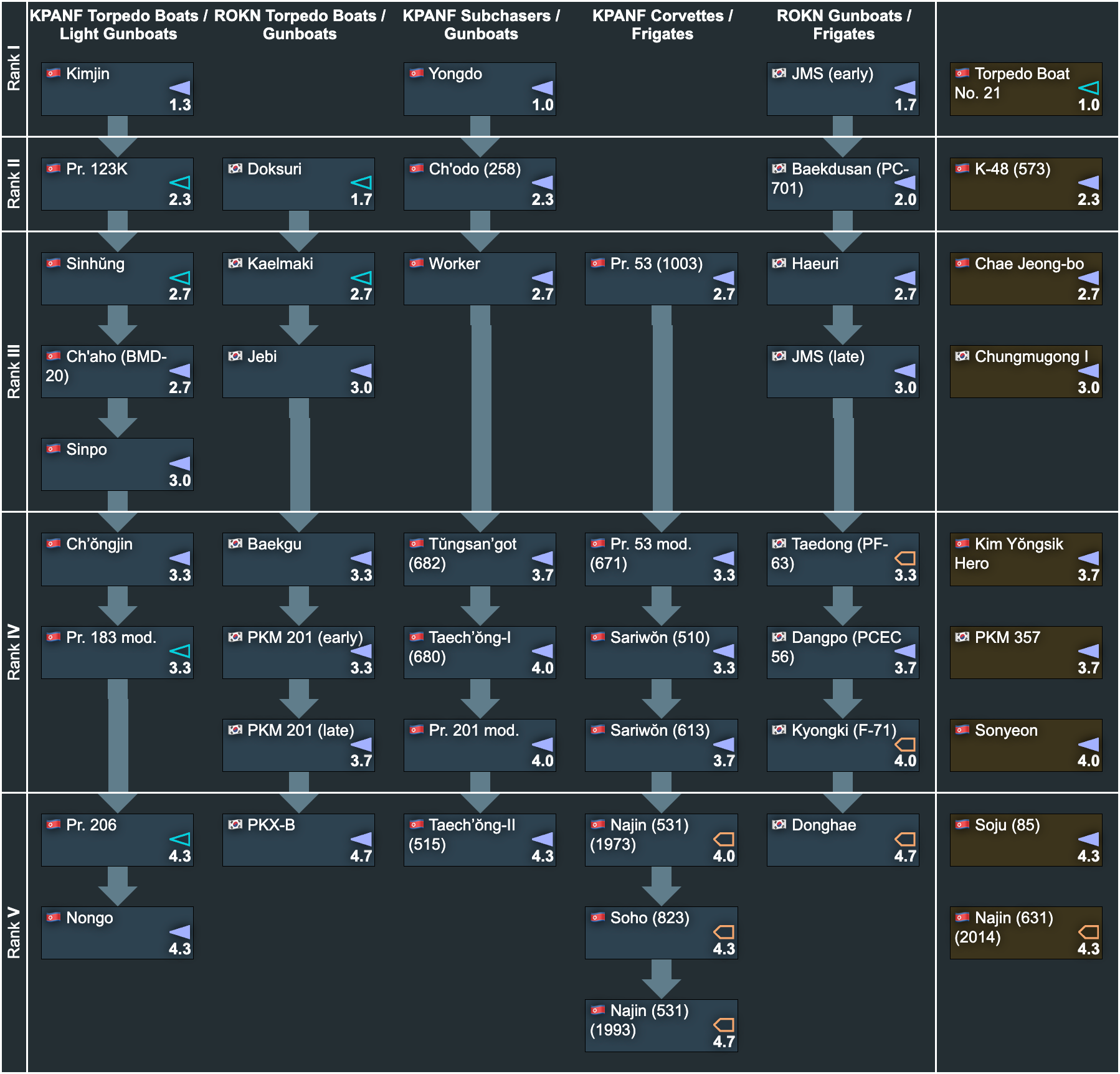
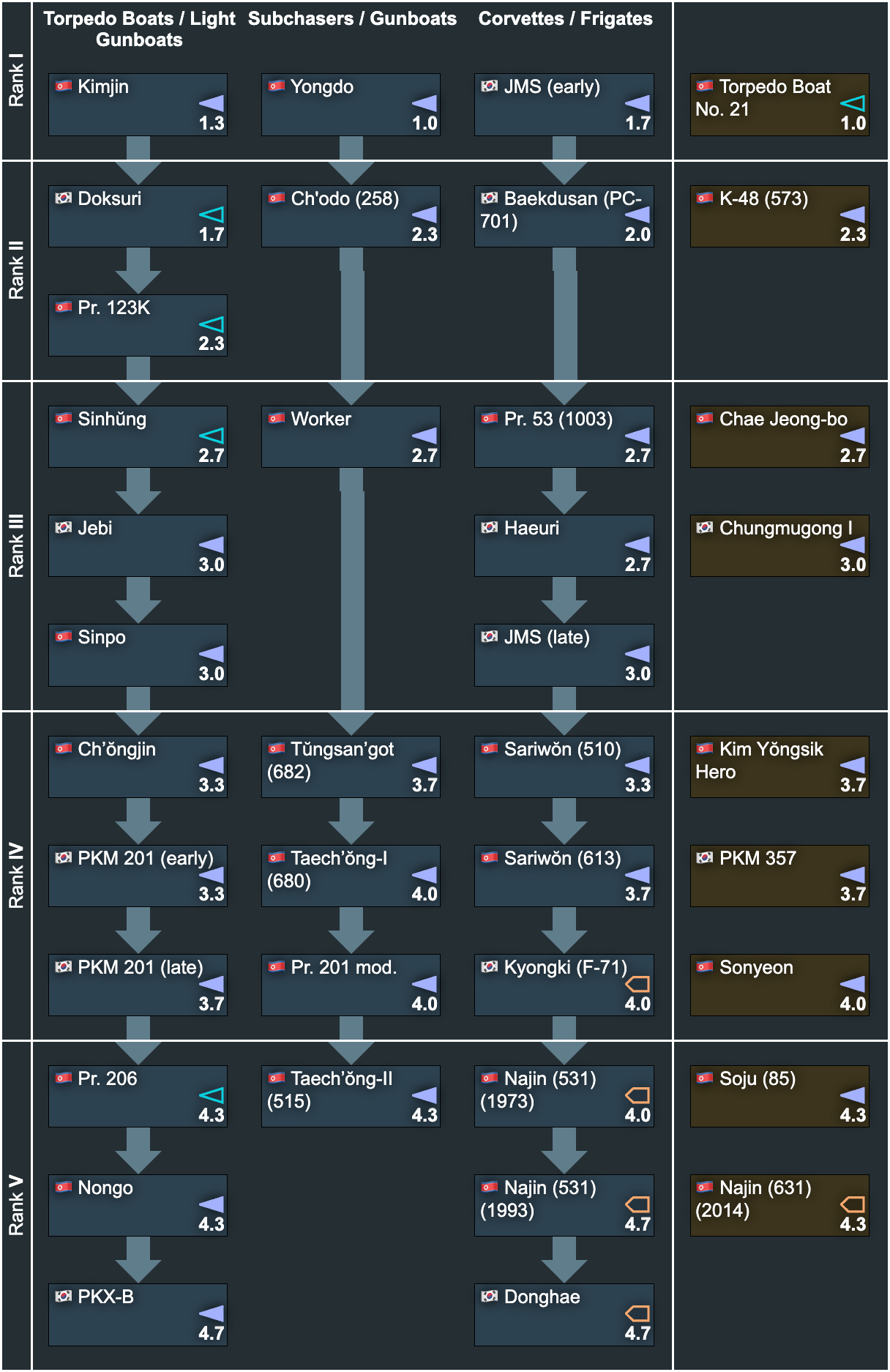
This proposal seeks to show the potential a United Korean tree has, while remaining realistic — I have not included every possible vehicle, and I have followed Gaijin’s rules for adding vehicles as best as I can. I have also attempted to reduce copy-paste, to hopefully add as many domestically designed or modified vehicles as possible. Two versions are presented here: a full, 5-line version, comprising the majority of all the unique vessels for both nations. I have also included a smaller, 3-line version, to better match the trees in-game.
As of 17/12/25, this tree has 47 vessels, of which:
- 3 are direct copy-paste of vessels (or classes) in-game (6%);
- 2 are vessels / classes in-game but with some modifications (4%);
- 4 are imported vessels not yet in-game, with no / very few modifications (9%); and
- 38 are unique, domestic vessels or major modifications (81%)
And:
- 17 are South Korean (36%); and
- 30 are North Korean (64%)
And:
- 18 have individual suggestion posts (38%)
I hope you give this suggestion support, and help inform the developers on what the community wants to see from a Korean tech tree!
Spoiler
Rank I
Line 1 – KPANF Torpedo Boats and Light Gunboats
✪ Kimjin
Kimjin-class patrol boat
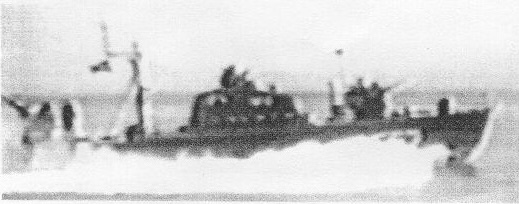
The Kimjin is a little known indigenous patrol boat, developed from the Pr. 123 and Pr. 183-class, likely developed alongside the Sinhŭng class. It is smaller and lightly armed, fitted with two dual 14.5mm KPVs. Supposedly around 60 of these small boats were built. Some were later upgraded to carry 14.5mm gatling guns.
BR 1.3.
Armament: 2x dual 14.5mm KPV
Mobility: ~38t, 54km/h (29 knots)
Line 2 – ROKN Torpedo Boats and Gunboats
N/A
Line 3 – KPANF Subchasers and Gunboats
✪ Yongdo
Yongdo-class patrol boat
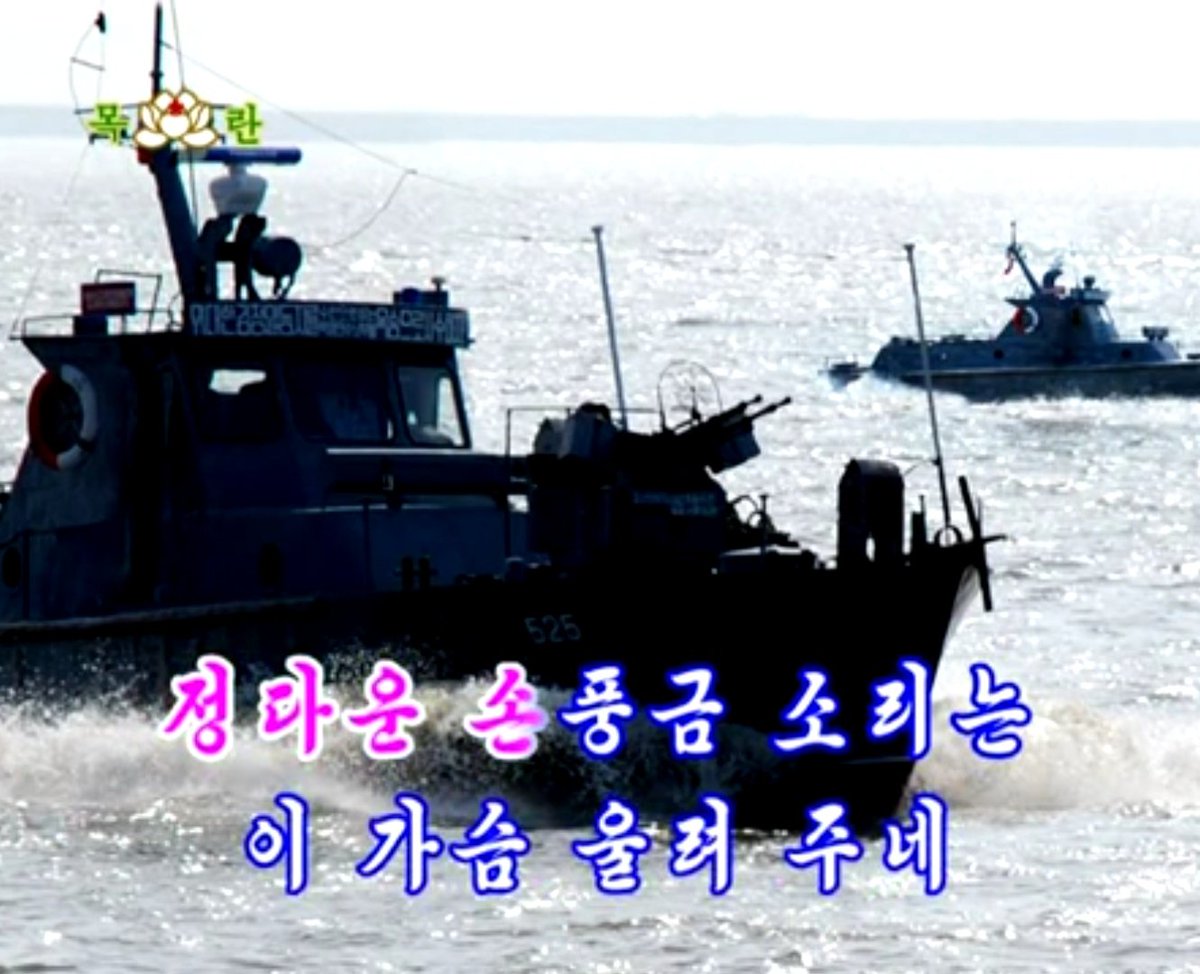
The Yongdo-class is a little-known indigenous patrol boat series, likely developed sometime in the 1980s or 90s. Some sources claim 45 were produced. They are small boats, armed with a forward dual 14.5mm KPV mount. They mainly serve along the Yalu River, between North Korea and China.
BR 1.0.
Armament: 1x dual 14.5mm KPV
Mobility: ~20t, ~45km/h (24 knots)
Line 4 – KPANF Corvettes and Frigates
N/A
Line 5 – ROKN Gunboats and Frigates
☯︎ JMS (early)
JMS-class minesweeper (early)
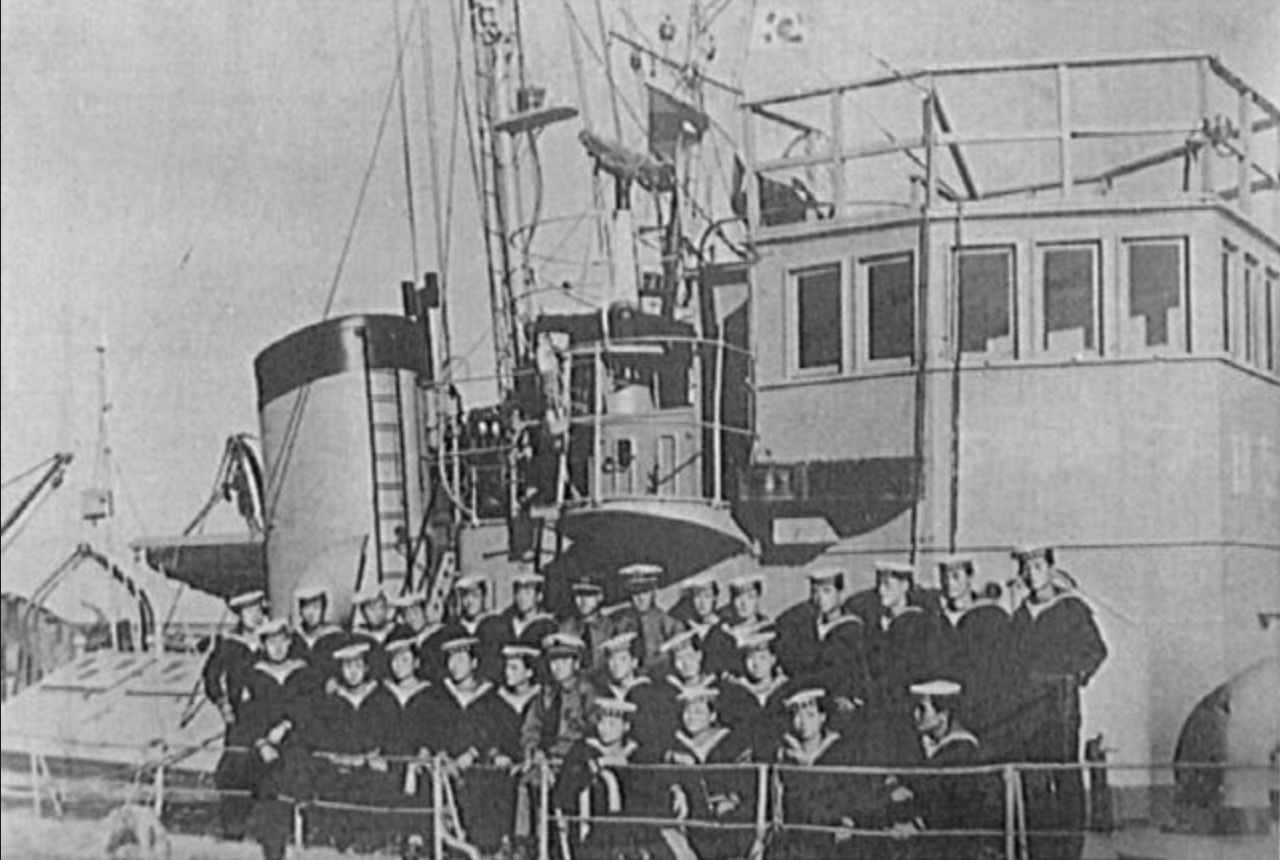
In the early 1940s, Japan developed a class of 150t (actually 180t) tugboats / minelayers, of which 16 were fully built by the end of WW2. 10 of these were transferred to South Korea in the late 1940s, and were officially classified as the JMS 301–311 in 1948. In South Korean service, the JMS was initially armed with a single 37mm M3 forwards, and two 12.7mm M2HBs. They saw service during the Korean War, with two destroyed and one abducted to North Korea, and the rest were decommissioned in 1953, reclassified and stripped of weaponry, and relegated to various auxiliary duties.
BR 1.7.
Armament: 1x 37mm M3, 2x 12.7mm M2HB
Mobility: 180t, 26km/h (14 knots)
Rank II
Line 1 – KPANF Torpedo Boats and Light Gunboats
✪ Pr. 123K
Komsomolets-class torpedo boat, Pr. 123K
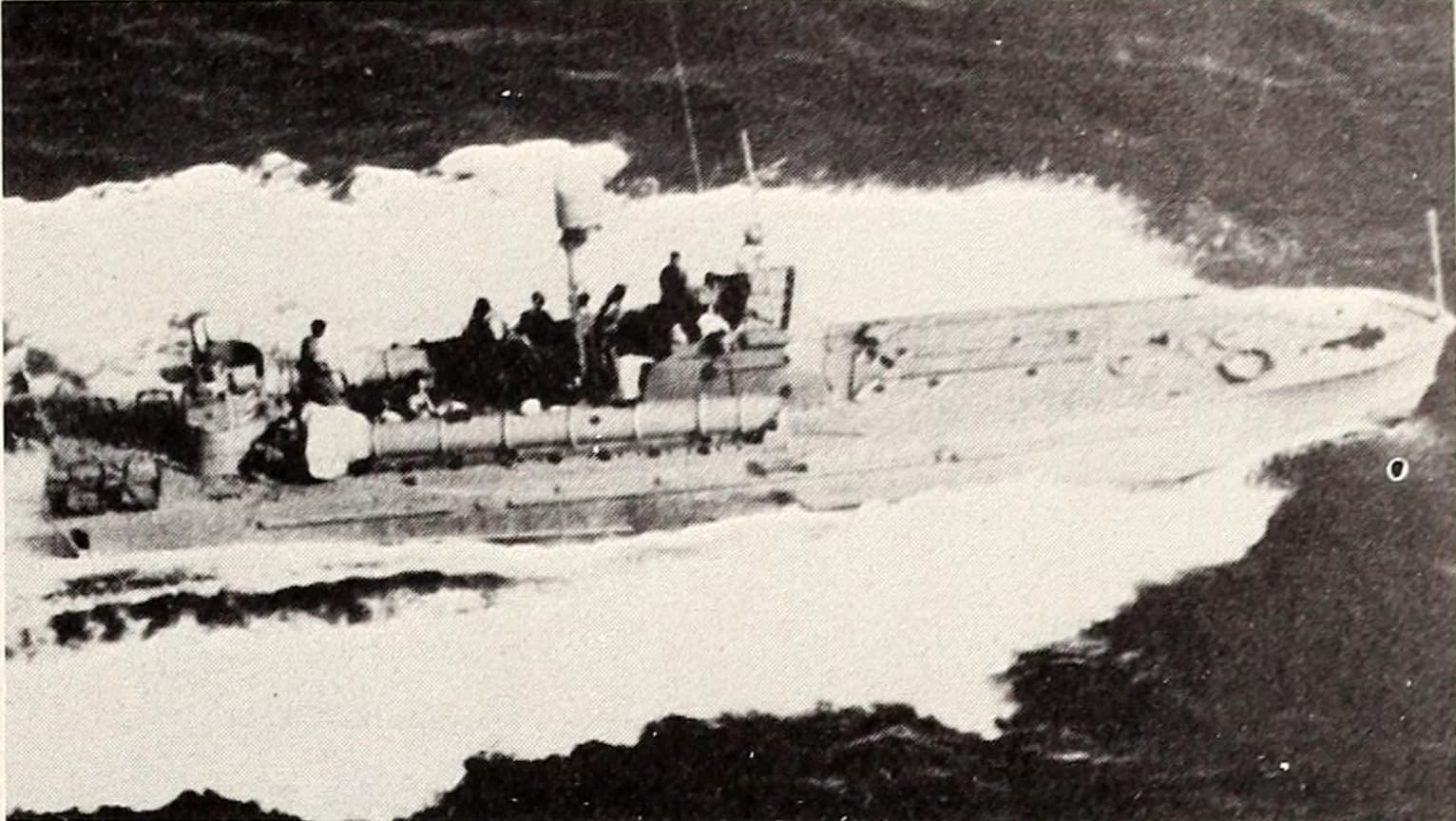
The Pr. 123K is a Soviet torpedo boat class, referred to in Western circles as the P 4-class. It was developed in the mid-1940s, entering production in 1944. Over 300 were built, and they saw service with a large number of nations, including the DPRK. They received an estimated 34 from the USSR in the 1950s, with supposed additional deliveries of only a few in the 1970s. The Pr. 123 served as the basis for a large number of domestic designs, of which hundreds were built, thus playing a crucial role in the development of North Korea’s navy.
BR 2.3.
Armament: 2x 14.5mm KPV; 2 450mm 45-36NU torpedoes, 4x BB-1 depth charges
Mobility: 23t, 96km/h (52 knots)
Line 2 – ROKN Torpedo Boats and Gunboats
☯︎ Doksuri
Doksuri-class patrol boat
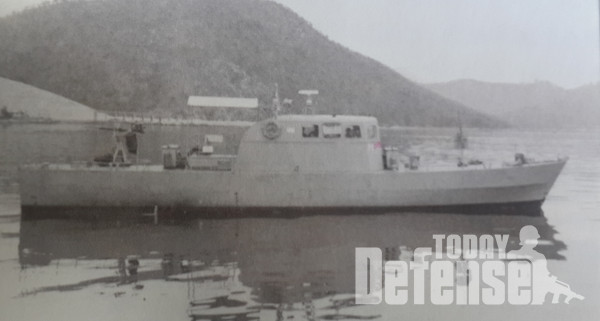
The Doksuri-class (‘Eagle’), sometimes referred to as the FB(B), was one of South Korea’s earliest semi-domestic ship designs. They were a class of fast patrol boats, developed just after the ‘Student’ class (that led to the Jebi-class). They were, however, manufactured in America by Sewart, adapted from a commercial design. 11 ships were built from 1973–1974, although they faced a number of issues, and were all decommissioned in 1976. All 11 were armed with two single 20mm Oerlikon cannons.
BR 1.7.
Armament: 2x 20mm Oerlikon L/70
Mobility: 33t, 46km/h (25 knots)
Line 3 – KPANF Subchasers and Gunboats
✪ Ch'odo (258)
Ch’odo-class gunboat, 258

The Pr. 201 is a Soviet class of submarine chasers, known in Western sources as the S0.1, developed in the mid-1950s. North Korea received an unknown number of Pr. 201s from 1957–61 — some of these can only have been the earlier Pr. 201 variant, although few were produced, and details of delivery to the DPRK are scarce. A number of variants of the Pr. 201 were then produced locally, and the imported ships were up-gunned in two separate variants. One of the locally-produced classes is known in the West as the Ch’odo-class. Possibly four ships exist of this class, and all differ in weaponry and numbering (with the pattern appearing to have changed a multiple times). No. 258 represents one of the earlier variants, seen with a 76mm cannon forward, two single 12.7mm DShKs behind the bridge, and two 37mm cannons at the aft. Some ships had three 37mm cannons, while others had a 14.5mm turret behind the two 37mm cannons. Later variants had dual 14.5mm KPVs in place of the 12.7mm guns. The current status of the Ch’odo-class ships is unknown.
BR 2.3.
Armament: 1 76mm 3-K, 2x 37mm 61-K, 2x 12.7mm DShK
Mobility: ~235t, 50km/h (27 knots)
Line 4 – KPANF Corvettes and Frigates
N/A
Line 5 – ROKN Gunboats and Frigates
☯︎ Baekdusan (PC-701)
PC-461-class submarine chaser, PC-701, Baekdusan
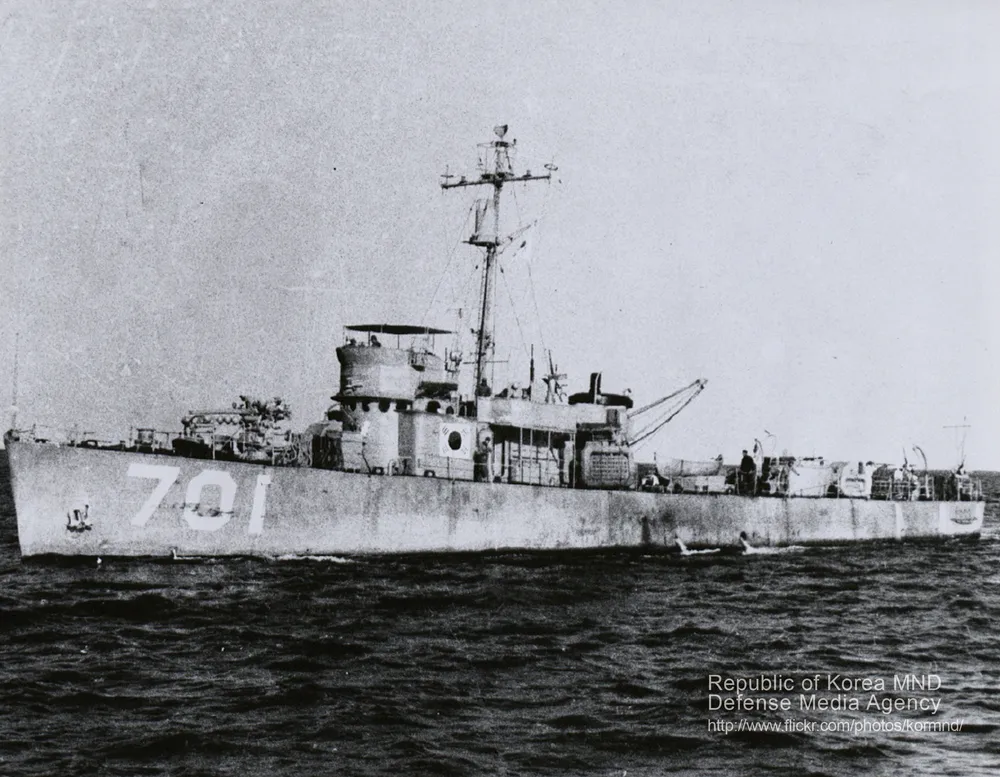
The PC-461-class is an American class of submarine chasers, built from 1941 to 1944. 343 ships were built, and saw service during WW2, and afterwards in the navies of a large number of countries. In 1949, South Korea received USS PC-823 (Ensign Whitehead), their first significant ship. She was renamed Baekdusan (PC-701), and was armed with a single 76mm forwards, along with six M2HBs. She took part in the Battle of Korea Strait on the first day of the Korean War, where she destroyed a North Korean steamer carrying 600 troops for an attempted landing near Busan. She survived the war, and was eventually decommissioned in 1960. 9 PC-461-class ships were obtained in total, most of them during the Korean War.
BR 2.0.
Armament: 1x 76mm (3-inch) Mk. 10, 6x 12.7mm M2HB
Mobility: 450t, 37km/h (20 knots)
Rank III
Line 1 – KPANF Torpedo Boats and Light Gunboats
✪ Sinhŭng
Sinhŭng-class torpedo boat
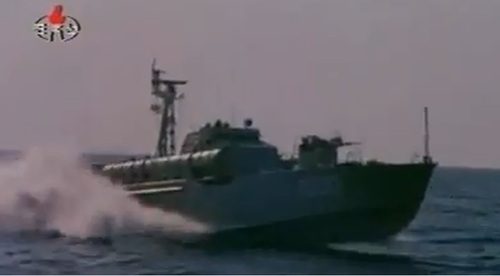
North Korea received large numbers of the Pr. 123 and Pr. 183 torpedo boats from the USSR — around 61 of both — in the late 1950s and 1960s. In the 1980s, they began manufacturing a large number of derived variants, including the Sinhŭng-class, of which 100–140 were produced. These were based on the Pr. 183, but not identical copies. Three main variants were produced: a torpedo boat, a hydrofoil torpedo boat, and a patrol boat. The base torpedo boat version featured two dual 14.5mm KPVs (one fore, one aft), and two 533mm torpedo launchers — a very similar loadout to the Chinese Huchuan-class (Type 025 / 026).
BR 2.7.
Armament: 2x dual 14.5mm KPV; 2x 533mm torpedoes
Mobility: ~67t, ~81km/h (44 knots)
✪ Ch'aho (BMD-20)
Ch’aho-class fire support ship, BMD-20
Suggestion Post

The Ch’aho-class is a fire support ship class, developed on the basis of the Pr. 183 torpedo boat. Around 37 Pr. 183s were delivered to North Korea from 1957–59, and the design was copied for a number of different variants. The Ch’aho is one such variant, constructed since 1971. Around 50 have been built, alongside around 50 Ch’ŏngjin-class patrol boats. The Ch’aho carries an MRL, alongside two dual 14.5mm KPVs (with later variants carrying 14.5mm gatling guns). Two variants are known: one with eight 200mm BMD-20 launchers, and one with 40 122mm BM-21 launchers. Both variants have an automatic loading system for an additional salvo. Both variants remain in service and are often seen in use during training exercises. The variant I am suggesting here is an early variant of the BMD-20-equipped ships.
BR 2.7.
Armament: 8x BMD-20 launchers (MD-20F rocket), 2x dual 14.5mm KPV
Mobility: ~67t, ~81km/h (44 knots)
✪ Sinpo
Sinpo-class gunboat
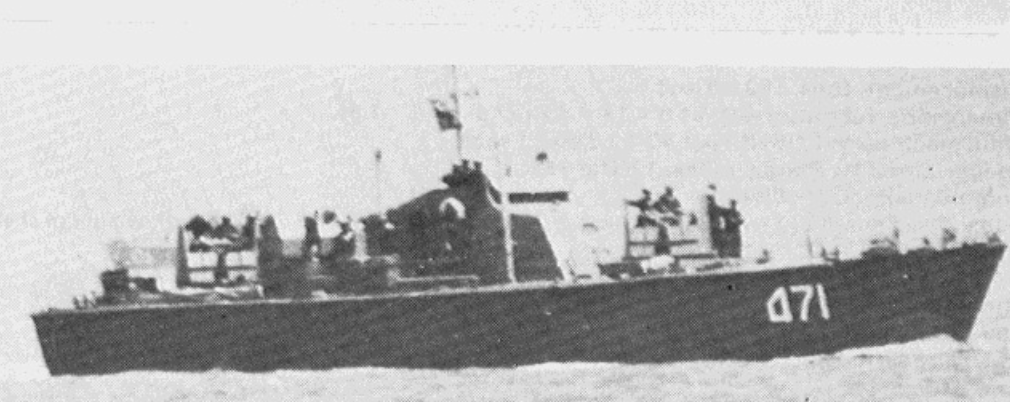
North Korea received large numbers of the Pr. 123 and Pr. 183 torpedo boats from the USSR — around 61 of both — in the late 1950s and 1960s. In the 1980s, they began manufacturing a large number of derived variants, including the Sinhŭng-class, of which 100–140 were produced. These were based on the Pr. 183, but not identical copies. A slightly different, gunboat variant is called the Sinpo in the West, and is fitted with a 25mm 2M-3 turret behind the bridge, and two single 37mm cannons — one forwards, and one behind the 2M-3.
BR 3.0.
Armament: 1x 25mm 2M-3, 2x 37mm 61-K
Mobility: ~60–70t, ~81km/h (44 knots)
Line 2 – ROKN Torpedo Boats and Gunboats
☯︎ Kaelmaki
Kaelmaki-class patrol boat
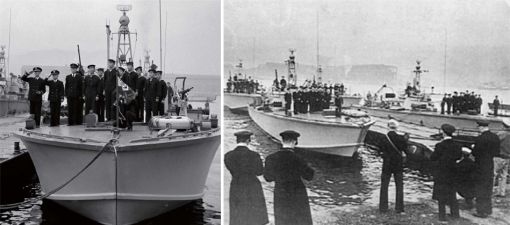
PT-613 was a ship in the 80’ Elco Motor Torpedo Boat class, of which 57 were built, launched in May 1945. In January 1952, she, along with her sister ships PT-616, -619, and -620, was transferred to South Korea, and renumbered PT 23, and given the name Kaelmaki (sometimes romanised as Gaelmagi). She served the longest, first until 1964, then recommissioned as part of the Olppaemi-class from 1967–1969. In South Korean service, the 80’ PT boats had their torpedoes removed, relying instead on the 127mm rocket launchers as their primary anti-ship armament. They retained the standard gun armament of the late model 80’ PT boats (same as the PT-565 in-game)
BR 2.7.
Armament: 1x Bofors L/60 Mark 3, 1x 37mm AN-M4, 1x 20mm/70 Oerlikon Mk. II, 2x dual 12.7mm AN-M2; 16x 127mm Mk. 7 rockets
Mobility: 61t, 73km/h (39 knots)
☯︎ Jebi
Jebi-class patrol boat
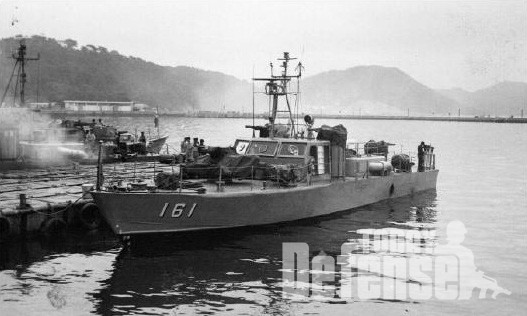
The Jebi-class was South Korea’s first domestic class of ships, designed in the early 1970s. Two prototypes, named Student 1 and 2, were built in 1972. 22 production ships were then built from 1975–1978. They didn’t see service for long, being phased out after the introduction of the superior Chamsuri-class — the last ships were retired in 1993. 12 of them were then sold to the Phillippines.
BR 3.0.
Armament: 1x 40mm Bofors, 1x 20mm Oerlikon L/70, 2x 12.7mm M2; 6x 5-inch rockets
Mobility: 76t, 70km/h (38 knots)
Line 3 – KPANF Subchasers and Gunboats
✪ Worker
Patrol Boat 41, Worker
Suggestion Post

Worker, also known as Patrol Boat 41, is North Korea’s first indigenously-produced ship, supposedly built in 1949. In actuality, it appears to be a derivative of the Pr. 201s delivered in the late 1950s, although has some notable differences. Worker is armed with a single 76mm mounted forwards, and two 37mm cannons at the aft, with two 12.7mm DShKs — later dual 14.5mm KPVs — mounted behind the bridge. Worker is reportedly narrower, slightly longer, and heavier than the Pr. 201M.
BR 2.7.
Armament: 1 76mm 3-K, 2x 37mm 61-K, 2x dual 14.5mm KPV
Mobility: 235t, 50km/h (27 knots)
Line 4 – KPANF Corvettes and Frigates
✪ Pr. 53 (1003)
Fugas-class minesweeeper, Pr. 53, 1003
Suggestion Post

The Fugas-class is a class of minesweeper developed by the USSR and built in the 1930s. Multiple variants were constructed: the Pr. 3, Pr. 53, Pr. 53-U, and Pr. 58. 10 Pr. 53s were built, and at least two — T-2 Tros and T-8 Cheka — were delivered to North Korea in 1953. T-2 Tros was renumbered to 1008, and T-8 Cheka to 1003. No. 1008 was later re-armed, but No. 1003 remained in its original minesweeper configuration until being retired in the early 2000s (although some photos show it still around in the early 2010s).
BR 2.7.
Armament: 1x 100mm B-24BM, 3x 37mm 61-K; 2x depth charges, 30x mines
Mobility: 490–535t, 33km/h (18 knots)
Line 5 – ROKN Gunboats and Frigates
☯︎ Haeuri
Haeuri-class patrol boat
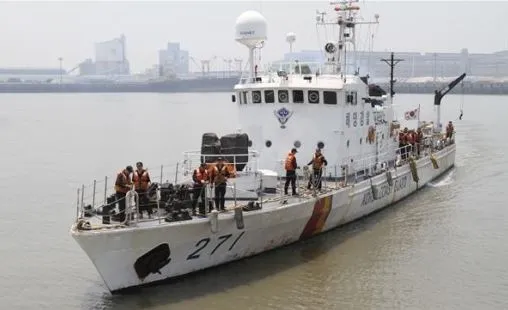
The Haeuri-class is a class of South Korean patrol vessels that saw service with the Korea Coast Guard. They can be split into two sub-variants: a 250t sub-class and a 300t sub-class. 26 250t ships were built, beginning in 1979. They are sometimes referred to as the Sea Wolf or Sea Shark. Most ships in the class were armed with just four 20mm Oerlikon cannons. The last 250t ship was retired in 2019.
BR 2.7.
Armament: 4x 20mm Oerlikon L/70 (2x dual; or 1x dual + 2x single)
Mobility: 280t, 46km/h (25 knots)
☯︎ JMS (late)
JMS-class minesweeper (late)
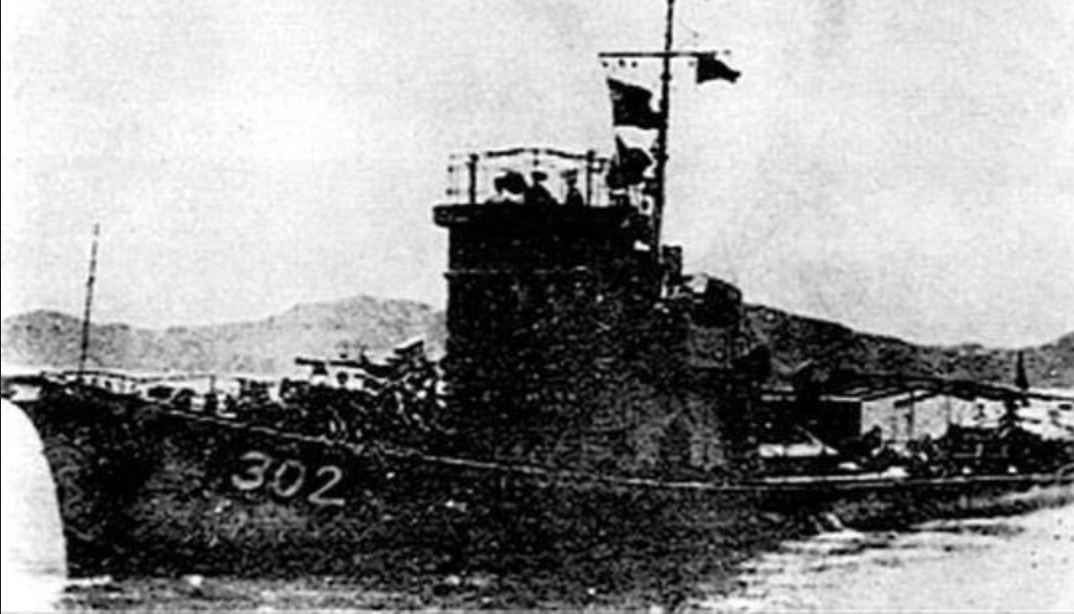
In the early 1940s, Japan developed a class of 150t (actually 180t) tugboats / minelayers, of which 16 were fully built by the end of WW2. 10 of these were transferred to South Korea in the late 1940s, and were officially classified as the JMS 301–311 in 1948. In South Korean service, the JMS was initially armed with a single 37mm M3 forwards, and two 12.7mm M2HBs. In 1950, they were re-armed to carry a single 40mm Bofors L/60 forwards, as well as two 20mm Oerlikon auto-cannons, along with the original two 12.7mm M2HBs. They saw service during the Korean War, with two destroyed and one abducted to North Korea, and the rest were decommissioned in 1953, reclassified and stripped of weaponry, and relegated to various auxiliary duties.
BR 3.0.
Armament: 1x 40mm Bofors L/60, 2x 20mm Oerlikon L/70 Mk. 4, 2x 12.7mm M2HB
Mobility: 180t, 26km/h (14 knots)
Rank IV
Line 1 – KPANF Torpedo Boats and Light Gunboats
✪ Ch’ŏngjin
Ch’ŏngjin-class patrol boat
Suggestion Post
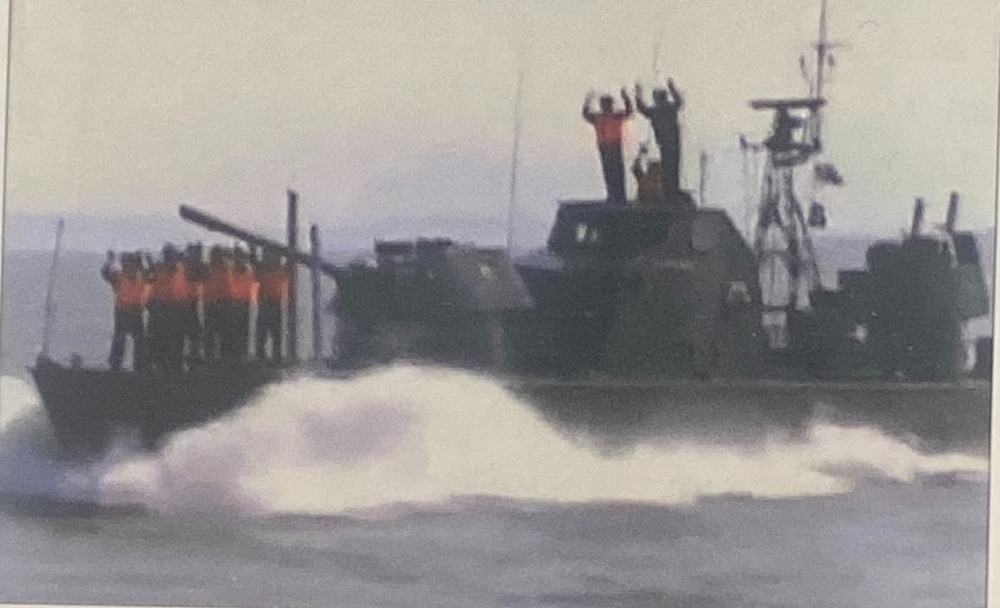
The Ch’ŏngjin-class is a patrol / gunboat class developed on the basis of the Pr. 183 torpedo boat. Around 37 Pr. 183s were delivered to North Korea from 1957–59, and the design was copied for a number of different variants. The Ch’ŏngjin is one such variant, constructed since 1971. Around 50 have been built — they feature a turreted 85mm gun forwards, and usually two dual 14.5mm KPVs behind the bridge. Some ships are reportedly fitted with two 25mm 2M-3s — for which photographic evidence is lacking — and some others have been upgraded to carry 14.5mm gatling guns.
BR 3.3.
Armament: 1x 85mm, 2x 14.5mm gatling guns
Mobility: ~67t, ~81km/h (44 knots)
✪ Pr. 183 mod.
Bolshevik-class torpedo boat, Pr. 183, mod.

The Bolshevik-class, also known as the Pr. 183 and in the West as the P 6, is a Soviet series of torpedo boats developed in the late 1940s, and built up until 1960. Over 400 were built, in a number of different variants. Reportedly, 27 were delivered to North Korea from 1957–59. The Pr. 183 served as the basis for a number of domestic modifications and variants, of which one is a fairly simple modernisation, replacing the two 25mm 2M-3 turrets with two 14.5mm gatling guns.
BR 3.3.
Armament: 2x 14.5mm gatling guns; 2x 533mm 53-38 torpedoes, 12x BB-1 depth charges
Mobility: 67t, 81km/h (44 knots)
Line 2 – ROKN Torpedo Boats and Gunboats
☯︎ Baekgu (early)
Baekgu-class gunboat (early)
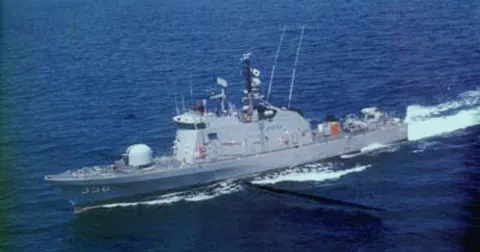
The Asheville-class was an American class of gunboats, built from 1966–71. 17 vessels were completed, each armed with a 3-inch gun forwards, 4 .50 cals, and 1 40mm Bofors Mk. 10. Five of them were outfitted with different missiles for testing purposes. In 1971, PG-96 Benicia was transferred to South Korea, and renamed PGM-51 Baekgu. Eight more ships were then produced specifically for South Korea, three by Tacoma Shipyard and four by Korea Tacoma, as the Baekgu-class. The first three were largely identical to PGM-51, differing primarily in engine type and slightly altered armament. The late type ships diverged even further, with significantly improved armament, including Harpoon AShMs.
BR 3.3.
Armament: 1x 76mm (3-inch) Mk. 34, 1x twin 30mm Emerson 30/75 KCB, 2x twin 12.7mm M2; 2x AGM-78 Standard Arm
Mobility: 268t, 78km/h (42 knots)
☯︎ PKM 201 (early)
PKM 201-class patrol boat (early)
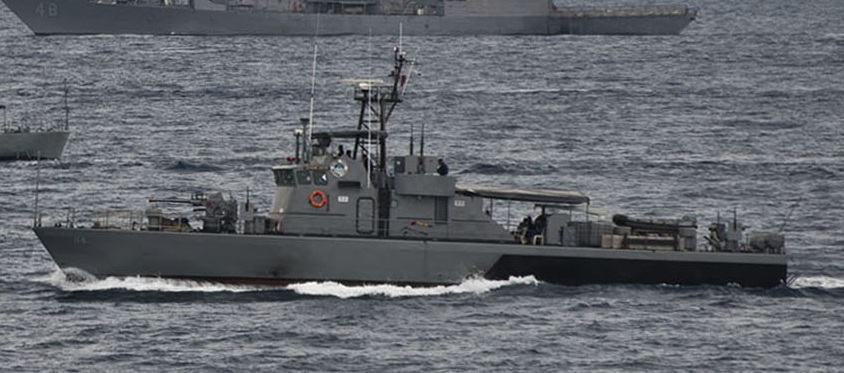
The PKM 201 is a subclass of the Chamsuri-class patrol boats, developed by South Korea in the late 1970s. 101 vessels were built in total, of which 54 comprised the PKM 201. The PKM 201 can be further separated into early, mid, and late variants: the early ships were armed with twin 30mm Emerson cannons, one Bofors 40mm, and two Oerlikon 20mm cannons. They remain in service today, although most have been retired or upgraded.
BR 3.3.
Armament: 1x 40mm Bofors L/60 Mk. 3, 1x twin 30mm Emerson Emerlec EX 30, 2x 20mm Oerlikon L/70 Mk. 10
Mobility: 147t, 70km/h (38 knots)
☯︎ PKM 201 (late)
PKM 201-class patrol boat (late)
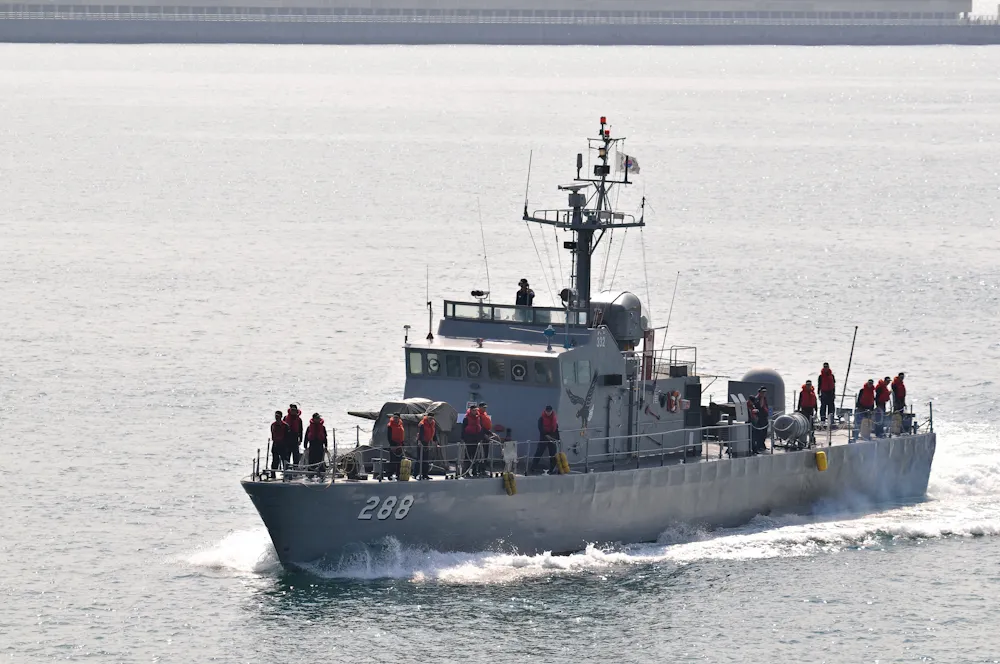
The PKM 201 is a subclass of the Chamsuri-class patrol boats, developed by South Korea in the late 1970s. 101 vessels were built in total, of which 54 comprised the PKM 201. The PKM 201 can be further separated into early, mid, and late variants: the late ships were generally armed with twin 30mm Emerson cannons, one or two Sea Vulcan 20mm gatling guns, and two 12.7mm M2 machine guns, replacing the 40mm Bofors and 20mm Oerlikon cannons. They remain in service today, although most have now been retired.
BR 3.7.
Armament: 1x twin 30mm Emerson Emerlec EX 30, 2x 20mm Sea Vulcan gatling guns, 2x 12.7mm M2
Mobility: 147–156t, 70km/h (38 knots)
Line 3 – KPANF Subchasers and Gunboats
✪ Tŭngsan’got (682)
Tŭngsan’got-class gunboat, 682
Suggestion Post

The Pr. 201 is a Soviet class of submarine chasers, known in Western sources as the S0.1, developed in the mid-1950s. North Korea received an unknown number of Pr. 201s from 1957–61 — some of these can only have been the earlier Pr. 201 variant, although few were produced, and details of delivery to the DPRK are scarce. A number of variants of the Pr. 201 were then produced locally — this includes the Tŭngsan’got-class, the name given to a series of locally-produced Pr. 201s fitted with better main weaponry, at the cost of their ASW capabilities. No. 682 is armed with a turreted 100mm gun forwards, a 14.5mm ZPU-4, two dual 37mm 61-Ks, depth charges, and two sets of three chaff launchers. No. 682 was photographed in detail by South Korean sailors, just before the start of the Second Battle of Yeonpyeong in 2002.
BR 3.7.
Armament: 1x 100mm, 2x 37mm 61-K, 1x 14.5mm ZPU-4; depth charges
Mobility: 240t, 50km/h (27 knots)
✪ Taech’ŏng-I (680)
Taech’ŏng-I-class gunboat, 680
Suggestion Post

The Taech’ŏng-class is a series of gunboats produced by North Korea in the 1970s and 1980s, split into two sub variants (Taech’ŏng-I and Taech’ŏng-II). The Taech’ŏng is derived from both the Soviet Pr. 201 and Chinese Type 037, both of which North Korea operated. The Taech’ŏng has a slightly lengthened hull, and is up-gunned from its Soviet and Chinese counterparts. There are two distinct batches of the Taech’ŏng-I, with No. 680 falling into the second batch. It is armed with a turreted 100mm gun forwards, as well as two twin 14.5mm KPVs, one 25mm 2M-3 turret, one twin 57mm, and two RBU-1200s. No. 680 took part in the 1999 Battle of Yeonpyeong, wherein North Korean patrol boats and gunboats crossed the Northern Limit Line and engaged South Korean vessels, taking severe losses in the process.
BR 4.0.
Armament: 1x 100mm, 1x 57mm ZiF-31, 1x 25mm 2M-3, 2x dual 14.5mm KPV; 2x RBU-1200 launchers, 12x depth charges
Mobility: 385–420t, 56.5km/h (30.5 knots)
✪ Pr. 201 mod.
Pr. 201-class submarine chaser, mod.
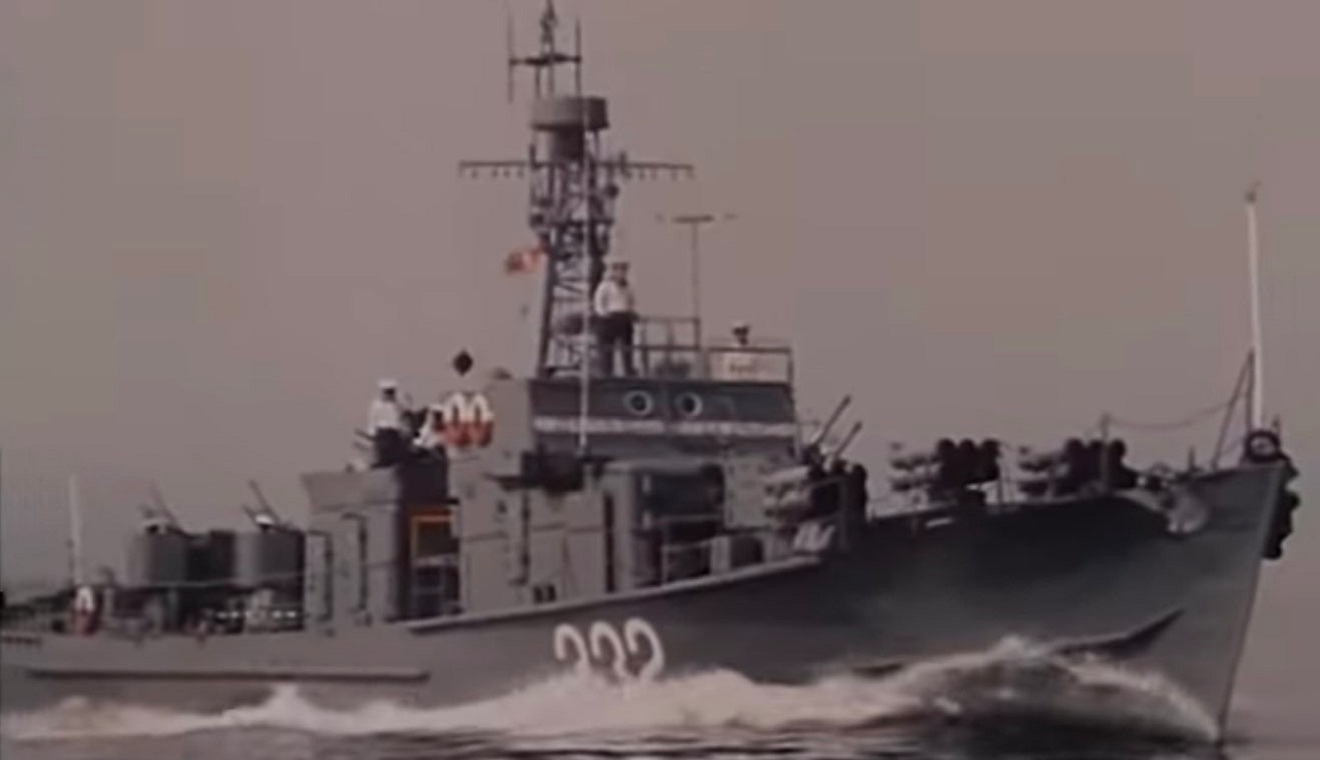
The Pr. 201 is a Soviet class of submarine chasers, known in Western sources as the S0.1, developed in the mid-1950s. North Korea received an unknown number of Pr. 201s from 1957–61 — some of these can only have been the earlier Pr. 201 variant, although few were produced, and details of delivery to the DPRK are scarce. A number of variants of the Pr. 201 were then produced locally, and the imported ships were up-gunned in two separate variants. One such variant is little known, but features an additional 25mm 2M-3 turret at the aft, and a 14.5mm ZPU-4 midships (later upgraded to a 14.5mm gatling gun).
BR 4.0.
Armament: 3x 25mm 2M-3, 1x 14.5mm ZPU-4; 4x RBU-1200 launchers, 20x mines
Mobility: ~213t, 52km/h
Line 4 – KPANF Corvettes and Frigates
✪ Pr. 53 mod. (671)
Fugas-class minesweeper, Pr. 53, 671, mod.
Suggestion Post
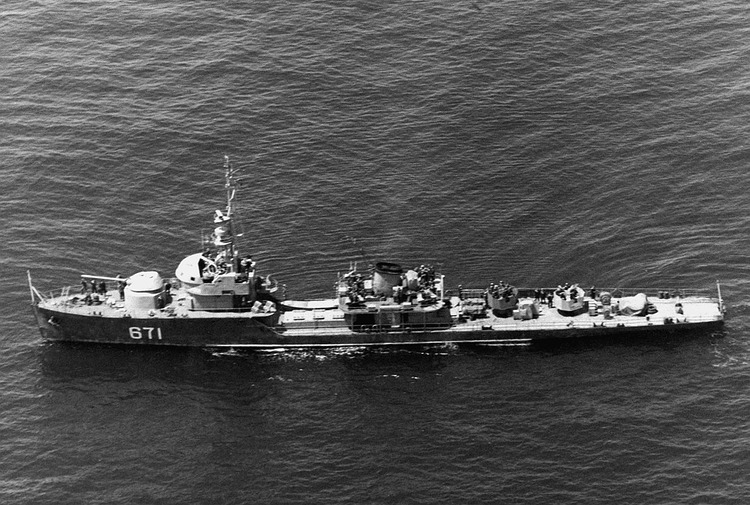
The Fugas-class is a class of minesweeper developed by the USSR and built in the 1930s. Multiple variants were constructed: the Pr. 3, Pr. 53, Pr. 53-U, and Pr. 58. 10 Pr. 53s were built, and at least two — T-2 Tros and T-8 Cheka — were delivered to North Korea in 1953. T-2 Tros was renumbered to 1008, and T-8 Cheka to 1003. No. 1008 was later re-armed in the 1980s as a gunboat (and renumbered at some point to 671), and fitted with the same weaponry as the Sariwŏn-class (specifically No. 511 and 512) — a class built in the 1960s on the basis of the Fugas-class. No. 671 had its minesweeping equipment removed, and was fitted with a turreted 85mm gun on the bow, four 14.5mm ZPU-4s midships, and two dual 37mm cannons at the aft.
BR 3.3.
Armament: 1x 85mm, 2x 37mm V-11-M, 4x 14.5mm ZPU-4
Mobility: 490–535t, 33km/h (18 knots)
✪ Sariwŏn (510)
Sariwŏn-class corvette, 510
Suggestion Post
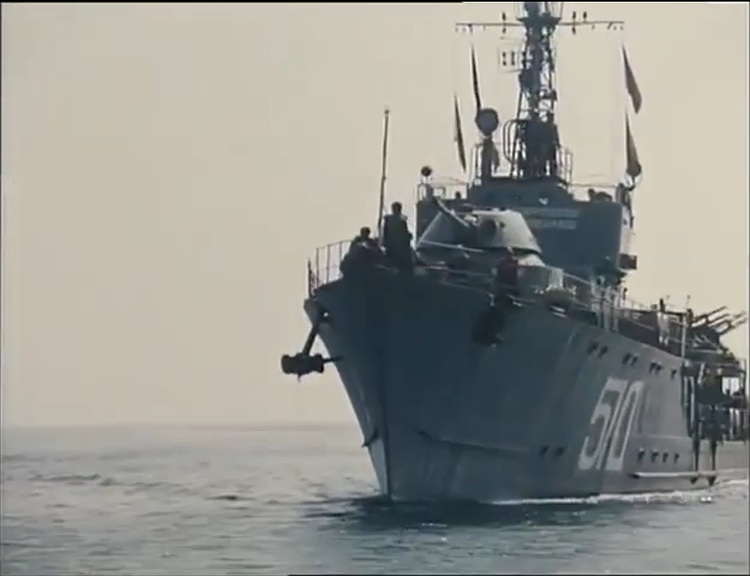
The Sariwŏn-class is a domestic North Korean class of corvettes, developed in the late 1960s on the basis of the imported Fugas-class ships. Four were built in total, all of which have been variously modified over the years. All served in the East Sea fleet. The four were initially numbered 511–514, and it appears No. 510 is No. 514 renumbered. No. 510 is fitted with an 85mm gun mounted forward, four 14.5mm ZPU-4s midships, and dual 57mm ZiF-31 cannons at the aft. The current status of this ship is unknown.
BR 3.3.
Armament: 1x 85mm, 1x 57mm ZiF-31, 4x 14.5mm ZPU-4
Mobility: 650t, 39km/h (21 knots)
✪ Sariwŏn (613)
Sariwŏn-class corvette, 613
Suggestion Post

The Sariwŏn-class is a domestic North Korean class of corvettes, developed in the late 1960s on the basis of the imported Fugas-class ships. Four were built in total, all of which have been variously modified over the years. All served in the East Sea fleet. The four were initially numbered 511–514. One ship was renumbered to 613 at an unknown point in time, with different weaponry to that identified in intelligence reports from the 70s and 80s. No. 613 was photographed by South Korean soldiers in 2016 — it was fitted with what appears to be a 100mm cannon, four 14.5mm gatling guns midships, and dual 57mm ZiF-31 cannons at the aft.
BR 3.7.
Armament: 1x 100mm, 1x 57mm ZiF-31, 4x 14.5mm gatling guns
Mobility: 650t, 39km/h (21 knots)
Line 5 – ROKN Gunboats and Frigates
☯︎ Taedong (PF-63)
Tacoma-class Patrol Frigate, PF-63, Taedong

USS Tacoma (PF-3) was an American patrol frigate, and lead ship of the Tacoma-class. She was launched in 1943, and served during WW2. In 1945, she was transferred to the USSR under the lend-lease program, and saw service until 1949 when she was returned back to the US. In late 1950, she sailed to Korea and entered the Korean War. In October 1951, she was transferred to the ROKN, where she was renamed Taedong (PF-63). She saw service until 1973, when she was decommissioned and returned to the USA.
BR 3.3.
Armament: 3x 76mm (3-inch) Mk. 10, 2x dual 40mm Bofors L/60 Mk. 2, 9x 20mm/70 Oerlikon Mk. II; 40x Mk.6 depth charges, 24x Mk.10 ‘Hedgehog’ mortars
Mobility: 2454t, 37.6km/h (20 knots)
☯︎ Dangpo (PCEC 56)
Dangpo-class Patrol Craft Escort, PCEC 56, Dangpo
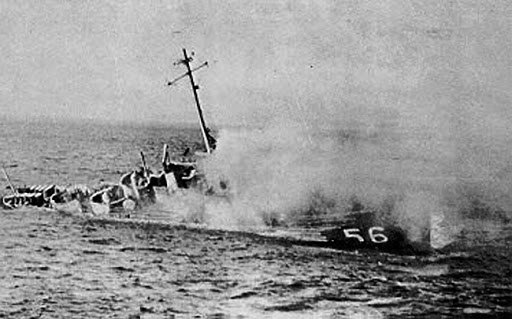
The PCE-842-class was a class of American patrol craft escorts, of which 68 vessels were built from 1942–1945. PCE-842 was launched in 1943 and saw service during WW2. She was decommissioned in 1947, and was used as a training ship until 1955, when she was put in the Atlantic Reserve Fleet and named Marfa. She was transferred to South Korea in 1961, where she served with the ROKN until 1967, when she was sunk by North Korean artillery. In ROKN service, she was known as Dangpo (PCEC 56).
BR 3.7.
Armament: 1x 76mm (3-inch), 3x dual 40mm Bofors L/60, 4x 20mm/70 Oerlikon Mk. II; depth charges, 1x Hedgehog launcher
Mobility: 914t, 30km/h (16 knots)
☯︎ Kyongki (F-71)
Cannon-class Destroyer Escort, F-71, Kyongki
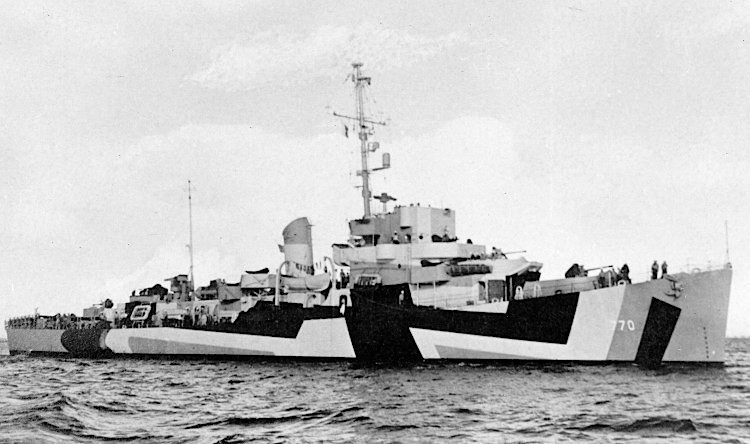
Image as USS Muir
USS Muir was a Cannon-class destroyer escort, launched in 1944. She served during the final year of WW2 in Europe, and through to 1947, when she was decommissioned and entered the Atlantic Reserve Fleet. In 1956, she was transferred to South Korea on loan and served until 1977, when she was stricken. In ROKN service, she was named Kyongki (F-71).
BR 4.0.
Armament: 3x 76mm (3-inch), 1x dual 40mm Bofors L/60, 8x 20mm/70 Oerlikon Mk. II; 3x 533mm torpedoes, 1x Hedgehog Mk. 10 mortar, 8x depth charge racks
Mobility: 1646t, 39km/h (21 knots)
Rank V
Line 1 – KPANF Torpedo Boats and Light Gunboats
✪ Pr. 206
Shtorm-class torpedo boat, Pr. 206
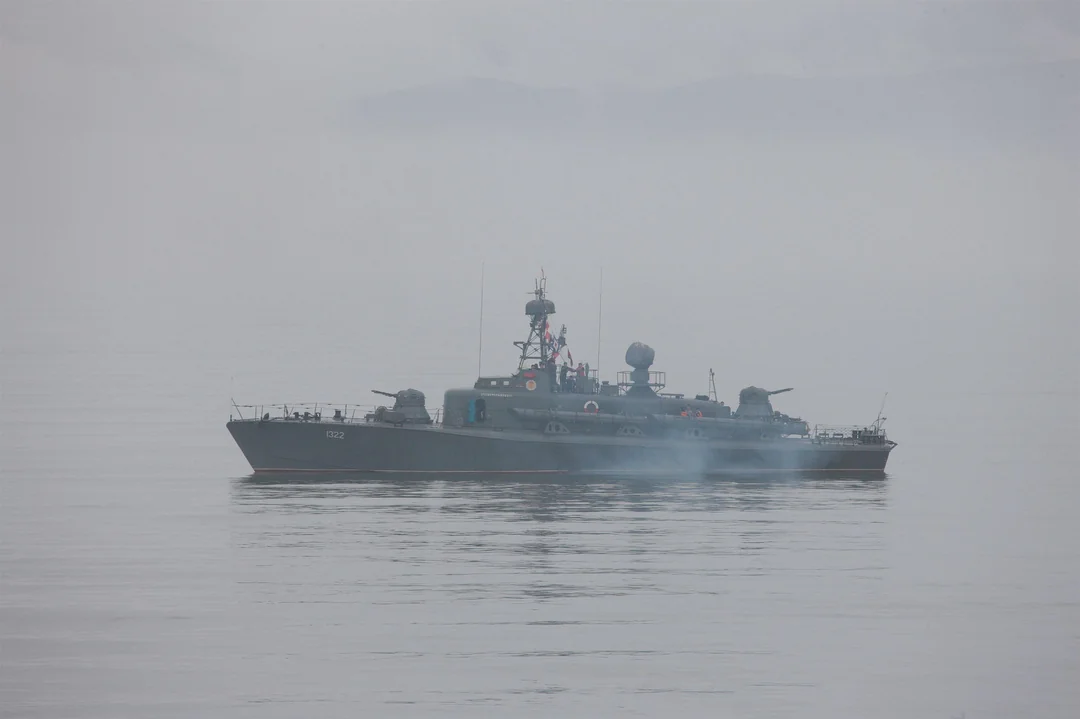
The Pr. 206 Shtorm-class, known in the West as the Shershen-class, is a series of Soviet torpedo boats produced in the 1960s. 123 vessels were built through to 1970. An unknown number were exported to North Korea, although at least four were delivered in 1968. Despite being close to 6 decades old, they remain North Korea’s most modern torpedo boat, equipped with four torpedo launchers and two twin 30mm auto-cannons. Unlike other imported Soviet ships, no known copy or derivative of the Pr. 206 was produced by North Korea.
BR 4.3.
Armament: 2x 30mm AK-230; 4x 533mm 53-56 torpedoes, 12x BB-1 depth charges
Mobility: 161t, 83km/h (45 knots)
✪ Nongo
Nongo-class surface-effect ship, SES IIa
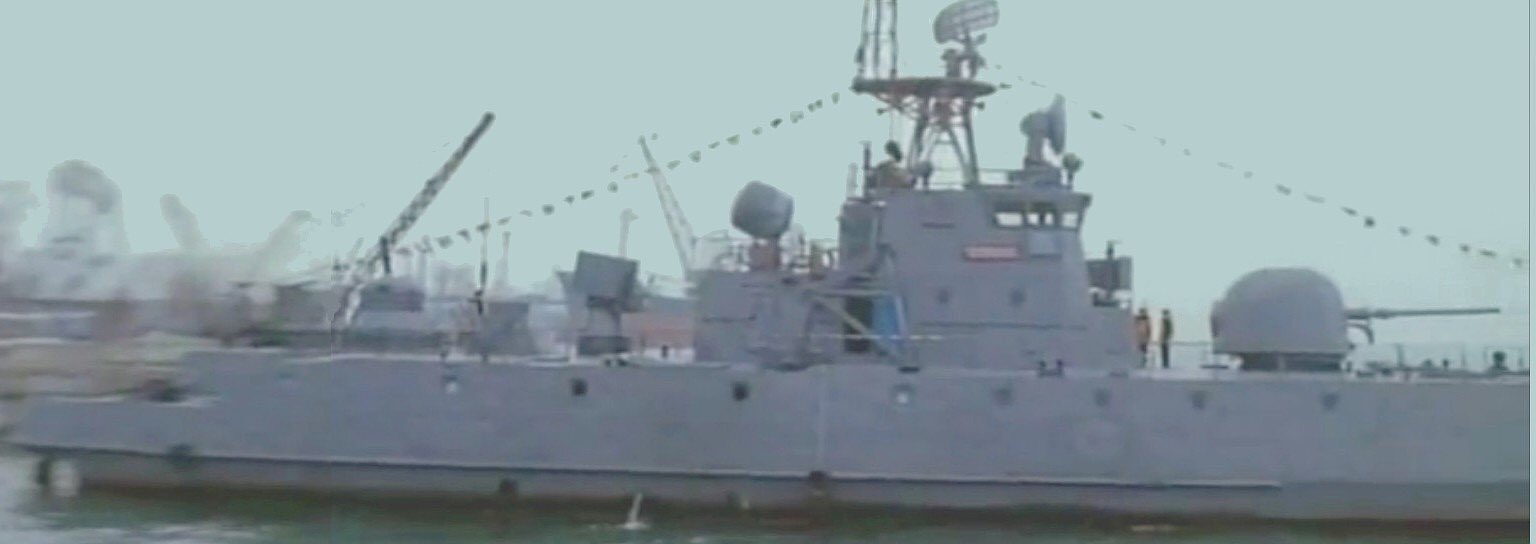
The Nongo-class is a series of surface-effect ships, developed first in the mid-to-late 1990s. The family began with the SES I, of which only one ship was built. Two SES IIa ships were built in the late 1990s, which both feature a range of relatively advanced weaponry for the time, including a reverse-engineered OTO Melara 76mm naval cannon. It also carries an AK-630 CIWS, and a MANPADS launcher. The vessels are also equipped to carry eight Kŭmsŏng-3 (KN-09) AShMs, although these are too powerful for the game (but thankfully, are rarely seen equipped). They are seen infrequently, but appear to remain in service.
BR 4.3.
Armament: 1x 76mm, 1x 30mm AK-630; 4x MANPADS launchers
Mobility: ~200t, 35–48kts
Line 2 – ROKN Torpedo Boats and Gunboats
☯︎ PKX-B
PKX-B-class patrol boat (Batch I)

The PKX-B is a modern class of patrol boat, designed to replace the Chamsuri-class, and a subvariant of the Yoon Youngha-class. They are smaller than the PKX-A guided missile ships in the same class. 16 PKMR ships in Batch I have been built since 2019, with the first four Batch II ships launched in December 2025. The PKX-Bs are heavily armed, with a 76mm OTO Melara main gun, two 12.7mm K6 machine guns, and a 130mm Biryong guided rocket launcher. The launcher consists of 12 rockets, capable of reaching a range of around 20km.
BR 4.7.
Armament: 1x 76mm OTO 76/62, 2x 12.7mm K6; 1x 130mm Biryong guided rocket launcher (12x rockets)
Mobility: 230t, 74km/h (41 knots)
Line 3 – KPANF Subchasers and Gunboats
✪ Taech’ŏng-II (515)
Taech’ŏng-II-class gunboat, 515
Suggestion Post
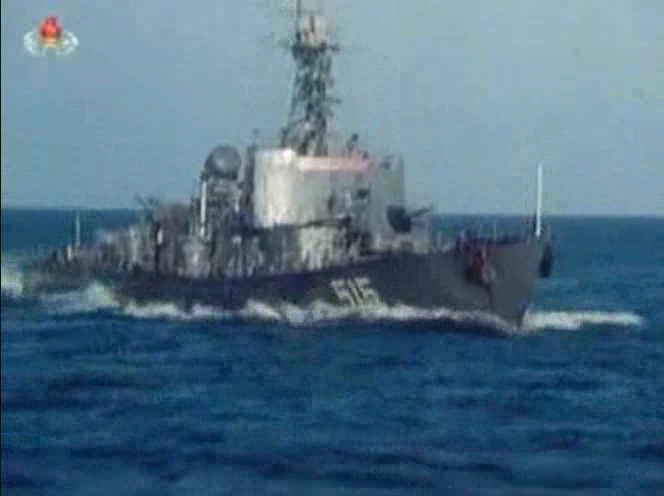
The Taech’ŏng-class is a series of gunboats produced by North Korea in the 1970s and 1980s, split into two sub variants (Taech’ŏng-I and Taech’ŏng-II). The Taech’ŏng is derived from both the Soviet Pr. 201 and Chinese Type 037, both of which North Korea operated. The Taech’ŏng has a slightly lengthened hull, and is up-gunned from its Soviet and Chinese counterparts. Around five Taech’ŏng-II vessels were built, and were roughly similar to the later Taech’ŏng-I batches in terms of armament, but had some upgrades, as well as modifications to the bridge and hull. No. 515, one of the only ones seen in enough detail, is armed with a turreted 100mm gun forwards, as well as an AK-230 in front of the bridge, a dual 57mm ZiF-31 at the aft, and a second AK-230 at the very end of the ship, as well as two RBU-1200 launchers and four sets of three chaff launchers.
BR 4.3.
Armament: 1x 100mm, 1x 57mm ZiF-31, 2x 30mm AK-230; 2x RBU-1200 launchers, 12x depth charges
Mobility: 385–420t, 56.5km/h (30.5 knots)
Line 4 – KPANF Corvettes and Frigates
✪ Najin (531) (1973)
Najin-class frigate, 531, mod. 1973
Suggestion Post

The Najin-class is North Korea’s first domestic frigate class, produced in the early 1970s. They remained the longest ships ever produced by North Korea until very recently, when they were surpassed by the Choe Hyon-class destroyers. Two sister ships were built, numbered 531 and 631 for most of their life. No. 531 entered service in 1973, and although it received upgrades later on, was initially substantially under-armed for a 1970s-frigate. In this early configuration, it has one turreted 100mm gun forwards and one at the aft, two dual 57mm ZiF-31 turrets behind both 100mm turrets, two 25mm 2M-3s, and four quad 14.5mm ZPU-4s, alongside a triple 533mm torpedo tube and one RBU-1200 launcher.
BR 4.0.
Armament: 2x 100mm, 2x 57mm ZiF-31, 2x 25mm 2M-3, 4x 14.5mm ZPU-4; 3x 533mm torpedoes, 1x RBU-1200
Mobility: ~1600t, 48km/h (26 knots)
✪ Soho (823)
Soho-class frigate, 823
Suggestion Post

The Soho-class is the name given to a prototype catamaran frigate produced by North Korea in the early 1980s. It was numbered 823, and entered service for a brief period of time, before being retired a few years later and scrapped in 2009, likely due to it being unstable in open water. The Soho is armed with a turreted 100mm gun mounted forwards, two twin 57mm ZiF-31s, two 25mm 2M-3s, two 30mm AK-230s, four RBU-1200 launchers — as well as four launchers for the P-15 Termit / Kŭmsŏng-1 AShM. These missiles would likely be too powerful for the game right now, but this ship could easily be added without them.
BR 4.3.
Armament: 1x 100mm, 2x 57mm ZiF-31, 2x 30mm AK-203, 2x 25mm 2M-3; 4x RBU-1200
Mobility: 1600t, 46km/h (25 knots)
✪ Najin (531) (1993)
Najin-class frigate, 531, mod. 1993
Suggestion Post

The Najin-class is North Korea’s first domestic frigate class, produced in the early 1970s. They remained the longest ships ever produced by North Korea until very recently, when they were surpassed by the Choe Hyon-class destroyers. Two sister ships were built, numbered 531 and 631 for most of their life. No. 531 entered service in 1973, and No. 631 in 1974. Although initially under-armed for frigates built in the 1970s, they received upgrades not too long after, primarily centred around the addition of AShMs. Both were modified in the 1980s / early 1990s, and No. 531 was famously photographed in 1993. In this configuration, No. 531 is armed with one turreted 100mm gun forwards and one at the aft, two dual 57mm ZiF-31 turrets behind both 100mm turrets, two 30mm AK-230s, and six 25mm 2M-3s. The torpedoes were replaced by two P-15 Styx AShMs. Although very powerful, they are limited to just two, and thus I believe these missiles could be added on this vessel. As such, in this configuration, this ship is an improvement over No. 631 mod. 2014, as the latter would have no missiles in-game.
BR 4.7.
Armament: 2x 100mm, 2x 57mm ZiF-31, 2x 30mm AK-230, 6x 25mm 2M-3; 2x P-15 AShMs
Mobility: ~1600t, 48km/h (26 knots)
Line 5 – ROKN Gunboats and Frigates
☯︎ Donghae
Donghae-class Patrol Combat Corvette, PCC-751, Donghae
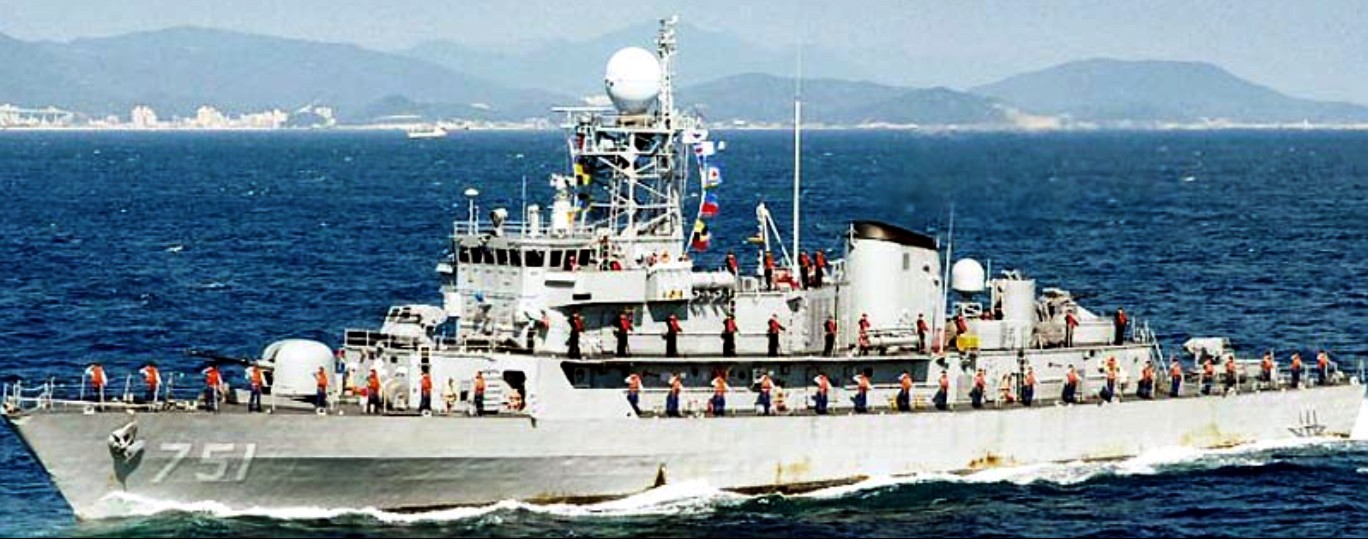
The Donghae-class is a domestic class of corvettes developed by South Korea in the late 1970s. It was designed as a low-end compliment to the Ulsan-class under construction at the same time. ROKS Donghae (PCC-751) was the lead-ship in the class, and launched in 1982. Four ships in the class were built, before the class changed to the Pohang-class for batches 2–5, due to an improved hull shape. ROKS Donghae served until 2009, when she was decommissioned and used as a target ship during exercises. Two of the other Donghae-class ships were scrapped, and the fourth was transferred to Colombia.
BR 4.7.
Armament: 1x 76mm OTO 76/62, 2x twin 30mm Emerson 30/75 KCB, 1x twin Bofors 40mm L/60; 2x triple torpedo (Mk. 46) launchers, 12x depth charges
Mobility: 1076t, 57km/h (31 knots)
Premium / Event Vehicles
Rank I
✪ Torpedo Boat No. 21
Torpedo Boat No. 21
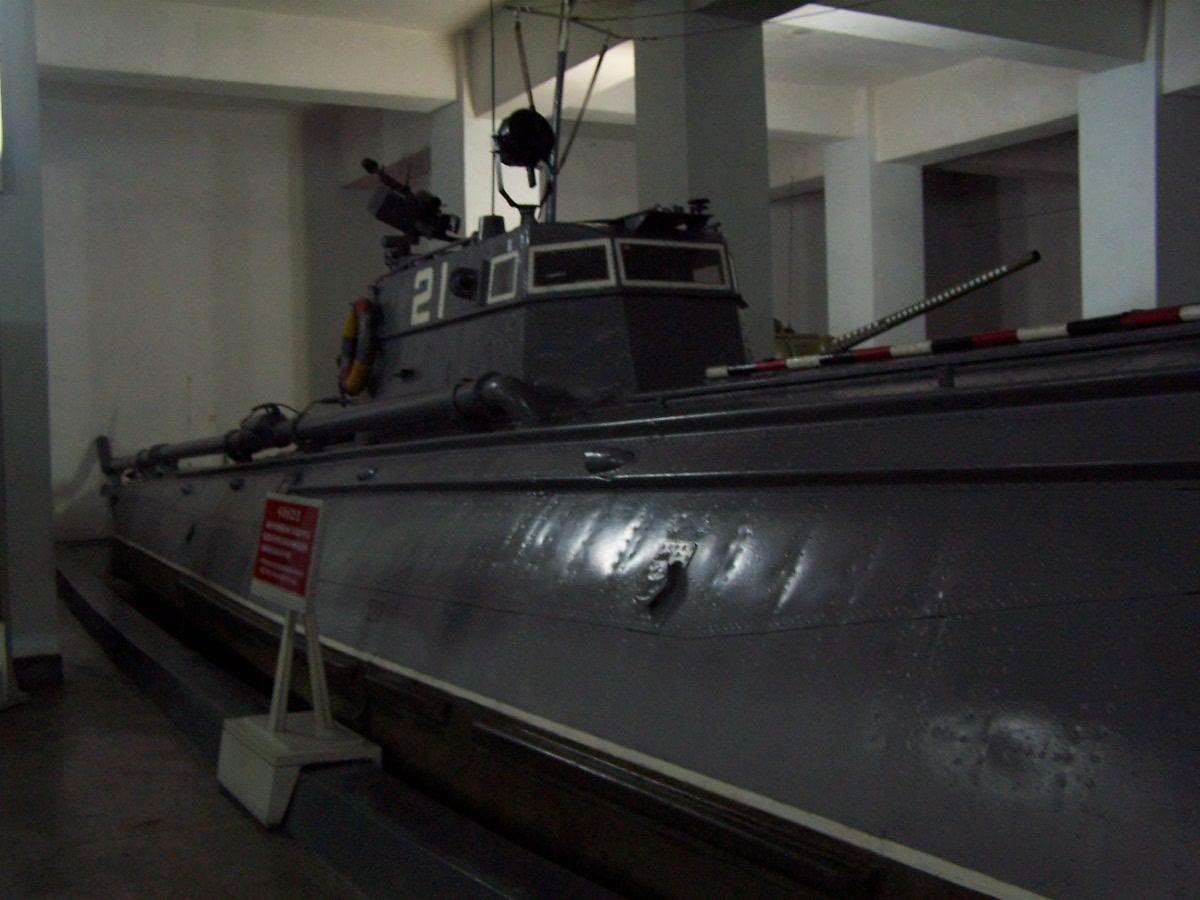
The G-5 was a Soviet class of torpedo boats developed in the early 1930s, and produced through to 1941. Over 300 were built, and primarily used during WW2. North Korea received an unknown number of these after the war, which were used during the Korean War. On the 2nd July 1950, the Battle of Chumonchin Chan took place, wherein North Korean torpedo boats began an attack on the American USS Juneau, and the British HMS Black Swan and HMS Jamaica. The torpedo boats were fired upon, and fled — three were destroyed. North Korea claims that during this battle, USS Baltimore — a 17,000t heavy cruiser — was sunk by Torpedo Boat No. 21 (a G-5-class boat). In actuality, USS Baltimore was not in Korea, saw service until the 70s, and was scrapped in 1972.
BR 1.0.
Armament: 1x 12.7mm DShK; 2x 533mm 53-38 torpedoes
Mobility: 16t, 94km/h (51 knots)
Rank II
✪ K-48 (573)
K-48-class gunboat, 573
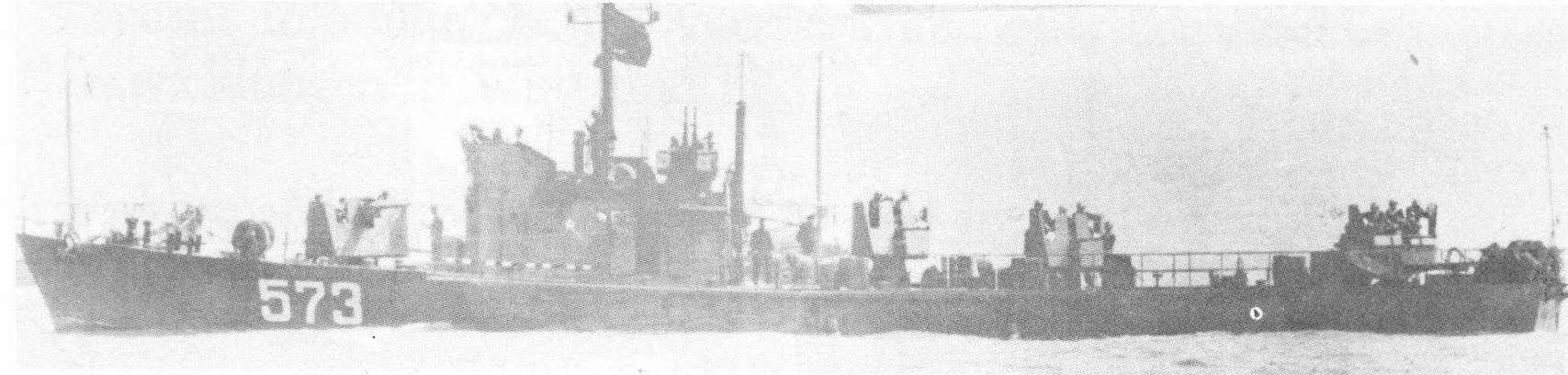
The K-48-class is a little-known indigenous class of gunboat, produced by North Korea sometime in the early 1960s. It appears to be related to the Ch’odo / Pr. 201, although has some key differences. At least four ships were built. They have been seen with multiple different weaponry loadouts, one of which, a ship numbered 573, consists of a 76mm gun mounted forwards, three single 37mm guns at the aft, and a single dual 14.5mm KPV mount behind the bridge. Most reports give the K-48 a lower top speed as the Ch’odo, thus being a slower, but better armed, variant.
BR 2.3.
Armament: 1 76mm 3-K, 3x 37mm 61-K, 2x 14.5mm KPV
Mobility: ~110t, 33km/h (18 knots)
Rank III
✪ Chae Jeong-bo
Ch’odo-class patrol boat, 51, Chae Jeong-bo
Suggestion Post

The Pr. 201 is a Soviet class of submarine chasers, known in Western sources as the S0.1, developed in the mid-1950s. North Korea received an unknown number of Pr. 201s from 1957–61 — some of these can only have been the earlier Pr. 201 variant, although few were produced, and details of delivery to the DPRK are scarce. A number of variants of the Pr. 201 were then produced locally, and the imported ships were up-gunned in two separate variants. One of the locally-produced classes is known in the West as the Ch’odo-class. Possibly four ships exist of this class, and all differ in weaponry and numbering (with the pattern appearing to have changed a multiple times). Patrol Boat 51, also named Chae Jeong-bo after a North Korean sailor, is one of these vessels. It’s slightly unclear which ship received which weaponry, but in one of the last known sightings of Chae Jeong-bo, it was armed with a 76mm cannon forwards, two 37mm cannons at the aft, and two dual 14.5mm KPVs behind the bridge.
BR 2.7.
Armament: 1 76mm 3-K, 2x 37mm 61-K, 2x dual 14.5mm KPV
Mobility: ~235t, 50km/h (27 knots)
☯︎ Chungmugong I
Chungmugong I-class gunboat, PG-313
Suggestion Post
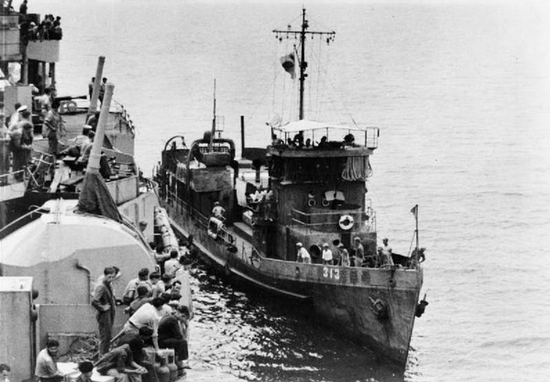
The Chungmugong-class was South Korea’s first domestic ship, built in 1947 as a patrol gunboat. Development had begun on a hull in 1944 by the Japanese, originally designed as a torpedo carrier. In 1946, production was restarted by South Korea. The first ship, often referred to as the Chungmugong I, was numbered PG-313. PG-313 saw service during the Korean War, primarily as a patrol boat. A second vessel, Chungmugong II / PG-315, was built in 1951. They were both retired in 1956. They were both armed the same, with one 40mm Bofors L/60 forwards, two 20mm Oerlikon L/70s, and two 12.7mm M2s.
BR 3.0.
Armament: 1x 40mm Bofors L/60, 2x 20mm Oerlikon L/70, 2x 12.7mm M2HB
Mobility: 287t, 24km/h (13 knots)
Rank IV
✪ Kim Yŏngsik Hero
Tŭngsan’got-class gunboat, 684, Kim Yŏngsik Hero
Suggestion Post

The Pr. 201 is a Soviet class of submarine chasers, known in Western sources as the S0.1, developed in the mid-1950s. North Korea received an unknown number of Pr. 201s from 1957–61 — some of these can only have been the earlier Pr. 201 variant, although few were produced, and details of delivery to the DPRK are scarce. A number of variants of the Pr. 201 were then produced locally — this includes the Tŭngsan’got-class, the name given to a series of locally-produced Pr. 201s fitted with better main weaponry, at the cost of their ASW capabilities. No. 684 is armed with a turreted 100mm gun forwards, a 14.5mm gatling gun, two dual 37mm 61-Ks, depth charges, and two sets of three chaff launchers. No. 684 famously took part in the First Battle of Yeonpyeong in 1999, as well as the Second Battle of Yeonpyeong in 2002. The ship’s captain, Kim Yŏngsik, died in the battle in 2002, and No. 684 was subsequently renamed to Kim Yŏngsik Hero.
BR 3.7.
Armament: 1x 100mm, 2x 37mm 61-K, 1x 14.5mm gatling gun; depth charges
Mobility: 240t, 50km/h (27 knots)
☯︎ PKM 357
PKM 301-class patrol boat, PKM 357
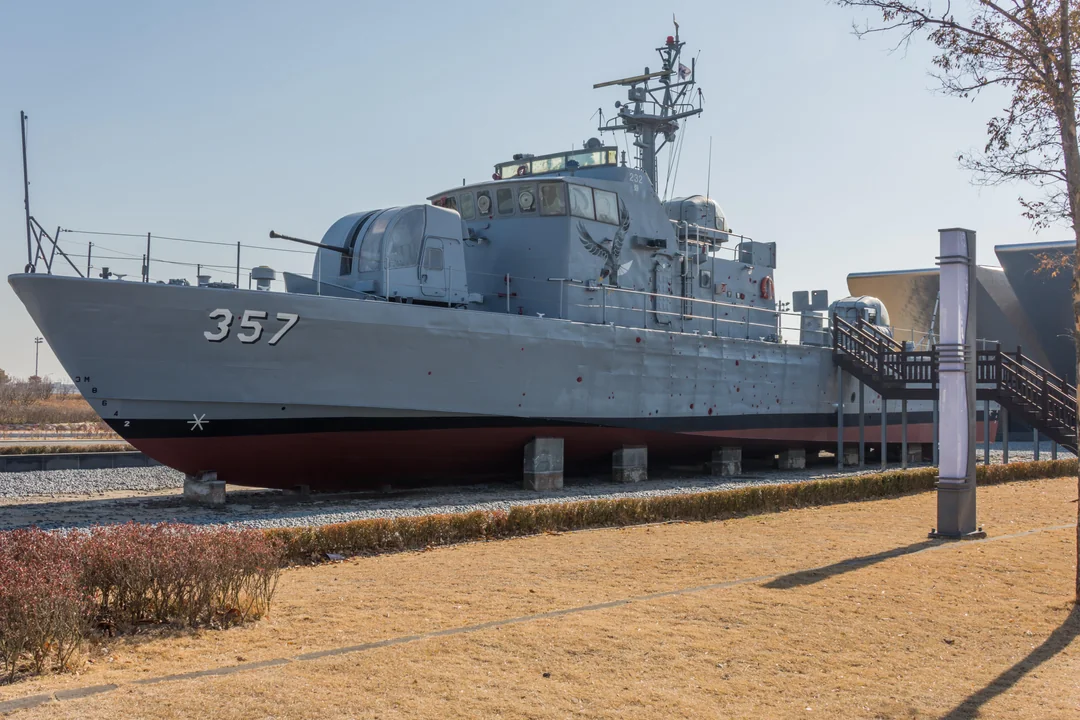
The PKM 301 is a subclass of the Chamsuri-class patrol boats, developed by South Korea in the late 1970s. 101 vessels were built in total, of which 47 comprised the later PKM 301. They were armed with a single 40mm Bofors forwards, two Sea Vulcan 20mm gatling guns, and two 12.7mm M2 machine guns. PKM 357 was one such ship — on June 29, 2002, during the Second Battle of Yeonpyeong, PKM 357 was sunk by North Korean patrol boats after taking heavy fire. She was later recovered, and a replica displayed at the War Memorial of Korea.
BR 3.7.
Armament: 1x 40mm Bofors L/60 Mk. 3, 2x 20mm Sea Vulcan gatling guns, 2x 12.7mm M2
Mobility: 147–156t, 70km/h (38 knots)
✪ Sonyeon
Taech’ŏng-I-class gunboat, 623, Sonyeon
Suggestion Post
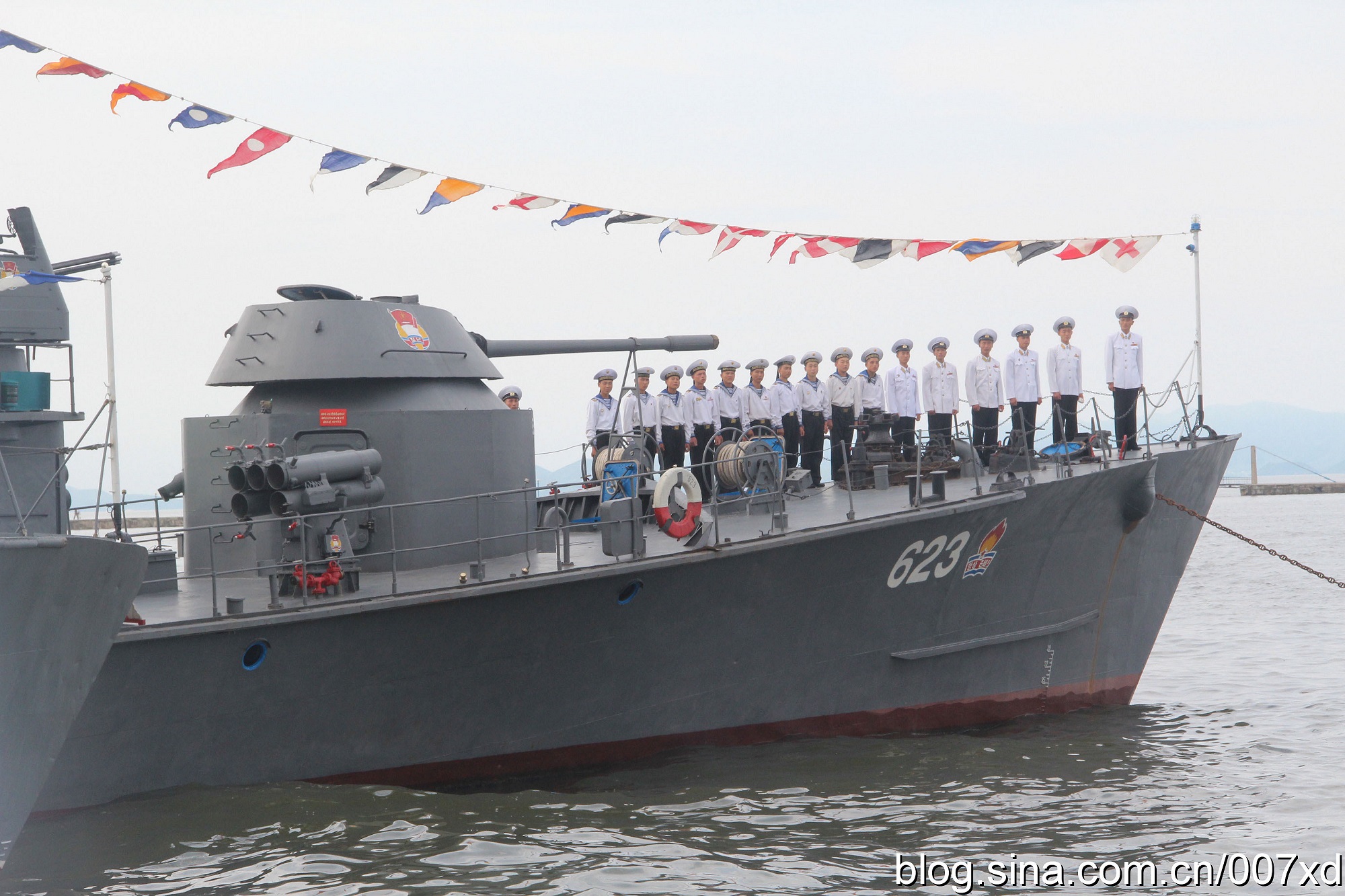
The Taech’ŏng-class is a series of gunboats produced by North Korea in the 1970s and 1980s, split into two sub variants (Taech’ŏng-I and Taech’ŏng-II). The Taech’ŏng is derived from both the Soviet Pr. 201 and Chinese Type 037, both of which North Korea operated. The Taech’ŏng has a slightly lengthened hull, and is up-gunned from its Soviet and Chinese counterparts. There are two distinct batches of the Taech’ŏng-I, with No. 623, also known as Sonyeon (‘Boy’), falling into the first batch. Sonyeon is armed with a turreted 85mm forwards, as well as two 14.5mm gatling guns, one 25mm 2M-3 turret, one twin 57mm, two RBU-1200s, and four sets of three chaff launchers. Sonyeon was seen in detail when the PLN Type 679 Zheng He training ship visited the port of Wŏnsan in 2011.
BR 4.0.
Armament: 1x 85mm, 1x 57mm ZiF-31, 1x 25mm 2M-3, 2x 14.5mm gatling guns; 2x RBU-1200 launchers, 12x depth charges
Mobility: 385–420t, 56.5km/h (30.5 knots)
Rank V
✪ Soju
Soju-class gunboat, 85
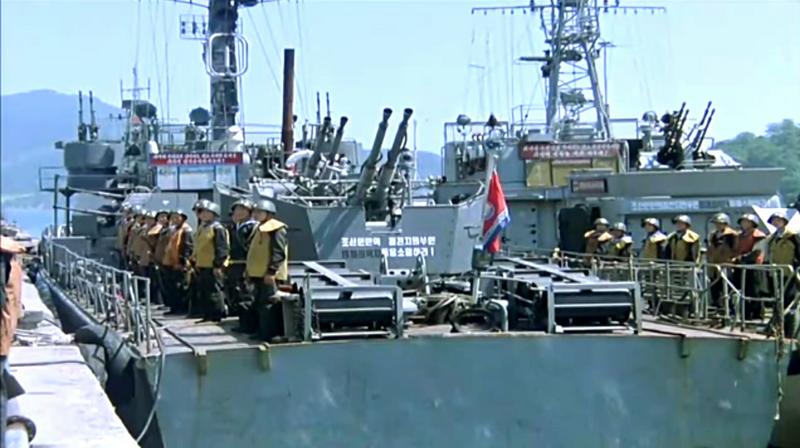
The Osa-class, also known as the Pr. 205, is a Soviet class of missile boats, built from 1960 to 1973. 160 Osa-1s were built, the first variant of many. North Korea received an estimated 10 Komar-class and 16 Osa-I-class ships in the late 1960s and early 1970s. These ships were copied as the Sohung- and Soju-classes respectively during the 1980s, bringing the total number of these ships (imported + domestically-produced) to around 50. The Soju-class featured a significantly lengthened hull (~4m), and although the armament on most ships remained the same used as the basis for a few, very rarely seen gunboats. These ships are heavily armed, with a turreted 85mm gun forwards, two dual 14.5mm KPVs behind the bridge, and two 25mm 2M-3s and two dual 37mm cannons at the aft.
BR 4.3.
Armament: 1x 85mm, 2x 37mm 61-K, 2x 25mm 2M-3, 2x 14.5mm ZPU-2
Mobility: >209t, <71km/h (38.5 knots)
✪ Najin (631) (2014)
Najin-class frigate, 631, mod. 2014
Suggestion Post

The Najin-class is North Korea’s first domestic frigate class, produced in the early 1970s. They remained the longest ships ever produced by North Korea until very recently, when they were surpassed by the Choe Hyon-class destroyers. Two sister ships were built, numbered 531 and 631 for most of their life. No. 531 entered service in 1973, and No. 631 in 1974. Although initially under-armed for frigates built in the 1970s, they received upgrades not too long after, primarily centred around the addition of AShMs. In 2014, No. 631 received even greater upgrades, focusing on secondary armament. In this configuration, No. 631 has one turreted 100mm gun forwards and one at the aft, one dual 57mm ZiF-31 turret behind the forward 100mm, two AK-230s at the aft, six 25mm 2M-3s, alongside two 533mm torpedo tubes, a MANPADS launcher, six sets of 3 chaff launchers, and eight launchers for the Kŭmsŏng-3 AShM. These missiles are too powerful for the game right now, and as such should be excluded from this vessel.
BR 4.3.
Armament: 2x 100mm, 1x 57mm ZiF-31, 2x 30mm AK-230, 6x 25mm 2M-3; 2x 533mm torpedoes
Mobility: ~1600t, 48km/h (26 knots)
Sources
Where vehicles have suggestion posts linked, sources are taken from there, and not listed here.
The Armed Forces of North Korea: On the Path of Songun. Stijn Mitzer and Joost Oliemans.
Jane’s Fighting Ships 1972-73. Richard Sharpe
Jane’s Fighting Ships 1979-80. Captain John Moore RN
Jane’s Fighting Ships 1990-91. Raymond V. B. Blackman
The Naval Institute Guide to Combat Fleets of the World 2005-2006. Eric Wertheim.
SIPRI Arms Transfer Database
List of ships of the Republic of Korea Navy - Wikipedia
국방과학연구소 최초 설계, 한국형 고속정 학생-제비급 < 해외 전투기 현황 < 밀리터리 뉴스(해외) < 기사본문 - 디펜스투데이
백구급 유도탄고속정 - 나무위키
해우리급 경비함 - 나무위키
제비급 고속정 - 나무위키
https://www.navalnews.com/naval-news/2025/12/rok-navy-launches-first-four-pkmr-batch-ii-vessels/
HHIC launches four more PKX-B-class fast attack craft for RoKN
MADEX 2017: LIG Nex1 PKX-B 130mm Guided Rocket Launcher to Counter Swarm Attacks
Gumdoksuri-class - Patrol vessel
Nongo Surface Effect Ship (SES)
COASTAL FORCES
North-Korea-Builds-Surface-Effect-Warship | Covert Shores
Korean People’s Navy (North Korea) – Current and Retired – The Searchers
Republic of Korea Navy ROKN Destroyer Frigate Submarine
조국을 지킨 배 - 대한 민국 최초의 군함 PC 701 백두산함
PT-613
曳船(敷設艇型)
창군기 함정 (1) - JMS/AMS 소해정 : 네이버 블로그