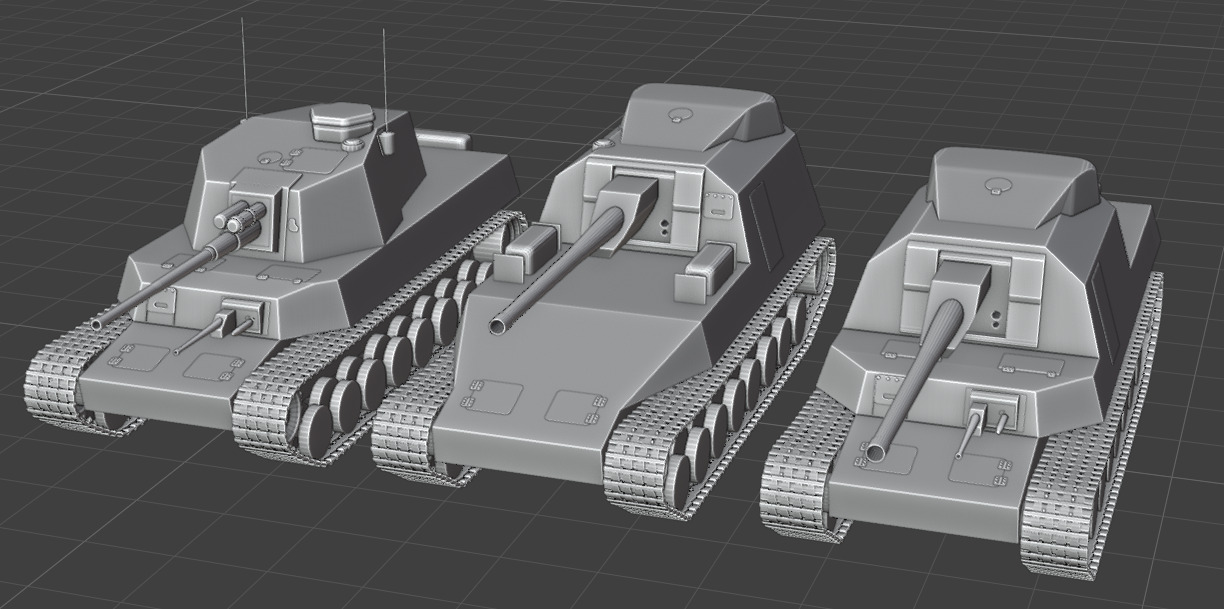
Some months ago I made a simple and unfinished model of Chi-Ri while trying to learn how to use Blender a little bit. Yesterday morning I modified it to (sloped) Ho-Ri to try and explore its physical dimensions. It’s very basic because I’m a beginner, but nonetheless it conforms to the dimensions on the drawings.
At the stage of the mockup, they had apparently not yet decided the gun depression solution, so I based the casemate on “Ho-Ri II.” I’ve determined that the roof bulge must have spanned the whole width if they were to enable the gun to use its full field of fire. If it was like Amusing Hobby’s model, then it would only be able to achieve 10 degrees of depression when aiming directly forwards. Because the gun is offset to the right, this symmetrical full-width roof extension accommodates both the breech recoil and loading tray.
Although it looks a bit goofy, from my examination of the sideview blueprint, I think there is actually evidence that it was generally shaped like this. It could be more or less rounded on the sides.
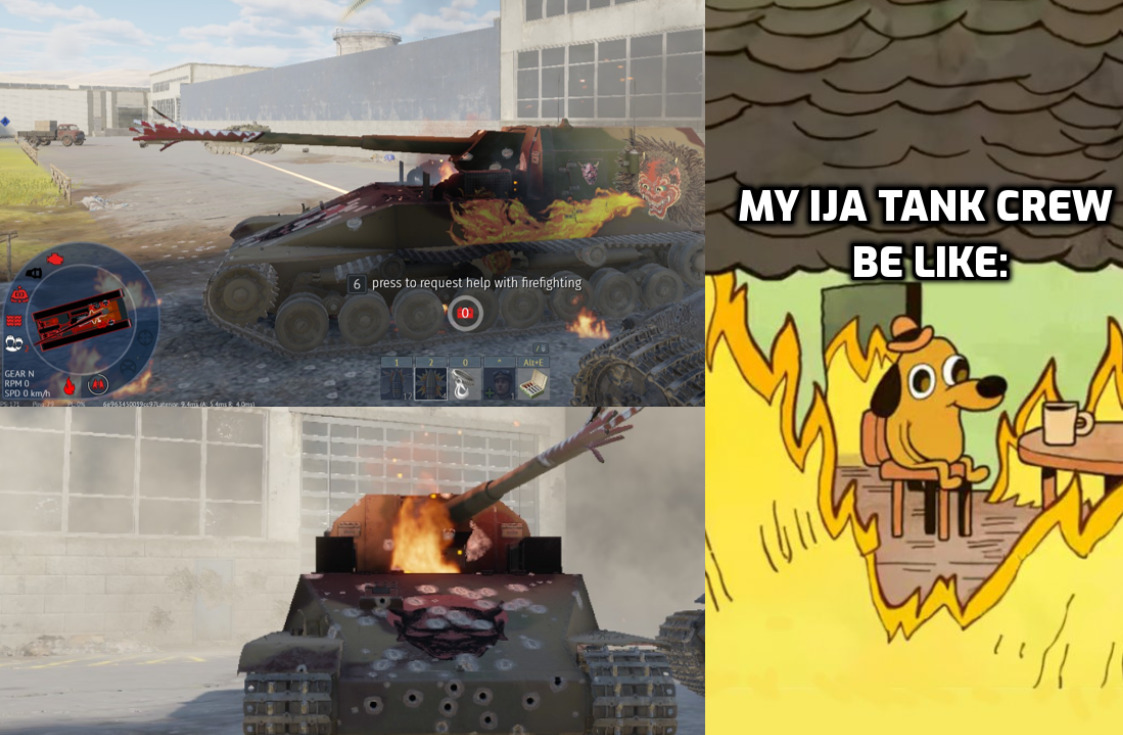
As an aside, in War Thunder, the UFP of sloped Ho-Ri seems unrealistically thick. The sloped armour of Japanese tanks typically targeted an effective thickness slightly superior to the thickness of the flat plates. I suspect that the UFP was actually between 30~50mm thick to target an equivalent of 75~125mm (slightly superior, accounting for toughness of the plate against ricocheting rounds).
My theory is that the sloped Ho-Ri mockup was 7.4m long (the chassis being slightly extended from Chi-Ri by moving the idler back), and through this model I was able to get a pretty close matchup to the mockup photograph, so I think it’s likely correct. This is the chassis length of “Ho-Ri II” if it was truncated to only span from sprocket to idler. Such a compact chassis was allowed by moving the engine forward and putting all crew in the superstructure.
Edit:
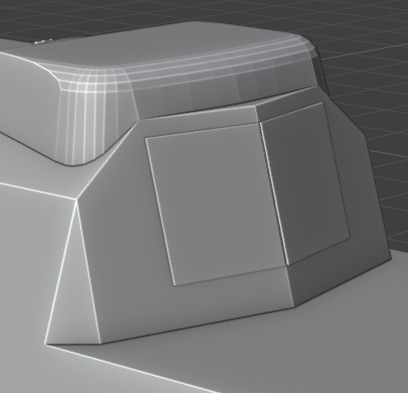
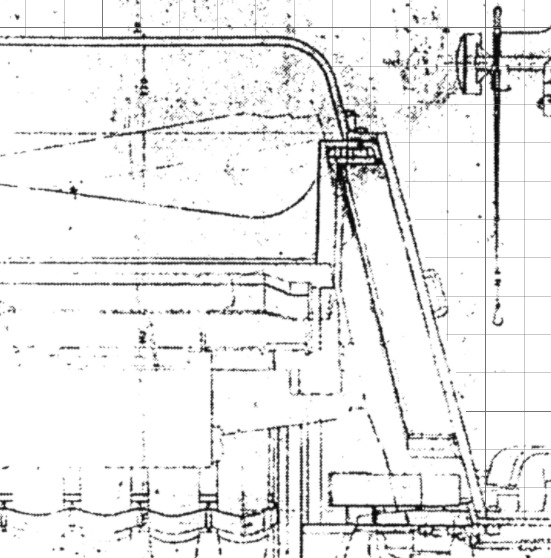
There’s one more slightly interesting detail I wanted to mention. The back of the casemate of Ho-Ri is most likely angular in a somewhat similar fashion to the Ho-Ni III, rather than being a single flat plate tilted 15 degrees forward (such as on the Amusing Hobby model). There are several reasons that this seems to be the case, but the main one is the profile of the back door on the drawing.