Without radar guidance, I didn’t notice any difference between the PL-12A and the regular version. It will likely take until March, when the statistical data is available, to draw a conclusion. However, there’s another possibility: when using the U key to observe the missile’s trajectory, I often noticed that it was just a few kilometers away from hitting its target before it lost lock and fell away. Therefore, it’s possible that the PL-12A’s propulsion system—or perhaps the aircraft itself—cannot provide enough speed to enable it to fully utilize its guidance capabilities.
That ultimately holds true.
I havent played ARB since the new patch dropped but before that 120A/Bs had the exact same pull as before. Is it any different @Morvran ?
Sure, I meant it as point that apparently is ok for gaijin for nation to exist without absolute top tier (right now that being 14.7) contender.
Dont test gaijin, as far as I know, the german typhoon got smaller horizontal scan based on wrong info, because apparently the AESA versions went from 100° > 90° (german variant) >100° (italian and UK) for no reason whatsoever.
If it was merely question of speed, Typhoon would be just as dominant if not more. Reason why Rafale was so dominant was that it could effectively attack from notch due to MICA having insane pull ability. Typhoon and other aircrafts had to leave the notch more in order to get Rafale within the WEZ.
even now with AESA radar on typhoons sure, they can guide the AMRAAM from notch but they cant just launch it all willy nilly, they still have to get target within WEZ before launch.
Sounds more like positioning issue, Im being succesfull with MKK within that distance, and MKK has terrible radar and weak engines.
Sounds more like the target just notched actually.
Though you can also maximise a shots potential by just paying attention to the radar.
The best way to know whether a shot is worth it or not is reading the radar:
Work in progress guide for reading the radar screen
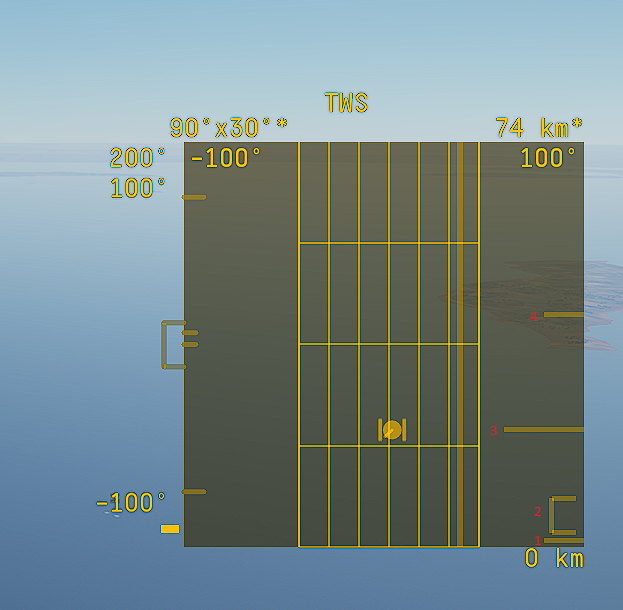
On the B-Scope display (the square radar panel) on the right hand side is a set markers that will tell you all you need to know about whether or not the target is within range and its worth firing
LIne 1 is your minium range (or rMin). if the target marker is below this point, the missile will be unable to hit the target, less of a problem for more modern missiles, but well worth keeping an eye on for older ones
the Box labeled “2” is your LSZ (launch success zone) or NEZ (no escape zone) (varies for different air forces but its the same thing) A missile fired within this box is incredibly difficult to defeat kinematically, the target will be required to actively defeat the missile, even turning cold wont necessarily be enough to defeat a missile fired within the LSZ
Note, the LSZ boxes can be buggy, especially at high alt and can sometimes appear to exceed the rMax, this is impossible, so do be warned, but generally can be trusted
Line 3 is the targets current relative range on the scale, if this line is within the LSZ box or close to it, generally its a good idea to attempt to fire the missile.
Line 4 is your maximum range (or rMax), this is the maximum theoretical range of your missile, but just because the target is within range, it doesnt mean that a shot is worth while firing, only that if the targets fails to do anything, the missile should hit. Its definetly worth paying attention to this for shorter range weapons like the Aim-9M.
So to summarise, try firing the missile whilst it is within the LSZ on the B-Scope and you should have greater success hitting the target. This range display is found on most aircraft and most weapons. But LSZ box is not modeled for all weapons.
Also pay attention to what the target is doing. TWS will give you the targets heading, if its traveling towards you, then it will be harder for them to defend than if they were already in a notch and if they are turned like that, then they wont be able to fire straight away and you can safely get closer. Control the fight. If they’ve been flying back and forth, they have probably drained a lot of energy and thus a good target to fire at.
A target at a very high alt will also struggle more to get into a notch than one at sea level and I personally find control surfaces can get a little… squirelly. So a target at very high alts may struggle to defend far more than one low, so these targets are usually ones I tend to single out
As a final piece of advice, try to help the missile as much as possible, Aim-120s dont like being fired at wierd angles, so leading your shot helps massively, the game already provides a lot of help with this, aim for the circle and the missile should have the easiest time. You can also raise your nose 15-20° and loft the missile slightly which can help too.
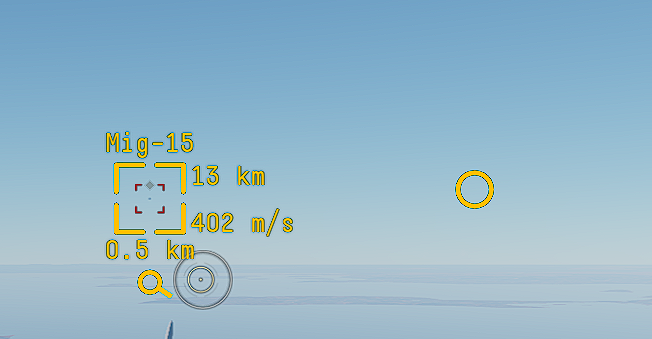
Sounds like you may also just be firing too far away
1 Like
Not that I noticed or have seen anyone mention datamining.
They did make some changes to how TWS works or something, apparently all Fox-3s are a little harder to notch in some situations now, but I’ve not had any issues notching
1 Like
The guidance isn’t just DL on its own, it’s IOG + DL. So there is drift, but because of DL it corrects itself ever so often (or however fast the mothership radar updates).
And this is why AESAphoons weren’t given AIM-120D xD
Meteors when?
Honestly, when it comes I’m never gonna stop playing AESAphoon.
1 Like
Hardlock with AESA radar should be much harder to lose if theres no ground clutter AFAIK.
neither did i.
Close, TWS ESA works similar to a hard lock
(Simplified explanation)
1 Like
Actually that helps, I couldn’t get my head round what the changes actually did, but that makes sense now. Thanks
Well, thanks for your guidance. Since China’s top fighter jets (J-10C, J-15T) are significantly slower than other high-altitude fighters like the F-15, Rafale, Typhoon, or SM2, I often feel frustrated by the opportunities lost due to insufficient propulsion.
Su-35 is coming soon, comrade
(Not going to lie, a Russian jet being the Chinese’ fastest jet is funny if not sad)
I specifically recall hardlock being mentioned, but of course now i cant find the specific patchnote lmao.
However, I would prefer a J-16 with sufficiently good performance. China isn’t short of fighter jets that match its capabilities in terms of performance. The Su-35S, F-15EX, and J-16 are all among the strongest 4.5-gen fighter jets. For now, I can only hope that Gaijin won’t make it any worse.
Based on the available data, it seems that the flight performance of the J-16 and Su-35 is similar. The only factors that can affect their capabilities are those damned radars and missiles. It will be the PL-15 and R77M that determine which one is stronger in the game.
Unfortunately, there isn’t much you can do about that early game, but good positioning mid to late game and you’ll do fine
1 Like
Here ya go
2 Likes
The J-16 uses the same engines as J-15T, does it not? In that case it’s more of the same, except you might have more countermeasures?
Su-35 uses the AL-41 engines the Su-30SM2 has in-game and it’ll have slightly less drag due to no canards… I wonder how their flight performance is similar lol
In fact, according to public information and suggestions from forums (of course, I have no idea what Gaijin will do), the engine used in the J-16 is the WS-10B3, with a thrust of approximately 140–145 kN at test bench conditions. Additionally, the J-16 is actually lighter than the Su-35S, with an empty weight of only 17.7 tons.
1 Like
Pretty sure this was axed in favour of the non-thrust vectoring WS-10B?