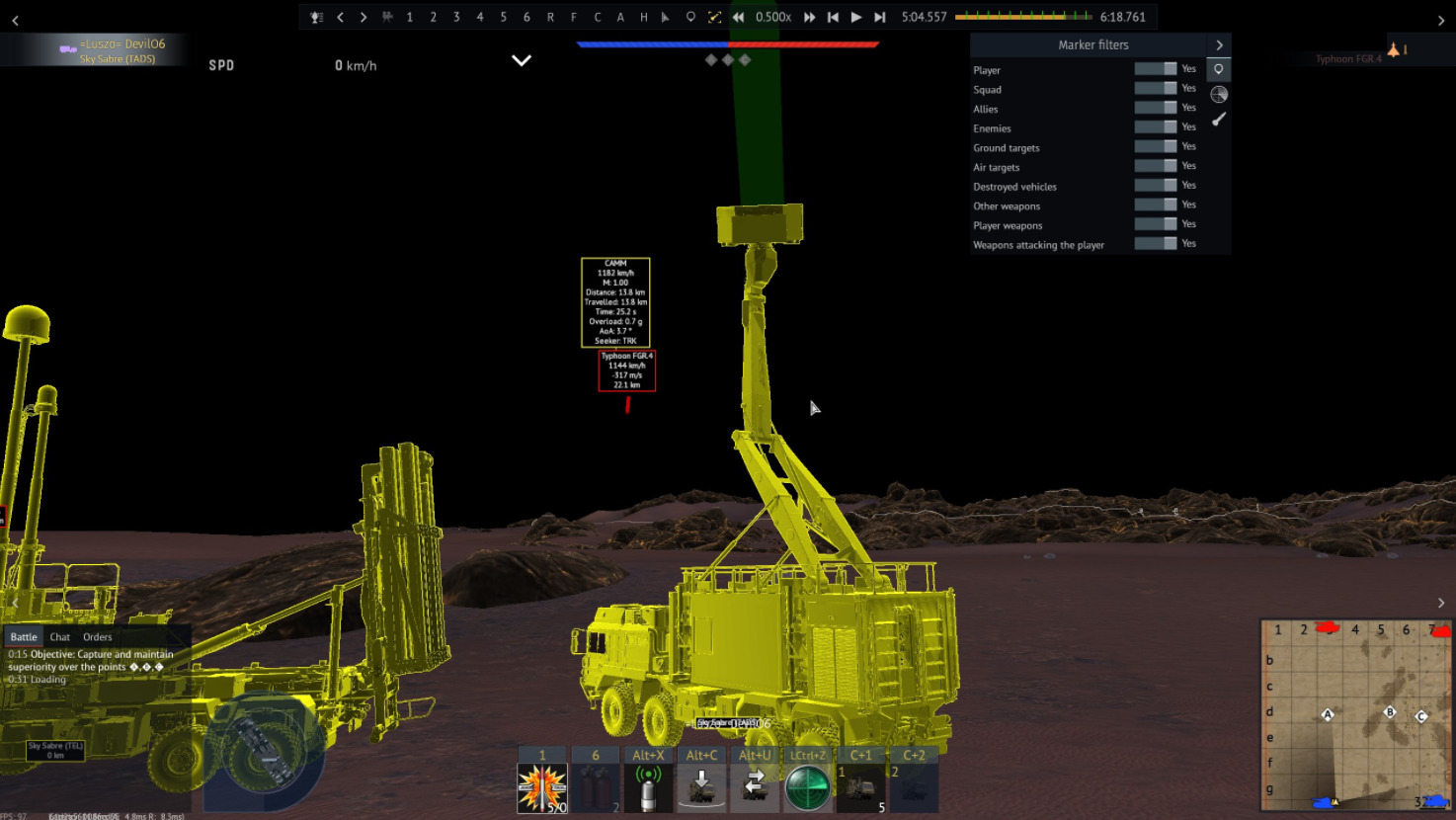
Fun fact, Sky Sabre is in development from as far as year 2000.
Blame multipathing for their uselenesses, as that is the #1 complaint right now besides all the other issues with the missles themselves. IRIST doen’t really suffer too much from multipathing becacuse… IR missile.
And as it currently stands, the Pantsir fits the anti-air role the best out of all SAMS in-game becacuse of game design and how the maps are designed. Something that I mentioned before. (not in this cucrrent conversation)
People asking for the Patriot for example don’t realize the game-design wouldn’t allow for it. Like how the BUK can’t even maximize it’s advantage of being a SAM system becacuse by the time you see an aircraft pop up, it’s already roughly… within 15-10kms?
Alright, let me correct myself. I’ll refer to the Pantsir or ADATS as an MRAD. though usually a system with guns and missiles is referred to as a SHORAD. The IRIST does not wield guns but since it’s max range is within 40kms, let’s just say it’s an MRAD.
I’m blaming gaijin as multipathing is absolutely not the only issue (and it’s set on a per-missile basis so they could just not have it for AD anyways)
These are short range systems. You had that correct. Semantics about designations don’t change the fact that IRIS-T should be superior at short range and superior at long range, and yet in game it’s inferior in both.
I should correct you here. Pantsir fits the anti air role the best out of all SAMs because every other SAM that should compete or be superior to it is nerfed through the ground while both pantsir and pantsir-sm have super missiles with impossibly good kinematics and far superior radars to every other AD.
Also they’re the only things that can hit helis.
Superior in not having to rely on LOS yes, credit is due where credit is due. But as I said, the Pantsir is mainly delegated for defending the actual sams, so it having the ammo capacity to properly deal with air to ground munitions is what separates it from the rest. (In relation to the most modern pantsir) All the other SAMS can deal with it, but that’s at the expense of basicaclly all their missles. Worse off if they’re fighting F-15s with a gajiliion bombs.
Not too sure about the whole super missile thing, across many sourcecs 1700m/s is consistent with the newer missile, but we’ll see when more info eventually comes out.
Superior in every regard.
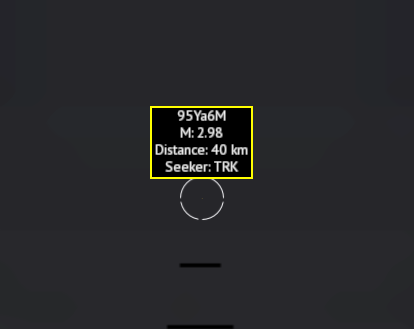
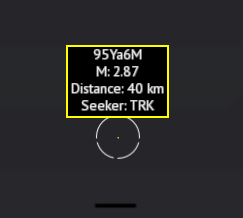
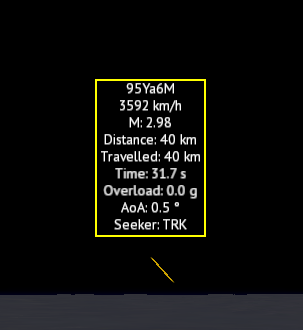
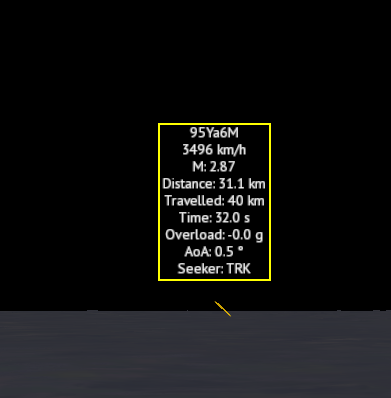
Perhaps the missile still being over Mach 3 after doing 40km through the lower atmosphere? Zero lofting? While systems like CAMM-ER, aster 30, IRIS-T SLM fold and are subsonic long before?
Not to mention the pantsir missile in game can also manoeuvre before the booster burns out and detaches which eliminates the minimum range issue. It can’t do that irl.
Again, I’m not sure what’s with you and other people always claiming U.S stuff is “superior or etcc. etcc. everyone elses stuff is bad” and not giving credit where it’s due, at the least giving credit where it’s due.
I already said what role the Pantsir is supposed to fill versus other systems.
These systems aren’t superior in every regard. All of them have their upsides and downsides. What most of the western SAMs aren’t is mobile which the Pantsirs are, and have the benifit of tagging along with convoys, same with the Tors.
point out where I mentioned anything American for me, I may be hard of vision…
Let me put this into perspective for you using sky sabre as an example.
Sky sabre advantages:
- maximum range
- minimum range
- lower signature
- better radar
- more agile missiles
- fire and forget
- ^ by extension more missiles up at once
- more precise missiles
Pantsir advantages:
- it can move
In game, however, pantsir has ALL of these advantages (aside for being fire and forget which is a disadvantage in game because of “multipath”)
That is indeed true.
I’m assuming when you said that, you meant in-relation to western systems, not explicitly American. I just said American becacuse that’s what everyone just defaults too. I’d reccomend just asking for clarificcation than questioning a need to see an optometrist…
first and foremost what is the primary target for MRADS like the IRIST is Area Defense (Or just say aircraft) within a connected network and is completely stationary. Being stationary in WarThunder is a great way to die mind you since the maps are only so big, not to mention being spotted from your spawn. Those are all good advantages for what the system was designed for and the doctorine in-place.
These are all advantages if we’re just looking at radar and missile performance.
The drawback is these systems are not mobile, and are split between several vehicles.
The Pantsir is hybrid missile-gun system meant for point-defence. A ccompletely different roll than what the Sky Sabre was built fo fulfill. “More precise missles” is debatable here. The Pantsir in-game currently does not hold the maximum range advantage, but definitiley in minimum range. As I said, most systems in-game can’t even capitilize on “Maximum range” due to game and map design, some outright not favoring them at all.
Moving is a huge advantage, you’d know if you went against pilots who love to pop in and out to mark your location and do high speed runs.
Even if this is supposedly… the only written proof, there’s plenty of sources and articles to look too showing the upgrade from the PESA track radar to the AESA track radar anyways…
So is sky sabre, IRIS-T. Your point?
No it’s not. ARH is inherently more precise than command guidance.
Sure, the buk can theoretically throw a missile further. (Albeit with much poorer pK because it slows down quicker lol) Otherwise no, the pantsir has an objective range advantage.
The IRIST and Pantsir both a 40km max range for their missles, so I’m not sure what… okay well that doesn’t matter, since the Aster-30 has a 100km launch range, so that answers that.
Command guidance has proven to be effective in it’s own right regardless. Definetly better when it comes to intercepting much lower flying targets, cost-effective. Immune to jamming if relying on optical-tracking since the missles don’t carry their own radar. Can’t be “notched” or spoofed by ccountermeasures since it’s… command guidance. Now win terms of long range accuracy since signal strength can obviously diminish the farther it goes, yeah that’s fair in it’s own right, but since it’s a point defense system, that neccessarily does not matter in this case since it’ll be engaging targets at much close range anyways. It’s not neccccecarily just about preccision anyways. It’s about what they both bring to the table and what roles they’re fitted in
Operational roles. IRIST and Sky Sabre are dececntralized area defense systems, they usually operate within a wider broader network.
Pantsir is point-defense and protects high value targets exclusively. It is also a much more cost-effective system. They also operate within a network of air defense, but instead of relying on layered defense they are more so isolated in the sense of the speccific role they fulfill. They have the means of engaging different threats more effecctively with the ccombination of guns for example. It’s also a mobile air defence system for that very reason.
Show me an IRIS-T missile getting 40km. I’ll wait.
Same here.
Not these days. CAMM is even rated for surface threats like boats.
Doesn’t matter in game
Actually relying on commands to be transmitted makes it more vulnerable to jamming as even if it’s completely optical those commands could theoretically be jammed.
But the radar can.
I don’t care about how it’s used I care about performance. Pantsir has no irl performance advantage aside for being able to move.
Again doesn’t matter in wt
USSR WR pre SMSV (Feb 2026) 50% RB/62% SB
USSR WR post SMSV (Apr 2026) 56% RB/74% SB

I mean, if it’s not manuvering or burning uneccssary energy, then probably?
I’m sure anything, regardless of guidance method can be rated for low level threats, so the comparison here inherently does not matter. As some ATGMs use command guidancec and operate just fine at ground level.
If the ECM isn’t programmed to explicitly jamm the missle guidance radio-channel, than your ECM is useless and if it’s programmed to jamm the radio channel, than it most definetly isn’t set to jam enemy radars, which makes it pointless.
Yes, but that is very hard and will take more time than manuvering and getting to cover.
Okay.
Built in guns.
Faster missles
Combined missle/gun system in one unit versus a multi-vehicle layered defense.
Better resistance to jamming thanks to command guidance
Doesn’t give a missile launch warning, just a track warning.
Just to clarify something here, this is not to say one is better than the other, because I think that part is being missed. There are pros and cons to both systems mind you.
Working as intended, i bet the premium T-80s and BMPT are selling like hot cakes so Gaijin is going to full send this until that dies down (if it ever does)
I would check if I were you. It barely hits 20.
Then why did you make it?
I don’t think you know how jammers work
No?? It’s in fact easier than jamming/notching the missile itself as it’s further away.
- Guns sure. To what ends?
- Faster missiles initially maybe. Again to what ends?
- You already said this, that’s what “built in guns” means
- worse resistance to jamming thanks to a PESA radar and requirement for range data to use its primary guidance method (leading, otherwise it has to be full LOS which is horrifically energy inefficient)
- it very much gives a missile launch warning, gaijin made its magical super stealth radar up.
Conveniently sidestepped by the AHEAD warhead type hypersonic missiles having essentially negative air drag. Who needs to be energy efficient when your weapons just ignore aerodynamics.
Oh yes, the majority of semi-modern aircraft can detect the command guidance radio signal and give launch warning from that. Gaijin doesn’t think radio command guidance signals can be detected.
Because excluding the BUK( which is objectively bad in it’s current setting), that is the current comparison as of right now. There is no point in comparing them, but that’s all we have to compare.
And I don’t think you’re giving credit where it’s due. I’m not saying jammers can’t jam them, I said more resistant or to almost none at all. Since at that point, you gotta pinpoint the launcher and the missile and then jam the right frequency, which will ultimately take a lot more resources and be more trouble than it’s worth instead of taking it out by conventional means.
In comparison to low grade ARH seekers which are pinpointing their exact location all the time, they are much easier and more susceptible to jamming. Or in the case against aircraft (excluding the IRIST) can effectively be notched or spoofed much more easily.
What do you mean no? For PESAs to some degree yes, but it’s still inccredibly difficult. Doing this to newer AESA radars is even harder and breaking LOS is the most optimal thing to do. I’m not sure why you’re downplaying that.
as a jamming aircraft for example you cant pick out a single signature emission, because the dude is vomiting 20 beams all in dif directions and frequencies and that means even if you find the right bearing you have to jam a lot more bands
or else he just swaps one of his 20 transmitters to a freq thats outside your jamming envelope and smites you, which is obviously way more trouble than it’s worth and time-consuming.
You’re asking that like the defense industry hasn’t pushed gun based anti-aircraft solutions to fill in the short-range gap or to not waste expensive interceptors on smaller threats, or threats that are too close for a missile.
Faster missiles means quicker engaging of targets that get picked up on radar, especically good against pop up attacks.
The guns on the Pantsirs effecctively make all engagment ranges lethal, and can’t be taken advantage of as easily as other missile-dedicated systems can be
I’m not sure what this means, so you’d have to be more specific.
That heavily depends on the MAWS and what era of aircraft.
It’s a standard feature for the majority of aircraft with a modern RWR set or EW system. You’d be hard pressed to find a modern EW system that can’t detect radio command guidance signals.