Didn’t go through the fuel tank, while in game it will do it 100% of the time, if it didn’t already overpressured
Well, on this aspect I can share an anecdote I was told : The French army discovered at some point that the armor lost insane effectiveness values. They searched for the reason and found out that operators used the edge of the armor as a can opener, which caused degradation to the armor. This could be attributed to the fact that the Leclerc uses more dense Ceramics than other composite layouts. This would also correlate to the fact that the Leclerc is 1m shorter and yet about as heavy as the M1 and Leo 2 configurations of the 2000s (leopard 2A5, M1), with a smaller crew compartment, meaning that they had to put all that weight somewhere, and yet its currently less armored in most aspects compared to those 2
Again, I’m not saying this is definitely proof, or this would have already been reported ages ago
The rafale is indeed very strong. Are the Leclerc’s better than “mid”? I would not say so. They are definitely not bad, but could definitely benefit from substantial buffs, like half of top tier vehicles (Merkava, Ariete, Challengers…). The whole GRB game mode should not revolve around having to have an insane CAS lineup to make up for the mid ground vehicles.
Also I was not talking about the need to buff them specifically. This is also for people that wish to know more about the Leclerc as a vehicle instead of saying “OFL 120 F1 bad, we need F2”
And this tells me that you are just here for the rage baiting
Shard would already have a better penetration in game than the DM53
Nexter doesn’t work on 130mm in the very lest. They work on 140mm.
You’ve already polluted the Rafale thread enough with the rage baiting, can you not start here ?
Shard and Ascalon are incredible underwhelming (typo with the 130mm, mb)
I have not ragebaited in the rafale thread at all, i confronted directsupport and his yunglings of acting in bad faith to unneccesariely buff the rafale based on misinterpreted information, on purpose. So do not try pull that card to discredit my stands
This is about the 120mm SHARD, nonetheless
15% down from 20% claimed few years ago over OFL F1
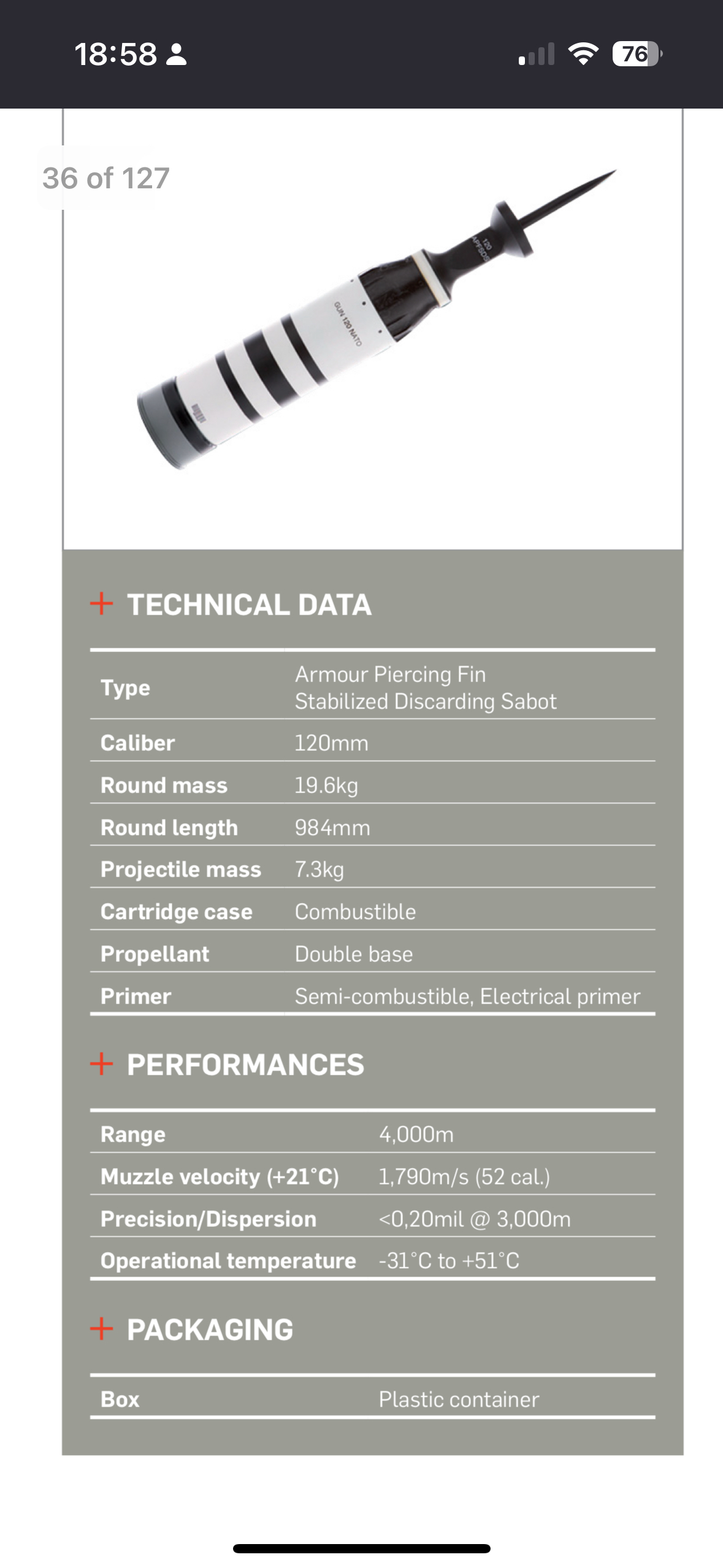
" We have thoroughly tested the SHARD under this aspect, and as it is a pulled projectile in the barrel it is less sensible at the muzzle, it can accommodate more defects and disturbances, so during trials we reached an accuracy close to 0.2 mil at 1,500 meters, which is a good result considering the increased length of the penetrator, a better performance compared to our previous F1 round,” Mr. Cahauveau states."
Mmmh, I did a quick leopard 2a5 lookup and saw 56 tons, I made a mistake here, in war thunder it’s indeed stated at 59.6 tons. I was also not comparing to the M1A2 which is indeed much heavier but to the M1, which still has overall similar if not better armor than the Leclerc
I don’t understand you point here with the rear armor. The Leclerc side and rear, as well as roof armor isn’t in any way better armored than the M1, and even the Leopard 2A4, despite weighing about the same. In fact, it has worse turret armor than the Leopard 2A4 on its side and only is significantly better than the leopard 2A4 on the MFP of the hull. The Leclerc also has a much smaller crew compartment volume, I don’t see how it could be less inefficient in that way. Same for the equipment, how could equipment make the difference for an entire meter in length of a tank. And, for exemple, the weight of the Leopard 2 engine is stated at around 2.2 tons from what I can see while the Leclerc is stated at a bit over 2 tons, so it’s even lighter in that case
As for the KE of the ceramic discussion, here is the answer given by Mulatu :
no one is arguing for 2KE effectiveness for thr Leclerc lol
Even if the ceramics only nake a 20% LOS of the total armour array that’s still a 1.2 KE effectiveness. (That is considering a base composite with a KE coefficient of around 1, which is already achieved with other composites such as D-tech)
Shard is doing completely alright. It’s at least equivalent, if not better than DM53, while indeed still worse than later DM variants.
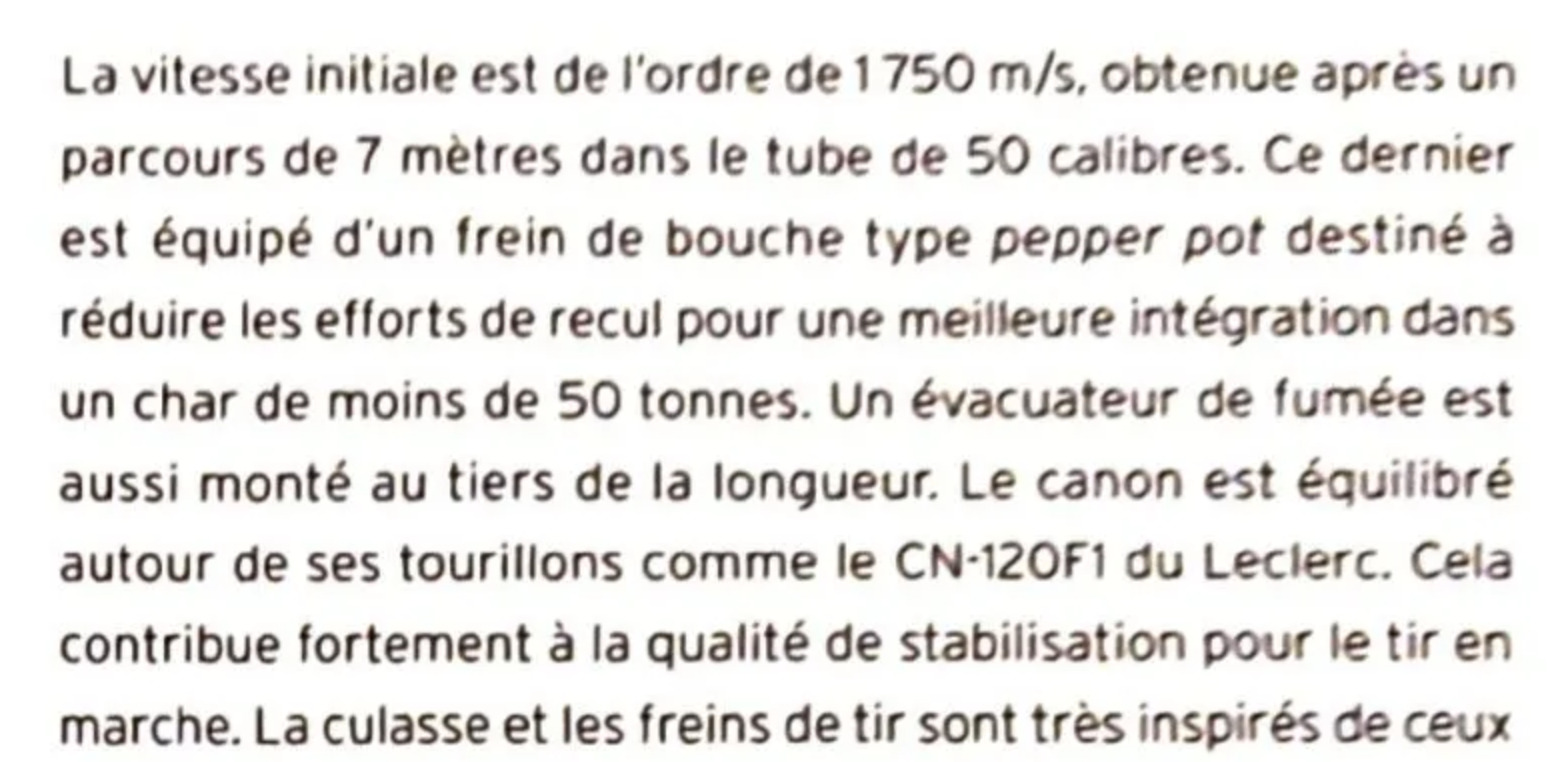
ASCALON is currently in the development phase, and already has an energy output greater than the Rheinmetal 120mm, and almost equal to the 130mm. This is not considering that NEXTER says that they can increase the energy output much further if they want, while the 130mm by Rheinmetal will probably face issues as it’s based on the 120mm
Its even better because that source used to be classified and the protection levels of Leclerc were informed to the Brits by GIAT itself. Further, when the Swedes performed ballistic testings by 1994, their results corroborate the figures shared by GIAT previously. So yes, unless some day another similar source surfaces contradicting all of this, 420mm KE for Leclerc S1 it is.
This in game would equate to 660mm of pen, still above the DM53 (edit - In game obviously). There is also mentions of different possible variants of the shard
As of now, the 15% range improvement is stated for a Shard with a stated velocity which is equal or a bit lower than the OFL 120 F1. The ammunition that would bring 20% more velocity also claims a higher MV. This was probably not implemented as to limit barrel wear as this is one of the main selling point of the currently marketed shard
Sources I have currently found claim 20MJ for the 130mm
very rough assumptions would give a penetration of well over 800mm, up to more than 900mm with the LO formula, considering the 2024 140mm APFSDS showcase and assumptions on the semi-telescopic nature of the round
This speeds and length is indeed underwhelming when the rh130 penetrator is 1.3m long iirc based on pixel counting of the first tech Demo Video of the kf51 and the speeds are either already achieved with current shells and when the 130mm has roughly the same approximation. Best i found was a range of 1700-1900m/s
and back to the original point, no leclerc dont need a buff:
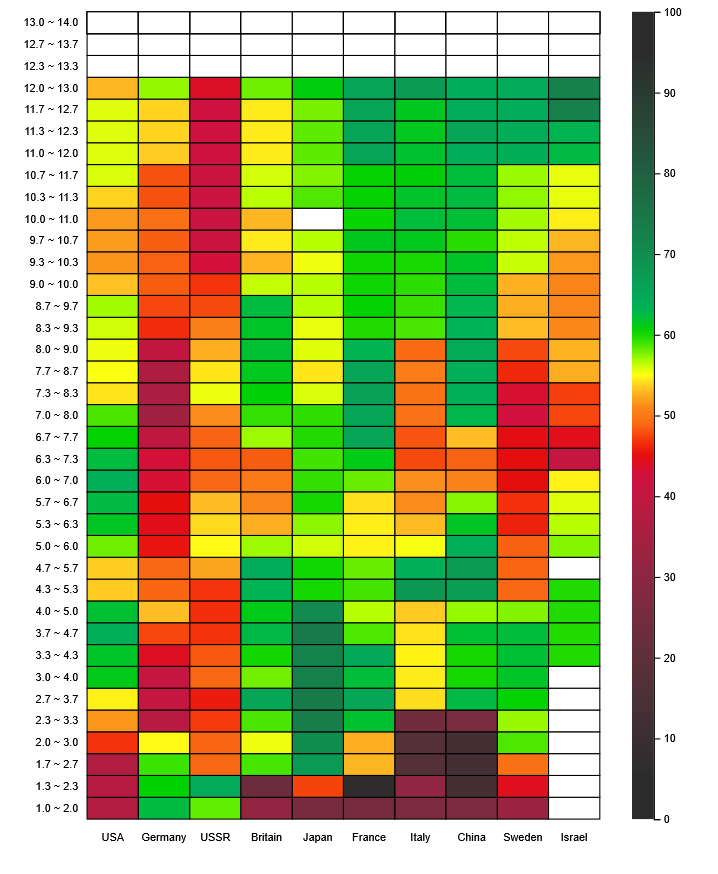
Among the best winrates and far above the winrates of the major nations
I’m certainly no expert on this topic, but from what I recall the Swedes also proposed armour upgrades for the Leclerc due to the existing armour scheme being deemed unsatisfactory:
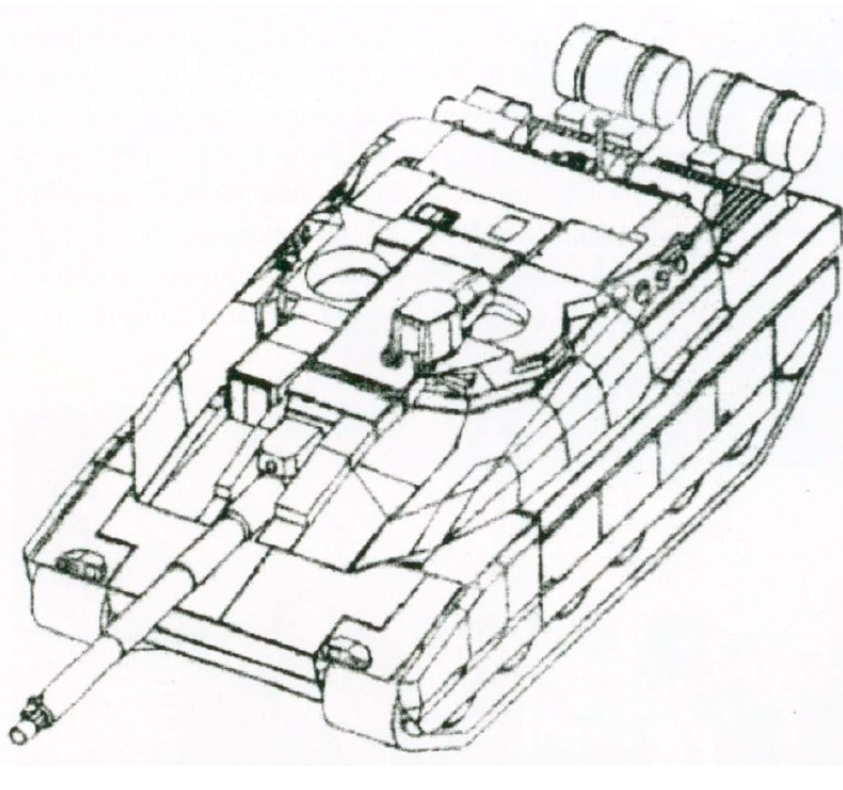
There were apparently also plans between Ukraine and France on co-developing an export vehicle, this would adopt a modified Leclerc turret (and mated it with a T-84 chassis) that optimized the armour layout and reduced the frontal weakzones:
And how much of that is attributed to the insane CAS lineup that we already have. If you stop considering win rates for a moment, would you play the Leclerc other the Type 10, Leopard 2A7, Str122 ?
Heck, Italy is also doing better than even Germany. Is that logical in any way ? Israel is also visibly dominating, while their Merkavas are in the bottom pool of the 12.0 tanks.
Buffing and nerfing vehicles by there win rates is a completely stupid argumentation. All of the best performing nations are minor nations, which clearly shows there a statistical bias coming from the huge differences in playerbase, and those should not impact the need for vehicles to be buffed or nerfed.
Or I’d argue the EFT doesn’t need any buffs to its radar either, after all the Italian euro fighter is only behind the rafale in win rate, largely dominating any other 14.0
if you think a single plane carries and nations winrate, youre delusional. Russia has 2 OP CAS planes and is doing absolutely garbage, germany has the insane EF CAS and is also doin absolut garbage so whats the point.
no i wouldnt, i play every mbt the same and it works or it doesnt
The Ascalon is high risk high reward, as it’s basically a tech Rheinmetall never even fielded.
CTA 40 proved the design could work on a mass produced vehicle, so they decided to go bigger this time
Additionally, a penetration value can not be specified with one parameter. MJ this, MJ that is nice, but thre’s more to it than one number to describe the terminal effect of an ammunition on its target
140 also coincides with the diameter of the MMP missile, and some NLOS ammo have been in the talks for the gun.
Finally, while the Ascalon is a bigger gun than the 130mm, the internal space required by the ammo is basically the same, as the 140 is telescoped, while containing a longer sabot. Both are 1.3m long per public figures.
Now obviously both guns are answers to different doctrines, one chosing to enlarge the CTA 40, more risky but which my prove the right choice in the long run, one cutting costs and going on a proven design that works.
Obviously you could discuss the choices made on each side of the Rhine for hours, but going with the “huh french can’t build good gun so they need to go bigger” or “huh germans can’t innovate and still don’t use Cased Telescoped Ammunitions” seems quite pointless.