That’s true, but the total ERA armor value in the game—which is calculated in the same way—includes all the plates and so on.
That same relic provides 250 mm of armor, not 250 mm plus two 20-mm plates.
In the game, the simulation generally prioritizes overall armor, since it’s often impossible to determine the contribution of each specific component—they don’t simply add up, but interact with one another.
For example, there is a well-conducted study with experiments that shows that a certain material behind a layer of steel reinforces it from behind, helping to counteract rear spalling. In other words, the interlayer increases the effectiveness of the steel in front of it.
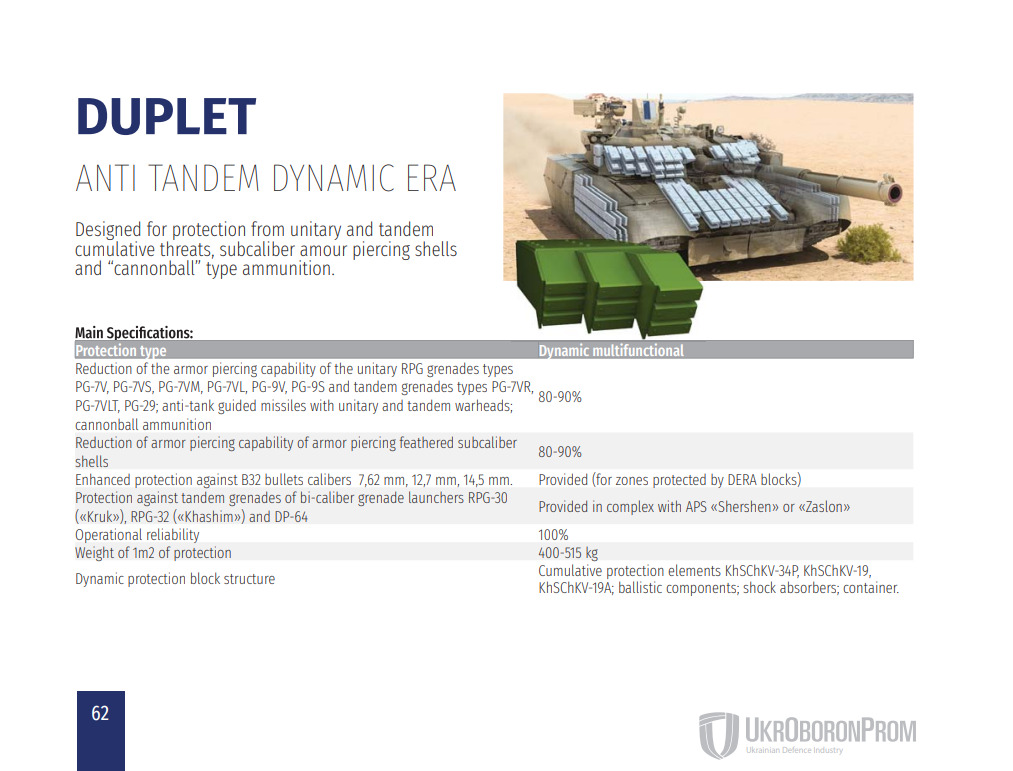
50 mm of steel between the first and second layers of the Duplet will provide about 160–180 mm of KE resistance.
I don’t see how it’s possible that 50 mm of steel and another XSCHKV element would add only 10% to the resistance.
The in-game setting matches the test results, because the 3BM42 cannot penetrate 60mm of steel plate.
However, the extent to which it penetrated it in the tests remains a matter of debate. It is only clear that the penetration was significant.
The difference between penetrating 30 mm and 55 mm, for example, would have a fairly significant impact on overall durability.
There is no conclusive evidence, but in my opinion, the 60-mm plate was still penetrated to a lesser thickness than would be expected given the current overall resistance.
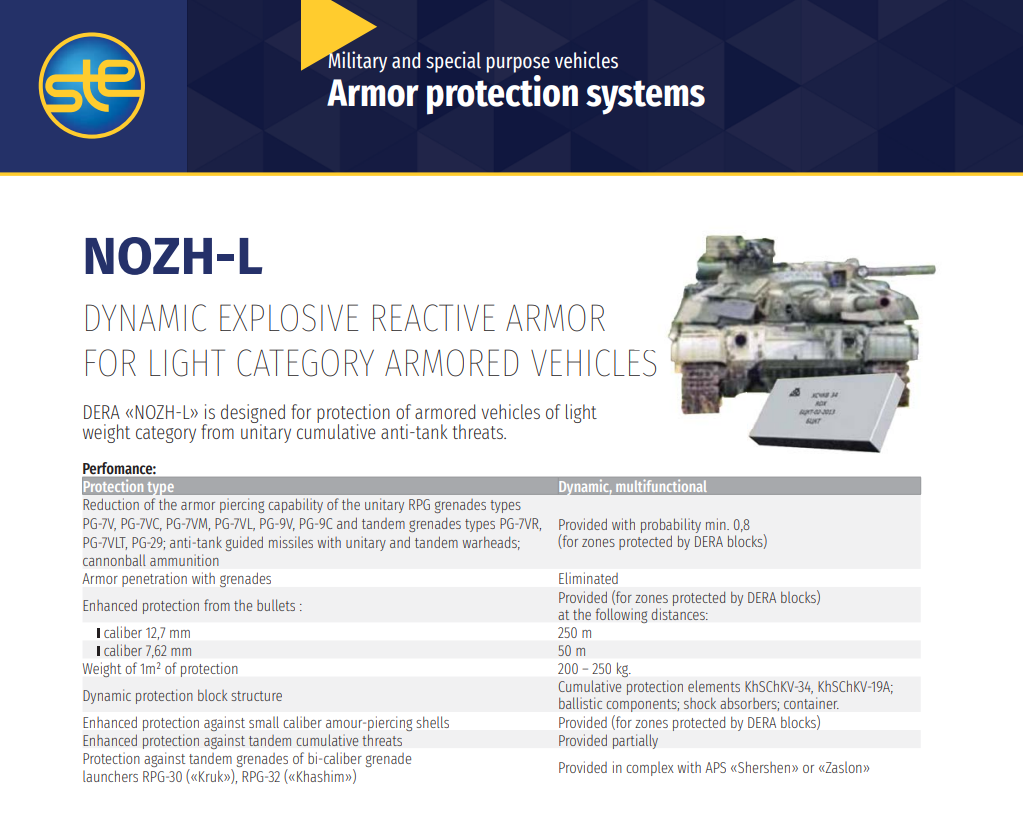
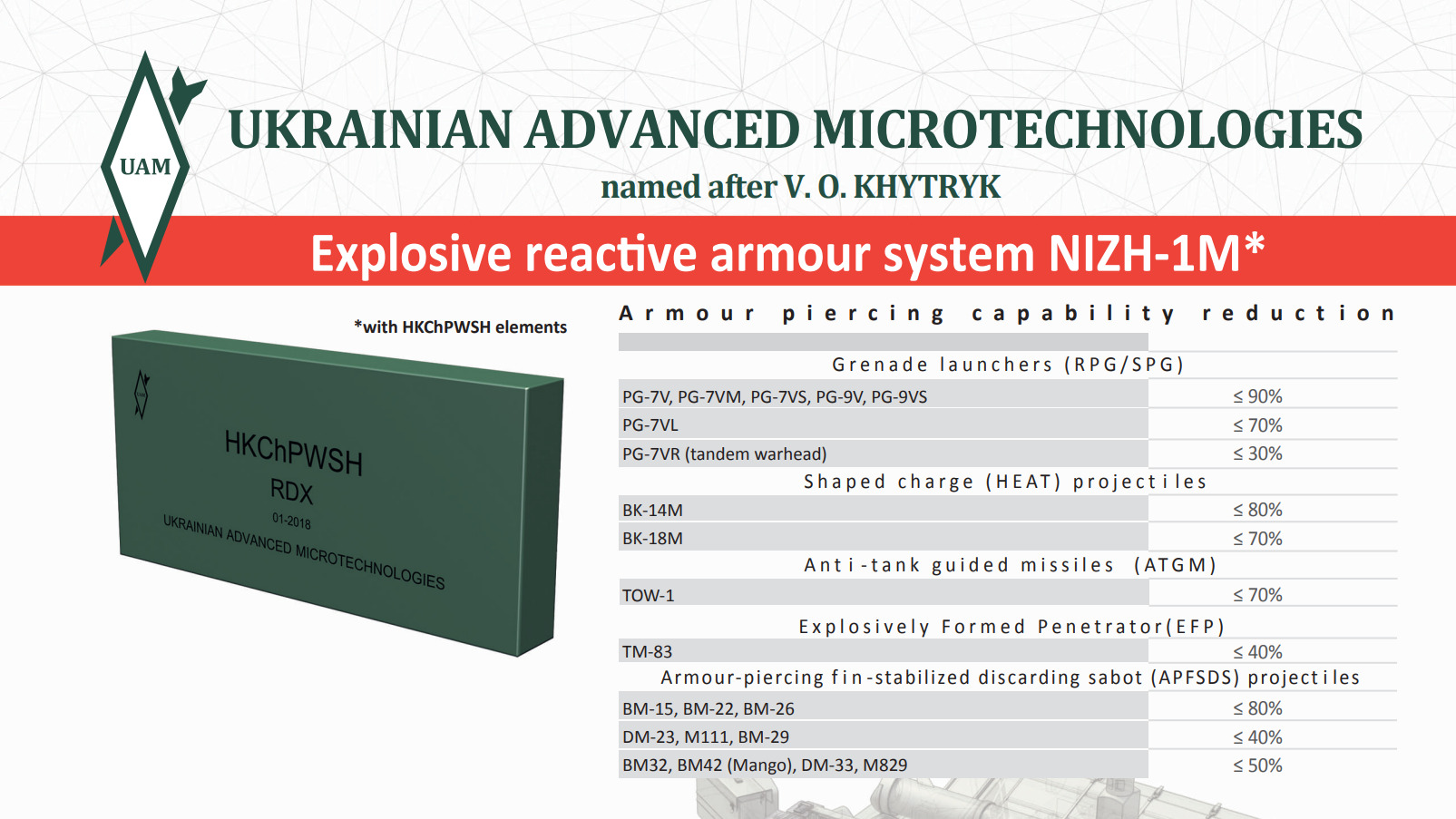
Well firstly this 50mm plate does not exist in game. 280mm protection is without including such plate or fillers because on the turret Duplet no such plate is present and the value is also set to 280mm. So if we were to take a percentage value it would be of 280mm. 240-250mm is a reasonable estimate.
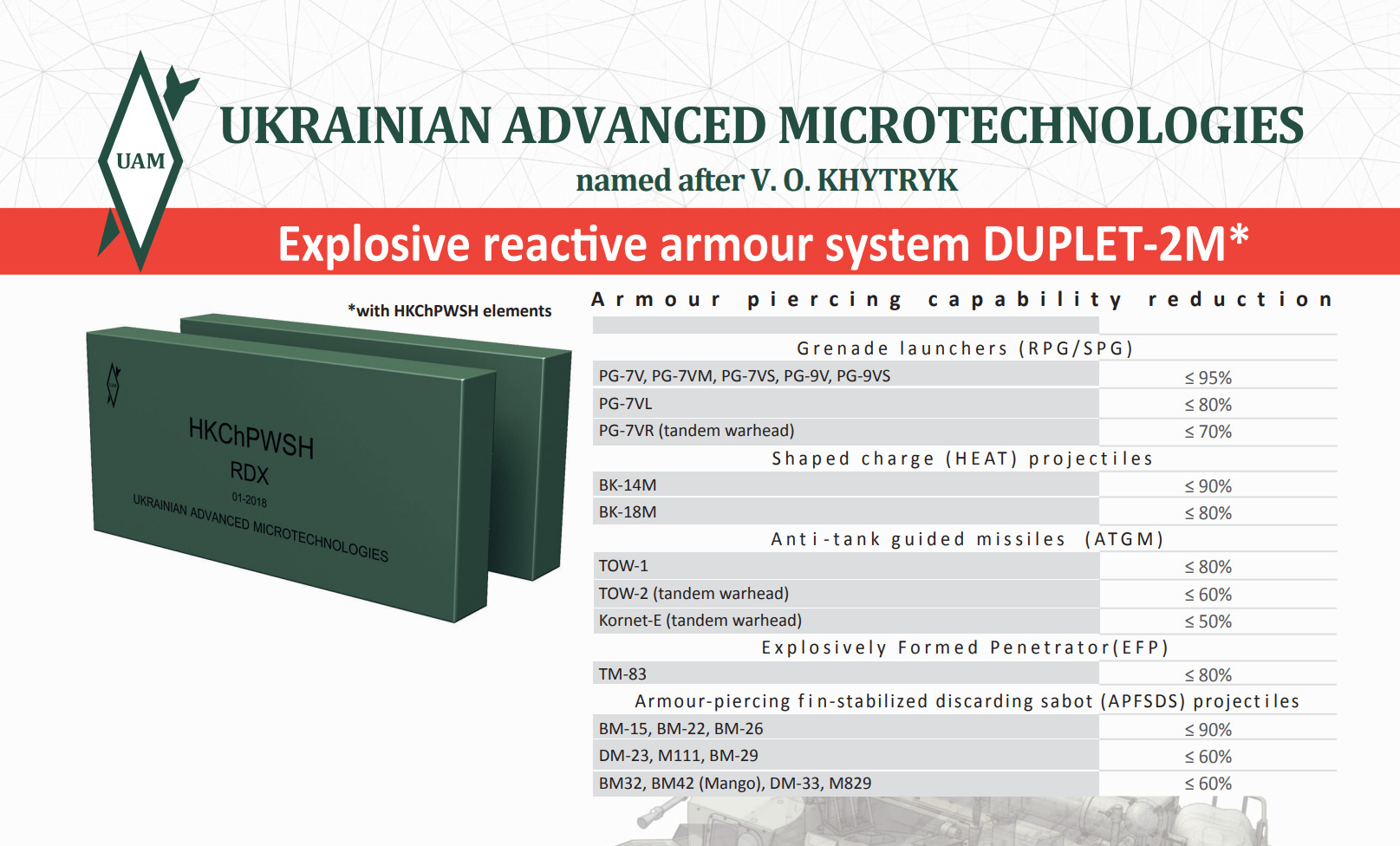
Secondly, regarding the claim of 90% effectiveness compared to Duplet, you have yourself used this value in the past to estimate Duplet’s effectiveness and have claimed that while Mikrotek’s comparison between Ukrainian and russian ERA may not be accurate, their comparisons between Ukrainian ones are.
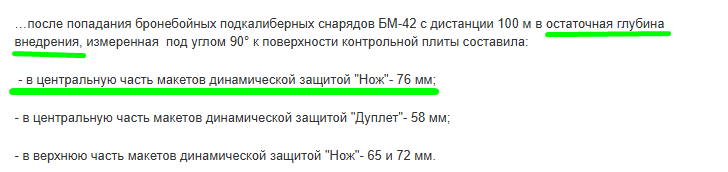
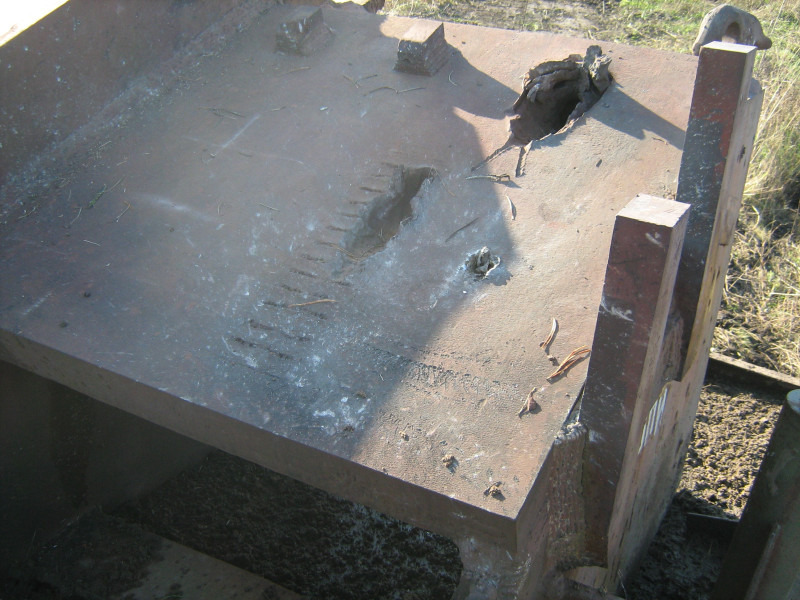
Thirdly, there are tests of Nizh where it has severely reduced the penetration of APFSDS:
Which would indicate a very high KE protection level, almost as good as Duplet. 315mm as I stated before might not even be enough. If this test was done with an older shell such as perhaps 3BM15 or 22, then the figure of ~300mm KE reduction makes some sense.
True, but we’re talking about real-life grades.
I’m a little confused.
There’s no point in comparing the turret and hull mountings.
The turret has a different ERA mounting angle. There’s no thick steel plate in front of the second layer to interfere with the HSChKV.
It’s entirely possible that the turret mounting is just as good as the hull mounting because the elements are positioned through a more efficient damper.
And there’s some steel there, too. A total of four shells penetrate 10-12mm of steel (before and after each HSChKV element). So, overall, it’s only slightly less than the hull.
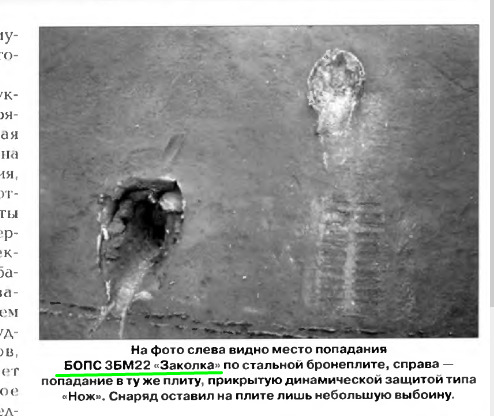
I seriously doubt this is a 3BM42.
First, we have earlier publications of this photograph, dating before this presentation, where the hit is labeled as a 3BM22.
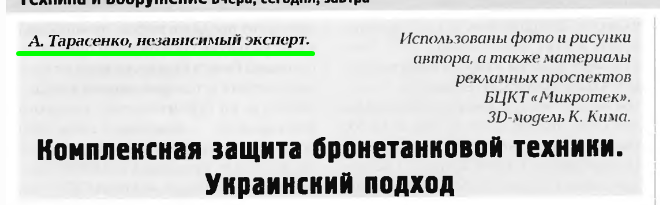
Furthermore, one of the publications is authored by Tarasenko, which rules out the possibility that these are just “evil tongues.”
Secondly, we have quite a lot of data from other trials where the results weren’t even close to these. This applies even to Duplet.
And thirdly, even the manufacturer itself doesn’t declare such protection for the Nizh version.
So I believe the 3BM42 label is incorrect and should be interpreted as 3BM22, which is also a good result.
You should understand that projectiles without a monobloc core are much more susceptible to ERA, especially those using shaped-charge flat-point craters.
Furthermore, their impact on inclined obstacles is lower than that of monobloc projectiles.
Therefore, calculating protection against monobloc APFSDS requires a number of transformations.
Sadly useless given tandem/CE protection is known enough and has little questions to raise; KE cannot be taken into account from these as they have 0 specifics on what rounds are in question
I also believe it was already posted, during dev server when it was open
I mean, Mikrotek is the OEM for Nizh/Duplet inserts when it comes to Oplots (namely M and T), whereas UAM is the one that was created later and offered its line of KhSChKV elements – supposedly the one who could’ve made some for trialed Oplot-P
But either way, the sources from both sides conflict each other depending on perspective
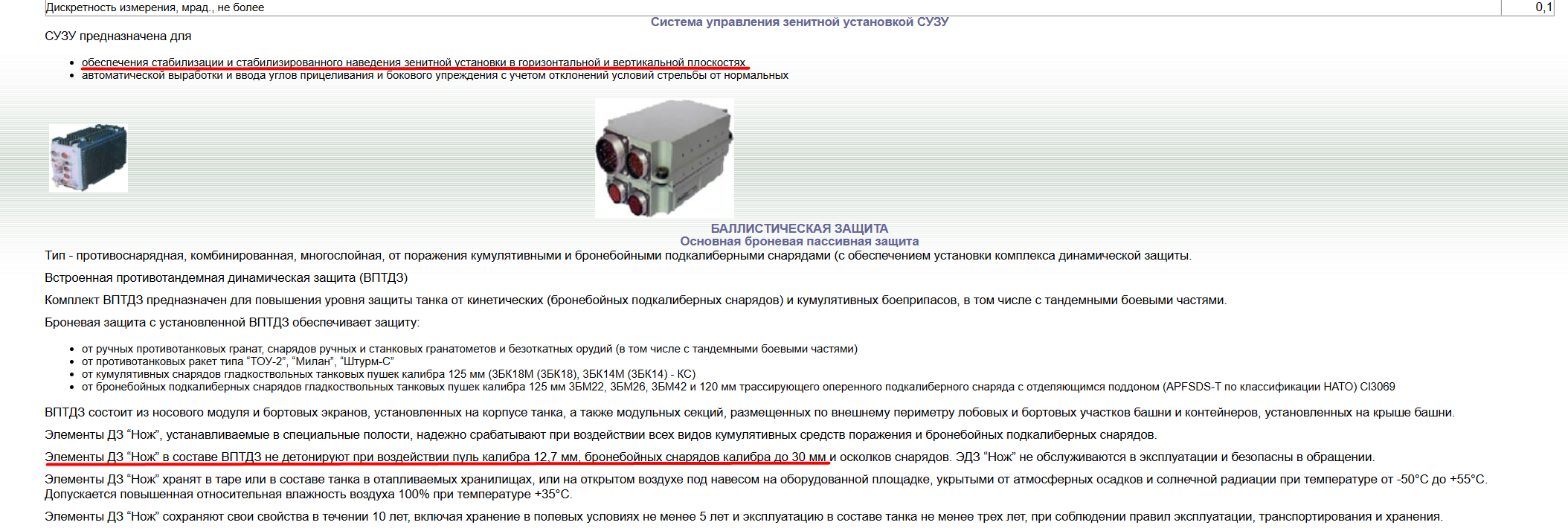
@ARC_Convoy_77 Ok so upon reading KMMBD official website archive I found next:
-roof HMG should be stabilized
-ERA should not detonate when taking fire from armour piercing rounds of up to 30mm (this one is kinda big)
For translation purposes:
“обеспечения стабилизации и стабилизированного наведения зенитной установки в горизонтальной и вертикальной плоскостях”
“Элементы ДЗ “Нож” в составе ВПТДЗ не детонируют при воздействии пуль калибра 12,7 мм, бронебойных снарядов калибра до 30 мм и осколков снарядов.”