- Yes
- No
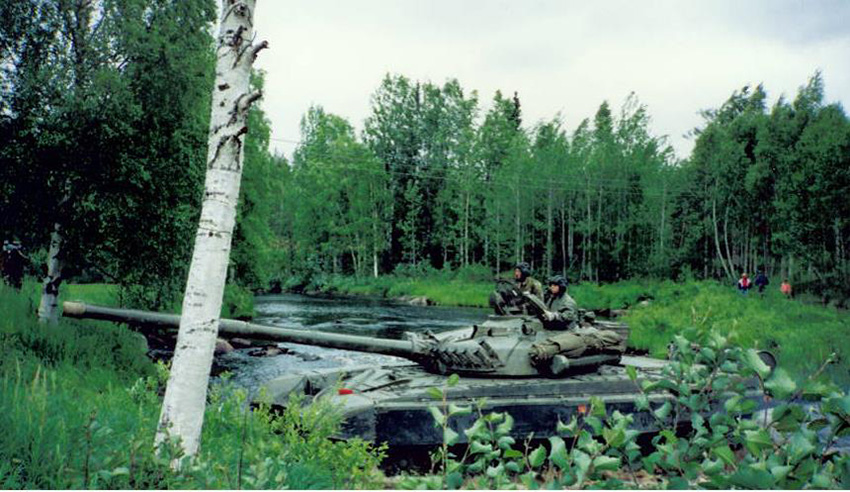
T-72M1 undergoing mobility trials in the far north of Sweden, crossing the river Vitån
Introduction:
Welcome to my 3rd suggestion!
In the fall of 1991, it was decided to buy five T-72M1’s and five MT-LB for testing in Sweden. This was done because the army wanted to know if a Russian attack had occurred via northern Sweden, and how difficult the terrain would have been for their vehicles to traverse.
Disclaimer: The title was copied from O. Lindströms’ article about the vehicles, but I could not resist just translating it as it is; in my opinion, just too fitting.
History:
In 1990, on the last workday before Christmas, a fax message arrived at FMV (Försvarets materielverk) from the Swedish embassy in Bonn. This fax message included hundreds of pages of East German military equipment for sale.
Earlier in November of 1990, the CFE treaty (Treaty on Conventional Armed Forces in Europe) had been signed by both NATO and Warsaw Pact countries. The signing of this treaty meant that militaries across Europe would need to scrap military equipment, as the treaty aimed to reduce the total number of weapons between the Atlantic Ocean and the Ural Mountains. Because of this, 10s of thousands of military vehicles and other equipment would need to be destroyed or sold to countries that did not sign the CFE treaty. Sweden did not sign it, so a lot of East German equipment was up for grabs.
Since the T-72 was available, it was high on the list of vehicles to be bought, but there was a lengthy discussion about which IFV to acquire. It ended up with the MT-LB being chosen; it was chosen because it was one of the most likely vehicles the Soviets would have used in the event of an invasion. But it was also chosen because it was well known that the MT-LB had rather poor off-road capabilities.
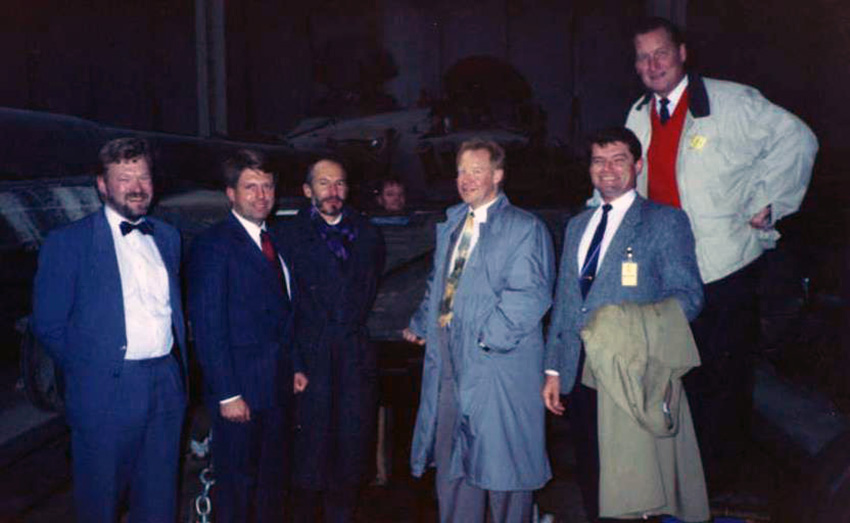
The Swedish delegation that went to Germany to purchase the vehicles, together with a T-72M1 in the background
After the vehicles had undergone mobility trials in northern Sweden, which proved to be very satisfactory even for the MT-LB that was renowned for its poor mobility, as mentioned earlier. It was now time to examine the armor of the vehicles, and it was quickly found that both T-72M1 and MT-LB was addequit prototected compared to their weight. It was also noted that the front armor of the T-72M1, which was thought to be 480mm, was actually 550mm, and some other stuff was also noted that intel had been wrong about. One of those things was the exit velocity for APFSDS, which was higher than expected. This was due to the charge increasing more of the round than was earlier thought.
As the T-72M1 had more armor than previously thought, it was decided to make a computer simulation of the tank with the estimated armor to be able to compare it with the actual vehicle when firing trials were conducted. The armor would be compared to the Strv 103C and Strv 102, which also had simulated add-on armor partially.
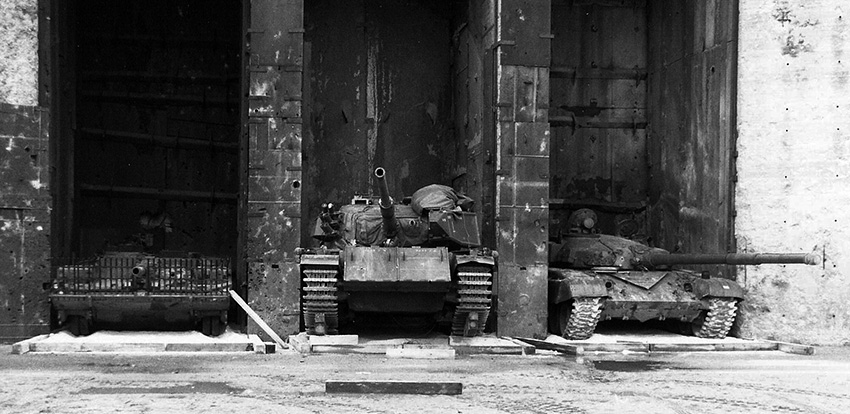
From left to right: Strv 103C, Strv 102, and T-72M1 under the firing trials
The fate of the T-72M1 is actually quite documented, and with what is not documented, we can still piece together what happened to them. Two of the five tanks were destroyed under the initial trials, with one having its turret cut open so the armor could be measured and would later be turned into a firing target, and the other one can be seen in the previous image. The other three, one of which survived at least until 2018, another one is used for studying at FÖS, and one is still being preserved at Arsenalen, Sweden.
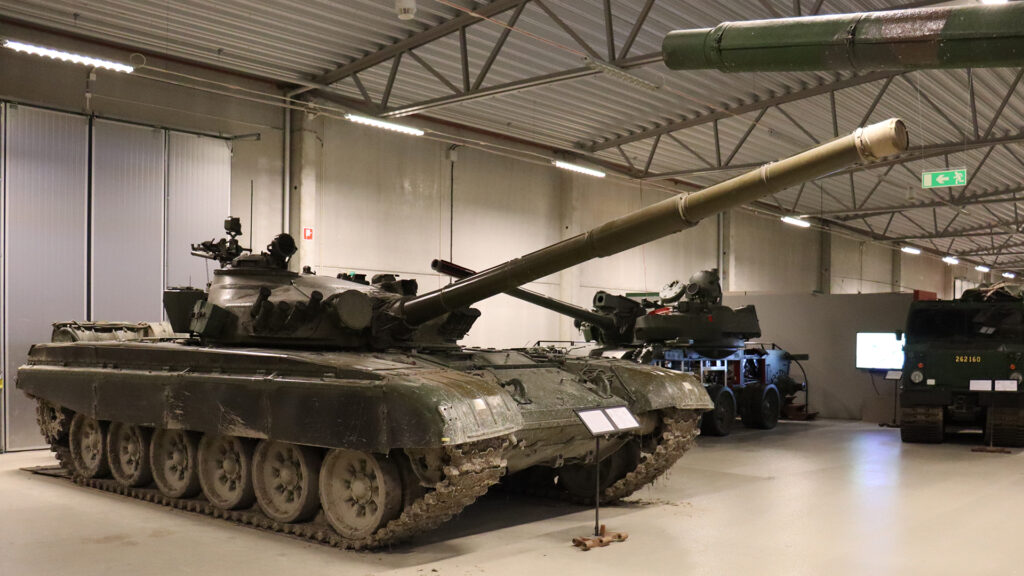
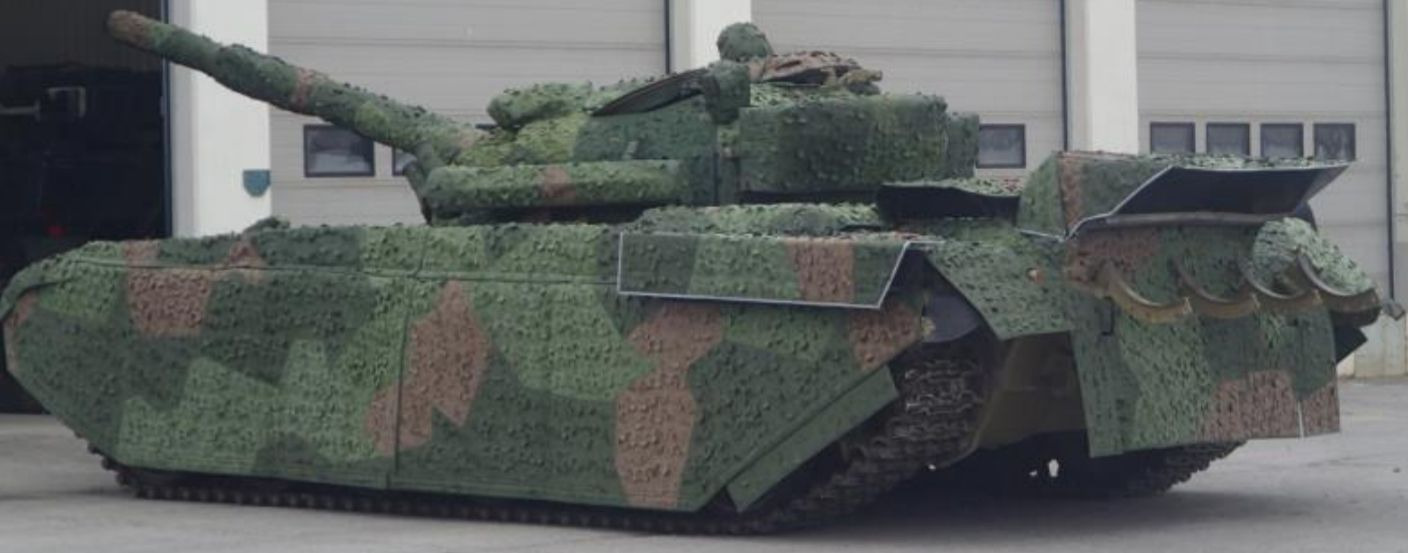
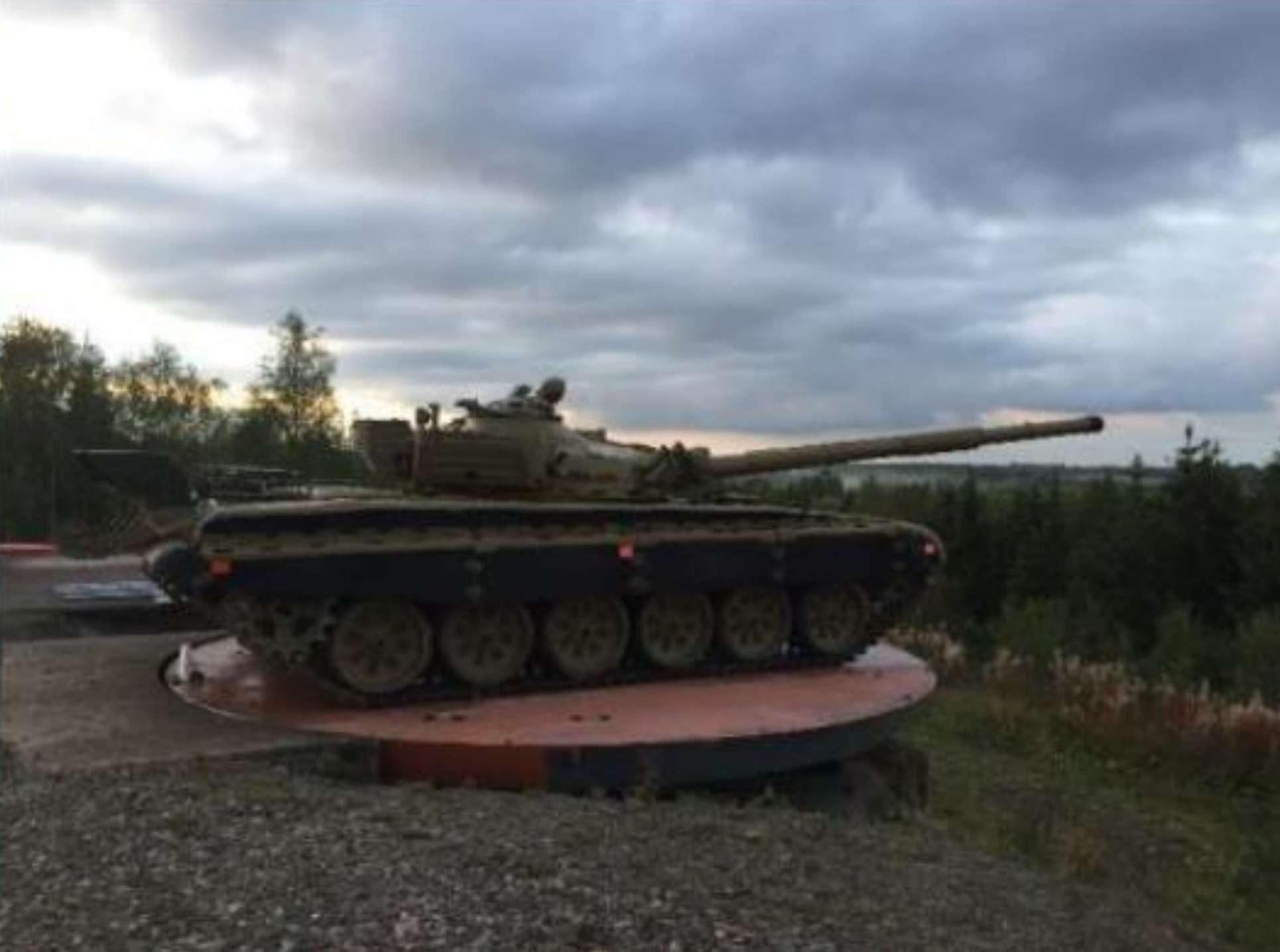
The one tank that survived at least up until 2018, and another one is still around today; these were used to study and evaluate the SAAB Barracuda MCS. The study was named FOT-SAT 16-18 and started in 2016 and lasted until 2018. After that, one tank was sent to serve as a range target, while the other was sent to FÖS for studying purposes, it seems. The other one would end up as a range target. But this study helped a lot with the early development of the Barracuda MCS, as computer simulations were run first, and then it was tested in real life to compare the simulated results with the actual results. Only one of the two T-72M1s was fitted with the MCS, while the other one was used as the base to compare the effectiveness of the netting. Why was this done with T-72s? Probably so the heat signature and radar signatures would not need to be listed online for the Leopard 2 or any other Western MBT. That is just my guess.

Specifications
Armor:
The armor of the T-72M1 remains unchanged, as they are just ex-East German T-72M1, unless we are looking at the preserved T-72M1, which has the add-on armor that can be seen together with the Minenräumgerät “KMT 6 M2”; it is just missing the mineplows.
Chassis
Front: 110 mm
Sides: 80 mm
Rear: 40 mm
Turret
Front: 125 mm
Sides: 102 mm
Rear: 65 mm
Crew:
The crew and their equipment remain unchanged, as the tanks were bought largely complete; the only difference will be mentioned when we come to the armaments. It still has the 3 crew members as a regular T-72M1.
Commander
● Optics: 5.0x
● NVD
Gunner
● Optics: 7.2x - 8.0x
● NVD
● Laser rangefinder
Driver
● NVD
Armaments:
Main armament
The main armament is the 125 mm 2A46 cannon. It is not known exactly what ammunition the tanks carried when they were purchased. APFSDS is confirmed as O. Lindström mentions it in his article, but I would say it is safe to assume we have most, if not all, of the different ammunition the gun was able to fire.
Also later, when the study was carried out on the T-80U, the Swedish army was free to study its ammunition totally freely, which was just a year or two after the T-72M1 had been bought.
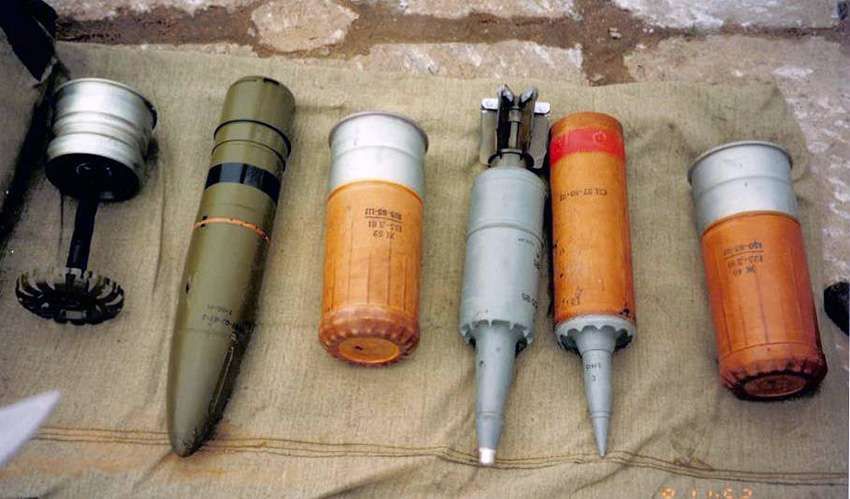
The image shows the T-80U’s ammunition that was studied under the ongoing study of the tank
Ammunition
● 3BK12M
● 3OF26
● 3BM15
● 3BM22
● 3BM9
Secondary armament
Now we come to what would be a noticeable difference from all the T-72M1’s currently in-game. The tanks bought by FMV did not come with the commander’s machine gun. This would only have the coaxial 7.62 PKT machine gun.
Mobility:
Engine:
V-46-6 V-12 diesel engine making 780 hp at 2000 rpm
Gearbox:
Side gearbox
● 7 forward gears
● 1 reverse gear
Mass:
41,5 tons
Speed:
60 km/h forward
7 km/h backward
Power to weight:
18.8 hp/ton
Sources
https://www.army-guide.com/eng/product891.html
https://www.army-guide.com/eng/product2712.html
När fienden kom till Sverige
Client Challenge
Utländska försöksfordon i Sverige | SPHF
https://www.forsvarsmakten.se/contentassets/871586f0e59b4617a287b4988e987161/slutrapport-fot-sat-16-18.pdf
T-72 - Wikipedia
T-72M1 (Germany) | War Thunder Wiki
T-72 M1 mit Minenräumgerät "KMT 6 M2" & T-62 | T-72 M1 mit M… | Flickr