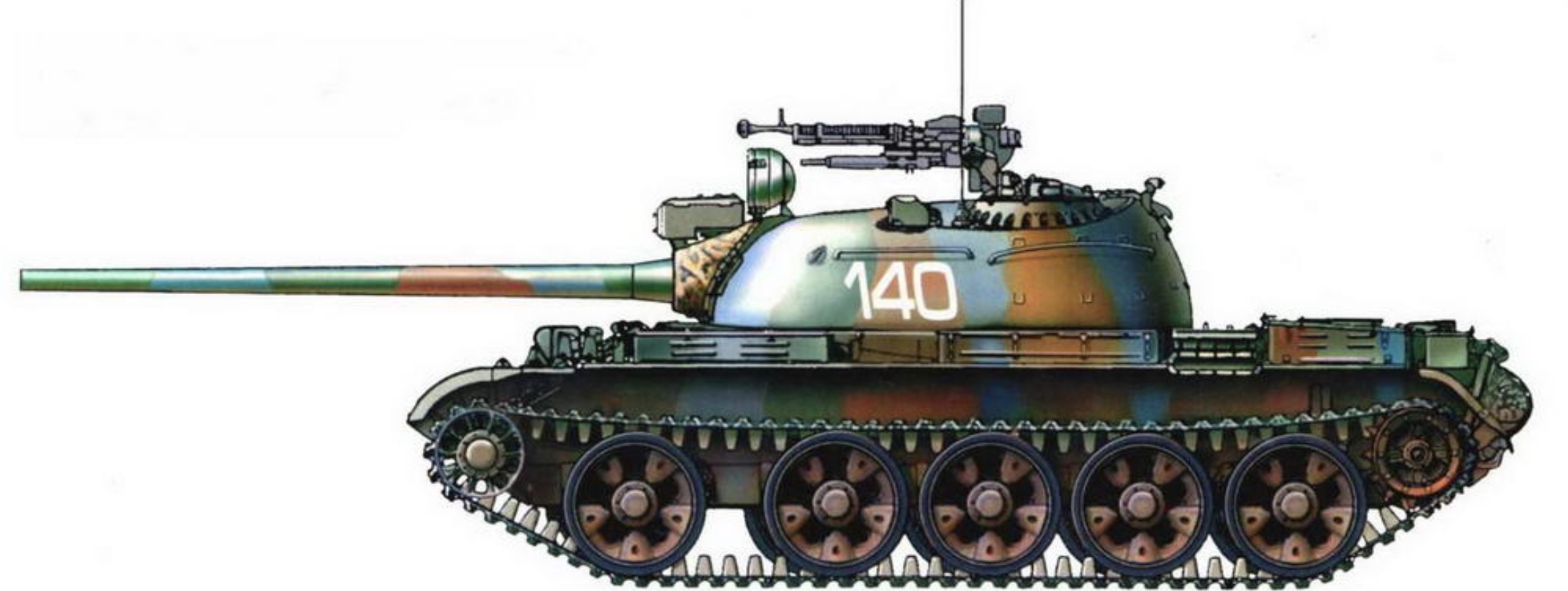
Would you like to see this T-54 in-game?
- Yes, as a Tech-Tree Vehicle
- Yes, as a Premium Vehicle
- Yes, as a Squadron Vehicle
- Yes, as an Event Vehicle
- No, I do not want to see this T-54 in-game.
0
voters
T-54-3M or T-54M (Object 137M)
Introduction
The T-54-3M suggested here represents a T-54 obr.1951 that remained in service long enough to pass through the Soviet Army’s successive modernization programs, culminating in the T-54M / Object 137M standard introduced in 1977. “T-54-3M” is not an official Soviet designation. All T-54 vehicles rebuilt to T-55 standard were simply designated T-54M. The name is used here to distinguish an original T-54-3 donor vehicle from other T-54s rebuilt under the same program.
What makes this vehicle particularly interesting is that it would retain the recognizable fume-extractor-less 100 mm gun and early appearance of the T-54-3 (1951), while internally, and in many external details, being brought much closer to a late-production T-55. By its final modernization, the tank could combine a two-plane stabilizer, laser rangefinder, stabilized gunner’s sight, 580 hp engine, improved night fighting equipment, later ammunition, T-55 running gear, increased ammunition capacity and modernized NBC, smoke and underwater-driving systems.
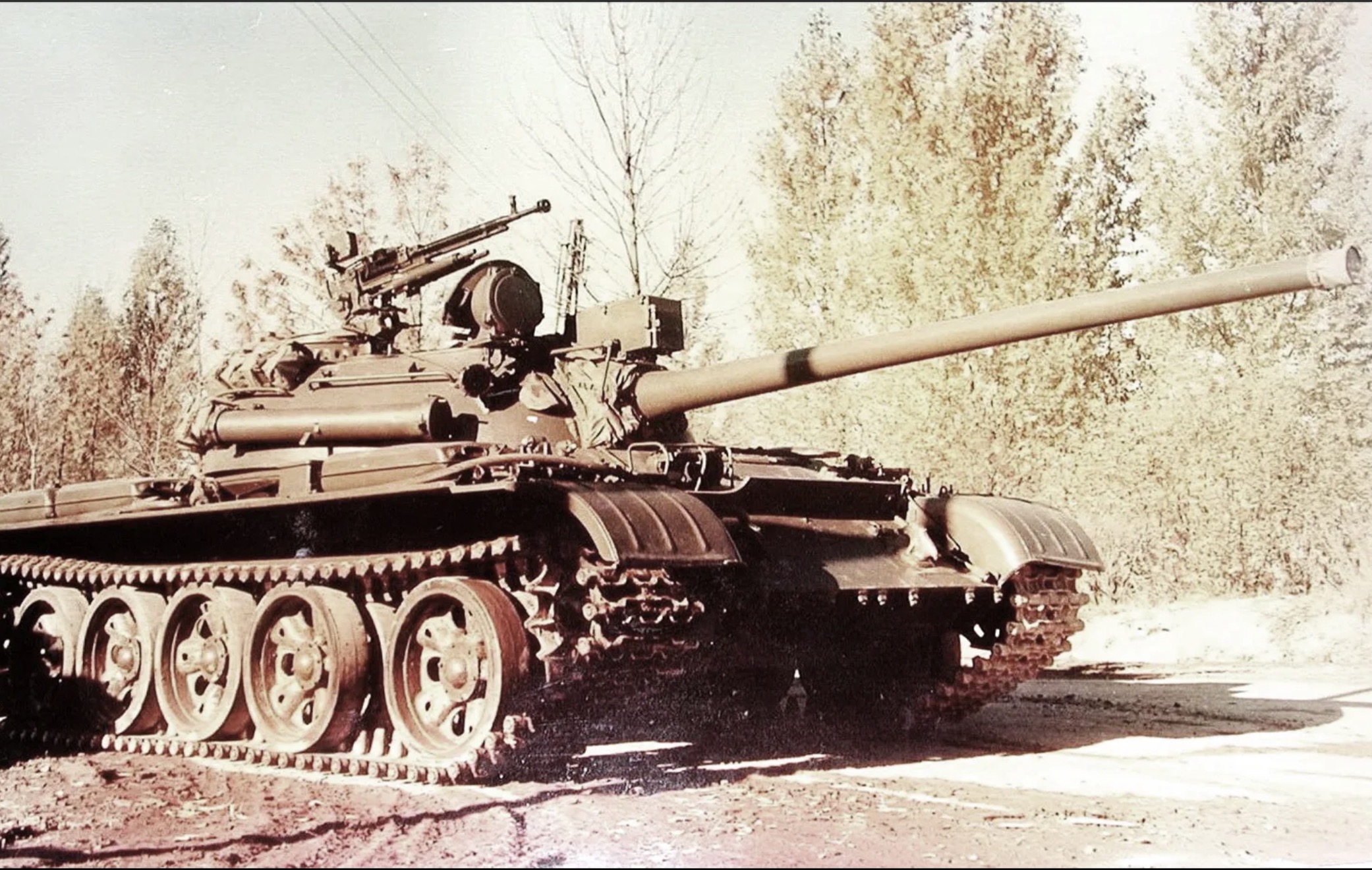
Photographs of the laser-rangefinder-equipped T-54-3M are relatively rare, so I have also included images of earlier modernized T-54-3 configurations whose upgrade programs began in the 1960s. There are very few meaningful differences between the earlier T-54-3M (1960) configuration and the later T-54M (-3M), aside from the addition of the laser rangefinder and access to somewhat newer ammunition made possible by the later date of the modernization. Because of this, a separate T-54-3M (1960) suggestion would be largely redundant. Its capabilities can already be represented very well by the T-54-2M (1960), which I have also suggested, while the T-54M offers a more distinct and worthwhile final evolution of the T-54-3 modernization line.
History
Spoiler
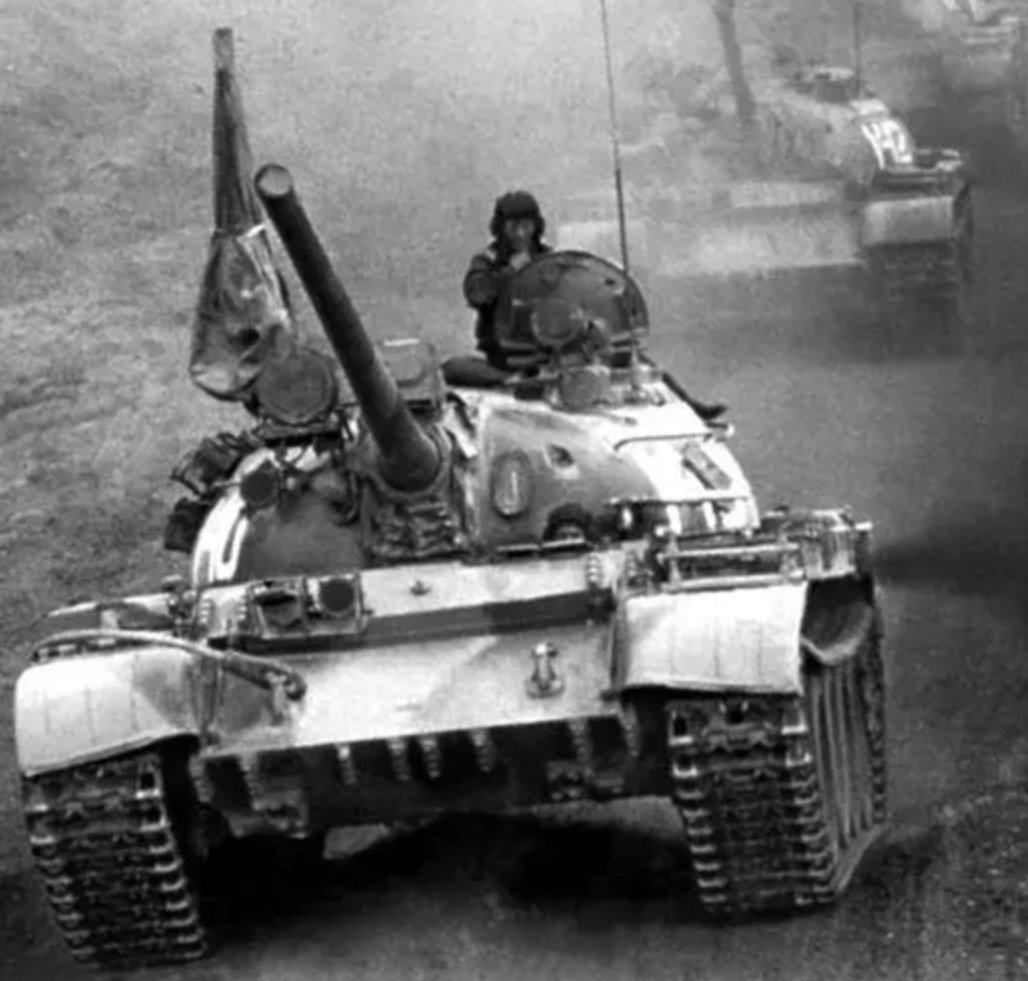
The T-54 obr.1951, commonly referred to as the T-54-3, was the final major production form of the original unstabilized T-54. It introduced the familiar hemispherical turret without the prominent undercuts of the earlier T-54-1 and T-54-2, along with the variable-magnification TSh2-22 sight, SGMT machine guns and other refinements. Serial production began in November 1951 and continued until May 1955, with approximately 7,009 vehicles manufactured.
Although quickly followed by the T-54A, T-54B and ultimately the T-55, these tanks were far too numerous and valuable to discard. Beginning in 1960, T-54 obr.1951 tanks undergoing capital overhaul at Ministry of Defence repair plants began receiving major modernization. Unlike the limited work performed on the earliest T-54-1, the T-54-3 was specifically brought toward T-54B standard. On some tanks, the original D-10T was retained but modified with components of the STP-2 “Tsiklon” two-plane stabilizer and fitted with the characteristic muzzle counterweight. The vehicles also received PAZ protection, automatic fire suppression, TDA smoke equipment, OPVT underwater-driving equipment and newer communications.
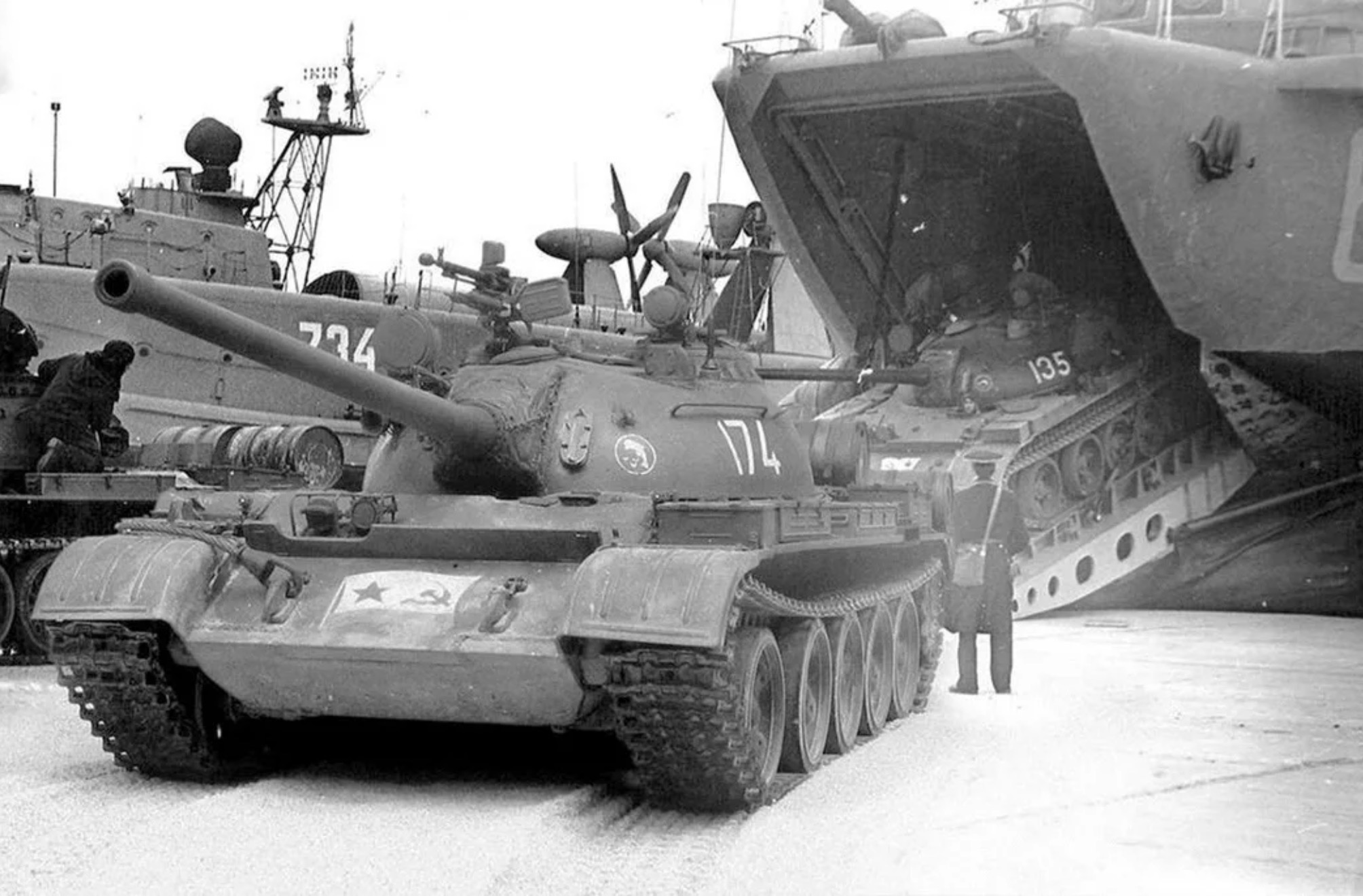
The process did not stop there. As T-54Bs themselves were modernized through the 1960s and 1970s, the rebuilt T-54-3s could inherit the same improvements. From 1961, HEAT ammunition was added; from 1965 the older SGMT machine guns and earlier sights began giving way to PKT machine guns and TSh2B-32/TSh2B-32P sights; from 1966 the R-123 radio and R-124 intercom replaced R-113/R-120; external stowage was revised in 1968–69; improved filtration equipment appeared from 1972; and in 1977 the older gyrocompass was replaced by the GPK-59.
By the mid-1970s, the Soviet Army decided to take the process to its logical conclusion. A new modernization program was developed to bring surviving T-54s as close as practical to late-production T-55 standards and maximize parts commonality. The resulting T-54M, Object 137M, was officially accepted by Ministry of Defense Order No. 045 on 18 March 1977. The principal modifications were introduced at repair plants between 1977 and 1981, and 1,562 T-54Ms were completed by 1 November 1991.
A number of T-54-3 turrets also found a second life as fixed defensive emplacements along the Sino-Soviet border and in the Soviet Far East/Pacific fortification network. For some reason, some of the turrets used in these positions appear to have come from already-modernized vehicles, including examples that have received stabilizers. These fortifications remained in service for decades and were only gradually abandoned following the collapse of the Soviet Union.

Even more remarkably, some surviving modernized T-54-3s eventually passed into service with the Russian Federation and have reportedly appeared in recent combat operations. At least two examples have been visually documented as destroyed or damaged, making these vehicles some of the oldest tank designs to have seen operational use by the Russian Federation in recent years.
Modernization In-Depth
Spoiler
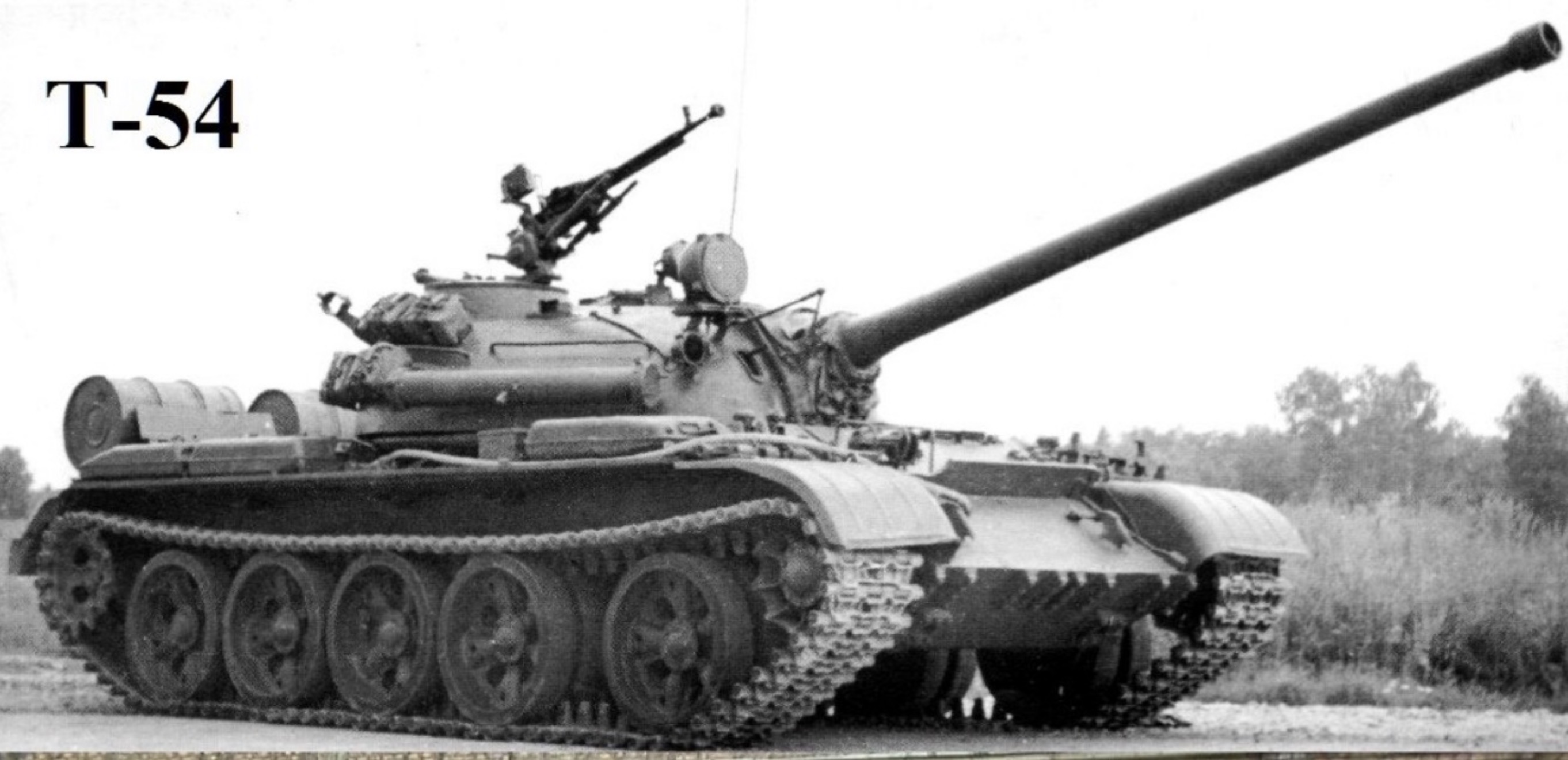
The most important early step was the conversion of the original weapon installation to T-54B capability. The T-54-3’s D-10T did not necessarily have to be discarded. Soviet repair plants could fit it with the components of the STP-2 “Tsiklon” two-plane stabilizer, while adding a muzzle counterweight to compensate for the imbalance.
The T-54B-level work also transformed its night-fighting capability. The gunner received the TPN-1 active-infrared night sight together with the large L-2 infrared illuminator mounted beside the gun. The commander could use the TKN-1/TKN-1S family of night-observation devices with an OU-3-series illuminator, while the driver used the TVN-2 infrared driving device. The fighting compartment also received the rotating turret floor and gun safety fencing required for operating the stabilized weapon system.
The final 1977 T-54M modernization went considerably further. The earlier stabilizer was replaced or upgraded to the STP-2M, and the gunner received the TShS-32PVM sight with a stabilized line of sight. The tank could receive the KDT-1 laser rangefinder, mounted above the main gun. This was not a universal feature.
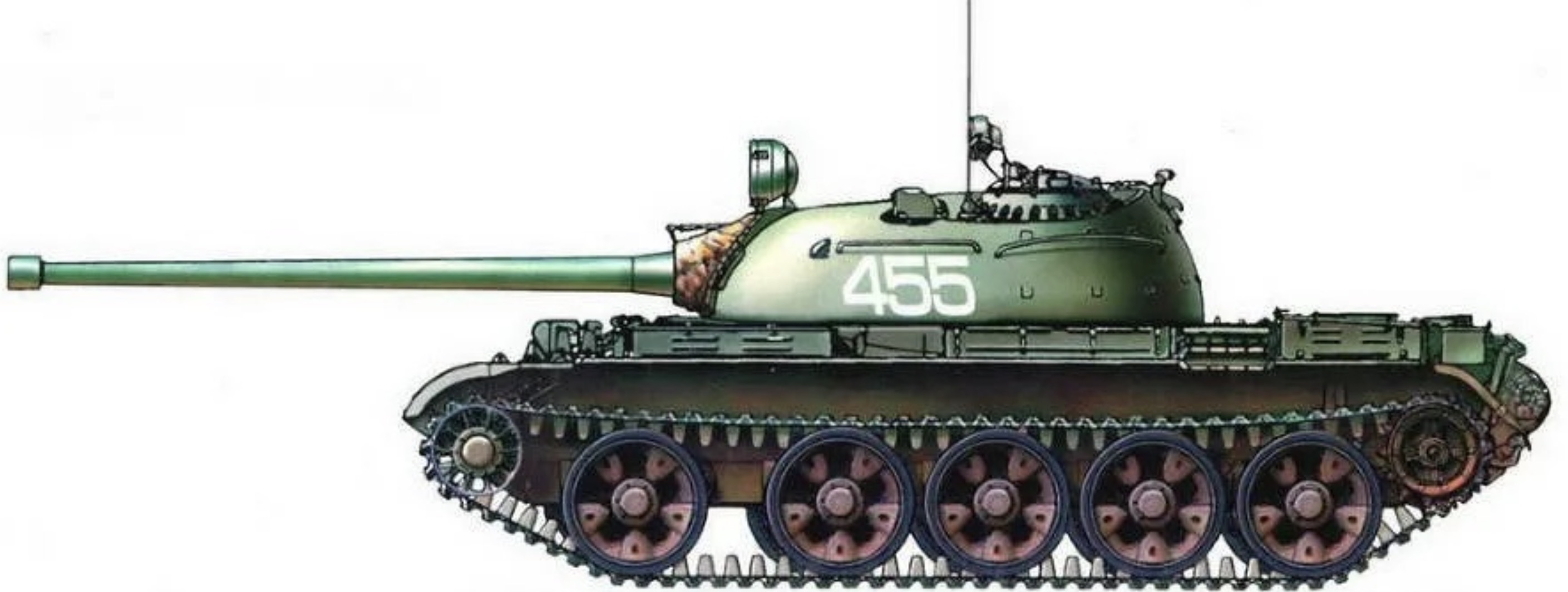
The powerplant was replaced by the V-55 or V-55V diesel producing 580 hp, raising power over the original 520 hp V-54. This was accompanied by much deeper mechanical changes. The T-54M received an air system capable of compressed-air engine starting, a strengthened 19-disc main clutch with hydropneumatic assistance, reinforced steering mechanisms and revised combined final drives. Its preheater was derived from the T-62 system, while automatic engine shutdown could cut fuel in the event of a fire.
The fuel and ammunition arrangement was also substantially revised. Tank-rack fuel cells were installed, allowing ammunition capacity to rise from the original 34 rounds to 43 rounds, matching the T-55. The fuel system was integrated with the TDA thermal smoke apparatus, allowing the tank to generate a smoke screen through its engine exhaust.
Protection and survivability were improved with PAZ nuclear-protection equipment, upgraded automatic fire suppression and later filtration equipment. This was not the same as the extensive anti-radiation lining characteristic of the T-55A, but it nevertheless represented a substantial improvement over the original T-54-3. The vehicle also retained or received modernized OPVT underwater-driving equipment, allowing prepared tanks to cross water obstacles along the bottom.
The running gear increasingly resembled that of the T-55. The final T-54M program used stamped road wheels and RMSh tracks with rubber-metal hinges; the latter required 14-tooth drive sprockets rather than the 13-tooth sprockets associated with the older open-metal-hinge tracks. The T-54M was also prepared to accept KMT-4 and KMT-6 mine-clearing equipment. Either the older OMSh or newer RMSh track could technically be encountered depending on the rebuild, but the RMSh arrangement represents the most modern configuration.
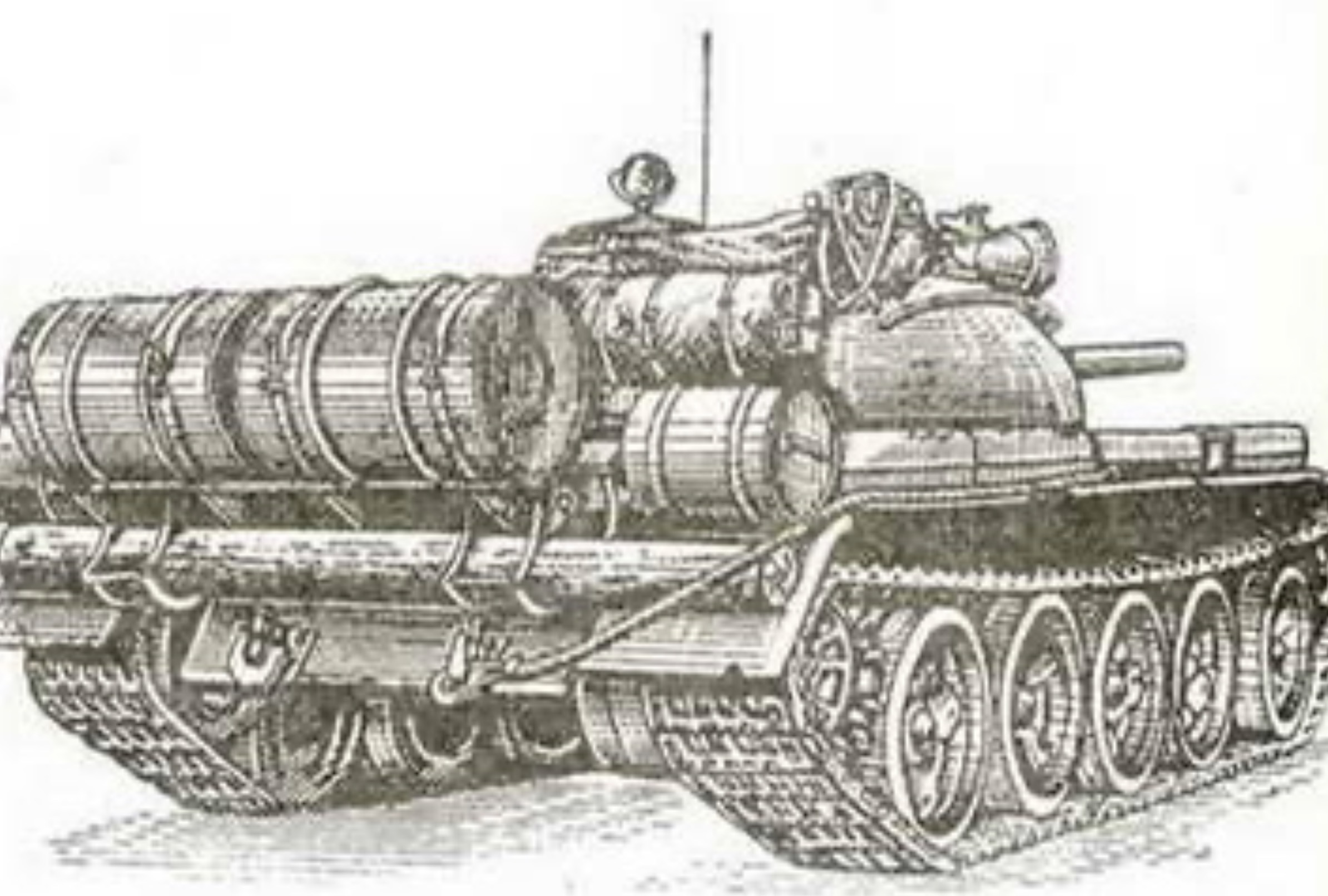
Interestingly, some early T-54s could carry the 200-liter auxiliary fuel drums and the MDSh smoke canisters at the same time. Soviet instructions allowed the smoke canisters to be relocated to the rear mudguards in a travel position, while the fuel drums occupied the normal rear mounts. Before combat, the drums could be removed and the smoke canisters returned to their standard firing positions. In practice, however, most period photographs of these later configurations show the 200-liter fuel drums fitted while the MDSh smoke canisters are absent, suggesting that the smoke charges were often omitted in service even though provision existed to carry both.
Ammunition
Spoiler
The original T-54-3 entered service with the familiar BR-412-series armor-piercing ammunition and OF-412 high explosive, but its ammunition selection expanded dramatically over its service life. Once rebuilt to T-54B standard, it gained access to the same later D-10-family ammunition used by the T-54B and T-55.
In 1961, the T-54B ammunition load received the 3UBK4 round with the 3BK5/3BK5M HEAT projectile. The contemporary sight was also revised to include a dedicated HEAT range scale. A rebuilt T-54-3 brought to T-54B standard would therefore have 3BK5/3BK5M.
The tank could also use 3BM8 APDS. The 3UBM6/3BM8 round was officially developed for the D-10 family and was authorized for the D-10T, D-10TG and D-10T2S. For a T-54-3 whose original D-10T had already been brought to T-54B weapon standard, there is effectively no compatibility issue.
More interestingly, the final T-54M modernization coincided with the introduction of an even newer generation of 100 mm ammunition. The 3UBM11 round with the 3BM25 “Izomer” projectile was developed specifically for the D-10 family during the 1970s and entered service around 1977–79. Russian ammunition references explicitly list it for the D-10T, D-10TG and D-10T2S. Therefore, for the proposed T-54-3M 3BM25 APFSDS is historically accurate.
The same late period also produced the 3BK17/3BK17M HEAT-FS rounds, introduced around 1978 for the D-10 family. This means that the final T-54M could potentially combine a laser rangefinder and stabilized sight with ammunition far more advanced than anything available when the T-54-3 was built in 1951.
Specifications
Spoiler
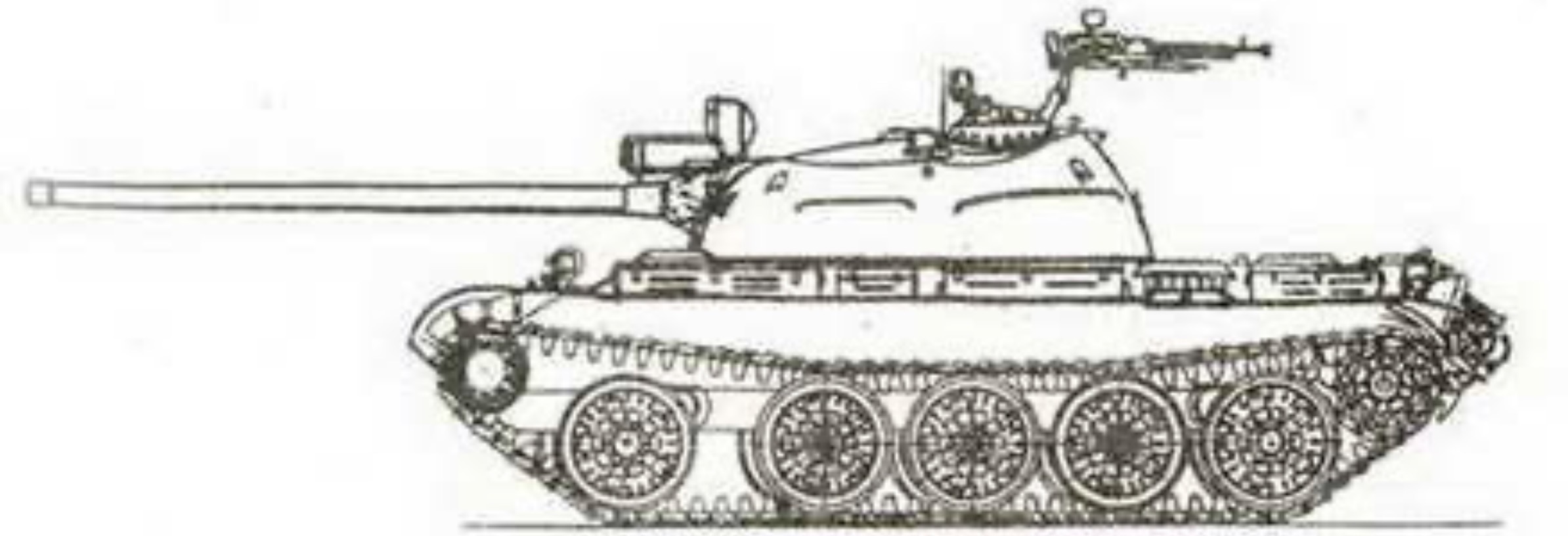
- Official final designation: T-54M, Object 137M
- Original donor: T-54 obr.1951 / T-54-3
- Country: USSR
- Crew: 4
- Combat weight: approximately 36.5 tonnes
- Engine: V-55 or V-55V V-12 diesel
- Power: 580 hp
- Power-to-weight ratio: approximately 15.9 hp/t
- Maximum road speed: approximately 50 km/h
- Road range: approximately 400 km, depending on fuel configuration
- Main armament: 100 mm D-10T2S, or an earlier D-10T brought to the corresponding stabilized standard during overhaul
- Stabilizer: STP-2M, two-plane
- Main gun ammunition: 43 rounds
- Primary day sight: TShS-32PVM, stabilized line of sight
- Laser rangefinder: KDT-1 on the fully equipped configuration
- Gunner night sight: TPN-1-series active infrared sight
- Gunner IR illuminator: L-2
- Commander night equipment: TKN-series active-IR equipment with OU-3-series illuminator
- Driver night equipment: TVN-2
- Secondary armament: typically 2 × 7.62 mm PKT and 1 × 12.7 mm DShKM
- Upper glacis: 100 mm at 60°
- Hull sides: 80 mm
- Turret front: up to approximately 200 mm
- Turret sides: up to approximately 160 mm
- Turret rear: approximately 65 mm
- Smoke system: TDA engine-exhaust smoke generator (some were still capable of using smoke bombs)
- NBC protection: PAZ, with later filtration improvements
- Fire protection: automatic PPO system
- Running gear: later stamped/T-55-type road wheels; RMSh tracks on the fully modernized configuration
- Underwater equipment: modernized OPVT
- Mine-clearing compatibility: KMT-4 / KMT-6
- Relevant ammunition: BR-412-series APHE/APCBC, OF-412/late HE, 3BK5/3BK5M HEAT-FS, 3BM8 APDS, 3BK17/3BK17M HEAT-FS, and potentially 3BM25 APFSDS in the late-service configuration.