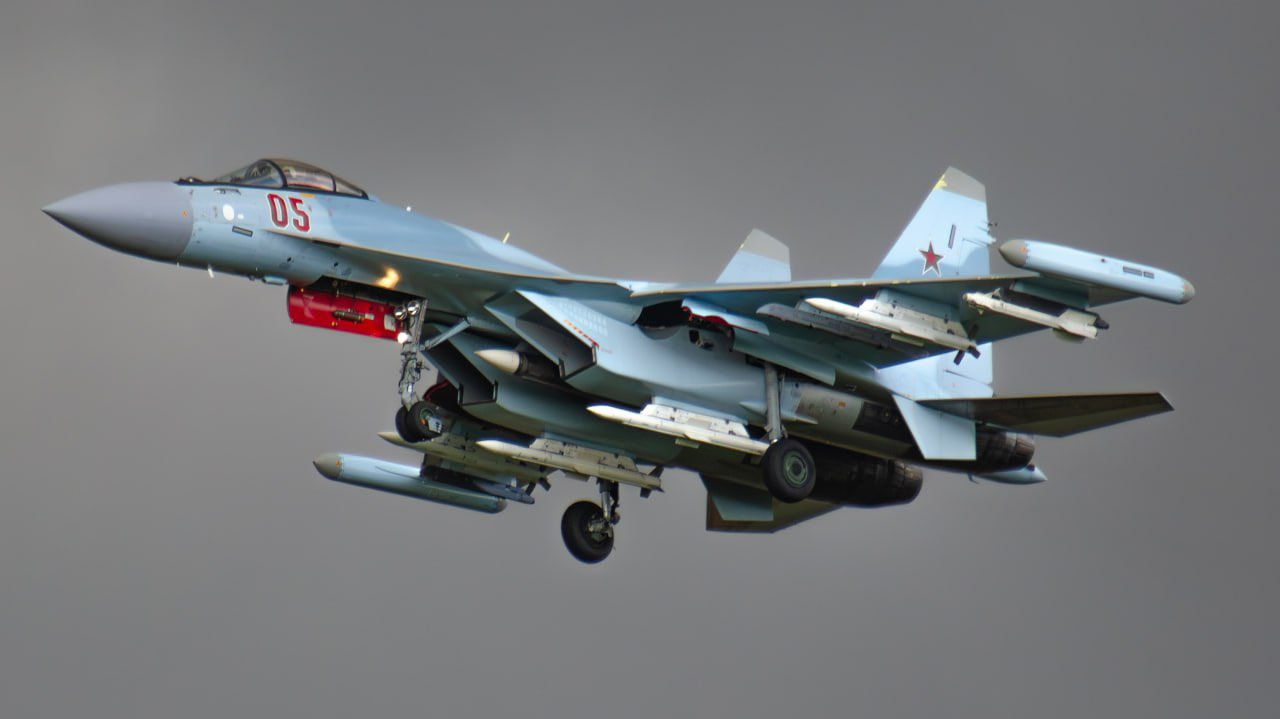
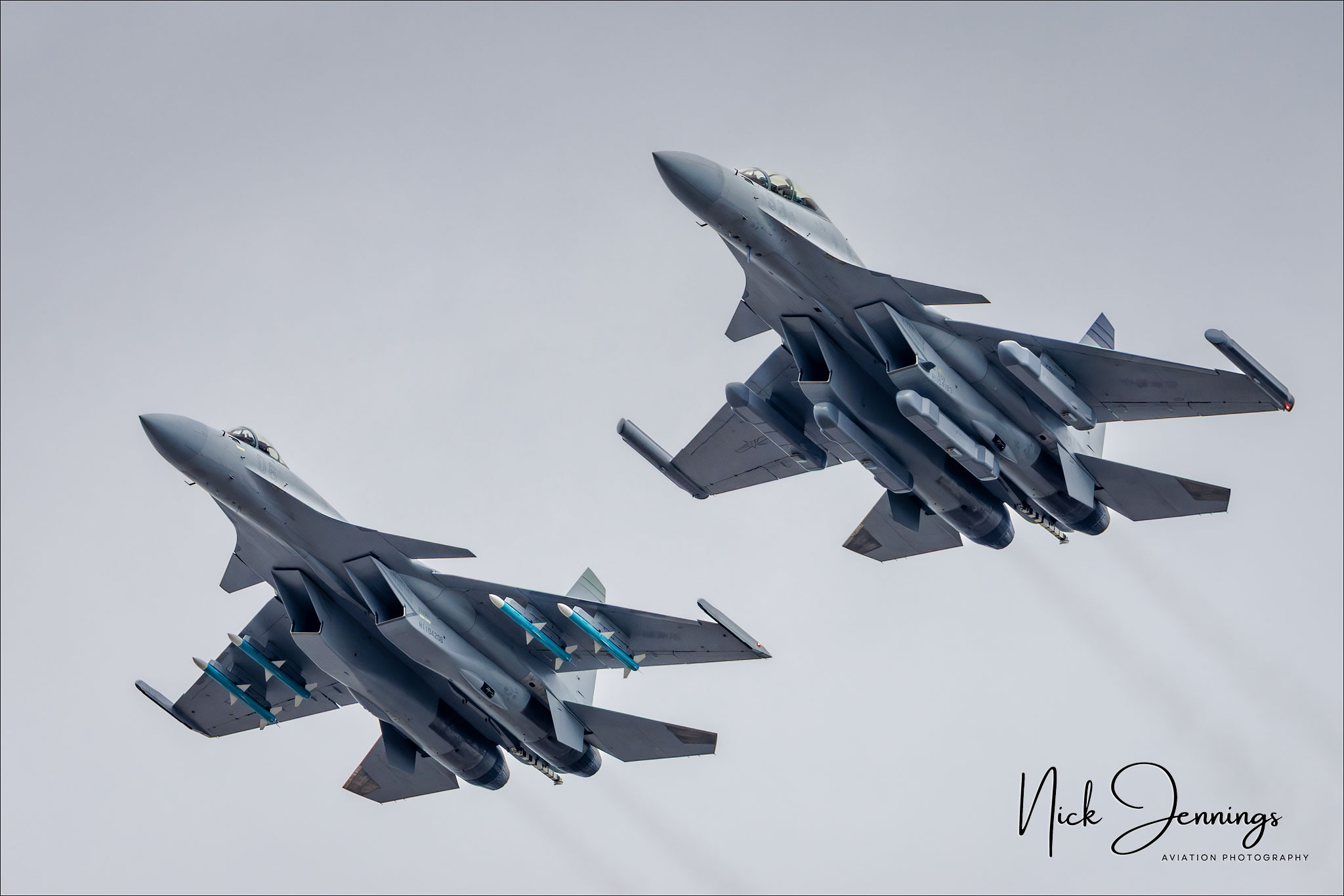
Yeah but at the same time, su-35 can stay undetectable by the the f-22 forever due to its gimbal limit. Because r771s dont have any launch angle restrictions su-35 can apply as much pressure as it would want against a f22/35 without putting itself in danger at all (in wt at least)
Irl su35 getting nuked by f-22 because its radar in terms of range is at least on par with it while being undetectable by su-35 until its much too late.
Especially with aim 120 d-3 being minimum of 164 km max range if I recall correctly
Wouldnt the ECM suite pick it up? The F-22 could briefly turn towards the Su-35 to fire off an AMRAAM and then turn back. Maybe periodically turn back in to update the DL for long range shots
You’re Talking about IRBIS big radiation. And the Ability of F-22 to use LPI so it don’t blast same quantity of energy and still detect Su-35s without Triggering SU-35s system.
THAT don’t work. Useless against modern PESA/AESA system.
I didn’t say this bit. It would maybe trigger the one Su-35 if they needed to use the radar (with how much the IRBIS would be emitting they could probably get enough information for an AMRAAM launch off just RWR pings) since it can cue a really narrow beam.
And idk where you get the LPI being useless from, maybe some exaggerated Su-35 brochure. If Russian electronics are so modern how come there arent any internationally competitive Russian phones or computers? Even if it did alert the Su-35, it would ONLY alert that Su-35 which is still an advantage
The range of that ping for AN/ALR-94 its unknow but its should be really low. Other Because why even have the option to use AN/APG-77 for a narrow bean. (This its about the same as what Su-57 can do with L-band radar btw). Or why even use a radar at that point. Another marketing lie of the F-22 for sure.
LPI was mostly a tech against RWR. That can’t detect the wave out of the noise the Radar modulation produce. It use modulation and blah blah blah. Lower energy out blah blah blah… Modern AESA/PESA still can detect the radiation. And NCTR its a thing.
you will not always have sufficient data from RWR alone and there are countless advantages to having a radar i really dont feel like writing down right now. there are no marketing lies for the F-22, only the lowest of low-balls and other toned down stats since Lockheed isnt selling the F-22 to anyone and never will for the forseeable future
I’m not a radar expert. But Because how AESA/PESA work. With multiple T/R modules. It can work like RWR. Without the problem of older RWR that only work on a frequency. Something like how AESA can JAM older radar. But its harder against other AESA radar.
Older RWR couldn’t detect LPI because it think that the signal its noise.
Maybe this AI slop can explain it better.
AESA radar vs. traditional RWR
Spoiler
While both can perform similar functions, the AESA radar provides several key advantages over a standalone RWR:
Feature
AESA Radar (acting as RWR)
Traditional RWR
Detection capability
Can provide precise range and angle information on enemy emitters by analyzing the incoming signal through the T/R modules.
Primarily provides a general direction and classification of a radar threat based on the strength and type of the incoming signal.
Integration
Fully integrated into the aircraft’s electronic systems, sharing data and enhancing situational awareness with other sensors.
A separate system that feeds threat data to the pilot, but may not be as seamlessly integrated with other sensors.
Low probability of intercept (LPI)
More effective at detecting other LPI radars because its advanced signal processing is better at distinguishing complex, hopping frequencies from background noise.
Legacy systems are less effective against modern LPI radars, which can rapidly change frequencies and appear as random “white noise”.
Simultaneous functions
Can listen for passive threats while actively performing other tasks, such as tracking targets with its active radar.
A dedicated receiver that only provides passive threat detection.
Pfff. Yea sure the F-22 has 0,0000000000000000000000001 overall RCS.
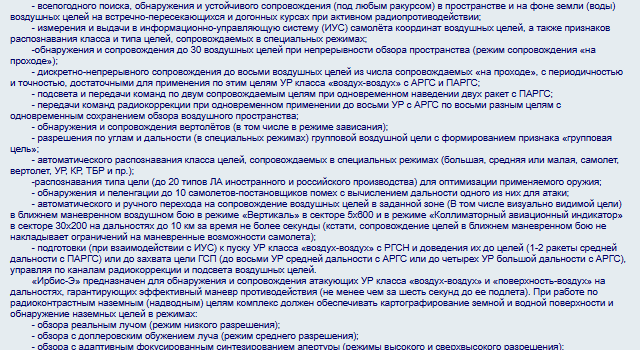
For the Su-35 fighter, the fight against air targets is the top priority. As part of the aircraft’s KBO, the Irbis-E RLSU is intended to:
Provide all-weather search, detection, and stable tracking (from any aspect) of air targets in volume and against ground/sea backgrounds, on head-on and tail-chase courses, under active EW;
Measure and output to the aircraft’s information-management system (IUS) the coordinates of air targets and, in special modes, classification features;
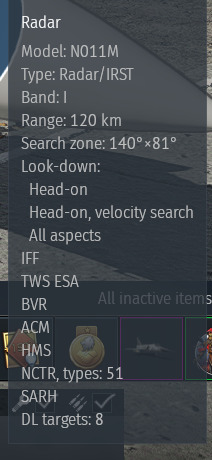
Detect and track up to 30 air targets while maintaining continuous volume search (track-while-scan);
Provide discrete-continuous tracking of up to 8 of those TWS targets with update rate and accuracy sufficient for employing AAMs with ARH and SARH;
Provide illumination and command transmission against two tracked targets while simultaneously guiding two SARH missiles;
Provide mid-course correction when simultaneously employing up to eight ARH missiles against eight different targets while maintaining airspace search;
Detect and track helicopters (including hover);
Resolve groups in angle and range (in special modes), forming the “group target” attribute;
Automatically classify targets in special modes (large/medium/small; airplane, helicopter, AAM, CM, TBM, etc.);
Recognize target type (up to 20 aircraft types, foreign and Russian) to optimize weapon selection;
Detect and bear up to 10 jamming aircraft, computing the range to one of them for attack;
Automatically/manually transfer to track a target in a specified zone (including a visually seen target) in close-in maneuvering combat:
“Vertical” mode within 5×60°, and HUD (collimator) mode within 30×20°, at ranges up to 10 km in ≤1 s (tracking in close-in combat imposes no limits on aircraft maneuvering);
(With IUS interaction) prepare AAM launches and support missiles to target:
1–2 medium-range SARH AAMs via correction/illumination channels, or
up to eight medium-range ARH AAMs (or up to four long-range ARH AAMs) through to seeker lock.
“Irbis-E” is intended to detect and track incoming AAMs and SAMs at ranges guaranteeing effective counter-maneuver (no less than 6 seconds before arrival).
That may be a thing that can be update with time. After radar get more info. I remember reading something like that. But i don’t remember if what for IRBIS or for that thing called bos/bosse or something like that. That the Su-35s have.