- Yes
- No
 Sukhoi Company S-70 Okhotnik-B - The Felon’s Unmanned Loyal Wingman
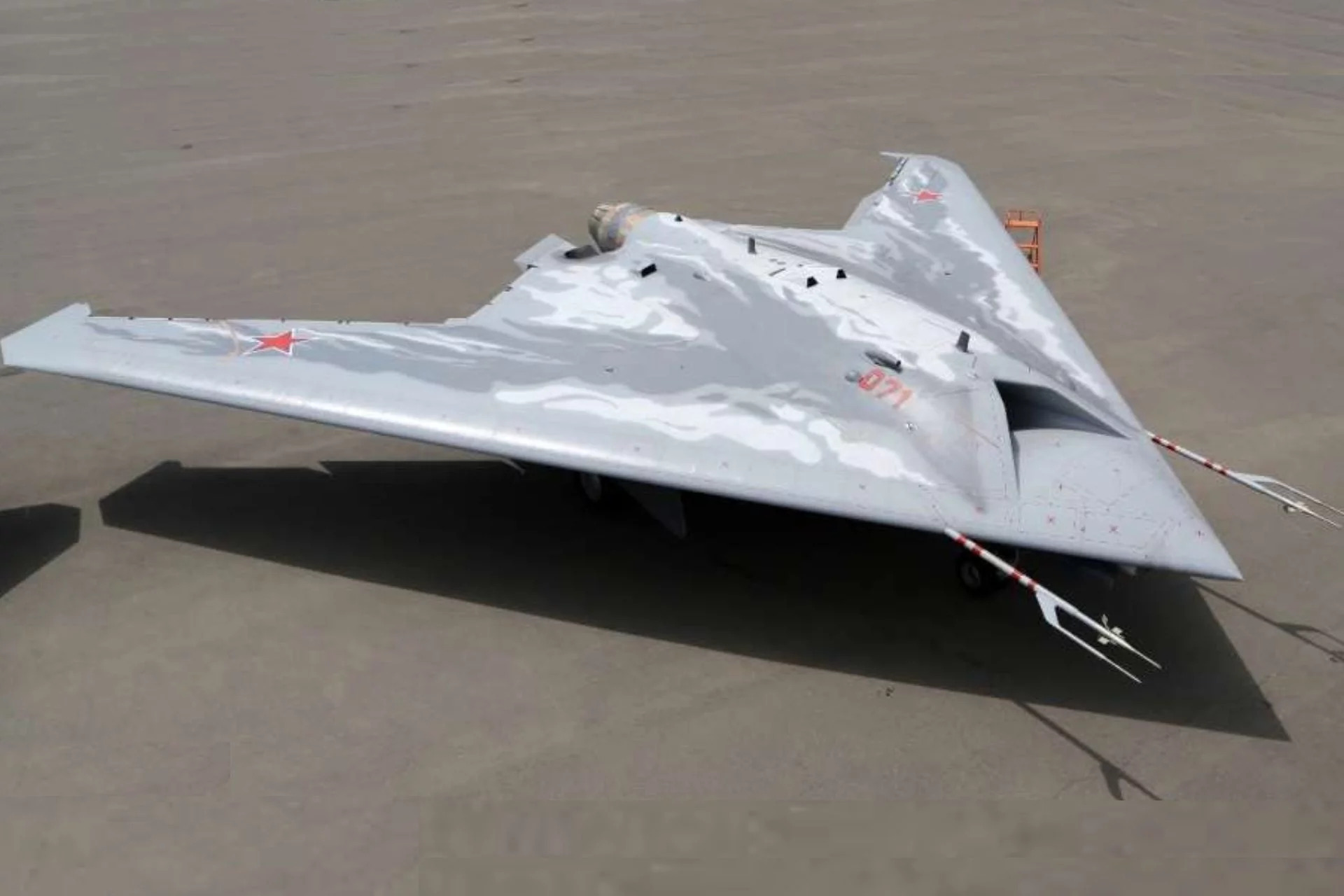
JSC Sukhoi Company S-70 Okhotnik-B

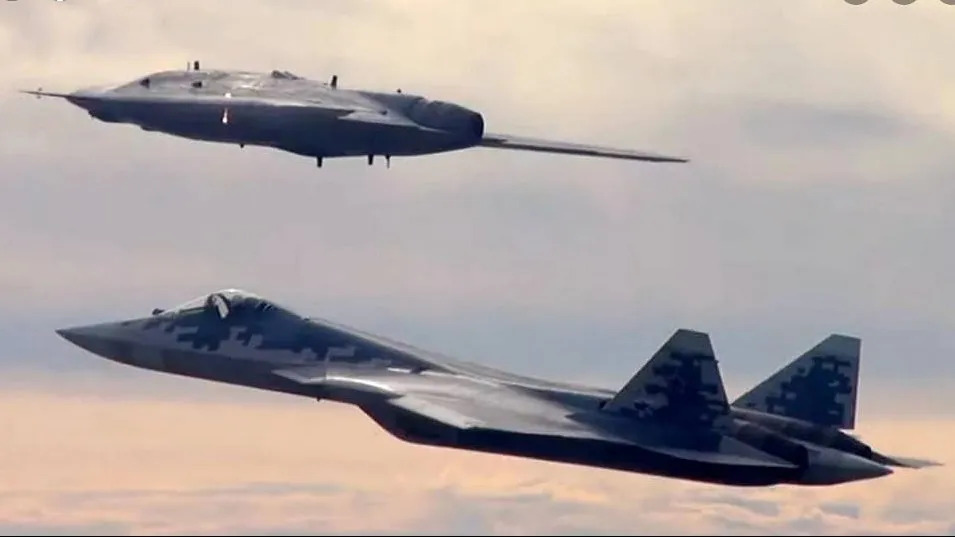
my cute attempt to recreate the Su-57 and Okhotnik squadron
This post will get continually updated as I gather new information and as the aircraft continues its lifecycle, thank you.
The Sukhoi S-70 Okhotnik-B, also known as the “Hunter-B,” is Russia’s ambitious leap into the world of stealthy unmanned combat air vehicles (UCAVs). Developed by Sukhoi and based on flying wing technology, the S-70 is designed to work both independently and alongside manned fighters like the Su-57. Featuring stealth shaping, advanced sensors,and internal weapons bays, it represents a significant step toward integrating AI and autonomous systems into modern warfare. Its mission profile includes reconnaissance, electronic warfare, and precision strike capabilities.
The development of the S-70 Okhotnik-B (“Hunter-B”) began as part of Russia’s effort to modernize its military aviation with cutting-edge unmanned capabilities. Official work on the project kicked off in the early 2010s under the umbrella of the Sukhoi Design Bureau, with a strong emphasis on creating a stealthy, autonomous combat drone that could complement advanced fighters like the Su-57.
The drone’s concept drew inspiration from global trends in stealth UCAVs, particularly Western programs like the American X-47B. Russia’s approach focused on building a flying-wing platform with low radar visibility, internal weapon bays, and the ability to carry out missions independently or in coordination with manned aircraft. The partnership between Sukhoi and MiG played a key role in merging expertise across airframe design and systems integration.
The first full scale mock up of the Okhotnik was spotted in 2018, and its maiden flight followed in August 2019. That initial flight was short around 20 minutes but marked a major milestone for Russian aerospace innovation. In 2020, the drone successfully flew in formation with a Su-57, showcasing one of its core future capabilities: acting as a loyal wingman to manned fighters, feeding targeting data, or flying ahead to engage or scout targets.
Since then, the S-70 has undergone extensive testing and development, including upgrades to its engines and airframe. A refined version featuring a flat exhaust nozzle for reduced infrared and radar signatures was revealed in 2021, pointing to ongoing improvements in stealth and survivability.
Though still in the prototype and pre-production stage, the Okhotnik-B is expected to enter service later this decade. When it does, it will give the Russian Air Force a versatile and stealthy unmanned strike platform capable of operating in highly contested environments marking a new chapter in Russian aerial warfare.
Characteristics
Stealth
- Flying Wing Configuration: Similar to the American B-2 or X-47B, its tailless, blended body reduces radar cross-section.
- Radar-Absorbing Materials (RAM): Uses RAM coatings and internal weapons bays to minimize detectability.
- Low Observable Exhaust: Later prototypes feature a flat nozzle to reduce infrared and radar signature.
- RCS: Figures not publicly available.
Advanced Armament
The S-70 Okhotnik also allows for nonstealthy configurations, however I’m not certain which hardpoints allow for which weapons yet, lets just assume x4 Externally for all weapons listed below.
-
Guns
- N/A
-
Air to air missiles
- R-77M (x4 Internally)
- R-74M2 (x4 Internally)
-
Air to ground missiles
- x4 UMPB D-30SN (x4 Internally)
- x4 Kh-38M (x4 Internally)
- x4 Grom-1 (x4 Internally)
- x4 Grom-2 (x4 Internally)
- x4 Kh-59MK2 (x4 Internally)
-
Bombs
- x4 KAB-250 (Laser and GLONASS) (x4 Internally)
- x4 KAB-500S-E (x4 Internally)
Avionics & Systems
-
N036 Byelka AESA Radar: Powerful active electronically scanned array radar.
- Main Array: The drone features a nose-mounted X-band Active Electronically Scanned Array (AESA) radar derived from the Su-57’s primary N036-1-01 array (Capabilities: Provides air-to-air tracking, Synthetic Aperture Radar (SAR) ground imaging, and Ground-Moving Target Indication (GMTI) for standoff targeting.)
-
101KS “Atoll” Suite (Derivative)
- 101KS-V (OLS): Quantum optical location / Infrared Search and Track (IRST) sensor for passive detection and tracking of airborne targets without emitting detectable radar signals.
- 101KS-N: Multi-channel optical sighting system integrated for surface reconnaissance, ground target identification, and laser designation for precision-guided bombs/missiles.
- 101KS-P: Flush-mounted, high-resolution thermal imaging sensor designed for autonomous low-altitude navigation and obstacle avoidance.
Flight and Engine Specifications
-
- Crew: 0 (Remotely Controlled or Autonomously Flown)
-
- Length: ~14 m (46 ft)
-
- Wingspan: ~20 m (66 ft)
-
- Height: ~4 m (13 ft)
-
- Max Takeoff Weight: ~20,000–25,000 kg (44,000–55,000 lbs)
-
- Powerplant: x1 1 × AL-41F or upgraded AL-51F derivative
-
- Thrust: ~14,500–17,500 kgf
-
- Max Speed: ~1,000 km/h (620 mph) – high subsonic
-
- Range: ~6,000 km (3,728 mi)
-
- Endurance: 6+ hours (estimated)
-
- Service Ceiling: 12,000–15,000 m (39,000–49,000 ft)
If you liked this post be sure to check out my post about the Su-57 Felon