- Yes
- No
Hello everyone, and welcome to this new suggestion.
Today, I am presenting a new prototype of a French heavy fighter: the SNCAC NC.600.
In 1934, the French Air Force issued specifications for a rather unusual type of aircraft intended to serve as an airborne command post for fighter formations. The concept called for a three-seat aircraft carrying a liaison officer whose role was to maintain radio contact with friendly fighters, coordinate their movements, issue tactical orders, and help designate targets during combat. Several French manufacturers responded to the requirement, including Potez, Breguet, Romano, and Hanriot, each proposing their own interpretation of this unusual concept. Hanriot’s proposal would eventually evolve into the aircraft that became the SNCAC NC.600.
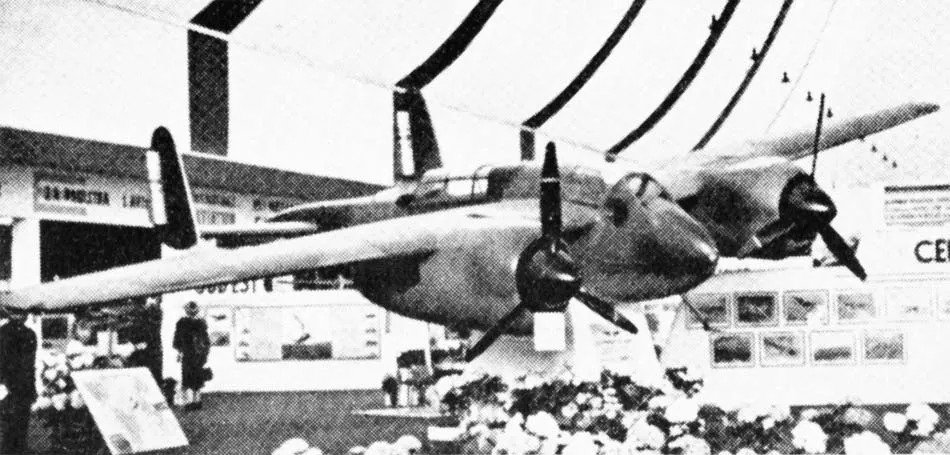
Initially designated H.220, the original aircraft made its maiden flight in 1937. However, its career was short-lived, as the sole prototype was destroyed in a crash during testing the following year. By this time, Hanriot had become part of the newly established Société Nationale de Constructions Aéronautiques du Centre (SNCAC), following its merger with Farman. Despite the loss of the original prototype, the new company considered the design promising enough to continue development and began working on a substantially modified version.
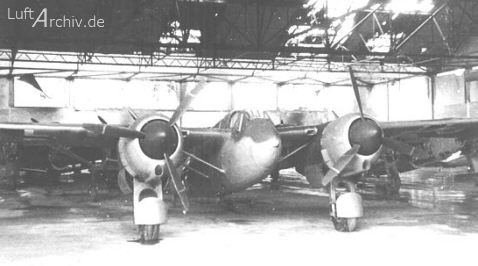
The resulting aircraft was designated NC.600. Although it retained the wings and engines of the original H.220, almost every other aspect of the aircraft was redesigned. The fuselage and cockpit were streamlined to improve the aircraft’s aerodynamic performance, giving the cockpit a more integrated appearance rather than the more prominent structure of the H.220. The tail assembly was also completely redesigned, replacing the original single vertical fin with a twin-fin configuration positioned on either side of the rear fuselage.
The NC.600 finally made its maiden flight in early 1940, just as France was preparing for the rapidly approaching conflict. Unfortunately, the aircraft never had the opportunity to demonstrate its capabilities under operational conditions. The original competition had already been won by Breguet’s design, and the outbreak of the Second World War brought French aircraft development programs to an abrupt halt. With resources redirected toward more urgent production requirements, there was no opportunity to continue development or place an order for the NC.600.
The sole prototype remained at the factory when German forces invaded France in 1940. Following the French capitulation, the aircraft was discovered by the Germans along with numerous other unfinished or experimental French aircraft. It never entered German service, and the NC.600 project effectively disappeared without ever progressing beyond the prototype stage.

Characteristics
Length : 8.80 m
Width : 12.80 m
Height : 3.40 m
Mass :
- Empty : 2945 kg
- Full : 3637 kg
The aircraft was initially powered by two Renault 12R V12 engines producing 450–500 hp, before being fitted with 680 hp Gnome & Rhône 14M engines, which provided a significant boost in power. This allowed the aircraft to reach a top speed of 520 km/h at an altitude of 6,000 m and a service ceiling of 9,800 m. It has a range of 980 km.
The crew consists of two personnel: a pilot in the front and a rear gunner.
Weapons
The aircraft’s armament is improved compared to the initial version: the two forward-firing 20mm cannons are supplemented by two 7.5mm MAC34 machine guns, and the defensive armament is upgraded from a single 7.5mm machine gun to a 20mm cannon in the rear position.
In-game, this aircraft would be an interesting addition to the French tree, providing a heavy fighter capable of holding its own against lighter fighters, yet remaining vulnerable due to its larger size.
Pictures
Sources
- Les avions de la Seconde Guerre Mondiale - Hanriot H. 220, NC-600
- [poll type=regular results=always chartType=bar]
[Would you like to see this in-game?]
- Yes
- No
[/poll]
Hello everyone, and welcome to this new suggestion.
Today, I am presenting a new prototype of a French heavy fighter: the SNCAC NC.600.
In 1934, the French Air Force issued specifications for a rather unusual type of aircraft intended to serve as an airborne command post for fighter formations. The concept called for a three-seat aircraft carrying a liaison officer whose role was to maintain radio contact with friendly fighters, coordinate their movements, issue tactical orders, and help designate targets during combat. Several French manufacturers responded to the requirement, including Potez, Breguet, Romano, and Hanriot, each proposing their own interpretation of this unusual concept. Hanriot’s proposal would eventually evolve into the aircraft that became the SNCAC NC.600.
Initially designated H.220, the original aircraft made its maiden flight in 1937. However, its career was short-lived, as the sole prototype was destroyed in a crash during testing the following year. By this time, Hanriot had become part of the newly established Société Nationale de Constructions Aéronautiques du Centre (SNCAC), following its merger with Farman. Despite the loss of the original prototype, the new company considered the design promising enough to continue development and began working on a substantially modified version.
The resulting aircraft was designated NC.600. Although it retained the wings and engines of the original H.220, almost every other aspect of the aircraft was redesigned. The fuselage and cockpit were streamlined to improve the aircraft’s aerodynamic performance, giving the cockpit a more integrated appearance rather than the more prominent structure of the H.220. The tail assembly was also completely redesigned, replacing the original single vertical fin with a twin-fin configuration positioned on either side of the rear fuselage.
The NC.600 finally made its maiden flight in early 1940, just as France was preparing for the rapidly approaching conflict. Unfortunately, the aircraft never had the opportunity to demonstrate its capabilities under operational conditions. The original competition had already been won by Breguet’s design, and the outbreak of the Second World War brought French aircraft development programs to an abrupt halt. With resources redirected toward more urgent production requirements, there was no opportunity to continue development or place an order for the NC.600.
The sole prototype remained at the factory when German forces invaded France in 1940. Following the French capitulation, the aircraft was discovered by the Germans along with numerous other unfinished or experimental French aircraft. It never entered German service, and the NC.600 project effectively disappeared without ever progressing beyond the prototype stage.
Characteristics
Length : 8.80 m
Width : 12.80 m
Height : 3.40 m
Mass :
- Empty : 2945 kg
- Full : 3637 kg
The aircraft was initially powered by two Renault 12R V12 engines producing 450–500 hp, before being fitted with 680 hp Gnome & Rhône 14M engines, which provided a significant boost in power. This allowed the aircraft to reach a top speed of 520 km/h at an altitude of 6,000 m and a service ceiling of 9,800 m. It has a range of 980 km.
The crew consists of two personnel: a pilot in the front and a rear gunner.
Weapons
The aircraft’s armament is improved compared to the initial version: the two forward-firing 20mm cannons are supplemented by two 7.5mm MAC34 machine guns, and the defensive armament is upgraded from a single 7.5mm machine gun to a 20mm cannon in the rear position.
In-game, this aircraft would be an interesting addition to the French tree, providing a heavy fighter capable of holding its own against lighter fighters, yet remaining vulnerable due to its larger size.
Pictures
Sources
- Les avions de la Seconde Guerre Mondiale - Hanriot H. 220, NC-600
- Hanriot H-220 - Chasseur - Un siècle d’aviation française
- L’aviation selon Drix: Hanriot 220 (= NC 600) : Le très difficile chemin vers les solutions innovantes (Modifié le 11 / 04 / 2024 *** ***)
- Hanriot twin-engined fighters of the 1930 : H.220, SNCAC NC.600 and more… | Secret Projects Forum