History
The P-35A was a direct development of the export version, the EP-1, originally designed to modernize the Royal Swedish Air Force in the late 1930s and replace its Gloster Gladiator biplane fighters by 1939. After promoting the Seversky P-35 in Sweden, the RSAF became interested in the aircraft and expressed a desire to procure it to compete against the rapidly evolving European fighters.
Having been inspired by some European designs, Seversky developed a test aircraft designated the Seversky EP-1-68, with EP standing for Export Pursuit. It had a lengthened fuselage compared to the P-35 and was equipped with an uprated 1,200-hp Pratt & Whitney R-1830-45 engine. Seversky himself flew this aircraft during demonstration flights, and the RSAF was impressed enough to order 15 Seversky EP-1-106 fighters in June 1939. Another order for 45 more EP-1-106 fighters was placed in October 1939. A third order for a further 60 EP-1-106s came through in January 1940, but under a different company name, the Republic Aviation Corporation, following the rebranding of the Seversky Aircraft Company.
These EP-1-106 fighters included Swedish armament, instrumentation, and radio equipment. Deliveries of these fighters began in early 1940 under the Swedish designation J9. The first 60 aircraft arrived in Stockholm by ship via Trondheim, Norway, and were then loaded onto trains for the trip into Sweden. Some of these first 60 aircraft had to be trucked in from Finland after Germany invaded Norway. The second batch of 60 J9s never made the trip. During the remainder of WWII, the J9s intercepted intruding B-17s and B-24s and forced them to land and be interned by Swedish authorities.
While World War II was underway, the US knew that it would eventually become involved in the war, so expansion and modernization programs were initiated for the US Army Air Corps. More units and newer aircraft were created and built as quickly as possible. The P-35-equipped 1st Pursuit Group in the United States was modernized with newer Lockheed P-38s, so the P-35s were transferred to other pursuit groups. As more modern aircraft like the P-38, P-39, and P-40 were still unavailable in sufficient quantities, these new units would use P-35s and other obsolete fighter types, such as the P-26.
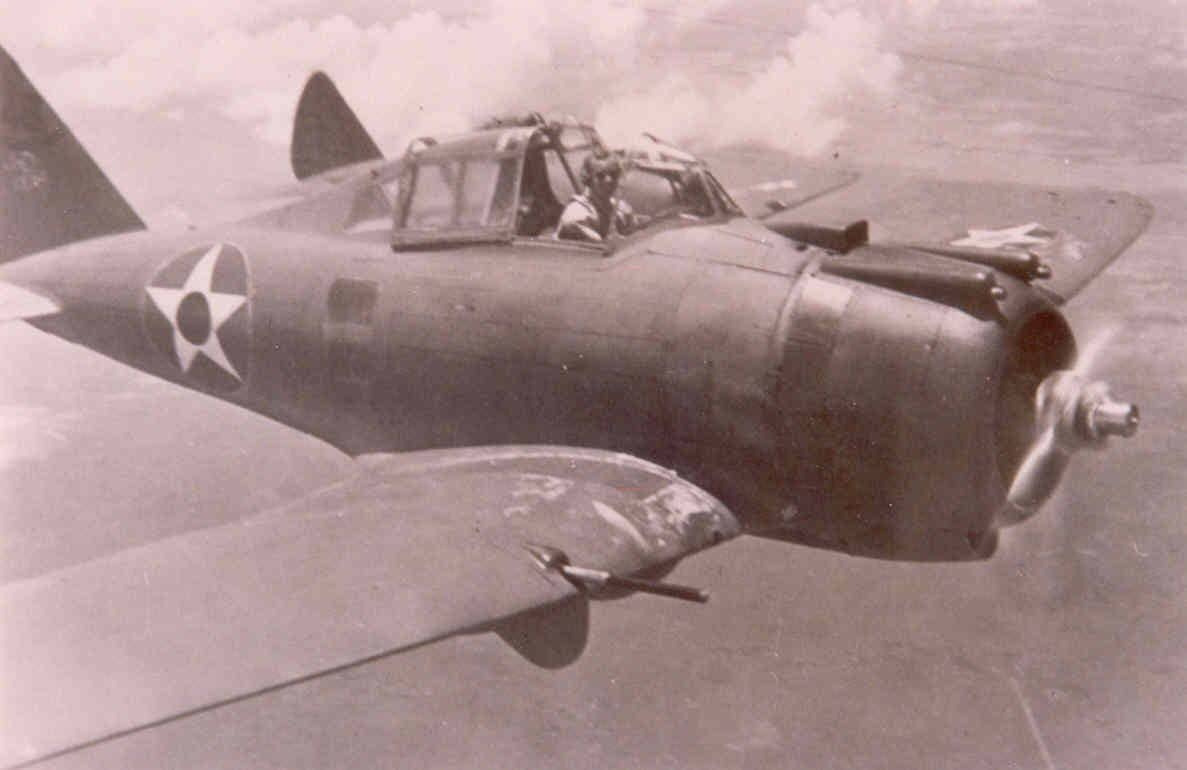
The US War Department issued an order to seize the last 60 aircraft from the Swedish EP-1-106 contract with Republic. Forty-five of these EP-1s were rushed to the Philippine Islands as a stopgap defensive measure. They arrived in the Philippines as if they were still being delivered to Sweden, with the original Swedish national insignia.
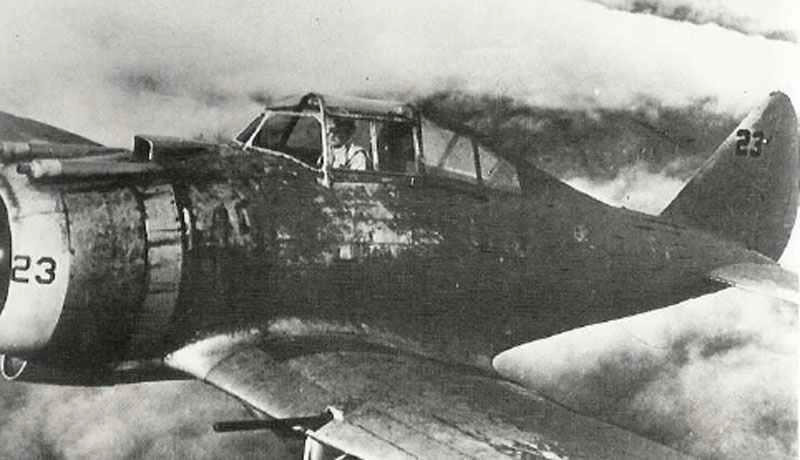
These EP-1 fighters were designated P-35A and repainted in USAAC markings. They were rearmed with two .50-cal machine guns in the wings and two .30-cal machine guns in the upper engine cowling, firing through the propeller arc. They were 30 mph faster than the standard P-35 because they had the more powerful P&W R-1830-45, even with the added weight of the two .50-cal machine guns and their ammunition. The P-35A could be distinguished from the P-35 by the top intake for the R-1830-45 engine and the longer oil cooler intake under the cowl. However, these P-35As retained Swedish instruments and cockpit placards, making them difficult to fly and maintain.
All 45 P-35As arrived in the Philippines and were assigned to the 24th Pursuit Group at Clark Field. These fighters, along with the P-40Bs, P-40Es, and Philippine Air Force P-26s, fought to defend the islands against the Japanese attack on December 8, 1941.
Although they were easy prey for the much faster Japanese fighters in the air, they were credited with downing Japanese Zeros and attacking the invasion fleet, albeit with severe losses, mostly on the ground, during the first day of the Japanese attack. As a result, eight P-35As remained to fight into late December 1941. They strafed the Japanese landings at Lamon Bay and inflicted minor damage. The surviving P-35As were ordered to Bataan Field, but they were shot down as a result of friendly fire after initially being mistaken for Japanese Zeros. Only two P-35As made it to Bataan Field. On January 11, 1942, these two P-35As were ordered to Del Monte. These two aircraft were among the last four US fighters to fly combat missions in the Philippines.
One of the two P-35As flew a rescue mission to an island to pick up two Americans who found themselves surrounded by invading Japanese troops. The P-35A landed near the Americans and squeezed them into the aft fuselage, returning them safely to Del Monte Field.
On April 29, 1942, a captain of the Philippine Air Force flew one of the remaining P-35As, armed with two 100-pound bombs, to attack the invasion force off Macajalar Bay. This attack was repeated on May 2 and May 3. After the May 3 attack, the P-35 landed at a small airstrip where it was hidden. This was the last surviving P-35A in the Philippines.
Of the last 15 P-35As not sent to the Philippines, most were redesignated as RP-35As and assigned to training units in the United States.