- Yes
- No
PzKpfW 7TP 731(p) – Captured Polish 7TP tank in german service
Introduction:
I’d like to present a tank whose suggestion is already posted on the forum, but as a proposal for other nation’s forces. I’d like to present it in its German service version.
History
1. Background:
Poland regained its independence after the end of the Great War. After World War I, it was clear that subsequent wars would be motorized. Experience from the Polish-Soviet War of 1919-1920 demonstrated that tanks should be a key element of maneuver warfare, and the Polish state decided to focus its efforts on well-armed light tanks.
However, the Second Polish Republic lacked a sufficient industrial base or experience in tank design, as evidenced by the unsuccessful prototype of the WB 10 tank. Therefore, the tank had to be sourced from abroad. Poland tested new designs, the Renault M26/27 and NC, but they were unsatisfactory. Walter Christie, however, refused to deliver the ordered tank in 1930. Ultimately, Poland decided to purchase 38 tanks and license of the British Vickers Mark E. The Vickers tanks were to serve as a basis for designing their own construction.[1][2][3]
2. Development:
The State Engineering Works (PZInż-Polskie Zakłady Inżynierii ) developed a design called the Vickers Armstrong Ursus (VAU33). The tank was equipped with a 110 HP Swiss Saurer VBLDb diesel engine, manufactured in Poland under license for this reason the rear part of the tank hull has to be raised. The tank’s frontal armor changed to 17 mm surface-treated plates instead from 13 mm homogeneous armor plates, and the suspension was reinforced. The first 22 units were produced in a twin-turret version just like in original Vickers.[1][2][3][4]
The final configuration was to be a single-turret tank with an anti-tank gun. The prototype was a turret armed with a 37mm Bofors anti-tank gun, which arrived from Sweden in December 1936. The prototype turret had a rear hatch, but was modified to include an upper hatch and a turret niche for an N2/C radio or additional ammunition. The commander had also a reversible observation periscope type 34 G in the hatch. [1]
It’s worth noting that further development of the 7 TP tank was planned. In April 1938, it was experimentally fitted with a new, lighter Sauerer CT1D diesel engine (600 kg instead of 850 kg), and armor was significantly increased. The suspension was reinforced again, and the tracks were widened. However, trials were conducted only with ballast, and the introduction of this modified version was thwarted by the outbreak of World War II. [1]
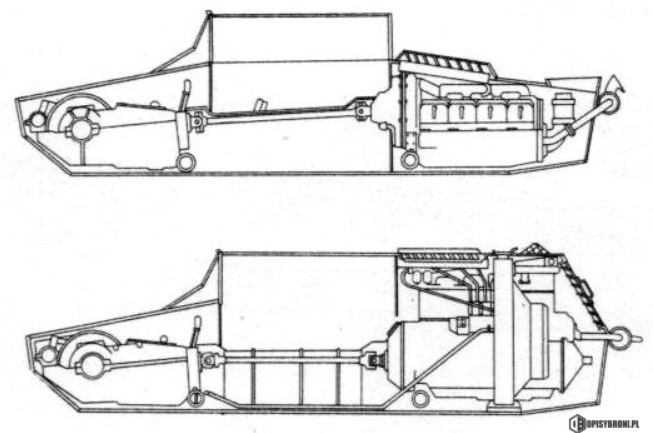
7TP hull at the bottom
3. Service in Polish army:
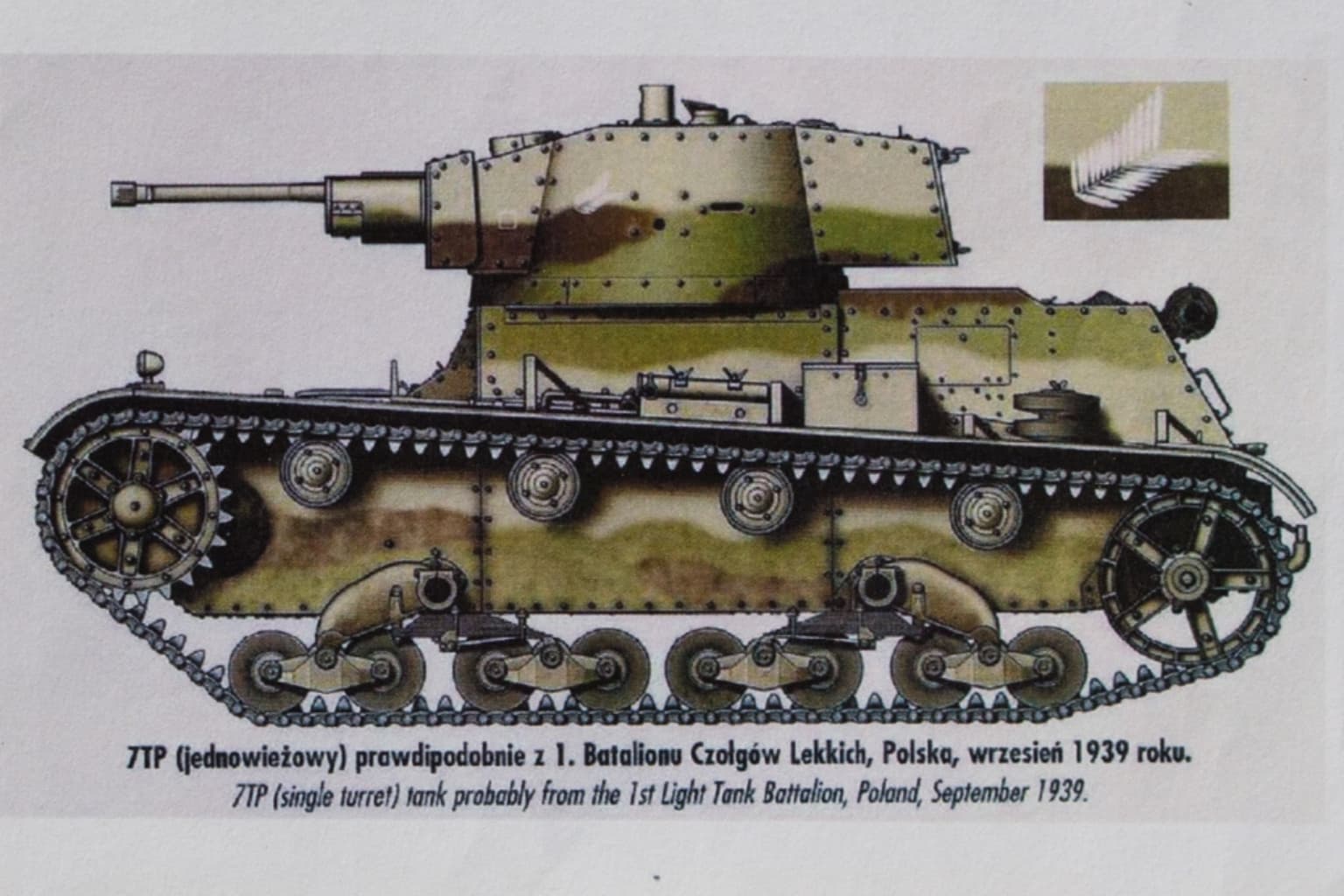
The first major test of the 7th tanks was the Volhynian maneuvers, during which two tank battalions participated. The exercise was intended to test the impact of cavalry combat when combined with air and armor forces. [5] The 7th tp tanks also took part in the operation to capture Zaolzie, but they did not take part in the fighting there. [1][6] Of course, the 7tp tanks participated in combat during the September Campaign. They comprised two light tank battalions and two companies.The 1st Battalion was part of the Prusy Army and fought until September 8th, after which it was dispersed. Half of the unit joined the Lublin Army after September 13th and fought until September 20th, capitulating after the Battle of Tomaszów Lubelski. The 2nd Light Tank Battalion, part of the Łódź Army, fought from September 4th to 17th, when, having lost all its tanks, the surviving soldiers crossed the Romanian border. The 1st and 2nd Light Tank Companies of the Warsaw Defense Command fought from September 8th to 12th. [3] This Tank Regiment’s had greatest success came in 7th September at the defense of Piotrków Trybunalski, during which a total of 23 German tanks and armored cars were destroyed (six tanks and two armored cars during the first engagement). [2]
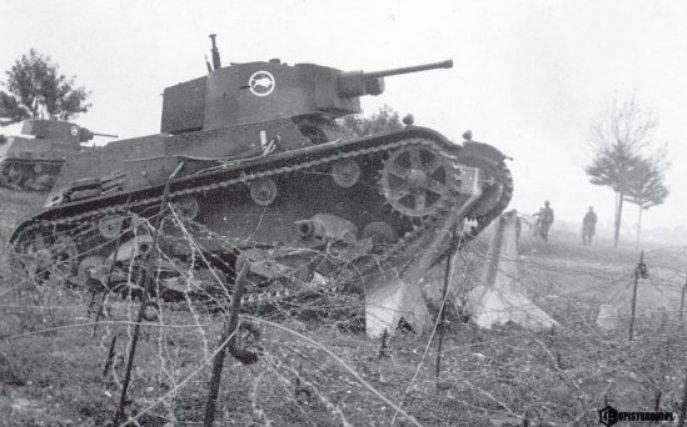
7TP Tank at Zaolzie
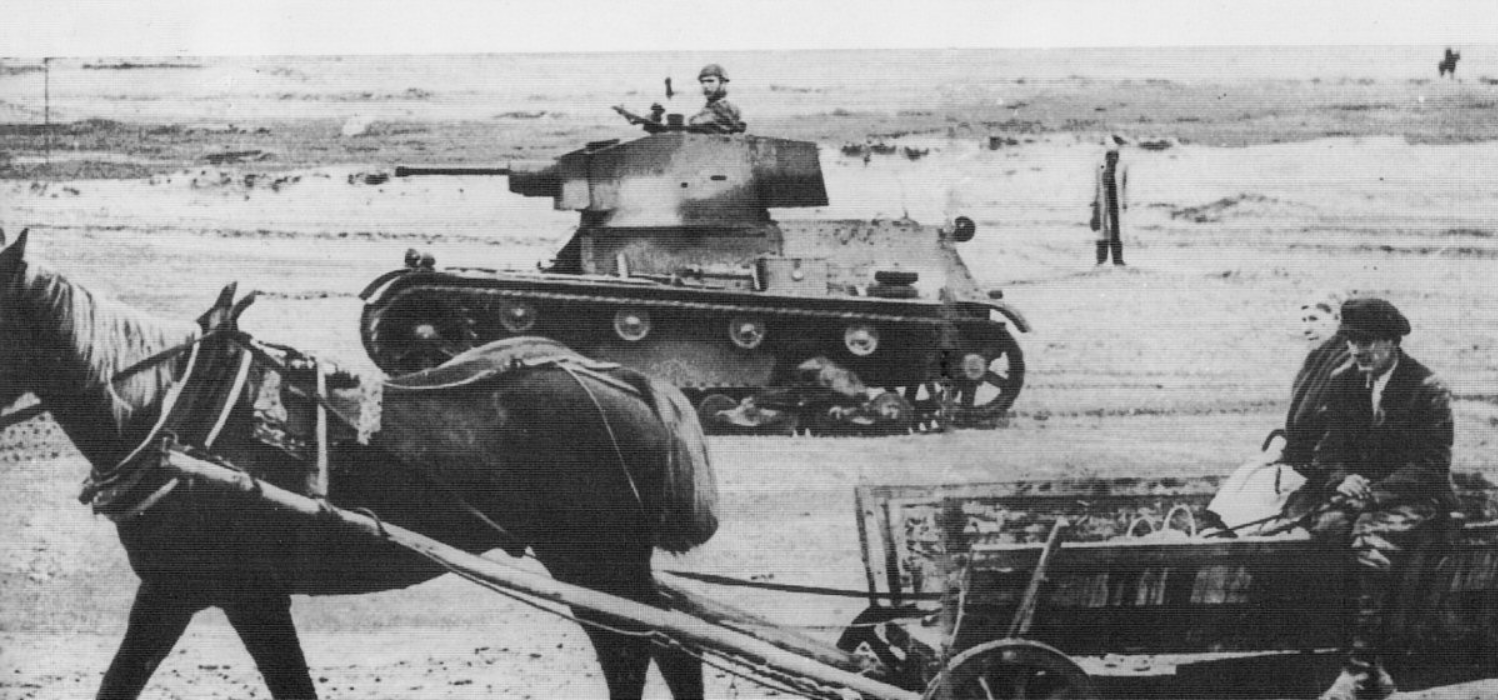
7TP during September Campaign (Invasion of Poland)
4. Service in the German army:
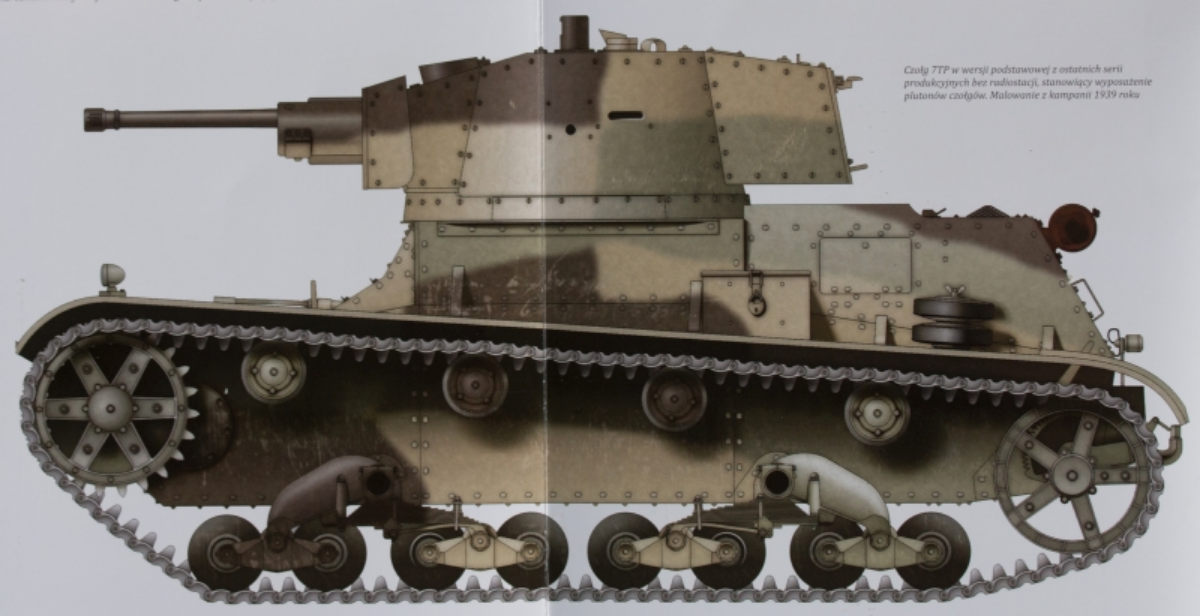
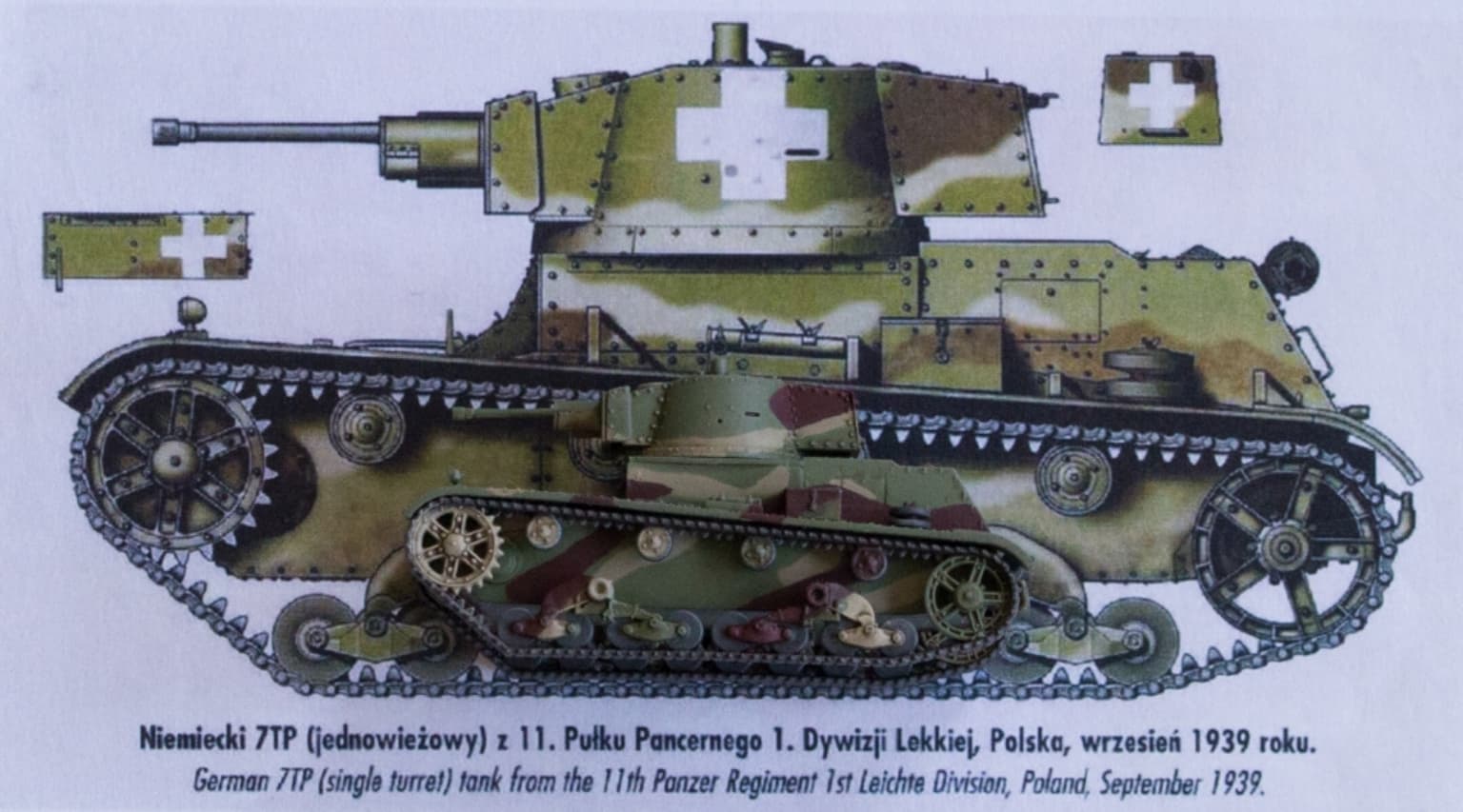
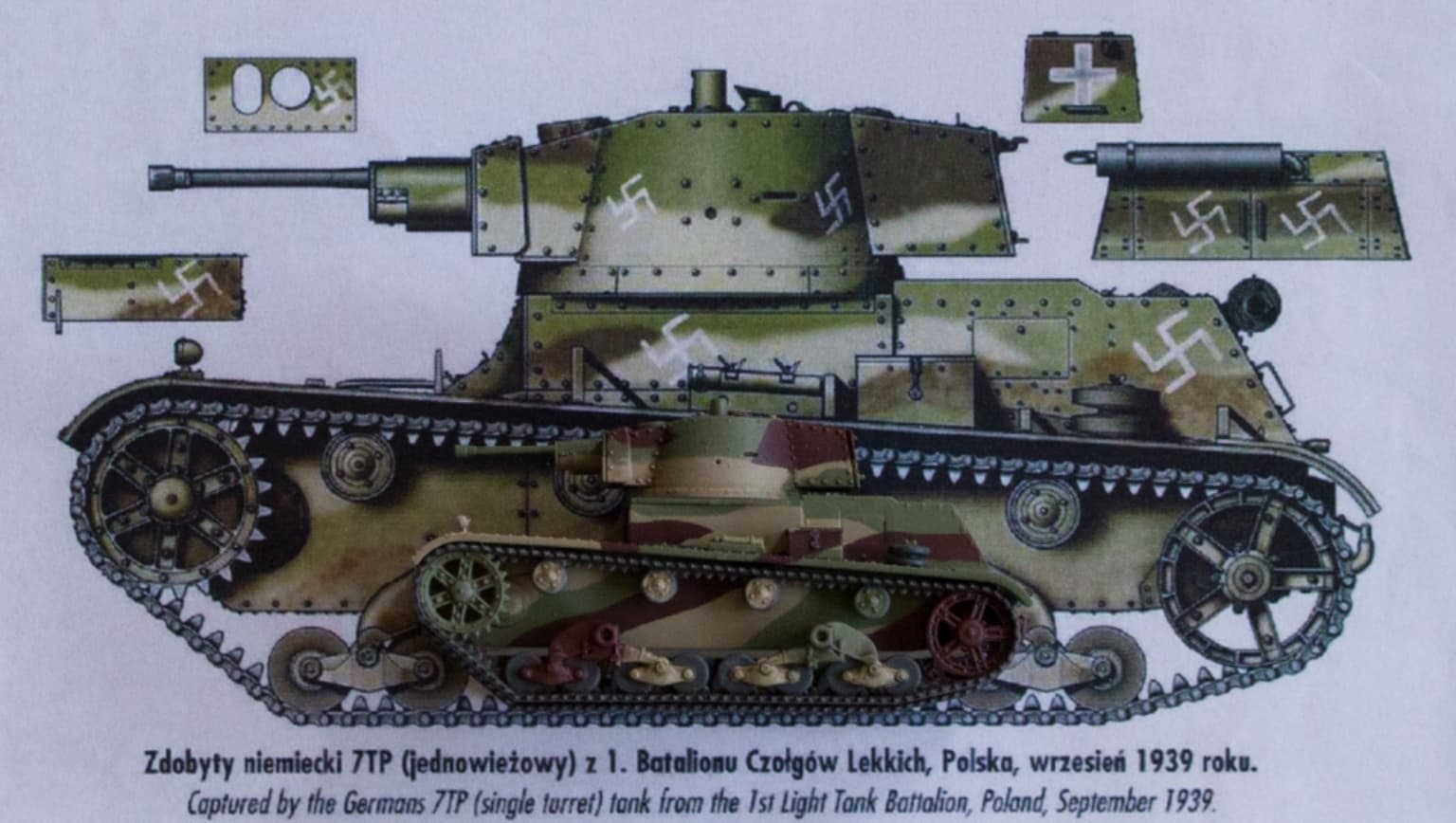
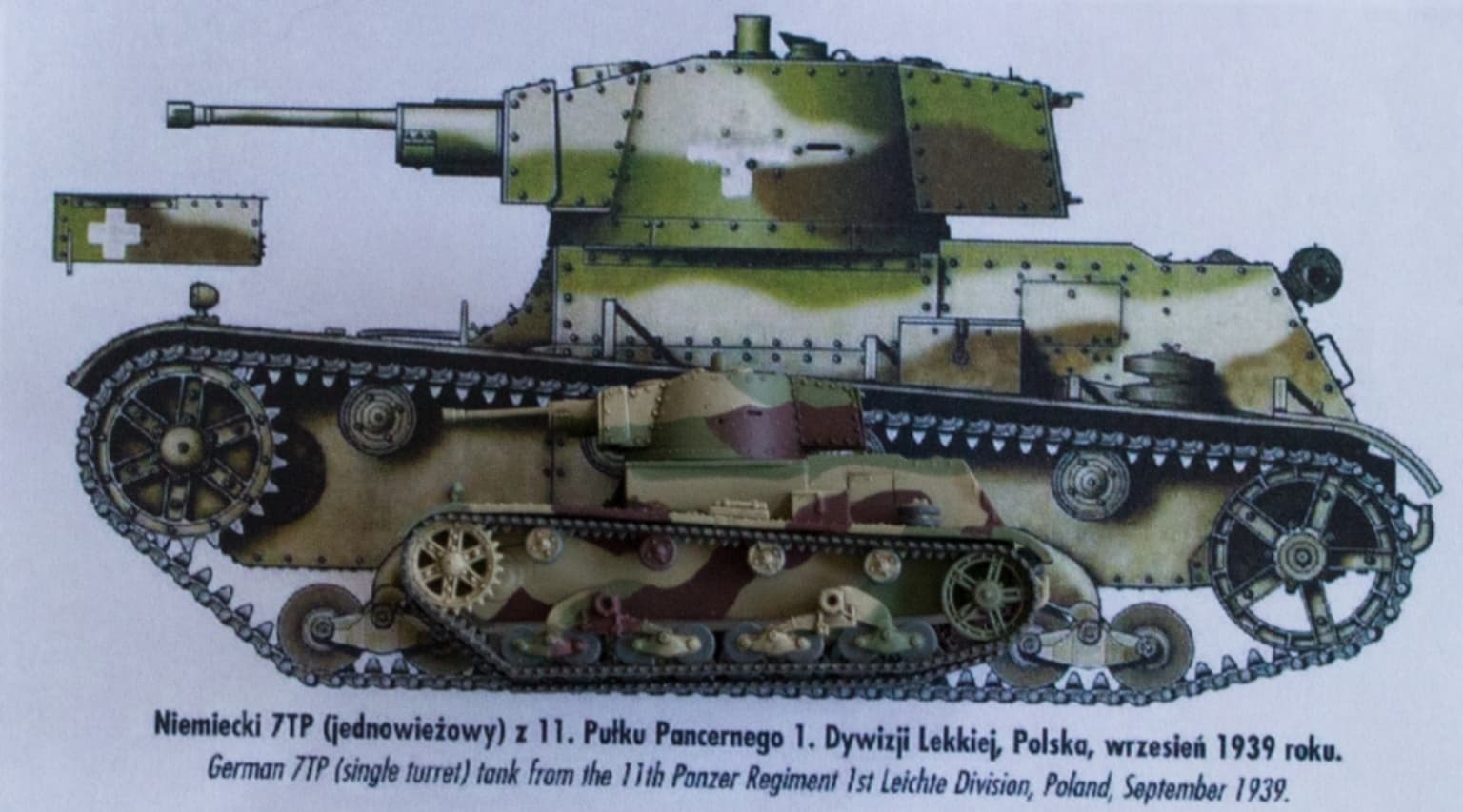
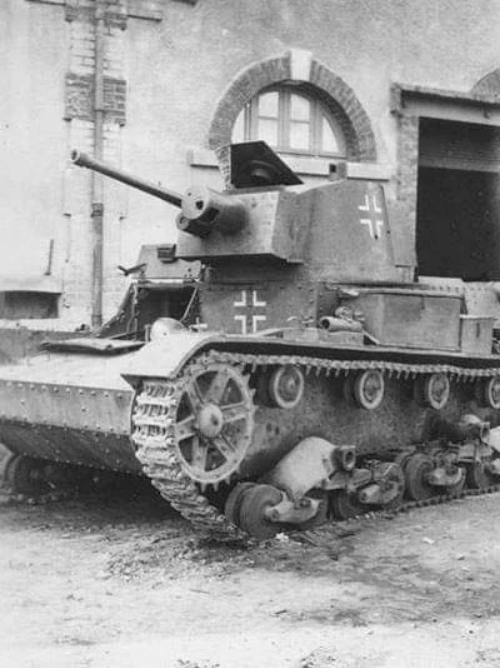
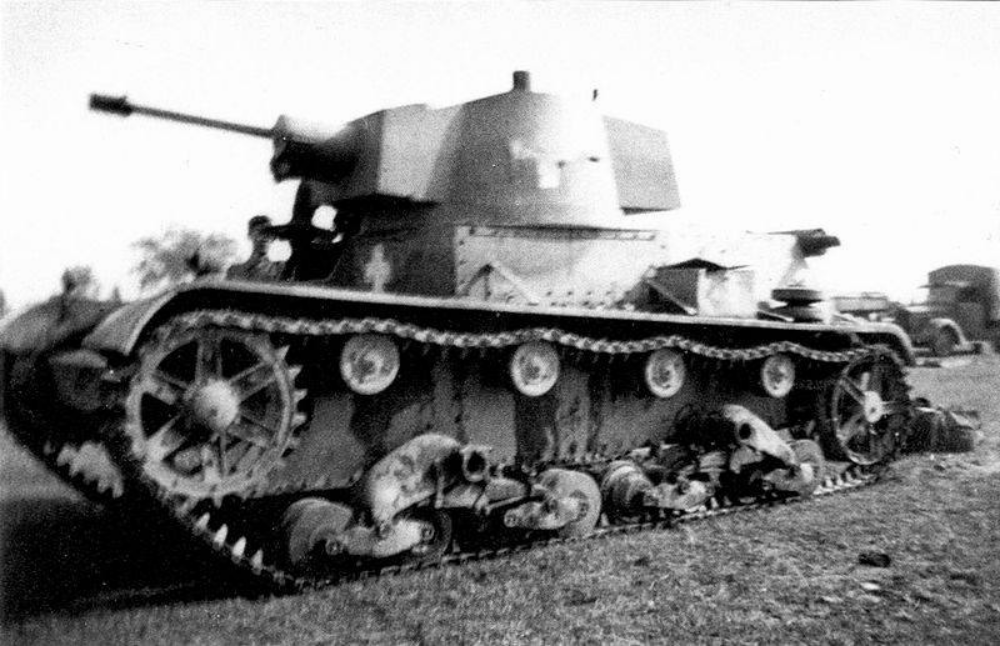
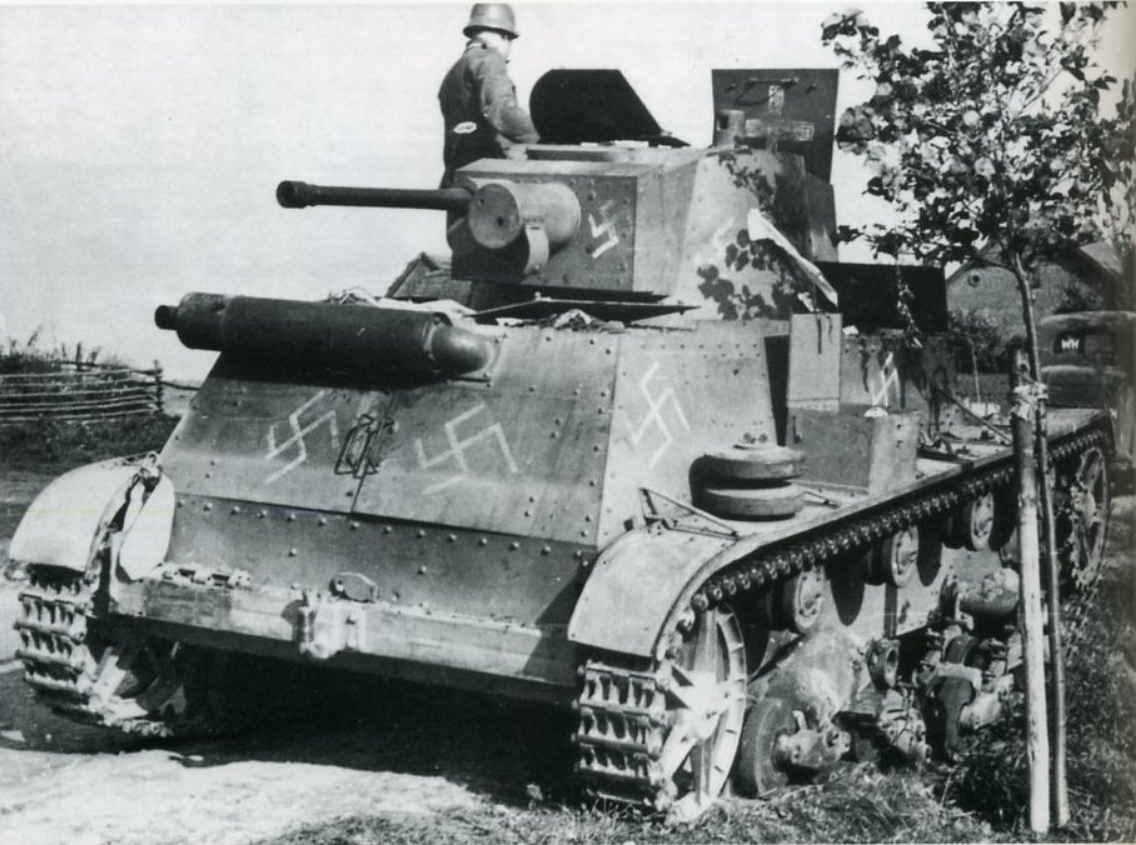
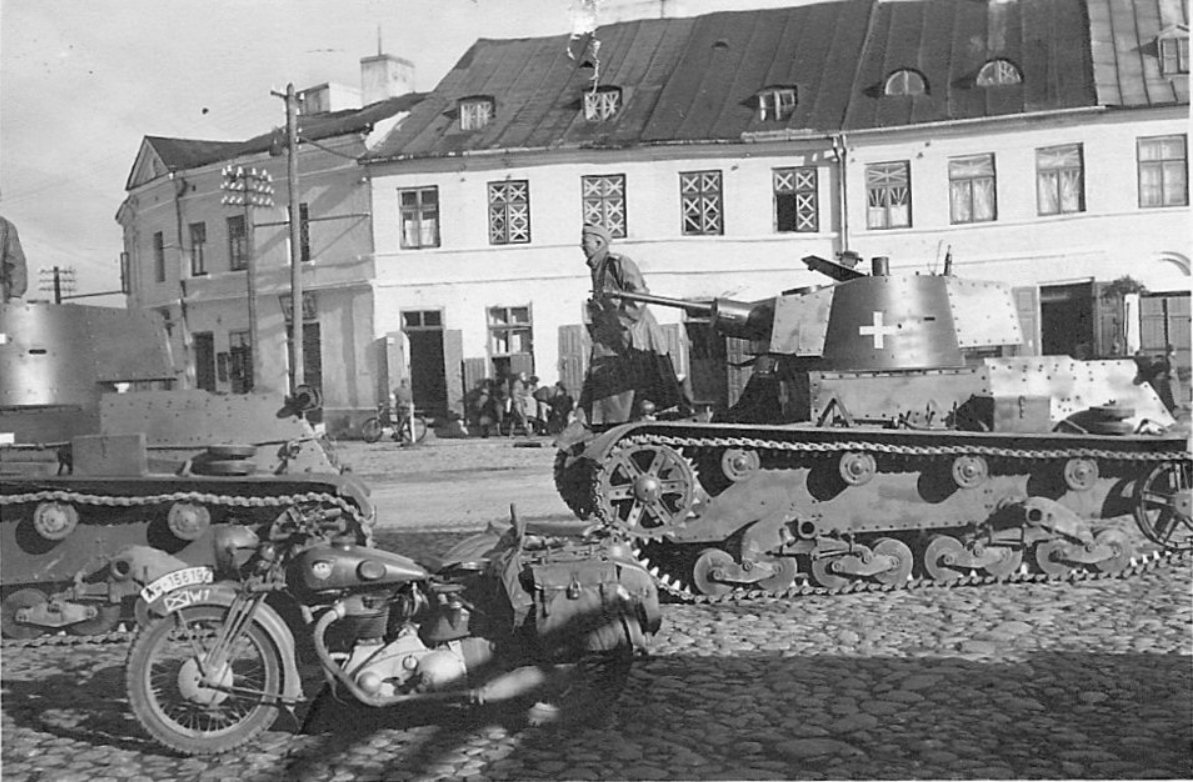
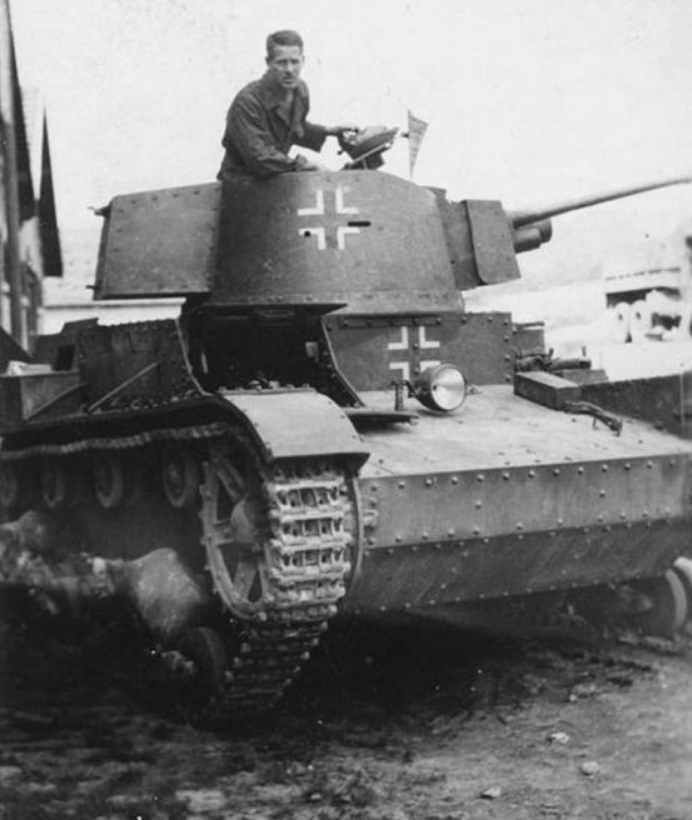
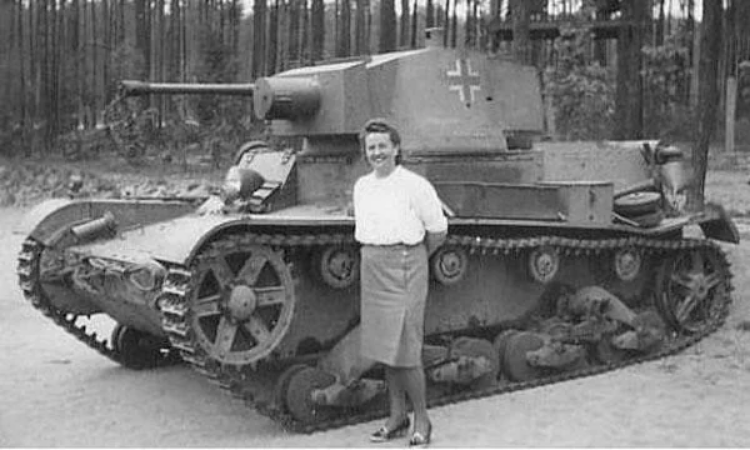
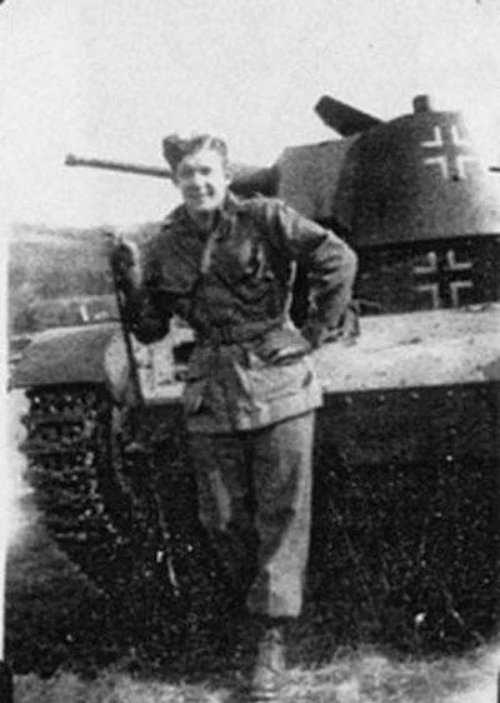
Most of the tanks were destroyedduring the fighting; not a single original unit has survived to this day. 20-21(depening on source) tanks fell into German hands. Initially, the tanks were seen with makeshift German crosses, and later with regular markings. According to Panzer Tracts No. 19-1” by Thomas L. Jentz and Werner Regenberg, some of the captured 7 TPs were already used during the Polish Campaign by the 1st Light Division (2 tanks) and the 1st Panzer Division (3 tanks) as well as the 4th Panzer Division (3 or 6 tanks). Then it were used in anti-partisan operations in Poland (Leichte Panzer Kompanie “Warschau”). After the formation of the Panzerkompanie für das Führer-Begleit-Bataillon on May 12, 1941, it was equipped with 21 PzKpfW 7TP 731(p) tanks, although this seems unlikely due to the fact that on April 5, 1941, H.mot. Offizier reported that 16 tanks of the 7TP were ready for conversion into tractors. This unit, however, was disbanded in June 1941 and the tanks were sent to a depot in Magdeburg. Subsequently, 3 vehicles were known to have been used by the Polizei Panzer Kompanie “Mitte” in Lithuania and Belarus. Captured tanks were discovered in France by the Americans in 1944. [7][8][9] In German service the tank was named Panzerkampfwagen 7TP 731 polnischer, in short PzKpfW 7TP(p), where 731 was the German identification number[7][8][9]
7TP with a makeshift crosses
Vehicle and equipment
1. Armament:
- 37 mm Bofors model 37 tank gun [10][14]
• Elevation and depression: +20/-10[14][18]
• Caliber: 37 mm
• Barrel length: 45 calibers
• Muzzle velcity: 800 m/s
• Rate of fire: 10 shots/minute [16]
- Coaxial heavy machine gun wz. 30 (ckm wz. 30)
• Elevation and depression: +20/-10[14][18]
• Caliber: 7.9x57 Mauser
• Barrel length: 720mm
• Muzzle velcity: 735-845 m/s
• Rate of fire: 600 shots/minute [11]armament and cannon mantlet
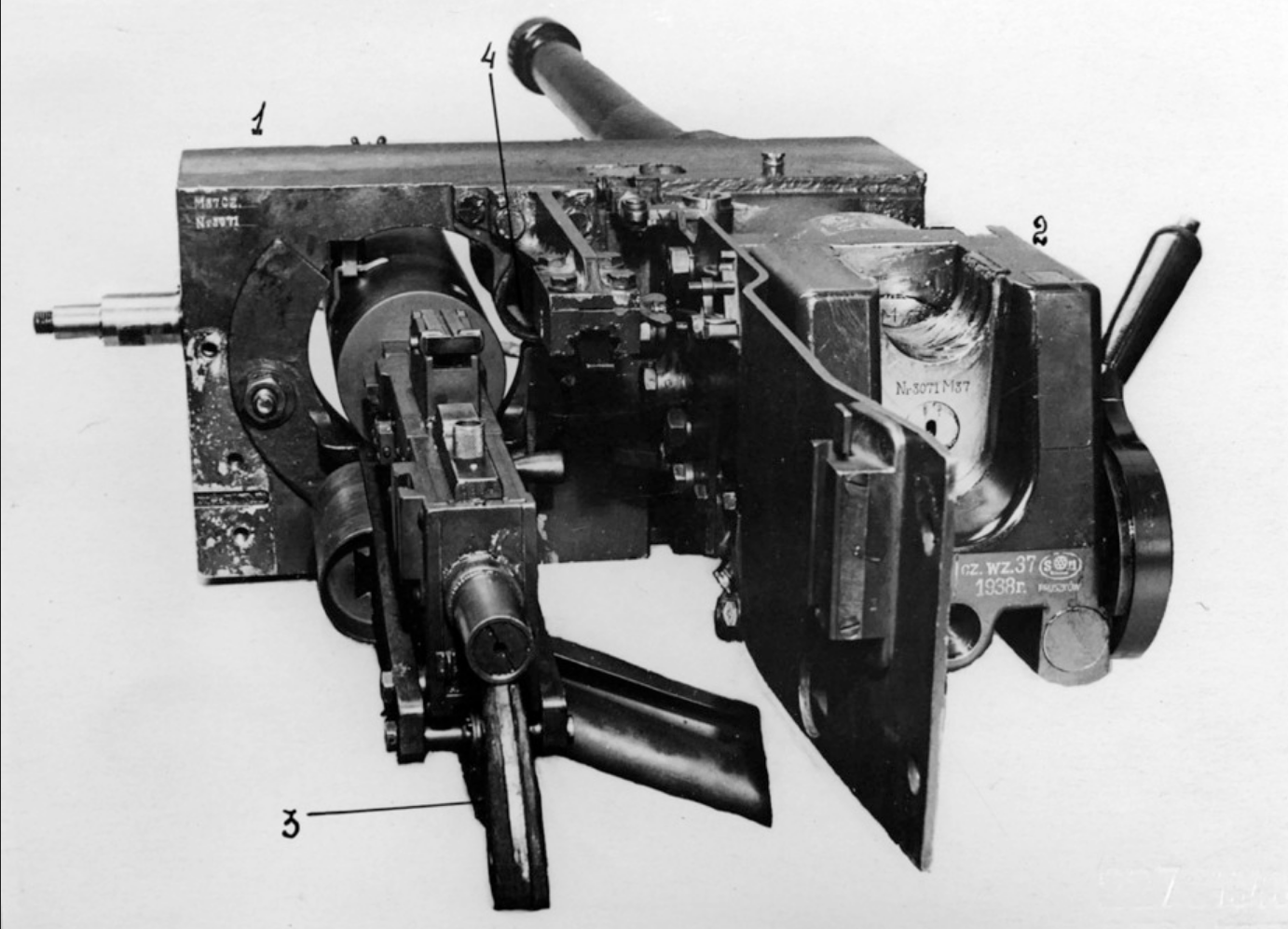
2. Optics:
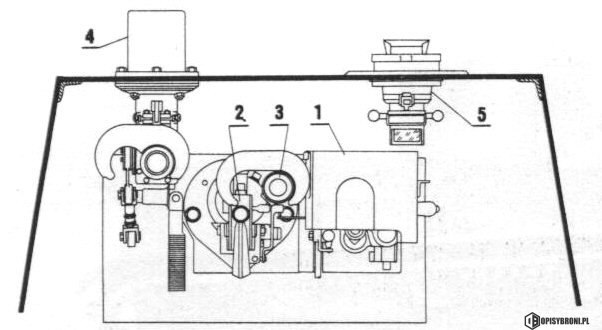
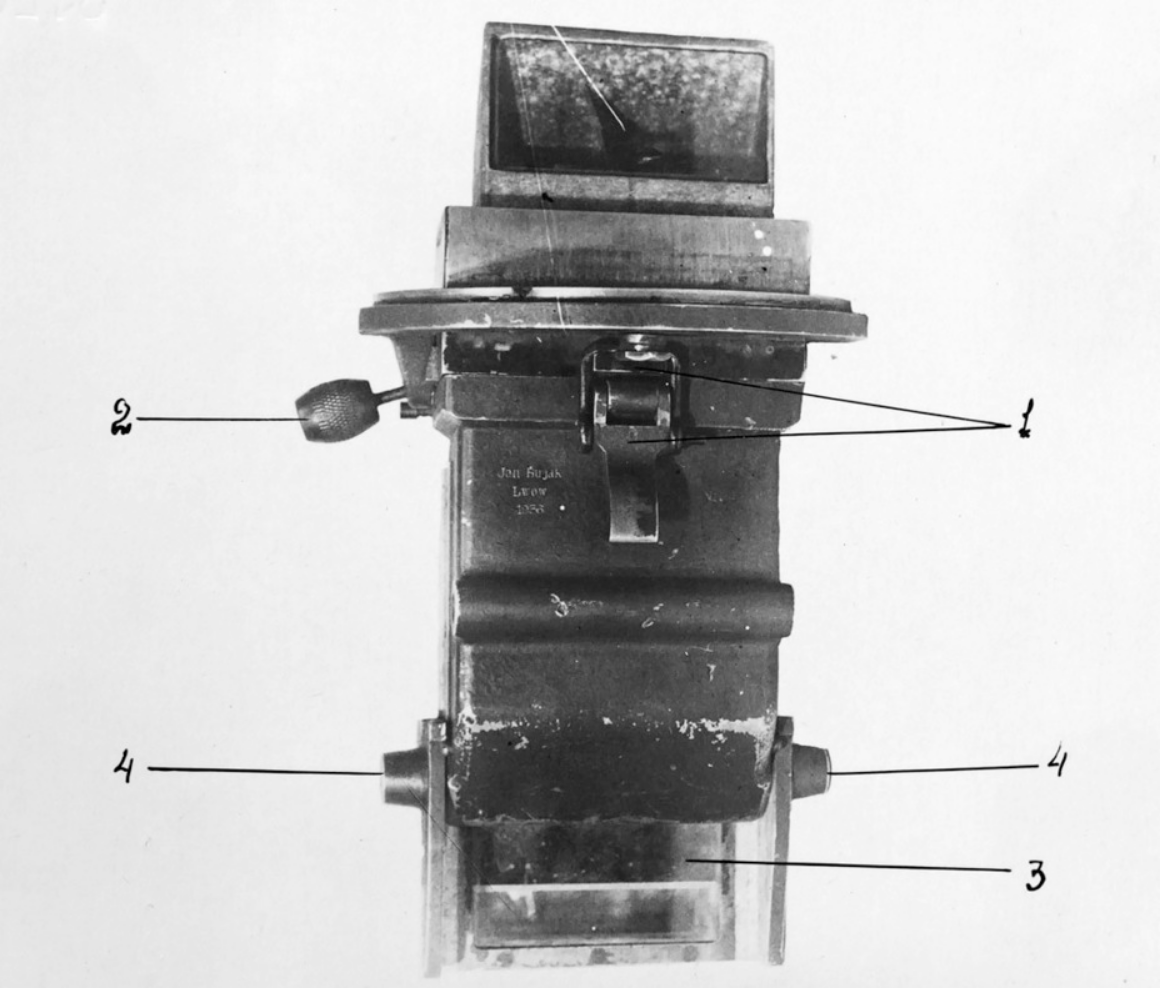
The wz.37 C.A. periscopic sight, with a magnification of 1.2x - had a field of view from -15 degrees to +25 degrees
Gundlach’s reversible periscope for Commander: No magnification – 360 degrees field of view from -15 degrees to +25 degrees [1][13]
optics diagram
commander optics
gunner optics

3. Ammunition:
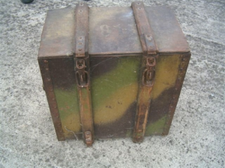
- 80 Shells - 4 rounds on the right front side, 76 rounds on the rack behind the driver’s seat[13]
• APHE
• AP-T
• HE [1][14][15][16]- 12 ammunition belts each containing 330 copies of german ammunition[14]:
• 231– „SC” (sS) – schweres Spitzgeschoß (pointed projectile)
• 33 – „P” (SmK) – Spitzgeschoss mit Kern (AP)
• 66 – „PS” (SmK L’spur) – SmK Leuchtspur (AP-T) [11][12][13]
4. Penetration:
37 mm Bofors AP-T in mm:
*depend on source
[19] [20] [21] [22]37 mm Bofors APHE in mm at 30°:
100m – 39 mm
900m – 30 mmCoaxial heavy machine gun wz. 30 (ckm wz. 30) in mm at 0°:
[23][24][25]


5. Survivability and armour:
Crew: 3 (commander-loader, gunner, driver)
Hull front:
• 17 mm
• (10mm for driver’s hatch)Hull sides:
• 17 mm (front)
• 13 mm (middle)
• 9 mm (rear)Hull top
• 10 mm (front)
• 5 mm (middle and rear)Hull Bottom
• 10 mm (front)
• 5 mm (middle and rear)Hull rear - 9mm
Turret
• All sides and weapons’ mantlet 15 mm
• Roof 8-10 mm
• MG cover 8 mm (sides) / 18 mm (front)
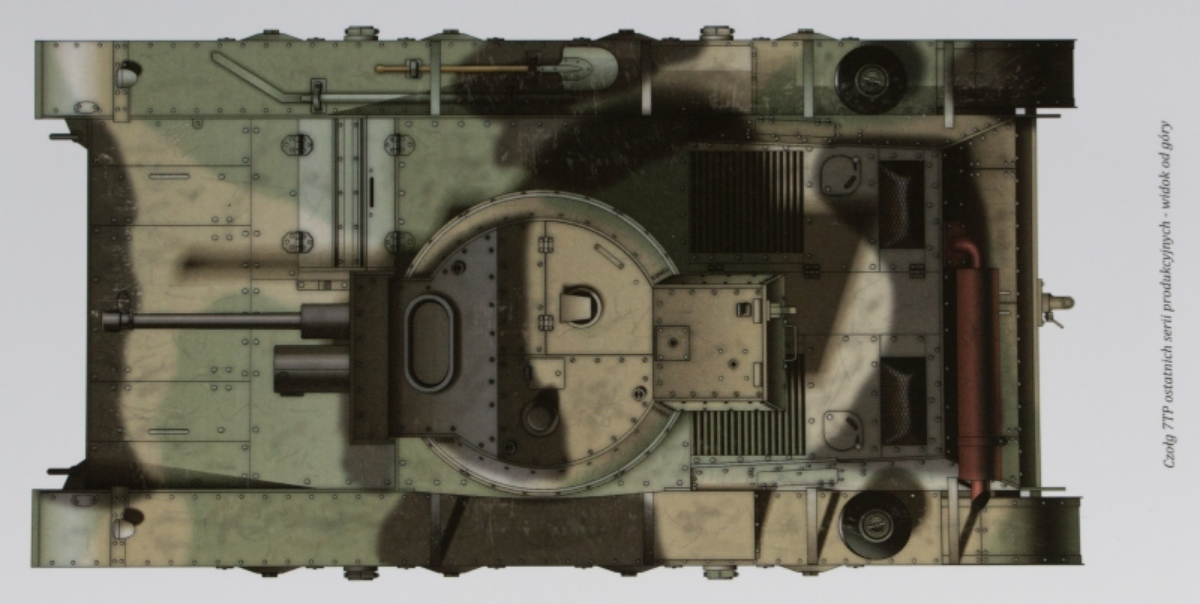
• Gun’s recuperator cover 10 mm [1][28]cutway and diagrams
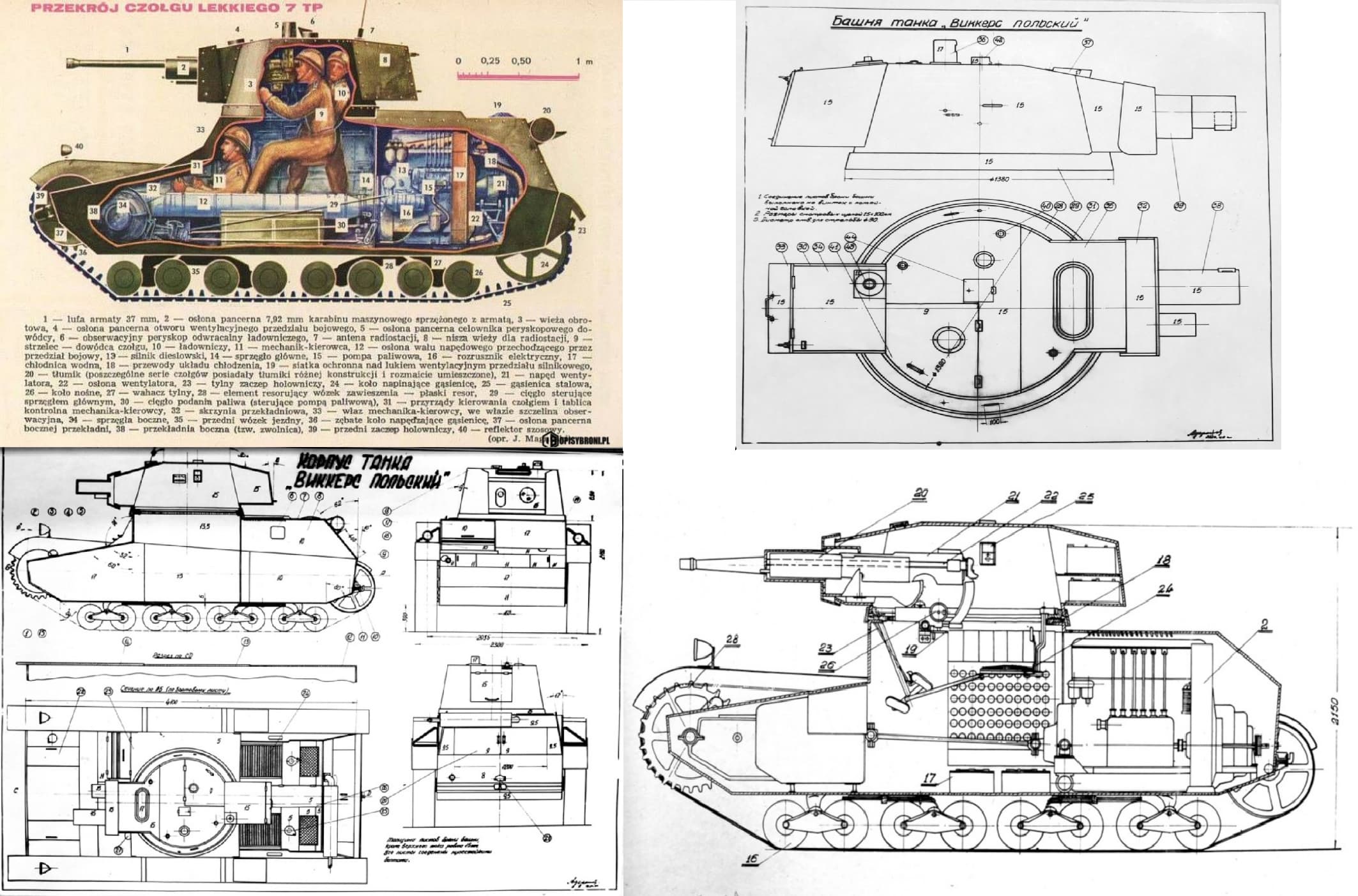
6. Mobility:
Weight: ~9,9t
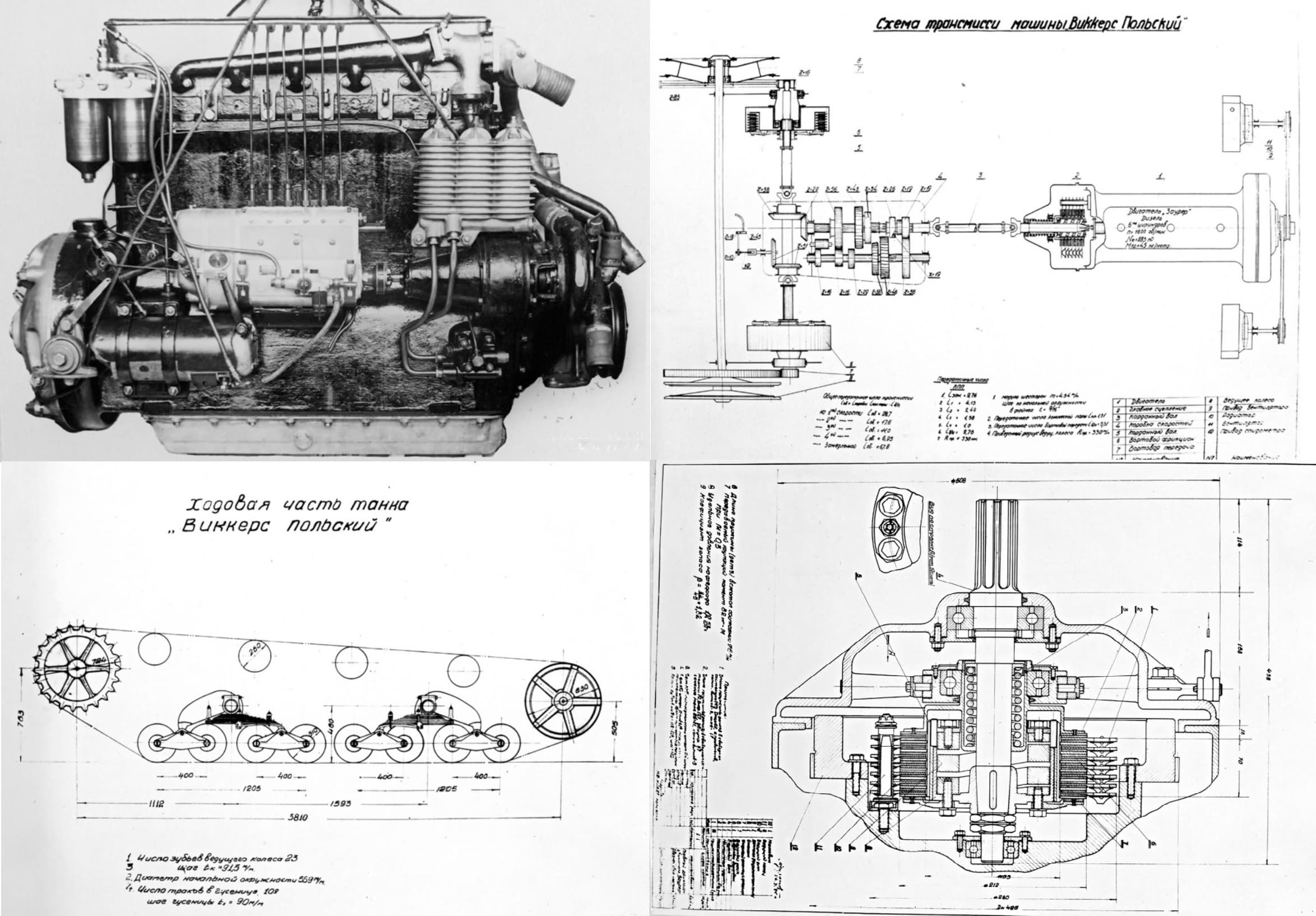
Engine: PZInż. 235 Engine based on Saurer BLDb diesel, 6-cylinder, liquid-cooled, displacement 8550 cm3
Engine power 110 hp (81 kW) at 1800 rpm
Power-to-weight ratio: 11,(1)
Maximum speed: 32/34,7/37 km/h*
Reverse speed:~3,28-3,79 km/h**Length: 4600 mm
Width: 2400 mm
Height: 2150-2281*
Tracks centers’ spacing: 2028 mm
Ground clearance: 376 mm
Tracks ground length: 2700 mm*Depends on source
*Based on calculation from gear ratio and gear speed [1][14][26][27]power transmission
Gallery:


Bibliography:
[1]Polish light tank 7TP - Part I
[2]Tank Archives: 7TP: Polish Vickers
[3] Czołg lekki 7TP - opis i dane techniczne - Kampania Wrześniowa 1939.pl
[4] 7TP – czołg kompromisu
[5] Polska Zbrojna
[6] Zajęcie Zaolzia – kluczowy błąd przedwojennej polskiej dyplomacji?
[7] Polish light tank 7TP - Part II
[8] Wiedereinsatz polnischer 7TP-Panzer - Waffen des Heeres - Forum Geschichte der Wehrmacht *
[9]https://www.reddit.com/r/AskHistorians/comments/1c06tw8/during_ww2_did_the_germans_capture_any_polish/ *
[10]37 mm armata czołgowa wz. 37 Bofors – Wikipedia, wolna encyklopedia
[11] Karabin maszynowy wz. 30 – Wikipedia, wolna encyklopedia
[12] Jednostka ognia | Etaty oddziałów Wojska Polskiego z września 1939 roku
[13] https://opisybroni.pl/7tp/
[14] 7TP – Wikipedia, wolna encyklopedia
[15] Armata przeciwpancerna wz. 36 kal. 37 mm – Muzeum Wojska Polskiego w Warszawie
[16] Armata przeciwpancerna wz. 36 Bofors | Konflikty.pl
[17] Czołg 7TP | Konflikty.pl
[18] https://opisybroni.pl/armata-przeciwpancerna-wz-36-bofors
[19] Bofors 37 mm pansarvärnskanon – Wikipedia
[20] Armata przeciwpancerna wz. 36 kal. 37 mm – Muzeum Wojska Polskiego w Warszawie
[21] Utbildningsplansch -Miliseum / DigitaltMuseum
[22] 37 mm spårljuspansarprojektil m/1938 -Armémuseum / DigitaltMuseum
[23] Full text of "L Dv 4000 10 Munitionsvorschrift Fuer Fliegerbordwaffen Teil 10 1944"
[24] https://zbrojownia.cbw.wp.mil.pl/Content/5252/249715_INW_249715_zz.pdf
[25] https://zbrojownia.cbw.wp.mil.pl/Content/5318/297458_INW_297458.pdf
[26] dws.org.pl • Zobacz temat - rodowód silnika czołgu 7-TP
[27] Tank Archives: Modernization, Polish Style
[28] 7TP - siedmiotonowy polski - czołg wojny obronnej 1939 r.*Including data from Thomas L. Jentz and Werner Regenberg, Panzer Tracts No. 19-1: Beute-Panzerkampfwagen. Czech, Polish, and French Tanks Captured from 1939 to 1940