- Yes
- No
Hello everyone, and welcome to this new suggestion.
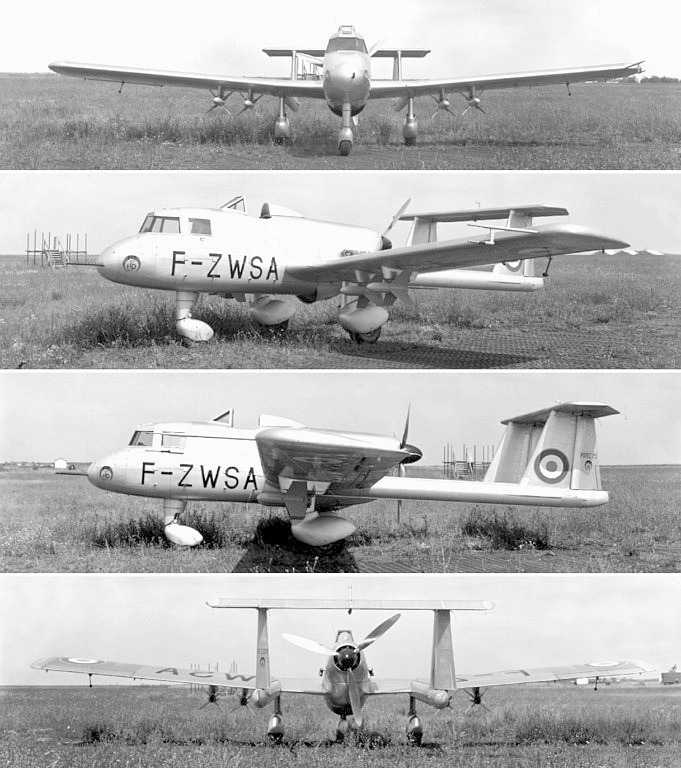
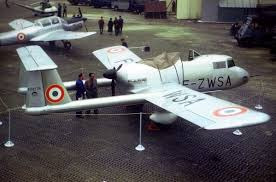
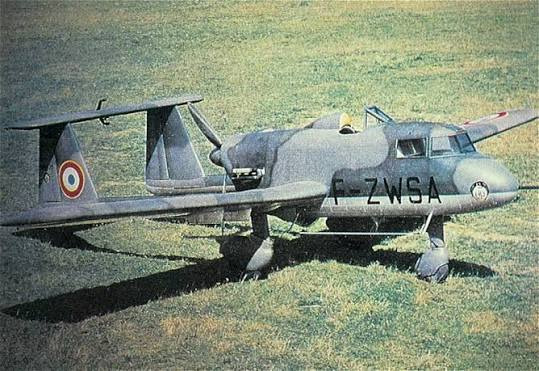
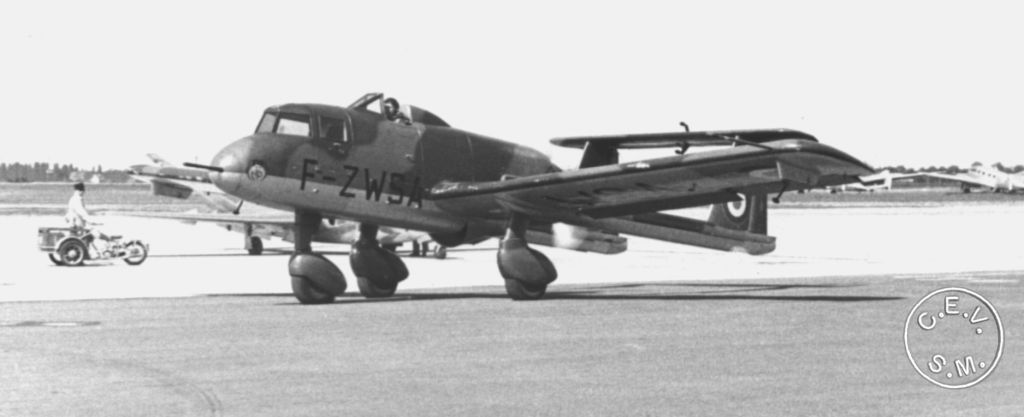
Today, I am presenting a unique French Cold War aircraft: the Potez 75.
In the early years of the Cold War, the French armed forces were rebuilding after the devastation of the Second World War. At the same time, military planners began studying new ways of countering the growing threat posed by armored vehicles. Rather than relying solely on conventional attack aircraft, Potez decided to finance the development of an innovative light battlefield support aircraft using its own resources. The project was intended primarily for the French Army and was designed around one of France’s newest weapons: the Nord AS.10, the country’s first operational wire-guided anti-tank missile. The result was the Potez 75, a highly unconventional aircraft specifically optimized for close air support and anti-tank warfare.
By 1952, the design had been finalized, and construction of the prototype began. The Potez 75 featured one of the most unusual layouts of any French military aircraft of its era. Powered by a rear-mounted pusher engine, it offered the pilot exceptional forward visibility thanks to an elevated cockpit positioned above the fuselage. The observer and weapons operator occupied the forward glazed nose, from where he could guide the AS.10 missiles after launch. Designed to operate alongside ground forces, the aircraft incorporated rugged fixed landing gear that allowed it to take off from rough, unprepared airstrips close to the front line. In addition to its missile armament, the aircraft could carry machine guns, rockets, or light bombs.
The prototype completed its maiden flight in 1953 and quickly entered an extensive test program. Throughout its evaluation, the Potez 75 demonstrated excellent low-speed handling, outstanding visibility, and the ability to operate from extremely short and improvised runways. Its innovative design attracted considerable attention, and the aircraft was publicly displayed at the Paris Air Show.
As testing progressed, the aircraft underwent numerous trials to validate both its weapons systems and its operational concept. The possibility of deploying it to Indochina was seriously considered during the final stages of the conflict, although this never materialized before the war ended. Instead, the Potez 75 was later sent to Algeria, where it was evaluated under operational conditions by both the French Army and the Air Force. These trials confirmed many of the aircraft’s strengths, particularly its ability to operate close to frontline troops and attack armored targets with precision-guided missiles.
Despite its promising performance, the project ultimately fell victim to changing military priorities. By the late 1950s, helicopters were increasingly viewed as the future of battlefield anti-tank warfare, offering greater flexibility and the ability to hover while guiding missiles. Budget constraints further reduced interest in introducing an entirely new fixed-wing aircraft for such a specialized role. Upon returning from Algeria in 1958, the Potez 75 program was cancelled before production could begin. The sole prototype was transferred to the French Army Light Aviation (ALAT), where it briefly served as a liaison aircraft before being lost in an accident, bringing the program to a definitive end.
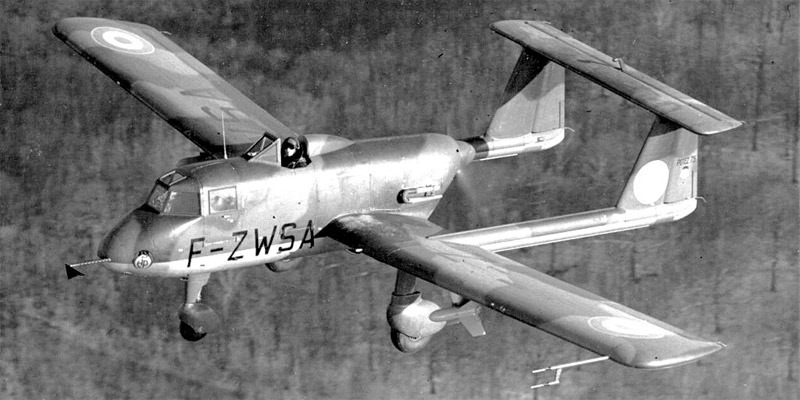
Characteristics
Length : 9.16 m
Width : 13.10 m
Height : 2.75 m
Mass :
- Empty : 1 780 kg
- Max : 2 865 kg
The aircraft is powered by a Potez-designed engine, the 450 hp Potez 8D-2, enabling it to reach a top speed of 275 km/h and a service ceiling of 8,600 m. It has a range of 780 km at a cruising speed of 234 km/h. The engine was later replaced with the 520 cv Potez 8D-32 engine.
The crew consists of two people: a pilot positioned atop the aircraft and a weapons operator in the nose who controls all the aircraft’s armament (the pilot cannot fire from his position).
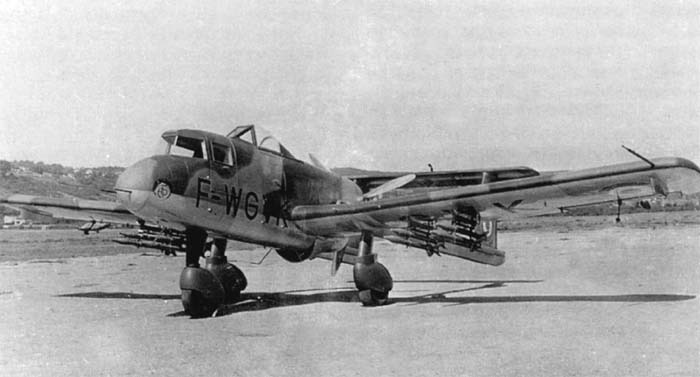
Weapons
The aircraft’s armament is particularly comprehensive, allowing for the effective engagement of all types of ground targets. It features the following weapons:
Primary armament: (choice of one)
- 1 x 12.7mm Browning machine gun
- 4 x 7.5mm MAC 34 machine guns
Secondary armament: (4 hardpoints)
- 4 x AS-10 anti-tank missiles
- 8 x T.10 rockets
- 28 x SNEB rockets
- 8 x 50kg bombs
In-game, this aircraft would be an interesting addition, providing the French tree with a low-BR ground-attack aircraft capable of firing AS-10 missiles; this makes it unique and helps round out the tech tree.