- Yes
- No
- (independent) BeNeLux tree
- France: BeNeLux subtree
- other (please comment how you would like to see this)
- no/negative
History
History
The Pandur II 3030 emerged from a collaboration between two major Belgian defence companies, John Cockerill Defense (formerly CMI) and Thales Belgium (formerly Forges de Zeebrugge - FZ), combining their respective expertise to demonstrate a new weapon system for highly mobile armoured vehicles. The project brought together John Cockerill Defense’s experience in turrets, medium-calibre weapons and armoured vehicles with Thales Belgium’s expertise in 70 mm unguided and laser-guided rockets.
Rather than being developed as a production vehicle for the Belgian Armed Forces, the Pandur II 3030 served as an industrial technology demonstrator. It demonstrated how a Cockerill 3030 turret could be combined with Thales Belgium’s 70 mm rocket technology to create a vehicle capable of engaging targets with both a medium-calibre cannon and longer-range rockets. Thales Belgium describes the project as the companies “combining their skills and product portfolio” for the first firing tests of the mixed system.
FZ275 LGR : Semi-Active Laser (SAL) Guided RocketThe project formed part of the broader Belgian defence-industrial ecosystem, in which the Belgian state and its armed forces have supported the development and retention of domestic defence capabilities. The collaboration was therefore significant not only as a weapons-system experiment, but also as an example of Belgian industry combining nationally established expertise into a new land-based weapons concept.
Development of the Mixed Weapon System
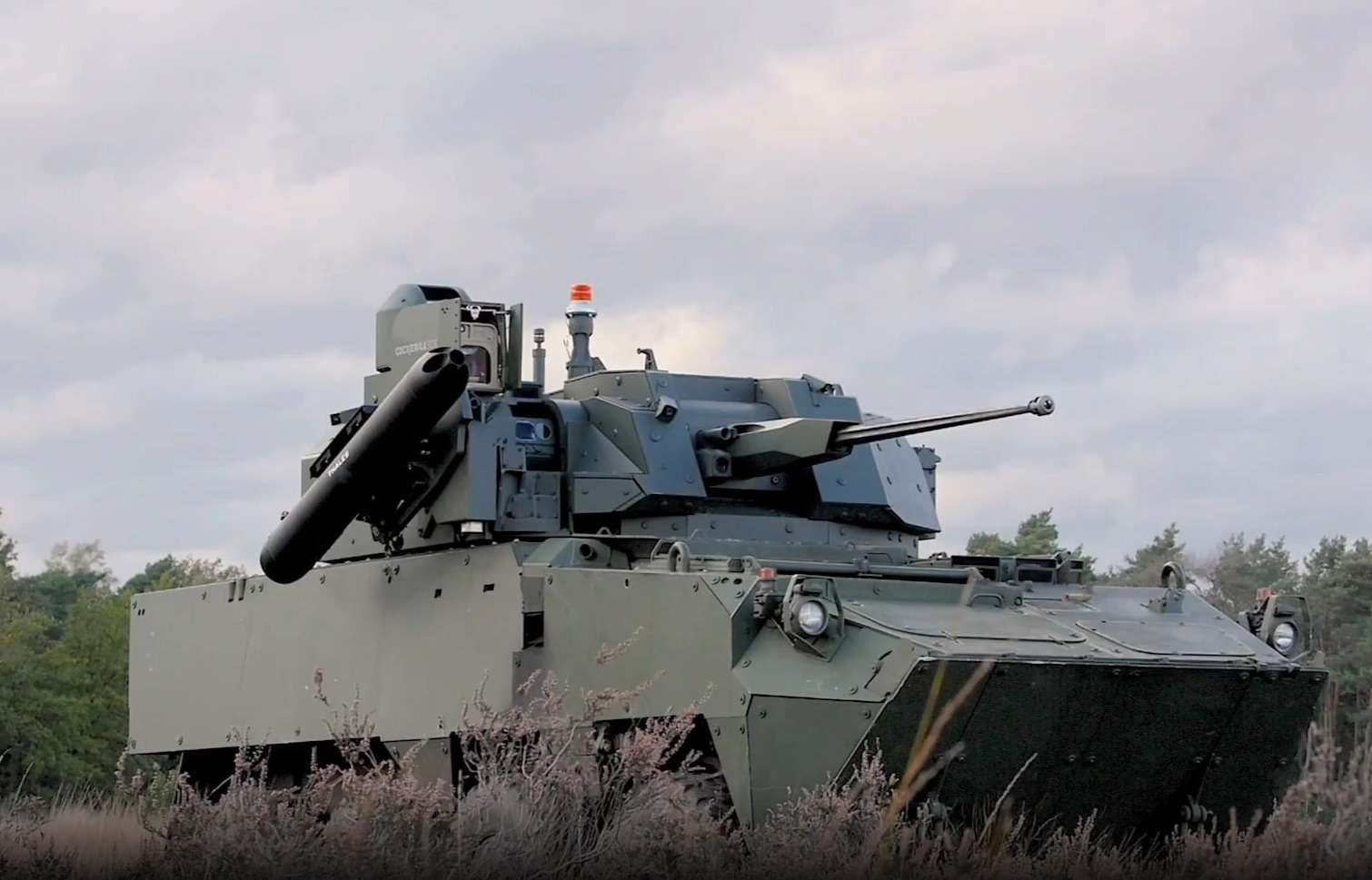
The core of the project was the integration of the Cockerill 3030 turret with a Thales Belgium 70 mm rocket launcher. John Cockerill Defense provided the turret and its medium-calibre weapon system, while Thales Belgium contributed its established 2.75-inch rocket technology and associated launcher technology.
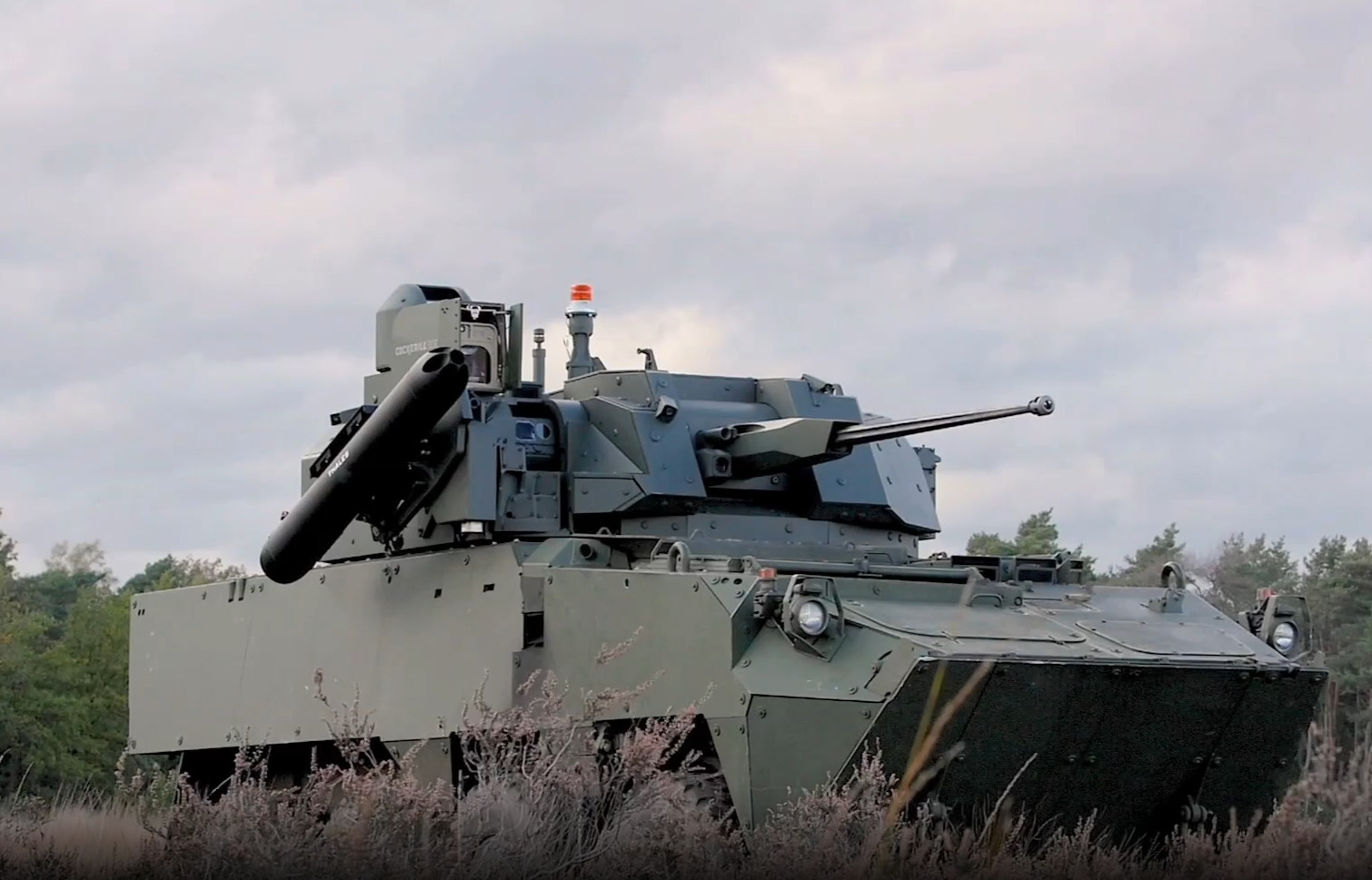
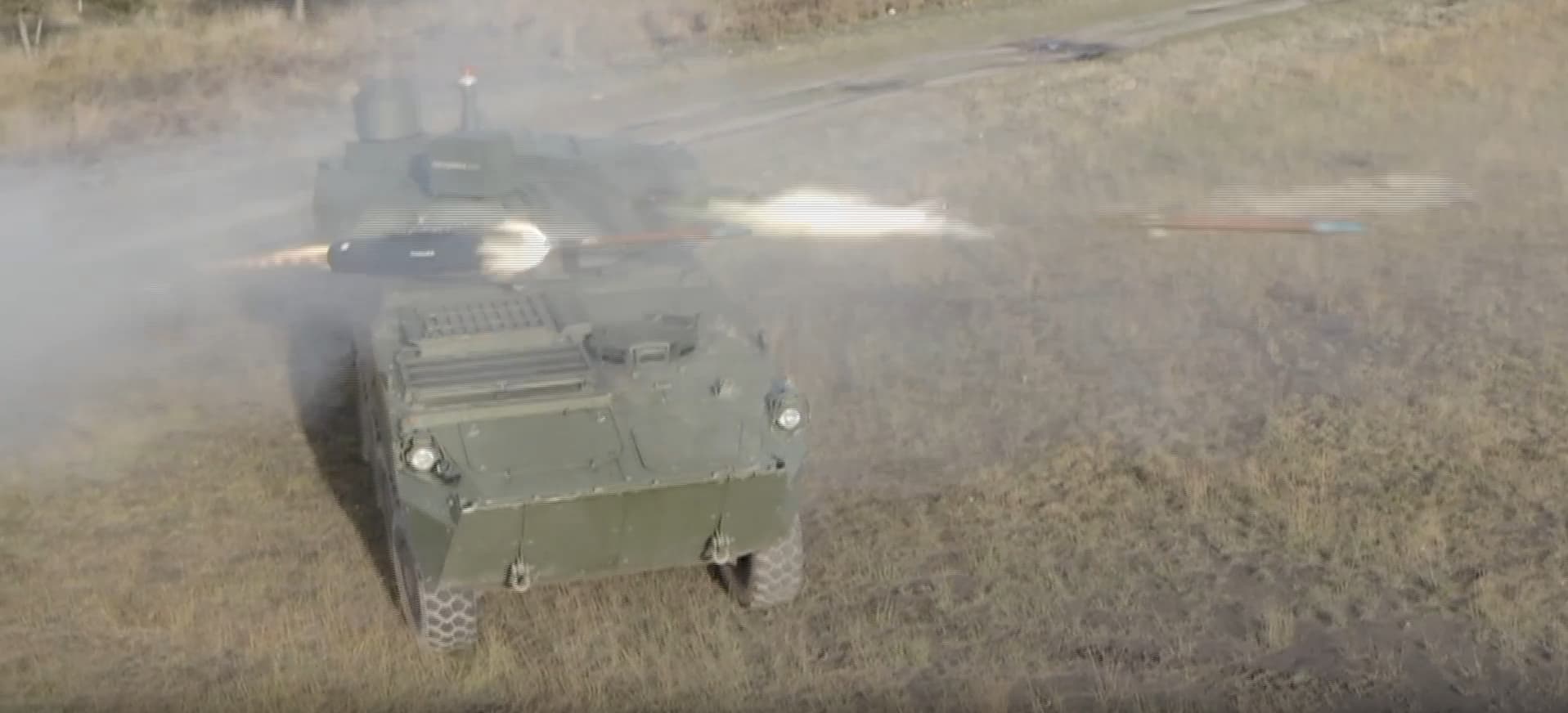
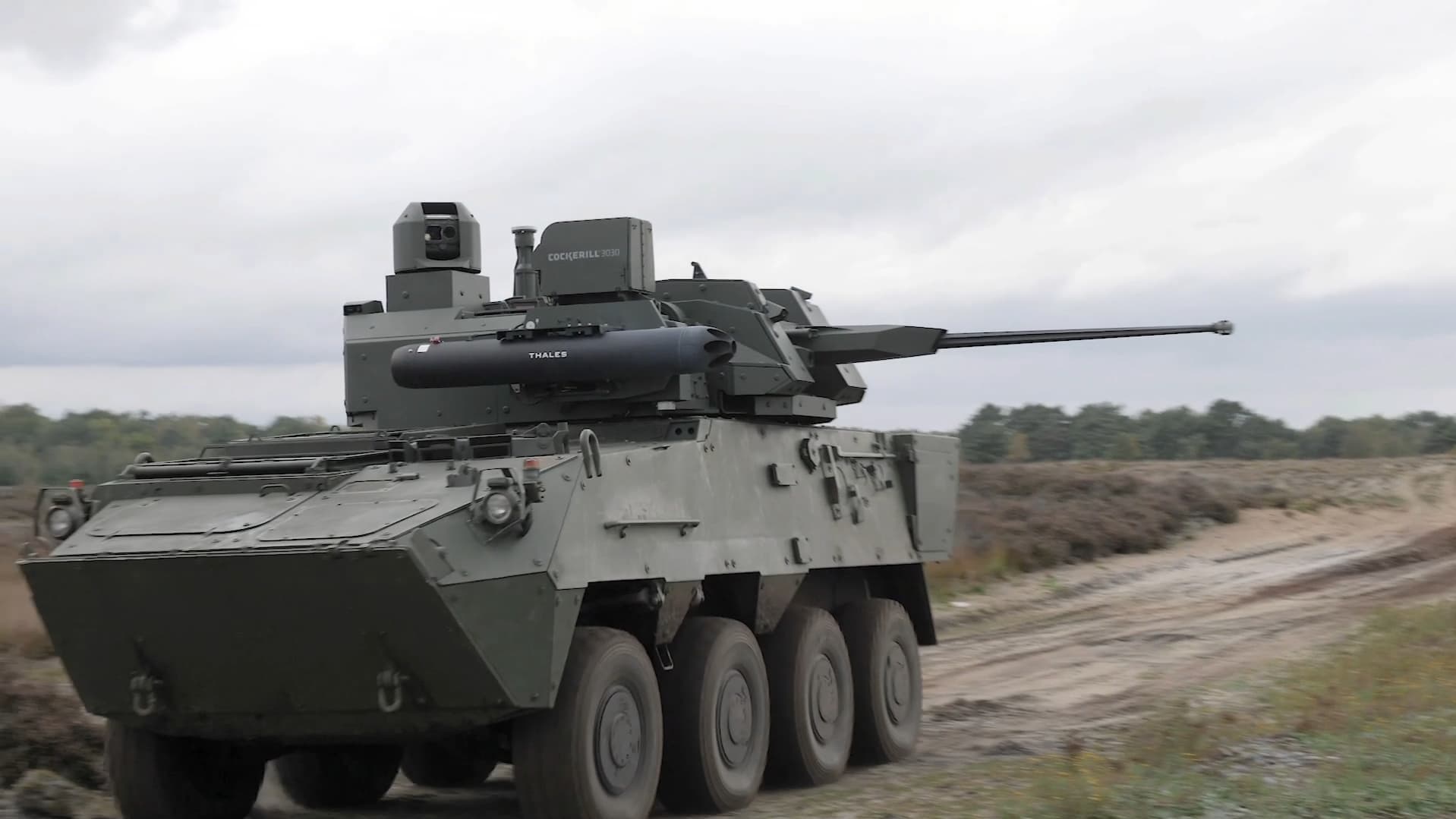
The integration was completed in less than six months, after which the prototype underwent its first firing campaign. The trials took place at the Pampa firing range in Helchteren, Belgium, in October 2020. The resulting configuration combined the 30 mm cannon of the Cockerill 3030 with a seven-tube 70 mm rocket launcher mounted alongside the turret. Thales subsequently presented the system publicly in January 2021.
The concept was particularly notable because the two weapon systems complemented rather than replaced one another. The 30 mm cannon provided a conventional direct-fire capability against vehicles and other battlefield targets, while the 70 mm rocket system offered the possibility of engaging targets at considerably greater distances, including through the use of the FZ275 LGR semi-active laser-guided rocket.
Cockerill 3030
The Cockerill 3030 was developed by John Cockerill Defense as part of its modular Cockerill 3000 family of weapon systems. The turret was designed for installation on a range of wheeled and tracked armoured vehicles, allowing different vehicle platforms to receive a common medium-calibre weapon system.
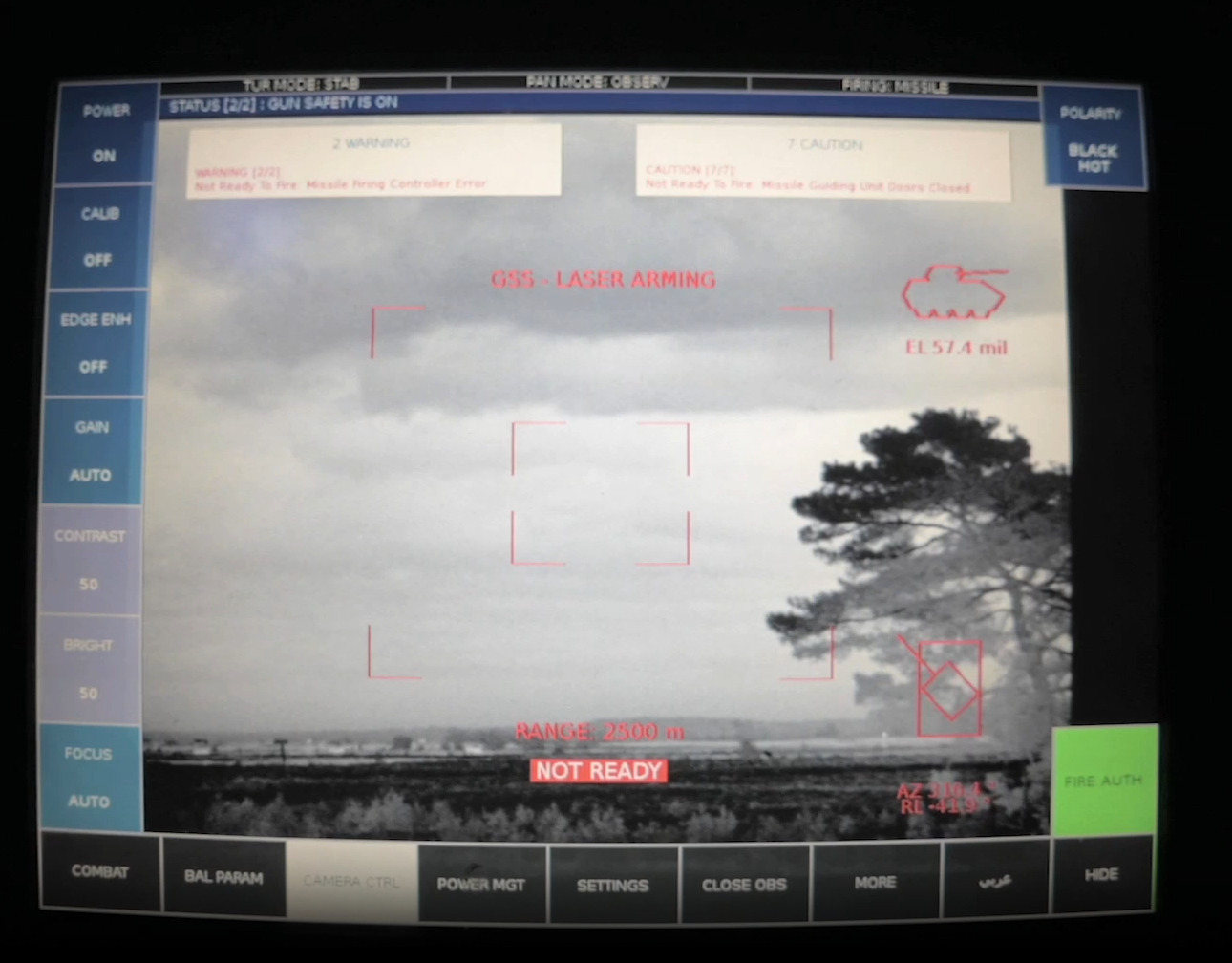
For the demonstrator, the turret was equipped with a 30 mm Mk44 Bushmaster II cannon. The system provides a substantial ammunition capacity and is supported by stabilized day/night sights, hunter-killer functionality and a laser rangefinder. These characteristics allowed the 3000 turret to operate as a modern independent weapon station while remaining suitable for integration onto relatively light and highly mobile platforms.
Thales Belgium 70 mm Rocket System
The second major component of the project was supplied by Thales Belgium, whose Belgian Vehicle and Tactical Systems business had extensive experience with 70 mm (2.75-inch) rocket technology. The company’s 70 mm product family included both conventional unguided rockets and the FZ275 LGR semi-active laser-guided rocket.
For the Cockerill 3030 demonstrator, this technology was integrated into a seven-tube rocket launcher mounted alongside the turret. The launcher provided seven immediately available 70 mm rockets while retaining the 30 mm cannon as the turret’s primary direct-fire weapon.
The system was designed with the potential to employ the FZ275 LGR, giving the vehicle a precision-strike capability beyond that of conventional unguided rockets. The FZ275 LGR uses semi-active laser guidance and can be employed against stationary or moving targets. Thales Belgium specifies a range of approximately 1.5–7 km and a CEP of less than 1 m at 6 km.
Ripple fireA Belgian Defence-Industry Demonstrator
The Pandur II 3030 is therefore best understood as a Belgian defence-industry technology demonstrator, rather than as a vehicle that entered Belgian military service. Its importance lies in the cooperation between John Cockerill Defense and Thales Belgium, which brought together two complementary areas of Belgian weapons technology in a single land-based system.
The project demonstrated a distinctly different approach to increasing the firepower of a wheeled armoured vehicle. Instead of replacing the medium-calibre cannon with a larger gun, the Belgian companies supplemented it with a separate rocket system. This allowed the vehicle to retain the flexibility and ammunition capacity of the 30 mm cannon while adding a longer-range rocket capability.
The trials at Helchteren in 2020 consequently represented more than a demonstration of the Cockerill 3030 turret or the Thales 70 mm rocket family individually. They demonstrated the integration of both Belgian-developed capabilities into a single mobile weapons platform!


Specifications
Pandur II 3030
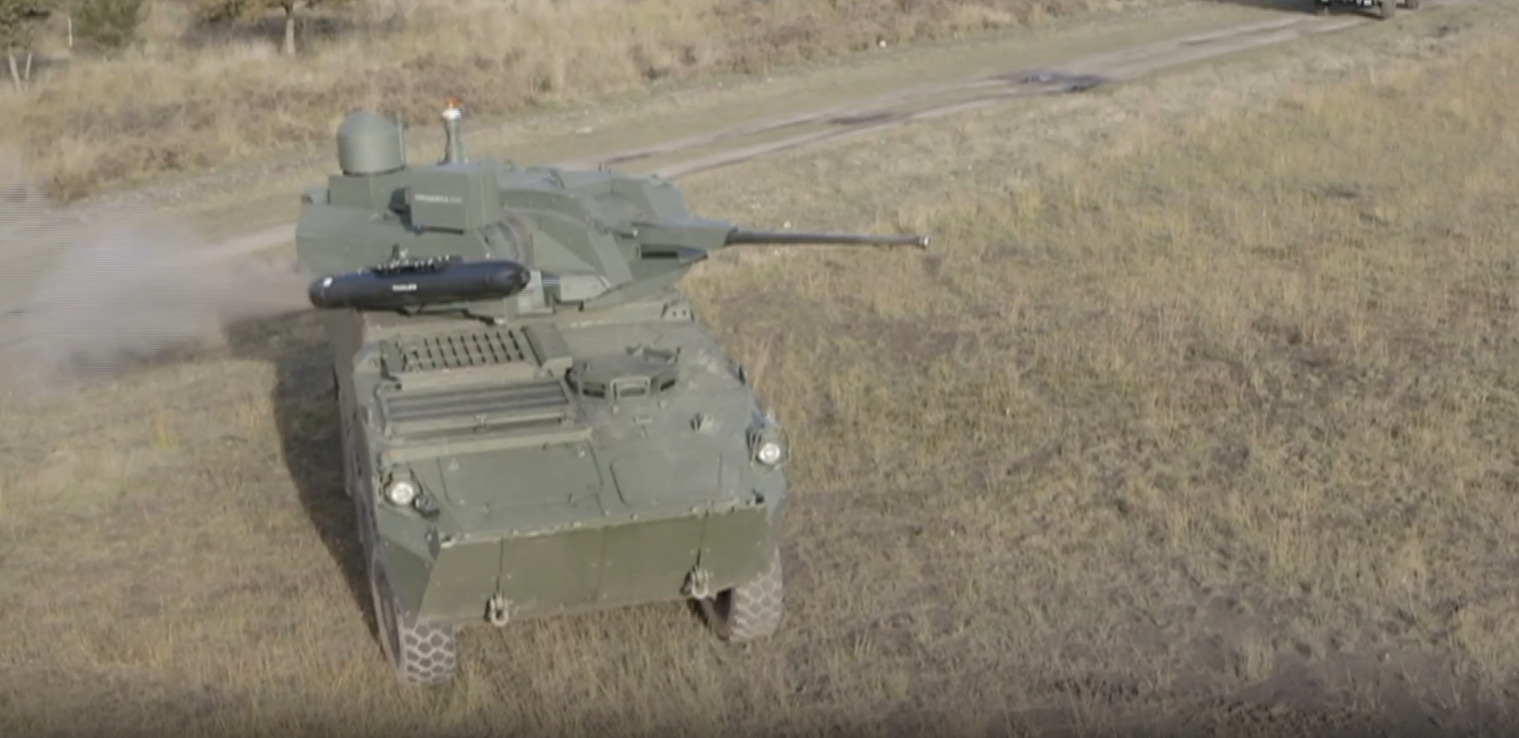
Category Specification Type 8×8 wheeled armoured vehicle / technology demonstrator Chassis Pandur II 8×8 Crew 3 (driver, commander, gunner) Length ~7.5 m Width ~2.67 m Height ~2.08 m* Combat weight ~20 t* Engine 6-cylinder diesel Power 455 hp / 335 kW Power-to-weight ratio ~22.8 hp/t* Maximum road speed 105 km/h Amphibious Yes Maximum water speed ~10 km/h Operational range ~700 km Turret Cockerill 3030 (1 × 7-tube Thales/FZ launcher + 30 mm Mk44 Bushmaster II + co-ax machinengun) Turret configuration Manned/unmanned modular turret Stabilization 2-axis Commander sight Day/night stabilized sight Gunner sight Day/night stabilized sight Hunter-killer capability Yes Laser rangefinder Yes Elevation −10° to +60° External cameras 360° coverage Smoke launchers 8 Turret protection Up to STANAG 4569 Level 5* Pandur II baseline figures; the exact weight and height of the Cockerill 3030 demonstrator are not publicly specified.
The STANAG 4569 Level 5 figure represents the maximum protection specification associated with the Cockerill 3030 turret; the exact protection level of this particular trial vehicle is not publicly documented.
Armament (see inside)
Armament
Category Specification Main armament 30 mm Mk44 Bushmaster II Calibre 30×173 mm Ammunition capacity 255 rounds Feed system Dual-drum Fire modes Single shot / 5-round burst / full automatic Secondary armament 7.62 mm coaxial machine gun Rocket launcher 1 × 7-tube Thales/FZ launcher Rocket calibre 70 mm / 2.75 in Rocket capacity 7 ready-to-fire rockets (at least 4 full launches in storage, according to one interview up to 77 rockets during the trials) Rocket types FZ90 unguided rockets / FZ275 LGR laser-guided rockets FZ275 LGR type Semi-active laser-guided rocket FZ275 LGR guidance Semi-active laser (SAL) FZ275 LGR control 4 folding canards FZ275 LGR length ~1.8 m FZ275 LGR weight 12.7 kg FZ275 LGR range 1.5–7 km FZ275 LGR accuracy <1 m CEP at 6 km FZ275 LGR laser designation LOBL / LOAL / remote designation FZ275 LGR laser codes STANAG 3733 or user-defined FZ275 LGR targets Soft and lightly armoured vehicles, air-defence systems, radar sites, communications equipment, aircraft on the ground, small vessels and bunkers FZ275 LGR warheads HE, HEGP, HEAP, MULTIDART, Flechette, Flash Signature FZ71 HEGP 4.3 kg warhead; 1 kg explosive; intended for targets with ≤2 mm protection FZ319 HEAP 4.3 kg warhead; 1 kg explosive; intended for lightly armoured targets FZ181 Flash Signature 4.3 kg warhead; 0.2 kg flash powder; >5,000,000 candela for ≥10 ms; IR signature >2 s FZ149 MULTIDART 3.3 kg warhead; 36 × 35 g sub-projectiles; intended for soft-skinned vehicles, light armour, light boats and aircraft on the ground FZ122 Flechette 5.0 kg warhead; 2,200 × 1.3 g flechettes; intended for light vehicles, boats and aircraft on the ground FZ275 LGR HE warhead 1 kg explosive; Compound B; pre-fragmented casing; 6 mm ST37-2 penetration; 9 m lethal radius
Place in War Thunder
The Pandur II 3030 would be a high-rank wheeled fire-support vehicle combining the mobility of the Pandur II with a unique mixed armament. Its 30 mm Mk44 Bushmaster II, stabilisation, thermal sights, hunter-killer capability and +60° elevation would provide effective sustained fire against light and medium-armoured targets at ranks VI and VII, while the seven-tube 70 mm launcher would add a longer-range option.
With conventional rockets, the launcher could engage soft and area targets, while the FZ275 LGR would provide precision fire against point targets at extended ranges. However, the vehicle’s limited protection and only seven immediately available rockets would require careful positioning and ammunition management. This combination would give the Pandur II 3030 a distinct role as a highly mobile precision-fire Belgian support platform rather than another conventional 30 mm wheeled IFV like the DF30 in Belgian service.
Pictures
Pictures
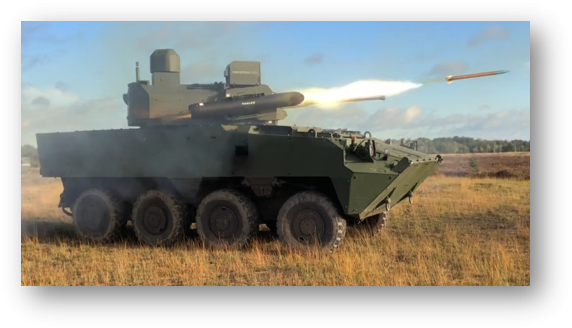
Pandur II chassis fitted with the Cockerill 3030 turret and Thales Belgium rocket pod during the firing-trial period.
Cockerill 3030 mixed cannon-and-rocket system during the October 2020 Helchteren firing campaign.

Sources
Sources
John Cockerill Defense. (2020). Cockerill® 3030 technical specification. John Cockerill Defense. https://defense.johncockerill.com/wp-content/uploads/sites/5/2022/06/23606.jc-defense-3030-specsheet-a4h-en-hd.pdf
Thales Belgium. (2021, January 22). John Cockerill Defense & Thales present a new mixed system composed of a cannon and 70mm rockets integrated into the Cockerill®3030 turret combining precision and firepower. Thales Belgium. Thales Belgium (BL VTS) – Rocket System 70mm (2.75”) : News & Events
Thales Belgium. (n.d.). John Cockerill tactical vehicle equipped with 7-tube rocket launcher LAU32 on Cockerill 3030 turret. Thales Belgium. Thales Belgium (BL VTS) – Rockets 70mm (2.75”) : John Cockerill tactical vehicle equipped with 7-tube rocket launcher LAU32 on Cockerill 3030 turret
Thales Belgium. (n.d.). Laser Guided Rocket FZ275 LGR: Semi-Active Laser (SAL) Guided Rocket. Thales Belgium. Thales Belgium (BL VTS) – Rockets 70mm (2.75”) : Laser guided rocket FZ275 LGR
Thales Belgium. (2021). FZ275 LGR: 2.75" (70mm) laser guided rocket [Technical brochure]. Thales Belgium.