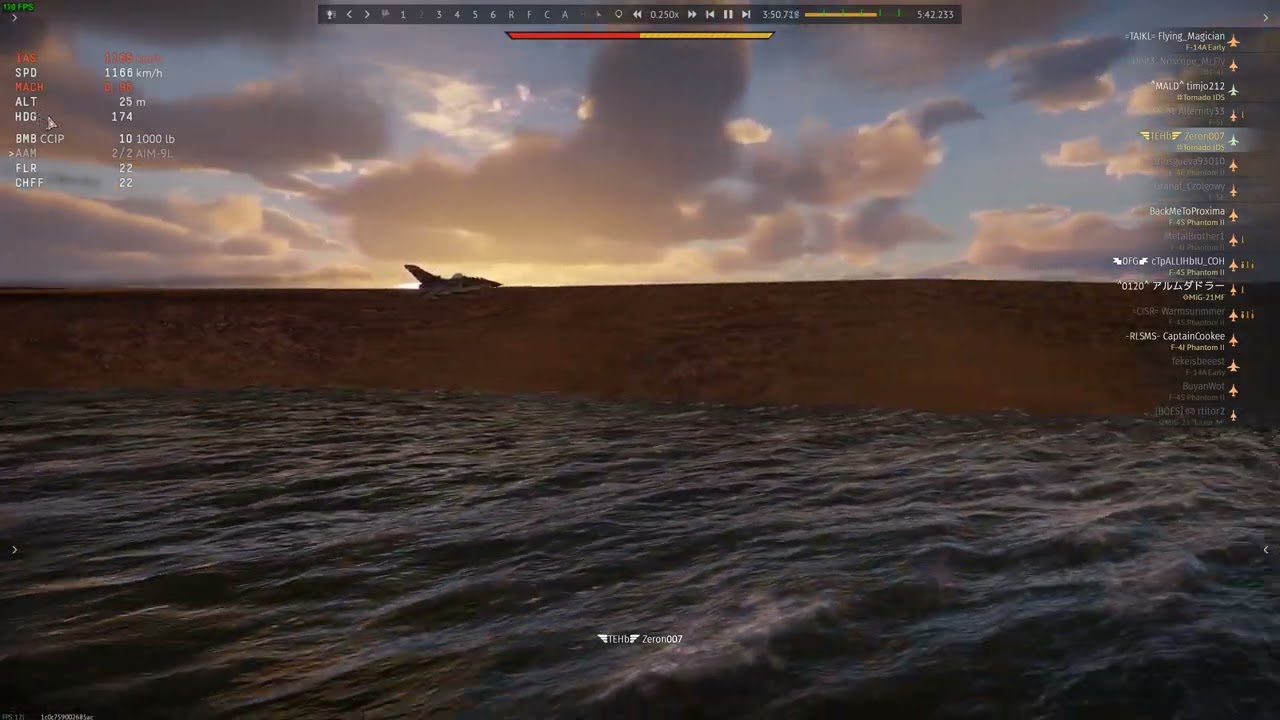
I’m fairly certain that me losing lock caused the missile to follow it’s path of inertia and managed to hit the target by a combination of pure chance, and that the target made no course corrections.
Normally when you try and track a low flying target, the missile veers off at the last second when it gets blinded by the ground clutter, by losing the lock the missile successfully intercepted the target by pure chance.
Multipath is less effective the higher the angle of impact. If your missile is coming in at a very steep angle the lower apparent target is less of an issue as it will pass through the fighters actual location in a bid to hit the false MP target.
THough how long does it guide interially? I’ve heard it should keep going for about 60 seconds, but i’ve seen them self destruct within seconds of losing radar lock
@MiG_23M moving over here to stay on topic. I could talk about the ground mapping and terrain following radars on the Tornado (both absent from the Phantom). Or the navigation and attack system, which was far in advance of that fitted to British Phantoms (which was more advanced than that fitted to the US Phantoms). But your argument basically amounts to “if you stripped a Phantom back to bare metal and put everything which made the Tornado good into it then it would be a good aircraft”, so I can tell where that would go: “just put all that stuff on the Phantom instead”.
One thing you can’t get around though is that the Tornado IDS airframe provided a far more stable and comfortable weapons platform for sustained high speed low altitude penetration than the F-4 airframe can provide (the main requirement of Tornado):
Also point is that all phantom airplanes at that time were second hand because the production ended. So the airframes had to endure a pretty extensive rebuild look at the F-4J(UK) for that.
Secondly the upgradability with an old platform is way worse than a new one. Just compare a modern phantom with an Tornado GR 4. It’s no where near equal.
And don’t let me get started on weapons integration