Im a bit confused what the actual issue is here. The most modern version of the vehicle is available in the tree. As we said it would be (a tech tree BMD-4).
While this is true its also incredibly annoying that one of the more Iconic US cold war naval attackers only representation in game is as a premium thats not even available anymore. They could have added the A-6A, A-6C TRIM or E-SWIP a long time ago with no issue but they havent.
It’s okay. Clearly the point of the message ( second half of my reply) still missed you. Whatever you ( or rather, the devs) think is right… Why do I even bother.
Well you tagged me to respond to my answer to someone else. With a claim that was not true (A-6E SWIP) and a claim about the BMD-4 for the tree that was added as we said it would be. So its indeed a missed point that im afraid I cant assist with if you cant detail the issue.
Did they build any A-6F Intruder IIs? If so, I think that would definitely be a very interesting variant as well.
Otherwise I’d prefer to see the A-6A or A-6C over the E-SWIP
1 Like
They did and it was also armed iirc or at least had planned armaments so it could get the yak-141 treatment.
Yeah I would also prefer the A-6C over the E-SWIP as its more interesting to me historically.
(Also where is the A-4M smh)
1 Like
that, or actually model the A-6s radar
1 Like
They gotta go back and finally model a lot of missing radars
(Also, holy heck, I really wish they would model radar linked gyro gunsights properly and let them work in ARB. Lightning AIRPASS EEGS when?)
i think he was referring to the dev blog for the j8f referring that it’s getting maws (it never did in game tho)
We getting the f22 that’s my hypothesis, based on the “leak list” and the passed to the devs
The Intruder II would be amazing to see with full armament, but I’d also be happy about one with limited armament.
Not a fan of the Skyhawk myself, but it really is one of many planes that have been neglected for a very long time
As mentioned earlier, dev blogs are covering things still in development, where everything is subject to chabge.
We have added this tag to all blogs now to avoid any confusion:
“Please note that vehicle characteristics are still in development and may change before release.”
2 Likes
You misspelled change, kinda funny though since I read it as cabbage at first. But anyways thank you for the clarification.
i mean we finally got Buccaneer radars and the Tornado radars,
with how air RB works and mouse aim works, they would be useless, gyro gunsights are only really useful for smooth pulls, but with the nature of mouse aim isn’t really something that happens with great frequency
non radar Gyros in game are questionable to begin with as they can’t be adjusted for target you’re going for, with Radar ones do it automatically
1 Like
This sentence gets thrown around a lot by people who are entirely misinformed on the EAP. It is incorrect. Yes, the EAP never ended up flying with weapons or radar, but there is abundant proof that the airframe was provisioned to carry them should the need arise.
A large proportion of existing source material on the EAP makes mention of the fact that while no live munitions and/or combat avionics were carried, the airframe was provisioned to be able to mount them:
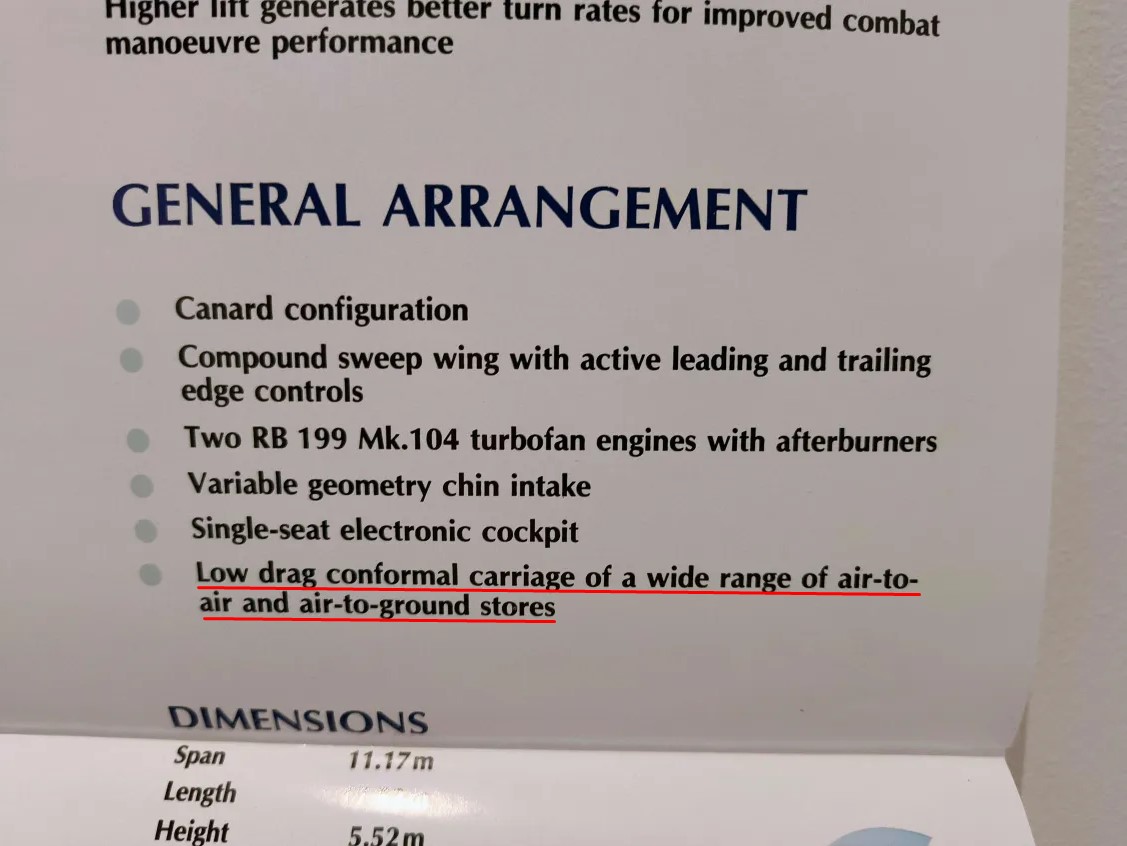
British Aerospace EAP Promotional Material. This is a primary source. Full document in Sources section.

Extract from British Aerospace EAP - Aeroguide Special, Page 26
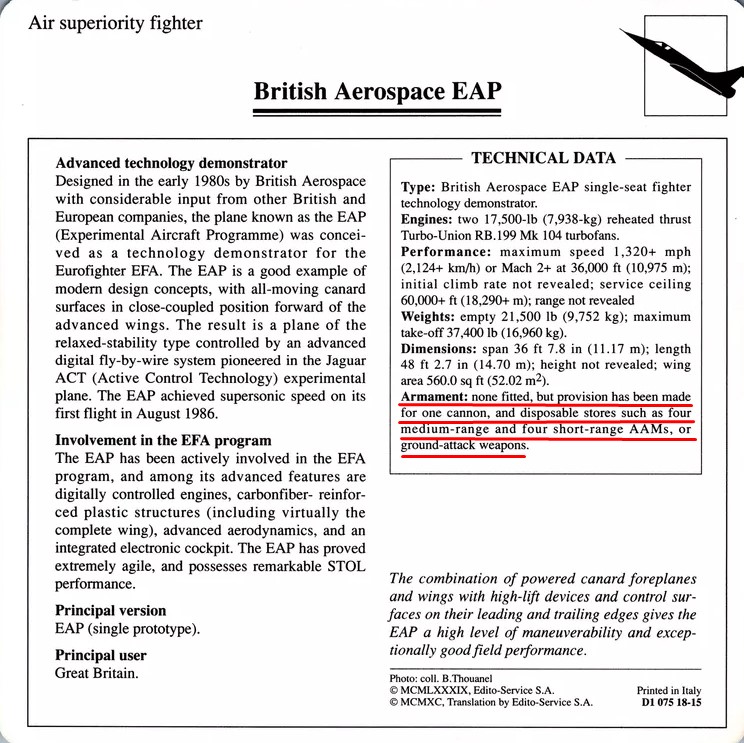
Extract from British Aerospace EAP, Warplane Information Card
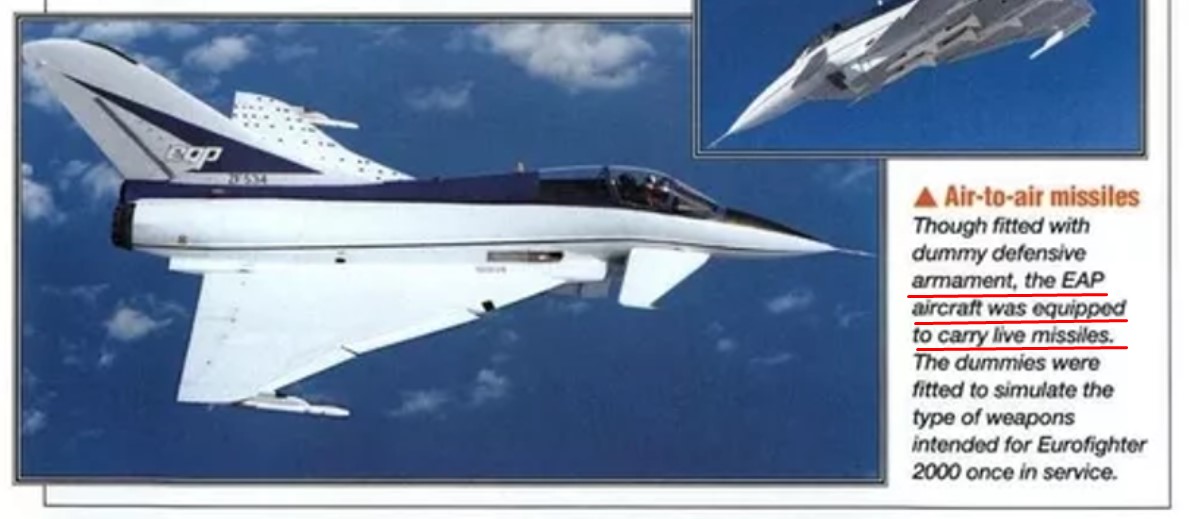
Extract from British Aerospace EAP - Aircraft of the World Spec Sheet
The EAP Contract
It’s well established that when it came time to build the ACA/EAP flying airframe, the Italian and German governments got cold feet and pulled out of the program, leaving the British to carry on alone.
But this isn’t entirely fair. Although the Italian government pulled their funding and support, Italian industry, predominantly represented by AIT, stayed in the program, funded out of their own pockets.
Why is this important? Well, because among several other development commitments, a particular aspect of the EAP demonstrator program that was designated to the AIT on the finalised (not initial) contract and work-share agreement was Armaments.
If there were never any plans to arm EAP, and it was never considered at any stage of the design or build process, why would Armaments feature on the finalised EAP contract and work-share agreement?
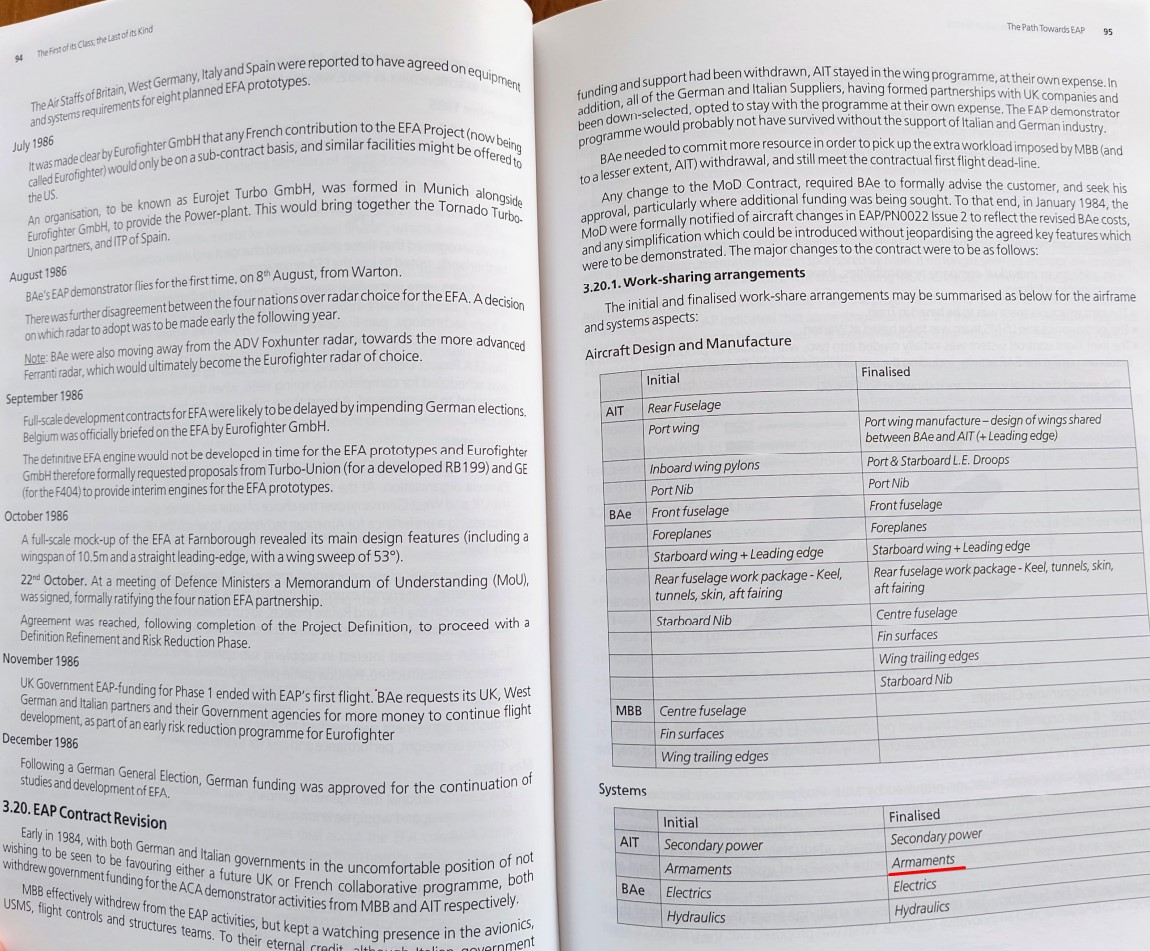
An extract from E.A.P. The Experimental Aircraft Programme, Alan Seabridge & Leon Skorczewski, 2016
The Cockpit
Very simply, the cockpit, specifically the joystick, of the EAP was outfitted to launch weapons. The EAP joystick (bespoke to the EAP, not re-used from another aircraft or a prototype for a future aircraft) was installed into the plane with a Weapon Release Push Button And Cover Guard. The inclusion of this within the airframe clearly indicates that it was designed and built with the intention of potentially carrying and utilising munitions. Why would a dedicated weapon release button be included on the airframe if there were zero plans to arm it? It simply wouldn’t be.
To reiterate. The EAP joystick, purpose built for the EAP, never flown on any other aircraft, before or after the EAP, had a Weapons Release button.
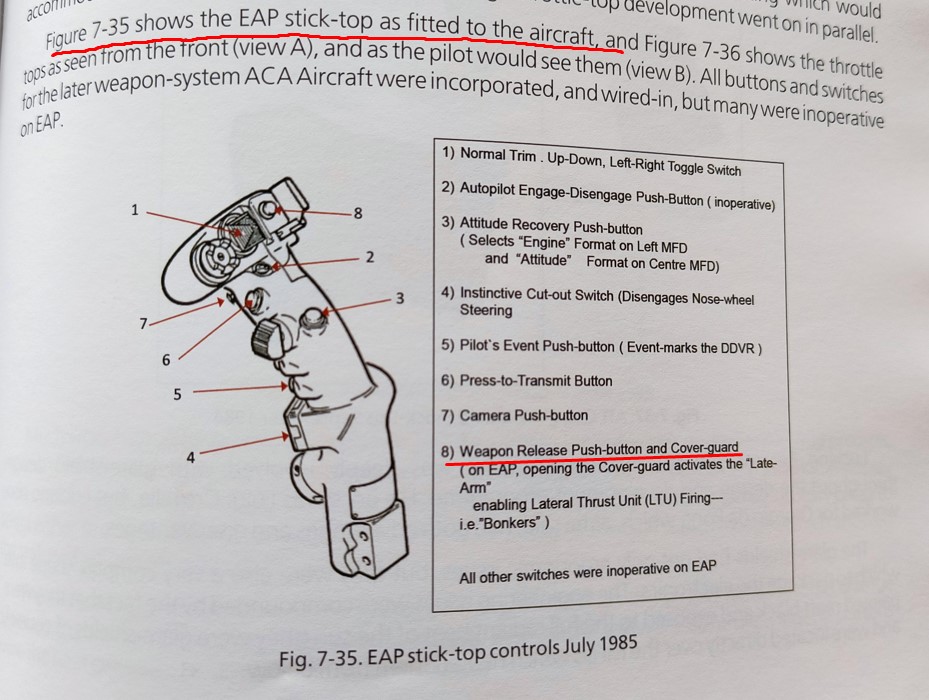
Figures from E.A.P. The Experimental Aircraft Programme, Alan Seabridge & Leon Skorczewski, 2016
The Pylons
This is undoubtedly the single most crucial piece of evidence showing that the EAP was designed and built with the potential of carrying an armament.
Each wing of the EAP was built with 3 metal ribs, 6 in total, each containing an internal pylon attachment point (the purpose of each of which is to mount a pylon and stores to the aircraft wing). These ended up never being used (none of the dummy missiles were mounted on these pylons), but the fact they were built into the wing structure proves beyond doubt that the EAP airframe was designed and built to carry armaments.
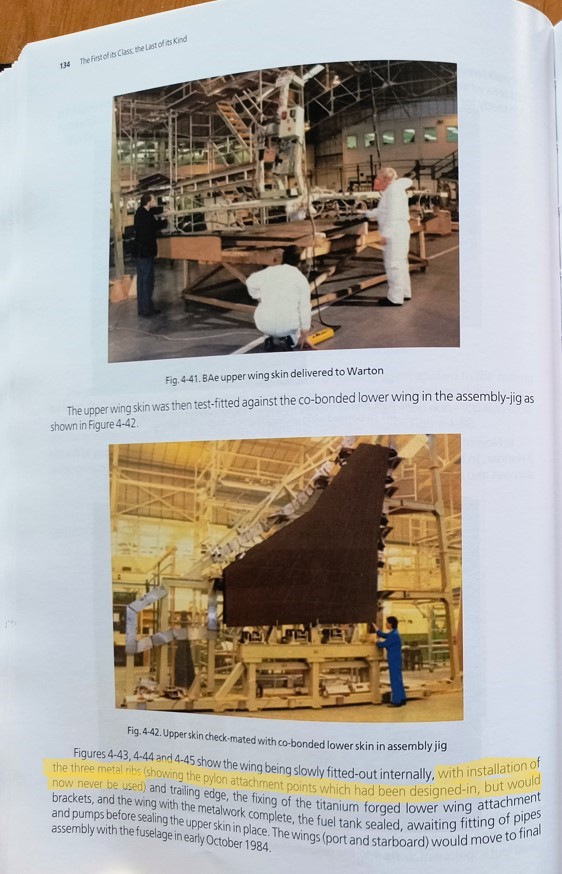
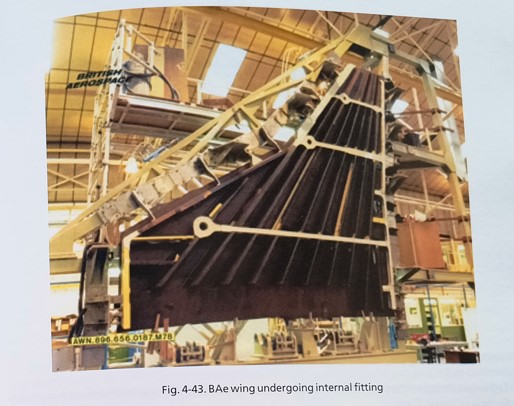
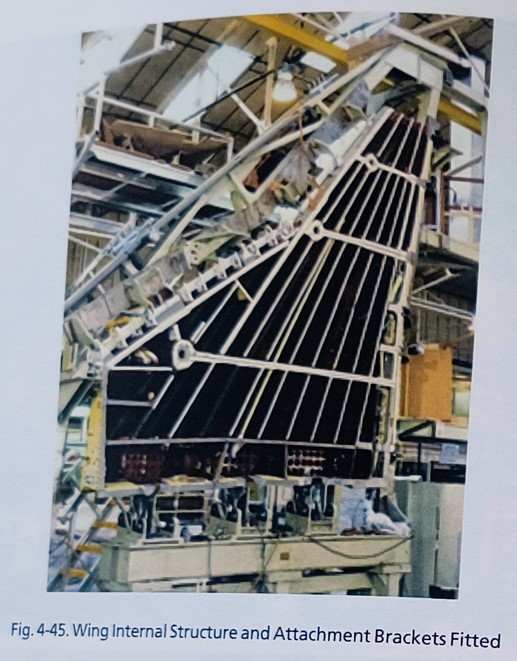
An extract and figures from E.A.P. The Experimental Aircraft Programme, Alan Seabridge & Leon Skorczewski, 2016
23 Likes
EAP with Supertemp, BK27, and 9M would make one great jet, 13.0 hole filler easily
2 Likes
It would be fun
The post you responded to is agreeing with you, and I’m agreeing with you again.
I appreciate the post I didn’t have the time to include in my own post.
I’ve amended the post to include a bit of that:
Glad to see we’re in agreement.
No, all the above documents are relating to the EAP airframe itself, not some hypothetical future airframe.
4 Likes
Which is what my post is referencing.
I’m literally agreeing with you, and you’re literally agreeing with me.